




Abstract
In the context of no prescriptive medications and lack of sufficient vaccine, COVID-19 preventive behaviors were a top priority, particularly for developing countries. This study aimed to determine how the media influenced preventive behaviors of Vietnamese people against COVID-19. A mixed method was conducted, including qualitative research by a focus group with 11 participants and quantitative research by cross-section with 609 respondents. The results showed that media exposure was directly associated with increased perceived severity, perceived vulnerability, perceived self-efficacy, and knowledge about COVID-19 and indirectly associated with COVID-19 preventive behaviors. There were slight differences in the impacts of media on mediating constructs and preventive behaviors by generation, and no significant differences among subgroups by gender, place of residence, and educational level. This finding offered some implications that communication practice should specifically prioritize improving knowledge on COVID-19, its severity and vulnerability. Furthermore, public awareness towards threat appraisal, coping appraisal, and active conduction COVID-19 preventive behaviors.
Keywords
Introduction
The COVID-19 outbreak was declared a pandemic on March 11, 2020. As of May 17, 2021, the total confirmed cases reached 164,880,616 globally. Moreover, 3,418,055 deaths were reported in more than 222 countries and territories (Worldometers, 2021). At the time of the outbreak of COVID-19, Vietnam was a country that successfully prevented the spread of this infectious pandemic. Until May 19, 2021, Vietnam had only 4,745 cases, 37 deaths, out of which 3,108 due to domestic infection and 1,637 immigrated cases. While the statistics for Southeast Asia in total is 2,529,924 new cases and 30,881 new deaths in 7 days. Besides contact tracking, testing, lock down, and quarantine, more importantly, the Vietnamese government had a clear strong and consistent voice about the dangers of the disease from the beginning, long before the first COVID-19 case was reported in the country. Started from January 9, 2020, when the Ministry of Health first warned citizens of the threat, frequent communication messages were delivered like a short announcement to every phone call made in the country, text messages for weekly and monthly updates, and frequent posts taking advantage of Vietnam’s high use of social media like Facebook, Tiktok and Zalo—downloaded by 80% of smartphone users in Vietnam. Significantly, “Ghen Co Vy,” a then local well-known pop song, was given a new life to public service announcement of handwashing. The song then became viral on Tiktok and young people across the globe started to dance with it. Later, message kept rolling on with “No one is left behind” campaign, 5K (Nam Khong) practice of (1) face mask, (2) hygiene, (3) safe distance, (4) gathering, and (5) health declaration.
This success mainly due to well-executed health communication through social and mass media, which impacted perception attitudes. It promoted the practice of preventive behaviors among Vietnamese people. Findings of Hong and Kim (2020) demonstrated the critical role of health communication. Particularly the role in providing people with adequate information and encourage them to take preventive measures against diseases. Health communication was then a powerful and essential tool to combat the COVID-19 pandemic crisis (Finset et al., 2020).
Some theories such as protective motivation theory (PMT), health belief model (HBM), and theory of planned behavior (TPB), etc. are identified as practical frameworks in exploring the topic of media influence on illness prevention. The PMT was a robust model that could be applied to studies of threats to individuals and the public. Each variable of PMT was significantly related to positive attitudes and behaviors that could be used for disease prevention and health promotion (Floyd et al., 2000). PMT was developed in 1975 and revised to understand better threats and how individuals cope with them and persuasive communication (Rogers, 1975, 1983). PMT was often used to understand the public’s response to health and environmental risks at the individual level (Rogers, 1983). PMT was a clear model structure mapping sufficient components and processes of protective behavior. PMT included two processes including threat appraisal and coping appraisal (Rogers, 1983). Threat appraisal was impacted by perceived severity and perceived vulnerability. The coping appraisal was affected by self-efficacy and response efficacy.
When confronted with a risky situation, people first evaluate the threat based on severity and vulnerability to personal risk and knowledge (Cameron, 2009). Then they evaluate the coping appraisal with solutions that suggested removing the threat and the self-efficacy to estimate their competence in the risky issue (Bandura et al., 1999). The results of the estimation of coping appraisal and threat appraisal then further promote the protection motivation and protection behavior (Rogers, 1983).
Although PMT was widely used to discuss health risks, many of the research applying PMT model focused only on individuals’ experiences with their illnesses (e.g., cancer, smoking, etc.), that left an unreached gap to discuss influences of health communication media on COVID-19 preventive behavior (Floyd et al., 2000). Besides, the previous studies used PMT with perceived severity, perceived vulnerability, and self-efficacy as independent constructs. Bandura (1994) stated that media influences individuals by helping them self-regulate and learn. In the context of COVID-19 pandemic in Vietnam, the media continuously updated information messages, and warnings about the dangers of the outbreak. As a result, the active delivery of communication led to a huge public perception attitudes and awareness of preventive behaviors. Therefore, this study extended the original protective motivation theory (EPMT) model by considering other attributes (e.g., mass media exposure, social media exposure, and knowledge level about COVID-19). The present study contributes to the literature by filling the gap analysing the influence of media exposure on COVID-19 preventive behaviors.
The novelty of our research relies in testing an expanded version of PMT with the addition of mass media and social media as independent constructs. Knowledge as a mediator to identify media effects on preventive behaviors against COVID-19 of Vietnamese people. The research targets the expansion of the PMT model could explain the correlation of media and preventive measures during the COVID-19 pandemic. Furthermore, the study examined how mediating constructs of the conceptual model (EPMT) influenced COVID-19 prevention.
Finally, we tested whether demographic groups differed in their preventive behaviors against the pandemic. The findings could help understand the power of health communication on COVID-19 prevention in Vietnam and guide government and policymakers to communicate in case of pandemics.
Conceptual Model and Hypothesis Development
Mass Media Exposure (MM) and Social Media Exposure (SM)
Mass media and social media are both means of communications. While mass media is referred to as different media technologies that reach a mass group of audience; social media, a computer-based form of media, enables communication by facilitating the creation and sharing of contents and information. Mass media includes television, films, magazines, newspapers, radio, and some social media channels like Facebook, Twitter, Tiktok, etc. According to Nutbeam (1998), health communication uses mass media, social media, and other tools to disseminate useful health information and raise public health awareness. Media promotes awareness and preventive behavior against diseases (Gao et al., 2020). Good health communication could facilitate the public to deal with uncertainty and fears, implement epidemic preventive compliance, and make necessary behavioral changes in the face of a crisis (Finset et al., 2020).
In the context of the COVID-19 pandemic, mass media and social media played an important role in disseminating information and increasing awareness for public health solutions such as wearing a mask, keeping distance from each other, hand washing, and social media distancing (Bedford et al., 2020). According to El-Toukhy (2015), social media exposure of disease information affected both the severity and susceptibility. Exposure to COVID-19 information from both mass media and social media increase the perceived severity, vulnerability, and COVID-19 preventive practices (Ranjit et al., 2021). Against this backdrop, the present study proposes the hypotheses:
H1a: Mass media exposure is positively related to perceived self-efficacy.
H1b: Mass media exposure is positively related to perceived severity.
H1c: Mass media exposure is positively related to perceived vulnerability.
H1d: Mass media exposure is positively related to knowledge about COVID-19.
H2a: Social media exposure is positively related to perceived self-efficacy.
H2b: Social media exposure is positively related to perceived severity.
H2c: Social media exposure is positively related to perceived vulnerability.
H2d: Social media exposure is positively related to knowledge about COVID-19.
Perceived Severity (PS)
The term perceived severity referred to an individual’s subjective perception of the severity of the condition when he felt unwell. Orji and Mandryk (2014) research results showed that perceived severity positively affected coping appraisal with the disease. Luo et al. (2021) stated that the severity of COVID-19 increased with age, meaning that baby boomers considered COVID-19 to be serious while the severity of the pandemic to younger generations was lower. The perceived severity of COVID-19 did not differ between urban and rural (Scarinci et al., 2021). Efforts to prevent COVID-19 such as maintaining social distancing staying at home, were affected by perceived susceptibility and perceived severity (Ranjit et al., 2021). From the above arguments, this study hypothesized that:
H3: Perceived severity positively relates to threat appraisal.
Perceived Self-Efficacy (SE)
Self-efficacy—an important factor in PMT, is a term that expressed the belief that a person could perform a particular behavior. It is a personal judgment of how good or poorly a person could cope with a given situation based on their skills and the circumstances they faced (Bandura, 2010). Self-efficacy is an “individual’s belief in their competence to abide by the advised actions and perform the necessary behaviors to obtain desired results” (Pakmehr et al., 2020). Self-efficacy was related to the belief that coping behavior effectively reduced the threat risk of disease (Van der Velde & Van der Pligt, 1991). Self-efficacy showed a positive effect on the threat (risk perception) caused by COVID-19 (Dryhurst et al., 2020). Park et al. (2010) stated that when people had high self-efficacy in the effectiveness of handwashing to prevent COVID-19 and the frequency of them practicing handwashing increased. Therefore, the hypothesis was proposed:
H4: Perceived self-efficacy positively relates to coping appraisal.
Perceived Vulnerability (PV)
According to van der Pligt (1998), most research on health-risk behavior used perceived vulnerability. The uncertainty of illness was related to feelings of anxiety, depression, and suffering, all of which could lead to panic and passivity (Lauer et al., 2020). Perceived vulnerability when facing health risks is related to the fear of disease (Díaz et al., 2016). The elderly, low-educated, female groups were perceived as more vulnerable than others (De Coninck et al., 2020). The perceived vulnerability is a construct that explained differences in COVID-19 preventive practices of different individuals (Asmundson & Taylor, 2020). Recommended measures through the media helped many people to improve self-efficacy in preventive efforts to stop the pandemic from spreading. In the context of COVID-19, perceived vulnerability might affect threat appraisal hence the hypothesis was:
H5: Perceived vulnerability is positively related to threat appraisal.
Knowledge About COVID-19 (KN)
Knowledge is an important factor in preventing and controlling diseases, including COVID-19 (Zhong et al., 2020). Knowledge of the public about a health issue is enhanced by the impact of health communication, that in turn affects attitudes and health-protective actions (Freimuth & Quinn, 2004). Health knowledge is positively correlated with health-promoting behaviors (Masuku & Lan, 2014).
Jose et al. (2021) stated that knowledge significantly impacts COVID-19 preventive measures. Zhong et al. (2020) stated that knowledge about COVID-19 positively influences attitudes to practice the prevention of COVID-19. According to Kwok et al. (2020), the higher knowledge of COVID-19 higher is, the higher degree of social distancing, vaccinating (81.8%), engaging in good practices (93.8%), and following instructions to avoid infection of health officers (88%). C. Wang et al. (2020) find no relationship between knowledge and the tendency to practice COVID-19 preventive behaviors, however, other studies found a positive correlation between these two factors (Liu et al., 2020). In addition, health knowledge is included as a construct in the research framework to investigate its influence on coping appraisal further. The hypothesis proposed is:
H6: Knowledge about COVID-19 is positively related to coping appraisal.
Threat Appraisal (TA)
Threat appraisal, also called threat bias relation, is an exaggerated tendency to preferentially process threat signals in a social situation (Williams et al., 1996). Threat appraisal is affected by the two perceived severity and vulnerability constructs (Raheli et al., 2020). Threat appraisal of COVID-19 is assessment of individuals about the level of significance the outbreak had on their well-being. Harper et al. (2020) stated that the threat of COVID-19 is the predictor of positive behavior changes in the public. Thus, it is likely that people who perceived COVID-19 as a threat would be more likely to take preventive measures. Hence, we propose the following hypothesis:
H7: Theat appraisal positively related to COVID-19 preventive behaviors.
Coping Appraisal (CA)
The coping appraisal was an individual’s estimate of whether they had been under any threats and their actions to either correct, prevent risk, or increase benefits (Folkman et al., 1986). According to Lazarus and Folkman (1984), appraisals’ emotional and functional effects were mediated by actual coping strategies. Research result during the outbreak of COVID-19 had examined the knowledge, attitudes, preventive behaviors, and risk perception associated with the outbreak (Arslanca et al., 2021). The finding was that almost everyone who participated in the research reported a high level of understanding of the matter and intended to practice COVID-19 preventive behaviors (Prasetyo et al., 2020). The coping assessment was influenced by the individual’s perceived self-efficacy assessment and knowledge (Prentice-Dunn et al., 2009). From the above arguments, the hypothesis proposed was:
H8: Coping appraisal is positively related to COVID-19 preventive behaviors.
The Conceptual Model
This study’s extended protection motivation theory (EPMT) included nine constructs (three newly added constructs, one modified construct, and five constructs from the original PMT). Both threat appraisal and coping appraisal influenced preventive measures. Threat appraisal was influenced by perceived severity and perceived vulnerability. The coping appraisal was influenced by self-efficacy and knowledge of COVID-19. In the critical context of COVID-19, protection motivation and protection behavior could coincide, so protective behavior was used as a final construct to modify protection motivation. A discussion of the hypotheses is presented below. Each construct has five measurement items as shown in the following.
Methodology
Research Design
This study applied a mixed method research by sequential qualitative and quantitative design. The mixed method was an ideal technique for complex research (Nutting et al., 2009). Firstly, qualitative research was carried out by a group discussion (following two phases) with the participation of 11 respondents. It was held to explore and test the content validity of constructs and measurement items. In phase 1, an unstructured questionnaire had reviewed and explored 9 constructs and 45 measurement items developed from the literature review. The constructs and measurement items that were chosen through this phase were moved into phase 2 for testing content validity following the formula: CRV = {[Ne − (N/2)]/(N/2)}, in which Ne was the number of participants who said it was necessary; N was the total number of participants. When CVRCritical ≥0.636, the constructs and measurement items were accepted (Ayre & Scally, 2014).
Content validation was necessary in any development instrument measures (Benson & Clark 1983). The content validity ratio originally proposed by Lawshe (1975) was widely used to quantify the content validity that an instrument (questionnaire or item) measured (Frank-Stromberg & Olsen, 2004). Lawshe’s method had been widely used to establish and quantify content validity in diverse fields, including market research, organizational development, healthcare, education, and personnel psychology (Wilson et al., 2012). It involved experts rating items into one of three categories: “essential,” “useful, but not essential,” or “not necessary.” The qualitative research results showed that three measurement items (PV5, RB4, and RB5) did not meet content validity (CVRcritical <0.636); the other 9 constructs and 42 measurement items were accepted for the next quantitative research. Secondly, the quantitative research applied a cross-sectional technique with non-probability and convenience sampling was carried out in all territories of Vietnam.
Questionnaire Design
The quantitative questionnaire comprised of three sections, not to mention the introduction part. The first section included two screening questions to properly categorize respondents into sources of exposure: mass media, social media, and COVID-19 preventive behaviors. The second section was ordered for each five measurement items of a construct. Measurement items of the constructs were adapted from authors as sequence follows: (1) mass media exposure and (2) social media exposure (Liu & Liu, 2020); (3) perceived severity (Huang et al., 2016); (4) perceived self-efficacy (Liao et al., 2020; Yazdanpanah et al., 2020); (5) perceived vulnerability (Duncan et al., 2009; Yazdanpanah et al., 2020); (6) knowledge about COVID-19 (Huang et al., 2016); (7) threat appraisal (Srisawang et al., 2015; P. W. Wang et al., 2021); (8) coping appraisal (Srisawang et al., 2015); (9) prevention behavioral COVID-19 (Yazdanpanah et al., 2020). The third section addressed information, including sex, generation, education, and place of residence.
Sampling and Model Valuation
Following the 10-time rule for PLS-SEM, 14 number links pointing to constructs in the model, the minimum sample size was 140. With 609 valid questionnaires, this study ensured the sample size. The study applied non-probability with a convenience sampling technique. Data was collected from the respondents by following both face-to-face and online survey procedures in May 2021. The questionnaire in this research applied the 5-point Likert scale and was distributed both electronically using Google to email, Facebook, Zalo, etc. and by questionnaire papers.
The model was fit if SRMR was <0.08 (Hair et al., 2021). VIF was a measure of Multicollinearity between predictors in the model. VIF <5 was considered appropriate (Hair et al., 2021). Cronbach’s alpha and composite reliability (CR) were the criteria for internal consistency. Cronbach’s alpha was >.7 and CR ranged from .70 to .90, representing internal consistency reliability. The outer loading indicator of the measurement item was >0.708 and AVE was >.50 The construct reached convergent validity (Hair et al., 2021). The confidence interval of the Heterotrait-Monotrait Ratio (HTMT) should be lower than 0.85, and the relevant threshold level statistic should not include the value 1 for all combinations of constructs (Hair et al., 2021).
Results
Demographic Characteristics
A total of 609 respondents, of which 323 respondents were female (53.0%) and 286 were male (47.0%), participated in the survey. Regarding the place of residence, 331 respondents (54.4%) lived in the South of Vietnam (from Da Nang city to Ca Mau province) and 278 respondents (45.6%) resided in the North. About 319 respondents (52.4%) had a high school degree and below, and 290 respondents (47.6%) obtained upper high school education. Gen Y accounted for the largest generation group with 190 respondents making up 31.2%, followed by Gen Z with 170 respondents (27.9%) and Gen X with 159 respondents (26.1%). There were only 90 baby boomers taking part in the research, comprising a mere 14.8%.
Exploratory Fator Analysis
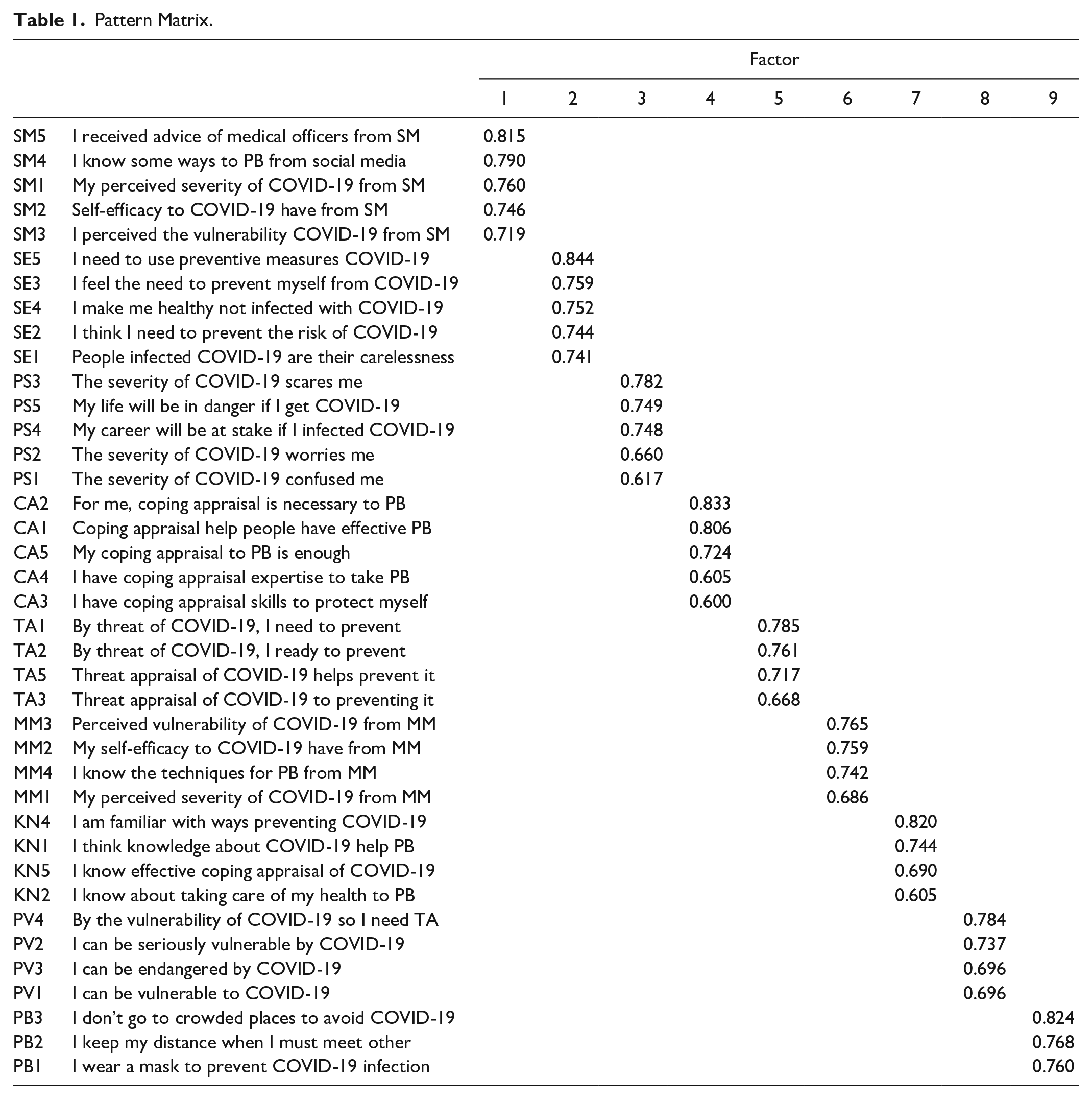
The Exploratory Factor Analysis was conducted by following the principal axis factoring with the Promax Kaiser normalization rotation method. The result was used to eliminate three measurement items which were MC5, KN3, and TA4, due to the factor loading of these were less than 0.5. The value of Kaiser-Meyer-Olkin (KMO) = 0.910; χ2 = 11,492.277; df = 741; and Sig = .000. Extraction Sums of Squared Loadings Cumulative = 57.304%. Therefore, indicators for each construct were valid. The conceptual model with 39 measurement items and 9 constructs (see Table 1) was valid for the next analysis stage.
Pattern Matrix.
Measurement Model Results
The results of evaluating model fit showed that the Standardized Root Mean Square (SRMR) of saturated model residual valued of 0.045, which complied with the proposed standard of Hair et al. (2021). Therefore, the model had a fit. In terms of Multicollinearity of indicators, the value of VIF ranged from 1.600 to 2.134 which was <3. Thus, all the constructs and measurement items were valid for the evaluation of the measurement model.
Measurement Model Valuation
Internal consistency reliability was examined by the Cronbach alpha coefficient, composite reliability (CR), and rho_A value. The research results presented in Table 2 showed that Cronbach’s alpha ranged from .813 to .880, CR ranged from .883 to .912, and the Rho_A value ranged from .831 to .885. These values were larger valid based on the proposed standard of Hair et al. (2021), therefore it could be concluded that the constructs had good reliability of 35 internal consistency.
Validity and Reliability of the Constructs.

The values of outer loading tested the convergent validity and Average Variance Extracted (AVE). The value of outer loading of the measurement items was larger than 0.70, and the AVE value of all constructs ranged from .622 to .687 (see Table 2), over the threshold level of .5 (Fornell & Larcker, 1981). Thus, the results confirmed that all measurement items of constructs had convergent validity. The discriminant validity testing by Heterotrait–Monotrait ratio (HTMT) based on the proposed standard of Hair et al. (2021). These research results are displayed in Table 3 showed that HTMT of nine constructs had a smaller value than 0.85; hence, the constructs could be concluded to have had a good discriminant validity.
Heterotrait-Monotrait Ratio (HTMT).

Structural Equation Modeling
A bootstrapping procedure with a resample of 5,000 was performed for the following results. Firstly, as presented in Table 4, the standardized path coefficients ranged from .063 to .245 (p < .05, except H1c), indicating that mass media exposure had a significant and direct effect on perceived severity, self-efficacy, and knowledge. Thus, hypotheses H1a, H1b, and H1d were supported and H1c was rejected. The standardized path coefficients ranged from .241 to .478 (p < .05), indicating that social media exposure had a significant and direct influence on perceived severity, perceived self-efficacy, and knowledge. Therefore, hypotheses H2a, H2b, and H2c, and H2d were supported. Similarly, H3, H4, H5, H6, H7, and H8 were supported (p < .05).
Results for Structural Models and Testing Hypothesis.

Secondly, the results showed that the indirect effects were all supported (p < .05) except for mass media exposure → perceived severity → threat appraisal → preventive “behavior” relation (Table 5).
Specific Indirect effects.

Thirdly, the R2 values of the endogenous constructs were tested. The research result stated that the R2 values of PS (0.104), PV (0.229), KN (0.149), TA (0.155), CA (0.227), and PB (0.253) could be considered moderate, whereas the R2 value of SE (0.089) was rather weak (Figuer 1).
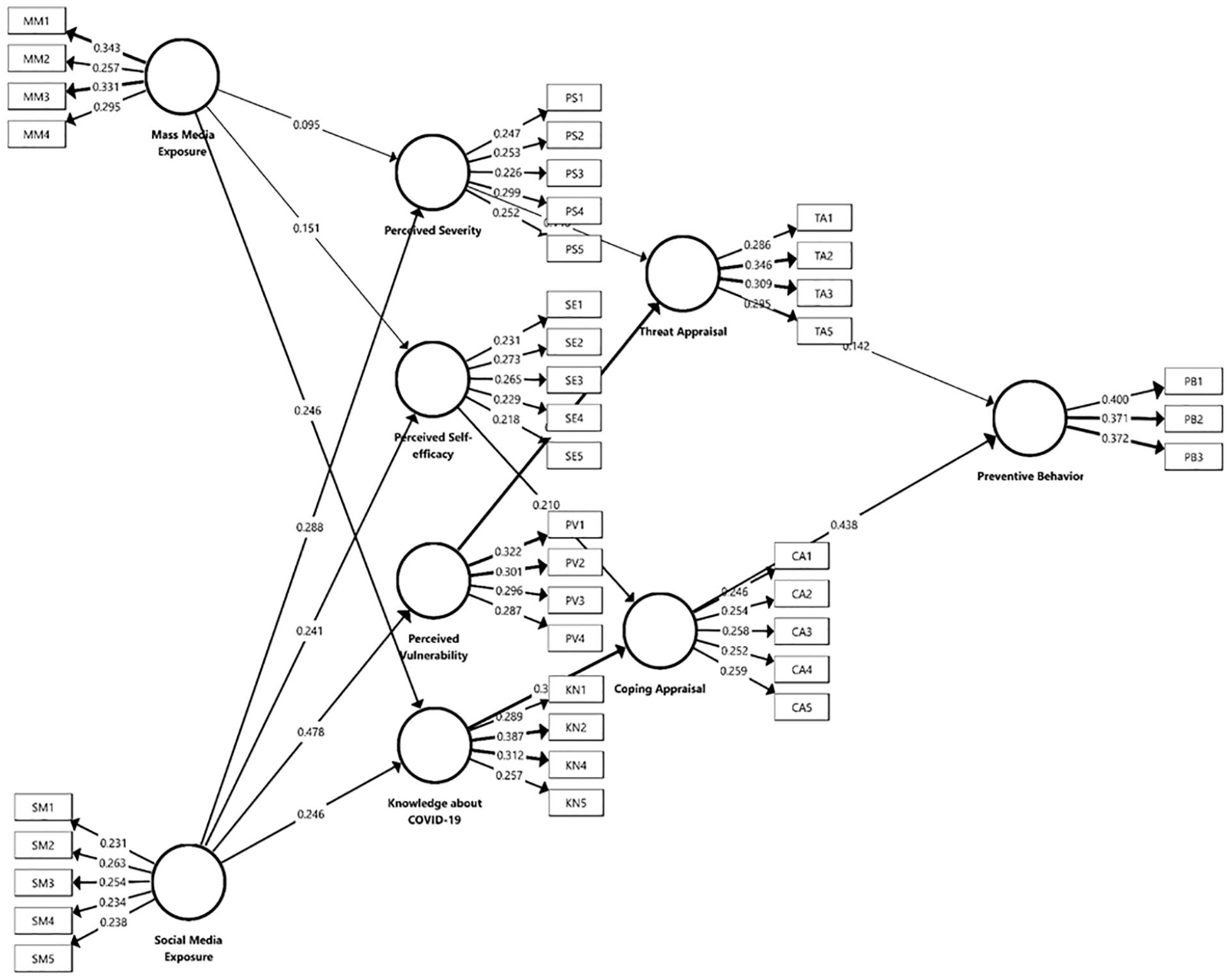
Results of the structural model.
Importantly, mass media exposure and social media exposure were indirectly associated with preventive behaviors via perceived severity, perceived vulnerability, perceived self-efficacy, knowledge, threat appraisal, and coping appraisal, except the “mass media exposure → perceived severity → threat appraisal → preventive behavior” relation (see Table 5).
Fourthly, the f2 effect of the explained variance R2 verified ranged from .009 to .297, indicating that the level of significance between the effects was ranged from weak (SM → PS) to medium (see Table 4). For example, H2c (f2 = 0.297) and H8 (f2 = 0.230) had a medium direct effect. Fifthly, the Q2 value ranged from 0.057 to 0.189, larger than zero, indicating a high predictive validity. The Q2 and f2 indicators demonstrated that the constructs were important for the model.
Importance-Performance Map Analysis (IPMA)
IPMA was divided into four quadrants construct based on two dimensions (importance and performance) for further exploration. The IPMA results showed that the impact of coping appraisal, threat appraisal, and knowledge was in the upper right quadrant (Figure 2). This demonstrated that preventive behaviors are influenced far directly by coping appraisal and threat appraisal and indirectly by knowledge. Meanwhile, the impact of media on setting up preventive behaviors was in high-performance and of medium importance. This also fitted the conceptual model because mass and social media had no direct but indirect effect on preventive behavior (Noar, 2006).

Results of IPMA.
Multi-Group Analysis
The outcomes acquired from the multi-group examination showed there were no differences between the generation group for eight hypotheses and differences for five hypotheses. Hypothesis H1a was not supported for all four generation groups. Hypothesis H1b was not supported for Generation Y and Generation Z group. Hypothesis H4 was not supported for Baby boomers and Gen Z group. Hypothesis H3 was not supported for Baby boomers group. It was not supported for Gen X, Gen Y, and Gen Z group. Hypothesis H7 was not supported for Gen Z group. It were supported for the other three groups (see Table 6). As for Baby boomers group, mass media was a strongly affected perceived severity, perceived vulnerability (large correlation coefficient), rather than social media. In contrast, social media had a stronger influence on Gen Z group on their perceived severity and vulnerability than mass media.
Results of Hypothesis Testing Generation Groups Analysis.

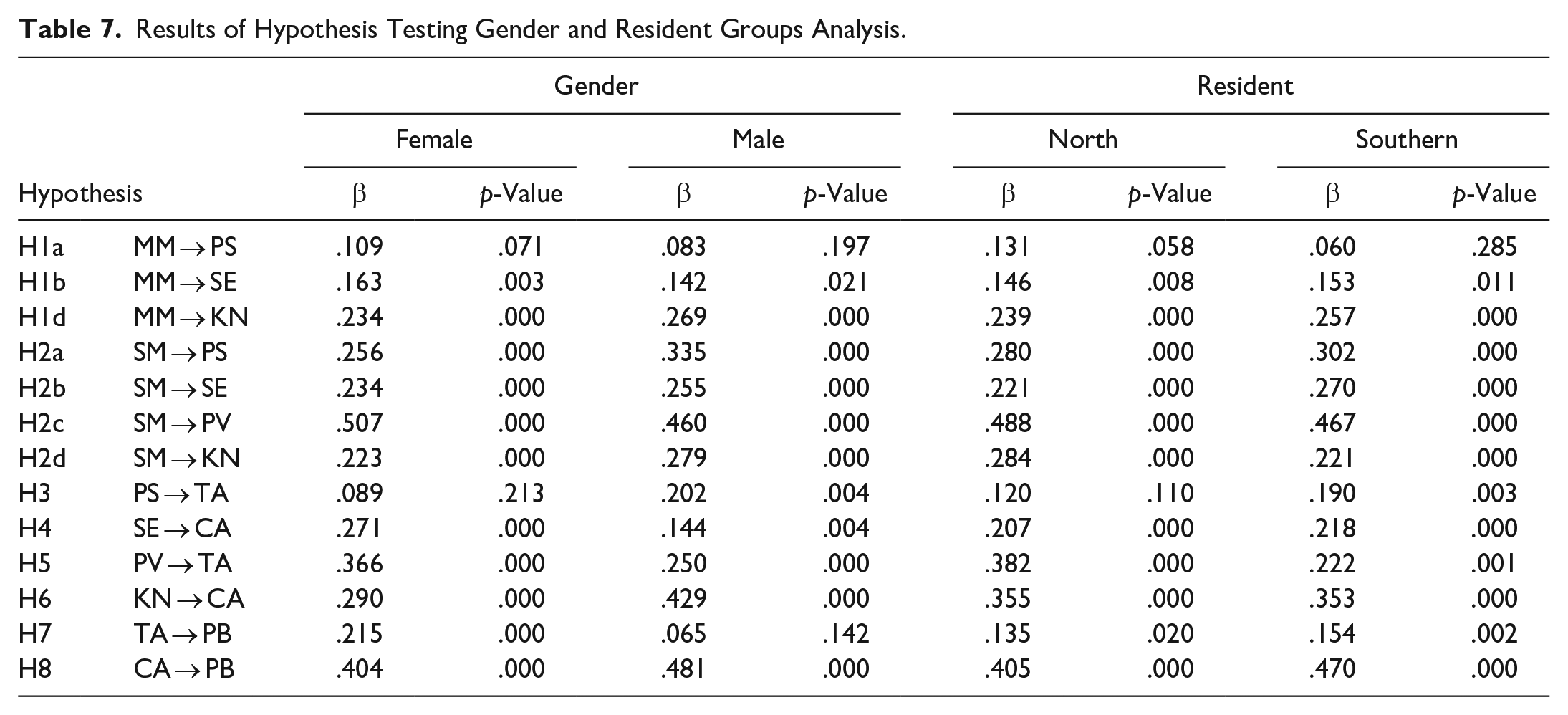
Regarding the gender group, while hypothesis H1a was not supported for both Female and Male groups, hypothesis H3 was not supported for the Female group and H7 supported for the Male group. Regarding place of place of residence, the southern and northern groups did not show any difference, because 12 hypotheses were supported for both groups. Only hypotheses H1a and H1c were not supported in both the southern and northern groups (Table 7). So as for the educational level, hypothesis H1a was not supported by the upper high school group. While H3 was not supported for the high school education group, other hypotheses were supported for both education level groups.
Results of Hypothesis Testing Gender and Resident Groups Analysis.
Discussion
The structural equation modeling valuation results confirmed that the PTME model was robust and appropriate for this study. There were 13 out of 14 hypotheses were accepted, except for H1c: Mass media communication affecting perceived vulnerability. The reason might be that after Vietnam entered the fourth wave, people’s perception about the vulnerability of the COVID-19 epidemic had been relatively good; therefore, mass media did not significantly impact the perception of vulnerability.
As expected, the results demonstrated that perceived self-efficacy and Knowledge about COVID-19 had significant effects on coping appraisal; perceived severity and perceived vulnerability significantly impacted threat appraisal, thereby affecting preventive behaviors. At the same time, both coping appraisal and threat appraisal had a significantly positive impact on response behavior, in which coping appraisal had a stronger impact. The findings implied that the response behavior was more driven by the coping appraisal factor rather than the threat appraisal. Hence, the public paid more attention to effective information to respond to behavior.
The results of this study were like the study in Dutch by de Zwart et al. (2010) which suggested that the perceived severity and vulnerability of older people with lower levels of education towards Avian Influenza was higher. It was different from the Korean study where the perception of severity and susceptibility to Avian Influenza was higher in women than in men (Park et al., 2010). In short, media was an effective channel for communicating and educating COVID-19 preventive behaviors for the public. Hence, governments should implement viable health communication strategies on mass and social media.
Conclusions
In the context of the fourth waves of outbreaks COVID-19 in Vietnam, this study established a PMTE model to explain the impact of media on COVID-19 preventive behaviors. The findings showed that mass media and social media could enhance COVID-19 preventive behaviors of the public through some mediating constructs, such as perceived severity, vulnerability, the effectiveness of knowledge, threat appraisal, and coping appraisal. More importantly, social media exposure was a strong impact on perceived vulnerability. In contrast, mass media exposure was not considered a significant positive impact on perceived vulnerability. Among 14 hypotheses proposed in this study, 13 were supported and 1 was rejected.
There were no significant differences between the preventive behaviors among different sex, place of residence, and education level groups, whilst different generations showed a significant difference in preventive behaviors. Mass media exposure positively related to perceived severity in all groups and only impacted perceived self-efficacy in Gen Y and Gen Z. Baby boomers were affected by mass media more than social media, Generation Z was affected by social media more than mass media. In contrast, Gen X and Y were affected by the balance between mass media and social media.
This study provided some insights into the influence of media on preventive behavior during the COVID-19 outbreak, which helped governments and public health officials to mitigate the impact of the COVID-19 outbreak. In addition, some of the findings outlined here might also be relevant to future studies and implications on other pandemics.
Limitations and Future Research
This research had several limitations. Firstly, the cross-sectional and convenience sample was conducted during the fourth wave of the COVID-19 outbreak in Vietnam. The knowledge about COVID-19, perceived severity, coping appraisal, and preventive behaviors might be changed with the condition then. Secondly, the sampling from the online survey might not accurately reflect the attitudes and behaviors of respondents. Thirdly, this study offered useful evidence to inform government and public health officers about the importance of health communication through mass and social media. If further research were to explore the influence of psychology and attitudes, it would be helpful to suggest practical solutions to COVID-19 preventive behavior. Finally, we called for research to explore the many factors involved in health communication and strategies, etc. Reviewing all these issues would provide some insights to enhance health communication during COVID-19 and future pandemics.
Footnotes
Acknowledgements
We thank the participants for participating in the qualitative research group discussion and the respondents who answered the questionnaire in our quantitative study. At the same time, we thank the editor and reviewers for this manuscript.
Data Availability Statement
The dataset will be available upon reasonable request to the corresponding authors.
Declaration of Conflicting Interests
The author(s) declared no potential conflicts of interest with respect to the research, authorship, and/or publication of this article.
Funding
The author(s) received no financial support for the research, authorship, and/or publication of this article.
Informed Consent
Online informed consent was obtained from all subjects involved in the study.
