



Abstract
Many definitions and models of intercultural communicative competence (ICC) have emerged over the years, predominantly influenced by Euro-American perspectives. To explore this concept within diverse cultural contexts, this study delves into ICC in the Chinese setting using a qualitative approach. Byram’s ICC model served as the theoretical foundation, guiding the investigation into English as a foreign language (EFL) undergraduates’ experiences and perceptions regarding factors that influence intercultural communication, the qualities of effective intercultural communicators, and the challenges encountered in intercultural interactions. Data were collected through semi-structured interviews with 17 purposively selected undergraduates and analyzed using Nvivo 12. The findings revealed nine crucial factors for ICC: knowledge, attitude, language competence, awareness, skills, empathy, motivation, mindset, and personal traits. These factors align with the scholarly notion that ICC is typically categorized into cognitive, affective, and behavioral dimensions. The study supports Byram’s model in understanding ICC, and further reinforces the significant role of language competence in developing ICC within the Chinese context. The study provides a nuanced understanding of ICC by emphasizing mindset, influenced by traditional Chinese cultural values, as a distinctive factor in intercultural communication. The research enhances understanding of how these factors impact communication effectiveness and personal growth among Chinese students, offering insights for enhancing ICC education.
Plain language summary
Intercultural communication skills help people from different cultures understand each other better. Many studies on these skills are based on Western ideas, but this research looks at how Chinese university students experience and develop them. This study used interviews with 17 students to explore what influences their ability to communicate across cultures. The findings highlight nine key factors: knowledge, attitude, language skills, awareness, empathy, motivation, mindset, and personal traits. These factors shape how students think, feel, and behave in intercultural situations. The research supports an existing intercultural communication model and shows that strong language skills are essential for improving communication. It also highlights how Chinese cultural values shape students’ mindsets, influencing how they interact with people from different backgrounds. This study helps educators understand how to better support students in developing intercultural communication skills.
Keywords
Introduction
In an era characterized by globalization, engaging in interactions and communication with individuals from various cultural, religious, and ethnic backgrounds has become essential in daily life. This has created a more urgent need than ever before to develop an ability to interact effectively and appropriately with people holding diverse cultural perspectives (Corbett, 2022; Fantini, 2021). This ability known as intercultural communicative competence (ICC), is considered an essential soft skill for successful functioning in the globalized society (Succi & Canovi, 2020). Higher education institutions play a crucial role in not only needing to foster essential ICC among students, but also facilitating meaningful intercultural dialogs that bring diverse groups together and promote social harmony (Einfalt et al., 2022). In China, the Ministry of Education has made significant efforts to cultivate ICC among university students to meet the demands of international interactions since 2000. More recently, policies such as the National Criteria of Teaching Quality for Undergraduate Foreign Language Majors (2018) and the College Foreign Language Teaching Steering Committee (2020) have provided more detailed guidelines for the cultivation of students’ ICC. CECR emphasizes that one of the important tasks of college English teaching is to carry out intercultural education and develop students’ ICC. Given the rising mandates from the Ministry of Education, along with heightened awareness and pressure to match the pace of globalization and international exchanges, scholars and practitioners face unprecedented challenges and opportunities in comprehending and applying ICC (Gu & Zhao, 2021; Y. A. Wang & Kulich, 2017).
Delving into ICC, scholars have introduced numerous definitions and models over the years to clarify its connotations and construct within the academic literature. However, the prevailing understanding of ICC have been largely shaped by Euro-American scholarly perspectives (Dalib et al., 2019; Nadeem et al., 2022). In China, much of the research on ICC continues to adopt Western conceptualizations and adapt them primarily to language learning or teaching contexts (Y. A. Wang & Kulich, 2017). Given that ICC is deeply embedded in researchers’ cultural contexts (Dalib et al., 2017; Nadeem et al., 2020), it is necessary to revisit the concepts derived from the Western perspective and expand the understanding of ICC to Non-Western cultural contexts such as China.
This leads us to inquire: What perspectives do individuals hold regarding ICC in the Asian context of China? Exploring Chinese perspectives on ICC not only enhances global intercultural research contributing to a more comprehensive understanding and application of this concept, but also enables educators to customize intercultural communication education to address specific perceptions within the Chinese educational context. Hence, there’s a pressing demand for ICC studies to transcend the Euro-American perspectives and account for both universal and local cultural requirements (Gu & Zhao, 2021).
Conceptualizing Intercultural Communicative Competence
The extensive attention to ICC across various fields promotes a proliferation of nuanced and diverse terminologies associated with this concept. Such as intercultural communicative competence, global competence, cross-cultural competence, intercultural sensitivity, cultural intelligence, etc. ICC is broadly defined as “the ability to communicate effectively in cross-cultural situations and to relate appropriately in a variety of cultural contexts” (Bennett & Bennett, 2004, p.149). “Effectiveness” and “appropriateness” are the two criteria of measuring ICC prevalent in literature. Effectiveness refers to the capacity to accomplish one’s objectives within a specific interaction, while appropriateness involves doing so in a way that is acceptable to the other party (Arasaratnam-Smith, 2017). These two criteria underscore the core challenge of intercultural communication, as individuals must understand and navigate the contextual rules of a situation to communicate effectively and appropriately.
ICC is a multifaceted concept. Scholars generally agree that it includes cognitive, affective, and behavioral dimensions (Arasaratnam-Smith, 2017). To further elucidate the factors that influence ICC and its structure, researchers have proposed more detailed models. Additional components essential for effective ICC have been identified, such as language competence (Byram, 2021; Fantini, 2012, 2020), religion factors (Nadeem, 2022; Nadeem et al., 2017), and willingness to communicate (Munezane, 2021). Arasaratnam and Banerjee (2011) introduced a culture-general model, the Integrated Model of Intercultural Communicative Competence (IMICC), with the purpose of understanding and predicting how individuals from different cultural backgrounds can effectively communicate. This model identifies four factors that influence ICC: sensation seeking, ethnocentrism, attitudes toward other cultures, and motivation for engaging in intercultural communication. In addition to the above theoretical perspectives, Dorjee and Ting-Toomey (2018) proposed a model emphasizing mindful intercultural communication. This model focuses on three core components: cultural variability, mindfulness, and interaction competence. Their approach underscores the need for reflective practices and the development of adaptability in diverse intercultural contexts, further enriching the conceptualization of ICC.
Byram’s ICC Model
Byram’s (2021) ICC model, originally proposed in 1997, serves as the primary theoretical framework for this study. Although developed within a Western sociocultural context, the model was designed to foster ICC in foreign language teaching by structuring it into five key components. These components provide clear learning objectives and assessment criteria, which have informed numerous studies on ICC development in language education, including in China (T. Y. Chen, 2022; Liu & Yang, 2023; Mu & Yu, 2023; X. Zhang & Zhou, 2023). Byram’s ICC model is regarded as one of the most influential frameworks in ICC research. A 2006 survey by Deardorff rated it 3.5 out of 4.0 in terms of its relevance and comprehensiveness. The model identities the following key components: “Knowledge of others; knowledge of self; skills to interpret and relate; skills to discover and/or to interact; valuing others’ values, beliefs, and behaviors; and relativizing one’s self. Language competence plays a key role” (Byram, 1997, p. 34).
Furthermore, Byram’s model is a list model (Byram, 2021), categorizing ICC into distinct components. This structure allows for adaptation based on different intercultural contexts while at the same time providing a basis for general exploration of ICC. Among its key contributions, the model emphasizes that language competence is integral to ICC, which is particularly relevant to the Chinese foreign language education system. Traditionally, language competence and intercultural competence have been treated as separate domains in China’s educational framework, with limited integration in practice (Feng et al., 2024). By highlighting the interconnection between linguistic and intercultural dimensions, Byram’s model provides a useful starting point for examining how students perceive and engage with ICC in their own learning experiences.
Figure 1 illustrates Byram’s (1997) model of ICC, which emphasizes the integration of linguistic and intercultural competencies for effective intercultural communication. At the center of the model lies intercultural competence, which is underpinned by key elements attitude, knowledge, skills and awareness. Attitude and knowledge serve as the foundation for effective intercultural communication (Byram, 2021). Attitude encompasses curiosity, openness, and a willingness to suspend judgment. Developing such attitude requires individuals to “decenter” themselves (Byram, 2021) and challenge their own cultural norms. Knowledge can be categorized into understanding of one’s own society’s social groups and cultures, familiarity with the counterpart’s culture, and understanding of interaction processes. Knowledge and attitudes are further influenced by individual skills. Skills encompass the ability to interpret and relate, as well as the ability to discover and interact. The former involves analyzing cultural information from one’s own and other countries and discerning potential relationships between them, while the latter pertains to acquiring deeper insights into a culture and its practices, and effectively applying knowledge, attitudes, and skills in real-time communication contexts. Lastly, individuals engaging in intercultural communication must cultivate critical cultural awareness, which make language teaching “educational” (Byram, 2021). This ability enables them to reflect on their own stereotypes and prejudices, critically evaluate the cultural practices, beliefs, and values of both their own and other cultures, and foster mutual respect and meaningful dialog.

Byram’s model of intercultural communicative competence (Byram, 2021).
Mindset in Intercultural Communication
The concept of mindset plays a crucial role in ICC, particularly in how individuals approach cultural learning and adaptation. Mindset theory, developed by Dweck (2006), distinguishes between two main types of mindsets: fixed and malleable. Individuals with a fixed mindset tend to perceive abilities as inherent and unchangeable, while those with a malleable/growth mindset believe that abilities can be developed through effort and persistence (Dweck, 2011). Holden et al. (2021) extend Dweck’s framework by introducing the concept of “culture mindset,” which refers to “the set of beliefs and attitudes that people bring to intercultural contexts that govern the ease with which people adapt, learn, and update cultural information” (p. 4). Cultural mindset is a belief system that governs the overall mechanisms of learning and adaptation. Their study demonstrated that individuals with malleable cultural mindsets show greater persistence, openness to feedback, and adaptability when navigating intercultural challenges. This aligns with the empirical studies by Chao et al. (2017), which emphasized implicit culture beliefs (the beliefs about fixedness or malleability of cultural attributes) influenced intercultural rejection sensitivity, which impacted the intercultural adjustment of sojourning students and their subsequent ICC. Similarly, Chinese scholars Y. A. Wang and Kulich (2015, 2017) also emphasize that mindset (xintai) is a critical factor influencing Chinese students’ ICC. They suggest that a growth-oriented mindset toward culture can positively affect one’s ability to navigate intercultural environments.
Intercultural Communicative Competence in China
A review of current literature highlights three key trends in ICC research in China: the development of Chinese ICC models (Gu, 2017; R. Z. Peng et al., 2020; Yuan, 2021; H. L. Zhang & Yao, 2020), the design and evaluation of teaching interventions to enhance ICC (Liao & Li, 2023; Mu & Yu, 2023; Yu & Yu, 2024), and the development of ICC assessment scales (T. Y. Chen, 2022; R. Z. Peng et al., 2015; X. Zhang & Zhou, 2023). However, much of the discourse still largely depends on Western conceptualizations (Dai, 2019; Y. A. Wang & Kulich, 2017; Tian & Dervin, 2024). While commonalities may exist between the Eastern and Western ICC models, there could also be indigenous understandings of competence or emerging differences from the Western frameworks. In the context of Chinese culture, harmony, guan xi (relationship), and face-saving behaviors are often cited as influential factors shaping ICC (Zhai & Razali, 2020). Byram (1997, 2021) cautioned that language teaching and learning are context-dependent phenomena, emphasizing the need to recognize the influence of specific contexts on the nature of required ICC. Consequently, there is a pressing need to elevate the status of the Chinese perspective on ICC.
Empirical studies exploring the Chinese perspective of ICC remain limited (Y. A. Wang & Kulich, 2017; Q. Wang & Teo, 2024). Some investigations have focused on Chinese college students’ challenges in ICC, revealing that insufficient language competence, cultural background knowledge and intercultural communication skills impeded students’ intercultural engagement (Mu & Yu, 2021; Wu et al., 2025; X. Zhang & Zhou, 2021; Zhou & Burhanudeen, 2023). However, to gain a more nuanced understanding of how Chinese students perceive and conceptualize ICC, it is insufficient to merely identify the challenges they encounter. Y. A. Wang and Kulich’s (2015) study offers valuable insights into Chinese students’ perspectives through an intervention conducted in an intercultural communication course. The students participated in a multi-step ethnographic interview process, engaging in two rounds of interviews. The findings revealed significant improvements in students’ ICC, with enhancements observed across 10 specific areas of competence. These areas, regarded as a “Chinese” list of intercultural attributes, are categorized into cognitive, affective, and behavioral aspects. The cognitive aspect includes interacting with a diversity of cultural people and patterns, understanding the complexity of culture, and relearning one’s own culture with new awareness. The affective aspect covers generating positive attitudes toward other cultures, overcoming stereotypes and prejudice, seeing from other perspectives or worldviews (empathy and ethnorelativism), cultural humility (overcoming cultural superiority, power, privilege, pride), transformation of mindset (intuitive emotion/attitudes), and obtaining confidence and motivation in intercultural communication. The behavioral aspect involves obtaining communicative skills. These 10 categories provide a preliminary understanding of ICC from Chinese students’ perspective. While they reveal students’ perspectives and growth in ICC, the main objective of the study was to assess the course’s effectiveness.
Building on these previous insights, the present study seeks to explore how Chinese students conceptualize ICC. Using a qualitative approach based on Byram’s (2021) model, it delves deeper into the students’ perceptions of ICC in light of their intercultural experiences. The following research questions guide this study:
What factors contribute to effective communication when interacting with people from different cultural backgrounds?
What qualities or attributes define individuals who are competent in intercultural communication?
What common challenges are encountered when interacting with people from different cultural backgrounds?
Method
The study employed an exploratory qualitative methodology. This approach is particularly suited to address a research problem in which the variables are unknown and exploration is needed (Muthiah et al., 2020). It facilitates the exploration and comprehension of participants’ experiences, viewpoints, and attitudes, especially in unraveling complex and multidimensional phenomena like ICC. Semi-structured interviews were used to gather in-depth insights, allowing for flexibility in probing participants’ responses while ensuring that key topics were covered.
Participants and Sampling
The study involved 17 senior EFL undergraduates, aged between 20 and 21, including 12 females and 5 males. Participants were selected through purposive sampling. The criteria for selection included: Firstly, participants were non-English majors, but specializing in language, such as Japanese, Russian, French, or others. This enables them to have more exposure to foreign instructors, encompassing both English-speaking instructors and those specialized in their respective language disciplines. In the Chinese context, students lack opportunities for direct interaction with people from other countries; indirect contact is the main form of intercultural experience among Chinese college students (Zhou & Burhanudeen, 2023; Zou & Yu, 2021). To address these shortcomings, language majors were chosen as they have comparatively greater opportunities for direct interaction with foreigners. Secondly, students must possess practical experience in engaging with individuals from diverse cultural backgrounds, ensuring them to provide detailed descriptions of real-life encounters rather than hypothetical scenarios.
A maximum variation sampling technique was employed to ensure participant diversity (Creswell & Poth, 2018), encompassing individuals with different genders, academic majors, and language proficiency levels, as well as varying degrees of intercultural interaction experience. All participants had attended language or culture courses led by foreign instructors, with class attendance ranging from 1 to 3 times per week depending on their majors. This provided opportunities for engagement with foreign instructors both during and after class. Beyond classroom interactions, participants had diverse intercultural experiences. One had participated in an exchange program abroad, another had collaborated on research projects with foreigners, and a third had developed friendships with individuals from foreign backgrounds. Several participants had international travel experience, while one worked part-time as an interpreter. Additionally, three participants regularly attended English Corner activities to engage with foreigners. The demographic characteristics of the participants, including gender, major, CET level (The College English Test “CET,” a standardized English proficiency exam organized by China’s Ministry of Education), frequency of interaction with foreign instructors, and overseas experience, are detailed in Table 1.
Demographic Profile of Participants.
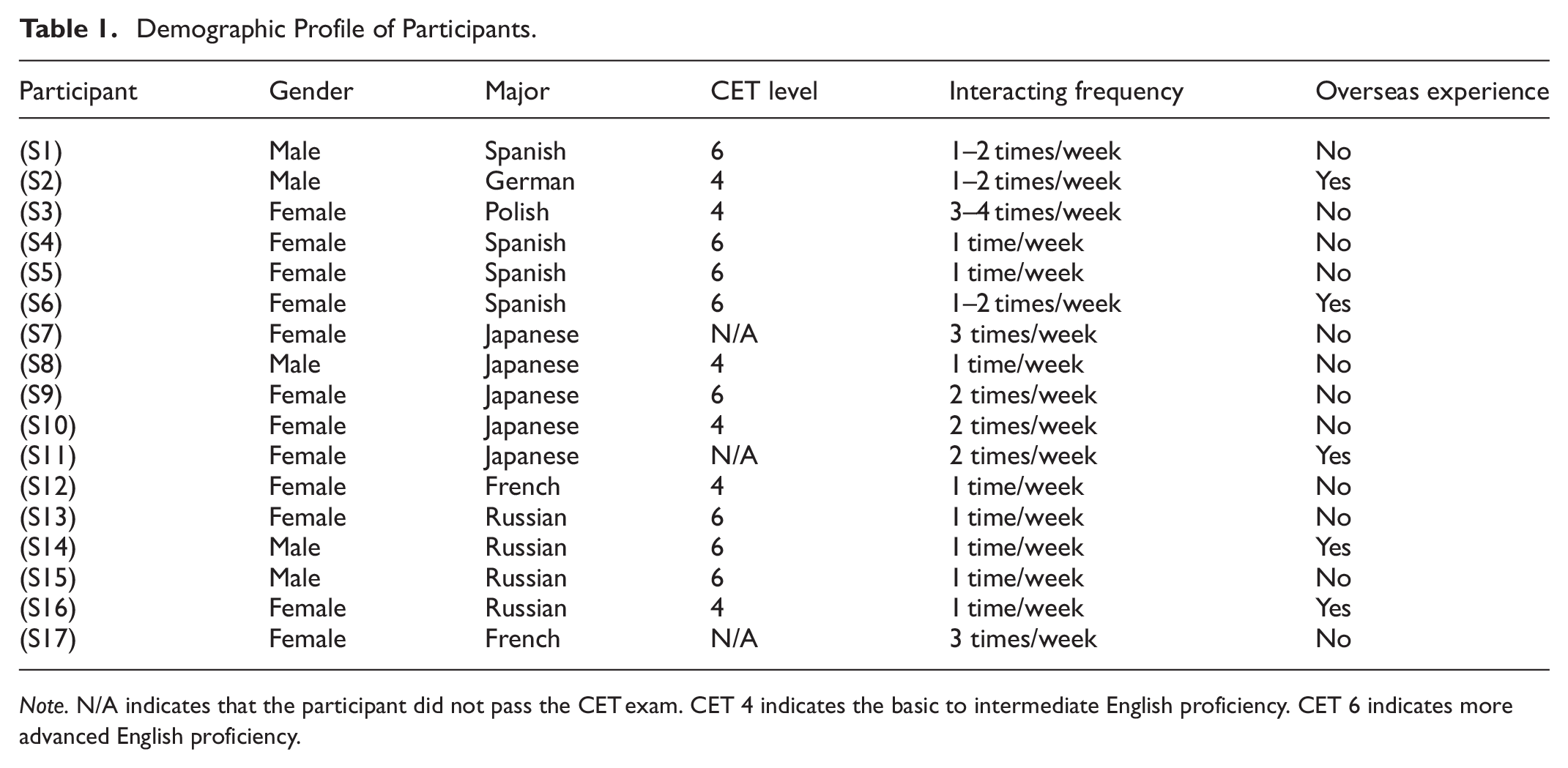
Note. N/A indicates that the participant did not pass the CET exam. CET 4 indicates the basic to intermediate English proficiency. CET 6 indicates more advanced English proficiency.
Procedures
Each interview, lasting approximately 20 to 30 min, aimed to capture detailed perceptions and actions of the participants. Which were conducted individually in Chinese and face-to-face. The interview questions covered a range of topics. Including past intercultural experiences, perceptions of ICC and challenges and suggestions in intercultural interactions. For example, two of the interview questions from the prompts were: “Have you encountered any difficulties when communicating with people from different cultural backgrounds? Can you elaborated with an example?,”“What advice would you give to others who are trying to improve their ICC?” The respondents’ answers to each research question were grouped into separate files before the analyses were run.
Ethical Considerations
This study received ethical approval from the affiliated institution. Informed consent was obtained from all participants prior to the interviews. Participants were assured that their participation was voluntary, and they could withdraw from the study at any time without consequences. Since the study focused on participants’ lived experiences and perceptions rather than sensitive topics, the risk of psychological distress was minimal. To protect confidentiality, all identifying information was anonymized. The insights gained from participants’ experiences may help improve future teaching strategies and foster more effective intercultural interactions.
Data Analysis and Credibility
The data analysis employed Reflexive Thematic Analysis (RTA), emphasizing the researcher’s reflexive engagement and intepretive responsibility in theme development (Byrne, 2022). Interview transcriptions prioritized retaining participants’ words; however, minor edits were made for clarity when verbatim transcription hindered comprehension. Nvivo 12 software facilitated data organization and coding. Themes were generated and coded following Byrne’s (2022) application of Braun and Clarke’s framework for RTA.This process involved: (1) reviewing and transcribing participants’ responses to ensure accurate understanding; (2) coding units of words, relevant phrases, and sentences related to emerging research themes at the nodes created; and (3) summarizing these themes based on the frequency of nodes to address the research questions.
Coding Methodology
In coding, a flexible and organic approach is followed to gradually identify themes within the data, rather than predefining a specific thematic framework. Recognizing the diversity of participants’ responses, each mention of a term or theme is treated as a separate instance, as each occurrence may reflect a distinct context or aspect of the concept being discussed (Krippendorff, 2018). This approach ensures the richness and variability of participants’ insights are captured.
To minimize interviewer bias during data collection, open-ended questions were used, allowing participants to freely express their views and experiences regarding intercultural communication. These questions were broad in nature, such as exploring the characteristics of an effective intercultural communicator, challenges faced in intercultural interactions, and factors contributing to successful communication. By avoiding explicit prompts or assumptions, this approach ensured that the identified themes emerged naturally from participants’ responses, without the influence of predetermined biases.
Although some themes appeared less frequently in the data, frequency alone was not used to determine the importance of a theme. As noted by Buetow (2010) and J. Wiltshire and Ronkainen (2021), a theme mentioned by only a few participants may still be of significant relevance if it provides insights into specific aspects of intercultural communication that are critical in particular contexts, even if not universally experienced. Therefore, a balance was maintained between frequency and contextual significance. Themes with lower frequency but greater contextual relevance were considered valuable. The depth of data and the contextual relevance of themes were equally important in the analysis. Three researchers participated in the coding process, aiming to allow for a more nuanced and enriched interpretation of the data.
Findings
The findings analysis addresses three themes derived from the three research questions, providing a comprehensive understanding of students’ perspectives on ICC. The results of the research are represented in coding tables for each research question. These tables feature themes and sub-themes in the first column, with codes summarizing student opinions. The frequency of codes, indicating the repetition of similar views, is displayed in the second column.
Theme1: Factors Contributing to Effective Communication
Research question 1 (RQ1) aimed to explore participants’ understanding of ICC and identify the key factors that influence intercultural communication. The results (see Table 2) yielded 31 codes, which were categorized into eight themes. Among them, knowledge, attitude, and language competence were the most frequently mentioned factors, indicating their central role in facilitating intercultural communication. Other factors included mindset, empathy, motivation, skills and awareness.
Themes and Codes on Influencing Factors.
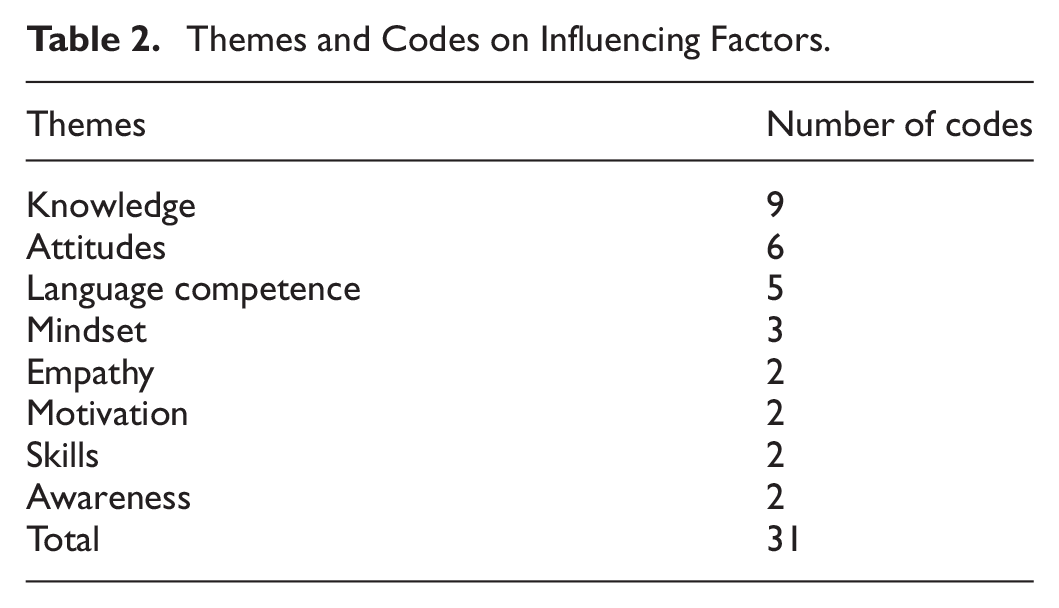
Mindset is recognized as an influential factor in intercultural communication, shaping individuals’ instinctive responses to interactions. This psychological and emotional component significantly influences perceptions and engagement across cultures, aligning with the findings of Y. A. Wang and Kulich (2015). While some scholars, such as Holden et al. (2021), consider attitude a component of mindset, the participants in this study primarily discussed attitude in practical terms, highlighting traits such as positivity, respect, openness, curiosity, and politeness. In contrast, mindset pertains to deeper psychological dispositions that guide one’s overall approach to intercultural experiences. To reflect participants’ perspectives, attitude was analyzed as a distinct factor in this study. Motivation refers to the internal drive that encourages engagement with other cultures, while empathy is the ability to understand and share the feelings of others. Both are central to effective communication, and treating them as separate factors provides a more nuanced analysis of their distinct roles. Collectively, these components are essential for effective intercultural interactions.
Knowledge emerged as the most frequently mentioned factor, highlighting its foundational role in ICC. Participants viewed knowledge not only as an understanding of foreign cultures but also as an awareness of their own cultural backgrounds. Moreover, they regarded cultural knowledge as a prerequisite for mutual respect and smooth communication, which aligns with Byram’s emphasis on intercultural knowledge. As S1 illustrated, Cultural knowledge is crucial as it allows us to better understand the differences between various cultures. Only by understanding both other cultures and our own can we truly offer respect to others during the process of expression, and cultural knowledge facilitates deeper, smoother, and more confident communication.
Participants also underscored the significance of understanding specific cultural practices. For example, S8 stressed the importance of knowing cultural taboos and customs: I think it’s crucial to understand the other party’s customs, background, and taboos. For example, something that may seem fine to us could make them uncomfortable when brought up. Being prepared in this way is essential.
Language competence is recognized as a key factor influencing effective communication. The findings suggest that it extends beyond having an extensive vocabulary and grammatical accuracy; it also involves the ability to express thoughts and ideas fluently and appropriately, particularly in oral interactions within intercultural contexts. As S7 noted, “Fluent expression and rich vocabulary are crucial.” S11 emphasized the importance of effective oral communication: In oral expression, the primary goal is to ensure that others understand your intended meaning while speaking in a way that is appropriate and polite. Effective oral expression helps speakers appear more natural and comfortable in interactions while also reducing misunderstandings.
Mindset, as highlighted by participants, is a contributory factor that influences individual’s confidence and ability to engage effectively in intercultural interactions. It reflects both personal adaptability and the influence of cultural values. S15 highlighted the importance of a malleable mindset in intercultural communication, emphasizing its role in personal adaptability: I think mindset is important because if you have a positive (malleable) mindset, even if you have difficulties in expressing certain words in communication, you can think it over or find other ways to solve the problem. Conversely, if your mindset is negative, you think you cannot handle it, you may stumble or be too nervous to continue the communication.
Moreover, mindset is shaped by cultural expectations and social norms. In the Chinese context, values such as maintaining harmonious relationships and avoiding loss of face play a significant role in shaping individuals’ mindset toward intercultural communication. While these values encourage politeness and respect, they may also lead to over-cautiousness, making individuals more concerned about saying something inappropriate than fully engaging in the interaction. S17 discussed how mindset, influenced by the traditional values: When communicating with foreigners, I am particularly cautious because I’m afraid of saying something inappropriate or impolite that might make them angry. I care a lot about maintaining friendly and harmonious relationships. I also want to avoid embarrassment or the loss of face.Therefore, when I communicate, I usually stick to simple and surface-level topics.
Theme 2: Qualities of Competent Intercultural Communicators
Research question 2 (RQ2) aimed to identify particular qualities or behaviors exhibited by individuals perceived as competent in intercultural communication. This question provides concrete examples and context to further elaborate on the findings from RQ1. Table 3 illustrates various qualities deemed important in intercultural communication, resulting in the identification of 41 codes organized into six themes. The theme of personal traits emerged as significant, encompassing qualities related to individuals’ personalities and demeanor. These findings corroborate those of Sercu (2023) and Rings and Allehyani (2020), who identified personal traits as being associated with higher ICC. This theme was further divided into three subthemes, with “confident,”“outgoing” and “extroverted” being the most frequently mentioned traits. Additionally, two participants emphasized the significance of friendliness or sincerity.
Themes and Codes on Qualities of Competent Intercultural Communicators.

Language competence and attitude also emerged as a crucial quality of competent communicators. While knowledge was the most frequently mentioned factor in RQ1, its relative emphasis shifted in RQ2. This is likely because RQ2 focuses on observable qualities of competent communicators, where personal traits, language competence, and attitude play a more immediate and visible role in interactions. Although knowledge, motivation, and skills were mentioned less frequently, they were also considered essential components for effective intercultural communication. Overall, the findings from RQ2 reaffirm the results of RQ1 and further highlight the importance of language competence in specific intercultural contexts, while complementing the results with insights into how personal traits contribute to effective ICC.
Most of the participants underscored the importance of outgoing, proactive, and confident traits in successful intercultural exchanges. These traits enable individuals to engage more actively with people from different cultures, fostering openness and ease in communication. S3 explained, The person’s personality could be a significant factor. Their personality should be more outgoing, confident, and good at expressing themselves. They are willing to speak out, and even if their expressions may not be entirely accurate, they are willing to express their thoughts and engage in communication with people from other cultures.
S10 pointed out the importance of proactive behavior with examples. This perspective highlights that intercultural communication often requires taking the initiative rather than waiting for opportunities to arise. As S10 reflected, I think you should be brave enough to express yourself, “dare to open your mouth,” I am the kind of person who is shy and reluctant to express myself. One day, while dining at the school canteen, I encountered a foreign teacher. He was chatting with the noodle vendor in Chinese, and I found it fascinating. The noodle vendor, is not well educated and does not speak English. The foreign teacher took the initiative to converse with him, and I felt that he had a desire to express himself in Chinese.
Language competence is widely regarded as a crucial quality of competent intercultural communicators. It acts as a bridge that facilitates effective interaction and deepens understanding between individuals from different cultures. Those with a high level of language competence are often more adept at building connections, sharing ideas, and navigating cultural differences. As S17 noted, The people who are competent in intercultural communication are undoubtedly proficient in spoken language, because they can articulate their thoughts effectively and engage in smooth communication with others.
S1 expressed the same opinion, Those are the people with relatively good language competence because I believe if your language are better, you’re more willing and able to express yourself. Conversely, if your language are not so good, you may fear that others will notice, and you’ll be afraid of making mistakes, so you won’t express yourself.
S5 further elaborated on the importance of appropriateness in language use: Being proficient in a language is not just about speaking fluently or knowing many words. A truly competent intercultural communicator can adjust their language according to different situations and people. They know how to express their thoughts clearly while also being polite and appropriate, making the conversation smoother and more natural.
Attitude also plays a vital role in intercultural communication. An open-minded and respectful attitude toward cultural differences enables individuals to engage more effectively with people from diverse backgrounds. S4 observed that some individuals struggle to understand why foreigners communicate or behave in certain ways, which leads to reluctance in interaction. Without an accepting attitude, they may avoid communication altogether, highlighting the necessity of tolerance and cultural openness in successful intercultural exchanges.
Theme 3: Challenges Encountered in Intercultural Interactions
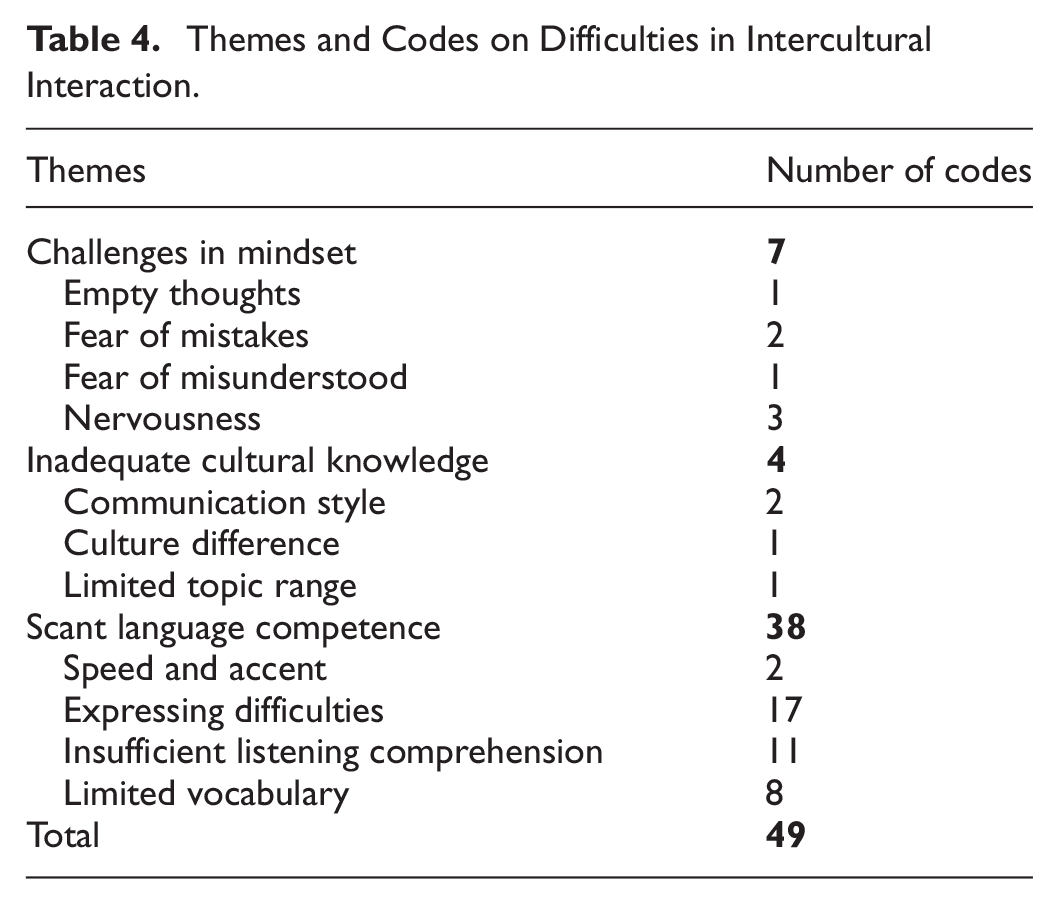
Research question 3 (RQ3) explored the challenges Chinese students face in intercultural interactions, aiming to deepen the understanding of how these difficulties affect communication effectiveness and personal growth. As shown in Table 4, the analysis identified 48 codes, categorized into three themes. Language competence is the primary challenge for Chinese EFL learners when communicating with foreigners. Wu et al. (2025) also found that a lack of sufficient foreign language competency led to a lack of courage and confidence in intercultural communication for many students. Language competence obstacle is further broken down into four subthemes: expression difficulties (linguistic challenges and pragmatic challenges), insufficient vocabulary, comprehension challenges, and fast-paced speech. The other two key difficulties in intercultural interaction are mindset and cultural knowledge. Mindset issues include empty thoughts, fear of making mistakes, fear of being misunderstood, and nervousness, all of which led to psychological barriers in intercultural communication. Cultural knowledge challenges encompasses differences in communication style, cultural differences, and a limited topic range, reflecting difficulties arising from a lack of cultural understanding. These factors caused hindered development of EFL learners’ ICC, providing deeper insights into their focal points and weaknesses in intercultural interactions.
Themes and Codes on Difficulties in Intercultural Interaction.
S2 shared his experience of facing language barriers when communicating with foreigners. He highlighted the challenge of not being able to fully express his thoughts, which is a common issue for many EFL learners. He explained, When communicating with foreigners, I feel that the biggest problem is language. Sometimes, certain words fail to convey the intended meaning, and some thoughts may not be fully expressed. There have been instances when communicating with foreign teachers, where I struggled to express certain words, I didn’t know how to articulate them, and when attempting literal translations, the other party didn’t quite understand, leaving them puzzled. Therefore, language barriers often lead to communication gap and a sense of frustration.
S7′s experience underscores how serious language barriers can be, not only hindering effective communication but also diminishing self-esteem and confidence in social interactions. She shared, I don’t have a good command of the language, it often feels like my confidence crumbles. She speaks very fast, and sometimes I might not understand, or even if I do, I can’t express what I want to say. I just can’t get the words out, so I end up stuttering. It makes me feel embarrassed and anxious, and I often avoid speaking because of this fear. Sometimes I resort to body language to help, but it doesn’t always work.
S5 discussed a kind of psychological state related to mindset. Specifically, it reflects a fixed mindset or psychological barrier where fear and anxiety about making mistakes or being judged.
I was actually decent at listening, writing, and reading, but I was too nervous to speak. I was afraid of making mistakes or losing face. I was particularly anxious about encountering intercultural communicators who might spot my incorrect pronunciation or vocabulary. So I missed lots of chances of intercultural interactions.
Similarly, S12 described how a fixed or negative mindset, manifested through nervousness and self-doubt, hindered intercultural engagement: When I had the opportunity to speak with international students, I often hesitated. I worried that my words might not make sense or that my grammar was wrong. Sometimes, I rehearsed sentences in my mind repeatedly, but by the time I built up the courage to speak, the moment had already passed. This made me feel even more reluctant to initiate conversations in the future.
Two participants highlighted how differences in communication styles could lead to difficulties in understanding. This contrast is particularly evident in semantic and emotional expressions, which may result in misunderstandings or discomfort during interactions. S6 shared her experience with a foreign friend, emphasizing cultural differences in communication styles.
The communication issue may arise from their more direct expressions, which contrast with our tendency to be more reserved. My foreign friend tends to be more direct in her choice of words, frequently expressing feelings like “I really like you,”“I love you,” and “I love you guys so much.” It seems to me that we don’t express ourselves this way. This difference sometimes makes me feel uncomfortable or unsure about how to respond.
Discussion
Theme1: Factors Contributing to Effective Communication
The thematic analysis identified eight key factors contributing to ICC within the Chinese context: knowledge, attitude, language competence, awareness, skills, empathy, motivation, and mindset, with knowledge, attitude, and language competence being especially emphasized. These factors are interconnected and interact with one another. For example, attitude and mindset are interconnected concepts that influence how individuals behave and respond in various intercultural situations. Similarly, language competence and skills are interrelated, with language competence forming the foundation for developing interaction strategies and communication skills in intercultural contexts. Categorizing them into separate dimensions firstly provides a more structured and targeted approach in examining the different facets of ICC. Secondly, it aligns with participants’ perspectives, allowing for a more accurate reflection of their views. This classification also provides a framework for more effective interventions and educational strategies that can foster each specific dimension of ICC. These eight factors broadly fall into the common framework in ICC research, namely the cognitive, affective, and behavioral dimensions (refer to Table 5).
The Classification of Chinese Factors of ICC with Classic ICC Areas.

The cognitive dimension involves knowledge and awareness, such as cultural knowledge, which are essential for understanding and navigating intercultural interactions. The affective dimension includes psychological and attitudinal factors, including motivation, empathy, and mindset, which influence an individual’s willingness and response to intercultural communication. Finally, the behavioral dimension encompasses practical skills and interaction strategies, including language competence, which are crucial for successful participation in intercultural exchanges. Language competence is categorized under the behavioral dimension because participants primarily emphasized the application of language in actual communication, particularly oral expression and the ability to communicate appropriately and effectively in intercultural contexts. This empirical evidence underscores a shared understanding of ICC’s key dimensions between Eastern and Western perspectives and highlights the importance of developing a comprehensive set of competencies to effectively manage the complexities of intercultural communication (Dai & Martin, 2022).
While Byram’s model does not explicitly adopt the cognitive, affective, and behavioral classification, its key components can be mapped onto these dimensions. Byram’s model provides a more detailed framework by specifying key components: knowledge, skills, attitudes, and awareness, along with language competence as an integral element. This study supports these concepts by including all these five factors identified as key elements. Specifically, the results reinforce Byram’s assertion of the importance of language competence for effective communication across cultures. Additionally, the recognition of mindset as a factor in this study highlights the role of culturally specific psychological traits in managing intercultural interactions in China. These findings extend Byram’s model by integrating elements particularly relevant to the Chinese context, complementing its application in this setting.
Theme 2: Qualities of Competent Intercultural Communicators
The qualities of competent intercultural communicators include personal traits, language competence, attitude, knowledge, motivation, and skills. Since personal traits are generally considered inherent and less malleable (Fantini, 2012), this section focuses primarily on language competence, which was particularly emphasized by the participants.
Across all three survey questions, participants consistently emphasized the importance of language competence for effective intercultural interaction. In many Western ICC models, however, language is often treated as a taken-for-granted element, with insufficient focus on its role in communication (Deardorff, 2006; Fantini, 2012, 2020; Yuan, 2021). In contrast, this study demonstrated that language competence serves as the foundation for intercultural communication for EFL learners, influencing not only their ability to convey messages effectively but also other key psychological factors such as confidence, mindset, and motivation. These findings align with those of Dalib et al. (2017), who identified language as a key enabler in intercultural interactions, noting that it can either facilitate or hinder connections with others. Furthermore, Feng et al. (2024) found that language competence acts as a catalyst for ICC development, deeply interacting with other ICC components and promoting communication confidence, motivation, and improving communication effectiveness.
The emphasis on language competence in this study aligns with Byram’s model, which is one of the few ICC models that explicitly underscores the essential role of language competence in intercultural communication. Language competence is not merely a tool for communication; it significantly influences ICC and its components, offering a broader platform for meaningful engagement. Moreover, participants perceived language competence as extending beyond linguistic accuracy to encompass the ability to communicate effectively and appropriately. This perspective aligns with Byram’s (2021, 1997) interpretation, which emphasizes that language competence includes pragmatic and sociolinguistic constructs. Simply knowing vocabulary and grammar is insufficient; successful intercultural communication requires sensitivity to tone, politeness strategies, and culturally appropriate ways of expressing thoughts. Additionally, the strong emphasis on oral communication reflects a practical concern among participants, as spoken interactions are often where misunderstandings arise most frequently. It highlights the importance of confidence and adaptability in navigating real-time conversations, where immediate responses and adjustments are required to maintain mutual understanding.
Identifying language competence as a crucial component of ICC is of significant importance for the development of Chinese EFL learners’ ICC. Since Chinese students are non-native speakers, they often lack confidence in intercultural communications, which can hinder their ability to engage fully. Improving language competence not only boosts confidence but also enhances the ability to navigate diverse cultural contexts effectively (Fantini, 2020; Feng et al., 2024). This focus on language competence guarantees a more comprehensive and effective development of ICC, addressing one of the most critical challenges faced by Chinese EFL learners in their intercultural interactions, ensuring that learners are better equipped to understand, engage, and communicate across cultural boundaries.
Theme 3: Challenges Encountered in Intercultural Interactions
The question explored participants’ experiences and reflections on the challenges encountered during intercultural interactions, providing deeper insights into their impact on communication effectiveness and personal growth. Beyond language competence, mindset and cultural knowledge were identified as significant challenges. These findings partially align with previous research (Wu et al., 2025; Zhou & Burhanudeen, 2023), which also highlighted the challenges of limited language proficiency and insufficient intercultural knowledge among Chinese EFL learners. This section focuses on mindset, an aspect that interconnects with these two challenges but has not received sufficient attention in research. The study identified two key aspects influencing mindset in intercultural communication.
First, mindset in intercultural communication is strongly influenced by traditional Chinese cultural values, particularly the emphasis on harmony, respect, and interpersonal relationships. In Chinese culture, harmony is highly valued, and individuals are encouraged to maintain positive relationships in social interactions. The ability to achieve interpersonal harmony is considered a key indicator of social competence (G. M. Chen, 2016). This study found that mindset reflects these cultural values, shaping how individuals perceive and engage in intercultural communication. Participants expressed a strong desire to avoid impoliteness or defensiveness, often exhibiting heightened sensitivity to others’ feelings. While this sensitivity fosters mutual respect, it can also act as a psychological barrier, making individuals overly cautious and hesitant in intercultural interactions.
Y. A. Wang and Kulich (2015) and Holden et al. (2021), also emphasized the significant role of mindset in shaping individuals’ engagement and adaptability in intercultural communication. Y. A. Wang and Kulich (2015) noted that “xintai” (mindset) barriers arise from an excessive concern for others’ feelings, driven by the goal of maintaining “guanxi” (interpersonal connections). This study corroborates their view, highlighting that Chinese learners’ mindsets are deeply shaped by cultural expectations regarding relationship-building, harmony, and face preservation. While these values promote respectful communication, they may also lead to a reluctance to take risks or engage freely in intercultural interactions, ultimately influencing individuals’ adaptability in diverse cultural settings.
Second, mindset influences individuals’ ability to adjust to unfamiliar communication contexts, navigate challenges, and persist despite difficulties. In this study, it was primarily reflected in participants’ responses to uncertainties regrading their language competence and cultural knowledge. A key challenge faced by participants was uncertainty about their language competence. Even when their language skills were sufficient for communication, many still experienced anxiety about making mistakes or being misunderstood. This uncertainty often led to hesitation, avoidance, or excessive self-monitoring, which in turn hindered their willingness to engage in intercultural interactions. Some participants felt that if they were unable to express themselves with accuracy, they preferred to withdraw from conversations rather than risk embarrassment. This phenomenon reflects what Lou and Noels (2019) describe as a fixed mindset toward language competence, where individuals believe their language ability is static and fear that mistakes indicate incompetence. Such a mindset reduces adaptability by increasing anxiety and decreasing confidence in real-life communication. Similarly, uncertainty about cultural knowledge also affected adaptability. Participants expressed concerns about unintentionally violating cultural norms or misinterpreting social cues. This apprehension often resulted in a cautious communication style, where individuals prioritized avoiding mistakes over active engagement.
This study reinforces the idea that fostering a malleable mindset is essential for personal adaptability in intercultural communication, which encourages individuals to perceive challenges as opportunities for learning rather than threats to self-image. As Holden et al. (2021) emphasize, a malleable mindset enables individuals to manage uncertainty, adjust their communication strategies, and navigate cultural differences more effectively. The study findings suggest that intercultural communication training should address the various factors influencing students’ mindsets. Educators can help students develop a more adaptive and resilient approach by encouraging them to view misunderstandings as learning opportunities rather than failures. Additionally, students should be guided to balance politeness with confidence, ensuring that cultural considerations do not hinder meaningful engagement.
Conclusion
This study explored the dimensions of ICC within the Chinese context, framed by Byram’s model. The findings highlighted the intricate nature of ICC and its implications for effective intercultural communication, with several key insights: First, the analysis identified nine critical dimensions of ICC: knowledge, attitude, language competence, awareness, skills, empathy, motivation, mindset, and personal traits. Among these, language competence emerged as particularly influential and was confirmed as a cornerstone of ICC, significantly influencing effective intercultural communication. For Chinese EFL learners, improving language competence is critical for fostering intercultural understanding and participation. The study underscores the importance of integrating language development into ICC-focused educational strategies, enabling learners to navigate intercultural contexts more confidently and effectively. In addition, mindset emerged as an influential factor, shaped by both traditional Chinese cultural values and individual psychological states. These factors influence how individuals respond to intercultural situations, affecting their adaptability and openness. A malleable cultural mindset can enhance ICC by fostering greater cognitive flexibility and emotional resilience. This underscores the importance of teaching approaches that not only cultivate cultural awareness but also address psychological barriers, helping learners develop the confidence and adaptability needed for effective intercultural engagement. Finally, this study extends Byram’s model by incorporating cultural and psychological elements unique to the Chinese context. While Byram’s model provides a strong foundation for understanding ICC, these findings suggest that cultural mindsets also play a crucial role in shaping intercultural engagement. By integrating these aspects, this study contributes a contextualized perspective on ICC development, enriching the global discourse on intercultural communication.
Limitations
This study has several limitations. First, it primarily relied on self-report data obtained through semi-structured interviews, which may introduce subjective biases. Future research could incorporate additional methodological approaches, such as observational studies or performance-based analysis, to complement self-report data.
Second, the study’s sample was limited to EFL undergraduates from a specific demographic, potentially restricting the generalizability of the findings. Given that ICC development is influenced by cultural and educational contexts, future research could extend the investigation to learners from different academic disciplines, or educational settings to explore how ICC manifests across diverse populations and contexts.
Third, while this study is grounded in Byram’s ICC model, which offers a structured and widely recognized framework, alternative theoretical perspectives grounded in non-Western traditions could yield different insights. ICC is inherently shaped by cultural and epistemological contexts, and locally developed frameworks may provide alternative ways of conceptualizing and assessing ICC. Future research could explore ICC through such perspectives to examine how different epistemological foundations shape understandings of ICC.
Footnotes

Ethical Statement
This study was conducted in accordance with ethical research guidelines. As Zhejiang Yuexiu University (China) does not have a formal Institutional Review Board (IRB), no official approval number is available. However, all research procedures adhered to ethical principles, including voluntary participation, confidentiality, and the right to withdraw at any time.
Consent to Participate
All participants voluntarily participated in this study and provided informed consent before the interviews. They were informed about the study’s purpose, their right to withdraw at any time, and how their data would be used. Confidentiality was ensured throughout the study.
Funding
The author(s) received no financial support for the research, authorship, and/or publication of this article.
Declaration of Conflicting Interests
The author(s) declared no potential conflicts of interest with respect to the research, authorship, and/or publication of this article.
Data Availability Statement
Due to the confidential nature of the interview data and ethical considerations, the datasets are not publicly available. Relevant anonymized excerpts can be provided upon request.