




Abstract
This review aims to systematically review qualitative research exploring the social support experiences of parents of children with autism spectrum disorder (CWASD). Limited to original research in English language only; reported on the social support experiences of parents of CWASD; publication dates 2013 to 2023. PsycInfo, PubMed, Web of Science, and Scopus were systematically searched for qualitative research. The search was conducted on 3/1/2024 (Finally updated on 11/5/2024). The modified Critical Appraisal Skills Program tool was used to assess the overall quality of the included studies, and the GRADE-CERQual tool was used to assess the confidence of the findings. The data were analyzed using thematic synthesis. This review is registered on PROSPERO (ID: CRD42023409344). 18 studies were included. The overall quality of most studies was high. Parents of CWASD lack emotional support from family, professionals, friends, and the community. The social exclusion and stigma surrounding disabilities add pressure, although religious beliefs provide some positive support. They face challenges owing to limited healthcare, financial burdens, and inadequate policies. Additionally, they lack access to helpful information. While peer support can be useful, it often suffers from issues such as negative feedback and inconsistency. This review reveals substantial deficits in social support for parents of CWASD, which leads to stress and social isolation. Comprehensive measures to strengthen family services, policy frameworks, healthcare, and educational support while simultaneously reducing stigma and enhancing information transparency should be implemented.
Plain language summary
A child diagnosed with Autism Spectrum Disorder (ASD) can have a serious negative impact on the emotions and daily life of his or her parents. However, less attention has been paid to this group. The researchers integrated and analyzed articles published between 1/1/2013-12/31/2023 regarding the social support experiences of parents of children with ASD. These articles covered different countries and cultures. This allows us to better understand some of the current status of the social support experiences of parents of children with ASD and to make suggestions regarding some of the negative events. This review found that there is a general lack of social support for parents of autistic children, who face pressures from the economy, family relationships, community, culture, and society, etc. The reasons involve the lack of awareness among parents of children with ASD themselves, insufficient medical resources, discriminatory socio-cultural definitions, and inadequate policies, etc. Improving social policies, optimizing the allocation of social resources, standardizing the management of policy implementers, increasing the number and professional capacity of relevant health care workers and family service providers, strengthening social awareness, and promoting the establishment of peer support organizations by providing professional guidance are conducive to improving the level of social support of parents of children with ASD.
Introduction
Autism spectrum disorder (ASD) is defined by the current medical community as a neurodevelopmental disorder often accompanied by deficiencies in social skills, behavioral patterns, language skills, learning capacity, and self-care (Cheng et al., 2023). A 2022 study reported that the global prevalence of ASD has increased, now at about 100 per 10,000 children (Zeidan et al., 2022). The Centers for Disease Control and Prevention (CDC) has published data indicating that as of 2020, the prevalence of ASD in the United States was 27.6 in 1,000 children aged 8 years (Richter, 2024). Despite extensive research, the medical community has not yet found a definitive explanation for ASD’s pathogenesis, and no cure is available (Samsam et al., 2014). The most common approach to improving the abilities of children with ASD (CWASD) includes lifelong behavioral interventions and rehabilitative training (Gao et al., 2023).
As the primary caregivers of CWASD, their parents are often under tremendous parenting stress (Shattnawi et al., 2021). In the United States, the annual financial outlay by families affected by ASD varies according to the severity of their child’s condition, with an average expenditure of between $67,000 and $72,000 (Gao & Drani, 2024). In some developing countries, existing social security policies do not provide enough support to CWASD and their families; thus, families are the main bearers of the cost of treatment for CWASD and the high and ongoing cost of treatment leads to poverty for some families (Doda et al., 2024; Gao et al., 2023). Parents of CWASD also experience complex psychological problems, including anxiety, despair, and shame (Recio et al., 2020). Several systematic reviews and meta-analyses have demonstrated a significant positive correlation between behavioral and emotional problems in CWASD and their parents’ psychological stress (Barroso et al., 2018; Yorke et al., 2018). Additionally, parents of CWASD have higher levels of stress and are at higher risk for anxiety and depression than the parents of typically developing children or children with other neurodevelopmental disorders, such as Down Syndrome (Gao & Drani, 2024; Margari et al., 2016; Nahar et al., 2022).
In a broad sense, social support comes from social networks and is an important resource for promoting mental health and quality of life for individuals (Drageset, 2021). Some scholars have identified four aspects of social support: (1) emotional support, which usually refers to care, comfort, and sympathy from the other (Drageset, 2021); (2) appraisal support, which refers to helping individuals understand and evaluate the problems or challenges they face by providing feedback or advice to help them better understand their situation and enhance their own self-awareness, judgment, and decision-making skills; (3) instrumental support, which refers to social support that help individuals with objectively available resources; and (4) information support, which refers to providing individuals with information, advice, guidance, or resources that help them solve problems or cope with stress (Wong & Shorey, 2022). This systematic review is based on this theoretical framework for subsequent data analysis work.
The cumbersome parenting process causes many negative emotions as well as physical health problems for the parents of CWASD, who in turn feel abandoned, isolated, misunderstood by others, and do not have enough support (Kuru & Piyal, 2018; Wong & Shorey, 2022). Effective social support can protect units such as individuals, families, or groups in crisis from alleviating or even eliminating negative impacts (Kirchhofer et al., 2022). Social support benefits individuals through two possible mechanisms: (a) as a moderator or buffer against stress (Kirchhofer et al., 2022), or (b) by meeting the basic need for dependence (Harel et al., 2011). Social support, as a protective factor, can be effective in protecting an individual’s physical and mental health (Uchino, 2009). Moreover, perceived social support is a protective factor influencing the relationship between the behavioral and emotional problems of CWASD and their mothers’ depression, life satisfaction, and positive emotions (Nahar et al., 2022). Furthermore, between quality and quantity, the quality of social support is a more appropriate predictor to understand a family’s quality of life (Hassanein et al., 2021).
Some systematic reviews have described the positive effects of peer support on the mental health of parents of children with neurodevelopmental disorders (Shilling et al., 2013; Wong & Shorey, 2022). Others have described the social support experiences of siblings of CWASD (Incledon et al., 2015; Kirchhofer et al., 2022). Additionally, some systematic reviews have described the relationship between family relationship satisfaction of parents of CWASD and children’s treatment decisions (Wilson et al., 2018), and the relationship between CWASD’s emotional and behavioral problems and parents’ psychological distress (Yorke et al., 2018). Additional systematic reviews have described the developmental processes of families of children with neurodevelopmental disorders (including ASD) and the various support needs of these children’s parents (Shorey et al., 2020, 2021). However, no comprehensive systematic review has addressed the theme of “social support experiences of parents of CWASD.” Therefore, this systematic review aims to summarize and integrate the social support experiences of parents of CWASD and to provide useful information for relevant interventions and social policy development. The research questions are as follows:
1) What are the social support experiences of parents of CWASD?
2) What problems are the parents of CWASD facing regarding social support?
Methods
Design
This qualitative systematic review was designed and executed in accordance with the guidelines set forth by Cochrane for synthesizing qualitative evidence (Noyes et al., 2019). The findings in this review are presented in accordance with the guidelines established by the Preferred Reporting Items for Systematic Reviews and Meta-Analyses (PRISMA; Page et al., 2021; see Supplemental document for completed checklists). This systematic review is registered on the PROSPERO (ID: CRD42023409344).
Eligibility and Exclusion Criteria
Eligibility criteria were constructed using the PICOTS-SD framework (Population, Intervention, Comparator, Outcome, Time, Setting, and Study Methods; Arslan & Çelik, 2024; Glasziou et al., 2007; McNeilage et al., 2024).
The eligibility criteria are as follows:
1) Population: The study population included biological or legal parents of CWASD.
2) Intervention: No specific interventions were involved. The study focused on the social support experiences of parents of CWASD.
3) Comparator: No specific control group, but different groups (e.g., different types of sources of support or social backgrounds experienced by the parents) could be involved in the study to allow to compare different experiences of social support.
4) Outcome: The outcomes of the study focused on the experiences of parents of CWASD with social support in the context of their caregiving, such as the sources of support, types of support, and effects of support.
5) Time: No specific time limitation. In qualitative research, the duration or timing of studies can vary widely depending on the research design, objectives, and focus area (Creswell & Poth, 2016). Publication time: 1/1/2013 to 12/31/2023.
6) Setting: No limitations on the research site/region/country in which the study was implemented. Studies published in officially published English peer-reviewed journals.
7) Study Methods: The study design had to be qualitative and original research.
Exclusion criteria are as follows:
1) Parents of CWASD were not the study population/or not the primary study population.
2) Studies focused on testing specific interventions or therapies for CWASD or their parents, rather than exploring natural experiences of social support, were excluded.
3) Studies that primarily used quantitative methods or a mix of qualitative and quantitative data were excluded, unless qualitative data were the primary focus.
4) Studies that did not explicitly address social support experiences of parents of CWASD as a primary outcome were excluded.
5) Conference abstracts, dissertations, reports, or any unpublished studies were excluded; only studies from peer-reviewed, published journals were included.
Information Sources and Search Strategy
The authors consulted with a professional library staff member at the Universiti Sains Malaysia, and based on a MEDLINE and MeSH search strategy, to pre-plan and develop a search strategy (the detailed search strategy is available in the Supplemental document). On 3/1/2024, PsycInfo, PubMed, Web of Science, and Scopus were searched synchronously and updated synchronously on 11/5/2024. Set publication date: 1/1/2013 to 12/31/2023. Considering the progress of research in this field, changes in the policy and social environment, the evolution of research methodologies, and the updating of theoretical frameworks, the timeframe of the search was set to ensure the relevance of the research and timeliness of the data (Xu et al., 2024). It included search keywords related to the following topics: ASD, parents, experiences, social support, and qualitative design. It involved the following disciplines: public health, psychology, and sociology. Additionally, a manual search for the references of all included studies was conducted to expand and understand the current study in depth (Cooper et al., 2018).
Study Selection
First, all studies included were imported into EndNote 20. Second, a duplicate item detection-deletion operation was performed. A pilot screening of a sample of 100 records was conducted to ensure consistency in the reviewers’ interpretation of the eligibility criteria (93% agreement). Third, two reviewers independently screened studies based on titles and abstracts. Finally, eligible studies were reviewed in full text. Reasons for excluding relevant studies were documented at the full-text review stage (Detailed records are available in the Supplemental document). Discussions were used to resolve the differences that arose during the process.
Data Extraction
One reviewer (X.G.) conducted data extraction work on the selected articles and tabulated the extracted data. Another reviewer (S.D.) was responsible for checking the sample. The following information was extracted and analyzed: authors, publication date, country, research objective, sample and sample characteristics, study design, data collection and analysis methods, and study results.
Quality Appraisal
A modified Critical Appraisal Skills Program (CASP) tool was used to assess the overall quality of the selected studies (Long et al., 2020). The CASP program assesses the validity, robustness, relevance, and utility of research findings (McNeilage et al., 2024). The tool consists of 11 non-scored questions (the reviewers are required to answer each question) to scrutinize the overall quality (low, medium, or high) of a qualitative study (Folkvord & Risa, 2023; Long et al., 2020; McNeilage et al., 2024). Two reviewers conducted the appraisal independently. Discussions were used to resolve the differences that arose during the process. Studies with low quality appraisal were set as having the lowest priority in the process of data analysis.
Data Analysis
NVivo qualitative analysis software was used for data management. The data were analyzed using thematic synthesis (Thomas & Harden, 2008). This method demonstrates flexibility in the analysis of various forms of qualitative data and is well suited for addressing a diverse array of exploratory research questions (McNeilage et al., 2024). Thematic synthesis typically involves the following steps: (1) conducting line-by-line inductive coding of the findings; (2) organizing these codes into interrelated categories to develop descriptive themes; and (3) synthesizing them into higher-order analytical themes (McNeilage et al., 2024; Thomas & Harden, 2008). Depending on the review’s objectives and target audience, thematic synthesis may be halted in the second phase to yield themes that are more descriptive than conceptual (Flemming & Noyes, 2021; McNeilage et al., 2024; Sandelowski, 2010). Therefore, a more descriptive approach is appropriate based on the objectives of this review. The aforesaid procedure was conducted by one reviewer (X.G.) and monitored and verified by another (S.D.). To improve the accuracy of the results, two reviewers repeated the processes mentioned above. Finally, the findings were analyzed to construct the theme of this review. Discussions were used to resolve the differences that arose during the process. To enhance the thematic descriptions, representative citations were selected for this review. All citations were obtained directly from participants in the primary study rather than from the authors’ interpretations.
Confidence in the Evidence
GRADE-CERQual is a systematic framework designed to assess the degree of confidence in the findings of qualitative evidence synthesis. The overall confidence rating (high, moderate, low, very low) is established by evaluating four essential components: methodological limitations, coherence, adequacy, and relevance (Glenton et al., 2021; McNeilage et al., 2024). This framework was used in this review to evaluate confidence in the evidence (detailed evaluation is available in the Supplemental document). Two reviewers collaborated on this process. Discussions were used to resolve the differences that arose during the process.
Researcher Reflexivity
This review was guided by the principle of reflexivity (McNeilage et al., 2024). The two researchers come from different countries and have different cultural backgrounds, and both have received higher education in the field of social work. Prior to the implementation of this review, the two researchers had a wealth of research experience and information in the fields of ASD individuals and their families as well as social support. Such a professional background reduces the possibility of bias. To ensure rigor and encourage reflection, the two researchers collaborated during the review process and actively addressed issues through discussion.
Results
Study Selection
The full search flow and results are shown in Figure 1. The initial search included 580 articles. After duplicate articles and other types of articles were removed, 418 articles remained. After the title screening, 121 articles remained. After abstract screening, 54 articles remained. The full text of these 54 articles was reviewed. The outcomes of 21 articles and the research participants of 13 articles did not meet the eligibility criteria of this systematic review, and two articles were not original research. Finally, 18 articles met all the criteria of this systematic review and were selected for inclusion. Discussions were used to resolve the differences that arose during the process.
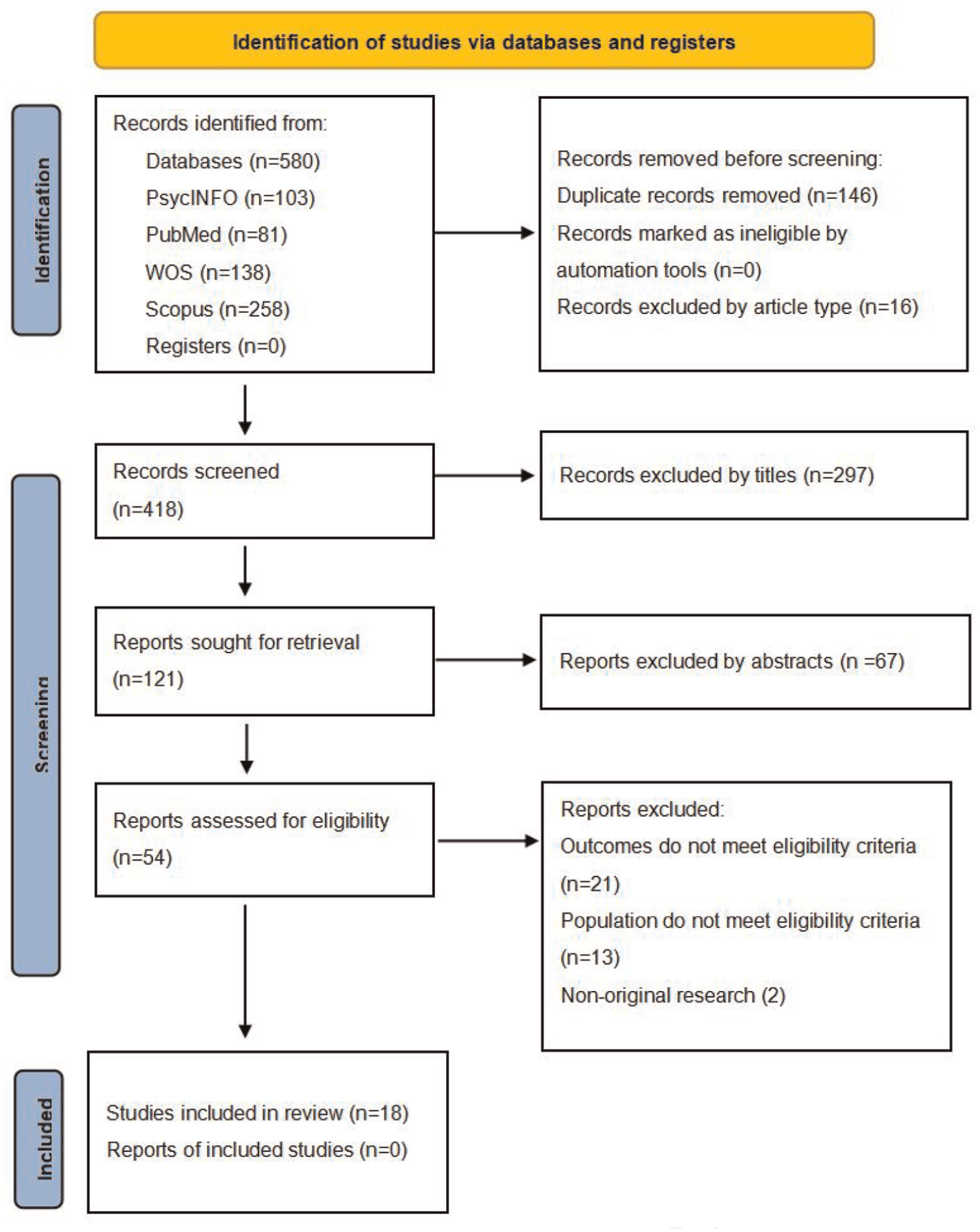
PRISMA flow diagram.
Study Characteristics
The characteristics of the selected articles are summarized in Table 1. These articles were published between 1/1/2013 and 12/31/2023 and come from 13 countries (including developed and developing countries): China (n = 3), Canada (n = 2), Uganda (n = 1), Iran (n = 2), Tunisia (n = 1), Jordan (n = 1), Singapore (n = 1), USA (n = 3), South Africa (n = 1), India, Pakistan (n = 1), Vietnam (n = 1), and Palestine (n = 1). A total of 328 participants took part in these studies, including 265 mothers and 57 fathers. Study designs included phenomenology, ethnography, narrative research, and grounded theory. Data collection methods included semi-structured interviews, in-depth interviews, focus groups, participant observation, and online surveys. Data collection for 17 of the studies was conducted face-to-face, and telephone interviews were conducted for one study owing to the distance. Data analysis included thematic analysis, content analysis, inductive approach, phenomenological analysis, and grounded theory approach.
Characteristics of the Included Studies.

Study Quality
The results of the quality appraisal of the 18 articles are presented in Table 1. Based on the results of the CASP appraisal, 12 studies were appraised for high quality, five studies for medium quality, and one for low quality. The more frequent problems were that the relationship between the researcher and participants was not described in detail, and the theoretical basis of the studies was not clear and coherent enough.
Main Findings
Main Theme: Emotional Support
Emotional support usually refers to care, comfort, and sympathy from the other (Drageset, 2021). The included studies described the experiences of parents of CWASD with regard to emotional support, with specific themes including emotional support from family members, emotional support from professionals, emotional support from friends, and emotional support from communities.
Sub-Theme 1: Emotional Support From Family Members
When a child is diagnosed with ASD, their family relationships (husband–wife, parent–child, extended family, etc.) change unpredictably and mostly for the worse. In some families, the following situations occur: significantly less frequent communication between family members; quarrels between spouses; family conflicts following ineffective parent–child communication; rejection of other family members in the extended family; and family conflicts owing to financial burdens, among other reasons (Abid et al., 2022; Awadu et al., 2022; Cole et al., 2017; Ebadi et al., 2021; Ha et al., 2014; Moodie-Dyer et al., 2014; Shattnawi et al., 2021). This leaves the level of emotional support for parents of CWASD in a state of severe inadequacy.
Some of the people from my family were understanding. Others were not. They were telling us to get rid of him. To get rid of him! (Dababnah & Parish, 2013) My mother in-law had lots of quarrels with other relatives, so other people told me that your son suffered because of your mother in-law. (Ha et al., 2014)
Moreover, parents maintain their expectations of their child’s recovery, actively explain the ASD to other family members, and seek help from other family members. Although some family members show rejection, most of them offer emotional assistance. These parents of CWASD do not give up, and their family cohesion does not diminish (Goh et al., 2021; LaRoche & Des Rivières-Pigeon, 2022).
Sub-Theme 2: Emotional Support From Professionals
Some parents of CWASD have sought help from professionals such as counselors, social workers, and ASD therapists to alleviate their own negative emotions. However, instead of being comforted accordingly, they were treated negatively, which seriously exacerbated their stress (Ha et al., 2014; Hosseinpour et al., 2022; Ng & Ng, 2022; Strunk et al., 2014).
When I met Dr. X, she said to me a sentence, ‘you should have another birth immediately, this child seems to be (good for nothing).’ That means my boy was (worthless)… (Ha et al., 2014) A psychiatrist blamed me that I should not entangle with the school because of the issue. He said, ‘The school has already given up on this group of students. What was the point of contacting the school for this?’ (Ng & Ng, 2022)
Two studies also reported emotional support provided by professionals based on empathy and unconditional positive regard that helped parents of CWASD recognize, express, and regulate emotions, thereby reducing emotional suppression (Cole et al., 2017; Dababnah et al., 2018). This emotional support not only alleviated their emotional distress but also promoted their emotional well-being and self-acceptance.
Sub-Theme 3: Emotional Support From Friends
After a child is diagnosed with ASD, many parents’ circle of friends narrows significantly. Some friends may grow distant or show unintentional prejudice owing to a lack of understanding of ASD, leaving parents feeling unappreciated or unaccepted (Dababnah et al., 2018; Ebadi et al., 2021; Moodie-Dyer et al., 2014; Shattnawi et al., 2021). At the same time, parents also have fewer opportunities to interact with their friends as they invest more time and energy owing to the increased demands of caring for their children (Goh et al., 2021; Liu & Fisher, 2023). This narrowing of circle of friends exacerbates the parents’ sense of isolation and undermines an important source of emotional support for them (Dababnah & Parish, 2013; LaRoche & Des Rivières-Pigeon, 2022).
I rarely have contact with previous friends or colleagues. I cannot stop thinking about how they would see me now. A loser who gave up her promising career to achieve nothing? (Liu & Fisher, 2023)
Sub-Theme 4: Emotional Support From Communities
All studies have reported a lack of support from the community for parents of CWASD. Some people in the community may misunderstand or alienate families of CWASD owing to a lack of understanding of ASD, causing parents to feel unaccepted or prejudiced in public (Dababnah et al., 2018; Dababnah & Parish, 2013; Ebadi et al., 2021; Minhas et al., 2015; Ng & Ng, 2022; Shattnawi et al., 2021). This decrease in community support leaves parents feeling more isolated and lacking important emotional support in their daily lives.
It is very difficult to walk with your disabled child in the street. Everyone leaves what they are looking at or doing and starts watching your kid. You feel like you are the star of a puppet show. Everyone in the street is looking at you. (Dababnah & Parish, 2013)
One study reported that parents of CWASD spontaneously formed a community to provide understanding and empathy for its members so that they would be emotionally supported and no longer feel isolated. However, these parents still consider such an approach to carry a risk of exclusion (Liu & Fisher, 2023).
Main Theme: Appraisal Support
Appraisal support refers to helping individuals understand and evaluate the problems or challenges they face (Wong & Shorey, 2022). The included studies described the experiences of parents of CWASD with regard to appraisal support, with specific themes including sociocultural definitions for ASD, religious belief, and stigmatization.
Sub-Theme 1: Sociocultural Definitions for ASD
In some countries that follow the Confucian culture, the family’s normal functioning is centered on raising offspring, and children are seen as the hope and trust of a family. This sociocultural context may lead to an irrational sense of collective honor in some individuals who fear and reject family members with disabilities (Gao et al., 2023). Having a child diagnosed with ASD leaves these families with a sense of hopelessness as they will be labeled by the society and clan as an “anomaly” or “family disgrace” (Gao et al., 2023). Some parents are afraid of outside reflections and overprotective of their children, cutting themselves and their children off from all contact with the outside world and living in a state of grief (Gao et al., 2023; Ha et al., 2014; Hosseinpour et al., 2022; Liu & Fisher, 2023; Ng & Ng, 2022). As a result, they are under more stigma pressure (Ebadi et al., 2021; Ng & Ng, 2022). Furthermore, as their children get older, these parents can get into deeper trouble because of concerns about their children’s future (Gao et al., 2023; Liu & Fisher, 2023). Such a sociocultural environment leads parents of CWASD to develop many negative appraisals of their environment and the problems they face, which affects their normal lives.
People think these children are crazy or retarded and make fun of them. We cannot take her to the park, shop, etc. Even our relatives sometimes talk sarcastically and insult her. (Hosseinpour et al., 2022)
A good sociocultural environment creates favorable conditions for CWASD and their parents to have contact with the outside world, which has a positive effect on their future development (Gao et al., 2023).
Sub-Theme 2: Religious Belief
Religious beliefs are often considered to be effective in relieving parenting stress for parents of CWASD and can moderate negative self-appraisal (Abid et al., 2022; Dababnah & Parish, 2013; Minhas et al., 2015). Families develop a normalized view of problems through religious beliefs that emphasize their strength and potential to solve problems (Gao et al., 2023). Religious beliefs help families define their own values (Hebert et al., 2006; Ozawa et al., 2017). Research has shown that parents raising children with developmental disabilities experience psychological distress. However, their psychological distress can be alleviated to some extent through active, organized religious activities (Ha et al., 2014).
He is a dervish. We ought to take care of him, and Allah will reward us. I don’t think he will ever get better. We have to feed him, wash him, and look after his health. Pir sahib [spiritual healer] says I am a bukshi rooh [blessed soul]. (Minhas et al., 2015) When I start crying, I go for wudoo [ritual washing] and prayer. (Dababnah & Parish, 2013)
Sub-Theme 3: Stigmatization
For families of CWASD, stigmatization is a negative label and prejudice against them, often manifesting itself in misconceptions, prejudice, and discrimination against ASD, resulting in unfair treatment of the ASD group and their families (Ng & Ng, 2022). Stigmatization can include unintentional misunderstandings and can also manifest itself in distrust and negative comments about the ASD group and their families (Ng & Ng, 2022). Many parents of CWASD have had the experience of being stigmatized from the community, CWASD’s school, public, and workplace, accused of “poor parenting” of their children and of being “responsible” for their children’s problems (Abid et al., 2022; Awadu et al., 2022; Dababnah et al., 2018; Dababnah & Parish, 2013; Goh et al., 2021; Ha et al., 2014; Liu & Fisher, 2023; Minhas et al., 2015; Ng & Ng, 2022; Shattnawi et al., 2021; Smith-Young et al., 2022). This makes parents of CWASD feel isolated and discriminated against and increases their psychological burden (Ng & Ng, 2022).
Here was my experience in a wet market where I went shopping with my son. He showed his temper tantrums by lying on the ground near a fish stall. At that time, many people were in the market. Of course, they saw and were talking about us… about my son’s behavior. I couldn’t stop them talking as I needed to handle my son first. (Ng & Ng, 2022)
In one study, racism also affected CWASD and their parents, who were discriminated against in their children’s daily lives, treatment, and education (Dababnah et al., 2018).
Main Theme: Instrumental Support
Instrumental support refers to social support that provides help to individuals with objectively available resources (Wong & Shorey, 2022). The included studies described the experiences of parents of CWASD with regard to instrumental support, with specific themes including the low level of health care services, financial burden, and incomplete social policies.
Sub-Theme 1: Low Level of Health Care Services
Both in developing and developed countries, some parents of CWASD have detected the symptoms early and sought help from the relevant healthcare organizations, but their experience of seeking help has not been pleasant owing to the lack of ASD-related expertise in these organizations (e.g., insufficient healthcare resources or medical staff not being specialized in this field; Dababnah et al., 2018; Gao et al., 2023; Ha et al., 2014; Hosseinpour et al., 2022; Liu & Fisher, 2023; Minhas et al., 2015; Smith-Young et al., 2022; Strunk et al., 2014). They can only learn about ASD on their own, but this does not improve their child’s symptoms (Strunk et al., 2014).
You can’t determine what a child needs, especially what a child or teenager needs in 15 minutes time. There’s just no way. When you’re treating a teenager with ASD, it’s not like burning off a wart or treating a cold or whatever, you’re treating a lot of different issues, psychological issues, and each teenager is different so you can’t treat each teenager the same, which makes it even more complicated. (Strunk et al., 2014)
If effective medical assistance is provided in time, the stress of parents of CWASD is significantly reduced, and their individual emotions and daily life rhythms stabilize. Good healthcare services provide parents of CWASD with instrumental support (Gao et al., 2023).
Sub-Theme 2: Financial Burden
Parents of CWASD often face particularly difficult financial problems (Awadu et al., 2022; Dababnah & Parish, 2013; Ebadi et al., 2021; Gao et al., 2023; Goh et al., 2021; Ha et al., 2014; Hosseinpour et al., 2022; Minhas et al., 2015; Moodie-Dyer et al., 2014; Shattnawi et al., 2021; Strunk et al., 2014). This phenomenon is especially prevalent in developing countries. The heavy financial burden can cause psychological stress to parents of CWASD, which in turn affects the normal functioning of daily life (Gao et al., 2023). It can even affect parents in making negative treatment decisions for their CWASD, negatively impacting the child’s future development (Hosseinpour et al., 2022).
The costs are high. We have to cut our other costs so that we can pay for our child’s treatment. (Hosseinpour et al., 2022) We accumulated a debt sum of six hundred dinars ($800) for an autism center, and that was a huge amount of debt on us. There is no social or financial support, and the Social Development Foundation has been paying for [my daughter] for a very short period of time, although we have submitted for them four years ago. (Shattnawi et al., 2021)
Parents who receive more financial support (either from the public or the private area) tend to express more positive feelings about the services provided to their children, thus maintaining family stability (Gao et al., 2023).
Sub-Theme 3: Incomplete Social Policies
Social policies (including special education and economic assistance policies) usually help CWASD and their parents through the allocation of resources and services (Gao et al., 2023). However, the resources and services involved in some policies do not reach all areas of a country (e.g., rural areas), which creates problems for CWASD and their parents living in rural, isolated areas because these policies do not address the time and cost issues they incur when seeking help (Gao et al., 2023; Ha et al., 2014; Liu & Fisher, 2023; Minhas et al., 2015; Shattnawi et al., 2021; Smith-Young et al., 2022). Additionally, the process can involve corruption, making it difficult for CWASD and their parents to receive effective help (Ha et al., 2014).
If we really want to get in, we need a relationship or need to be able to pay many ‘fees’ and ‘requests.’ (Ha et al., 2014) There’s no policy addressing this issue [of supported living for adults with ASD]. The biggest anxiety of us, of all parents, is the worry about future. I choose to ignore this future issue so that I won’t be buried by worries and anxieties. But I know it’s there, waiting for me. We feel very insecure. (Liu & Fisher, 2023)
Some parents have also expressed their concerns about existing policies because some policies have age restrictions, and these parents are concerned that their children will lose policy support as they get older (Liu & Fisher, 2023). Establishing adequate and comprehensive social policies is an important social security measure to relieve the parenting and financial pressure of parents of CWASD (Gao et al., 2023).
Main Theme: Information Support
Information support refers to providing individuals with information, advice, guidance, or resources that help them solve problems or cope with stress (Wong & Shorey, 2022). The included studies described the experiences of parents of CWASD with regard to information support, with specific themes including lack of supportive knowledge and peer support.
Sub-Theme 1: Lack of Supportive Knowledge
Most parents of CWASD lack supportive knowledge related to ASD, including knowledge on diagnosis and rehabilitation, on policies and welfare, on family interventions, and on schooling (Abid et al., 2022; Cole et al., 2017; Dababnah & Parish, 2013; Goh et al., 2021; Ha et al., 2014; Minhas et al., 2015; Moodie-Dyer et al., 2014; Shattnawi et al., 2021; Smith-Young et al., 2022). Many parents lack knowledge of early recognition, diagnosis, intervention, and rehabilitation methods for ASD, which results in their children missing out on the best support (Gao et al., 2023; Shattnawi et al., 2021). Additionally, parents are unaware of the applicable policy welfare and application process, which makes it easy for them to miss out on financial assistance and adds to their burden (Hosseinpour et al., 2022). Lack of information on professional training also prevents parents from acquiring the necessary caregiving skills, adding to the sense of helplessness and stress (Moodie-Dyer et al., 2014). Furthermore, the lack of transparent information on educational resources makes it difficult for parents to find a suitable educational environment for their children (Ha et al., 2014).
At first, we thought that she could have a hearing problem, then we thought that it might be a problem with her tongue, or with her eyes. We never thought of autism. (Shattnawi et al., 2021) There is no one approach to sort of help ASD kids because they are so unique. All parents have to search for themselves. This is something that I think is not easy for parents. What about those who are not so educated and not so resourceful? That will be a very hard part. (Goh et al., 2021)
Sub-Theme 2: Peer Support
Peer support plays a vital role in information support (Cole et al., 2017). Peer support usually takes the form of groups or organizations, either online or offline (Cole et al., 2017). It can provide practical and credible help to parents of CWASD by sharing practical information and resources, providing reliable referrals to resources as well as supporting and answering each other’s queries, to help them to be more confident and competent in caring for their children (Cole et al., 2017; Gao et al., 2023; Liu & Fisher, 2023).
If there is any useful information, it is shared promptly. There are many times that I have been able to apply for welfare for my children through the help of parents in the organization. (Gao et al., 2023)
Nevertheless, such support does not always provide a positive influence on the parents of CWASD. Owing to the differences among CWASD, some of the recommendations from peer support groups are not always effective. Moreover, negative sharing by members of the groups tends to aggravate the other members’ psychological burden (Cole et al., 2017). Such groups usually do not have operating rules, lack leaders, and are less sustainable (Liu & Fisher, 2023).
Discussion
This systematic review provides an in-depth analysis of the experiences of parents of CWASD in terms of different types of social support, and the results reveal the multilayered challenges they face in coping with stress and daily caregiving. These challenges relate to emotional, appraisal, instrumental, and information support, and the lack of different supports has a profound impact on their psychological well-being and quality of life.
The Lack of Emotional Support
Parents of CWASD generally face a severe lack of emotional support, especially at the family, friend, and community levels. Family relationships often become strained after a child’s diagnosis, with increased conflict between couples, difficulties in parent–child communication, and some relatives even expressing prejudice or rejection of the CWASD (Cole et al., 2017; Ebadi et al., 2021; Ha et al., 2014). Emotional detachment within the family leaves parents isolated and without support from their closest relatives. Indifference or negative comments from professionals further exacerbate the parents’ emotional stress, while alienation from friends and lack of understanding in the community lead to a narrowing of their social circle and stronger sense of isolation (Ng & Ng, 2022; Strunk et al., 2014). Overall, the lack of effective emotional support makes parents of CWASD more prone to negative emotions such as anxiety and depression, which affects their mental health and family stability.
Impact of Appraisal Support
In appraisal support, the role of social culture and religious beliefs presents complexity. Negative social definitions of ASD exist in some sociocultural contexts, particularly in areas with strong traditional perceptions, which can lead to families of CWASD being viewed as “abnormal” or “stigmatized” and parents choosing to isolate themselves and their children from the outside world for fear of social stigmatization (Gao et al., 2023; Liu & Fisher, 2023). This cultural context adds to their psychological burden and makes it difficult for them to access outside resources and support. However, religious beliefs have demonstrated some positive impact in some studies, helping parents of CWASD to view difficulties in a more inclusive manner, alleviate stress, and access psychological support through faith (Dababnah & Parish, 2013; Minhas et al., 2015). The variability in the impact of sociocultural and religious beliefs on appraisal support reminds researchers that future support systems need to take cultural factors into account to provide more individualized help.
Inadequacy of Instrumental Support
Parents of CWASD face substantial difficulties for instrumental medical, financial, and policy support. Although some parents can detect the symptoms of ASD at an early stage, they still encounter greater difficulties in seeking medical treatment owing to limited medical resources and lack of support from specialized doctors (Dababnah et al., 2018; Strunk et al., 2014). In terms of financial burden, long-term treatment and rehabilitation for ASD is expensive, especially for families in developing countries, and the financial pressure often exacerbates their psychological stress and even affects their treatment choices (Gao et al., 2023; Hosseinpour et al., 2022). Inadequate social policies also limit the ability of parents of CWASD to access adequate resources. Especially in remote or rural areas, the lack of policy implementation further erodes parents’ trust and reliance on support systems (Ha et al., 2014). Policy improvements and enhancement of instrumental support are important to alleviate the stress of parents of CWASD.
Limitations of Information Support and Role of Peer Support
Lack of information support is another major issue for parents of CWASD. Many parents lack adequate knowledge of diagnosis, rehabilitation, policy, and educational options, particularly in the area of early intervention, which makes it difficult for them to take the best support measures in a timely manner (Moodie-Dyer et al., 2014; Smith-Young et al., 2022). While peer support plays a somewhat positive role in information support, providing useful resources and advice through mutual support groups or support organizations, the effectiveness of peer support is inconsistent. Sometimes, negative information sharing instead increases members’ anxiety, while the lack of organization and leadership of peer support also affect its sustainability (Cole et al., 2017). In the future, if the standardization and professional guidance of peer support can be strengthened, this will effectively enhance its role in information support.
Research Implications and Future Directions
This review underscores the critical need to prioritize and enhance social support systems for parents of CWASD. The findings reveal that deficits in emotional, instrumental, appraisal, and informational support significantly exacerbate parental stress, social isolation, and reduced quality of life. Future research and interventions should adopt a multidimensional and culturally sensitive approach, including enhancing intra-familial emotional support (e.g., parent–child relationship, couple relationship interventions), reducing stigmatization through community involvement (e.g., public education campaigns, school collaboration), optimizing the healthcare and policy system (e.g., subsidizing treatments, healthcare training), expanding the channels of access to reliable information (e.g., on-line information platforms, social worker trainings), strengthening peer support networks (e.g., online forums, guidance plans), and further analyzing the factors affecting social support through cross-sectional and longitudinal studies to develop targeted interventions.
Limitations
First, language and publication bias. The review was restricted to English-language studies, potentially excluding culturally nuanced insights from non-English-speaking regions. Additionally, the exclusion of gray literature might have introduced publication bias, favoring peer-reviewed studies with more positive or conclusive findings. Second, gender imbalance. Most participants in the included studies were mothers (n = 265), with minimal representation of fathers (n = 57). This limits the understanding of paternal experiences and overlooks potential gender-based differences in social support needs and coping mechanisms. Third, methodological subjectivity. Thematic synthesis relies on interpretive coding, which introduces subjectivity. Despite efforts to ensure rigor through dual-reviewer collaboration, personal biases and the researchers’ cultural backgrounds might have influenced theme development. Fourth, heterogeneity in study quality and context. Variability in study quality (e.g., unclear researcher-participant relationships, inconsistent theoretical frameworks) and diverse cultural settings (13 countries) complicates the generalizability of findings. Challenges in reconciling differences between high- and low-resource settings may also affect the applicability of recommendations. Fifth, limited scope of themes. Thematic synthesis tends to focus on major common themes and may ignore some secondary or idiosyncratic information that is relevant to understanding the overall phenomenon. Such information may be useful in explaining particular situations or extreme samples but is easily overlooked when themes are generalized.
Conclusions
This systematic review explored the experiences of parents of CWASD in terms of social support in detail, revealing substantial deficits in emotional, instrumental, appraisal, and information support. The lack of effective emotional support from family, professionals, friends, and communities results in considerable psychological stress and social isolation for these parents. While religious beliefs may alleviate stress and provide positive appraisals for these parents to some extent, the presence of stigmatization and negative sociocultural environments still keep their appraisal support at a low level. Low-quality health care services, incomplete policies, and family financial burden make it difficult for these parents to receive effective and adequate instrumental support. These parents usually lack supportive knowledge, which increases the difficulty of diagnosis, intervention, and daily care for their children, and decreases family quality of life. Peer support, while providing a degree of informational support, can sometimes have a negative impact owing to a lack of guidance and regulation. To better support parents of CWASD, enhancing support across multiple dimensions, including family services, policy frameworks, healthcare, education, and peer networks, is imperative. Efforts should also be made to reduce stigmatization and improve information transparency. These measures will facilitate greater social support for parents, enabling them to more effectively address daily challenges and ultimately enhance their overall quality of life.
Supplemental Material
sj-docx-1-sgo-10.1177_21582440251336174 – Supplemental material for Social Support Experiences in Parents of Children With ASD: A Qualitative Systematic Review
Supplemental material, sj-docx-1-sgo-10.1177_21582440251336174 for Social Support Experiences in Parents of Children With ASD: A Qualitative Systematic Review by Xin Gao and Syazwani Drani in SAGE Open
Footnotes

Ethical Considerations
Not applicable.
Informed consent
Not applicable.
Author Contributions
Both authors have made equally important contributions.
Funding
The author(s) received no financial support for the research, authorship, and/or publication of this article.
Declaration of Conflicting Interests
The author(s) declared no potential conflicts of interest with respect to the research, authorship, and/or publication of this article.
Data Availability Statement
The datasets generated during and/or analyzed during the current study are available from the corresponding author based on reasonable request.
Supplemental Material
Supplemental material for this article is available online.
Pre-registration
This systematic review is registered on the PROSPERO (ID: CRD42023409344).
References
Supplementary Material
Please find the following supplemental material available below.
For Open Access articles published under a Creative Commons License, all supplemental material carries the same license as the article it is associated with.
For non-Open Access articles published, all supplemental material carries a non-exclusive license, and permission requests for re-use of supplemental material or any part of supplemental material shall be sent directly to the copyright owner as specified in the copyright notice associated with the article.
