




Abstract
This study offers a modified three-dimensional Haddon Matrix to assess intervention and coping strategies adopted by various organizations for the preparation, response and recovery phases of the COVID-19-related supply chain disruptions. Evidence is gathered from available qualitative information sources concerning the current COVID-19 pandemic. In total, 35 academic and non-academic sources were used for data analysis. These sources were analyzed to assess the interventions that are reported as being useful in the pandemic context for different supply chain networks. The analysis reports a current list of interventions and strategies corresponding to the three dimensions of the modified Haddon Matrix; (i) disaster phase (pre-event, response, and post-event), (ii) factors/actors involved in the disaster (supply chains, risk events, physical environment, and socio-cultural environment), and (iii) resilience components of agility, adaptability, and alignment. Overall, the findings showed that effective communication along the supply chain, pre-event risk management, strong relationships and higher coordination within the wider network community all play key roles in enhancing the overall resilience of supply chains against pandemics. This study proposes a third dimension (resilience components) to the extant Haddon Matrix and is hence, somewhat unique. This modified matrix offers managers and researchers a new tool to aid in a more thorough analysis and a deeper understanding of supply chain resilience. Piloting the modified matrix, this study also assesses reported intervention strategies thus helping supply chain managers to prepare, respond, and recover from disruptions caused by pandemics.
Introduction
Despite much learning since start of 19th century and a greater understanding of viruses and pandemic planning, the world was clearly not ready for another pandemic (Poole et al., 2020). Especially, the lack of readily accessible and easy to deploy tools to help managers assess resilience interventions proved to be critical for smooth running of supply chains. Fast forward to 2020, the World Health Organization (WHO) declared Covid-19 a global pandemic on the 26th February 2020. Since then, many countries have responded by closing their borders and locking down their economies in an unprecedented effort to slow the spread of the disease (Worldometers, 2020). These extreme measures are creating many problems for organizations and their respective supply chains globally. The lockdowns initially cause supply-side problems with some products such as PPE being unprocurable. Then, as economies were progressively locked down, a demand side problem of major proportions emerged where discretionary spending on anything other than essentials all but dried up. Further, a problem of coordination occurred where traditional trading relationships were severed, and the previously tightly coordinated supply chains became chaotic due to a breakdown of information flows resulting in a lack of visibility across supply entities. Recent research has supported this view and points out that many organizations were underprepared, caught by surprise, that planning was minimal and that basic equipment such as hygiene instruments were not available (Ivanov, 2020). Indeed, more than 90% of the Fortune 1,000 companies have reported experiencing Covid-19 driven supply chain disruptions (Fortune, 2020). For example, the world’s largest 1,000 companies or their suppliers have factories and other operations in areas like China, South Korea and Italy which were COVID-19 hotspots in the early few months of this Pandemic (Linton & Vakil, 2020). As time passes, it is becoming clear that the pandemics tend to persist, as do the associated supply chain disruptions.
Supply chains coping with a pandemic often face similar response concerns such as maintaining operations, profitability, survivability, and building resilience in the recovery and rebuilding phases. Though practitioners and academics have shared various best practices and theoretical contributions on how to survive and build resilience in the face a disruption (Pettit et al., 2010; Pires Ribeiro & Barbosa-Povoa, 2018; Ponomarov, 2012; Scholten et al., 2014; Sheffi, 2015), still many businesses and their connected supply chains are struggling to successfully navigate this disruption. Perhaps, there is a need to reexamine the fundamental approaches and strategies of achieving supply chain resilience and maybe the best approach going forward is to re-think and re-invent some of these approaches and strategies.
Given that organizations embedded within a supply chain system are often highly interdependent in order to achieve a seamless flow of the products to the final consumer, a disruption in one part of the channel can quickly propagate to other members of the system (Abe & Ye, 2013). To prevent a cascading failure, effective collaboration, knowledge management, logistics, and sourcing are said to be crucial supply chain management components for an effective response (Umar et al., 2017). Indeed, the lack of learning from past experiences and disruptions has prompted the Authors to develop a tool that can assist managers in making better decisions in the coming years. We believe that a multi-layered and practical approach, examining different components of a supply chain system, would provide a better understanding of the new normal post COVID-19. This builds on the work of Anparasan and Lejeune (2017), Chamberlin et al. (2015) who all stress the need for simple and practical policy analytical tools that could enhance an organizations’ ability to systematically assess interventions and responses before, during and after pandemic related disruptions. Therefore, this research seeks to answer the following research question: What is the best way to systematically assess interventions and responses before, during and after pandemic related disruptions?
This study contributes to research in two different ways. Firstly, it provides a framework, based on a modified three-dimensional Haddon Matrix, to help identify different interventions for commercial supply chains when responding to pandemics. The proposed tool allows for different perspectives experienced during the different phases of the disaster management cycle. This matrix is then populated by evidence extracted from different published sources in an attempt to fit the Covid-19 context. The examples used are drawn from real pandemic related interventions and helps facilitate the academic and practitioner interface. Secondly, this study has proposed an additional dimension in Haddon matrix to consider resilience in supply chains for pandemics. This is a novel approach, as while a few earlier articles have used the Haddon matrix to asses organizational responses to an epidemic, they were mostly focused on humanitarian organizations (Anparasan & Lejeune, 2017). To the best of the Author’s knowledge there are only two articles (Cole et al., 2020; Hecht et al., 2019) that deployed the Haddon matrix for commercial supply chains, but these were in the context of an earthquake and another natural disaster. Consequently, this study has a degree of novelty as it focuses on pandemic related disruptions whilst providing an understanding of resilience in commercial supply chains. This modified Haddon matrix will help organizations within a supply chain system to assess and improve their interventions during a pandemic outbreak. Topical indeed. This proposed matrix will also help academics to identify future research directions that can support decision making during pandemic related disruptions.
Supply Chain Disruptions and Pandemics
Disasters are events of high magnitude and severity that negatively impact communities, commerce, supply chains, and the capabilities of local and state governments. The scale of impact is often predicated on the preparation, response, resources, and capabilities of the impacted communities. In general, disasters can be classified as either natural and man-made, and although the source of a pandemic is natural, if the response is mismanaged, then it can be considered as man-made disaster (Bryce et al., 2020). On occasion, even a few days of heavy rain can be disastrous, while with proper management, even large scale floods can be managed (Haghani & Afshar, 2009; PAHO, 2001). The point being that disasters can be managed to a degree by building the resilience of affected communities and organizations. Disaster management as a discipline seeks to mitigate these risks and helps manage challenges associated with all types of disasters, and given the current Covid-19 pandemic, there has been a dramatic surge of interest in mechanisms to help cope with disrupted global supply chains.
Global commercial supply chains are complex networks comprised of many different types of organizations and this complexity has increased the inherent risks of disruption to coordination, product flows, demand, and supply management (Banipal, 2006). To help cope with this complexity, managers seek different strategies and approaches to simplify and then mitigate the risks associated with these extended supply chains.
As such, supply chain risks are multi-layered and can be categorized into either operational or disruption risks (Choi & Krause, 2006; Ivanov, 2020). Operational risks represent the day-to-day disturbances in the supply chain such as demand fluctuations. Whereas, disruption risks address that low-frequency yet high-consequence events such as natural disasters (e.g., pandemics, earthquakes, floods), and human centric disruptions such as legal disputes, or labor strikes (Araz et al., 2020; Christopher, 2005). Such disruptions have an immediate impact on the supply network structure as manufacturing units, suppliers, distribution centers, and transportation links often become temporarily unavailable. The resulting material shortages and delivery delays cascade downstream causing a ripple effect and invariably degrade performance in terms of revenue, profitability, service levels, and productivity (Abe & Ye, 2013).
One specific type of supply chain disruption is related to pandemics. This type of disruption can be characterized by three main components; firstly, its long-term existence and its unpredictable scaling, secondly, disease propagation in the general population and workforce, and finally, simultaneous disruptions in supply, demand, and logistics infrastructure capacities (Staples et al., 2014). Unlike other sudden onset disruptions, pandemics start small but scale quickly and, if not contained, disperse over many geographic regions, even globally. Recent examples include SARS, MERS, Ebola, Swine flu, and most recently, coronavirus (Covid-19/SARS-CoV-2; Ivanov, 2020). With the current pandemic, supply chain actors are reporting immediate demand shocks, reduction in the capacity of infrastructure, disruptions in international logistics and reduction in available contractors and seasonal staff (Martin & Bettge, 2020). These disruptions are an additional burden to supply chains that typically suffer from a lack of coordination, wastes, a lack of knowledge sharing, and a lack of flexibility (Ali et al., 2017; Ambulkar et al., 2015; Scholten & Schilder, 2015). Indeed, given these challenges, the Authors were motivated to develop an evidence-based tool based on the Haddon matrix that can assist supply chain managers to conceptualize, scope and analyzes their planned responses to pandemic disruptions such as the COVID-19 outbreak.
Method
Using the best available evidence to support decision making is vital to maximize the use of scarce resources, especially during major supply chain disruptions (Anparasan & Lejeune, 2017). Currently, decision making is often undocumented and nontransparent, and evidence based best practices in a given disruption context is rare (see Wilson et al. (2018 for an exception). Rather, decisions are often reached by experience, instinct, and assumptions. Whilst not unusual, research shows that such decisions are prone to personal biases (Darcy et al., 2013; de Vries, 2017). Indeed, an evidence is generally the available body of facts or information signifying whether a proposition is true or valid (Bradt, 2009). In this study, evidence is gathered from available qualitative sources concerning the current Covid-19 pandemic. The Authors have selected academic as well as non-academic sources available that identify any intervention, action or strategy that has been deployed during the Covid-19 pandemic.
Academic sources focused on published research, while non-academic evidence related to pandemic outbreaks come in various forms, such as newspaper reports, evaluation reports, and “lessons learned” reports. For both sources, Google Scholar, Proquest, Scopus, Web of Science and Science Direct databases were used to retrieve articles/reports about the Covid-19 pandemic and supply chains. The search was conducted using the keywords; “Covid-19,”“corona,”“supply chain,” and “response.” This resulted in 25 academic and 50 non-academic articles. Titles, abstracts, executive summaries and introductions were read and only those sources that provide actual evidence of responses to pandemic disruptions are included in this study. All hypothetical and theoretical articles were discarded. This resulted in final sample of n = 33, being eight academic and 25 non-academic or industry sources (details of these sources can be found in Tables 3–5). These articles were then analyzed in order to assess the interventions that are reported as useful for a pandemic outbreak in different supply chain networks. In the next section, we discuss the Haddon Matrix and the rationale for the Authors’ modifications. After this, the modified Haddon Matrix is pilot tested utilizing the findings of the literature search. One noteworthy point to consider is that this paper builds upon an earlier version of the study published as a “research update” (Umar et al., 2022)While the foundational methodology, particularly in terms of sampling design and data collection procedures, remains consistent, the current work significantly extends the scope of analysis, integrates additional datasets, and provides a more comprehensive theoretical interpretation.
Modified Haddon Matrix
The Haddon Matrix has been around for a long time and has been established as a critical framework. First introduced by William Haddon in 1968, this matrix was designed to scientifically evaluate events, breaking down events into their phases and contributing factors (Haddon, 1968). Initially predominately used in road safety-related events, later, it has since been vastly used in disaster management, particularly in the context of epidemic outbreaks (Cole et al., 2020; Hecht et al., 2019). The World Health Organization (WHO) has recognized the Haddon Matrix as a dynamic, systems-based framework for pandemic related disruptions assessment. Each cell within the matrix is a potential point of intervention/strategy to mitigate the effects of disruptions (Peden et al., 2004; Timpka et al., 2009).
The matrix is two-dimensional: the rows represent temporal phases—pre-event/preparation, event/response, and post-event/recovery—while the columns capture contributing factors such as human/organizational, agent-related, physical environment, and socio-cultural dimensions (Peck et al., 2008). These two layers simplify complex problems, making them easier to analyze and address in a structured and practical manner (Murray et al., 2014).
For quite some time, the Haddon Matrix has proven its effectiveness and served as a powerful tool to minimize the adverse effects of accidents and diseases (Cole et al., 2020; Peck et al., 2008; Wall, 2012). For example, Anparasan and Lejeune (2017) applied this framework to a cholera outbreak and suggested evidence-based interventions to inform future responses. Their findings highlighted the utility of the matrix as a strategic planning instrument.
While much of the previous research utilized the Haddon Matrix mostly related to influenza and cholera outbreaks, its relevance has extended to contemporary challenges such as Covid-19. This global pandemic has not only disrupted public health but has also significantly disrupted supply chains, reaffirming the matrix’s value as a versatile tool in both planning and response frameworks.
Haddon Matrix—Rows (Disaster Management Life Cycle)
Disaster management is a practical and structured way of managing disasters to enhance preparedness, emergency response, and recovery efforts (Carter, 2008). Utilizing this management technique, the Haddon Matrix integrates the three fundamental phases of the disaster management lifecycle: preparedness, response, and recovery to further suggest interventions to manage the disaster in a structured way (Banipal, 2006; Day et al., 2012; UN DHA, 1992).
The pre-event phase of the Haddon Matrix aligns with the preparedness and mitigation components of the disaster cycle. For pandemics, this phase prioritizes measures to safeguard supply chains from potential disruptions. These measures may include early detection systems, pre-positioning essential inventory, establishing collaborations with suppliers, and enhancing supply chain transparency (Ali et al., 2017; Allotey et al., 2010; Christopher & Rutherford, 2004; Tomasini & Wassenhove, 2009). Preparedness plays a pivotal role in mitigating risks, as inadequate environmental scanning and insufficient preparation for even minor risks can amplify supply chain disruptions (Scholten et al., 2014), particularly in the unpredictable dynamics of a pandemic.
The response phase begins once the disaster strikes the area that directly affects supply chain operations (Cozzolino et al., 2012). The effectiveness of this phase heavily relies on the work done during the preparation phase. Well-prepared supply chains exhibit greater agility in responding to disruptions.
The post-event phase of the Haddon Matrix corresponds to the recovery phase of the disaster cycle, where supply chain players transition from response to recovery. This stage focuses on leveraging recovery strategies to enhance resilience and enable organizations to adapt to a new normal. For Covid-19 disruptions, the phases can be contextualized with specific timelines and rationales (summarized in Table 1):
•
•
•
Rows in Haddon Matrix.

Source. Adapted from Umar et al. (2022).
Haddon Matrix—Columns (Event Factors / Categories)
The columns corresponds to four components that have been determined as critical to any disaster: “the host, the agent, the physical environment and the socio-cultural environment.” Historically, the “host” in the matrix represents human beings and the “agent” are treated as the virus/vehicles (Peck et al., 2008). Moreover, some authors have highlighted companies as the host and then risks as the agents (Hecht et al., 2019; Runyan, 1998). In this research, the Authors propose to use the supply chain and associated factors as the “host.” Equally, supply chain problems related to “COVID-19” are studied as the “agents.” For the remaining components, logistical challenges—like inventory management, storage, and transportation—are categorized under the physical environment. Conversely, collaborative actions involving government bodies, research institutions, emergency responders, and even competitors fall under the social environment (see Table 2). This approach makes the Haddon matrix to better reflect modern supply chain vulnerabilities and stakeholder interactions during crises (Umar et al., 2022).
Columns in Haddon Matrix.

Source: Adapted from Umar et al. (2022).
Rationale for a Third Dimension of the Haddon Matrix
While most previous research papers use the Haddon matrix in its classic two-dimensional form. However, Runyan (1998) expanded it by adding a third dimension—factors like “cost, effectiveness, feasibility, and preferences”—to evaluate interventions, although this was primarily applied to injury prevention and decision-making. In this research, we take a fresh approach by proposing supply chain resilience as the third dimension in our adapted Haddon matrix.
Resilience can be understood as a system’s capacity to rebound from disruptions (Burnard & Bhamra, 2011). Klibi and Martel (2013) frame it as a network’s ability to resist, respond, and recover from shocks, while others emphasize anticipation, preparation, and efficient recovery (Fiksel, 2003; Ponomarov, 2012). Though resilience factors come from many different disciplines, we define it in this context as the ability to prepare for, respond to, and rapidly recover from disasters using agility, adaptability, and alignment strategies (Umar et al., 2017).
These three major components—agility (swift resource mobilization), adaptability (adjusting to new conditions), and alignment (harmonizing processes and goals with partners)—serve as the foundation for our the third dimension in Haddon matrix (Cabral et al., 2012; Lee, 2004). By integrating these resilience components, the modified matrix (Figure 1) aims to find the decision-making bottlenecks and opportunities unique to each phase of a pandemic.
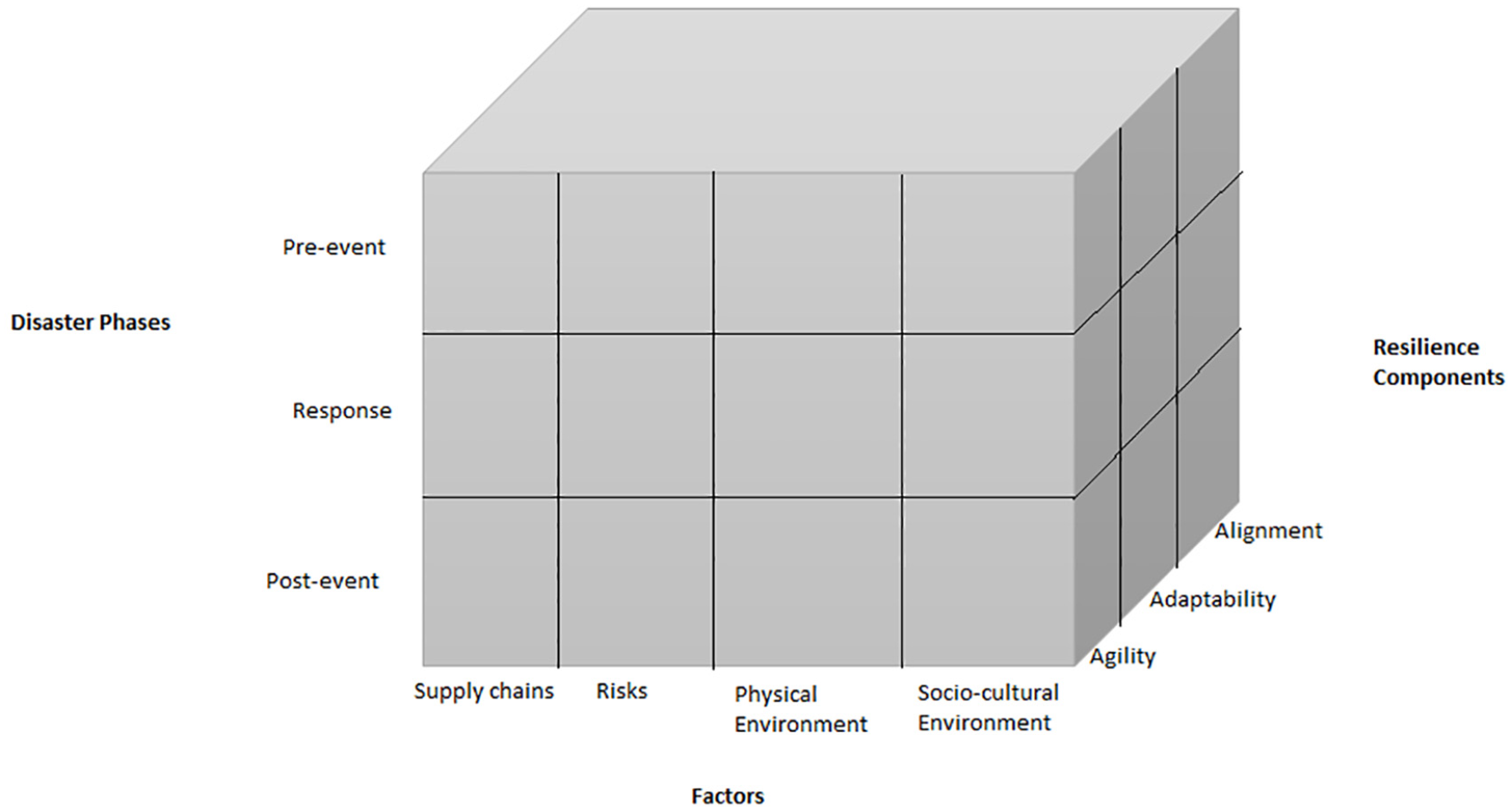
Proposed three-dimensional Haddon matrix.
For a practical understanding of this framework, this study populates the matrix with intervention strategies from academic and industry sources (Umar et al., 2022). The main purpose is to equip policymakers and supply chain practitioners with actionable insights for strengthening the resilience of their supply chains against future disruptions.
Testing the Modified Haddon Matrix
Interventions and strategies identified through Haddon matrix are presented in this section. The analysis is presented as per the disaster life cycle: pre-event, response, and post event phases. Within each phase, interventions are described for each factor and discussion related to the resilience factors is also included.
Pre-Event/Preparation Phase
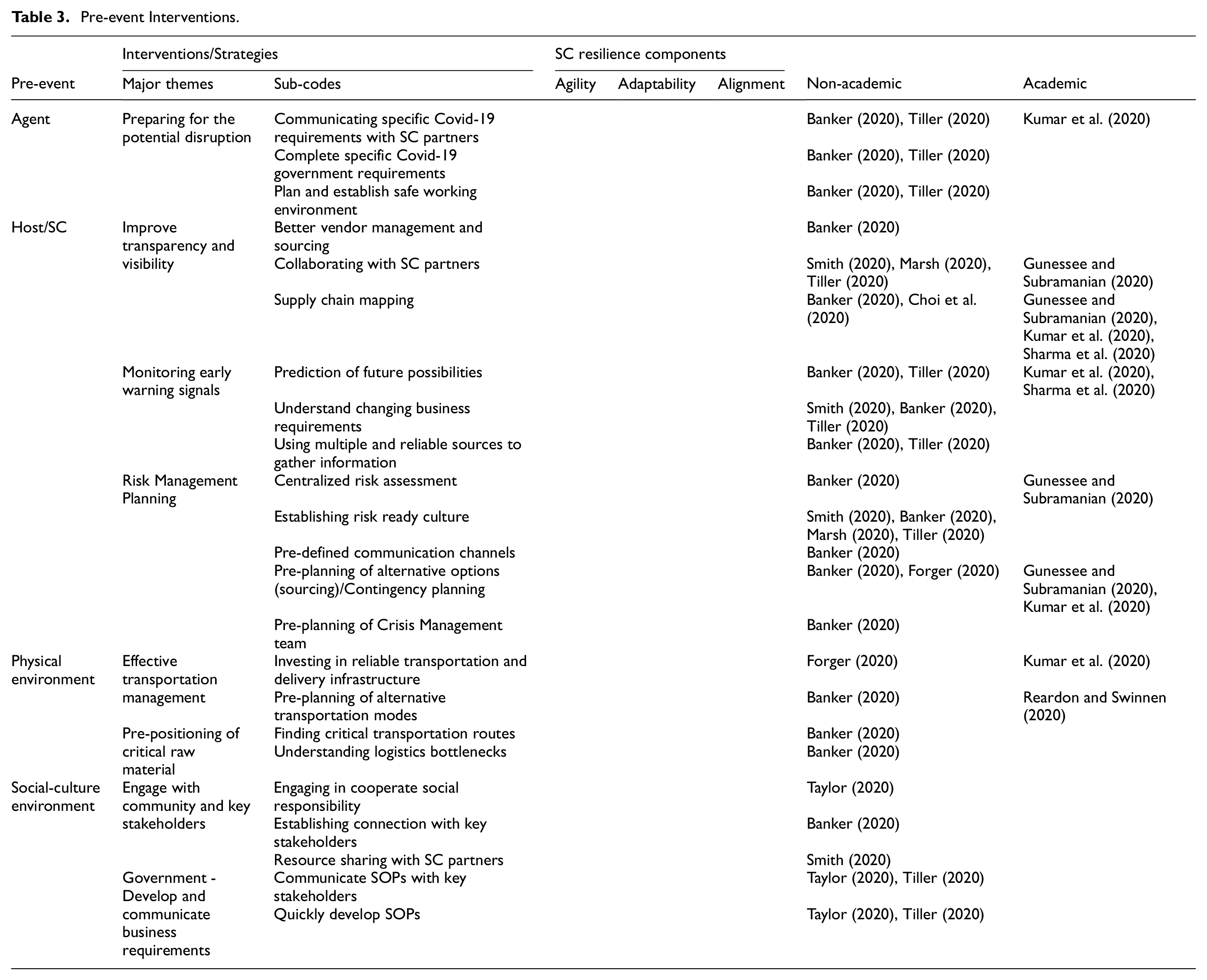
Supply chains typically prepare by reducing the expected impact of a disaster. Reducing the impact of a wide-ranging pandemic such as Covid-19 is challenging for all supply chains. Hence, the majority of the organizations were not fully prepared due to limited capacity and coordination issues. Most of the sources, both academic and non-academic, acknowledge that most companies underestimated the severity of the situation and hence were underprepared. In this phase, we consider all those interventions that companies adopted before the spread of the virus to their respective countries and its devastating effects in some other part of the world (Table 3).
Pre-event Interventions.
Host—Supply Chain
Pre-event risk assessment, visibility across the supply chain, joint capacity planning, and information sharing (Figure 2) were generally not in place for the majority of the organizations prior to COVID-19 (Choi et al., 2020; Reeves et al., 2020).

Major host related interventions in pre-event phase.
Despite many organizations underestimating the scale of the pandemic, those who responded well tended to have better systems in place before this disruption (Gunessee & Subramanian, 2020; Smith, 2020). The analysis highlighted risk management planning before a disruption as one of the major strategic elements. Within risk management planning, Banker (2020) reported that centralized risk assessment was one of the major interventions. Hence, supply chains who had moved from fragmented and decentralized procurement to centralized commodity management systems mitigated to a degree their risks and were faster to respond to disruptions (Banker, 2020; Gunessee & Subramanian, 2020). These organizations were able to quickly evaluate potential risk areas and switch to different suppliers and markets for their products (Forger, 2020; Gunessee & Subramanian, 2020; Kumar et al., 2020). Additionally, risk management planning is not possible without pre-defined communication channels and pre-planning of crisis management (Forger, 2020). Both academic and practitioner literature mentioned that to better deal with a potential disruption, companies pre-define their communication channels with multiple suppliers and especially those with local suppliers (Gunessee & Subramanian, 2020; Kumar et al., 2020). These predefined communication channels are not possible without the proactive collaboration and alignment of interests and processes among these organizations (Marsh, 2020). Further, risk management planning can only be achieved when organizations within the supply chain establish a risk management culture (Banker, 2020; Marsh, 2020; Smith, 2020; Tiller, 2020). Further, companies need to involve employees and other supply chain partners within their response decision making plans. Indeed, Smith (2020) emphasized the importance of training employees and partners in risk management during the preparation phase.
Nevertheless, many supply chains were unable to read these signals, even when the situation was getting out of hand in China in late January. Yet the companies who successfully read the market signals and understood the changing business conditions were in a better position when countries started to close borders (Banker, 2020). Thus, extant prediction and forecasting systems became critical success factors during the early stages of the pandemic (Banker, 2020; Kumar et al., 2020; Sharma et al., 2020). Companies were able to predict the shutdown of different countries early and accelerated supplier shipments prior to the closure of the manufacturing unit (Banker, 2020; Tiller, 2020). In academic sources, Kumar et al. (2020) and Sharma et al. (2020) have also emphasized the role of early warning systems for predicting future pandemic related disruptions. Having good relationships with multiple and reliable international and local sourcing partners also helped the monitoring efforts and acted as early warning signals, sharing important insights and also acting quickly to maintain supply chain integrity. The analysis shows that the supply chains who were able to monitor early warning signals demonstrated higher levels of pandemic resilience.
Yet, none of this is possible if there is little transparency and visibility across supply chain partners pre-event. Improving transparency and visibility requires supply chain partners to collaborate with each other by sharing correct and timely information. This is predicated on the existence of long-term trust based relations and these take time and effort to establish pre-event. This was crucial to achieving alignment and agility for these supply chains. It has been observed that where there are only transactional, arms-length based relationships, those supply chains have suffered financially in the pandemic (Choi et al., 2020). Visibility and transparency help align the processes and interests of different partners in the supply chain.
Agent—Disruptions
This study is considering pre-lock down part of the pre-event phase, therefore some of the interesting agent related interventions are revealed in the analysis. Most of the interventions are related to safety protocols to prevent the spread of coronavirus and are only reported in non-academic sources (Banker, 2020; Tiller, 2020). Governments all over the world quickly established protocols and mitigation strategies to prevent the spread of the virus in the population, although messaging was at times contradictory. Hence, organizations were compelled to understand and quickly implement these measures to minimize the risks. Interestingly, Tiller (2020) reported that this was not a smooth process for supply chains and there were many hurdles to overcome. Physical facilities and workplaces need to be updated with the right equipment and communicating these requirements with the suppliers was a crucial step in this process.
Physical Environment—Logistics
The few interventions collected from the literature sample mostly focused on the physical environment for the preparation/pre-event phase of the pandemic. Here, both academic and non-academic sources have mentioned the role of effective transportation management and pre-positioning of critical raw materials / finished goods as being very important in the preparation phase (Banker, 2020; Forger, 2020). With the closure of international borders, the airline industry was the first to essentially cease operations globally. In this situation, some companies pre-planned for alterative mode of transportation such as rail in European regions to supply the necessary material (Banker, 2020; Kumar et al., 2020). Similarly, warehouses were full of non-essential items for a number of organizations as demand patterns shifted rapidly. Companies who were quick to anticipate and pre-plan additional space in their warehouses and moving to variable slot option were better prepared for the disruptions (Banker, 2020). These strategies are only possible if all the actors in supply chain are aligned and sharing information. It can be inferred that these rapid physical adjustments promoted reliability and velocity within these supply chains, thus enhancing supply chain resilience.
Socio-Cultural Environment—Interagency Interventions
Only nonacademic sources discussed how supply chains engaged with external agencies during the pandemic. Clearly, supply chains are still in the response phase and hence little research has been published to date. Yet, the evidence suggests that early engagement with key stakeholders is very important in the pre-event phase of a pandemic. Both Taylor (2020) and Tiller (2020) reported on government efforts to communicate health requirements to business during the early stages of the pandemic. For example, the New Zealand government quickly established four levels of protocols for businesses operations in the early stages of pandemic. These standard operating procedures need to be communicated with all the relevant stakeholders through different channels. This is very important for aligned interests across the supply chain stakeholders. Smith (2020) reported that organizations who shared critical resources with other supply chain partners in the pre-event phase were better positioned to respond to disruptions and were more resilient. This adaptive strategy helped them to respond effectively once the lock downs started.
Response Phase
The response phase is initiated once an event occurs, which means when Covid-19 cases started entering individual countries and governments started putting social distancing and border closure measures to their countries. In this case, literature sources have highlighted the fact that most businesses were caught unprepared for the unique challenges presented by this pandemic, certainly by the scale of global supply chain disruptions. The analysis shows that businesses, with their supply chain partners, enacted most of the significant interventions during this phase. The majority of sources indicated businesses quickly designed and executed interventions at both the organizational and supply chain level (Amazon Staff, 2020; Aryapadi et al., 2020; Cheema-Fox et al., 2020; Newman, 2020; Reardon & Swinnen, 2020; Taylor, 2020; TVNZ, 2020). Overall, the analysis showed most interventions were linked with the host (supply chain), this emphasizes the importance of having a committed focal organization with established relationships with supply chain partners (Table 4).
Response Phase Interventions.

Host—Supply Chains
Despite a lack of pre-planning for pandemic-related disruptions, some organizations were able to quickly respond and adapt their supply chain operations to deal with the challenges (Assunçâo et al., 2020). The analysis found that many organizations formed taskforce teams, involving people from diverse backgrounds, to plan and implement supply chain interventions (Banker, 2020; Gallup, 2020; Reeves et al., 2020; Whiteside, 2020). This quick response encouraged speed to which an organization respond to a disruption. For large companies, a typical task force team included people from various levels of the organization and departments spread across multiple regions (Banker, 2020; Gallup, 2020). Conversely, smaller companies tended to involve direct employees, based on their expertise, to devise innovative solutions (Newman, 2020). The analysis broke down the responsibilities of these taskforces into some or all of the following four main areas;
Monitoring and assessing the business impact of the Covid-19 pandemic.
Continuous risks assessment for supply chain operations.
Designing and implementing new interventions or altering supply chain strategies.
Regular information sharing within the organization and across supply chain partners.
The few academic sources did not particularly highlight the use of these taskforces, but they did discuss the need for continuous risk assessment and establishing centralized communications (Gunessee & Subramanian, 2020; Reardon & Swinnen, 2020).
The data analysis for both academic and non-academic sources emphasized that top management support and involvement is a key enabler to facilitate team creativity and rapid decision making, thus supporting agility (Newman, 2020; Reardon & Swinnen, 2020; Reeves et al., 2020). Furthermore, these teams helped organizations establish and maintain strong collaboration with critical suppliers and customers, another important component of SC resilience in the response phase. For example, continuous information sharing with suppliers allows organizations to monitor any bottlenecks and supply chain constraints, hence engaging in alternative solutions (Ariba, 2020; Mitchell et al., 2020). Similarly, the analysis strongly emphasized that open and frank communication with supply chain partners allowed organizations to jointly derive creative interventions to quickly respond to the day-to-day challenges of the disruptions (Amazon Staff, 2020; Aryapadi et al., 2020; Bradshaw, 2020; Hamstra, 2020; McCready, 2020; Newman, 2020; Tiller, 2020). In addition, the disruptions also forced organizations to develop relationships with new supply chain partners, often involving rapid supplier evaluations and qualification (Ariba, 2020; Gallup, 2020). In general, establishing and maintaining open relationships with supply chain partners enabled organizations to customize their responses and interventions, hence maintaining as best they could, continuity of business operations (Gunasekaran et al., 2008).
As highlighted above, a key aspect of the response phase is to develop and implement interventions to neutralize or minimize the impact of the disruptions. Emerging clearly from the analysis was a focus on two particular interventions: firstly, reconfigurability of supply chain processes and business operations, and secondly, rational resource allocation.
Reconfigurability of Supply Chain Processes and Business Operations
The analysis showed that the pandemic forced massive changes to supply chain operations including the complete closure of business operations through either lockdowns or non-viability (Marsh, 2020; Smith, 2020; Taylor, 2020). Conversely, some supply chains experienced extreme or panic demand for some products such as the ubiquitous toilet paper (Forger, 2020; Gunessee & Subramanian, 2020; Hamstra, 2020). In response to these unique challenges, businesses reconfigured their supply chain processes and business operations to keep the flow of goods throughout the supply chain. For instance, the fast moving consumer goods (FMCG) industry experienced a major shift of demand for staple goods, thus forcing major revisions to procurement and inventory plans (Amazon Staff, 2020; Aryapadi et al., 2020). Similarly, some business needed to change and/or update their product mix to cater for rapid market changes (Banker, 2020; McCready, 2020; Reardon & Swinnen, 2020; Taylor, 2020; TVNZ, 2020).
Apart from adjusting existing products and processes, the analysis also showed that businesses who were successful during the disruptions focused on innovating new products and services. Particularly, introducing a customized product or service was key for many businesses. For example, the retail and restaurant industry had to rethink their ways of doing business that meant customizing customer-facing services such as introducing virtual check-in and contactless delivery options (McCready, 2020; Smith, 2020). Whereas other businesses focused on introducing an entirely new product. For instance, a brewery started producing hand sanitizer (McCready, 2020) and a plastic molding manufacture shifted its facility to manufacture much-demanded ventilators (Newman, 2020). The analysis also showed that businesses not only introduced new products or services but focused on more efficient ways of manufacturing and delivering products to their customers (Bashir, 2020).
Rational Resource Allocation
Furthermore, organizations needed to rethink how their existing resources and facilities could support their efforts to reconfigure supply chain operations and business processes. For instance, to cater for the changing demand from the end-customers, some businesses needed to prioritize and either ration or reallocate their inventory, and update physical facilities (Amazon Staff, 2020; Aryapadi et al., 2020). This triggered changes to other business activities such as reallocating resources, both financial and non-financial. For some businesses this resulted in shifting the budget from other activities such as marketing activities to invest in operations more critical during this disruption (Aryapadi et al., 2020; McCready, 2020) In addition, other businesses approached external sources to invest in new product development (Cheema-Fox et al., 2020; Kumar et al., 2020; Newman, 2020), many utilized the discounted financial resources or subsidies from governments sources (Hobbs, 2020; Reardon & Swinnen, 2020; Sharma et al., 2020; Taylor, 2020).
Separately, as businesses changed their processes and operations this also meant job-rotation or reskilling for their existing human resources. Overall, the analysis showed that the businesses placed a strong emphasis on retaining and/or cross training their employee rather than making them redundant (Aryapadi et al., 2020; Gallup, 2020; Hamstra, 2020; McCready, 2020; Reeves et al., 2020; Whiteside, 2020). This strategy of holding on to staff, at least initially, was appreciated by many and this also reinforced the commitment of the workforce to ensure survival and success of the business.
Agent—Disruptions
Covid-19 also posed some considerable challenges in terms of providing safe working environments and also redefining interorganizational relationships and interactions in order to comply with social distancing and other requirements. As highlighted above, some organizations planned for changes before the locked down developing their own protocols to establish safe working conditions (Banker, 2020; Tiller, 2020). Despite this pre-planning effort, the lockdowns implemented different regimes for different levels, the situation remained fluid with some conflicting messaging from health and government authorities around such precautions as mask wearing for example. Thus, businesses needed clearer guidance and to remain adaptable in the evolving crisis.
In response, businesses had to adapt to staff working from home, necessitating the provision of resources for employees and training to adapt to the new working environment. The analysis showed that fortunately some businesses were quick in adopting new technologies, such as Microsoft Teams, Zoom and Skype, and other protocols to allow a smooth transition to working remotely (Whiteside, 2020). For other businesses where working remotely was not possible, such as retail and health care, businesses had to establish and maintain strong protocols for a safe working environment. These protocols include practices such as installing partitions for social distancing, staggered shifts, employee, and customer tracking, health checks and providing hygiene products (Gallup, 2020; Reeves et al., 2020; Wittbold et al., 2020). Establishing a safe working environment across the supply chain has been emphasized by many academic sources as well (Cheema-Fox et al., 2020; Mitchell et al., 2020; Reardon & Swinnen, 2020).
Physical Environment—Logistics
The country/state/city lockdowns presented very significant challenges and placed massive pressure on logistics facilities, staff and operations. Some businesses had to switch almost entirely to online buying, whereas others had to halt their operations altogether. Our data shows that in both academic and non-academic sources, companies had to expedite their shipping processes resulting in; a rationalized delivery schedule, consolidated shipments and restocking inventory based on relative demand (Amazon, 2020; Aryapadi et al., 2020; Banker, 2020; Patrinley et al., 2020). It is noted that many companies also helped their logistics providers and suppliers readjust performance indicators to give them more flexibility during the unprecedented situation (Aryapadi et al., 2020). Where possible, companies helped each other by sharing redundant transportation resources to manage in high demand industries (Hamstra, 2020; Hobbs, 2020; Sharma et al., 2020).
Socio-Cultural Environment – Interagency Interventions
A significant theme in the data was the critical role that partnering played in interactions with government agencies and other stakeholders. This implies that relationships involving reciprocity and collaboration were previously established, or that new relationships based on these sentiments were quickly established (Mitchell et al., 2020; Reeves et al., 2020; Wittbold et al., 2020). In detail, the analysis highlighted two major interventions regarding the socio-cultural environment; involvement of government and developing connections with other stakeholders.
Involvement of Government
Given the scale, scope and risks, Covid-19 quickly became a national health issue in nearly every country. Given the far-reaching impacts on businesses and communities, governments had to play a critical role in managing the pandemic, for better or worse. In particular, governments were responsible for defining specific lists of businesses deemed essential to remain operational during the lockdown period (Assunçâo et al., 2020; McCready, 2020; Reardon & Swinnen, 2020). Given the forced closure of other non-essential business, governmental financial support to businesses was noted as a key reason for businesses survival, especially for small businesses (Newman, 2020; Riquier, 2020; Taylor, 2020). Additionally, the government set the guidelines for businesses around establishing safe working environments and personal protection for employees and customers (Bashir, 2020; Newman, 2020). Lastly, many businesses collaborated with local and national authorities to develop products and services to facilitate governments’ response to Covid-19 by better aligning their interests (Bashir, 2020; Mitchell et al., 2020; Newman, 2020; Newswire, 2020; Reeves et al., 2020).
Developing Connections With Other Stakeholders
This pandemic has impacted the entire community, not just businesses. The data notes that developing synergies with other businesses and stakeholders was observed as a key intervention during the response phase. Some businesses collaborated with their competitors to share unutilized resources, such as human resources and redundant capacity (Aryapadi et al., 2020; Reeves et al., 2020). This phenomenon is called “co-opetition” as is based on behaving competitively and collaboratively with one’s competitor simultaneously (Bengtsson & Kock, 2000). Apart from this, some businesses engaged in community work such as educating customers regarding Covid-19, raise fund for employees struggling because of lay-offs and donate critical supplies (Amazon Staff, 2020; Bashir, 2020; Global, 2020; Gunessee & Subramanian, 2020; Marsh, 2020; Taylor, 2020).
Post-Event/Recovery Phase
Given the geographical reach of global supply chains, some parts of the supply chain could already be in the recovery phase, especially in regions where the virus is now controlled and there is less community transmission such as New Zealand and Australia. While other parts of the channel are still in the response phase, especially where the second wave of the virus is evident. Indeed, the analysis shows that for the recovery phase there are few recorded interventions so far reported. It is early days yet. What is noted in nonacademic sources could be important and could be valuable learning for those parts of the supply chain still in the response phase (Banker, 2020; Reeves et al., 2020; Zeidel et al., 2020). These findings are summarized in Table 5 as follows.
Recovery Phase Interventions.

Host—Supply Chain
Applying the modified Haddon matrix to the recovery phase, we note that “learning from the disruptions” is the best action a supply chain can adapt to safeguard themselves against future disasters. A common theme in this analysis is that those companies whose supply chains encompassed China learned from the pandemic response and applied these lessons to other parts of the world (Banker, 2020). An important insight in this is the development of cross-functional teams of different stakeholders in order to create new supply chains that are more resilient to disruptions. These stakeholders should be from a diverse group of suppliers, competitors, government officers and key figures of the organization to develop new emergency channels for critical items (Kumar et al., 2020; Mitchell et al., 2020; Zeidel et al., 2020).
While learning is important, acting on this learning to develop future plans is even more critical. Indeed, the analysis indicates that long-term recovery planning in an important intervention. Based on our analysis, we have identified the following interventions that can help companies to recover the long run.
• Innovation—The long-term recovery planning should plan to bring innovation in products and services, as regions and customers adopt new normal that might mean demand for new products and/or services (Reeves et al., 2020).
• Update existing systems—Furthermore, instead of eliminating critical human resources, companies can utilize them to update internal systems, improve skills and design new products (Aryapadi et al., 2020; Newman, 2020; Reeves et al., 2020).
• Developing partnerships– Companies can also invest time in developing new partnerships, find new suppliers and reinvest digital resources to become more agile in future against disruptions (Zeidel et al., 2020).
Agent—Disruptions
Based on the continuing resurgence of Covid-19 in different part of the world, organizations need to learn from their immediate response and implement various practices in short to medium term to better deal with further resurgence. This analysis found that companies are keeping various strategies, at least short to medium term, to ensure a safe business working environment for the future outbreak of Covid-19. For this purpose, workers temperature is tested, and many companies are following safe distance rules. Practices such as 2 m distance and contact tracing need to be firmly implemented and followed (Ariba, 2020; Bryce et al., 2020; Sharma et al., 2020). We recognize that most of these measures are for short term recovery and many countries and companies are still in the response phase rather than implementing long term recovery strategies.
Physical Environment – Logistics
In this section of the matrix, moving from reaction to action is a key intervention. Transportation, warehousing, inventory and facility location strategies all need to be revisited. For example, some major changes in logistics flows have resulted from this pandemic, such as customers have dramatically increased online ordering and last mile distribution has become very crucial (Adriene Bailey, 2020). Companies are redesigning their partnerships with logistic providers focusing on flexibility, delivery reliability and cost effectiveness. Further initiatives focusing on automating physical processes to reduce the reliance on the presence of the labor force and dispersing facility locations will aid in improving resilience (Adriene Bailey, 2020). Warehouses also need to be automated and well planned with more accessibility for critical products. Companies are updating technological capabilities, such as investing in digital supply networks, to enhance the required flexibility to make their supply chain more resilient (Kumar et al., 2020).
When economies start to reopen, there will be rush to fulfill demand and this could likely clog containers and ports. Anticipating this, companies are prioritizing and negotiating with all key stakeholders in advance to avoid another costly disruption in their supply chains (Adriene Bailey, 2020). Companies that have opened virtual temporary branches during the response phase to cater for unexpected demand and are now making them permanent branches for future (Adriene Bailey, 2020). While these measures are important for the recovery phase, it is suggested that collaboration with supply chain partners and the extended stakeholder network will be key in achieving more resilient supply chains.
Socio-Cultural Environment—Interagency Interventions
Similar to earlier comments, given the Covid-19 is still an ongoing challenge worldwide with countries facing the second wave of the outbreak, it is hard to establish socio-cultural interventions. Based on the response intervention, our analysis provides some suggestions regarding the recovery phase and to better deal future disruptions. For example, it is a pivotal role of governments worldwide to plan and adapt essential requirements, such as safety measures and providing financial and other support, for businesses to operate in a safe environment and sustain in short to medium term. Secondly, governments also need to collaborate with businesses to bring and facilitate innovative solutions to settle in the new normal (Newman, 2020).
Discussion and Conclusions
Pandemics of the scale of Covid-19 create a very challenging supply chain environment. Of all the possible supply chain disruptions, a pandemic is one of the more severe events. As such, those supply chains that have inherent vulnerabilities will inevitably experience disruptions. Given the trend for global supply chains to operate on a Lean philosophy, many found that they were dangerously under-buffered in terms of available inventory. Further, the sudden and dramatic shifts in demand patterns of a panicked or locked down population create shortages of some products and an unused excess of others, and hence high levels of uncertainty. Supply chains with limited resources and who were not proactive in pre-event resilience planning and development are even more vulnerable. Despite these challenges, many supply chains have shown a reasonable level of resilience and adaptive strategies for this current pandemic. Important lessons can be learned and hence the need to develop an analytical framework, such as the modified Haddon matrix offered here, that can help highlight some of the successful experiences of organizations that can be utilized by other supply chains to prioritize and plan for their own responses.
Overall, our findings suggest that risk management measures helped supply chains to quickly respond and adapt to the changing environment, thus making them resilient to disruptions (Dubey & Gunasekaran, 2016; Gligor & Holcomb, 2012). One of the key aspects of proactive planning is to predefine communications channels, which is not possible without the proactive collaboration and alignment of interests and processes among these organizations (Dubey & Gunasekaran, 2016). In addition, monitoring and early warning signals related to potential disruptions are very important. This has been highlighted by many different supply chain resilience and disaster management researchers as an important step to achieve velocity and quick response (Abe & Ye, 2013; Berkes, 2007; Charles et al., 2010). These early warning signals bring agility and also help supply chain partners to align their processes with each other (Collins & Kapucu, 2008; Ponomarov, 2012). Moreover, some organizations were quick in anticipating the impact of Covid-19, which allowed them to quickly planning and establishing safe environments for the employees and supply chain partners helped these supply chains to align and adapt quickly during the response phase (Shahzad et al., 2013; Walker et al., 2004).
Our analysis presented that most businesses were not prepared and never anticipated the scale and far-reaching impact of this disruption, therefore, most interventions were noted regarding the response phase. One of the key aspects of developing a quick and coordinated response is to form taskforce teams, involving people from diverse backgrounds, to plan and implement supply chain interventions. This quick response encouraged speed to which an organization can respond to a disruption, also referred as velocity through the supply chain and that is an important component of agility, thus increasing supply chain resilience (Yang, 2014). In response to the challenges presented by Covid-19, many businesses opted to reconfigure their supply chain processes and business operations, including innovating new products and/or services, to keep the flow of goods throughout the supply chain, that enhances velocity (Chang-Richards et al., 2013). Furthermore, to deal with the direct challenges from Covid-19, organizations implemented social distancing and contact tracing measures. This quick but necessary adoption of the protocols and adaptations, when mandated changes were made, contributed strongly to building agility and adaptability, and hence adding to the resilience of these supply chains (Smit & Wandel, 2006). Lastly, we have noted a strong presence of support from governments and other stakeholders, such as collaboration among competitors, as a key contributor in the response phase. Especially, the support from the governments albeit an artificial supplement, became very important for the resilience of these supply chains as it helped them to quickly and effectively respond to the ever changing environment (Berkes & Ross, 2013). Similarly, in the context of co-opetition, by setting aside competitive behaviors, at least for a time, can help supply chains become more resilient through the aligning of interests, combining resources for a joint response and becoming more adaptable in an ever changing environment (Johansson, 2012; Ritala et al., 2014).
In the context of the recovery phase, our analysis noted that learning is a basic element of adaptability and is key to resilient supply chains (Kale & Singh, 2007). This adaptability through a new form of planning and learning will help organizations better prepared for future disruptions and also help them quickly bounce back from the current situation, thus making them more resilient compared to other organizations (Panayides, 2007; Yang, 2014).
As such, this research has modified the extant Haddon matrix and used this matrix to examine and report on the interventions and options for different organization during the Covid-19 outbreak. The contributions of this research are twofold: firstly, it introduces a third dimension to the Haddon matrix by adding the concepts of supply chain resilience, in particular agility, adaptability, and alignment. These dimensions have not previously been used in a Haddon matrix analysis before. Hence, this third analytical dimension should directly link managerial interventions and plans with supply chain resilience. Secondly, this research catalogs some of the more important interventions adopted by different organizations during the Covid-19 pandemic. While this list of supply chain interventions is in no way complete and in reality only reports those that have been documented or published, it does represent what can be thought of a best practice to a degree.
The Authors argue that this modified Haddon matrix can be used to understand different strategies/interventions for different stakeholders in different phases of the pandemic. This research notes that mostly organizations were not very well prepared for such large demand and supply related disruptions, compounded by challenges ranging from losing employees to losing suppliers. Yet, it also notes that close collaborative relationships along the supply chain, good situational awareness, deploying crisis management teams early and proactive measures in demand forecasting, transportation management and facility management helped these organizations to cope effectively against this pandemic.
Operational and Policy Implications
This study has designed and evaluated an analytical framework to mitigate the negative effects of supply chain disruptions. The proposed three-dimensional Haddon matrix integrates disaster phases (preparedness, response, recovery), contributing factors like actors and risks (analyzed across physical and socio-cultural environments), and a novel third dimension focused on supply chain resilience components: agility, adaptability, and alignment.
A key strength of this framework lies in its ability to balance critical trade-offs between practicality and thoroughness while staying flexible enough to adapt through customization and stakeholder input during evaluations. By bridging theory and action together, it offers a structured way to prioritize key decisions under pressure.
Looking forward, the next phase involves updating this tool for specific contexts such as government-level policymaking or corporate continuity planning level. These adaptations will help translate resilience strategies into actionable steps, empowering leaders to build more resilient systems capable of responding effectively against future crises.
Limitations
The COVID-19 pandemic is an ongoing issue at the time of writing the study. Therefore, the developed analytical framework needs to be fine-tuned as the available information improves. The lists of known impacts and potential implications are not comprehensive yet since most of the data is provisional. The subcategories of the proposed three-dimensional Haddon matrix (Disaster Phases/ Factors/ Resilience Components) need to be customized for the desired application. In addition, the practical usefulness of the framework should be tested in case studies in the future. Finally, we also note that the analysis reports on published interventions and hence is a post-hoc view of deployed interventions. Yet, it is argued that this modified Haddon matric should also be used in the preparation phase to analyze disruption/risk scenarios and assess any proposed interventions for their utility at the strategic and operational levels.
Footnotes

Funding
The author(s) received no financial support for the research, authorship, and/or publication of this article.
Declaration of Conflicting Interests
The author(s) declared no potential conflicts of interest with respect to the research, authorship, and/or publication of this article.
Data Availability
Data sharing not applicable to this article as no datasets were generated or analyzed during the current study.