




Abstract
This study investigates the emotional responses of Black parents in Missouri to racial violence, revealing three distinct types of emotional responses: negative emotions (feelings that induce distress or discomfort), neutral emotions (feelings that are neither positive nor negative), and positive emotions (feelings that induce joy or satisfaction). We explored a range of emotions expressed by parents using the Multiple Affect Adjective Checklist (MAACL-R) for self-reported emotions and the Valence Aware Dictionary sEntiment Reasoner (VADER) for sentiment analysis. The findings indicate that factors such as desensitization to racialized violence, trauma-related coping mechanisms, political or ideological beliefs, and racial identity beliefs may contribute to the range of emotional responses. Additionally, the use of VADER in the sentiment analysis highlighted the complexities of Black parents’ emotional responses amidst the context of racial violence. Our findings reveal the complexity of these emotional responses, especially the unexpected presence of positive emotions. This study uniquely contributes to the literature by expanding the application of sentiment analysis in public health research offering a detailed examination of the nuance emotional landscape of Black parents in Missouri.
Introduction
The psychological literature extensively examines the detrimental effects of racial violence on Black communities, focusing on widely documented cases of anti-Black violence in the United States (Bor et al., 2018; Curtis et al., 2021; Sewell et al., 2020). Notably, the number of police-related fatalities involving Black Americans has increased throughout the years, a trend highlighted by the deaths of numerous Black Americans, including Sandra Bland, Michael Brown, George Floyd, Eric Garner, Freddie Gray, Tamir Rice, Tyre Nichols, Sonya Massey, and many others. According to Mapping Police Violence (2023), police were responsible for the deaths of at least 1,201 individuals in 2022 alone, with Black Americans accounting for 26% of these fatalities despite representing only 13% of the U.S. population.
According to Curtis et al. (2021), the pervasiveness of such violence, which is frequently filmed and spread through video footage, has sparked widespread discourse across social media platforms as well as coverage via mainstream news outlets. This visibility may have far-reaching implications for the well-being of Black Americans, giving rise to a significant source of psychological stress (Curtis et al., 2021; First et al., 2020). Moreover, Curtis et al. (2021) found that Black Americans experienced a significant increase in poor mental health days, an additional 0.26 days during weeks with two or more racial violence incidents reported compared to weeks without the occurrence of racial violence incidents.
Building on these findings, our research investigates the specific emotional landscape of Black parents’ feelings about racial violence against Black Americans by utilizing the Multiple Affect Adjective Checklist-(MAACL-R) to capture self-reported emotions and the Valence Aware Dictionary and sEntiment Reasoner (VADER) for sentiment analysis.
This study poses two research questions: What sentiments do Black parents in Missouri express in response to racial violence? What are the potential contributing factors to the emotional responses observed among Black parents in Missouri regarding racial violence? Building on existing literature that has utilized sentiment analysis to examine racial and social justice issues, this study seeks to explore the emotional reactions of a specific demographic—Black parents in Missouri—to incidents of racial violence. Previous research has utilized sentiment analysis to understand public attitudes in regard to social issues and racial incidents, often revealing a complex landscape of public sentiment that includes varying degrees of negativity, neutrality, and positivity (Bisgin et al., 2022; Nguyen et al., 2023; Schneider & Carpenter, 2019; Ujah et al., 2023). By incorporating sentiment analysis through tools like VADER alongside self-reported measures such as the MAACL-R, this study aims to contribute to this growing body of literature by offering a nuanced understanding of the emotional impact of racial violence on Black parents in Missouri. We anticipate that, in line with the literature highlighting the detrimental health outcomes associated with racism (Priest et al., 2012; D. R. Williams & Mohammed, 2009), Black parents will express more negative emotions. This research thus contributes to existing literature by focusing on a specific demographic within the Black community and examining the unique ways in which racial violence impacts their emotional well-being. Sentiment analysis can provide new insights into emotional responses to racial violence, revealing the sentiments Black Americans hold toward such incidents. This study contributes a nuanced understanding of the emotional landscape of Black parents in Missouri. By integrating the MAACL-R with VADER for sentiment analysis, this research offers novel insights into the emotional impact of racial violence on this demographic.
Racial Violence in the Lives of Black Americans
Racial Violence
Racial violence against Black Americans has been identified as a significant public health issue by the American Public Health Association (2021). This violence is defined as any act of physical or psychological harm perpetrated against individuals or groups due to their race or ethnicity, supporting racial privilege and perpetuating systemic inequalities and historical injustices (Blee et al., 2017; D. R. Williams, 2018). It includes an array of behaviors, from verbal harassment and hate speech to physical assault and murder (United States Department of Justice, 2022). The prevalence and severity of racial violence are highlighted by data from the United States Department of Justice (2021), which found that a majority of hate crime victims, approximately 64.8%, were targeted due to the offender’s racial bias. More alarmingly, 63.2% of all reported hate crimes were committed against Black Americans, underscoring the disproportionate impact of racial violence on this community. These statistics reflect not only the widespread nature of racial violence but also its deep roots in racial bias and hatred.
Racial Violence and Black Parents
Racial violence has taken a negative effect on Black parents. Some of these negative effects include psychological stress and trauma (Galán et al., 2022), fear for their children’s safety (Kincade & Fox, 2022), and heightened vigilance and protective parenting (Alang et al., 2022). Not only do Black parents have to navigate their own experiences of racism, but they also bear the heavy burden of protecting their children from its effects (Lei et al., 2021). This often involves having “the talk” with their children about how to safely navigate interactions with law enforcement and other authorities (L. A. Anderson et al., 2022). As mentioned above, the negative effects of racial violence on Black parents such as the constant fear and hypervigilance can take a significant toll on mental health and family dynamics, fostering an environment of chronic stress and anxiety (R. E. Anderson & Stevenson, 2019).
Sentiment Analysis and Racial Violence
Sentiment analysis, a computational method for categorizing opinions expressed in text, has become a valuable tool for studying racial and social issues (Lee et al., 2022; Nandwani & Verma, 2021; Ujah et al., 2023). By analyzing textual data from social media, news articles, and other sources, researchers can identify patterns and shifts in public sentiments toward racial violence, shedding light on the prevalence and intensity of racial hostility and the collective emotional responses to such incidents (Nguyen et al., 2023).
Expanding Measurement of Racial Violence
Measurement of Racial Violence
Racial violence has traditionally been measured using various scales and methodologies designed to capture the frequency, intensity, and impact of racially motivated aggression (Nadal et al., 2014; Utsey, 1999; D. R. Williams et al., 1997). One prevalent method is the use of self-reported questionnaires and surveys, where individuals indicate their experiences and perceptions of racial violence (Lewis et al., 2015). The Racial and Ethnic Microaggressions Scale (REMS), for example, measures the extent to which individuals from marginalized racial and ethnic groups experience microaggressions, a subtle form of racial violence (Nadal et al., 2014) The Everyday Discrimination Scale (EDS) is another commonly utilized tool, measuring the frequency of daily discrimination events that individuals attribute to their race or ethnicity (D. R. Williams et al., 1997). Additionally, the Index of Race-Related Stress (IRRS) measures the subjective and emotional experience of racism. It assesses the stress individuals feel due to racist incidents and their frequency. These scales have demonstrated that racial violence is a pervasive experience for many individuals, significantly correlating with various mental and physical health outcomes.
Measurement of Racial Violence and Sentiment Analysis
Sentiment analysis represents a novel approach in expanding the measurement of racial violence (Nguyen et al., 2023). Traditionally, racial violence has been understood and measured through direct reports and surveys (Lewis et al., 2015). However, sentiment analysis allows researchers to analyze the tone and emotion behind words used in social media, news articles, and other digital communications (Nandwani & Verma, 2021). It can identify negative sentiments such as anger, hatred, or fear that are indicative of racial animosity or support toward violent acts (Babu & Kanaga, 2021). By analyzing large volumes of data, sentiment analysis provides a more nuanced and comprehensive understanding of societal attitudes toward racial violence, capturing shifts in public opinion or the emergence of hate speech trends (Mohammad & Turney, 2012). This method can significantly expand the scope of racial violence measurement by tapping into real-time data, providing insights that traditional methods might miss such as emerging trends in hate speech (Subramanian et al., 2023) and subtle shifts in public sentiment (Su et al., 2016).
Sentiment Analysis and MAACL-R
Combining sentiment analysis with traditional scales like the Multiple Affective Adjective Checklist (MAACL-R) is an innovative approach to studying racial violence. The MAACL-R is typically used to assess an individual’s affective states and has been adapted to measure aggression and hostile feelings (Lubin & Zuckerman, 1999). By integrating sentiment analysis with the MAACL-R, researchers can correlate the emotional tone captured from broader societal communications with individual reports of aggression and experiences of racial violence. This combination allows for a more dynamic and robust understanding of how public sentiment and individual experiences interact and influence each other. Firstly, it enhances the understanding of the mechanisms and spread of racial violence in the digital age, where much of the discourse and aggression may occur online (Subramanian et al., 2023). Secondly, it provides a more comprehensive and timely method for tracking and responding to racial violence, offering the potential of real-time monitoring of hate speech or racially charged rhetoric (Subramanian et al., 2023). Lastly, this innovative approach can inform more effective interventions and policies by identifying the specific sentiments and triggers associated with racial violence, enabling targeted responses to reduce and prevent such incidents (Sukhwal & Kankanhalli, 2022). Expanding the measurement of racial violence through the integration of sentiment analysis and traditional scales like the MAACL-R is a promising direction in empirical literature. It offers a more nuanced, comprehensive, and timely understanding of racial violence, how it spreads, and its impact.
Racial Violence and Sentiment Analysis
Sentiment analysis has become an increasingly utilized tool in social science research for quantifying subjective information from textual data. Karamibekr and Ghorbani (2012) conducted research focusing on the sentiment analysis of social issues, illuminating the complexities and potential in utilizing sentiment analysis for understanding and addressing societal matters. Their study forms a foundational piece for subsequent exploration into public opinion and decision-making. Similarly, Jiang and Suzuki (2019) delved into detecting hate speech in tweets using sentiment analysis techniques, contributing to the understanding of online hostility and its patterns. Furthermore, Subramanian et al. (2023) explored hate speech detection and sentiment analysis, highlighting recent progress and outlining the nuanced challenges and advancements in this area of study.
Tools such as VADER have been particularly noted for their effectiveness in interpreting emotions in short texts, such as social media posts (Hutto & Gilbert, 2014). The foundational work of Hutto and Gilbert (2014) introduces VADER as a robust sentiment analysis tool tailored to the concise and informal nature of microblogging platforms. It effectively decodes the unique linguistic elements prevalent in these settings, including emoticons, slang, and abbreviations like acronyms and initialisms. The strength of VADER lies in its specialized lexicon and rule-based structure, which are precisely designed to detect subtle sentiment expressions found in brief, informal text, making it a powerful tool for capturing the emotional core of social media discourse. Furthermore, sentiment analysis has assisted in providing insights into community reactions and the emotional impact of traumatic events, including mass shootings (Harb et al., 2020). The methodology applied by Harb et al. (2020) demonstrates how shifts in public emotion, following mass shootings, can be detected and categorized, taking into account the complexities of demographic variables and specific event characteristics.
Transitioning from its broader applications, recent studies have focused on the psychological effects of racial violence, particularly within the Black community. As noted by S. C. T. Jones et al. (2013), Black individuals exhibit a variety of emotional responses to racial violence, ranging from anger and sadness to resilience and even neutral reactions. This variability in responses highlights the necessity of recognizing varied coping strategies employed by Black individuals during times of racial injustice (Brenner et al., 2017; Brondolo et al., 2009; Curtis et al., 2021). Brenner et al. (2017) discovered considerable diversity in the coping mechanisms within the African American community. Some may adopt a problem-solving approach, actively seeking solutions to racially charged encounters, while others may focus on managing the emotional impact these incidents produce. Their findings suggest that coping methods may correlate with various demographic and socioeconomic factors, with education level influencing the tendency to engage in problem-focused versus emotion-focused coping. Furthermore, they observed that experiences of discrimination prompt a range of coping behaviors, both active and reactive in nature.
In the domain of psychological assessment, the Multiple Affect Adjective Checklist (MAACL-R) has long been used in psychological research to measure a range of emotional states (Lubin & Zuckerman, 1999). Its applicability has broadened to include responses to social tensions and traumatic experiences, providing a more complex understanding of affective states (Harmon-Jones et al., 2016). However, analyzing survey responses presents a unique challenge: capturing the complexities of emotional responses through words. The subjective nature of such data requires careful interpretation, as the same word can have different meanings in different cultures and individuals (Sutton & Austin, 2015). This caution is particularly important given that some literature found anomalies in emotional responses, in which individuals respond positively or neutrally to events typically associated with negative emotions (Speer et al., 2021). According to Speer et al. (2021), these findings imply that such responses may be influenced by psychological or sociocultural factors. In their study, Speer et al. (2021) conducted experiments where participants were asked to recall negative events. Over time, they observed that the group encouraged to find positive meanings in these events exhibited a notable increase in positive emotions. More interestingly, this shift in emotional state was accompanied by a long-lasting transformation in the content of the memories themselves. The participants who were part of the “Positive” group, as they are referred to in the study, showed a greater increase in positive emotion and a corresponding change in the memory content related to the negative events, even after a delay of 2 months. This research highlights the significant role that psychological and possibly sociocultural factors can play in shaping emotional responses. It suggests that the way we process and interpret events, especially negative ones, can profoundly influence our emotional reactions over time. By finding positive meanings or aspects in negative events, individuals can alter not just their current emotional state but also the very nature of their memories associated with those events. Furthering this discussion is the influence of cultural and contextual factors in sentiment analysis.
This research explores parents’ emotional responses to racial violence in Missouri, a state known for racial injustice and police brutality (NAACP, 2017; Potterf & Pohl, 2018). The study’s focus on Missouri provides a comprehensive understanding of the state’s contentious racial climate, offering a representative view of the national narrative of racial violence and its impact on parents. By applying sentiment analysis to the responses obtained via the MAACL-R, this study seeks to uncover the emotional dynamics within this unique community, offering insights that are both academically significant and socially relevant. The exploration is guided by two pivotal inquiries: It seeks to identify the range of sentiments expressed by Black parents in the face of racial violence and to explore the underlying factors that may be shaping their emotional responses to such incidents. These questions are pivotal in deepening our understanding of the emotional consequences of racial violence on Black parents in Missouri.
Theoretical Perspectives on Emotional Responses to Racial Violence
The emotional responses of Black parents to incidents of racial violence can be better understood through the lenses of Social Identity Theory (SIT) and Trauma Theory. These theories offer insights into the mechanisms behind both the negative and neutral emotions that Black parents may express in the face of racial violence.
Social Identity Theory
According to Tajfel and Turner (2004), Social Identity Theory (SIT) states that individuals’ self-concepts are significantly shaped by their membership in social groups, particularly those with which they strongly identify. For Black parents, racial identity is a central aspect of their social identity (Greenwood & Greenwood, 2024).
In situations where racial violence is perceived as a direct attack on their racial group, Black parents may experience intense negative emotions (D. R. Williams, 2018). These emotions including anger, fear, and sadness, are not simply individual reactions but are deeply tied to the collective experience of their group (Garcia & Pachter, 2002). As noted by Branscombe et al. (1999), the perception of pervasive discrimination can strengthen group identification, which in turn can intensify emotional responses to threats against the group. This heightened group identification can exacerbate the distress experienced by Black parents, who are concerned not only for their own safety but also for the well-being of their children and the broader Black community (Branscombe et al., 1999).
Dovidio et al. (2007) further elaborate on how intergroup emotions are shaped by the salience of group identity. They argue that when individuals perceive a common ingroup identity, their emotional reactions to intergroup conflict or violence are magnified (Dovidio et al., 2007). In the context of racial violence, this suggests that Black parents’ negative emotions are not just personal but are representative of a collective emotional experience shared by the Black community.
However, SIT also helps explain why some Black parents might express neutral emotions in response to racial violence. This neutral response can be understood as a form of emotional regulation or a coping mechanism. Therefore, when faced with continuous racial threats, Black parents might adopt a neutral stance as a way to protect themselves from the psychological toll of constant vigilance and emotional distress (Sue et al., 2008).
Trauma Theory
Trauma Theory offers another critical perspective on the emotional responses of Black parents in regard to racial violence. The concept of racial trauma, as explored by Cénat (2022), emphasizes that the repeated exposure to racial violence can lead to complex trauma responses among Black individuals, including parents. These responses may manifest as hypervigilance, emotional numbness, or even avoidance (Cénat, 2022). In the face of racial violence, Black parents might experience a range of trauma-related symptoms, which can lead to both negative and neutral emotional expressions (Carter, 2007). The immediate reaction might be intense anger or fear, but over time, as the trauma accumulates, some parents might resort to emotional numbness or detachment as a survival mechanism (Center for Substance Abuse Treatment [US], 2014).
Integrating Social Identity Theory (SIT) and Trauma Theory
When examining the emotional responses of Black parents to racial violence, it is important to consider the interplay between Social Identity Theory and Trauma Theory. SIT helps explain the collective emotional experiences tied to Black identity, particularly the negative emotions that arise from perceived threats to the Black community (Tajfel & Turner, 2004). Trauma Theory, on the other hand, provides a framework for understanding the psychological impact of these threats, particularly how repeated exposure to racial violence can lead to complex trauma and influence emotional expression among those within the Black community (Cénat, 2022).
Together, these theories suggest that the emotional responses of Black parents are not only individual reactions but are deeply embedded in their social identity and shaped by their experiences of trauma. This integrated view emphasizes the complexity of emotional responses to racial violence, as well as the importance of taking into account both social identity and trauma when analyzing these reactions.
Method
The data utilized in the present investigation comes from an ongoing longitudinal study, namely the Black Families and Racial Justice Study (BFRJS), which is being carried out by blind authors. The BFRJS is a community-oriented, 3-year longitudinal investigation, commencing with the initial cohort of approximately 700 Black families (including parents and adolescents) in the state of Missouri in 2022. This study possesses various distinctive characteristics, including a significant percentage of Black families residing in various regions of Missouri, such as rural, urban, and suburban communities. The sample of Black families is also diverse in terms of socioeconomic status, representing a wide range of income levels and educational backgrounds. This allows for a comprehensive analysis of the effects of family income, educational attainment, and community characteristics.
Participants
The present study examines the first wave of the BFRJS data set. A total of 700 parents and adolescents were in wave 1 of the study. The final sample for the present study included 685 parents only with complete data for all the study variables. The median household income level for the sample parents was on average, $35,000 to $50,000 per year and on average, indicated that parents completed an associate degree or some college (M = 4.97, SD = 0.69). Fifty-five percent of the sample were mothers.
Procedure
In the present study, the initial phase included Black parents who completed surveys either through online platforms or in person. The surveys required a time commitment of roughly 45 min to 1 hr. This included the completion of demographic surveys as well as individual surveys that focused on participants’ racialized experiences and parenting. Parents granted explicit consent. This study (#202112032) has been authorized by the Institutional Review Board (IRB). Parents were enlisted within a span of 6 months to participate in a 3-year research project. Advertisement materials were distributed to various institutions, social service agencies, and Black community establishments. Parents were given access to the survey and physical copies upon request. The campaign was strategically positioned, and community leaders were involved to promote participation.
Measures
Demographics
Caregivers were asked a range of socio-demographic questions. In particular, caregivers were asked to report on factors such as age, gender, relationship to the child, number of children in the household, educational level, and household income. Table 1 presents the mean and standard deviation for key demographic factors, including age, education level, household income, and the number of children in the household.
Means and Standard Deviations.
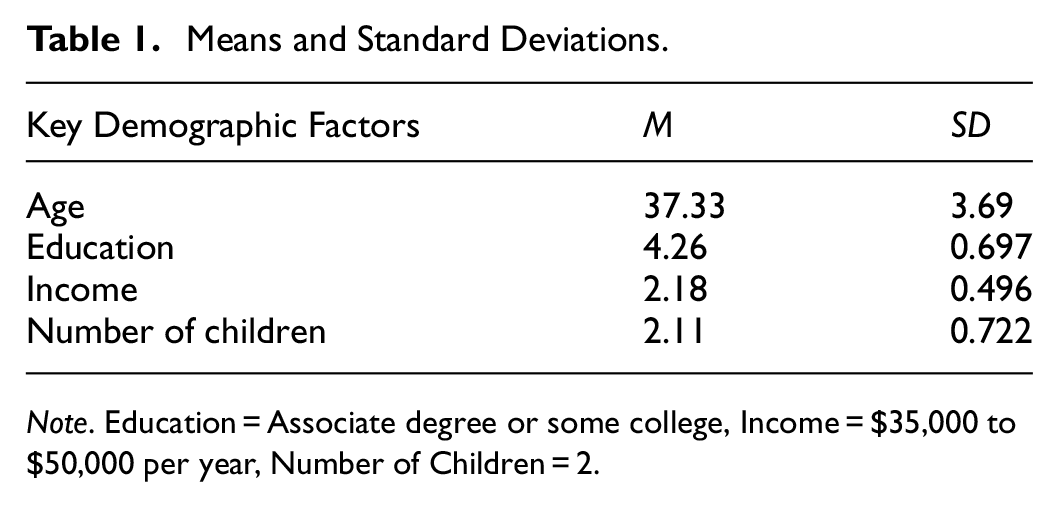
Note. Education = Associate degree or some college, Income = $35,000 to $50,000 per year, Number of Children = 2.
Racial Violence
The Multiple Affect Adjective Check List-Revised (MAACL-R; Lubin & Zuckerman, 1999) was used to assess feelings in response to the shootings of George Floyd, Breonna Taylor, Ahmaud Arbery, and Tyre Nichols, and other Black Americans who have lost their lives due to racial violence. There are three subscales that comprise negative affect (i.e., anxiety, depression, & hostility), and the alpha values range from .70 to 92. Our focus was primarily on responses to the question, “Below are some feelings that parents/people may feel in response to racial injustices. Choose the words that describe how you feel in response to racial violence against Black Americans (e.g., police brutality, hate crimes, etc.). Racial violence can bring up a lot of different emotions—we want you to check all the words that describe your feelings?” Participants provided their responses through the Multiple Affect Adjective Checklist (MAACL-R), a well-established and psychometrically sound self-report instrument designed to assess affective states in individuals (Lavigne, 2017).
Natural Language Processing
Natural Language Processing (NLP) is an interdisciplinary subfield of computer science and linguistics that allows machines to understand human language (Nadkarni et al., 2011). This domain encompasses a variety of tasks. One fundamental task is tokenization, the division of text into individual words or “tokens” (Ding et al., 2018). Another is part-of-speech tagging, where grammatical categories such as nouns, verbs, and adjectives are assigned to these tokens (Ding et al., 2018). Additionally, NLP includes the removal of “stopwords”—common, non-informative words—to enhance the efficiency of analysis (Sarica & Luo, 2021). A further aspect of NLP is the process of reducing words to their base or root form, either through stemming, which may result in somewhat shortened root words, or through lemmatization, producing meaningful root words (Khyani & Siddhartha, 2021). These fundamental NLP tasks are critical for the analytical techniques utilized in this study, such as sentiment analysis with VADER. This analysis relies on the subtle understanding of language that NLP provides. The Natural Language Toolkit (NLTK), a popular Python library, plays a vital role in this process, allowing for effective data preparation before analysis.
Sentiment Analysis
Sentiment analysis, a technique within NLP, applies either rule-based or machine-based learning to extract subjective information such as emotions or people’s opinions (Wankhade et al., 2022). This technique typically categorizes text into one of three sentiment classes: positive, neutral, or negative. Additionally, sentiment analysis encompasses two primary approaches: rule-based learning and machine-based learning. Rule-based learning, utilized by tools like VADER, analyzes text without extensive model training, relying instead on predefined rules to assign sentiment–positive, negative, or neutral (Hutto & Gilbert, 2014). In contrast, machine-based learning approaches utilize machine learning algorithms for sentiment classification and prediction, requiring well-labeled training data (Obagbuwa et al., 2023).
Valence Aware Dictionary sEntiment Reasoner (VADER)
VADER is a prominent rule-based tool within sentiment analysis (Hutto & Gilbert, 2014). Implemented in Python through the NLTK library, VADER excels at estimating sentiment scores in social media language, and it also shows proficiency across various other text domains (Hutto & Gilbert, 2014). This pre-built, pre-trained model combines a sentiment lexicon—a list of words annotated with their polarity—and grammatical heuristics to assess text sentiment (Hutto & Gilbert, 2014). It provides sentiment scores ranging from −1 to 1, indicating a range from strongly negative to strongly positive sentiments (Hutto & Gilbert, 2014). Additionally, VADER offers a compound score that summarizes the overall sentiment of the text, assigning it into one of the three categories: positive, neutral, or negative (Hutto & Gilbert, 2014).
Data Analysis Plan
The data analysis consisted of several key steps, preparing the dataset for sentiment analysis utilizing the VADER tool within a Python environment.
Data Preprocessing
The initial phase involved a multi-step process to refine the dataset:
(1) Data Initial Inspection—An initial check was conducted to ensure data integrity, examining the first five rows to understand the dataset’s structure.
(2) Data Subset Creation—For enhance analytical efficiency, the dataset was filtered into a new dataframe. This process involved preserving only the responses column, excluding the first row, and removing any incomplete entries.
(3) Data Cleaning—The primary step of preprocessing involved cleaning the text data. A function was created to remove non-alphabetic characters, ensuring a clean textual dataset in the revised dataframe.
(4) Tokenization and Part-of-Speech Tagging—A function was implemented to split the text into discrete words, with each assigned an “adjective” part-of-speech tag, reflecting the data’s origin from the multiple affect adjective checklist. A dedicated column for this tagged data was created.
(5) Lemmatization—To further refine the data, lemmatization was applied to derive the base forms of the adjectives. The WordNetLemmatizer was employed, and a function was created to process lists of word-tag pairs, placing the outcomes in a new “Lemma” column.
Valence-Based Sentiment Assessment
Following preprocessing, the sentiment analysis phase was initiated:
(1) Sentiment Analysis Setup—The Sentiment Intensity Analyzer was initialized, preparing the environment to utilize the VADER tool for sentiment analysis.
(2) Sentiment Calculation—A function was developed to calculate sentiment scores for each response, generating a new “VADER Sentiment” column in the dataframe.
(3) Sentiment Categorization—To assist with interpretation, a function categorized the VADER sentiment scores. Responses with a compound score greater than or equal to 0.5 were classified as positive, less than or equal to −0.5 as negative, and others as neutral. These classifications were documented in a “VADER Analysis” column.
The data analysis process culminated in a structured approach, involving extensive data preprocessing–including cleaning, tokenization, part-of-speech tagging, and lemmatization. This preparation was followed by the application of VADER sentiment analysis to classify the emotional valence of the responses. The resulting data provided an aggregated view of sentiments, essential for investigating the emotional landscape captured by the MAACL-R.
Results
The sentiment analysis, conducted utilizing the VADER tool, primarily focused on identifying positive sentiments in participants’ responses. Among the responses analyzed, 616 were categorized as negative, 145 as neutral, and 104 as positive. Figure 1 illustrates the breakdown of sentiment categories identified in the sentiment analysis, highlighting the proportions of negative, neutral, and positive sentiments.

Distribution of sentiment categories.
Figure 2 shows the percentage distribution of the different sentiment categories illustrating the breakdown of sentiment responses in the study, showcasing the relative proportions of negative, neutral, and positive sentiments among participants.

Percentage distribution of sentiment categories.
To deepen our understanding of the specific language indicative of each sentiment, Table 2 provides the top 10 words that were most frequently associated with positive, negative, and neutral sentiments in the participants’ responses.
Top 10 Words for Each Sentiment Category.

Note. This table contains the top 10 words in each sentiment category. The number next to the word is how many instances of the word showed up.
Further analysis of the sentiment categories revealed nuanced trends in the frequency of certain terms. Figure 3 presents the frequency density of each sentiment category identified in the study, showcasing the distribution density of negative, neutral, and positive responses.
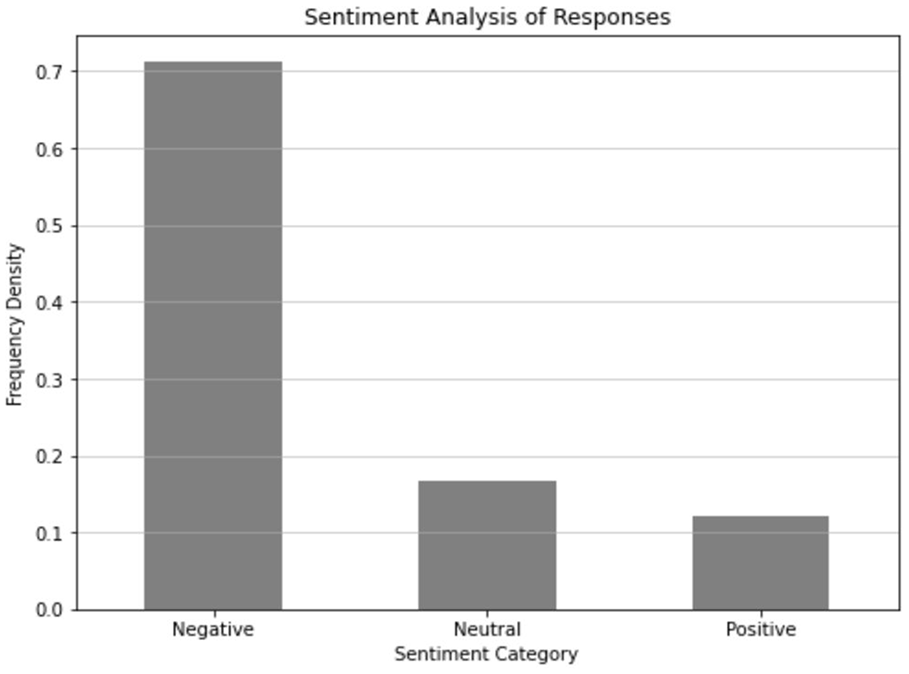
Frequency density of sentiment categories.
The relative scaling of sentiment response categories, which offers insight into the comparability of sentiment expressions across the dataset is detailed in Figure 4. Figure 4 displays the normalized values for each sentiment category, providing a comparative view of the negative, neutral, and positive responses, adjusted for scale and proportion.

Normalized values of sentiment responses.
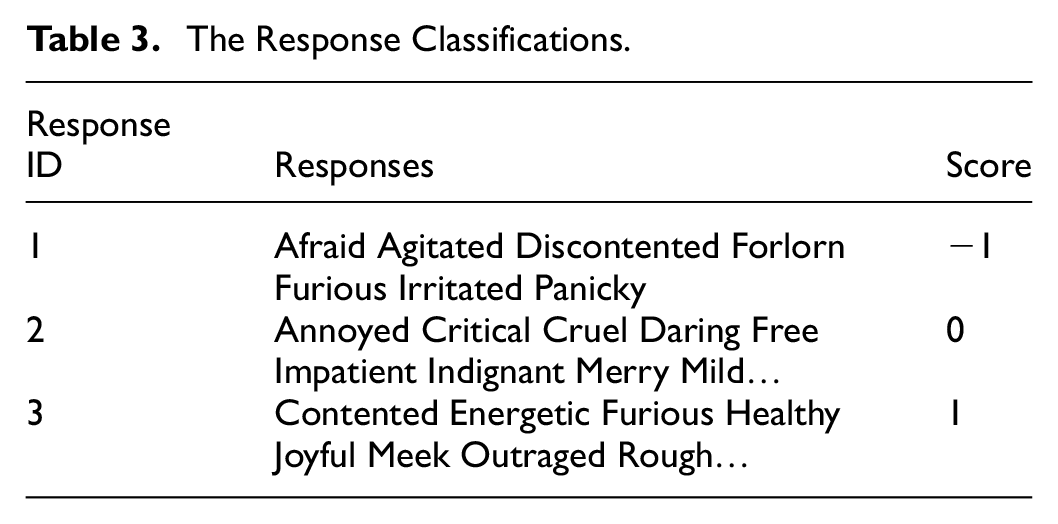
To demonstrate the practical application of the VADER tool in our analysis, Table 3 presents the response classifications, showing the sentiment scores alongside the actual MAACL-R responses.
The Response Classifications.
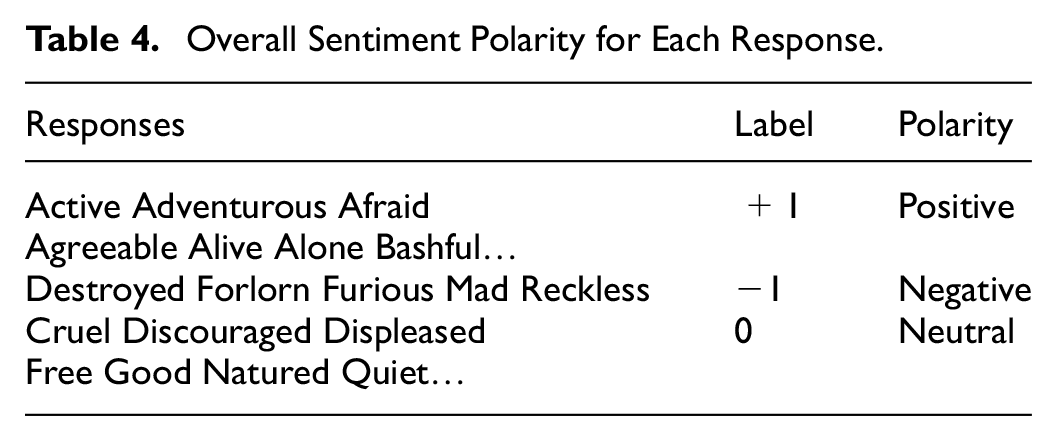
The overall sentiment polarity for each response, including the response itself, assigned label, and corresponding polarity score, is captured in Table 4.
Overall Sentiment Polarity for Each Response.
Lastly, to provide a summarized view of our sentiment analysis findings, Table 5 displays the polarity count for each class, detailing the count and percentage for each label.
Polarity Count for Each Class.

Discussion
This study explores the psychosocial factors contributing to positive emotional responses to racial violence among Black parents in Missouri, focusing on desensitization, trolling behavior, trauma-related coping mechanisms, and political or ideological beliefs. Our findings align with other research that has used sentiment analysis to understand complex social dynamics, such as Elbagir and Yang’s (2020) study on classifying sentiments in social media data during the 2016 US presidential election. Their study highlighted the relevance of analyzing sentiments on social media platforms to gain insights into public opinion and emotional responses (Elbagir & Yang, 2020).
Similarly, Bhaumik and Yadav (2020) conducted a sentiment analysis of various groups on X, including graduate students, politicians, doctors, comedians, and video gamers. By creating a corpus of tweets for each group, the authors measured the emotional weights of the tweets, demonstrating the utility of sentiment analysis in exploring diverse perspectives and opinions (Bhaumik & Yadav, 2020). Our study aims to provide a comprehensive understanding of the complex dynamics involved in the emotional responses of Black parents to racial violence, drawing from these methodologies.
However, the presence of positive sentiments amidst such reactions points to the possibility of underlying mechanisms that are not immediately apparent. Such mechanisms could encompass a range of factors, including desensitization due to repeated exposure to such incidents, trolling behavior that seeks to provoke or diminish the severity of these events, adaptive coping strategies that mitigate trauma, and the influence of political or ideological beliefs. Collectively, these factors may play a pivotal role in shaping the emergence of positive sentiments in the context of racial violence. This brings us to the central question of our study: Despite anticipating predominantly negative sentiments toward racial violence when surveying Black parents, what factors could account for the emergence of positive responses among participants?
While the predominance of negative and neutral sentiment aligns with expectations given the context of racial violence, the occurrence of positive sentiments presents an intriguing aspect warranting further investigation. It underscores the necessity to delve deeper into the underlying reasons and contexts that might drive these unexpected positive sentiments. Acknowledging this complexity, our study next examines a range of factors–such as desensitization, trolling behavior, trauma-related coping mechanisms, and political or ideological beliefs.
Racial Violence and Negative Emotions
The overwhelming presence of negative emotions among Black parents in response to racial violence is a significant finding of this study. These negative emotions, as reflected in the sentiment analysis, are rooted in the long history of systemic racism and its direct impact on the Black community. The traumatic events involving police brutality and hate crimes, as evidenced by the deaths of George Floyd, Breonna Taylor, Tyre Nichols, and others, have perpetuated a sense of fear, anger, distress, and despair among Black parents. This response aligns with the findings of Hawkins (2021), who noted the negative impact of police brutality on one’s physical and mental health.
These negative emotions are not just fleeting reactions; they represent the accumulated stress and trauma of continually navigating a racially hostile environment (D. R. Williams, 2018). As highlighted in the literature, such chronic stress can lead to adverse health outcomes, including psychological distress, hypertension, and cardiovascular diseases (Cénat, 2022; Coughlin, 2011). The specific impact on Black parents is profound, as they not only confront their own experiences of racism but also the daunting task of protecting their children from its effects (Lei et al., 2021). The necessity of engaging in protective parenting, including having difficult conversations about racial violence, adds an additional layer of stress and emotional burden (L. A. Anderson et al., 2022).
Moreover, the negative emotional responses are indicative of the broader social and health implications of racial violence. The persistent fear and anxiety experienced by Black parents can lead to a deterioration in family dynamics and overall well-being, creating an environment of constant vigilance and apprehension (R. E. Anderson & Stevenson, 2019). This heightened state of alertness further exacerbates the psychological toll on Black parents, emphasizing the urgent need for addressing the root causes of racial violence and implementing effective support systems for affected communities.
Racial Violence and Neutral Emotions
Neutral emotions expressed by Black parents in the context of racial violence, although less prevalent than negative emotions, present an intriguing aspect of the emotional landscape. These neutral responses may be indicative of avoidant coping mechanisms, a strategy often employed to mitigate the psychological impact of continuous exposure to racial trauma (Smalls-Glover et al., 2013). According to Smalls-Glover et al. (2013), avoidant coping can manifest as a form of emotional detachment or neutrality in the face of racially charged incidents. This coping style may serve as a protective mechanism, allowing individuals to maintain an appearance of emotional stability amidst recurring racial violence.
The expression of neutrality could also reflect a numbing effect, where constant exposure to racial violence leads to a diminished emotional response (Mrug et al., 2014). This phenomenon, often observed in communities frequently subjected to trauma, represents a psychological adaptation to ongoing stressors (Foa & Hearst-Ikeda, 1996). For Black parents, maintaining a neutral stance might be a means of preserving mental health and focusing on daily survival and responsibilities, rather than being continually overwhelmed by the emotional toll of racial violence.
It’s important to consider the societal implications of these neutral emotions. While they might offer temporary relief or stability, they also signal a concerning aspect of the lived experience of Black parents in racially charged environments. This emotional neutrality may hinder the collective acknowledgment and confrontation of racial injustices, as it can be misinterpreted as a lack of concern or impact. Therefore, understanding the role and effects of neutral emotional responses is crucial in developing comprehensive strategies to support communities affected by racial violence.
Racial Violence and Positive Emotions
The presence of positive emotions in response to racial violence, though surprising, offers a unique perspective on the resilience and coping strategies of Black parents. This positive sentiment could be reflective of various factors, including a sense of solidarity and community support that often emerges in the aftermath of traumatic events (Hawdon et al., 2012). Additionally, these positive emotions may stem from a sense of hope and the drive for social change, as communities come together to advocate for justice and equality (Greenaway et al., 2014). Another possible explanation for the positive responses is the concept of post-traumatic growth, where individuals find meaning, strength, and a renewed sense of purpose following traumatic events (Dell’Osso et al., 2022). For some Black parents, the shared experience of racial violence might foster a stronger community bond, a deeper commitment to racial justice, and a heightened sense of personal and collective empowerment.
However, it is critical to contextualize these positive emotions within the broader emotional landscape dominated by negative and neutral sentiments. The predominance of negative and neutral responses underscores the profound impact of racial violence on the emotional well-being of Black parents. While the positive emotions are important and contribute to a nuanced understanding of the community’s response, they should not overshadow the significant distress and challenges faced by the majority. Understanding this spectrum of emotions is crucial for developing effective interventions and policies aimed at supporting the mental health of Black parents and addressing the root causes of racial violence.
Exploring the Underlying Factors Behind Positive Sentiments
Desensitization
Desensitization, a psychological process identified by researchers, might contribute to the emergence of positive sentiments toward racial violence. Feinstein et al. (2014) suggest that repeated exposure to violence content in media and news may reduce an individual’s emotional response to such stimuli, resulting in a reduced negative reaction to images of violence. Building on this concept, Willis et al. (2021) propose that repeated exposure to violent media narratives might lead to desensitization, characterized by a decrease in the inherent aversive reactions to violence. This effect is especially relevant for African American audiences, who are constantly exposed to media images of racial violence, potentially resulting in a gradual desensitization to such images (Willis et al., 2021).
This numbing effect could distort perceptions of the severity and prevalence of racial violence, resulting in underestimations of its societal impact (Willis et al., 2021). Furthermore, Willis et al. (2021) highlight that desensitization may reduce empathetic and sympathetic responses, limiting the effectiveness of internal community dialogs about racial violence. As a result, individuals who are desensitized may not completely engage with the emotional weight or urgency felt by those who have directly experienced racial violence.
Given these considerations, the role of media consumption patterns on the development of desensitized attitudes warrants careful attention, especially in communities directly affected by racial violence. Understanding this influence is crucial, as it can shape collective attitudes and responses to incidents of racial violence.
Trolling Behavior
The phenomena of internet trolling may provide another explanation for unusually positive sentiments toward racial violence. Buckels et al. (2014) characterize trolling as an online behavior that disrupts normal discourse for the troll’s amusement, often facilitated by the veil of anonymity. In research settings where participant identity verification is lenient, there is a risk that respondents may misrepresent themselves. For instance, individuals may false claim to be African American, leading to false positive sentiments about racial violence. Such behavior could be motivated by a desire to provoke, disrupt scholarly inquiry, inflict distress, or for personal amusement (Ortiz, 2020).
Ortiz (2020) highlights that harassment, particularly that which is based on race and gender, is often associated with trolling behavior. Furthermore, the growing prevalence of trolling in online interactions calls into question the discourse on free speech, harassment, racism, and politics, frequently influencing academic and media domains (Ortiz, 2020). Ortiz (2020) notes that trolls may deliberately target Black scholars or forums focused on racial justice with offensive or inflammatory content. Critical analysis of research data is crucial when responses deviate significantly from known patterns, as these outliers may skew results and mask authentic community sentiment.
Trauma-Related Coping Mechanisms
In the context of coping with psychological trauma, resilience emerges as a potential driver for positive sentiments toward racial violence. Black individuals, often confronted with racial trauma characterized by psychological stress due to racism and discrimination, may develop positive attitudes as a result of effective coping mechanisms and resilience. These strategies, which have been refined over time, include engaging in therapeutic practices, building supportive networks, and actively participating in social activism, all of which allow for the processing of trauma and the reinforcement of personal agency (Harris, 2023).
Political or Ideological Beliefs
The impact of political and ideological beliefs on individuals’ perceptions of racial violence is significant and can sometimes lead to positive sentiments amid complex social dynamics. For instance, conservative ideologies, which often emphasize law and order, may influence the perception of law enforcement actions as justified, even in instances where these actions intersect with racial violence (Vitro et al., 2022). This perspective finds some resonance within the Black community. A Pew Research Center survey indicates that nearly one-third of Black individuals support their local police’s use of force and methods of justice (DeSilver et al., 2020). Such approval might reflect a broader trust in the legal system and an alignment with ideologies that advocate for societal stability.
Racial Identity Beliefs
Yet, it is less clear how people with a negative racial identity express their emotions, but recognizing how racial identity affects emotional responses can help guide interventions and support systems for those who have experienced racial violence. Kiecolt et al. (2016) found that having a positive racial identity and experiencing higher levels of racial discrimination was associated with higher levels of depressive symptoms among Black Americans. However, for Black Americans, being perceived as not smart increases depressive symptoms, but the relationship was weak for those who felt that Blacks were not intelligent as non-Blacks (endorsing the negative stereotypes about Black Americans).
Thus, in the current study, we speculate that positive emotions in response to racial violence may be associated with racial identity beliefs. The expression of emotions from a social identity lens and examining the role of internalized racism from a trauma lens could explain some of the positive responses. Future research is warranted in this area to understand the link between racial identity beliefs and internalized racism among Black Americans. Utilizing qualitative methods to understand further the complexity of racial violence, racial identity, and internalized racism could explain the emotional expressions in response to racism and racial violence. Moreover, we suggest that the exploration of colorblind ideology should also be undertaken. Colorblind ideology, or more precisely, power avoidance, involves the minimizing or denial of race and racism, as well as reduced identification or disregard for racial group membership. Individuals who support power evasive ideologies tend to support anti-Black prejudice, be less antiracist, and report lower levels of racial ethnocultural empathy (Yi et al., 2023).
Limitations
While this study provides important insights, several limitations must be acknowledged. First, the use of the VADER sentiment analysis tool might not fully capture the nuances necessary for academic research, especially in contexts not related to online discourse. We can look at studies like those conducted by Munnes et al. (2022), who explored the application of sentiment analysis in various contexts, including outside of typical online discourse. Their findings suggest that tools like VADER might not perform optimally in analyzing more complex, formal, or nuanced text, often encountered in academic research. Similarly, an article by Wankhade et al. (2022) analyzed the effectiveness of sentiment analysis tools across different data types and found that performance varied significantly when moving away from informal, online text to more structured and formal writing styles. These studies reinforce the notion that while VADER is effective within its targeted domain, its applicability might be limited in academic research contexts, where linguistic expression diverges substantially from the informal, online discourse it was designed to analyze.
The reliance on a rule-based approach for sentiment analysis presents another limitation. Despite its simplicity, this method lacks the adaptive learning and predictive capabilities of machine learning models, which could offer a more nuanced understanding of emotional complexities. Rule-based systems, like VADER, function by relying on a fixed set of rules and lexicons (Hutto & Gilbert, 2014). However, as Cambria and White (2014) note in “Jumping NLP Curves: A Review of Natural Language Processing Research,” these systems struggle with the subtleties and variabilities of natural language, including context-specific meanings and evolving language use. On the other hand, machine learning models, especially those employing deep learning techniques, have been recognized for their ability to learn from vast datasets and adapt to new contexts (Sarker, 2021). Zhang et al. (2018), in their paper “Deep Learning for Sentiment Analysis: A Survey,” highlight how these models can discern complex patterns in data, enabling a more sophisticated understanding of sentiments. These models’ ability to evolve and adapt over time with new data makes them particularly effective in dealing with the complexities and nuances of human emotions in language, as discussed by Li et al. (2018) in “A Survey on Sentiment Analysis and Opinion Mining for Social Multimedia.” Therefore, while rule-based systems offer ease of implementation and quick analysis, their static nature can be a significant drawback in accurately capturing the dynamic and context-dependent nature of sentiment in language.
Additionally, the study’s focus on Missouri limits the generalizability of our findings. Emotional responses to racial violence may vary significantly due to different historical, social, and political contexts across states, regions, or communities, raising concerns about applying these findings to larger populations. As noted by Cramer (2020) in “Understanding the Role of Racism in Contemporary US Public Opinion,” the impact of regional histories and socio-political environments play a crucial role in shaping attitudes and responses to racial issues. Her review indicates that responses in areas with distinct racial histories, like Missouri, may not mirror those in other regions. In light of this consideration, while the study provides valuable insights into the responses of Black parents in Missouri, its findings should be viewed within the specific context of Missouri’s unique historical and social landscape.
The possibility of trolling activity is another concern that may impact the results. There was no definitive method to verify if individuals misrepresented their identities. Such misrepresentation could lead to insincere responses, thereby impacting the study’s conclusions and the validity of its findings. This challenge is highlighted in the work of Cheng et al. (2017), where they explore the impact of online trolling in discussion communities. Their findings suggest that trolling behavior can significantly distort the results of studies relying on online data, especially when identity verification is not robust. This insight underlines the importance of considering the potential for identity misrepresentation and trolling in online research.
In addition, there might be a lack of contextual understanding for real-time sentiment analysis algorithms, which struggle to capture the complexity of a nuance of racial violence. Moreover, the historical, cultural, and social context that is frequently included in discussions of racial violence is often beyond the scope of the sentiment analysis methods. This limitation is echoed in the work of Böttger and Strobl (2003), which highlights the importance of qualitative approaches in understanding the nuanced and personal nature of violence. The study emphasizes the importance of narrative and personal accounts in understanding the complex experiences of Black individuals facing racial violence, suggesting that sociocultural frameworks should be complemented with qualitative approaches using advanced sentiment analysis tools. Moving forward, future research should also consider using qualitative methods such as semi-structured interviews to further understand the historical, cultural, and social context of racial violence. It is important to recognize the limitations of quantitative analysis in capturing the nuances and complexities of these experiences. In the current study, because emotions were classified as either positive, neutral, or negative, we may not have captured the overlapping emotions that Black parents might experience with discussing racial violence. For instance, feeling anger and frustration is not only a “negative outcome,” but it is a legitimate expression of resistance, a specific call to action, and activism. Also, because it is not impossible to look at structural and systemic racism, the analysis may not go beyond individual emotions or phrases. It is crucial to be aware of the historical and social factors that go beyond the feelings or words that the Multiple Affective Adjective Checklist picked up to comprehend systems of injustice. A mixed-methods approach (e.g., sentiment analysis and semi-structured interviews) can provide a more comprehensive understanding of the complex issues.
Sentiment Analysis and Implications for Racial Violence
Given the complexity of language and emotions, there are implications when using sentiment analysis. Sentiment analysis offers a novel way of understanding views about racial violence. However, it can also lead to misunderstandings, oversimplifications, and misinterpretations of emotion or tone because we used the MAACL-R. For example, the adjectives were classified as either positive, negative, or neutral, which can lead to oversimplification when examining racial violence in America. For instance, the negative emotions that are classified as negative, such as anger, fear, grief, or frustration, can be classified as simply negative. However, these emotions are part of a justified outrage or cause for racial injustices. Additionally, the responses to racial violence may be misinterpreted, leading to an inaccurate sentiment classification. In addition to sentiment analysis and misinterpretation of emotion or tone, sentiment analysis can also oversimplify complex issues. For instance, racial violence is tied to structural racism and discrimination as the historical vestiges of slavery and Jim Crow (Murry et al., 2018). The sociohistorical lens of race and racism in America is not something that can be accurately captured or analyzed solely through sentiment analysis because it is a computational linguistic tool. It requires a deeper understanding of systemic issues and historical context to truly grasp the complexities of racial injustices and violence. As a result, it may reduce the complex discussions of racial violence to overly simplistic conclusions that fail to capture the nuances of Black Americans’ feelings of racial violence in the way that Black parents are interpret these negative racialized experiences. Additionally, the focus on the emotional polarity of an adjective being either positive or negative ignores the many layered narratives and discussions about racism and racial violence, potentially diminishing the voices and experiences of Black people and other marginalized groups. It is important to consider the complex and intersectional nature of these voices and experiences.
Practical and Theoretical Contributions of Sentiment Analysis
Practical Contributions
Overall, sentiment analysis is useful for understanding emotions and can offer both practical and theoretical contributions to the research literature despite the limitations that are mentioned. These contributions will help advance our understanding of public discourse around racial violence, which also enhances data analysis and provides new avenues of research on the intersection of race violence in society of responses. Data processing using sentiment analysis enables researchers to analyze vast amounts of data, whether it be from surveys, data, news, outlets, media platforms, or other textual sources, quickly and efficiently. The scalability allows for the study of large data sets of public opinion reactions and discourse about racial violence that can provide immediate feedback on how people are reacting to racial bias events. This could be a useful tool for activists, policymakers, and/or media outlets to monitor in response to evolving public sentiments. For example, analyzing X reactions after a racial violence incident can inform public awareness campaigns. We can also better track and identify geographical analysis that is related to racial violence, for example, regional differences in attitudes toward racial violence. For example, we can compare our segments in the US (e.g., Northern vs. Southern states) to understand the response to racial violence and how to support minoritized families. In addition to that, it also offers temporal associations, such as public sentiment shifting before or after a significant event, whether it be due to protesting or significant policy changes. For instance, in the wake of the deaths of George Floyd, Tyre Nichols, and Sonya Massey, sentiment analysis can provide an understanding of the dynamics of social unrest and community reactions over time due to their murders. The notion that sentiment analysis can capture community reactions to inform the development of public policies and address racial violence highlights its potential as a tool for understanding public sentiment. For example, policymakers can better understand how communities proceed with racial violence and tailor messaging to address these issues effectively and to meet the concerns of the people impacted. Also, sentiment analysis can help organizations track the effectiveness of anti-racist campaigns and/or social justice initiatives by observing shifts in a public discourse. In addition to this, it can also contribute to amplifying voices from oppressed and marginalized communities by detecting patterns in conversations about racial violence and better understanding how marginalized communities express their experiences or advocate for systemic change.
Theoretical Contributions
Theoretically, employing sentiment analysis can advance conceptual and/or theoretical models by providing a qualitative lens through which to examine how society deals with instances of racial violence. This can include contributions to theories regarding the media, the framing of such incidents, and the formation of public opinion surrounding such incidents. Additionally, we can also advance scholarship in this by using an intersectionality lens to understand the responses of persons holding multiple intersecting social identities. For instance, what are the differences in persons holding multiple intersecting social identities compared to those with single social identities in their responses to police violence? Crenshaw et al. (2015) have noted the invisibility of Black women and girls in discussions about police violence. This data-driven approach could contribute to the theory by identifying the commonalities and differences and how various group members discuss their racial violence experiences. Racism, sexual orientation, or gender identity and class issues may be factors that can also be explored.
In addition, sentiment analysis can be used to understand how responses to racial violence are tied to one’s actions, motivation, and group identity. For instance, in our study, responses to racial violence might be tied to the racial identity, which might impact the type of civic engagement or activism that they engage in and are trying to dismantle. It may also provide them with tools to help navigate race-related stressors in their day-to-day interactions. Additionally, sentiment analysis can extend theoretical understanding of digital spaces, perhaps as important spaces for discussions on racial violence. Overall, the research findings have the potential to understand discourses of race and racism in digital spaces such as X, Reddit, or Facebook, which reflects a new way that communities of color organize and express grievances about racial violence. Lastly, sentiment analysis can contribute to a theory on how communities of color process historical racism and racial trauma. For example, sentiment analysis enables theorists to investigate how historical consciousness and the sociopolitical climate influence emotional responses to racial violence. We can also examine the emotional tone of public discussions to comprehend how past events about racial violence are associated with present feelings about racial violence. Using sentiment analysis can make a significant contribution to the theoretical and practical fields of future research and practice by providing important new information about how racialized emotions have the potential to contribute to better policy development in addressing racial violence and its emotional impact on marginalized and oppressed communities.
Conclusion
This study reveals a complex emotional landscape among Black parents in Missouri in response to racial violence, where negative, neutral, and positive sentiments coexist. The predominance of negative sentiments aligns with the literature on the psychological toll of racial trauma (Curtis et al., 2021), reflecting the cumulative burden of systemic racism. However, the presence of neutral and positive sentiments highlights the diversity of coping mechanisms within the Black community, challenging the narrative of uniform negative responses to racial violence. To understand how Black parents respond to racial violence, it is important first to understand that Black Americans are not a monolith and that responses to racial violence may vary. The variation in how Black parents respond and the type of emotions expressed can be contingent upon how one regulates their emotions and the type of coping strategies utilized to cope with that racial stressor (Jacob et al., 2022). Additionally, factors such as past experiences with racial violence, level of social support, and cultural beliefs can also influence how Black parents respond to incidents of racial violence. Understanding these nuances is crucial in developing effective support systems for Black families dealing with the impact of racial trauma. For instance, according to the Complex Racial Trauma Framework, racial trauma is not only a complex stressor, but because of the constant, repetitive, and cumulative effects of racism, this type of race-related stress has a significant effect on mental health, which may lead to emotional distress (Cénat, 2022).
The negative sentiments observed resonate with previous findings that document heightened stress, anxiety, and trauma among Black individuals in the face of racial violence (Curtis et al., 2021; D. R. Williams, 2018). These emotions reflect the cumulative burden of systemic racism and its direct impacts, aligning with studies that have consistently highlighted the negative effects of such experiences on mental and physical health (Cénat, 2022; Coughlin, 2011). In the current study, centering Black parents’ responses to racial violence, Social Identity Theory suggests that emotions may vary depending on the meaning of one’s racial identity, more specifically, whether it has a positive or negative self-meaning with regards to an individual’s racial identity. For instance, a healthy racial identity may lead to negative emotions expressed about racial violence or racism in comparison to persons who internalize the negative stereotypes and beliefs about their racial group membership (Kiecolt et al., 2016). Furthermore, individuals with a positive racial identity may be more likely to engage in activism and advocacy against racial violence, while those with a negative racial identity may experience feelings of helplessness or resignation. It is important for researchers and practitioners to consider the role of racial identity in shaping emotional responses to racial violence in order to better support and empower marginalized communities.
The neutral emotions, less expected, may indicate a form of coping through emotional detachment or desensitization, a phenomenon observed in communities frequently exposed to trauma (Feinstein et al., 2014; S. N. Williams & Clarke, 2019). This coping mechanism, while serving as a protective barrier against continuous emotional turmoil, also points to the numbing effect of constant exposure to racial violence. For instance, Blackmon and Thomas (2015) conducted a study examining reactions to the fatal shooting of Trayvon Martin and found that in comparison to Black Americans in the undifferentiated racial identity cluster (e.g., neither racially colorblind nor positively identified with African American culture), the race-focused identity cluster reported high levels of sadness and anger regarding the shooting of Trayvon Martin. In our study, this might explain the neutral emotions in response to racial violence in the state of Missouri. Furthermore, Banks and Kohn-Wood (2007) indicated that the undifferentiated racial identity cluster does not conceptualize the world in terms of race. This might explain the neutral response to racial violence.
How a person controls their emotions (e.g., positive, negative, or neutral responses) can affect how they express other emotions, either positively or negatively. This means that the ways they cope, like cognitive reappraisal of the situation (reinterpreting an emotional event after the fact), can change or lessen the emotional impact of the situation (Gross, 1998; Wilson & Gentzler, 2021). However, expressive suppression reduces the emotion of the situation, thereby hiding in or reducing it; however, it is physiologically and emotionally taxing, although cognitive reappraisal can reduce negative emotions. Expressive suppression of the stressor or ignoring or hiding one’s emotions not only impacts one’s mental health (Troy et al., 2018; Wilson & Gentzler, 2021), it can also have negative effects on physical health, as research has shown that chronic emotional suppression can lead to increased levels of stress hormones and a weakened immune system (Troy et al., 2018). Therefore, finding healthy coping mechanisms that allow for emotional expression and processing is crucial for overall well-being.
Perhaps most intriguingly, the emergence of positive sentiments amidst a context overwhelmingly negative highlights the resilience and complex psychological dynamics at work. Studies have shown that positive coping strategies, such as finding community solidarity and channeling experiences into social activism, can foster a sense of empowerment and positive growth even in the face of adversity (Martin, 2021; Neblett et al., 2008). Additionally, the role of racial socialization in shaping perceptions of racial incidents may contribute to positive emotions, framing these events within a broader narrative of endurance and collective strength (Burt et al., 2012). The presence of these positive sentiments, although in a minority, challenges the narrative of uniform negative emotional responses to racial violence. It encourages a deeper exploration into how individuals navigate complex emotional landscapes in the face of systemic injustice. This topic highlights the importance of a nuanced understanding of emotional responses, recognizing that the same incident can trigger a range of emotions based on individual experiences, coping mechanisms, and socialization processes.
We also speculate that members of minority groups accept or hold negative stereotypes about their race, including those relating to one’s abilities and self-worth (James, 2020, 2022; C. P. Jones, 2000). In terms of psychological response, internalized racism is thought to result from exposure to racial violence and racism (D. R. Williams & Mohammed, 2009), increasing shame from experiencing racism (Johnson, 2020). Ultimately, it’s critical to recognize that these results are novel, and that more investigation is required to fully comprehend the role that internalized racism, attitudes toward belonging to a racial group, and Black Americans’ racial identities play in explaining emotional reactions. It is important for mental health professionals to address internalized racism in therapy to promote healing and empowerment.
This study highlights the emotional responses of Black parents in Missouri to racial violence, emphasizing the need for further research on coping strategies, socialization practices, racial identity, and political or ideological beliefs. Understanding how a person’s group identity affects their emotional reactions can give us important insights into how communities can come together to support one another in difficult times. By acknowledging the power of a common ingroup identity in promoting solidarity and resilience, we can better understand the impact of racial violence on marginalized communities and work toward fostering a sense of unity and empowerment (Dovidio et al., 2007). Overall, this research highlights the complex relationship between discrimination, emotional well-being, and group identification among Black parents. By recognizing the role of resilience and group support in coping with discrimination, interventions can be developed to promote well-being within this community (Branscombe et al., 1999).
It emphasizes the importance of understanding diverse emotional responses to racial violence for effective interventions, supportive policies, and fostering empathetic public discussions on racial justice. As society grapples with the persistent issue of racial violence, acknowledging and addressing these diverse emotional responses becomes increasingly important in our collective journey toward healing and equity.
Footnotes
Acknowledgements
The research team thanks the families that participated in the study. In addition, we would like to express our gratitude to OpenAI’s ChatGPT and Grammarly for their assistance in language polishing and grammar improvement throughout the preparation of this manuscript.

Funding
The author(s) disclosed receipt of the following financial support for the research, authorship, and/or publication of this article: This research was funded by the National Science Foundation (NSF), grant #: 2045937.
Declaration of Conflicting Interests
The author(s) declared no potential conflicts of interest with respect to the research, authorship, and/or publication of this article.
Data Availability Statement
The dataset generated during and/or analyzed during the current study are not publicly available due to the fact that the participants of this study did not give written consent for their data to be shared publicly. Given the sensitive nature of the research, supporting data is not available publicly. However, the data are available from the corresponding author upon reasonable request.