




Abstract
This study investigates the relationships between organizational fairness, perceived organizational identity, employee empowerment, corporate social responsibility (CSR), and employee creativity within Malaysian organizations. Using a quantitative research design, data were gathered from 500 employees across manufacturing, services, and IT sectors. Structural Equation Modeling (SEM) analysis revealed that organizational fairness (β = .157, p < .05) and employee empowerment (β = .274, p < .001) significantly enhance employee creativity, with CSR playing a dual role as both a direct driver of creativity (β = .400, p < .001) and a mediator for fairness and empowerment. Conversely, perceived organizational identity showed minimal direct influence on creativity (β = .060, p = .407), suggesting its role may depend on contextual factors. These findings emphasize the importance of CSR initiatives, equitable practices, and employee empowerment in fostering creativity, providing practical strategies for managers and policymakers aiming to enhance innovation within organizations.
Keywords
Introduction
Creativity and innovation are indispensable for organizations striving to maintain competitiveness and achieve long-term success in today’s dynamic business landscape (Bilderback, 2023; Orieno et al., 2024). Companies that prioritize innovation are 33% more likely to outperform their competitors (BCG, 2021). However, only 35% of employees worldwide perceive their organizations as fostering environments conducive to creativity (Wigert & Robison, 2018). This disconnect underscores a significant challenge: while organizations recognize the value of creativity, many fail to implement the necessary practices to cultivate it effectively (Srimulyani & Hermanto, 2022). This issue is particularly pertinent in Malaysia (Lebdioui et al., 2021), where economic growth increasingly depends on transitioning from resource-based industries to knowledge-intensive sectors such as manufacturing, services, and IT. Understanding how organizational practices—such as fairness, empowerment, and corporate social responsibility (CSR)—influence employee creativity is critical for sustaining this transformation (N. Ahmad et al., 2022, 2024; Iqbal & Parray, 2024).
Organizational justice, encompassing distributive (Burri et al., 2021), procedural (Sikandar et al., 2022), and interactional justice (Farid et al., 2023), is widely regarded as foundational for fostering trust and psychological safety—key precursors to creativity (B. Kim, 2022; Nazir et al., 2019). Fairness in resource allocation (distributive justice), decision-making processes (procedural justice), and interpersonal treatment (interactional justice) encourages employees to engage in creative behaviors (Ye et al., 2022). In Malaysia, where workplace diversity and hierarchical structures often shape employee perceptions (Choo et al., 2023), the role of fairness may be further complicated by cultural nuances. For instance, procedural justice may have varying effects on creativity depending on leadership styles and cultural alignment (Jaboob et al., 2023). These findings necessitate deeper investigation into how justice interacts with cultural and leadership factors to influence creativity in Malaysia.
CSR is another critical driver of creativity, promoting employee engagement, autonomy, and job meaningfulness (Chaudhary & Akhouri, 2019; Tong et al., 2019). In Malaysia, the push for CSR is bolstered by national policies and incentives aimed at promoting sustainable business practices (Wan, 2023), making CSR not just an ethical obligation but also a competitive imperative (Mitnick et al., 2023). CSR initiatives that focus on employee well-being and environmental stewardship have been shown to create a sense of purpose, motivating employees to generate and apply innovative ideas (Guo et al., 2021). However, the mechanisms through which CSR impacts creativity remain underexplored. While psychological safety and organizational pride are proposed mediators (B.-J. Kim et al., 2021), the interaction of perceived, internal, and external CSR dimensions requires further investigation, particularly in Malaysia’s unique regulatory and cultural environment.
Similarly, perceived organizational identity, which reflects employees’ alignment with their organization’s values and mission, is a critical factor in fostering work engagement and enhancing problem-solving behaviors (Hui et al., 2020; G. Zhang & Wang, 2021). In Malaysia’s culturally diverse workplaces, identity alignment is influenced not only by organizational values but also by broader societal and cultural norms (Adams & Velarde, 2021; Cheah & Lim, 2024). This interplay between individual and organizational identity becomes even more pronounced in settings where leadership plays a transformative role. For example, research highlights that transformational leadership, when coupled with a strong creative role identity, can significantly enhance organizational identification, thereby promoting creativity in roles requiring non-routinized, innovative thinking (H. Liu et al., 2021; H. Zhang et al., 2022). Additionally, supervisors’ creativity has been shown to positively influence subordinates’ creativity, mediated through the subordinates’ own creative role identity (Lingling & Ye, 2023). This effect is further amplified in environments where organizational support for creativity is robust (Koseoglu et al., 2017). However, a deeper understanding of how these dynamics unfold within Malaysia’s unique cultural and organizational landscape is still lacking. Addressing this gap could unlock significant potential for fostering creativity through tailored leadership strategies and identity-driven initiatives that resonate with Malaysia’s diverse workforce and evolving economic priorities.
Employee empowerment, encompassing structural and psychological dimensions (Llorente-Alonso et al., 2024; Spreitzer et al., 1997), has consistently been linked to creativity (Barua et al., 2024; Chow, 2018). Structural empowerment, characterized by autonomy, resources, and decision-making authority, and psychological empowerment, which fosters intrinsic motivation through competence and purpose, both play critical roles (Echebiri et al., 2020; Singh & Sarkar, 2019). However, in Malaysia, where hierarchical cultural norms can limit autonomy (Loo et al., 2024), the effectiveness of empowerment strategies may depend on their alignment with organizational culture. Developmental and group-oriented cultures amplify the positive effects of empowerment on creativity, while hierarchical cultures tend to suppress them (Makumbe, 2021; Shamsuddin et al., 2023). This interplay between culture and empowerment warrants deeper exploration to identify culturally compatible strategies that enhance creativity.
While existing studies have explored fairness (Kapoor & Kaufman, 2022), CSR, identity (Mohammed et al., 2022), and empowerment individually (Imam et al., 2020) in relation to creativity, their combined effects remain underexplored, particularly in the Malaysian context. Additionally, the moderating role of organizational culture in these relationships is not fully understood as no study have tested the relations. Developmental and rational cultures are generally conducive to creativity, whereas hierarchical cultures often inhibit it, raising questions about how to align cultural practices with organizational objectives to foster creativity (Makumbe, 2021; Shamsuddin et al., 2023). Moreover, there is a notable absence of an integrated theoretical framework linking Social Exchange Theory (SET), Self-Determination Theory (SDT), and Stakeholder Theory (ST) to explain the interplay of these factors in driving creativity (Chowdhury et al., 2023).
To address these gaps, this study investigates how organizational fairness, perceived organizational identity, employee empowerment, and CSR collectively influence employee creativity. It also examines the mediating role of CSR and the moderating effect of organizational culture on these relationships. The research is guided by the following questions:
1. How do organizational fairness, perceived organizational identity, employee empowerment, and CSR individually and jointly influence employee creativity?
2. What is the mediating role of CSR in the relationship between (a) fairness, (b) identity, (c) empowerment, and creativity?
3. Does organizational culture moderate the relationships between fairness, identity, empowerment, CSR, and creativity?
This study adopts a quantitative research design, collecting survey data from employees across Malaysia’s manufacturing, services, and IT sectors. Structural Equation Modeling (SEM) is employed to test the hypothesized relationships, offering empirical insights into the mechanisms that foster or hinder creativity. By integrating SET (Blau, 1964), SDT (Deci & Ryan, 2008), and ST (Mahajan et al., 2023), this research provides a comprehensive framework for understanding creativity in organizational contexts. These findings aim to guide Malaysian managers and policymakers in designing equitable, empowering, and socially responsible environments that nurture innovation and sustain competitiveness in a global market.
Literature Review
Employee Creativity
Employee creativity, defined as the ability to generate novel and useful ideas, forms the cornerstone of organizational innovation and long-term competitiveness (Oldham & Baer, 2011). Creativity in organizations manifests across two primary dimensions: creative performance, and innovative work behavior (IWB), emphasizing the application and execution of these ideas (AlMazrouei et al., 2023; H. Li et al., 2020; Örnek & Ayas, 2015). Both dimensions are essential for organizations to adapt to dynamic market conditions, particularly in Malaysia’s rapidly evolving sectors like manufacturing, services, and IT, where creativity is pivotal for sustaining growth and competitive differentiation (Chen & Zhu, 2014; Rhee & Jin, 2019). Openness to experience and intrinsic motivation are well-established individual drivers of creative problem-solving (Kiesler, 2022; Urban et al., 2021), particularly when personal goals align with organizational objectives (H. Liu et al., 2024). These traits, however, do not operate in isolation. Contextual factors such as transformational and inclusive leadership styles further amplify creativity by fostering psychological safety, enabling employees to explore innovative ideas without fear of criticism or negative repercussions (Y. J. Kim et al., 2020). In Malaysia’s culturally diverse work environments, inclusive leadership is especially impactful, bridging cultural differences to foster collective creativity.
Organizational enablers like knowledge sharing and high-performance work systems (HPWS) further enhance creativity by promoting collaboration and autonomy (Nguyen et al., 2024). HPWS, which prioritize competence and development (Kamna & Ilkhanizadeh, 2022), are particularly significant in Malaysia’s transition toward a knowledge-based economy (Nuccio & Mogno, 2023). These systems not only align organizational structures with innovation goals but also empower employees to take ownership of their roles (Mehralian et al., 2022), facilitating the transition from creative ideation to actionable implementation (Alblooshi et al., 2020). Yet, challenges persist. Balancing radical and incremental innovation, navigating hierarchical cultural norms, and measuring creativity’s multifaceted nature require tailored approaches to ensure effectiveness. In Malaysia, where cultural norms may inhibit empowerment, aligning practices with group-oriented and developmental cultures is crucial for fostering innovation (Makumbe, 2021). This study positions employee creativity as reflective of both creative performance and IWB, investigating how organizational fairness, perceived identity, empowerment, and CSR influence these outcomes. By situating creativity within Malaysia’s organizational and cultural contexts, the study addresses the critical need for environments that balance individual and organizational factors to sustain innovation and competitiveness.
Organizational Fairness
Organizational fairness, encompassing distributive (Stivers et al., 2023), procedural (Colquitt et al., 2023), and interactional justice (Farid et al., 2023), significantly shapes employees’ attitudes, behaviors, and creative capacities within the workplace (Bankins et al., 2023; Ye et al., 2022). Together, these dimensions form the basis of trust and equity, foundational elements for fostering an innovative work environment (T. Akram et al., 2020).
Distributive justice pertains to perceptions of fairness in resource allocation, such as pay, rewards, and recognition (Gurney et al., 2021). Employees who perceive equity in outcomes are more likely to feel valued, motivating them to contribute innovative ideas (T. Akram et al., 2020). This dimension is particularly salient in Malaysia (N. A. Ahmad et al., 2022), where economic competitiveness is tightly linked to incentivizing creative contributions (Indradevi, 2022). Procedural justice, on the other hand, emphasizes fairness in decision-making processes (Mulgund, 2022), including transparency, consistency, and employee participation. Transparent and inclusive frameworks not only build trust but also create environments where employees are encouraged to engage in creative problem-solving (Bujold et al., 2022; Lambert et al., 2023). For Malaysian organizations, which often operate within hierarchical structures, the emphasis on procedural justice can mitigate power imbalances (Wook, 2019), enabling employees to voice ideas without fear of retribution. Interactional justice, focusing on respectful treatment and effective communication (Gupta et al., 2021), is equally critical in fostering employee creativity. Respectful interpersonal interactions create psychological safety (Itzchakov & DeMarree, 2022), which is essential for both ideation and implementation of innovative ideas. In hierarchical cultural contexts like Malaysia, interactional justice plays a pivotal role in addressing status-driven dynamics, allowing employees to feel secure in contributing creative solutions (Wu & Li, 2007).
Organizational fairness not only integrates these dimensions but also aligns them with broader innovation goals. Distributive justice motivates ideation by recognizing contributions (Leclercq et al., 2020), procedural justice ensures fair evaluation and implementation of ideas (Van Lent, 2014), and interactional justice fosters the trust necessary for risk-taking (Mittal et al., 2019). However, existing literature often overlooks the interplay between these dimensions, particularly in culturally diverse contexts like Malaysia. For instance, while procedural and interactional justice have been shown to enhance creativity through trust-building, their relative contributions in cultures with high power distance (Zolfaghari & Madjdi, 2022), such as Malaysia, remain underexplored. This study examines organizational fairness as a multidimensional construct influencing employee creativity in Malaysian organizations. By investigating the interplay between fairness dimensions and their combined effects on creativity, the research aims to provide actionable insights into how equitable practices can drive innovation and competitive advantage in culturally nuanced environments.
Perceived Organizational Identity
Perceived organizational identity, reflecting employees’ alignment with their organization’s values and mission (Ahn, 2022; Ouakouak & Ouedraogo, 2013), significantly influences creative performance and IWB. This sense of alignment fosters intrinsic motivation and engagement, enabling employees to channel cognitive and emotional resources into innovative behaviors (H. Li et al., 2020; G. Zhang & Wang, 2021). Employees who perceive a strong organizational identity are more likely to internalize the organization’s goals (Ahn, 2022), translating these into creative contributions.
Organizational fairness directly enhances perceived identity by creating trust and legitimacy (De Roeck & Delobbe, 2012). Fair practices, including equitable resource distribution and transparent decision-making (Cheng & Jiang, 2020), enhance organization-based self-esteem and authenticity—critical factors for fostering creativity (Lynch et al., 2021; X. Wang et al., 2020; Wen et al., 2021). For instance, employees who perceive fairness in their workplace are more likely to feel that their contributions are meaningful, thereby increasing their commitment to creative problem-solving. However, while organizational identification drives creativity, its effects are sometimes mediated by self-oriented mechanisms like self-esteem (Jiang et al., 2024; Si et al., 2023), suggesting that fairness must be paired with strategies that bolster individual motivation.
Empowerment further reinforces the connection between perceived identity and creativity (Burhan et al., 2024; X. Zhang & Bartol, 2010). Leadership empowerment behaviors (LEB), which emphasize autonomy and recognition, create climates where employees feel valued and motivated to contribute. Such environments not only elevate employees’ self-perceived status but also promote continuous feedback and refinement of ideas, critical for innovation (Valero-Pastor et al., 2021). In Malaysia, where hierarchical norms can suppress employee agency, deliberate efforts to integrate empowerment into organizational practices are essential.
By integrating perceived organizational identity with fairness and empowerment, organizations can create environments conducive to creativity (R. Li et al., 2018; W. Liu et al., 2016). Perceived identity fosters a sense of belonging, fairness ensures meaningfulness, and empowerment promotes psychological safety. Together, these factors enable employees to navigate the dual dimensions of creativity—ideation and implementation—effectively. This study examines perceived organizational identity as a driver of creativity in Malaysian organizations, highlighting its role in fostering innovative behaviors within a competitive global market.
Theoretical Underpinning
The theoretical foundation of this study is anchored in Social Exchange Theory (SET), Self-Determination Theory (SDT), and Stakeholder Theory, collectively providing a comprehensive understanding of how organizational practices drive employee creativity, with CSR playing a crucial mediating role.
Social Exchange Theory (SET) serves as the primary lens for this study, positing that social behavior is driven by an exchange process where individuals aim to maximize benefits and minimize costs (Blau, 1964). Within the workplace context, SET suggests that when employees perceive fairness, support, and empowerment from their organization, they are likely to reciprocate with positive behaviors such as increased creativity (Cropanzano & Mitchell, 2005). Recent studies underscore the significance of SET-in enhancing creativity through various mediators and contextual factors. For instance, knowledge-based HR practices promote creativity by fostering knowledge sharing and reducing knowledge hiding, aligning with SET principles (Lugar & Novićević, 2021). The employee-organization exchange (EOX) has also been found to influence creativity through need satisfaction, moderated by leader-member exchange (LMX) and creative self-efficacy (Pan et al., 2020). Additionally, Z. Wang et al. (2022) demonstrate that enterprise social media enhances creativity through LMX and perceived support for innovation. These findings collectively emphasize how organizational fairness, identity, and empowerment contribute to employee creativity, particularly when reinforced by CSR initiatives.
To deepen the understanding of the mechanisms driving these reciprocal behaviors, this study integrates Self-Determination Theory (SDT), which emphasizes the importance of autonomy, competence, and relatedness in fostering intrinsic motivation, crucial for creativity (Ryan & Deci, 2020). Recent research solidifies SDT as a valuable framework for understanding employee motivation and creativity in organizational settings. Supporting basic psychological needs enhances employee motivation, well-being, and creative behavior (Forner et al., 2020; Olafsen & Deci, 2020). Empowering leadership and workplace fairness have been linked to increased creativity through thriving at work (Yang et al., 2019). Moreover, SDT-based approaches such as autonomy support and authentic leadership foster autonomous motivation and creativity (Fateh et al., 2021). Thus, SDT complements SET by explaining how employee empowerment—both structural and psychological—leads to enhanced creativity through intrinsic motivation.
Stakeholder Theory provides the third pillar of this theoretical framework, positing that organizations should create value not only for shareholders but also for all stakeholders, including employees (Mahajan et al., 2023). This theory emphasizes the importance of ethical practices and social responsibilities in building strong, reciprocal relationships. Recent literature expands on Stakeholder Theory’s application in the context of leadership and creativity. For example, empowering leadership has been shown to positively influence creativity through work engagement and knowledge sharing (Joo et al., 2022). Similarly, entrepreneurial and authentic leadership styles enhance creativity by promoting psychological empowerment and commitment to supervisors (Imam et al., 2020; Mehmood et al., 2021). Stakeholder Theory thus offers a lens through which CSR initiatives can be viewed not merely as external obligations but as strategic tools that enhance the perceived value exchange between employees and the organization, ultimately fostering creativity (Bhatt & Joshi, 2022).
The integration of Social Exchange Theory (SET), Self-Determination Theory (SDT), and Stakeholder Theory provides a robust framework (refer to Figure 1) for understanding the interplay between organizational practices and employee creativity. SET explains the reciprocal exchanges between employees and the organization (Blau, 1964), while SDT delves into the intrinsic motivations that drive these exchanges (Deci & Ryan, 2000; Olafsen & Deci, 2020). Stakeholder Theory positions CSR as a strategic mediator that enhances these exchanges, leading to increased employee creativity (Jawahar & McLaughlin, 2001; Joo et al., 2022).

Research framework.
Hypothesis Development
The Role of Organizational Justice in Employee Creativity
Distributive, procedural, and interactional justice have been found to positively influence innovative work behavior and creative performance, fostering an environment that enhances employee engagement and overall performance (T. Akram et al., 2020; B. Kim, 2022; Pakpahan et al., 2020; Ye et al., 2022). This relationship is further strengthened by mediators such as psychological ownership and knowledge sharing, while ethical leadership and perceived organizational support also play crucial roles in facilitating creativity (Nazir et al., 2019; Ye et al., 2022). Additionally, the negative impact of abusive supervision on creativity can be mitigated through the presence of distributive and procedural justice (Z. Akram et al., 2021). Given the critical role of organizational justice in promoting creativity, it is hypothesized:
Impact of Organizational Identity on Creativity
Similarly, perceived organizational identity is a key factor influencing employee creativity. When employees strongly identify with their organization, their creativity is enhanced, a relationship mediated by perceived organizational support and work engagement (Hui et al., 2020; H. Li et al., 2023). High-performance work systems and visionary leadership further amplify this effect by boosting organizational support, thereby increasing employee creativity (H. Li et al., 2023; Yuan & Xie, 2022). Additionally, factors like a sense of calling, work values, and trust in management contribute to this dynamic, though the impact may vary depending on individual differences such as proactive personality and stress levels (Duan et al., 2020; Hui et al., 2020; Inam et al., 2021; Lee et al., 2019; Pradana & Uliani, 2021). Therefore, it is hypothesized:
The Role of Employee Empowerment in Enhancing Creativity
Employee empowerment, encompassing both structural and psychological aspects, has consistently been linked to enhanced creativity (Echebiri et al., 2020). Structural empowerment provides the necessary resources and autonomy, while psychological empowerment fosters a sense of competence and influence, both of which are crucial for creative output (Echebiri et al., 2020; Singh & Sarkar, 2019). Psychological empowerment also acts as a mediator between various leadership styles and employee creativity, translating leadership influence into creative outcomes (Alshawabkeh et al., 2024; Nuzul et al., 2020; Siswanti & Muafi, 2020). Furthermore, the relationship between structural empowerment and innovative behavior is reinforced by psychological empowerment, with factors like developmental job experiences, learning goal orientation, and workplace spirituality further enhancing this link (Bantha & Nayak, 2023; Knezović & Musrati, 2018; Matsuo, 2022). Based on these insights, it is hypothesized:
Corporate Social Responsibility as a Catalyst for Creativity
Corporate social responsibility (CSR) also plays a pivotal role in fostering employee creativity. Perceived CSR acts as a catalyst for innovation, with its impact mediated by factors such as employee engagement, job autonomy, psychological safety, organizational pride, and affective commitment (Chaudhary & Akhouri, 2019; Guo et al., 2021; Id Bouichou et al., 2022; B.-J. Kim et al., 2021; Tong et al., 2019). Inclusive leadership, job satisfaction, organizational citizenship behavior, social capital, and prosocial motivation further enhance the effectiveness of CSR in promoting creativity across various sectors, including banking, IT, hospitality, and telecommunications (Al-Madadha et al., 2023; Bhatti et al., 2023; Shah et al., 2021). These findings underscore the strategic importance of CSR in driving creativity and innovation within organizations. Therefore, it is hypothesized:
Recent research highlights the substantial impact of corporate social responsibility (CSR) on employee creativity across various sectors. This relationship is often mediated by critical factors such as job autonomy, employee engagement, inclusive leadership, and psychological safety (Guo et al., 2021; B.-J. Kim et al., 2021; Shah et al., 2021; Tong et al., 2019). Specifically, work engagement and the meaningfulness of work have been identified as serial mediators, particularly effective in contexts where employees perceive their contributions as valued and purposeful (Chaudhary & Akhouri, 2019). In the Chinese context, the quality of supervisor-subordinate guanxi partially mediates this relationship, underscoring the cultural dimensions of CSR’s impact on creativity (Song & Jiang, 2022). Furthermore, ethical leadership plays a crucial role by moderating the effects of CSR on psychological safety, which in turn enhances employee creativity (B.-J. Kim et al., 2021). These findings suggest that CSR is a strategic tool for fostering creativity, thereby granting organizations a competitive edge in industries such as banking, hospitality, and information technology. Based on these insights, it is hypothesized:
The Moderating Effect of Organizational Culture on Creativity
Organizational culture has also been shown to significantly influence employee creativity, with market, clan, and adhocracy cultures fostering creative behaviors, while hierarchical cultures tend to suppress them (Ahmed, 2023; Makumbe, 2021). Organizational learning culture has been explored as both a moderator and mediator in these relationships, with studies showing mixed results—some highlighting its positive moderation between proactive personality and creativity, while others found no significant effects on the relationships between core self-evaluation, knowledge sharing, and creativity (Marua & Etikariena, 2021; Putri & Etikariena, 2021; Shamara & Etikariena, 2021). The role of organizational justice has also been examined, particularly in autocratic cultures, where it moderates the effects of justice on job satisfaction and, indirectly, on creativity (Jaboob et al., 2023). Research further reveals that creativity-oriented cultures enable organizations to better adapt to environmental changes and secure competitive advantages (Aldabbagha & Rowaida, 2020). Additionally, factors such as thriving at work and overall fairness are critical mediators and moderators in the relationship between future work self and employee creativity (Yang et al., 2019). In light of these findings, it is hypothesized:
Research Methodology
Research Design
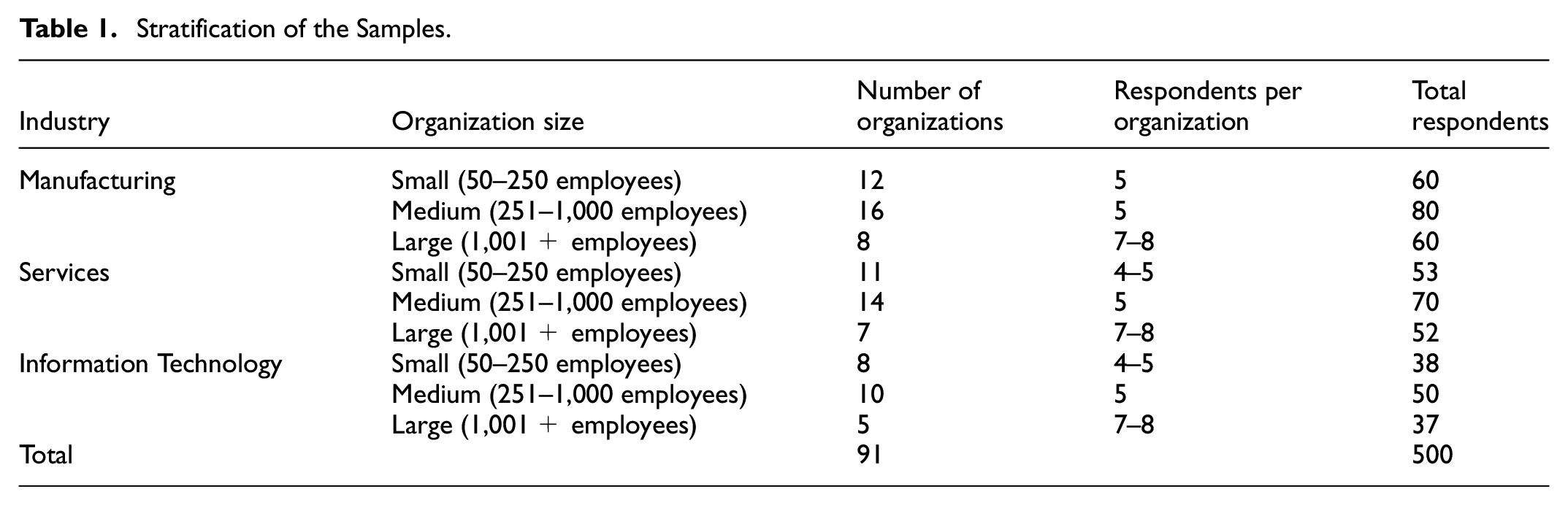
This study employs a quantitative research design to examine the relationships between organizational fairness, perceived organizational identity, employee empowerment, corporate social responsibility (CSR), and employee creativity within the context of Malaysian organizations. The target population for this study consisted of employees from three major industries in Malaysia: manufacturing, services, and information technology (IT). These sectors were chosen due to their substantial contribution to the economy and their critical reliance on creativity and innovation. A stratified random sampling (refer to Table 1 for detailed stratification of the samples) method ensured that the sample was representative of the broader population. The total sample size of 500 respondents was determined to provide robust statistical power for the analysis, particularly for Structural Equation Modeling (SEM).
Stratification of the Samples.
Measurement Items Development
In this study, the constructs of organizational fairness, employee creativity, employee empowerment, corporate social responsibility (CSR), perceived organizational identity, and organizational culture are treated as higher-order constructs, each encompassing multiple dimensions. To ensure reliability and validity, the measurement items (refer to Appendix 1 for detailed items) for these constructs have been carefully adopted from well-established sources in the literature. Organizational fairness is measured across distributive, procedural, and interactional justice, capturing perceptions of fairness in outcomes, processes, and interpersonal treatment. Items were drawn from Colquitt (2001), Moorman et al. (1993), and Bies and Shapiro (1987), with reliability and validity confirmed through high Cronbach’s alpha values (>.7) and construct validity tests. Employee creativity reflects both creative performance (idea generation) and innovative work behavior (application and implementation). Scales from Amabile et al. (2018) and Janssens (2001) were employed, achieving strong internal consistency (Cronbach’s alpha > .8) and validated through confirmatory factor analysis (CFA). Employee empowerment incorporates structural and psychological aspects, addressing autonomy, competence, and resource access. Items from Kanter’s (1984) and Spreitzer’s (1995) frameworks demonstrated high reliability (>0.85) and clear factor loadings, ensuring robust construct measurement. CSR is examined through perceived, internal, and external dimensions, encompassing initiatives benefiting employees, communities, and the environment. Items from Turker (2009) and Maignan and Ferrell (2000) showed strong reliability and discriminant validity, supporting the distinctiveness of the CSR dimensions. Perceived organizational identity assesses alignment with organizational values and goals, using items adapted from Mael and Tetrick (1992) High internal consistency (Cronbach’s alpha > .8) and validity tests confirmed its effectiveness in measuring employees’ emotional and cognitive connection to their organization. Organizational culture includes group, developmental, rational, and hierarchical dimensions, reflecting its impact on workplace behavior. Items from Denison and Mishra (1995) and Cameron and Quinn (2006) demonstrated high reliability and validity, supporting their use in analyzing cultural influences. A pilot study involving 30 respondents refined the survey instrument, ensuring reliability (Cronbach’s alpha > .7) and construct validity through CFA and AVE values (>0.5). Discriminant validity was confirmed using the Fornell-Larcker criterion and the Heterotrait-Monotrait (HTMT) ratio.
Data Collection
Data were collected through a structured questionnaire distributed both online and in person to employees across various managerial levels, including middle and senior management, within selected organizations. The target population comprised employees from Malaysian organizations in the manufacturing, services, and IT sectors, as these industries are key contributors to Malaysia’s economic and innovation landscape. Organizations were identified based on their size, industry sector, and demonstrated commitment to innovation and CSR. Sources such as the Federation of Malaysian Manufacturers (FMM) Directory and the Malaysian Investment Development Authority (MIDA) reports were used to compile the initial list. Companies included in the FTSE4Good Bursa Malaysia Index or recognized with awards such as the Malaysia Innovation Awards or the ACCA Malaysia Sustainability Reporting Awards in the past 3 years were prioritized for inclusion. These criteria ensured the selection of organizations actively engaging in innovative and socially responsible practices.
The sample size of 500 valid responses was determined based on established guidelines for Structural Equation Modeling (SEM). Following recommendations by Hair et al. (2022), the sample size exceeded the requirement of at least 10 times the number of indicators in the most complex model, ensuring robust statistical analysis. To enhance inclusivity, the questionnaire was available in both English and Malay. Bilingual experts translated the items, and back-translation was performed to verify accuracy. Respondents were given the option to select their preferred language, ensuring accessibility for all participants.
Data collection was carried out between December 5, 2023, and April 15, 2024, using a hybrid approach. Online distribution was facilitated through email and professional networks, while in-person data collection sessions were conducted at company premises during pre-arranged times. This dual approach yielded a high response rate, with approximately 75% of the contacted individuals completing the survey. A pilot test was conducted before full-scale data collection, involving 30 respondents from each of the three industries.
Data Analysis Technic
The collected data were analyzed using Structural Equation Modeling (SEM) via SmartPLS 4, chosen for its capability to test complex relationships between variables simultaneously. SEM is particularly suited for examining higher-order constructs, such as organizational fairness, identity, empowerment, CSR, and creativity, which involve multidimensional frameworks (Hair et al., 2022). Its ability to address measurement error and analyze latent variables ensures accurate and reliable results (Sarstedt et al., 2020). Additionally, SmartPLS accommodates non-normal data distributions, making it ideal for this study’s context (Henseler, 2017). Informed consent was obtained from all participants, ensuring ethical compliance and confidentiality.
Data Analysis
The demographic analysis (refer to Table 2) of respondents offers important insights into the characteristics of the sample used in this study. The sample includes 60% from middle management and 40% from senior management, ensuring perspectives from both operational and strategic levels. This balance is crucial for understanding how organizational practices influence creativity across different management tiers. The gender distribution is relatively balanced, with 55% male and 45% female respondents, which allows for an examination of potential gender differences in perceptions of organizational practices and their impact on creativity.
Demographic of Respondents.

The age distribution shows that 70% of respondents are between 25 and 44 years old, reflecting a young and dynamic workforce likely to be more open to innovation. Additionally, the inclusion of older respondents provides insights into how more seasoned employees perceive these practices. Ethnically, the sample reflects Malaysia’s multicultural society, with 56% Malay, 28% Chinese, 12% Indian, and 4% from other ethnic groups. This diversity is key to exploring how cultural backgrounds might influence perceptions of fairness, identity, empowerment, and CSR.
The majority of respondents are married (70%), which may influence their views on work-life balance and organizational support. The educational background is strong, with 50% holding a Bachelor’s degree, 40% a Master’s, and 10% a Doctorate, which is likely to correlate with a workforce capable of engaging in creative problem-solving. Respondents’ years of experience vary, with a significant portion having between 6 and 10 years of experience, providing a range of perspectives from newer to more seasoned employees.
The distribution across job functions, including operations, marketing/sales, HR, finance, and R&D, ensures that the study captures a wide array of organizational activities, which is crucial for understanding how different roles interact with organizational practices. Tenure within the organization varies, with 40% having been with their current organization for 4 to 6 years. This range helps in understanding how both long-term and newer employees perceive the impact of organizational practices on creativity.
Overall, the demographic profile is diverse and reflective of the Malaysian workforce, which enhances the study’s ability to provide generalizable and meaningful insights into how organizational practices influence creativity across different segments of the workforce.
Measurement Model Statistics
The analysis of the measurement model provides key insights into the reliability, validity, and structural relationships of the constructs under study. These constructs, including organizational fairness, perceived organizational identity, employee empowerment, corporate social responsibility (CSR), and employee creativity, are examined within the context of Malaysian organizations, highlighting their intricate interplay in fostering creativity and innovation.
The results (refer to Figure 2) indicate that the constructs used in this study demonstrate robust reliability and validity. As shown in Table 3, all outer loadings (OL) exceed the threshold of 0.7, confirming that the items strongly represent their respective constructs. For example, Creative Performance (CP) shows loadings ranging from 0.822 to 0.843, signifying reliable indicators. Moreover, the Variance Inflation Factor (VIF) values are all below the critical threshold of 3, indicating an absence of multicollinearity and ensuring the uniqueness of each indicator’s contribution to its construct.

Measurement Moel (Lower order construct).
Measurement Model Statistics.

Reliability and Convergent Validity
Cronbach’s alpha (CA) values range from .719 (ICSR) to .905 (IWB), demonstrating acceptable to excellent internal consistency across constructs. Composite reliability (CR) values, which range from 0.841 to 0.934, further validate the reliability of the constructs. The Average Variance Extracted (AVE) values exceed the threshold of 0.5, with ICSR at 0.639 and ECSR at 0.794, confirming strong convergent validity. These metrics collectively validate the robustness of the constructs, providing a solid foundation for exploring the relationships between organizational practices and employee creativity.
Discriminant Validity
Discriminant validity, essential for establishing the distinctiveness of constructs, is well-supported by both the HTMT ratios (Table 4) and the Fornell-Larcker criterion (Table 5). HTMT values are consistently below the 0.85 threshold, such as the 0.795 between CP and DJ, affirming that the constructs are conceptually distinct (Henseler, 2017). The Fornell-Larcker criterion confirms this, with diagonal values (square root of AVE) being higher than correlations among constructs. This distinctiveness is critical for accurately capturing the nuanced relationships between fairness, identity, empowerment, CSR, and creativity.
Discriminant Validity (HTMT).

Discriminant Validity (FLC).

Discriminant Validity
Discriminant validity, essential for establishing the distinctiveness of constructs, is well-supported by both the HTMT ratios (Table 4) and the Fornell-Larcker criterion (Table 5). HTMT values are consistently below the 0.85 threshold, such as the 0.795 between CP and DJ, affirming that the constructs are conceptually distinct (Henseler, 2017). The Fornell-Larcker criterion confirms this, with diagonal values (square root of AVE) being higher than correlations among constructs. This distinctiveness is critical for accurately capturing the nuanced relationships between fairness, identity, empowerment, CSR, and creativity.
The validated measurement model establishes a solid basis for hypothesis testing and subsequent structural analysis (for model fit and predictive statistiscs refer to Table 6). The strong associations between CSR components (ECSR, ICSR, PCSR) and the CSR higher-order construct underscore CSR’s role as a multidimensional driver of creativity. For example, refer to Table 7 the high loadings of CSR components (range: 0.863–0.904) reinforce its strategic significance in fostering innovation through enhanced employee engagement and organizational commitment (Aguinis & Glavas, 2012). Similarly, the demonstrated reliability of constructs like organizational fairness and empowerment highlights their pivotal role in creating environments conducive to creativity.
Model Fit Statistics.

Outer Loading Statistics of Higher Order Constructs.

Hypothesis Testing With Structural Model
The hypothesis testing (Table 8) and structural model (refer to Figure 3) results offer significant insights into the relationships between organizational fairness, perceived organizational identity, employee empowerment, corporate social responsibility (CSR), and employee creativity within Malaysian organizations.
Structural Model Statistics.


Structural model.
The hypothesis testing results provide insights into the intricate relationships between organizational fairness, perceived organizational identity, employee empowerment, corporate social responsibility (CSR), and employee creativity within Malaysian organizations. The structural model (Figure 3) demonstrated strong predictive power, with CSR exhibiting an R2 of .781 (adjusted R2 = .779) and employee creativity (EC) showing an R2 of .740 (adjusted R2 = .733). The high Q2 predictive values for CSR (0.776) and EC (0.670) further validated the model’s relevance and predictive strength.
The findings for H1 support the positive influence of organizational fairness on employee creativity (β = .157, p = .030, f2 = 0.021). This confirms that fairness in distributive, procedural, and interactional dimensions fosters an environment conducive to creativity. However, the relatively small effect size suggests that fairness alone may not substantially drive creative outcomes without complementary factors like empowerment or leadership.
H2, examining the direct impact of perceived organizational identity on employee creativity, was not supported (β = .060, p = .407, f2 = 0.004). This finding diverges from prior literature, indicating that organizational identity may influence creativity indirectly through mechanisms like engagement or support rather than as a direct contributor. H3 revealed a significant positive effect of employee empowerment on creativity (β = .274, p < .001, f2 = 0.058), underscoring the importance of empowering employees with autonomy and resources. H4 demonstrated that CSR is a substantial predictor of creativity (β = .400, p < .001, f2 = 0.131), highlighting the role of socially responsible practices in motivating employees to engage in innovative behavior. The mediating role of CSR was supported across H5a, H5b, and H5c, with significant mediation effects observed for organizational fairness (β = .102, p = .003), perceived organizational identity (β = .064, p = .009), and employee empowerment (β = .211, p < .001). These results emphasize CSR as a critical intermediary linking organizational practices to creative outcomes. The moderating role of organizational culture was partially supported. While H6c (β = .134, p = .049, f2 = 0.028) showed that a supportive culture enhances the positive impact of empowerment on creativity, H6a (β = −.159, p = .074, f2 = 0.030) and H6b (β = .010, p = .924, f2 = 0.000) were not supported, indicating that cultural moderation varies across different organizational practices.
Discussion
This study sheds light on the intricate dynamics between organizational fairness, perceived organizational identity, employee empowerment, corporate social responsibility (CSR), and employee creativity within the Malaysian context. Employing Structural Equation Modeling (SEM), the findings provide a nuanced understanding of how these constructs interact to influence creative performance and innovative work behavior.
CSR emerges as a pivotal factor driving employee creativity, significantly predicting both creative ideation and implementation. These findings reinforce existing literature, which positions CSR as a motivational catalyst that fosters a sense of purpose and engagement among employees (Guo et al., 2021; B.-J. Kim et al., 2021; Tong et al., 2019). CSR initiatives, particularly those aligned with employee values and societal well-being, appear to stimulate intrinsic motivation and psychological safety, both of which are critical for creative output. Practically, this underscores the importance of embedding CSR into organizational strategies, not merely as a tool for external reputation building but as a mechanism to enhance internal innovation capabilities. Leaders should prioritize CSR initiatives that resonate with employees, such as environmental stewardship and employee-centric welfare programs, to cultivate a workforce that is both engaged and creatively driven.
The significant positive effect of employee empowerment on creativity further emphasizes its central role in fostering innovation. Empowered employees, who are provided autonomy, resources, and opportunities for meaningful participation, are more likely to engage in creative problem-solving and innovative behaviors (Echebiri et al., 2020; Singh & Sarkar, 2019). This aligns with theories of psychological empowerment, which suggest that autonomy and competence are key drivers of intrinsic motivation. Practically, organizations must implement empowerment strategies that include participatory leadership, transparent communication, and access to decision-making authority. By doing so, they create an environment where employees feel valued and encouraged to innovate, particularly in the context of Malaysia’s evolving economic landscape.
Organizational fairness also positively influences creativity, albeit with a smaller effect size compared to empowerment and CSR. This finding highlights the foundational role of fairness in fostering trust, psychological safety, and legitimacy (T. Akram et al., 2020; B. Kim, 2022; Ye et al., 2022). However, the limited magnitude of its impact suggests that fairness alone may not be sufficient to drive substantial creative outcomes. Instead, fairness may act as a necessary but not sufficient condition for creativity, requiring the amplification of complementary factors such as CSR and empowerment. For organizations, this underscores the need to ensure that fairness permeates resource allocation, decision-making processes, and interpersonal interactions, while also integrating broader strategies that actively inspire innovation.
The non-significant direct relationship between perceived organizational identity and employee creativity adds a layer of complexity to existing theoretical frameworks. While prior studies have linked strong organizational identity to enhanced creativity (Hui et al., 2020; H. Li et al., 2020, 2023), the findings of this study suggest that identity may play a more nuanced, indirect role. It is possible that perceived organizational identity influences creativity through mediating mechanisms such as organizational support, employee engagement, or psychological safety. Alternatively, contextual factors, such as industry-specific norms or hierarchical cultural dynamics prevalent in Malaysia, may moderate this relationship. From a theoretical perspective, this challenges the assumption of a straightforward identity-creativity link and highlights the need for future research to explore these indirect pathways and contextual influences. Practically, this suggests that while fostering a strong organizational identity remains important for employee alignment and engagement, it may not directly translate into creativity without supportive organizational practices and environments.
The moderating role of organizational culture further underscores the importance of context in shaping creativity. While a supportive culture enhances the positive effects of empowerment on creativity, the lack of consistent moderating effects across all relationships suggests that cultural dynamics are highly specific to the organizational and societal context. In hierarchical cultures like Malaysia’s, group-oriented and developmental cultural practices can mitigate the constraints imposed by rigid power dynamics, fostering an environment where employees feel safe to express and implement creative ideas (Ahmed, 2023; Shamara & Etikariena, 2021). This highlights the importance of aligning empowerment strategies and leadership styles with cultural norms to maximize their effectiveness in promoting creativity. For Malaysian organizations, leveraging these insights within their unique cultural and economic landscape can drive creative performance and innovation, providing a sustainable competitive advantage in dynamic markets.
Implications of This Study
Theoretical and Contextual Insights
This study provides valuable theoretical contributions by affirming and extending the applicability of Social Exchange Theory (SET), Self-Determination Theory (SDT), and Stakeholder Theory to organizational creativity. The findings underscore that organizational fairness—through its distributive, procedural, and interactional dimensions—creates a trust-based environment, aligning with SET’s principle of reciprocity (Blau, 1964). Employees who perceive fairness are more inclined to engage in creative behaviors, reciprocating the organization’s equitable practices with innovation. Similarly, the empowerment of employees satisfies SDT’s core psychological needs for autonomy and competence, enhancing intrinsic motivation and fostering creative engagement (Deci & Ryan, 2000). These mechanisms affirm the foundational premise that empowering and equitable workplace practices are essential for stimulating employee creativity.
The role of CSR as both a direct driver and a mediator of creativity advances Stakeholder Theory by illustrating how socially responsible practices extend beyond external obligations to drive internal innovation. CSR initiatives, by fostering psychological safety and purpose, align organizational goals with broader societal and environmental imperatives. This dual impact—meeting ethical obligations while enhancing creativity—illustrates CSR’s potential to harmonize stakeholder interests with organizational innovation goals.
However, the study also reveals nuanced contextual insights, particularly the limited direct influence of perceived organizational identity on creativity in the Malaysian context. This suggests that identity may function indirectly, mediated by factors like organizational climate, leadership style, or cultural norms. For example, hierarchical cultural settings prevalent in certain Malaysian industries may dilute the direct impact of organizational identity, requiring further exploration of intermediary variables such as engagement or team dynamics. Similarly, the moderating role of organizational culture on the empowerment-creativity relationship highlights how cultural typologies (e.g., group-oriented vs. hierarchical cultures) can either amplify or constrain creative efforts. These findings emphasize the importance of tailoring strategies to industry-specific and culture-specific contexts, especially in Malaysia’s diverse economic landscape.
Practical Implications and Global Relevance
The practical implications of this study are both specific and innovative, offering actionable insights for managers and policymakers aiming to foster creativity within organizations. Firstly, fair resource distribution, transparent decision-making processes, and respectful interpersonal interactions should form the bedrock of organizational practices. Managers should ensure that fairness permeates all aspects of organizational operations, from performance evaluations to conflict resolution mechanisms. However, fairness alone is insufficient—integrating CSR initiatives and empowering leadership practices can significantly enhance creative outputs.
CSR can serve as a catalyst for innovation when embedded into an organization’s core strategy. For example, companies can implement employee-centric welfare programs, promote environmentally sustainable practices, and engage in community-building initiatives. These efforts not only fulfill ethical responsibilities but also create a shared sense of purpose, driving employees to contribute creatively. CSR’s mediating role underscores its potential to bridge organizational practices like fairness and empowerment with enhanced creativity, providing a cohesive framework for innovation.
Employee empowerment must also go beyond structural changes to include psychological support. Managers should adopt participatory leadership styles that foster autonomy, competence, and relatedness. Initiatives such as innovation challenges, cross-functional collaboration, and targeted professional development programs can further stimulate creative engagement.
The study’s findings also hold significant implications beyond Malaysia, particularly for economies navigating rapid technological and cultural shifts. In both emerging and developed economies, strategies such as embedding CSR into corporate missions, promoting participatory leadership, and fostering fairness can be adapted to enhance creativity. However, successful implementation requires a contextual understanding of local cultural norms, workforce demographics, and regulatory landscapes. For instance, while participatory leadership may flourish in group-oriented cultures, hierarchical settings may require incremental empowerment strategies to build trust and engagement over time.
Additionally, the study suggests that creativity strategies must account for the interplay between organizational culture and leadership practices. Organizations should conduct cultural audits to align empowerment initiatives with existing cultural values, ensuring that creative efforts are supported rather than stifled. Globally, these insights can guide multinational corporations in tailoring their approaches to creativity across diverse operational contexts, from innovation-driven economies to resource-constrained regions.
Limitations and Industry-Specific Considerations
Although the study provides valuable insights, several limitations merit attention. First, the cross-sectional design restricts the ability to infer causal relationships. Second, variations across industries—for instance, the creative demands of IT versus the process-oriented nature of manufacturing—may lead to different levels and expressions of creativity. Future research could adopt longitudinal or mixed-method designs to capture how creativity evolves over time and in response to organizational changes. Moreover, exploring industry-specific cultural contexts, such as high-power-distance norms in manufacturing versus flatter structures in tech startups, could deepen the understanding of how fairness, CSR, and empowerment operate in different sectors.
Conclusion and Future Research Directions
This study highlights the interplay between organizational fairness, perceived organizational identity, employee empowerment, and corporate social responsibility (CSR) in fostering employee creativity within Malaysian organizations. While the findings offer valuable insights, they also open avenues for further exploration. Future research could consider employing longitudinal designs to capture the dynamic nature of these relationships over time. Mixed-method approaches, such as combining quantitative surveys with qualitative interviews, could provide a deeper understanding of how employees perceive and respond to organizational practices.
The role of industry-specific cultural dynamics also warrants further investigation. Different sectors, such as healthcare, education, and public administration, may exhibit unique patterns in how fairness, empowerment, and CSR influence creativity. Comparative studies across industries would illuminate the contextual factors that either enable or constrain creative behavior. Moreover, exploring the nuanced impacts of organizational culture, particularly in hierarchical versus developmental or group-oriented cultures, could help refine our understanding of how cultural typologies shape the effectiveness of organizational practices.
Emerging trends in digital transformation present another important area for future inquiry. The increasing reliance on virtual collaboration, AI-driven decision-making, and digital tools in hybrid or fully remote work environments may alter how fairness, CSR, and empowerment manifest and influence creativity. Investigating the role of technology in enabling or hindering creative outcomes would provide timely insights into how organizations can adapt their practices to the evolving workplace. Additionally, the influence of digital leadership and agile management approaches on creativity in tech-enabled environments could be an essential focus for future research.
Cross-cultural comparisons could expand the applicability of these findings beyond Malaysia. By examining similar constructs in diverse cultural settings, future research could identify whether the observed relationships are universal or culturally contingent. Such investigations would offer valuable insights for multinational corporations seeking to tailor their strategies to varying cultural and economic contexts.
Finally, the potential mediating or moderating roles of factors such as organizational support, employee engagement, and leadership styles on the relationship between perceived organizational identity and creativity deserve further exploration. Similarly, deeper analysis into the distinct dimensions of CSR—such as internal versus external CSR—may uncover unique contributions to creativity, particularly in organizations navigating complex global challenges. By addressing these gaps and integrating emerging trends in organizational behavior, future studies can enrich our understanding of how to sustain creativity in increasingly dynamic and competitive environments.
Footnotes
Appendix 1

| Construct | Items | Source |
|---|---|---|
| Creative Performance (CP) | CP1: I often come up with new and practical ideas to improve performance at work. | Tierney and Farmer (2002), Zhou and George (2001), Janssen (2000), Scott (2000) |
| CP2: I seek out new technologies, processes, techniques, and/or product ideas. | ||
| CP3: I suggest new ways to achieve goals or objectives. | ||
| CP4: I am not afraid to take risks when trying new ideas. | ||
| CP5: I develop adequate plans and schedules for the implementation of new ideas. | ||
| Distributive Justice (DJ) | DJ1: My work schedule is fair. | Colquitt (2001), Moorman (1993) |
| DJ2: I consider my work responsibilities to be fair. | ||
| DJ3: The rewards I receive are fair given my responsibilities. | ||
| DJ4: My work outcomes reflect the effort I put into my work. | ||
| External CSR (ECSR) | ECSR1: My organization is involved in supporting environmental sustainability initiatives. | Turker (2009) |
| ECSR2: My organization contributes to the local community. | Maignan and Ferrell (2000) | |
| ECSR3: My organization is committed to ethical practices in its operations. | ||
| Internal CSR (ICSR) | ICSR1: My organization promotes employee well-being. | Turker (2009), Maignan and Ferrell (2000) |
| ICSR2: My organization ensures a safe working environment. | ||
| ICSR3: My organization invests in employee development and training. | ||
| Interactional Justice (IJ) | IJ1: My supervisor treats me with respect. | Colquitt (2001), Bies and Moag (1986) |
| IJ2: My supervisor explains decisions thoroughly. | ||
| IJ3: My supervisor considers my viewpoint. | ||
| Innovative Work Behavior (IWB) | IWB1: I generate new ideas related to my work. | Janssen (2000), de Jong and den Hartog (2010), Scott (2000) |
| IWB2: I search out new working methods, techniques, or instruments. | ||
| IWB3: I experiment with new work methods or techniques. | ||
| IWB4: I try to convince people to support an innovative idea. | ||
| Organizational Culture (OC) | OC1: My organization encourages risk-taking in decision-making. | Denison and Mishra (1995) |
| OC2: My organization values creativity and innovation. | ||
| OC3: My organization supports teamwork and collaboration. | ||
| OC4: My organization adapts quickly to changes in the environment. | ||
| Perceived CSR (PCSR) | PCSR1: My organization is socially responsible. | Maignan and Ferrell (2000), Turker (2009) |
| PCSR2: My organization cares about the well-being of society. | ||
| PCSR3: My organization prioritizes ethical behavior. | ||
| PCSR4: My organization is committed to sustainable business practices. | ||
| Psychological Empowerment (PE) | PE1: I am confident about my ability to do my job. | Spreitzer (1995) |
| PE2: I have a great deal of control over what happens in my job. | ||
| PE3: My job activities are personally meaningful to me. | ||
| Procedural Justice (PJ) | PJ1: Job decisions are made in an unbiased manner. | Colquitt (2001) |
| PJ2: All job decisions are applied consistently. | ||
| PJ3: I have the opportunity to express my views during job decisions. | ||
| PJ4: Procedures are designed to collect accurate information for decision-making. | ||
| Perceived Organizational Identity (POI) | POI1: I feel a strong sense of belonging to my organization. | Mael and Ashforth (1992) |
| POI2: My organization’s successes are my successes. | ||
| POI3: I am proud to be part of my organization. | ||
| POI4: My organization’s values are similar to my own. | ||
| Structural Empowerment (SE) | SE1: I have access to the resources I need to do my job well. | Kanter (1993) |
| SE2: I have access to the information I need to do my job well. | ||
| SE3: I have access to the support I need to do my job well. | ||
| SE4: I have access to opportunities to grow within my organization. |

Ethical Approval
Formal ethical approval has been waived instate this study adhered to the principles of the Declaration of Helsinki following strict ethical standards. Formal ethical approval was waived due to Participation was anonymous, confidential, and voluntary, with informed consent obtained from all participants. There were no biomarkers or tissue samples collected for analysis. Participants had the freedom to withdraw from the study at any point.
Author Contributions
Conceptualization, Sheng Mai; Data curation, Xingyue Tang and Meng Na; Formal analysis, Sheng Mai and Lei Wang; Investigation, Meng Na; Software, Xingyue Tang ; Supervision, Sheng Mai; Visualization, Lei Wang ; Writing—original draft, Xingyue Tang; Writing—review and editing, Xingyue Tang and Meng Na. All authors have read and agreed to the published version of the manuscript.
Informed Consent
Oral consent was obtained from all individuals involved in this study. Consent for publication: All authors have read and agreed to the published version of the manuscript.
Funding
The author(s) received no financial support for the research, authorship, and/or publication of this article.
Declaration of Conflicting Interests
The author(s) declared no potential conflicts of interest with respect to the research, authorship, and/or publication of this article.
Data Availability Statement
The data that support the findings of this study are available from the corresponding authors upon reasonable request