




Abstract
As the backbone of Malaysia’s economy, small and medium-sized enterprises (SMEs), particularly those in the manufacturing industry, are spotlighted in times of crisis, considering the substantial risks that small businesses must overcome. SME manufacturers strive to drive productivity and enhance competitiveness amid ongoing global challenges. Sustainable manufacturing performance is a key indicator in the manufacturing industry for reviving SMEs in the recovery stage of global crises. With continuous technological advancement, industry 4.0 competencies can have significant influence on expanding the evolution of contemporary manufacturing from theoretical industry 4.0 concepts to real-world applications. There is a gap in the literature regarding the comprehensive investigation of industry 4.0 competencies collectively and their direct impact on sustainable manufacturing performance, as well as the potential moderating influence of rational culture. The research question addressed in this paper aims to provide a comprehensive overview of prevailing studies on the relationship between industry 4.0 competencies and sustainable manufacturing performance. This study references the Global Reporting Initiative and identifies relevant industry 4.0 competencies, conducting a systematic literature review to investigate the relationship between industry 4.0 competencies and sustainable manufacturing performance and the role of rational culture as a moderating variable. Examining research published between 2013 and 2023, only 33 documents satisfy the eligibility criteria. This paper carries implications for SME manufacturers and government in Malaysia, highlighting the importance of recognizing and implementing appropriate industry 4.0 competencies to improve sustainable manufacturing performance and reap associated benefits.
Plain language summary
The purpose of this study is to investigate the relationship between industry 4.0 competencies and sustainable manufacturing performance, with a specific focus on the moderating role of rational culture. The study aims to provide valuable insights into the existing research on this topic, aiming to understand how industry 4.0 competencies impact sustainable manufacturing outcomes and how rational culture may influence this relationship. A systematic literature review methodology is adopted in the study. Based on the systematic literature review, the study offers a comprehensive overview of the existing research and provides valuable insights into the relationship between industry 4.0 competencies and sustainable manufacturing performance. By synthesizing the findings from various studies, the research question is effectively addressed, shedding light on the current understanding of this important nexus.
Keywords
Introduction
Sustaining business operations is a continuous challenge for small and medium-sized enterprises (SMEs), which are more vulnerable to spillover effects of crises compared with larger enterprises. With the objectives of accelerating the country’s economic growth, income, and overall prosperity, Malaysia’s SME Masterplan (2012–2020) was formulated to catalyze the growth of SMEs. The SME Masterplan established ambitious targets to attain by 2020 in terms of SMEs’ contribution to national gross domestic product (GDP) reaching 41%, employment reaching 62%, and exports reaching 25%, including efforts of the government and private sector to facilitate the realization of the plan (SME Corporation Malaysia, 2012). Sustainable manufacturing performance was identified as one of the key areas in the Masterplan to advance SMEs’ innovation-led and productivity-driven growth. SMEs’ sustainable performance should embrace the responsibility of operations concerning the way in which they relate to economic, social, and environmental issues (Murphy, 2013). Since the launch of SME Masterplan, the number of SMEs in Malaysia has increased significantly and the government has introduced several initiatives to support SMEs, including tax incentives, grants, and training programs. These are exemplified by the ample financing support to SMEs in Budget 2017 Malaysia (Chua, 2016), specific tax exemptions for SMEs from Budget 2019 Malaysia (Zakariah, 2018), and ongoing incentives for SMEs (The Sun Daily, 2019). Additionally, Malaysia’s ranking in the World Bank’s Ease of Doing Business Index has improved over the years, placing twelfth among the 190 global economies considered in 2020 report, confirming that Malaysia offers a more business-friendly environment (Doing Business, 2020). However, limited attention has been given to the successful attainment of sustainable manufacturing performance. Some critics have argued that the plan has not been effective in addressing some of the crucial underlying issues facing SMEs in Malaysia, such as the lack of innovation and technological capabilities (World Bank Group, 2020). There are also concerns that the plan has not done enough to promote sustainable economic growth in Malaysia.
Despite the SME Corporation Malaysia (2012) claiming that the development of the nation’s Master Plan has incorporated monitoring and evaluation systems, greater flexibility, and involvement of the private sector, emerging implementation challenges include fragmented coordination among stakeholders and insufficient budget allocation. There are 15 government ministries and more than 60 agencies involved in supporting SMEs development in Malaysia. The coordination of SMEs’ sustainable manufacturing programs has been particularly fragmented and constrained across various sectors. Rozar et al. (2015) revealed that SMEs are not thoroughly implementing sustainable manufacturing practices to boost sustainable performance. Khatri and Metri (2016) claimed that SMEs in the manufacturing sector are slow to implement sustainable practices. Limitations such as inadequate competencies and capabilities may hinder SMEs from implementing sustainable manufacturing practices (Ghazilla et al., 2015), indicating an urgent need to investigate SMEs’ efforts to improve sustainable manufacturing performance. One of the ultimate goals of businesses is to turn the massive unknown into meaningful transformation. Organizations must overcome financial and operational challenges while also addressing stakeholders’ needs and demands.
SME Corporation Malaysia (2013) defined SMEs as manufacturing firms with sales turnover not exceeding RM50 million or less than 200 full-time employees. Government initiatives to foster the development of an inclusive and competitive SME sector are paramount. For example, the National Entrepreneurship Policy 2030 (DKN 2030) was launched in 2019 and was designed to promote the development of a comprehensive entrepreneurial ecosystem to enhance Malaysia’s competitiveness in the global economy amid increasing competition and challenges rising from industry 4.0. In addition, Shared Prosperity Vision 2030 was introduced as one of the government policies to achieve sustainable growth. Various incentives and financial assistance are allocated to SMEs in Budget 2022, including the Wage Subsidy Program and the SME Digitalization Grant Scheme. Despite these initiatives, many SMEs lack a clear understanding of the effort and investment required for advancing sustainability initiatives. According to PwC Malaysia (2020), the COVID-19 health crisis may have triggered the need for sustainable practices; however, SMEs’ current priority is business survival. SMEs still perceive sustainability effort as a huge cost that is not very profitable, and progress in taking necessary actions and adapting at a fast pace is insignificant.
In addition, the adoption of high technology in Malaysia’s existing manufacturing industry remains low. The government formulated the National Policy on Industry 4.0 in parallel with the Restructuring Business and Industry Ecosystem policy in Shared Prosperity Vision 2030 to transform the manufacturing industry into a high technology, value-added, and globally sustainable sector. Although industry 4.0 arises when sustainability and sustainable development are perceived as a fundamental value, most of the research has focused on the technical perspective. Only a few previous studies have considered the impact of this transformation on economic, ecological, and social achievements, which are the main pillars of sustainable manufacturing (Sarmiento et al., 2020). Hence, while synthesizing industry 4.0 and sustainable development goals, the key competencies of industry 4.0 must be identified to advance sustainable manufacturing business.
Literature Review and Gap Identification
Overview of SME Manufacturing Industry in Malaysia
SME Corporation Malaysia (2022) noted that SMEs represented 97.4% of overall business establishments in Malaysia and 71,612 SME manufacturers were registered in 2021. Over the past decades, the growth of SMEs’ GDP has been higher than Malaysia’s national GDP. According to the Malaysian Department of Statistics (DOSM) (2021), in 2020, SMEs’ GDP performance was recorded at −7.3% which was lower than Malaysia’s GDP (−5.6%). Moreover, the manufacturing industry is one of the most significant industries and contributes considerably to SMEs’ GDP. The overall manufacturing industry registered a negative growth of 2.9% in 2020 (DOSM, 2021). In addition, SMEs’ exports declined by 33.1% to RM117.8 billion, with SME manufacturers accounting for 69.3% of overall SMEs exports in 2020 (DOSM, 2021).
Some of the pressing concerns from SME manufacturers included lower cash flow, reduced talent supply, and difficulties adopting technological solutions. The prolonged movement control orders imposed in Malaysia in 2020 also jeopardized SME manufacturers’ operations. Although they were permitted to operate as essential services, the rapid increase in material and logistics costs led to a downswing in profit margins (Asila & Azalea, 2021). The plunge in sales revenue and higher operating costs incurred placed SME manufacturers in weak cash positions. Furthermore, a gap was identified between the existing talent pool and necessary skill sets. The rising demand for technological skills has hindered SME manufacturers’ digital transformation. The existing workforce was unable to quickly adapt to rapid technological changes and the SME manufacturers lacked sufficient resources to upskill or reskill workers (Bag et al., 2021). In addition, the shift to a digital market drives SME manufacturers to restructure business models (Favoretto et al., 2022). While the adoption of digital interventions such as AI and BDA can improve business sustainability and profitability, SME manufacturers lack the funds and knowledge to adopt technological tools, which hinders digital transformation.
Government support is crucial for SME manufacturers’ business survival. Different policy interventions are implemented to support SMEs in addressing short-term challenges and long-term competitiveness in the global market. Some examples include the PRIHATIN Rakyat Economic Stimulus Package for which RM100 billion is channeled to support SMEs business (Ministry of Finance Malaysia, 2020) and RM45 million is allocated as technological transformation incentives for SMEs in Budget 2022 (Malaysia SME, 2021). These policies specifically sought to foster SME manufacturers’ pace of recovery. Nevertheless, SME manufacturers’ recovery still has a long way to go. Global disruptions have a greater impact on SME manufacturers that have a higher tendency to close compared with larger organizations. Effective recovery strategies are essential for minimizing the severe impact of unexpected events. However, apart from merely implementing recovery strategies, SME manufacturers and stakeholders must establish a fundamental framework for understanding the new business environment and pursuing sustainable manufacturing objectives.
Sustainable Manufacturing Performance
Since the industrial revolution, organizations in the manufacturing industry have been evolving to efficiently produce quality products. Nonetheless, SME manufacturers are the first to be affected by commodity price fluctuations, high market competitiveness, and the talent war. They have been the most severely impacted sector from the COVID-19 pandemic, which has posed another hurdle to SME manufacturers’ survival and successfully generated greater attention to the concept of sustainability.
From a more in-depth perspective, the concept of sustainable manufacturing performance focuses on high-quality products and economically and environmentally sound practices to minimize adverse environmental impacts, preserve natural resources, conserve energy, and contribute to employee safety, social wellness, and community wellbeing (Nordin & Adebambo, 2016). As the global population continues to grow, environmental degradation and socioeconomic disparities have worsened, and sustainable development has become a shared goal across the globe. The drive for sustainable manufacturing performance encourages SME manufacturers to re-evaluate operating and manufacturing practices. SME manufacturers face a variety of challenges such as increasing production while optimizing cost and maintaining efficiency and reliability while remaining flexible enough to conduct new product innovation and testing. For example, the scarcity of critical resources for operation such as raw materials and non-renewable resources has caused increased competition in pricing and production costs. Due to limited resource availability and increased resource consumption, most SME manufacturers often face difficulties in improving sustainability performance.
In addition to the reasons noted above, the fundamental concept of sustainable manufacturing performance remains unclear in the Malaysian context. There are substantial grounds to contend that Malaysian manufacturing industries are still far from sustainable. Despite more SME manufacturers demanding tools that are tailored to their needs to maintain competitiveness, relevant and systematic guidance is still lacking in this regard. This urges the establishment of a sustainable manufacturing performance framework that could be applied by the SMEs and the government to assess and monitor SME manufacturers’ sustainable performance. A relevant sustainable manufacturing performance framework should be designed based on measures that apply to SME manufacturers. Its applicability must be generic enabling it to be used by all SME manufacturing sectors and subsectors. To construct a sustainable manufacturing performance framework for SME manufacturers, the holistic approach of the Global Reporting Initiative (GRI) sustainability framework, which assesses long-term sustainable practices, is selected in this study. The GRI is a prominent framework that serves as a basis for assessing companies’ sustainability and is a widely accepted sustainable development framework that has been implemented at the organizational level (Abbass et al., 2019). GRI is also relatively more apt to be influential on SMEs’ sustainability efforts in comparison to other sustainable development frameworks (Malaysia Businesses Sustainability Pulse Report 2022, 2022). The GRI framework is illustrated in Figure 1.
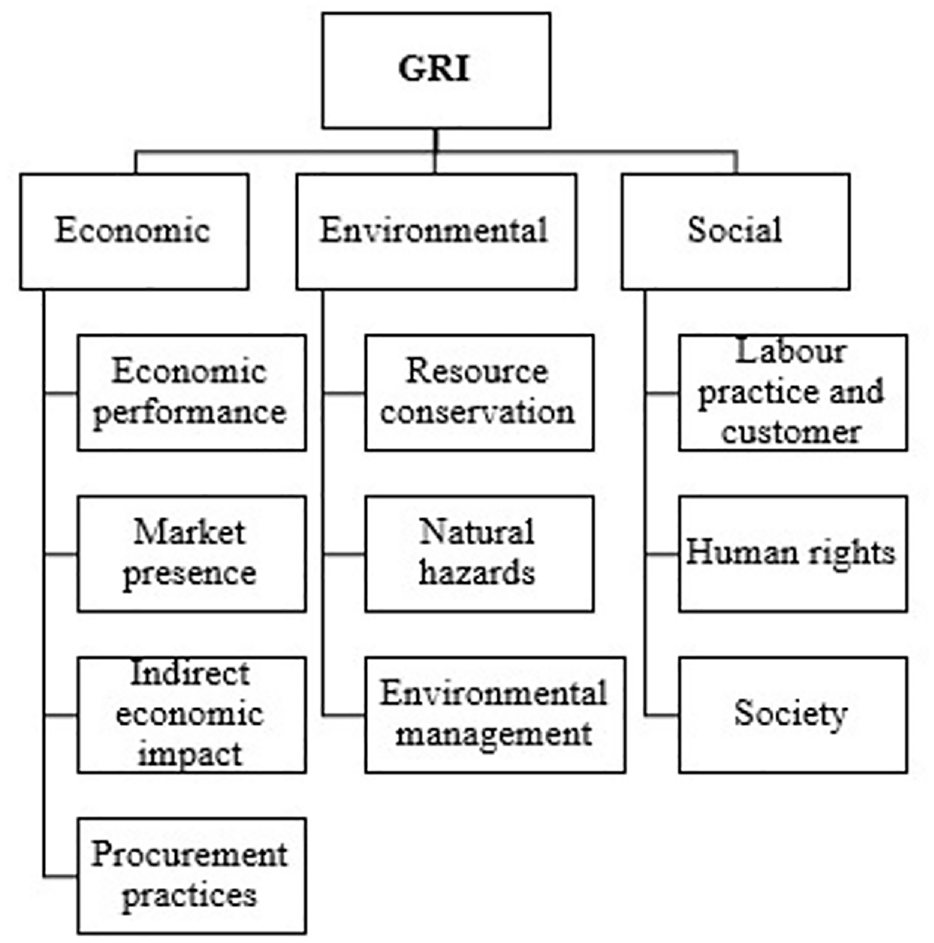
GRI framework.
The GRI sustainability framework enables any organization to determine its economic, environmental, and social impact using a comparable and credible method that improves transparency regarding its contribution to sustainable development. Numerous businesses have acknowledged the importance of sustainability and have been paying greater attention to sustainability issues as they begin to realize the substantial benefits of embracing sustainable manufacturing. The concept of sustainability integrates social and environmental parameters to assess an organization’s long-term economic viability. Following the emergence of the sustainability concept, financial profitability (economic value) was no longer the only factor considered for measuring manufacturing performance (Salwa et al., 2017). Beyond profitability only, social equality and environmental concerns are also being emphasized by many organizations. This is further supported with the organizations’ growing emphasis on integrating socially responsible, environmentally sound, and economically feasible performance.
However, a lack of studies simultaneously assessing the impact of sustainable manufacturing performance on the three dimensions remains. This approach is crucial for comprehensively understanding how manufacturers can advance sustainable manufacturing performance based on the three dimensions. First, the economic performance of SME manufacturers can be measured by examining operational and economic outcomes. Operational outcomes are a significant consideration to advance the implementation of sustainable manufacturing efforts to improve operational efficiency and increase long-term profitability, while economic outcomes refer to the financial benefits that directly reflect organizational profitability (Salwa et al., 2017). An example is increased market share, which enlarges economic outcomes and improves organizations’ position in the market.
Moreover, the devastating environmental pollution generated by traditional manufacturing industry operating practices has raised awareness regarding sustainability and raised the urgency of consumer demand for transformation to sustainable manufacturing. Organizations’ environmental performance depends on energy use and waste management. For instance, reduced energy consumption will improve energy efficiency and improve environmental performance. Efficient energy use also contributes to reducing manufacturing costs, which improves economic performance. In addition, hazardous waste that has a detrimental impact on the environment should be minimized in manufacturing processes to improve environmental performance. Industrial revolution 4.0 forces SME manufacturers to adhere to environmental regulations and responsibilities, which facilitates the adoption of sustainable manufacturing. The effective execution of sustainable manufacturing effort can have a significant effect on sustainability performance in the manufacturing industry (Afum et al., 2020).
In addition to enhancing environmental performance, favorable environmentally friendly practices such as eco-packaging and waste minimization have a positive influence on an organization’s social performance. Social performance refers to organizations’ efforts to improve the quality of stakeholders’ welfare and preserve environmental elements (Lim et al., 2021). To improve social performance, SME manufacturers can implement CSR initiatives such as encouraging nongovernmental organizations to be involved in sustainable organizational activities or increasing public awareness regarding sustainability through recycling campaigns. An effective sustainable manufacturing performance framework should cover the three dimensions introduced.
Industrial Artificial Intelligence
Notably, the disruption of industry 4.0 catalyzes the digitalization and optimization of manufacturing processes and improves business processes (Belli et al., 2019). Industrial AI is defined as a set of “theories and techniques used to create machines capable of simulating intelligence. AI is a general term that involves the use of a computer to model intelligent behavior with minimal human intervention” (Haenlein & Kaplan, 2019). Industrial AI has been among the major areas of research since the era of industrial revolution 4.0. The complexity of manufacturing processes is motivating new technological advancement in the manufacturing industry. The issues identified for the manufacturing industry are high energy consumption, resource consumption, and environmental pollution. Advancing efficiency is fundamental, particularly for SME manufacturers to achieve optimal production control. Superior efficiency leads to enhanced manufacturing performance and high added-value products, which improves organizations’ profitability.
Industrial AI is a core technology for enhancing manufacturing enterprises’ competitiveness. It is not merely used for problem diagnosis and prediction in complicated industrial scenarios, but also accelerates the development of manufacturing processes (Yang et al., 2021). The application of industrial AI can rapidly diffuse into organizational functions that were previously thought to be limited to humans such as conducting human cognitive and non-routine work. Recent developments in industrial AI enable manufacturers to increase operational efficiency, optimize machine performance, and improve manufacturing performance (Kehayov et al., 2022). The emergence of industrial AI in the workplace has driven a new era of data management and transformed corporate and organizational processes (Di Francescomarino & Maggi, 2020). For instance, AI can be implemented to conduct systematic inventory management. This type of automation allows employees to focus on other added-value work and further improves operational efficiency.
In addition, leveraging industrial AI in cognitive work and decision making is one of the practices in innovation management. Researchers have noted that AI-based approaches are essential for identifying trends, advising investment decisions, and accelerating R&D activities (Blohm et al., 2022; Fleming, 2018). The cost-efficiency of implementing industrial AI for projections and predictions to aid organizational decision making is more effective and outperforms human prediction-related research efforts (Keding & Meissner, 2021). Industrial AI can support real-time decision making as it has the capacity to process massive amounts of data at high speeds that humans cannot accomplish. Human decision makers might hold conscious or unconscious bias that affects decision making processes. The competitive advantages of industrial AI also complement human advantages in certain routine tasks in SME manufacturing firms can also elevate productivity gains and profit gains.
Industrial AI has an indispensable role in this challenging industrial era. AI-based solutions can allow manufacturers to improve computing capabilities and simplify data-intensive resources. For instance, industrial AI can compute abundant information, and analyze and process digital information in novel ways (Bogers et al., 2021). The integration of industrial AI with recent manufacturing practices can compel manufacturers to develop their capabilities and shorten the process cycle. Notably, industrial AI can supplement some human R&D activities such as strategic decision making and recommending innovative business solutions (Keding & Meissner, 2021; Leyer & Schneider, 2021). The deployment of industrial AI can eliminate manual work, transforming traditional processes into optimal, efficient, self-reactive, and automatic methods, covering the entire manufacturing process, from planning, to development, production, operations, and maintenance (Kehayov et al., 2022; Tsang & Lee, 2022). Therefore, pervasive adoption of industrial AI has the potential to enhance all aspects of sustainable SME manufacturing performance.
Additionally, adoption of industrial AI can enhance the efficiency of automated production and ensure superior supply chain management. Improved supply chain management advances timely product delivery and excellent service, subsequently creating a better customer experience, which helps to retain customers, increase organizational revenue, improve organizational profitability, and increase organizational sustainability. Industrial AI can also improve employees’ work performance and practices. It may share insights regarding how to motivate employees with constructive recommendations regarding effective motivational tools and rewards. The data visualization capabilities of industrial AI can produce compelling suggestions for boosting employee productivity and efficiency to increase employee engagement and retention (Ramachandran et al., 2022). Industrial AI has the potential to transform manufacturing processes, market prediction, and organizational practices in a more feasible and efficient way.
Although industrial AI is an advanced technology that is in high demand, SME manufacturers have a slower rate of AI implementation (Ghobakhloo & Iranmanesh, 2021). Some of the hindering factors include lack of technology infrastructure, skilled people, knowledge, and capital expenditure. Digital transformation, like industrial AI, is pivotal to SME manufacturers’ future competitiveness and survival. This can be advanced by examining the ways in which SME manufacturers were impacted when the COVID-19 crisis occurred and how the organizational flexibility and agility of digital transformation can help SME manufacturers in challenging times. While the rewards of implementing industrial AI are attractive, implementation does not easily fit into existing procedures and considerable effort is required to deploy effective execution in the manufacturing industry (Agrawal et al., 2019). Therefore, it is essential to conduct in-depth investigations regarding the role of industrial AI in sustainable manufacturing performance among SME manufacturers to gain insights for strategically encouraging and facilitating the digital transformation journey.
Big Data Analytics
The adoption of digital technologies has fostered dramatic changes in products and services across industries. Industrial revolution 4.0 accelerated the expansion of public capabilities and technological infrastructure (Corallo et al., 2022). Manufacturing systems generate extensive amounts of manufacturing data with the development of digital technologies, which is known as big data. This massive industrial data is vital to businesses’ advancement and is too complex and immense for traditional data management tools to handle. The definitions and concepts of big data are still emerging and evolving. The general conceptions of big data focus on the “volume, velocity, value, veracity, and variety of what are petabytes of data” (Landon-Murray, 2016). Data processing applications must be capable of handling enormous amounts of data which arrive at high speed from different data resources and formats. The emergence of BDA extended the scope of technological capability to maintaining, managing, processing, interpreting, and visualizing a huge amount of data. It can help businesses to gain insights from massive data resources. BDA can be used to reveal business trends, opportunities, and risks to improve operational efficiency and explore potential markets (Tan, 2018). Manufacturing firms must make use of a large amount of data and excel in advancing economic, environmental, and social sustainability pillars to achieve exceptional organizational performance (Garetti & Taisch, 2012). It is essential to use BDA to acquire, store, analyze, and use massive amounts of data to advance decision making related to the growth of sustainable manufacturing performance and achievement of sustainable goals.
BDA presents the next frontier for advancing sustainability and innovation, with the potential to give manufacturing firms a competitive advantage. This is primarily because of its ability to identify patterns, information, and knowledge with various benefits for businesses. BDA allows users to analyze large volumes of data from different sources regarding different circumstances and issues. According to Jaouadi (2022), BDA can be applied in the field of supply chain networks to reduce supply chain risk, improve supply chain connectivity, and manage product life cycles to enhance sustainable performance in supply chain operations. For example, BDA can contribute to the greening of manufacturing activities by supporting environmental management, energy efficiency, and sustainable development (Mageto, 2021). BDA also can be used as an innovation tool to strategically plan and execute complex manufacturing processes. The SME manufacturers should take advantage of the BDA evolution to improve its capabilities to produce valuable information and knowledge for improved manufacturing processes. BDA can facilitate analysis and decision making to optimize manufacturing processes, reduce production costs, and improve operational efficiency (Wang et al., 2022).
In the past, manufacturing industry data was unstructured and conventional data management tools were used. In contrast, BDA can help manufacturers to leverage the power of data effectively and efficiently. For instance, BDA can demonstrate what happened, explain why it happened, suggest what is likely to happen, and then advise manufacturers on what to do to achieve the desired results. Specifically, the efficiency of production is critical for SME manufacturers. It can provide comprehensive information support for production planning and scheduling in dynamic environments. Automated process interlinkages can ensure accuracy and minimize errors from human intervention. Moreover, a well-developed online network connection can empower organizations to remain connected with stakeholders and business activities regardless of geographically separated work locations. Virtual networks allow organizations to access substantial data and information at any time and place and to perform essential operations in real-time by continuously using BDA. This can improve organizational performance by ensuring that organizations are aware and in control of any arising scenario and ready to make quick, data-informed decisions. In short, implementing BDA can help SME manufacturers to achieve competitive advantage through data accuracy and real-time access.
BDA provides additional value for SME manufacturers in the form of producing counterintuitive results and predictive analyses. BDA can provide an accurate understanding of a variety of organizational phenomena and the causal connections of seemingly unrelated inputs (Shah, 2022). Furthermore, BDA can predict scenarios for various potential strategies and actions and anticipating potential consequences. The way that BDA analyzes and interprets the context and potential of various business strategies can facilitate the best possible outcomes. For example, BDA can analyze market demands based on users’ feedback and recommend products that focus on users’ preferences. BDA can also allow SME manufacturers to determine the heterogeneity of resources and be better equipped to compete effectively. Since the resources generated from BDA specifically fit for manufacturers, it is difficult for competitors to copy or access, which establishes sustained competitive advantage.
The degree of industrial competition can rise rapidly with the high-speed flow of information and continuous emerging technologies. Accelerated product development needs and increased market complexity lead manufacturers to rely on internal resources and experience to innovate and respond quickly to market needs to secure long-term technical advantages (Tseng et al., 2022). Previously, the product development stage in the manufacturing industry involved a passive approach that was highly dependent on market acceptance rate. If products fail in the market, then manufacturers continue R&D efforts to develop new products. When customer needs are continuously changing, new products cannot meet customer demand, and development costs increase as the product development stage involves considerable investment costs. This leads to SME manufacturers facing difficulties in business operations and even the risk of shutting down. The adoption of technical capabilities is a critical factor that can stabilize an organization’s technical strength and fulfill market demand to improve organizational prospects. Manufacturers using BDA can analyze and predict customer needs and market trends and pre-emptively react to changes correspondingly, which can increase the product development success rate.
It is apparent that the effective use of BDA is now a fundamental requirement for SME manufacturers as it provides opportunities to increase competitiveness and enhance performance and productivity. While BDA offers substantial benefits for bolstering sustainable manufacturing performance, SME manufacturers exhibit caution regarding its ability to meet their needs. Moreover, there is a dearth of evidence concerning the potential risks associated with BDA adoption and its application in manufacturing contexts. This applies in the context of Malaysia, where the current usage of BDA among manufacturing firms is still in a growth stage. However, the BDA revolution has gradually commenced, providing previously unseen insights and foresights for businesses, and helping advance sustainable competitive advantage (Shah, 2022). Therefore, it is essential to implement BDA-driven systems and incorporate a sustainably oriented industry 4.0 approach to elevate sustainable manufacturing performance. Similarly, incorporating BDA will improve SME manufacturers’ future business performance to maintain competitiveness in the market. Nevertheless, little is known about the contribution of BDA to sustainability performance or the role of BDA in advancing sustainable manufacturing, particularly from the perspective of developing countries.
Organizational Learning
The emergence of Industry Revolution 4.0 has changed the manufacturing industry dramatically and it is continuously evolving. The manufacturing industry is forging into a new era in which unskilled workers must be trained and qualified as professionals, the manufacturing environment must be upgraded, and the manufacturers must be more agile in overcoming challenges and responding to disruptive events efficiently. However, despite the urgent needs of these revolutionary changes, human resource related considerations play a key role for ensuring stable operational performance and growth. In addition to technological factors, the impact of sociocultural factors cannot be neglected. These factors influence how organizations, teams, and individuals learn, resulting in behavioral shifts that can determine organizational performance (Tortorella et al., 2021).
Organizational learning is a key industry 4.0 competency that is crucial to determining organizational performance in the manufacturing industry. The growing needs of technological advancement compel the adoption of organizational learning in the manufacturing industry as new skills must be mapped with the specific requirements of the technological revolution (Ahamat et al., 2021). For example, the increased use of software applications and analytics demands that workers are competent in navigating software programs. It is essential for SME manufacturers to equip their workforce with compatible skills and competencies to ensure sustainable growth. When the learning process is systematically incorporated into organizational routines, the development of organizational learning capabilities can positively impact beliefs and behaviors within an organization and boost sustainable business growth.
Industry 4.0 involves change and innovation and organizations must be agile, flexible, and expedient to adapt to rapid, continuous change. Organizational learning is necessary to ensure that the existing workforce can work in a competitive and fast-paced environment to maintain innovation and organizational competitiveness. The development of IR 4.0 changes the way knowledge is acquired, shared, and applied within organizations (Regina, 2019). Human factors in operational transaction management have been reduced, initiating changes in knowledge management. Industry 4.0 enhances the high-speed flow of knowledge transactions, from abandoning old knowledge to acquiring new knowledge. Organizational learning facilitates organizations’ adoption of digital technologies. Tortorella et al. (2021) demonstrated that organizations that foster learning and knowledge sharing can gain greater benefits from adopting industry 4.0 technologies.
It is crucial to reinforce organizational learning at all levels to grow an organization. When employees acquire new skills, productivity and performance will improve. Knowledge sharing is crucial at this stage to maximize the benefit of learning throughout an organization. A supportive learning environment must be established within the organization to encourage organizational learning. For instance, organizations must be open to new ideas from different perspectives and welcome experimentation and innovation as an integral aspect of the learning process. Leaders must serve as role models to encourage and enforce organizational learning in a team. Staying ahead of the competitive market is a challenging pursuit, and a robust organizational learning strategy that encourages constant employee reskilling and upskilling can help to ensure competitiveness in a fast-evolving business environment.
Organizational learning has been recognized as a strategic management technique to leverage manufacturing performance and gain competitive advantage. To achieve competitive advantage and improve sustainability, SME manufacturers can deploy change agents, trainers, and consultants to steer the collaboration and acceptance of improved manufacturing operations and business models (Gadekar et al., 2022). Appropriate organizational learning strategies should be designed and implemented to support overall digitalization and foster sustainable performance growth. A workplace learning culture can develop human capital and leverage employees to ensure continuous development of new products and the provision of viable value propositions for consumers. Giving employees more training, experiences, and opportunities to learn new things can cultivate the perception that the organization is fulfilling its obligation to address employees’ development needs. Consequently, employees are more likely to feel motivated, increase their commitment to the organization, amplifying the benefits of improving sustainable manufacturing performance.
As noted previously, SME manufacturers have significant role in stabilizing Malaysia’s economy as a crucial driver and notable contributor of income, trade, and job opportunities. However, the challenges faced by SME manufacturers in terms of organizational performance have been a critical issue since the COVID-19 pandemic occurred; thus, SMEs’ manufacturing performance and sustainable development remain uncertain. SME manufacturers must focus on internal procedures, practices, and ideas to facilitate business activities, responding to the external environment to ensure sustained competitive positions in the market. Organizational learning has a significant role in stimulating business performance recovery, and numerous studies have investigated organizational learning antecedent–effect relationships such as the impact of organizational learning on innovation and performance or the relationship between organizational learning culture and leadership (Alerasoul et al., 2021). Therefore, organizational learning is an essential factor for organizations to steer their performance.
Cultivating the ability to quickly learn and adapt to new circumstances enables organizations to solve problems expediently, which will improve strategic decision making and boost performance and sustainability (Al-Juboori et al., 2021). With the high uncertainty and volatility in the continuously evolving global market, the exponential growth of technological capabilities has led manufacturing firms to calibrate capacities to respond rapidly and flexibly (Ahmed et al., 2022). As such, organizational learning is a strategic corporate imperative for manufacturing SMEs to sustain business and succeed. Despite these academic attentions, limited research has addressed organizational learning in sustainability management strategies. Most of the research has concentrated on instrumental aspects rather than examining how sustainability-related organizational learning can be successfully achieved to advance sustainable manufacturing performance. Therefore, organizational learning is incorporated into the research framework established for this study.
Corporate Social Responsibility
According to Yawar and Seuring (2017), it is crucial to harmonize the three core elements of sustainability of economic growth, social inclusion, and environmental protection. Generally, manufacturing firms emphasize economic growth, which has a direct impact on organizational profit, whereas social and environmental risks and opportunities should also be considered in navigating business growth and achieving competitive edge (Ali & Kaur, 2021). The concept of CSR emerged as one of the necessary sustainability initiatives that manufacturers should engage in to improve business image and performance (Lau et al., 2018). Jamali and Karam (2016) asserted that CSR sustainability initiatives must align organizations’ physical and financial sustainability with human and social capital to improve sustainability performance. For this reason, CSR is one of the initiatives that can drive sustainable manufacturing practices and increase manufacturing firms’ growth.
The complexity of manufacturing activities can have a significant impact on environmental pollution and social costs such as energy consumption, labor issues, and environmental degradation. Overwhelming public environmental and social concerns highlight the dire need for the manufacturing industry to curtail irresponsible manufacturing activities. CSR can function as a company obligation to reduce the adverse effect of corporate activities to increase sustainable business performance. CSR is defined as a firm’s sense of ethical responsibility that influences decisions and activities regarding the environment and society in relation to its contribution to sustainable development (Zhang et al., 2022). Manufacturing activities can significantly damage land, water, and air, resulting in pollution and disruption in the environment. CSR must be directed toward ethical issues regarding the environment that aim to reduce negative impacts of manufacturing activities and improve manufacturers’ sustainability and profitability.
CSR is viewed as a strategic approach for promoting an organization’s reputation. While the emergence of IR 4.0 has facilitated dramatic changes to manufacturing effort, with a commitment toward greater efficiency and enhanced productivity, the associated environmental costs from the advancement of technology are inevitable. Negative impacts on the environment such as air pollution, soil contamination, and water pollution must not be disregarded. If these concerns continue to be unaddressed, stakeholders might become unsatisfied with the long-term negative impacts, which may affect organizations’ reputations. With stakeholders’ growing concerns regarding sustainability, SME manufacturers should develop and adopt CSR strategies that focus on the social, economic, and environmental aspects of corporate responsibility. To propel business forward, SME manufacturers must develop effective CSR implementation plans to acknowledge responsibilities for exerting a positive impact on the community and society.
SME manufacturers have a vital role in contributing to the development of the national economy. While navigating challenges in a highly competitive business environment, SME manufacturers must prioritize efforts to increase and sustain profits and are often reluctant to put efforts into CSR activities. Regardless of this reluctance, integrating social and ecological values into a business can be extremely beneficial. Some of the notable environmental aspects of CSR include reducing energy consumption, environmentally friendly waste management, and improving supply chain efficiency. These efforts can reduce businesses’ carbon footprint and enhance return on investment. Organizations can also engage employees in CSR, raise workplace morale, and improve employee performance (Glavas, 2016). Productively engaged employees and efficient operational processes can bolster organizations’ financial stability in the long term. Hence, CSR is among the crucial industry 4.0 competencies for advancing sustainable organizational performance in the manufacturing industry.
In addition to the obligations to shareholders and employees, CSR requires organizations to actively consider the social and environmental impacts of operations and interactions with stakeholders (Yuan & Cao, 2022). CSR can be considered from two perspectives. First, CSR effectively integrates the environmental, social, and economic needs of the organization into business strategies and operations as a novel business model. Second, CSR also demonstrates the organizations’ voluntary integration of social and environmental issues that reach beyond the obligations of legal responsibilities. As a crucial contemporary business practice, CSR also establishes competitive advantages for organizations. Generally, organizations that incorporate CSR practices into business strategies encourage innovation, develop new values, improve performance, and develop a sustainable competitive advantage. Implementing CSR practices strategically can help SME manufacturers to promote corporate values and generate competitive advantages.
Despite the increased adoption and advantages of CSR, the understanding of CSR practices appears to be fragmented and broad. Some barriers could impede CSR implementation in the manufacturing industry as no holistic conceptualization and categorization of CSR practices is available. The conventional concept of CSR highlights organizations’ contributions to improving the environment. Growing concerns regarding CSR have motivated organizations to contribute to a better environment while also improving society (Bursa Malaysia, 2021). The evolving nature of CSR and the dynamic business environment can hinder the effective implementation of CSR, particularly for SME manufacturers. Bursa Malaysia proposed a CSR Framework that acts as a guideline for the organizations to use, which includes the community, the workplace, the environment, and the marketplace (Bursa Malaysia, 2014). SME manufacturers can use this framework design and choose their own approaches to contribute to society and promote sustainable business.
Rational Culture
Corporate strategy and organizational culture are indispensable to organizational success. Organizational culture refers to the set of shared values and beliefs that are deeply rooted within a firm (Watkins, 2013). In other words, organizational culture is reflected when employees in the same firm hold the same values when performing their tasks to achieve shared organizational goals. With a strong organizational culture and appropriate business strategy, the employees in a firm are stimulated to generate innovative ideas to promote organizational growth. The Competing Values Framework (CVF) is one of the most prominent and widely used frameworks in organizational culture research. The CVF compares the competing priorities that organizations have and categorizes the existing organizational cultures. The approach implies that understanding an organization’s culture is crucial for facilitating organizational effectiveness. The two major dimensions that contribute to organizational effectiveness are organizational focus and structure. Organizations that focus inward prioritize integration and focus on functions within the organization, while organizations that are outwardly focused prioritize customers, suppliers, and the external environment. Organizational structure illustrates the decision-making control within organizations, indicating whether employees are given flexibility or stability is prioritized and control is held by management. The CVF emphasizes how employees’ behavior and organizational culture can stimulate or restrain organizational performance.
Based on the two major dimensions, four types of culture are distinguished in the CVF. Organizations with a group culture are less focused on structure and control, and employees act more autonomously and collaboratively compared with other cultures. This culture emphasizes flexibility that encourages commitment and belonging within the organization. Organizations with developmental culture have flexibility in navigating rapidly changing business environments. This culture emphasizes growth, creativity, and expedient adaptability to the external environment. Organizations with a rational culture have an outward-looking direction and performance is driven by values and results. This culture promotes productivity and outputs with a more controlling approach. Finally, organizations with a hierarchical culture respect internal positions and power and achieve business continuity. This culture emphasizes standardization from a chain of command to enhance stability in organizational performance. In the era of fast-paced globalization, understanding organizational culture better via the CVF can ensure the effectiveness of organizational performance.
As noted, SMEs have a significant role in contributing to the long-term success of the Malaysian economy and society, and SMEs’ capacity to grow and maintain a comparative edge is essential. However, when the global health crisis hit the economy, SMEs were the first to encounter severe disruptions because they had fewer resources than larger organizations. The longer the economic impact from a crisis, the more risks SMEs face. The relative low resilience of SMEs could lead to vulnerability and affect sustainability. According to the DOSM (2020), most SMEs reported that they had no source of income during the first few months of the crisis when economic movement was restricted and could only survive for 1–2 months if they continued to provide full or half salaries to employees. It was estimated that it would take longer for SMEs to recover and return to business as usual, and business closures were expected if they could not quickly pick up the recovery effort.
The role of organizational culture is believed to have a significant impact on reviving organizational performance and business sustainability. Some research has demonstrated the positive relationship between organizational culture and organizational performance (Hamdan & Alheet, 2020; Ma & Cheok, 2022). An organization with a rational culture prioritizes organizational productivity and focuses on the external environment. SME manufacturers must focus on and achieve short-term goals in business resilience efforts in the economic recovery stage. In addition, SME manufacturers have been compelled to adapt to industry 4.0. In addition to cultivating industry 4.0 competencies, rational culture is essential for emphasizing the achievement of desired goals using the available resources. Employees who work in a rational culture tend to pursue greater productivity and compete to achieve performance-related goals, and it is crucial for the SME manufacturers to strive and stay competitive in the market to ensure sustainability. Ong et al. (2021) found that rational culture positively influenced operational productivity in the manufacturing industry. Thus, rational culture appears to have substantial magnitude in enhancing sustainable manufacturing performance.
SME manufacturers operate in a fiercely competitive environment in view of the economic recovery stage. They must strive to establish a strong brand identity while taking note of operational costs with limited resources. The cost incurred must be minimal and conservative while maintaining focus on the needs of customers and shareholders. Employees in a rational culture emphasize goal achievement, and strategic planning is essential to moving forward and promoting organizational success. Rational cultures tend to put more effort into planning and improving efficiency and effectiveness to achieve directions and reach goals. Rational culture connects employees’ effort and organizations’ desired future in comparison to other cultures (Zhou et al., 2019); thus, rational culture instills values that better position an organization relative to other competitors.
Gap Identification
Generally, industry 4.0 facilitates production and agile operations by accelerating digital transformation via industrial artificial intelligence and BDA. In the digital era characterized by high complexity, organizational learning emerges as a crucial element in driving business transformation within the framework of Industry 4.0. Some examples of organizational learning approaches include action-based learning, e-learning, and hands-on education. Furthermore, customers in the market are increasingly concerned about companies’ CSR, which illustrates the urgent need for CSR in organizations (Sundstrom et al., 2020). Despite the benefits and competitive opportunities that industry 4.0 appears to offer, overall vagueness and knowledge intensity force SMEs to be overly cautious. With the objective of embracing industry 4.0 to boost sustainable manufacturing performance, manufacturing firms must have a range of competencies to adapt to a series of multiple operational changes, including manufacturing processes, workflow, and emerging new technologies. Although most companies acknowledge the impact of industry 4.0 on sustainable business, SMEs are generally found to lack industry 4.0 competencies (industrial AI, BDA, organizational learning, and CSR) when endeavoring to elevate sustainable manufacturing performance.
To address these gaps, this paper seeks to investigate the relationship between industry 4.0 competencies and sustainable manufacturing performance and the role of rational culture as a moderating variable through the Systematic Literature Review (SLR) approach. The research question in this paper is as follows:
RQ1: What are the relationships between industry 4.0 competencies and sustainable manufacturing performance with the moderating role of rational culture?
This question is addressed through a systematic literature review on the topic of sustainable manufacturing performance and industry 4.0 competencies as well as the moderating role of rational culture. The impact of Industry 4.0 competencies on SME manufacturers will be discussed too.
Methodology
A systematic literature review approach is selected for this study as it offers a comprehensive, structured method to identify, analyze, and synthesize existing research on specific topics (Pericic & Tanveer, 2019). This study applied the Preferred Reporting Items for Systematic Reviews and Meta-Analysis (PRISMA) framework which outlines distinct steps and essential elements that must be incorporated in a systematic literature review. Specifically, in alignment with PRISMA guidelines, this review entails the eligibility criteria, information sources, and a flowchart illustrating the process of study selection and data collection.
Inclusion and Exclusion Criteria
Prior to the search, inclusion and exclusion criteria are determined to set the boundaries for the systematic review. Tables 1 and 2 present the criteria used for inclusion and exclusion of research papers.
Exclusion Criteria.

Inclusion Criteria.

Search Strategy
Various digital databases are available such as Scopus, IEEE Xplore, and Emerald Insight. Scopus was chosen for the literature review in this study as it is one of the largest digital databases and offers a wider range of subject areas and a larger collection of academic journals, conference proceedings, and other scholarly publications.
Given the wide coverage and complexity in the conceptualization of industry 4.0 competencies, multiple keywords were used to identify pertinent literature associating industry 4.0 competencies and sustainable manufacturing performance. The keywords used for inclusion are “industry 4.0 competencies,”“industrial artificial intelligence,”“big data analytics,”“organizational learning,”“corporate social responsibility,”“rational culture,”“sustainable manufacturing performance” and “manufacturing SMEs.” The documents related to the search terms were searched using “AND” and “OR” operators. In addition, the searched terms were within each article’s title, abstract, and keywords.
Study Selection
The research articles were chosen for this study considering the exclusion and inclusion criteria that were introduced above.
First, the search was conducted for “industry 4.0 competencies.” The first search in the Scopus database returned 70 articles. Then, a separate search for “sustainable manufacturing performance” was conducted, yielding 59 documents. The first two searches were then combined using the “AND” operator, returning only two articles.
Second, 288 documents were returned using “industrial artificial intelligence” and six documents were found after using the “AND” operator with the keyword “sustainable manufacturing performance.”
Third, the search for “big data analytics” yielded 338 documents and adding the “AND” operator with keyword “sustainable manufacturing performance” reduced the result to five articles.
The keyword “organizational learning” yielded 530 articles. Combining it with “sustainable manufacturing performance” reduced the result to six documents.
The “corporate social responsibility” keyword was searched, and 4,000 articles were found; however, only 14 documents remained after combining the keyword of “sustainable manufacturing performance.”
Only two articles were found for the keyword “rational culture” and no documents were found after combining it with other keywords.
Consequently, a total of 33 articles were found as illustrated in the PRISMA framework (Figure 2). After combining the 33 articles with “manufacturing SMEs,” there is only one document left. A meticulous search is applied to capture relevant studies within the context of manufacturing SMEs. Despite, it is noteworthy that, based on the current state of available literature, limited studies were identified that directly address industry 4.0 competencies and sustainable manufacturing performance within the realm of manufacturing SMEs.

PRISMA framework.
Quality Assessment
All the articles were carefully examined to ensure that they met the criteria of exclusion and inclusion at each stage. The selected documents have the following characteristics:
Original articles fully published in open access.
Classified in the subject areas of business, management and accounting and social sciences.
Published in the Scopus database.
Published in the English language.
Published between 2013 and 2023 (i.e., cut off up to June 17, 2023).
The data are obtained from research papers that covered the relationship between industry 4.0 competencies (industrial AI, BDA, organizational learning, and CSR) and sustainable manufacturing performance.
Systematic Literature Review Results
The minimum number of results may be attributed to the niche nature of the study, which may not have been extensively explored in existing literature. It is essential to acknowledge that the absence of direct matches in the identified databases does not diminish the significance of the study focus. To some extent, it underscores the need to fill the apparent gap in existing literature. Therefore, a descriptive analysis was performed to provide a comprehensive overview of the 33 articles connecting industry 4.0 competencies and sustainable manufacturing performance. Figure 3 presents the number of publications by year. Overall, from 2013 to 2023, the number of publications demonstrates an increasing trend, although a plateau is noted from 2015 to 2017. 2021 was a flourishing year for articles intersecting industry 4.0 competencies and sustainable manufacturing performance. The field of industry 4.0 competencies and sustainable manufacturing performance research is still in an early stage and there is a considerable amount of progress to make before reaching maturity, as evidenced by the relatively low number of publications released each year.

Distribution of publications by year.
Figure 4 presents the distribution of articles connecting industry 4.0 competencies and sustainable manufacturing performance by country. Countries with high population density appear to be the primary contributors to research on the theme of this study, as indicated by the overall distribution. This could be attributed to a greater awareness of the significance of such research or the availability of more resources in these countries.

Distribution of publications by country.
Discussion
As evidenced by the limited number of annual publications, the field of research on industry 4.0 competencies and sustainable manufacturing performance is currently in an early stage, with a notable need for further developments. High-population-density countries seem to be the main contributors to this research area, suggesting greater awareness or greater resource availability on industry 4.0 competencies may contribute to their increased involvement in studies related to the theme. Other than that, there are several potential hindrances which cause low engagement from SMEs in the research field. Some that are worth mentioning here are the perceived lack of relevance to SMEs, limited awareness of benefits in participating research studies and resource constraints as SMEs focus is on day-to-day operations and immediate challenges.
It can be seen clearly that the success of the concept of industry 4.0 depends on leveraging the effective use of emerging digital technologies such as AI and BDA to elevate business performance. The findings obtained from the systematic literature review data indicate that the industry 4.0 environment drives the transformation of manufacturing firms, facilitating a shift from traditional models to a digitized model and advances sustainable manufacturing performance to navigate the dynamic world market (Ghobakhloo & Fathi, 2020; Sharma & Joshi, 2023). Bag et al. (2021) demonstrated that the adoption of AI and BDA is positively associated with sustainable manufacturing performance. Industrial AI and BDA have revolutionized the business landscape by significantly improving decision making accuracy and enhancing the performance of sustainable industry 4.0 applications, making it a game changer in the business world. This was also supported by Jamwal et al. (2022). Prior studies have pointed out that Industrial AI plays a pivotal role in bolstering the competitiveness of small and medium manufacturing enterprises in this demanding industrial era (Keding & Meissner, 2021; Kehayov et al., 2022; Tsang & Lee, 2022; Yang et al., 2021).
The rapid growth of data, which is known as the data explosion, has led to an exponential expansion of big data and heightened the imperative for organizations to establish strong BDA capabilities. Er and Al Mosawi (2022) had similar findings to a previous notable study regarding BDA by Narwane et al. (2021), indicating that BDA significantly improved sustainable manufacturing performance. Mangla et al. (2021) also supported the adoption of BDA has a positive influence on manufacturing performance in SME context. The literature review also showed that BDA enables manufacturers to anticipate potential issues before they occur, namely predicting equipment failures and scheduling maintenance proactively, reducing downtime and improving operational efficiency (Shah, 2022). Furthermore, BDA enables manufacturers to gain valuable insights into customer preferences and behavior by analyzing data from sales transactions, social media, and customer feedback which allows manufacturers to tailor products and services to meet customer needs more effectively (Tseng et al., 2022). Evidence from the reviewed articles also points to the importance of adapting BDA in revolutionizing manufacturing processes through real-time analysis of data sourced from sensors, machinery, and production lines (Jaouadi, 2022; Wang et al., 2022). This advanced technology facilitates optimal resource allocation, waste reduction, and enhanced overall productivity. Specifically, BDA streamlines supply chain operations by meticulously analyzing inventory levels, supplier performance metrics, and transportation routes, leading to superior demand forecasting, minimized lead times, and optimized inventory management practices (Jaouadi, 2022).
In the past few decades, significant research has been conducted on organizational learning; however, it is important to briefly explore some concepts that connect this construct to the overall objective of the paper. Enhancing organizational performance and gaining a competitive edge can be achieved through the development of robust organizational learning capabilities (Hafi et al., 2022; Kadhim et al., 2018) which are considered crucial in today’s business landscape. SME manufacturers operate in dynamic and competitive markets where changes in consumer preferences, technological advancements, and regulatory requirements are frequent. Organizational learning enables SMEs to stay agile and adapt quickly to these changes, ensuring their products remain relevant and competitive. The government in Malaysia also supported the critical needs of organizational learning where one of the key pillars of Budget 2022 is Resilient Businesses (The Edge Markets, 2021), for which the government allocated more than RM500 million toward organizational learning, including research and development (R&D) activities to encourage technological transformation for organizational sustainability (Ministry of Finance Malaysia, 2021). Ahmed et al. (2022) and Al-Juboori et al. (2021) addressed that organizational learning fosters a culture of innovation and continuous improvement. SME manufacturers can leverage insights gained from past experiences, both successes and failures, to innovate new products, processes, and business models, and thus driving growth and competitiveness.
CSR offers a strategic tool for obtaining reputational legitimacy and expanding an organization’s market opportunities, ultimately leading to improved organizational performance. The motivations behind adopting CSR activities can range widely, from self-regulation and pure philanthropy to strategic considerations driven by legitimacy and compliance (Sardana et al., 2020). Narrowed down from larger organizations to the SME context, implementing CSR can simultaneously enhance supply chain buyers’ and suppliers’ performance (Yang et al., 2020). Oduro (2019) noted that engaging in CSR initiatives enables SME manufacturers to cultivate a favorable reputation and bolster their brand image. By showcasing dedication to social and environmental responsibility, SMEs distinguish themselves from competitors, appeal to customers valuing ethical practices, and foster trust among stakeholders. Glavas (2016) also agreed that implementing CSR initiatives can boost employee morale and engagement within SME manufacturing firms. Employees often take pride in working for companies that contribute positively to society and the environment, leading to higher job satisfaction, increased productivity, and reduced turnover rates.
Organizational culture has a crucial and foundational role within organizations, serving as a vital component. Rational culture prioritizes internal integration activities and competition with external organizations, with the core values of efficiency and effectiveness (Budiman & Kuncorowati, 2015). Ong et al. (2021) discovered a positive correlation between rational culture and operational productivity within the manufacturing industry. However, the systematic literature review revealed that despite the many research papers examining industry 4.0, minimal research has focused on the role of rational culture in moderating the relationship between industry 4.0 competencies and sustainable manufacturing performance.
Limitations and Future Scope of the Study
This study makes a significant contribution to the existing knowledge by consolidating and synthesizing studies that explored the interrelationship between industry 4.0 competencies and sustainable manufacturing performance. However, it is important to acknowledge the limitations of this study. One of the limitations pertains to the choice of database for retrieving relevant articles. While this study relied on the highly reputable and widely recognized Scopus database, it is possible that other databases with relevant and high-quality articles were not included in this review. Another limitation is related to the selection of keywords in the search strategy. Despite efforts made to incorporate all appropriate keywords, the authors recognize the potential of unintentionally excluding certain relevant keywords. The findings contribute to deepening the understanding of improving sustainable manufacturing performance with industry 4.0 competencies. It offers several possible future directions. Firstly, the framework developed for enhancing sustainable manufacturing performance with industry 4.0 competencies may have broader applicability beyond the manufacturing industry. Specifically, there is potential to apply this framework to other sectors such as the agriculture and plantation industries. Future research could explore how industry 4.0 competencies can be leveraged to improve sustainability, efficiency, and productivity in these sectors. This would involve adapting the framework to suit the unique challenges and requirements of agriculture and plantation contexts and assessing its effectiveness in driving sustainable practices and performance. Secondly, the review was limited to the literature review. While the review focused on synthesizing existing literature on industry 4.0 competencies and their impact on sustainable manufacturing performance, there is room for further investigation through a structured search approach. Future research could involve conducting empirical studies to explore how identified Industry 4.0 competencies should be prioritized and implemented to optimize sustainable manufacturing performance. This would involve designing research methodologies to systematically assess the relevance, effectiveness, and interplay of different competencies within specific manufacturing contexts. Additionally, qualitative studies such as case studies or interviews could provide deeper insights into the practical challenges and opportunities associated with integrating industry 4.0 competencies into sustainable manufacturing practices.
Conclusion
The systematic literature review comprehensively examined previous research that explored the relationship between industry 4.0 competencies and sustainable manufacturing performance. The research intent was effectively addressed, producing a comprehensive overview of the current situation in this area of study. The literature review strengthened the argument that industry 4.0 competencies have a pivotal role in improving sustainable manufacturing performance. The application of the PRISMA framework ensured accuracy and thoroughness, enhancing the quality of the findings. Descriptive analysis is conducted to provide a wealth of information and shed light on the direction of studies exploring the relationship between industry 4.0 competencies and sustainable manufacturing performance.
This systematic literature review offers a valuable contribution to the research community and practitioners by presenting a comprehensive understanding of the interrelationship between industry 4.0 competencies and sustainable manufacturing performance. It serves as a foundational stepping stone for future scholars to explore this relationship and generate impactful insights for manufacturing organizations navigating through disruptive challenges. Furthermore, the study provides insights for practitioners into evolving trends for strategically managing financial and human capital to maintain competitiveness. Given the scarcity of similar studies in the field of sustainable manufacturing performance, particularly regarding SME manufacturers, this study reveals significant implications from the existing literature. Additionally, the study highlights gaps in the current body of knowledge, paving the way for valuable research avenues for future researchers to explore.
Footnotes
Acknowledgements
We would like to thank the Ministry of Higher Education Malaysia for financially supporting this research under a fundamental research grant scheme (FRGS/1/2021/SS02/UTM/02/4).
Declaration of Conflicting Interests
The author(s) declared no potential conflicts of interest with respect to the research, authorship, and/or publication of this article.
Funding
The author(s) disclosed receipt of the following financial support for the research, authorship, and/or publication of this article: This work was supported/funded by the Malaysian Ministry of Higher Education under a fundamental research grant scheme (FRGS/1/2021/SS02/UTM/02/4).
Ethical Approval
This study was carried out in accordance with the standards set by the Academic Office of a University. There was no unethical behavior, and ethical approval was not required according to the applicable institutional and national guidelines and regulations, because it did not involve human clinical trials or animal experiments.

Data Availability Statement
Data sharing not applicable to this article as no datasets were generated or analyzed during the current study.