




Abstract
This study investigated the influence of a high intensity reading tutoring intervention program combining culturally responsive literacy (CRL) and science-of-reading (SOR) practices on primary grade students’ literacy motivation. Participants included 10 university-trained tutors working with 38 kindergarten through third-grade students who experienced literacy challenges in two urban elementary schools in the mid-Atlantic region of the United States. Students completed a 6-week CRL-SOR-integrated intervention program with their tutors. Participant interviews and self-reflections on tutoring activities were thematically coded for student literacy motivation based on literacy identity dimensions of criticality, identity, intellect, joy, and skill. Findings revealed that literacy identity dimensions were more frequently associated with CRL-SOR integrated activities and CRL activities, as compared to SOR activities alone. Additionally, literacy identity dimensions were differentially associated with CRL, CRL-SOR, and SOR activities. The findings have practical and research implications in addressing student literacy motivation and literacy identity through CRL-SOR integrated practices.
Plain language summary
This paper describes a tutoring program in reading using culturally responsive literacy (CRL) practices with elementary students in two schools located in the United States. Research on student literacy motivation and identity is presented, with a framework for student literacy motivation through CRL practices. Findings from tutor and student interviews and self-reflections show connections between student literacy motivation and literacy identity in CRL integrated practices. The findings have implications for practice, research, and policy in re-centering reading interventions to reflect dimensions of student literacy identity to foster literacy motivation. A resource section for literacy educators is included in the Appendix.
Keywords
Introduction
Elementary students who experience literacy learning challenges have been the focus of educators and policy makers in the United States (US) for more than two decades (National Research Council, 1998; Seidenberg, 2013). The most recent National Assessment of Educational Progress reported that fewer than 40% of US students attain reading proficiency by the fourth grade (Irwin et al., 2023). This persistent problem (see review by Kim & Quinn, 2013) has been exacerbated by COVID-19 due to interrupted or absent reading instruction, disproportionally impacting students from historically marginalized communities (Kuhfeld et al., 2022). To address this growing problem, researchers have developed and implemented intensive reading intervention programs to address students’ literacy challenges (e.g., Miles et al., 2019, 2022; Strong & Anderson, 2023).
Although intensive literacy interventions indicate promising results for increasing students’ reading proficiency, few to date address culturally responsive literacy (CRL) practices with students from non-dominant and minoritized backgrounds (Mirra & Garcia, 2021; Noguerón-Liu, 2020). This is a problem because skills-only interventions may limit students’ active engagement and motivation within their learning environment, preventing access to learning experiences that uplift and celebrate dimensions of the human experience such as criticality, identity, intellect, and joy, also known as dimensions of literacy identity (Muhammad, 2020; Muhammad & Mosley, 2021).
Recently, researchers have identified ways in which SOR-aligned interventions may address the assets and priorities of students who are especially vulnerable to literacy learning challenges (Belson et al., 2023; Terry, 2021; Terry et al., 2022). Terry et al.’s (2022) Vulnerability for Reading Failure Framework encompasses culturally responsive practices and stands in contrast to deficit-based frameworks that focus solely on individual student factors, emphasizing that student, family, school, and community factors operate both independently and collectively in students’ vulnerability to experiencing reading difficulties. Application of the vulnerability framework into practice requires educators to disrupt deficit-based perspectives on student literacy attainment. We advocate for an approach that addresses students’ literacy motivation and identity through CRL practices that are integrated with SOR practices (Muhammad & Mosley, 2021).
Culturally Responsive Literacy Practices and Literacy Motivation
There is a persistent need for integrating CRL practices within literacy interventions for students and their families from culturally and linguistically diverse backgrounds (Banks & Gibson, 2019; Muhammad & Mosley, 2021; Terry, 2021; Utt & Tochluk, 2020). The integration of CRL and SOR practices has the potential to foster students’ literacy motivation by powerfully facilitating students’ voices and contributions to their literacy learning environment.
Culturally Responsive Literacy Practices
Culturally responsive literacy practices utilize identity-centering texts to support students in making connections between information from the text and students’ funds of knowledge, conceptualized as artifacts from students’ home cultures that reflect their identity (González et al., 2005; Pahl & Roswell, 2011; Rowsell & Pahl, 2007). Another key aspect of CRL practice is the teacher’s supporting students to express their textual lineage, reflecting relationships between the text and students’ identity and life experience (A. W. Tatum, 2008, 2014). Elementary age students may not have had experiences with diverse texts because persistent structural and racial inequities in schooling have prevented them from having access to enriching reading experiences that thriving readers tend to have (Ladson-Billings, 2006). The importance of reading diverse books and genres provides striving readers with access to texts to create their own lineage and is central to CRL practice.
Culturally Responsive Literacy Practices and Student Identity
Culturally responsive literacy practices (e.g., asset-based pedagogies, funds of knowledge, textual lineage) center dimensions of student identity and foster literacy motivation. Asset-based pedagogies focus on the strengths that students bring to the classroom and directly respond to deficit-based education models (Mirra & Garcia, 2021; Noguerón-Liu, 2020). Identity-affirming approaches support intersectionality and have been explored through visual and performing arts (Anderson & Wendt 2021; Green et al., 2021; Hatton, 2019), specifically in uplifting identity dimensions of students who experience disability. Identity-affirming approaches in education have been highlighted as transformative in moving educational policy, research, and practice from deficit- to asset-based (Bal, 2016).
In identity-affirming practices, educators have the potential to understand and utilize the history and cultural contexts of students’ lives to develop fully inclusive classroom learning spaces, activities, and curricula. Hammond’s (2014) culturally responsive teaching framework describes asset-based, student-teacher actionable practices as primary means of uplifting students’ identity dimensions and experiences. Teacher-student actionable practices include affirmation, validation, instructional conversation, and wise feedback (Hammond, 2014). These actionable practices foster students’ learning motivation through relatedness, meaningfulness, autonomy, and competence (Kumar et al., 2018).
Muhammad’s (2020) Culturally and Historically Responsive Literacy Model names five literacy identity dimensions that are essential to student literacy motivation. Identity reflects how literature or text helps students to learn something about themselves and/or others, centering contributions of marginalized communities. Skill reflects how literature or text supports students’ learning literacy skills. Intellect reflects how literature or text supports students’ knowledge and intelligence. Criticality reflects how literature or text supports students to think about power, privilege, equity, and oppression. Joy reflects how literature or text addresses beauty, truth, and happiness (adapted from Muhammad, 2020; Muhammad & Mosley, 2021).
Literacy Motivation
Literacy motivation is conceptualized through components of challenge, choice, and collaboration (Guthrie & Wigfield, 2000). Students are more motivated by texts that provide them with challenge; or as Hammond (2014) describes, high expectations provided by a teacher persona of the warm demander. Students are more motivated by their chosen texts; and collaboration with peers, teachers, and caregivers influences students’ literacy motivation. The past two decades of research on Concept Oriented Reading Instruction (CORI, Guthrie et al., 2004) forms the basis for student literacy motivation. The research on CORI was conducted with students of Color in systematically disenfranchised urban schools. This research has important connections to student literacy motivation since the components of choice, collaboration, and challenge are also reflected in CRL practices.
More recently, researchers have identified that while current motivational theories incorporate elements of diversity, the impact of racism and discrimination on student motivation requires further consideration (Matthews & Wigfield, 2024; Wigfield & Koenka, 2020). Reading motivation tends to be conceptualized by factors that are extrinsic (e.g., rewards, recognition, grades) and intrinsic (e.g., enjoyment, curiosity) to the student (Schiefele et al., 2012; see review by Conradi et al., 2014). While literacy skills are an essential intervention component, researchers and practitioners seldom consider dimensions of students’ literacy motivation that are related to their environment or culture (Hebbecker et al., 2019). Conceptualizing motivation dimensions as fixed or relative to a cultural or social norm hegemonizes students’ backgrounds and experiences (Kumar et al., 2018). The assumption that factors of students’ literacy motivation are the same across students runs counter to what we know about representing and honoring the diversity of student identities and experiences (see Wigfield & Koenka, 2020 for a discussion). For example, researchers have shown that among students from minoritized backgrounds, value and belonging are key factors of academic identity and achievement motivation (Matthews et al., 2014; Matthews & Wigfield, 2024). This has been a significant limitation of motivational research that, until the past decade, has only run in tandem with culturally responsive research and education (see Kumar et al., 2018; Usher, 2018, for reviews).
Very few studies focus on motivation as related to the literacy identity experiences of students of Color (Kumar et al., 2018). In the recent decade, researchers have explored how identity aspects of culture and ethnicity impact motivational processes (e.g., Matthews et al., 2014; Matthews & Wigfield, 2024; Zusho et al., 2016); however, there is little focus on critical topics of racism and injustice and even less research related to literacy motivation in school-age classroom learning contexts (DeCuir-Gunby & Schutz, 2014). To our knowledge, no research exists on the relationship between student literacy motivation and literacy identity in CRL-SOR integrated practices. A few researchers have examined the influence of students’ reading of culturally responsive versus non-culturally responsive passages on reading fluency, reporting benefits to students’ reading fluency with culturally responsive passages over non-culturally responsive passages (Cartledge et al., 2015, 2016).
Addressing Literacy Motivation Through Culturally Responsive Literacy Practices
The connection between students’ literacy motivation and CRL practices in reading intervention is a crucial area to investigate. Students’ feelings of relatedness, belongingness, autonomy, and competence in literacy learning environments are nurtured through collaboration with their teacher or tutor, their choice of texts and topics, and their access to challenging goals. Motivation researchers identify challenge, choice, and collaboration as components of literacy motivation (Guthrie et al., 2004; Guthrie & Wigfield, 2000). Culturally responsive literacy practices nurture students’ motivation for literacy learning through literacy identity dimensions (e.g., values, beliefs, culture, race, ethnicity, gender, intellect, personality, engagement with critical perspectives, joyful experiences, and skills development, Muhammad & Mosley, 2021). Addressing student literacy motivation through CRL practices nurtures and sustains students’ literacy learning and is an integral aspect of accessible and equitable literacy practices for students from minoritized backgrounds (Muhammad, 2020; Muhammad & Mosley, 2021). Figure 1 shows our model of literacy motivation in which student literacy identity dimensions of intellect, joy, skills, criticality, and identity are at the center of literacy motivation.
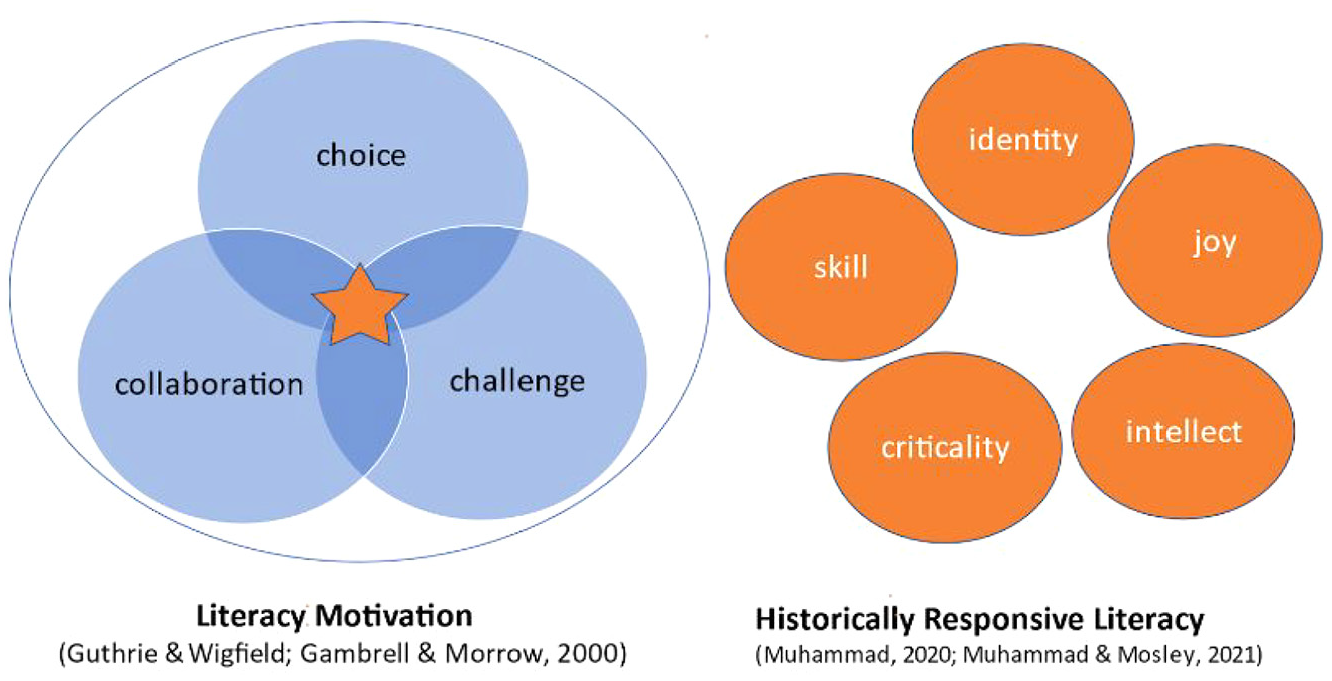
Literacy motivation and literacy identity dimensions.
In this model of literacy motivation, student literacy identity dimensions are central to literacy motivation; however, they may differentially exist across motivational components. For instance, identity dimensions of skill and intellect may be more often associated with the motivational component of challenge, whereas identity dimensions of joy and identity may be more often associated with the motivational component of choice. The significance of literacy identity dimensions to literacy motivation is that they exist at the core of literacy motivation and are unique to each learner.
Reconceptualizing literacy motivation through student literacy identity provides a vital action step to addressing persistent disproportionality of culturally and linguistically minoritized students who are identified as at-risk for reading difficulties (Milner, 2020; Robinson, 2013). One of many factors of why reading interventions have not benefited students of Color is the lack of centering on contextual factors (e.g., physical, physiological, psychological, cultural spaces, and places) that are interrelated with students as learners (Milner, 2020; Robinson, 2013; Terry, 2021; Terry et al., 2022). Our literacy motivation model centers on literacy identity to address the relationships between contextual and individual factors of literacy motivation.
Framework for Investigating Literacy Motivation Through CRL Practices
We offer an integrated conceptual framework for CRL motivation that highlights connections between CRL practices and student literacy identity dimensions (Anderson et al., 2023; Belson et al., 2023). This framework draws upon Muhammad’s (2020) Historically Responsive Literacy dimensions of criticality, intellect, joy, identity, and skill. Figure 2 shows how literacy motivation components are reflected in CRL practices and connect to student literacy identity. Our framework shows how CRL activities connect with student literacy identity dimensions through relatedness (belongingness, relationships), meaningfulness (value, connection), autonomy (agency), and competence (skills) as key components of student literacy motivation (Cartledge et al., 2015, 2016; Kumar et al., 2018).
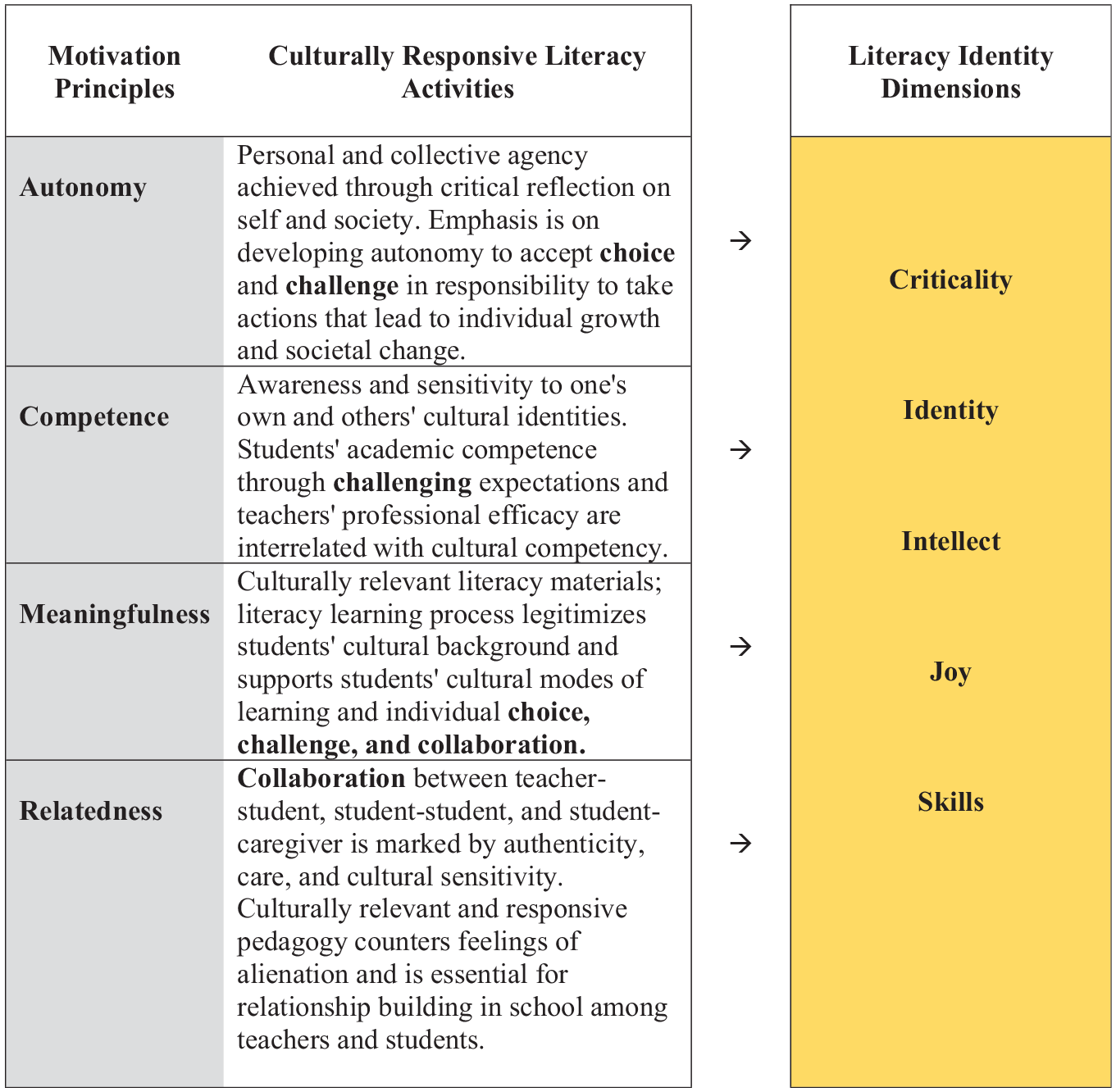
Culturally responsive literacy motivation framework.
Our CRL motivation framework (see Figure 2) expands conventional motivational theories by operationalizing important connections between the learner and their environment as well as their family (Kumar et al., 2018; Usher, 2018). Critical motivation researchers interrogate assumptions of motivation research that perpetuate racism and privilege, highlighting the need to explore how teacher and student cultural contexts and identity dimensions influence student motivation (Kumar et al., 2018; Usher, 2018). Kumar et al. (2018) have shown how motivational principles of autonomy, competence, meaningfulness, and relatedness align with culturally responsive learning environments and teaching practices. Very little research to date connects CRL practices with student literacy motivation. Researchers may use this model to rigorously interrogate literacy intervention practices for whether texts, materials, and practices are relevant and meaningful to the students whom they are intended to benefit.
Research Questions
Our research questions are as follows:
What literacy intervention practices (SOR, CRL, SOR-CRL) reflect dimensions of student literacy identity?
How do CRL-SOR integrated practices support students’ literacy motivation?
How do CRL practices foster equity in literacy learning spaces for students from minoritized backgrounds?
Method
Project Background
This research project focused on supporting students in two urban elementary schools through a high-intensity SOR tutoring program using diverse children’s literature within CRL practices to address literacy learning needs and priorities of students and their families. We adapted two SOR-aligned interventions, Reading Rescue and Reading Ready (RR), through the integration of promising practices for developing students’ literacy motivation through CRL practices. Reading Ready was written as a precursor to the Reading GO (formerly Reading Rescue) intervention (Miles et al., 2019; Miles & Fletcher, 2023). It was designed to support emergent readers with developing strong word analysis and reading habits by anchoring them to the letter-sound correspondences in words. The reading intervention programs aligned with SOR principles and supported students’ phonemic awareness and decoding skills through explicit, systematic instruction in blending, segmenting, and manipulating units of speech (Belson et al., 2023).
Lessons followed a scope and sequence of phonetic concepts and phonemic awareness to strengthen word analysis skills. Previous efficacy studies with students in New York City elementary schools demonstrated significant positive effects for intervention groups compared to control groups (Miles et al., 2022; Miles & Fletcher, 2023). The CRL-SOR intervention adaptations featured explicit training and opportunities for tutors and students to engage with authentic texts, build collaborative relationships, and explore prior knowledge (see Table 1 for adapted lesson components of the CRL-SOR program).
Adapted Lesson Components of the CRL-SOR Program.

Note. CRL = culturally responsive literacy; SOR = science of reading.
Participants and Setting
The current study was part of a 2-year project (2022–2024). The first year included design and implementation of the tutor-training and student tutoring intervention program over 6-to-10 weeks during the fall, spring, and summer months. In the current study, 10 tutors worked with 38 students over a 6-week period of the summer in school spaces in a large, metropolitan urban region of the United States. Tutors ranged in age from 16 to 63 years old (M = 23 years old). Tutors’ backgrounds ranged from undergraduate students (n = 6) to instructional aides (n = 2), and high school students (n = 2). Most tutors identified as female (n = 8), with one tutor identifying as male and one as non-binary. Tutors identified their ethnicity or race as Black (n = 4), Multi-racial (n = 2), and White (n = 4).
Students included kindergarten through third grade students who were identified by school personnel as being at risk for reading disabilities. Second graders were represented the most in this sample, followed by even numbers of kindergarteners, first graders, and third graders. Students were eligible for the program if they had some awareness of letters and letter sounds and performed below grade-level expectations as measured by a standardized assessment at the beginning of the tutoring program. The participating school populations of Schools A and B were statistically similar on demographic covariates, including school size (<400 students), student ethnicity/race (>90% Black), and proportion of students eligible for free and reduced-price meals (>50%).
School A was a traditional public school serving PreK3 to 5th grade students. In 2022, 71% of students scored below basic levels of proficiency on the state English Language Arts (ELA) assessment. School A was identified by its district as experiencing severe equity challenges in serving the students and communities most impacted by past and present systemic bias. School B was a public charter school serving PK3 to 8th grade students, with 54% of students achieving scores below basic levels of proficiency on the 2022 state ELA assessment.
Participating schools were recruited through an organization that matched schools interested in tutoring with organizations, including universities. Participating schools applied to receive university tutors. All participating students at the schools received a consent form distributed to the families by school personnel providing details of the program and benefits to students. The study protocol was approved by the research team’s Institutional Review Board on January 10, 2022.
Tutor Training and Implementation
The summer literacy program tutors had varying experiences ranging from very little to some prior teaching or tutoring experience, with most having little or no experience. Prior to working with their students, tutors completed one 3-hr in-person training that included interactive and hands-on practice with teaching core literacy and pedagogical concepts of the program, such as self-reflecting, honoring tutors’ and students’ textual heritages, selecting authentic texts, and instructing students in foundation literacy skills. Tutors then completed 5 hr of training with 10 online modules (RR intervention training, Miles et al., 2022). The online training included topics of phonological awareness, decoding, and explicit and systematic phonics instruction. Tutors received additional instruction and coaching during weekly training sessions during the tutoring program. The training and ongoing weekly sessions were focused on the development of tutors’ knowledge and practices in implementing the integrated CRL and SOR-aligned intervention topics and skills. The weekly sessions facilitated tutors’ learning and integration of topics with SOR-aligned practices such as coaching and practice in decoding activities (e.g., error correction), text selection, and dialogic reading strategies within a CRL-SOR tutoring context.
Culturally Responsive Literacy (CRL) Training
Tutors’ weekly training sessions during the summer literacy tutoring program followed a community-of-practice model led by a university instructor throughout their work with their students in the program. Weekly sessions focused on specific topics to support tutors’ implementation of CRL activities with their students. For example, the initial tutor training session focused on building asset-framed relationships with students by honoring their identities, learning their existing literacy and language practices, and tutors’ understanding their own identities. These activities helped the tutors to identify personal characteristics and roles they felt confident in claiming and sharing (Ahmed, 2018). Tutors used identity web activities with their students during connecting activities to learn about and build rapport with them. Tutors engaged in reading and learning about topics covered in weekly sessions, including asset-based literacy approaches (Hammond, 2014), stereotype threat (Steele & Aronson, 1995), funds of knowledge (Moll et al., 1992), community cultural wealth (Yosso, 2005), textual lineage (A. W. Tatum, 2008, 2014), and literacy identity (Muhammad, 2020; Muhammad & Mosley, 2021). Tutors also engaged in ongoing professional development and training during their tutoring sessions to interrogate their identities in support of their work with their students from minoritized backgrounds. For example, literacy tutors explored their textual lineages to support their students in creating their textual lineages. This training helped tutors to identify and read literature on topics that their students expressed interest or care about and decided whether to include them in their lineage. We also utilized Hammond’s (2014) teacher-student actionable practices and asset-based instructional principles in developing and implementing CRL practices of connecting activities, read-alouds, and reflection dialogs.
Fidelity of Implementation
The summer literacy program team and school staff matched tutors and students based on students’ current reading skills and schedule availability. Tutors met with students at their schools in observable classroom spaces. Students were pulled from summer camp or extended school year programing to participate in the program. Tutoring occurred three-to-five times weekly, with each session lasting between 30 and 45 min. Tutors worked 5 hr daily with up to three students per tutor. Table 1 shows the lesson components of the CRL-SOR intervention lessons and their approximate lengths in minutes. Tutors tracked daily assessments and session activities utilizing a spreadsheet. Lead instructors observed tutors weekly to ensure program fidelity and to provide instructional support and guidance as needed. Tutors used a fidelity checklist to assess each of the CRL and SOR components of their lessons. Lead instructors evaluated the tutors’ data trackers on a weekly basis to ensure complete and accurate data entry of student reading levels and progress.
Data Sources and Analysis
Our data sources included interviews with tutors along with tutors’ written self-reflections at the end of the intervention program. Our research team, including a graduate research assistant, used Otter (Otter AI, 2023) to transcribe tutor interviews and check with video sources for accuracy of verbatim transcription. All data was anonymized, and pseudonyms were assigned for participants. We used thematic coding analysis with Dedoose (2023) to code transcripts for activities that tutors described as CRL, SOR, and those combining CRL and SOR practices. We conducted secondary coding analysis to identify dimensions of student literacy identity that were represented within CRL, SOR, and CRL-SOR practices in transcripts of tutor interviews and self-reflections.
Coding Procedures
We used reflexive thematic analysis (Braun et al., 2019; Braun & Clarke, 2006), a recursive process involving movement back and forth between different sequential coding phases. We used this process for identifying and coding categories within CRL, SOR, and CRL-SOR practices. The phases of our analytic process were as follows.
First, we familiarized ourselves with the content of CRL, SOR, and CRL-SOR practices.
Second, we thoroughly outlined each category and used inductive coding to generate activities that were present across transcripts. This list of activities served as a baseline for the development of the primary coding categories.
We categorized this baseline list of activity codes according to practice domain (e.g., CRL, SOR, CRL-SOR).
We then checked the activity codes according to each practice domain for viability, definitions, and naming conventions.
Two researchers and one trained research assistant double-coded each transcript’s activity codes and practice domains and compared results. Initial agreement for content categorization and domains was 86% with disagreements resolved through conferencing and review of the transcripts.
Our process for secondary coding analysis utilized the same procedures as with primary coding. Two researchers and one trained research assistant reviewed student literacy identity dimensions and outlined each category, identifying examples and non-examples. We then checked for viability, definitions, and naming conventions, double coding all transcripts for literacy identity dimensions, with initial agreement at 85% and reaching 100% through conferencing and review of transcripts.
Primary Codes
Table 2 shows the primary thematic codes for types of activities identified from tutors’ descriptions of their activities with their students from interviews and self-reflections. For example, the activity category of CRL included connecting activities, read-alouds, reflections, oral language, and vocabulary activities. By contrast, the SOR category included letter-sound identification, phonemic awareness, phonics, reading practice, reflection, oral language, and vocabulary activities. The CRL-SOR category included activities that combined CRL and SOR practices.
Primary Coding Categories: CRL, SOR, and CRL-SOR Practices.

Note. CRL = culturally responsive literacy; SOR = science of reading; CRL-SOR = culturally responsive literacy and science of reading.
For example, this tutor’s description of the CRL practice of connecting activity was focused on relationship building between the tutor and the student:
I really started to see growing interest in these books and more attention span directed towards them… the bonding activities are very short I just started playing Tic Tac Toe with them…and it was just through these random conversations that they started to get closer to me. I got to know more about their lives.
Here is an example from a tutor describing a SOR practice in which they focused on letter-sound elements with their student: I remember watching a YouTube with one of my students who was having issues with the pronunciation of the E letter, and it did help her remember /e/-edge-elephant.
Secondary Codes
We conducted secondary coding of CRL, SOR, and CRL-SOR practices for student literacy identity dimensions identified by tutors within activities across interviews and self-reflections. Secondary codes included criticality, identity, intellect, joy, and skill. These categories were adapted from Muhammad’s (2020) historically responsive literacy dimensions, summarized in Table 3.
Secondary Coding Categories: Literacy Identity Dimensions.

Source. Adapted from Muhammad (2020) and Muhammad and Mosley (2021).
For example, this tutor’s description of the CRL read-aloud activity reflected their student’s identity dimensions of criticality and identity:
I remember reading one book to R,
Results
This section presents descriptive findings on the frequency of CRL, SOR, and CRL-SOR activities reported by tutors in their sessions with students. These descriptive findings include the frequency of identity dimensions associated with tutoring activities, and associations between activities and identity dimensions. Next, findings from tutor interviews and reflections substantiate the connections between CRL activities and student literacy motivation and identity.
Descriptive Findings
The frequency of CRL, SOR, and CRL-SOR integrated activities reported by tutors in their sessions with students are shown in the chart in Figure 3. This chart shows the total number of CRL, SOR, and CRL-SOR activities reported by tutors in their sessions with students. Tutors reported CRL-SOR integrated activities (44%, n = 103) most frequently, followed by SOR activities (30%, n = 71), and then CRL activities (26%, n = 61).

Percentage of CRL, SOR, and CRL-SOR activities reported by tutors.
Literacy Intervention Practices and Literacy Identity Dimensions
Research Question 1 examined what literacy intervention practices (SOR, CRL, SOR-CRL integrated) reflect dimensions of student literacy identity. Figure 4 shows the most frequently reported student identity dimensions across tutoring activities (CRL, SOR, and CRL-SOR). The student identity dimensions most frequently reported by tutors during intervention activities were skill, identity, and intellect, 28%, 26%, and 26% respectively. Joy was reported by tutors in 16% of their tutoring activities. Criticality was reported in 3% of the activities with students.
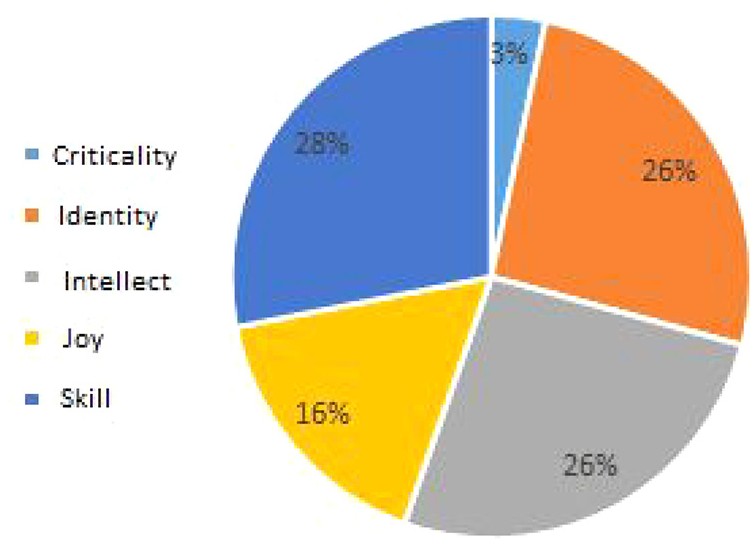
Percentage of literacy identity dimensions reported in tutoring activities.
Figure 5 shows the distribution of student identity dimensions across CRL, SOR, and CRL-SOR activities reported by tutors. For example, identity was more frequently associated with CRL and CRL-SOR integrated activities than with SOR activities. However, the SOR section of the graph shows that the dimension of skill was more frequently associated with SOR than either CRL or CRL-SOR integrated activities. Intellect was more frequently associated with CRL-SOR than either CRL or SOR activities alone. Joy was more frequently associated with CRL-SOR integrated activities than either CRL or SOR alone.

Percent comparison of CRL, SOR, and CRL-SOR activities by literacy identity dimensions.
CRL-SOR Practices and Student Literacy Motivation
Research Question 2 investigated how CRL-SOR integrated practices support students’ literacy motivation. Findings from tutor interviews and reflections highlight CRL-SOR integrated practices with diverse children’s literature including connecting activities, read-alouds with enabling and identity-centered texts, reading practice with decodable books, and reflection dialogs. These CRL-SOR activities facilitated inclusive and critically literate experiences for students in the reading intervention by centering student identity dimensions and fostering literacy motivation. Findings from tutors’ reflections below highlight the ways that they nurtured their students’ literacy motivation and identity through themes of choice, character identification, affirmation, and confidence.
Connections Between Student Literacy Motivation and Identity
Student literacy motivation and identity were connected through tutors’ use of specific CRL-SOR integrated activities with their students that addressed identity dimensions of criticality, intellect, joy, identity, and skill. The CRL-SOR activities most often associated with identity dimensions were connecting activities, read-alouds with connecting texts, reading practice with decodable books, and reflection activities as described below.
Connecting Activities
Connecting activities such as identity webs and relationship building supported tutors in building a foundation for engaging in practices that supported students’ literacy identity. First, tutors built their identity webs and then engaged in developing these webs with their students (Ahmed, 2018). Identity webs, or maps allowed individuals to illustrate their defining characteristics. Tutors and students explored their identity dimensions through these reflective activities and built relationships through identifying connections and honoring each other’s backgrounds (B. D. Tatum, 2000). Creating identity webs was the focus of the tutors’ first session with the students. Ongoing reflections on the webs and tutors’ self-interrogations and translations of their experiences and funds of knowledge were fostered in the weekly tutor training sessions, equipping tutors with terminology to engage in conversations with their students about their textual lineages and how their backgrounds were related to the enabling texts read during tutoring sessions. In subsequent sessions, tutors engaged in connecting activities of students’ choices (e.g., conversations on a topic of interest, games, collaborative drawing, writing, storytelling). These collaborative activities helped tutors and students to build mutual trust, understanding, and empathy (Ahmed, 2018).
Read-Alouds with Enabling Texts Centering on Identity Dimensions
Each tutoring session began with students selecting books to read or have read to them. Tutors identified books based on characters or topics related to the students’ interests and backgrounds and included vocabulary, language structures, and inferences that supported students’ lexicons. These diverse selections enabled tutors and students to address challenging or unknown words, sentences, and ideas together. These enabling texts offered students and tutors opportunities to talk about their emotions and lived experiences, while experiencing the excitement and joy of learning about new ideas and connections.
Reading Practice with Decodable Books
Each tutoring session gave students opportunities to build their word reading skills through SOR practice with sounds, letters, word mapping, and sentence reading, culminating in daily practice reading words in the context of decodable books. These books included words that the student successfully decoded independently while tutors provided positive, targeted, and immediate feedback. Daily practice with decodable texts systematically built students’ word-reading skills and gave students practice with independent reading, affirming their competence and autonomy as skilled readers.
Reflection Activities
At the start and end of each session, tutors and students reflected on their literacy practices. For example, after read-aloud activities with enabling texts, tutors asked students, “What is one thing you noticed about the book?” Students’ responses included observations related to their identity dimensions such as, “Their skin color is the same as mine, and they are really pretty,” “I liked the story and the sparkles,” “I’m sad he won’t say, ‘I love you’” and “I like how they play together.” Reflection dialogs allowed students to identify with characters, themes, and/or ideas, experiencing the joy, intellect, and criticality of learning from books and relating to their experiences and identity dimensions. At the end of each session, tutors supported students’ criticality by asking thoughtful and relevant reflection questions about what the students liked or did not like about the books. These questions helped students build connections or understand differences between the characters and their own lives.
Finally, at the end of each session, tutors asked students to reflect on their experiences as literacy learners through questions including, “What do you think went well today and why?.” Reflection dialog activities gave students routine opportunities to reflect on and describe their learning processes and experiences within each tutoring lesson. Students’ responses included affirmations such as, “I am so smart,” and “I did great today,” which reflected their feelings of joy, competence, and autonomy related to reading and their collaborative relationship with tutors in literacy learning.
Culturally Responsive Literacy Practices and Equity in Literacy Learning Spaces
Research Question 3 explored how CRL practices foster equity in literacy learning spaces for students from minoritized backgrounds. Reflections from literacy tutors below highlight the role of CRL practices with diverse children’s literature in nurturing their students’ literacy motivation and identity through themes of choice, character identification, affirmation, and confidence in students’ literacy learning experiences. These vignettes also reflect the importance of access and opportunities that diverse children’s literature provides to students engaged in literacy learning, especially students who experience marginalization due to race, ethnicity, language, gender, and disability.
Student Literacy Motivation and Identity Through Validation and Acceptance
Ana explained the relevance of the read-alouds to her students’ literacy motivation, identity, and progress in reading:
Students loved the relevant books and were more confident and comfortable with me as a tutor and in their reading abilities. They often came into class feeling stressed out, like, “This is tutoring, and that means I’m not good at something.” So when they felt validated and accepted, they were more comfortable with learning to read.
Identification with Characters
Nali explained the power of seeing oneself in literature and its connections to literacy motivation:
There were a lot of kids who would latch on to one book and read it multiple times and it seemed to stem from identification with the characters because they were People of Color, people who looked like them. I think because they could identify with the book so heavily, it served as a reward or treat to work for.
Understanding and Awareness
Kate explained the importance of diverse children’s literature to her own understanding and awareness of her students’ identities and their confidence:
I didn’t realize how much kids this age could comprehend and how much they take in before even entering first grade, also how much they put themselves down. One of my students was very shy and then started being a lot more talkative, telling me more about his life and things that his family does. It became easy to incorporate that in and it helped him grow. He picked out a book with a tennis player on the front. It was that book with famous Black men throughout the years and it really resonated with him. We read about Arthur Ashe and the impact that he made. I got a deeper understanding of who this kid was and where he came from, and the book helped me connect with him more and I knew what he wanted to gain.
Choice and Access
Izze reflected on the importance of choice and access to diverse topics, themes, and characters through her students’ choice of texts:
I would ask the kids, “What are you interested in?” When they said science, we picked stars or engineering or robots books. After we went through all the books that were science-related, someone who liked science, all of a sudden was looking at a book about clothes. It was amazing that the table of books wasn’t just oriented to one thing, it was a mix of everything. So someone who could have an interest in sports and could also look at hair stuff because that’s actually what happened. One kid loved football but there was this book about this girl who had curly hair,
Identity Affirmation
Yana expressed the importance of identity-affirmation in her read-aloud activity with her student, Mikey:
I read
Tutors Sira and Ali also reflected on the critical role of identity-affirming literature in supporting their students experiencing reading disabilities, Cora and Layla. The tutors shared how their literacy experiences with these students through the texts challenged their previously held expectations for their students. Sira explained how identity-affirmation and literacy motivation were connected for her student Cora:
There was a child, Cora [with exceptionalities] and she wanted to read that Mae Jemison book,
Ali reflected on the connection between her student’s choice of identity-affirming literature and literacy motivation in her work with Layla:
Layla loved
Discussion
Culturally responsive literacy practices that center student literacy identity dimensions and foster literacy motivation offer much promise in addressing the needs and priorities of students from historically resilient backgrounds who participate in literacy interventions. Honoring the diversity of students’ experiences through CRL-SOR integrated practices provides access to learning opportunities that reflect students’ literacy identity dimensions and builds literacy motivation through sources of curiosity, connection, activity, initiation of thought and behavior, meaning-making, and self-efficacy (Deci et al., 2001).
Relevant, meaningful, and effective literacy activities make school environments learner-centered incubators of belonging and inclusion rather than institutions of marginalization and disenfranchisement. By contrast, students who are restricted to leveled texts are not only prevented from access to rich vocabulary or complex sentence types, but they are disconnected from the key opportunity of building literacy motivation. When students see and hear themselves in literature, central issues of equity are addressed through agency and choice in learning, as well as opportunities for co-creation through reflection and collaboration. Inclusion is facilitated both environmentally and conceptually (Anderson, 2019) through CRL-SOR integrated practices centered on literacy motivation and literacy identity to address systems-level, classroom-level, and educator-level conceptual barriers (e.g., racist and ableist ideologies) as well as physical barriers (e.g., restrictive learning environments and materials).
Limitations
Our findings are exploratory-descriptive, thus generalization to other students, teachers, and settings is limited to the participants and schools involved. However, the findings provide several actionable next steps for policy, research, and practice in supporting students’ literacy motivation and literacy identity in reading intervention. Additionally, we experienced limitations in the tutoring program’s need for providing additional training resources for tutors focused on trauma-informed approaches and mental health issues. Tutors reported that while their students reflected feelings of connectedness, they also shared deeply personal information related to experiencing violence, loss/death, homelessness, and hunger. Resources of time, space, and personnel became apparent when students would return to their tutoring sessions after they had ended seeking out these valued connections with their tutors. Although teacher and administrator attitudes reflected transformation and support for CRL practices and texts integrated within the SOR tutoring intervention, tutors reported school climate challenges toward students with reading difficulties, who often faced deficit-based and exclusionary attitudes from teachers.
Implications for Literacy Practitioners and Policymakers
Our culturally responsive literacy motivation framework broadens literacy intervention practice by focusing on literacy motivation through dimensions of student literacy identity and by addressing agency and belongingness through honoring assets, priorities, and backgrounds of students and their families. This framework can be used to interrogate texts for damaging racist messages (Thomas & Dyches, 2019) as well as practices (Milner, 2020). Thomas and Dyches (2019) analyzed English language arts curriculum text, reporting most fiction and 20% of nonfiction books presented “People of Color as inferior, deviant, and helpless; while 30% of fiction and 100% of nonfiction texts presented Whites as heroic, determined, innovative, and successful” (p. 601). Researchers’ interrogation of curriculum has identified racist messages, implicit and explicit biases that not only advantage White majority students but explicitly undermine literacy motivation and identity among students of Color in curriculum and teacher instruction (see McLean & Alexander, 2020). Interrogating curriculum and instructional practices for harm and bias is essential to the field of reading and literacy, as students from minoritized backgrounds persistently face barriers in accessing literacy interventions and making improvements (Lensmire et al., 2013; Linan-Thompson et al., 2018; Milner, 2020).
We join the call to educators, researchers, and policymakers to transform literacy practices and systems to support students identified as at-risk for reading difficulties by valuing their assets and promoting their experiences in literacy interventions, in schools, and in societies (Bal, 2016). Literacy educators are positioned to promote diverse aspects of students’ experiences to systemically transform classroom spaces and curricula to become wholly representative and accessible (Leverson et al., 2019; Waitoller & King Thorius, 2016). Actionable practices contribute to addressing barriers to reading instruction for students from minoritized backgrounds through CRL-SOR integrated practices that center on students’ literacy identity to nurture and sustain literacy motivation.
Implications for Literacy Researchers
Few, if any evidence-based reading interventions incorporate CRL practices to address students’ literacy motivation and identity. Even fewer interrogate positive and/or negative influences of reading intervention on student literacy motivation. It is imperative for literacy intervention research and practice to address multiple and diverse dimensions of students’ literacy motivation and identity. This can be accomplished through the study of the effects of integrating CRL and SOR practices on student literacy outcomes, including literacy motivation. This critical approach can disrupt the myth that literacy interventions are culture-fair or culture-free, as this perspective advantages cultural majority students over students from minoritized backgrounds, thereby promoting inequitable opportunities for literacy motivation and belonging, and thus student agency. A wide-angle view on intervention for students from historically resilient communities attends to the whole experience of learning to become a skilled reader through CRL motivation as it relates to student literacy identity.
