



Abstract
To investigate the perceived stress and coping orientation to problems among nursing students in Saudi Arabia during the COVID-19 pandemic. This descriptive correlational study used a self-administered questionnaire that included personal data, a perceived stress scale, and a Brief Coping Orientation to Problems Experienced Inventory (COPE). Altogether, 235 participants were enrolled, of which 51.1% were aged 19 to 20. The 14-item perceived stress scale and the Brief COPE scores’ problem- and emotion-focused dimensions showed a significant negative correlation but no avoidant dimension. Higher PSS scores were associated with younger age, grade point average of 3, and second academic year level. Stress levels were higher among younger students in the lower academic year level and perceived lower grades. PSS showed a significant inverse correlation with the problem-focused dimension and its subscales, including active coping, instrumental support use, positive reframing, and planning in Brief COPE. Proper intervention is needed to maintain their academic standing.
Plain language summary
This descriptive correlational study aimed to investigate the perceived stress levels and coping strategies among nursing students in Saudi Arabia during the COVID-19 pandemic. The study utilized a self-administered questionnaire comprising personal data, a perceived stress scale, and the Brief Coping Orientation to Problems Experienced Inventory (COPE). Main Findings: The study found that stress levels were higher among younger students in lower academic years who perceived lower grades. Perceived stress had a significant inverse correlation with problem-focused coping strategies, including active coping, instrumental support use, positive reframing, and planning in the Brief COPE inventory. Conclusion and Implications: The results indicate the need for targeted interventions to help nursing students manage their stress and maintain their academic standing. Addressing stress among nursing students is crucial, as it may lead to various health issues. Identifying sources of stress and implementing effective stress management strategies is essential. While the study sheds light on coping patterns related to perceived stress in Saudi Arabia, it is important to note that the results may not be generalized to the larger population due to the convenience sample and the exclusion of other influential factors. Recommendation for Future Research: Future research should consider conducting a longitudinal study following nursing students from enrollment to graduation to explore how coping strategies mediate stress and academic performance over time.
Introduction
Coronavirus disease was declared a pandemic by the World Health Organization (WHO) on March 11, 2020. Since January 2020, when the first case was confirmed in Wuhan, China, the number of cases has steadily increased worldwide (Lamberghini & Testai, 2021). In response, many countries, including Saudi Arabia, curbed and restricted travel within and outside their borders. Saudi Arabia experienced a decline in cases of Coronavirus disease-19 (COVID-19) despite a steady rise in some countries in the last quarter of 2020 and early 2021 (Grande et al., 2021). As a result of the COVID-19 pandemic, there is devastation in health systems in other sectors, such as education. To tackle this issue, the Saudi Arabian Ministry of Education has ordered a shift from face-to-face classes to online classes (Grande et al., 2021). Due to the transition from classroom teaching to online teaching at many universities, students’ lives have completely changed, and they have become increasingly susceptible to developing stressors, such as fears regarding their physical health, the effects of the change in the educational environment, and a loss of control (Majrashi et al., 2021). Stress is described as a relationship between a person and their environment that is personally significant and exhausts their resources for coping (Folkman, 2020; Lazarus, 1986). The current study is guided by stress and coping theory (Lazarus, 1986). Therefore, assessing students’ stress with coping patterns during their teaching and learning experience and how they are coping is crucial.
Stress has an exciting relationship with coping patterns for university students (Labrague et al., 2018). The term coping refers to how individuals handle distress (emotion-focused coping), solve problems (problem-focused coping), and maintain positive well-being (meaning-focused coping; Folkman, 2020). Coping patterns are an important variable in reducing, tolerating, or minimizing stress and preventing negative academic results for nursing students (Labrague et al., 2018). Understanding coping patterns among adolescents is part of mental health (Nielsen & Knardahl, 2014). Adolescence is among the crucial phases of human life, and students at this phase have a unique cluster of stressful experiences (Petersen et al., 2017). According to the American Psychological Association (2019), a fine line exists between stress and anxiety, which are both emotional reactions; however, stress is naturally produced by an external trigger, whereas anxiety refers to persistent and extreme worries that do not resolve even without the cause. The cause of this stress can vary in academic demands, COVID-19 conditions, or other specific life events or personal characteristics of the student. The educational setting, social distress, financial limitations, and personal relationships are different causes of stress among university students (Alyousef, 2019). The COVID-19 pandemic is a source of stress to students; although not all stress types are unfavorable, long-term stress can be harmful (Aafreen et al., 2018; Labrague et al., 2018). A study on medical students reported that students’ sleep quality in their preclinical years was poor.
Consequently, poor sleep quality was significantly associated with elevated stress levels (Alotaibi et al., 2020). Nursing students frequently experience academic stress because they need to study large amounts of content quickly, compete for marks, have inadequate time for assignment submission, and have excessive examinations (Labrague et al., 2018; Pascoe et al., 2020). In a qualitative interview design study conducted at a governmental university, the sources of stress experienced by nursing students were categorized as follows: clinical learning context, discrimination against nurses, interpersonal relationships, and social challenges (Alyousef, 2019). Furthermore, stress is more widespread among women than men (Alotaibi et al., 2020). According to a systematic review results, Saudi student nurses suffered from moderate to high levels of stress due to heavy workloads and taking care of patients (Labrague et al., 2018).
Students in Saudi Arabia experience considerable stress from various sources, which is expected for international studies (Labrague et al., 2018). However, stress may affect students in different ways and forms depending on the situation and coping patterns. In some studies, stress was high in participants with a low grade point average (GPA) who were not involved in extracurricular activities (Shadid et al., 2020). Students with a low GPA also show a higher overall burnout (Shadid et al., 2020). Extracurricular activities are significantly associated with low-stress levels (Alosaimi et al., 2015; Gallego-Gómez et al., 2020). It appears that coping patterns may play an essential role in how students manage and perform during stressful academic events. Researchers examined how academic coping style mediates college students’ academic performance and academic stress (Struthers et al., 2000). According to structural equation analysis, problem-focused coping and motivation are essential in the relationship between college students’ academic stress and course grades, but not emotion-focused coping (Struthers et al., 2000). Students who engaged in problem-focused coping were more likely to be motivated and perform better than students who engaged in emotion-focused coping, as expected (Struthers et al., 2000). Stress-coping patterns among nursing students include active and passive coping strategies (Labrague et al., 2018). Individuals with positive coping strategies, such as emotional reaction, religion, and planning, have lesser perceived stress.
In contrast, those with negative coping approaches, such as denial, venting, self-blame, and disengagement, have increased perceived stress (Guruprakash et al., 2018). The importance of encouraging students to reinforce peer relations, improve their mental well-being, and embrace strategies for managing personal and academic stress levels has been previously reported (Alyousef, 2019). Therefore, to reduce academic stress, nurse educators should perform interventions, such as identifying the causes of stress, counseling, and developing various skills to cope with the negative aspects of stress students (Alyousef, 2019; MoghimIslam et al., 2013). Based on a critical analysis of findings from 13 journal articles that examined stressors and coping strategies of nursing students during the COVID-19 pandemic, a recent scoping review identified COVID-19 as a stressful period for nursing students with classes moving online. The review revealed that students sought information, consulted, remained optimistic, and transferred their knowledge (Majrashi et al., 2021). Understanding the relationship between perceived stress and coping patterns is essential, especially among nursing students. Given that students nowadays experience high levels of stress across their lives, this observation is an important field of research and an effective intervention channel among university students in SA; the current study differs from previous studies in investigating the relationship between stress and coping patterns during the (COVID-19) pandemic for Saudi nursing students. Hence, we aimed to examine the perceived stress and coping orientation to problems among nursing students in Saudi Arabia during the COVID-19 pandemic.
Methods
Design and Participants
This descriptive correlational study targeted all college students and collected a large amount of data at one point by using an electronic self-administered questionnaire. Data collection and wide dissemination were made more accessible through an online survey. For the study inclusion criteria, we enrolled a representative sample of undergraduate students at all levels of both sexes nonrandomly selected by convenient sampling and enrolled in the College of Nursing at King Saud University. The students who transferred from another program to a nursing program were excluded. The calculated sample size was 227 based on the estimated population size of 549, with a confidence level of 95% and a margin of error of 5%, using an online sample calculator (Sample Size Calculator, 2020).
Data Collection
Saudi Arabia has been affected by the global COVID-19 pandemic. On March 2, 2020, the Ministry of Health confirmed the first case in the kingdom; domestic and international travel was banned, and lecture and clinical classes were shifted to online ones to address this issue. The present study was conducted from September to October 2020. After obtaining ethical approval, we contacted the scientific unit administrators at the nursing college to explain the research background and ethical considerations and to receive their approval to acquire the students’ email list. Bachelor’s degree in nursing as the entry-level for registered nurses, typically takes 4 years to complete, during which students can contact real patients from the second year onward. After that, all students were contacted via email with a URL linking to the consent form, and the students were requested to answer a three-part self-administered electronic survey on a Google platform. The electronic survey provided the students the freedom to answer the required questions voluntarily without fear, confirming confidentiality and assurance that all questions were answered and that survey numbers were completed with no missing values. The answers were returned by students who agreed to participate. We emailed 549 participants, with 235 (42.8%) students returning their answers. Hence, 235 students were included.
Assessment Instruments
This study used a survey questionnaire consisting of three parts. Part I assessed their profile, including age, sex, academic year level, and GPA for academic achievement, which are commonly measured. Part II contained the Arabic version of the 14-item perceived stress scale (PSS-14), developed in 1983 by Cohen, to evaluate individuals’ subjective perception of the unpredictability, uncontrollability, and overload of their life circumstances (Cohen et al., 1983). It comprises 14 items intended. The PSS-14 is not intended for diagnostic purposes, so no cut-off scores exist. PSS-14 has good psychometric properties and established acceptable psychometric properties, which make it one of the most widely used tools for measuring stress perceptions (Cohen et al., 1983). Consequently, the construct validity of the PSS was previously evaluated using exploratory factor analysis (EFA) and confirmatory factor analysis (CFA; Figalová & Charvát, 2021). This instrument has been validated cross-culturally (Australia, Japan, and Greece). PSS-14 shows an acceptable assessment regarding internal consistency. Cronbach’s alpha ranges from .75 to .86 (Cohen et al., 1983; Cohen & Williamson, 1988) and .74 in the current study, confirming its reliability. The PSS focuses on how participants feel unpredictable, uncontrollable, or overloaded in life rather than a particular event. Each response was rated on a on a 5-point scale (0 = Never, 1 = Almost Never, 2 = Sometimes, 3 = Fairly Often, 4 = Very Often) and summed to create a total score; the higher the score, the higher the degree of stress. Scores on the Perceived Stress Scale can vary from 0 to 40, with higher scores indicating more perceived stress. Scores between 0 and 13 are classified as low stress, while scores between 14 and 26 are deemed moderate stress. Scores falling between 27 and 40 are categorized as high perceived stress. To calculate the average score for all items, divide the total score by the number of items. PSS-14 scores were obtained by reversing the scores on the seven positive items and then summing up all 14 items. Items 4, 5, 6, 7, 9, 10, and 13 are the positively stated items, whereas 1, 2, 3, 8, 11, 12, and 14 are the negatively stated items (She et al., 2021). Part III comprised the Coping Orientation to Problems Experienced Inventory (Brief COPE) items developed by Carver and presents good reliability (Carver, 1997; Pozzi et al., 2015). Three subscales on the scale can help determine someone’s primary coping style: problem-focused, emotion-focused, and avoidant coping. The total scores for each scale are calculated by adding together the relevant items for that scale. None of the items are scored in reverse. There is no single overall total score, only total scores for each subscale. The Arabic version of the (Brief COPE) for the coping pattern was adopted in this study (Hamdan-Mansour et al., 2014). The Brief COPE is a 28-item self-report questionnaire that assesses various coping behaviors and thoughts to a specific situation (Guruprakash et al., 2018). Each response was rated on a four-point Likert scale, with one indicating “I haven’t been doing this at all” and four as “I’ve been doing this a lot.” It has 14 aspects of coping (each with two items), which are as follows: self-distraction, active coping, denial, substance use, use of emotional support, use of instrumental support, behavioral disengagement, venting, positive reframing, planning, humor, acceptance, religion, and self-blame (Carver, 1997). Cronbach’s alpha ranges from .72 to .84 when the Brief COPE is grouped as emotion-focused, problem-focused, and dysfunctional coping strategies (DeDios-Stern et al., 2017). The instrument is reliable and available in several languages. The Cronbach’s alpha for the Arabic version was good (.83) and acceptable (.73) (Hamdan-Mansour et al., 2014). For the current study, it was .816, indicating an excellent level of reliability.
Ethics Statement
The research was approved by the Subcommittee on the Ethics of Human and Social Research at King Saud University (KSU-HE-20-193). Prior to completing sections I to III of the electronic questionnaire, all participants provided informed consent. The survey’s first page included a statement explaining the study’s purpose, along with a link to a participant information sheet, and reminded participants that clicking the “Continue” button indicated their consent to participate with full understanding. Additionally, the researchers who translated the PSS and Brief COPE scales provided written permission for their use.
Statistical Analysis
The data was thoroughly checked to ensure quality and completeness, with no missing values. Descriptive statistics were presented where appropriate, including counts, proportions (%), mean, and standard deviation. To check for normality, the Kolmogorov-Smirnov (KS) test was utilized. Since the data showed a non-normal distribution, suitable statistical, and non-parametric tests were performed, including the Spearman correlation, Mann–Whitney U, and Kruskal–Wallis tests. A p-value less than .05 was deemed statistically significant. All analyses were conducted using the Statistical Package for Social Sciences version 26 (SPSS, Armonk, NY: IBM Corp, USA).
Results
Altogether, 235 participants (female, 51.1%; male, 48.9%) were enrolled, with more than half (51.1%) aged between 19 and 20 years. The majority (63%) had a GPA of four, 19.6% had a five GPA, and 17.4% had a GPA of three. Approximately half of the sample (53.2%) was in the third academic year, 23.4% in the second academic year, and 23.4% in the fourth academic year. Table 1 provides the descriptive statistics of study participants.
Socio-Demographic Characteristics of the Nursing Students (n = 235).
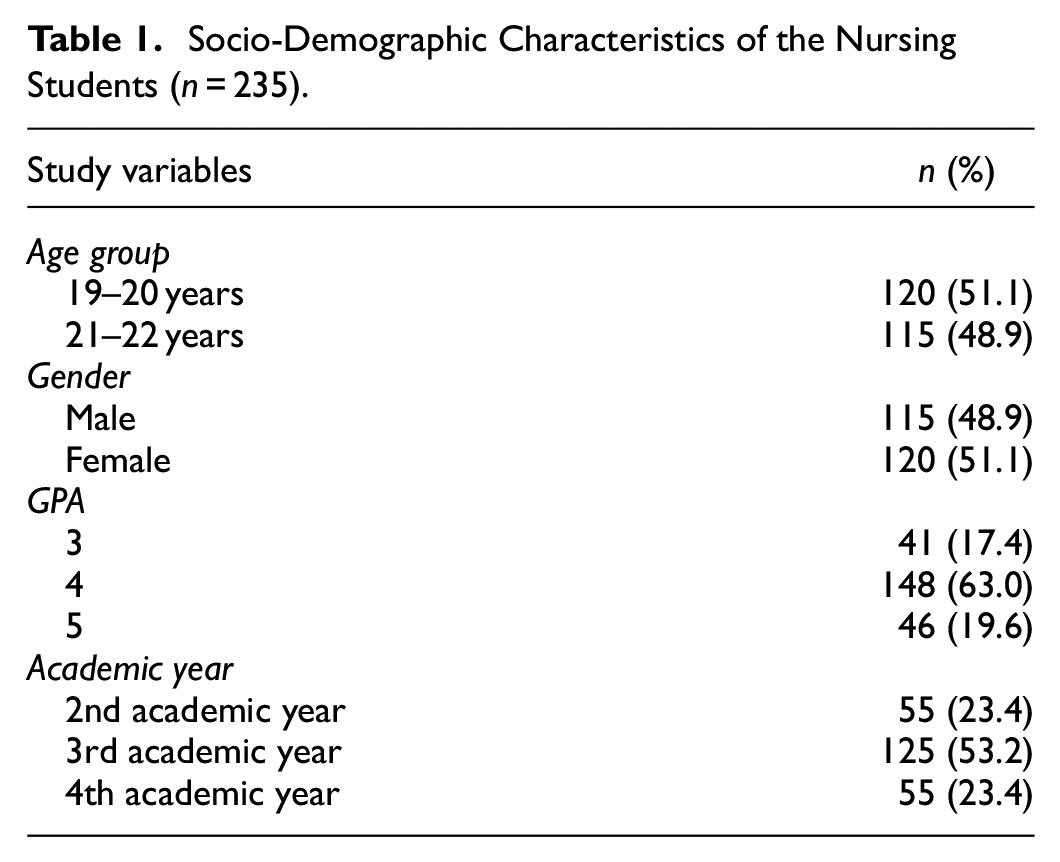
Table 2 lists the descriptive statistics of the PSS and Brief COPE. The overall mean PSS score was 21.2 (SD, 6.78). Regarding Brief COPE, the mean score of the avoidant dimension was 1.91 (SD, 0.45). For the subscales of this dimension, the mean score was highest in self-destruction (2.80) and lowest in substance use (1.23). The mean score for the problem-focused dimension was 2.74 (SD, 0.65), with the active coping subscale having the highest mean score (2.92) and the use of instrumental support showing the lowest (2.42). For the emotion-focused dimension, the mean score was 2.54 (SD, 0.52), with the religion subscale showing the highest mean score (3.08) and the use of emotional support showing the lowest (2.27).
Descriptive Statistics of Perceived Stress Scale and Brief Coping Orientation to Problems Experienced (COPE; n = 235).
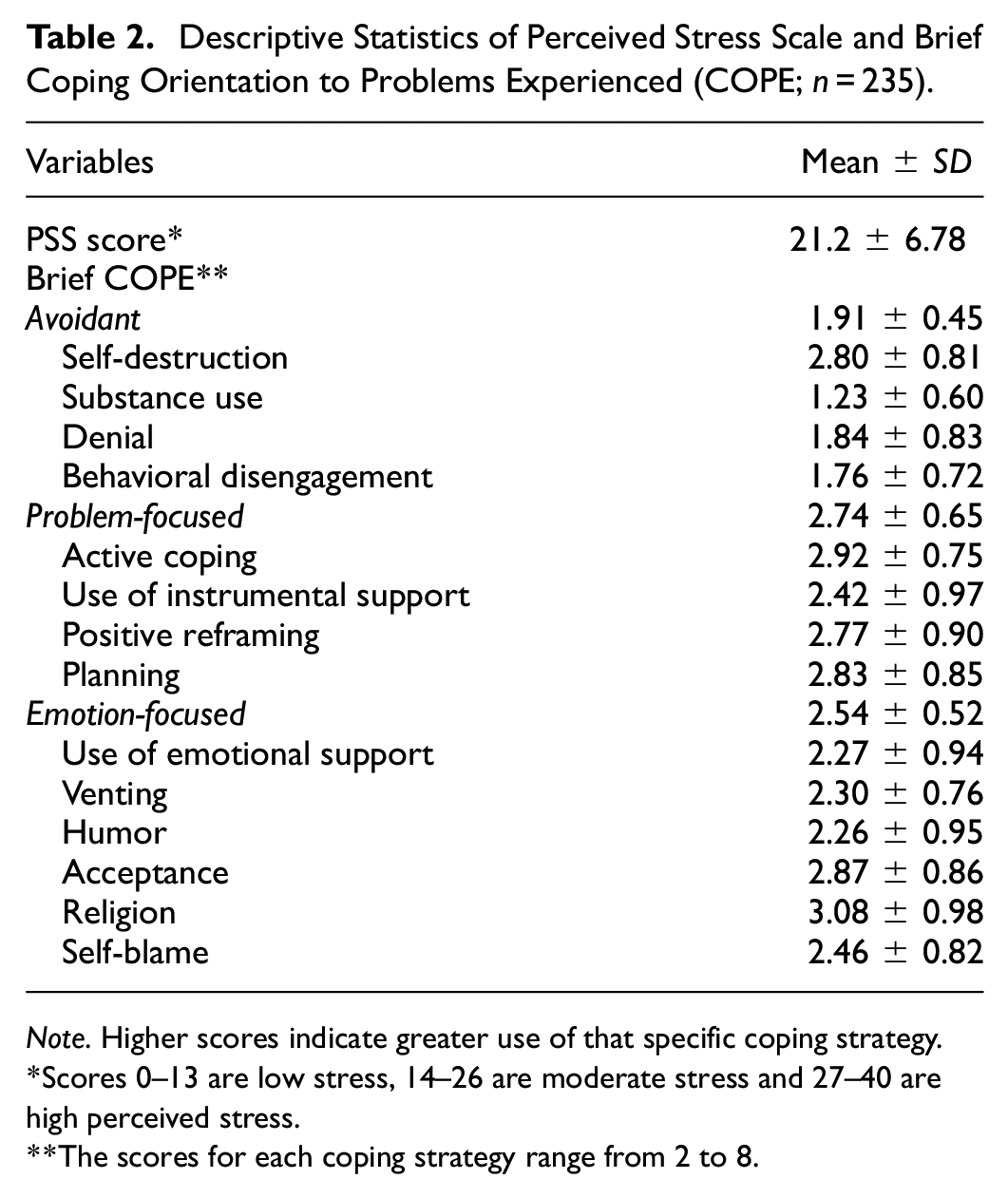
Note. Higher scores indicate greater use of that specific coping strategy.
Scores 0–13 are low stress, 14–26 are moderate stress and 27–40 are high perceived stress.
The scores for each coping strategy range from 2 to 8.
Table 3 shows an inverse correlation between PSS scores and Brief COPE domains and subscales: substance use, problem-focused, active coping, instrumental support use, positive reframing, planning, emotion-focused, emotional support use, acceptance, and religion. Conversely, a positive correlation was noted between PSS scores and denial and behavioral disengagement.
Correlation (Spearman) Between Perceived Stress Scale and Brief COPE (n = 235).

Correlation is significant at the .05 level. **Correlation is significant at the .01 level.
In Table 4, a higher mean PSS score was more associated with the 19 to 20-year age group (Z = 2.321; p = .020), GPA of 3 (H = 8.656; p = .013), and second academic year level (H = 5.679; p = .017). The scores of Brief COPE dimensions showed no significant differences with all the sociodemographic characteristics, including age group, gender, GPA, and academic year level (all p > .05).
Relationship Between Perceived Stress Scale and the Sociodemographic Characteristics of the Nursing Students (n = 235).

Note. GPA = grade point average; PSS = perceived stress scale.
p-Value was calculated using the Mann–Whitney Z-test.
p-Value calculated using the Kruskal–Wallis H-test.
Significant at p < .05 level.
Discussion
The study investigated the perceived stress and coping mechanisms in nursing students. Coping strategies were found to be the most effective way to manage stress. Our analysis using the Brief COPE revealed a notable negative correlation between perceived stress and the problem-focused dimension and its associated components, such as active coping, instrumental support use, positive reframing, and planning. Similarly, a significant negative correlation was observed in the emotion-focused dimension and its components, including emotional support use, acceptance, and religion. Regarding the avoidant dimension, substance use (negatively) and behavioral disengagement (positively) were found to be significantly correlated with perceived stress. In contrast, this dimension did not significantly correlate with the perceived stress score.
The results suggest that increased stress levels among nursing students are associated with decreased reliance on coping mechanisms, consistent with Guruprakash et al.’s (2018) findings. According to their study, perceived stress showed a significant correlation with various coping skills, including positive correlations with emotional support use and planning and negative correlations with denial, self-blame, venting, and disengagement. They also found that students using positive coping strategies experienced lower perceived stress, while those using negative coping patterns reported higher stress levels (Guruprakash et al., 2018). However, our study’s findings on the impact of PSS on the Brief COPE subscales differ from theirs, as we found negative correlations with emotional support, planning, and religion. At the same time, previous reports showed positive correlations (Guruprakash et al., 2018). Therefore, further research is necessary to determine the actual effect of PSS on coping strategies.
In contrast, Al Zamil (2017) found no significant correlation between nursing students’ coping strategies and stressors. Furthermore, these results closely align with Gustems-Carnicer et al. (2019), who found that students experiencing lower stress levels and utilizing problem-focused coping strategies achieved more academically, while those dealing with higher stress levels performed worse. Interestingly, the impact of stress on performance diminished with age. In a separate study, Spanish nursing students discovered that progressive muscle relaxation and music therapy effectively reduced their stress levels before exams, resulting in improved academic performance (Gallego-Gómez et al., 2020). Students need effective stress-coping mechanisms, especially during exam periods.
A previous research study noted that fourth-year students reported high levels of perceived stress (Al-Sowygh, 2013). In contrast, Saudi student nurses were found to have moderate to high-stress levels (Labrague et al., 2018). Our recent study revealed that third-year students experienced higher stress levels than senior students. Nonetheless, our study did not account for factors such as stress from assignments, study workload, and clinical training, as these clinical courses were shifted to an online format. Additionally, it was found that nursing students from low-income households experienced elevated stress due to the financial burden of Internet use (Masha’al et al., 2020). Including these factors for analysis would have significantly added value to our study.
Moreover, the current research findings align with those of a previous study. The earlier study revealed that 75.3% of nursing students experienced moderate stress, 19.6% experienced high stress, and 5.2% experienced low stress (Al Zamil, 2017). Interestingly, the study found that 87% of fourth-year nursing students reported moderate stress, a notably higher percentage compared to third-year (73.3%) and second-year (71.2%) students (Al Zamil, 2017). Notably, stress levels were significantly linked to various sociodemographic characteristics such as age (19–20 years), GPA (3), and academic year level. These findings differ from previous results, which indicated lower stress levels among first-year students and a weak negative relationship between stress levels and academic achievement (Elias et al., 2011). Given the potential long-term impact of stress on students, it is crucial to incorporate stress management practices into nursing education. Raising awareness and addressing the adverse effects of stress on well-being and academic performance is essential to prevent long-term challenges in both personal and professional life. It’s vital to acknowledge the significant impact of stress on our overall health and develop effective management techniques. Although limited research exists on the relationship between individuals’ perception of stress, their coping strategies, and academic performance in Arabic countries, this study aims to enhance our understanding of coping mechanisms in the context of Saudi Arabia, specifically in relation to perceived stress.
The results may not represent the population of interest since our sample size was convenient and excluded the influence of other factors such as previous stressful experiences or life events like the death of parents or severe disease. Thus, the results cannot be generalized to a larger population and may give rise to conflicts. Another limitation is that this study utilized non-parametric tests because the data did not follow a normal distribution. Non-parametric tests are generally considered less statistically robust than parametric tests. Additionally, non-parametric tests focus solely on the order relationships among observations and analyze the ranks rather than the original values, potentially leading to a loss of information. In future investigations, a longitudinal study among nursing students should be conducted from the first year of enrollment until graduation to determine whether coping patterns mediate stress and academic performance.
Conclusion
This study examined the perceived stress and coping orientation to problems of nursing students in Saudi Arabia during the coronavirus disease-19 (COVID-19) pandemic. This study has identified stress that significantly affects nursing students. Consequently, younger students at the lower academic year level who perceived lower grades were more stressed than the other nursing students. This study has found that, generally, the increase in stress levels among students negatively affected their coping strategies, such as active coping, instrumental support use, positive reframing, planning, emotional support use, acceptance, and religion. The evidence from this study suggests that the burden of stress may affect the academic achievement of our future frontline nurses; thus, careful intervention is needed to ensure adequate education about stress management strategies. Nursing students, especially those in their senior years, can benefit significantly from proper education on stress management strategies so that they can become effective frontline nurses. The study findings imply that collaboration between college administrative and faculty members concentrating on academic counselling is essential to support and guide students to manage their stress effectively, especially for senior nursing students.
Furthermore, offering stress management sessions to promote the psychological well-being of nursing students is crucial. More research is warranted to determine the effect of stress on coping patterns with academic achievement. Our study can serve as a reference and baseline research for studies dealing with similar topics in nursing colleges in Saudi Arabia.
Footnotes
Acknowledgements
The nursing students involved in this study. Their experiences and perspectives contribute significantly to the research outcomes.
Author Contributions
M.A. critical review study proposal analyzed data, wrote up the manuscript, edited and critically reviewed the manuscript, responding to reviewers’ comments. B.A. designed the study proposal, worked on IRB approvals, collected & analyzed data, and contributed to the manuscript writing.
Declaration of Conflicting Interests
The author(s) declared no potential conflicts of interest with respect to the research, authorship, and/or publication of this article.
Funding
The authors received no financial support for the research, authorship, and/or publication of this article.
Ethical Approval
The Subcommittee on the Ethics of Human and Social Research approved the research at King Saud University-(KSU-HE-20-193). Prior to completing sections I-III of the electronic questionnaire, all participants provided informed consent. The survey’s first page included a statement explaining the study’s purpose and a link to a participant information sheet. It reminded participants that clicking the “Continue” button indicated their consent to participate with full understanding. Additionally, the researchers who translated the PSS and Brief COPE scales provided written permission for their use.

Data Availability Statement
The data supporting this study’s findings are available from the corresponding author upon reasonable request.