



Abstract
The purpose of this study is to explore and discuss the concept of masstige value. The authors present a taxonomy of the main antecedents and outcomes of masstige value and empirically assess our model. A survey design using cross-sectional primary data from 500 Pakistani Titan wristwatch consumers was used. Hypotheses related to antecedents and outcomes of masstige value were tested employing structural equation modeling. Findings show that masstige value is triggered by five antecedents (intrinsic motivation, extrinsic motivation, social motivation, actual self-concept, ideal self-concept) and leads to five behavioral outcomes (cognitive attitude, affective attitude, conative attitude, attitudinal loyalty, behavioral loyalty). This paper explores and outlines theoretically and empirically the antecedents and outcomes of masstige value. It also provides a useful taxonomy of masstige value.
Keywords
Introduction
The luxury aspirations and rise in disposable income of middle-income consumers have led to the emergence of a new luxury genre, known as “masstige” (Das, Saha, Jebarajakirthy, Kalai, & Debnath, 2022), which involves market growth, affordability, and availability of the brands in the mass market (Chatterjee et al., 2023), and might be attractive for the brands to reach a broader market, since masstige strategy particularly focuses on the expansion of market share, through downward and upward brand extensions (Singh, 2023). In downward brand extension, most brands apply new brand names diverse from traditional luxury brands, while in upward extension most brands are organized through collaboration with traditional luxury brands. In the case of luxury brands, a downward extension tactic is deployed to attract consumers who cannot afford current brand offerings, whereas pursuing an upward extension allows the brands to reach consumers who search for additional features, greater prestige, and higher quality products. Marketers expect middle-income consumers to be the most substantial social and economic segment in most countries by 2050 due to the rapid growth of this class (Lee & Cho, 2023), and due to the increase in the economic capacity of middle-income consumers (Park et al., 2022b). Masstige has proven successful in attracting consumers from different socio-economic classes who are interested in prestigious products, from the most exclusive and elusive to the more accessible and affordable (Shahid et al., 2023). Luxury tourism is among the key growth drivers, and their product offerings are deeply integrated into the luxury segment, making them essential focal points for studying the masstige phenomenon; consequently, in the realm of luxury tourism, there is an anticipated annual growth rate of 16% projected up to 2027 (Purohit et al., 2024).
Considering the scarcity of studies regarding antecedents and outcomes of masstige value (Purohit & Radia, 2022; Rodrigues et al., 2024), and investigation of consumer attitude, consumer motivation, and consumer self-concept through several distinct but related dimensions in masstige phenomenon (Shah & Shah, 2022), called for more research on the concept ‘masstige’.
To the best of the researchers’ knowledge, the current literature lacks exploration of masstige value within the context of Pakistan, despite its status as an emerging market with a growing middle-class population that is highly aspirational and brand-conscious. This gap highlights the absence of masstige marketing strategies that could enhance masstige value, with marketing managers yet to implement them. Resultantly, middle-income consumers who value prestige remain unaware of the concept of masstige (Gupta et al., 2023; Ishaq et al., 2023). This lack of awareness can be attributed to the absence of masstige marketing strategies (Alagarsamy et al., 2024; Singh, 2024), limiting their ability to attain happiness and elevate their social status through such consumption, as beyond functional attributes, products and services contribute to consumers’ happiness (Wang et al., 2022), offering enjoyment (Kim & Lee, 2022), instant gratification (Vujić & Szabo, 2022), pleasure and self-fulfillment (Goyal, 2021), comfort, luxury, pleasure, entertainment and self-expression (Indrawati et al., 2022). These psychosocial and experiential benefits are increasingly driving consumers toward products that balance prestige and affordability, making Pakistan an ideal setting for studying masstige value. The cultural dynamics in Pakistan, particularly concerning consumer behavior, provide a unique lens for examining the motivations and behavioral outcomes associated with masstige products. Pakistanis often balance traditional values with modern aspirations, creating a rich environment for exploring intrinsic, extrinsic, and social motivations in masstige consumption. Considering regional emerging economies like India, where there has been a multitude of research conducted in the context of masstige, whereas Pakistan, with its position as the 18th largest middle-income consumer market globally (Malik et al., 2020), appears to lack a similar focus on studying the masstige value of brands. Consequently, the consumption of prestigious brands in Pakistan remains limited in comparison to India. A statistical comparison reveals that in 2023, the Pakistani luxury fashion market generated revenues of approximately US$14.30 million, equivalent to just US$ 0.06 per person. In contrast, India significantly outperformed Pakistan, with revenues totaling US$1.54 billion, or US$1.08 per person during the same period (Statista, 2023a, b). This significant difference underscores the necessity of conducting dedicated research on masstige within the Pakistani context. This research is a crucial endeavor aimed at promoting the adoption of prestigious brands among middle-income consumers in Pakistan.
Masstige value enhances consumer welfare by offering products that strike a balance between quality and affordability (Moorlock et al., 2023). Consumers benefit from access to well-designed, high-quality goods that were traditionally available only to a niche market. This leads to increased consumer satisfaction, as individuals can enjoy aspirational, luxury-like experiences without the exorbitant price tags. As a result, masstige value contributes to the democratization of luxury, allowing a broader range of consumers to experience the psychological benefits of owning and using prestigious products, thereby boosting self-esteem and enhancing overall well-being. Masstige strategies allow companies to expand their customer base by catering to a more diverse demographic (Suzuki & Kanno, 2022). This increased market reach can lead to greater sales and revenue, driving growth and profitability. Furthermore, by leveraging masstige value, brands can strengthen customer loyalty as consumers develop an affinity for products that offer a blend of quality and prestige. The resultant brand loyalty can translate into long-term customer relationships and repeat purchases. Additionally, masstige value encourages innovation within the industry, as companies strive to create products that meet the elevated expectations of this discerning market segment. The concept of masstige value has enriched the marketing and consumer behavior literature by offering a new lens through which to understand the dynamics of consumer preferences and brand management (Rodrigues et al., 2024). It has prompted researchers to explore topics such as consumer perceptions of value, brand positioning, and the psychology of consumption. By delving into the outcomes and implications of masstige value, academic research has the opportunity to refine and expand existing theories related to luxury consumption, consumer choice, and market segmentation. Continual investigation of masstige value contributes to a deeper understanding of evolving consumer behavior and market dynamics, enriching the body of literature in these fields.
The objective of this study is to investigate the antecedents and outcomes of masstige value comprehensively. Specifically, the study aims to identify and examine how consumer motivations and self-concept contribute to the formation and enhancement of masstige value. Furthermore, the research seeks to explore the subsequent effects of masstige value on reinforcing consumer attitudes and fostering consumer loyalty. To achieve these objectives, the paper first conducts an in-depth review of the literature to identify the key antecedents and outcomes associated with masstige value. Based on this review, a series of hypotheses are proposed, and a conceptual model is developed to guide the research. The methodology employed to test these hypotheses is then outlined, followed by an analysis of the key findings. The study concludes with a discussion of the theoretical and managerial implications of the findings, along with limitations and suggestions for future research.
Theoretical Background
Theoretical Orientation for the Study
A good theory provides enhanced understanding by presenting the most precise elucidation given by the researcher’s comprehension at the time and does not simply predict about happening but why and how something happens (Aguinis & Cronin, 2022). To develop a model of antecedents and outcomes of masstige value, this study builds on the cognitive evaluation theory which explains the effects of external consequences on internal motivation (Deci & Ryan, 1985), self-congruity theory that focuses on how consumers associate their self-concept with a brand (Sirgy, 1982), masstige theory which envisages making the brands prestigious while retaining its affordability and accessibility for the mass consumers (Paul, 2015, 2018, 2019), theory of reasoned action which predicts how individuals behave based on their pre-existing attitudes and behavioral intentions (Ajzen & Fishbein, 1980), and customer loyalty model, an elegant conceptualization of the combined effects of attitude and behavior (Dick & Basu, 1994). These theories are interlinked with consumer behavior and demonstrate the importance of understanding how consumers evaluate products and services, and how their personal identity, self-esteem, and social status play a role in their purchasing decisions. There is a need to add these theories to the basic masstige theory (Rodrigues et al., 2024), since understanding the interplay between these theories, businesses could better tailor their marketing strategies to target the right consumers and effectively communicate the benefits of their masstige products that appeal to customers’ desire for value, luxury, and exclusivity at affordable price.
Conceptualization of Masstige
The term “masstige” was imparted into research mainstream by Silverstein and Fiske (2003). Since then, the concept advanced by various researchers, like measuring masstige value of diverse brands (Baber et al., 2020; Das et al., 2022b; Das et al., 2022; Kim et al., 2019; Kumar et al., 2021; Kumar & Paul, 2018; Mansoor & Paul, 2022; Paul, 2015, 2018, 2019; Rodrigues et al., 2024; Singh, 2023), shifting of luxury to masstige (Kumar et al., 2020), masstige value of contending brands (Dhaliwal et al., 2020), difference between traditional luxury and masstige (Goyal, 2021), consumer’s inspirations and purchase intention toward masstige brands (Das et al., 2022), role of attitude and sentiments toward masstige fashion brands (Bilro et al., 2022), masstige marketing and consumer buying behavior (Purohit & Radia, 2022), influence of masstige on brand equity under a co-branding context (Shan et al., 2022), impact of mass consumption on masstige brands (Park et al., 2022b), factors behind masstige brands consumption (Wang et al., 2022), how diverse enculturation patterns impact masstige quotient (Das et al., 2022a), co-branding as a substitute approach to attain masstige (Suzuki & Kanno, 2022), masstige perception and determinants of consumer behavior (Iaia et al., 2022), influence of consumers’ local and global identities toward masstige brands (Soni, 2023), impact of brand extension on masstige brand purchase intention (Lee & Cho, 2023), customers’ intentions to procure masstige brands (Bae & Jo, 2024), effectiveness of the masstige and brand equity scale (Alagarsamy et al., 2024), difference between masstige, counterfeits and traditional luxury consumers (Katyal, Dawra, & Soni, 2022), how customers build their relationship with the masstige products (Moorlock et al., 2023), whether masstige brands allow customers to enjoy status benefits (Ho et al., 2023), influence of brand attributes on masstige purchase intentions (Chatterjee et al., 2023), impact of democratization on traditional luxury purchase intention (Rosendo-Rios & Shukla, 2023a), behavioral intentions toward masstige vs non-masstige brands (Rosendo-Rios & Shukla, 2023b), co-branding strategies in masstige marketing (Quamina et al., 2023), and key determinants and consequences of masstige consumption (Boisvert et al., 2023).
Given the limited body of research on masstige (Alagarsamy et al., 2024; Boisvert et al., 2023; Das et al., 2022; Das et al., 2022b; Ho et al., 2023; Iaia et al., 2022; Rosendo-Rios & Shukla, 2023b), as well as the gaps in understanding masstige theory (Chatterjee et al., 2023; Ho et al., 2023; Rodrigues et al., 2024), diverse masstige brand categories (Joshi & Garg, 2021; Kumar et al., 2020; Moorlock et al., 2023), and behavioral intentions associated with masstige brands (Kumar et al., 2020; Purohit & Radia, 2022), there is a compelling need for a more in-depth exploration of the concept of ‘masstige.’
Masstige Value
Masstige value was conceptualized by Paul (2015) as a substitute for brand equity and introduced a measure “masstige mean score scale” (MMSS) to estimate masstige value. Later, Paul (2018) measured the masstige value of foreign and domestic car brands in the USA using the masstige mean index (MMI). Paul (2019) introduced the masstige value creation approach and analyzed the effectiveness of the masstige strategy by determining the masstige mean index values (MMIV). Kumar and Paul (2018) used the masstige mean score scale to measure the masstige value of American vs Asian laptop brands. Kim et al. (2019) employed a semiotic analysis of masstige brand advertising to discover those themes and messages that emerge and communicate masstige values. Baber et al. (2020) examined masstige value of Apple, Xiaomi and Samsung using masstige mean index. Kumar et al. (2021) analyzed the masstige value of smartphones in the emerging market of Serbia. Das, Saha and Roy (2022) assessed the masstige value of Maruti Suzuki car brands. Singh (2024) measured the masstige value and validated MMSS as a measure while predicting the brand equity of prestigious mass brands. Closer to our study, Rodrigues et al. (2024) explored brand love, co-creation, and the need for uniqueness as antecedents of masstige brand value, and brand happiness, brand loyalty, and electronic word of mouth as outcomes. Das et al. (2022a) examined how various acculturation patterns assess the masstige value of RayBan sunglasses. Mansoor and Paul (2022) investigated the masstige value of cosmetics and clothing fashion brands. Jin (2024) explored how tourism platforms leverage the concept of masstige value to cater to middle-income consumers, aligning luxurious experiences with economic accessibility.
Given the notable absence of comprehensive investigations into the antecedents and outcomes associated with masstige value, a gap elucidated by Purohit and Radia (2022) and Rodrigues et al. (2024), there arises a compelling need for further scholarly inquiry into the multifaceted factors influencing the emergence of masstige value as well as its subsequent effects. To advance the literature on masstige value and respond to the recent call on masstige value measurement and theoretical development, we identify relevant antecedents and outcomes for our study by first conducting a comprehensive review of the literature focusing on masstige value. Then, developed a taxonomy of the main antecedents and outcomes of masstige value as identified by those studies.
Antecedents of Masstige Value
This literature review aims to explore the key antecedents of masstige value, providing insights into the factors that influence consumers’ perception of products or brands as masstige. One of the foundational antecedents of masstige value is the perceived quality and performance of a product (Paul, 2019). The association of high quality with accessible pricing is a significant driver of masstige value. The reputation and image of a brand play a pivotal role in creating masstige value (Kumar & Paul, 2018), as consumers look for brands that have a history of excellence, innovation, and prestige. Design and aesthetics contribute to the perception of masstige (Gilal et al., 2022), since products with a well-crafted and stylish appearance, akin to luxury counterparts, can enhance their masstige appeal. Limited availability and exclusivity are key drivers of masstige value (Kim et al., 2019; Rodrigues et al., 2024). The notion that a product is available to a select few or for a limited time can enhance its appeal, creating a sense of exclusivity that mirrors luxury brands. The price-performance ratio is the quintessential antecedent of masstige value (Baber et al., 2020). A masstige product should offer an attractive balance between price and performance, outperforming mass-market alternatives and rivaling luxury goods. Celebrity endorsements and influencer marketing can significantly influence the masstige perception of a product or brand (Gupta et al., 2023). Masstige products often allow consumers to express their social identity and distinguish themselves from others. The ability to project a sense of exclusivity and sophistication through the products they consume is a vital antecedent of masstige value (Kim et al., 2019). Consumer aspirations and self-concept are crucial drivers of masstige value, as people aspire to own products that reflect their ideal selves and fulfill their aspirations (Kumar & Paul, 2018). Masstige brands offer a pathway for consumers to attain these aspirational goals. The retail environment and customer experience also play a pivotal role in the perception of masstige value (Miao, 2019).
Previously, diverse antecedents of masstige value have been explored like masstige marketing, product, promotion, and place strategies (Paul, 2018), symbolism, country of origin, bestselling brand, and ideal self-concept (Kumar & Paul, 2018), masstige marketing, positive word of mouth, brand knowledge and prestige, perceived quality, excitement and status, and brand equity (Paul, 2019), sophistication, authenticity, accomplishment, exclusivity, and pride (self-concept) (Kim et al., 2019), brand masstige, band perception, and propensity to pay premium prices (Baber et al., 2020), desire, perceived value, and masstige inspiration (Das et al., 2022), brand love, co-creation, and need for uniqueness (Rodrigues et al., 2024), integration, assimilation, separation, and marginalization (Das et al., 2022a). In the tourism context, social value, conspicuousness, and uniqueness have been explored as antecedents of the tourism luxury experience (Correia et al., 2020). Diverse antecedents of masstige value previously explored are presented in Appendix Table A1. However, this study responds to the call for further investigation into the antecedents of masstige value (Purohit & Radia, 2022; Rodrigues et al., 2024).
Consumer Motivation
Motivation is a state of need that requires people to act to achieve satisfaction (Farmaki et al., 2019) and plays a crucial role in shaping consumer attitudes and behaviors, including the way individuals perceive and assign value to products (Zarei et al., 2020), by motivating consumers to buy luxury brands (Davari et al., 2022). In the context of consumer behavior, motivation refers to the forces that drive us to make decisions about purchasing and using products and services (Sunardi & Putra, 2020). There are three primary types of motivation: intrinsic, extrinsic, and social that influence consumers’ purchasing behavior (Tran et al., 2021; Tran et al., 2022). These types of motivation can act as antecedents of masstige value, which refers to the perceived value of a product or brand that combines elements of both prestige and mass appeal (Hennigs et al., 2013). Owing to the scarcity of comprehensive studies examining the intricacies of consumers’ behaviors throughout the purchase journey of luxury goods, as evidenced by Ma et al. (2023), and the existing gaps in understanding the motivations driving masstige consumption (Das et al., 2022a; Kapferer & Valette-Florence, 2022; Shahid & Paul, 2021; Wang et al., 2022), there emerges a compelling call for more extensive and nuanced research in these domains. Understanding these motivations and their impact on consumer behavior can help businesses and marketers better understand consumer behavior and tailor their marketing and product offerings to meet the needs and values of their target audience.
Consumer Intrinsic Motivation
Consumer intrinsic motivation refers to the internal drive or desire that individuals have to engage in certain activities or consume certain products based on their personal interests, values, or enjoyment (Dodds et al., 2022; Park et al., 2022a). Exploring the motivations driving luxury tourism, research has unveiled intrinsic drivers, encompassing the pursuit of quality, pleasure, desire, self-fulfillment, aspiration, and self-reward (Correia et al., 2020; Geerts & Masset, 2022). Intrinsic motivation acts as an antecedent of masstige value by driving product engagement, aligning with personal values and aspirations, providing hedonic gratification, and influencing word-of-mouth recommendations (Ryan & Deci, 2000). When individuals have a genuine interest or passion for a particular product, they are more likely to perceive it as valuable and their motivation to engage with the product contributes to the creation of a sense of exclusivity or uniqueness, which is a key aspect of masstige value (Mansoor & Paul, 2022). Masstige value, in this context, is derived from the emotional connection consumers feel when a product resonates with their intrinsic motivations, making them feel special or unique, and they are more likely to seek out products that offer elevated experiences, premium quality, or unique features, further enhancing the perceived masstige value. Similarly, through avatars and interactive settings, virtual tourism fosters psychological involvement, driving intrinsic satisfaction and social validation while aligning with masstige value principles (Jin, 2024). To understand the intrinsic motivation in the masstige value context, the following hypothesis was developed:
Consumer Extrinsic Motivation
Extrinsic motivation refers to the drive or desire that arises from external factors such as rewards, recognition, or social status (Ryan & Deci, 2000). It involves engaging in a behavior or pursuing a goal to obtain a tangible or external outcome (Dodds et al., 2022). Consumer extrinsic motivation can act as a driving force behind the perceived value of masstige products. Research on the motives of luxury tourism has revealed extrinsic motivation e.g. search for prestige and status (Correia et al., 2020; Geerts & Masset, 2022). The desire for social status, affordability, aspirational consumption, and the perception of exclusivity all contribute to consumers’ motivation to engage with masstige brands and products (Park et al., 2022a). By owning and using masstige products, consumers can enhance their social image and gain admiration from others (Baek et al., 2010), as masstige brands offer an opportunity for consumers to access and experience elements of luxury and prestige that were previously out of their reach due to budget constraints (Lim et al., 2022), by employing strategies such as limited production runs, collaborations with renowned designers, or exclusive product releases to create a sense of scarcity and exclusivity (Barrera & Ponce, 2021; Park et al., 2022b). To understand the influence of extrinsic motivation, the following hypothesis was developed:
Consumer Social Motivation
Social motivation refers to the desire or inclination of individuals to fulfill their social needs or seek social approval through their consumption behaviors (Tran et al., 2021). This motivation can manifest in various ways, such as the desire to fit in with a particular social group, gain social status, or project a certain image to others (Tran et al., 2022). Studies investigating the motivations behind luxury tourism have uncovered social incentives, such as the desire to make an impression on others (Correia et al., 2020; Geerts & Masset, 2022). Consumer social motivation can act as a driving force behind the demand for masstige value, the desire for social approval, status, and identity can lead individuals to seek products or services that offer a combination of affordability and perceived prestige, satisfying their social needs while maintaining a certain level of exclusivity (Dogan et al., 2020). Masstige value capitalizes on consumer social motivation by offering products or services that provide a sense of luxury or prestige at a more affordable price point (Schivinski et al., 2022). By purchasing masstige products, individuals can meet their social needs by signaling their affiliation with a certain social group or projecting a desired image. To evaluate the impact of social motivation, the following hypothesis was formulated:
Consumer Self-concept
Consumer self-concept refers to the beliefs, attitudes, and ideas, individuals hold about themselves and their identities as consumers (Zhang et al., 2022). It encompasses the actual-self, ideal-self, social-self, and ideal social-self, all of which influence individuals’ consumption choices (Sirgy, 1982); however, actual-self and ideal-self are common in practice in consumer behavior literature (Boley et al., 2022; Klabi, 2020). These distinct psychological concepts can impact the development of an individual’s masstige value (Usakli et al., 2022), which refers to the perception of a product or brand as having high status while being affordable and accessible (Chatterjee et al., 2023). In today’s consumer-driven world, individuals seek products and brands that not only reflect their preferences and aspirations but also contribute to their self-identity (Kumar et al., 2021). The value consumers derive from masstige products goes beyond their functional benefits, as it is intricately linked to their self-concept (Bahri-Ammari et al., 2020). Masstige brands provide consumers with an avenue to express their desired self-image and social status, as while individuals use or display masstige products, they align themselves with the values and attributes associated with those brands (Kumar et al., 2020), as the aspirational appeal of these products allows individuals to bridge the gap between their actual self-concept and their ideal self-identity (Han et al., 2020; Jacob et al., 2020). In light of the insufficient exploration of consumer self-concept and its intersection with masstige strategy (Bahri-Ammari et al., 2020; Jacob et al., 2020), and the necessity for additional research to comprehensively unravel the nuanced relationships and implications of consumer self-concept across various but interrelated dimensions within the context of masstige (Shah & Shah, 2022), arises a critical need for an in-depth investigation into the intricate dimensions of consumer self-concept within the masstige phenomenon.
Consumer Actual Self-concept
The consumer’s actual self-concept refers to the individual’s perception and understanding of their characteristics, values, and identity (Basha et al., 2022; Cifci, 2022; Shin, 2020), and might serve as an antecedent of masstige value influencing consumers’ self-expression, symbolic significance, self-enhancement motives, and desire for personal fit and authenticity (Consiglio & van Osselaer, 2022; Shimul & Phau, 2022). Consumers with a well-developed actual self-concept are more likely to have a clear understanding of their values, interests, and aspirations. They have a strong sense of self-identity and may seek products or services that align with their self-expression (Nandy & Sondhi, 2022). Masstige offerings can be attractive to these individuals as they allow them to fulfill their desire for self-expression while still maintaining a sense of prestige associated with higher-end brands (Chieng et al., 2022; Indrawati et al., 2022). The actual self-concept is closely tied to self-enhancement motives, which involve consumers’ desire to improve or maintain a positive self-image, and masstige products can cater to this motive (Mandal, 2020). This self-enhancement aspect can be particularly appealing to individuals with a strong actual self-concept who value personal distinction (Eastman et al., 2020; Li et al., 2021). To understand the influence of consumers’ actual self-concept, the following hypothesis was developed:
Consumer Ideal Self-concept
The ideal self-concept refers to an individual’s vision of their desired and ideal version, including physical appearance, personality, and life goals (Basha et al., 2022; Cifci, 2022; Shin, 2020), represents the characteristics, values, and attributes that individuals aspire to possess in their consumer roles, and influenced by various factors, including personal goals, social norms, and cultural ideals (Han et al., 2020). The consumer ideal self-concept can influence consumers’ perception of masstige value (Kumar & Paul, 2018; Lee & Nguyen, 2017). When individuals have a clear ideal self-image that includes elements of prestige or luxury, they are more likely to be attracted to products or services that offer a balance between exclusivity and accessibility, thus perceiving them as having masstige value (Gorbaniuk et al., 2021). By purchasing and using products associated with masstige value, consumers can fulfill their desired self-image and enhance their perceived status and identity (Han et al., 2020). For instance, a consumer who aspires to be seen as sophisticated, fashionable, and refined may perceive masstige value in a high-end brand that offers high-quality products at a more affordable price compared to luxury brands (Gorbaniuk et al., 2021). To examine the impact of consumer ideal self-concept, the following hypothesis was developed:
Outcomes of Masstige Value
Research on masstige value outcomes underscores its capacity to engender positive effects for both consumers and brands. On the consumer side, masstige products often promise enhanced quality, exclusivity, and aspirational value, resulting in heightened satisfaction and self-esteem for buyers. Simultaneously, brands benefit from masstige strategies by expanding market reach and fostering brand loyalty (Rodrigues et al., 2024). This mutually beneficial dynamic cultivates a unique value proposition (Paul, 2015), which has been demonstrated to drive consumer purchase intentions, enhance brand equity, and fuel innovation within the industry (Kumar & Paul, 2018; Singh, 2024). Understanding the outcomes of masstige strategies is vital for luxury brands seeking to thrive in a rapidly changing consumer environment.
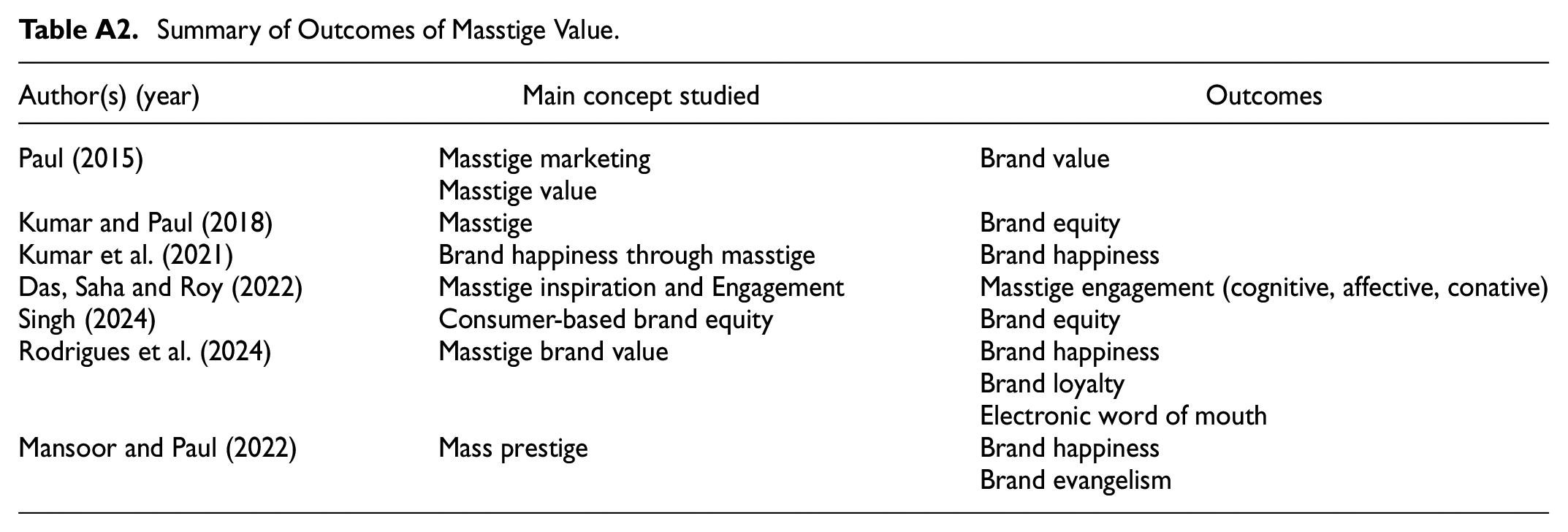
In the past, researchers investigated the outcomes of masstige value including brand value (Paul, 2015), brand equity (Kumar & Paul, 2018), brand happiness (Kumar et al., 2021), masstige engagement (cognitive, affective, conative) (Das et al., 2022), brand equity (Singh, 2024), brand happiness, brand loyalty, and electronic word of mouth (Rodrigues et al., 2024), brand happiness, and brand evangelism (Mansoor & Paul, 2022). Similarly, self-esteem and public display have been identified as outcomes of the tourism luxury experience (Correia et al., 2020). Appendix Table A2 presents the diverse outcomes of masstige value that have been previously explored. However, further research is needed to explore the evolving outcomes of masstige value in luxury branding, including its impact on consumer behavior and long-term sustainability (Purohit & Radia, 2022; Rodrigues et al., 2024).
Consumer Attitude
Consumer attitude refers to an individual’s overall evaluation, perception, or opinion about a particular product, service, brand, or company (Fishbein & Ajzen, 1975), and significantly influences their purchasing decisions and behaviors (Joshi & Garg, 2021; Loureiro et al., 2021). Consumer attitudes are multifaceted, encompassing cognitive, affective, and conative dimensions (Han et al., 2019; Weinlich & Semerádová, 2022). In today’s consumer-driven society, individuals have become increasingly discerning when it comes to their purchasing decisions (De Silva et al., 2020), and they seek products and services that not only meet their functional needs but also fulfill their desire for status, exclusivity, and a sense of luxury (Indrawati et al., 2022). Masstige has emerged as a powerful driver of consumer attitudes, shaping their perceptions, preferences, and purchasing behaviors (Jain, 2024), and represents a delicate balance, where consumers can access aspirational, high-quality offerings at relatively affordable prices (Ho et al., 2023; Rosendo-Rios & Shukla, 2023a). In light of the dearth of research addressing the factors underpinning consumer attitudes (Indrawati et al., 2022), as well as the need for a more comprehensive understanding of consumer attitudes toward the masstige perspective (Bilro et al., 2022; Boisvert et al., 2023; Kim et al., 2019; Paul, 2019; Quamina et al., 2023), alongside the diverse perceived value factors that may exert an influence on consumer attitudes (Miao, 2019), there is a call for further research to bridge these critical gaps.
Consumer Cognitive Attitude
Consumer cognitive attitude refers to the thoughts, beliefs, and perceptions that consumers hold regarding a particular product, brand, or concept (Albertsen et al., 2020; Weinlich & Semerádová, 2022). Factors like branding, marketing communications, and price positioning play significant roles in shaping consumers’ perceptions of masstige value. If consumers hold positive thoughts and beliefs about a product, they are more likely to perceive it as high quality, which contributes to the masstige value of the product (Shahid et al., 2022). When consumers have a positive attitude toward a brand or product, they may view it as exclusive or desirable, thus adding to the masstige value, as it implies a sense of prestige and uniqueness (Soni, 2023). Similarly, when consumers hold positive beliefs and perceptions about a product, they are more likely to view it as aspirational, representing their desired lifestyle or social status (Weinlich & Semerádová, 2022), which contributes to the masstige value, as consumers feel they are getting a high-end experience at a more accessible price point (Correia et al., 2020). To explore the role of consumer cognitive attitude, the following hypothesis was developed:
Consumer Affective Attitude
Consumer affective attitude refers to the emotional or affective evaluation that consumers have toward a brand (Weinlich & Semerádová, 2022). Consumer affective attitude can indeed be considered as an outcome of masstige value, as when consumers have a positive affective attitude toward a product, it can enhance the perception of the product as being prestigious and valuable while still being accessible to the mass market (Goyal, 2021; Han et al., 2019). The emotional connection can be a result of factors like brand image, product design, or overall experience associated with the product (Paul, 2018). A positive affective attitude can lead consumers to perceive a product or brand as prestigious (Chatterjee et al., 2023). They associate positive emotions with the product, seeing it as a symbol of high status, luxury, or exclusivity while maintaining accessibility and affordability (Lee & Ko, 2021). This perception adds to the prestige component of masstige value (Robertson et al., 2022). To understand the influence of consumer affective attitude, the following hypothesis was developed:
Consumer Conative Attitude
Consumer conative attitude refers to the behavioral or action-oriented aspect of consumer attitudes, which reflects a consumer’s inclination or predisposition toward a particular course of action or behavior (Weinlich & Semerádová, 2022). Consumer conative attitude can indeed serve as an outcome of masstige value perception, as consumers with positive conative attitude are more likely to exhibit purchase intentions and engage in repeat purchases (Hall et al., 2022). A positive conative attitude, driven by behavioral intentions, perceived quality and prestige, and social influence, enhances the perception that a product or brand offers a desirable blend of prestige and affordability, thereby reinforcing the concept of masstige value, as consumers believe that the product is worthy of their investment and offers a higher level of value (Robertson et al., 2022; Singh, 2023). The perception of quality and prestige, combined with affordability, creates a sense of exclusivity and value for the consumer (Han & Kim, 2020). Similarly, symbolic meanings are more likely to perceive the product as embodying masstige value because alignment with desirable symbolic meanings at an accessible price point might enhance the perception of masstige value (Amaldoss & Jain, 2005). To investigate the influence of consumer conative attitude, the following hypothesis was developed:
Consumer Loyalty
Consumer loyalty refers to a customer’s willingness and tendency to repeatedly engage with and purchase from a particular brand or company (Jeon et al., 2019), goes beyond mere consumer satisfaction and involves a deep emotional connection and commitment to the brand (Hallikainen et al., 2022). Attitudinal and behavioral loyalty are two types of consumer loyalty that are commonly studied and analyzed in marketing and consumer behavior research (Oliver, 1999; Wang et al., 2021). Masstige value offers consumers a higher level of perceived value compared to regular mass-market products due to superior quality, prestige, and accessible pricing (Singh, 2024), thus fostering a sense of attachment and loyalty toward the brand (Hallikainen et al., 2022), as masstige brands often incorporate elements of exclusivity (Lee & Cho, 2023; Park et al., 2022b). This exclusivity enhances the brand’s appeal and can generate a sense of loyalty among consumers who value being part of an exclusive community. Similarly, satisfied consumers who perceive masstige value are more likely to share their positive experiences with others, leading to positive word-of-mouth recommendations and advocacy (Jeon et al., 2019), which might attract new customers and strengthen the loyalty of existing ones (Hallikainen et al., 2022). Given the dearth of scholarly inquiry into the nuanced distinctions among various consumer segments concerning the efficacy of personalization in shaping both attitudinal and behavioral loyalty (Hallikainen et al., 2022), and examining loyalty in the context of masstige (Joseph et al., 2020; Kumar & Paul, 2018), there is a pressing need for further investigation to unravel the intricacies of how different types of consumers respond to personalized experiences and the subsequent impact on their attitudes and loyalty behaviors.
Consumer Attitudinal Loyalty
Attitudinal loyalty refers to an individual’s emotional attachment to a brand and is influenced by their beliefs, attitudes, and emotions toward the brand (Hallikainen et al., 2022; Wang et al., 2021). It describes the extent to which a customer has a positive emotional connection with a brand and is willing to recommend it to others, even if they are not currently buying from the brand (Guan et al., 2021). A brand that embodies the masstige concept is likely to create a strong emotional connection with consumers, as it provides them with a sense of prestige and luxury (Miao, 2019). This emotional connection can be enhanced by a brand’s messaging, advertising, and overall brand image, which can create a positive perception of the brand in the mind of the consumer (Hall et al., 2022). This, in turn, can lead to a higher level of attitudinal loyalty, as consumers are more likely to feel positive about the brand and want to be associated with it (Han et al., 2019). To explore the role of consumer attitudinal loyalty, the following hypothesis was developed:
Consumer Behavioral Loyalty
Behavioral loyalty refers to an individual’s actual purchasing behavior and is influenced by their past experiences with a brand (Hall et al., 2022), which have made them confident in the quality of the brand and their decision to continue using it. The impact of masstige on behavioral loyalty can be seen in the increased likelihood of consumers to repeat purchases (Jeon et al., 2019). Individuals who have a strong masstige value toward a brand and are emotionally attached to the brand are more likely to continue using the brand even if a cheaper alternative is available (Wang et al., 2021). Consumers are more likely to purchase a masstige brand repeatedly, as they perceive the brand to be of high quality and value for money (Ahn et al., 2015). This repeated purchasing behavior can be driven by the prestige that the brand offers, which can make consumers feel good about themselves and their purchasing decisions (Jebarajakirthy & Das, 2021). Additionally, the affordability of the brand makes it accessible to a wider range of consumers, which can also drive repeat purchasing behavior (Guan et al., 2021). To understand the concept of consumer behavioral loyalty, the following hypothesis was formulated:
Conceptual Model
Current studies on masstige propose several antecedents and outcomes. Most of them can be clustered into two groups, motivation related and self-concept related antecedents, and attitude related and loyalty related outcomes. An overview of the literature is provided in Appendix A. Drawing on the above discussion and subsisting literature, a conceptual model developed for the current study is depicted in Figure 1.

Conceptual model.
Methodology
Sample and Data Collection
A self-administered Google survey was shared among Titan wristwatch Pakistani consumers by targeting brand communities, as masstige brands enable their consumers to participate in an active brand-centered community on social media platforms in which exclusive content, opportunities, and events are shared (Rodrigues et al., 2024). We aimed to go beyond a pure student sample and reach a wider population that has an interest in brands, therefore minimum age limit of the respondents was 21 years grounded on the assumption of adequate purchase power and earlier luxury brands’ experience (Ajitha & Sivakumar, 2019). Data was collected using a non-probability purposive sampling approach, which remained very popular in the field of social sciences, particularly in consumer market research. Middle-income consumers were targeted since masstige brands mostly target this budding consumer class (Das et al., 2022a), as for the prestige mass brands, the utmost respondents sought for the collection of data proposed in existent literature were middle-income customers (Singh, 2024), due to having a potentially greater economic impact (Park et al., 2022b). To qualify respondents as a middle-income class, the current household monthly income is considered between Rs 50,000 and 100,000 (Adil, 2017; Subohi, 2006). To achieve this, a note was included at the beginning of the survey questionnaire, explaining the study’s broader context, the purpose of data collection, and explicitly stating that the data is being collected from middle-income consumers with a monthly income between Rs. 50,000 and 100,000, an approach previously employed to gather data from the target sample (Elbilgahy et al., 2024).
As a product category, we chose the Titan wristwatch which is publicly consumed (Bearden & Etzel, 1982), and is the most appropriate due to the non-gender-specific product category (Kastanakis & Balabanis, 2012; Septianto et al., 2023), familiar to, relevant for, and owned by many consumers. The Titan wristwatch belongs to the masstige luxury category (De Barnier et al., 2022), and lies within the price range for both premium and high-end luxury brands (Kapferer & Laurent, 2016), and researchers have called to prolong the scope to measure the masstige value of Titan wristwatch (Baber et al., 2020). The rationale for selecting the Titan wristwatch is its consideration as a worldly possession which is among the legitimate ways to display prestige and status as consumers are more likely to value publicly consumption of premium brands (Geiger-Oneto et al., 2013), as physical appearance increasingly moves center stage in aesthetic expression (Schultz & Seele, 2022), particularly luxury wristwatch are viewed as a sign of higher rank in prestigious context (Desmichel & Rucker, 2022), and authentic in the sense that they offer something extraordinary, evoke emotions, and are legitimate status symbols (Goldstein & Carpenter, 2022). Additionally, the Titan wristwatch might be a way to position the brand as an accessible and desirable option for individuals seeking a taste of luxury without the exorbitant price tag and serves as an example of how some brands can blend quality, craftsmanship, reputation, and affordability to appeal to a wider range of consumers.
Measurement and Scales
All constructs were measured through well recognized pre-existing scale with few changes made to fit the wordings according to the study’s context. Order bias was contained by counterbalancing the order of measurements of the constructs as well as the position of the criterion and predictor variables were altered (Chang et al., 2010). To reduce method bias, respondents were guaranteed anonymity and were also assured that there was no right or wrong answer. Consumer intrinsic motivation was measured using 04 items, extrinsic motivation using 03 items adapted from Lin et al. (2021), social motivation using 03 items adapted from Hsiao (2020), actual self-concept using 03 items, ideal self-concept using 03 items adapted from Li et al. (2021), masstige value using 03 items adapted from Rodrigues et al. (2024), cognitive attitude using 04 items, affective attitude using 03 items, conative attitude using 04 items adapted from Albertsen et al. (2020), attitudinal loyalty using 03 items adapted from Kharouf et al. (2019), and behavioral loyalty using 03 items adapted from Rathnayake (2021). The survey questionnaire consists of three parts. Part-1 comprises a note elaborating on the objective of the survey, seeking consumers’ consent and ensuring the responses’ anonymity. Part-2 comprises questions regarding respondents’ demographic profiles. Finally, Part-3 comprises 36 items related to the study’s constructs. The items were measured on a “5-Point Likert Scale” with “1” representing “Strongly Disagree” up to “5” representing “Strongly Agree.”
Data Analysis and Results
Reliability and Validity Tests
Model fit was evaluated for confirmatory factor analysis (CFA) to authenticate the measurement (Dash & Paul, 2021), as CFA was considered as an initial step for SEM to assess the measurement model (Hair Jr et al., 2020). Values of skewness and kurtosis were verified within the −2 and +2 acceptable range (Tabachnick & Fidell, 2007). All scales proved to be reliable with Cronbach’s alpha, composite reliability, and standardized item loadings exceeded the recommended threshold values of .7, and average variance extracted above its cutoff values of .5 (Hair Jr et al., 2021; Shi & Maydeu-Olivares, 2020). Results are presented in Table 1. The results of Fornell-Larcker (see Table 2) reflected good discriminant validity for the scales as for every construct, the square root of average variance extracted was observed higher than the shared variance between the latent variables (Fornell & Larcker, 1981), and results of Heterotrait-Monotrait ratio (see Table 3) demonstrated that none of the ratios were above the threshold of 0.85, validating good evidence of discriminant validity (Henseler, Ringle, & Sarstedt, 2015). To evaluate multicollinearity among the constructs, all inner variance inflation factor values were found lower than the recommended threshold (VIF < 3) for all endogenous constructs (Hair & Alamer, 2022; Legate et al., 2023). Results are presented in Table 4.
Construct Reliability and Validity.

Note. CR = Composite Reliability; AVE = Average Variance Extracted.
Fornell-Larcker Criterion.

Note. IM = Intrinsic Motivation; EM = Extrinsic Motivation; SM = Social Motivation; AS = Actual Self-concept; IS = Ideal Self-concept; MV = Masstige Value; CG = Cognitive Attitude; AF = Affective Attitude; CN = Conative Attitude; AL = Attitudinal Loyalty; BL = Behavioral Loyalty.
Heterotrait-Monotrait Ratio.

Note. IM = Intrinsic Motivation; EM = Extrinsic Motivation; SM = Social Motivation; AS = Actual Self-concept; IS = Ideal Self-concept; MV = Masstige Value; CG = Cognitive Attitude; AF = Affective Attitude; CN = Conative Attitude; AL = Attitudinal Loyalty; BL = Behavioral Loyalty.
Collinearity Assessment.

Hypotheses Testing
We conducted a structural equation model by using SmartPLS to assess the relationships among the underlying constructs (Nabi et al., 2022; Ringle & Sarstedt, 2016). The PLS-SEM technique has become ever more popular in a variety of businesses and organizational research (Legate et al., 2023), deemed as superior and preferred approach while estimating mediation and conditional process models (Pesämaa et al., 2021), suitable to assess multiple exogenous and endogenous constructs simultaneously (Zhu et al., 2021), worthy for identifying significant explanators in models (Richter et al., 2022), to evaluate complex interrelationships between indicators and constructs (Becker et al., 2023), and to handle complex theoretical models, non-normal data, attaining statistical power with small sample size and centering on model’s predictive capability (Hair & Alamer, 2022). PLS algorithm and bootstrapping tests (based on 5,000 sub-samples), including coefficient β, the corresponding significance of the effects (t values and ρ values), and conclusions of support for each hypothesis were analyzed (Hair Jr et al., 2017).
The model yielded acceptable results (Figure 2). The relationships were supported at p < .05 confirming our all hypotheses (see Table 5). Overall, our model explained 65% of the variance in masstige value, 46% for cognitive attitude, 43% for affective attitude, 45% for conative attitude, 34% for attitudinal loyalty, and 50% for behavioral loyalty. Interestingly, the results show that intrinsic motivation has the strongest impact on masstige value. Additionally, control variables were assessed for their impact on masstige value; however, none of these variables, gender (β = −.057, ρ < .029), age (β = .035, ρ < .168), and education (β = −.045, ρ < .107) showed a significant effect. Results are demonstrated in Table 5.

Main effect model.
Results of Algorithm and Bootstrapping Tests.
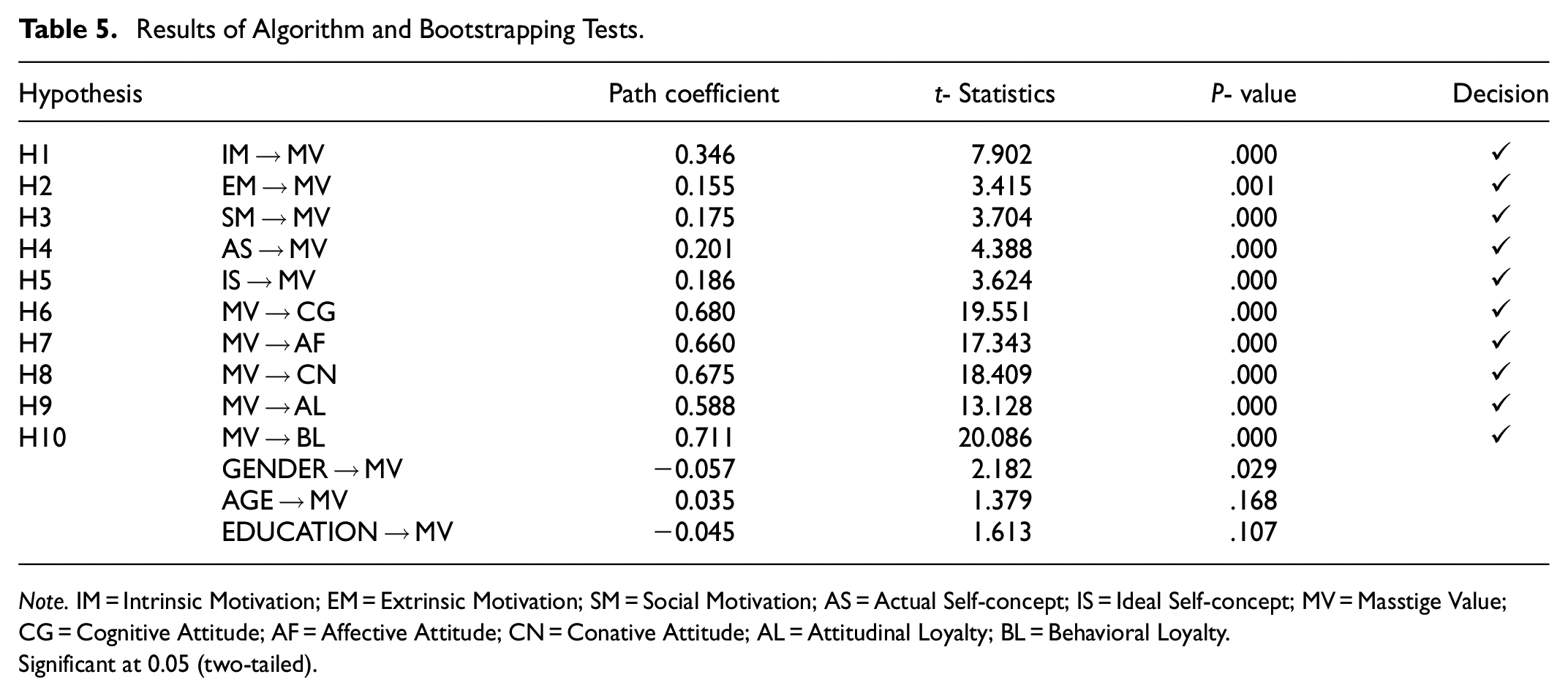
Note. IM = Intrinsic Motivation; EM = Extrinsic Motivation; SM = Social Motivation; AS = Actual Self-concept; IS = Ideal Self-concept; MV = Masstige Value; CG = Cognitive Attitude; AF = Affective Attitude; CN = Conative Attitude; AL = Attitudinal Loyalty; BL = Behavioral Loyalty.
Significant at 0.05 (two-tailed).
As we were also interested in the interrelationships between the various antecedents and outcomes of masstige value, we measured an alternative model without the secondary construct “masstige value.” The main objective was to assess whether the masstige value construct suitably incorporates the five antecedents as well as adds value to explain the five outcome variables.
Second, all five outcome variables have higher R2 values in the alternative model compared to the original research model. Cognitive attitude increased by 12 points (46% → 58%), affective attitude increased by 4 points (43% → 47%), conative attitude increased by 14 points (45% → 59%), attitudinal loyalty increased by 17 points (34%→51%), and behavioral loyalty increased by 17 points (50% → 67% respectively). The total explained variance in the alternative model for the five outcome variables is 64 points higher (218%–282%) compared to the original research model. Figure 3 shows the significant path coefficients and R2 value. This suggests that our original research model is well specified, and “masstige value” is a second-order construct with five first-order formative triggers, namely, intrinsic motivation, extrinsic motivation, social motivation, actual self-concept, and ideal self-concept. Table 6 shows the direct and indirect effects of our models.
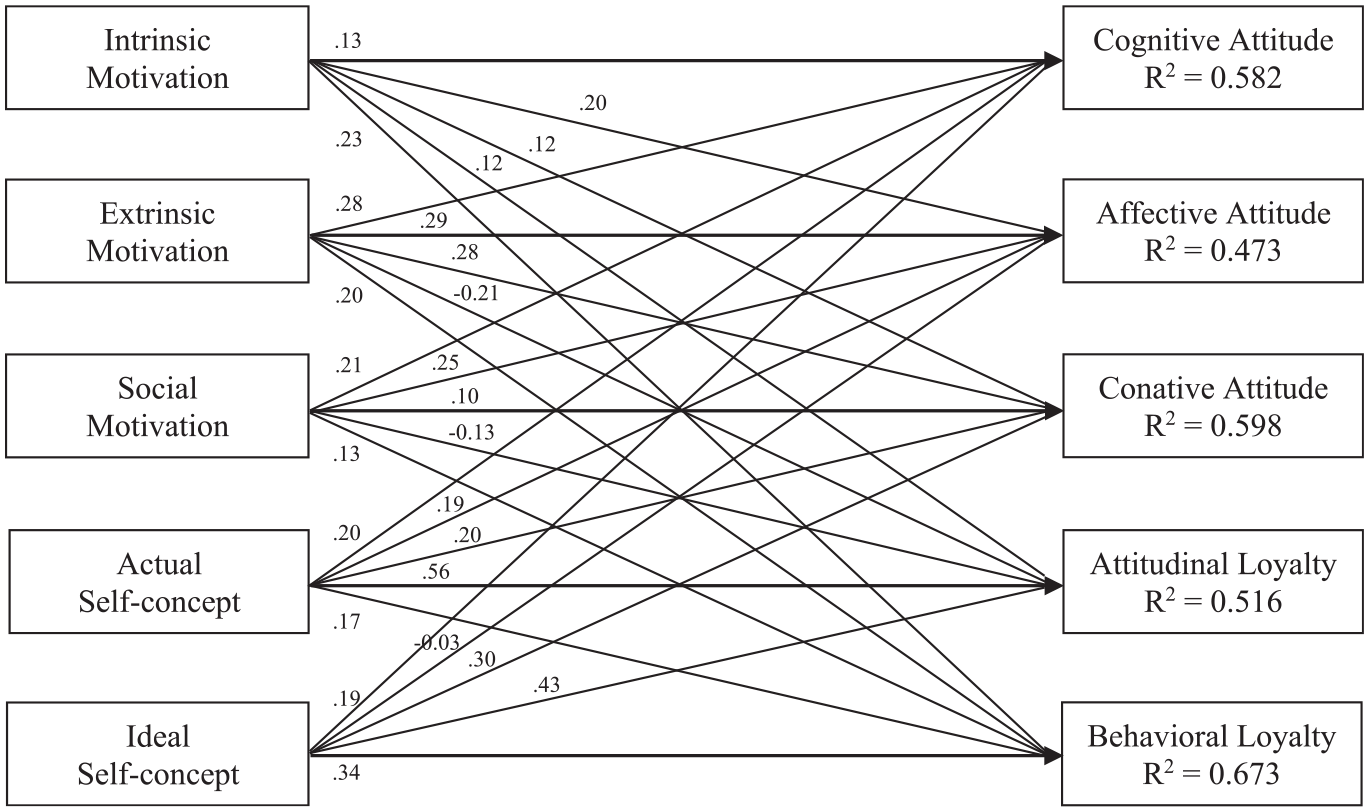
Alternative model with standardized path coefficients.
Direct and Indirect Effects of the Antecedents on the Outcomes of Masstige Value.
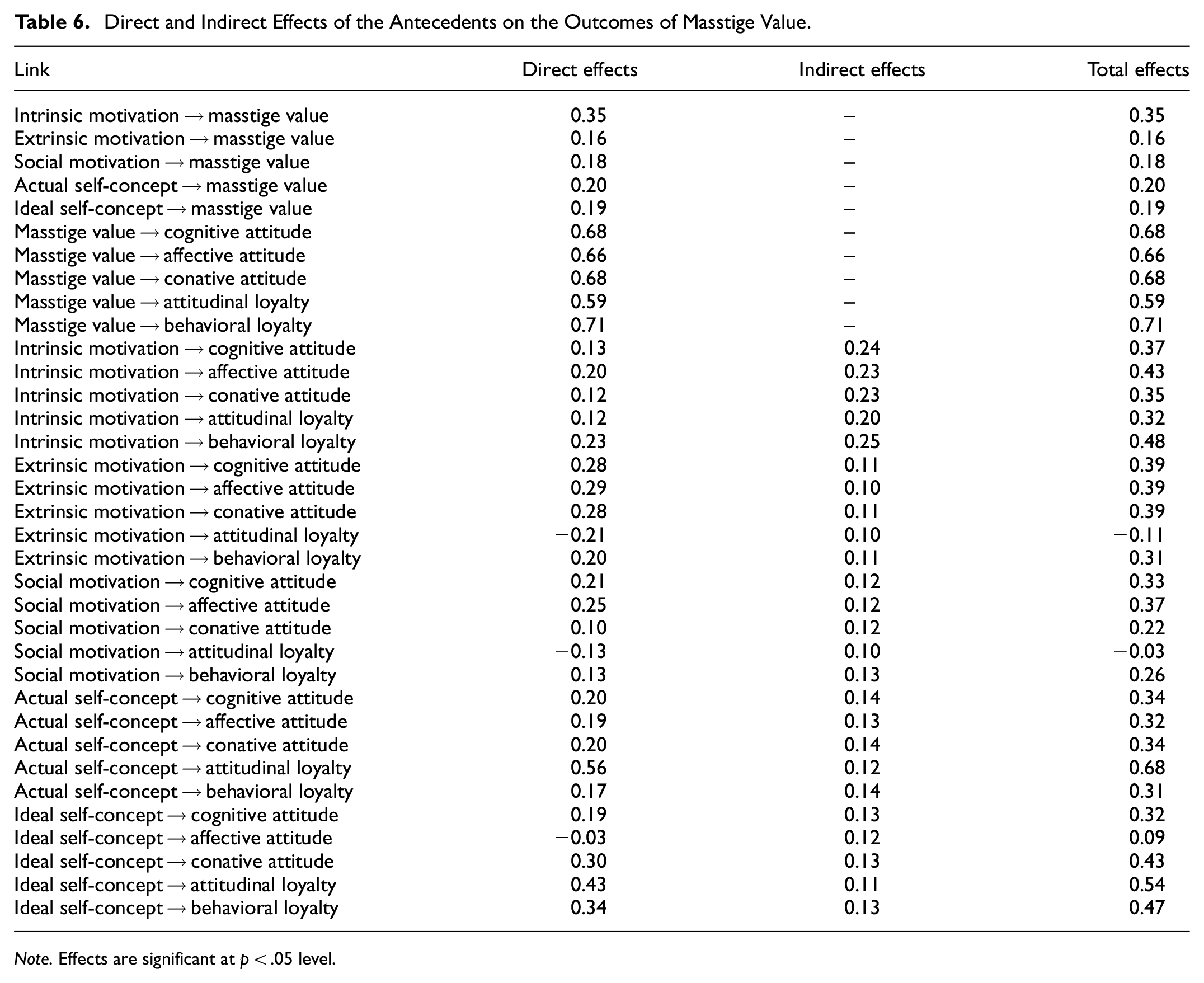
Note. Effects are significant at p < .05 level.
Third, our alternative model revealed, however, some additional findings. It can be stated that cognitive attitude is mainly triggered by extrinsic motivation (β = .28). This suggests that consumers prefer brands that accelerate consumer extrinsic motivation. We also observe that affective attitude is mostly triggered by extrinsic motivation (β = .29). While analysis, conative attitude is mostly triggered by ideal self-concept (β = .30), thus suggesting brands aligned with consumer ideal self-concept are preferred by the prestige-seeking consumers. Similarly, attitudinal loyalty is mostly triggered by actual self-concept (β = .56), demonstrating to focus on the consumer’s actual self-concept. Finally, behavioral loyalty was mainly influenced by ideal self-concept (β = .34), making a sense of alignment between brand image and consumer ideal self-concept.
Conclusions and Discussion
This study complements current literature on the masstige concept in three ways. First, we extend current exploratory and qualitative research by providing a quantitative study of the antecedents and the outcomes of masstige value. Second, we provide a taxonomy of masstige value antecedents and outcomes. Third, we respond to the call for more research on the concept of masstige and particularly antecedents and outcomes of masstige value.
Our literature review shows that masstige value is triggered by two antecedents (motivation related and self-concept related) and leads to two distinctive types of active and passive behavior toward the brand (i.e. attitude related and loyalty related). Our results demonstrate masstige value is triggered by all five antecedents and influences all five outcomes. Our model comparison further reveals that ‘masstige value’ is a secondary construct. Interestingly, intrinsic motivation has the strongest influence on masstige value, followed by actual self-concept, ideal self-concept, social motivation, and extrinsic motivation.
Furthermore, results of the alternative model reveal that cognitive attitude is triggered by all five determinants and strongly influenced by extrinsic motivation, whereas affective attitude is triggered by intrinsic motivation, extrinsic motivation, social motivation, actual self-concept, and strongly influenced by extrinsic motivation. Similarly, conative attitude is triggered by all five determinants and strongly influenced by ideal self-concept. Attitudinal loyalty is triggered by intrinsic motivation, actual self-concept, ideal self-concept, and is mainly influenced by actual self-concept, whereas behavioral loyalty is triggered by all five determinants and is mainly influenced by the ideal self-concept. It should be noted that out of five outcomes of masstige value, two are strongly triggered by extrinsic motivation and two are strongly influenced by ideal self-concept. Thus, market research is advised to closely monitor target consumers’ needs and wants by focusing on extrinsic motivation and ideal self-concept to attract status and prestige-seeking consumers by augmenting the masstige value of the brands.
Theoretical Implications
Several theoretical implications are offered in the current study. First, the current research is one of pioneering research exploring the antecedents (intrinsic motivation, extrinsic motivation, social motivations, actual self-concept, and ideal self-concept) and the outcomes (cognitive attitude, affective attitude, conative attitude, attitudinal loyalty, and behavioral loyalty) of masstige value in the context of masstige brand. Although masstige value measured through MMSS and MMI in several studies (Baber et al., 2020; Das et al., 2022a; Das, Saha, & Roy, 2022; Kumar et al., 2021; Kumar & Paul, 2018; Mansoor & Paul, 2022; Paul, 2015, 2018, 2019; Rodrigues et al., 2024; Singh, 2024); however, research on understanding antecedents and outcomes of masstige value is underexplored.
Second, the current research sheds light on the effects of masstige value on consumer attitude (cognitive, affective, conative), and consumer loyalty (attitudinal, behavioral). By exploring those variables as desired outcomes, our study has provided deeper insights into an untapped area of research focusing on how consumer attitude and consumer loyalty are impacted by masstige value. Third, building on masstige literature, this research provides a better understanding of the masstige concept. Consistent with previous research, the findings of this research confirm that masstige value has a positive impact on consumer attitude and consumer loyalty (Rodrigues et al., 2024).
Fourth, Shah and Shah (2022) suggest that consumer motivation, consumer self-concept, and consumer attitude are multidimensional constructs and that several distinct but related dimensions in the masstige phenomenon should be further explored. This study has used three dimensions of consumer motivations (intrinsic, extrinsic, and social), two dimensions of consumer self-concept (actual and ideal), three dimensions of consumer attitude (cognitive, affective, and conative), and two dimensions of consumer loyalty (attitudinal and behavioral). As the masstige value is enhanced, other desired outcomes such as consumer attitude, and consumer loyalty will improve. More specifically, it is found that consumer motivation and consumer self-concept explain 65% variance in masstige value (R2 = 0.656), lending support to the notion that consumer motivation and consumer self-concept play an important role in improving masstige value in the context of masstige brands.
Finally, the proposed model significantly contributes to the tourism literature and knowledge by introducing a comprehensive framework that explores the intricate relationships between consumer intrinsic, extrinsic, and social motivations, and the dynamic interplay between consumer actual-self and ideal-self as antecedents of masstige value in the context of tourism. By synthesizing these diverse elements, the model enriches our understanding of the nuanced factors shaping consumers’ perceptions of masstige value in tourism experiences. Moreover, the model extends beyond traditional perspectives by delving into the multifaceted dimensions of consumer attitudes, distinguishing between cognitive, affective, and conative attitudes. This nuanced approach enables a more granular examination of the outcomes of masstige value in the form of consumer attitudinal and behavioral loyalty. The theoretical contributions of this model lie in its ability to unravel the complexity of consumer motivations and attitudes in the realm of tourism, providing a holistic framework that advances theoretical insights for industry stakeholders.
Managerial Implications
Managers can enhance the masstige value of their products through a tri-dimension strategy, harnessing intrinsic, extrinsic, and social motivations. Focusing on designing and developing inherently enjoyable, engaging, and personally fulfilling products taps into consumers’ intrinsic motivation, positioning their brand as prestigious and accessible (Lin et al., 2021; Park et al., 2022a). They can also highlight the intrinsic rewards tied to using a product or service, such as self-expression and a sense of accomplishment. This approach can be complemented by utilizing extrinsic motivators like strategic pricing, limited editions, and celebrity endorsements to create a perception of exclusivity and higher value (Rodrigues et al., 2024). Moreover, managers can identify distinct consumer segments based on their desire for social recognition, status, and belongingness. This information allows for targeted marketing efforts and the development of masstige products that align with the social motivations of specific consumer groups (Tran et al., 2022). Managers should develop strategies to create communities and platforms that allow consumers to connect with like-minded individuals who share similar social motivations. By fostering a sense of belongingness and facilitating social interactions around the masstige brand, managers can strengthen customer relationships and encourage long-term loyalty (Tran et al., 2021). This tri-pronged strategy, blending intrinsic, extrinsic, and social motivation, can effectively boost the masstige value of their offerings, creating a powerful brand image.
Understanding consumers’ actual and ideal self-concepts is crucial for effective marketing strategies. By aligning masstige offerings with consumers’ authentic selves, managers can create resonant messaging and experiences (Schivinski et al., 2022). This involves highlighting unique product features, craftsmanship, or exclusivity to attract consumers seeking accessibility and prestige (Ho et al., 2023). To achieve this alignment, managers should conduct consumer research to identify the attributes, values, and aspirations associated with consumers’ authentic selves. By meeting these desires, companies can cultivate a loyal customer base that sees the brand as an extension of their authentic selves, providing a sense of belonging and recognition (Wang et al., 2021). This not only enhances perceived value but also sets the brand apart from competitors.
Effective marketing communications, including advertising, social media campaigns, influencer marketing, and other promotional activities, are essential in shaping consumers’ cognitive attitudes toward masstige products (Park et al., 2022a; Rodrigues et al., 2024). To reinforce cognitive attitudes, managers should focus on providing an exceptional customer experience. When a brand successfully establishes itself as a masstige brand, it can enhance its image and create positive affective attitudes among consumers, leading to increased loyalty, positive word-of-mouth, and repeat purchases. Masstige value fosters emotional connections by providing exclusivity, luxury, and prestige at an affordable price, tapping into consumers’ desires for status and self-expression (Ho et al., 2023). Emphasizing the emotional and aspirational aspects, along with affordability, deepens affective attitudes and strengthens brand engagement. Balancing prestige and mass appeal in products, pricing, branding, communication, distribution, and customer experience is crucial. Managers should develop a strong brand identity conveying prestige, quality, and aspiration while also highlighting mass appeal and affordability. Providing an exceptional customer experience is vital to reinforce the conative attitude of consumers by offering excellent customer service, ensuring product availability, and providing personalized experiences.
To maintain consumer attitudinal loyalty, businesses need to invest in product development and ensure consistent quality, offering well-designed, premium-quality products at accessible prices. Effective communication can enhance the perceived value and foster consumer loyalty (Rathnayake, 2021). Creating positive customer experiences is crucial to nurturing attitudinal loyalty by providing exceptional service, personalized experiences, and engaging with customers through various touch points, including social media interactions, loyalty programs, or exclusive events, making customers feel valued and connected to the brand. Managers should focus on delivering superior service, personalized interactions, and prompt resolution of customer issues to achieve consumer loyalty (Jeon et al., 2019). Positive experiences contribute to customers’ emotional attachment to the brand and increase the likelihood of repeat purchases and advocacy, emphasizing the importance of building strong relationships with consumers in driving behavioral loyalty.
Limitation and Future Research
While masstige has demonstrated its potential to bridge the gap between luxury and affordability, it is not without its limitations. One of the key limitations of masstige is the challenge of maintaining a clear brand identity. Striking a balance between affordability and exclusivity can be difficult, as it may lead to a loss of uniqueness and dilution of brand value (Bilro et al., 2022). To address this, future research should explore innovative branding strategies that can help masstige brands carve out a distinct position in the market while still appealing to a broad consumer base. Second, masstige purchase intention is significantly influenced by symbolic motivations; therefore, future research could explore dimensions like prestige sensitivity, emotional appeal, and symbolic value perception, along with the roles of brand personality and consumer personality traits, to better understand consumer behavior within masstige branding (Khan et al., 2024; Mansoor et al., 2024). Third, future research could examine how masstige value shapes consumer preferences and motivations in the tourism sector, enhancing destination appeal and competitiveness in emerging markets. Lastly, future researchers might replicate the current study’s model by introducing a mediator or moderator to enhance its robustness and applicability.
Footnotes
Appendix A
Summary of Outcomes of Masstige Value.
| Author(s) (year) | Main concept studied | Outcomes |
|---|---|---|
| Paul (2015) | Masstige marketing Masstige value |
Brand value |
| Kumar and Paul (2018) | Masstige | Brand equity |
| Kumar et al. (2021) | Brand happiness through masstige | Brand happiness |
| Das, Saha and Roy (2022) | Masstige inspiration and Engagement | Masstige engagement (cognitive, affective, conative) |
| Singh (2024) | Consumer-based brand equity | Brand equity |
| Rodrigues et al. (2024) | Masstige brand value | Brand happiness Brand loyalty Electronic word of mouth |
| Mansoor and Paul (2022) | Mass prestige | Brand happiness Brand evangelism |
Acknowledgements
The authors sincerely thank all individuals and organizations who contributed to this research. We extend our gratitude to the participants for their valuable time and insights, which formed the cornerstone of this study. Special appreciation goes to our academic peers and colleagues for their constructive feedback and guidance throughout the research process. Additionally, we acknowledge the support provided by Faculty of Business Administration, University of Mianwali, which was instrumental in facilitating this work. Finally, the authors are grateful for the editorial team and reviewers at SAGE Open for their thoughtful comments and suggestions that significantly enhanced the quality of this manuscript.
Declaration of Conflicting Interests
The author(s) declared no potential conflicts of interest with respect to the research, authorship, and/or publication of this article.
Funding
The author(s) received no financial support for the research, authorship, and/or publication of this article.

Data Availability Statement
The data supporting this study’s findings are available from the corresponding author upon reasonable request.