




Abstract
On-the-job training (OJT) programs at private universities play an essential role in providing students with real-world experiences, equipping them with the skills and knowledge needed for future career. Researching the factors that affect the effectiveness of OJT is extremely necessary to complete and improve the quality of this training program. The researchers conducted a quantitative study using nonprobability sampling to collect data from 335 people via the Google platform. After having data from respondents, the researcher coded the data in Microsoft Excel and analyze it in SPSS and Amos such as descriptive statistics, Cronbach’s Alpha, Exploratory Factor Analysis (EFA), structural equation modelling (SEM). The study found that OJT is affected by factors such as job characteristics, work environment, contextual factors, and university support. Besides, OJT affects various factors such as job satisfaction, career development, job involvement, and motivation to learn.
Introduction
One of the things that causes the unemployment rate to rise is an overreliance on theory at the expense of practice and real understanding. Young people without jobs currently face a lot of skill mismatch (Asonitou, 2015). Graduates with the following abilities are highly valued by employers: creativity, innovation, critical synthesis and problem-solving skills, reasoning and analysis skills, creativity, and adaptability to change interpersonal skills and effective interpersonal skills (Oliver et al., 2011). An internship is a learning process that aims to enhance students’ skills outside of the current educational system in a brief amount of time using methodologies that prioritize practice over theory (D’Abate et al., 2009). An internship is a kind of educational program that provides students with job experience (McMahon & Quinn, 1995). To do this, they have to be off campus for a predetermined period, during which they are constantly watched over by qualified personnel. Due to the numerous benefits, they offer students, including hands-on work experience, workplace training, and the opportunity to network with peers from different universities and industries, are becoming increasingly valuable in the field of education (Baert et al., 2021). Students who take part in internships are more adept at applying the theories and concepts they have acquired in the classroom to real-world work situations, as well as in absorbing and understanding what is taught in class. The management of the internship program by the university and the industry reflects well on the management of the students. Despite the increased popularity of internships, surprisingly little research has investigated how satisfied students are in Vietnam right now. So, the topic “On the job training: Enhance experience and increase success for the private University student community,” is implemented. Student satisfaction with internship programs allows universities and businesses to identify and improve them.
Review of the Literature
On-The-Job Training (OJT)
On-the-job training (OJT) is a complex concept with many facets. Depending on how different firms are organized, OJT may involve preparatory activities, actual work tasks, concentrated skill application, individualized study, experiential learning, and distinct roles for supervisors (Baert et al., 2021). It is also seen as a training program run by businesses for students, to improve their quality, help them comprehend the workplace, and provide them with academic knowledge to satisfy the needs of temporary workers (Kurnianingsih, 2022). One unique aspect of private University is its On-the-Job Training (OJT) program, which demonstrates the school’s strong dedication to incorporating real-world work-based experiences into its curricula. First private university in Vietnam, FPT University prioritizes work-based training with an obligatory on-the-job training component as part of its sandwich curriculum concept (Nguyen et al., 2020). One notable feature of FPT University’s OJT is that upon completion of fundamental courses, all junior students are required to work in actual business settings for 4 to 8 months. In addition to honing practical skills, this intensive program aims to adapt students to the industry and identify areas for additional growth when they return to academic study (Nguyen et al., 2020).
Job Characteristics
Numerous factors are included in the job characteristics, which could impact how satisfied students are with their internship experience. The range of abilities and activities that students practice is known as the variety of skills. The results of D’Abate et al. (2009) indicate that one of the elements that has the greatest impact on trainee satisfaction is the nature of the job. According to Lord et al. (2011) trainees report higher levels of satisfaction when their abilities align with employment requirements. The term “job characteristics” refers to elements of a job that affect white-collar workers’ job satisfaction, stress levels, and depressive disorders (Cangialosi et al., 2023). These elements include autonomy, skill diversity, task identity, task relevance, and feedback. According to the Job Characteristics Model (JCM), “job characteristics” refers to the psychological and physiological elements of a work that affect performance, motivation, and satisfaction (Kim et al., 2020).
Work Environment
D’Abate et al. (2009) state that the internship program can be accurately predicted by looking at the characteristics of the broader organizational environment. When forecasting intern satisfaction during their internship, factors unique to the larger work environment must be carefully taken into account (Church, 1993). With backing from Narayanan et al. (2010) job security, peers and colleagues, supervisory support, and compensation were offered as the factors that evaluate an individual’s employment happiness. The physical and non-physical aspects of the workplace have a big impact on workers’ productivity and well-being. It is acknowledged as being essential to accomplishing productive job results and encouraging sustainability in businesses (Ismoyo, 2023). Workplace culture and interpersonal interactions, for example, are examples of non-physical elements that significantly influence employee experiences and performance (Nada, 2022). In line with global sustainability goals, a sustainable work environment considers environmental effects in addition to employee comfort. Encouraging fair working conditions and dignity in the workplace requires the use of sustainable practices (Lindeberg et al., 2022).
Contextual Factors
Beebe et al. (2009) add that historical, cultural, political, social, and personal factors are also at play. D’Abate et al. (2009) observed a number of contextual factors that can be important to interns. Although having to drive a significant distance to work lowers internship satisfaction, having flexible working hours boosts it, according to Rothman (2003). Furthermore, research indicates that interns who receive payment for their internships tend to have happier, more productive, and successful internships (Beebe et al., 2009). The implementation effectiveness of quality improvement projects is significantly influenced by contextual variables, including organizational capability and incentives (Cook et al., 2023). Contextual factors are elements that can moderate or mediate treatment effects, according to a consensus definition that was developed through a multi-stage Nominal Group Technique (Cope et al., 2022). These elements are categorized into three primary domains: an overall definition, qualifiers that exemplify key areas, and their impact on clinical outcomes (Jung & Jazizadeh, 2020).
University Support
For every student, the school’s evaluation and assistance are crucial since they have a direct impact on the success of their internship and their ability to work for that company (Shoenfelt et al., 2013). However, students must work very hard on their assignments to get decent grades. Because it presents many hurdles for students, but is still within their reach so that they can be successful and more advanced, the assistance provided by school teachers in helping students actively arrange their internships is particularly notable (Wan et al., 2013). A specific illustration of the outcomes of students receiving assistance from their school: students who receive sufficient support from their school have better training outcomes than students who receive insufficient supervision from the school, and their level of satisfaction with the school has considerably decreased (Anjum et al., 2021). Many services are included in university support, all of which aim to improve the success and well-being of students as they engage in their internships (Johnson et al., 2022; Tashcheva et al., 2022). In addition to academic support, this support also includes psychological and social support, meeting the various needs of students (Arpentieva et al., 2023). Academic support programs are becoming increasingly important, especially for students who have difficulty finding an internship and the school will support them in finding a place where they can work (Granero-Gallegos et al., 2023). In addition, psychological support services are essential during the internship to treat mental health problems that students encounter under the pressure of work (Tashcheva et al., 2024).
Job Satisfaction
Job satisfaction is a crucial aspect of organizational behavior, reflecting employees’ feelings toward their work (Spector, 2022). The idea of job satisfaction is complex and includes attitudes and sentiments that workers have about their jobs. It’s defined as the degree to which a worker’s expectations and real experiences which include both good and negative feelings align with their work environment (Specchia et al., 2021). Recent research highlights the reality that intrinsic elements like interpersonal interactions, work atmosphere, and personal fulfillment are just as important to job satisfaction as monetary pay (Loan, 2020). Even while job satisfaction is typically seen favorably, it is important to understand that, depending on personal circumstances and workplace dynamics, it can vary greatly between individuals (Fütterer et al., 2023). Stress and prejudice are two examples of factors that can have a detrimental influence on job satisfaction, underscoring the necessity for businesses to provide a supportive work environment (Elsahoryi et al., 2022).
Career Development
Career development is a key element in organizational strategy, focusing on enhancing employees’ growth and advancement opportunities within a company (Baruch, 2004; Hall, 2012). It consists of deliberate learning experiences and structured activities that boost an individual’s career path (Atanasovski et al., 2018). Effective career development strategically aligns personal ambitions with organizational objectives, facilitating mutual advancement (Pham et al., 2022). It requires ongoing learning and skill enhancement, crucial for keeping up with changing job demands and market trends (Pham et al., 2022). Additionally, career development is seen as an interactive process that promotes the development of an individual’s internal career identity and enhances their external career impact (Hoekstra, 2011). There is a growing recognition that career development is a continuous process that spans many phases of a person’s professional path and is impacted by organizational, societal, and personal variables (Kettunen, 2023). It’s an ongoing process where people have to actively manage their careers and accept accountability for their development and achievement (Permana et al., 2021). Efficient career development tactics harmonize personal ambitions with company objectives, cultivating a proficient labor force (Kettunen, 2023).
Job Involvement
Job involvement is essentially how deeply an individual connects with their work, viewing their role as a core part of who they are and how they find life satisfaction (Kanungo, 1982). Employees who are highly involved in their jobs typically show great enthusiasm and a strong commitment to excelling in their roles, which positively affects both their productivity and overall job satisfaction (Roodt, 2004). Such employees often feel competent and successful, deriving a strong sense of fulfilment and engagement from their daily tasks (Lodahl & Kejnar, 1965). An growing number of people are realizing that job engagement is a complex concept that includes both emotional commitment to work tasks and psychological connection with one’s job (Hngoi et al., 2023). According to recent research, job engagement is the extent to which people are emotionally and mentally immersed in their work, impacted by organizational settings, career variables, and personal beliefs (Azila-Gbettor et al., 2022; Gil et al., 2023). Work engagement affects people’s stress levels and job happiness since it shows how they relate with their roles (Ćulibrk et al., 2018).
Motivate to Learn (ML)
Recent insights into learning motivation highlight its critical role in student engagement and performance. Musina (2023) identifies distinct motivational and personality traits between highly motivated and less motivated students. Espinosa Mendoza and Pérez Pérez (2023) emphasize the significant impact of motivational sources on academic performance and content interest. Alina (2022) explores factors influencing motivation such as study habits and problem-solving strategies. Additionally, Saleh et al. (2023) points out that motivation is derived from intrinsic factors such as attitudes, talents, and interests, as well as extrinsic factors such as the learning environment and teaching methods (Figure 1). Motivation for learning can be intrinsic, originating from within the individual, or extrinsic, influenced by external factors (Alina, 2022).
H1: There is a positive relationship between job characteristics and their on-the-job training time.
H2: There is a positive relationship between the work environment and their training time on the job.
H3: There is a positive relationship between contextual factors and their on-the-job training time.
H4: There is a positive relationship between university support and their on-the-job training time.
H5: There is a positive relationship between on-the-job training time and job satisfaction.
H6: There is a positive relationship between training time on the job and your career development.
H7: There is a positive relationship between their training time on the job and their involvement on the job.
H8: There is a positive relationship between their training time on the job and motivation for learning.
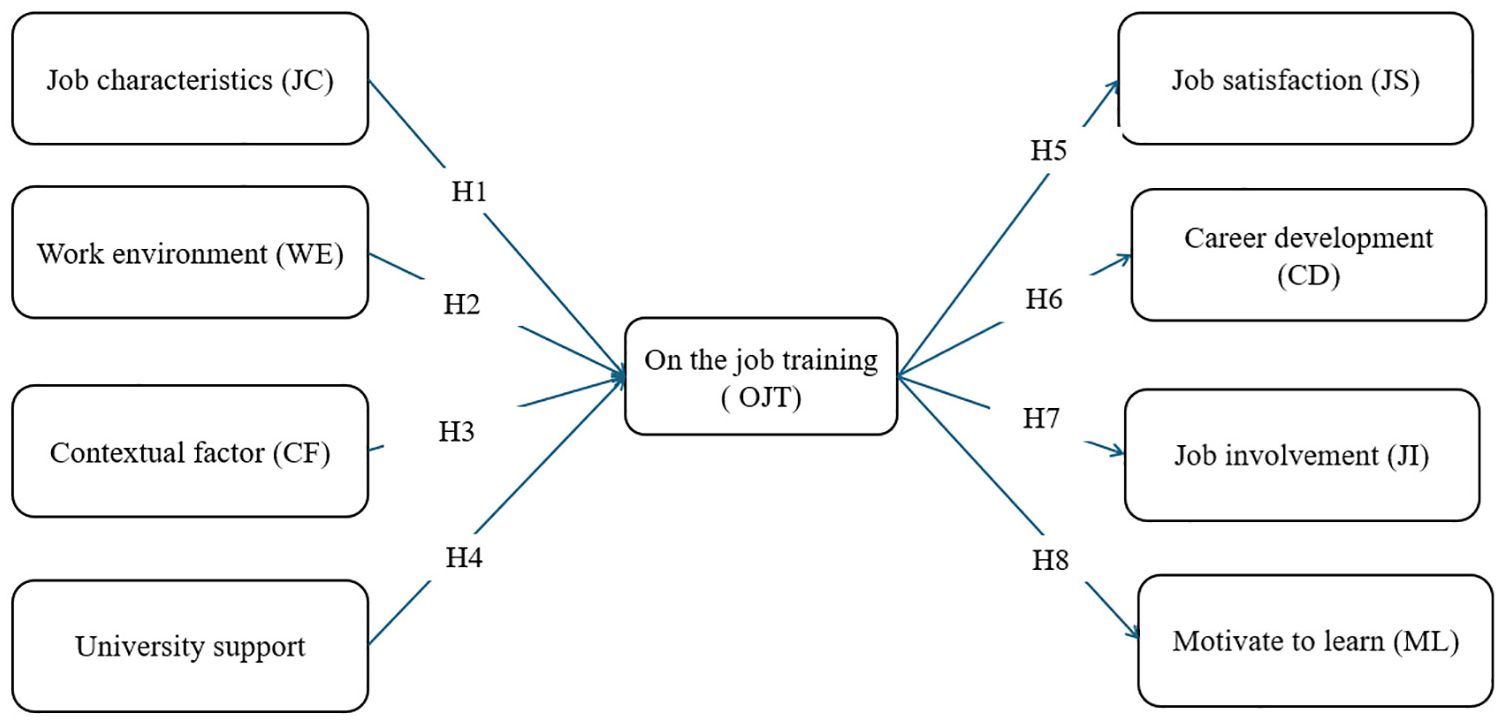
The model of research.
Methodology of Research
Sample Size
Research to identify subjects and target students at a private university in Vietnam. Although the number of students at private universities is quite large, to meet the set criteria and facilitate the research process, the researchers identified and selected past and present students to participate in the OJT program at businesses as the main research object.
To use the EFA research method, the minimum sample size needed is 50, the best sample size is 100. A ratio of 5:1 or 10:1 observations per factor variable ensured reliability with Minimum sample size for research (Hair et al., 2014).
The study has a total of 50 questions measured using a 5-level Likert scale, corresponding to 50 observed variables belonging to different factors. According to Nguyễn Dinh Tho (2013), the optimal sample size for research is N ≥ 5 × m + 50, the minimum sample size is N ≥ 5 × m, in which N is the number of samples to be collected and m is the total variable observed. Therefore, the minimum sample size that researchers need to collect is 5 × 50 = 250 observations.
After collecting surveys from students at a private university, we received more than 400 responses. Through the selection and evaluation process, 335 responses matched the given criteria and were ready to perform data analysis.
Sampling Methods
The researchers chose convenience sampling methods based on convenience, accessibility, and contact with high targets. The group surveyed friends they knew, went to schools, and asked students’ classes to survey. All subjects who participate in the survey are voluntary. The benefit of this sampling method is that it saves researchers a lot of time, money, and effort while ensuring the quality of research results. .
After collecting more than 400 survey samples from students at private University in Can Tho City, researchers processed the data and screened to eliminate responses that did not match the original intention. The remaining results were 335 valid samples, representing 84% of the total number of samples received and ensuring quality for future research steps.
Data Analysis Method
The first goal is to build research from theoretical models and empirical research. Several basic methods were used to test and evaluate the study scale set, including descriptive statistics, Cronbach’s Alpha reliability testing, and exploratory factor analysis. This work helps researchers measure the impact of several key factors on businesses’ OJT programs, as well as the influence of OJT programs on students’ work processes and experiences while studying back to school.
Second goal, researchers use methods such as Cronbach’s Alpha reliability test, EFA exploratory factor analysis, linear structural model to evaluate the correlation between groups of factors, independent sample T—Two-way ANOVA test and validation. The above work aims to evaluate the suitability of the model. Inappropriate variables removed, avoiding negative effects from these unnecessary factors.
Third, the researcher used the above analysis results as a basis to make necessary recommendations for administrators to improve and enhance the quality of the OJT program, thereby creating conditions for students to have good experiences when interning at businesses.
The Need for Research
The private University student body should see this research immediately because of the university commitment to practice-oriented training. For this orientation, the OJT training paradigm is appropriate as it enables students to put their knowledge and learning skills into practice. To increase their competitiveness in the job market and gain more real-world experience, a large number of students at private University wish to participate in OJT. Companies need to fill positions with experienced private University students, and OJT helps students gain real-world experience, which satisfies the needs of hiring managers.
The importance of this research is demonstrated by its evaluation of the impact of on-the-job training (OJT) on students at private University’s work environment, engagement, learning motivation, career growth, and job satisfaction. Determine what aspects of the OJT program, the corporate environment, and the personal traits of the students all have an impact on how effective the program is. Provide private University students with efficient results from the OJT model outcomes that meet their demands as well as the needs of businesses and the university.
Feasibility of Research
Research Questions
How do students at a private university evaluate their internship experience?
What factors influence a student’s experience of their OJT period?
Are there suggestions to enhance your experience with the internship program?
Research Objective
General Objective
Identify and better understand the impact of OJT on student job satisfaction and prepare to work.
Specific Objectives
Identify the factors that impact OJT.
Identify factors that affect the effectiveness of the students’ OJT process of students.
Provide reference materials for management departments to have effective strategies to improve student satisfaction during OJT.
Results
Profiles of Respondents
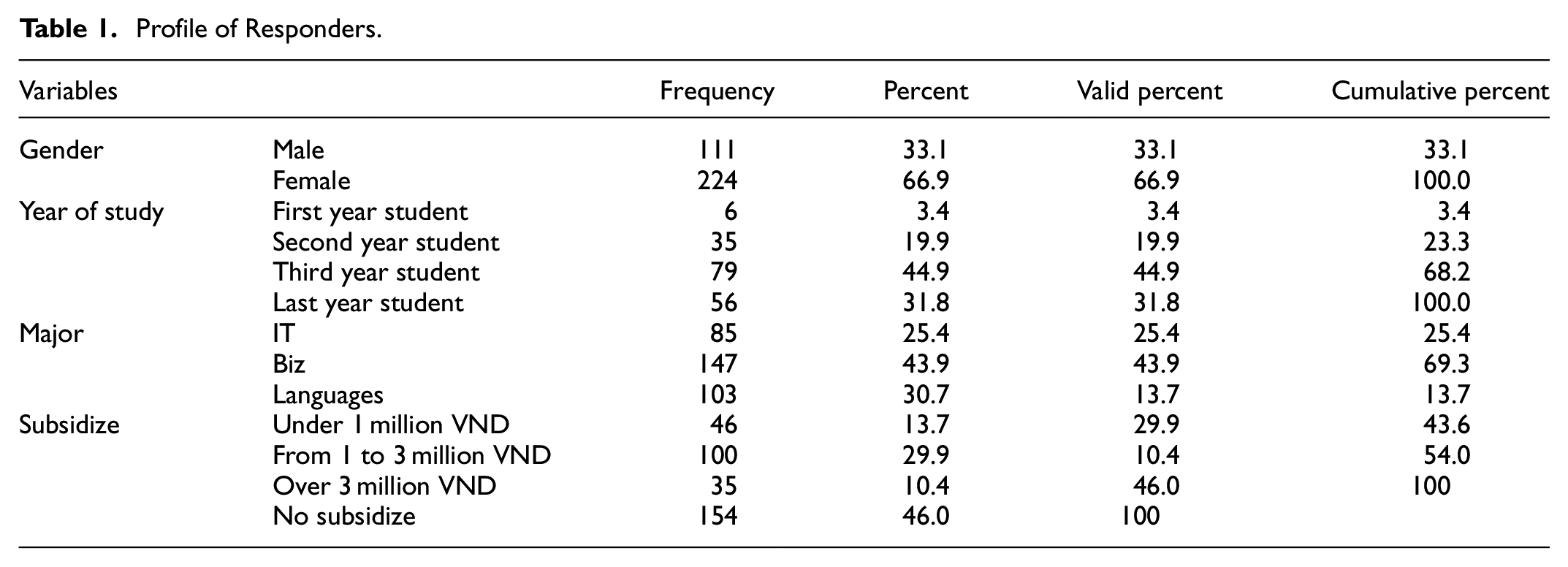
As Table 1 mentioned, in this study, involving 335 participants with no missing data, a distinct variation was observed between different data groups. Specifically, descriptive statistics on gender indicated a higher female representation (66.9%) compared to males (33.1%). Regarding the majors, Business Economics constituted the largest group with 43.9% of the participants, followed by Language (30.7%) and Information Technology (25.4%). Pertinent to financial support, it is noteworthy that 46% of the participants did not receive any form of subsidy, while 29.9% were subsidized between 1 and 3 million VND, and a mere 10.4% received more than 3 million VND. These figures not only provide a comprehensive overview of the surveyed group’s structure but also potentially facilitate a deeper understanding of the amount of money that businesses pay for student internships.
Profile of Responders.
Two-Way ANOVA
The results in Table 2 show that Levenes’s test Sig value in the Based on Mean row is .331 > .05, concluding that the error variance of the value groups is equal, the test continued in the Test of Between-subjects effects.
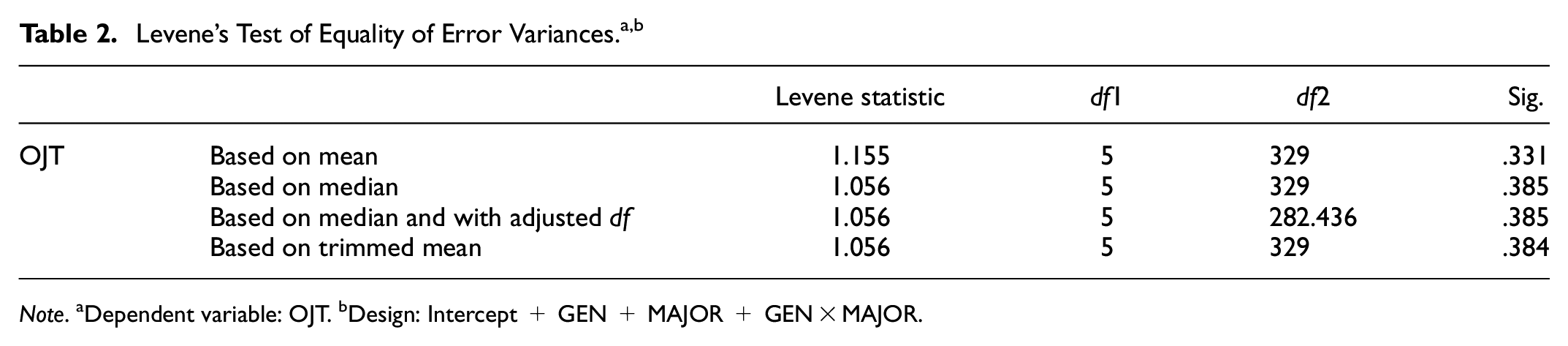
Note. aDependent variable: OJT. bDesign: Intercept + GEN + MAJOR + GEN × MAJOR.
In Table 3, an analysis of the significance of the F test reveals important insights. The significance index for the gender variable stands at .954, which is above the conventional alpha cut-off point of .05, indicating that there is no statistically significant gender disparity in On-the-Job Training experiences. Contrastingly, the Major variable has a significance index of .041, falling below the .05 threshold, thus establishing a statistically significant variation in OJT programs across different fields of study, specifically Information Technology, Economics and Languages. Additionally, the interaction term (GENDER × MAJOR) carries a significance index of .012, which is also below the alpha level of .05, suggesting a notable interaction effect where the OJT experiences differ among students of various majors when considering gender.
Tests of Between-Subjects Effects.
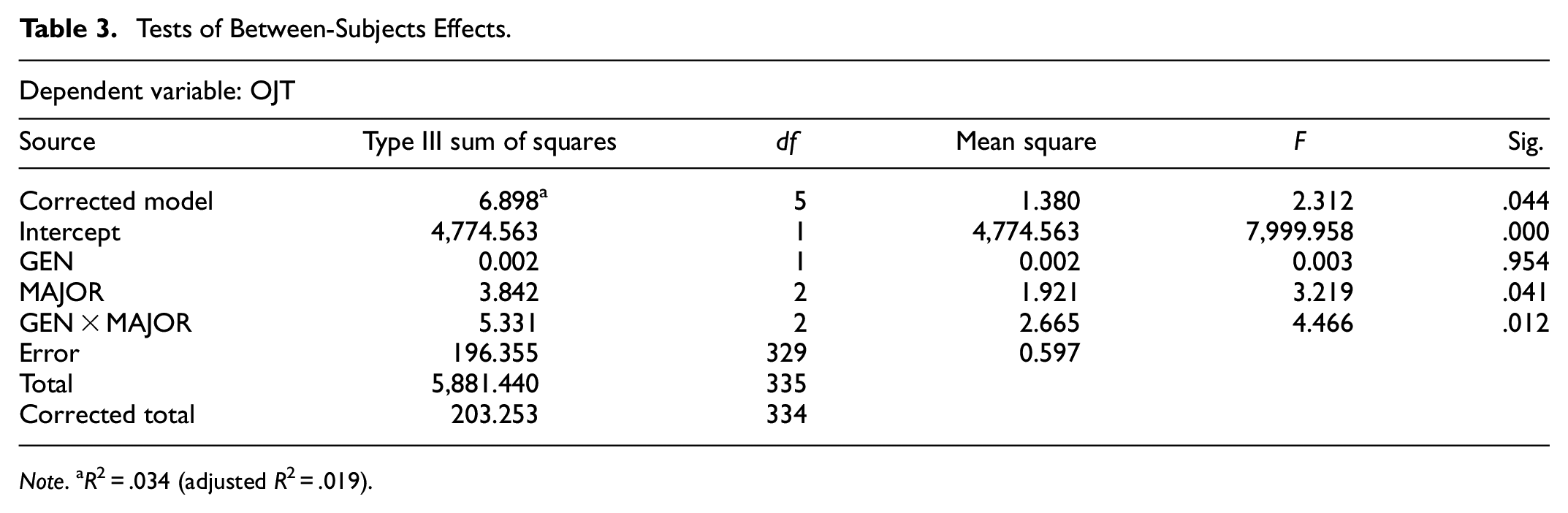
Note. aR2 = .034 (adjusted R2 = .019).
Cronbach Alpha
Table 4 showed that Cronbach’s alpha was used to evaluate the internal consistency of the scales used to measure various constructs relevant to research on the topic “On the job training: Enhance the experience and increase success for the private University student community.” According to the standards proposed by George and Mallery (2020), Cronbach’s Alpha values must exceed the .7 threshold and the correct item-total correlation values must be greater than .3 to verify the reliability of a scale. The scales assessed in this study yielded Cronbach’s Alpha coefficients as follows: Job characteristics (JC) at .883, work environment (WE) at .896, contextual factors (CF) at .863, university support (US) at .934, job satisfaction (JS) at .896, career development (CD) at .861, job involvement (JI) at .890, organizational commitment (OC) at .948, learning motivation (LM) at .916, and On-the-job training (OJT) at .913. Reviewing the corrected item-total correlations, the majority of items exhibited correlation coefficients above the .3 criterion, ensuring the constructs reflect high internal consistency and substantiating the reliability of the scales. This underscores that all measured variables, including independent, mediator and dependent constructs, are robust and applicable for subsequent analyses.
Cronbach Alpha Analysis and Correlated Item—Total Correlation.

EFA Analysis
EFA for Independent Variable
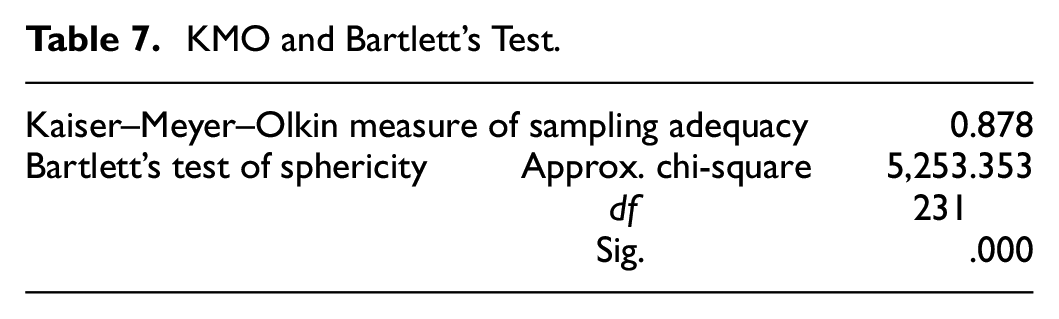
As indicated in Tables 5 and 6, the Exploratory Factor Analysis (EFA) was applied to assess the relationships between the independent variables, it was found that the sampling adequacy is very high, as indicated by the Kaiser–Meyer–Olkin (KMO) measure of .891. This is well above the acceptable threshold of .5, making factor analysis viable. The Bartlett test of sphericity resulted in a statistically significant outcome with a sig level of .000, which affirms that the variables are adequately correlated for factor analysis. The EFA identified four distinct components, showcasing that the extraction method of Principal Axis Factoring combined with Promax Rotation (with Kaiser normalization) effectively converged in five iterations. These components revealed significant factor loadings, all above the critical value of .5, suggesting a strong alignment of specific variables within each group of components. Factor loadings range from .550 to .901 in all four identified components, illustrating the relevance and contribution of each variable to the underlying factor it is associated with. This analysis not only confirms the convergence and discriminant validity of the scale set, but also enhances our understanding of the variables’ structure, successfully explaining a substantial portion of the data’s variability through these components.
KMO and Bartlett’s Test.

Pattern Matrix. a
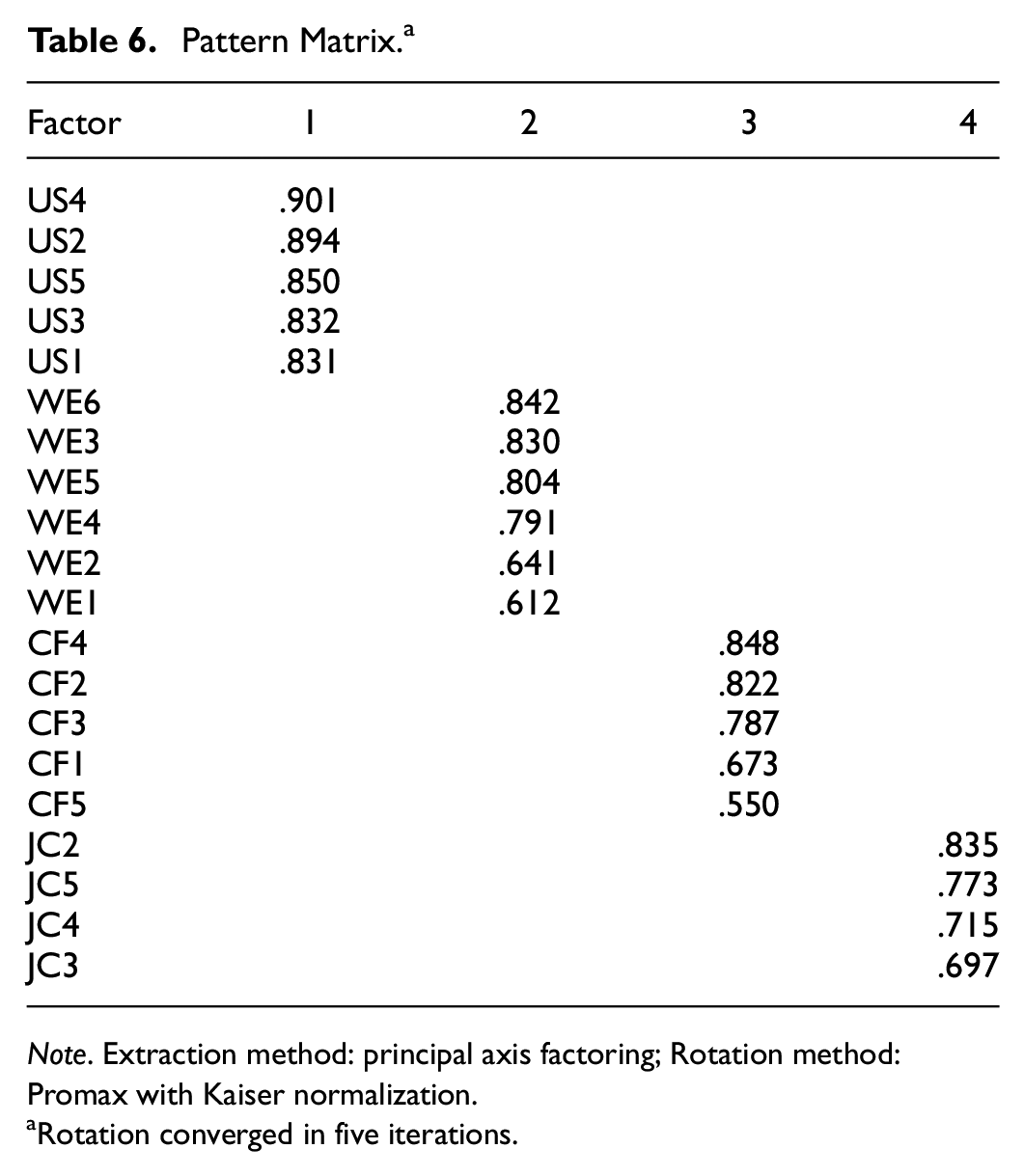
Note. Extraction method: principal axis factoring; Rotation method: Promax with Kaiser normalization.
Rotation converged in five iterations.
EFA for Dependent Variable
Based on Tables 7 and 8, the researchers applied Exploratory Factor Analysis (EFA) to the dependent variables revealed a structured and convincing depiction of their interrelations, achieving high sampling adequacy shown by the unreported Kaiser–Meyer–Olkin (KMO) value. Equivalent to the standards established for the independent variables data, the Pattern Matrix presented delineated five distinct factors, exemplifying an effectively executed factor extraction method of Principal Axis Facting combined with Promax Rotation (with Kaiser Normalization) that converged in 5 iterations. Specifically, these factors included “Organizational Commitment (OC)” with loadings ranging from .861 to .917, “Job Satisfaction (JS)” from .669 to .838, “Motivation and Loyalty (ML)” from .672 to .785, “Job Involvement (JI)” from .685 to .785, and “Career Development (CD)” from .727 to .880. Every factor loading surpasses the threshold of .5, indicating a precise association of variables within respective factors. This EFA elucidation not merely affirms the validity and coherence within the dependent variables but essentially enriches comprehension of their factorial structure. It remarkably elucidates a significant portion of data variability, underlining the vital categorizations within the domain of dependent variables.
KMO and Bartlett’s Test.
Pattern Matrix.

Structural Equation Modeling (SEM)
As indicated in Table 9 and Figure 2, the results of the structural equation modelling (SEM) reveal significant relationships among the variables in your study. The model shows how independent variables relate to On-the-Job Training (OJT) with varying degrees of impact. Specifically, university support (US) shows a positive effect on OJT with an estimate of .142, supported by a Critical Ratio (CR) of 2.443, and a significance level (p) of .015, denoting statistical significance. Work Environment (WE) demonstrates a stronger impact with an estimate of .255 and a significance level of .006. Contextual factors (CF) also exhibit a positive impact on OJT, although slightly less than WE with an estimate of .212 and a p value of .026.
Regression Weights: (Group Number 1—Default Model).
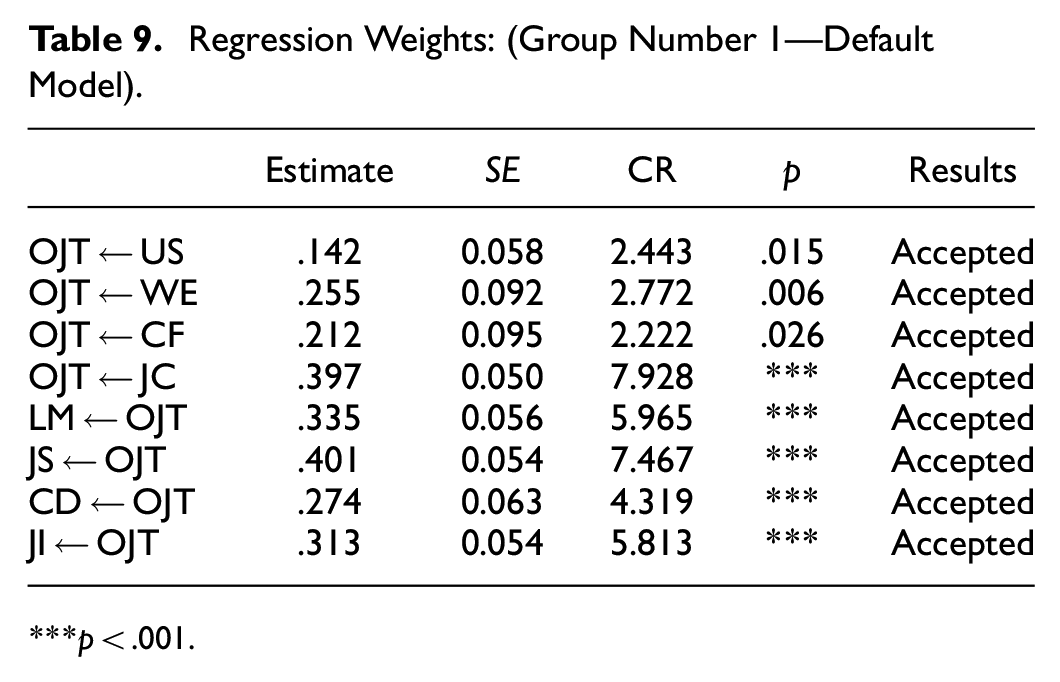
p < .001.

SEM model.
In particular, Job characteristics (JC) present the strongest influence on OJT, with the highest estimate of .397, a substantial CR of 7.928, and a significance level marked by *** indicating p < .001.
Further cascading effects of OJT are observed in other variables, with learning motivation (LM), job satisfaction (JS), career development (CD) and job involvement (JI) positively influenced by OJT, as evidenced by substantial estimates (.335, .401, .274, and .313 respectively) and strong CR values, all leading to significant p values indicated by *** for p < .001. These findings suggest that various factors contribute significantly to enhancing the effect of OJT in areas of personal and career development, indicating a robust model. The model effectively elucidates the perceived impact of fundamental workplace elements on the professional growth and satisfaction of employees.
Implications
Findings from the above research results, factors related to job characteristics, contexts surrounding the work environment, support from the school along with a few factors related to the situation. Currently, it will more or less affect the experience of students’ internship programs at businesses; these things need to be paid attention and improved. On the other hand, when students have a successful experience of the OJT program in a business, it will contribute to improving their level of job satisfaction, as well as the knowledge, skills, and experience they have to guide themselves to develop their careers in the future. In addition, when having a good and memorable experience while participating in OJT, students will also have diligence and dedication to the process of participating in work, which will also be a motivating springboard for motivating students’ learning efforts after finishing the OJT program and returning to school. Some suggestions that researchers would like to send to administrators and businesses to improve the student experience and satisfaction with the OJT program.
Theoretical Implications
Primarily, it adds to the current corpus of research regarding experiential learning and its influence on the growth of students. The research sheds light on the unique circumstances and difficulties experienced by students in Vietnam by analyzing the efficacy of on-the-job training in that nation. It also provides theoretical backing for the inclusion of real-world experience in courses in higher education. Policymakers and educators may benefit from the research’s conclusions by creating more relevant and successful curricula that integrate theory and practical experience. Ultimately, the study emphasizes the value of collaborations between academic institutions and business sectors. These partnerships can improve the employability of graduates and aid in Vietnam’s economic development by promoting cooperation and offering students opportunities for on-the-job training.
Practical Implications
Firstly, assign and appoint students to the internship position they desire, this will help students use their knowledge and expertise in their work, bringing efficiency and quality higher. Second, building and establishing a friendly, close, and dynamic working environment with cheerful and enthusiastic colleagues will help students avoid work pressure during the internship process. Third, the issue of direct support and guidance for students from the school before starting the OJT program is also necessary, when students are still unclear about the direction, what to prepare, and what is needed must do at the beginning of the internship program. This will help students gain more understanding, confidence, and reduce anxiety when starting an internship program at a company.
In addition, monitoring and evaluating students’ work performance will help them know the progress and results of their efforts so they can maintain and promote when they are doing well, change, and adapt when the results received are not highly appreciated compared to their abilities. In addition, the reward will be part of the working motivation so that interns can contribute more to their work, contributing to promoting creativity and promoting their strengths. Thus, interns will feel more satisfied with the work and position they are holding. When they return to school, they will feel happy and appreciate the time they have with business.
Conclusions
The research aimed to explore the determinants of student perceived happiness and their impact on green entrepreneurship intentions among university students in Vietnam, with a specific focus on a private university. By conducting a comprehensive quantitative analysis involving more than 335 students, the study provided valuable insights into the factors influencing green entrepreneurial intentions and overall student satisfaction with internship programs. The key findings revealed significant relationships between various factors and on-the-job training (OJT) experiences. Job characteristics (JC), work environment (WE), contextual factors (CF) and university support (US) were identified as critical determinants, each contributing uniquely to students’ OJT experiences. Among these, the characteristics of the job had the most substantial impact, highlighting the importance of diverse skills and meaningful work tasks in improving student engagement and satisfaction. The study also highlighted the effects of OJT on several outcome variables, including learning motivation (LM), job satisfaction (JS), career development (CD), and job participation (JI). These relationships suggest that effective OJT programs not only enhance practical skills, but also positively influence students’ overall career trajectory and commitment to their chosen fields.
In conclusion, the research results emphasize the importance of close cooperation between private universities and businesses in designing OJT programs. Thereby, job characteristics, work environment, contextual factors, and university support affected the satisfaction of students when they joined the OJT program. Not only stopping at improving practical skills, the internship process also has a positive impact on job satisfaction, promoting career development and arousing students’ motivation to learn. Thanks to that, the young generation will be equipped with the necessary knowledge and skills to become creative, dynamic workers, meeting the increasing demands of the labor market. To achieve the above improvements, building a sustainable partnership between schools and businesses is extremely important. Both sides need to build appropriate implementation programs, providing a professional working environment and development opportunities for students. In addition, regular evaluation throughout and updating the internship program is also necessary to ensure quality. Thereby, not only students benefit but businesses also have the opportunity to recruit young talents, meeting the development needs of businesses
Footnotes
Declaration of Conflicting Interests
The author(s) declared no potential conflicts of interest with respect to the research, authorship, and/or publication of this article.
Funding
The author(s) received no financial support for the research, authorship, and/or publication of this article.

Data Availability Statement
The datasets generated during and/or analyzed during the current study are available from the corresponding author on reasonable request.