




Abstract
This study aims to investigate the perceived sacrifices associated with visiting an LGBT-friendly destination and its impact on customer value. Specifically, we sought to explore the relationship between customer value, tourist loyalty, and willingness to pay among LGBT tourists. Using a self-administered electronic questionnaire, we collected data from 406 LGBT tourists and employed partial least squares structural equation modelling (PLS-SEM) to analyze the data. The findings of this study reveal that perceived sacrifices, both monetary and non-monetary, are significant antecedents of customer value in the context of LGBT tourism. Moreover, our results demonstrate that customer value has a significant positive impact on tourist loyalty and willingness to pay, highlighting the importance of creating a positive customer experience for this niche market. This study contributes to the growing body of literature on LGBT tourism by providing insights into the factors that drive customer value in this sector. Moreover, our findings offer valuable implications for the tourism industry, highlighting the need to prioritize LGBT-friendly policies and initiatives to attract and retain this significant customer segment. This study sheds light on the perceived sacrifices and customer value in LGBT tourism, offering valuable insights for industry stakeholders seeking to better understand and serve this diverse and growing market.
Plain language summary
This study aims to investigate the perceived sacrifices associated with visiting an LGBT-friendly destination and its impact on customer value. This study found that perceived sacrifices (monetary and non-moneteray) have a positive impact on customer value in the LGBT tourism sector. Subsequently, customer value has an impact on tourist loyalty and willingness to pay more. This study contributes to the broad assertion that customer value is an essential component in the tourism and hospitality sector. We suggest that destinations should provide a space where the LGBT community can feel accepted and enjoy themselves without facing oppressive societal attitudes to create a welcoming environment.
Background
In the past decade, LGBT tourism has grown from a niche market to a significant player in the broader tourism industry, and is becoming a popular topic in tourism and marketing literature due to the on-going political and social shifts around the world. With the shift from the modern to postmodern era, a more broad-minded society has evolved (Breshears & Beer, 2016), and a broader acceptance for individuals who are attracted to people of the same sex is being reached in communities in North America and Western Europe (Hartal & Sasson-Levy, 2021), as well as in a few countries in Africa, such as South Africa, Seychelles, Mauritius, Angola, Lesotho, Mozambique and Botswana (Rakhetsi, 2021). South Africa was the first country in Africa, and 5th in the world, to adopt a constitution that protects LGBT individuals from discrimination (Bruwer et al., 2021; Madinga et al., 2020).
As legal recognition and social acceptance of LGBT individuals expand, LGBT tourism continues to flourish, providing new opportunities for hospitality and tourism business (Ro et al., 2017). According to Pathumporn et al. (2020), an estimated $211 billion was spent on travel by LGBT individuals in 2018, and LGBT tourists contribute around 6% of the world’s total tourism spending (Ram et al., 2019), they travel frequently, and hold a greater number of passports compared with their non-LGBT counterparts (Pathumporn et al., 2020). A recent report by Reports_and_Insights (2023) indicates that the LGBT tourism global market is projected to surpass a value of US$610 billion by 2032. The second global report on LGBT tourism published by the United Nations World Tourism Organization (UNWTO) emphasizes the significance of understanding the LGBT tourism market (UNWTO, 2017).
While there has been a notable shift toward support for the LGBT community from various sectors, including businesses and government bodies (George, 2021; Hartal, 2019), research dedicated to understanding LGBT tourism as a sociocultural phenomenon remains limited (Hartal & Sasson-Levy, 2021). According to Lewis et al. (2021), LGBT tourists are part of a marginalized population that have unique challenges of negotiating their lives in a heteronormative society. These challenges have an effect on their travel motivations (Hattingh & Spencer, 2017; Weeden et al., 2016), destination choice (Yeo et al., 2017) and destinations to avoid (Usai et al., 2022). As a result, previous studies on LGBT tourism have focused on travel motivations (Hattingh & Spencer, 2018). Yet, the influence of sacrifices on customer value and subsequent behavioral intentions among LGBT tourists has been largely overlooked. Sacrifices are a common experience for LGBT travelers, as they often make monetary and non-monetary sacrifices to ensure their safety and comfort while travelling. Monetary sacrifices may include spending more money on safety measures, such as private accommodation, or gay inclusive entertainment (Poole, 2017), while non-monetary sacrifices may include giving up certain experiences or activities that are not LGBT-friendly. Beldona and Kher (2015) emphasize the importance of acknowledging and validating tourist’s feeling of sacrifice by considering the value they received in return. Furthermore, they call for a deeper understanding of what consumers perceive they sacrifice to engage in a service. Willingness to sacrifice is a crucial component of consumer behavior (Torres-Moraga et al., 2021). However, there has been little attention dedicated to one of the key pillars of consumer decision making, perceived sacrifices (Shukla, 2010) and its relationship with customer value and impact upon behavioral intentions.
This study aims to bridge this gap by examining the relationship between perceived sacrifices and customer value, as well as behavioral intention within the LGBT tourism sector. By shedding light on these dynamics, business in the LGBT tourism industry can tailor their offerings and marketing strategies to better meet the needs and preferences of this market segment, ultimately enhancing customer satisfactions and loyalty. To fill a research gap in the academic literature and gain better understanding of LGBT tourism, this study addresses the following research objectives:
(1) To determine the relationship between perceived sacrifices and customer value in the LGBT tourism sector.
(2) To determine the relationship between customer value and behavioral intention in the LGBT tourism sector
The remaining sections of this paper provide a literature review that sheds light on the hypothesis development, discuss the methodology adopted for this study and provide a discussion of the findings. In addition, the study’s implications are discussed. Lastly, the study’s limitations and future studies recommendations are presented.
Literature Review and Hypothesis Development
LGBT Tourism
The increasing attention from both scholars and industry professionals toward the relationship between tourism and the LGBT+ community has led to the recognition of LGBT Tourism as a distinct tourism sector (Qiu et al., 2024). LGBT tourism refers to those tourism offerings tailored specifically to members of the LGBT community (Madinga et al., 2022). Hartal (2019) study reveals that LGBT individuals are often subject to systematic discrimination, social isolation, hostility, and violence. Studies have indicated that LGBT individuals whose sexual orientation is easily identifiable encounter greater levels of victimization and subsequent constraints compared to other travelers (Usai et al., 2022).
Astor (2023) asserts that hate crimes against the LGBT community in the USA have markedly risen from 2022 to 2023, with 350 reported incidents during this period. These incidents encompassed various forms of aggression, such as online harassment, protests targeting LGBT events, and bomb threats directed at hospitals offering gender transition care. In heteronormative societies, majority of anti-gay hate crimes go unreported, contributing to underrepresentation in official records Usai et al. (2022). Glassmann (2012) noted that some tourist destinations may not be welcoming to the LGBT community due prevalent cultural norms and values. Consequently, the LGBT community has been forced to seek out secret gathering places to connect with others who share their identity (Hughes, 2006). Furthermore, they may travel to locations where they can engage in social interactions without facing prejudice (Hartal & Sasson-Levy, 2021). It has been argued that the getaway from a heteronormative environment, endorsing LGBT identity and seeking sex/romance, could be a substantial push motivation factors for some LGBT tourists (Hattingh & Spencer, 2017). These desires can be satisfied in a ‘LGBT friendly’ or LGBT exclusive social environment during a holiday (Ram et al., 2019), commonly known as the ‘LGBT space’ (Hattingh & Spencer, 2017), where homosexuality is tolerated and acceptable with no risk of discrimination and homophobia (Vorobjovas-Pinta, 2018). LGBT space can be described as the physical manifestation of LGBT community.
LGBT tourism accounts for more than 6% of the total tourism market. This makes LGBT tourism a substantial niche tourism market (Ram et al., 2019). A recent report by Reports_and_Insights (2023) indicates that the LGBT tourism global market is projected to surpass a value of US$610 billion by 2032. This could be due to the increasing social acceptance of LGBT community, legalization of same-sex marriage, corporate inclusivity initiatives, and growth of LGBT friendly destinations. The economic significance of the LBT tourism sector has sparked the interest of scholars and travel businesses (Qiu et al., 2024), making the LGBT community a significant tourism market while emphasizing the importance of creating a welcoming and safe environment for its members (Madinga et al., 2022). To realize the full potential of the LGBT tourism, the destinations should understand the needs of the LGBT tourists, understand their customer value perceptions (Madinga et al., 2022), what sacrifices they make to enjoy the freedom of being in an LGBT friendly tourism destination, and more importantly, due to the lucrative LGBT market, LGBT destinations are fighting for tourist loyalty from this market and are interested in understand factors that lead to tourist loyalty (Kang & Ro, 2024).
Perceived Sacrifices
In the marketing literature, sacrifices were considered what consumers pay to obtain a product or service (Shukla, 2010). While in early literature, they were limited to monetary sacrifices, the recent studies have broaden this concept, recognizing it as a multi-dimensional concept that includes both monetary and non-monetary sacrifices such as time, psychological and effort sacrifices (Russell & Boley, 2024; Siagian & Octoyuda, 2024; Torres-Moraga et al., 2021). According to Torres-Moraga et al. (2021, p. 593) “people almost always have to make monetary and non-monetary sacrifices when they want to travel to a certain destination, especially when they have a strong connection with that destination.”
In the tourism context, monetary sacrifice refers to the money paid by the tourist for various products and services at their destination, including lodging, food and drinks, spa treatment, airfare, and airport taxes, as well as tours and entertainment (Plessis & Saayman, 2018). Poole (2017) notes that LGBT tour operators are often perceived to charge LGBT tourists more than their heterosexual counterparts for a similar trip. This is due to several reasons. Firstly, LGBT vacations typically include additional inclusions not offered by traditional heterosexual tour companies, such as special events or activities tailored to the LGBT community. Secondly, hiring entertainers that cater specifically to the LGBT audience, such as Ann Hampton and Amy and Freddy, can be expensive (Poole, 2017). These entertainers are often considered to be a major draw for LGBT tourists, and the cost of hiring them reflected in higher prices charged by LGBT tour operators. According to research conducted by Vorobjovas-Pinta and Dalla-Fontana (2018), spending more money on LGBT-friendly destinations is a worthwhile investment. This is because these places provide LGBT individuals with a safe environment to meet and socialize, which is crucial for the well-being and happiness. In today’s world, many LGBT people face discrimination and mistreatment, so finding a place where they can feel comfortable and accepted is essential.
The concept of non-monetary costs in the tourism industry has become increasingly important in recent years (Russell & Boley, 2024). LGBT tourists often invest significant time and effort into researching destinations, accommodations, and activities that are known to be inclusive and welcoming, as they want to avoid encountering institutionalized prejudice and discrimination (Saravi, 2022). This process involves navigating online forums, reading newspapers, and seeking recommendations from fellow LGBT travelers to ensure a safe and affirming experience. However, the emotional toll of identifying LGBT-friendly destinations and dealing with discrimination or limited options in discriminatory societies can take a toll on one’s psychological well-being. As Hattingh and Spencer (2017) point out, these experiences can have a negative impact on their mental health and overall well-being.
In the means-end-model introduced by Zeithaml in 1988, perceived sacrifice has been identified as an important indicator of customer value (Zeithaml, 1988). Customer’s perception of value is the ratio of the benefit they receive from your offering to the price they pay (sacrifice). In the literature, a significant negative relationship between perceived sacrifice and customer value has been established (Prayoonphan & Xu, 2019; Sumaedi et al., 2012; Thielemann et al., 2018). Prayoonphan and Xu (2019) argue that when the sacrifices of obtaining a product or service increase, the perceived value of that product or service decrease. This suggests that low consumer perceived value could be an outcome of high perceived sacrifice. Therefore, low sacrifice could lead to high consumer value (Prayoonphan & Xu, 2019). Therefore, it is hypothesized that:
Companies in the LGBT tourism industry should understand the influence of monetary and non-monetary sacrifice on customer value because it can help them create more effective marketing strategies and improve tourist loyalty. By understanding the trade-offs that LGBT tourists are willing to make, companies can tailor their offerings and messaging to better meet the needs and preferences of this market segment. This can lead to increased willingness to pay for LGBT friendly destinations, as well as positive word-of-mouth recommendations. Additionally, understanding the importance of non-monetary factors such as safety, comfort, and inclusivity can help companies create more welcoming and accepting environments for LGBT tourists, which further enhance the overall customer value. Overall, taking into account the influence of monetary and non-monetary sacrifice on customer value can help companies in the LGBT tourism industry create more effective and customer-centric strategies. In light of the abovementioned, this study will not only contribute to the tourism body of knowledge but will provide LGBT-friendly destinations and marketing practitioners with valuable information for better positioning their destinations and offerings to attract and retain tourists in the rapidly growing LGBT tourism market. This study offers LGBT-friendly destinations guidelines on how to increase customer value and influence tourists’ behavioral intentions, such as loyalty and willingness to pay.
Customer Value and behavioral Intentions
Due to the significance of customer value in the field of marketing and in the context of this study, numerous definitions have been identified in the literature. Generally, customer value may be described as consumers’ preference for and evaluation of features and the features’ performance and consequences that are observed through the consumption process (Caputa et al., 2021). The notion of value has been debated for a few decades (Caputa et al., 2021; Williams & Soutar, 2000; Zeithaml, 1988). Understanding and creating value is a cornerstone of marketing, and value has therefore been studied in several different contexts, for example: the economics (Weinstein, 2020), information systems (
Understanding customer value allows tourist destinations design services and products that are tailored to meet customer needs and preferences (John & Supramaniam, 2024). In addition, customer value is seen as the foundation for all successful marketing strategies (Ahmed et al., 2023; Holbrook, 1994). The tourism sector is a highly competitive industry and tourism destinations should therefore offer superior customer value to gain competitive advantage to attract and retain customers (Cordova-Buiza & Serruto-Perea, 2024). Research indicates that tourists are becoming more selective and sophisticated in their choices and are therefore exceedingly empowered to only purchase products and services that provide value and are capable of offering satisfying experiences (Madinga et al., 2022). The relevance of creating and delivering customer value may provide a foundation for gaining a competitive edge (Ahmed et al., 2023; Weinstein, 2020), because it allows the company to understand its customers’ needs. This may lead to the development of a unique offering, and organizations that focus on customer value are likely to establish long-term competitive advantage in the market (Woodruff, 1997).
Empirical research has shown that customer value is a reliable predictor of behavioral intentions (Mason & Moretti, 2015). The relationship has been confirmed in a number of different contexts including the banking industry (Sayil et al., 2019), restaurant industry (Thielemann et al., 2018), healthcare industry (Choi et al., 2004), retail industry (Veloso et al., 2017), and tourism industry (Madinga et al., 2022). In the tourism industry, tourists’ loyalty (Suhartanto et al., 2020), and tourists’ willingness to pay (Fuentes-Moraleda et al., 2019) play an important role.
Willingness to Pay
LGBT tourism alternatives are more costly than traditional tourism alternatives, and in this case, individuals visiting LGBT friendly destinations should be willing to pay more, as LGBT-friendly locations provide additional amenities not provided to heterosexual tourists (Poole, 2017). According to Weeden et al. (2016), LGBT-friendly destinations tend to be more expensive than their non-LGBT-friendly counterparts. Additionally, destinations that cater specifically for LGBT tourists are often upscale. Furthermore, LGBT tourist destinations provide a safe and accepting environment for the LGBT community, which is why LGBT tourist are willing to pay more to experience this safe haven and escape prejudice in the heteronormative world (Vorobjovas-Pinta, 2018).
Customer value has a significant impact on customer behavior beyond just consumer choice, extending to outcomes such as tourist loyalty and willingness to pay (Mason & Moretti, 2015; Sayil et al., 2019). Research in both marketing and tourism has established a strong connection between value and behavioral intentions (Caputa et al., 2021; Mason & Moretti, 2015). Thus, the following hypothesis are proposed:
Tourists’ Loyalty
To understand how tourists’ loyalty can be developed is very important to managers of tourist organizations and destinations (Cossío-Silva et al., 2019). In a competitive market landscape, tourist loyalty is acknowledged as a fundamental driving factor (Liu et al., 2023). Suhartanto et al. (2020) indicate that loyalty is the best predictor of tourist future behavior and provides tourism destinations with a competitive edge. Furthermore, loyal tourists tend to be less price sensitive compared with first time visitors and tend to spend more money during their visit compared with first time tourists (Cai et al., 2021). Tourist scholars and marketers have started paying attention to tourists’ loyalty, as loyal tourists offer tourism destinations several benefits, such as repeat visits, advocating for the destination and having a sense of destination attachment (Moore et al., 2017). In a recent study conducted by Liu et al. (2023), recommendation intentions, revisit intentions, and willingness to spread positive word of mouth were used to measure tourist’s loyalty.
Based on the preliminary literature provided in this study, a hypothetical model and hypotheses were developed. The hypotheses are summarized in Figure 1.
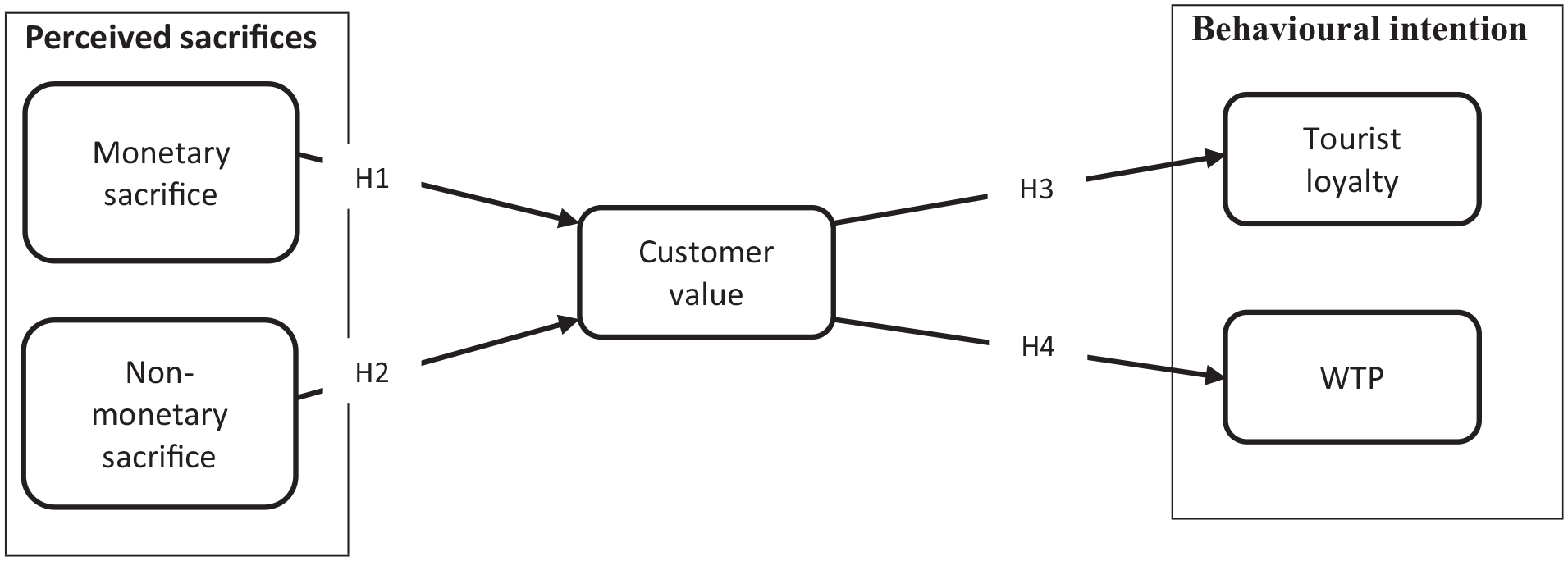
Research model.
Research Methodology
Data Collection
In this study, data were collected using a self-administered electronic survey designed to gather insights from LGBT tourists in South Africa. To facilitate survey distribution, we collaborated with travel agencies known for targeting LGBT tourists. Given the absence of a database of gay travel agencies in South Africa, we identified three agencies through online searches. Each agency was located in one of the gay-friendly cities in South Africa: Durban, Johannesburg, and Cape Town (Visser, 2003). These agencies were contacted and requested to distribute the survey link to their customers who had opted to receive such surveys. In addition to leveraging travel agencies, the survey link was also shared on Facebook groups and pages focusing on LGBT tourism. This approach aimed to further diversify the respondent pool and capture a broader range of perspectives within the LGBT tourist population in South Africa. Furthermore, the snowball sampling technique was employed to maximize response rates and ensure a comprehensive dataset.
In our study on LGBT tourism in South Africa, we prioritized ethical considerations due to the sensitive nature of the topic and the potential vulnerability of our participants in a society still grappling with discrimination against the LGBT community. To ensure ethical integrity, we opted for self-administered surveys, allowing participants to complete them in the comfort and safety of their homes, thus fostering openness and honesty. Strict measures were implemented to safeguard participant privacy, including refraining from collecting personally identifiable information to protect against social stigma or repercussions. Additionally, we provided a comprehensive informed consent form to ensure participants fully understood the study's purpose and their rights, upholding transparency and respect for autonomy throughout the research process.
To ensure respondents fell within the appropriate target audience, filter questions pertaining to age and sexuality were incorporated into the survey. These questions were utilized to screen respondents and ensure the inclusion of individuals who identified as part of the LGBT community and were within the desired age range for the study. Of the 417 responses received from the respondents, only 406 were deemed usable. Eleven questionnaires were incomplete and therefore, discarded.
Measurements and Questionnaire Development
This study consist of five constructs: monetary sacrifice, non-monetary sacrifice, customer value, tourist loyalty, and willingness to pay. All the items utilized in this study were adapted from previous studies. To measure monetary sacrifices, the scale developed by Cheng and Lu (2013) and
Sample Characteristics
Table 1 presents the demographic data of the participants. As depicted in the table, 39.2% of the 406 respondents identified as gay, 34% as lesbian, and 23.6% as bisexual. The majority of participants (43.8%) were between the ages of 26 and 30 years. The study showed that 49.8% of the respondents held an undergraduate degree, while 15% had a postgraduate qualification. Only 0.7% of the participants had not finished primary school. The majority of participants (58.9%) indicated that they were single, followed by those living with a partner (16.7%), and a small percentage were divorced or separated (4.2%). The respondents were requested to indicate their monthly net income. Of the respondents, 29.1% earn between $803,27 and $1070,96, while only 19.2% of the respondents earn between $535,35 and $803,22 per month, 5.2% of the respondents earn between $267,79 and $535,48, and 1% of respondents earn $267,74 and less per month (see Table 1).
Respondent’s Profile.

Data Analysis
This study estimates and evaluates the proposed research model using partial least squares structural equation modelling (PLS-SEM). The SmartPLS 3 software was used to analyze data (Ringle et al., 2015). The PLS-SEM is deemed suitable for this study due to its predictive nature (Khan et al., 2019), and ability to deal with complex models (Hair et al., 2019b). This study made use of the bootstrapping method with 5,000 subsamples. The analysis is conducted with the guidelines described by Hair et al. (2019b). Hair et al. (2019b) present a two-phase data analysis process; the analysis commences with assessment of the measurement model and subsequently assessment of the structural model.
Assessment of Measurement Model
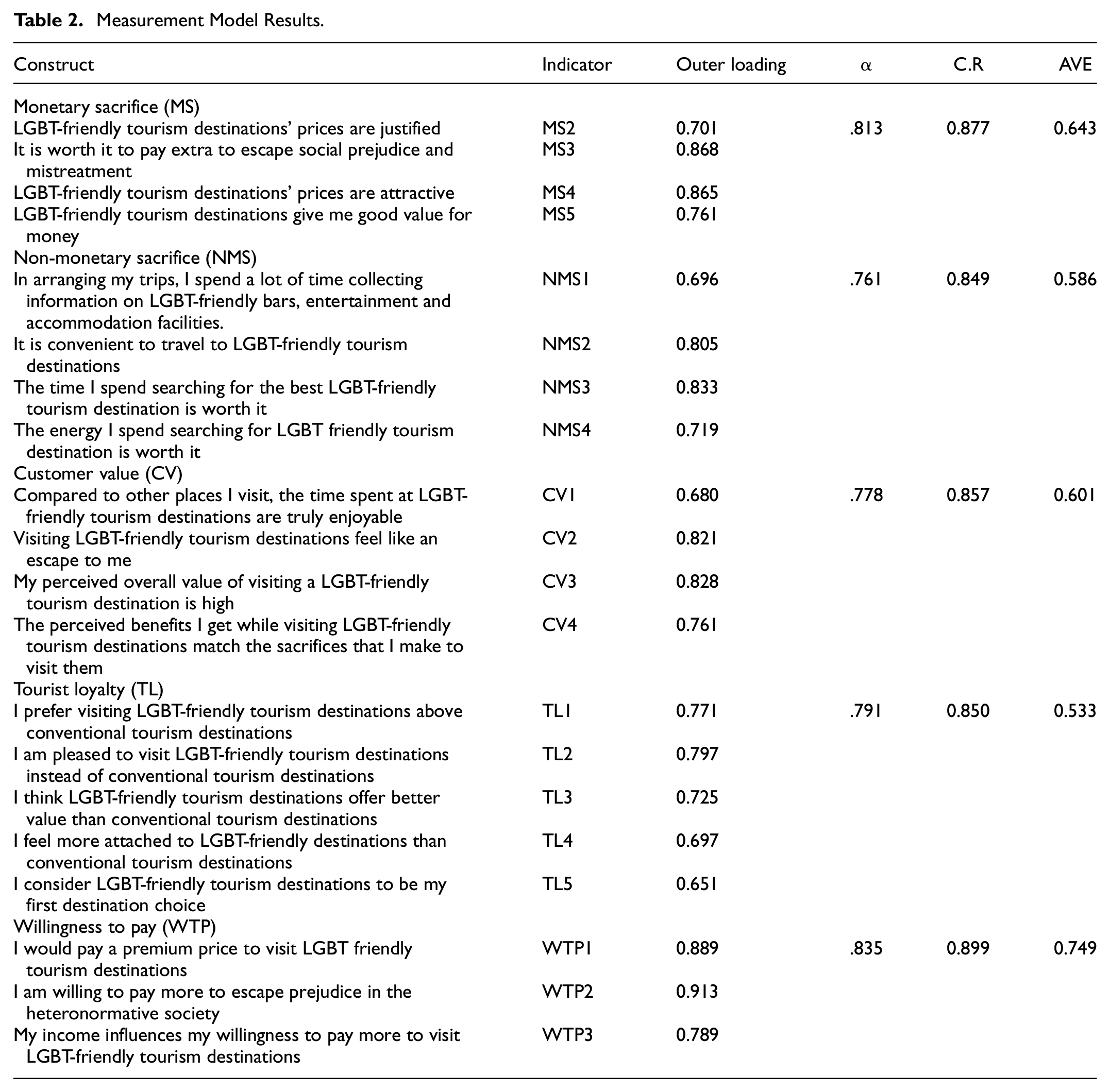
The measurement model assessment procedure involves assessment of outer loading, Cronbach alpha (α), composite reliability (CR), extracted average variance (AVE) and discriminant validity (Saari et al., 2021). Measurement items MS1, NMS5 and WTPP4 have been deleted as they were less than the proposed 0.6 outer loading values threshold (Keshavarz & Jamshidi, 2018). The Cronbach Alpha values were between 0.761 and 0.893, which is above the recommended threshold of 0.70 (Hair et al., 2019a). The CR value ranged between 0.849 and 0.925, exceeding the 0.70 recommended threshold (Hair et al., 2019a). In addition, the AVE values were between 0.533 and 0.756, exceeding the recommended threshold of 0.5 (see Table 2).
Measurement Model Results.
Henseler et al. (2015) suggest that Heterotrait-Monotrait (HTMT) values below 0.85 is required for ensuring discriminant validity. The aforementioned threshold was met in Table 3, where HTMT values were below this threshold.
Discriminant Validity Using HTMT Criterion.

Structural Model and Hypothesis Testing Results
Before proceeding with the analysis, collinearity had to be ruled out (Sarstedt et al., 2019). The Variance of Inflation Factor (VIF) was also used in this analysis to identify the degree of multicollinearity. The PLS collinearity statistics show that the inner VIF values range from 1.407 to 3.809, which are below the cut-off threshold of 5 (Kock, 2021); therefore, showing that there are no multicollinearity problems. For the explanatory power assessment, the R2 values were examined. Customer value has an R2 value of 0.244 (see Figure 2), indicating weak predictive power (Hair et al., 2019a), while tourist loyalty and willingness to pay have R2 values of 0.228 and 0125 respectively (see Figure 2), demonstrating weak predictive power (Hair et al., 2019a). Additionally, the PLSpredictive technique was used to assess out-of-sample predictive power (Shmueli et al., 2019). The Q2 predict values for customer value, tourist loyalty, and willingness to pay were 0.230, 0.177, 0.111, and 0.007 respectively, indicating predictive power as the Q2 predict values were greater than zero (Shmueli et al., 2019).

Structural model.
The results show that monetary and non-monetary sacrifice have significant, positive impact on customer value. Thus, H1 and H2 are supported. The results also found that customer value has a positive significant impact on tourist loyalty and willingness to pay, thereby confirming H3 and H4 (see Table 4).
Results of Hypothesis Testing.

Discussion
At the moment, tourist destinations are engaged in cutthroat competition with one another, both domestically and internationally, in order to seize a greater portion of the market. Tourist destinations should create and deliver value to tourists to gain a competitive advantage in the market. The findings of this study show a positive significant relationship between monetary and non-monetary sacrifice, and customer value. These relationships imply that if monetary and non-monetary sacrifice increase, customer value would increase. This finding is contrary to previous studies which found a significant negative relationship between perceived sacrifices (monetary and non-monetary sacrifices) and customer value, suggesting that when the monetary sacrifice increases, customer value decreases (Shukla, 2010; Sumaedi et al., 2012; Thielemann et al., 2018). This inconsistency may be due to the fact that LGBT tourists believe that the sacrifice is justified. According to Poole (2017) findings, LGBT-friendly tourist destinations offer unique attractions for their guest, such as entertainers catering to the LGBT community and special events for LGBT individuals. Vorobjovas-Pinta and Dalla-Fontana (2018) argue that visiting an LGBT-friendly is worth it as it provides a secure space for LGBT individuals to socialize and connect with others who share similar experiences.
The findings show that providing value to tourists leads to tourists’ loyalty. This finding affirms previous studies of Eid (2015) and Gallarza et al. (2019), in which a positive and significant relationship was established between customer value and tourists’ loyalty. This finding shows that customer value is an important determinant of tourists’ loyalty. This study found that when customer value increases, the willingness to pay increases. This is in line with previous studies (Izogo et al., 2020; Tsuchiya et al., 2021), which established a significant relationship between customer value and willingness to pay. The relationship between customer value and willingness to pay is based on rational suggestions. Consumers are willing to pay for products and services that provide more benefits than costs (Demirgüneş, 2015). A study conducted by Li et al. (2012) supports the notion that customer value has an influence on consumer purchase behavior.
Implications and Conclusion
This study contributes to the broad assertion that customer value is an essential component in the tourism and hospitality sector. In this regard, this study provides recommendations for tourism destinations in general and LGBT tourism destinations in particular. LGBT tourism is unique compared to traditional tourism because it offers the freedom to escape from stress caused by discrimination, rejection from society, and prejudice. To create a welcoming environment, destinations should provide a space where the LGBT community can feel accepted and enjoy themselves without facing oppressive societal attitudes. Destinations can implement diversity and inclusion training programs for tourism industry staff. This training should cover topics such as cultural competence, understanding the needs of LGBT travelers, and respectful communication. Furthermore, the destinations could develop marketing campaigns that specifically target the LGBT tourists, showcasing the destination as inclusive and welcoming. In addition, the findings aid governments to continuously introduce inclusive policies as they contribute to the positive image of the destinations and strengthen safety perceptions.
LGBT destinations should consider the fact that perceived sacrifices (monetary and non-monetary) have an influence on the choice of tourist destination, the consumption of products and services while on vacation, how long tourists stay in a destination and has an influence on the perceived value of the destination. Therefore, destinations should strive to keep their prices competitive. Those who manage LGBT friendly guesthouses and hotels should apply appropriate strategies, for example smart pricing strategies, to offer their customers greater value well ahead of their competitors. LGBT friendly tour operators have been perceived to charge LGBT tourists more than an average heterosexual version of the same trip and they should ensure that they go the extra mile to justify their premium pricing strategy. Research shows that LGBT tourists are happy to pay extra to escape prejudice and mistreatment in a heteronormative environment. Therefore, LGBT friendly destinations should ensure that their customers feel safe at all times. Destinations targeting LGBT tourists should continuously provide tourists with an opportunity to interact and socialize in safe havens. Destinations could display the rainbow flags at its entrance to signal its support for the LGBT community. The study highlights that non-monetary sacrifices play a significant role in determining customer value. Although some countries have laws in place to protect the LGBT community from discrimination based on their sexual orientation, the LGBT community still experiences discrimination in certain areas. This results in the LGBT community spending a considerable amount of time searching for safe destinations to visit. To address this issue, it is crucial for the Department of Tourism to compile a list of safe LGBT tourist destinations in a country and make this information available to both the local and international LGBT community. Furthermore, LGBT destination marketers should also create LGBT-themed events and activities that enhance the perceived value and loyalty of tourists.
The literature indicates that retaining existing customers is more cost-effective in the long run than trying to attract new ones. Therefore, it is important for organizations to introduce consumer retention strategies, such as consumer loyalty programmes, and improve customer service. For instance, hotels could provide loyalty points for each stay. Overtime, these points could be used to get a free stay at the hotel. The tourism sector has become highly competitive, and in order for tourism destinations to attract and retain tourists, they should have a deeper understanding of tourists’ needs and perceptions. This could be achieved by constantly conducting research to understand tourists’ needs and trends in the LGBT tourism sector. Tour operators and tourist destinations could create more personalized tour packages to meet individual needs. Tourists who feels valued by the destination are more likely to be loyal and willing to pay a premium price. In addition, they should prioritize retaining existing tourists through loyalty programmes. Destinations should establish and maintain a presence on various social media platforms, as well as communicate with tourists on a consistent basis through newsletters, customer interactions, and provide information. Additionally, they could offer special experiences for LGBT tourists, such as customized packages or offers, and take into account the preferences of different tourists when making personalized recommendations, such as sending a handwritten letter and a spa voucher to a couple celebrating their anniversary.
Limitations and Future Studies
Despite the fact that this study contains some intriguing findings, there are a number of limitations that must be addressed. Firstly, given that only a single-dimensional approach to customer value has been considered in the current study, future studies could examine the impact of perceived sacrifices using a multi-dimensional approach to customer value. This will involve examining the impact of monetary sacrifice and non-monetary sacrifice on all five dimensions of customer value (functional value, emotional value, social value, epistemic value and conditional value). Secondly, this study only examined customer value as an antecedent of behavioral intentions such as tourist loyalty and willingness to pay. Future studies could consider adding perceived destination attractiveness and prior experiences in the list of factors that have an influence on tourists’ behavioural intentions. Thirdly, the predictive power of customer value, tourist loyalty and willingness to pay was weak. This suggests that the included variables do not fully account for the variability in the dependent variable(s), potentially hindering the generalizability and accuracy of the findings. Future research studies could address this limitation by employing more comprehensive models that capture a wider range of factors influencing customer value, tourist loyalty and willingness to pay.
Footnotes
Declaration of Conflicting Interests
The author(s) declared no potential conflicts of interest with respect to the research, authorship, and/or publication of this article.
Funding
The author(s) received no financial support for the research, authorship, and/or publication of this article.

Data Availability Statement
Data sharing not applicable to this article as no datasets were generated or analyzed during the current study.