




Abstract
This paper presents a comprehensive analysis of the popularity and acceptability of Indian and South Korean films among Chinese audiences, highlighting the dynamics of film globalization within Mainland China. The study aims to investigate the appeal of Indian and South Korean cinemas among Chinese moviegoers. Data were collected through a questionnaire-based survey with 1963 respondents. The findings indicate that 45% of respondents regularly watch Indian films, while 34% frequently watch South Korean films. A positive correlation was identified between increased monthly film consumption and heightened interest in non-Hollywood/non-Western movies. Respondents reported various sources for discovering new foreign films, expressing general satisfaction with the genres of South Korean and Indian cinema. Additionally, the study revealed that the thematic content and narrative structures of these films offer learning opportunities for the Chinese film industry. Notably, Indian actor Aamir Khan and South Korean director Bong Joon-ho emerged as particularly popular figures among Chinese audiences. The survey underscores those Chinese moviegoers value high-quality films, regardless of their country of origin. The findings suggest that enhancing the accessibility and promotion of Indian and South Korean films in China could further diversify Chinese film consumption and foster cross-cultural learning and appreciation.
Plain Language Summary
This study aimed to investigate the popularity of Indian and South Korean movies among Chinese moviegoers. The researchers used a questionnaire to collect data from 1963 participants. The study found that 45% and 34% of respondents watched South Korean and Indian movies in cinemas. Moreover, the researchers discovered a positive correlation between increased monthly film consumption and a greater interest in non-Hollywood/non-Western movies. Indian actor Aamir Khan and South Korean director Bong Joon-ho were the most popular among Chinese audiences. The study mainly implies that Chinese moviegoers appreciate quality films from different countries. However, it is important to note that the study has some limitations, as the sampling method was non-probability, and the sources and time were limited. The findings could benefit filmmakers, distributors, and industry stakeholders who want to reach the Chinese market.
Keywords
Introduction
In the early years of Hollywood’s presence at the Chinese box office, it generated the highest revenue from China annually since the 1990s (Klein, 2007; Kwak & Zhang, 2011; Mccutchan, 2013; Richeri, 2016; Tang et al., 2023). However, in recent years, Indian and South Korean filmmakers have begun to gain popularity in China, with Indian films such as Dangal and Secret Superstar having received widespread praise from Chinese audiences. Similarly, Korean films, such as the Oscar-winning Parasite and the worldwide overall web series Squid Game, have also gained popularity among Chinese and foreign audiences (Chiu et al., 2020; Correia et al., 2023; Huang, 2022; Jeong, 2021; Lee, 2021). The South Korean and Indian film industries are among the top ten countries appreciated by international audiences and are significant sources of revenue (MPA, 2022; Nandy, 2021).
The success of Indian and South Korean films in China can be attributed to various factors. One key aspect is the increasing cultural exchange between these countries (Hong, 2021; Shim, 2006). Several other factors such as market size, co-productions, film festivals, global events, tourism, Internet, and technology help to contribute to the success of Indian and Korean films in China (Gelernter & Regev, 2013; Salter, 2013; Sandvoss, 2015; Thussu, 2006). With the growth of globalization and glocalization, people are becoming more interested in learning about other cultures, and films provide an easy and accessible way to experience different perspectives and lifestyles (Yaqoub, Gao et al., 2023). The popularity of Indian and South Korean films in China also highlights the growing market for non-Hollywood movies. Chinese audiences have recently become more diverse in their film preferences and are open to watching films from different countries (Cho, 2011; Dastidar & Elliott, 2020; Yaqoub, Matusitz, & Jingwu, 2023).
Another important factor contributing to the success of Indian and South Korean films in China is the rise of streaming platforms. With the increasing availability of online streaming services (Jenner, 2017; Jung & Shim, 2014), Chinese audiences have more access to films worldwide. This has allowed more niche films to find an audience and has made it easier for Chinese viewers to watch Indian and South Korean films that might not have been widely distributed on cinema screens in the country (Yaqoub et al., 2024).
Furthermore, the themes and stories of Indian and South Korean films have resonated with Chinese audiences. Both countries have a rich cultural heritage and diverse populations, as reflected in their films (Kim, 2012). Indian films often focus on family dynamics, relationships, cultural traditions, and social issues (Ganti, 2013; Sunikka-Blank et al., 2020), which are relatable to Chinese viewers. Similarly, South Korean films are known for their complex and nuanced storytelling, which often explores their characters’ psychological and emotional experiences. This has made them appealing to Chinese audiences looking for more sophisticated and thought-provoking stories (Chen et al., 2018).
Lastly, the popularity of Indian and South Korean films in China also highlights the growing importance of Asian countries in the global film market (Kang et al., 2022; Paksiutov, 2021). Hollywood has dominated the international box office for many years (Gunter, 2018; Walls & McKenzie, 2012). However, the success of Indian and South Korean films in China shows a growing demand for films from other countries (Berry, 2013). This presents an opportunity for Asian, non-Western, and other filmmakers to gain more recognition and influence within the global film industry.
Objectives and Significance of the Study
This study aims to examine the perception and liking of Chinese viewers toward Indian and Korean films in light of China’s position as the top cinema screen and global box-office revenue generator. Additionally, the study proposes to provide insights for the Chinese film industry, cinema owners, and distributors on content that resonates with the local Chinese audience. Specifically, its goals are to identify the factors and appeals that drive Chinese viewers to watch imported movies (non-Western/non-Hollywood) and to analyze the appeal and content of the stories favored by the Chinese audience. This study is expected to be valuable for the Chinese cinema industry and related industries and as reference material for other researchers and scholars studying similar topics. Furthermore, the study explores how the Indian and South Korean film industries have effectively managed essential relationships to increase the box office success of their revenue-sharing films in China.
A Brief History of Indian Cinema and Its Global Impact
The Indian film industry, commonly known worldwide as Bollywood, is prolific and profitable, producing over 1000 films annually (Desai, 2020; Josiam et al., 2015; Minocha & Stonehouse, 2006). Cinema plays a significant role in India’s rich and diverse culture serving as a medium through which the country’s history, culture, religion, society, and other aspects are portrayed artistically (Hong, 2021). The origins of Indian cinema can be traced back to the late 19th century and early 20th century. During that time, the content of short films and documentaries produced in India primarily reflected the daily life of Indian citizens, natural landscapes, significant political events, and stage performances. Following the end of World War II, it became increasingly difficult for Britain to maintain direct control over united India, leading to the country’s independence in 1947 and the establishment of a republic in 1950. As a result, Indian cinema also transformed, with a new generation of filmmakers who sought to create works that accurately reflected reality rather than solely catering to entertainment, called Parallel Cinema or Art Cinema. This type of cinema emerged in India in the 1950s and 1960s as a response to the more commercial and formulaic mainstream cinema that dominated the industry at the time. Some of the most prominent filmmakers associated with Parallel Cinema include Satyajit Ray, Shyam Benegal, and Govind Nihalani.
For example, in 1963, Satyajit Ray directed the film Mahanagar (transl. The Big City), which depicts the struggles of a middle-class family in Kolkata. In 1975, the film Manthan, directed by Shyam Benegal, described the struggles of farmers suffering from poverty and hunger. While Raj Kapoor’s 1951, titled Awaara (transl. The Vagabond), is not a part of Parallel Cinema, it is still considered an important film in the history of Indian cinema. It is widely regarded as a Bollywood classic (Hoffheimer, 2006; Van Fleit Hang, 2013). Despite their critical acclaim and cultural importance, parallel cinema films have often struggled to find an audience in India due to the dominance of commercial and mainstream Bollywood. However, recent government censorship made the film only partially faithful to the original work.
Popular cinema in India typically refers to mainstream commercial films or cinema produced and distributed on a large scale and with a wide audience appeal. These films are often known for their melodramatic storylines, larger-than-life characters, extravagant song-and-dance sequences, and a focus on entertainment over realism.
Mainstream Popular cinema in India is often associated with the Bollywood film industry, but equally successful popular films are also made in other regional languages, such as Tamil, Telugu, Punjabi, and Malayalam. Some popular film stars in India include Amitabh Bachchan, Shah Rukh Khan, Aamir Khan, Salman Khan, and Priyanka Chopra (Daniels, 2013; Lawrence, 2020; Shields, 2017). Popular cinema in India has a huge fan following both within and abroad, and it has played a significant role in shaping and transferring Indian culture and identity (Mehta & Pandharipande, 2010; Thussu, 2016). It often reflects the aspirations, values, and social norms of Indian society and significantly impacts popular culture, fashion, and music.
The Indian film industry has recently significantly impacted the global film industry via its unique genres. Bollywood has grown to become one of the largest and most influential film industries in the world, producing thousands of films each year and attracting a massive audience both domestically and internationally (Lorenzen & Täube, 2008; Nanda et al., 2018).
One of the key ways Indian films have impacted the world film industry is by exporting Indian culture and values (Dwyer & Patel, 2002). Bollywood films often depict traditional Indian customs and beliefs, giving audiences worldwide a glimpse into India’s rich cultural heritage. This has helped to increase global awareness and understanding of Indian culture and has also served to break down stereotypes and misconceptions about India, its culture, and its people.
Another significant impact of Indian films on the world film industry is the emergence of a new genre of filmmaking known as masala films (Ganti, 2013; López-Díez, 2021; Richards, 2011; Roy, 2015). These films blend elements of different genres, such as action, romance, dance, song, comedy, and drama, to create a unique and highly entertaining viewing experience. This style of filmmaking has been hugely popular in India and adopted by filmmakers worldwide, leading to the creation of similar films in other countries. Baahubali, Dangal, PK, RRR, and KGF are recent commercial masala films acclaimed worldwide.
Indian films have also played a vital role in the glocalization and globalization of the film industry (Rao, 2010). With the rise of streaming platforms and digital distribution, Indian films are now more accessible than ever to audiences worldwide. This has allowed Indian filmmakers to reach new audiences and expand their fan base, leading to increased international recognition and acclaim for Indian films, actors, and filmmakers (Dwyer, 2006; Musa, 2022; Saran, 2014).
A Brief History of Korean Film and Its Global Impact
The South Korean film industry, also known as “Hallyuwood” or the “Korean Wave,” can be traced back to the early 20th century when the first Korean films were produced during the Japanese occupation of the Korean peninsula (Kim et al., 2007; Miroudot, 2018; Salter, 2015). However, it was not until the 1950s that the Korean film industry began to flourish with the release of films such as Madame Freedom and The Housemaid. These films dealt with themes of love and family and were popular among Korean and international audiences.
During the 1960s and 1970s, the Korean film industry experienced growth and experimentation as directors began experimenting with different styles and techniques. Several critically acclaimed films were produced during this period, such as Obaltan (transl. The Aimless Bullet), A Flower in Hell, Rainy Days, and The Body Confession (Yecies & Shim, 2015). However, in the 1980s, the Korean film industry declined due to government censorship and the rise of television dramas (K-dramas) and variety shows (An, 2022; M. Jang et al., 2024; Y. Kim, 2021), which have gained a huge following in Asia and around the world (Parc, 2018). It was not until the late 1990s and early 2000s that the industry began to recover, with the release of films such as Shiri, Joint Security Area, Oldboy Christmas, August, and Black Republic, which were both commercial and critical successes at the box office (Kim, 2004). Korean cinema has since gained a reputation for its bold and innovative storytelling, stylish visuals, and ability to mix genres.
The success of Korean cinema can also be attributed to its ability to appeal to domestic and international audiences. Korean films often tackle social and political issues such as class inequality, corruption, and authoritarianism, while also providing a unique blend of genres such as thriller, horror, and comedy (Chung & Diffrient, 2015; Stringer, 2011). Korean cinema has recently gained a significant international fan following and critical acclaim, particularly in Asia, Europe, and North America. The film Parasite, directed by Joo-Ho Bong, won the Palme d’Or at the 72nd Cannes Film Festival and four awards at the 92nd Academy Awards, including Best Picture, Best Director, Best International Film, and Best Original Screenplay (Armstrong, 2021). This was the first non-English language film to win the award for best picture at the Oscars. The film Extreme Job (directed. by Byeong-heon Lee), which was released in early 2019, became the second highest-grossing film in Korean film history with 16.1 million viewers (box office: US$120 million), second only to Ming Liang Sea Battle (directed. by Han-min Kim) in 2014 (Jackson, 2021; J. Li, 2019).
Cultural Exchange
Cultural exchange has recently been a major topic of interest in globalization and the world’s increasing interconnectedness (Matthews & Thakkar, 2012). One area that has seen a significant amount of cultural exchange is the film industry (Miller, 2012; O’Regan, 2007). With the rise of OTT platforms and the accessibility of films worldwide due to the internet and advanced technologies, audiences are becoming more interested in foreign films, leading to a greater exchange of cultural ideas (Yaqoub et al., 2024).
Indian films have been popular in China since the 1950s, with the release of the film Awaara (1951; Li, 2019; Van Fleit Hang, 2013). Indian films gained popularity in China due to their focus on family values and melodrama, which resonated with Chinese audiences (Kolluri & Lee, 2016). In recent years, Indian films have become even more popular in China, with the release of films like Dangal (2016) and Secret Superstar (2017) grossing over US$340.6 million in China alone (Chaowu, 2016; Khan, 2019; Shen & Chowdhury, 2020). These films have significantly impacted Chinese audiences, with many Chinese audiences becoming interested in Indian culture and language (Hong, 2021; Kolluri & Lee, 2016). In addition, Bollywood-style dance has become popular in China, with many dance studios offering classes in this style (Gopal, 2008; Katrak, 2008; Rudisill, 2009, 2022). On live-streaming in the WeChat app and many other live-streaming platforms, live-streaming performers were found to dance to Korean and Indian songs, including Bollywood, Punjabi, and South Indian film songs.
On the other hand, South Korean films have gained popularity in China due to their focus on romantic relationships and the portrayal of traditional Confucian values (Park, 2019; Xiao & Hu, 2019). South Korean dramas, also known as K-dramas, have become particularly popular in China with the release of shows like Descendants of the Sun (2016) and Crash Landing on You (2019). Korean pop music, commonly known as K-pop, is considered to be a significant component of the Hallyu phenomenon in China. The introduction of K-pop to Chinese audiences was primarily facilitated through its utilization in the soundtracks of popular television dramas, such as Forever by Jae-wook Ahn (Jang, 2012). These shows have significantly impacted Chinese culture, with many Chinese audiences becoming interested in South Korean fashion, beauty, and music. In addition, the popularity of BTS and K-dramas has led to increased tourism from China to South Korea (Jennings, 2024; Statista Research Department, 2024).
The impact of Indian and South Korean films on Chinese culture has not been without controversy (Linbin, 2023). Some critics argue that the popularity of foreign films in China threatens Chinese culture, with some even calling for a ban on foreign films. However, others argue that exchanging cultural ideas is beneficial and can lead to greater understanding and appreciation of other cultures (Blumenthal & Zhang, 2020; Davis, 2022; Song, 2018).
The Foreign Film Quota System in China
The foreign film quota system in China, also known as the “34 Foreign Films” policy, is a regulation implemented by the State Administration of Radio, Film, and Television (SARFT) in 1994 (Kwong, 2015; Wang, 2019). The policy limits the number of foreign films imported and screened in China annually to 34. The quota includes 14 IMAX and 3D films; the remaining 20 can be of any format (Parc et al., 2022). The policy protects the domestic film industry and ensures foreign films do not dominate the Chinese market during the spring festivals and national holidays (Shah et al., 2020, 2021). Under the quota system, foreign films are subject to censorship and must pass a review process by SARFT before they can be released in China. In addition, foreign films are also subject to revenue sharing, with only 25% of box office proceeds going to the foreign film distributor.
In comparison, 75% goes to the Chinese distributor and the government. Critics argue that the quota system has limited the diversity of films available to Chinese audiences and has hindered the growth of the Chinese film industry by restricting access to foreign technologies and expertise. However, supporters argue that the quota system has helped to protect the domestic film industry and promote Chinese culture and values (Parc et al., 2022; Su, 2016).
In recent years, there has been a growing body of literature and discourse within the film industry advocating for the relaxation of the quota system, as China has become a significant player in the global film market. In 2012, SARFT announced that it would increase the quota to 39 films per year, and in 2017, the quota was further increased to 44 films per year (Shah et al., 2020, 2021).
The impact of censorship on the popularity of Korean and Indian films in China can vary depending on the content, theme, and story of the movies (Lovric, 2018; Ng, 2018). Chinese censorship authorities are known for their strict control over the content of foreign films that can be screened in the country. This includes restrictions on sensitive political topics, nudity, and excessive violence. Overall, it is clear that the Chinese government’s censorship policies significantly impact the film industry in the country, including the types of foreign films that are allowed to be screened. Despite these changes, the quota system remains in place, and foreign films continue to face restrictions in the Chinese market (Davis, 2022).
Synthesis of Audience Theories
The field of audience research remains fragmented, which has impeded its progress toward becoming a fully established academic discipline (Walmsley, 2021). Recent literary scholarship has shed light on the emergence of film audience research as a new phenomenon (Sheehan & Guo, 2005; Walmsley, 2019). At the same time, studying audiences is a longstanding topic in media studies. Cinema as a mass medium has only received attention in recent decades (Banaji, 2013; Griff, 2012; Onuzulike, 2016). Research in this area has taken various forms, including surveys, interviews, panel discussions, content analysis, ethnography, and discourse analysis, and has explored a range of issues such as audience demographics, reception, and interpretation (Banaji, 2006; Gershon, 2020; Gripsrud & Lavik, 2008; Sengupta, 2020; Tolson, 1996).
There is no single theory of film audience but a range of explanatory frameworks. Film audience theories attempt to explain and help in understanding of audiences’ motivations, behaviors, attitudes, and expectations concerning film consumption. Film audience theories also describe when, where, why, and how people watch a film on the cinema screen or OTT platforms (Yaqoub, Jingwu et al., 2022). Several fundamental film audience theories (such as Uses and Gratifications, Cultivation, Parasocial Interaction, Reception, Psychoanalytic Film, Film Genre, and Film Star) have been developed to explain film viewership over the years.
One of the most prominent theories in this field is the Uses and Gratifications (U&G) theory, which Blumler and Katz first proposed in 1974 (Blumler & Katz, 1974). It posits that individuals have specific needs and goals they seek to fulfill through media consumption. This theory has been applied in research on traditional media and newer forms of media, such as over-the-top (OTT) platforms and user-generated content (Yaqoub et al., 2024). U&G theory has been applied to study film audiences by suggesting that viewers choose to watch certain films because they believe the film will fulfill specific needs or desires, such as entertainment, social interaction, education, personal identity, emotional release, catharsis, or escapism. One key aspect of the U&G theory is that it suggests that individuals have varied intentions and motivations for using different media types. These intentions can change depending on the individual’s current situation or needs. Another critical aspect of the U&G theory is that it suggests individuals may have different motivations for using various media types. For example, young consumers may use OTT platforms or cinemagoing for entertainment and socializing, while older consumers may prefer OTT platforms for relaxation and companionship at home (Yaqoub, Khan, & Tanveer, 2022). Additionally, the Niche hypothesis suggests that conventional forms of entertainment may survive with OTT streaming services, as they may appeal to different segments of the population or offer distinct viewing experiences (Katherine Chen, 2019; Sahu et al., 2021; Yousaf et al., 2021). By understanding the motivations behind film viewing, filmmakers and producers can create content tailored to meet these needs and desires, ultimately leading to more successful and satisfying film experiences for audiences.
The film star theory is a critical hypothesis in film audience research that examines the influence of film stars on shaping audience perceptions and preferences (Butler, 1991; King, 2015; Lau, 2016; McDonald, 2012; Stacey, 1994; Watson, 2012; Yu, 2017). This theory suggests that audiences are drawn to films not only based on the plot and production values but also on the actors’ star power and charisma. The star image is constructed through a combination of factors, such as the actors’ physical appearance, personality, film roles, humanitarian activities, and real-life actions and behaviors (DeCordova, 1990; Luckhurst & Mayer, 2020; Marshall, 2015; Pugsley & Ali, 2021; Sim Lau, 2021; Wallace et al., 1993). Film stars are often seen as cultural icons and play a significant role in shaping audience perceptions of the film, including its overall appeal, box office success, and critical reception (Gao, 2018; Sisodia, 2017; Yu, 2015). Moreover, this theory also highlights the role of the studio and publicists in creating and managing the actors’ star image and public persona (DeCordova, 1991; Dyer, 2007; Gledhill, 1991).
The film star theory suggests audiences are drawn to certain actors due to their onscreen personas, personal lives, and public image (Luzón Aguado, 2008). Audiences may develop a sense of loyalty or attachment to specific stars, leading them to seek willingness to watch and enjoy films in which those actors appear (Cohen, 2013; Merleau-Ponty, 2019; Thomson, 2006). In turn, filmmakers and producers may use star power to promote and market their films, hoping to attract moviegoers based on the popularity and appeal of the actors among the public (Albert, 1998; Mohr, 2007; Nelson & Glotfelty, 2012; Okorie, 2023). Overall, the film star theory highlights actors’ important role in shaping audience perceptions and preferences, both in the films they appear in and their public image (Butler, 1990; Wing-Fai, 2014).
Studies in film audience research have shown that the audience is drawn to watch films not only because of the story or genre but also because of their interest in the film’s star. The audience’s emotional attachment to a film star can shape their perception of the film and influence their enjoyment (Everett, 2012; Haralovich, 2012). The film star theory emphasizes the importance of understanding the role of film stars in shaping audience perceptions and preferences, and it has been widely studied in film audience research (Decordova, 2001; Gledhill, 1991).
Overall, film audience theories aim to understand the social, cultural, psychological, and emotional motivations behind viewership. These theories highlight the complex and dynamic nature of the relationship between audiences and films and suggest that audiences are active participants in the interpretation and consumption of media. The theories also highlight the importance of considering the context in which films are viewed and the role of different factors, such as personal motivations and desires, unconscious processes, and social and cultural influences, in shaping the audience’s experience and engagement with films.
In film audience research, a notable research lacuna persists regarding the intricacies, obstacles, and dynamics involved in film globalization within Mainland China (Lu, 2022; Yong, 2000; Zhou, 2006). Specifically, there is a need for more extensive research on the reception and consumption of Indian and South Korean films by Chinese audiences and the factors that shape their popularity and success in the Chinese market. Such research can contribute to a better understanding of the globalization of non-Western films and the intercultural dynamics involved in film consumption and appreciation.
This article offers a comprehensive presentation and critical analysis of the results obtained from one of the largest mixed-methods studies ever undertaken on Chinese audience engagement with Indian and Korean films. The study was based on a rigorous mixed-methods research approach, which included participant and audience surveys conducted via a responsive online platform. Through this methodological framework, the study collected diverse data that enabled a holistic analysis of the intricate dynamics of Chinese audiences’ consumption of these non-Western films. The study’s findings provide significant insights into the factors that shape the reception and popularity of Indian and Korean films among Chinese audiences, thus contributing to the broader discourse on the globalization of non-Western cinema.
Movie Genres
The role of genre in shaping audience preferences and perceptions has been the subject of extensive research in film studies. Previous studies have shown that genre plays a significant role in audience decision-making, with different genres appealing to different audiences depending on their tastes and preferences (Altman, 1996; Buscombe, 1970; Grant, 1977; Grodal, 1999; Langford, 2005).
One of the earliest studies on the role of genre in audience decision-making was conducted by Langford (2005), who argued that genre was a key factor in shaping audience expectations and responses to films. Langford analyzed film genres’ historical development and claimed that genres offered audiences various forms of pleasure and emotional engagement. He concludes that genre is a fundamental aspect of the cinematic experience and that understanding the role of the genre is crucial for understanding audience responses to films. Other researchers have focused on the role of genre in shaping audience perceptions of film quality. In a study, Hellekson and Busse (2014) found that audiences used the genre as a key indicator of film quality. Certain genres were associated with higher levels of prestige and critical acclaim. They argue that genre is a key factor in shaping audience perceptions of film quality and that filmmakers and distributors need to know these genre-based expectations to market their films effectively. In addition to shaping audience preferences and perceptions, the genre also plays a significant role in the production and distribution of films. For example, genre can influence film studios’ funding decisions and distributors’ marketing strategies. In a study of the Hollywood film industry, Wasko (2003) found that genre played a key role in shaping the production and distribution of films, with certain genres being more profitable and less risky than others. She argued that understanding the role of genre in the film industry was crucial for understanding the economic and cultural dynamics of the industry.
Finally, studies have also explored how genre intersects with issues of identity, culture, and politics. For example, some researchers have argued that genre can reinforce or challenge dominant cultural narratives and ideologies. In a study of Korean horror films, Choi (2010) argued that genre played a key role in articulating anxieties and fears surrounding gender, sexuality, and national identity in Korean culture.
In conclusion, previous studies have shown that genre plays a significant role in audience decision-making, film production and distribution, and cultural and political representation. Understanding the role of genre is crucial for filmmakers, distributors, and scholars who seek to understand audience preferences and perceptions of film, as well as the film industry’s economic, cultural, and political dynamics.
Materials and Methods
This study utilized a mixed-methods approach, incorporating both quantitative and qualitative methods (Si et al., 2018; Smith et al., 2013), to investigate the extent of the audience’s interest in imported films, specifically South Korean and Indian cinema. By employing a combination of numerical data analysis and an in-depth survey, the research aimed to understand the magnitude of the audience’s engagement with these categories of films.
Sampling Techniques
In this study, a convenience and purposive sampling method was utilized to gather data from the target population of native citizens of China and specific administrative regions of the People’s Republic of China (Emerson, 2015; Sedgwick, 2013; Stratton, 2021). In this study, convenience sampling may have been used because it may have been challenging to recruit a representative sample of native citizens of China and specific administrative regions, such as those living in remote areas or who have limited access to technology (Jager et al., 2017). On the other hand, Purposive sampling is a non-probability sampling technique where the researcher selects participants based on specific criteria relevant to the research question. This approach is often used when the researcher wants to target a particular group of individuals with knowledge or experience related to the research topic (Campbell et al., 2020; Doolittle & Faul, 2013; Guarte & Barrios, 2006). In this study, purposive sampling may have been used to ensure that the participants selected had exposure to the cinema. Participation in the survey was voluntary, confidential, and anonymous. Based on research ethics guidelines, parental permission was deemed unnecessary as the study posed minimal risk and ensured participants’ privacy and autonomy. The researcher surveyed between September 2021 and February 2022, focusing on participants from China who were interested in watching films. We conducted the survey online and offline to reach diverse respondents. The online survey was distributed through social media platforms such as WeChat and QQ. In contrast, the offline survey was conducted using printed questionnaires distributed in public spaces such as libraries, schools, department stores, playgrounds, gyms, etc. The participants screened for the study were more than 16 years old and enjoyed watching films.
Research Instrument
Based on a comprehensive literature review and previous studies, a survey instrument was developed to examine the target population. The electronic questionnaire consisted of four sections, which included questions about participants’ preferences and habits of watching movies on the cinema or OTT platforms, their liking and acceptance of Indian movies, and their liking and acceptance of Korean films. Nineteen question items were employed as a tool for data collection in the present study. The questionnaire was prepared in English, then translated into Chinese and double-checked by first-language-speaking academics in Chinese Language and films, drama, and television studies to ensure the measures’ accuracy and consistency in Chinese. This step ensured that potential participants in the primary survey would have little difficulty reading and understanding the questionnaire measures, thus making informed choices when answering the questions. The questionnaire data were processed and analyzed using the SPSS 26.0 statistical package. A pilot test was conducted to ensure the questionnaire was standardized, legible, accurate, and inclusive, and any necessary revisions were made before sending it out. The questionnaire was analyzed using Cronbach’s coefficient to assess its availability and reliability. A total of 1,963 valid publications out of 2,150 questionnaires were analyzed.
Results
Sample Profile and Respondents’ Characteristics
The sample for this study was evenly distributed among genders, with 47.99% males, 50.94% females, and 1.07% individuals who did not list their gender. Most respondents (37.9%) majored in literature and history, followed by science and engineering (28.53%). Regarding academic qualifications, 69.79% hold Bachelor’s degrees, and 20.89% have Master’s degrees. The age range of respondents was diverse, with the majority (59.96%) falling within the 21 to 25-year-old category and 26.64% being 16 to 20 years old. Regarding personal consumption, most participants (59.04%) reported a monthly personal consumption of between 1000 and 2000 RMB, with 8.97% reporting less than 1000 RMB. Additionally, 40.8% of the respondents had more than 10 years of film-watching experience. A summary of the respondents’ profiles is presented in Table 1.
Summarized Demographic Attributes of the Survey Respondents.

Note. All participants are more than 16 years old.
The table also shows the percentage of respondents who reported watching Indian Films and South Korean films. Of the male respondents, 45% reported watching Indian films, and 35.4% reported watching South Korean films. Among the female respondents, 49.2% reported watching Indian films, and 32.5% reported watching South Korean films. Similarly, the percentage of respondents who reported watching Indian and South Korean films varied depending on their area of study, academic qualifications, age, average monthly personal consumption, and film-watching experience.
The data analysis reveals a positive correlation between an individual’s academic qualifications and viewing Indian films. Additionally, the data indicates that respondents aged 26 to 30 frequently viewed Indian and South Korean films. Furthermore, the data suggest that respondents who reported higher monthly personal consumption and more extended film-watching experience were likelier to watch Indian movies. These findings demonstrate a positive correlation between an individual’s monthly consumption and the number of foreign films they watch.
The rise of OTT platforms has significantly transformed the film industry landscape in China (Shah et al., 2021; Yaqoub et al., 2024; Yaqoub, Jingwu et al., 2022). While this development has facilitated the growth and accessibility of foreign films in the Chinese market, it has also created challenges for local filmmakers who struggle to compete with foreign content. Despite this challenge, the Chinese audience has shown a keen interest in foreign films, particularly Indian and Korean productions. However, to gain a more comprehensive understanding of the Chinese audience’s preference for these films, it is crucial to consider the context and background of the Chinese film industry.
One significant challenge for local filmmakers in China is the dominance of foreign content on streaming platforms. The current situation has created a considerable challenge for locally-produced films to draw in audiences, obtain recognition, and secure distribution deals, particularly for those with lower or average production values.
The lack of a level playing field regarding resources and funding has further disadvantaged local filmmakers. As a result, many Chinese filmmakers have struggled to break into the international market, despite China’s growing influence in the global film industry. The success of Indian and Korean films in China highlights the changing preferences of Chinese audiences and the potential for cross-cultural collaborations. Indian films have gained popularity in China due to their unique style, cultural authenticity, and relatable themes.
According to a recent study, the use of over-the-top (OTT) platforms for streaming movies and TV shows is rising in China. In 2021, the total number of OTT platform users in China reached 975 million, up from 850 million in March 2020. This indicates that more and more Chinese audiences consume movies and TV shows through OTT platforms rather than traditional cinemagoing. However, it is important to note that cinema remains an important part of the film industry in China, and many blockbuster movies still generate significant revenue from theatrical releases (Yaqoub et al., 2024). In 2019, the box office revenue in China reached a record high of 64 billion yuan (approximately 9.8 billion US dollars; Shah et al., 2021).
The present study found that most participants identified as Indian film viewers. Among the respondents, 47.4% of Indian and 33.9% of South Korean film viewers reported that they learned about new films from recommendations by others. Additionally, a significant portion of respondents (48.9% of Indian and 35.4% of South Korean film viewers) stated that they learned about new films through social media platforms such as Weibo or WeChat. Furthermore, the study revealed that video sites and app platforms were also prevalent among Chinese audiences, with 46.4% and 32.6% of participants reporting that they learned about new Indian and South Korean films through these platforms. Most participants indicated that the cinema served as a valuable source of information for new films. Specifically, 53.5% and 37.2% of the respondents reported relying on the cinema to stay informed about the latest movie releases (as presented in Table 2). This finding suggests that cinema continues to play a significant role in disseminating information about films and shaping the viewing habits of audiences. These results provide valuable insights for filmmakers, distributors, and exhibitors regarding marketing and promotional strategies for new releases.
Learning or Knowing Sources.

Furthermore, a notable percentage of Indian film viewers (46.6%) and South Korean viewers (31.5%) stated that traditional media such as TV, radio, or newspapers were also important sources for learning about new films. Other sources mentioned by participants included Douban, a popular Chinese social networking service, and the OTT platform Bilibili. A smaller proportion of participants also mentioned other sources such as TikTok, Zhihu Recommendations ( ), film festivals and other events, the Xiao Hong Shu app, self-searching, film history books, and short video apps.
The survey results indicate that a significant proportion of the audience reported satisfaction with the South Korean (44.1%) and Indian (45.65%) film genres. Additionally, it was found that participants demonstrated greater awareness of Indian films (18.03%) in comparison to South Korean films (23.54%). Regarding attitudes toward both film industries, moderate positive correlations were observed between the audience of Korean and Indian movies, as evidenced by a correlation coefficient of r = .510 and a p-value of less than .000 (as presented in Tables 3 and 4).
For Movie Genres, Viewers’ Satisfaction.

Correlations.

Correlation is significant at the 0.01 level (2-tailed).
Table 5 shows that a significant proportion of participants reported being “somewhat concerned” about the culture of both South Korean (31.89%) and Indian (34.74%) films. Additionally, a slightly higher proportion of participants reported being “not much concerned” about the culture of Indian cinema (28.53%) in comparison to South Korean films (23.59%). Furthermore, a relatively small proportion of participants reported being “very concerned” or “more concerned” about the culture of both South Korean (4.53% and 18.59%, respectively) and Indian (3.46% and 12.07%, respectively) films. A significant proportion of participants reported not watching or not having an answer for both South Korean (16.71%) and Indian (13.81%) films.
Interest in the Culture.

The survey results indicate that numerous participants believe the Chinese film industry can benefit from studying South Korean (48.34%) subject matter and content structure and Indian (27.05%) films. Furthermore, participants also identified the potential for China to learn from the interpretations of roles by actors in South Korean (25.78%) and Indian (19.46%) films. Regarding the movie soundtrack, a more significant proportion of participants who viewed Indian films expressed a desire to learn from India compared to South Korean films. However, it is essential to note that a significant proportion of participants (30.72% and 41.31%) reported uncertainty about the potential for learning from the film soundtrack, as presented in Figure 1.
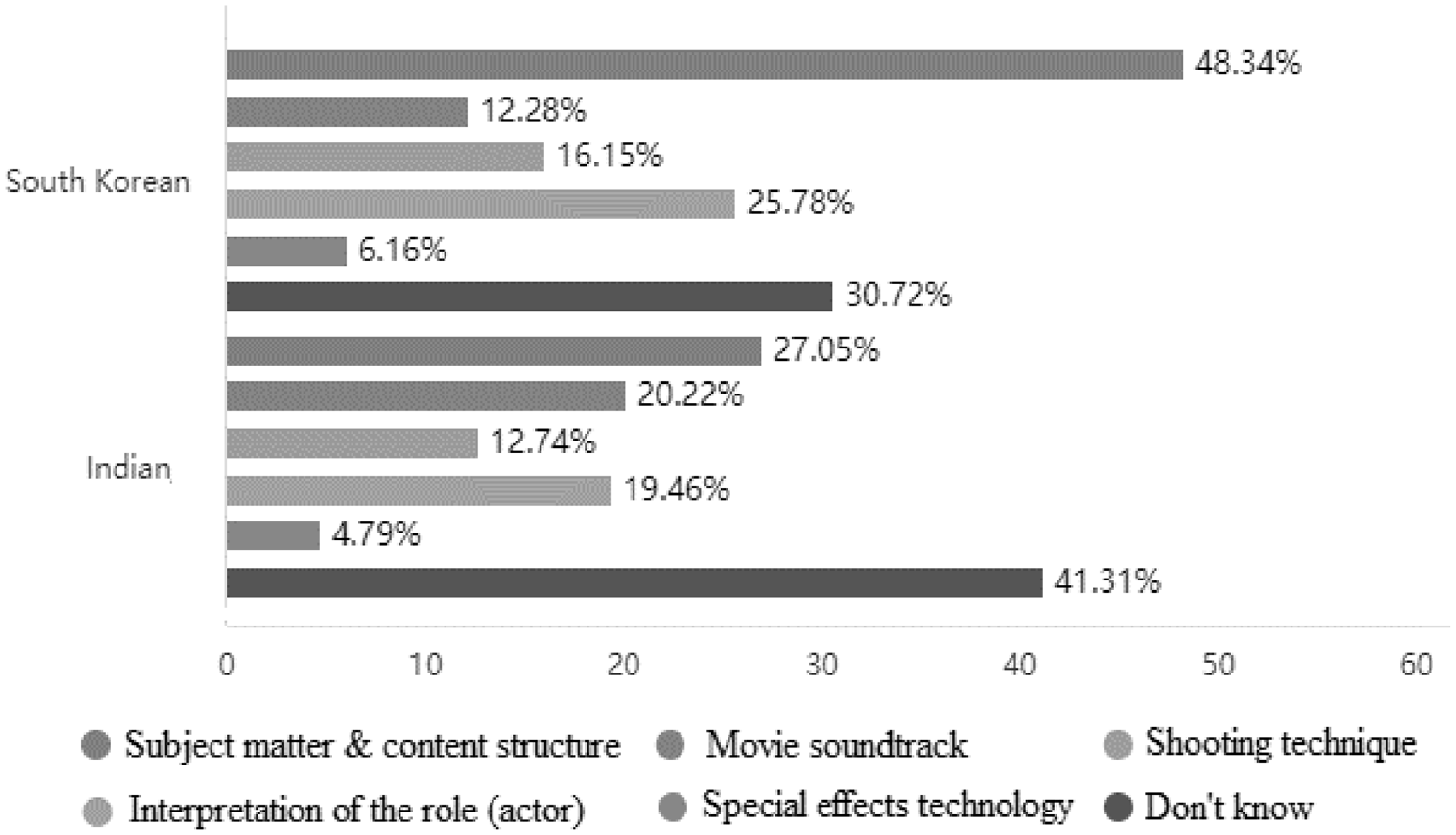
Learning points from Indian and South Korean film industries.
Figure 2 illustrates various aspects of Indian and South Korean films as perceived by the survey participants. Among the 1963 participants, it was found that a significant proportion of viewers reported not watching Indian or South Korean films or not having a specific reason for doing so (30.77% and 31.74%, respectively).

Comparative analysis of the representation of various elements in Indian and South Korean cinematic works.
When asked about the reasons for watching Indian or South Korean films, frequent viewers cited the presence of novel themes (27.41% for South Korean movies and 25.93% for Indian cinema). Additionally, a significant proportion of viewers (24.2% for South Korean films and 19.56% for Indian cinema) stated that these films were open and naturally presented the story, which made them less likely to disappoint. The solid visual effect of Korean films also impressed 15.3% of the audience, while 14.1% of viewers were impressed by Indian cinema. Furthermore, 16.35% of the audience stated that they appreciated these films’ high degree of completion (full content and well-made).
Additionally, more than 25% of Indian and South Korean film viewers said they watched the films due to the values and outlook on life shown in movies being closer to real life. A significant proportion of viewers also said they paid more attention to the emotional world of ordinary people (India = 30.11%, and South Korea = 22.98%), interesting films (India = 25.42%, South Korea = 11.16%), actors’ appearance and acting skills (India = 7.95%, and South Korea = 13.35%), the culture of mother respect (India = 2.29%, and South Korea = 0.66%), and liking for stars (India = 6.88%, and South Korea = 7.79%), and an interest in Indian/ South Korean films (India = 4.28%, and South Korea = 3.92%). Furthermore, the production technology such as photography, sound, art, etc. (India = 7.85%, and South Korea = 7.34%) was found to be similar for both film industries.
In addition to these reasons, some participants provided specific reasons for watching Indian or South Korean films. For example, a young female viewer from Anhui province cited Aamir Khan as the reason for watching Indian movies (#1236). Another viewer of Indian films stated that he often watches Indian movies because people around say that they are very entertaining and offer a unique cultural perspective (#2166). This sentiment is shared by many viewers who enjoy Indian cinema for its vibrant colors, catchy music, and engaging storylines that often incorporate elements of romance, drama, and comedy. A 19-year-old male respondent stated that he watched Indian films due to humorously presenting social issues and reality (#2043). A female government-employed from Fujian province for less than 30 years old said she watches South Korean films due to; “The theme of Korean films is still relatively open, and rare Asian countries dare to reveal the pain points in the political economy and society. Politicians often appear in Korean films, but they are mostly criticized. In China, it is often not said that whether it is to shape the positive or negative, it generally makes everyone very unfamiliar with political figures (#798).”
Mostly said, Korean films have uniqueness and profound themes and dare to analyze and reveal the dark side of human society and nature (#662, #1754, #1904, #2005).
The study results reveal a slight preference for South Korean film actors over Indian actors in the Chinese market. Specifically, 10.8% (212) of participants reported having a favorite actor from South Korea, while 9.42% (185) cited Indian film actors as their favorites (Figure 3). While the global reach of Indian cinema is well-established, these results suggest that South Korean actors are slightly more popular among Chinese audiences. This could be attributed to various factors, such as the genre of K-pop, cultural similarities between South Korea and China, or the popularity of South Korean media in China. It should be noted that the study only looked at the actors’ preferences, and it does not reflect the overall popularity or success of the Indian and South Korean film industry in the Chinese market. These findings provide a snapshot of the Chinese audience’s preference for actors from South Korea and India in an optional item.

South Korean and Indian film actors.
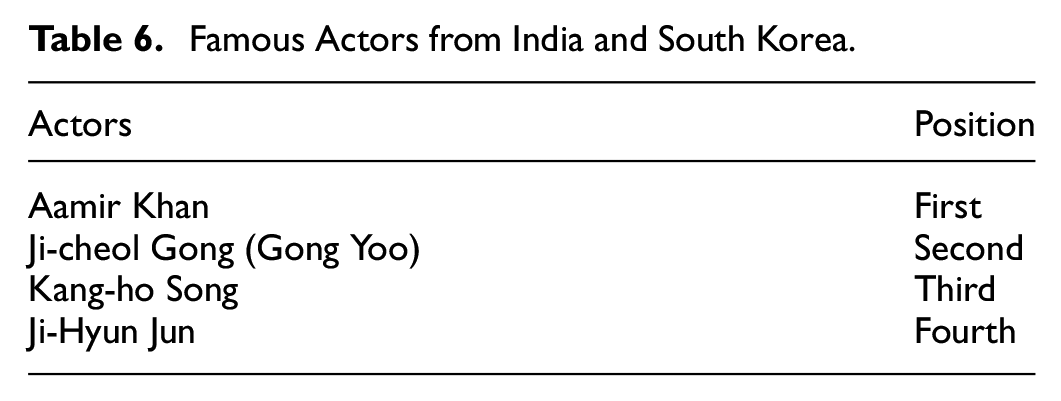
Regarding favorite actors, Aamir Khan emerged as the most popular among Chinese cinephiles, with most participants citing him as their favorite. South Korean actors Ji-cheol Gong (stage name: Gong Yoo) and Kang-ho Song came in second and third, respectively, citing them as their favorites. Additionally, the analysis of the top famous actors among Chinese cinephiles revealed that, except for Aamir Khan, no Indian actors were among the top eight in both Indian and South Korean films. However, it should be noted that Aamir Khan’s popularity was over three times more popular among the Chinese audience than the top South Korean actors in China. While the overall popularity of South Korean actors slightly surpasses that of Indian actors, as revealed by the present study, when analyzing individual actors, Indian actor Aamir Khan emerges as the most famous among Chinese cinephiles. The data shows that out of the top famous actors in the Chinese audience, Aamir Khan is the only Indian actor on the list, with most participants identifying him as their favorite (Table 6).
Famous Actors from India and South Korea.
The survey results indicate that South Korean directors are more popular among the Chinese audience than Indian directors. Specifically, the popularity of South Korean directors is two times greater than that of Indian directors. However, it should be noted that the popularity of South Korean directors is, to some extent, less than that of South Korean actors. In contrast, Indian directors are two times less famous than Indian actors (Figure 4).

South Korean and Indian film directors.
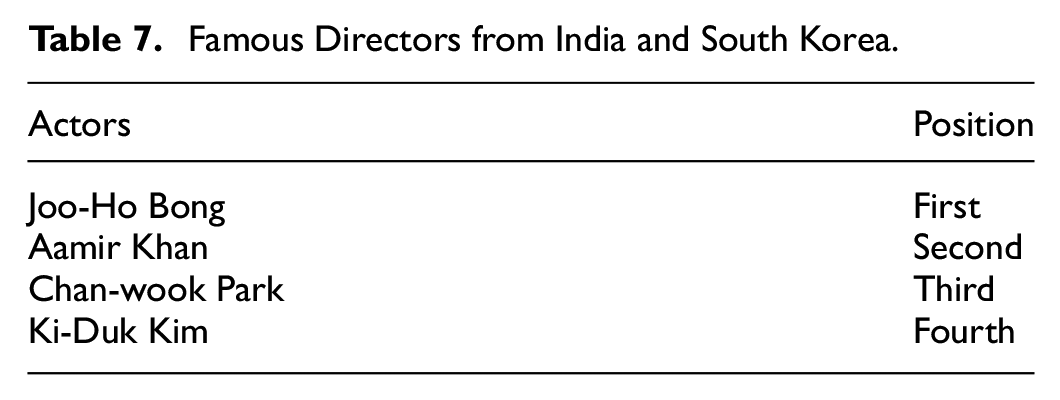
Specifically, the study found that South Korean directors were more popular than Indian directors, with Joo-Ho Bong being the most popular among Indian and South Korean film directors. Aamir Khan, an Indian actor, and director, was the second most popular, followed by Chan-wook Park and Ki-Duk Kim. Aamir Khan has been a prominent figure in the Indian film industry for several decades and has earned widespread acclaim for his performances in various films. Khan is known for his versatility as an actor and has portrayed multiple characters, from romantic leads to socially conscious protagonists (Ahmad, 2019; Daniels, 2013; Sisodia, 2017). In addition to his acting career, he has established himself as a successful director and producer, with several critically acclaimed and commercially successful films to his credit.
Additionally, some films may be deemed inappropriate or sensitive and therefore banned from release in China. However, some of their most well-known and critically acclaimed films have been released in China, such as Joo-Ho Bong’s Parasite and Aamir Khan’s Dangal. Despite the absence of theatrical releases for Aamir Khan and Joo-Ho Bong movies, recent trends indicate that over 65% of individuals now opt for online streaming services, which offer a distinct category for Indian and South Korean films (Yaqoub et al., 2024). With the proliferation of over-the-top (OTT) platforms, the mode of movie consumption has undergone a paradigm shift. Audiences have more options than ever to access a diverse range of content. In addition, the interviewees may have heard about these directors through various media outlets, including social media, news articles, and word-of-mouth recommendations from friends and family. While not all of their films may have been released in China, both Aamir Khan and Joo-Ho Bong are widely recognized and respected figures in the film industry, and their work has received global recognition and acclaim. Therefore, the interviewees may have become familiar with their work through these channels.
It should be noted that while the popularity of South Korean directors was found to be less than that of its actors, Indian directors were found to be two times less famous than their actors, especially Aamir Khan. The results indicate that Joo-Ho Bong’s critically acclaimed films, such as Parasite, Memories of Murder, Mother, and The Host, have propelled him to global cinematic icon status. At the same time, Aamir Khan’s directorial efforts have also been well-received among the Chinese audience. The data suggests that Chinese cinephiles are particularly interested in South Korean directors’ works (Table 7).
Famous Directors from India and South Korea.
Discussion and Conclusion
In contrast to the South Korean film industry, which has recently seen significant international success, Indian cinema has a longstanding history. Few studies compare and analyze the two nations’ competitive advantages in the film industry, despite their prominent positions at the worldwide box office (Kang et al., 2022). The current study examined the consumption and attitudes toward Indian and South Korean films among Chinese audiences. South Korea ($ 0.5 US Billion) and India ($ 0.5 US Billion) are serially in sixth and seventh place in the global box office market (MPA, 2022). Results from the survey revealed that both men and women watch more Indian films than South Korean movies, and this trend was consistent across areas of study and academic qualifications. The age range of 26 to 30 reported the highest consumption of Indian and Korean films, confirming that they are the most cinemagoers (Maoyan Entertainment, 2021; Thomala, 2022).
Furthermore, the data indicated a positive correlation between an individual’s monthly consumption and the number of foreign films they watch. The study also found that most participants identified as Indian film viewers and primarily learned about new films through recommendations by others and social media platforms such as Weibo or WeChat. Additionally, video sites and app platforms were prevalent among Chinese audiences as sources of information for new Indian and South Korean films (Yaqoub et al., 2024). The survey revealed that numerous audience members reported satisfaction with South Korean and Indian film genres. Participants also demonstrated greater awareness of Indian cinema than South Korean films, and the attitudes toward both film industries showed a moderate positive correlation. The survey results also indicated that many participants reported being “somewhat concerned” about the culture of South Korean and Indian films. Viewers cited the presence of novel themes and the open and natural presentation of the story as reasons for watching these films. Additionally, viewers also noted solid visual effects, a high degree of completion, values and outlook on life, the emotional world of ordinary people, interesting film, actor’s appearance and acting skills, the culture of mother respect, liking for stars, and interest in Indian/South Korean films as reasons for watching these films. Furthermore, production technology, such as photography, sound, art, etc., was found to be similar for both film industries.
Regarding favorite actors, Aamir Khan emerged as the most popular among Chinese cinephiles, with most participants citing him as their favorite. South Korean actors Ji-cheol Gong and Kang-ho Song came in second and third, respectively. The study also found that South Korean directors were more prevalent among Chinese audiences than Indian directors, with Joo-Ho Bong being the most popular among Indian and South Korean film directors. However, it should be noted that while the popularity of South Korean directors was found to be less than that of its actors, Indian directors were found to be two times less famous than their actors. These results suggest that Chinese cinephiles have a particular interest in the works of South Korean directors.
The research findings shed light on various aspects of the Chinese audience’s engagement with cinema, including their preferences for movie genres and film stars, factors driving their interest in transnational cinema, and their level of familiarity with directors and film stars. Of particular note is that exposure to non-Hollywood and Western cinema positively impacts the Chinese audience’s interest in cinema, as evidenced by their increased knowledge and appreciation of such works. These insights contribute to our understanding of the dynamics of global cinema. They may have important implications for filmmakers, distributors, and other industry stakeholders seeking to engage with this important market.
Study Limitations and Recommendations for Future Studies
The present study contributes to the ongoing discourse on the Chinese film industry by highlighting the limitations of previous research findings and the need for further inquiry. By examining audience reception and its impact on box office revenue, this study offers new insights into the factors driving the financial success of films in China. However, it should be noted that the sample size of this study was limited to nonprobability-convenience and purposive samples of 1963 respondents. The results may only be generalizable to some of the Chinese population. Future research may benefit from more rigorous probability sampling techniques and increasing the sample size to understand the Chinese film industry comprehensively. Exploring other international film industries, such as Hollywood, France, Spain, Russia, Thailand, and Japan, would also be valuable to gain a more nuanced perspective on the global film market. Based on the findings of this study, recommendations for the Chinese film industry include: (1) identifying and capitalizing on opportunities to release films overseas; (2) focusing on the domestic market as a critical source of revenue; and (3) continuing efforts to improve the quality of films for both national and international audiences.
Some Korean and Indian films may have faced similar challenges in getting past Chinese censors, which could have affected their popularity among Chinese audiences. However, without a more specific analysis of the content and themes of these films, it is difficult to determine the extent to which censorship has influenced their reception in China.
Our survey did not distinguish between respondents who watched films in cinemas and those who watched them through over-the-top (OTT) platforms. This is an important distinction, as the rise of OTT platforms has significantly impacted the film industry in recent years. We hope that future research can explore this topic in more depth to better understand the impact of OTT platforms on movie preferences among Chinese audiences. Further research would be needed to determine how much Chinese audiences prefer one consumption mode over another.
Footnotes
Acknowledgements
We are thankful to all anonymous respondents who filled out our questionnaire.
Declaration of Conflicting Interests
The author(s) declared no potential conflicts of interest with respect to the research, authorship, and/or publication of this article.
Funding
The author(s) disclosed receipt of the following financial support for the research, authorship, and/or publication of this article: This research project was financially supported by The National Social Science Foundation of China’s major project in arts, (# 21ZD16) and Funding for Postdoctoral Work in Beijing (International Exchange Training) under grant number 2024-ZZ-02/7002751005.
Ethics Approval
Ethics Approval was obtained at Fujian Normal University in Fuzhou, People’s Republic of China.

Data Availability Statement
Data is available upon reasonable request.