




Abstract
Professional autonomy is critical for nursing practice and professional development. A clear understanding of the professional autonomy concept and its applications in the real world is warranted. This paper clarified the “professional autonomy in nursing” concept using Walker and Avant’s method and the PRISMA flowchart and checklist to conduct the current analysis. Five electronic databases were searched: PubMed, ScienceDirect, ProQuest, Web of Science, and CINAHL Plus with Full Text. The search yielded 21 articles on “professional autonomy in nursing” between 2019 and 2023—however, six old articles related to measurement tools or instruments. The elements that characterize “professional autonomy in nursing” fall into four categories: shared leadership, professional skills, inter- and intra-professional collaboration, and a healthy work environment. Professional autonomy in nursing is defined as the professional nurse’s competency and innovative performance to determine independent or interdependently nursing activities while conserving accountability for decisions and reflecting advocacy and caring. The consequences of the concept are positive outcomes such as high patient satisfaction with provided care, nurses’ accountability, empowerment, a sense of self-efficacy, commitment to the profession, career, and organization, as well as high quality of work. The definitions and measurements of “professional autonomy in nursing” have developed over time, which mandates a continued study and analysis of this concept. It is essential to understand the multidimensional nature of the concept in order to offer professional development programs.
Introduction
Nursing autonomy is about nurses’ independence, self-governance, self-determination, and self-direction, whereas “professional autonomy” is the authority to make decisions and act based on professional knowledge and judgment; thus, nurses make clinical decisions based on their nursing scope of practice (Hsiu-Ying et al., 2022).
The key aspects of professional autonomy in nursing involve (1) decision-making, nurses’ authority to make decisions related to patient care and unit operations; (2) ethical considerations, nurses’ considerations of patient preferences and ethical principles; (3) accountability, nurses’ responsibility for the outcomes of those their patient care and unit operations decision, and (4) collaboration, nurses collaborate with other healthcare teams while maintaining their autonomy.
The importance of professional autonomy in nursing lies in three main domains: (1) patient-centered care meeting patients’ tailored needs (Pursio et al., 2021); (2) advocacy for patients’ rights and well-being (Setoodegan et al., 2019); (3) professional growth because autonomy fosters critical thinking and professional development and learning (Hsiu-Ying et al., 2022). Professional autonomy is critical for nursing practice and professional development (Hsiu-Ying et al., 2022). However, various factors are needed to promote nurses’ professional autonomy and job satisfaction, such as nurses’ knowledge and clinical judgment as well as a supportive work environment (Both-Nwabuwe et al., 2020; Hara et al., 2020; Pursio et al., 2021). It is well documented that nurses’ autonomy still faces many challenges that include (1) hierarchy within healthcare organizations that hinders nurses’ autonomy, (2) team dynamics; it is challenging to collaborate with other healthcare team members while asserting nurses’ autonomy, and (3) legal and ethical boundaries; nurses must balance autonomy with legal and ethical guidelines (Vaughn, 2023).
“Professional autonomy in nursing” is not about fulfilling routine tasks; it is about having self-direction and intellectual flexibility to decide on patient care based on the patient’s needs (Balasi et al., 2023; Rouhi-Balasi et al., 2020). Discretionary decision-making is critical for autonomous nursing practice (Pursio et al., 2021), as it involves judgments by professionals based on their training and experience (Balasi et al., 2023). Professional autonomy in nursing also means having the authority to decide unit operations based on the professional’s knowledge (Balasi et al., 2023; Hsiu-Ying et al., 2022; Oshodi et al., 2019). It is linked to nurses’ competency (Balasi et al., 2023) and their nurse managers’ leadership (Setoodegan et al., 2019). Increasing nursing skills could help them be more independent and help their nurse managers be better leaders (Balasi et al., 2023; Heinen et al., 2019; Junttila et al., 2023; Oshodi et al., 2019). Figure 1 shows a schematic presentation of the concept of professional autonomy in nursing.
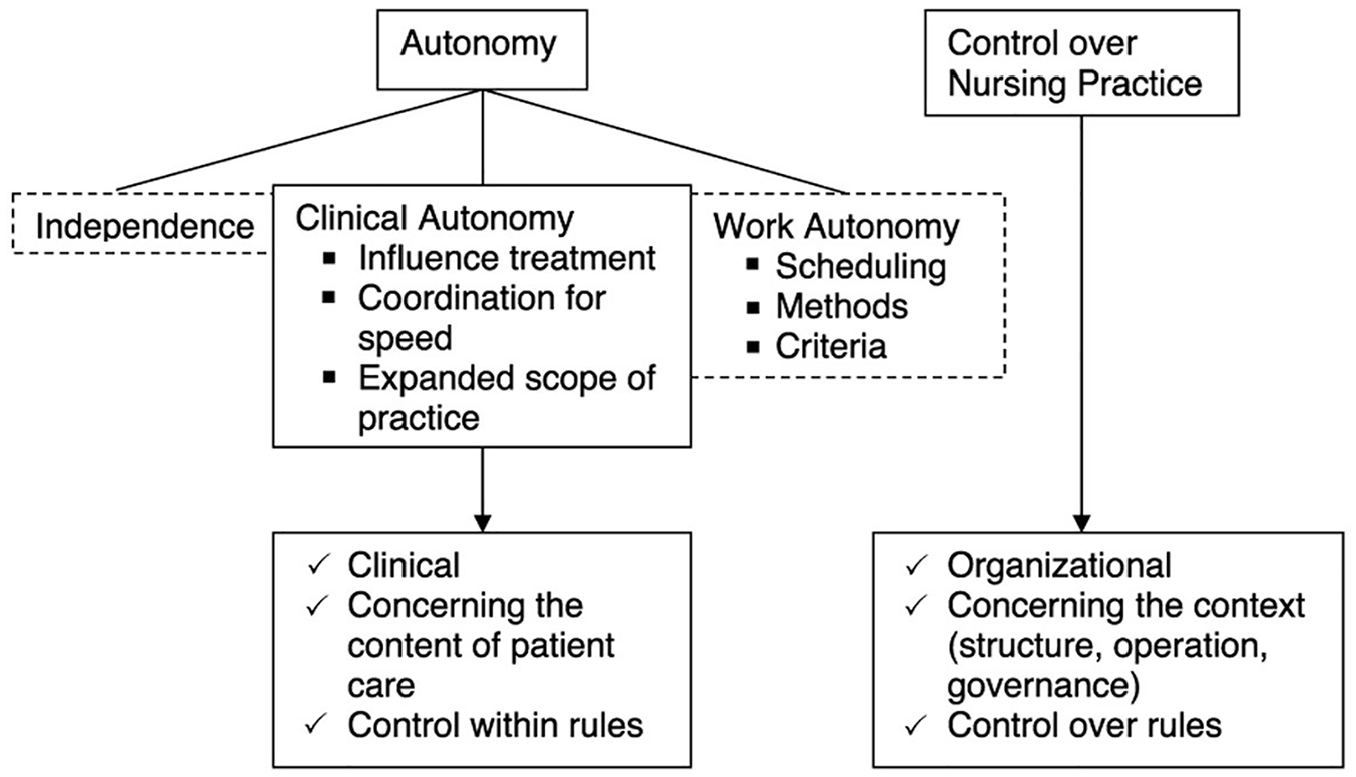
A schematic presentation of the concept of “professional autonomy in nursing.” Adapted from Weston (2008).
Purpose and Significance
There is an accelerated emphasis on high-quality nursing care (Labrague et al., 2019) and nurses’ professional development (Balasi et al., 2023). Nurses’ professional autonomy remains a vital element in achieving that goal. A clear understanding of the meaning and real-world applications of professional autonomy is urgently needed.
There have been many studies on “nurse autonomy” and “professional autonomy in nursing” (Abdolmaleki et al., 2019; Balasi et al., 2023; Both-Nwabuwe et al., 2020; Oshodi et al., 2019). These studies have examined how nurses can be more independent and autonomous. However, there is a gap in the reviewed studies; that is, “professional autonomy in nursing” is poorly delineated and overlooked (Rouhi-Balasi et al., 2020). Therefore, a comprehensive clarification of this concept is necessary (Rouhi-Balasi et al., 2020), and growing expertise in nursing is required (Pursio et al., 2021).
The current literature search in this analysis was limited to 2019 to 2023, except for the measuring instruments. No recent concept analyses on “nurse autonomy” or “professional autonomy in nursing.” However, one recent concept analysis was related to nursing practitioners (Peacock & Hernandez, 2020), which doesn’t reflect the autonomy of the nursing profession. Concept definitions and measurements develop over time, requiring a continuous exploration of concepts. Therefore, this concept analysis aims to clarify the concept’s definitions, uses, attributes, antecedents, and consequences. Various terms were used to describe “autonomy in nursing,” with different measurements. Thus, a thorough evaluation of this concept will establish a standardized meaning for “professional autonomy in nursing.” The progressive understanding of the studied concept will make it feasible to verify nurses’ autonomy objectively throughout the profession and offer interventions for nursing leaders to enhance nurses’ professional autonomy in practice.
Concept Analysis Method
Concept analysis helps validate what nurses already know, increases their knowledge, and creates new patient care methods. The eight-step method of Walker and Avant (2018) is commonly used for concept analysis in nursing (see Table 1) and is used in this paper. Walker and Avant’s (2018) method was used to explore professional autonomy in nursing because it is iterative and helps construct an operational definition of a concept. Walker and Avant (2018) recommend using all available information sources to compile a complete inventory of the concept’s characteristics and uses (Table 1).
Walker and Avant’s (2018) Eight-Step Method of Concept Analysis.

Five online databases—PubMed, ScienceDirect, ProQuest, Web of Science, and CINAHL Plus with Full Text—were used to find the studies related to this analysis. Searching the bibliographies of previously cited papers revealed additional sources. “Concept Analysis,” AND “Autonomy,” OR “Professional Autonomy,” AND “Nursing” OR “Nurse” were among the Boolean operators analyzed in each database (See Supplemental File 1 Search Strategy). The Preferred Reporting Items for Systematic Reviews and Meta-Analyses (PRISMA) flowchart (adopted from Moher et al., 2009) was used to determine included studies (Figure 2).

PRISMA flowchart. Adapted for use from Moher et al. (2009).
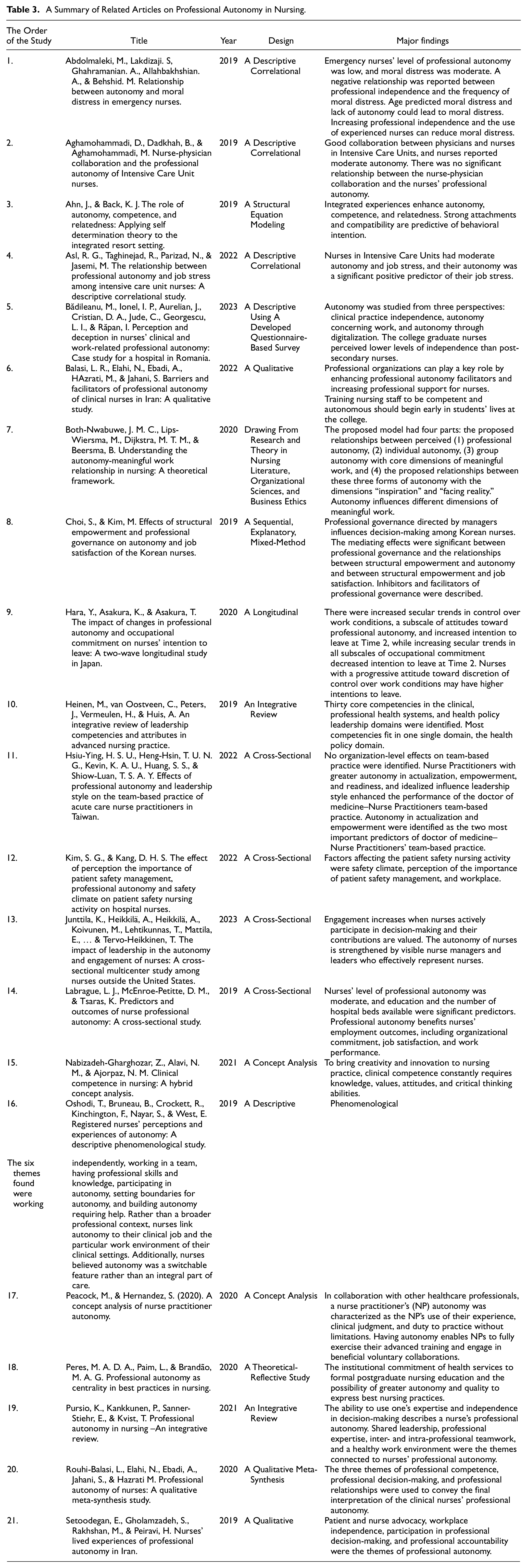
This paper presents the constructed model, related, borderline, and contrary cases for professional autonomy in nursing (Table 2). PRISMA 2020 checklist was also used to facilitate transparent and complete reporting of the concept analysis (Supplemental File 2) (PRISMA Group, 2022). A summary of the 21 related articles is provided in Table 3.
Constructed Cases to Analyze the Concept of Professional Autonomy in Nursing.

A Summary of Related Articles on Professional Autonomy in Nursing.
Independently, two researchers assessed the titles and abstracts discovered using search techniques. The article was eliminated if it was judged after the initial evaluation of the abstract that it did not support the concept being investigated. When there was any doubt as to whether the abstract met the criteria for inclusion of the concept of professional autonomy in nursing, another two researchers decided whether or not it should be included. The whole texts of the chosen articles were then acquired. The full-text publications were independently reviewed by the authors, who then, where needed, confirmed and verified the findings against the inclusion criteria.
The selected reviewed studies had to meet the following criteria to be considered for inclusion: (a) relevance and alignment with the aim of the analysis; (b) use of theoretical and empirical approaches; (c) studies utilizing the concept of professional autonomy in nursing as a primary concept; and (d) full-text studies written in English and published in peer-reviewed journals. Studies not meeting the inclusion criteria were excluded (see Figure 1).
The initial search process yielded 2,000 articles. After screening the titles and abstracts, 1,500 papers were identified, of which 600 were duplicated, giving 900 papers. Of these 900 papers, 350 were retained as nursing studies. After the second title/abstract screening, we excluded another 120 publications since they had no relevance to the theme of professional autonomy in nursing. The 230 studies were assessed and selected for inclusion. Following the full-text screening, 140 articles were eliminated because they didn’t meet the inclusion criteria. After applying the eligibility criteria in the fourth stage, 70 articles were evaluated. Another 28 articles were excluded because they weren’t research papers, and 18 weren’t primary research, yielding 21 papers on nursing professional autonomy. There were six old articles related to measurement tools or instruments.
Results
Choosing the Concept
Different terms were used with the concept of “autonomy in nursing,” such as clinical autonomy, nursing practice autonomy, organizational autonomy, job autonomy, structural or work autonomy, attitudinal autonomy, and personal autonomy (Abdolmaleki et al., 2019; Balasi et al., 2023; Pursio et al., 2021; Rouhi-Balasi et al., 2020), which in turn have been measured differently. However, there were conflicting consequences regarding “professional autonomy in nursing,” and little is known about the development of this concept. As nurses who have worked in various clinical settings, the current researchers chose “professional autonomy” in this concept analysis because it focused on clinical and professional autonomy in decision-making.
Over the years, “professional autonomy in nursing” has had to be continuously assessed regarding many positive outcomes for patients, nurses, and organizations, including increases in nurses’ job satisfaction and retention (Balasi et al., 2023; Both-Nwabuwe et al., 2020; Hara et al., 2020), and work engagement (Junttila et al., 2023). In turn, that increases organizational commitment, perceived patient safety culture (Kim & Kang, 2022), patient satisfaction (Ferreira et al., 2023), and the value of organizations (Labrague et al., 2019).
Differences Between Autonomy and Professional Autonomy
The concept of autonomy is a multidimensional concept that addresses personal freedom, proper self-government, and freedom of will (Asl et al., 2022; Setoodegan et al., 2019), and it has different synonyms, inclusive of “self-determination,” “self-government,” “self-rule,” independence, freedom, liberty, and sovereignty. On the other hand, professional autonomy is the structural or attitudinal characteristic contributing to the concept’s foundation (Bădileanu et al., 2023). Structural autonomy is the employee’s freedom to make job-related decisions based on the job requirements, while attitudinal autonomy is the belief in proper decision-making (Bădileanu et al., 2023).
Professional Autonomy in Nursing and Competency
Nurses’ autonomy is linked to their competency (Ahn & Back, 2019; Nabizadeh-Gharghozar et al., 2021), as both concepts are linked to knowledge and capabilities (Oshodi et al., 2019). Strategies to boost nurses’ competence are needed to create a learning environment that could foster autonomy (Nabizadeh-Gharghozar et al., 2021; Oshodi et al., 2019). To be fully autonomous, nurses should participate in lifelong learning to increase their knowledge (Ahn & Back, 2019). Nurses should use their experience to enhance autonomy and competence (Ahn & Back, 2019; Nabizadeh-Gharghozar et al., 2021). Autonomous nurses provide nursing care based on knowledge, professional expertise, and competencies (Ahn & Back, 2019; Hsiu-Ying et al., 2022; Rouhi-Balasi et al., 2020). Specialization certification gives nurses advanced knowledge and complements competencies and skills (Hsiu-Ying et al., 2022; Rouhi-Balasi et al., 2020). Certification could improve autonomy in practice, empowerment, interprofessional collaboration, and professionalism. Furthermore, professional nursing organizations enhance nurses’ knowledge and increase their skills and competencies (Ahn & Back, 2019; Hsiu-Ying et al., 2022; Rouhi-Balasi et al., 2020).
Improving nurses’ clinical competency increases confidence when making clinical or patient care-related decisions (Ahn & Back, 2019; Hsiu-Ying et al., 2022; Rouhi-Balasi et al., 2020). Such decisions are also based on knowledge; autonomous decision-making improves as nurses increase their competencies and knowledge (Ahn & Back, 2019; Hsiu-Ying et al., 2022; Rouhi-Balasi et al., 2020). The longer the nursing experience, the greater competencies are received and practiced (Abdolmaleki et al., 2019; Hsiu-Ying et al., 2022; Oshodi et al., 2019; Pursio et al., 2021; Rouhi-Balasi et al., 2020; Setoodegan et al., 2019). Thus, new knowledge is gained, and the practice will be preserved to become more autonomous over time (Ahn & Back, 2019). Over the years, nurses have been privy to the significance of their capabilities, knowledge, experience, and competency in working autonomously (Ahn & Back, 2019; Oshodi et al., 2019), which positioned them in the “assist and back” to be autonomous professionals.
Professional Autonomy in Nursing and Leadership
Well-trained and knowledgeable nurses and nurse leaders are needed due to the escalating developments in healthcare (Heinen et al., 2019). Leadership competencies and attributes enhance nurses’ autonomy (Heinen et al., 2019). As a newly used term in nursing leadership research, clinical leadership is needed to strengthen nurses’ autonomy (Heinen et al., 2019). Heinen et al. (2019 reported eight core competencies for the clinical leadership domain: (1) oversees the healthcare team’s efforts to improve self-care management and patient engagement, and prevent future negative outcomes such as readmissions. The clinical leaders act as valuable resources, preceptors, mentors/coaches, and role models, especially in terms of reflective and critical thinking; (2) demonstrates clinical expert leadership in organizing and tracking standards of practice aimed at improving patient care; (3) identifies organizational barriers to providing effective patient care; (4) engages in advanced nursing practice and provides evidence-based practice leadership, which necessitates competence in knowledge application activities such as translating studies into practice, improving the trustworthiness of healthcare outcomes, and practicability; (5) leads and acts as a liaison between different health professionals and organizations to improve patients’ outcomes; (6) collaborates with healthcare professionals in planning, putting things into action, looking for ways to improve; (7) aligns practice with the organization’s overall goals; and (8) starts new initiatives for standards, guidelines, and quality assurance, as well as for training and research.
Purpose of the Analysis
The current analysis aims to clarify the concept of “professional autonomy in nursing,” which helps propose an operational definition.
Definitions and Uses of the Concept
The definitions of “professional autonomy in nursing” have been modified. Definitions and measurements of concepts evolve along a continuum of various definitional approaches, necessitating perseverance in studying the concept. Different concepts are used in the literature to describe “nurse autonomy,” such as professional autonomy, independence, self-determination, and self-direction. According to Merriam-Webster Online (Merriam-Webster Dictionary, 2021), autonomy is “the quality or state of self-governing,” with different synonyms for choice, free will, accord, self-determination, will, and volition.
Two categories of “nurse autonomy” are generally recognized; “clinical autonomy” and “professional autonomy.” “Clinical autonomy” refers to the ability of nurses to provide patient care beyond standard practice. There are two sorts of autonomy referred to by the term “professional autonomy”: (1) clinical autonomy, which refers to nurses’ independent and accountable decision-making over patient care (Oshodi et al., 2019; Pursio et al., 2021; Rouhi-Balasi et al., 2020; Setoodegan et al., 2019); (2) nursing practice autonomy which refers to nurses’ ability to work according to one’s knowledge and judgment, provide patient care within the nursing scope of practice set by administrative rules (Hara et al., 2020; Pursio et al., 2021; Rouhi-Balasi et al., 2020).
Professional autonomy has the following subsequent factors: (1) shared decision-making concerning patient care, which could positively influence patient safety and the quality of provided healthcare (Peres et al., 2020; Pursio et al., 2021; Rouhi-Balasi et al., 2020; Setoodegan et al., 2019) and (2) the ability to control conditions in the work environment (Pursio et al., 2021). An autonomous work environment includes performing work based on nurses’ judgment and clinical decision-making (Both-Nwabuwe et al., 2020; Peacock & Hernandez, 2020; Pursio et al., 2021; Rouhi-Balasi et al., 2020).
Pursio et al. (2021 recognized two themes that help in describing nurses’ professional autonomy: (1) independent decision-making (Rouhi-Balasi et al., 2020; Setoodegan et al., 2019) and (2) ability for own competence utilization (Nabizadeh-Gharghozar et al., 2021; Rouhi-Balasi et al., 2020). Independent decision-making over patient care and work is vital because it allows for unlimited usage of nurses’ knowledge in addition to talents (Oshodi et al., 2019; Pursio et al., 2021; Rouhi-Balasi et al., 2020). Independence in work is essential for independence in unit operations (Setoodegan et al., 2019). The ability to make independent decisions for the benefit of patients and on their behalf (Hsiu-Ying et al., 2022; Oshodi et al., 2019; Pursio et al., 2021; Rouhi-Balasi et al., 2020; Setoodegan et al., 2019), and the ability to solve problems (Abdolmaleki et al., 2019). Independent decision-making involves control over practices such as self-scheduling, prioritizing work tasks, coordinating patient care, and coping with unit operations (Hara et al., 2020; Hsiu-Ying et al., 2022; Oshodi et al., 2019; Pursio et al., 2021).
Personal competence is defined as the flexibility and obligation to act according to one’s values (Nabizadeh-Gharghozar et al., 2021; Rouhi-Balasi et al., 2020), contributing to the development of nurses’ professional autonomy (Nabizadeh-Gharghozar et al., 2021; Pursio et al., 2021; Rouhi-Balasi et al., 2020). Personal competency encompasses abilities that grow with job experience (Nabizadeh-Gharghozar et al., 2021; Pursio et al., 2021; Rouhi-Balasi et al., 2020). The competency of nurses enables them to participate effectively in decision-making and problem-solving (Nabizadeh-Gharghozar et al., 2021; Pursio et al., 2021). Nurses’ expertise allows them to communicate and contribute to collaboration effectively (Nabizadeh-Gharghozar et al., 2021; Pursio et al., 2021; Rouhi-Balasi et al., 2020).
Attributes of Professional Autonomy in Nursing
The vital part of concept analysis is figuring out the concept’s defining attributes, which deliver a deep perception for the researcher (Walker & Avant, 2018). Attributes are the characteristics that have the most considerable relationship with the concept (Walker & Avant, 2018), and they aid in differentiating the intended concept from similar or related concepts (Walker & Avant, 2018).
The defining attributes of “professional autonomy in nursing” are self-confidence, initiative, activeness, discretionary decision-making (Setoodegan et al., 2019), responsibility and accountability (Setoodegan et al., 2019), devotion to their profession, receptive potential to others, collegial interdependence, creativity, and caring, advocacy (Setoodegan et al., 2019), and cooperative relationships with clients.
According to the reviewed literature and different resources, the defining attributes of “professional autonomy in nursing” are categorized into four themes: (1) shared leadership; (2) professional skills; (3) inter-and intra-professional collaboration; and (4) a healthy work environment (Pursio et al., 2021; Setoodegan et al., 2019).
Constructing Cases
Identifying a model case and additional cases represents another way of narrowing the critical attributes in concept analysis (Walker & Avant, 2018). This paper presents the constructed model, related, borderline, and contrary real or fictional cases for professional autonomy in nursing (Supplemental Table 1 [File 1]).
Antecedents
Antecedents are conditions that ought to be met for the concept to occur (Walker & Avant, 2018). The nurse’s autonomy is derived from four vital sources: (1) nursing knowledge (Abdolmaleki et al., 2019; Oshodi et al., 2019; Peacock & Hernandez, 2020; Pursio et al., 2021); (2) social relations (Bădileanu et al., 2023); and (3) positional authority (Bădileanu et al., 2023). (4) The authority of expert knowledge is exerted, positively impacting nurses’ professional autonomy (Abdolmaleki et al., 2019; Oshodi et al., 2019; Pursio et al., 2021). The first two sources suggest that “professional autonomy in nursing” originates from the organization and professional knowledge. “Professional autonomy in nursing” is connected with strongly supportive social relations, so weak or absent social support threatens professional autonomy (Bădileanu et al., 2023).
Bădileanu et al. (2023) reported factors affecting “professional autonomy in nursing.” Those factors were (1) personal factors and (2) work-related factors.
Consequences
The concept’s consequences are the concept’s outcomes (Walker & Avant, 2018). In work practice, nurses’ accountability is the most important outcome of autonomy (Oshodi et al., 2019; Pursio et al., 2021; Setoodegan et al., 2019). Accountability is typically accompanied by responsibility (Oshodi et al., 2019; Pursio et al., 2021; Setoodegan et al., 2019). Accountability for acts and decisions entails complete disclosure to professionals, clients, and hiring agencies (Setoodegan et al., 2019). Accountability leads to empowerment and self-efficacy (Oshodi et al., 2019; Pursio et al., 2021; Setoodegan et al., 2019). Empowered individuals are enthusiastic about their employment and can impact their work settings (Oshodi et al., 2019; Pursio et al., 2021). Empowerment promotes nursing professionalization (Oshodi et al., 2019; Pursio et al., 2021).
However, the current researchers believe that the most important outcome of autonomy is patient satisfaction. It is contemporary to introduce the concepts of “one health” and the “modern philosophy of quality management.” “One health” is a multidisciplinary approach that helps in achieving optimal health outcomes for people (Abutarbush et al., 2022). These terms focused on patient satisfaction with the provided healthcare; patients are the essential milestone in the current healthcare environments. Ferreira et al. (2023) argued that focusing on the quality of healthcare services is important for meeting patients’ needs and satisfying their “one health.”
Other consequences of “professional autonomy in nursing” include a commitment to the profession and career (Labrague et al., 2019; Rouhi-Balasi et al., 2020). Occupationally dedicated and psychologically empowered nurses can prioritize and schedule tasks (Labrague et al., 2019; Pursio et al., 2021). Professional autonomy increases nurses’ satisfaction with work, and in turn, it results in a higher quality of work (Peres et al., 2020; Pursio et al., 2021), positive nursing outcomes, along with organizational commitment and work performance (Both-Nwabuwe et al., 2020; Pursio et al., 2021).
Empirical Referents
Empirical referents, which are classes or categories of actual phenomena that show the occurrence of the concept, allow for its quantification (Walker & Avant, 2018). Bădileanu et al. (2023) distinguished between the “structural” and “attitude” elements of autonomy. Nurses’ structural or work autonomy refers to their independence in making decisions largely in light of their professional obligations (Setoodegan et al., 2019). One confidence in one’s ability to make choices and use discretion is an example of an attitude of autonomy (Peacock & Hernandez, 2020; Setoodegan et al., 2019). Instruments commonly used to gauge “professional autonomy in nursing” include the Pankratz Nursing Attitude Scale (PNAS; Pankratz & Pankratz, 1974), the Nursing Activity Scale (NAS; Schutzenhofer, 1987), the Dempster Practice Behaviors Scale (DPBS; Dempster, 1990), the Autonomy, the Caring Perspective (ACP) instrument (Boughn, 1995), and the Attitude toward Professional Autonomy Scale for Nurses (Asakura et al., 2016). While the NAS is solely used to test “structural autonomy,” the PNAS, DPBS, and ACP are all used to assess both “structural autonomy” and “attitudinal autonomy” (Bădileanu et al., 2023).
The Pankratz Nursing Attitude Scale was established by Pankratz and Pankratz (1974, and it includes three subscales: (a) nurse autonomy and patient advocacy, (b) patients’ rights, and (c) rejection of nurses’ traditional role limits. The Nursing Activity Scale, a revised version of Schutzenhofer’s (1987) Professional Nursing Autonomy Scale 15 (SPNA), is a 30-item questionnaire that describes unique nursing settings and gives an important scale expressing varying levels of autonomy. The Dempster Practice Behaviors Scale (1990/0) assesses the level of autonomy in practice. It concentrated on the overt and covert behaviors, actions, and behaviors connected with the amount of autonomy an individual has in a clinical environment. There were four subscales in the DPBS: (1) preparation, (2) empowerment, (3) actualization, and (4) valuation. This instrument was used both inside and outside of nursing. The Caring Perspective Instrument (Boughn, 1995) examines the autonomy-related attitudes and behaviors specific to nursing students. In Japan, the Attitude Toward Professional Autonomy Scale for Nurses was recently established (Asakura et al., 2016). The scale measured the cognitive aspects of professional autonomy in nurses working in various clinical contexts. The scale was pilot-tested and psychometrically assessed in two versions: an initial (26-item) version and a revised version (19 items) that revealed excellent internal consistency (=0.85) and concurrent validity.
The Proposed Definition of the Concept
Based on the existing concept analysis, “professional autonomy in nursing” is the professional nurse’s competency and innovative performance to determine independent or interdependently nursing activities while conserving accountability for decisions and reflecting advocacy and caring.
Discussion
Concepts are the basic building blocks of the theoretical framework of every field, and the efficiency of the concept analysis determines the strength of a profession’s guiding theories. As it is the most important case, our model case showed that the attributes of “professional autonomy in nursing” include self-confidence, discretionary decision-making, responsibility and accountability, collegial interdependence, creativity, caring, advocacy, cooperative relationships with clients, shared leadership, healthy work environment; these attributes were consistent with the literature (Pursio et al., 2021; Setoodegan et al., 2019).
According to the findings of the current concept analysis, “professional autonomy in nursing” is highly associated with patient care decision-making (Oshodi et al., 2019; Pursio et al., 2021; Rouhi-Balasi et al., 2020; Setoodegan et al., 2019). In clinical practice, nurses suffer numerous restraints, including work rules, regulations, and ethical norms that limit their full autonomy.
Independent decision-making and skills characterize nurses’ professional autonomy (Rouhi-Balasi et al., 2020; Setoodegan et al., 2019). “Professional autonomy in nursing” is often mistaken with “clinical autonomy,” therefore distinguishing the two notions could be beneficial (Pursio et al., 2021; Rouhi-Balasi et al., 2020). “Professional autonomy in nursing” includes clinical autonomy (Oshodi et al., 2019; Pursio et al., 2021; Rouhi-Balasi et al., 2020; Setoodegan et al., 2019). As a result, it is mostly a measuring issue, and the equipment precisely measures the dimensions and labels the concepts differently.
“Professional autonomy in nursing” is a complex and multidimensional concept resulting from life experiences that include education, one’s beliefs, and socialization (Bădileanu et al., 2023; Peres et al., 2020; Setoodegan et al., 2019). The emerged definitions of “professional autonomy in nursing” in the current concept analysis support the critical attributes of the concept, especially discretionary decision-making (Setoodegan et al., 2019). This professional autonomy will not suddenly happen; it is based on competence and professional skills, initiative, activeness, responsibility, and accountability (Nabizadeh-Gharghozar et al., 2021; Setoodegan et al., 2019). Furthermore, this autonomy requires the receptive potential to others, collegial interdependence, creativity, caring, advocacy (Setoodegan et al., 2019), and inter-and intra-professional collaboration (Peacock & Hernandez, 2020; Rouhi-Balasi et al., 2020). Understanding the multidimensionality of “professional autonomy in nursing” is critical in creating supportive work environments that promote nurses’ professional autonomy (Pursio et al., 2021). Supportive work environments encompass shared leadership that empower nurses (Oshodi et al., 2019; Pursio et al., 2021). However, shared leadership spreads slowly as healthcare organizations have a sturdy hierarchy (Pursio et al., 2021).
Antecedents of “professional autonomy in nursing” included nursing knowledge and certain personal factors (Abdolmaleki et al., 2019; Oshodi et al., 2019; Pursio et al., 2021). Autonomous nurses use their knowledge, experience, and courage to complete the task (Setoodegan et al., 2019). Based on knowledge and confidence, independent decision-making could be improved (Setoodegan et al., 2019). Social relations enhance the professional autonomy of nurses’ attributes of receptive capacity to others, collegial interdependence, cooperative relationships with clients, and inter-and intra-professional collaboration (Bădileanu et al., 2023; Peacock & Hernandez, 2020; Pursio et al., 2021; Rouhi-Balasi et al., 2020). Professional autonomy could grow with age, experience, and education (Bădileanu et al., 2023; Peres et al., 2020). A good way to promote professional autonomy is to ease conserving positions; that is, positional authority and higher management professional roles could increase nurses’ horizons and, in turn, promote “professional autonomy in nursing” (Bădileanu et al., 2023). Autonomous nurses have a more significant locus of control and self-efficacy (Bădileanu et al., 2023), and as their nurse managers empower them, they will empower other nurses. Regarding gender-stereotyped personality traits, autonomy is about power dynamics between physicians, nurses, and men and women (Aghamohammadi et al., 2019). These relationships are closely associated with nursing and medical inequality, and this trend has to be overcome by promoting a conducive work environment and a professional practice environment.
Among work-related factors, it is critical to empower nurses to participate in decision-making (Setoodegan et al., 2019), planning, and nursing development through shared leadership. Participatory decision-making improves the recruitment and retention of skilled nurses (Oshodi et al., 2019; Pursio et al., 2021). Managers must examine organizational policies that aid nurses’ professional autonomy and help them share knowledge and expertise with team members, improving patient-centered care (Pursio et al., 2021). Nurse managers and leaders have to support a high-quality and professional work environment because organizational constraints, which include autocratic management and hierarchy, absence of control over practice, and uncertain or strict organizational rules, are detrimental to nurses’ professional autonomy (Hara et al., 2020; Oshodi et al., 2019; Pursio et al., 2021; Setoodegan et al., 2019). Overload makes it hard for nurses to think positively about their professional autonomy (Bădileanu et al., 2023).
Accountability, empowerment of self and others, the ability to change the work environment, commitment to the profession, responsibility, personal efficacy, positive feelings about one’s job, and strengthened nursing professionalization were all consequences of “professional autonomy in nursing” (Bădileanu et al., 2023). A shared governance structure promotes nurses’ empowerment, fosters professional autonomy, and promotes evidence-based decision-making (Choi & Kim, 2019). Shared governance assists in recruiting and maintaining qualified nurses who value professional development and are highly committed to the profession and career (Labrague et al., 2019; Rouhi-Balasi et al., 2020). Nurses who work in organizations with shared governance are accountable and responsible (Bădileanu et al., 2023; Oshodi et al., 2019; Pursio et al., 2021; Setoodegan et al., 2019). Nurses’ self-efficacy is essential in motivating nurses to pursue nursing as a lifelong career (Hara et al., 2020; Oshodi et al., 2019; Pursio et al., 2021). Providing opportunities for mastering experiences and mentorship influences nurses’ self-efficacy (Oshodi et al., 2019; Pursio et al., 2021). As they are autonomous, nurses would like to work in environments that increase their professional capacity to practice autonomously (Oshodi et al., 2019; Pursio et al., 2021); this per se is a strengthening of nurses’ professionalism away from medical dominance (Oshodi et al., 2019; Pursio et al., 2021). Cao et al. (2023) reported that individuals who pursue excellence and autonomy in their workplace are more motivated and devoted to their work than their counterparts, which would result in high-quality care.
Conclusions
With the increased emphasis on healthcare quality, patient satisfaction, and professional development, nurses’ professional autonomy is still crucial; thus, “professional autonomy in nursing” is required. “Professional autonomy in nursing” evolves; it is continuous and dynamic. This concept analysis exhibits numerous meanings, instruments, and associated elements contributing to “professional autonomy in nursing.”
Implications of the Findings
The findings of the current concept analysis have many implications for practice, education, and research. The results can support nursing practice and empower nurses to be autonomous; therefore, they must use their knowledge and abilities fully. Additionally, nurse managers must constantly enhance their nurses’ job commitment by offering professional development programs (Hara et al., 2020). The current analysis results may increase the understanding of nurses’ professional autonomy and enhance the attractiveness of work environments. Pursio et al. (2021) reported that nurses’ autonomy is promoted by a safe and friendly work environment, which is engulfed with good team spirit, adequate resources, and staffing. In turn, nurses have more time to spend with their patients.
For education to promote “professional autonomy in nursing,” the curriculum needs a robust educational foundation. Education should prepare graduates who show off characteristics important to acting in the public interest and contributing to healthcare enhancements in general and nursing. With the accelerated use of the era and the modifications in clients’ demographics, including age, curricula must cope with state-of-the-art technical skills that include but are not limited to accurate assessment through evaluation, problem-solving, decision-making, and conflict management. Educators should help pre-registration students fully embrace autonomy as they move toward graduation and know that “owning their practice” in terms of accountability and responsibility is what practice professionals are keen to see. Furthermore, educators have to embrace the autonomy and responsibility of nursing students. Thus, educators should customize learning environments to best suit the social and professional dynamics in their society and the nursing profession (du Toit-Brits & Blignaut, 2023). Educators must empower their students to be self-directed learners through using technology-enabled lifelong learning (du Toit-Brits & Blignaut, 2023). The use of active methodologies would promote nursing students’ autonomy, taking into consideration that they the future practicing nurses (de Alcântara Thimóteo et al., 2022). The authors reported that active learning methodologies allow greater participation, and students’ engagement and collaboration in the learning process. These active methodologies aimed at producing autonomous students based on their abilities and needs (de Alcântara Thimóteo et al., 2022). An example of active methodologies in academia, Rotation by Stations, offers a relevant student the method that proposes proactivity, collaboration, and engagement of students in the proposed tasks or activities (de Alcântara Thimóteo et al., 2022).
The concept’s development exists at various times; thus, studies in this vicinity should be continued. Additional research is needed to clarify the concept and its values in improving nursing practice and education. The professional socialization of nurses and the socialization of women ought to be similarly studied as they have been stated to inhibit the improvement of “professional autonomy in nursing.” Future research is needed to promote “professional autonomy in nursing” by changing nurses’ roles due to the introduction and evolution of digital healthcare (Pursio et al., 2021; Setoodegan et al., 2019). Most of the existing tools examine “professional autonomy in nursing” from professionals’ perspectives; for this reason, new tools are needed to measure professional autonomy from patients’ and healthcare administrators’ perspectives.
Study’s Limitations
This analysis has a set of limitations that should be considered before interpreting the results. Walker and Avant’s (2018) eight-step method does not determine a specific strategy for identifying the uses of the concept under study. However, we sought to tackle this shortcoming by using a comprehensive methodology. Most constructed cases were created hypothetically, limiting their application in real-world situations.
Supplemental Material
sj-docx-1-sgo-10.1177_21582440241302129 – Supplemental material for Professional Autonomy in Nursing: A Concept Analysis
Supplemental material, sj-docx-1-sgo-10.1177_21582440241302129 for Professional Autonomy in Nursing: A Concept Analysis by Majd T. Mrayyan, Abdallah Abu Khait, Mohammad Rababa, Abdullah Algunmeeyn, Sami Al-Rawashdeh, Nijmeh AL-Atiyyat, Majdi Rababa, Ahmed Abu Saraya and Saleem Al-Rjoub in SAGE Open
Supplemental Material
sj-docx-2-sgo-10.1177_21582440241302129 – Supplemental material for Professional Autonomy in Nursing: A Concept Analysis
Supplemental material, sj-docx-2-sgo-10.1177_21582440241302129 for Professional Autonomy in Nursing: A Concept Analysis by Majd T. Mrayyan, Abdallah Abu Khait, Mohammad Rababa, Abdullah Algunmeeyn, Sami Al-Rawashdeh, Nijmeh AL-Atiyyat, Majdi Rababa, Ahmed Abu Saraya and Saleem Al-Rjoub in SAGE Open
Footnotes
Acknowledgements
The first researcher would like to thank all participants for their input in the current study.
CRediT Authorship Contribution Statement
All authors have agreed on the final version and meet at least one of the following criteria (recommended by the International Committee of Medical Journal Editors [ ]): substantial contributions to conception and design, acquisition of data, or analysis and interpretation of data; drafting the article or revising it critically for important intellectual content.
Professor Mrayyan developed the study’s conception, literature review, method, and discussion, wrote the first and second drafts of the paper, and supervised the whole work.
Dr. Abu Khait and Dr. Mohammad Rababa developed other synthesizing concept analysis cases of professional autonomy, synthesizing cases to fit the concept analysis criteria’ elements, and did the critical revisions accordingly. Dr. Abu Khait, Dr. Al-Rawashdeh, and Dr. Algunmeeyn did the whole study’s critical revisions, synthesized the parts, and proofread the final paper. Dr. Abu Khait and Dr. Algunmeeyn revised the discussion section, wrote the limitations, and critically revised the constructed cases. Dr. Abu Khait, Dr. AL-Atiyyat, and Dr. Algunmeeyn helped integrate the whole parts, final critical revisions, final editing, and proofreading and applied the journal formatting. Dr. Abu Khait and Dr. Majdi Rababa applied the method part, developed some concept analysis cases, developed some concept analysis cases of professional autonomy, and did the critical revisions. Dr. Algunmeeyn worked and managed journal selection and worked as the corresponding author. Dr. Al-Rjoub proofread the whole work. Mr. Abu Saraya applied the method part and developed the cases of the concept analysis of competency in nursing, which gave the directions for the cases developed in the current autonomy concept analysis paper.
Declaration of Conflicting Interests
The author(s) declared no potential conflicts of interest with respect to the research, authorship, and/or publication of this article.
Funding
The author(s) received no financial support for the research, authorship, and/or publication of this article.
Ethics Approval
Ethical approval is not required for this concept analysis.
Data Availability Statement
No additional data is available.
Supplemental Material
Supplemental material for this article is available online.
References
Supplementary Material
Please find the following supplemental material available below.
For Open Access articles published under a Creative Commons License, all supplemental material carries the same license as the article it is associated with.
For non-Open Access articles published, all supplemental material carries a non-exclusive license, and permission requests for re-use of supplemental material or any part of supplemental material shall be sent directly to the copyright owner as specified in the copyright notice associated with the article.
