



Abstract
Certification schemes are a significant focal point for organizations, offering promising avenues for achieving excellence, fostering innovation, and promoting sustainability. However, our understanding of the relationship between organizations and certification schemes remains limited and fragmented. This study addresses this knowledge gap by elucidating the evolution of research on this topic within the categories of business and economics, engineering, and sustainability. We conducted a comprehensive literature synthesis spanning from 1999 to 2022, employing a four-stage PRISMA protocol. The analysis incorporated bibliometric methods to uncover the underlying knowledge structure within the literature. Notably, the Institut National De La Recherche Agronomique in France and the Journal of Cleaner Production emerged as the most productive institutions and journals in this domain. Furthermore, Olivier Boiral stood out as the most co-cited author. Additionally, we identified thirteen distinct research clusters. We propose future research directions based on these clusters, considering the categories of business and economics, engineering, and sustainability. The results enhance the ongoing discussion regarding the worldwide adoption of certification schemes and their viability as strategies to tackle grand challenges, particularly in the context of global environmental change.
Plain language summary
This study aims to explore how organizations use certification schemes to improve, innovate, and become more sustainable. Certification schemes are guidelines or standards that organizations follow to prove they meet certain levels of excellence. We delved into this because there’s not much clear, unified information about the relationship between organizations and these schemes. To understand this better, we analyzed a wide range of studies and articles from 1999 to 2022, using a thorough method called PRISMA.
Introduction
Social systems are undergoing significant transformations, most of which are being generated by an increasingly empowered society (Avelino et al., 2019). These transformations encompass a range of changes, such as growing consumer demand for eco-friendly and healthy products (Lazaroiu et al., 2019; H. V. Nguyen et al., 2019), cleaner production methods (A. T. Nguyen et al., 2020; Zameer et al., 2020), and the implementation of new regulations (Galati et al., 2019), among others. In such a dynamic and complex context, decision-makers, including consumers, producers, and governmental institutions, require signals to distinguish meaningful changes from mere noise. Certification schemes play a central role in this uncertain context and represent opportunities for innovation and sustainability in terms of environmental and social attributes (Hernandez-Vivanco & Bernardo, 2022).
Certification schemes are processes in which a designated body or authority issues a written guarantee for a product, service, or process (Abdul Majid et al., 2021). These schemes are used in various sectors, including energy, agriculture, and the forest industry (Angelo & Reilly-Brown, 2014; Kraxner et al., 2017; Li et al., 2019). One example of such a scheme is the Environmental Management System (EMS), which is promoted through voluntary certifications such as Eco-Management and Audit Scheme (EMAS; Arocena et al., 2023). These certification schemes serve as tools for achieving organizational excellence and can provide organizations with a competitive advantage by offering third-party guarantees of their internal practices and observed performance (Haga, 2018).
Some organizations decide to access certification schemes for multiple benefits, such as demonstrating to the buyer that the supplier complies with certain standards and improves its image and reputation, which can translate into greater trust and loyalty on the part of customers and a competitive advantage in the market (Riaz & Saeed, 2020; Tran & Goto, 2019). Additionally, certification provides several benefits, such as protecting the labor rights of industrial workers (Vásquez Lavin et al., 2020), reducing liability risk (Barla, 2007), decreasing information asymmetry with stakeholders (King et al., 2005), obtaining institutional legitimacy (Boiral & Henri, 2012), and defining best practices for the primary production, processing, and marketing of different products (Ssebunya et al., 2019). Moreover, Organizations combine voluntary certifications with specific labels to differentiate their products from non-certified ones in the market (Y. Guo & Wang, 2022).
Certification schemes can conceptualize different dimensions, such as products or processes (Chen & Wang, 2023; Gray et al., 2015; Jellema et al., 2022). Product certification refers to the external verification of manufactured products to ensure that they meet specified quality and characteristic standards (Abdul Majid et al., 2021). This process involves the integration of sustainability into the organization’s supply chain management (Hou et al., 2023) and internal production processes (Chkanikova & Sroufe, 2021; Formentini & Taticchi, 2016). Examples of product certification include green production programs (Cui et al., 2022), organic products (Brito et al., 2022), and carbon footprint (Taufique et al., 2022). For instance, certification processes in smallholders could assist in improving their agricultural practices, which could lead to better yields and promote sustainable agriculture (Abdul Majid et al., 2021).
Other certification schemes include systems voluntarily developed by the International Organization for Standardizations (ISO). These certifications cover a range of areas, including quality management systems (ISO 9001), environmental management systems (ISO 14001), food safety management (ISO 22000), information security management (ISO 27001), and medical device management (ISO 13485) are demanded to support organizational consolidation, growth, and long-term survival (Camilleri, 2022; Kitsios et al., 2023; McDermott et al., 2022).
This paper enlightens the evolution of the certification schemes and discusses their implications for theory and practice. Our research addresses the following questions: How has the research on certification schemes and organizations evolved, and how can it be advanced? In addressing these questions, we analyze the conceptual structure of the field to propose a relevant and timely research agenda. This agenda will guide us in understanding how organizations can address significant challenges, such as global environmental change (including climate change, ecosystem degradation, and species loss), achieve superior performance, and exploit new market opportunities through the adoption of certification schemes. We synthesized the literature using a three-stage systematic review protocol using bibliometric methods. The review included 1.769 articles that have explored the intersection between certification schemes and organizations. We chose bibliometric techniques given their relevance for evaluating the scientific productions (Block & Fisch, 2020; Diaz Tautiva et al., 2024).
Although certification schemes are relevant topics for organizations, a comprehensive analysis of this phenomenon is still lacking. Several authors have reviewed certification schemes (see Table 1) but, most have focused on specific sectors (e.g., Auld et al., 2008; Bray & Neilson, 2017; Clark & Kozar, 2011; Latino et al., 2022; Schleifer & Sun, 2020), types of certification schemes (e.g., Oya et al., 2018; Pérez-Lombard et al., 2009), or contexts (e.g., Della Corte et al., 2018; Z. Guo et al., 2019). To the best of our knowledge, our understanding of this phenomenon remains limited and fragmented, hindering the ability to draw comprehensive conclusions about it. This study offers a comprehensive overview of certification schemes and their relationship with organizations, analyzing their evolution across three categories: business and economics, engineering, and sustainability. In doing so, our objective is to identify prevailing research trends in prior studies and to bridge the existing knowledge gap by mapping the underlying knowledge structure.
Previous Literature Reviews.

The article follows the next structure. Section 2 provides a detailed presentation of data and methods. Section 3 summarizes the results and provides an initial discussion. Section 4 synthesizes the observed research gaps and provides the research agenda. Finally, section 5 presents the conclusions and describes the limitations of this research.
Data and Methods
Our research adopts a comprehensive four-stage approach, following the Preferred Reporting Items for Systematic Reviews and Meta-Analyses (PRISMA) protocol. This protocol encompasses three distinct stages, facilitating a transparent review and analysis of the material, namely, identification, eligibility assessment, and inclusion (Diaz Tautiva, 2022; Diaz Tautiva et al., 2024; Díaz Tautiva et al., 2024). Figure 1 offers a comprehensive overview of the procedures employed at each stage of our study.

PRISMA Protocol.
The first stage comprises the identification of the overall literature of interest. This stage considers four factors: (i) the selection of a search engine, (ii) the determination of search keywords and query, (iii) the specification of the search language, and (iv) the establishment of search periods. First, the Web of Science (WOS) database was used, given the high quality and availability of journals (Ellegaard & Wallin, 2015). Second, we chose keywords that not only encapsulate the essence of the phenomena but also encompass various facets of business venturing, as outlined in Table 2 (Díaz Tautiva et al., 2024; Diaz Tautiva et al., 2024; Kücher & Feldbauer-Durstmüller, 2019). Our search query was configured to include these keywords across multiple bibliometric elements, including topics, abstracts, titles, author keywords, and WOS keywords (Alayo, Iturralde, Maseda and Aparicio, 2021). Third, we narrowed our focus to research materials exclusively written in English. Fourth, we restricted our search to encompass research documents published within the timeframe of 1999 to 2022. As a result of this identification process, a total of 38,108 research documents were retrieved during this initial phase.
Keywords.

Building upon the documents acquired in the previous stage, we advanced to the eligibility assessment phase, which incorporated three pivotal criteria: (i) the type of research documents, (ii) WOS meso topics, and (iii) WOS categories. First, we have considered only research articles given to the empirical or theoretical contribution to understanding the phenomenon. Second, acknowledging the multidisciplinary nature of research exploring this phenomenon, we deliberately chose research articles across seven distinct WOS meso topics. These encompassed management, sustainability science, economics, agricultural policy, crop science, economic theory, and food science and technology (Clark & Kozar, 2011; Schleifer & Sun, 2020). Lastly, we specifically identified articles within 11 designated WOS categories, which included management, business, environmental sciences, economics, green sustainable science technology, environmental studies, business finances, engineering environmental, food science technology, agricultural economic policy, and plant sciences (Oya et al., 2018; Pérez-Lombard et al., 2009). As a result of this eligibility screening, a total of 35,021 articles were excluded from further analysis, leaving us with 3,087 articles that proceeded to the subsequent phase.
The publications that successfully passed the eligibility stage were then integrated into the inclusion stage. This inclusion stage encompassed several components, namely, a duplication check, content assessment, a descriptive literature analysis, and a bibliometric analysis (Diaz Tautiva et al., 2024; Donthu et al., 2021). Initially, the three authors jointly validated the entire sample to ensure the robustness of the previous two stages, involving a meticulous assessment of the titles and abstracts within the sample. Subsequently, we conducted a comprehensive descriptive analysis of the literature to identify scientific production patterns. Lastly, to gain a more comprehensive insight into the phenomena, we categorized the publications into three distinct divisions based on the observed WOS categories: (a) sustainability, encompassing environmental sciences, green sustainable science technology, and environmental studies; (b) engineering, encompassing engineering environmental, food science technology, and plant sciences; and (c) business and economics, including agricultural economic policy, economics, management, business, and business finances. During this process, we identified and eliminated a total of 1,318 duplicate records that existed across categories. Consequently, the remaining 1,769 articles underwent the subsequent bibliometric analysis.
Finally, we utilized a bibliometric approach, specifically co-word analysis (Block and Fisch, 2020), to delve into the conceptual structure of the literature and identify potential research hotspots. Co-word analysis is a technique that quantifies the relationships between documents by examining the words within them, including titles, abstracts, or keywords. This technique operates on the premise that when words frequently co-occur in documents, they are indicative of closely correlated central concepts (Yan & Ding, 2012). We employed an author-keyword approach as it better represents the essence of the documents (Diaz Tautiva et al., 2024). We used VosViewer (Version 1.6.17) to process the bibliometric data because of its compatibility with the WOS dataset (Van Eck & Waltman, 2017).
Results
Basic Characteristics of the Literature
Annual Change in the Number of Publications
The Appendix 1 provides an overview of the scientific production from 1999 to 2022. The number of publications exhibited an upward trajectory from 1999 to 2003, during which 71 publications were assessed, yielding an average of 14.2 publications per year. This average distribution comprised an annual average of 2 publications in the field of sustainability, 10.8 in engineering, and 13.4 in business and economics. Moreover, we observed an initial upsurge in publications from 2004 to 2010, totaling 200 publications and averaging approximately 28.57 per year. This surge marked a substantial increase of 181.69% compared to the 1999 to 2003 period. This notable growth can be attributed to a clear escalation in the total number of articles published in both the sustainability category (N = 64, signifying an increase of 540%) and the business and economics category (N = 188, indicating an increase of 181%).
The period spanning from 2011 to 2022 has seen a remarkable upsurge in academic interest in this phenomenon. During this period, a total of 1,498 publications emerged, equating to an average of 124.83 publications per year. Particularly noteworthy is the apex in publication activity observed in the years 2020 and 2021, with 228 and 219 articles, respectively (refer to Figure 2). This surge can be attributed to an escalation in publishing activity within journals such as Sustainability, Business Strategy and the Environment, and the British Food Journal. Furthermore, the engagement of additional journals, including Trends in Food Sciences and Technology, Sustainable Production and Consumption, and Foods, contributed significantly to the overall increase in the number of publications.

Publications trend 1999 to 2022.
Distribution by World Region and Organizations
As depicted in Table 3, the United States of America led with the highest number of publications, totaling 277 (12.07%). China followed closely with 187 publications (8.15%), while Italy and Spain ranked third and fourth, with 185 (8.06%) and 172 (7.49%) publications, respectively. Notably, the top 10 countries collectively accounted for 57.34% of the total publications spanning from 1999 to 2022.
Top 10 Countries by Published Papers.

Figure 3 provides a visual representation of publication density across different regions worldwide that have contributed to research in this topic. In line with previous research (Díaz Tautiva et al., 2024) the analysis considers eight distinct regions: North America, Central America, South America, Europe, Asia, Middle East, Africa, and Australia & Oceania. Table 4 presents an overview of the total publications across various regions. Europe stood out as the region with the highest number of publications spanning the period from 1999 to 2022, with a total of 1,122 publications, representing 49% of the total. Asia and North America followed as the second and third-ranking regions, with 464 publications (20%) and 375 publications (16%), respectively. Limited research activity was noted in the regions of South America (6%), Australia & Oceania (5%), Africa (3%), Middle East (1%), and Central America (0%).

Global distribution of publication density.
Region Distribution by Published Papers.

Note. Citation records obtained in December 2022.
Table 5 provides insight into the top 10 most significant contributors to research in this field. Institut National De La Recherche Agronomique (France) stands out as the most prolific contributor with a total of 22 articles. Following closely, Laval University (Canada), University of São Paulo (Brazil), and Sant’Anna School of Advanced Studies (Italy) have published 18, 16, and 15 articles, respectively. The trends highlighted in Table 5 suggest that any of the top 10 organizations have a substantial advantage in exploring this phenomenon, given their prolific publication records. Notably, universities from the United States of America, Italy, and France have taken a leading role in certifications and organizations research, with 36, 29, and 22 articles, respectively.
Top 10 Research Organizations by Published Papers.
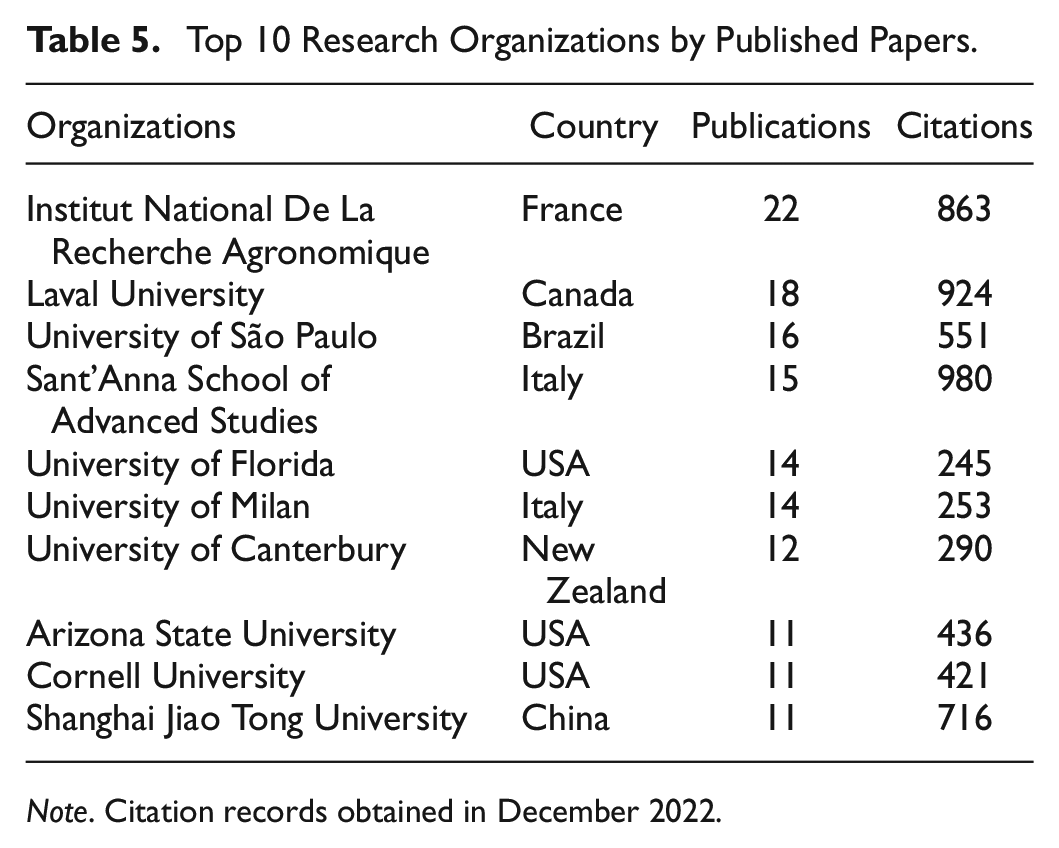
Note. Citation records obtained in December 2022.
Journal Analysis
Table 6 provides a comprehensive summary of the impact factor (IF) rankings for journals in this field. The Journal of Cleaner Production emerged as the journal with the highest impact factor (IF = 11.07). Notably, the Journal of Cleaner Production also led in terms of the total number of publications with 285 articles (total citations = 11,689). It was closely followed by Sustainability (IF = 3.89, N = 283, total citations = 2,847), Business Strategy and the Environment (IF = 10.80, N = 69, total citations = 2,429), British Food Journal (IF = 3.22, N = 62, total citations = 966), and International Journal of Life Cycle Assessment (IF = 5.26, N = 39, total citations = 974), ranking as the second to fifth, respectively. Table 7 presents the top 10 journals by co-citations. Notably, the Journal of Cleaner Production led the way with 5,163 citations, followed by the Journal of Business Ethics (citations = 1,288), Business Strategy and the Environment (citations = 1,287), and Sustainability (citations = 1,073), all of which accumulated more than 1,000 citations.
Top 10 Contributing Journals.
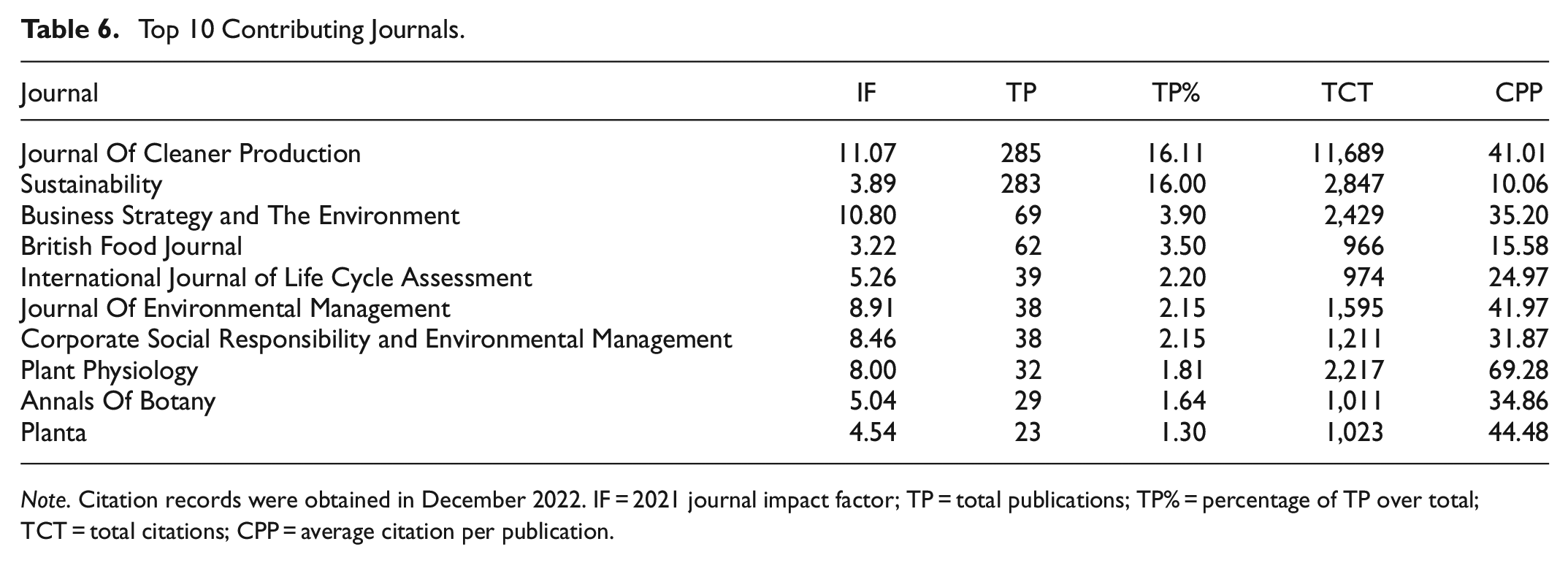
Note. Citation records were obtained in December 2022. IF = 2021 journal impact factor; TP = total publications; TP% = percentage of TP over total; TCT = total citations; CPP = average citation per publication.
Top 10 Journals by Co-Citations.

Note. Local citations refers to citations within the 1.769 publications used in this research. Links refer to the number of connections within the publications. Citation records were obtained in December 2022. TLS = total link strength.
Figure 4 illustrates the journals’ co-citation network, focusing on journals with a minimum of 200 citations. We applied a cluster-detection analysis (Waltman et al., 2010) to this network to pinpoint emerging community-like structures. Based on the cluster-detection analysis, we identified four distinct clusters. Cluster 1 (red) contains journals such as Journal of Business Ethics, Business Strategy and the Environment, and Ecological Economies. Cluster 2 (green) includes journals such as Food Policy, American Journal of Agricultural Economy, and World Development. Cluster 3 (blue) encompasses journals as Journal of Cleaner Production, Sustainability, and Journal of Environmental Management. Lastly, Cluster 4 (yellow) comprehends journals as Plants Physiology, Plant Cell, and Plant Journal.
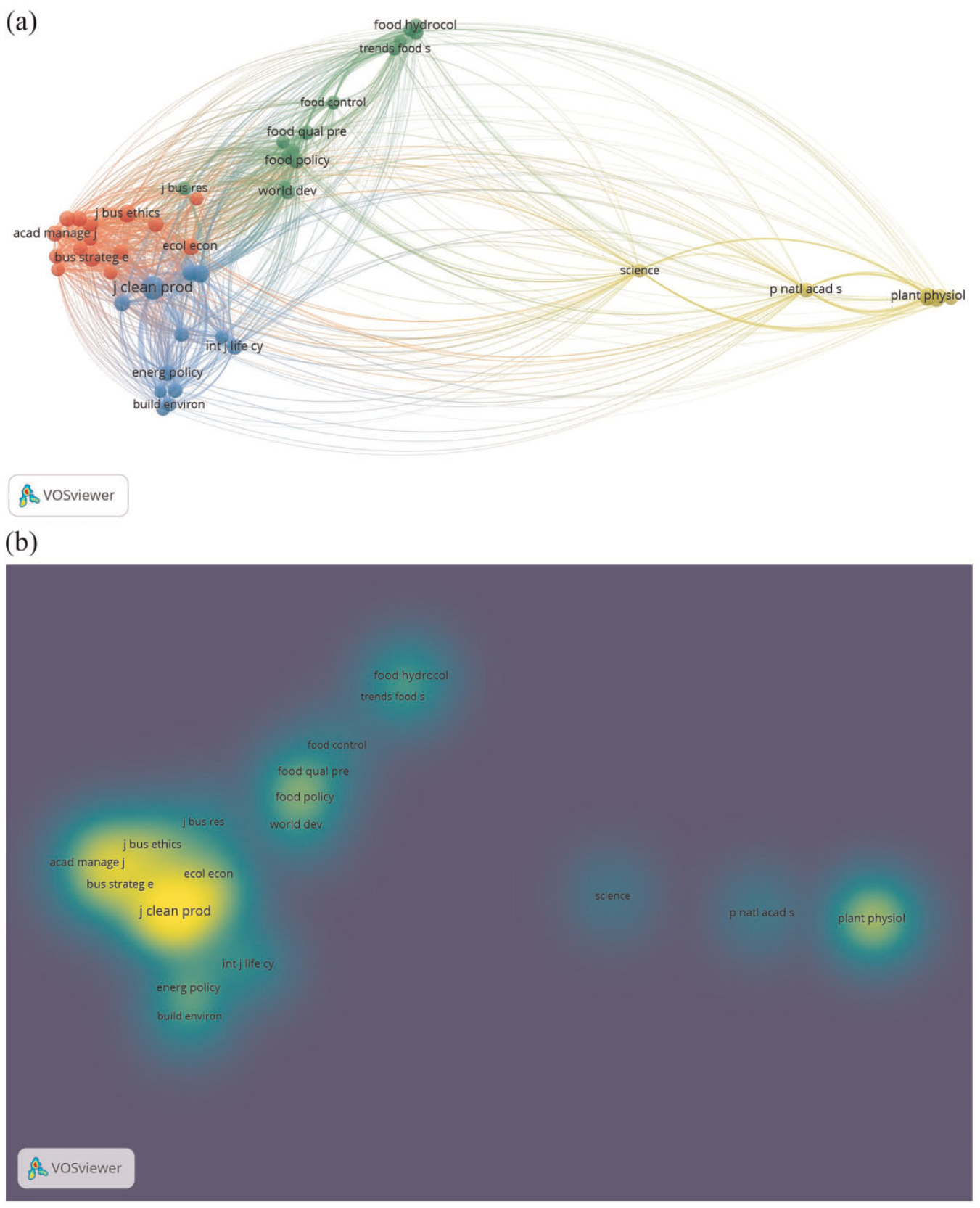
Journals’ co-citation network.
Authors Analysis
Table 8 provides a summary of the top 10 authors in the sample, ranked by total citations. Francesco Testa emerged as the most cited author, with a total of 1,135 citations. Following closely were Fabio Iraldo and Marco Frey, with 930 and 848 citations, respectively. Francesco Testa is an associate professor at Sant’Anna School of Advanced Studies in Italy. Testa’s most cited publication is titled “The effect of environmental regulation on firms” competitive performance: The case of the building & construction sector in some EU regions’ (Testa et al., 2011). This article draws upon neoclassical economic theory and the theory of dynamic competitiveness to address the impact of environmental policy stringency, such as green public procurement schemes or eco-labels, on firm competitiveness performance. The findings suggest that stricter environmental regulations lead to increased investment in organizational innovation.
Top 10 Authors by Citations.
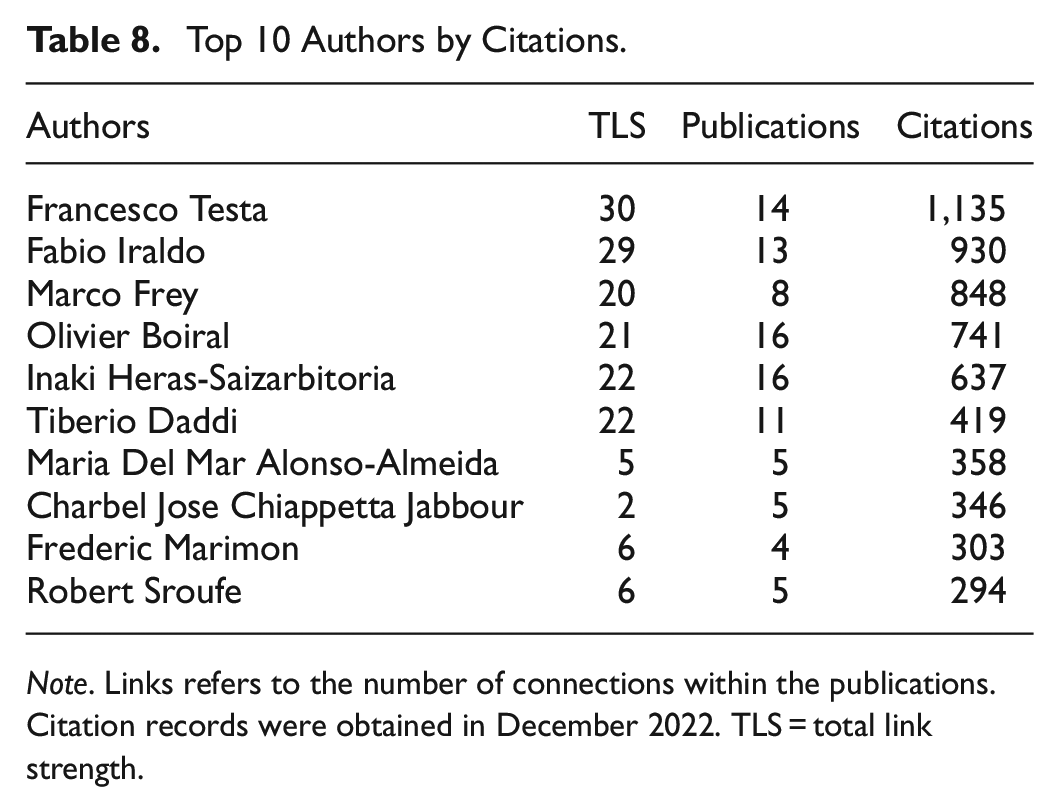
Note. Links refers to the number of connections within the publications. Citation records were obtained in December 2022. TLS = total link strength.
Fabio Iraldo ranked as the second most cited author. Fabio Iraldo is a full professor at Scuola Superiore Sant’Anna di Pisa in Italy. Iraldo’s most cited paper is titled “Is an environmental management system able to influence environmental and competitive performance? The case of the eco-management and audit scheme (EMAS) in the European Union” (Iraldo et al., 2009). This research investigates the influence of Environmental Management Systems (EMS) on organizational performance and competitiveness. The authors contend that performance improvement becomes attainable when the components inherent to the EMS are seamlessly integrated into the management processes. Furthermore, the adoption of an EMS is shown to sustain the firm’s competitive advantages by nurturing innovation capabilities.
The third most cited author is Marco Frey. Marco Frey is a full professor at Scuola Superiore Sant’Anna in Italy. Frey’s most cited papers is titled “EMAS and ISO 14001: the differences in effectively improving environmental performance” (Iraldo et al., 2009). The article conducts a thorough analysis, comparing the short- and long-term impacts of various schemes, specifically Environmental Management Systems (EMS) and ISO 14001, on the environmental performance of energy-intensive firms. The authors have discovered that the implementation of the ISO 14001 standard results in a significant enhancement of environmental performance.
Figure 5 illustrates the co-authorship network within the sample. The observed network exhibited fragmentation, with multiple elements within the network lacking connections to the main component. Consequently, we can deduce a deficiency in social connections among the authors who have studied this phenomenon. One plausible explanation for this could be the heterogeneity of the literature stemming from various research fields. We analyzed the main component of the network, which consists of fragments with more interconnected authors, to gain a more profound understanding of social interactions (see Figure 6). Figure 6 illustrates that 15 actors have formed research groups connected through social brokers, who serve as intermediaries linking two distinct groups.
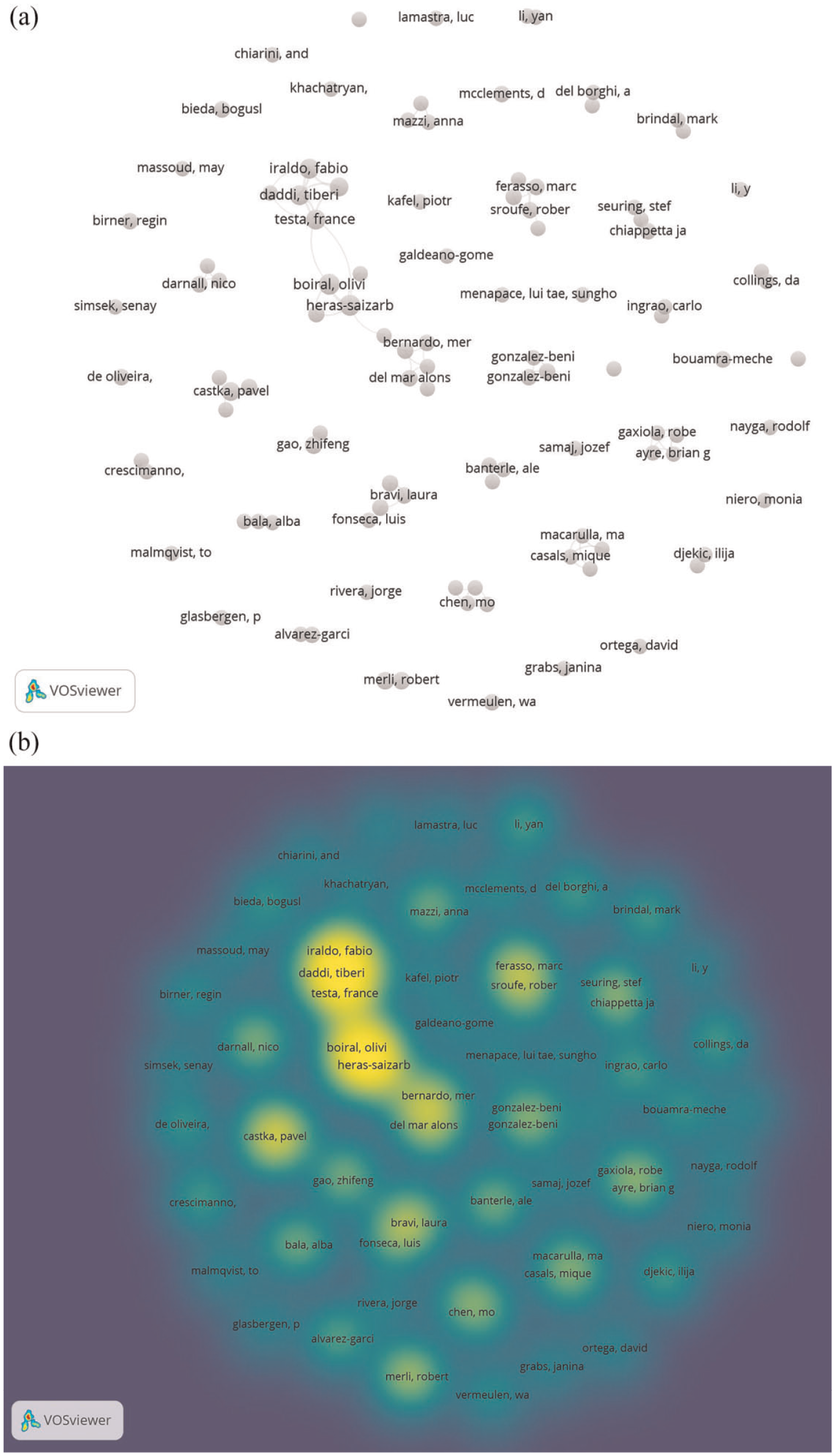
Co-authorship network. Note: the first panel (a) identifies the co-authorship network, and the second panel (b) identifies the network’ density. 105 Authors with at least 3 publications. Created using VOS Viewer version 1.6.17.

Co-authorship network main component. Note: Created using VOS Viewer version 1.6.17.
We identified three clusters within the main component of the co-authorship network, as shown in Table 9, using the cluster-detection analysis (Waltman et al., 2010). Authors in cluster 1 (red) have conducted research on topics related to environmental organizational practices, sustainable management systems, and environmental business competitiveness. In contrast, authors in cluster 2 (green) have published articles on subjects such as sustainable value creation, green manufacturing, the environmental value chain, and sustainable initiatives in the supply chain. Finally, authors in cluster 3 (purple) have focused their articles on topics such as environmental management systems, sustainable cooperatives, and the circular economy.
Cluster of Authors in the Co-Authorship Main Component.
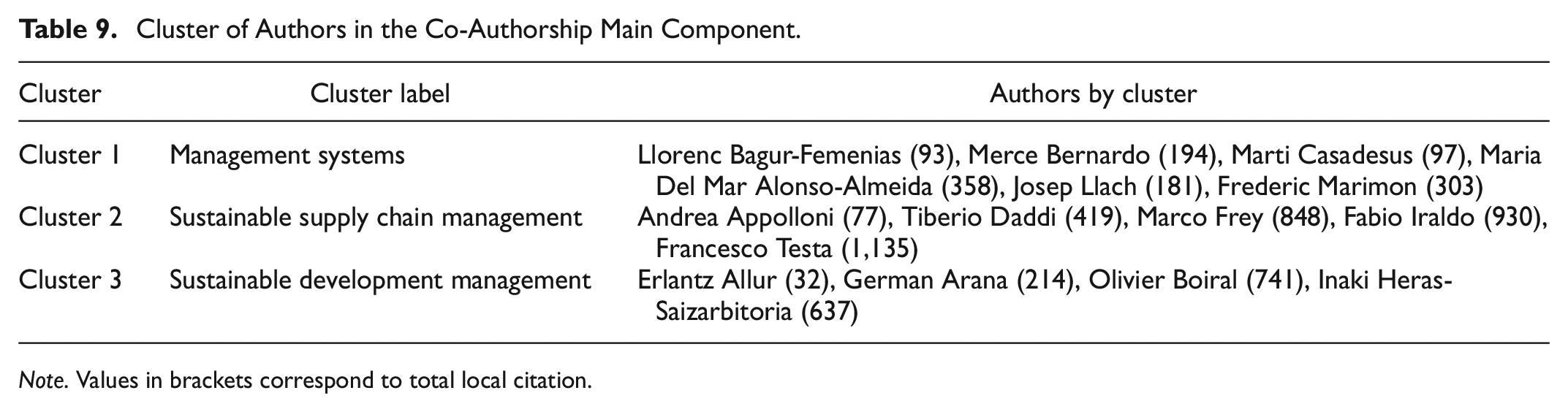
Note. Values in brackets correspond to total local citation.
Cited References Analysis
Table 10 presents the top 10 authors based on co-citations derived from local citations. Olivier Boiral was the most co-cited author with over 290 local citations (Local citations = 297). He was followed by Iñaki Heras-Saizarbitoria, the European Commission, and the International Organization for Standardization, with 259, 252, and 241 local citations, respectively. Table 11 highlights the top 10 references based on co-citations. King et al. (2005) stands out as the sole reference with over 70 co-citations (Local citations = 78). Additionally, two other references received more than 60 co-citations each: Boiral (2007) and Melnyk et al. (2003). Notably, among the top 10 references, four were authored by the leading co-cited authors (Boiral, 2007; Heras-Saizarbitoria et al., 2011; Potoski & Prakash, 2005; Testa et al., 2014).
Top 10 Authors by Co-Citations.

Note. Local citations comprise the citations within the 1.769 publications in the sample. Links refer to the number of connections within the publications. Citation records were obtained in December 2022. TLS = total link strength.
Top 10 References by Co-Citation.

Note. Citations refers to citations within the 1.769 publications used in this research. Citation records were obtained in December 2022. TLS = total link strength.
King et al. (2005) was the most co-cited article in the sample. In their study, the authors delved into the reasons behind firms’ decisions to pursue certification, the impact of certifications on organizational behavior, and how external stakeholders perceive these certifications (p. 1091). Their findings suggest that organizations opt for ISO certification to mitigate information asymmetry with their stakeholders (p. 1102). Furthermore, the presence of such organizational certifications provides market insights into the robustness of internal operations and subsequent enhancements in organizational performance (p. 1103).
Boiral (2007) holds the second rank in co-citations. The author explored how organizations incorporate external standards into their behavioral practices. His analysis indicated that organizations adopt these standards primarily to establish legitimacy (p. 141). To achieve this, firms often create narratives as strategies for addressing external pressures. The interplay between the formal organizational structure and the rhetoric surrounding the standards enables organizations to meet the certification’s stipulated requirements (p. 142). Consequently, external standards gain legitimacy and rationalization through internal discourse and language (p. 143).
Ranked third in terms of co-citations is the article by Melnyk et al. (2003). This study investigates the assumption regarding the impact of ISO 14001 in reducing environmental waste within organizations. The research evaluates the role of a formal and certified environmental management system in contrast to a formal but uncertified system. Their findings offer evidence that organizations with a formal environmental management system not only perceive an impact on pollution abatement but also experience improved operational performance.
Figure 7 illustrates the Authors’ co-citation network. Utilizing cluster-detection analysis (Waltman et al., 2010), we have identified four clusters within the network, as presented in Table 12. Cluster 1 (red), referred to as the environmental governance cluster, encompasses authors such as Magali Delmas, Nicole Darnall, Michael Porter, Pratima Bansal, and Matthew Potoski. Cluster 2 (green), designated as the environmental management cluster, features authors including Olivier Boiral, Iñaki Heras-Saizarbitoria, Francesco Testa, and Fabio Iraldo. Cluster 3 (blue), labeled as the sustainability labels cluster, includes global entities like the European Commission, Food and Agriculture Organization, and the World Bank. Lastly, cluster 4 (yellow), identified as the sustainable operations cluster, comprises authors such as Charles J Corbett, S. X. Zeng, and Pavel Castka.
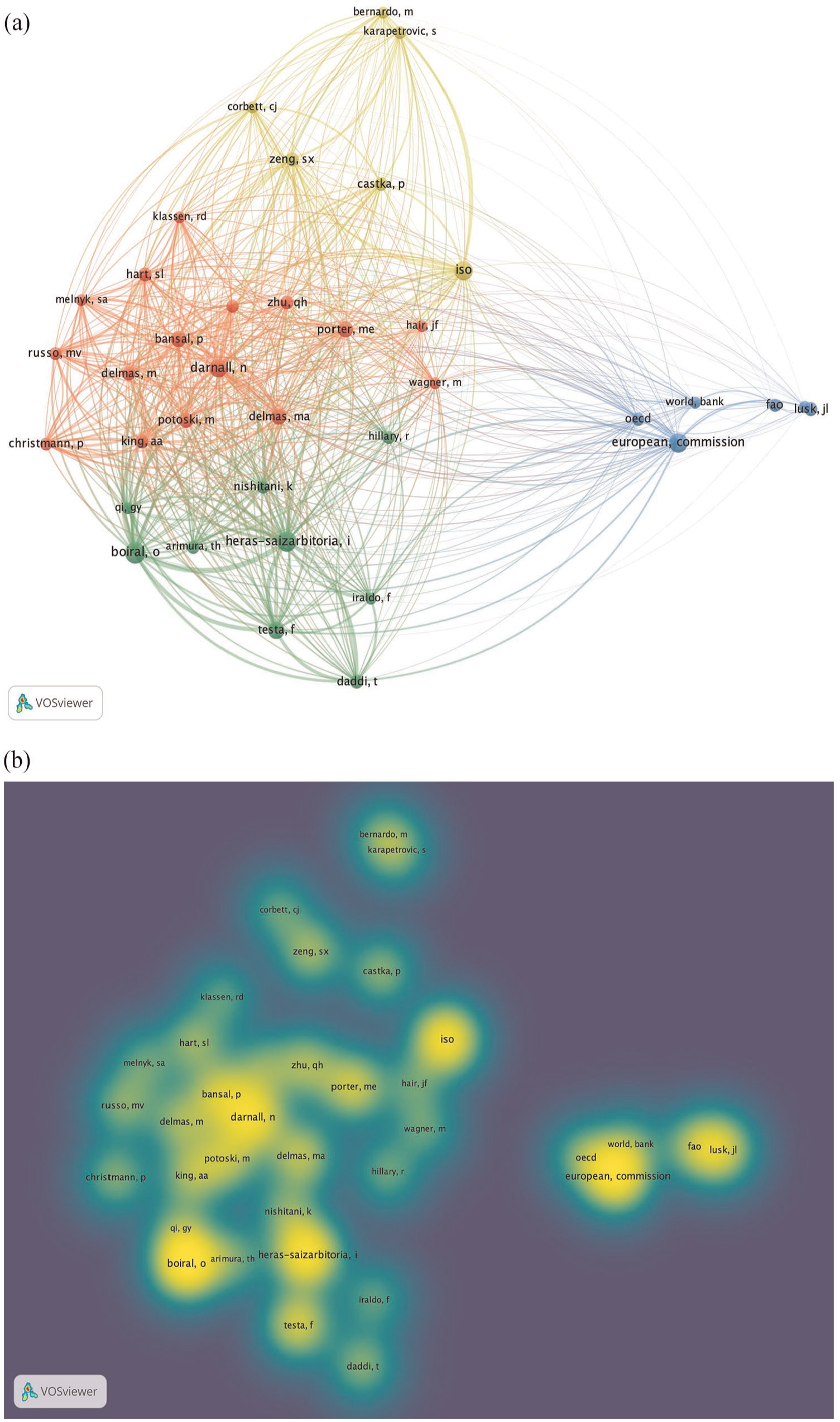
Authors’ co-citation network. Note: the first panel (a) identifies the co-citations network, and the second panel (b) identifies the network’ density. 36 Authors with at least 70 co-citations. Created using VOS Viewer version 1.6.17.
Cluster of Authors’ Co-Citation Network.
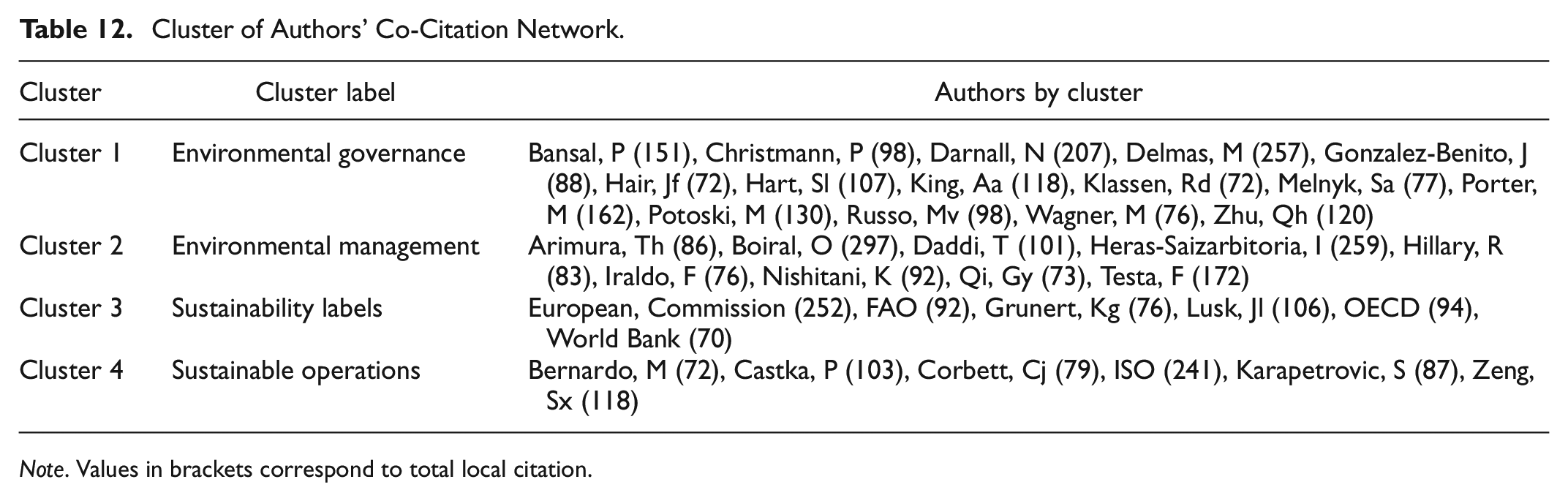
Note. Values in brackets correspond to total local citation.
Conceptual Structure: A Cluster Analysis
Business and Economic Category
Figure 8 illustrates the co-occurrence network based on authors’ keywords. Utilizing the cluster-detection analysis (Waltman et al., 2010), we have identified four clusters within the network, as presented in Table 13. Cluster 1 (red) is labeled as the certifications and green supply chain cluster. Articles within this cluster focus on practices related to green supply management and the advantages of implementing international certifications. Publications in this cluster explore various aspects, including the adoption of green supply chain management practices (Chien & Shih, 2007), the correlation between green training and green supply chains(Teixeira et al., 2016), and an analysis of the relationships between motivations and the benefits related to certification (Gavronski et al., 2008).

Network of co-occurrence by authors’ keywords- business and economics category.
Cluster of Authors’ Keywords- Business and Economics Category.
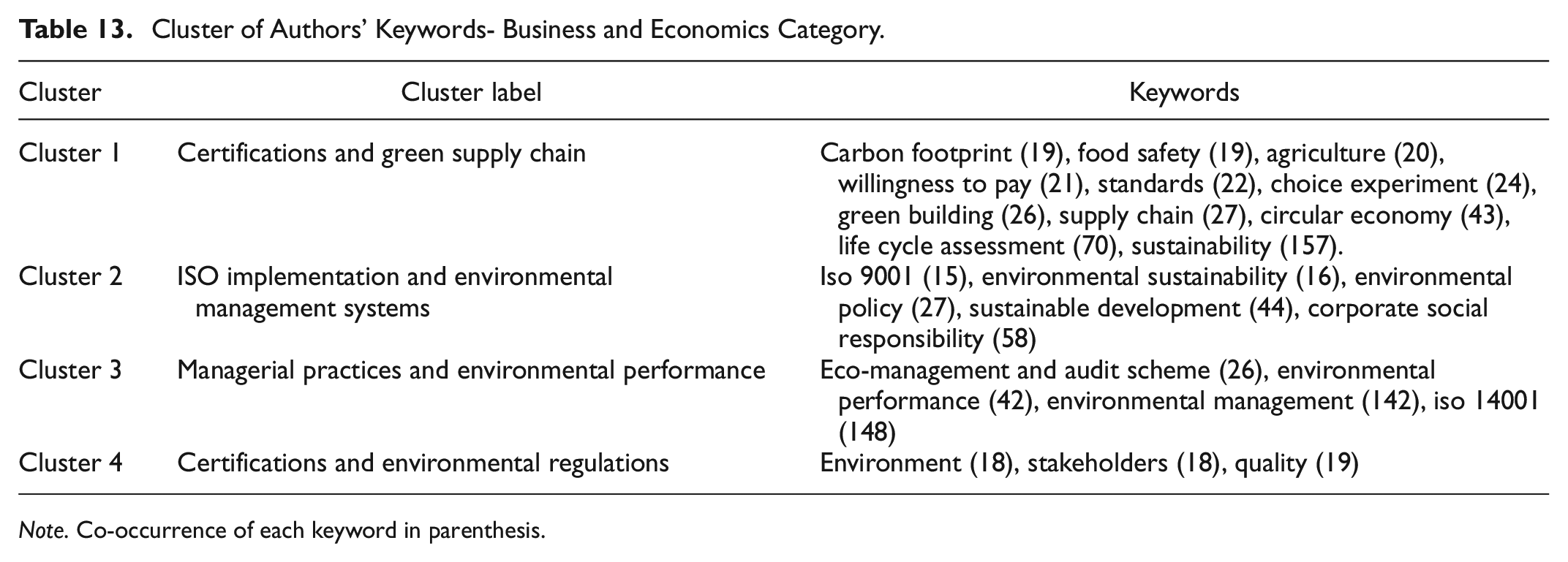
Note. Co-occurrence of each keyword in parenthesis.
Cluster 2 (green) is designated as the ISO implementation and environmental management systems cluster. This cluster primarily concentrates on environmental reporting practices, the effective implementation of ISO standards, and consumer attitudes. Articles within this cluster investigate topics such as the disclosure of environmental information (da Silva Monteiro & Aibar-Guzmán, 2010), the global proliferation of the Global Reporting Initiative (GRI; Marimon et al., 2012), and the factors influencing consumer attitudes toward organic products marketed under a private label (Perrini et al., 2010). Additionally, Group 3 (blue) is classified as the managerial practices and environmental performance cluster. This cluster investigates the factors influencing environmental processes and assesses the effects of certifications. Publications within this cluster examine topics such as the influence of an implemented EMS on organizational performance (Iraldo et al., 2009), the pros and cons of sustainability assessment methodologies (Delmas & Blass, 2010), and the factors driving the adoption of organizational environmental processes and their subsequent effects on performance (Agan et al., 2013).
Finally, cluster 4 (yellow) is designated as the certifications and environmental regulations cluster. This cluster encompasses research related to green innovations and the adoption of environmental performance certifications. Articles in this cluster investigate several dimensions including the factors affecting “green” or “non-green” innovations (Cuerva et al., 2014), the strategic impact of implementing an environmental management system (Iraldo et al., 2009), and the influence of international standards on environmental performance (Barla, 2007).
Sustainability Category
Figure 9 illustrates the co-occurrence network based on authors’ keywords. Utilizing the cluster-detection analysis (Waltman et al., 2010), we have identified five clusters within the network, as presented in Table 14. Cluster 1 (red) is labeled as the innovation and environmental practices cluster. Articles within this cluster explore various topics, including the tools for measuring, controlling, and enhancing energy efficiency in production management (Bunse et al., 2011), the impact of implementing an Environmental Management System on organizational performance (Iraldo et al., 2009), and the correlation between environmental regulations and organizational competitiveness (Testa et al., 2011). Additionally, Cluster 2 (green) is labeled as the implementation and adoption cluster. Top publications explored the factors influencing the implementation of the Environmental Management System (Massoud et al., 2010), the relevant strategies to promote the adoption of green building technology (Chan et al., 2017), and the potential use of environmental models by policymakers (Farinelli et al., 2005).

Network of co-occurrence by authors’ keywords- sustainability category.
Cluster of Authors’ Keywords- Sustainability Category.
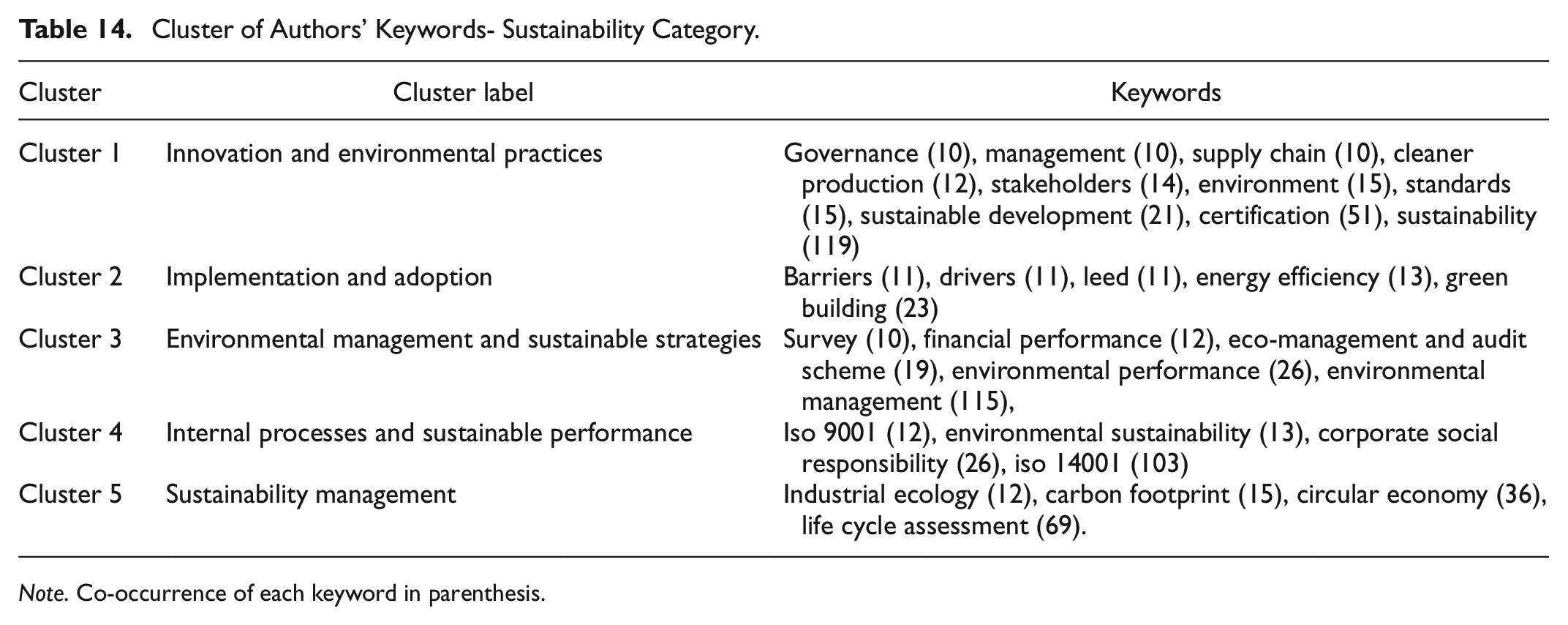
Note. Co-occurrence of each keyword in parenthesis.
Cluster 3 (blue) is designated as the environmental management and sustainable strategies cluster. Publications within this cluster examined various topics, including the significance of EMAS and ISO 14001 in reducing carbon dioxide emissions (Testa et al., 2014), the role of institutional pressures in the successful implementation of environmental certification systems and management systems (Zhu et al., 2013), and the effects of quality management and environmental management on company performance, along with the influence of quality management on sustainable management (Pereira-Moliner et al., 2012). Additionally, cluster 4 (yellow) is denoted as the internal processes and sustainable performance cluster. Articles in this cluster investigated various topics, including the global dissemination of the Global Reporting Initiative (Marimon et al., 2012), the impacts of corporate green practices on financial performance (Miroshnychenko et al., 2017), and the relationship between international certification and financial performance (Heras-Saizarbitoria et al., 2011).
Lastly, cluster 5 (purple) is labeled as the sustainability management cluster. Publications in this cluster examined various topics, including the application of product certification schemes and food preservation (Notarnicola et al., 2012), efforts to manage sustainability through a hybrid technique that combines the economic input-output approach with life-cycle inventories uncertainty (Williams et al., 2009), and how organizations engage in sustainable practices, such as the circular economy, by adopting an EMS (Fonseca et al., 2018).
Engineering Category
Figure 10 illustrates the co-occurrence network based on authors’ keywords. Utilizing the cluster-detection analysis (Waltman et al., 2010), we have identified four clusters within the network, as presented in Table 15. Cluster 1 (red) is designated as the certifications and consumer perception cluster. Articles within this cluster delve into topics such as how date labels influence individuals’ willingness to waste (Wilson et al., 2017), how consumers analyze various types of nutrition information, including the nutrition facts panel label and nutrition declaration (Gracia et al., 2009), and how consumers choose fresh products (Grunert et al., 2015). Additionally, Cluster 2 (green) is designated as the production and nutrition certifications cluster. Top articles explored how exhibiting extensive information to consumers change consumer attitudes and affect the acceptability of novel products (Barsics et al., 2017), how environmental certification can affect the vertical organization of food supply chains (Banterle et al., 2013), and investigated the potential of certifications to improve the livelihoods of small farmers (Hidayat et al., 2015).

Main component network of co-occurrence by authors’ keywords- engineering category.
Cluster of Authors’ Keywords- Engineering Category.
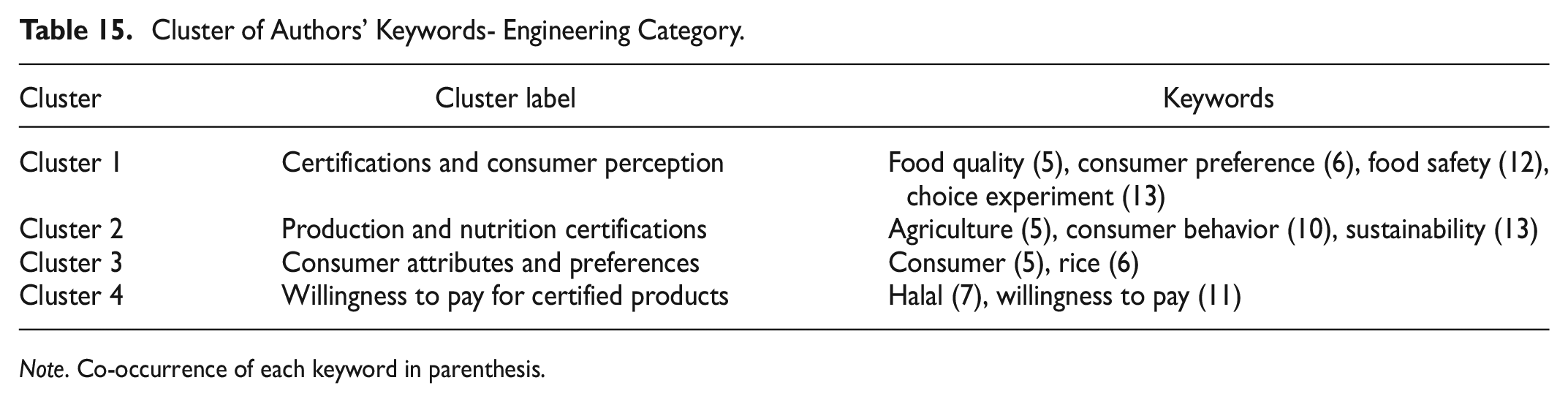
Note. Co-occurrence of each keyword in parenthesis.
Cluster 3 (blue) is designated as the consumer attributes and preferences cluster. Articles within this cluster examined the analysis of consumer preferences and marginal willingness to pay for selected food safety attributes (Liu et al., 2020), how consumers assess the importance of various indicators of product authenticity (El Benni et al., 2019), and how certification guidance can mitigate threats to food safety and improve consumers’ health (Macharia et al., 2013). Lastly, cluster 4 (yellow) is labeled as the willingness to pay for certified products cluster. Articles within this cluster explored the factors motivating consumers to pay for halal logistics and the resulting impact on the demand for halal logistics certification (Fathi et al., 2016), whether religious food laws can provide answers to current problems in food systems, and the willingness to pay for products with safety guarantee labels (Owusu-Sekyere et al., 2014).
Implications, Empirical Gaps, and Further Research Opportunities
This study offers a two-fold contribution. Firstly, it presents a comprehensive overview of certification-related research spanning from 1999 to 2022. Secondly, it conducts an in-depth analysis incorporating diverse perspectives on the various certification applications over the past two decades. This analysis encompasses several dimensions, including trends in productivity (see the Appendix 1), the primary countries of publication (Table 3), regional distribution of published articles (Table 4), key contributors (Table 5), prominent journals (Table 6), journals with the highest co-citations (Table 7), noteworthy authors (Table 8), author clusters in the co-authorship network (Table 9), leading authors based on co-citations (Table 10), significant references based on co-citations (Table 11), and author clusters within the co-citation network (Table 12).
Our observations reveal a significant surge in the number of publications since 2010, with no apparent slowdown as of the time of writing this article. Notably, the United States of America emerged as the leading contributor with 277 publications (12.07%), followed by China with 187 (8.15%), Italy with 185 (8.06%), and Spain with 172 (7.49%). Furthermore, our study highlights Europe as the most prolific region in terms of publications during the period 1999 to 2022, accounting for 49% (N = 1,122) of the total publications. In contrast, South America (6%), Australia & Oceania (5%), Africa (3%), the Middle East (1%), and Central America (0%) exhibited relatively lower levels of research participation. In addition, the Institut National De La Recherche Agronomique was among the major contributors to this topic. The Journal of Cleaner Production, Sustainability, Business Strategy and the Environment, the British Food Journal, and the International Journal of Life Cycle Assessment stand out, having published the largest number of articles on this topic. Lastly, in terms of authorship, Francesco Testa emerges as the most cited author with 1,135 citations, followed closely by Fabio Iraldo (930) and Marco Frey (848).
Additionally, we have elucidated the conceptual structure of this topic by conducting a comprehensive analysis of co-occurrence networks within three distinct categories: sustainability, engineering, and business and economics. Within the business and economics category, we have identified four distinct clusters: (i) certifications and the green supply chain; (ii) ISO implementation and environmental management systems; (iii) managerial practices and environmental performance; and (iv) certifications and environmental regulations. In the sustainability category, our analysis has unveiled five prominent clusters: (i) innovation and environmental practices, (ii) implementation and adoption, (iii) environmental management and sustainable strategies, (iv) internal processes and sustainable performance, and (v) sustainability management. Finally, within the engineering category, we have observed four noteworthy clusters: (i) certification and consumer perception, (ii) production and nutrition certification, (iii) consumer attributes and preferences, and (iv) willingness to pay for certified products. In summary, this comprehensive analysis offers valuable insights into the diverse applications of certification within a global context. Furthermore, it underscores the potential for certification to serve as a strategic tool in addressing pressing global challenges, such as those related to climate risk mitigation.
Considering our analysis of the co-occurrence networks across three distinct categories—business and economy, engineering, and sustainability—we present prospective avenues for future research. Table 16 offers an overview of potential research directions for business and economic research. Some of the recommended areas of exploration encompass understanding the interplay between production processes, sustainable certification schemes, and evolving business strategies in dynamic environments. Additionally, we propose investigating the connections between environmental pressures, certification schemes, and the sustainable outcomes of organizations. Another fruitful area of study could delve into the adoption patterns of certifications within inter-organizational networks.
Future Research Directions- Business and Economics.
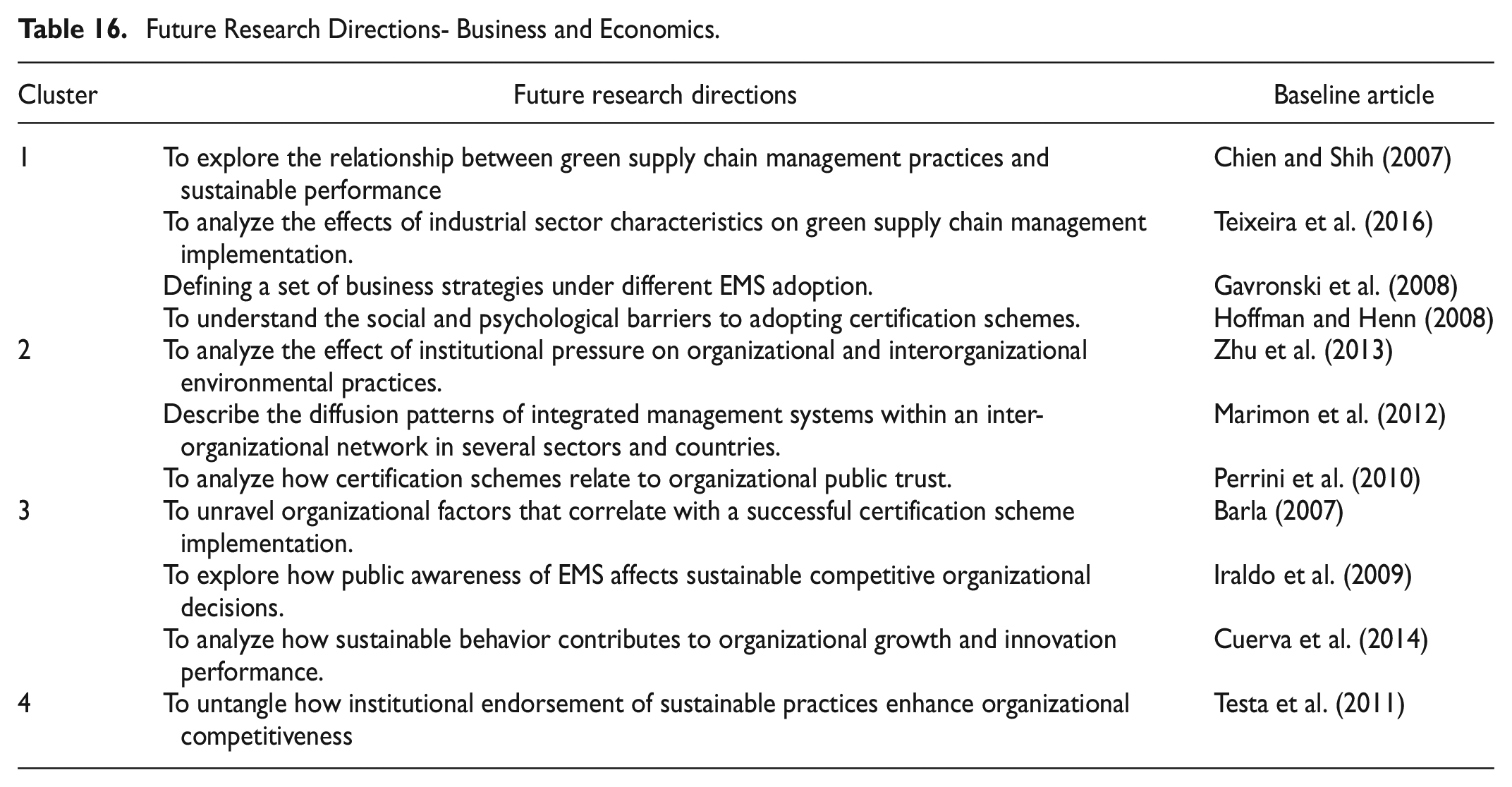
Table 17 outlines plausible trajectories for expanding research within the engineering realms. These suggested research directions encompass inquiries into the relationships between production processes, food safety assurance labels, and consumer behavior. Lastly, Table 18 outlines conceivable pathways for advancing research within the sustainability domains. Potential research directions focus on elucidating the drivers, barriers, pressures, and incentives that influence the implementation and adoption of environmental certification schemes. These future research endeavors promise to contribute significantly to our understanding of the multifaceted roles of certification in diverse contexts.
Future Research Directions- Engineering.

Future Research Directions- Sustainability.

While certification studies have garnered significant attention worldwide, it is crucial to acknowledge that certain research areas have remained underexplored. Notably, our examination reveals a noticeable gap in understanding how organizations can leverage certification schemes to address pressing global challenges, particularly those of substantial societal importance such as global environmental change (Díaz Tautiva et al., 2024; Taylor & Lindenmayer, 2021). Our systematic review underscores that organizations utilize certification schemes not only to manage environmental risks but also to harmonize their operations in response to the diverse pressures exerted by multiple stakeholders. Furthermore, these schemes serve as a strategic avenue to foster more sustainable organizational practices. In essence, the adoption of certification schemes can be perceived as an effective strategy for navigating environmental challenges.
It is crucial to establish a connection between environmental impacts and the broader production system to understand the ramifications of global environmental change and formulate effective industry adaptation strategies. Global Environmental Change is leading to a heightened occurrence and severity of extreme weather events, exerting profound effects on both the natural environment and organizational behavior (Díaz Tautiva et al., 2024; Masson-Delmotte et al., 2019). These effects carry significant implications for society, as they amplify perceptions of uncertainty across all sectors (Daddi et al., 2018; Linnenluecke & Griffiths, 2013). Among these sectors, primary industries, including agriculture, fishing, forestry, and aquaculture, stand out as particularly vulnerable to the impacts of global environmental change (Maulu et al., 2021). This heightened vulnerability is primarily due to their heavy reliance on natural resources and their dependence on favorable climatic conditions (Díaz Tautiva et al., 2024). Consequently, these environmental shifts can engender fluctuations in productivity, thereby inducing socioeconomic responses.
The primary sector has embraced certification schemes as both a response to external pressures and as additional strategic tools to navigate the complexities of an uncertain environment (Angelo & Reilly-Brown, 2014; Chkanikova & Sroufe, 2021; Kraxner et al., 2017; Vince & Haward, 2019). These certification schemes find application in diverse areas within the primary sector, including aquaculture, agriculture, and forestry (Tricallotis et al., 2019; Vince & Haward, 2019). Notable examples encompass palm oil certification and certifications such as the Forest Stewardship Council (FSC) and the Programme for the Endorsement of Forest Certification (PEFC; Gutierrez Garzon et al., 2020). While the primary sector has made strides in implementing these certification schemes, the question of how organizations in these sectors can optimize the overall product lifecycle in the context of global environmental change remains an open and intriguing area that merits further research.
Additional research endeavors could broaden the horizons of our bibliometric analysis, offering deeper insights. Initially, a more comprehensive investigation could explore the array of theories, contexts, methods, and methodologies that populate the existing literature. This exploration holds the potential to yield fresh perspectives on the intricate interplay between certification schemes and organizations. Furthermore, future research could scrutinize the longitudinal patterns discerned within the conceptual network to observe inflection points in this topic. Lastly, a thematic, in-depth analysis has the capacity to foster theoretical advancements that contribute to a more comprehensive understanding of these phenomena.
Conclusions and Limitations
While certification schemes hold a pivotal position in societies, mitigating uncertainty among economic actors, our understanding of their influence on organizations remains fragmented. This research addresses this knowledge gap by elucidating the evolution of research on organizations and certification schemes. Notably, the period spanning from 2011 to 2022 has witnessed substantial academic interest in these phenomena. Nonetheless, it is worth noting that the scientific output is disproportionately concentrated in developed nations and a select number of institutions.
By mapping the conceptual structure in the literature, we have identified several research clusters that hold the potential to enhance our understanding of this phenomenon. Specifically, we have identified four (4) clusters within the business and economic category, five (5) clusters within the sustainability category, and four (4) clusters within the engineering category. Future research endeavors may delve into the forefront of each of these identified clusters.
Our research is subject to certain limitations. Firstly, we have exclusively examined English-language literature, thereby excluding bibliometric data from other languages, such as Spanish and French. Secondly, our analysis is confined to articles indexed in the Web of Science database, chosen for its high quality and extensive journal coverage. Lastly, it is important to note that our systematic review, conducted through bibliometric methods, focused on discerning patterns within the literature, and did not encompass an in-depth analysis of the entire body of research in this field.
Footnotes
Appendix
Yearly Number of Publications.

| Year | Sustainability | Engineering | Business and economics | Without duplications |
|---|---|---|---|---|
| 1999 | 0 | 8 | 8 | 8 |
| 2000 | 1 | 12 | 13 | 14 |
| 2001 | 2 | 15 | 18 | 19 |
| 2002 | 5 | 11 | 18 | 20 |
| 2003 | 2 | 8 | 10 | 10 |
| 2004 | 6 | 11 | 21 | 23 |
| 2005 | 8 | 11 | 21 | 22 |
| 2006 | 7 | 7 | 24 | 24 |
| 2007 | 9 | 10 | 24 | 25 |
| 2008 | 13 | 15 | 39 | 40 |
| 2009 | 11 | 16 | 32 | 37 |
| 2010 | 10 | 7 | 27 | 29 |
| 2011 | 21 | 8 | 38 | 40 |
| 2012 | 31 | 5 | 47 | 48 |
| 2013 | 34 | 14 | 56 | 59 |
| 2014 | 44 | 18 | 66 | 68 |
| 2015 | 42 | 22 | 80 | 84 |
| 2016 | 49 | 29 | 92 | 98 |
| 2017 | 80 | 28 | 130 | 138 |
| 2018 | 97 | 24 | 148 | 153 |
| 2019 | 104 | 29 | 162 | 169 |
| 2020 | 124 | 56 | 217 | 228 |
| 2021 | 119 | 63 | 207 | 219 |
| 2022 | 105 | 54 | 183 | 194 |
| Total | 924 | 481 | 1681 | 1769 |
Acknowledgements
The author (JADT) acknowledges the funding obtained by the Doctoral Programme in Business Economics at the Universidad Del Desarrollo, the National Research and Development Agency (ANID) - Subdireccion de Capital Humano/Doctorado Nacional 2021-21210630, and the funds from the General Secretariat of the Organization of American States within the Strategic Partnerships for Education Programme-2021.
The author (NCCV) acknowledges the support provided by the National Research and Development Agency (ANID) - Subdirección de Capital Humano/Doctorado Nacional 2021-21210703, as well as the funding received from the Coastal Social-Ecological Millennium Institute (SECOS), Millennium Science Initiative Program – Code ICN2019_015.
Declaration of Conflicting Interests
The author(s) declared no potential conflicts of interest with respect to the research, authorship, and/or publication of this article.
Funding
The author(s) disclosed receipt of the following financial support for the research, authorship, and/or publication of this article: This study was funded by the National Research and Development Agency (ANID) - Subdireccion de Capital Humano/Doctorado Nacional 2021-21210630 and 2021-21210703. The ANID PIA/BASAL AFB240003, the ANID/FONDAP/15130015 and ANID/FONDAP/1523A0001, and the Millennium initiative ICN 2019_015. The APC is funded by Oxford Business College.

Availability of Data and Material
The data that support the findings of this study are available from the corresponding author upon request.