




Abstract
This study aims to analyze the experiences of creating the metaverse classroom on pre-service EFL (English as a Foreign Language) teachers’ technological acceptance and affordance, as well as their perception of its potential for language learning and teaching. To achieve this purpose, this study utilized an in-depth analysis of survey and reflection data collected from 30 pre-service EFL teachers engaged in the creation and sharing of the metaverse classroom. The results of the study indicate that the design of the participants’ flexible and reconfigurable metaverse classroom increased their self-efficacy, autonomy, and technological affordance. Sentiment analysis revealed that the participants had a positive experience in creating the metaverse classroom. Keyword network analysis demonstrated that the metaverse environment facilitated experience sharing and contextualized learning. Based on the findings, this study suggests some educational policies that not only encompass the theoretical aspects but also consider the pedagogical perspectives.
Introduction
Recently, the educational potential of the metaverse has gained renewed interests, transforming traditional classroom environments into immersive, interactive virtual spaces (Y. Hwang et al., 2023). Especially, the metaverse offers a unique platform for language learning, providing an environment where learners can engage in authentic, real-time interactions in a virtual space that simulates real-world contexts (S.-M. Lee et al., 2024; Wu et al., 2024). This immersive experience can potentially enhance language acquisition, cultural understanding, and communicative competence among EFL (English as a Foreign Language) learners (Jeon et al., 2022). Despite these benefits, the successful integration of metaverse technologies in language classrooms mainly depends on the readiness and technological acceptance of teachers who design and facilitate these virtual learning experiences. This is why teacher training play a crucial role in the adoption and implementation of innovative technologies in educational settings. Pre-service teachers’ perceptions and acceptance of these technologies are particularly crucial because they are the ones determining the future landscape of education (Agyei & Voogt, 2011).
With this in mind, this study aims to explore the perceptions of pre-service EFL teachers regarding the use of the metaverse technology in designing their ideal virtual language classrooms. By examining their technological acceptance and emotional responses to this technology-integrated teacher preparation, the research aims to provide valuable insights into the use of metaverse technology in language education, hoping to contribute to the advancement of innovative teaching practices and the professional development of future language educators. The research is guided by the following questions:
(1) What specific outcomes were achieved through the design of metaverse language classrooms by pre-service EFL teachers?
(2) How do pre-service EFL teachers perceive the technological aspects and acceptance process involved in creating metaverse classrooms?
(3) What are the emotional responses and perceptions of pre-service EFL teachers regarding their experience with metaverse classroom creation?
Theoretical Background
Pre-Service Teacher Training for Technology-Integrated Teaching
The successful implementation of new technologies in education largely depends on the technological acceptance of teachers. According to the Technology Acceptance Model (TAM), perceived usefulness and perceived ease of use are critical determinants of technology adoption (Davis, 1989). Several studies have applied TAM to investigate teachers’ acceptance of various educational technologies (Kannan & Narayanan, 2015; Quintana-Ordorika et al., 2024). Teo (2011) emphasized that positive attitudes toward technology, along with proper training and support, significantly increase teachers’ willingness to incorporate new tools into their teaching practices.
Previous research has shown that pre-service teacher training programs play a crucial role in preparing future educators to adopt and effectively use innovative technologies. Tondeur et al. (2012) emphasize the need for comprehensive training that not only introduces technological tools but also incorporates pedagogical strategies for effective integration. Brush et al. (2008) suggest that experiential learning opportunities, where pre-service teachers design and implement technology-enhanced lessons, are particularly effective in building confidence and competence in using new technologies. Furthermore, the emotional perceptions of pre-service teachers toward new technologies can significantly impact their decision to adopt and continue using them. Fernández-Batanero et al. (2021) indicate that emotional factors, such as anxiety, enthusiasm, and confidence, influence teachers’ choices to incorporate technology in their classrooms. Research also highlights the importance of addressing emotional barriers through supportive training environments that encourage experimentation and reduce the fear of failure (Joo et al., 2018).
Likewise, effective teacher training initiatives are crucial for equipping pre-service teachers with the necessary skills and confidence to integrate technology into their teacher preparation and practice (Kopcha, 2012; Yang & Chen, 2023). These initiatives should include hands-on experiences that allow teachers to experiment with new technologies in a supportive environment (Tammets & Ley, 2023). Programs that offer ongoing support, such as mentoring and collaborative learning communities, can help them overcome challenges and share best practices (Kopcha, 2012). By fostering a culture of continuous learning and innovation, teacher training initiatives can ensure that teachers are well-prepared to meet the demands of modern, technology-enhanced education. In line with this, the present study adopts the metaverse as a tool for preparing pre-service teachers for technology-integrated teaching initiatives.
The Educational Potential of the Metaverse for EFL Education
The advent of the metaverse, a comprehensive and immersive three-dimensional virtual space, presents transformative opportunities for various sectors, including education (G. J. Hwang & Chien, 2022; Y. Hwang, 2023; Jeon et al., 2022). Recent studies have delved into the potential of the metaverse to revolutionize learning experiences, highlighting its impact on psychological needs (Arpaci & Bahari, 2023), user behavior (Jafar et al., 2023), technological adoption (Akour et al., 2022), and cognitive perceptions (Jafar & Ahmad, 2024). These insights pave the way for understanding how the metaverse can be specifically leveraged in language learning contexts.
Utilizing a metaverse for EFL education has the potential to revolutionize interaction in three distinct ways. First, regarding the interaction between learners and content, the metaverse introduces language learning materials grounded in 3D-based multimodality (i.e., visual, aural, linguistic, gestural, and spatial). This offers new experiences compared to existing 2D-based online distance education tools (Y. Hwang et al., 2023; Zhang et al., 2022). While previous remote online learning tools, including textual resources, audio/video recordings, computer software, and interactive media platforms, also provided multimodal input to language learners (Hauck & Haezewindt, 1999), their exposure to multimodal learning content remained limited in terms of direct engagement and immersion. The metaverse addresses this constraint by enabling learners to engage with multi-dimensional learning content within a 3D environment, allowing them to touch, feel, and immerse themselves in interactive language learning materials and immersive contexts (H. Lee & Y. Hwang, 2022; Li & Yu, 2023; Wu et al., 2024). Additionally, the metaverse introduces the potential for more authentic language input because it can replicate the real-world context in which language is used (Y. Hwang et al., 2023). Through the metaverse, EFL learners can visit and interact with others in various situations such as New York museums or English restaurants beyond limitations in time and location, thus engaging in real-world language interactions (Y. Hwang et al., 2023). This spatially transcendent learning environment provides opportunities for meaningful interaction between the learner and content (Jeon et al., 2022).
Second, the metaverse can also reshape the nature of learner–teacher interaction as it allows synchronous interaction. Existing online learning tools, such as discussion boards, can allow asynchronous interaction between teachers and learners (Fabriz et al., 2021). These tools do support interaction online, but they hardly provide the feeling of being in the same space for learners. The metaverse overcomes these limitations by enabling shared synchronous interaction in the same virtual place as they can join via avatars (Mystakidis, 2022). Numerous studies have shown that, even though avatars are not physical beings, learners see them as representations of themselves in the metaverse (Hooi & Cho, 2014; Kim et al., 2023). Additionally, even if the teacher is not connected to the metaverse, current technological advances make it possible to establish AI chatbots in the form of NPCs to offer students feedback and interaction (Kasneci et al., 2023; Rospigliosi, 2023).
Third, the virtual environment in the metaverse can also have a positive impact on learner–learner interactions. Traditional asynchronous distance learning does not facilitate this inter-learner interaction, which makes conducting team-based or task-oriented learning challenging (Lamy & Goodfellow, 1999). During the COVID-19 pandemic, certain video conferencing platforms like Zoom or Webex gained popularity as tools for distance education. While they allowed students to enter a virtual learning space beyond time and space limitations, they did not fully support interpersonal interaction and enhanced group work (Fauville et al., 2021). Consequently, student activities mostly consisted of one-way information transfer, making it difficult for students to interact with one another and participate in more complex learning tasks. Even in more dialogic and interactive videoconferencing classrooms, students’ actions and reactions are constrained by the camera, restricting their agency for active learning (Y. Hwang et al., 2023). Beyond being passive recipients of information, learners in the metaverse can collaborate in constructing knowledge with others (Li & Yu, 2023).
In conclusion, the integration of the metaverse into EFL education signifies a paradigm shift in how learners interact with content, teachers, and each other. Its 3D environment transcends traditional 2D online learning modalities, offering an immersive and multimodal experience that closely mirrors real-world contexts. This innovation not only enhances the depth of content interaction but also redefines learner–teacher dynamics through synchronous, avatar-based engagement, and AI-assisted interactions. Furthermore, the metaverse facilitates a more authentic and interactive learner–learner engagement, enabling collaborative knowledge construction and dynamic group activities.
Method
This study employed a mixed-methods research design, chosen for its suitability to investigate the efficacy and perception of metaverse technologies in education. For participants, we selected a sample of pre-service EFL teachers, using a purposive sampling method. The sample was chosen to represent educators who would potentially be incorporating metaverse technologies into their future teaching practices. Participants were recruited from an educational institution where they were enrolled in a course that involved creating metaverse classrooms. To ensure ethical compliance, we obtained informed consent from all participants.
For data collection methods, our data was collected through the results of metaverse classrooms created by the participants, as well as questionnaires and observational methods. We designed surveys based on the Technology Acceptance Model (TAM) to elicit detailed information on pre-service EFL teachers’ perceptions of metaverse classroom-making activities and their attitudes toward the use of technology in educational settings. All data was treated with strict confidentiality and stored securely to protect participant privacy. Then, the collected data was analyzed using thematic analysis for classroom design assessment, paired-sample t-tests in SPSS for pre- and post-survey comparisons, and sentiment analysis using Orange3 and VADER and word network analysis using KH Coder. This approach was instrumental in providing a comprehensive understanding of the effectiveness and suitability of metaverse classrooms in language education, and in capturing the nuanced perceptions and attitudes of pre-service teachers toward this innovative teaching method. The following subsections provide more details in each strategy of the study.
Research Participants and Context
30 students from J University in South Korea participated in the study, comprising 23 juniors (76.6%) and 7 seniors (23.3%), aged between 22 and 26, with 20 females (66.6%) and 10 males (33.3%). All students were majoring in English language and literature, some with double majors in special education (8 students; 26.6%) and home economics education (2 students; 6.6%). Despite differing educational backgrounds, all participants were pre-service EFL teachers, with 12 students (40%) preparing for a secondary school teachers’ license exam and 18 students (60%) interested in teaching English as a foreign language in Korea. There were similarities in their previous English learning and teaching experiences, while their knowledge of the metaverse was limited. Less than half of the students (12 students; 40%) had ever used a metaverse platform, and none had experience with metaverse making.
Metaverse engagements were tested in the course “Theories and Methods of English Education” during the fall 2021 academic year, meeting twice a week for 15 weeks. The course explored the connections between theory, research, and pedagogy in TESOL and Applied Linguistics, focusing on teachers as active learning designers. Classroom activities included discussions on CALL, AI, and the metaverse revolution, alongside lectures on English teaching methods. Additionally, students created ideal metaverse classroom environments and reflected on their future teaching practices. See Table 1 for the course schedule.
Course Schedule.

Research Procedure and Data Collection
Before the semester started, the researchers designed the basic structure of the course, especially the metaverse engagements, and designed the research matrix. Figure 1 shows the research procedure and data collection that comprised the consecutive five steps.

Research procedure.
Selection of the Metaverse Platform
The metaverse platform, Frame VR, was chosen for this study for two primary reasons. First, it enables users to freely upload a wide range of content, including photographs, music, PDFs, 360 photos and videos, whiteboards, and 3D model files, making it ideal for pre-service EFL teachers to design diverse learning activities in their virtual classrooms. For instance, researchers in the study incorporated 3D objects like Captain America, the Statue of Liberty, and a Halloween pumpkin to introduce elements of American culture. Second, Frame VR facilitates active learning, as students represented by 3D avatars experience a sense of togetherness and presence through social interaction (as depicted in Figure 2b). Its accessibility without the need for additional downloads or installations allows students to easily participate in classes and meetings through their browsers on desktops, mobile devices, and VR headsets. This ease of access encouraged the pre-service EFL teachers in the study to invite their future students into the virtual classrooms they designed, adding motivation to the learning process.

(a) Designing spaces and (b) avatar connection in Frame VR.
Designing the Questionnaire
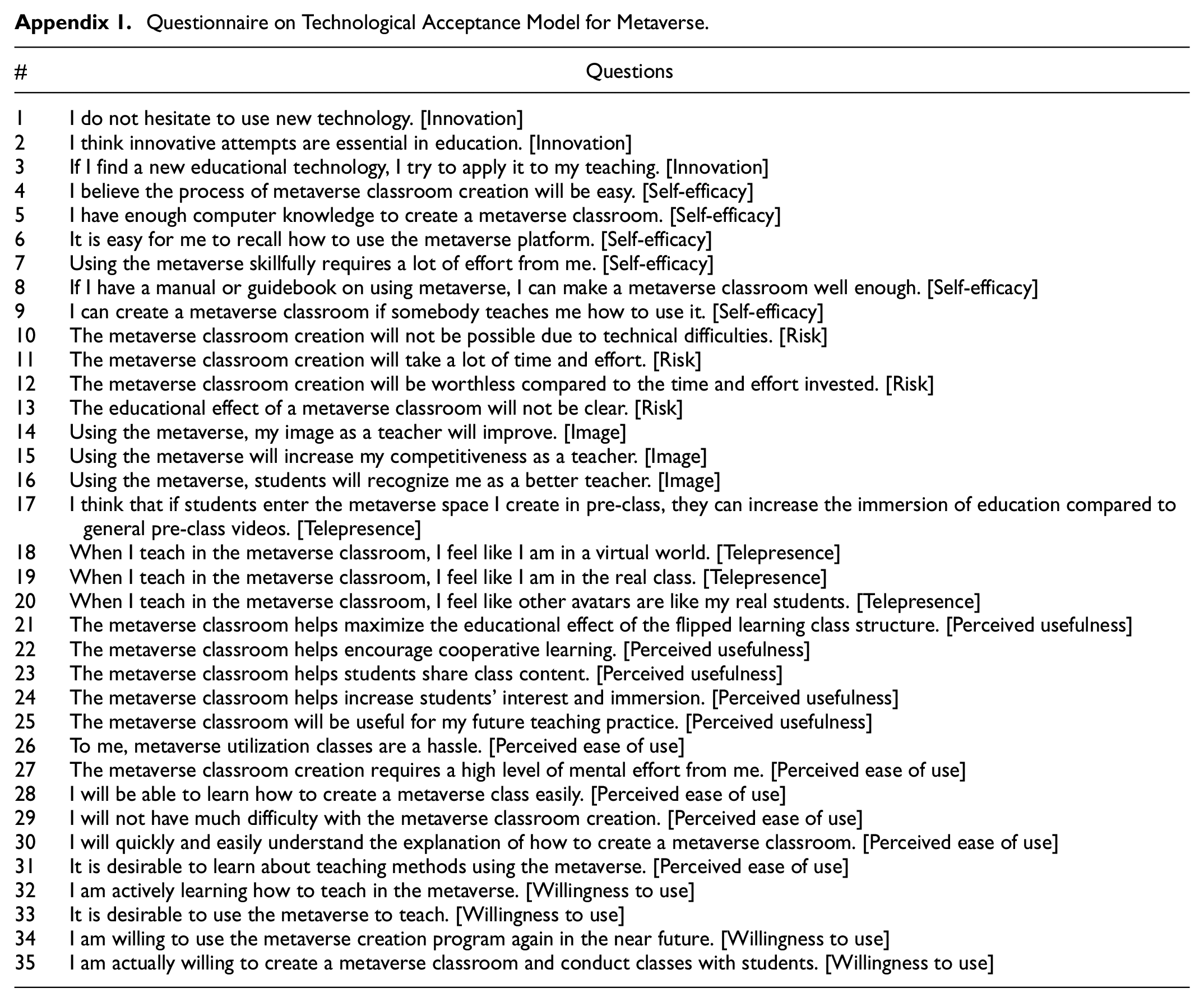
The study presents a questionnaire designed to gauge pre-service EFL teachers’ perceptions of a metaverse classroom-making activity. The development of this questionnaire is based on the Technology Acceptance Model (TAM), a prominent theoretical framework established for understanding technology acceptance. Originally proposed by Davis (1989) and his colleagues (Bagozzi et al., 1992), TAM suggests that several factors influence users’ decisions to adopt and use new technology. Over the past decades, TAM research has been widely conducted in social science to understand technology acceptance and usage patterns. This includes its application to various emerging technologies of different eras, such as the Internet (Moon & Kim, 2001), smartphones (Xia et al., 2018), and more recently, AI technology (Yigitcanlar et al., 2023). These studies have adapted TAM to explore how individuals and organizations adopt and integrate these new technologies into their daily practices and operations, offering valuable insights into the factors influencing technology adoption across different contexts.
In this study, the adoption of TAM allows for a comprehensive exploration of pre-service EFL teachers’ perceptions, attitudes, and intentions toward the utilization of the metaverse in designing active learning classrooms. By leveraging TAM’s well-established constructs such as perceived usefulness, perceived ease of use, and willingness to use, the questionnaire aims to provide valuable insights into the external factors influencing technology acceptance and inform future educational practices and interventions. A total of 35 questions were developed and surveyed twice (pre and post; see Appendix 1). The internal consistency reliability of each part and pre-questionnaire was tested using Cronbach’s alpha coefficient, as summarized in Table 2.
Survey Questions.

Design of the Metaverse Classroom Environment
The researcher provided a lecture on the basic function of Frame VR, including how to upload digital files (e.g., images, videos, files, audio, etc.) and 3D objects over the course of 2 weeks. Participants then started to create their learning spaces as part of class assignments. Figure 3 shows the process of in-class activities. Despite detailed information about the platform being provided in class, students had little understanding of the metaverse design. To address this gap, the researcher also provided them with a detailed manual, along with pre-recorded lecture videos, so that they could follow a systematic procedure in designing their metaverse classroom.

Creating metaverse classroom in the research site.
Sharing the Metaverse Classroom and Creating a Lesson Plan
After creating their own classroom, participants shared the results with other classmates, as shown in Figure 4. Given that they were requested to develop a lesson plan, they explained how they would use this space for future teaching practice. In addition, participants discussed the experience of being in a peer’s metaverse classroom as avatars. Through the overall process, the researchers performed prolonged observations in a natural setting that could reduce the reactivity effect and capture the dynamics of reactions in the participants (Cohen et al., 2011). Close attention was paid to critical discussions that offer important insights into the use of a metaverse classroom in active learning.

Presenting the metaverse classroom in the research site.
Reflection on Experience of Metaverse Classroom Creation
The students were asked to complete a post-questionnaire with the same questions asked at the beginning of the course to assess the change in their attitude and perception of metaverse classroom creation throughout the course. In addition, a reflection paper was assigned at the end of the course, which asked them to clearly articulate experiences based on an understanding of their own developing knowledge toward metaverse classroom creation, and awareness of the impact of such knowledge and beliefs on their future teaching practice. In order to get an honest reaction and scientific data that went beyond mere positive and negative evaluations, the researchers did not ask for the advantages and disadvantages of using the metaverse. Instead, the prompt simply stated, “Please write your general thoughts and experiences on the metaverse classroom-making process and product.”
Data Analysis and Representation
Thematic Analysis on Metaverse Classroom Design
The data analysis procedure aimed to evaluate the planning, design, and organization aspects related to the metaverse classroom environment in the context of active learning. Initially, the researchers assessed the pre-service teachers’ metaverse classroom creation based on three criteria, which are detailed in Table 3.
Rubric for Metaverse Classroom Creation.

The researchers assessed whether the metaverse classroom design effectively matched the active language learning objectives and considered factors like instructional content delivery, interactive features for engagement, and alignment with learning goals. The design evaluation focused on a flexible classroom for active participation, including diverse learning areas, interactive tools, and adaptability. Organizational assessment involved the proper placement of materials, considering accessibility, alignment, and navigation in the virtual environment. To ensure objectivity and reliability, each researcher independently evaluated the three aspects (planning, design, and organization) based on predetermined criteria. The scores were then averaged to derive the final evaluation scores. The data analysis procedure provided valuable insights into the effectiveness and suitability of the metaverse classroom environment for active learning.
Statistical Analysis on Pre- and Post-Questionnaire
To examine whether there was a statistically significant difference between the pre- and post-survey results, a paired-sample t-test was conducted for each variable (external variables, perceived usefulness, perceived ease of use, and attitude toward using & willingness to use) using SPSS Statistics 27. The normality of the pre-test and post-test results was verified by examining the skewness and kurtosis of the descriptive statistics. The absolute values of skewness and kurtosis for each test result did not exceed 2. This falls within the criteria set forth by Snedecor and Cochran (1989), who posited that data can be considered to have a normal distribution if the skewness and kurtosis values range from −2 to 2. Consequently, the paired-samples t-test, a parametric statistical method, was still deemed appropriate for use. The data were analyzed after the results of the questions containing negative statements were reversed. Four survey results with untrustworthy answers, such as missing values, were excluded from the analysis, leaving 26 survey results to be analyzed.
Sentiment and Keyword Analysis on Reflection Paper
Out of the 30 participants, sentiment analysis was conducted on the reflection papers of 26 students. The size of the corpus constructed from the reflection papers was 5,514 tokens, and there were 856 types. The tool used for sentiment analysis is Orange3, which provides various functions, such as data visualization and data mining. In this study, sentiment analysis was conducted using VADER, which provides four values corresponding to positive, negative, neutral, and integration. The positive, negative, and neutral values indicate that the closer the value is to +1, the stronger the intensity of the corresponding emotion is. The integration value indicates that it is positive if it is close to +1, neutral if it is close to 0, and negative if it is close to −1. Another method, “SentiArt,” was used to examine the outcome more thoroughly in terms of students’ emotional intensity patterns (e.g., anger, fear, disgust, happiness, sadness, and surprise) when creating their own metaverse classroom.
In addition, this study employed KH Coder, a text mining software developed by Koichi Higuchi, a Japanese researcher. As a quantitative content analysis tool, KH Coder offers a range of functionalities including word frequency statistics, part of speech analysis, clustering, correlation analysis, and visualization tools such as histograms and clustering maps (Zeng et al., 2023). Specifically, this study utilized the word concordance data analysis feature of KH Coder. This feature provided semantically tagged word information from pre-service EFL teachers’ reflection papers, focusing on their experiences in creating metaverse classrooms. This analysis helped in understanding the teachers’ perspectives and insights into the use of metaverse technologies in educational settings.
Results
Metaverse EFL Classroom Design: Achieved Outcomes
This section presents the specific outcomes achieved through the design of metaverse language classroom by pre-service EFL teachers. The discussion highlights the main points in their creation process and results of the active learning space for future lesson planning, aiming to provide a comprehensive understanding of their actions and peer reactions.
In Figure 5, the participant who created the space reported in his presentation that he wanted to invite students into a learning space where they were set up to sit across from each other as a group. Each student was given a tablet PC. The presenter highlighted that he wanted to put an informative electronic device in the hands of each student to facilitate technology-enhanced education. Another interesting finding is that he placed an AR merge cube on the left ceiling. It is a black and silver physical cube with inlaid designs that interact with a variety of augmented reality educational content. Several studies have highlighted the importance of AR immersion in education and the effectiveness of the merge cube (Cowin, 2020; J. J. Lee & Hu-Au, 2021). In a physical classroom, each student must purchase this cube or make one themselves. In metaverse classes, however, anyone can enjoy this cube free because a teacher can simply upload it as a 3D object.

Example of metaverse classroom in Frame VR.
Another space created by one of the participants also emphasized a classroom environment wherein students could sit together and share their opinions as a group (see Figure 6). There were circle- and square-shaped desks for group activities on either side of the room, and cozy sofas in the middle of the room. When the presenter stated that she would only allow students to sit there during breaks, other students argued that it does not have to be limited to just resting purposes, but can instead be used for any purpose of classroom activities. There was a heated discussion on this issue. Surprisingly, one participant ended the argument by saying that if one thinks that a classroom activity always occurs at a desk, or if anyone feels uncomfortable having students on a couch or sofa during class, this may be one of the primary reasons why classroom environments have hardly changed for a couple of centuries.
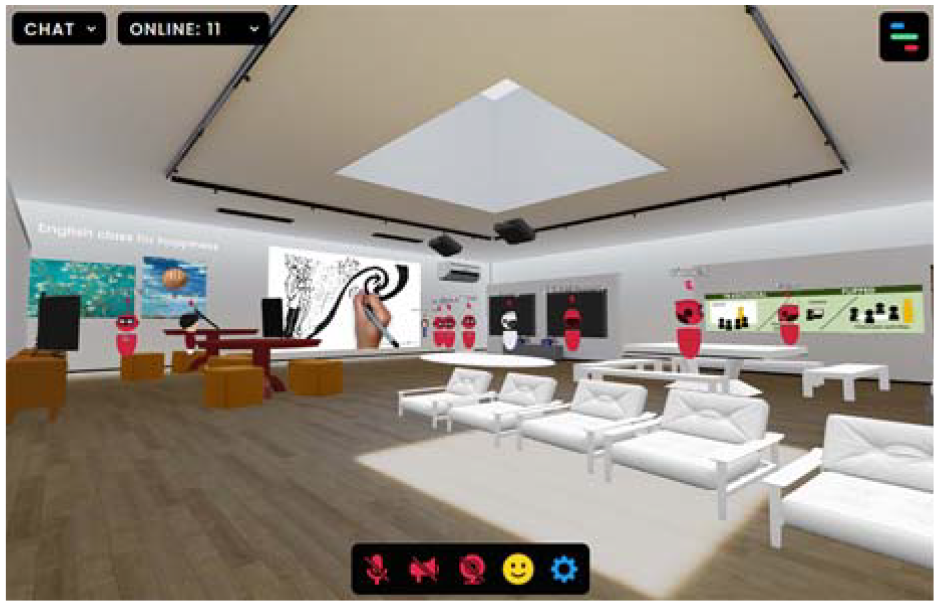
Example of metaverse classroom in Frame VR.
As far as lesson content was concerned, the presenter said that she would organize this space for the topic of “What is Happiness?” in her English class (Figure 6). Therefore, on one side of the wall, she put pictures of what happiness stands for, and attached a video explaining the value of happiness in our lives. Additionally, two TV screens with VR goggles are set up so that students can experience immersive learning content about happiness. She also placed a video clip showing examples of happiness on the right side of the classroom, and she would have students unfamiliar with the concept watch the video even after the class.
Figure 7 shows how another participant organized a classroom environment where students sat facing each other at a large table. Like other students, she also put up images and videos related to the lesson topic and set up a whiteboard at the front of the room. Another interesting finding was that she created a place for a digital archive in the corner of the room. As teachers and students alike can easily upload any content (only if a teacher assigns students as administrators), she highlighted that she would encourage her students to upload classroom materials and/or assignments to the designated area. In this context, a teacher is no longer an all-knowing expert; instead, students become creative meaning-makers, and authority in the classroom environment could be equally decentralized.

Example of metaverse classroom in Frame VR.
As shown in Figure 8a, another participant created a group space equipped with semi-circular tables. Interestingly, she placed an AI robot in the middle of the learning space, which could provide additional help and feedback to the students as needed. It did not respond to students’ requests due to current technological limitations. However, she explained to the class that she expected a 3D avatar or robot equipped with conversational AI functions to be introduced to the metaverse in the next evolution of digital interaction.

(a) Example of metaverse classroom and (b) live webcam in Frame VR.
Another intriguing finding was that she uploaded the live streaming screen and webcam so that she could interact with students via both an avatar and a real human teacher. This function in Frame VR compensates for the disadvantages of other video-conferencing platforms by empowering human-like interaction as well as 3D immersion and movement. Figure 8b shows an example of using a researcher’s webcam in the metaverse.
The primary benefits of teaching and learning in a metaverse classroom, according to several participants, are 3D immersion and experience. Another participant designed an English class introducing famous global landmarks. For example, as shown in Figure 9a, she placed 3D models of the Eiffel Tower and Arc de Triomphe around the Paris booth. While watching an introductory tour video, students experienced the contents of the 3D merge cube as a group. It was also impressive to see that she embedded and uploaded the 360° photo sphere depicted in Figure 9b. When a student clicked on the sphere, he or she was transported to the streets of Paris.
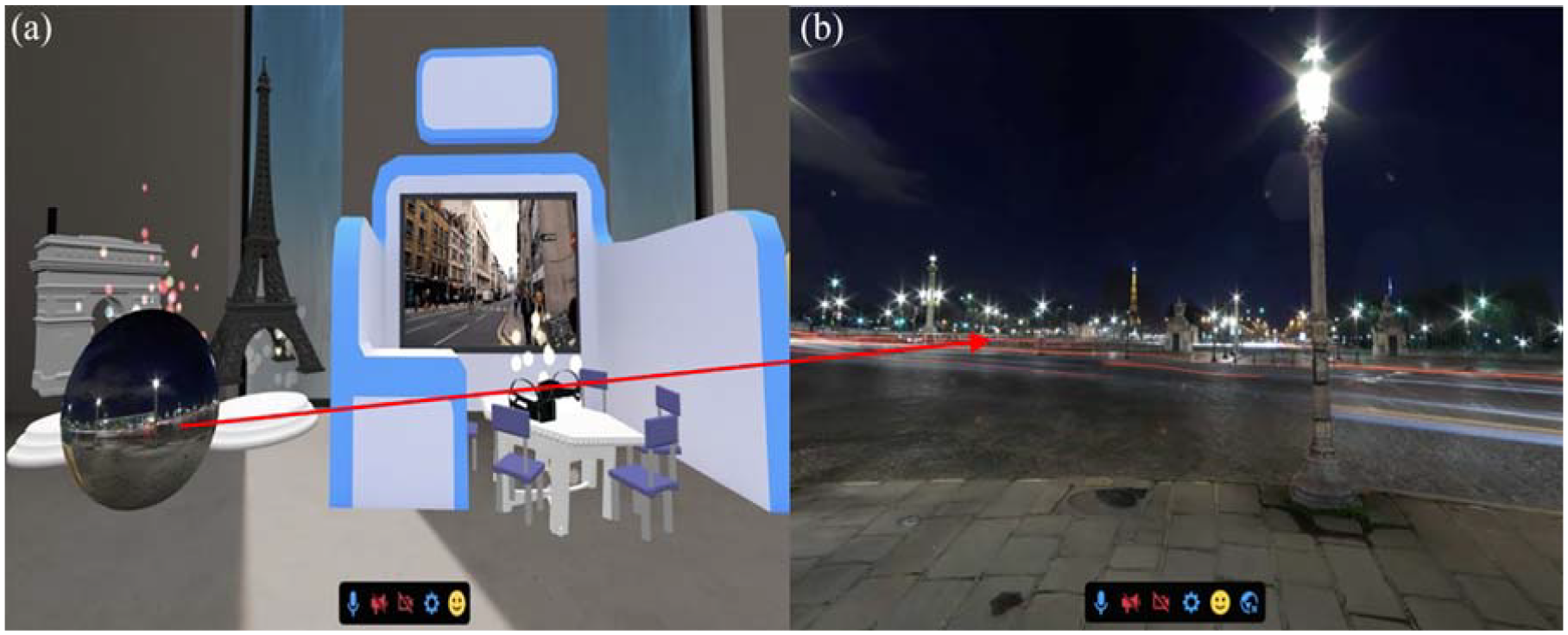
(a) Example of metaverse classroom and (b) 360° photo of Paris street in Frame VR.
Technological Acceptance and Perceptions in Metaverse Classroom Creation
This section examines the perceptions of pre-service EFL teachers regarding the technological aspects and acceptance process involved in creating metaverse language classrooms, assessed by the TAM. Surveys were conducted before and after the experiment to gauge changes in their perceptions. The key variables analyzed included external variables, perceived usefulness, perceived ease of use, and willingness to use the metaverse technology. Paired-sample t-tests were employed to measure the changes in these variables over time.
External Variables
The external variables were divided into five sub-domains: innovation and creativity, self-efficacy, perceived risk, image, and telepresence. The results of the paired-sample t-tests are presented in Table 4.
External Variables Result.

Based on the post-test results, the mean values of the participants’ responses were high in the order of innovation and creativity (m = 4.04, SD = 0.67), image (m = 3.88, SD = 0.68), telepresence (m = 3.81, SD = 0.91), self-efficacy (m = 3.66, SD = 0.59), and perceived risk (m = 3.41, SD = 0.73). Among the five areas, innovation and creativity had the same mean as the pre- and post-test results, and the remaining four areas showed an improvement of 0.16 to 0.37 in mean score. Although there was an increased mean score, no statistically significant difference was found in the following three variables: innovation and creativity, perceived risk, and image. In addition, despite the relatively higher increase in average of 0.32, telepresence showed no statistically significant change before and after the treatment. Given that pre-service EFL teachers accessed the metaverse platform via a PC or mobile device, the present study introduces the possibility that more advanced devices, such as HMD or smart glasses, are required to provide a deep sense of immersion and togetherness in the metaverse. However, there was a statistically significant improvement in self-efficacy (t = 2.096, df = 25, p = .046). This finding demonstrates that metaverse classroom design increases pre-service teachers’ sense of engagement and self-efficacy in dealing with teaching content and technology expertise.
Perceived Usefulness and Ease of Use
Table 5 presents the results of changes in perceived usefulness and ease of use when it comes to designing a metaverse classroom for active learning before and after treatment.
Usefulness and Ease of Use Result.

The mean of perceived usefulness increased by 0.21 from 3.90 to 4.11. In particular, a high average score (>4.0) was recorded in the post-test, but this difference was not statistically significant (t = 1.261, df = 25, p = .219). On the other hand, the result of the paired-sample t-test for perceived ease of use was statistically significant (t = 2.266, df = 25, p = .032). The post-test (m = 3.65, SD = 0.53) showed an improvement of 0.37 over the pre-test (m = 3.28, SD = 0.80). Therefore, it was found that participants recognized that it became easier to use the metaverse after creating a metaverse classroom. Such improved perceived ease of use in creating the classroom in the virtual world may have helped the pre-service teachers become active learning designers in their teaching preparation and practice, as they can test out many flexible classroom structures that may not be attainable in the physical world.
Attitude Toward Using & Willingness to Use
Table 6 summarizes the changes in the attitude of participants toward using or willingness to use the metaverse. The mean score of the post-test (m = 4.06, SD = 0.64) improved by 0.26 points compared to the pre-test results (m = 3.80, SD = 0.68). However, these results were not statistically significant (t = 1.327, df = 25, p = .197). A possible explanation for this may be that the pre-service teachers already had a higher level of technological awareness regarding its usage in teacher preparation and practice, given that the metaverse is a buzzword in various fields. This is also supported by the interview data report in the following section.
Willingness to Use Result.

Emotional Responses and Perceptions of Metaverse Classroom Design Experience
This section explores pre-service EFL teachers’ emotional responses by semtiment analysis and perceptions by keyword analysis regarding their experiences with creating metaverse language classrooms and how these perceptions influence their views on its potential and constraints for active language learning and teaching.
Of the 30 participants in the study, 26 students finished and submitted their reflection papers. The students’ reflections in Korean were translated into English and were analyzed for sentiment analysis based on VADER and SentiArt. The results are summarized in Table 7.
Results of Sentiment Analysis (N = 26).

Using a positive, neutral, negative, and compound scale, VADER develops emotional polarity. The integration value is positive if it is close to +1, neutral if it is close to 0 and negative if it is close to −1. The results show that the neutral sentiment score (m =0.82, SD =0.06) is greater than the positive sentiment score (m =0.14, SD =0.07). The lowest rating was given to negative attitudes (m =0.04, SD =0.04). The weighted average of the lexical scores, the compound score (m =0.79, SD = 0.21), indicates that the students had an overall positive experience of creating metaverses in the classroom.
The representation of emotional intensity patterns, such as anger, fear, contempt, happiness, sadness, and surprise, is conceivable using SentiArt. The results reveal that positive emotions like happiness (m = 0.90, SD = 0.23) and surprise (m = 0.75, SD = 0.22) were considerably higher than negative emotions like disgust (m = 0.28, SD = 0.14), sadness (m = 0.31, SD = 0.14), and anger (m = −0.16, SD = 0.12). This demonstrates a high degree of satisfaction with the metaverse classroom design process. Interestingly, fear (m = 0.59, SD = 0.24) was found to be slightly higher than other negative emotions. In summary, the findings indicate a generally positive experience, accompanied by certain apprehensions surrounding new technologies.
Figure 10 displays various emergent themes from word concordance data in the participants’ reflections that was coded using KH Coder. The first network of word co-occurrence reflected the attitudes of the pre-service EFL teachers regarding metaverse classroom creation.

KH Coder for word concordance.
The co-occurrence of reflective words (make, create, able, experience, English, metaverse, class, classroom) draws attention to the benefits of the constructability or designability that the metaverse can provide. The following excerpts support how the metaverse enables active learning experiences in active language learning.
Participant A: It was fascinating that the teacher could design and create his or her ideal classroom in the metaverse. Because learning might take place in a virtual setting that resembles the real world, I believe that it would be effective for experiential language learning. Participant B: By designing an English classroom in Frame VR, I was able to determine the classroom environment and furniture organization the way I wanted, as well as my perspective of a language teacher. I used to always follow the recommended structure for the classroom, but after making my own classroom setting in the metaverse, I became more creative when coming up with learning activities and tasks.
This finding is also corroborated by Network 2 (very, interesting, participate), indicating that metaverse-based education lies in its direct participation and interaction with peers and teachers.
Participant C: I found the majority of my foreign language classes to be a little monotonous. The classes were lecture-style in terms of teaching methodology. I was bored in classes that included videos or other multimedia, since I am a listener. However, I feel that in the metaverse, students can actively participate in class as if I were playing a game. Participant B: The metaverse is a really fantastic approach to setting up active learning since it allows students to engage in the lesson without being limited by time or space. Furthermore, the traditional classroom environment imposes constraints on how students participate in various learning activities, but the metaverse world has fewer such constraints.
As coded in Network 3 (real, different), the pre-service EFL teachers felt that this was a unique experience that may provide a strong sense of real immersion.
Participant D: Not only do I enjoy the process of designing the classroom structure, but I also enjoy the ability to create class-related videos, slideshows, photos, and content in VR mode or 3D format. I feel that the students would sense that they are in a real environment. Participant E: I was impressed by how my peers gathered on a virtual space site to share their thoughts on the classroom structure that I designed during my presentation. This is advantageous for teachers who want to provide students with unique language learning experiences.
Additionally, the word concordance networked by two nodes (Network 4: teaching, method, practice) shows that their teaching preparation and practice for the future were largely inspired by the metaverse classroom making and sharing experiences, as shown in the following excerpts: Participant E: Being a virtual teacher in the metaverse and setting up the classroom how I like it would be incredibly beneficial for how I see myself developing into a good teacher in the future. The robot instructor was placed in the center of a circle of desks. I did so because I believed that AI robots would play a significant role in teaching in the future. Participant G: With the creation of a metaverse English classroom, I was able to realize how my preconceived notions about education had altered. It was astonishing how simple it was to develop classroom layouts that could accommodate the aims of the lecture and goals of the learning activities. Participant H: As a person who wanted to become a language teacher, it was so good that I had my own classroom and that I could design it for the future in my own way, regardless of budget or sociocultural constraints.
Discussion
Drawing on the study’s findings in relation to the research questions, this section delves into both the theoretical and practical implications, illustrating how practitioners can apply the results to real-life problems and highlighting the study’s usefulness for future research.
Revisiting the Research Questions
Regarding RQ 1, which delves into participants’ metaverse classroom design, the findings underscore the emergence of learning spaces fostering group activities and emphasizing interactions with both teachers and peers. Furthermore, participants crafted a multimodal learning space using various images, videos, 360° photos, and 3D models tailored to the lesson topics. Conventional teaching materials for distant education, such as digital textbooks, shared courseware, photographs, and videos, are somewhat static formats confined to 2D spaces and interfaces (H. Lee & Y. Hwang, 2022). In contrast, the metaverse allows learners to interact with learning materials manifested by a 3D spatial design and visualization. In addition, by entering 3D learning spaces, learners can experience learning content directly through numerous sensory inputs and multimodal learning opportunities (Y. Hwang et al., 2023). For instance, they can view 3D objects by zooming in, zooming out, and rotating them, enhancing their experiential knowledge acquisition. One participant even introduced the concept of 3D AI robot objects to aid language learners. While this remains a conceptual projection at this stage, it matches with growing research integrating AI technologies, such as AI chatbots and generative AI models (G. J. Hwang & Chien, 2022; Kasneci et al., 2023; Rospigliosi, 2023).
RQ 2 examines how participants’ technological acceptance relates to their experiences of metaverse classroom creation. The experiment revealed that pre-service EFL teachers’ perceptions of metaverse classroom creation became significantly after the experiment. Especially, designing metaverse classrooms heightens pre-service teachers’ engagement and self-efficacy in handling both instructional content and technological aspects. This observation resonates with earlier studies that found that active participation in crafting metaverse classrooms can boost self-efficacy, autonomy, and motivation among pre-service teachers, as they recognize and harness technological potentials for language education (Y. Hwang et al., 2023; Jeon et al., 2022). These findings suggest that pre-service teachers grew more comfortable with the metaverse technology, recognized its usefulness, found it easier to use, and showed an increased willingness to incorporate it into their teaching practices. This indicates a promising acceptance trajectory for metaverse-integrated teaching in future EFL educational settings.
RQ 3 delves into the participants’ emotions and reflections on creating metaverse classrooms and their potential use for educational purposes. The dominance of positive emotions (such as happiness and surprise) over negative ones (including disgust, sadness, anger, and fear) underscores the participants’ satisfaction with metaverse classroom design. Furthermore, emergent themes arising from their reflections emphasize several positive potentials toward the use of metaverse classrooms in language learning. First, they highlight the advantages of customization and design flexibility. Unlike traditional online and remote teaching platforms, the metaverse provides the flexibility to modify the virtual learning environment and customize spaces tailored to specific learning objectives (Y. Hwang et al., 2023). Zhang et al. (2022) emphasizes that the flexible map customization function of the metaverse allows users to create any desired space by locating various learning content. From this perspective, previous research highlights the benefits that pre-service teachers can expect when directly designing metaverse spaces for educational purposes (Jeon et al., 2022). In this same vein, keyword analysis also highlights the metaverse’s role in facilitating active learning, drawing attention to direct participation and interaction, yielding genuine immersion and distinctive experiences. In short, the emotional responses and perceptions of pre-service EFL teachers toward creation of metaverse language classrooms were predominantly positive, highlighting the importance of technology-integrated teaching initiatives.
Implications
In terms of practical implications, the findings in this study highlight the potential of metaverse technologies in enhancing EFL education. They suggest that the experience of creating their ideal classroom in the metaverse not only improves the learning experience but also encourages educators to adopt new technological tools, leading to more interactive and effective language education. Especially, metaverse technologies allow EFL teachers to create diverse learning environments that promote active learning through discussions, teamwork, games, problem-solving, and immersive experiences (Y. Hwang, 2023). In addition, the ease of creating metaverse classrooms has implications for both virtual and physical learning spaces, fostering more engaged learning (Jeon et al., 2022). This study’s results can be directly applied to address real-life challenges in education. For instance, as the metaverse classroom can offer synchronous learning experiences beyond time and space limitations, practitioners can use the metaverse learning space to overcome geographical and physical limitations, providing remote learners with an immersive and interactive learning environment. This approach is particularly beneficial in regions with limited educational resources. By incorporating metaverse technologies, educators can offer a more inclusive and accessible learning experience, bridging gaps in education quality and availability. Moreover, these results can inform future policy decisions and establish best practices for integrating metaverse technologies in educational settings. Such policies may focus on several key areas: the seamless integration of immersive technologies in teaching and learning, professional development for educators, and ensuring equitable access to these technologies. Advocacy for metaverse integration in education might include investments in infrastructure, resources for technology adoption, and nurturing a culture of technological innovation.
Conclusion
This study underscores the transformative potential of the metaverse in EFL education by fostering dynamic, interactive, and multimodal learning environments. The findings reveal that metaverse classrooms facilitate group activities and rich interactions with teachers and peers, enhancing the learning experience through 3D spatial design and immersive multimodal opportunities. Pre-service teachers exhibited increased engagement, self-efficacy, and technological acceptance after designing metaverse classrooms, suggesting a positive trajectory for future adoption in educational practices. In addition, the positive emotional responses from participants highlight the significance of integrating metaverse technologies into educational frameworks, paving the way for more innovative and effective teaching methodologies.
Limitations
The findings of this study have limited generalizability due to the small number of participants. Conducting the creation of a metaverse classroom with a larger participant group could yield more conclusive data for future research. Additionally, further research using controlled trials is necessary to establish the effect of metaverse classroom creation on actual classroom. While the pre-service EFL teachers in this study designed the metaverse classroom and developed the lesson plan, they did not engage in actual teaching within the metaverse. Therefore, conducting teaching demonstrations could advance the evaluation of the actual effectiveness of metaverse-based leaning with a quasiexperimental design for the future study. Despite these limitations, this study raises compelling areas for further investigation in metaverse-based research and education, particularly focusing on immersion, interactivity, and constructability.
Future Research Direction
Building upon this foundation, the study paves the way for a multitude of future research opportunities. One critical avenue involves investigating the long-term effects of metaverse technologies on language learning outcomes. Here, the role of classroom design in promoting active learning becomes paramount. Future research could focus on how different layouts, tools, and interactive elements within the metaverse influence active engagement in language learning, covering areas such as vocabulary acquisition, pronunciation, and cultural comprehension. Moreover, understanding the psychological and social dimensions of active learning in virtual environments is essential. Future studies should explore aspects like student engagement, motivation, and collaborative skills development, all of which are integral to active learning. This exploration is particularly relevant in the context of the metaverse, where virtual classroom design plays a pivotal role in shaping the learning experience. Another significant area for future research, highlighted by this study, is the integration of active learning principles into the curriculum through technology. It is imperative to develop effective strategies and frameworks for the utilization of metaverse technologies in diverse educational settings, keeping active learning at the forefront. This encompasses examining the training needs of educators and the infrastructural demands necessary for implementing these technologies on a large scale. Last, the study brings to the forefront the critical issue of equity in metaverse-enhanced education, especially as it pertains to active learning. Ensuring equitable access to well-designed virtual classrooms and the necessary technology for all students is crucial. Future research should focus on initiatives that provide the required devices and internet connectivity, particularly targeting students in underprivileged areas. Investigating these equity concerns is essential not only for maximizing the potential of metaverse technologies in education but also for guaranteeing that the benefits of active learning in well-designed virtual classrooms are universally accessible and impactful.
Footnotes
Appendix
Questionnaire on Technological Acceptance Model for Metaverse.
| # | Questions |
|---|---|
| 1 | I do not hesitate to use new technology. [Innovation] |
| 2 | I think innovative attempts are essential in education. [Innovation] |
| 3 | If I find a new educational technology, I try to apply it to my teaching. [Innovation] |
| 4 | I believe the process of metaverse classroom creation will be easy. [Self-efficacy] |
| 5 | I have enough computer knowledge to create a metaverse classroom. [Self-efficacy] |
| 6 | It is easy for me to recall how to use the metaverse platform. [Self-efficacy] |
| 7 | Using the metaverse skillfully requires a lot of effort from me. [Self-efficacy] |
| 8 | If I have a manual or guidebook on using metaverse, I can make a metaverse classroom well enough. [Self-efficacy] |
| 9 | I can create a metaverse classroom if somebody teaches me how to use it. [Self-efficacy] |
| 10 | The metaverse classroom creation will not be possible due to technical difficulties. [Risk] |
| 11 | The metaverse classroom creation will take a lot of time and effort. [Risk] |
| 12 | The metaverse classroom creation will be worthless compared to the time and effort invested. [Risk] |
| 13 | The educational effect of a metaverse classroom will not be clear. [Risk] |
| 14 | Using the metaverse, my image as a teacher will improve. [Image] |
| 15 | Using the metaverse will increase my competitiveness as a teacher. [Image] |
| 16 | Using the metaverse, students will recognize me as a better teacher. [Image] |
| 17 | I think that if students enter the metaverse space I create in pre-class, they can increase the immersion of education compared to general pre-class videos. [Telepresence] |
| 18 | When I teach in the metaverse classroom, I feel like I am in a virtual world. [Telepresence] |
| 19 | When I teach in the metaverse classroom, I feel like I am in the real class. [Telepresence] |
| 20 | When I teach in the metaverse classroom, I feel like other avatars are like my real students. [Telepresence] |
| 21 | The metaverse classroom helps maximize the educational effect of the flipped learning class structure. [Perceived usefulness] |
| 22 | The metaverse classroom helps encourage cooperative learning. [Perceived usefulness] |
| 23 | The metaverse classroom helps students share class content. [Perceived usefulness] |
| 24 | The metaverse classroom helps increase students’ interest and immersion. [Perceived usefulness] |
| 25 | The metaverse classroom will be useful for my future teaching practice. [Perceived usefulness] |
| 26 | To me, metaverse utilization classes are a hassle. [Perceived ease of use] |
| 27 | The metaverse classroom creation requires a high level of mental effort from me. [Perceived ease of use] |
| 28 | I will be able to learn how to create a metaverse class easily. [Perceived ease of use] |
| 29 | I will not have much difficulty with the metaverse classroom creation. [Perceived ease of use] |
| 30 | I will quickly and easily understand the explanation of how to create a metaverse classroom. [Perceived ease of use] |
| 31 | It is desirable to learn about teaching methods using the metaverse. [Perceived ease of use] |
| 32 | I am actively learning how to teach in the metaverse. [Willingness to use] |
| 33 | It is desirable to use the metaverse to teach. [Willingness to use] |
| 34 | I am willing to use the metaverse creation program again in the near future. [Willingness to use] |
| 35 | I am actually willing to create a metaverse classroom and conduct classes with students. [Willingness to use] |
Acknowledgements
We are grateful to all of the students with whom we have had the pleasure to work during this study.
Declaration of Conflicting Interests
The author(s) declared no potential conflicts of interest with respect to the research, authorship, and/or publication of this article.
Funding
The author(s) received no financial support for the research, authorship, and/or publication of this article.

Data Availability Statement
The datasets used during the current study are available from the corresponding author on reasonable request.