




Abstract
In an era of rapid technological advancement, digital transformation is crucial for high-tech firms to remain competitive and drive innovation. Digital transformation (DT) necessitates incorporating various technologies to enhance a firm’s capacity to collect, integrate, process, and utilize business data. Therefore, this study aimed to identify the factors influencing DT and the adoption of digital technology in the context of high-tech firm performance (FP) with the moderating role of digital literacy (DL). This study analyses the key factors influencing DT and the adoption of digital technologies, focusing on their impact on FP in high-tech firms, with DL as a moderating factor. The significance of this study lies in its comprehensive analysis of the perceived ease of use, time-saving, security risk, and financial risk, as well as their roles in driving DT. The hypothesis was investigated using the partial least squares structural equation modeling (PLS-SEM) approach. The data was collected from 521 respondents through a self-administered survey of high-tech firms. The results describe that perceived ease of use, time-saving, security risk, and perceived financial risk have a significant and positive relationship with DT. Moreover, DT partially mediates the relationship between perceived time-saving and FP. The study’s practical implications emphasize the need for high-tech firms to address user perceptions and risks associated with digital technologies to implement DT and achieve improved performance successfully.
Keywords
Introduction
The traditional economy is rapidly changing into an intelligent economy with the rapid development of artificial intelligence, cloud computing, big data, blockchain, industrial Internet, and other digital technologies (Pham et al., 2021). DT is now a key strategy used by businesses to achieve breakthrough innovation and sustainable growth (Øverby et al., 2023). Information and communication technology (ICT) is the key factor that influences the digital economy (DE) (X. Guo et al., 2023). This comprises the development of electronic goods and services such as email, eBooks, web pages, websites, and social media) as well as electronic payment methods like PayPal, Alipay, and Amazon Pay (Zahoor et al., 2023).
DT, acknowledged as a pivotal ongoing evolution in modern society, significantly impacting both commercial enterprises and daily routines (Wang et al., 2021), has emerged as a primary focus for managerial attention. In particular, DT and the use of digital technologies across various industries have been catapulted through the COVID-19 pandemic (Pangrazio et al., 2020). DT refers to a strategic process directed at enhancing an entity by instigating substantial changes via the integration of information, communication, computing, and interconnected technologies Xie and Wang (2023). Consequently, it pertains to the incorporation and application of technologies within a comprehensive organizational framework. Moreover, in navigating a business within this dynamic landscape, organizations depend on their employees’ preparedness to embrace change for the effective implementation of such changes (Ahmetoglu et al., 2022). Against the backdrop of digital labor, the deliberate digital preparedness of workers is crucial for the success of organizational change in terms of DT.
To be precise, as outlined, individuals are more inclined to participate in digitalization when they perceive themselves as capable of handling digital technologies and hold a positive attitude toward this transformation (Amankwah-Amoah et al., 2021). Hence, individuals’ behavioral intentions constitute a pivotal capability concerning the genuine acceptance and utilization of technology (Jones et al., 2021). Likewise, within the digital workforce framework, the deliberate digital preparedness of employees is regarded as a critical capability concerning the authentic acceptance and utilization of digitalization (Shah et al., 2021). While scientific studies on technology adoption and technology acceptance have significantly increased in the last decades, influencing and employing digital technology’s perceived ease of use and perceived risk factors have a crucial role in shaping people’s view of how accessible and user-friendly technical advancements are. Alongside this consideration, there is the notion of perceived time saving, which encompasses the expected improvements in efficiency and productivity that come with the integration of digital tools and systems (Afridi et al., 2023).
According to Jain and Raman (2022), digital technologies enable real-time transparency, agility, and adaptability, which enhance consumer interactions. On the other hand, DT boosts productivity while lowering costs and enhancing efficiency. DT is defined as how businesses use digital skills to change their organization’s growth models and ecosystem. It is also considered the fourth industrial revolution, and it is becoming a significant subject in corporate research (S. Chen et al., 2022). Also, the COVID-19 epidemic has sped up the shift to digital technology (Skare et al., 2023).
Although developing nations consistently adopt digital technology and transform their business under the umbrella of the DE, Pakistan is no exception. Pakistan is a developing nation and has a total population of 220 million, of which more than 165 million have a mobile phone subscription. Out of 165 million people, 70 million people use internet facilities, and more than 60 million use smartphones and 3G and 4G coverage is 78%, with an increasing number of 0.173 million per month as per the Pakistan Telecommunication Authority (Hongyun et al., 2023; Zhong et al., 2022). Regardless of the growth in technology, the adoption of DT toward the DE is still not measured in the literature in the context of Pakistan.
Despite the considerable research extensively measured the perceived ease of use and perceived risk factors concerning online bank application adoption. The current study used the perceived ease of use and perceived risk factors in adopting DT in the context of high-tech firms. Moreover, this study proposed that DT is likely to mediate while digital literacy is a moderating variable between FP and high-tech FP. This study provides three contributions to the available literature on DT. The first study contributes to and broadens existing research on DT. The second research contributes to our understanding of the influencing elements of DT concerning perceived risk considerations and ease of usage in developing countries. Third, the influencing elements impact DT and the performance of high-tech firms. Additionally, it offers a guide, technique, and point of reference for the high-tech management practice.
This research has five sections: Section “Literature Review, Theory and Hypothesis Development” includes a literature review, theoretical background, and development of a hypothesis. Section “Methodology” highlights the research methodology. Section “Analysis” provides the findings; Section “Findings, Discussions and Implications” discusses the research findings, discussions, and implications, and Section “Limitations, Conclusion, and Future Research” addresses the conclusion’s limitations.
Conceptual Framework
In the age of technology, actively embracing DT and implementing novel technology is about being up-to-date and flourishing (Verhoef et al., 2021). DT is not only a trendy concept; it entails fundamentally restructuring company operations. The objective is to use modern technology to streamline processes, enhance speed, and optimize efficiency (Llopis-Albert et al., 2021).
The importance of adopting technology in the present day cannot be overstated. Despite a rapidly evolving technological world and changing customer tastes, organizations find themselves at a crucial point when their success depends on the choice to embrace or reject technology (X. Guo et al., 2023). Moreover, in a competitive environment, organizations must be adaptable and flexible. Also, technology adoption plays a key role in allowing them to change direction quickly, use insights derived from data, and establish unique positions in already crowded areas (Zhang et al., 2023).
Moreover, using technology to enhance digital skills and literacy reshapes customer connection parameters, fostering smooth and customized encounters that align with the modern consumer (Correani et al., 2020). The incorporation of sophisticated technology meets the growing needs for ease and availability and creates a favorable environment for cultivating consumers. In short, incorporating technology in the current era acts as the foundation on which businesses establish their ability to endure challenges, adapt quickly, and achieve long-term success (Sui et al., 2024).
Strategic integration accelerates a significant change, pushing organizations from traditional methods to dynamic, technology-driven frameworks that can navigate the complex landscapes of modernization and drive organizations to achieve great success (G. Z. Yang et al., 2023).in addition, organizations can attain a competitive advantage and perform better by adopting the new digital technology and transforming their business. Following a comprehensive review of the literature (Effendy et al., 2021; Mardhiah et al., 2022; Nwankpa, 2016; Tahar et al., 2020), it is evident that previous research has not delved into the assessment of perceived ease and risk factors associated with the adoption of digital transformation in high-tech firms. Consequently, this study aims to investigate the role of perceived ease and risk factors in influencing digital transformation within high-tech firms located in developing nations. The conceptual framework is shown in Figure 1.

Conceptual framework.
Literature Review, Theory, and Hypothesis Development
Literature Review
DT has emerged as a pivotal enabler in contemporary organizational enhancement endeavors, particularly accentuated amid the COVID-19 pandemic (Ding, 2022). In technology adoption, the perceived ease of use assumes a central role. The Technology Acceptance Model (TAM) underscores the influential nature of perceived ease of use and usefulness in shaping an individual’s inclination toward technology utilization (Distanont & Khongmalai, 2022). Moreover, scholarly observations denote the substantial impact of perceived ease of use on behavioral intentions, albeit acknowledging a tendency for this impact to attenuate across temporal dimensions (Keni, 2020). Walle et al. (2023) denoted the substantial initial impact of perceived ease of use on intentions. However, they recognize a tendency for this impact to potentially diminish over time (Nurahmasari et al., 2023). Within the domain of DT, a positive correlation has been established between perceived ease of use, user satisfaction, perceived usefulness, and the adoption of technology (Lhassan et al., 2022).
Furthermore, the inclination to embrace DT is notably shaped by perceived ease of use, complemented by other influential factors, including subjective norms, habitual tendencies, perceived usefulness, and perceived risk (Mukesh, 2022). Studies reveal that DT is not just about adopting new technology; it’s a big change that can actually improve people’s lives (Palad, 2023). It’s also been noted that embracing digital changes in how organizations work can boost efficiency, productivity, and overall performance by using technology to save time (Shen et al., 2022). Also, the need to employ digital technology for achieving DT highlights how crucial it is to save time when adopting these technologies (Entschew, 2021). Furthermore, the rapid progress in digital communication has been suggested to make people feel like they have less time, indicating that while technologies save time, they might also make organizational members feel like they have more time available (Tsai & Su, 2022).
Prior studies indicate that in the adoption of digital technology, perceived risk factors have significant consideration (Kurniasari, 2021). Also, it is suggested that digital technologies provide more information for business decisions and bring greater transparency to innovation and entrepreneurship, causing the perception of risk to decrease (Kantika et al., 2022). In contrast, when the likelihood of security problems is minimal, individuals exhibit more trust and assurance in using digital financial services. It emphasizes the need to address security issues while conducting digital transformation programs (Nasiri et al., 2022). Although extensive research has been published on the technology adoption factors in the firms, rare research found that using the perceived ease and perceived risk factors to adopt the DT using the moderating role of digital literacy in the context of high-tech firms.
Technology Acceptance Model (TAM)
The technology acceptance model (TAM) was introduced by Davis (1989), which is used to simulate technology user acceptability. TAM aims to explain the factors influencing technology acceptability. According to the TAM, two specific beliefs, perceived usefulness and perceived ease of use, have the supreme impact on people’s behavior in using technology (Nikou, 2019). Within the framework of DT, TAM is essential in explaining the reasons for and methods by which businesses take this step. When it comes to digital technology adoption in businesses, the aspect of perceived ease of use inside TAM is crucial (Rouidi et al., 2022). This dimension, which directly affects technology integration, represents how easy people believe technology to be to use.
Furthermore, closely linked to the notion of perceived ease of use is the idea of perceived time-saving, emphasizing the perceived increase in efficiency resulting from the use of technology. In addition, TAM expands its scope to include perceived security and financial hazards (Chatterjee et al., 2021). These essential aspects, crucial in the process of making decisions, tackle issues about the safeguarding of data, weaknesses in the system, and the financial consequences, ultimately influencing the direction of DT efforts (Hoang & Le Tan, 2023).
The interaction between the perceived ease of use, perceived time-saving, perceived security risk, and perceived financial risk within the TAM framework create an intricate connection supporting the organizational DT process. These factors are not independent entities but rather tightly interconnected, exerting mutual influence within the adoption landscape (Stergiou et al., 2023). Combining these elements in the TAM clarifies the complex incentives that influence firms’ technology decisions. Developing a deep understanding of this connection offers firms vital insights to achieve a successful DT successfully (Yoon et al., 2023). The combination of these factors provides a strong basis, clearly defining the reasoning behind choices to embrace technology, and offers a systematic approach to deploying digital technologies inside organizational frameworks (S. J. Chen et al., 2022).
In the latest studies on user acceptance and adoption of new technology, the TAM has great theoretical and explanatory strength (Alalwan et al., 2016). It is found that TAM can effectively demonstrate a user’s desire to employ technology (S. J. Chen et al., 2022). Additionally, it has been frequently used in research to ascertain user views of system usage and the likelihood of adopting an online system (Holden & Karsh, 2010; Sharma & Mishra, 2022). In the model, analysis of the mediating role of DT and TAM helps to explain how perceived ease of use and usefulness of technology adoption influence DT. It also helps to understand the employees’ perceived behavior regarding adopting technology and its usefulness in encouraging DT.
Digital Transformation and Firm Performance
The use of DT in corporate, associations, and the economy is stated to be digitalization (Zhai et al., 2022). the process of transforming business processes for firms using digital technologies like artificial intelligence, blockchain, the Internet of Things, and cloud computing to improve customer experience, simplify procedures, and develop new business models. ( J.Xu et al., 2023). The procedure of DT in firms is complicated because the transformation process accelerates change and raises uncertainty (Zhong et al., 2022). Deja et al. (2021) Suggested that DT improves FP. DT helps firms to reduce transportation, tracking, and verification expenses.
Moreover, most studies suggested that by reducing information asymmetry and encouraging research and development innovation, DT can increase FP (Skare et al., 2023; Sohu et al., 2024). Businesses fully embrace digital technologies and transform their businesses early to gain a competitive advantage in the marketplace (Jamil, 2021). The new revolution in technology contributes to developing shared ideals and establishes new organizational practices. It promotes a new culture of integration and cooperation (Jun et al., 2022). In the age of digitalization, firms can extract purposeful information which can help in data-based decision-making.
Additionally, it also urges firms to adopt the required environment with cost-savings and building flexibility (Hinings et al., 2018). DT also improves advertising activities while lowering overall costs. Therefore, the study proposed the following hypothesis:
H1: DT has a positive impact on the FP
Perceived Ease of Use and Digital Transformation
Perceived ease of use refers to an individual’s subjective perception regarding the usability and simplicity of a particular technology or digital system. It reflects the user’s belief or perception about how easy it is to learn, understand, and operate the technology (Mofokeng, 2023). Ease of use relates to the easy usage of Internet interfaces and denotes the degree of non-complexity (Puspitasari & Briliana, 2017). Islam (2023) expounds that perceived ease of use is essential in adopting and implementing DT in organizations. Organizations going through a DT seek to use technology to enhance efficiency, effectiveness, and competitiveness. Kaondera et al. (2023) Elaborate that the willingness of employees to accept and use the technology is the essential element of the DT in the organization.
Additionally, the association between DT and ease of use is multi-faceted and interdependent. Santos et al. (2019) advocated those employees are more likely to embrace and accept the digital system, and they find it to be simple, which facilitates and accelerates the DT system in the organization. Furthermore, the association between perceived usability and DT is favorable and includes customer-facing apps. Customers are more inclined to interact with an organization online when they find its digital platforms simple to use and navigate, which improves customer experiences, fosters loyalty, and ultimately supports the organization’s digital strategy (Pham et al., 2021). Thus, the study projected the next hypothesis:
H2: Perceived ease of use has a positive relationship with DT
Perceived Time Saving, Digital Transformation and Firm Performance
The term “perceived time savings refers to an individual’s skewed perception and judgment of how much time is saved using a specific technology or digital system compared to an older one”. It reflects the user’s opinion and perception of the technology’s efficiency, speed, and productivity improvement (Esfahbodi et al., 2022). Perceived time saving plays an essential part in adopting and applying DT. Firms that are undergoing DT try to apply technology to simplify operations, automate work, and improve overall firm efficiency (F. Xu et al., 2019).
Moreover, time-saving is a key motivation for individuals to adopt the technologies, as it aligns technology to attain their desired productivity and optimizes their workflow. Bonsón-Fernández (2017) validates that perceived time-saving and technology adoption have a positive relationship, and both are mutually integrated. Perceived time savings contribute to technology’s perceived usefulness because it directly affects humans’ productivity and efficacy in accomplishing activities and achieving goals (Roxana Moşteanu et al., 2020). Also, through DT, firms can accelerate the decision-making process, improve customer services, and have a faster response time, ultimately increasing the overall business’s productivity and success (Rajapathirana & Hui, 2018). Thus, the study planned the below hypotheses:
H3a: Perceived time saving has a Positive relationship with the DT
H3b: DT plays the mediation role between perceived time saving and FP
Perceived Security Risk and Digital Transformation
The terms nature and amount of risk are both terms applied by Bauer et (1960) to describe the perceived risk (Mofokeng, 2023). Risk is a key factor in employee behavior and has a big impact on how well new technology is understood and used. There are two scholarly perspectives on risk: one that emphasizes the unpredictability of a decision’s result and the other that emphasizes the costs or consequences (Tran, 2020). Security risk is subjective to a personal assessment of the possible security risks and vulnerabilities linked to implementing and using new technology (Nepomuceno et al., 2014). It includes worries about data breaches, identity theft, cyberattacks, and other security-related problems (Balapour et al., 2020). Security risk has significantly influenced the decision-making process of technology adoption and transformation. High levels of perceived security risk may cause resistance or hesitation, resulting in slower adoption rates or outright avoidance of new technology.
On the other hand, a decreased perceived security risk may increase a person’s readiness to accept and try out new technology (Al-Nabhani et al., 2022). Lim et al. (2023) found that during the DT process, organizations must balance security issues and the desire for innovation. Overemphasizing security can lead to excessive caution and missed opportunities for technological advancements. Conversely, neglecting security can result in vulnerabilities and increased risks (Scatulino & Arruda Filho, 2023). Therefore, the study proposed the following hypothesis:
H4: Perceived security risk has a significant relationship with the DT
Perceived Financial Risk and Digital Transformation
Financial risk is defined as the unknown risks associated with using digital products or services, which is known as financial risk (Tran, 2020). Financial risk in the adoption of new technology refers to an individual or organization’s subjective perception of the potential financial losses, expenses, or vagueness associated with adopting and implementing new technology (Kamalul Ariffin et al., 2018). When people are perceived as having more financial risks, they are less willing to adopt new technologies, affecting the total amount of online consumption (Kherazi et al., 2024).
During the process of DT, perceived risk is the key factor in determining technology adoption (Y. Yang et al., 2015). Businesses must assess the possible economic impacts of introducing new technologies, including the price of purchasing and installing the technology, staff training costs, and risk management expenses (D. Yang, 2022).
Additionally, perceived financial risk may influence the rate and scope of technology adoption since more perceived risk may result in slower adoption rates or more cautious decision-making (Liu et al., 2023). Kamalul Ariffin et al. (2018) indicate that financial loss of any kind, whether from credit card theft, inferior products, or products that failed to live up to expectations, discourages online buying and has a severe negative impact on intentions to use new technologies. Therefore, the study proposed the following hypothesis:
H5: Perceived financial risk has a significant impact on DT
Digital Literacy
The term digital literacy has been in use since the 1980’s; however, it only has the more constrained sense of being able to utilize computers for work (Reddy et al., 2022). The concept was enlarged by defining it more specifically as the collection of attitudes, comprehension, and abilities needed to successfully manage and transmit information and knowledge across various media and forms. (Nithyanandam et al., 2022). People with access to technology may not be able to achieve their intended socio-economic goals since successful use of IT requires acquiring certain core skills. (Pangrazio et al., 2020b). Ongena (2023) reveals that the critical and secure use of information systems is a component of these digital abilities. An ability to use information systems for innovative and original reasons, regardless of the context (social, business, etc.).
In addition to the capacity to use social networking apps and collaborative environments (Deja et al., 2021). Digital literacy is important in enabling and driving DT within an organization and is a prerequisite for successful technology adoption (Muhammadiyah Yogyakarta, 2022). Digitally savvy employees may experiment with new technologies, see areas for development, and support innovation initiatives. Moreover, employees with digital literacy are better able to think creatively, solve problems, and adjust to new technologies (Irfan et al., 2022). Digitally literate employees can access information quickly, work remotely, automate processes, and use digital platforms to create a more effective workflow. These qualities increase productivity within the firm, save time, and increase efficiency (L. Guo & Xu, 2021). Additionally, digitally literate employees are more likely to adopt new technology and identify the cycle of opportunities to produce innovative ideas within the firms (Scuotto et al., 2021). Therefore, the study proposed the following hypothesis:
H6: Digital literacy has a significant impact on the FP
H7: Digital literacy moderates the relationship between DT and FP
Methodology
Research Context
This study collected data from Pakistani high-tech firms to consider the relationship between the variables. The firms are chosen from the Pakistan Telecommunication Authority directory. Through a self-administered survey, information was acquired from people who actively engaged in using and using digital technology. The study used purposive sampling techniques to identify professional respondents who specialized in digital technology use, adoption, and transformation and had at least 5 years of experience in selected organizations. Firstly, the researchers were in contact with the firms’ HR departments to acquire approval to contact the professionals.
We presented the survey to the participants with a keynote presentation showing the key purposes of the research along with some instructions on how to respond to the questionnaire. The questionnaire was in English because it is considered the official language in high-tech firms. A total of 800 surveys were distributed among different organizations. We received 678 questionnaires; out of them, only 521 respondents fully completed the questionnaire. The successful respondent rate is 76%. The survey was conducted over 6 months, from September 23 to April 23, to gather information from respondents. As per demographic information, Table 1. The total number of respondents was 521, out of which 71% were male and 29% were females, among whom 60% were graduates and 4% had Ph.D. degrees. Moreover, the low participation of women in the survey was due to the cultural and societal norms because the societal pressure and cultural barriers influenced and motivated the women toward that profession perceived as more aligned with feminine characteristics (Khalid et al., 2023).
Demographic Information.

Professionals with expertise in human resource management, technology adoption, and transformation participated in a survey to assess the content validity of the measurements used to generate the item scales for the structures (Rosenzweig & Roth, 2007). To strengthen the validity of the survey instruments, pilot research was conducted with a group of experienced professionals to link item scales with appropriate measures. The pilot study outcomes, which included a sample of participants with the same credentials as the intended audience, demonstrate a high level of content validity (Marshall, 2014). Additionally, A Likert 5-point scale, with 1 indicating strongly disagree and 5 indicating strongly agree, was used to evaluate each component.
Instruments
All items used to assess the variables were developed after an in-depth literature review and some only needed minor modifications to be compatible with the pre-fabrication context. Perceived ease of use is measured by using four scales derived by Mofokeng (2023). A sample item is “It is easy to use the digital technologies implemented in our firm.” Moreover, the scale of perceived time saves three items-adapted from (Escobar-Rodríguez & Bonsón-Fernández, 2017). A sample item is “Searching for information using our firm’s digital systems is highly efficient.” Perceived security risk four-item scale was adapted from (Mofokeng, 2023). A sample item is “Our firm has clear policies regarding data protection in the context of digital technologies (Akturan & Tezcan, 2012; Tran, 2020). A sample item is “Do you think the operating system of mobile banking and other online banking applications, not functional well.” Also, the DT three-item scale and FP three-item scale were adopted by Singh et al. (2021). Moreover, the digital literacy five-item scale was adopted from (Zahoor et al., 2023) A sample item is “I am confident in browsing, searching, and filtering data.”
Analysis
Version 4 of Smart-PLS was used for the data analysis of the investigation. It is often known as partial least squares modeling and is used to evaluate the data set and test multiple hypotheses. It assists in examining complex cause-and-effect connections (Hair et al., 2014; Ringle et al., 2020). According to Hair et al. (2019), PLS-SEM is more effective for modelling research at this early stage of theory building. This study observes the influencing factors of DT and technology adoption and its impact on high-tech FP.
Measurement Model
The fitness of the measurement model was assessed using Cronbach’s alpha, composite reliability, and convergent validity analysis. According to Henseler et al. (2015), Cronbach’s alpha and composite reliability values must be higher than .70, and the composite reliability value must be greater than .80. Furthermore, the convergent validity of the constructs was assessed using the average extracted variance. As suggested Hair et al. (2011), The AVE value must be higher than 0.50. Additionally, to address the multicollinearity issue, the VIF of all constructs ranges from 1.55 to 4.68, which is below the threshold (Sarstedt et al., 2021). However, Table 2 proves that all construct reliability and validity scores were acceptable.
Measurement Model.

Note. PEOU = perceived ease of use; PTS = Perceived time-saving; PSR = perceived security risk; FR = perceived financial risk; DL = digital literacy; DT = Digital transformation; FP = Firm Performance. Bold indicates all the values are significant at p < 0.01.
Additionally, the Heterotrait-Monotrait criteria and Fornell and Larcker (1981) were used to evaluate discriminant validity. The square root of the AVE has discriminant validity, according to Fornell and Larcker (1981), whereas the values of the HTMT must be less than 0.9 (Henseler et al., (2015). Consequently, Tables 2 and 3 show that all the construct’s values meet the discriminant validity criteria.
Heterotrait-monotrait Ration.

Note. DL = digital literacy; DT = Digital transformation; FP = Firm Performance; FR = perceived financial risk; PEOU = perceived ease of use; PSR = perceived security risk; PTS = Perceived time-saving. Bold indicates all the values are significant at < 0.90.
Structural Model
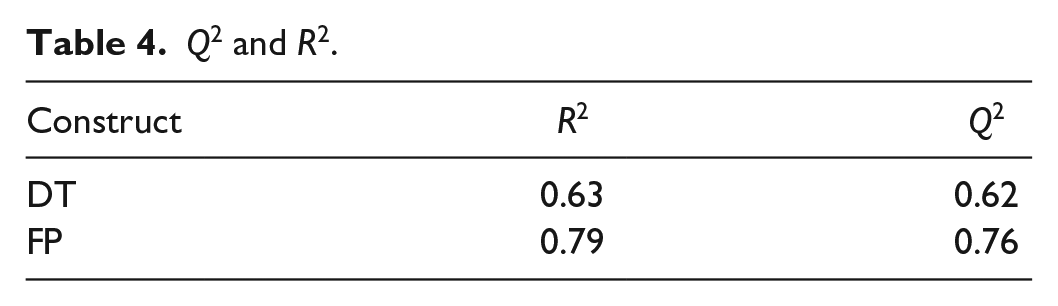
The structural model was examined using the 5,000 bootstrapping methods using the Smart-PLS software. The standardized root mean square residual (SRMR) value was used to judge how well the structural model matched the data. According to Hair et al. (2013), the value of the significant model must be <0.08, and the value of our SRMR was 0.061, which shows absolute fitness. Additionally, to evaluate the value of R2 and Q2 study picked the recommended value (Chin, 1998); the value of R2 and Q2 must be greater than 0.1 or zero. The value can be mirrored in Table 4. R2 value indicates that the suggested model explains 63% of DT and 79% of FP. Moreover, the results of predictive relevance are explained below.
Q2 and R2.
Path Coefficients
Table 5 and Figure 2. The results of H1 explain that DT has a significant and positive influence on the FP (β = .429, t = 15.09, p = .000) and Perceived ease of use has a positive affiliation with DT (β = .160, t = 4.627, p = .000). hence H1 & H2 were accepted. H3a and H3b indicate that Perceived time saving has a significant and positive association with DT (β = .290, t = 7.956, p = .000) and FP (β = .231, t = 7.158, p = .000). Hence, H3 and H3a were accepted. H4 illustrated that perceived security risk has a significant and positive connection with DT (β = .328, t = 6.850, p = .000). Thus, H4 was supported. Moreover, H5 results indicate that perceived financial risk has a significant and positive relationship with DT (β = .147, t = 3.804, p = .000). Therefore, H5 was supported. Additionally, H6 results demonstrate that digital literacy has a significant and positive influence on the FP (β = .330, t = 11.367, p = .000). Thus, H6 was also supported.
Hypothesis Summary.

Note. DL = digital literacy; DT = Digital transformation; FP = Firm Performance; FR = perceived financial risk; PEOU = perceived ease of use; PSR = perceived security risk; PTS = Perceived time-saving.
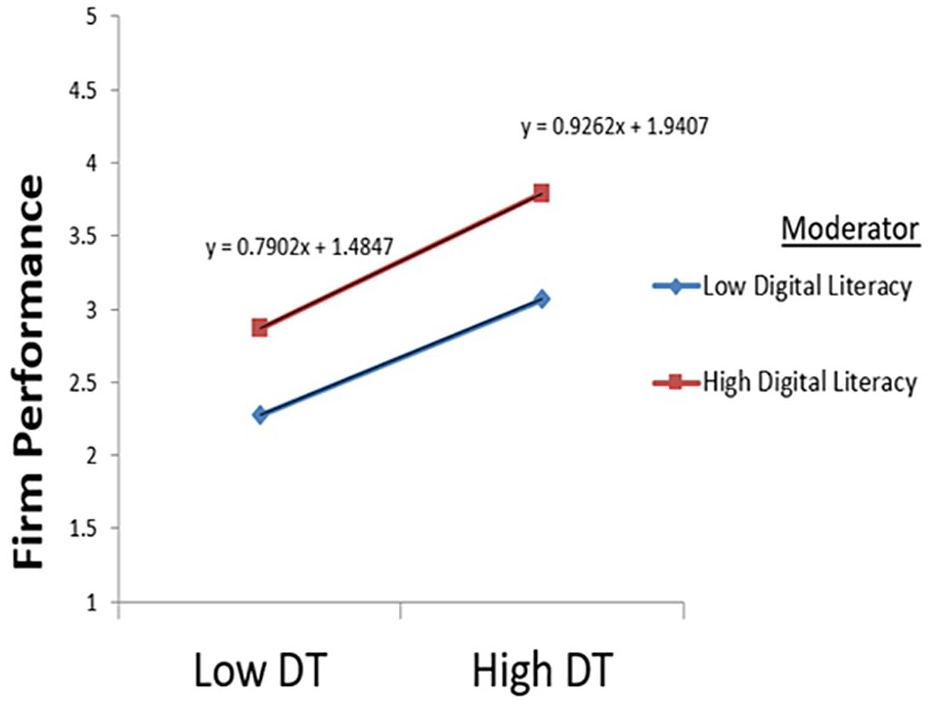
Moderation effect.
Mediation Effects of Digital Transformation
To investigate the mediation effect of DT in the relationship between Perceived time saving and firm performance. The results illustrate that DT positively mediates the relationship between perceived time-saving and FP with (β = .124, t = 7.497, p = .000). Therefore, the partial mediation was established. Moreover, Table 6 indicates the outcomes of the mediation analysis.
Specific Indirect Effects.

Moderation Effect of Digital literacy
Digital literacy has been used as a moderating variable in this study, and it positively moderates the relationship between DT and FP, as the P value meets the threshold criteria. Hence, the H7 is accepted. Table 7 and Figure 3 represent the results.
Moderation Effect.

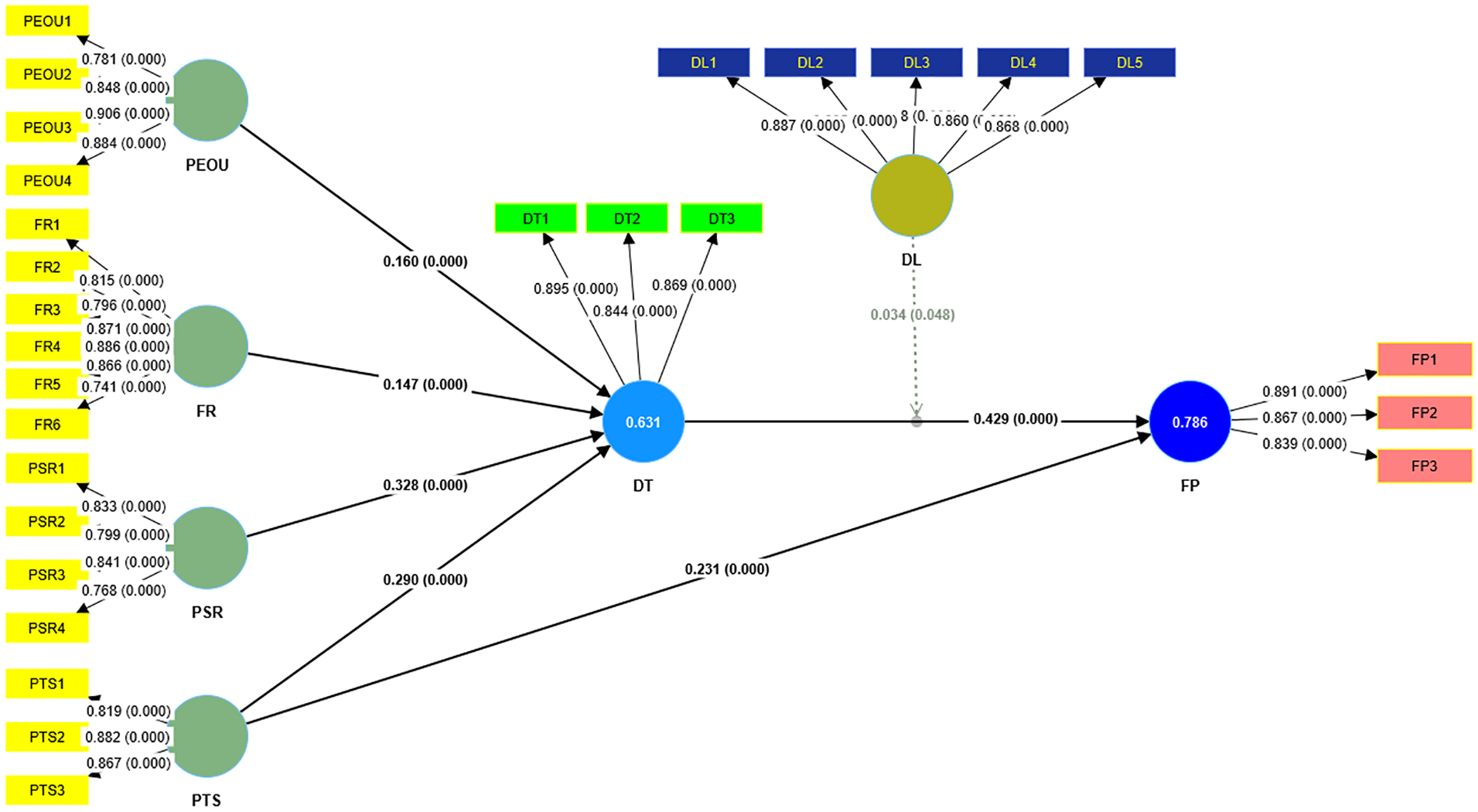
Structural model.
Findings, Discussions, and Implications
In the face of rapid technological advancements, the need for digital transformation in high-tech firms has never been more critical. Adopting DT is essential for businesses in today’s constantly changing business environment. By embracing DT, companies can fully use digital technology, allowing them to innovate, compete globally, and significantly impact the economic prosperity of the firms. This study highlights that DT enhances operational efficiency and significantly contributes to sustainable growth and competitive advantage. Moreover, by enabling digital technologies in the High-tech firms of Pakistan, they can enrich their product offering, optimize operations, and fulfill the desired needs of local and international markets. The study aims to measure and indicate the influencing factors of DT in the context of perceived ease of use and perceived risk, especially in technology adoption. Thus, the findings of this study provide a comprehensive framework for understanding and implementing DT effectively, ensuring that high-tech firms can navigate the complexities of the digital era with confidence.
Concerning H1, the results signify that DT positively impacts the performance of high-tech firms, highlighting the importance of digital literacy in enhancing the effectiveness of DT initiatives. Improving digital literacy among employees can lead to better utilization of digital tools and higher overall firm performance. The results of this study research (J. Xu et al., 2023) indicate that in a dynamic and unpredictable environment, firms actively seek the DT process for firm growth. Moreover, Jardak and Ben Hamad (2022) find that DT enhances operational efficiency, increases productivity and cost savings, and improves overall FP. Regarding H2, the findings illustrated that Perceived ease of use significantly impacts the DT in the context of digital technology and digital application adoption. This study result is similar to that of the previous scholar (Akturan & Tezcan, 2012), who contends that when consumers or employees perceive that adopting and learning digital applications is easy, the positive perception of usefulness increases. In the context of high-tech firms, ensuring that digital tools and platforms are user-friendly can significantly enhance employee adoption rates and overall organizational efficiency.
Additionally, Wafiyyah et al. (2021) argue that online shopping applications enhance ease of use in e-commerce and shopping trends compared to traditional shopping and business patterns. Concerning H3, Perceived time saving has a positive impact on the DT. Moreover, the DT mediates the relationship between the perceived time saving and FP. These findings are familiar to the previous study (F. Xu et al., 2019), which found that adopting online mobile applications provides distinguishing customer-perceived advantages, including time and money savings. Escobar-Rodríguez & Bonsón-Fernández (2017) also found that time-saving and trust significantly impact online purchasing intention behavior. For high-tech firms, emphasizing the time-saving benefits of digital technologies can drive higher adoption rates and improve overall productivity.
Regarding H4, we found that perceived security risk has a significant and positive relationship with the DT. Moreover, the results explain that employees of high-tech companies prove that there is no perceived security risk involved in adopting new technology and using online applications. In H5, we also found that perceived financial risk has a significant and positive relationship with DT. Furthermore, we found that all the online transactions and financial services are secured. The study results are familiar to them (Noreen et al., 2021). This finding suggests that addressing security concerns effectively can enhance trust and facilitate smoother technology adoption within high-tech firms
Regarding H6, we found that digital literacy has a significant and positive affiliation with the FP. The result is similar to prior research (Sadik Tatli et al., 2023). Who explains that digital literacy is essential for firms to achieve satisfactory performance. Moreover, digital literacy plays a positive moderating role between DT and FP. The findings are similar (Saad et al., 2021; Santoso et al., 2019). Mitigating financial risks by ensuring secure and reliable digital financial services can encourage more firms to adopt DT.
Managerial Implications
The study provides some practical implications for practitioners, regulators, and organizational administration. Additionally, the study makes some insightful suggestions for high-tech firms and management. The research argues that it is crucial to understand and handle user perception. This research illustrates that managers should focus on creating quick and simple digital initiatives. This process may be accomplished by conducting ongoing usability assessments and getting user input. Moreover, managers and organizations should handle the alleged financial and security risks connected to the DT process. The study also revealed that managers must set priorities and understand that digital technology improves an organization’s overall performance and saves time. It is mandatory to clearly understand how digital technologies relate to the objectives and practices of the firm. This research demonstrates how important it is for managers to support learning and development programs that will improve employee digital literacy. This will empower them to fully leverage the potential of DT. The study suggests that by focusing on these aspects, firms can improve their performance to get a competitive edge and position themselves as leaders in their respective industries.
Theoretical Implications
The technology acceptance model (TAM) offers several theoretical implications for understanding the factors influencing DT and digital technology adoption in high-tech firms. The TAM suggests that the perception of the user plays a critical role in driving DT. Perceived ease of use and perceived time saving are the central components of TAM, recommending that high-tech firms should focus on introducing and developing effective and user-friendly digital solutions; firms can improve the acceptance and adoption of digital technologies between employees, leading to smoother and more effective DT.
Moreover, perceived financial and security risks in the study model highlight the need for high-tech businesses to address potential barriers to DT. These risk perceptions may hamper stakeholders’ and employees’ desire to adopt new technology. Firms should invest in solid cybersecurity measures to protect sensitive data and financial activities to alleviate such worries. TAM suggests that Digital solutions that save time may result in simplified operations, increased productivity, and lower operating costs, all of which benefit business success.
Practical Implications
The practical implications of this study are significant for practitioners, managers, and policymakers in high-tech firms. First, addressing perceived financial and security risks associated with DT is crucial. High-tech firms should invest in robust cybersecurity measures and transparent communication strategies to mitigate these risks and build stakeholder trust. Second, managers should focus on user-friendly digital solutions that are easy to use and perceived as time-saving to enhance DT adoption among employees. Conducting regular usability assessments and gathering user feedback can help in this process. To identify areas where DT might save time, managers should perform detailed evaluations and allocate resources effectively. Additionally, findings reveal that managers, executives, and employees are more likely to accept new technology and are ready to transform digitally to future innovation in high-tech FP. Third, managers should prioritize aligning digital technologies with the firm’s strategic objectives to ensure that DT contributes to overall business success. By addressing these practical considerations, high-tech firms can achieve a competitive edge, enhance operational efficiency, and foster a culture of continuous innovation. Finally, improving digital literacy among employees through targeted training and development programs can significantly enhance the effectiveness of DT initiatives. Digital literacy enables employees to understand better and utilize new technologies, leading to higher productivity and performance.
Limitations, Conclusion, and Future Research
This study indicates a few limitations that must be addressed while considering future areas of study. First, data were collected from only software houses, telecommunication sectors, and mobile communication firms, and the target population size was small. Future research can take into account other high-tech firms in Pakistan and can increase the population size. Second, this study’s methodology was a self-administrative, cross-sectional questionnaire. Future research can be conducted on the influencing factors of DT using longitudinal data. The third study used only four influencing factors of DT in the context of perceived risk and ease of use. Future research has an opportunity to identify another influencing factor of DT in the context of technology adoption in high-tech firms.
Conclusion
This study examines the influencing factors of DT to adopt digital technology in the context of perceived risk and perceived ease of use and their effect on the high-tech FP in Pakistan. This research delivers new insight into the context of DT and digital technology adoption. This study used SEM PLS software to measure the proposed structure equation model based on the 521 valid respondents from high-tech firms in Pakistan. The results of this study suggest that the DT process is significantly and positively impacted by its perceived ease of use, perceived time saving, perceived security, and financial risk. The findings demonstrate that DT positively mediates the relationship between FP and perceived time savings. Furthermore, the connection between DT and FP is positively moderated by digital literacy.
Supplemental Material
sj-docx-1-sgo-10.1177_21582440241300189 – Supplemental material for Unraveling the Factors Influencing Digital Transformation and Technology Adoption in High-Tech Firms: The Moderating Role of Digital Literacy
Supplemental material, sj-docx-1-sgo-10.1177_21582440241300189 for Unraveling the Factors Influencing Digital Transformation and Technology Adoption in High-Tech Firms: The Moderating Role of Digital Literacy by Zhao Xicang, Muhammad Bilal, Wu Jiying, Jan Muhammad Sohu, Sadaf Akhtar and Muhammad Itzaz Ul Hassan in SAGE Open
Footnotes
Data Availability Statement
Data will be made available at the request
Declaration of Conflicting Interests
The author(s) declared no potential conflicts of interest with respect to the research, authorship, and/or publication of this article.
Funding
This Paper is supported by the Post-Funded project of philosophy and social science Foundation of China (21FTJB004).
Informed Consent Statement
Not applicable

Supplemental Material
Supplemental material for this article is available online.
References
Supplementary Material
Please find the following supplemental material available below.
For Open Access articles published under a Creative Commons License, all supplemental material carries the same license as the article it is associated with.
For non-Open Access articles published, all supplemental material carries a non-exclusive license, and permission requests for re-use of supplemental material or any part of supplemental material shall be sent directly to the copyright owner as specified in the copyright notice associated with the article.
