




Abstract
Academics have long debated the similarities and differences between translation and transcreation. Despite extensive discussion, few studies have examined these distinctions through the lens of the strategies adopted. In response, this study explores how strategies of translation and transcreation are utilized to render gender stereotypes within a specific text type. The theoretical framework is grounded in Karoubi’s categorization of translating gender and Ketola’s types of transcreation strategies, which focus on how gender is interpreted and represented across languages and cultures. Utilizing a qualitative approach, this research analyzes English fragrance product descriptions and their Chinese versions across 12 brands, comprising 224 pairs of descriptions. The findings reveal significant differences in the use of target culture-oriented strategies, with transcreation employing these strategies in approximately 90% of cases, compared to only about 50% in translation. The results suggest that the primary distinction between translation and transcreation lies in the extent to which practitioners alter the source text when creating new content. Moreover, identifying strategies of translation and transcreation based on the established framework could also help distinguish transcreation from translation. These findings contribute new empirical insights to the ongoing debates about the distinctions between translation and transcreation.
Plain language summary
This research delves into how the processes of translation and transcreation differ when presenting gender roles in texts, focusing on fragrance product descriptions. Translation and transcreation are similar, but different approaches are used to adapt content for new audiences. We analyzed how gender is depicted in English and Chinese advertisements from 12 brands, examining 224 text pairs. Our results show that transcreation tends to modify the original text more heavily to suit the target audience in 90% of the cases studied. In contrast, translation does this less frequently, only in about 50% of cases. Understanding these differences helps clarify how gender stereotypes are maintained or altered when introduced to new cultural contexts through advertising. Also, strategies can be used to tell translation apart from transcreation. This research adds important data to the discussion about how translation and transcreation differ.
Introduction
Since the early 2010s, there has been significant momentum in distinguishing transcreation from translation, mainly focusing on the nuances that differentiate transcreation from what is traditionally understood as translation. Notable scholars like Gaballo (2012), Rike (2013), and C. Pedersen (2015), and D. Pedersen (2016) have contributed to the evolving debate over whether transcreation should be classified under the broad umbrella of translation. This discussion is mirrored in the language service industry, where transcreation is often perceived as a distinct activity due to its unique workflow and higher cost implications (Morón & Calvo, 2018).
In the traditional sense, translation involves the faithful linguistic conversion of text from one language to another, focusing on preserving the original content’s meaning, tone, and style. It emphasizes precision and fidelity, aiming to produce an accurate and faithful representation of the source text (ST) in the target language without introducing major modifications or adaptations (Munday, 2016).
In contrast, transcreation goes beyond mere translation by incorporating significant elements to ensure that the translated content resonates culturally and emotionally with the target audience (Díaz-Millón & Olvera-Lobo, 2023). This makes transcreation particularly suited to content with deep cultural nuances, such as advertising and marketing materials.
Despite the conceptual differentiation of transcreation from translation by both academia and the industry, detailed studies exploring these distinctions through specific strategies are scarce. Translation strategy, as discussed by Munday (2016) and Lörscher (1991), varies from overarching orientation to deliberate procedures or techniques to solve problems during text transfer between languages. This study adopts Lörscher’s (1991) definition, focusing on strategies as deliberate procedures to address issues related to the translation of gender stereotypes.
Gender stereotypes are beliefs about certain traits distinguishing men and women, such as agentic traits for men and communal traits for women (Ashmore & Boca, 1981). According to Abele and Wojciszke (2014), agentic traits are related to the agency that emphasizes attaining goals and tasks—including being competent, assertive, and decisive; while communal traits are associated with the communality that highlights sustaining connections and societal roles—including being helpful, warm, and sincere.
Recent research has highlighted the impact of translation on gender stereotypes (Alfano, 2021; Khoshsaligheh et al., 2019; Wang et al., 2020; Zeven & Dorst, 2021; Zhu et al., 2022), but these studies have not specifically compared the strategies of translation and transcreation in advertising texts. Given that transcreation is a primary concern in advertising translation, strategies specific to transcreation can not be overlooked. It has been documented that both translation and transcreation may reveal subtle distinctions, underscoring the need for in-depth examination.
This research explores how gender stereotypes are handled in fragrance product descriptions, a sector known for its pervasive depiction of idealized gender images (Zhu et al., 2022). While effective, the use of gender stereotypes in marketing raises ethical questions regarding the perpetuation of traditional roles and the stereotypical portrayals that may be created through translation. This study may shed light on the strategic employment of language in fragrance marketing and its implications for gender representation.
Specifically, this research seeks to delineate the strategies of translation and transcreation in their respective handling of gender stereotypes. This direction mainly highlights the distinct approaches and outcomes each method brings to the translation of gender stereotypes. Therefore, this study poses the following research question: How do translation and transcreation strategies differ in altering and preserving gender stereotypes from source to target texts (TT)?
Gender Issues in Translation Studies
Research on gender issues in translation studies has typically explored the dynamic interplay between gender and translation. Scholars identify two primary dimensions in this exploration: first, the influence of gender on translation, which encompasses translator identities, the sexuality of characters, and cultural ideologies; second, the impact of translation on gender, focusing on stereotypical portrayals, nuanced language meanings, and the representation of LGBTQI+ identities and ideologies (Hu & Meng, 2018; Zhu et al., 2023). This dual analysis highlights the reciprocal nature of gender and translation. Furthermore, an increasing number of studies are focusing on the impact of translation on gender (Zhu et al., 2023).
Gender and gender stereotypes are cultural constructs emphasized in translation studies as cultural transfer (Alfano, 2021; von Flotow, 1997). While scholars such as Lim and Furnham (2016) note extensive similarities in gender stereotypes across cultures, substantial evidence also points to significant variations, particularly in advertising contexts (Koinig et al., 2020; Shaw et al., 2014). These variations underline the complex interplay between globalized media formats and localized cultural norms, affecting how gender stereotypes are portrayed and perceived.
In advertising, where the precise resonance of the message is crucial, transcreation plays a central role in handling culturally specific stereotypes. Transcreation goes beyond literal translation to ensure that marketing messages are culturally and emotionally engaging to the target audience (TransPerfect, n.d.). This process involves carefully adapting or preserving gender nuances to avoid cultural insensitivity or misrepresentation. For instance, D. Pedersen (2014) highlights that with nuanced transcreation, the intended appeal of an advertisement can be preserved, turning a potentially persuasive message into an offensive or ineffective one.
Karoubi’s Taxonomy of Translating Gender
Karoubi’s (2013) taxonomy is integral to this study as it offers a classification tailored to translating gender-related elements. Unlike other general translation strategy taxonomies, Karoubi’s approach directly addresses gender dynamics, making it particularly relevant for analyzing gender stereotypes across cultural contexts. This framework divides gender translation strategies into five categories: gender reversal, gender amplification and mitigation, gender omission, gender explication, and gender implication, with an additional focus on gender preservation. These categories, which are empirically derived, provide a structured method to examine how gender stereotypes are rendered through translation. This taxonomy aligns closely with the aim of this research to explore the transfer of gender stereotypes across cultures.
Ketola’s Classification of Transcreation Strategy
Ketola’s (2018) framework is adopted due to its relevance to transcreation strategies, which are crucial for this study’s focus on advertising texts. Ketola expands on the traditional translation strategy by introducing the concept of transcreation strategy, which involves examining entire paragraphs of a text for shifts. This framework classifies these shifts into two broad types: modulation and mutation. Modulation occurs when the TT contains entire paragraphs that differ from the ST in semantics or style. Meanwhile, mutation refers to instances where the TT includes whole paragraphs without equivalents in the ST. The current research focuses on the transcreation of gender stereotypes, analyzing paragraphs that depict communal or agentic traits. This approach aligns with the study’s goal of exploring how gender stereotypes are not only translated but also creatively adapted to resonate within the target market. The distinctions between modulation and mutation under Ketola’s taxonomy facilitate a precise analysis of how gender stereotypes are shaped in the transcreation process.
By integrating Karoubi’s and Ketola’s frameworks, this study leverages their strengths to comprehensively address the translation and transcreation of gender stereotypes in advertising. This dual-framework approach enables a thorough exploration of how gender stereotypes are both preserved and transformed across cultural boundaries, providing insights into the complexities of gender portrayal in global marketing. The adaptation and application of each framework are clearly delineated in the methodology, ensuring a robust analytical process that aligns with the study’s objectives.
Methodology
Research Design
This study is framed within the qualitative paradigm, specifically under the interpretative approach of social constructivism. According to Merriam and Tisdell (2016), qualitative research is fundamentally about how people perceive and interpret their realities, focusing on understanding the world through their perspectives. This perspective is particularly relevant to exploring how gender stereotypes are conveyed and reshaped through the translation and transcreation of fragrance descriptions across cultures.
Data Collection
The dataset comprises 224 pairs of English and Chinese fragrance descriptions from 12 internationally recognized brands. These descriptions were sourced from the US and Chinese mainland websites between June and September 2021. This period was strategically chosen for its typical marketing stability, crucial for ensuring consistency in the portrayal of gender traits across different versions of product descriptions. The fragrance brands included in this study were selected based on specific criteria that align with the research objectives. The selection process was guided by the following inclusion/exclusion criteria:
First, brands were selected based on their listing in “The Best Perfumers and Fragrance Makers” 2021 ranking, accessible at Ranker (https://www.ranker.com). Ranker is widely recognized as a reputable platform for assessing fragrance brands on a global scale. Selecting brands from this list ensures a focus on internationally acclaimed fragrance brands that are presumed to influence gender stereotypes through their marketing strategies.
Second, only brands with websites accessible in the Chinese mainland were included. Given the study’s emphasis on translation and transcreation, it is essential to select brands with an established presence in both the US and Chinese mainland markets. The criterion ensures the relevance of selected brands to the study’s cross-cultural and transnational dimensions. It enables a comprehensive analysis of how gender stereotypes are represented and rendered across different cultural contexts.
Third, brands categorized into women’s and men’s fragrances were selected. This criterion aligns with the study’s objectives, facilitating a focused analysis of gender stereotypes in fragrance descriptions. It allows for an examination of how these stereotypes are potentially perpetuated or challenged through translation and transcreation.
Fourth, brands were selected based on their product descriptions, which prominently feature communal and agentic traits. This focus enables a nuanced analysis of gender stereotypes in fragrance descriptions. By selecting brands that explicitly include these traits in their marketing materials, the study ensures a rich dataset for examining how gender stereotypes are translated and transcreated across cultures.
Based on the above inclusion/exclusion criteria, 12 of 77 brands were included in the study. These brands were then classified into transcreation and translation categories. According to Ketola (2018), transcreation is characterized by the addition of entire paragraphs in the translated versions that are not present in the original texts.
Table 1 reveals that the seven brands using transcreation services include Chanel, Guerlain, Kenzo, YSL, Armani, Oriflame, and Ralph Lauren. The five brands utilizing traditional translation services are Dior, D&G, Cartier, Prada, and Bvlgari. In terms of the dataset, transcreation services were used for 101 fragrance descriptions, while translation services accounted for 123 descriptions. Altogether, 145 descriptions of female fragrances and 79 of male fragrance descriptions were included in the analysis.
Selected Fragrance Brands, Descriptions, and Language Services Choices.

All selected descriptions were extracted from corporate website homepages, captured as full-size PNG screenshots to maintain textual fidelity, and then converted to PDF to ensure compatibility with analysis tools. These PDFs were subsequently uploaded into ATLAS. ti, which was selected for its robust capabilities in managing and analyzing qualitative textual data. Initially, 1,292 English and 1,198 Chinese gender-related traits were identified and coded into communal and agentic traits. Strategies were then systematically coded by comparing ST and TT based on the analytical framework outlined below. ATLAS. ti proved instrumental in tagging textual elements and organizing them into predefined categories. This systematic approach ensured the analysis was thorough, replicable, and transparent.
Data Analysis
This study employs a robust analytical framework to examine gender stereotypes in translation and transcreation, refining the established models from Karoubi (2013) and Ketola (2018) based on insights gained from a pilot study. Significant adaptations were made to Karoubi’s taxonomy to better address the complexities of gender portrayal. Specifically, less applicable strategies such as gender amplification and mitigation were removed and new categories including gender permutation and addition were introduced. Gender permutation, a strategy derived from the concept of gender amplification and mitigation, does not necessarily imply amplification and mitigation but involves rearranging elements that indicate gender stereotypes in the ST by replacing them with different but synonymous traits in the TT. Gender addition, a strategy derived from the concept of gender explicitation, is used when adding a trait-denoting item that indicates gender stereotypes in the TT. These changes were empirically validated to reflect the nuanced portrayals of gender more accurately.
Similarly, Ketola’s (2018) taxonomy was adapted to enhance its focus on gender issues in translation studies, expanding Ketola’s original categories to include gender modulation, mutation—further subdivided into omission and addition—and introducing a new category, gender preservation with creation. These adaptations ensure that these frameworks more effectively capture the intricate dynamics of gender representation in translated and transcreated texts.
The specific strategies defined in these taxonomies include:
Gender Addition: Adding trait-denoting items that indicate gender stereotypes to the TT.
Gender Explicitation: Replacing trait-denoting items in the ST that do not indicate gender stereotypes with items that do in the TT.
Gender Omission: Removing trait-denoting items that indicate gender stereotypes in the TT.
Gender Permutation: Replacing one trait-denoting item indicative of gender stereotypes in the ST with another in the TT that conveys the same stereotype.
Gender Preservation: Maintaining the same gender-stereotyping traits in the TT.
Gender Reversal: Reversing trait-denoting items in the ST that indicate male stereotypes to the corresponding item of female stereotypes in the TT, and vice versa.
Gender Modulation: Differing entire paragraphs in the TT from those in the ST in terms of semantics or style while still focusing on gender-related traits.
Gender Mutation: Including or omitting entire paragraphs that contain gender-related traits during the translation from ST to TT.
Gender Preservation with creation: Maintaining identical gender traits in the ST and TT but differing in semantics or style.
This framework was operationalized by developing a detailed coding scheme that outlined specified criteria for identifying and categorizing different strategies in the ST and TT. To ensure thorough and accurate identification of strategies across an extensive corpus, both manual and automated coding methods were employed using ATLAS.ti. Each instance of a strategy was meticulously recorded, with careful attention to its context, allowing for a deeper analysis of patterns and implications.
Results and Discussion
This section evaluates the application of Karoubi’s (2013) and Ketola’s (2018) frameworks in the context of this study. It focuses on how strategies of translation and transcreation were observed. As illustrated in Figure 1, these strategies were categorized into target and source culture-oriented ones, representing two contrasting approaches. The upper category represents target culture-oriented strategies, indicating the perpetuation of gender stereotypes in the TT. According to Eisend (2019), such gender stereotypes in advertisements not only shape but also reinforce the gender beliefs and values of the target audience. When gender stereotypes are sustained through translation, they can affect the target audience’s perception of gender roles. This may involve reinforcing outdated or harmful stereotypes, potentially influencing societal views on gender roles.
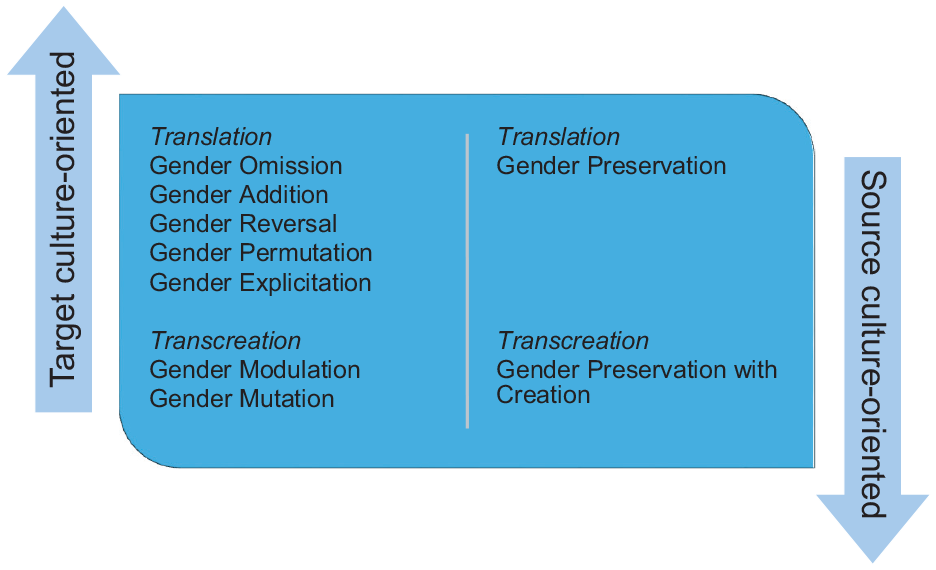
Adapted classifications of translation strategies and transcreation strategies for rendering gender stereotypes.
Conversely, the lower category represents source culture-oriented strategies, suggesting that gender stereotypes are adapted and challenged in the TT. Adapting and challenging stereotypes may reflect different gender values across cultures, as Nardi (2011) points out that gender stereotypes in advertising manifest the gender values of a specific cultural community. This approach can also lead to a more progressive understanding of gender roles in the target culture.
Similarly, the study applied Ketola’s (2018) classification to assess transcreation strategies, crucial when the content requires not only translation but significant cultural adaptation. This framework distinguished between source-oriented and target-oriented strategies. The source-oriented strategy category includes gender preservation with creation, while the target-oriented strategy category includes gender modulation and gender mutation.
The study also integrated numerical data to support the qualitative findings, tracking the frequency of each strategy’s application. This approach, recommended by Maxwell (2010), provides a necessary quantitative complement that aids in identifying patterns and substantiating interpretations of how gender stereotypes are rendered through translation and transcreation.
Strategies for Rendering Gender Stereotypes in Male Fragrance Descriptions
This section explores the strategies employed to render gender stereotypes in male fragrance descriptions, highlighting the varying use of translation and transcreation services among companies. This variation influences how gender stereotypes are communicated and perceived. Figure 2 and Table 2 provide a comprehensive overview of the strategies identified and their application frequencies.
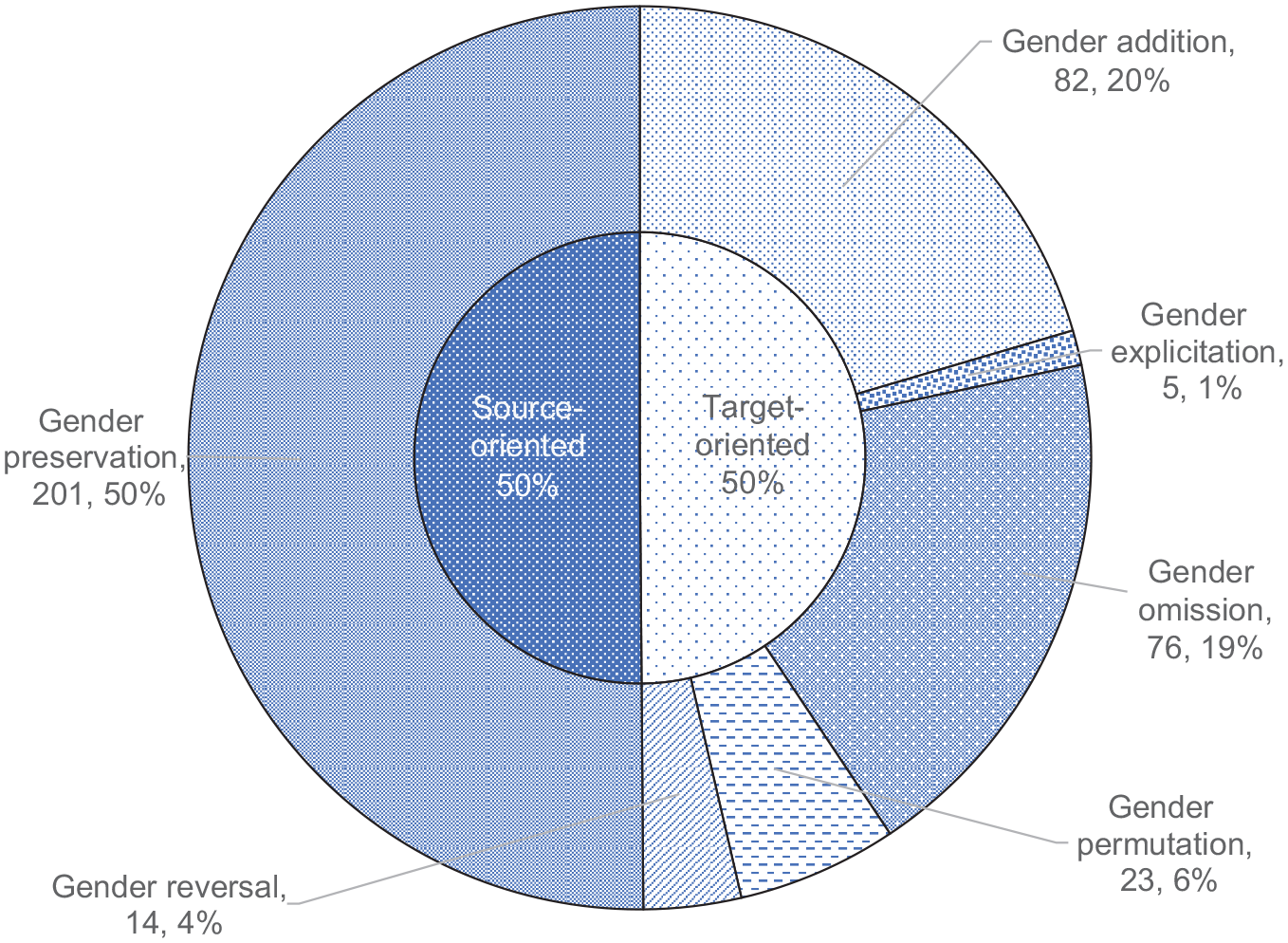
Translation strategies used to translate gender stereotypes in male fragrance descriptions.
Transcreation Strategies for Transferring Gender Stereotypes in Male Fragrance Descriptions.

As for the male fragrance descriptions that used translation service, the distribution between target and source-oriented strategies was evenly split, with each accounting for 50% of the strategies used. A closer inspection of the pie chart reveals that the most and sole source-oriented strategy was gender preservation, accounting for 50% (201 instances) of the strategies observed. Among the target-oriented strategies, gender addition was the most frequently adopted, comprising 20% (82 instances), followed by gender omission at 19% (76 instances). Other strategies were used less frequently, with gender permutation at 6%, gender reversal at 4%, and gender explicitation at only 1%. The frequent adoption of gender addition and omission underscores the study’s central theme of navigating the tension between preserving and adapting gender stereotypes.
Regarding the male fragrance descriptions that used transcreation service, target-oriented strategies were predominant, comprising 91% of all strategies observed. Source-oriented strategy accounted for 9%. The most frequently used transcreation strategy was gender mutation, representing 67% (60 instances) of the strategies used, primarily involving omission and addition. Gender modulation accounted for 24% of the strategies employed.
Strategies for Rendering Gender Stereotypes in Female Fragrance Descriptions
This section examines the strategies used to transfer gender stereotypes in female fragrance descriptions. Figure 3 and Table 3 present strategies of translation and transcreation respectively. Figure 3 shows that target-oriented strategies were slightly more prevalent than source-oriented ones, accounting for 53% and 47%, respectively. A detailed analysis of the pie chart reveals that the most and only employed source-oriented strategy was gender preservation, representing 47% (255 instances) of the strategies used. Among target-oriented strategies, gender addition was the most adopted, constituting 20% (111 instances), followed by gender omission at 17% (92 instances). Other strategies, including gender permutation (10%), gender explicitation (4%), and gender reversal (2%), were used less frequently.

Translation strategies used to render gender stereotypes in female fragrance descriptions.
Transcreation Strategies for Transferring Gender Stereotypes in Female Fragrance Descriptions.

Table 3 demonstrates that target-oriented strategies are predominant in the transcreation of female fragrance descriptions, accounting for 89% of all strategies utilized, while the source-oriented strategy comprised 11%. Notably, gender mutation, which includes both omission and addition, represented half of all the strategies employed, accounting for 51% (120 instances).
In summary, the analysis of fragrance descriptions utilizing translation services, reveals an almost equal distribution of source- and target-oriented strategies, suggesting that gender stereotypes are generally perpetuated. In contrast, in descriptions that utilized transcreation service, target-oriented strategies predominate, indicating a tendency toward altering gender stereotypes. It supports the view that creativity is at the core of transcreation (e.g., Benetello, 2017), as the creation of new content is oriented toward the target audience’s requirements. This observation also substantiates the definition of transcreation as a translation-related activity that involves linguistic translation, cultural adaptation, and (re)creation of some existing content (Díaz-Millón & Olvera-Lobo, 2023).
The following sub-section outlines the strategies employed with illustrative examples. When discussing each instance, this study will provide a literal translation (LT) of the Chinese translation and highlight gender-related traits in bold to facilitate understanding.
Translation Strategies
Karoubi’s (2013) taxonomy of translating gender was adapted and applied to determine the translation strategies used in this study. This adaptation involved refining the original taxonomy to capture the nuance of gender portrayal in fragrance advertising more effectively. The strategies identified include gender addition, gender omission, gender reversal, gender permutation, gender explicitation, and gender preservation.
Gender Addition
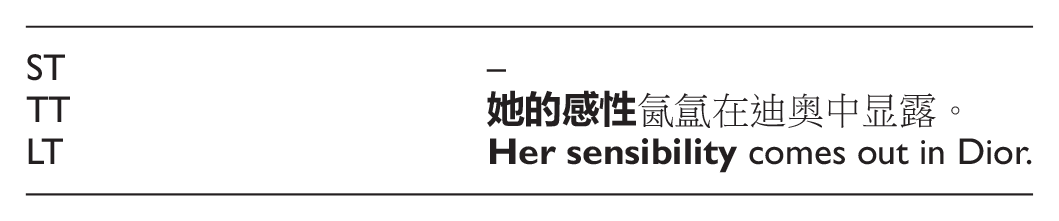
The most prevalent target-oriented strategy identified was gender addition. According to the definitions listed in the Methodology, gender addition specifically involves adding a trait-denoting item that indicates gender stereotypes in the TT. Altogether 82 instances (20%) of gender addition were identified in male fragrance descriptions, while 111 instances (20%) were observed in female descriptions. The added traits encompass both communal and agentic traits. Example 1 illustrates the addition of gender stereotypes in female descriptions through the communal trait of “emotional.” The representativeness of the example is emphasized by its frequency within the dataset. Products described with terms like “emotional,” “gentle,” and “warm” are notably more common than those using agentic traits. This prevalence demonstrates the selected examples reflect a widespread marketing strategy.
In this example, the English ST describes the ingredient Ylang-ylang, a top note of Diorissimo Eau de Toilette, without assigning a gender. However, the Chinese TT personifies Ylang-ylang as a woman using the term
Example 1 [Dior female 24]

Gender Omission
The next section of the investigation focused on gender omission; a category of translation strategies used when an ST textual item suggesting gender is deleted in the TT (Karoubi, 2013). This typically occurs at the macro-textual level, where entire segments indicating gender are omitted. In this study, gender omission was observed in 76 instances (19%) concerning male stereotypes and in 92 instances (17%) for female stereotypes. Frequently omitted traits included “strong,” “sexy,” “assertive,” and “gentle.” Specifically, male stereotypes in advertising texts are often indicated by agentic traits such as “strong.” This pattern was not isolated, as a similar trend was observed in other gender-related traits, exemplifying how gender stereotypes are often omitted through translation in fragrance advertising.
Example 2 illustrates this by omitting male stereotyping, indicated by the connotative meaning of “strong.” Advertisers utilize “strong” to describe the scent of musk and leather. According to Merriam-Webster (n.d.), “strong” refers to (1) having great physical power and (2) having an intense odor. While the fragrance advertising explicitly refers to the intense odor, it also subtly suggests a strong man in the ST.
Example 2 [Prada male 02]


The perception of “strong” in the fragrance advertising context resonates with Cook’s (2001) notion of “fusion,” a primary goal of modern advertising. Cook (2001) defines “fusion” as imbuing a product with desirable qualities to enhance its appeal. In the descriptions of male fragrance, “strong” serves as an agentic trait that reinforces gender stereotypes. However, in the TT, “strong” is rendered into
Gender Permutation
Gender permutation refers to replacing one trait-denoting item indicative of gender stereotypes in the ST with another in the TT that conveys the same stereotype. In this study, gender permutation was observed in 23 instances (6%) in male fragrance descriptions and 58 instances (10%) in female descriptions. These instances typically involve a permutation of traits: communal traits such as “elegant” and “tender” are often permuted to subtly shift the portrayal of female stereotypes. In contrast, agentic traits such as “assertive” and “bold” are permuted to indicate male stereotypes. A typical example was selected to illustrate these permutations as it represents a common pattern observed across the dataset.
An instance of gender permutation is illustrated in Example 3 [Cartier male 10]. In this example, two communal traits are permuted between the ST and TT. The phrase “gentle elegance” is subtly rendered into
This permutation strategy highlights different facets of sandalwood’s characteristics: the ST emphasizes its “elegance,” while the TT emphasizes its “gentleness.” Both terms aim to captivate and appeal to consumers’ interests and desires, subtly shaping perceptions of the fragrance. According to Merriam-Webster (n.d.), “elegant” is associated with qualities that are desirable in refined taste, categorizing “gentle elegance” as “likable,” as elegance is generally a likable quality. Similarly,
Example 3 [Cartier male 10]


This example demonstrates how seemingly subtle translation choices, such as those involving gender permutation, can significantly influence gender representations in advertising texts. It aligns with Zeven and Dorst’s (2021) assertion that even minor translation decisions can impact gender portrayals. This again underscores the importance of careful consideration in the selection of translation strategies.
Gender Reversal
The fourth translation strategy examined in this study was gender reversal. According to Karoubi (2013), this strategy is employed when an ST item specifies gender is substituted in the TT by an item specifying an opposite gender. In this study, gender reversal involves replacing a trait-denoting item indicating male stereotypes in the ST with one indicating female stereotypes in the TT and vice versa.
A total of 14 instances (4%) of gender reversals were observed for male stereotypes and 12 instances (2%) for female stereotypes. These reversals typically involve changing communal traits into agentic traits and vice versa. The examples provided below illustrate this strategy, where agentic traits such as “bold” and “strong” are replaced by communal traits like “affectionate” and “sincere.”
Gender reversal (male to female). In [D&G female 02], the agentic trait “bold” in the ST is translated into
Example 4 [D&G female 02]

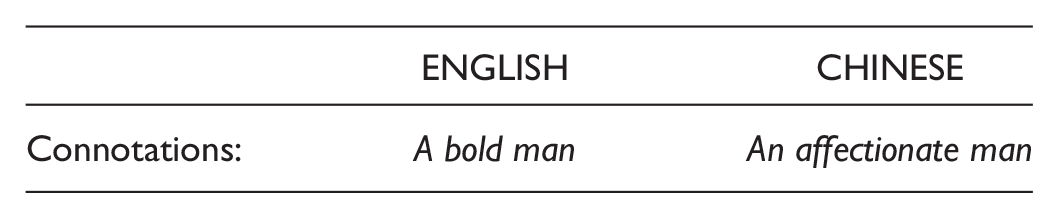
In this translation,
(2) Gender reversal (female to male). In the marketing of Sauvage Parfum by Dior [Dior male 01], the ST describes the fragrance with the phrase “an animal beauty that comes to life on the skin” which aims to convey the positive user experience of Sauvage Parfum. This abstract description, however, may pose challenges for readers to visualize its meaning. As noted by Toncar and Fetscherin (2012), noted that abstract fragrance descriptions often lead to inflated expectations exceeding the actual product’s evaluation. Such imaginative narratives in fragrance descriptions frequently evoke themes of sexual or intimate relationships (Payne, 2020). Additionally, the use of the word “animal” in this context, synonymous with “sensual” or “fleshly” (Merriam-Webster, n.d.), adds an undertone of sensual or sexual allure.
Example 5 [Dior male 01]

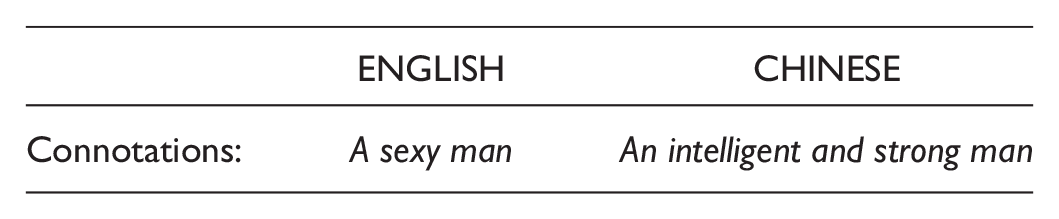
In contrast, the TT employs
Gender Explicitation
The final target-oriented strategy investigated in this study was gender explicitation. Derived from Karoubi’s (2013) framework, this concept traditionally refers to strategies used when TT textual items that explicitly indicate gender replace ST textual items that specify gender implicitly. This definition underscores a shift from implicit to explicit indications of gender in the translation process.
However, within the context of this study, gender explication is defined slightly differently. It relates to instances where a trait-denoting item that does not indicate gender stereotypes in the ST is replaced with a corresponding trait-denoting item showing gender stereotypes in the TT. It is distinct from gender addition, as it involves transforming existing trait-denoting items rather than adding new ones. Moreover, these items are not necessarily related to communal and agentic traits that explicitly denote gender stereotypes.
Gender explicitation was observed in 1% of instances involving male and 4% involving female stereotypes. This strategy was applied to both agentic and communal traits. The example below, selected from a subset of similar instances, exemplifies a typical case of gender explicitation within the dataset.
Example 6 [Dior male 10]


Example 6 [Dior male 10] illustrates the trait “lingering” is translated into the communal trait “likable” in the description of Fahrenheit Eau de Toilette. Originally, the term “lingering” describes the long-lasting nature of the fragrance. However, in the translation, this characteristic is rendered as
Gender Preservation
The primary and only source-oriented strategy identified in this research was gender preservation, as outlined by Karoubi (2013). This strategy aims to preserve the gender portrayal in the TT precisely as it appears in the ST, explicitly used to maintain gender stereotypes through translation.
In this study, gender preservation was significantly employed, accounting for 201 (50%) of the strategies used for male stereotypes, and 255 (47%) for female stereotypes. These instances were specifically selected as they exemplify the preservation of gender traits within the dataset.
In most cases, traits associated with “sensual” are substituted into traits related to emotion, reflecting a consistent approach across many examples. However, this tendency is not observed in Example 7 [Prada male 08]. In this case, “sensual” and “voluptuous” in the ST are translated into
Example 7 [Prada male 08]


In fragrance advertising, the term “sensual” often extends beyond mere sensuous pleasure to imply sexual allure. The translation choices made in this example amplify this sexual connotation, opting for terms that emphasize the fragrance’s sexual appeal. This divergence from the general trend suggests a conscious decision to maintain or even enhance the masculine, sensual image associated with the fragrance.
Unlike the common practice observed in the dataset, where male images portraying sensuality are typically omitted or softened. Example 7 actively perpetuates a sensual male image through the gender preservation strategy. This choice not only reflects gender values of masculinity and sensuality but also impacts how gender stereotypes are communicated and potentially perpetuated through translation.
Transcreation Strategies
These strategies were determined according to Ketola’s (2018) classification. The adapted framework includes gender modulation, gender mutation, and gender preservation with creation. To provide further granularity and precision in the analysis, gender mutation was subdivided into omission and addition categories.
Gender Mutation
The predominant transcreation strategy observed was gender mutation, which accounted for 67% of strategies used in the transcreation of male stereotypes and 51% for female stereotypes. According to Ketola (2018), mutation in transcreation typically involves adding or including entire paragraphs in the TT that do not have an equivalent in the ST. However, this study extends the definition to include omission, where entire paragraphs present in the ST are not translated into the TT. This broader interpretation is essential since this study specifically relates to gender issues and is thus referred to as gender mutation.
In this study, gender mutation was applied when entire paragraphs containing gender-related traits in the ST were omitted or added in the TT. This strategy encompasses adding new content and omitting existing content, focusing on how communal or agentic traits are handled.
(1) Addition. The study recorded 36 instances of omission in male fragrance descriptions and 66 in female descriptions. In Example 8 [Chanel female 14], the ST avoids using adjectives to describe ingredients like Grasse tuberose. However, in the TT, the phrase
According to Hernández Socas et al. (2022), translation plays a pivotal role in shaping and disseminating specific images within a specific cultural community. In fragrance advertising, metaphoric language is often employed to evoke sensory experiences and allure. In this example, the addition of “gentle” as a descriptor for the ideal woman suggests a passive, soft-spoken, and nurturing feminine image, reinforcing gender roles and expectations.
Example 8 [Chanel female 14]


This example highlights the necessity for translation practitioners to be critically aware of the broader socio-cultural implications of their linguistic choices. Practitioners are urged to approach their work with a gender-sensitive perspective, acknowledging how subtle nuances in language can significantly influence perceptions and reinforce or challenge traditional gender norms.
(2) Omission. This strategy observed in 24 instances for male fragrance descriptions and 54 for female descriptions, reflects a typical transcreation practice where gender-related traits are omitted to cater to broader or different cultural preferences. Example 9 [Kenzo Male 03] exemplifies this typical transcreation practice where gender-related traits are omitted. In the ST, the fragrance is described using adjectives such as “strong” and “elegant,” which characterize the scent and project a strong, likable male image, aligning with traditional masculine ideals. In the TT, however, these gender-related traits are omitted. This omission may be seen as an attempt to make the fragrance more universally appealing, or to align with different cultural or market-specific preferences.
Example 9 [Kenzo male 03]


Tuna and Freitas (2012) note that fragrance advertising often seeks to evoke sensuality, eroticism, and aspirational lifestyle images. According to TransPerfect (n.d.), transcreation goes beyond simple translation; it requires a deep understanding and adapting of the intended meaning of the source message to resonate with the target audience. In this context, the omission of terms like “strong” and “elegant” in the TT might indicate a shift away from traditional masculine stereotypes, presenting a more neutral or versatile portrayal of masculinity.
Removing certain communal and agentic traits such as “strong” and “sensual” demonstrates a deliberate shift away from traditional masculine stereotypes, suggesting a broader trend toward neutralizing gendered language in fragrance marketing. This strategy may be aimed at avoiding potential gender values. Meng (2016) emphasizes that such strategies reveal translators’ (un)conscious gender values, highlighting the pivotal role they play in (re)shaping gender perceptions through advertising.
This example underscores the nuanced ways in which gender stereotypes are managed and potentially mitigated in the translation and transcreation of fragrance descriptions. It reflects the complex interplay between linguistic choices, gender values, and the broader sociocultural contexts in which advertising texts are situated.
Gender Modulation
The second most adopted transcreation strategy was gender modulation, constituting 24% for male stereotypes and 38% for female stereotypes. According to Ketola (2018), gender modulation is deployed when entire paragraphs in the TT diverge from their counterparts in the ST regarding semantics or style. In the current study, gender modulation is employed when paragraphs containing gender-related traits in the ST are reconfigured in the TT, resulting in significant semantic or stylistic differences.
In total, 21 instances (23%) of gender modulation were observed for male stereotypes, whereas 91 instances (39%) were identified for female stereotypes. The following two examples elucidate this strategy.
Example 10 [Guerlain male 01] depicts a Western aristocratic gentleman, Arsène Lupin, being reshaped into a Chinese
Example 10 [Guerlain male 01]


Conversely, the TT employs a similar story-telling style but introduces an entirely different narrative. It portrays a Chinese hero,
“Amorous” in the ST aligns with
Example 11 [Chanel female 01] further illustrates gender modulation by transforming the adjectives “delicate” and “sensual” in the ST into
Example 11 [Chanel female 01]


These examples underscore the complexities involved in gender modulation as a transcreation strategy, revealing the intricate ways in which gender traits are reshaped to suit the cultural and linguistic preferences of the target audience.
Gender Preservation With Creation
The final transcreation strategy explored in this study was gender preservation with creation, accounting for 9% of strategies used for male stereotypes and 11% for female stereotypes. Unlike traditional translation strategies, transcreation allows for greater flexibility, allowing for modifications to sentence structure and style while still adhering closely to the original content’s intent. Gender preservation with creation is adopted when the gender-related traits remain consistent between the ST and TT despite differences in semantics or style. In this study, 8 instances (9%) were identified for male stereotypes and 25 instances (11%) for female stereotypes.
Example 12 [Armani female 01] illustrates this strategy in the description of Armani My Way Eau de Parfum. Despite stylistic differences between the ST and TT, both versions convey similar stereotypes through the term “sophisticated.” The ST portrays a woman as open-minded and curious, emphasizing her enjoyment of exploration and experience.
Example 12 [Armani female 01]

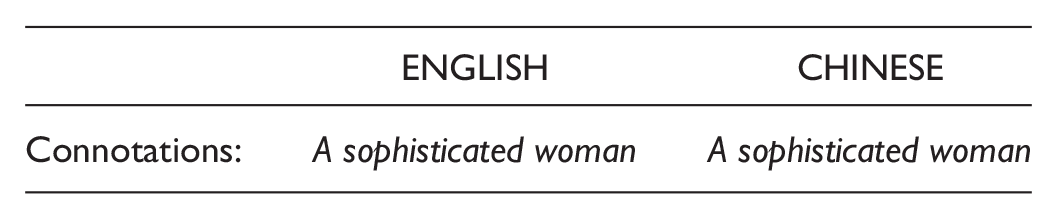
In the TT, identical sentences structured with two words (a verb), followed by six words (purpose of action) are used, creating an engaging narrative. The three verbs are
In summary, the findings of this section support the notion that gender stereotypes are predominantly altered, with some strategies being target-oriented and others source-oriented. Notably, target-oriented strategies are more prevalent than source-oriented ones. These results corroborate Morón and Calvo’s (2018) assertion that more manipulative or marked interventional strategies are often required in transcreation practice. Additionally, the findings support Mavis Ho’s (2021) contention that there are optional shifts in both translation and transcreation are realized through strategies. The choice of a specific strategy is not predetermined for certain traits, such as the communal trait “sexy,” which may either be omitted or preserved in the context.
Conclusion
This study has explored the strategies used to render gender stereotypes in fragrance descriptions through translation and transcreation. The findings reveal distinct differences and notable similarities between these two approaches. The results show notable disparities in utilizing target culture-oriented strategies, with transcreation using these approaches in roughly 90% of instances, versus about 50% for translation. This reveals that the key difference between translation and transcreation lies in the degree to which practitioners modify the ST to produce new content.
Despite their differences, both translation and transcreation strategies have been found to perpetuate and, in some cases, challenge gender stereotypes. Their shared objective of shaping consumer perceptions underscores the strategic significance of their respective approaches and their impact on gender representation within marketing narratives.
A salient contribution of this study is the identification of differential strategies as the hallmark for distinguishing between translation and transcreation. Strategies can be identified and categorized based on the adapted analytical frameworks by Karoubi (2013) and Ketola (2018). For translation, typical strategies might include addition, omission, and substitution. For transcreation, strategies could involve modulation and mutation. Notably, determining translation strategies involves examining items, while identifying transcreation strategies is done by observing entire paragraphs. This analytical distinction extends beyond theoretical implications to provide practical insights for advertising translation practices, emphasizing the value of culturally sensitive and creatively adaptive approaches.
Furthermore, the analysis highlights the importance of considering the cultural and linguistic nuances in translation and transcreation processes. The study underscores the need for translators and transcreators to be aware of the potential impact of their choices on gender representation and to approach their work with gender awareness. In terms of broader implications, the study findings highlight transcreation as an essential tool in advertising translation. Its flexibility and creative adaptability resonate with the evolving demands of global advertising, facilitating authentic engagement with diverse target audiences.
Overall, this research contributes to the academic discourse by offering a rigorous distinction between transcreation and translation within advertising translation, supported by empirical evidence. By refining Ketola’s (2018) framework and incorporating gender-aware strategies, this study advances the understanding of transcreation as a multifaceted practice that synergizes linguistic precision with cultural and creative adaptability. The prevalence of target-oriented transcreation strategies underscores the centrality of creativity in this domain, aligning newly crafted content with linguistic preferences and the broader sociocultural contexts.
Although these findings are exciting and practically relevant, several limitations exist. The analysis was confined to online fragrance descriptions, limiting generalizability to other media such as novels or social media. Moreover, the study focused solely on textual content, excluding visual elements crucial in advertising. Additionally, gender was conceptualized in binary terms, potentially oversimplifying the complexities of gender identity in modern contexts where non-binary perspectives are increasingly recognized.
Future research could extend these findings by exploring translation and transcreation across a wider array of media to verify the applicability of the conclusions drawn here. Investigating how gender stereotypes are conveyed and transformed in the visual and audio elements of advertising could also provide deeper insights into multimodal communication strategies. Furthermore, expanding the scope to include more inclusive representations of gender, such as those about the LGBTQI+ community and unisex products. It would enrich the understanding of gender dynamics in translation studies. These directions not only promise to broaden the impact of the current research but also contribute to a more nuanced understanding of gender portrayal across different cultural and media landscapes.
Footnotes
Declaration of Conflicting Interests
The author(s) declared no potential conflicts of interest with respect to the research, authorship, and/or publication of this article.
Funding
The author(s) disclosed receipt of the following financial support for the research, authorship, and/or publication of this article: This study was funded by the National Social Science Funds of China ?A Systemic Study on the Ethics of Translation-variation? [Grant No. 19BYY141]; the PhD Research Start-up Fund of Hubei University of Automotive Technology ?Cross-Cultural Interpretation and Translation of Gender Stereotypes? [Grant No. BK202453]; and Hubei University of Automotive Technology University-Level First-Class Undergraduate Course ?Applied Translation? (Grant No. XZXK2024021).

Data Availability Statement
The datasets generated during and/or analysed during the current study are available from corresponding author on reasonable request.