




Abstract
This research delves into the factors influencing use intentions on knowledge-sharing platforms, leveraging the theory of ecology of communication. The study constructs a model of use intentions, encompassing content, technical, and social aspects. Data from 511 users was gathered via questionnaires and analyzed using structural equation modeling and Bootstrap. Results indicate that perceived enjoyment and community influence bolster use intentions and brand trust, while platform design impacts brand trust. Cultural identity enhances use intentions, but perceived knowledge value and platform design showed no significant influence on use intentions or brand trust. These findings provide insights into user behavior on knowledge-sharing platforms and have implications for platform design and user experience.
Plain language summary
This study explores people’s intentions to use knowledge-sharing platforms using the ecology of communication theory. Researchers surveyed 511 users and analyzed their responses. They found that enjoying the platform and feeling connected to its community significantly increases users’ intentions to use it and trust in the brand. Cultural identity also plays a role in encouraging use. Interestingly, the perceived knowledge value and the platform design did not significantly impact users’ use intentions or brand trust. These insights are valuable for understanding user use intentions on knowledge-sharing platforms and can guide improvements in platform design and user experience.
Introduction
In today’s information-rich era, the development of the Internet has significantly enhanced the dissemination and exchange of information, transitioning social sharing from offline to online and expanding its application from psychology to marketing and communication (Sweet et al., 2019). People increasingly turn to the Internet for knowledge learning, driven by peer pressure and the demands of social work and life, often using social media tools to share and acquire knowledge (Fan et al., 2021). In social media, users actively share text, images, audio, and video content through various platforms, influencing people’s decisions. These platforms, facilitating social interactions and high-quality information, have seen a surge in attention, leading to diverse knowledge-sharing platforms like Q&A, consulting, and courses. Knowledge-sharing platforms represent a fusion of knowledge dissemination and the Internet, addressing the lack of information in traditional communication forms and creating a faster, more convenient environment for knowledge exchange (Razzaque, 2020; Saxena & Reddy, 2021). The number of such platforms and their users has been proliferating, a trend particularly evident in China, where these platforms have seen significant development and adoption. This study focuses on knowledge-sharing platforms in China, examining their rapid development and widespread adoption in the region. The journey of knowledge-sharing platforms in China began with the introduction of Wikipedia in 2001 (X. Zhang & Zhu, 2011), followed by Baidu Baike becoming a popular choice for information search (N. Cheng & Dong, 2018; L. Zhang et al., 2022; X. Zhang & Zhu, 2011). By 2014, Chinese university MOOCs allowed people to access high-quality higher education courses from home (J. Cheng et al., 2022). The rapid development of Internet technology and the popularization of mobile devices have further propelled the growth of platforms like Zhihu, iGet, and Baidu Knows in China (C. Yang et al., 2020; L. Zhang et al., 2022). These platforms, offering rich knowledge resources and learning opportunities, reflect a broader global trend in knowledge-sharing (L. Zhang et al., 2022; X. Zhang & Zhu, 2011).
Research Background
Knowledge-sharing platforms are digital environments designed to facilitate the exchange, dissemination, and acquisition of knowledge among users (Platonova et al., 2022). They encompass various online systems, enabling individuals and organizations to share, access, and collaborate on information. Typically featuring content creation and sharing tools, discussion forums, question-and-answer formats, and collaborative workspaces, these platforms vary in their growth and influence across regions like America, Europe, and Africa. For instance, platforms such as Coursera and Udemy in the U.S. and Europe have become integral to education and professional development, offering diverse courses globally (Jensen & Rasmussen, 2018). In Africa, the rise of mobile technology has significantly boosted platforms like Ubongo in Tanzania, reaching wider audiences, especially in remote areas ( Кратовичet al., 2020). Social dynamics, cultural contexts, government policies, and digital literacy levels influence the success of these platforms. For example, Europe’s focus on data privacy impacts platform design and use (Jia & Ruan, 2020), while in America, the emphasis is on user engagement and content diversity (J. Yang et al., 2010). This global perspective on knowledge-sharing platforms underscores the importance of understanding regional differences in their development. However, the primary focus of this study is on the unique characteristics and rapid growth of knowledge-sharing platforms in China, aiming to contribute to a deeper understanding of the dynamics of these platforms in the Chinese context and offering insights applicable to the global landscape of knowledge-sharing.
Problem Statement
According to Statista’s data, in 2020, the market size of China’s online education industry was about 257.3 billion yuan (Mensah et al., 2022). By 2022, it is expected to reach about 349.6 billion yuan, of which the online part is about 135.2 billion yuan (Revenue of China’s comprehensive lifelong education market from 2016 to 2020 and forecast to 2024; Du et al., 2023). These data fully demonstrate the massive potential of knowledge-sharing platforms, which have become a research hotspot on the Internet, attracting much attention and discussion. However, the success of knowledge-sharing platforms depends not only on high-quality content and advanced technology but also on the active participation of users. In particular, the user’s use intention, an essential factor influencing the success of knowledge-sharing platforms, determines whether users are willing to participate in the platform to share or acquire knowledge (Akour et al., 2021; Pang et al., 2020; Razzaque, 2020). It is worth noting that the formation of user use intention is influenced by various factors, including but not limited to the platform’s user experience (S. Song et al., 2021), community atmosphere (Pang et al., 2020), personal needs (Chen et al., 2020), etc. However, research on how these influencing factors affect user intention and to what extent still needs to be completed. Therefore, this study aims to bridge this gap by examining the various factors shaping the use intention on knowledge-sharing platforms. Specifically, we will focus on five key areas: use intentions, brand trust, content factor, social factor, and technical factor. These aspects will be explored through communication ecology theory, offering a holistic view of how each contributes to user engagement and platform success. By delving into these factors, our study seeks to enrich the theoretical landscape of user use intention in knowledge-sharing platforms and offer practical insights for platform operators. Understanding these dynamics is crucial for enhancing user engagement, elevating the platform’s impact, and fostering broader social knowledge innovation and dissemination.
In the research on user use intention of knowledge-sharing platforms, many studies have explored factors influencing user use intention. These studies can mainly be divided into four categories: first, exploring the impact of content quality, usability, and user satisfaction on user use intention (Pang et al., 2020); second, exploring the impact of community participation on user use intention (Kosonen et al., 2014; Pee, 2018); third, exploring the impact of platform characteristics on user use intention (Akour et al., 2021; X. Zhang et al., 2017); fourth, exploring the impact of factors such as personalized learning, contextualized teaching, perceived usefulness, perceived ease of use, social needs, and social influence on user use intention (Ali & Arshad, 2016; Wang & Shin, 2022; Zhao et al., 2018). However, most studies mainly focus on the impact of platform technology and content but need to give more attention to the role of social attributes in knowledge-sharing platforms. Here, we define “social attributes” as the influence on users when they use knowledge-sharing platforms by the communities they belong to Lau (2011). This study aims to fill these research gaps. First, we will introduce the theory of ecology of communication and decompose the intention of users to use knowledge-sharing platforms into content factor (perceived knowledge value, perceived enjoyment), social factor (cultural identity, community influence), technical factor (platform design), and brand trust, to understand the various factors that influence user use intention entirely. Second, we will explore in depth the acceptance and usage behavior of users toward knowledge-sharing platforms in hopes of discovering the key factors that influence user use intention. Through in-depth research on these factors, we can provide valuable suggestions for designing and managing knowledge-sharing platforms, thereby enhancing user use intention, and promoting the development of knowledge-sharing platforms. This study aims to address the following research questions (RQs):
RQ1: What factors influence user intentions to use knowledge-sharing platforms in China?
RQ2: How do these factors (perceived knowledge value, perceived enjoyment, cultural identity, community influence, platform design, and brand trust) interact to shape user intentions on knowledge-sharing platforms?
RQ3: How does the theory of ecology of communication elucidate the interplay between content, social, and technical factors in shaping user intentions and brand trust on Chinese knowledge-sharing platforms?
Literature Review and Research Hypotheses
Knowledge-Sharing Platform
Knowledge-sharing platforms denote online environments where individuals or organizations can exchange, create, and disseminate knowledge, ideas, and experiences (de Jong & Lindsen, 2021). These platforms are conduits for knowledge transfer, promoting learning, skill improvement, and user innovation (Zhou et al., 2018). They can manifest in various forms—from online forums and social media platforms to learning management systems and specialized knowledge exchange websites (Hazzam & Lahrech, 2018; Nain et al., 2019). The effectiveness of these platforms’ hinges on the quality of their design, the relevance and reliability of their content, and the engagement level of the user community. Users generally seek platforms that provide reliable, relevant, and current information with a user-friendly and engaging interface. Trust and credibility are central to the success of these platforms, as users require confidence in the information sources they access (Stasiuk et al., 2021), alongside assurance of their privacy and intellectual property protection (Moorthy et al., 2016). In recent years, the surge in online learning and the pervasiveness of digital technologies have spurred the development of myriad knowledge-sharing platforms catering to various needs and interests. These platforms are now critical tools for knowledge exchange, collaboration, and continuous learning across various sectors such as education, healthcare, business, and government.
With the deepening of research and practice, the limitations of current knowledge-sharing platforms have come to light. These include a limited user base, serious structural homogenization, and a lack of interactivity. For example, applications like “Knowledge Explorer,” “CollabHub,” and “EduShare” initially enjoyed high download rates and usage due to their engaging interfaces, intriguing features, and informative content (Alsharo et al., 2017; Oeldorf-Hirsch & Sundar, 2015). However, infrequent updates and limited functionalities led to user attrition and low conversion rates. While the market for “Internet+” knowledge-sharing platforms shows promise and is growing, the limited understanding of user acceptance and usage has hindered these platforms from realizing their full potential (Kallio et al., 2021; Pang et al., 2020; J. Zhang et al., 2021). Therefore, it is crucial to explore other influencing factors, such as social attributes, which have been less emphasized in current research but play a significant role in knowledge-sharing platforms.
Theory of Ecology of Communication
Overview of Ecology of Communication
In recent years, information system scholars have increasingly emphasized the role of social factors in studying user behavior. This shift has led to integrating these factors with existing information system models, developing more comprehensive theoretical models. Among these, the theory of ecology of communication stands out, offering a multidimensional perspective that encompasses communication, technology, and content. This theory, a significant framework in sociology, media, and communication studies, elucidates the dynamic interplay between technology, content, and social factors, particularly in the context of knowledge-sharing platforms. Initially proposed by Altheide (2016), the theory of ecology of communication suggests that an individual’s communication behavior is influenced by a combination of content factors (such as the nature of the communicative content), social factors (including the influence of social structures and relationships), and technical factors (encompassing the role of information technology and communication media). This comprehensive approach is particularly relevant in understanding the complexities of user behavior on knowledge-sharing platforms. It allows for examining how these platforms’ technological attributes, the quality and relevance of their content, and the social dynamics they foster collectively shape user intentions and engagement.
Recent applications of this theory in contemporary research have demonstrated its effectiveness in analyzing user behavior in digital environments. For instance, studies by Foth and Hearn (2007) and Seol et al. (2016) have applied the theory of ecology of communication to explore how knowledge-sharing platforms facilitate or hinder knowledge exchange and user engagement. These studies underscore the theory’s utility in providing a holistic understanding of the factors influencing users’ intentions to use these platforms. While the theory of ecology of communication offers a robust framework for analyzing user behavior, it is not without limitations. One challenge is the potential oversimplification of the complex interrelations between different factors, which might not fully capture the nuances of individual user experiences and cultural differences. Additionally, operationalizing the theory’s components for empirical research can sometimes be challenging due to its broad scope. Despite these challenges, the theory of ecology of communication is particularly relevant to this study. It provides a comprehensive lens for understanding the multifaceted nature of user interactions on knowledge-sharing platforms. By applying this theory, we aim to explore the intricate relationships between technological attributes, content quality, and social dynamics on these platforms. This approach will enable a more nuanced understanding of user behavior, addressing a gap in existing literature that often views these elements in isolation. Ultimately, this theoretical lens will offer valuable insights into the design and management of knowledge-sharing platforms, contributing to the field’s understanding of how to enhance user engagement and platform effectiveness.
Key Element Analysis
The core elements of knowledge-sharing platforms, as identified in our study, include content, platform technology, and platform developers, supported by various studies exploring these platforms’ critical aspects. As a central component, content encompasses the information and knowledge shared among users. Clark and Maeer (2008) describe content through a three-dimensional cognitive framework: intrinsic value, tool value, and organizational value. Grant (2016) adds knowledge and social attributes as two-dimensional cognitive content characteristics essential for group participation and interaction. Thus, the content of knowledge-sharing platforms possesses knowledge and social attributes crucial for facilitating communication and engagement among users (Manojlovich et al., 2015; McRae, 2020).
Platform technology underpins these platforms, including software and hardware components like servers, databases, user interfaces, and algorithms. This technology plays a significant role in determining platform usability, accessibility, and overall user experience. Platform developers responsible for creating and maintaining the platform significantly impact its design, functionality, and evolution. Their role is critical in ensuring the platform meets user needs and adapts to the changing digital landscape. The theory of ecology of communication, encompassing content, social interaction, and technical dimensions, offers a holistic perspective for examining these elements. It enables comprehensive analysis of the processes and interactions within the ecology of communication of knowledge-sharing platforms, focusing on user use intention. This theory highlights the interdependence of content, technology, and human factors in shaping user experiences on these platforms.
Furthermore, our analysis of knowledge-sharing platforms and user comments reveals that factors influencing platform use intention stem from the platform’s internal ecosystem and the “brand” and “trust” of platform developers. In the context of knowledge-sharing platforms, brand trust plays a key role, being an essential factor in maintaining user loyalty relationships (Ventre & Kolbe, 2020). Therefore, under the theoretical perspective of the ecology of communication, the critical elements of knowledge-sharing platforms are illustrated in Figure 1.

Key element structure of knowledge-sharing platform.
The content factor in knowledge-sharing platforms is influenced by the characteristics of the content shared on these platforms. This study considers impression management and emotional regulation as two basic psychological needs that motivate individuals to share content. Impression management involves curating content that enhances one’s image or reputation among peers (Berger, 2014), while emotional regulation involves sharing content that aligns with or influences one’s emotional state (Bonacini & Giaccone, 2021). These needs directly contribute to the perceived knowledge value and perceived enjoyment of the content. Perceived knowledge value arises when users recognize the content as beneficial and valuable for their image or reputation. Similarly, perceived enjoyment is derived when the content aligns with or positively influences the users’ emotional state. Therefore, we propose that these psychological needs underpin the main factors of the content layer: perceived knowledge value and perceived enjoyment.
The social factor encompasses the social interaction activities on knowledge-sharing platforms, including the relationships between users and the content. Previous research has highlighted information interaction, social support, and friendship as essential elements in social interaction (Brandtzæg & Heim, 2009; Ridings & Gefen, 2006). These elements contribute to forming a community influence, where the collective behavior and preferences of the community impact individual user behavior. Additionally, cultural identity, as a factor, emerges from the shared cultural norms and values within the user community, influencing their interaction with the content and each other. Thus, community influence and cultural identity are proposed as core factors of the knowledge-sharing platform, derived from the dynamics of social interaction and cultural commonalities among users.
The technical factor relates to usability, reliability, response time, interactivity, experience, and UI design of the platform (Chai & Kim, 2010; Papagiannidis et al., 2013; X. Zhang et al., 2017). Knowledge-sharing platforms often incorporate advanced technologies like cloud computing, artificial intelligence, and big data analysis to ensure essential functions such as reliability and usability. The impact of platform design factors, including user interface design, information retrieval capability, data security, and personalized recommendation, is a focus of this study, as they significantly influence user use intention.
In our study, we extensively analyzed knowledge-sharing platform developers based on data available in the Android and Apple system environments. This analysis involved a systematic review of app store data, user reviews, and information provided by the developers themselves. Our findings indicate that the primary developers of knowledge-sharing platforms include educational and research institutions, their associated professional bodies, and various third-party entities. This diverse range of developers reflects the multifaceted nature of knowledge-sharing platforms, catering to various educational and professional needs. In the rapidly evolving landscape of online knowledge-sharing platforms, we observed a notable gap in efficient and convenient methods for evaluating information quality. This gap underscores the importance of brand trust as a critical factor influencing user engagement and platform utilization in the online environment (Fang et al., 2014). Our study further explores how content quality, social dynamics, and technological features within these platforms positively build and maintain brand trust. Recognizing that user intention significantly predicts actual usage behavior, our research focuses on characterizing user behavior through their expressed intentions to use these platforms.
Research Model
Based on the above analysis, this article explores the model of factors influencing user brand trust and user use intention in knowledge-sharing platforms in terms of content factor, technical factor, and social factor. The specific assumptions and model construction are shown in Figure 2.
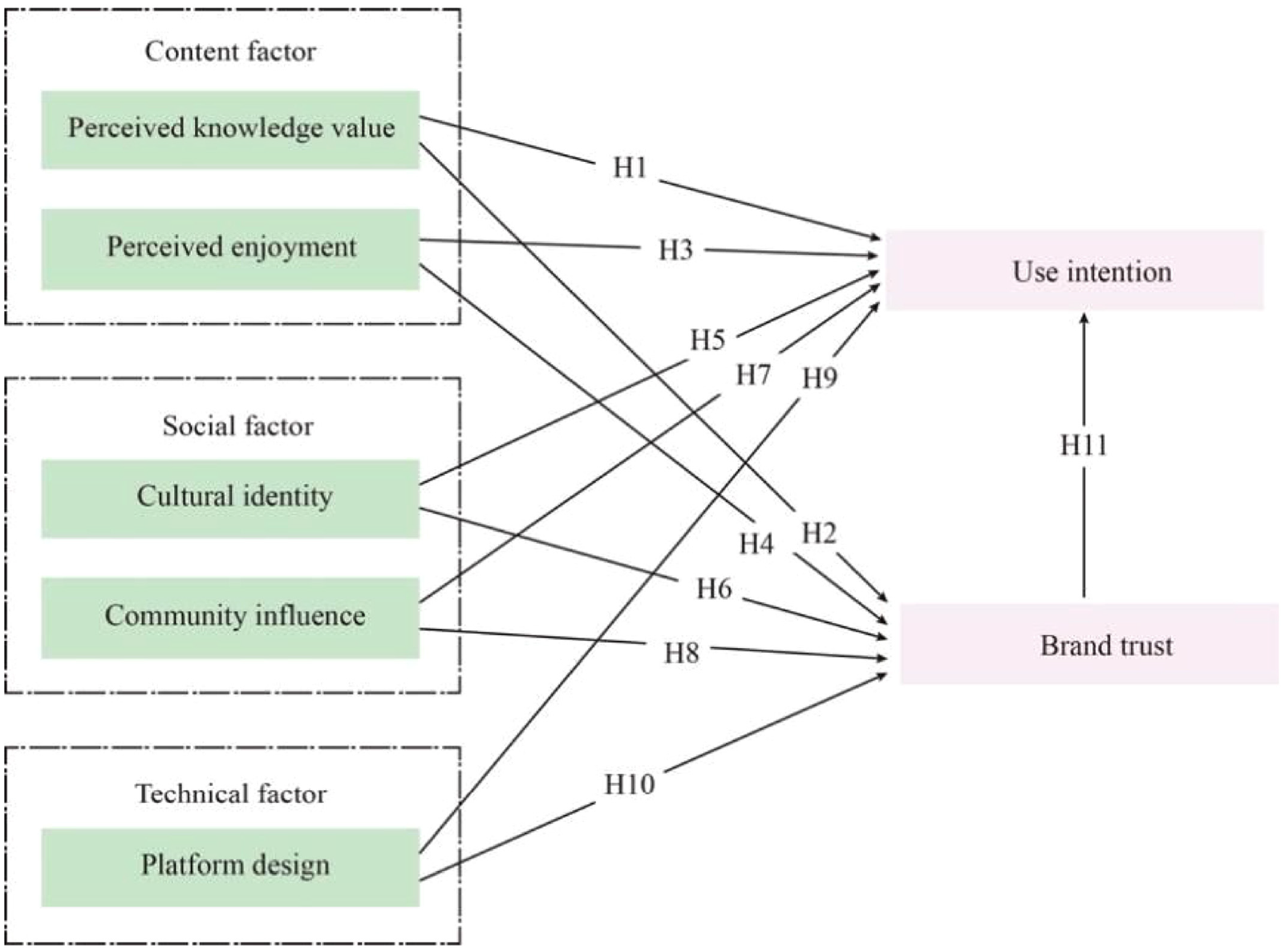
The theoretical model.
Research Hypotheses
Content Factor
“Perceived knowledge value” and “perceived enjoyment” are two key factors that shape user behavior on knowledge-sharing platforms. The former, as defined by Wasko and Faraj (2005), refers to the knowledge benefits users gain from using a platform, while the latter, according to van der (2004), pertains to the pleasure derived from its use. In the realm of knowledge-sharing platforms, these two factors play pivotal roles. For instance, Jiarui et al. (2022) employed the technology acceptance model (TAM) as a moderator variable based on social exchange theory to develop a model of influencing factors for the knowledge-sharing behavior of online community members. Their study found that knowledge-sharing is motivated by trust and quality of knowledge, suggesting that perceived knowledge value can positively influence use intention and brand trust. Similarly, perceived enjoyment also exerts a significant influence on user intention. Desiree López (2022) study on the drivers of the sharing economy affecting consumers’ usage behavior found that economic benefits, enjoyment, and trust drove the usage behavior of consumers in the sharing economy. This supports our hypothesis that perceived enjoyment will positively influence use intention. Furthermore, Al-Gharaibeh and Ali (2021) discussed the dynamics of knowledge-sharing behavior using game theory and rational action theory, highlighting the role of perceived utility in personal enjoyment and reciprocity, reinforcing our hypothesis that perceived enjoyment will positively influence brand trust. Based on these insights, we propose the following hypotheses:
H1: Perceived knowledge value will positively influence use intention.
H2: Perceived knowledge value will positively influence brand trust.
H3: Perceived enjoyment will positively influence use intention.
H4: Perceived enjoyment will positively influence brand trust.
Social Factor
“Cultural identity” and “community influence” are two pivotal factors that shape user behavior on knowledge-sharing platforms. As defined by Srite and Karahanna (2006), cultural identity refers to the cultural preferences and consensus users exhibit when using a platform. In this context, a study by Mao et al. (2020) found that identity features significantly facilitate a customer’s purchase intention, including self-identity, social identity, and brand identity. This finding suggests that cultural identity, a social identity, could positively influence both use intention and brand trust. Further supporting this notion, Z. Song et al. (2019) discovered that users’ centrality, harvest, and trust toward the community significantly influence knowledge-sharing behavior in social Q&A communities, highlighting the impact of cultural identity on user behavior. Additionally, Xie and Zhang (2022) emphasized the impact of platform environmental factors, including community trust, management, incentive, atmosphere, and information protection, on knowledge-sharing behavior, aligning with the idea that community influence can significantly affect user engagement and participation. Conversely, community influence, often as part of social media marketing activities (SMMA), has significantly impacted brand loyalty, trust, and revisit intention for coffee shops (Iranmanesh et al., 2022). This implies that community influence could positively sway use intention and brand trust. Xin et al. (2023) explored factors influencing continuous sharing behaviors in online travel communities. They identified community identity, support, and observation learning as critical elements that positively affect user engagement. They further supported the hypothesis that community influence is vital in maintaining user participation and loyalty in knowledge-sharing platforms. Based on these insights, we propose the following hypotheses:
H5: Cultural identity will positively influence use intention.
H6: Cultural identity will positively influence brand trust.
H7: Community influence will positively influence use intention.
H8: Community influence will positively influence brand trust.
Technical Factor
“Platform design” is a crucial factor that shapes user behavior on knowledge-sharing platforms. This term encompasses a platform’s aesthetic and functional aspects that enhance user experience and engagement. In the context of knowledge-sharing platforms, the role of platform design is significant. For instance, Ibrahim et al. (2021) discovered in their study that practical social media marketing activities, which could be associated with platform design, predict users’ continuation intentions. This finding suggests that platform design can positively influence use intention. Further supporting this, Rahman et al. (2020) study found that brand image, which could be influenced by platform design, significantly and positively affects online purchase intention. This finding bolsters our hypothesis that platform design will positively influence use intention. Similarly, a study by Muller and de Klerk (2020) suggests that design aesthetics, an essential aspect of platform design, significantly influence Generation Y students’ intention to use wearable activity-tracking devices. This finding reinforces our hypothesis that platform design will positively influence use intention. Lastly, Tan et al. (2022) study shows that green marketing approaches, which could be related to platform design, directly and significantly influence green image and trust. This finding suggests that platform design can positively influence brand trust. Based on these insights, we propose the following hypotheses:
H9: Platform design will positively influence use intention.
H10: Platform design will positively influence brand trust.
Brand Trust
“Brand trust” is a crucial factor influencing user interactions on knowledge-sharing platforms. This term refers to the trust users place in a particular brand, which can be influenced by the asymmetry of information and perceived risks. Despite these risks, users may trust the brand due to their positive recognition and expectations, increasing their intention to use the platform. In the context of knowledge-sharing platforms, brand trust plays a significant role. For instance, Rainis et al. (2015) found significant relationships between green brand trust and customers’ intention to use green products, suggesting that brand trust can positively influence use intention. Further supporting this, Corrêa et al. (2020), in their study, found that brand trust is a mediating variable in the YouTuber–follower relationship, thereby reinforcing our hypothesis that brand trust will positively influence use intention. Similarly, in their study, Jiang et al. (2015) found that brand trust significantly affects the attitude of use, resulting in behavior intention to adopt the mobile game. This finding supports our hypothesis that brand trust will positively influence use intention. Lastly, a study by Demba et al. (2022) found a positive relationship between user-generated content (UGC), brand trust, and purchase intention, suggesting that brand trust can positively influence use intention. These studies demonstrate that brand trust positively impacts users’ intention to use the knowledge-sharing platform. Based on these insights, this article proposes the following hypothesis:
H11: Brand trust will positively influence use intention.
Methodology
Questionnaire Design
In the questionnaire design, the scale was developed by extracting and adapting items from established empirical research scales, both domestically and internationally. Prior to the large-scale distribution of this questionnaire, we conducted small-scale interviews and pre-tests to refine our measurement model. This preliminary phase involved 30 participants, including 20 individuals with prior experience using knowledge-sharing platforms and ten academicians with management and communication studies backgrounds, specifically doctoral and master’s degree students and scholars in these fields. This diverse group of participants, comprising both actual users of knowledge-sharing platforms and academicians with relevant expertise, was instrumental in ensuring the robust content validity of our measurement model. Their feedback was crucial in fine-tuning the questionnaire, which led to the development of 24 observation items, as detailed in Table 1. These items were measured using a Likert 7-point scale, ranging from 1 (strongly disagree) to 7 (strongly agree), to capture the respondents’ attitudes and perceptions regarding knowledge-sharing platforms accurately.
Measurement Items and Literature Sources.

Sample Characteristics
In our study, we utilized an online questionnaire method developed in collaboration with Wen Juan Xing, a renowned survey firm in China, to ensure diverse representation among participants and enhance data representativeness. The questionnaire began by introducing the concept of knowledge-sharing platforms, followed by screening questions to identify current users. Participants were asked, “Have you ever used the knowledge-sharing platforms described above?” with options to proceed or end the survey based on their response. The next question, “Have you used any knowledge-sharing platforms in the past year?” further narrowed the respondents to current users. This targeted approach ensured our focus on individuals actively engaged with these platforms. To operationalize “use intention,” the main questionnaire included specific items measuring participants’ plans and willingness to continue using these platforms, capturing various aspects of their use intention, as shown in Table 1.
The data collection, conducted over 3 weeks in July 2023, resulted in 526 responses. After rigorously scrutinizing these responses and discarding those that seemed insincerely completed, such as those filled in under 3 min or with uniform responses across items, we obtained 511 valid responses. The demographic profile of the participants was diverse, with ages ranging from 18 to 69 years (M = 30.13, SD = 9.882) and a gender distribution of 36.204% male and 63.796% female. The sample included 48.141% students, 36.008% public sector employees, and 15.851% from other professions. Regarding educational background, 9.198% had an undergraduate degree or lower, 57.926% were undergraduate degree holders, and 32.877% had a master’s degree or higher. The survey protocol received approval from X University’s Academic Ethics Committee in January 2023.
Data Analysis Process
The data analysis in this study was meticulously conducted using two main software tools: SPSS (Statistical Package for the Social Sciences) and PLS-Smart (Partial Least Squares Structural Equation Modeling). These tools were specifically chosen for their robust statistical capabilities, particularly suited for analyzing complex models in social science research.
Initially, SPSS was utilized for preliminary data analysis tasks, including data cleaning, and generating descriptive statistics. This crucial step involved meticulously removing incomplete or inconsistent responses, a process essential for maintaining the quality and reliability of the data. The descriptive statistics provided a comprehensive overview of the sample characteristics, such as age, gender, occupation, and educational background. This information was instrumental in understanding the composition and representativeness of the respondent pool, ensuring the study’s findings were grounded in a well-characterized sample.
Subsequently, the study employed PLS-Smart for a more in-depth data analysis, focusing on measurement and structural models. The measurement model’s analysis was thorough, involving a detailed reliability and validity assessment. This included evaluating internal consistency, convergent validity, and discriminant validity using established metrics such as Cronbach’s alpha, composite reliability, and Average Variance Extracted (AVE). These analyses were critical in ensuring the constructs were reliable and validly measured the underlying theoretical concepts they intended to represent. The structural model analysis was equally comprehensive. It included evaluating the model’s explanatory power by examining the R-squared values of the endogenous constructs. This step was crucial as it indicated the proportion of variance in the dependent variables that could be explained by the independent variables, providing insights into the strength of the relationships within the model. Additionally, the significance of the hypothesized relationships in the structural model was tested by examining the path coefficients. This was achieved using bootstrapping with 5,000 resamples, which provided robust insights into the strength and significance of the relationships between constructs.
Results
Measurement Model
Reliability and Validity Analysis
Internal consistency reliability is crucial in research for assessing test outcomes and ensuring stability. Recent studies have emphasized its importance in various fields (Prasad & Satyaprasad, 2023; Youssef et al., 2023). It safeguards against external influences on measurement methods. Modern methods like Cronbach’s Alpha coefficient (CA) and Construct Reliability (CR) are widely used. This study employs Cronbach’s α for questionnaire pre-test reliability, aligning with contemporary standards where values above .7 are considered reliable (Nabilla & Afifi, 2023). The combined reliability value reflects the consistency of construct indicators, with values over 0.7 being acceptable, as supported by recent research (Muttaqin et al., 2023). In recent studies, factor loading analysis remains a significant indicator of variable-factor correlation (Prasad & Satyaprasad, 2023). A loading ≥ 0.708 suggests that the factor explains 50% of the variation, with 0.7 as a standard benchmark for reliability (Youssef et al., 2023). The Average Variance Extracted (AVE) measures convergent validity, with AVE ≥ 0.50, indicating that the latent construct explains over half of its indicators’ variation (Nabilla & Afifi, 2023), as shown in Table 2.
Reliability and Validity Analysis.

Discriminant Validity
Discriminant validity analysis checks for statistical differences in correlations between different constructs. Items from different constructs should not correlate highly (above 0.85), or they might measure the same thing, often due to overlapping definitions. This study uses the AVE method for discriminant validity. As per Fornell and Larcker (2018), the square root of a factor’s AVE should exceed the correlation coefficient of variable pairs, ensuring discriminant validity. The diagonal represents the square root of each factor’s AVE, which is more significant than the correlation coefficient outside the diagonal. Thus, this study possesses discriminant validity. The lower triangle shows the correlation coefficient. Refer to Table 3 for specifics.
Discriminant Validity.

Structural Model
Model Fit R2
The R2 explanatory power of endogenous latent variables is generally considered vital if it is more significant than 0.67, medium between 0.33 and 0.67, and small between 0.19 and 0.33. If it is less than 0.19, it is considered to have almost no explanatory power. The results of this study are shown in Table 4 below.
Model Fit R2.

Path Coefficient Significance
The size and significance of path coefficients are used to evaluate the relationships between research hypotheses. After standardizing the sample data, the path coefficients will range from 1 to −1. The closer the value is to 1, the stronger the positive correlation; the closer the value is to −1, the stronger the negative correlation. We can further calculate the T value by dividing the path coefficient by the standard deviation. According to past scholars, when the study’s sample size is greater than 30, the quartiles of the normal distribution can be used as the critical value. When the T value exceeds the critical value, it can be declared significant at a certain error level. The critical values are usually 1.96 (significance level of 5%), 2.57 (significance level of 1%), and 3.29 (significance level of 0.1%; Youssef et al., 2023). This study calculates the path coefficients and T values using the bootstrapping method. The number of bootstrap cases is set to 5,000 for calculating path coefficients and T values. The path coefficients of the structural model in this study are shown in Figure 3 below, and the results are shown in Table 5.

Results of the hypothesized structural equations model.
Path Analysis Results for the Structural Model.
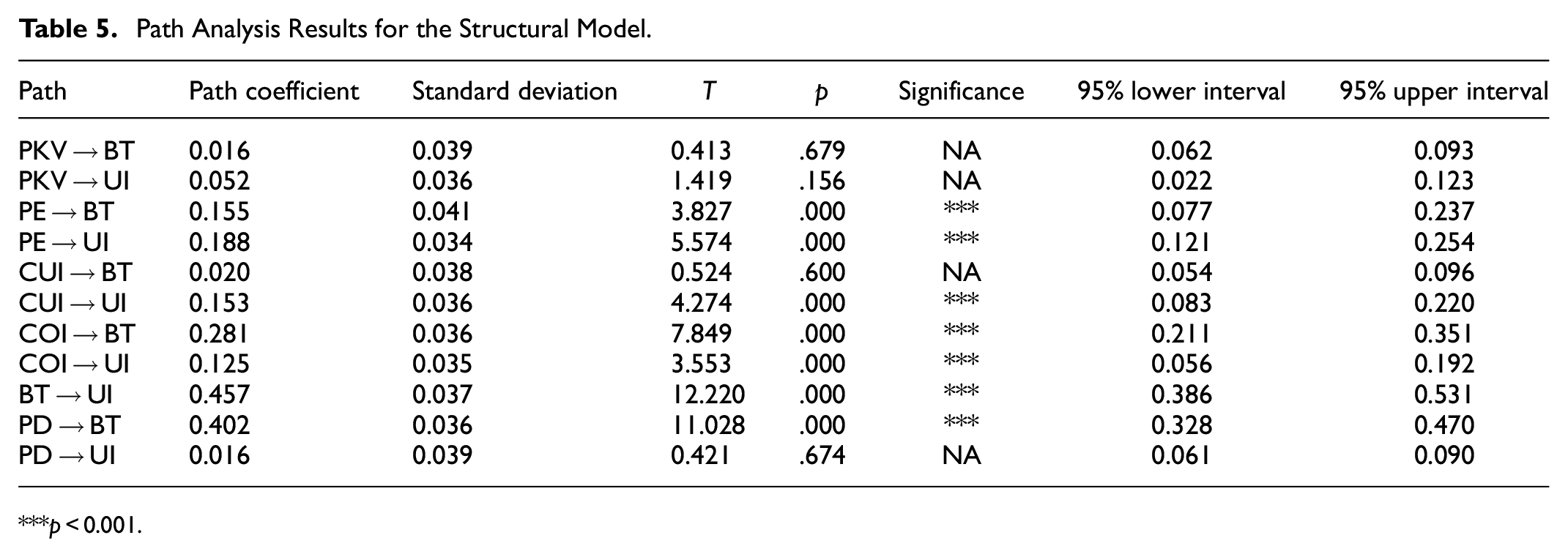
p < 0.001.
From Table 6’s PLS path coefficient results, H1 and H2, suggesting perceived knowledge value’s positive impact on use intention and brand trust, were not confirmed (β = .052, β = .016; p > .05). H3 and H4 validated perceived enjoyment’s significant effect on both (β = .188, β = .155; p < .001). H5 confirmed cultural identity’s influence on use intention (β = .153, p < .001), but H6 did not for brand trust (β = .020, p > .05). H7 and H8 verified community influence’s significant effect (β = .125, β = .281; p < .001). H9, on platform design’s impact on use intention, was not confirmed (β = .016, p > .05), but H10 was for brand trust (β = .402, p < .001). H11 validated brand trust’s positive effect on use intention (β = .125, p < .001). Thus, H1, H2, H6, and H9 were invalidated, while others were confirmed.
Discussion
Firstly, our research results indicate that perceived enjoyment significantly influences users’ use intention (β = .188, p < .001) and brand trust (β = .155, p < .001) on knowledge-sharing platforms. This suggests that these platforms’ immediate gratification and entertainment value are crucial in attracting and retaining users. In contrast, perceived knowledge value did not significantly impact use intention and brand trust. This finding may be attributed to the characteristics of users in China, where the primary use of knowledge-sharing platforms could be more oriented toward leisure and social interaction rather than educational or knowledge-gathering purposes. This trend might also reflect the general level of public education and the prevalent cultural attitudes toward informal learning and entertainment in China. Users might require more time and deeper engagement with the platform to recognize and appreciate the knowledge value, which could eventually influence their use intention and trust in the brand (Tang et al., 2023). Despite the dominant role of perceived enjoyment, it is essential to emphasize that knowledge-sharing platforms should not solely focus on entertainment. They play a vital role in disseminating knowledge and culture, and their content should strike a balance between being engaging and informative (Kautsar et al., 2023). The relatively lower impact of perceived knowledge value on use intention and brand trust highlights a potential area for platform developers to explore enhancing the visibility and accessibility of valuable knowledge content better to meet users’ diverse needs and preferences in China. This approach could help gradually shift user perceptions and increase the appreciation of knowledge value, thereby fostering a more balanced engagement with these platforms.
Secondly, our research highlights the significant role of social factors in shaping user behavior on knowledge-sharing platforms. Specifically, we found that cultural identity significantly influences users’ intention to use these platforms (β = .153, p < .001). However, its impact on brand trust was minimal (β = .020, p > .05). This discrepancy suggests that the effect of cultural identity on brand trust may be subject to specific situational characteristics. By “situational characteristics,” we refer to the context-dependent nature of how users perceive and interact with the platform based on their cultural background and identity. In certain situations, cultural identity may strongly resonate with the platform’s branding and ethos, enhancing trust. In other contexts, however, cultural identity may be less prominent in influencing trust, perhaps overshadowed by factors such as the platform’s perceived utility or community dynamics. Then, community influence (β = .125, p < .001) has a significant impact on its use intention on the knowledge-sharing platform and brand trust (β = .281, p < .001). These findings suggest that we can increase the number of potential users and user stickiness by enhancing the sense of cultural identity and community influence (Chavadi et al., 2023).
Thirdly, we found in our research that the platform design does not significantly impact users’ use intention on the knowledge-sharing platform (β = .016, p > .05). This may be because users can directly feel the relevant technology use when using the knowledge-sharing platform, so the expected degree of impact of platform design may decrease during actual use. However, platform design significantly impacts users’ brand trust (β = .402, P < .001). This indicates that in the era of “Internet+,” technology design can disruptively change users’ trust in the platform (Tang et al., 2023).
Finally, we found in our research that brand trust significantly positively impacts users’ use intention on the knowledge-sharing platform (β = .125, p < .001). This result confirms that when users recognize and trust the developers and brands of the knowledge-sharing platform, they are more likely to download and use this platform. Therefore, developing the knowledge-sharing platform must rely on well-known public service cultural institutions to unify and plan the brand.
Conclusion
While knowledge-sharing platforms have many advantages, such as facilitating access to information and promoting seamless interaction, they also encompass certain intricacies that can shape use intentions. Echoing recent studies that have started to spotlight the potential challenges associated with extensive knowledge-sharing platforms (Ahmed et al., 2020; Nguyen & Malik, 2021; Pang et al., 2020), this research identified several factors that critically influence use intentions. Contrary to our initial hypotheses, perceived knowledge value did not significantly sway use intention or brand trust on the knowledge-sharing platform. Similarly, the impact of a user’s cultural identity on brand trust and the influence of platform design on use intention was insignificant. Thus, these hypotheses were not substantiated. However, our study did validate several other hypotheses. We discovered that perceived enjoyment significantly influenced both use intention and brand trust. Likewise, a user’s cultural identity positively impacted use intention, and community influence significantly affected both use intention and brand trust. Lastly, platform design significantly influenced brand trust, and brand trust positively impacted use intention. These findings comprehensively understand the dynamics that shape use intentions on knowledge-sharing platforms. These findings comprehensively understand the dynamics influencing use intentions on knowledge-sharing platforms. Future research can further explore these relationships and their implications for designing and operating knowledge-sharing platforms.
Recommendations and Implications
Theoretical Implications
Firstly, this study is the first to apply the ecology of communication theory to research use intention on knowledge-sharing platforms, providing a new theoretical perspective for understanding use intention on knowledge-sharing platforms. The ecology of communication theory emphasizes the critical roles of content, social, and technical factors in communication behavior, providing a comprehensive theoretical framework for understanding the influencing factors of use intention on knowledge-sharing platforms (Foth & Hearn, 2007). In the environment of knowledge-sharing platforms, use intention is not influenced by a single factor but is formed under the joint action of content, social, and technical dimensions. Introducing this theoretical perspective allows us to understand users’ behavior patterns on knowledge-sharing platforms more comprehensively and deeply, thereby providing theoretical support for designing and operating knowledge-sharing platforms. In profoundly analyzing the core elements and characteristics of knowledge-sharing platforms, we divide the platform’s characteristics into content, social, and technical dimensions, thus more accurately exploring the motivations that influence use intention.
Next, we further expand the application scenarios of the ecology of communication theory, exploring user behavior from the more diverse ecological dimensions of society, content, and technology. This contribution furthered the application range of the ecology of communication theory and providential theoretical support for understanding the behavior of knowledge-sharing platform users. In the context of the knowledge-sharing economy, various knowledge-sharing platforms have emerged, providing users with new channels for knowledge acquisition, sharing, and storage (Pang et al., 2020). However, knowledge-sharing platforms still need help with problems like uneven content quality and poor user experience. Therefore, maintaining users’ continuous use intention without damaging user satisfaction has become a significant concern on the development path of knowledge-sharing platforms.
In addition, we also reveal the critical role of brand trust in the intention to use knowledge-sharing platforms. We found that brand trust not only directly affects users’ use intention but also plays a mediating role between content factor, social factor, technical factor, and user use intention. This finding further reveals the importance of brand trust in the intention to use knowledge-sharing platforms and provides theoretical support for brand building. On knowledge-sharing platforms, the formation and maintenance of brand trust is a complex process involving the interaction of multiple factors. Firstly, the content factor plays a vital role in this process. Users’ satisfaction with the content provided by the platform and their trust in the content will affect their brand trust. Secondly, the social factor also has a significant impact on brand trust. Users’ social interactions on the platform and their trust in community members will affect their brand trust. Finally, the technical factor must be addressed. The technical performance of the platform, such as stability, security, and ease of use, will affect users’ brand trust (Samed Al-Adwan, 2019).
Finally, this study constructs a theoretical model of use intention on knowledge-sharing platforms, which helps more users transition from the initial contact stage to the actual use stage, thereby promoting the successful development of knowledge-sharing platforms (Alfarizi & Ngatindriatun, 2022; Lu & Wang, 2022). This contribution provides theoretical guidance for the operation of knowledge-sharing platforms (Stokhof et al., 2022) and a new theoretical perspective and framework for future research.
Recommendations for Practice
On the one hand, this study conducts an in-depth analysis of the content factor, social factor, and technical factor that affect use intention, providing valuable references for the design and operation of knowledge-sharing platforms. Knowledge-sharing platforms can improve use intention by providing high-quality content, optimizing community interaction, and enhancing technical experience. In addition, this study applies the ecology of communication theory to research use intention on knowledge-sharing platforms, providing more detailed theoretical support for designing and operating knowledge-sharing platforms. This study also reveals that user behavior on knowledge-sharing platforms results from the combined influence of content, social, and technical factors, providing a new perspective for understanding user behavior. Therefore, to better understand and meet user needs, platform operators need to conduct in-depth user needs research from the perspective of actual users. Deeply explore the diversity and individualization of user needs by conducting in-depth interviews to understand users’ actual needs, usage habits, and problems encountered. User needs on knowledge-sharing platforms are not limited to obtaining information but include various functions such as seeking help, communicating, and learning. Understanding these needs helps develop products or services that better meet users’ needs, enhancing use intention. In addition, platform operators also need to refine user needs, dividing them into basic and advanced needs. Basic needs include a stable usage environment, rich knowledge resources, etc., while advanced needs tend toward personalized and customized services, such as personalized recommendations, customized courses, etc. This refined strategy for user needs allows knowledge-sharing platforms to better meet the needs of different user groups, further enhancing use intention. Finally, the social factor plays an essential role in use intention. Knowledge-sharing platforms must construct a community atmosphere and stimulate users’ sense of belonging and participation.
On the other hand, this study emphasizes the crucial role of brand trust in knowledge-sharing platforms, finding that it significantly impacts use intention. This suggests that knowledge-sharing platforms must establish and maintain user brand trust by providing quality services, protecting user privacy and data security, etc. We introduce brand trust as an essential factor and explore its impact on the ecology’s internal and external joint driving factors. This further expands the application range of the ecology of communication theory and provides theoretical support for the brand-building of knowledge-sharing platforms. User brand trust in knowledge-sharing platforms can be divided into three levels: The first is cognitive trust, which is mainly based on satisfaction with products and services, but this trust may be transferred due to environmental changes (Swift & Hwang, 2013). The second level is emotional trust, which comes from the lasting satisfaction of products and services and may cause users to form preferences (Okazaki et al., 2017). Finally, the third level is behavioral trust, which only forms when the products and services provided by the enterprise become indispensable needs and enjoyment for users, mainly manifested as the maintenance of long-term relationships, repeat purchases, and the search for information to consolidate trust or prevent deception (Hidayanti et al., 2018). First, the platform should protect user privacy and data security to enhance user trust in knowledge-sharing platforms. Privacy protection and data security are essential components of building trust. The platform must strictly comply with relevant regulations, clearly inform users of the purpose of collecting and using personal information and strive to protect user privacy and prevent user data from being leaked or misused. Secondly, the platform should establish a transparent and honest communication mechanism. Establishing positive interactions with users, responding to user questions and feedback on time, and providing accurate and practical solutions can help eliminate user doubts and increase brand trust. Thirdly, the platform can introduce a credible third-party certification or evaluation mechanism. With the certification of a third-party authoritative institution, users’ trust in the content and services provided by the platform will increase, and the evaluation and feedback between users can also serve as an essential basis for enhancing brand trust. Fourthly, the platform should handle user complaints and disputes promptly and fairly. When users encounter problems, knowledge-sharing platforms should respond promptly and handle them reasonably, which helps protect users’ rights and interests, establish the image of platform integrity, and thus enhance user trust. Finally, in the final analysis, user brand trust in knowledge-sharing platforms is an emotional experience based on the platform providing “reliable services, value dependence.”
Finally, based on our study’s theoretical model, knowledge-sharing platforms can enhance user intention by focusing on critical factors such as perceived knowledge value, perceived enjoyment, cultural identity, community influence, and platform design (Dushyanthen et al., 2022; Xiang et al., 2023). This approach is instrumental in attracting users from their initial contact with the platform to their active use, thereby contributing to the platform’s successful development. Firstly, our study suggests that perceived knowledge value did not significantly impact use intention and brand trust, but its role in platform development should be noticed. The key lies in how content is presented and integrated into the user experience to enhance its perceived value. Platforms can leverage personalized recommendations based on user’s interests and behavior data to make content more relevant and engaging, subtly enhancing the perception of content value. Secondly, building a strong community culture is crucial for knowledge-sharing platforms. Creating an environment where users feel a sense of belonging and are motivated to share and acquire knowledge can be achieved through various means. Online and offline activities, establishing community rules and values, and promoting shared community symbols like logos or slogans can foster a sense of identity and belonging. Additionally, setting up authoritative and influential user roles, such as industry experts, can guide community behavior and enhance trust. Showcasing their expertise and contributions can elevate their influence within the community. Encouraging user interaction is also crucial to deepening users’ integration into the community. Platforms should design features that promote engagement, such as comments, likes, and shares. Activities that require collective participation can further enhance the sense of community. Guiding users to establish a collective “us” identity and sharing memories and experiences can make users feel part of the community, fostering a stronger connection to the platform and enhancing their willingness to engage with it.
Limitations
This study’s sample selection, primarily from specific knowledge-sharing platforms, limits its generalizability across all user demographics, highlighting the need for future research in broader contexts. To enhance the universality of the study’s findings, future research should consider expanding the sample to include a more diverse range of platforms and users. While this study concentrated on content, social, and technical factors affecting user use intention, it did not extensively explore other significant factors, such as user characteristics and platform business models. Future studies should delve into these areas to better understand user behavior on knowledge-sharing platforms. Additionally, this research focused on analyzing users’ subjective perceptions, including perceived enjoyment and cultural identity, without examining actual usage behavior. Future work should investigate fundamental user behaviors to understand user interactions with these platforms better. Although the study primarily emphasized immediate use intention, understanding the factors that influence long-term use is crucial for the success of knowledge-sharing platforms. Future research should explore these long-term use factors to provide a comprehensive framework and practical insights for platform development and management. Moreover, the study predominantly addressed the platform design aspect within the technical factors, neglecting other critical technical considerations such as system quality and security. Future research should broaden its scope to include these aspects, offering a more comprehensive view of the technical factors influencing user behavior on knowledge-sharing platforms.
Footnotes
Declaration of Conflicting Interests
The author(s) declared no potential conflicts of interest with respect to the research, authorship, and/or publication of this article.
Funding
The author(s) received no financial support for the research, authorship, and/or publication of this article.

Data Availability Statement
Data sharing not applicable to this article as no datasets were generated or analyzed during the current study.