




Abstract
In today’s technologically advanced world, the adoption of mobile applications has become a transformative force across various industries, significantly impacting the way businesses operate and manage their processes. One area where mobile applications are making a remarkable impact is in the realm of Occupational Health and Safety (OHS). The integration of mobile applications in OHS practices has ushered in a new era of efficiency, accessibility, and data-driven decision-making, elevating workplace safety standards to unprecedented heights. Occupational health and safety are paramount concerns for organizations as they strive to create safe and healthy work environments for their employees. Historically, OHS management relied on manual and paper-based processes, which could be time-consuming, error-prone, and challenging to track comprehensively. However, with the advent of mobile technology, organizations now have the opportunity to streamline their OHS protocols, enhance communication, and proactively manage workplace risks, all through the convenience of mobile applications. This research aims to analyze the effects between perceived ease of use and the attitude towards the use of the mobile application. Perceived usefulness of applications on Attitude towards the use of the app, attitude towards the use of the app on intention to use the application. The population of this research is the employees from the oil and gas industry in Malaysia. The theory of the Technology Acceptance Model (TAM) was applied. Perceived danger, perceived utility, perceived ease of use, and perceived intention to use were the antecedents for mobile apps. Employees’ intentions to use mobile applications were shown to be significantly influenced by their satisfaction with the information system and their inventiveness. In this study, devices were categorized as large or small according to their screen size, while respondents were categorized as young (<30 years old) or old (>30 years old) according to their age. A data collection of 545 responses to an online survey with 32 questions was obtained for analysis. The survey was distributed via email to respondents using a Survey among employees. The factors impacting the intention to use mobile applications were investigated using structural equation modeling. We looked at the moderating impact of the app’s trustworthiness on users’ intentions to use/adopt it. The variables’ responses for perceived ease of use, perceived usefulness, attitude towards the use of the App, trust (integrity) of the App, and intention to use/adopt the application varied significantly between the subgroups, according to the results. The study also showed the existence of moderating effects on the intention to use/adopt an app related to the trust integrity of the app. This paper discusses the survey, the findings, and the ramifications of the observations. This research contributes to the current literature by presenting empirical evidence on the importance of trustworthiness and user attitudes in mobile app adoption in the oil and gas industry. It also discusses the broader implications for improving workplace safety through the strategic use of mobile devices in OHS practices.
Keywords
Introduction
In the fast-paced and technologically driven world of today, businesses are constantly seeking innovative solutions to enhance workplace safety and productivity (Westerman et al., 2014). One remarkable avenue that has emerged to address these concerns is the adoption of mobile applications in occupational health and safety. Embracing these digital tools empowers organizations to revolutionize their safety practices, streamline operations, and safeguard the well-being of their workforce (Javaid et al., 2022; Naji, Isha, Alazzani, Saleem, et al., 2022).
In recent years, the widespread use of smartphones and tablets has ushered in a new era of accessibility and connectivity, transforming the way we interact with information and conduct our daily lives. This technology has now permeated every aspect of our society, including the workplace, where its impact on safety practices is proving to be particularly influential (Szymkowiak et al., 2021).
Traditionally, occupational health and safety management has relied on cumbersome paper-based systems, making it challenging to track incidents, share real-time data, and efficiently analyze potential risks (S. Zhang et al., 2015). However, with mobile applications specifically designed for occupational health and safety, organizations can bridge this gap and embrace a new era of efficiency and effectiveness (Ghaleb et al., 2023; Sheng et al., 2021).
This introduction seeks to explore the critical role mobile applications play in reshaping workplace safety protocols (Farahzadi et al., 2018). We will delve into the myriad benefits that organizations can harness by adopting these cutting-edge tools, such as enhanced incident reporting, timely hazard identification, proactive risk assessment, and seamless communication across all levels of the workforce (Calvard & Jeske, 2018; Naji, Isha, Alazzani, Brough, et al., 2022; Olajiga et al., 2024). Furthermore, we will examine how mobile applications are not only transforming safety practices but also fostering a culture of safety within organizations (Kark et al., 2018). By empowering employees to actively participate in the safety process through user-friendly interfaces and gamified training modules, these applications can create a stronger safety mindset and reduce workplace accidents (Diano et al., 2023; Naji et al., 2021).
The integration of mobile applications in occupational health and safety is not just a trend but rather a fundamental shift towards a more agile and resilient workforce. Through this empirical investigation, we will explore how companies of various sizes and industries have leveraged mobile applications to enhance their safety standards, reduce incident rates, and achieve sustainable growth (Ford et al., 2022; Mpofu, 2022; Saleem, Isha, Benson, et al., 2022). Organizations must stay informed about the latest technological advancements and their potential impact on safety practices. As we embark on this enlightening journey into the realm of mobile applications in occupational health and safety, we invite readers to grasp the transformative power of these digital tools and embrace the path toward a safer and more productive future for all workplaces (Chee, 2023).
Despite substantial research into technological acceptance models and the factors that influence user adoption of mobile applications, numerous undiscovered areas remain. First, while numerous studies have looked into the relationship between perceived ease of use and user attitudes toward technology, few have focused on mobile applications designed for specific purposes or industries, such as healthcare, finance, or education. This disparity underlines the importance of understanding how simplicity of use influences user views about these specialized apps. Second, while the impact of perceived usefulness on user attitudes is widely recognized, the exact intricacies of how perceived usefulness influences attitudes in various circumstances or groups remain unexplored. This study strives to solve this issue by concentrating on the perceived benefits of several application kinds among various user groups. Third, while the link between user attitudes and the intention to use technology is widely documented, there has been little research on the step-by-step evolution from attitude formation to behavioral intention in the context of mobile applications (Onyekwere & Hoque, 2023). Finally, while trust, particularly in terms of integrity, is recognized as an important element in technology adoption, its role as a moderator between attitude and intention to use applications has not been well investigated. This study aims to address these gaps by investigating how trust effects the relationship between user attitudes and intention to utilize mobile applications.
Literature Review
The adoption of mobile applications in occupational health and safety has become a significant area of interest for researchers, organizations, and policymakers alike (Haghani et al., 2023). As workplaces continue to evolve and become more interconnected, the integration of smartphones and tablets as tools for safety management is gaining momentum. This literature review aims to explore the existing body of knowledge surrounding the adoption of mobile applications in occupational health and safety, shedding light on its benefits, challenges, and implications for workplace safety (Sestino et al., 2023).
Enhanced Incident Reporting and Data Collection
One of the primary advantages of adopting mobile applications in occupational health and safety is the facilitation of real-time incident reporting and data collection. Researchers have found that mobile apps allow employees to report near-misses, accidents, and hazards immediately after they occur, leading to more accurate and timely data. This improved data collection enables organizations to identify trends, pinpoint high-risk areas, and implement preventive measures effectively (Nath et al., 2013).
Proactive Risk Assessment and Hazard Identification
Mobile applications equipped with advanced sensors and augmented reality capabilities have proven to be valuable tools for proactive risk assessment and hazard identification. Employees can use these apps to conduct on-site risk assessments, identify potential hazards, and make data-driven decisions to mitigate risks. Studies have shown that such proactive approaches lead to a significant reduction in workplace accidents and injuries (Li et al., 2019).
Real-Time Communication and Collaboration
Mobile applications offer seamless communication and collaboration channels, enabling effective safety-related information dissemination across the organization. Managers can send safety alerts, updates, and reminders instantly, while employees can access safety guidelines and training materials on their mobile devices. Such real-time communication fosters a safety-conscious culture and enhances overall safety awareness among the workforce (Sun & Li, 2016).
Gamification and Employee Engagement
Researchers have explored the use of gamification in mobile applications for occupational health and safety training. By incorporating game-like elements such as quizzes, challenges, and rewards, mobile apps can engage employees and make safety training more enjoyable and effective. Gamification has been shown to increase knowledge retention, encourage proactive safety behaviors, and foster a positive safety culture (Gupta & Gomathi, 2017; Saleem, Isha, Yusop, et al., 2022).
Challenges and Barriers to Adoption
Despite the numerous benefits, the adoption of mobile applications in occupational health and safety is not without challenges. Security and privacy concerns, particularly regarding sensitive safety data, remain a major barrier for some organizations. Additionally, limited digital literacy and resistance to change among employees may hinder successful implementation. Addressing these challenges requires a comprehensive strategy that includes proper training, data encryption, and transparent communication (Messina & D’Amore, 2018).
Cost-Effectiveness and Return on Investment
Several studies have examined the cost-effectiveness of integrating mobile applications into occupational health and safety management (Gyselaers et al., 2019; Heber et al., 2013; Misra et al., 2022). While initial implementation costs may be a concern, research suggests that the long-term benefits, such as reduced injury rates, improved productivity, and lower insurance premiums, contribute to a favorable return on investment.
The literature on adopting mobile applications in occupational health and safety underscores its potential to revolutionize workplace safety practices. From real-time incident reporting to proactive risk assessment, these applications offer tangible benefits that can enhance safety standards and reduce accidents. However, challenges related to security, employee buy-in, and cost must be carefully navigated to ensure successful adoption. As the workplace continues to embrace digital transformation, further research and practical insights are needed to guide organizations in effectively harnessing the power of mobile applications to create safer and healthier work environments (Isha et al., 2023; Nguyen et al., 2022).
Theories and Models of Health
Acceptance of health information technology varies from the acceptance of technology in other domains due to the presence of additional health-related factors that can influence users when they make decisions about adopting health-related behaviors. Numerous theories and models are employed to elucidate health behavior, including the theory of reasoned action (TRA), protection motivation theory (PMT), health belief model (HBM), and subjective expected utility theory (SEU). Nevertheless, among these, PMT and HBM stand out as the most widely employed theories and models in health behavior research (McDowell, 2023).
The health belief model (HBM) posits that an individual’s decision to engage in a health-related action hinges on their perception of the perceived threat associated with not taking action and the net benefits of taking action (X. Zhang et al., 2017). The perceived threat encompasses perceived susceptibility (how vulnerable an individual perceives themselves to health threats) and perceived severity (the extent to which an individual views a health threat as severe or dangerous) (Brewer et al., 2007).
On the other hand, protection motivation theory (PMT) suggests that an individual’s decision to undertake a specific action is influenced by their perception of threat appraisals, which encompass perceived vulnerability and perceived severity, as well as coping appraisals, including response efficacy, response costs, and self-efficacy (Oakley et al., 2020). The constructs of perceived vulnerability, perceived severity, response efficacy, and response costs in PMT are akin to perceived susceptibility, perceived severity, perceived benefits, and perceived barriers in HBM, respectively. However, PMT introduces a novel construct: self-efficacy, making it a more comprehensive framework for understanding health behavior.
Hypothesis Development
Perceived Ease of Use and Attitude Towards Use of App
With the exception of the characteristics of ease of learning and ease of proficiency, perceived ease of use has very little effect on attitude toward using. It can be inferred from this fact that the user has not refused to allow themselves to be unable to operate. In order to prevent resistance to purchasing wholesale mobile application technology, the consumers are well-versed in mobile communication technology and its proponents (Cham et al., 2022).
Perceived trust has a significant impact on attitudes toward using as well. The success of consumers’ acceptance of Ikens wholesale mobile apps is largely determined by their perception of Ikens’ goodwill, as exhibited by some very strong indications in the areas of benevolence, communication, security, and confidentiality (Al-Gasawneh et al., 2022; Indarsin & Ali, 2017).
H1: Perceived Ease of use positively influences the Attitude Toward the use of the App
Perceived Usefulness and Attitude Towards the Use of App
It can be concluded that the Ikens wholesale mobile application is anticipated to yield benefits that directly impact work speed, performance improvement and benefits, productivity, and effectiveness, and do not cause issues because the Perceived Usefulness has a very strong effect on the attitude toward using m-commerce (Caffaro et al., 2020).
Simultaneous perceptions of usefulness, ease of use, and trust have a significant impact on attitudes toward using. Nonetheless, each independent variable’s partial influence needs to be taken into account during implementation. The relationship suggests that increasing the perceived utility of the application increases the attitude toward using it, which in turn enhances the attitude toward using the app (McLean et al., 2020; Nuseir & Elrefae, 2022).
H2: Perceived Usefulness of application positively influences the Attitude Towards the use of the App
Attitude Toward the Use of the App and Intention to Use and Adapt the App
A person’s attitude toward using mobile Apps is an indication of how willing they are to accept the availability of such apps for business transactions before developing a habit of them. Other phrases like intention to adopt, adoption intention, or technology adoption are sometimes used in conjunction with attitude toward using. Both of these phrases refer to a person’s attitude of acceptance toward the desire to utilize or accept the existence of a good or service. Desire to Adopt or Be Adopted Before a person takes an action, their behavioral intention, which describes the conduct, usually shapes their intention. It is particularly described as a force or pattern that motivates someone to form a habit (Wei et al., 2009). According to the TAM model, a person’s attitude toward using a certain habit—both good and negative—is largely influenced by their behavioral purpose (Fishbein & Ajzen, 1977). Perspective Regarding The intention of using a mobile application influences its utilization in addition to perceived usefulness (PU) and perceived ease of use (PEOU).
H3: Attitude towards the use of the App positively impacts the intention to use the application
Moderating Role of Trust (Integrity) of App Between Attitude Towards Use of App and Intention to Use Application
Users’ attitudes and future intentions to utilize apps are significantly influenced by their trust in the security and integrity of the program (Chin & Gopal, 1995). App adoption intentions are strengthened and users’ attitudes regarding utilizing the app are positively impacted when they believe it to be trustworthy. According to recent research, the relationship between user attitudes and intention to utilize applications is moderated by the perceived trustworthiness of an application (Amin et al., 2014). Increased app trust reinforces users’ intention to embrace and utilize mobile applications by amplifying the positive effects of positive attitudes about app usage. When designing and promoting mobile apps, it is essential to comprehend the complex interactions that exist between user attitudes, trust in the integrity of the app, and intention to use the application. This information may be used by companies and app developers to improve functionality, maintain integrity, and foster user trust—all of which will increase app acceptance and usage over time.
Trust, particularly in terms of integrity, plays a crucial role in shaping users’ attitudes and intentions towards using mobile applications. Integrity, defined as the perception that the application and its developers adhere to a set of principles such as honesty, reliability, and ethical behavior, can significantly influence user behavior.
When users perceive an app to be trustworthy, they are more likely to believe that the app will function as promised, protect their data, and not engage in deceptive practices. This perception of integrity can strengthen the positive relationship between users’ attitudes towards the app and their intention to use it. For instance, even if users have a favorable attitude towards the app due to its perceived ease of use and usefulness, their intention to use the app can be significantly enhanced if they also trust the app. This is because trust mitigates potential concerns and risks associated with using the app, thereby reinforcing their decision to use it (Amin et al., 2014).
Moreover, trust can act as a buffer against uncertainties or negative experiences. If an app is perceived as trustworthy, users might be more forgiving of occasional technical issues or minor usability problems, maintaining their intention to use the app despite these setbacks. Conversely, in the absence of trust, even minor negative experiences could lead to a significant decline in the intention to use the app, regardless of how positively users initially felt about it (Al-Gasawneh et al., 2022).
Therefore, examining the moderating role of trust (integrity) in the relationship between attitude towards the use of the app and intention to use the application is essential. It can provide deeper insights into the dynamics of user behavior and highlight the importance of building and maintaining trust to enhance user adoption and retention of mobile applications. This research aims to fill the existing gap by exploring how the perception of integrity influences the strength and direction of the relationship between user attitudes and their intention to use mobile applications, thereby offering practical implications for app developers and marketers to prioritize trust-building measures (Figure 1).
H4: Trust (integrity) of the App moderates between Attitude Towards the use of the App and intention to use the application

Proposed framework for the mobile application adaption.
Methodology
According to Creswell (Ivankova & Creswell, 2009), research methodology describes the procedure followed to answer the objectives and the research questions and explains the quantitative or qualitative research design followed in the study. The results are significantly influenced by the methodology that was chosen. The current study followed the positivist research paradigm, focusing on “quantification” and analysis of data collected and theory testing (Bryman & Bell, 2014). Statistical and analytical approaches analyzed the associations between variables (Creswell & Poth, 2017). Two methodologies are usually conducted succession in quantitative research design, survey research, and experimental research (Aziz et al., 2016).
Because questionnaire surveys provided “standardized information” to explain or analyze the link among variables of interest (Halbesleben & Whitman, 2013), the current research used a quantitative research design and utilized questionnaire surveys for data collection. This was the most appropriate strategy for the current investigation. Furthermore, through the use of the trusted integrity of the App, this study sought to investigate how the attitude towards the use of the app affects the intention to use/ adopt the application. Because theories can only be confirmed with appropriate quantitative methodologies (Cheung & To, 2017) previous attitudes towards the use of App studies have mostly concentrated on quantitative methods and self-administrated questionnaire procedures for data collection (Malik et al., 2017). Therefore, the current study used a survey research method to collect respondents’ data. The collected data were used to examine the impacts of attitude towards the use of apps on intention to use/ adopt applications via trust integrity of the App. The overall scale that was utilized for this study is mentioned at the end of this manuscript as Appendix A.
Procedure
From Malaysia’s oil and gas sector, 550 employees were selected for stratified sampling. Data was collected during the course of almost 1 year. Of the 500 questionnaires distributed, 423 were returned, but 23 were excluded due to incomplete/inappropriate responses. After cleaning the data and removing any outliers, 371 questionnaires were considered for data analysis. The sample size is deemed adequate, with a 95% confidence interval and a 4% margin of error (Suursalu, 2017). The study involving human subjects was exempt from ethical review and approval since it complied with the local legislation and institutional criteria. The participants granted their written informed consent to partake in this study. Also, no minor was included as respondents to this study survey.
Sample Size
To determine the appropriate sample size for the study, G*Power version 3.9.2 was utilized for investigation (Faul et al., 2009). In social and behavioral research, choosing the sample size using the highest number of predictive correlations is a dependable and practical approach. This method requires a minimum power of 0.80 for sample size calculation (Faul et al., 2009). The study’s sample size was calculated using a capacity of 0.95 and the model’s highest number of predictors, which was three, instead of the standard minimum power of 0.80. With a medium effect size and a 0.05 probability of error, the minimum required sample size for the study was 119. However, the final sample size for the study was 371 individuals.
For this research, a “stratified random sampling technique” was utilized to select the sample from the population under study. Stratified random sampling involves dividing the population into distinct strata or groups and randomly selecting participants from each stratum (Aibinu & Al-Lawati, 2010). A total of 423 questionnaires were handed out to individuals working in Malaysia’s petrochemical oil and gas sector. After eliminating invalid surveys, 371 authentic questionnaires remained, indicating an 86.89% response rate. The study’s minimum sample size was calculated using “G* power software v3.1 University of Dusseldorf, Dusseldorf, Germany,” according to Maccallum, Bryant, and Clemente et al. (Kineber, Othman, Oke, Chileshe, & Buniya, 2021; Kineber, Othman, Oke, Chileshe, & Zayed, 2021).
Results
Measurement Model and Model Fit
Reliability, Convergent and Discriminant Validity
The overall dependability of the constructs was assessed by examining the internal consistency of each component. According to the conducted research [1], a Cronbach’s alpha value greater than .70 indicates that reliability has been achieved. Cronbach’s α coefficients were computed for each of the research constructs, yielding the following results: perceived ease of use (.851), perceived usefulness (.869), attitude towards the use of the application (.86), trust-integrity of the app (.83), and intention to utilize the application (.85). These values exhibit a significant level of reliability. Factor loadings with the VIF (to assess the variance inflation factor) values of observed items/variables are also exhibited in Table 4 to exhibit the construct convergent validity. Values in Table 1 depict the acceptable model fit for study measure scales and their convergence and collinearity assessment in this research context.
Convergent Validation Through SFL (Factor Loadings and VIF).
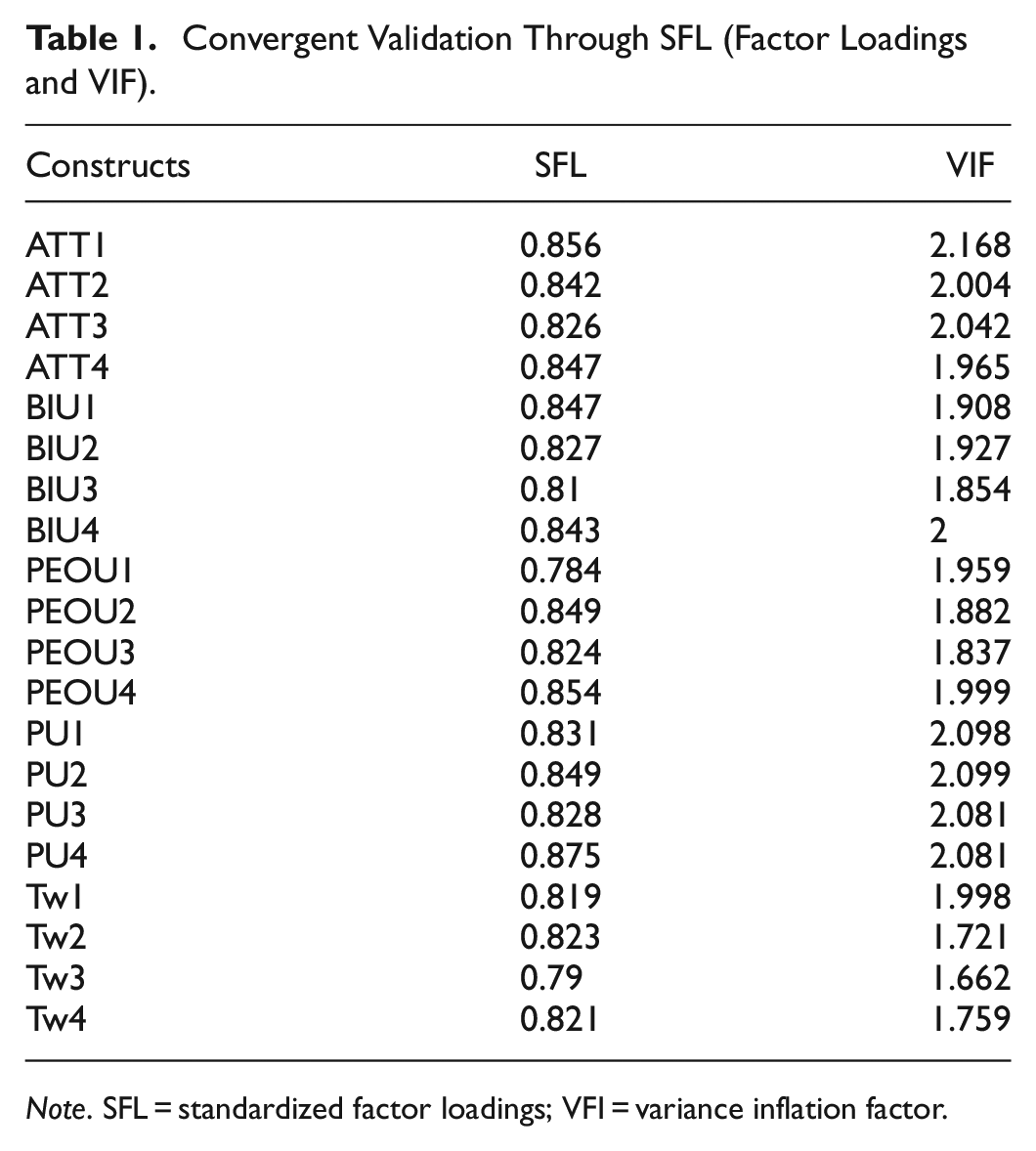
Note. SFL = standardized factor loadings; VFI = variance inflation factor.
Based on the demographic data, there were 331 male participants and 40 female participants, with an average age of 28 years. The study revealed an average work experience of 11 years, ranging from a minimum of 5 to 7 years to a maximum of 23 years. The respondents’ educational attainment was as follows: 41% of the participants possessed a high school diploma, 47% possessed a bachelor’s degree, and 12% possessed a master’s degree.
Several techniques, such as construct reliability (CR), average variance extracted (AVE), and standardized factor loadings (SFL), were employed to assess the results of convergent validity. The acceptability criteria for such matrices include a CR value over 0.7, an AVE value larger than 0.5, and an SFL value greater than 0.6. Based on the results, all of the constructs met the established requirements at a satisfactory level. These criteria can be found in Table 2. To establish the discriminant validity of the investigation, the correlation coefficient of all variables was compared to the square root of the average variance extracted (AVE) (Ab Hamid et al., 2017; Saleem, Isha, Awan, et al., 2022). The discriminant value was obtained by conducting this comparison, and it is presented in Table 3 (Fornell-Larcker Criterion) and Table 4 (HTMT-Ratio). The overall measurement model is also reflected in Figure 2. Further model fit parameters such as NFI and SRMS were utilized. And the findings were; NFI = 0.91, and SRMR = 0.046, indicating an acceptable model fit for the measurement model. Additional measurement model validation indices such as GFI, AGFI, and RMSEA were utilized. Based on the findings, the derived values were; GFI = 0.901, AGFI = 0.912, and RMSEA = 0.021, indicating acceptable model fit. Also to test the common method bias, Herman’s single factor test was performed, and based on the findings an overall variance of 32.5% was explained by all factors that were included in the model, which is well below the 50% variance level.
Reliability Analysis and Validity Outputs.

Fornell-Larcker Criterion Outputs.

HTMT-Ratio Outputs (Matrix).

Note. ATT = attitude towards the use of the app; BIU = intention to use/adopt the application; PEOU = perceived ease of use (PEOU); PU = perceived usefulness; TW = trust (integrity) of the app.

Overall measurement model.
Hypotheses Testing
This study aimed to examine the factors that impact users’ inclination to utilize a mobile application, with a specific focus on the perceived ease of use, perceived usefulness, attitude towards app usage, and the moderating influence of trust (integrity) on the connection between attitude and intention to use. These findings provided substantiation for all four ideas.
Firstly, the analysis revealed that the perceived ease of use has a substantial and positive effect on the attitude towards using the application (β = .11, p < .025, respectively). This suggests that users who see the application as easy to use are more like to have a positive attitude towards using it.
Furthermore, the study’s findings demonstrated a significant and positive relationship between the perceived usefulness of the program and the attitude towards its use (β = .125, p < .01). This emphasizes the importance of users’ ideas about the usefulness of the application in shaping their overall attitude towards its use.
Moreover, the study found that the attitude towards using the application has a substantial and positive effect on the intention to use the application (β = .206, p < .001). This suggests that users’ inclination towards the application plays a crucial role in deciding whether they will continue using it or not.
The study confirmed the moderating influence of trust (specifically, integrity) on the relationship between attitude towards using the application and the intention to use it (β = .114, p < .05). Both of these discoveries are noteworthy. Consequently, this suggests that having confidence in the app’s reliability enhances the positive impact of attitude on the intention to use, emphasizing the need to build and maintain trust in the app’s functioning.
The study’s findings elucidate the importance of perceived ease of use, perceived usefulness, and attitude in influencing users’ desire to utilize a mobile application. Trust was discovered to have a moderating influence on this relationship. Ultimately, the study offers concrete empirical evidence that substantiates the underlying assumptions. These findings contribute to a more comprehensive comprehension of user behavior and have the potential to enhance the design of mobile applications and marketing strategies for organizations. Overall path model findings are exhibited in Table 5 and Figure 3. Also, the moderation analysis findings are shown in Figure 4.
Overall Path Model Findings Through 5000-Bootstrapping.

Note. ATT = attitude towards the use of the app; BIU = intention to use/adopt the application; PEOU = perceived ease of use (PEOU); PU = perceived usefulness; TW = trust (integrity) of the app.
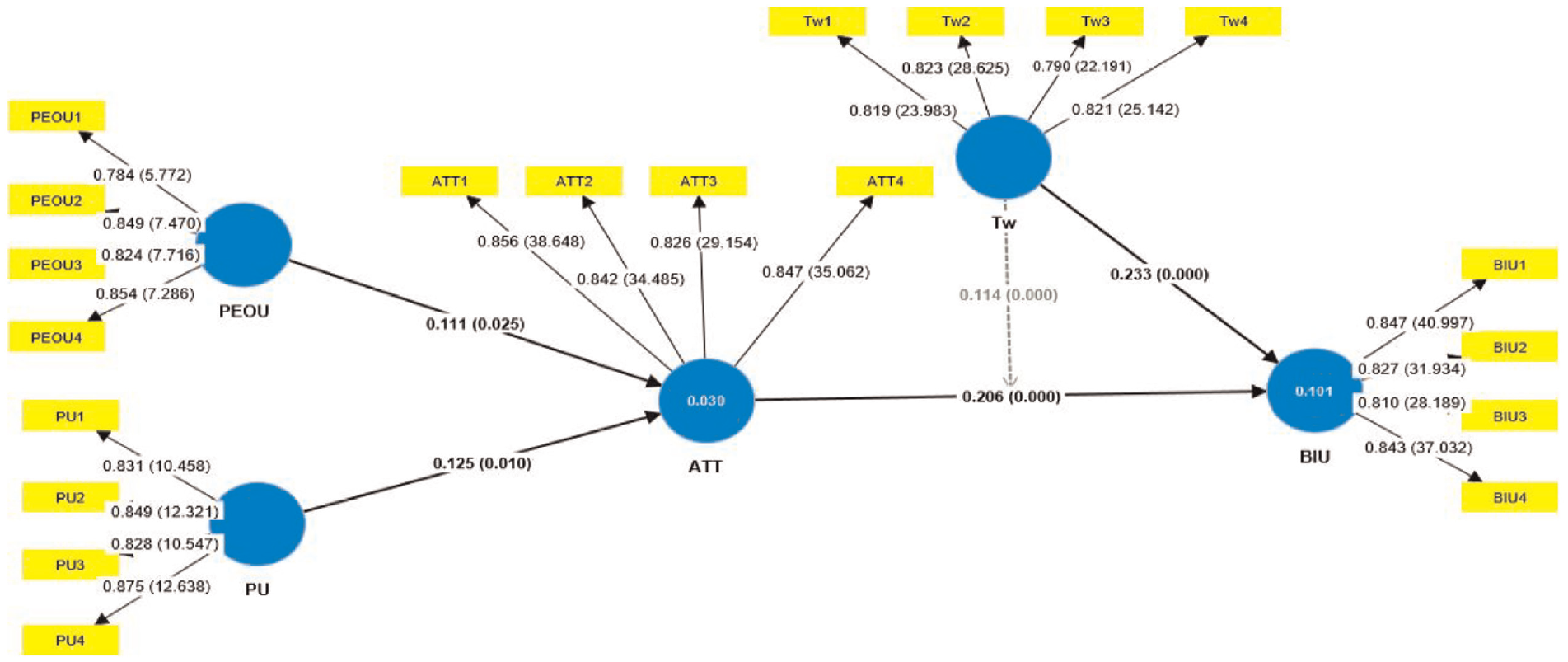
Overall path model findings through 5000-Bootstrapping.

Attitude towards use of app_×_trust (integrity)→intention to use app.
Discussions and Conclusions
The study assessed the relationship between perceived ease of, perceived usefulness of the applications, and the attitude towards the use of mobile applications for occupational health and safety. The Result also evaluated the impact of attitude toward the use of mobile applications on an individual’s intention to use those applications. Moreover, the moderating interplay of trust in application by user(s) was also evaluated between one’s attitude toward application usage and their intention to use.
The first hypothesis stated the positive impact of perceived ease of use on the attitude towards the utilization of mobile applications. This prediction is supported by the findings of our research, as well as by the findings of other studies that emphasize the significance of user-friendly interfaces in affecting favorable attitudes toward the adoption of technology (Venkatesh et al., 2003). Users in the oil and gas industry appear to place a high value on apps that are user-friendly and simple to operate, particularly when it comes to occupational health and safety. This is especially true when it comes to the safety of their workplace. The relevance of building programs with an emphasis on simplicity and user accessibility in order to foster positive user sentiments is brought into focus by this.
The second hypothesis is supported by our findings, which demonstrate a direct association between the perceived utility of the program and the attitude toward its utilization through the use of the program. This is consistent with the Technology Acceptance Model (TAM), which proposes that customers’ attitudes toward adopting technology are significantly impacted by their impression of the utility of the technology (Davis, 1989). It has been observed that personnel in the Oil and Gas Industry have a preference for applications that offer tangible benefits in the context of occupational health and safety. This demonstrates the need to develop applications that not only cater to the requirements that are specific to a certain business but also make a significant contribution to the health and happiness of workers.
A favorable attitude toward the application would have a beneficial effect on the desire to use the program, according to the third hypothesis, which claimed that this phenomenon would occur. Having a positive attitude toward adopting technology is a significant component that influences one’s intentions to engage in behaviors linked to technology, according to the Technology Acceptance Model (Davis, 1989). The findings of our study provide evidence that supports this hypothesis, validating the claim that the Technology Acceptance Model makes. Maintaining a high level of adherence to safety regulations is of the utmost importance in the oil and gas industry. In order to develop a culture of compliance and proactive engagement with technology, it is essential to cultivate a positive attitude toward apps that are relevant to safety.
As part of the fourth hypothesis, it was claimed that trust, and more especially honesty, has a moderating role in the relationship between attitude toward the app and the intention to use it. Based on our findings, it appears that trust plays a significant role in determining the degree to which this link is felt. According to a study conducted by McKnight (McKnight et al., 2002b), this discovery is in line with the findings of research that emphasizes the role of trust as an essential component in the acceptance and application of technology. Within the context of the Occupational Health and Safety framework of the Oil and Gas Industry, trust in the application’s integrity is an essential component in assessing whether or not employees are prepared to accept and incorporate technology into their day-to-day activities.
The results of Hypothesis H1, which show that perceived ease of use positively influences attitudes about utilizing the app, have important managerial implications. Managers should prioritize designing an intuitive and user-friendly interface for their mobile applications. This includes streamlining navigation, reducing the number of steps required to execute activities, and ensuring that all operations are simple to grasp. Furthermore, giving user training and assistance via tutorials, guides, and responsive customer service can help users get more familiar with the app faster, increasing their opinion of ease of use. Regular updates and enhancements based on user feedback can also keep the app simple to use, preserving positive user attitudes and promoting continuing use.
Hypothesis H2, which states that the perceived usefulness of an application positively influences attitudes toward its use, emphasizes the necessity of providing real advantages to users. Managers should prioritize implementing features that greatly increase productivity, efficiency, or convenience, depending on the app’s purpose. Communicating these benefits explicitly through marketing and user education can help consumers notice the app’s utility. Furthermore, regularly assessing and adopting user comments to improve functionality can help keep the app relevant and useful, hence favorably affecting user views.
Hypothesis H3, which argues that attitude toward using the app positively influences intention to use the program, emphasizes the necessity of having a positive user attitude. Managers should ensure that every encounter a user has with the app adds up to a pleasant overall experience. This includes delivering high-quality, dependable performance, immediately addressing user problems, and cultivating a sense of community or participation around the app. Marketing efforts should also promote other users’ positive experiences in order to create a favorable attitude among potential consumers.
Finally, Hypothesis H4, which states that trust in the app’s integrity moderates the association between attitude toward the app and intention to use it, stresses the importance of trust. Building trust is key for improving this relationship. Managers should guarantee that the app’s data handling processes are secure and transparent in order to gain and keep user trust. Communicating privacy policies, obtaining relevant certifications, and being upfront about how user data is used can all assist to achieve this. Furthermore, establishing dependability by continuous performance and immediately fixing any difficulties helps build trust. Developing a reputation for trustworthiness will not only enhance user attitudes, but also raise their intention to utilize the app, especially in the face of minor concerns or difficulties. By concentrating on these areas, managers may improve the entire user experience, positively influence user attitudes, and ultimately promote higher adoption and sustained use of their mobile applications.
To summarize, the findings of our research, which was carried out with the help of the Technology Acceptance Model, provide valuable insights into the factors that determine the acceptance of health and safety applications among workers in the oil and gas industry as well as their desire to use them. The positive effects of the user’s assessment of the program’s ease of use, perception of its utility, and attitude toward the application highlight the significance of designers who put the user’s requirements and preferences at the forefront of their design decisions. Furthermore, the significance of trust in moderation highlights the requirement for developers and industry participants to devote attention to building and communicating the reliability and credibility of technology solutions. This is because the value of trust in moderation is emphasized. The implications of these findings encompass not only the theoretical comprehension of health and safety applications in high-risk industries but also the practical implementation of those applications. Subsequent investigations may concentrate on the subtle aspects of trust and carry out a more in-depth investigation of the specific qualities that boost the perception of ease of use and utility in the context of occupational health and safety applications in the oil and gas industry.
Footnotes
Appendix
The Study Scale.

| Items | References |
|---|---|
| Perceived usefulness (PU): •“Using this technology improves my performance in my tasks.” •“This technology enhances my effectiveness in completing tasks.” •“I find this technology valuable in my work.” “Using this technology increases my productivity.” |
Davis (1989) |
| Perceived ease of use (PEOU): •“Interacting with this technology is clear and understandable.” •“Learning to use this technology is easy for me.” •“I find it easy to get this technology to do what I want it to do.” “The use of this technology is effortless for me.” |
Davis (1989) |
| Attitude toward using (ATT): •“I enjoy using this technology.” •“I find using this technology enjoyable.” •“Using this technology is a pleasant experience for me.” “I have a positive feeling toward using this technology.” |
Davis (1989) |
| Behavioral intention to use (BI): •“I intend to use this technology in the future.” •“I plan to continue using this technology.” •“I am likely to use this technology in the future.” “I foresee myself using this technology regularly.” |
Davis (1989) |
| Trust integrity (Tw): •“Mobile health services provider is truthful in its dealings with me.” •“I would characterize mobile health service provider as honest.” •“Mobile health service provider would keep its commitments.” “Mobile health service provider is sincere and genuine.” |
McKnight et al. (2002a) |
Acknowledgements
The authors would like to thank Universiti Teknologi PETRONAS for supporting APC in this study. The authors are also grateful to the participants who contributed to the research.
Author Contributions
All authors have read and agreed to the published version of the manuscript.
Declaration of Conflicting Interests
The author(s) declared no potential conflicts of interest with respect to the research, authorship, and/or publication of this article.
Funding
The author(s) disclosed receipt of the following financial support for the research, authorship, and/or publication of this article: This work is fully supported by YUTP Grant under cost centre (015LC0-514 & 015LC0-523) Universiti Teknologi PETRONAS, Malaysia.
Institutional Review Board Statement
Not applicable.
Informed Consent Statement
An informed consent statement was obtained from all subjects involved in the study.

Data Availability Statement
We are currently working on this project, and the data will be used for future research and analysis. However, any researcher who needs the data for further investigations can contact the corresponding author through email with reasonable reason.