




Abstract
The purpose is to examine the impact of the perceived effectiveness of NPIs (e.g., hand hygiene, respiratory etiquette, face masks) on behavioral intentions, attitudes toward usage, and actual use against the backdrop of the Technology Acceptance Model (TAM). Responses were gathered with a survey instrument from Canadian respondents (N = 278). PLS-SEM and exploratory factor analysis (EFA) were used as analytical methods. The hypotheses between the key constructs were accepted consistently with TAM. Also, the results show a positive relationship between perceived effectiveness and attitude toward the usage of NPIs. However, the perceived effectiveness did not significantly impact behavioral intentions and actual use of NPIs. A significant indirect relationship was discovered between perceived effectiveness via attitudes on behavioral intentions and the actual use of NPIs. The perceptions of the respondents who perceived the NPIs to be effective and those who did not were quite similar. The current research provides a framework for effectively promoting the relevant behaviors while utilizing the Technology Acceptance Model (TAM) framework. The critical role of attitude toward the use of NPIs is highlighted through the direct impact of perceived effectiveness and the indirect effect of perceived effectiveness on behavioral intentions and actual usage toward the use of NPIs.
Plain Language Summary
This paper investigates the impact of the perceived effectiveness of Personal Protective Measures (or Non-Pharmaceutical Interventions (e.g., hand hygiene, respiratory etiquette, face masks) on attitudes, behavioral intentions, and actual use. The relationships between attitudes, behavioral intentions and actual use were discovered to be significant with mostly medium effect. The impact of the perceived effectiveness was discovered to be significant only to the attitudes construct, but the indirect impact of the effectiveness of NPIs was significant to behavioral intentions and actual use via attitudes.
Keywords
Introduction
Severe acute respiratory syndrome Corona Virus Disease (SARS-Cov-2—also known as COVID-19) was discovered in December 2019. After the virus spread worldwide in early 2020, the WHO declared it as a pandemic in March 2020 (WHO, 2020b). This soon evolved as a significant public health outbreak and pandemic with acute respiratory infections. Consequently, general well-being declined, and healthcare systems were substantially affected by absenteeism and a reduced workforce (Pitman et al., 2007). Thus, minimizing the spread of the pandemic was generally considered of substantial benefit to the general population, healthcare systems, and society at large.
Recent research and health authorities have recommended using Non-Pharmaceutical Interventions (NPIs) to curb the spread of COVID-19 (Centers for Disease Control and Prevention, 2019; European Centre for Disease Prevention and Control, 2021; Y. Liu et al., 2021). The WHO classifies NPIs as personal protective measures (e.g., hand hygiene, respiratory etiquette, face masks), environmental measures (e.g., surface cleaning, ventilation), physical distancing measures (e.g., quarantine, contact tracing, social distancing, school measures, workplace measures, isolation of affected people), and travel measures (e.g., entry and exit screening tests, border seals, suspended air travel) (WHO, 2020a).
To reduce the spread of infections, public compliance with infection control measures is considered necessary (Qualls et al., 2017). Previous research has found that there is a relationship between the readiness to comply with guidelines on preventive measures and several key constructs, including the perceived seriousness of the infection, perceived efficacy of control measures, and confidence that public health authorities are providing trustworthy information (Chung et al., 2021; R. Sharma et al., 2012)—all of these factors have an impact on the perceived effectiveness of NPIs by the public.
Health authorities suggest that NPIs provide a relatively straightforward, inexpensive, and effective method to moderate transmission and thereby decrease the impact of the virus on individual members of society and its healthcare systems. Furthermore, in the early stages of any pandemic, vaccines (i.e., pharmaceutical interventions) are not available on a global scale due to the novelty of the virus. Therefore, examining the perceived effectiveness, attitudes, behavioral intentions, and actual usage of the NPIs, which have been frequently used in technology acceptance research (Davis, 1989; Davis et al., 1989; Yeh & Teng, 2012), is important.
Several factors impact the adoption of NPIs among the public. Recent research has discovered factors that influence how likely an individual is to use NPIs, including gender, age, self-identification as a low or high-risk group, beliefs regarding the seriousness of the infection, fear about the pandemic, information received from health authorities, and trust in medical experts (Goldfinch & Taplin, 2022; Hengartner et al., 2022). However, using TAM and the Theory of Reasoned Action (TRA) is a unique and novel approach to understanding how people determine their likelihood of utilizing NPIs. Therefore the theoretical framework of this research is based on these theories.
Public opinion regarding the efficacy of NPIs and gaps between public expectations and the government’s mitigation plans impact the perceived effectiveness of NPIs. Despite several studies demonstrating the efficacy of NPIs, some members of society do not believe in their effectiveness. Therefore, this study aims to understand the role of the perceived effectiveness of NPIs and its association with constructs described in TAM, including attitudes, behavioral intentions, and actual usage of NPIs.
Literature Review
Non-Pharmaceutical Interventions (NPIs)
Health professionals do not administer NPIs to slow the spread of influenza or virus such as COVID-19 (Uchida et al., 2014). NPIs are classified into three major categories: personal NPIs, community NPIs, and environmental NPIs. Personal NPIs are measures individuals should take for their well-being and those around them. They include hygiene measures like washing hands with soap or alcohol-based sanitizers or covering the mouth when sneezing or coughing (Center For Disease Control and Prevention, 2020).
Wearing a mask is another NPI, as it can constrain the creation of droplets greater or equal to 5.00 µm (i.e., 5.00 × 10⁻⁶) in size containing an influenza virus (Aiello et al., 2010).
Community NPIs are performed among the public. They include social distancing, closure of public places, and contact tracing. Social distancing is defined as having a 6 ft (∼2 m) distance between people in a crowd (McGrail et al., 2020). Closing workplaces or public places means closing places like offices, gyms, entertainment venues or cinemas with non-essential interest for the public. These NPIs are particularly effective against viruses with high transmission rates (e.g., the Omicron variant). Isolation and contact tracing involve identifying the infected people and the contacts who have been directly or indirectly in touch with them (Sturniolo et al., 2021) and notifying them that they should monitor for symptoms, self-isolate, and get tested.
Environmental NPIs refer to cleaning frequently touched places like kitchen tables and desks to curtail the spread of the virus. Previous research has investigated how long the virus can survive on different materials, and it has been observed that a virus like COVID-19 can survive for 3 to 4 days on materials like steel. Therefore, getting the infection from external sources is relatively easy, and these environmental NPIs are essential for reducing the spread (Centers for Disease Control and Prevention, 2019).
Technology Acceptance Model (TAM)
Davis (1985) proposed TAM, which is the theoretical framework for this study, as an information systems theory that models how users accept and use information technology (Figure 1). In TAM, actual usage of technology (or, in this case, NPIs) is directly affected by the attitude toward using the proposed technology. These attitudes, in turn, are affected by perceived usefulness and perceived ease of use. Finally, these two factors are influenced by the design features of the technology (Davis, 1985). TAM has been used in the contexts of the education (Granić & Marangunić, 2019), agriculture (Bagheri et al., 2020), construction (D. Liu et al., 2018), and healthcare (Holden & Karsh, 2010). So, its usefulness has been demonstrated several times over in many unique contexts. The widespread use of the TAM model is not surprising, as technology can be defined as applying scientific knowledge for practical purposes (Britannica, 2022). Since the current research aims to understand why people do (or do not) use NPIs, TAM is a relevant theory to understand and predict behaviors related to NPI use. Thus, its constructs will be discussed next.
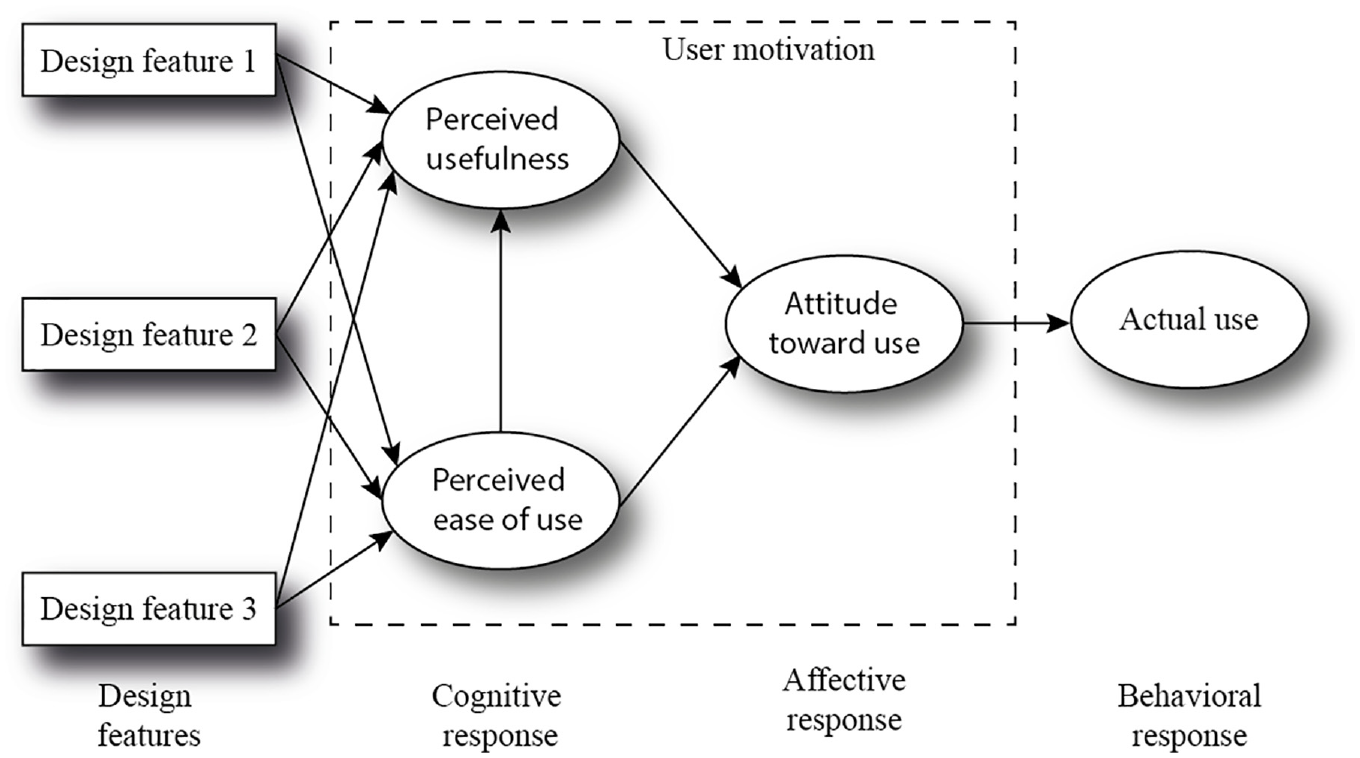
The original conceptual framework of the Technology Acceptance Model
Perceived usefulness can be defined as the degree to which a person believes that using the proposed technology (in the case of this research, NPIs) would enhance their performance. Whereas perceived ease-of-use can be defined as the degree to which a person believes using the proposed technology would be free from effort (Davis, 1985). Attitude toward usage can be defined as how people feel about the proposed technology. Further research on TAM added behavioral intentions to the enhanced TAM model (Figure 2; Davis et al., 1989). Behavioral intentions are defined as the degree to which an individual intends to execute a distinct behavior. According to TAM, if NPIs are easy to use and valuable to the user, then attitudes toward using NPIs would be more positive, as would behavioral intentions. This will then enhance the actual use of NPIs (Figure 2).

Extended version of the Technology Acceptance Model
Perceived Effectiveness of NPIs
The perceived effectiveness of NPIs can be defined as a person’s opinion regarding the efficiency of preventative measures in controlling the virus. Knowledge of the severity of COVID-19 and the positive impact of NPIs are essential factors in comprehending the effectiveness of NPIs. Research regarding the perceived effectiveness of NPIs is relatively scarce. Recent research has indicated, however, that the public perceived the NPIs (i.e., social distancing, washing hands, touching the face, and wearing face masks) as between somewhat effective and very effective in preventing from catching and spreading COVID-19 in a study conducted among the U.S. population (Kasting et al., 2020). This study did not, however, include the other key constructs possibly affecting the adoption of the NPIs.
Previous research has indicated that people often state that they do not utilize NPIs due to a variety of reasons, including not believing that NPIs are effective at reducing risk for oneself or others (Lang et al., 2021), and therefore educating the public plays a crucial role in alleviating the spread of NPIs (Prasetyo et al., 2020). It is to be noted here that previous research distinguishes between the perceived usefulness and perceived effectiveness constructs, both of which have been used in the context of the technology acceptance research (Yeh & Teng, 2012), including the construction (Shin, 2019), information management (Sun & Teng, 2017), customer services (Elmorshidy et al., 2015), and consumer behavior (Ghasemaghaei, 2020).
Previous research has indicated that N95 masks block more than 99% of SARS-CoV-2 particles, surgical masks stop more than 97% of particles, and home-made masks using kitchen paper and polyester block more than 95% of particles (Ma et al., 2020). Further, the life expectancy of the virus depends on the surface of contact, and it can be active on hard surfaces such as metal, glass, and plastic for up to several days but on a porous surface such as cardboard for only a day (van Doremalen et al., 2020). Thus, a virus on a cloth mask will likely have a much shorter life span. The life span also decreases in temperatures above 30°C or when exposed to cleaning agents with ethanol content above 70% (i.e., hand sanitizer) or bleach solutions within 1 min (Kampf et al., 2020). Therefore, cleaning and disinfecting surfaces are critical when protecting against viruses.
Attitude Toward Usage
Attitude toward using NPIs can be defined as the perspective or feeling about using NPIs (Tesdale, 2014). It is affected by the various experiences of the individual, social roles and norms, classical and operant conditioning (i.e., the association between a behavior and a consequence (Skinner, 1971)), and the observation of others (Cherry & Susman, 2021). Attitudes have a diverse and crucial impact on the daily functioning of a human being.
An examination of attitudes toward the usage of NPIs is valuable as it gives an insight into what people think and how health authorities can work to reduce the transmission of viruses. Attitudes affect psychological perceptions in that they affect the thought process that a person goes through as they determine whether to use NPIs or not (Ashraf et al., 2019). Understanding the attitude formation process will further inform the authorities on how and why people will behave as they do (and how to affect that decision-making process).
Attitudes toward NPIs will exist on a broad spectrum. Some people might think that NPIs are inconvenient or have concerns about whether or not the use of NPIs slows the spread of diseases and therefore have problems if the use of NPIs reduces the risk of getting ill (Kantor & Kantor, 2020). These attitudes are affected by social media, which has a vast array of opinions and information regarding the efficacy of NPIs. Extant research has discovered that social media influencers’ credibility, identification with social media influencers and the quality of information they share are the significant variables defining individuals’ attitudes toward the information shared. In addition, the attitude significantly impacts the intention to trail information shared by the influencers (Gupta et al., 2022).
Misinformation might appear based on reconfiguration (i.e., data is recontextualized or reworked), or it could have been fabricated entirely (Simon et al., 2020). Unfortunately, many public and generally trustworthy organizations (e.g., WHO) have been targets for presenting false information.
Before NPIs were generally adopted, there was a public debate about whether they could be effective. An excellent example of this is the early discussion about the effectiveness of face masks. Many public authorities and social media sites questioned the effectiveness of face mask use (Dupuy, 2020; Kiely, 2021; Rizzo, 2021). Since then, there has been plenty of research verifying that face masks are, in fact, effective in preventing the spread of the virus (Andrejko et al., 2022; Peeples, 2020). The contradictory communication regarding the effectiveness of NPIs had a detrimental impact on the public’s attitude toward the use of NPIs. Previous research has verified that the public’s knowledge, perceptions, and attitudes are paramount in understanding the epidemiological dynamics of COVID-19 and the effectiveness, compliance, and successful use of NPIs (Reuben, 2021; Suess et al., 2011). The attitude formation process regarding NPI usage starts, for example, from the attitude toward early recommendations such as social distancing (Stebbins et al., 2009). Based on this and the Technology Acceptance Model (Davis, 1985, 1989), the following hypotheses are set:
H1: The relationship between the perceived effectiveness and attitude toward the use of NPIs is:
a. Positive and significant among the respondents with higher-than-average NPI affect perceptions.
b. Non-significant among the respondents with lower-than-average NPI affect perceptions.
Behavioral Intentions
Behavioral intentions refer to self-instructions to implement specific actions toward achieving desired outcomes (Sheeran, 2002), that is, a person’s decision about what they will or will not do. Although most behaviors are habitual or involve responses triggered automatically by situational cues (Bargh, 2006), intentions can be pivotal for achieving long-term goals (Baumeister & Bargh, 2014) and are thus helpful in determining actual behaviors in new situations or the formation of new habits.
People must believe adopting NPIs will reduce their vulnerability to COVID-19 (Atchison et al., 2021; Champion & Skinner, 2008) as it will lead to more positive attitudes toward engaging in recommended actions and, therefore, more positive behavioral intentions regarding new habit formation. Previous research indicates that human behavior is mainly goal-directed (Ajzen & Madden, 1986). According to the theory of reasoned action (TRA), an individual’s behavior is determined directly by their intentions and indirectly by their attitudes and subjective norms (Ajzen & Fishbein, 1980).
According to the Technology Acceptance Model, intentions predict actual behavior better than feelings and beliefs (Davis, 1985, 1989). According to TRA, behavioral intentions are a good predictor of actual behaviors in the consumer marketing context (Ajzen & Fishbein, 1975; Sahi & Mahajan, 2014; White, 2005), including healthcare (Montaño & Kasprzyk, 2008). Previous research discovered that people were 1.4 times more likely to wear facemasks during the SARS outbreak if they strongly believed in the effectiveness of wearing face masks (Tang & Wong, 2004). Current health behavior theories assume that changing one’s behavior results from setting goals based on perceived reward (and motivation to achieve that reward) (Abraham et al., 1998). Accordingly, if people get a sense that their engagement with the relevant protective measures is effective in minimizing the spread of the virus, this will contribute to their willingness to engage more in the actions and encourage other people to do the same. Based on the above and the Technology Acceptance Model (Davis, 1985, 1989), the following hypotheses are set:
H2: The relationship between the attitude toward usage and behavioral intentions toward the use of NPIs is:
a. Positive and significant among the respondents with higher-than-average NPI affect perceptions.
b. Non-significant among the respondents with lower-than-average NPI affect perceptions.
H3: The relationship between the perceived effectiveness and behavioral intentions toward the use of NPIs is:
a. Positive and significant among the respondents with higher-than-average NPI affect perceptions.
b. Non-significant among the respondents with lower-than-average NPI affect perceptions.
Actual Usage
Actual usage of NPIs during the COVID-19 pandemic is defined as the genuine adaptation/acceptance of NPIs in day-to-day life. The actual usage of NPIs depends on an individual’s behavioral intentions (Davis, 1985, 1989). Those who perceive NPIs to be effective follow the necessary health protocols diligently and are thus better protected from viral infection than those who do not (Seale et al., 2020). Research in the context of TAM has verified the relationship between behavioral intentions and actual usage (e.g., Davis, 1989; Davis et al., 1989).
Expected performance appears to impact behavioral intentions (Nistor et al., 2013; Vonjaturapat & Chaveesuk, 2013), but the research on the impact of the perceived effectiveness on actual usage has been limited (with a notable exception by Al-Qeisi et al., 2014) as it may be that the impact of effectiveness on the actual use may happen indirectly via other constructs (Sleiman Kamal Abubker Abrahim et al., 2021). Based on the above and the Technology Acceptance Model (Davis, 1985, 1989), the following hypotheses are set:
H4: The relationship between the behavioral intentions and the actual use of the NPIs is:
a. Positive and significant among the respondents with higher-than-average NPI affect perceptions.
b. Non-significant among the respondents with lower-than-average NPI affect perceptions.
H5: The relationship between the perceived effectiveness and actual use of the NPIs is:
a. Non-significant among the respondents with higher-than-average NPI affect perceptions.
b. Non-significant among the respondents with lower-than-average NPI affect perceptions.
Methodology
Sample and Respondent Characteristics
Responses were gathered among the general Canadian population using the snowball sampling method. Over several weeks during the fall of 2020, 278 responses were collected from Canadian residents above 18. The respondents were not financially compensated for their time.
Cochran’s (1977) formula for continuous data was utilized to determine the adequacy of the sample size. With an alpha level of .025 in each tail of 1.96, an estimated standard deviation on a 5-point scale of 0.8, and an acceptable margin of error of 0.15, a sample size of 137 was needed. Given that the current sample consists of 278 responses from the overall Canadian population, an adequate sample size was reached. The next step was to assess the sample size’s adequacy for using PLS-SEM. Recent literature has specified that with a minimum level of 0.11 for the path coefficient and a desired significance level of 5%, a sample size of 155 is required (J. Hair et al., 2022). Therefore, the sample size is adequate based on both criteria.
The respondents were divided into two groups to evaluate the hypothesized relationships based on the mean effectiveness value (4.30). Consequently, 121 respondents had perceived effectiveness lower than 4.30, and 157 were higher than the average mean perceived effectiveness rating (4.30).
Measurement and Questionnaire Development
The measurement items were adapted from existing literature to build the survey questionnaire (Table 1). The questionnaire focused on the constructs and their relevant indicator variables used in the context of TAM. When creating a survey instrument for this research, a hypothetical stated-preference style (i.e., “to minimize the spread of the virus, I am willing to do this”) and self-reported revealed preference style (i.e., “to minimize the spread of the virus, I have used this”) was utilized. Unfortunately, the hypothetical stated-preference style has the intention-behavior bias (i.e., people do not always behave in the way they expect), and the self-reported revealed preference style from reporting bias (i.e., people do not always precisely report the way they did). However, it is a common approach in the social sciences (Nixon & Koshkouei, 2020).
Measurement of the Target Constructs.

Note. CA = Cronbach’s alpha; CR = composite reliability; AVE = average variance extracted.
Structural Model
The following model was developed based on the literature review (Figure 3). The model includes perceived effectiveness, attitude, behavioral intentions, and actual use constructs. The constructs of perceived ease of use and usefulness were left out of the model as the researchers wanted to concentrate on the latter parts of the TAM model, an approach taken in previous research as well (Mohammadi & Mahmoodi, 2019; Siswanto et al., 2018). The model is a graphic representation of the hypotheses developed for the current study.

The initial structural model for the study.
Method of Statistical Analysis
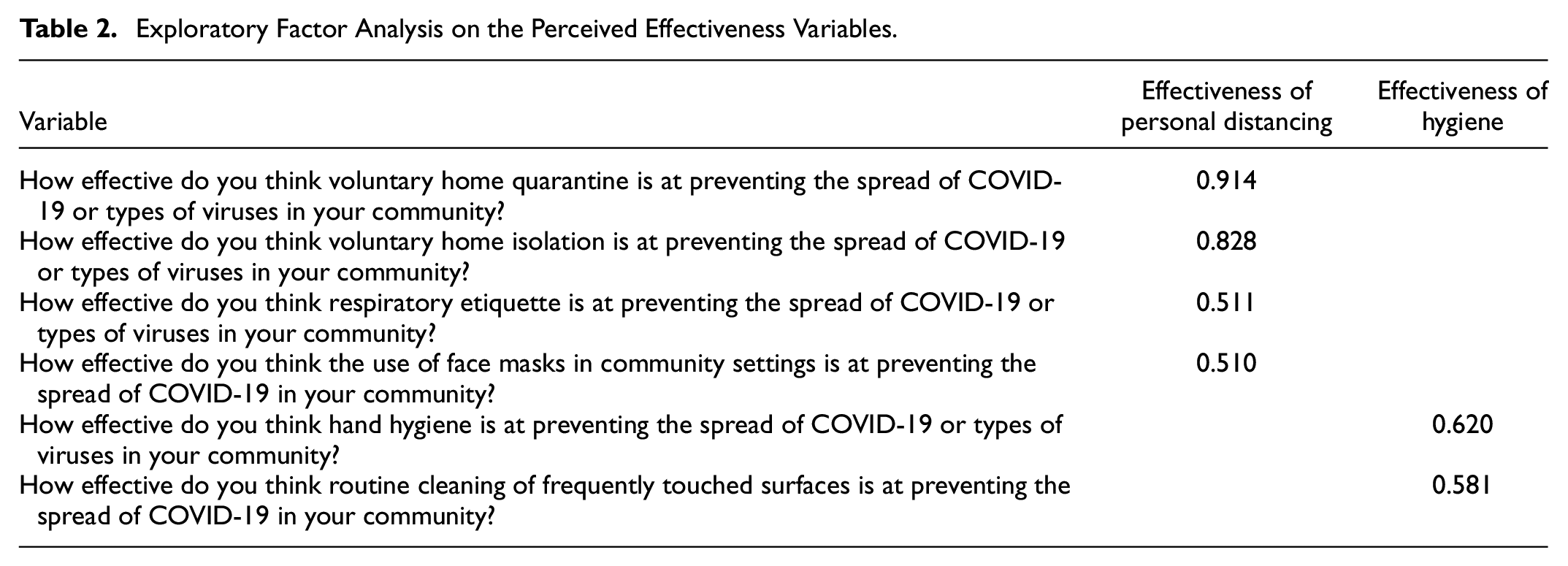
Before moving forward, an exploratory factor analysis (EFA) was conducted separately for the exogenous TAM constructs of attitude toward usage and behavioral intentions and the perceived effectiveness construct in order to verify the dimensionality of the constructs, as advised in extant literature (J. Hair et al., 2010). As expected, the measurement variables for the attitude toward usage and behavioral intentions constructs fell into their intended constructs with the minimum variable loading level of 0.500 and explained variance of 83.0%. However, the EFA performed on perceived effectiveness indicated the existence of two separate effectiveness constructs, which have been named in Table 2 based on the commonality of the relevant measurement variables. The variance explained was 54.7%. There were no cross-loadings.
Exploratory Factor Analysis on the Perceived Effectiveness Variables.
After completing the EFA, the structural model will be analyzed. There are two alternative approaches to structural equation modelling: covariance-based (CB-SEM) and partial least squares (PLS-SEM). These methods’ measurement philosophies and objectives are dissimilar (J. Hair et al., 2018). The covariance-based way is most effective for theory testing or confirmation. In contrast, the partial least squares method is utilized to identify key driver constructs and predict key target constructs. (J. Hair et al., 2018). Based on the goals of the current research, PLS-SEM was selected. Up-to-date guidelines for PLS-SEM were followed (Ringle et al., 2018) to assess the measurement and structural model.
After the performance of the EFA on the perceived effectiveness construct, it is notable that the structural model uses higher-order constructs for the perceived effectiveness construct (Figure 4). Higher-order constructs enable modelling constructs on abstract higher-order and concrete lower-order measurement dimensions. The use of higher-order constructs decreases the path model relationships under scrutiny and contributes to parsimony (Sarstedt et al., 2019). Model assessment can be achieved using either repeated indicators or a two-stage approach in the reflective-formative system. Both yield similar results when the sample size is large enough (Sarstedt et al., 2019). The selected method was the two-stage indicator approach, as the model contains a formative hierarchical latent construct model in an endogenous position (Becker et al., 2012). Therefore, the variance of the higher-order construct will be entirely explained by the lower-order measurement variables, that is, the R2 will be 1. As a result, the latent variable score estimates need to be added to the dataset instead of trying to assess the model estimates. Then these scores will be used as indicators in the higher-order construct’s measurement model (Sarstedt et al., 2019).
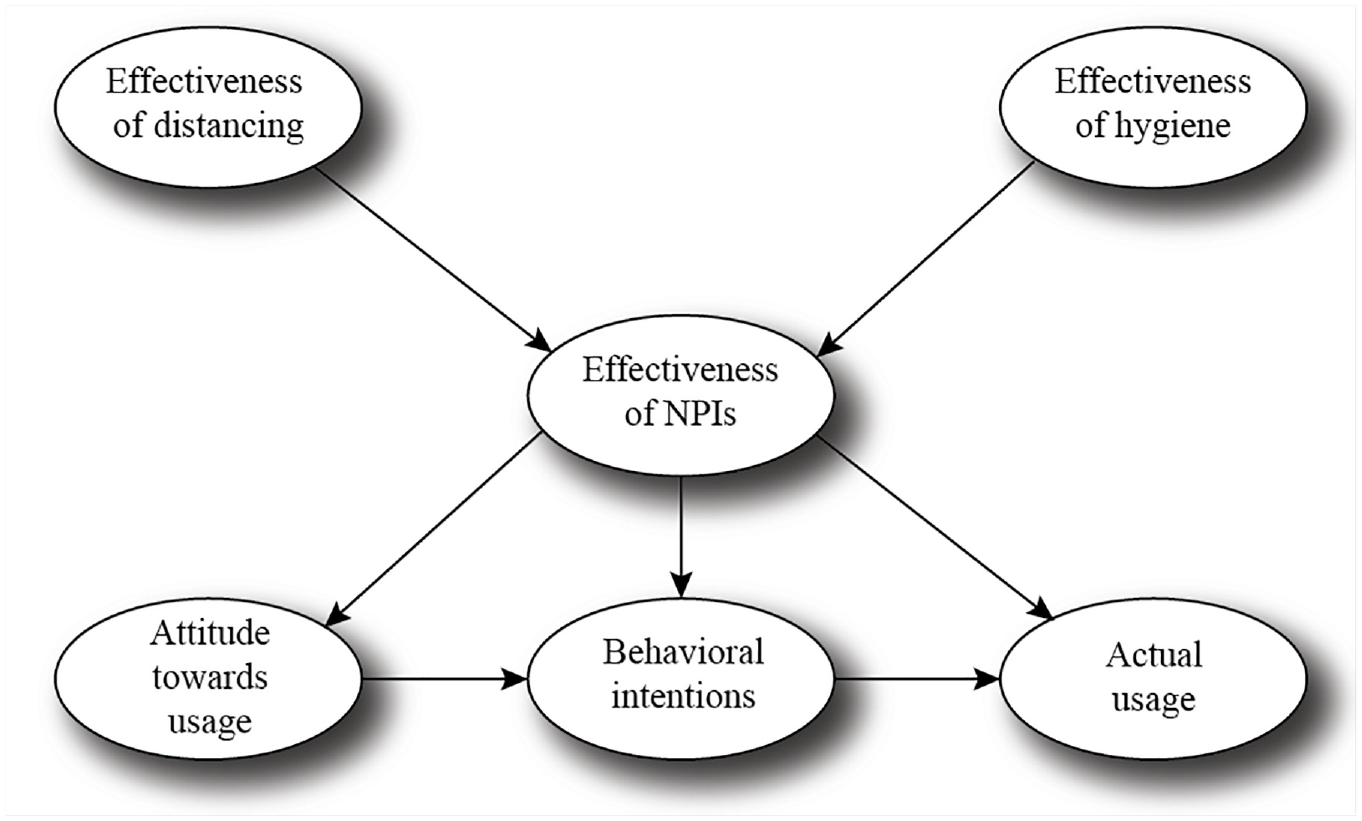
The final higher-order structural model.
Data Analysis
Background Data
Table 3 describes the sample population. The age of the respondents was measured as a continuous variable and so is not reported in this table; the average age of respondents was 41.7 years.
Description of the Sample.

Assessment of the Measurement Model
The first step was to assess the individual scales utilized to measure the various constructs. Assessment of the measurement model starts with determining the indicator’s reliability. A bias-corrected and accelerated bootstrapping analysis was conducted to assess the significance of indicator variables. All relationships between the indicator variables were significant to their relevant constructs, and all loadings were greater than 0.700 (Rosenbusch et al., 2018). Thus, indicator reliability was considered to be sufficient.
The next step is the assessment of internal consistency reliability (Table 1). It is essential to mention that Cronbach’s Alpha (threshold >.70) is a conservative measure of reliability, while the composite reliability (target range for both is .70–.95) tends to overrate the internal consistency reliability. Thus, the actual reliability is between these criteria, with Cronbach’s Alpha value as the lower bound and the composite reliability acting as the upper bound for internal consistency reliability (J. Hair et al., 2022). Per the reliabilities reported in Table 1, internal consistency reliability was achieved for all scales.
Convergent validity is usually assessed with the average variance extracted (AVE) values and has an acceptable threshold of 0.50. This threshold was exceeded for all relevant constructs (Table 1). The division of the perceived effectiveness construct into two separate constructs did not affect the acceptability of the construct reliability and validity values.
The next step is the assessment of discriminant validity, which indicates the extent to which a construct differs from other constructs. However, this cannot be done using the standard approach in the presence of the higher-order model due to repeated indicators. Extant research indicates that the higher-order component must only be assessed as part of the structural model in discriminant validity (J. Hair et al., 2022).
The literature recommends using Heterotrait-Monotrait (HTMT) of the correlations, which indicates the ratio of the between-trait correlations to the within-trait correlations (J. Hair et al., 2022). The HTMT should not surpass the threshold value of 0.90 (Henseler et al., 2015). Because PLS-SEM does not rely on distributional assumptions, the usual significance tests cannot be employed to evaluate if the HTMT correlation is significantly different from the value of one. Therefore, bootstrapping procedures should be used to test the significance (J. Hair et al., 2022). If the bootstrap confidence interval contains the value of 1, it indicates a lack of discriminant validity. None of the confidence intervals included the value of 1, and thus discriminant validity was accomplished.
Assessment of the Structural Model
Assessment of the structural model starts with evaluating collinearity, which indicates a correlation between the exogenous predictor variables. The existence of collinearity is customarily measured with the variance inflation factor (VIF). All VIF values in the structural model were below the stringent threshold value of 3, and thus there were no collinearity issues in the structural model (J. Hair et al., 2011).
The next step is assessing the explanatory and predictive power of the structural model, which is usually done with the R2 and Stone-Geisser Q2 values (Geisser, 1974; Stone, 1974). The results can be seen in Table 4. Extant research has established that R2 values of 0.75, 0.50, and 0.25 can represent substantial, moderate, and weak explanatory power, respectively. More recent research has found strength criteria for the Stone-Geisser Q2 values such that values larger than 0.25 and 0.50 represent medium and large predictive power in the PLS-SEM model, respectively (J. F. Hair et al., 2020). Thus, the endogenous constructs have a close to substantial explanatory and predictive power.
Explanatory and Predictive Power in the Structural Model.

Note. High perceived effectiveness/Low perceived effectiveness of NPIs.
Testing of the Hypotheses
The final step in the assessment of the structural model is the estimation of the path coefficients, which in this case, coincides with hypothesis testing (Table 5, Figure 5).
The Significance of the Path Coefficients in the Model and Hypotheses Testing.
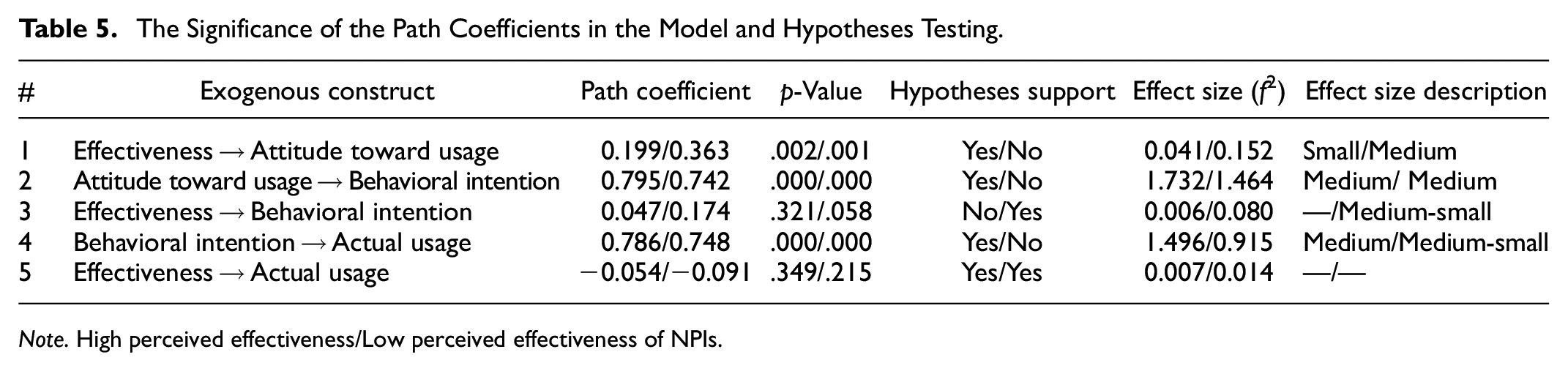
Note. High perceived effectiveness/Low perceived effectiveness of NPIs.
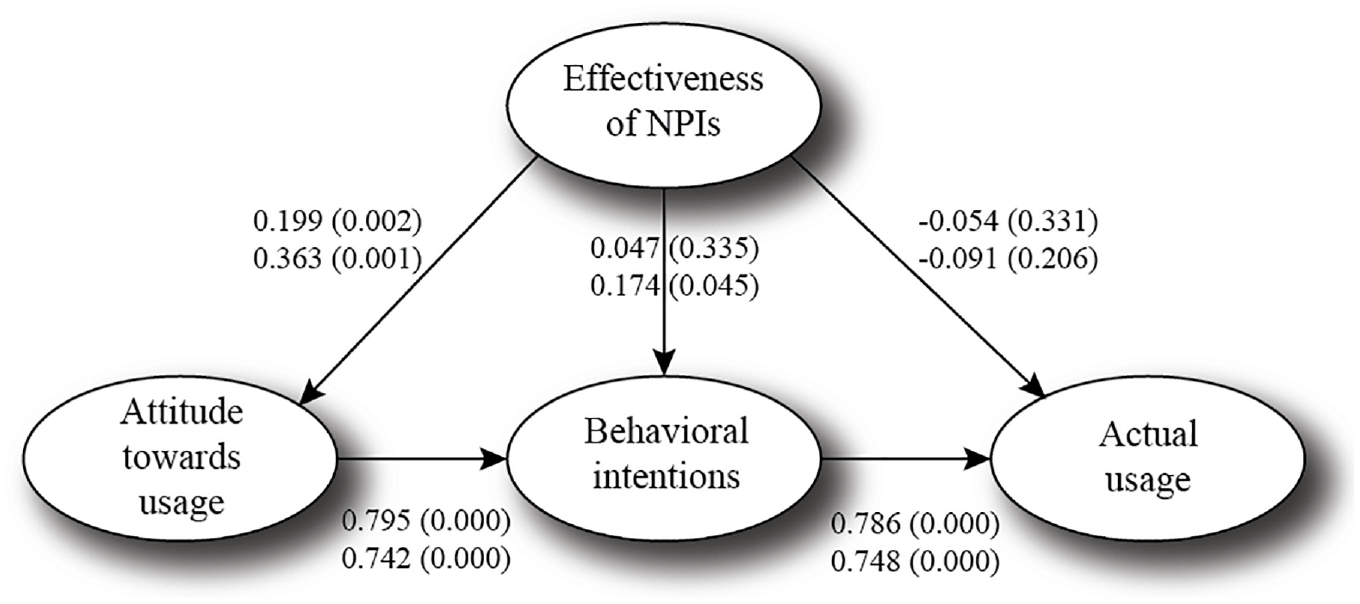
The strength of the relationships in the structural model
Previous literature has indicated that the values of 0.02, 0.15, and 0.35 imply that the exogenous constructs have small, medium, or large effect sizes, respectively (J. Hair et al., 2022). Research has mentioned that statistical significance is insufficient when recording the results of the statistical analysis and that effect size should also be given (Cohen, 1992; Kline, 2004). The effect size may be the most critical finding because, with an adequate sample size, statistical testing can find significant differences that are unimportant in practice. Therefore, the reporting of the p-values is inadequate (Sullivan & Feinn, 2012). Also, the effect size is not predisposed by sample size; consequently, it is equivalent across research projects (J. Hair et al., 2010).
Indirect and total effect sizes and significance levels are summarized in Table 6. As indicated before, the relationship between the perceived effectiveness on the actual usage may happen indirectly via other constructs (behavioral intentions, attitude toward using NPIs), which turned out to be correct when the respondents perceived the effect of NPIs to be higher or lower than average.
The indirect and total effects in the research model.

Discussion
This research aimed to examine the relationships between attitude toward usage, behavioral intentions, and actual usage constructs in the TAM framework and their impact on crucial TAM constructs in the context of NPIs. Respondents were divided into two groups based on the mean perceived effectiveness of the NPIs. The hypotheses indicated that the hypothesized relationships in the group having higher than the average perceived effect of NPIs would be positive and significant. The group having lower than the average perceived effect of NPIs would have non-significant relationships.
The results indicated that the relationships in the TAM model, consistent with previous research (Davis, 1985, 1989; Davis et al., 1989), were all significantly independent of how the respondents perceived the effect of the NPIs to be. Thus, hypotheses 2a and 4a were accepted, and hypotheses 2b and 4b were rejected. Also, there were no material differences between these groups regarding the perceived effect size (f2) of the NPIs. This proves that the assumptions of TAM are valid in the context of NPIs and not dependent on how effective the respondents perceive the NPIs to be. All respondents’ relationships in the TAM are positive and significant, indicating the trust and confidence that the respondents have in using NPIs, which is consistent with previous research (Chung et al., 2021; Goldfinch & Taplin, 2022).
Respondents perceived two separate and logical effectiveness constructs of “personal distancing” and “hygiene.” This differs somewhat from the findings from previous literature where the Centers for Disease Control and Prevention (Qualls et al., 2017) categorized NPIs as personal protective measures for everyday use (e.g., voluntary home isolation of ill persons, respiratory etiquette, and hand hygiene); personal protective measures reserved for influenza pandemics (e.g., voluntary home quarantine of exposed household members and use of face masks in community settings when ill); community measures aimed at increasing social distancing (e.g., school closures and dismissals, social distancing in workplaces, and postponing or cancelling mass gatherings); and environmental measures (e.g., routine cleaning of frequently touched surfaces). However, these two approaches are not directly comparable as the approach in this research was limited to only NPIs in the individual’s control. However, it indicates that their behavior can be multi-faceted, with different perceived effectiveness and attitudes toward these two personal NPIs.
Based on the results, it is clear that the impact of perceived effectiveness directly impacts attitude formation in the context of using NPIs. However, its effect on behavioral intentions and actual usage is indirect (as predicted by TAM), which indicates that TAM can be utilized to understand how and why people will behave as they do to protect their health.
Implications
Theoretical Implications
An interesting theoretical contribution is that the respondents perceived the effectiveness of the NPIs to consist of two separate effectiveness constructs—personal distancing and hygiene—which complement the findings in the previous literature (Centers for Disease Control and Prevention, 2017). These two constructs formed the perceived effectiveness construct in the hierarchical structural equation modelling approach used in this research, which has rarely been done in previous research, especially so in the context of the use of NPIs.
The impact of the perceived effectiveness of NPIs revolves, in this research, around the constructs of attitudes toward usage, behavioral intentions, and actual usage. Five hypotheses were deduced from the relationships between these constructs and the perceived effectiveness of NPIs by dividing the respondents into two groups based on the mean value of the perceived effect of the NPIs. The research results further ascertain the theoretical validity of the Technology Acceptance Model (TAM) (e.g., Davis, 1985).
The impact of the perceived effectiveness of NPIs on the key TAM constructs of attitude toward usage, behavioral intentions, and actual usage was mixed, however. TAM posits a direct and indirect relationship between the perceived effectiveness of a technology (or, in this case, NPI) and behavioral intentions. However, the current research only found an indirect relationship—perceived effectiveness influences attitude formation, which then affects behavioral intentions, and, ultimately, the actual use of NPIs.
Finally, regarding the comparison between the respondents who perceived the NPIs to be effective and those who did not, the results were quite similar except for the relationship between “Effectiveness of the NPIs” and “Behavioral intentions.” The results of this research somewhat contradict the results of previous research, which have indicated differences between the lower and higher perceived effectiveness groups on the healthcare and health belief variables present in the research by Kasting et al. (2020). The significance of the differences in the averages was largely quite small in their study, which can be explained by the relatively large sample size (N = 3,474). Therefore, looking at the significant differences only may decrease the practical importance of the research findings (Kline, 2004).
Interestingly, the relationship was significant only with the respondents who did not perceive the NPIs to be less effective. In conclusion, the results support the Technology Acceptance Model in the context of NPIs use.
Practical Implications
Regarding the practical implications of this research, the critical role of attitude formation was discovered to be of key importance in this research. This is consistent with previous research, which has claimed that attitudes impact the daily performance of humans in many different ways. The rational way to positively impact attitudes is through communicating facts and clear and consistent messaging regarding the effectiveness of the relevant measures. The communication regarding NPIs must also be carefully targeted as people’s attitudes appear to vary. The messaging needs to be flawless and reliable to avoid confusion, which has sometimes been the case during the COVID-19 pandemic. This goes hand in hand with enhancing the trust in healthcare authorities and other relevant institutions. Sharp, consistent messaging, easy-to-understand graphics, and infographics will help create more positive perceptions of efficacy and, thus, more positive attitudes, intentions, and behaviors toward using the NPIs. This is important as research has shown that the public’s knowledge, perceptions, and attitudes are imperative when considering the epidemiological subtleties of COVID-19 and the usefulness, observance, and successful use of NPIs (Reuben, 2021; Suess et al., 2011).
Healthcare authorities should also attempt to manage the more widespread misinformation that has become popular online and on social media platforms. While that is a complicated task, it would be worthwhile to hire social media experts to parse through popular social media discussions and topics to discover any emerging forms of misinformation that are widely shared on the platforms. Here, it is important to identify the social media influencers, as the quality of information they share impacts individuals’ attitudes and the intention to follow the information shared by the social media influencers (Gupta et al., 2022). This helps healthcare authorities avoid misinformation, allowing them time to debunk any misinformation that may be prevalent online appropriately.
Limitations and Future Research
The current research was conducted in the Canadian context, so repeating the study in other cultural contexts would be warranted. After all, according to research by Hofstede (2022), Canada is a rather individualistic country—which may have impacted the responses. Furthermore, adding the constructs from the original and enhanced TAM framework, specifically the constructs of perceived usefulness and ease of use, to the approach taken in this research is likely a thought-provoking research venue. Also, using other technology adoption models like UTAUT would enhance the theoretical viability of the research approach taken in this research (Williams et al., 2015). Finally, as the critical role of attitude formation was established in this research, it would be helpful to examine it in more detail. For example, what is the role of various social media outlets in this regard? Finally, investigating how attitudes change (if at all) longitudinally throughout the pandemic would be pertinent.
Conclusions
Whenever humankind is hit with a crisis like a pandemic where pharmaceutical interventions (i.e., vaccinations) cannot be immediately delivered to restrain the disease, the widespread use of NPIs becomes vital in mitigating the spread and impact of the disease in question. The impact of the effectiveness of NPIs on attitudes toward usage, behavioral intentions, and actual usage was examined in this research. Responses were collected from Canadian respondents over 18 using the snowball sampling method (N = 278). The measurement variables for the attitude toward usage and behavioral intentions constructs were perceived to be individual constructs in the exploratory factor analysis. However, the EFA performed on perceived effectiveness indicated the existence of two separate effectiveness constructs “effectiveness of hygiene” and “effectiveness of personal distancing.”
The validity of the TAM model in the healthcare context was verified in this research. The role of perceived effectiveness was discovered to be positive and significant in the attitude toward NPIs, with an indirect effect on behavioral intentions and actual usage. Also, there were significant differences between the respondents who perceived the NPIs to be highly effective and those who perceived the NPIs to be less effective.
Footnotes
Declaration of Conflicting Interests
The author(s) declared no potential conflicts of interest with respect to the research, authorship, and/or publication of this article.
Funding
The author(s) received no financial support for the research, authorship, and/or publication of this article.

Data Availability Statement
Data sharing not applicable to this article as no datasets were generated or analyzed during the current study.