




Abstract
The National Education Policy 2020 (NEP 2020) is a comprehensive and ambitious plan to transform India’s education system. However, its implementation has sparked debates among stakeholders, including students, teachers, and experts. This paper evaluates the promise and pitfalls of NEP 2020 based on the perspectives of these stakeholders. This study used an explanatory sequential mixed-methods approach to compare and elucidate the views of students, teachers, and experts from diverse backgrounds. The subject experts have a more positive outlook on the promises of the policy, lauding its expansive and comprehensive vision. While the multiple entry-exit options and the new credit systems are viewed to be more beneficial by the students, teachers believe that they require further capacity building and training to deliver the range of subjects and skills envisioned in the policy. All the respondents are confident that NEP 2020 will harbinger reforms to enhance the quality of education in India. We conclude with recommendations for policymakers, educators, and other stakeholders to ensure the successful implementation of NEP 2020 and the achievement of its goals.
Plain language summary
This study evaluates the National Education Policy 2020 (NEP 2020), which aims to transform India’s education system. We looked at the perspectives of students, teachers, and experts to understand their views on the promises and challenges of the policy. Experts generally have a positive outlook on NEP 2020, praising its broad vision. Students particularly appreciate the flexibility it offers with multiple entry-exit options and new credit systems. However, teachers feel they need more training to effectively teach the diverse subjects and skills outlined in the policy. Overall, everyone believes NEP 2020 will bring positive changes to India’s education quality. We suggest recommendations for policymakers, educators, and others to ensure the policy’s successful implementation and goal achievement.
Introduction
Education is a big wheel in meeting the socio-economic, cultural and developmental needs of the nation and its citizens (Weber, 2011). To improve the level of literacy and the overall education system of the country, the regulatory bodies introduce, modify, and oversee policies on education (Mistry, 2022). In India, the Union Government formulates National Education Policies, based on the reports and recommendations of various commissions (Kaurav et al., 2020). The first National Education Policy was introduced based on the recommendations of the Kothari Commission (1964–1966) in 1968 (Kalyani, 2020). Changes in education policies are inevitable in promoting innovation and fulfilling the dynamic global demands. Keeping this in mind, the Government of India replaced the National Education Policy of 1968 with the National Educational Policy of 1986, which was further modified in 1992 (Saini et al., 2021; Varma et al., 2021). Recognizing the need to bring considerable innovation to the Indian education system that would give a significant focus on quality, accessibility and sustainability, on 29th July 2020, the new National Education Policy (2020; NEP 2020) was approved by the Union Government as per the recommendations of a committee under the chairmanship of Dr. Kasturirangan (Varma et al., 2021).
NEP 2020 is comprehensive in its scope, heralding changes in all spheres of education, starting from early Childhood Care and Education (ECCE) to higher education and research (Singh Kaurav et al., 2021). The earlier standard of education (10 + 2 + 3 + 2) prescribed in decades-old education policy has been replaced with a revised standard (5 + 3 + 3 + 4 + 4 + 1) in the new policy (Arun et al., 2022). The undergraduate program is redesigned for a period of 3 or 4 years with flexible multiple entry and exit options (Kurien & Chandramana, 2020). Improving the Gross Enrollment Ratio (GER), increasing the Government spending on education, promoting research, and encouraging multidisciplinary education are a few of the various objectives of NEP 2020 (Anant Athavale et al., 2021). NEP 2020 revamps the structure of education prevailing in the country by promoting more liberal, flexible and skill-oriented education (Saini et al., 2021). This transformational education policy is designed in a way to reach the agenda of Sustainable Development Goal (SDG) 4—Quality Education, which focuses on universal quality education (Singh Kaurav et al., 2021).
However, multiple challenges stand in the way of translating these promising ideas into reality which initiates the need for a critical examination of the policy (Govinda, 2020). Most of the studies were conducted on the awareness of teachers and students on NEP 2020 (Murugesan & Vijayalakshmi, 2021; Naskar & Chatterjee, 2021; Prabu & Mookkiah, 2021). Studies have recognized and elucidated various hindrances of the policy and criticized it. However, there is a gap in the literature as the past studies focused on some specific stakeholders only (Arun et al., 2022; Smitha, 2020). Limited studies have been conducted to analyze the policy pitfalls by considering the opinions and collective perspectives of the stakeholders. The objective of the present study is to capture the opportunities and issues faced by stakeholders, namely, students, teachers, and the public, in the implementation of the National Education Policy (2020) with reference to higher education in Karnataka. The purpose is to capture the perceptions of the stakeholders and, in turn, assist the policymakers and regulators in knowing the ground reality of the policy implementation and formulating strategies for the fulfillment of the objectives of NEP 2020.
Literature Review
Brief Background of Education Policies in India
In 2022, India surpassed China to become the country with the highest population globally, totaling over 1.43 billion people (Statista, 2024). Given the enormity of this population, education should be a matter of significant interest and concern (Hingorani, 1955). Prior to exploring the prospective challenges and advantages associated with the National Education Policy (2020), it is essential to understand a concise overview of the historical context of the Indian education system and significant policies.
In ancient India, education adhered to the traditional gurukul system, wherein students resided with their teachers to receive education in subjects such as the Vedas and Upanishads (oldest religious texts in India), mathematics, astronomy, philosophy, and other disciplines. The medieval India witnessed the emergence of Madrasas as important centers of education (Sen, 2016). Under the colonial rule, there was a push for modernization in the education system. The Macaulay Report of 1835 significantly influenced the structure of colonial India’s education system with the introduction of English education (Acharya, 1988). However, it faced criticism for promoting cultural imperialism and undermining indigenous languages and cultures in the country. After independence in 1947, India made significant efforts to expand and reform its education system. Amidst numerous policy measures and recommendations (Majid, 2021) put forth by expert committees in the post-independence period, initiatives such as the Education Commission, widely recognized as Kothari Commission (1964–66), the National Policy on Education (1986), which was later modified in 1992, National Curriculum Framework (NCF), 2005, Right to Education Act, 2009 have all contributed toward reviewing and improving the Indian education system, aiming to facilitate the holistic development of students.
The National Education Policy (2020) represents a recent inclusion in this series of initiatives. It aims to overhaul every facet of India’s educational framework, encompassing regulation, governance, and the establishment of a new system that reflects the aspirational aims of 21st-century education, including alignment with the United Nations Sustainable Development Goals (SDG-4). Simultaneously, it seeks to build upon India’s rich traditions and core values. The Policy also aims at developing individuals who embody rational thinking and action, with qualities such as compassion, empathy, courage, and resilience. It also seeks to nurture scientific curiosity and creative thinking, while instilling strong ethical values. Ultimately, its goal is to foster active, productive citizens who contribute to the construction of a fair, inclusive, and diverse society, in accordance with the principles outlined in India’s Constitution (National Education Policy, 2020).
NEP - Critics and Challenges
The National Education Policy (2020) has faced criticism and scrutiny from various authors for a multitude of reasons. For instance, Varma et al. (2021) highlighted numerous challenges associated with implementing NEP 2020, including the necessity for cooperation from states, the need for strong willpower to secure adequate funding, insufficient basic infrastructure, a shortage of human resources, complexities in selecting a medium of instruction in schools with diverse mother tongues, and more. In a survey of college students, Arun et al. (2022) noted the several challenges of NEP 2020, including overburdening syllabus, lack of infrastructure, focus on regional languages, disparities in human resources between rural and urban areas and concerns regarding ensuring quality education.
Many authors have raised concerns regarding the adequacy of financial resources, and necessary infrastructure for effective implementation of the policy. K. Kumar et al. (2021) emphasized that developed nations allocate as much as 20% of their GDP toward education. To align the Indian education sector with global standards, India would also need to significantly increase its expenditure on education. However, achieving the proposed changes outlined in the NEP 2020, such as constructing new physical infrastructure and developing digital and technological resources, as well as modernizing existing government structures into contemporary higher education facilities, would be a huge task demanding substantial investments and an extended period for implementation. Lindqvist et al. (2021) raised concerns about the policy’s promotion of utopian aspirations, such as the establishment of digital libraries, modern digital-enabled classrooms, and the introduction of digital literacy and coding in underdeveloped rural educational institutions. They argued that achieving these objectives is challenging due to resource shortages and inadequate infrastructure. In their critical analysis of the policy, Deep and Singh (2022) highlighted that insufficient financial resources, inadequate attention to teacher welfare, and accessibility issues concerning modern technology could present significant challenges in the implementation of the policy. Menon (2020) also noted that drastic increase in enrollment in higher education institutions without adequate funding would not help to realize the stated objectives. In a separate study examining the emphasis of NEP on children with disabilities, Anant Athavale et al. (2021) regarded NEP 2020 as overly ambitious and utopian as it overlooks the harsh reality that many Indian schools are severely understaffed to accommodate changes necessary for students with disabilities. Additionally, they noted the lack of preparedness among instructors to undertake specialized duties and to establish individual-accessible alternative home-schooling systems.
In addition to the lack of funding and infrastructure, several authors have also questioned about the absence of detailed strategic plans, noting it as a hurdle in the effective implementation of the policy. While discussing the political and economic perspective of NEP 2020, Haragopal (2020) argued that the policy lacks alignment with the vision outlined in the Constitution of India. The author highlighted the imbalance in NEP’s focus on vocational education, which deviates from the previous emphasis on providing general education to students until Class 10, suggesting that a well-rounded education is essential as society necessitates individuals to be both skilled and adequately educated. Further, Muralidharan et al. (2022) have argued that a customer-centric education system may destroy the fundamental essence of education considering the various moral, ethical, and cultural issues in it. Lindqvist et al. (2021) raised doubts about the sustainability of the 4-year degree programs proposed under NEP 2020, citing the example of the now-scrapped 4-year undergraduate program at Delhi University. Soni (2021) proposed that the NEP 2020 framework lacks three crucial pillars: infrastructure, funding, and a well-detailed strategic plan, which contributes to the complexity of its implementation. Kannan (2021) emphasized the numerous challenges hindering the realization of NEP 2020 objectives, encompassing issues such as absence of universal access to higher education, the limited autonomy for teachers and institutions to innovate, inadequate career advancement mechanisms, the dearth of research and innovation, substandard governance and leadership at higher education institutions, a compromised regulation, costly digital infrastructure development, and inadequate internet connectivity for digital learning. These obstacles collectively impede the successful implementation of NEP 2020. A work by Govinda (2020) has criticized NEP 2020 for being immersed in abstract concepts, acronyms, and prosaic imagination, away from the real educational landscape encompassing individuals and institutions along with their limitations. The disparity between the proposed ideas and the present realities poses a hindrance for the effective implementation of the policy. The author suggested that the policy needs to focus on ensuring basic infrastructure, academic resources, and adequate number of qualified teachers for better realization of its objectives. There are apprehensions about the potential exacerbation of center-state conflicts due to the policy’s centralized approach. In a study, Batra (2020) observed that implementing a standardized and centrally controlled system could intensify conflicts between the central and state governments. This is particularly pertinent in a linguistically and culturally diverse nation like India, where the primary constitutional responsibility for education lies with the state governments.
The past studies expressed apprehensions regarding the shortage of skilled educators, citing it as a significant obstacle to the successful implementation of NEP. They emphasize the critical importance of well-trained teachers in realizing the objectives outlined in the policy. Sengupta (2021) underscored that the shortage of skilled teachers, inadequate finance allocated to the education sector and inadequate infrastructure pose significant challenges to the successful implementation of the policy. According to a survey conducted by Maji and Lohia (2023), respondents expressed concerns that the insufficiently trained staff to meet the requirements of NEP 2020 could impact the effectiveness of policy. Smitha (2020) highlighted the oversight of prioritizing skill enhancement programs for teachers within the policy. Observing the deficiency in teachers’ skill sets necessary for implementing NEP 2020, Santmajor et al. (2022) recommended conducting workshops, seminars, conferences, and enhancing teacher education curriculum.
Serious apprehensions have been raised regarding the use of regional languages, referring it as a significant hurdle in effectively implementing the policy. Several authors have also emphasized on the need for addressing language barriers to ensure the policy’s successful implementation. A study by Singh Kaurav et al. (2021) criticized NEP for the prominence given to local language as it leads to a question of how the students will face the challenge of learning at a later stage when most of the study material is available in English. A similar view was put forward by K. Kumar et al. (2021) (Times of India report) where the author noted a possible lack of confidence among the students taught in regional languages at school while communicating with their peers who are taught in English. The author fears that this might widen the gap between the sections in the society.
There are also concerns regarding the repercussions of the privatization of education. Arun et al. (2022), along with Smitha (2020), voiced apprehensions regarding the commercialization and privatization of education under the new policy, emphasizing the potential risks associated with private capital penetrating into the education sector. Menon (2020) raised apprehension regarding “private philanthropy” suggested in the policy, which according to the author is a kind of an oxymoron as private investments in higher education will always be linked to profits, which may not give equal access to all aspirants. Batra (2020) also exhibited unease over the fact that privatization of elementary education encouraged by NEP 2020 could make way for regularizing low-fee paying schools with poor infrastructure. Muralidharan et al. (2022) have expressed concerns regarding the lack of a road map in the new policy to tackle the growing malady of capitation fees imposed by private colleges, often managed by powerful politicians and religious groups.
Therefore, the concerns raised by several authors regarding NEP 2020 underscore the complex challenges facing the education sector in India. From inadequate funding and infrastructure to issues of regional language implementation and disparities in rural and urban resources, the policy faces multifaceted obstacles that hinder its effective implementation. Addressing these challenges will require comprehensive strategies that prioritize fundamental infrastructure, equitable access, skilled teaching staff, and a clear vision that encompasses the diverse realities of India’s educational landscape.
NEP-Benefits and Opportunities
Despite criticisms and concerns, NEP 2020 has received praise from several authors for its ambitious vision and comprehensive scope. Past studies have highlighted the importance of universal access to quality education, flexible education systems, and holistic approaches aligned with national development goals. Prabu and Mookkiah (2021) underlined the significance of providing universal access to quality education as pivotal to India’s progress and global leadership across various domains including economic development, social justice, scientific advancement, equality, national integration, and cultural preservation. Similarly, D. Kumar (2020) commended NEP for its forward-thinking approach in making the education system more flexible, multidisciplinary, and aligned with the Sustainable Development Goals (SDGs). The author emphasized that NEP’s focus on pragmatic knowledge over rote learning fosters the development of scientific acumen and values-based education among students. Likewise, Patil (2021) underscored the importance of a well-defined and futuristic education policy for a country’s economic and social advancement, praising NEP 2020 for its holistic and multidisciplinary approach to education.
Kalyani (2020) observed that NEP 2020 is geared toward transforming the traditional education model into a globally competitive system with increased flexibility. The policy’s emphasis on multidisciplinary education is seen as a catalyst for enhancing students’ capabilities and preparing them for a dynamic future. In another study, Gupta and Choubey (2021) pointed out that the multi-entry and exit option for students will create an understanding of allied streams and interest; however, the authors pointed out that in professional streams such as engineering and allied areas it is not a simple task. Kannan (2021) appreciated NEP’s initiatives such as the Multidisciplinary Education Research Universities (MERU) program, emphasis on research and innovation, and integration of traditional Vedic education with modern educational practices as commendable steps forward.
NEP 2020 is being praised for its emphasis on local language, vocational training and holistic development. Kaurav et al. (2021) emphasized that NEP’s emphasis on local languages, flexibility in the education system through vocational and skill-oriented subjects, would not only reduce dropout rates but also enhance critical thinking and holistic development of students. Furthermore, they highlighted the policy’s focus on nurturing students’ attitudes and aptitudes, fostering industry readiness, and entrepreneurial skills among students. Saini et al. (2021) noted that NEP 2020 aims to enhance critical thinking, cognitive learning, and skill-based learning for the betterment of the education system. In another study, Sunny (2021) praised the inclusion of vocational skill training in schools from class 6, noting its potential to dignify the perception of labor. Additionally, Lata et al. (2022) observed that NEP 2020s efforts in promotion of an art-integrated approach would strengthen the connection between education and culture, facilitating the preservation and nurturing of Indian cultural values in the teaching-learning process.
NEP is lauded by several authors for promoting integration of technology, innovative evaluation systems, and student-centric reforms to achieve a transformative shift toward a more dynamic and inclusive education system. Anita et al. (2020) highlighted NEP 2020s emphasis on integrating technology into teaching practices, which facilitates engaging and attractive classroom experiences while fostering interdisciplinary learning by breaking down rigid subject boundaries. Verma and Kumar (2021) appreciated the policy for several positive aspects, including its focus on assessing knowledge rather than rote memorization, leveraging artificial intelligence for student progress evaluation, and reforms in board and semester examinations formats. Additionally, Wankhade (2021) noted NEP 2020s transformation of higher education from information-centric to innovation-centric, transitioning toward a student-centric approach that aligns with 21st-century educational reforms. The study further lauded the policy’s provisions for autonomy in education, administration, examinations, and evaluations, as well as its emphasis on merit-based admissions, faculty selection, and the establishment of Board of Governors. Moreover, the author highlighted the biennial accreditation process mandated by NEP 2020 as instrumental in driving continuous improvement within the education sector.
Kurien and Chandramana (2020) emphasized the significant achievements made by NEP 2020, particularly its implementation of real-time evaluation systems and the establishment of a consultative monitoring and review framework, which enables continual self-improvement within the education system. They also acknowledged the policy’s recognition of the necessity to cultivate professionals across diverse fields, spanning from agriculture to artificial intelligence, thereby equipping aspiring students with essential skill sets. However, the authors underscored the critical importance of effective and timely implementation to ensure the policy’s success. Anita et al. (2020) also drew attention to the internationalization of education achieved through the establishment of foreign universities in India for promoting international research funding, providing international teachers and learners, and facilitating the writing of research papers with international co-authors. Furthermore, the authors also noted that the establishment of the National Research Foundation will promote quality research in higher education and encourage researchers.
Underscoring the commitment of NEP toward lifelong learning and societal development, Gandhi (2022) reviewed the role of NEP 2020 in promoting adult literacy and lifelong learning programs. The study pointed out that NEP 2020 will serve as a valuable source for the effective implementation of adult education and lifelong learning programs through the provision of appropriate infrastructures like special Adult Education centers (AECs) and Vocational Training Centers (VTCs), recruitment of well-trained, skilled, and highly qualified teachers, sharing of the infrastructure of educational institutes.
The praise garnered by NEP 2020 from various authors underscores its ambitious vision and wide-ranging impact on India’s educational landscape. From fostering universal access to quality education to promoting multidisciplinary learning and innovative teaching methodologies, NEP 2020 has been commended for its holistic approach toward national development goals.
The past studies have highlighted the innovative and impressive features and aims of NEP 2020. However, a large number of studies also pointed out several operational limitations such as lack of funding, inadequate infrastructure, lack of skilled faculty, fear of commercialization of education, overemphasis on local languages etc. as the impediments in the realization of policy objectives. It is important to note that students and teachers are the major stakeholders and their apprehensions, hopes and questions about the policy needs to be effectively answered. The review of literature revealed a paucity of studies relating to the issues and challenges faced by the primary stakeholders that is, teachers and students. The understanding of the issues, challenges and perception of both students and teachers is necessary to ensure successful implementation of the Policy. In this regard, the present paper is aimed at identifying and analyzing the perception and various issues faced by the students and the teachers, the opinion of subject experts regarding NEP 2020. Based on the findings, the paper intends to provide suggestions and recommendations to the policymakers for taking the necessary measures required for the successful implementation of the Policy.
Research Objectives and Questions
The purpose of the current study is to understand how teachers and students perceive the National Education Policy-2020. The researcher strives to pinpoint the issues and challenges that the implementation of the policy will present. With this intention, the study aims to answer the following research questions:
RQ1: What are the issues and challenges faced by teachers and students in the National Education Policy-2020?
RQ2: How do students, teachers and subject experts perceive the National Education Policy-2020?
Research Methods
Research Approach and Design
This study used an explanatory sequential mixed-methods approach to compare and elucidate the views of students and teachers on the New Education Policy-2020. Data triangulation was used to improve the validity and reliability of the research. Qualitative data from interviews were employed to provide in-depth analysis of the quantitative data gathered from the questionnaire. The selection of an explanatory sequential mixed-methods approach in this study is pivotal as it allows for a comprehensive investigation of students’ and teachers’ perspectives on the New Education Policy-2020 (NEP-2020; Creswell & Creswell, 2017). By combining qualitative interviews and quantitative questionnaires, this approach facilitates a deeper understanding of the phenomenon under study while offering richer insights into participants’ views. Additionally, the use of data triangulation enhances the validity and reliability of the research findings by corroborating evidence from multiple sources (Patton, 1999). Triangulation, as advocated by Patton (1999), strengthens the credibility of the study outcomes. Overall, these methodological choices enable a robust examination of NEP-2020 perceptions, providing valuable insights for educational policy and practice.
Participants and Setting
A total of 380 participants were involved in the study, including 92 teachers, 256 students, and 12 subject experts. The study was conducted across 40 colleges, with ten colleges from each of the four state universities in Karnataka: Mangalore University, University of Mysore, Bangalore University, and Karnataka University, Dharwad. Table 1 provides a comprehensive overview of the study’s participant demographics across different groups: Teachers, Students, and Subject Experts. Among teachers, a balanced gender distribution was observed, with varying academic backgrounds predominantly in Commerce, Science, and Humanities. They were employed across government, private, and aided sectors, with diverse levels of experience, indicating a broad representation within the educational landscape. Students, comprising a larger cohort, exhibited a slightly higher proportion of females and represented diverse academic disciplines, with a fairly equal distribution between rural and urban areas. This table underscores the study’s inclusivity and diversity of perspectives, highlighting the varied backgrounds and experiences of its participants.
Participants Description.

The study collected both qualitative and quantitative data from the respondents. Qualitative data was collected from 12 subject experts through a focused group interview, while quantitative data was collected from teachers and students through a survey method. The survey method is valuable for its capacity to efficiently collect quantitative data from a large sample, providing structured insights into participants’ perspectives on the New Education Policy-2020 (NEP-2020; Babbie, 2020). Conversely, the focused group method (FGM) offers qualitative depth by facilitating interactive discussions among subject experts, allowing for nuanced exploration of NEP-2020 implications and challenges (Krueger, 2014). Together, these methods offer a comprehensive understanding of NEP-2020 perceptions, combining quantitative data analysis from surveys with qualitative insights from FGM discussions.
The purpose of the focus group discussions was clearly stated at the beginning of each session. The discussions were conducted according to specific guidelines outlined by Merton, R. K. (2008). A total of 12 subject experts were interviewed and were later divided into two groups of six members. Open-ended questions such as “What do you think about NEP in higher education?” and “Do you think NEP has a future in India?” were asked to the subject experts. Every discussion was recorded using notes. After the focus group discussions were over, the notes were analyzed to identify significant keywords that came up in each discussion. The researcher then generated 48 statements using these keywords. Once this stage was completed, three senior subject experts were asked to categorize the statements into specific domains. Supplemental Appendix 2 provides details on the item generation and categorization of statements.
The Institutional Review Board of our University approved this study. Before data collection, participants signed an informed consent form, and were assured that their responses would be kept confidential.
Hard copies of the questionnaires were taken to the central valuation center of each university. Firstly, permission was obtained from the center head by submitting an approval letter from the university. Later, questionnaires were distributed to teachers during their break time. A total of 100 teachers from different universities participated, and 92 unbiased responses were collected.
The students’ perception questionnaire was prepared in a Google Form. Forty colleges in Karnataka were visited to collect responses from students. First, permission was obtained from the college principal, and then students were randomly selected using the register book. The computer lab of the college was used to fill the Google Form. A total of 300 students were invited to participate, and finally, 256 students agreed to give responses.
Instruments
As mentioned earlier, the present study collected both qualitative and quantitative data from the participants. The qualitative data was collected through focused group interviews from subject experts, and the quantitative data was collected through structured questionnaires from teachers and students. To assess how students and instructors perceived NEP 2020, two different questionnaires were prepared. Additionally, the questionnaire contained a demographic component to gather information about the respondents.
Students’ Perception Scale
The scale consists of 30 items with eight dimensions:
a) Cost-Benefit Approach (5 items): Whether students perceive more benefit or more disadvantage with the rolling out of NEP
b) Possible Prospects (4 items): The promising aspects of the policy
c) Supporting Facilities (3 items): Existence of infrastructure and amenities in the institution for the implementation
d) Extent of Readiness (3 items): Whether the students and the larger ecosystem are ready for the implementation
e) Policy Structure (4 items): Whether the policy addresses the multiple aspects of education
f) Institutional Support (3 items): Whether adequate support is available at the institution level for implementation
g) Policy Efficacy (5 items): Whether the policy has provided a framework to address key shortcomings of the current system
h) Knowledge of Policy (3 items): How aware the students are of the reforms and changes under NEP
The perception was measured using a five-point Likert scale ranging from 1 (Strongly Disagree) to 5 (Strongly Agree). The researcher used both literature (Arun et al., 2022; Kaurav et al., 2020; Kurien & Chandramana, 2020; Lindqvist et al., 2021; Saini et al., 2021; S. C. Sharma & Inda, 2021) and focused group interviews with subject experts to generate items for the scale. A total of 12 subject experts were interviewed in a group and asked about the opportunities and challenges in NEP for students and teachers. The responses were recorded and content analysis was conducted for item generation (The details of item generation are enclosed in the Supplemental Appendix 1). The total score was calculated and classified as follows: No perception (<30), Negative Perception (31–70), Moderate Perception (71–110), and Positive Perception (111–150). The reliability of the scale was evaluated through the Cronbach alpha result, and it showed .916. The Cronbach alpha value of the sub-constructs showed greater than 0.7; therefore, the scale is reliable (Ruzafa-Martinez et al., 2013)
Teachers’ Perception Scale
The teachers’ perception of NEP was assessed using a scale consisting of 32 items with eight dimensions:
a) Workload (3 items): The perceived changes in the quantum of work – pedagogical as well as administrative - undertaken by teachers under the new system
b) Extent of Readiness (3 items): The readiness of the system to embrace and implement the new framework envisioned in the policy
c) Institutional Support (3 items): The extent of institutional support – from the government, academic institutions, and other related bodies – for the successful implementation of the policy
d) Student-centric (6 items): Whether the policy is centered around the needs, aspirations and requirements of students
e) Understanding of Policy (3 items): Whether the policy clearly communicates the intended changes and expected outcomes
f) Roles and Responsibilities (5 items): The changes in the roles and responsibilities of the teachers with the implementation of the policy
g) Possible Prospects (5 items): The promising aspects of the policy
h) Policy Efficacy (4 items): Whether the policy holds promise for effecting the intended changes in the education ecosystem in the country
The researcher used literature (Govinda, 2020; Gupta & Patel, 2022; Inamdar & Parveen, 2020; Ittimani Tholath, 2021; Menon, 2020; Naskar & Chatterjee, 2021) and focused group interviews for item generation. The teachers’ perception was measured using a five-point Likert scale ranging from 1 (Strongly Disagree) to 5 (Strongly Agree). The total score was computed and classified as follows: No Perception (<32), Negative Perception (32–75), Moderate Perception (76–117), and Positive Perception (118–160). The Cronbach alpha of the main construct is .879, and the sub-constructs are greater than 0.7, indicating that the scale is reliable (Ruzafa-Martinez et al., 2013)
Analysis
The data obtained from the questionnaire was analyzed using the SPSS 20 version and the SPSS AMOS Program. First, the data set was cleansed to remove inaccurate, insufficient, and invalid data. Then, the validity of the questionnaires was evaluated using confirmatory factor analysis (CFA). The full information likelihood method (FIML) was used to integrate all available information while estimating the models. The range of missing data per item was between 0.0% and 2.6%, with an average of 1.78%. To account for nonnormality, the maximum likelihood estimator with standard errors (MLR) was employed.
Several model fit indicators were examined to evaluate how well the models matched the data (Schermelleh-Engel et al., 2003). Additionally, the Kaiser-Meyer-Olkin (KMO) and Bartlett’s test of sphericity were conducted to evaluate sampling adequacy and the population correlation matrix. The result exhibited satisfactory statistics, with a KMO of 0.853 and a Chi-Square of 7413.928 at a 1% significance level. CFA with principal component analysis results showed (Table 2) that factor loadings of all items in the constructs were >0.6, which is an acceptable level (Lowry & Gaskin, 2014). The model fit indicators showed that GFI = 0.985, AGFI = 0.924, CFI = 0.935, TLI = 0.962, and RMSEA = 0.004. Since all model fit indicators were at an accepted level (Lowry & Gaskin, 2014), it can be concluded that the model is fit and the selected instruments were valid. The Average Variance Extracted (AVE) and CRs were all higher or close to 0.500 and 0.700, respectively, which corroborates convergent validity. The normality of the data was tested using the Kolmogorov-Smirnov Test and the Shapiro-Wilk Test, and the data did not substantially deviate from a normal distribution (p > .05). It indicates that the data were normally distributed (Result shown in Table 3).
Factor Loadings, Validity, and Reliability Results.

Results of Normality Test.

The analysis utilizing Fornell & Larcker’s criterion and the Heterotrait-Monotrait (HTMT) method for discriminant validity assessment (Fornell & Larcker, 1981; Henseler et al., 2015) reveals robust results across both student and teacher contexts. Notably, constructs like the Cost-Benefit Approach (0.891), Possible Prospects (0.905), Supporting Facilities (0.854), Extent of Ready (0.884), Policy Structure (0.964), Institutional Support (0.852), and Policy Efficacy (0.798) for students, as well as Workload (0.856), Extent of Readiness (0.882), Institutional Support (0.920), Student-centric (0.881), Understanding of Policy (0.907), Roles and Responsibilities (0.801), and Possible Prospects (0.782) for teachers, exhibit commendable discriminant validity. With correlation coefficients lower than the square root of the average variance extracted (AVE) and HTMT values significantly <1, these findings affirm the distinctiveness of the constructs, thereby underpinning the validity of the theoretical framework and ensuring confidence in the measurement mode. Results tabulated in Table 4.
Discriminant Validity Using the Criterion by Fornell & Larcker and Heterotrait-Monotrait Method (HTMT).

Note: Bold values are the square root of AVE.
The quantitative data collected through questionnaires was analyzed using regression, t-test, and ANOVA. The qualitative data collected through focused group interviews was analyzed using thematic analysis (NVIVO Software). The result obtained from that analysis was mainly used for item generation, and a part of the qualitative data results was used for discussion and conclusion. Both descriptive and inferential analyses were conducted for the responses. The mean score <2.50 was considered a negative perception, and the mean score above 2.50 was considered a positive perception. When calculating the overall mean for the factors in SPSS, the negative statements were reversed, and values were assigned, where strongly agreeing statements were assigned a value of 1, and strongly disagreeing statements were assigned a value of 5.
Results
Students’ Perception of NEP 2020
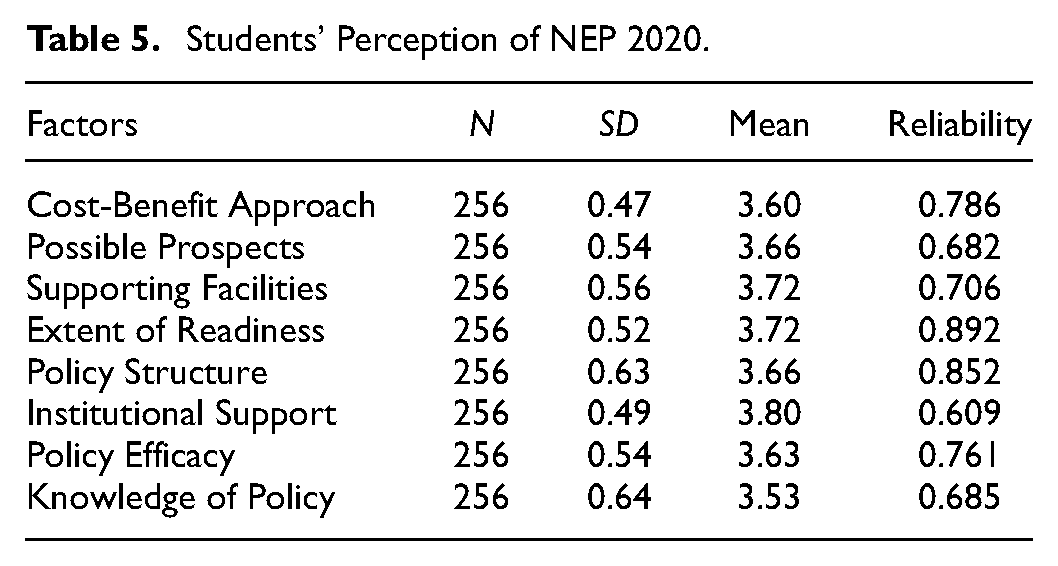
Table 5 presents the descriptive statistics of students’ perceptions (N = 256) of NEP 2020. Overall, students agreed with the eight observed factors of perception (M > 3.0). Among the factors, students agreed more on Institutional Support (M = 3.80), Extent of Readiness, and Supporting Facilities (M = 3.72). The standard deviation (S.D) values ranged from 0.47 to 0.64, indicating some variability in the participants’ responses for each factor. However, the standard deviations were not more than 0.7, which means that the ratings given by students did not diverge significantly (Latif, 2018). The mean values ranged from 3.53 to 3.80, suggesting that, on average, the participants rated these factors moderately high. The reliability coefficients for each factor ranged from 0.609 to 0.892, indicating the internal consistency or reliability of the measures used to assess each factor. Higher reliability coefficients indicate that the measures used in the study were more consistent in measuring the constructs they were intended to measure (Lowry & Gaskin, 2014).
Students’ Perception of NEP 2020.
Students agreed that the NEP offers encouraging reforms toward reducing inequalities of opportunities in education. The policy also extends the concept of universal access to education from pre-school to grade 12. Though the students feel that English being an optional language subject can pose a challenge to improve their English communication skills, they have welcomed the prioritization accorded to regional languages. They have also expressed fears of being overburdened by the syllabus. Despite these challenges, students agree that structure under NEP 2020 is much more beneficial to them. They also look forward to the shift toward multidisciplinary studies. They also agreed that the provision under NEP 2020 for foreign universities to set up their campuses on Indian soil will greatly enable students to access world-class education. This is especially beneficial for students who aspire for a foreign education but are unable to do so. The policy calls for promoting e-learning, which is also welcomed by the students.
Students point out that the lack of infrastructure can be a hindrance to successful implementation of NEP. They also think that the curriculum and textbooks for some of the electives are not in place, and thus without these resources, studying these subjects may be challenging. They agreed that teachers are required to be trained well to teach skill enhancement courses and that the students require more time to adjust to the changes brought by NEP 2020. From the responses of students about policy structure, it showed that students agreed that NEP 2020 focuses more on acquiring practical knowledge and that the new academic credit system of collect and transfer is extremely beneficial. Students agreed that a 4-year bachelors’ degree would strengthen their knowledge. They also found the multiple entry-exit options (a certificate after completing 1 year of study and diploma after completing 2 years) an attractive feature of the policy that will encourage more students to pursue higher studies.
Some students do not find much difference between previous education policy and NEP 2020 but majority of the students are aware of the important features of the policy and its implications. Some students are not sufficiently sensitized about the new credit system. In addition to this, students’ opinions on policy efficacy were collected and results showed that students agreed that NEP 2020 is an excellent initiative that will allow them to learn at their own pace. They feel that NEP 2020 will increase the students’ admission to higher education as compared to the previous system but also increase drop out ratio after joining the course due to the option of multiple entry and exit.
Based on the responses of the students, it can be concluded that the National Education Policy (NEP) 2020 has been generally well-received, with students acknowledging its potential benefits such as making education more accessible, acquiring practical knowledge, and offering multiple entry-exit options. However, there are some concerns about the implementation of the policy, particularly related to infrastructure and teacher training. Additionally, some students may need more time to adjust to the changes brought by NEP 2020.
Overall, the students’ responses indicate that NEP 2020 has the potential to improve the quality and accessibility of education in India. It will be important for the government and educational institutions to address the concerns raised by students to ensure successful implementation of the policy.
Teachers’ Perception of NEP 2020
Descriptive statistics shed light on the teachers’ perception of NEP 2020 (See Table 6). Overall, teachers agreed with eight observed factors of perception (M > 3.0). Among the factors, Extent of Readiness (M = 3.97), Roles and Responsibilities (M = 3.79) and Policy Efficacy (M = 3.74) agreed more than other factors. Understanding of Policy (M = 3.22) and Student-Centric (M = 3.52) factors are the least agreed factors. The standard deviations range between 0.48 and 0.64 but less than 0.7, therefore ratings did not deviate significantly (Latif, 2018). In terms of the reliability of the scales, all dimensions have moderate to high reliability (>0.6) coefficients, indicating that the items are consistent in measuring each construct (Lowry & Gaskin, 2014).
Teachers’ Perception on NEP 2020.

Teachers were questioned about the workload under the new system. They opined that they feel overburdened by the heavy syllabus. Regarding the extent of readiness, they believe that the drastic changes in the education system without commensurate capacity building and training to develop competent teachers will defeat the purpose of the policy. Teachers expressed that they require more time to adopt a new regime of education.
On the subject of infrastructure, teachers responded that there is a paucity of infrastructure in their institutions to materialize the vision of NEP. However, they also said that the heads of their institutions, their colleagues and the government officials have been supportive in building an understanding of the policy among the teaching community.
On the question of whether the policy is student-centric, majority of the teachers noted that NEP 2020 will increase competence and employability of the students, and that the open elective papers offered in their domain are relevant and will add value to the student learning. They also remarked that the evaluation system designed under NEP is highly appropriate and reflective of the student’s true academic performance.
NEP is also expected to contribute to a better student-teacher ratio. Class attendance as one of the evaluation components is welcomed by the teaching community. Majority of the teachers said that they fully understood NEP 2020 and that they are sufficiently aware to explain the changes in policy to their students. Teachers agreed that the students will find more time for extra and co-curricular activities. They feel the policy opens up an opportunity for them to update their knowledge to catch up with the latest industry dynamics.
On the other hand, they also pointed to some of the limitations in the implementation of NEP such as the removal of some domain subjects under the new regime.
With regard to the promises and efficacy of the policy, the teachers agreed that the quality of education will improve under NEP 2020. They also agreed that the National Testing Agency (NTA) offering common entrance exams for admissions to higher education institutions is a good initiative. They believe that the expansion of open and distance learning will increase the GER, and that the NEP will certainly rejuvenate the traditional courses through updated syllabus. The response toward policy efficacy showed that teachers completely agreed that uniform syllabus across state is a good move to plug the disparity among rural and urban students in quality of education. They also believed that NEP provides immense scope for the use of innovative pedagogical tools for the teachers.
Based on the opinions of the teachers, it can be concluded that while NEP 2020 has some positive aspects such as increasing student-teacher ratio, improving evaluation system, and enhancing students’ competence and employability, there are also several concerns and limitations related to its implementation. The teachers feel overburdened by the heavy syllabus, lack of adequate training and competent teachers for digital fluency and health wellness, and shortage of infrastructure facilities. Despite receiving support from the government, colleagues, and principals, they require more time to adapt to the new regime of education.
Moreover, while NEP 2020 is believed to provide opportunities for extra and co-curricular activities, industry connect, and innovative pedagogical tools, there are concerns over creating generalist students instead of specialists due to aspects such as the inadequate credit allotment to domain subjects and elective papers.
Overall, teachers believe that the quality of education will improve under NEP 2020. Nevertheless, there is a collective belief that intensive training of teachers in digital fluency, artificial intelligence and other new additions under the NEP is needed to effectively impart the same to the students. There is also the opinion that uniformity and universal access to education should not lead to its commercialization. Thus, NEP 2020 needs a realistic implementation plan that addresses its limitations and the apprehensions of the stakeholders to realize its ambitious vision of transformation.
Subject Experts’ View on NEP 2020
Total 12 subject experts were selected for a focused group interview. We asked their opinions about NEP in open ended questions. During the course of our research, we conducted a series of interviews with key individuals relevant to our study. These interviews provided valuable insights that have significantly contributed to the findings presented in this manuscript. Notably, these same interviews were later referenced in an article published by India Today (2020). The responses of Subject Experts (SEs) are recorded and summarized as follows,
SE1: The National Education Policy in India emphasizes the importance of early childhood care and education (ECCE) as a foundation for lifelong learning and well-being. The policy promotes the universalization of early school education and the inclusion of new life skills such as coding. It also emphasizes the promotion of mother tongue as the medium of instruction until class 5, but more teaching and learning material needs to be available in different languages, including tribal languages. The NEP stresses the importance of a play-based multi-faceted curriculum and a pedagogical framework that focuses on developing scientific acumen at an early age. The universalization of ECCE will lay the foundation for the development of every child and will be able to honor unique skill-sets at an early age.
SE2: The National Education Policy in India has extended the Right to Education to 18 years, which is expected to democratize higher education. The policy also aims to provide infrastructural and academic support to dropouts and has special provisions for socially and financially challenged groups. The policy emphasizes on providing foundational literacy and numeracy skills to all Indians in the next 5 years. The introduction of Sanskrit and primary education in regional languages will benefit people, especially in rural areas. The policy stresses the importance of learning in the mother tongue in primary classes, while also teaching English. The restructured 5 + 3 + 3 + 4 system and skilling of each child during schooling are welcome steps that will increase employability of the youth.
SE3: The National Education Policy in India focuses on a child’s developmental journey during their formative years and imbibing critical characteristics such as knowledge seeking, logical thinking, and social skills. It eliminates rigid streams in secondary education, allowing students to choose subjects of their choice and promoting holistic learning. The policy emphasizes the integration of creative combinations of subjects, specialized learning, character development, blended learning, interdisciplinary methods, and flexible curriculums to strengthen emotional intelligence, critical thinking, and problem-solving skills. It also emphasizes the importance of extra-curricular activities, music, arts, sports, vocational learning, and coding to develop students’ skill sets required for the modern world. The relook at the grading system will ensure fair and accurate analysis of students’ potential.
SE4: The NEP aims to establish a single regulator for higher education, the Higher Education Council of India (HECI), to increase the Gross Enrollment Ratio (GER) from 25.7% to 50.0% by 2030 and offer multi-disciplinary courses as per the student’s choice. Reforms such as a self-declaration system, a 4-year-undergraduate program, and an additional 1-year after 12 + 3 to help students be eligible for top-ranked global programs will remove unique barriers faced by Indian students. The NEP also proposes a common aptitude test and multiple exit options in degree courses to boost vocational qualifications and practical knowledge.
SE5: The NEP 2020s focus on academic flexibility and multiple entry and exit options, including a 1-year master’s program and digital education, will positively impact future students. The academic bank of credit will allow students to plan their education, curtail dropout rates, and extend universal education to all. These measures will also improve India’s Gross Enrollment Ratio and give students the flexibility to earn degrees while working, moving toward the concept of building one’s own degree.
SE6: The new National Education Policy (NEP) offers multiple entry and exit points for students, allowing them to choose their own educational and career paths. This includes an academic bank of credits accessible through Digi-locker, and a focus on e-learning. These policies aim to increase the country’s Gross Enrollment Ratio and create a stronger workforce for the future. The NEP also emphasizes multidisciplinary education and the inclusion of humanities and social sciences in IITs. Overall, the NEP is designed to prepare students for the changing requirements of the Industrial Revolution 4.0 and help India become a global education leader.
SE7: The new National Education Policy (NEP) allows technical institutes like IIMs and IITs to expand and offer multi-disciplinary programs, enabling them to compete with elite institutes worldwide. The college affiliation system will be phased out, allowing for curriculum innovations and faster modifications based on industry needs. Categorization of higher education institutions based on their orientation will create the required ecosystem and focus. The NEP emphasizes ancient “gurukul pedagogy” with a multi-disciplinary approach, individual learning pathways, and formative assessment. The decision to increase public investment in education to 6% of GDP will ensure quality education and financial support to incentivize meritorious students.
SE8: The new National Education Policy (NEP) encourages collaboration between the center and the states to increase public investment in education to 6% of GDP. While a higher percentage was expected, the policy aims to improve classroom turnout ratios and strengthen teacher training institutes. The focus on technology and digital empowerment of schools will encourage upgrades to virtual platforms. Making all institutions multidisciplinary will prepare students for the complexity of modern society. The policy places increased focus on technology-based learning and application, including virtual labs and divyang-friendly software, and promises online content in multiple languages.
SE9: The National Education Policy (NEP) includes measures to improve digital infrastructure and make online learning accessible to every student in regional languages. The policy allows for global institutes to set up campuses in India, which will increase competition and sustain high talent in the country. A new law will be introduced to facilitate top foreign universities, which will bring in high-quality programs and raise the quality bar for all institutions. This initiative is a formidable step toward strengthening the Indian education ecosystem and providing students with a global quality education in their own country.
SE10: The move to allow foreign universities to set up campuses in India will improve the quality of education and bring in international practices. This will revamp the higher education system and make the curriculum more industry-relevant. It will also strengthen India’s position as a global education destination and create collaborations between Indian and global institutions for the highest quality of human capital.
SE11: NEP has provided the much-needed visionary framework for transforming education in the country. However, one can think of many constraints in the implementation of NEP – the foremost being the paucity of resources at the institution level. As the nation builds the requisite infrastructure and the capacity for NEP, the community should come together to get the ball rolling: local industries should support vocational training at school, expose the students to new career pathways and technologies; non-profits must mobilize necessary resources; volunteers must step up to fill in any gaps in learning. NEP must be a community initiative. The mainstreaming of vocational training will be successful only when students can make informed career choices. To facilitate this, we have proposed a training program whereby teachers can double up as career counselors. Cross-utilization of infrastructure and expertise through hub and spoke models is currently being implemented by the government – the network of stakeholders must be strengthened, again, through community’s interest and enterprise.
SE12: NEP 2020 is a positive step toward transforming the education system in India into a modern, progressive, and equitable one. It is a novel intervention and has been envisioned to universalize education with strong emphasis on Vocational Education. The Policy brings in much needed flexibility to the rigid Indian education system with multiple entry and exit points. It encourages a multidisciplinary approach where students can combine various subjects leading to a holistic development. The Policy has envisioned greater use of technology and its recommendation to teach children in their mother tongue is commendable. However, it remains to be seen on how the policy will be implemented and whether it will be successful in achieving its objectives particularly infrastructure being the major concern.
Based on the responses of the subject experts, it can be summarized that the National Education Policy in India has several positive aspects such as the emphasis on early childhood care and education, the extension of the Right to Education to 18 years, and the focus on academic flexibility and multiple entry and exit options for students. The policy also emphasizes the importance of a multidisciplinary approach to education, the inclusion of new life skills such as coding, and the promotion of mother tongue as the medium of instruction. Additionally, the NEP aims to increase the Gross Enrollment Ratio and establish a single regulator for higher education. The policy also focuses on technology-based learning and application, including virtual labs and divyang-friendly software. Finally, the NEP emphasizes the importance of extra-curricular activities, music, arts, sports, vocational learning, and coding to develop students’ skill sets required for the modern world.
Discussion
The NEP 2020 has garnered significant attention and analysis from scholars and practitioners alike, with a plethora of studies delving into its various aspects. Consistent with prior research (K. Kumar et al., 2021; Sengupta, 2021; Soni, 2021; Varma et al., 2021), our study underscores the fundamental issues involved in the NEP’s implementation and its potential to transform the Indian education landscape. By focusing on the perspectives of primary stakeholders – students, teachers, and experts – we corroborate previous findings while also offering nuanced insights into their perceptions of the policy. The optimism expressed by students regarding the NEP’s potential to reduce inequalities and enhance access to quality education resonates with existing literature (Patil, 2021; Prabu & Mookkiah, 2021; Saini et al., 2021; Sunny, 2021; Wankhade, 2021). The emphasis on multidisciplinary studies and the integration of technology-enabled learning aligns with the policy’s holistic approach to education, a sentiment echoed by various authors (Gandhi, 2022; Kurien & Chandramana, 2020; Varma et al., 2021). These findings underscore the NEP’s ambitious agenda to modernize and revitalize the Indian education system.
Similarly, teachers’ perceptions regarding the NEP’s potential to enhance educational quality through improved teaching methodologies and evaluation patterns corroborate prior research (Deep & Singh, 2022; Kannan, 2021; Kaurav et al., 2021b; Prabu & Mookkiah, 2021). The alignment of NEP objectives with Sustainable Development Goals (SDGs), particularly in areas such as early childhood development and inclusive education, reflects a concerted effort to address global educational imperatives (UNESCO, 2020). However, our study also illuminates the challenges and reservations voiced by stakeholders, particularly teachers, regarding the NEP’s implementation. Concerns regarding increased workload, inadequate training, and insufficient infrastructure echo findings from previous research (Batra, 2020; Haragopal, 2020; Maji & Lohia, 2023; Smitha, 2020). These challenges underscore the need for robust support mechanisms and capacity-building initiatives to ensure the effective execution of NEP mandates at the grassroots level.
Another dimension of the present study was to evaluate the experts’ opinion on NEP. Their opinion revealed that NEP imparts the foundation for lifelong learning and wellbeing of learners. Further, it promotes mother tongue as the medium of learning. The experts opined that the policy will reduce the number of dropouts, ensure a flow of skilled youth into the workforce, and encourage learners in need. This observation also reinforces the outcomes of many studies for instance, (Patil, 2021; Prabu & Mookkiah, 2021; Saini et al., 2021). In addition, from the experts’ opinion it is also revealed that the NEP emphasizes the integration of creative combinations of subjects, specialized learning, character development, blended learning, interdisciplinary methods, and flexible curriculums to strengthen emotional intelligence, critical thinking, and problem-solving skills. These observations support the findings of the studies by (Arun et al., 2022; Kurien & Chandramana, 2020; Verma & Kumar, 2021).
While the focus of this study primarily revolves around the Indian context, it is imperative to contextualize the NEP within the broader global landscape of educational policy reform. Examining how other countries review and implement government policies can provide valuable insights and benchmarks for evaluating the efficacy of the NEP. For instance, countries like Finland and Singapore are often lauded for their progressive educational frameworks, which prioritize holistic development, innovation, and equity (Sahlberg, 2021; Tan, 2019). By studying these models, Indian policymakers can glean valuable lessons on curriculum design, teacher training, and pedagogical innovation. Moreover, international comparisons can offer fresh perspectives on issues such as standardized testing, vocational education, and the role of technology in learning. Furthermore, the alignment of educational policies with global agendas such as the United Nations’ SDGs underscores the interconnected nature of contemporary educational challenges. By adopting a transnational perspective, India can leverage international partnerships and best practices to address common educational goals while contextualizing policy interventions to suit local needs and aspirations.
Thus, it can be noted that NEP may have set a broad vision for Indian education that calls for an overhaul of the current system through transformational reforms. Most of its features are welcomed by the teaching community and the learners. There is however an equal apprehension that policies do not entirely materialize into palpable outcomes for the end beneficiaries. The policy has set the context – it is upto the larger community to intervene for the provision and distribution of resources to meet its objectives.
Concluding Remarks
The study covered the primary stakeholders—the teachers and learners—to glean their hopes and fears regarding NEP 2020. The insights emerging from this research is intended to aid policymakers, principals, administrators and other decision makers in charting out time-bound action plans for implementation of the policy, keeping in mind the resource constraints and the challenges expressed by the respondents. The study conducted extensive surveys along with focus group study and employed research tools such as factor analysis, ANOVA, and descriptive statistics. The results revealed that NEP is largely perceived to be a positive development in the education ecosystem with a long-term vision to capitalize on India’s demographic advantage in the coming years. The major limitation of this research is that it has captured the perception of only teachers, students and experts, leaving out parents, regulatory authorities, administrative heads and management. Further, the study has not delved into the comparison of India’s policy with that of other countries. This leaves much ground for further research on the subject.
Implementing NEP is a multi-stakeholder mammoth exercise which warrants coordination among existing bodies as well the proposed regulatory and monitoring institutions at the state and the central levels. While some of the prior research (D. Kumar, 2020) has criticized the policy for being utopian in its scale and vision, it is best to plan a phased implementation that can first prove effective action in the right direction to attract all actors to converge their efforts. The government, however, must certainly take note of the fact that for the policy to reach its highest potential would demand greater investment in education. The emphasis on digitizing processes for monitoring programs, learning assessments, and the classroom experience itself would also need our policies on IT protection, data privacy, child protection and welfare against overuse and abuse of technology to be reviewed, debated over, and updated. While there are voices captured in this study that express concerns over a multidisciplinary curriculum that may leave the student devoid of any specialization, one has to note that the evolving job market dynamics that can insulate a generalist from drastic changes vis-à-vis a specialist relying on a single skill set. The focus on quality research is certainly welcomed by all stakeholders as it will pave the way for cross-sectoral innovation. The effects of enhanced exposure to cultural activities, extracurricular interests, sports and arts on cognitive abilities, academic success, happiness, health and wellbeing of the student can only be determined in the long run. The NEP thus presents a fertile ground for researchers to study a national experiment in the making to determine effective policies in education. The cross-utilization of existing infrastructure and facilities—for vocational training or adult education—is certainly putting the resources to good use, given the paucity of amenities. The students particularly lauded the fact that the policy aims at leveling the opportunities through bridge courses for disadvantaged students and financial assistance for the less privileged.
There is still however a need to educate all students on the changes and the rationale behind them so they can make informed decisions regarding their current as well as future academic pursuits and their careers. Also, since teachers are the backbone of the education system, it is essential to build their capacities to guide, mentor, counsel and educate their students in this regard. Overall, majority of the respondents found the policy to be more flexible, futuristic, inclusive and equitable.
This study makes significant contributions by elucidating the perceptions and expectations of primary stakeholders regarding the National Education Policy (NEP) 2020 in India. Through extensive surveys and qualitative analysis, the study highlights the NEP’s potential to catalyze positive change within the education ecosystem, emphasizing its long-term vision and focus on leveraging India’s demographic dividend. It identifies key challenges and opportunities for policy implementation, underscoring the importance of phased execution, investment in education, and capacity-building for teachers. Moreover, the study sheds light on the need for coordination among multiple stakeholders and the importance of informed decision-making in shaping the future of education in India. Overall, it provides valuable insights into the nuances of NEP implementation, offering guidance for policymakers, administrators, and decision-makers in charting a course toward a more equitable, innovative, and inclusive educational landscape.
Future Empirical Suggestions
Future research endeavors could delve deeper into several areas to enrich our understanding of the NEP’s implementation and impact. These include:
Longitudinal studies to track the effectiveness of the NEP over time and assess its influence on student outcomes, including academic performance, career choices, and socio-emotional well-being.
Comparative analyses with educational policies from other countries to identify best practices, lessons learned, and opportunities for cross-national collaboration.
In-depth examinations of specific policy components, such as the multidisciplinary curriculum, vocational training initiatives, and digital learning strategies, to assess their efficacy and address any challenges encountered during implementation.
Surveys and focus groups involving additional stakeholders, such as parents, regulatory authorities, and educational administrators, to capture a more comprehensive range of perspectives and experiences.
Evaluations of capacity-building programs for teachers and administrators to gage their effectiveness in supporting the successful implementation of the NEP and fostering a culture of continuous improvement within educational institutions.
By addressing these research gaps, scholars can contribute to the ongoing dialog surrounding educational reform in India and inform evidence-based policy decisions aimed at enhancing the quality, equity, and relevance of education for all learners.
Supplemental Material
sj-docx-1-sgo-10.1177_21582440241279367 – Supplemental material for Evaluating the Promise and Pitfalls of India’s National Education Policy 2020: Insights from the Perspectives of Students, Teachers, and Experts
Supplemental material, sj-docx-1-sgo-10.1177_21582440241279367 for Evaluating the Promise and Pitfalls of India’s National Education Policy 2020: Insights from the Perspectives of Students, Teachers, and Experts by Abhinandan Kulal, Abhishek N., Sahana Dinesh, Deepa C. Bhat and Amrutha Girish in SAGE Open
Footnotes
Declaration of Conflicting Interests
The author(s) declared no potential conflicts of interest with respect to the research, authorship, and/or publication of this article.
Funding
The author(s) received no financial support for the research, authorship, and/or publication of this article.

Data Availability Statement
Data sharing not applicable to this article as no datasets were generated or analyzed during the current study.
Supplemental Material
Supplemental material for this article is available online.
References
Supplementary Material
Please find the following supplemental material available below.
For Open Access articles published under a Creative Commons License, all supplemental material carries the same license as the article it is associated with.
For non-Open Access articles published, all supplemental material carries a non-exclusive license, and permission requests for re-use of supplemental material or any part of supplemental material shall be sent directly to the copyright owner as specified in the copyright notice associated with the article.
