




Abstract
Employee Assistance Programs (EAPs) are commonly used to manage stress and well-being in organizations in Thailand; however, their utilization rates remain low among employees. This study investigates the factors that influence employees’ utilization of an EAP, focusing on the moderating roles of perceived privacy protection and perceived trust, using the Health Belief Model (HBM). Data were collected by surveying 434 employees from organizations providing EAPs in Thailand. Structural Equation Modelling was employed to analyze the data and test the hypotheses. The findings indicated that employees’ intention to use EAPs was significantly influenced by perceived benefits, cues to action, and privacy protection, whereas self-efficacy had a negative effect. Moreover, perceived privacy protection can strengthen the relationship between self-efficacy and EAP utilization, while it weakens the relationship between cues to action and perceived barriers. Perceived trust further enhances the impact of perceived severity and self-efficacy on EAP utilization. The practical implications for organizations are also discussed.
Plain Language Summary
Companies in Thailand often have Employee Assistance Programs (EAPs) to help workers manage stress and improve their well-being. However, not many employees use these programs. This study looks at what factors influence employees to use EAPs, focusing on how much they trust these programs and believe their privacy is protected. Researchers surveyed 434 employees from companies that offer EAPs. They used a method called Structural Equation Modelling to analyze the data. The study found that employees are more likely to use EAPs if they see clear benefits, get reminders to use them, and believe their privacy is protected. Interestingly, employees with high confidence in managing their own stress (self-efficacy) were less likely to use EAPs. The study also found that believing their privacy is protected makes employees’ confidence in managing stress less important and reduces concerns about using EAPs. Additionally, when employees trust the program, they are more likely to use it if they think stress is a serious issue and believe they can handle it with the program’s help. The study offers practical advice for organizations on how to encourage more employees to use EAPs.
Introduction
Employees must adapt to dynamic workplace forces, such as workforce diversity, technology, economics, competitiveness, social trends, and international politics. Additionally, organizational tasks and interpersonal demands contribute to work stress (Robbins & Judge, 2021). One of the Sustainable Development Goals is to protect health and promote mental health and well-being for individuals of all ages (Johnston, 2016). In 2020, the International Labor Organization estimated that stress and mental health disorders accounted for 10% to 30% of work-related conditions (Mattila-Wiro et al., 2020). Furthermore, long-term workplace stress negatively impacts employees’ health and productivity, leading to burnout and other health problems (Ozkan & Ozdevecioğlu, 2013).
Employee Assistance Program (EAP) is an employer-sponsored system engaged in assessment, monitoring, consulting, and referral for stress, finance, family, and drug issues (Colantonio & Sc, 1989; Jacobson & Attridge, 2010; Zarkin et al., 2000). EAP is individualized counseling that can be a particularly effective strategy for stress management (Hofmann et al., 2012; Milot & Borkenhagen, 2018). After counseling, organizations can save costs for health care treatment and even avoid lost work productivity (Attridge & Dickens, 2022). In many regions, including North America and Europe, EAP is effective in surveying EAP users, and around 66.2% of employees have experience with EAP (Roche et al., 2018). In Southeast Asian countries such as Thailand, the health consequences of psychological and physical hazards are increasing (Yiengprugsawan et al., 2015). Thailand experiences around 4,000 suicides annually, particularly among individuals aged 30 to 39. Without treatment or intervention, depression can escalate, leading some workers to develop major depressive disorder and even consider suicide (Thongnopakun et al., 2020). Interestingly, there are fewer mental health treatment services for employees in Thailand (Ford et al., 2018). However, the lack of workplace integration and promotion of EAPs has resulted in low employee utilization, with only 5% using the program annually (Masi, 2020).
The Health Belief Model (HBM) is a cognitive model that comprehends human behavior, allowing researchers to investigate why people choose not to participate in any health promotion programs (Strecher & Rosenstock, 1997). This model helps to explore six key domains: perceived susceptibility, perceived severity, perceived benefits, perceived barriers, self-efficacy, and cues to action (Strecher & Rosenstock, 1997; S. Wu et al., 2020). HBM has been used extensively to explain the lack of participation in a health promotion program and the barriers to changing unhealthy behaviors (Rahmati-Najarkolaei et al., 2015). Moreover, privacy concerns, such as the potential disclosure of an employee’s identity, may deter EAP utilization (Milot & Borkenhagen, 2018). Furthermore, perceived trust in the quality of service can affect whether someone would seek counseling for any problem (Cavanagh et al., 2022; Leavey et al., 2011). However, no research has been conducted on employees’ perspectives on utilizing EAP for stress management in Thailand.
This study investigates employees’ perspectives on their intention to use EAPs, utilizing the HBM framework. It explores how perceived trust and privacy protection moderate employees’ intention to use EAPs. The findings from this study could offer valuable insights into promoting employee health and provide practical guidelines for developing intervention and preventive strategies at an organizational level.
Employee Assistance Program (EAP)
EAP was created in the 1940s in the United States to manage employees’ alcohol issues (Trice & Schonbrunn, 1981). Full-service EAPs are typically designed to encourage recommendations from both supervisors at work and self-referrals by employees; additional sources of referrals are family members, worried friends, or even other employees (Attridge & Pawlowski, 2023). Subsequently, employers found that alcohol addiction was not the only cause of the reduced working capacity of their employees. Other causes of low performance are emotional imbalance, family- and work-related problems, and financial, political, and environmental issues (Merrick, et al., 2015). EAP is designed to help employees with personal difficulties. These issues are usually addressed face-to-face, online, or by telephone with qualified therapists (Milot & Borkenhagen, 2018). Whenever employees experience stress, they can utilize 24-hour service from experts (Attridge, 2019). Significant differences were identified in absenteeism, lost productive hours, and cost savings for the company when comparing the outcomes before and after using EAP programs (Attridge, 2020).
Health Belief Model (HBM)
In the 1950s, the Health Belief Model (HBM) was pioneered as the original theoretical model widely used for understanding comprehensive health-related behaviors (Hochbaum, 1958) mainly to understand, prevent, and detect diseases to promptly respond to patients’ symptoms with the right medical treatments (Rosenstock, 1974). Moreover, the concept is that a specific medical activity instructs participants to avoid experiencing mental issues (Strecher & Rosenstock, 1997).
HBM has several elements: perceived susceptibility, perceived severity, perceived benefits, perceived barriers, self-efficacy, and cues to action (Bandura, 1978; Becker, 1974; Janz & Becker, 1984; Kirscht, 1974; Strecher & Rosenstock, 1997). HBM has grown in application in preventive measures like mammography screening, influenza vaccinations, mental health awareness campaigns, and screening for risky lifestyle choices (Champion & Skinner, 2008). It has been demonstrated across numerous domains that the HBM can explain and predict various health-related behaviors (Carpenter, 2010; Janz & Becker, 1984). Additionally, the concept has developed several successful health interventions (Kharrazi et al., 2009).
Perceived Susceptibility
Susceptibility is the risk of developing health issues arising from a particular behavior. People will adopt a healthy lifestyle if they fear adverse health outcomes (Rosenstock, 2005). The perceived susceptibility has been operationalized as mental health literacy or problem recognition, which can influence people to seek help (Kim & Zane, 2016). Once exposed, other risk variables might create a vicious cycle. Therefore, multiple types of intervention are vital (Arango et al., 2018). Stress has a more significant physical impact because it can lead to heart disease, depression, and a weakened immune system, which can significantly lead to death (Siyangaphi, 2018). Brief informative interventions that align with recipients’ perceptions of their health outcome risks can influence long-term health behaviors (Updegraff et al., 2015). People who perceive themselves as vulnerable to mental health issues are more likely to seek help compared to those who do not perceive themselves as being at risk (Bird et al., 2020).
H1: Perceived susceptibility positively influences the intention to use EAP.
Perceived Severity
Another perceived threat is perceived severity, which refers to how serious a medical condition is regarded to be (Janz & Becker, 1984). During the pandemic, severity ratings of employees’ distress were up around 10% (Couser et al., 2021). An individual’s attitude can also be shaped by the inconvenience or impact an illness would have on their life (Orji et al., 2012).). Perceived susceptibility and severity influence behaviors; if the perceived threat is greater, individuals are more inclined to adopt a healthy lifestyle (Mukhtar, 2020). Employees who intend to use assistance from an EAP reported the severity of their stress, including feeling unwell, unfulfilled, worried, and less engaged and less motivated (Milot & Borkenhagen, 2018). Furthermore, there is a link between perceived severity, such as the greater intensity of depression among employees, and their receipt of support from the assistance program (Milot, 2019; Pyne et al., 2004; Rose et al., 2011).
H2: Perceived severity positively influences the intention to use EAP.
Perceived Benefits
Perceived benefits elicit preventive behaviors that avoid negative situations and produce considerable positive consequences (Orji et al., 2012). Companies offer an EAP as a benefit to assist employees with mental health concerns (McRee, 2017). EAP respondents indicated perceived benefits as a rationale for joining the program (Knippen et al., 2018). In addition, businesses are anticipated to gain from focusing on employee well-being through increased performance and reduced costs. HR practices will likely increase job satisfaction and a positive working relationship, implying mutual benefits to implementing this intervention (Guest, 2017). Moreover, perceived benefit involves the degree to which people believe the treatment will be beneficial in lowering the severity of symptoms experienced (Henshaw & Freedman-Doan, 2009). Employees must believe that therapy can help relieve distress (Kim & Zane, 2016). An EAP can help employees improve their relationships and views of their workplace to reduce stress and effectively deal with stress-related symptoms (Colligan & Higgins, 2006). Promoting EAP services as a beneficial resource for wellness and health benefits is a solid strategy to improve EAP utilization (Carchietta, 2015).
H3: Perceived benefits positively influence the intention to use EAP.
Perceived Barriers
Perceived barriers are controlled by a person’s perspective on the circumstance of an issue, such as believing the problem will resolve itself (Oleski et al., 2010). The most prevalent barriers are lack of time, family responsibilities, and financial concerns (Emily et al., 2018). Recently, the most common barriers have been availability, inconvenience, confidentiality, low awareness, and stigma (Vi, 2021).
Stigma also deters employees from seeking help (Langlieb et al., 2022). For instance, some employees expressed concerns about negative job consequences (DePierro et al., 2021). Moreover, difficult access prevents employees from getting help (Zarkin et al., 2000). Employees do not know where to seek help (DePierro et al., 2021). Due to scheduling conflicts, high treatment costs, transportation issues, concerns about health policies, and the fear of involuntary treatment, some organizations are working to address these barriers to mitigate the negative impact on intervention utilization (Henshaw & Freedman-Doan, 2009).
H4: Perceived barriers negatively influence the intention to use EAP.
Self-Efficacy
Self-efficacy is one’s belief, confidence, and expectation to accomplish a task (Bandura, 1978). Perceived self-efficacy is linked to changes in coping behaviors, physiological stress reactions, refractory behaviors, and achievements (O’Sullivan, 2011). People will not try new things unless they believe they can do so. Self-efficacy is a common construct in health promotion research, indicating a powerful motivator of healthy behaviors (Orji et al., 2012). EAP utilization is associated with self-efficacy because people believe they can improve their physical and mental health (Knippen et al., 2018). Positive expectations include self-efficacy and optimism. This disposition can help people be more resilient in the face of hardship by having good coping and adaptive stress responses (Gallagher et al., 2020). In conclusion, having strong self-efficacy enables employees to view stressful experiences as challenges, not threats. They have more flexible coping techniques than those with low self-efficacy (Freire et al., 2019).
H5: Self-efficacy positively influences the intention to use EAP.
Cues to Action
Cues to action in this context are informational campaigns, public awareness, free counseling, screenings, and support services (Siyangaphi, 2018). Efficient communication is essential for promoting mental health, and EAP can increase the utilization rate (Roberts, 2015). Employees who are knowledgeable about EAP’s benefits and referral process are more likely to utilize it (Reynolds & Lehman, 2003). Cues for action are influenced by many social factors, including family, friends, and community, with friends playing a critical role because they could alter individual behaviors (Moeini et al., 2018).
H6: Cues to action positively influence the intention to use EAP.
Perceived Privacy Protection
In healthcare services, individuals’ perceptions of privacy protection about how the services keep their personal information and do not share it without their permission are critical (Nelson et al., 2016). Privacy concerns affect people’s willingness to use any product or service (Zhang et al., 2021). Moreover, stress management has high expectations for secrecy and privacy (Hattingh et al., 2015). Employees identified various barriers to EAP utilization, such as data privacy concerns (Willemse, 2021). EAP providers could better communicate the privacy measures of an EAP to encourage workplace use (Milot & Borkenhagen, 2018; Walton, 2003).
H7: Perceived privacy protection positively influences the intention to use EAP.
Perceived Trust
Trust helps reduce discomfort, complexity, and uncertainty by increasing confidence in the competence of the service (Roca et al., 2009). Furthermore, public health is becoming more aware of the role of trust in encouraging people to stay healthy (Giordano et al., 2019).
The distrust regarding free services and concerns about sharing personal concerns with strangers were the barriers to using EAP (Matthews et al., 2021; Roca et al., 2009). Employees will not enroll in an EAP unless they know it is effective and reliable (Reynolds & Lehman, 2003). Therefore, trust developed through long-term relationships in promoting increased employee enrolment on an EAP (Sherman & Hauge, 2021). The HR department plays a critical role in ensuring the success of the EAP by communicating with employees and raising awareness of the credibility and usefulness of the program (Kumar, 2019).
H8: Perceived trust positively influences the intention to use EAP.
The Moderating Role of Perceived Privacy Protection
Privacy and security are essential due to unauthorized data-sharing risks (Yarmand, Sartipi, & Down, 2013). E-health interventions are favorable in the treatment of depression and anxiety symptoms. Many companies believe that technological improvements will solve unmet needs caused by the underutilization of EAP by connecting them with solutions while respecting their privacy (A. Wu et al., 2021). To increase EAP utilization, it is critical to maintain the confidentiality of counseling encounters and secure sensitive data (Baskar et al., 2021).
Many researchers explained the moderating role of privacy protection in other services, such as mobile applications and electronic services (Batu & Alversia, 2021; Sreejesh et al., 2016). Moreover, low health literacy was linked to low perceived susceptibility (Kim & Zane, 2016). To break down barriers and encourage employees to join an EAP, it is essential to ensure that individual cases are never discussed within the organization without the owner’s permission (Vi, 2021). Due to stress severity, privacy might be compromised when an employee is required to seek EAP services (Smith et al., 2019). Confidentiality, the reflection of trust and confidence might be the barrier to EAP use (Masi et al., 2022).
H1a: Perceived privacy protection positively moderates the relationship between perceived susceptibility and the intention to use EAP.
H2a: Perceived privacy protection positively moderates the relationship between perceived severity and the intention to use EAP.
H3a: Perceived privacy protection positively moderates the relationship between perceived benefit and the intention to use EAP.
H4a: Perceived privacy protection positively moderates the relationship between perceived barriers and the intention to use EAP.
H5a: Perceived privacy protection positively moderates the relationship between self-efficacy and the intention to use EAP.
H6a: Perceived privacy protection positively moderates the relationship between cues to action and the intention to use EAP.
The Moderating Role of Perceived Trust
Notably, perceived trust increases only if the customer believes the long-term positive outcomes will continue (Jaradat et al., 2018; Lafraxo et al., 2018). Perceived trust has been used as a moderator for behavioral intention as a helpful signal to analyze actual behavior (Kaur & Arora, 2021; Rehman et al., 2019). Thus, perceived trust can significantly minimize the uncertainty and complexity of interactions and experiences (Grabner-Kräuter & Bitter, 2014).
Employees with mental health issues were worried about being stigmatized and losing their jobs. In addition, the fear of being exposed severely impacts employees’ mental health and willingness to seek help (Figure 1). Therefore, it would be more effective if the employees had high perceived trust in expressing their concerns (Chow, 2021). Therefore, establishing trust in a doubtful and apprehensive audience through communication should be the marketing priority of an EAP (Mahlatjie, 2016). Moreover, increasing trust and confidence in receiving enough stress assistance can reduce unfavorable perceptions of help-seeking (Ceka & Ermasova, 2020).
H1b: Perceived trust positively moderates the relationship between perceived susceptibility and the intention to use EAP.
H2b: Perceived trust positively moderates the relationship between perceived severity and the intention to use EAP.
H3b: Perceived trust positively moderates the relationship between perceived benefit and the intention to use EAP.
H4b: Perceived trust positively moderates the relationship between perceived barriers and the intention to use EAP.
H5b: Perceived trust positively moderates the relationship between self-efficacy and the intention to use EAP.
H6b: Perceived trust positively moderates the relationship between cues to action and the intention to use EAP.

Conceptual framework
Methodology
Sample, Data Collection, and Data Analysis
Nonprobability sampling was used since the population size cannot be accurately defined (Burns & Veeck, 2020). The researcher purposefully recruited potential participants aged 18 to 60 who work in companies that provide EAP services. Therefore, purposive and snowball sampling is used to recruit employees who meet specific criteria. Additionally, chain referrals were utilized to suggest potential respondents who might qualify to participate in the research, particularly when seeking access to hard-to-reach populations (Burns & Veeck, 2020; Parker et al., 2019). All respondents were informed that the questionnaire would take approximately 15 to 20 min to complete and participation in the survey was voluntary. If they did not feel comfortable with the questions, they could withdraw from participation at any time during the research. All responses would remain confidential, and no identification would be tracked. The data from this study will be reported in aggregate form only and used solely for academic purposes.
Structural equation modeling (SEM) was used to examine the data. The ideal sample size should be more than 200 but it might be insufficient for the analysis of a complex model (R. B. Kline, 2016). Furthermore, using SEM, the ratio should be 10 answers per parameter to ensure reliability as suggested in the rule of thumb (Wolf et al., 2013). However, the ratio can be between 10 and 20 respondents per parameter, as suggested by Hair et al. (2019). Therefore, this study adopted a ratio of 15 to 1, resulting in a target sample of 405 respondents, with three parameters for each construct.
Data collection was self-administered via online surveys, with respondents completing the questionnaires without assistance (Bourque & Fielder, 2003). Owing to the privacy-sensitive nature of the survey questions, participants were free to respond at a preferred pace and at a convenient time and location. Of note, self-administered surveys require a high-quality measurement design owing to the lack of monitoring and control of respondents (Burns & Veeck, 2020; Norman et al., 2001). At the site of the survey, the researcher contacted the human resources department of the company to confirm if EAP services are available to employees. According to the Personal Data Protection Act of 2019, the human resource department cannot provide personal information of their employees to the researchers. However, they can only confirm the EAP availability for the researcher. Owing to purposive sampling, the researcher approached employees in a densely populated place, such as the entrance of the offices, and asked screening questions such as the company they are working for. If the answer is on the list, employees will continue to complete the survey. However, some employees of the listed company are still unaware of the EAP. Therefore, the researcher informed them about EAP and the services it provides such as stress management by professionals for free. In the end, 482 responses were received, of which 434 were usable for final analysis.
IBM SPSS was used in descriptive analysis. Moreover, analysis of variance (ANOVA) was employed to assess the differences in the intention to use an EAP in each demographic variable (Sawyer, 2009). This study used ANOVA to examine the relationship between the intention to use EAP and demographic variables.
This study used structural equation modeling (SEM) involved a three-step process for analyzing the model: First, the confirmatory factor analysis (CFA) to measure the constructs’ validity and reliability. The purpose of CFA is to evaluate the internal structural validity of measurement instruments (Byrne, 2016; Hair et al., 2020; Hayes et al., 2017; Rogers, 2024). AMOS was used for CFA and SEM in the research because it provides a user-friendly graphical user interface. Additionally, AMOS facilitates the use of structural equation modeling (SEM) for hypothesis testing in frameworks that involve complex relationships among variables, thereby aiding in deriving meaningful insights (Hair et al., 2017; Nam et al., 2018).
Questionnaire Development
There are two sections to the questionnaire. Age, gender, marital status, and other demographic data are included in the first part. It has a nominal scale for classifying people and an ordinal scale for rating variables like pay, length of service, and working hours.
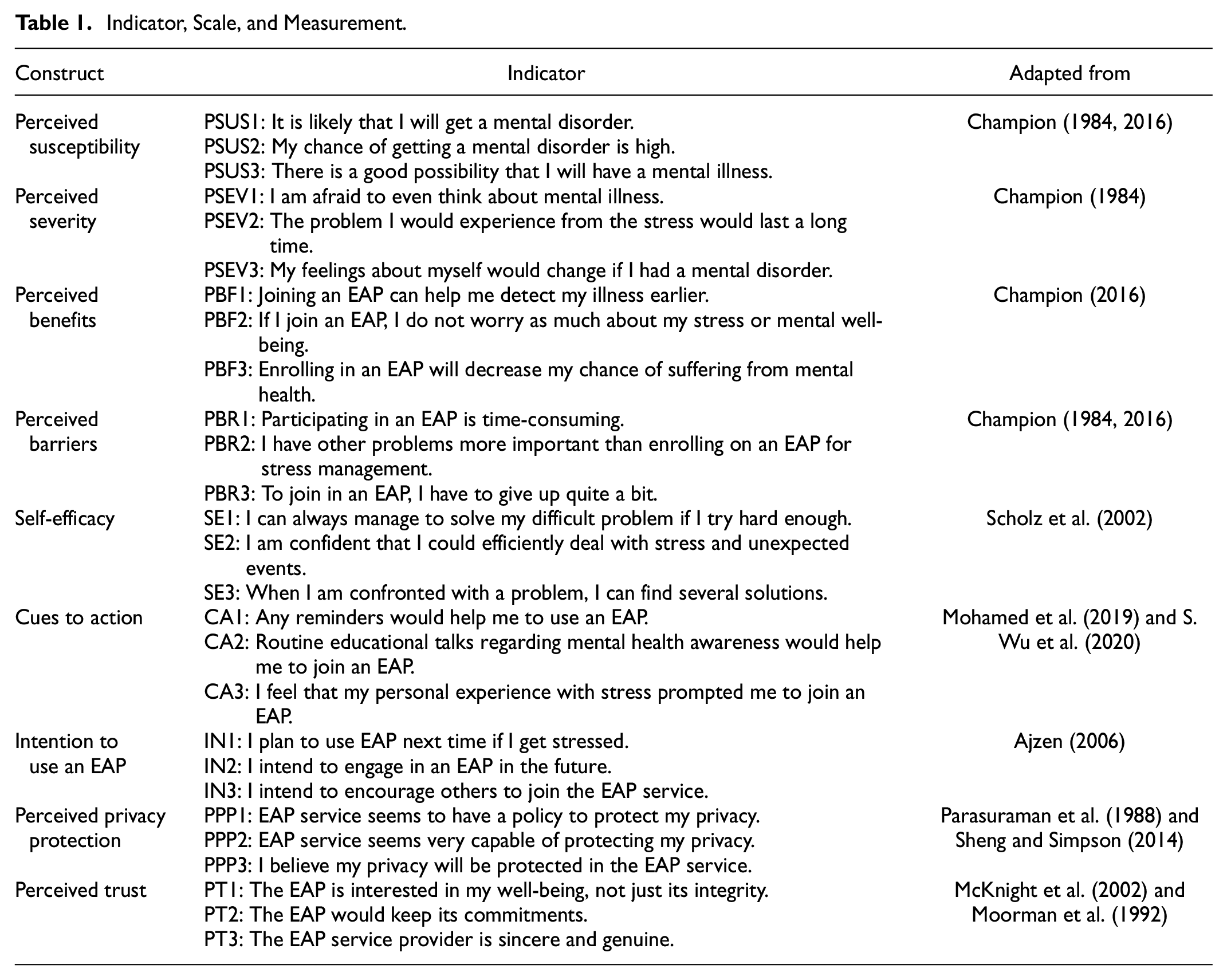
The second section contains the constructs or variables for which all the questions were modified based on previous research related to perceived susceptibility, perceived severity, perceived barrier, perceived benefit, perceived self-efficacy, perceived trust, perceived privacy protection, intention to use EAP and cues to action, as shown in Table 1. A 7-point Likert scale (1 = strongly disagree, 2 = disagree, 3 = somewhat disagree, 4 = neutral, 5 = somewhat agree, 6 = agree, 7 = strongly agree) is ideal for electronically distributed and otherwise unsupervised usability questionnaires as a standard psychometric scale to measure for a more precise response from participants (Finstad, 2010; Li, 2013) and also result in higher validity and convey useful information (Taherdoost, 2019)
Indicator, Scale, and Measurement.
Control Variables
According to a previous study, individual-level characteristics seem to be related to the employee’s well-being and their vulnerability to work stress. The researcher considers three control variables: age, gender, and duration of service. Regarding age, older employees feel less stress because they have lower expectations (Sirgy, 2002; Warr, 1999). For gender-related concerns, alcoholism, personality problems, and suicide are more prevalent in men than in women (Attridge, 2019). Moreover, many new hires or early-career employees had a high likelihood of experiencing behavioral health problems (Attridge, 2019).
Validity and Reliability Test
Prior to collecting the data on a full-scale basis, the researcher conducted a pilot test on 65 employees to assess the quality of the questionnaire and to validate the measurement of inter-item correlations (Rattray & Jones, 2007). IBM SPSS was used to validate each construct for internal consistency reliability, in which Cronbach’s alpha should exceed .80 (Bryman & Cramer, 2004; Roopa & Rani, 2012; Sürücü & Maslakçi, 2020). Items with a poor Cronbach’s alpha (less than .7) should be excluded (P. Kline, 2013) However, a Cronbach’s alpha value of .6 is generally considered acceptable (Churchill, 1979; Taber, 2018). The overall reliability score was .96. Specific constructs had the following Cronbach’s alpha values: PSUS (.858), PSEV (.755), PBF (.888), PBR (.739), SE (.673), CA (.737), PPP (.857), PT (.858), and IN (.869), all of which passed the criteria. Moreover, prior to performing SEM analysis, the researcher used Harman’s single factor test to examine the common method variance of the collected data (Podsakoff et al., 2012), the result of the common method variance is 40.77% (less than the 50% threshold).
Research Findings
Descriptive Analysis
See Table 2.
Demographic Profile of Respondents (n = 434).

Table 3 presents the effect of demographics on the intention to use an EAP. The age group showed a significant difference (p = .004**) especially the group of 26–30 that had the highest intention to use an EAP. On the contrary, the group above 60 showed the lowest intention to use an EAP.
t-Test and ANOVA Results.

Note. F = variation between sample means.
p < .05. **p < .01. ***p < .001.
The results present nonsignificant differences in gender (p = .331), which is similar to that of marital status (p = .301) and underlying disease (p = .609). Furthermore, education level (p = .077) and monthly income (p = .146) do not significantly affect the intention to use an EAP.
Employment status (p = .015), the duration of service (p < .001), and work hours per week (p < .001) showed significant differences in the intention to use an EAP, with the full-time workers and those employed for 4 to 5 years and the group of employees working for 41 to 100 hr per week had the highest intention to use an EAP.
Confirmatory Factor Analysis
Convergent Validity
Convergent validity was used to demonstrate a correlation between two measures and to determine whether the items positively observed it, as shown in Table 4. For a latent variable to demonstrate good convergent validity, all associated indicators should exhibit high loadings, specifically exceeding .6 (Hair et al., 2017; Shi & Maydeu-Olivares, 2020). Besides, the composite reliability should be >.7 and the average variance extracted should be >.5 (T. A. Brown & Moore, 2012; Sürücü & Maslakçi, 2020). The results of composite reliability and average variance extracted are more than the specified criteria.
Convergent Validity.

Goodness of Fit
The goodness of fit determines how far the model hypothesized fits or matches the sample data. Table 5 presents the results of the goodness of fit.
The Goodness of Fit of the Measurement Model.

Note. CMIN/DF = minimum discrepancy function by degrees of freedom divided; CFI = comparative fit index; NFI = normed fit index; AGFI = adjusted goodness-of-fit index; GFI = goodness-of-fit index; TLI = Tucker–Lewis index; RMSEA = root mean square error of approximation.
Goodness of Fit for SEM
As shown in Table 6, even though the values for AGFI do not exceed 0.8 but are close to 0.8, they still meet the requirement (Baumgartner & Homburg, 1996; Doll et al., 1994). Moreover, GFI and AGFI are very sensitive to sample size and have a certain degree of downward bias (Hooper et al., 2008; Wang et al., 2020). Therefore, the model proposed in this study is suitable to test the hypotheses.
Goodness of Fit for SEM.
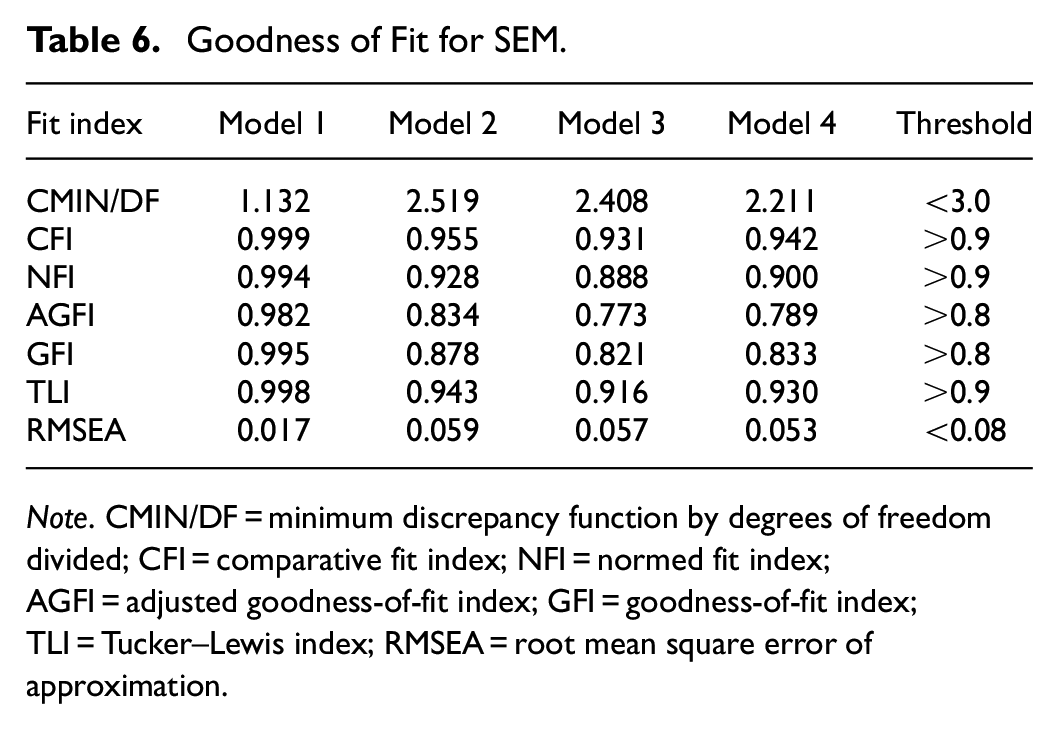
Note. CMIN/DF = minimum discrepancy function by degrees of freedom divided; CFI = comparative fit index; NFI = normed fit index; AGFI = adjusted goodness-of-fit index; GFI = goodness-of-fit index; TLI = Tucker–Lewis index; RMSEA = root mean square error of approximation.
Hypothesis Testing
According to the results as shown in Table 7, age is the only control variable that had a significant effect on the intention to use EAP (t = −2.068, b = −.129, p = .039), In the age group 26 to 30, there is a strong intention to use an EAP, which is consistent with the ANOVA results. Moreover, perceived severity (t = 0.481, b = .028, p = .631), perceived susceptibility (t = −0.209, b = −.011, p = .834), perceived barrier (t = 0.497, b = .015, p = .619) and perceived trust (t = 0.636, b = .041, p = .525) do not have significant effects on the intention to use an EAP.
Standardized Estimates of the Proposed Model.

p < .05. **p < .01. ***p < .001.
However, the results indicate that perceived benefit (t = 5.520, b = .334, p < .001), cues to action (t = 8.002, b = .501, p < .001) and PPP (t = 2.776, b = .145, p = .005) have significant positive effects on the intention to use an EAP. On the contrary, self-efficacy (t = −2.075, b = −.066, p = .038) has a significant negative effect on the intention to use an EAP.
The moderation effect was assessed based on the interaction effects of the variables. The results support hypotheses 4a, 5a, and 6a, as shown in Tables 7 and 8. The perceived privacy protection moderates the association between perceived barrier (t = −1.829, b = −.102, p = .067), self-efficacy (t = 2.069, b = .195, p = .039), and cues to action (t = −2.351, b = −.401, p = .019) in the intention to use an EAP.
Visualization of Moderation Effect.
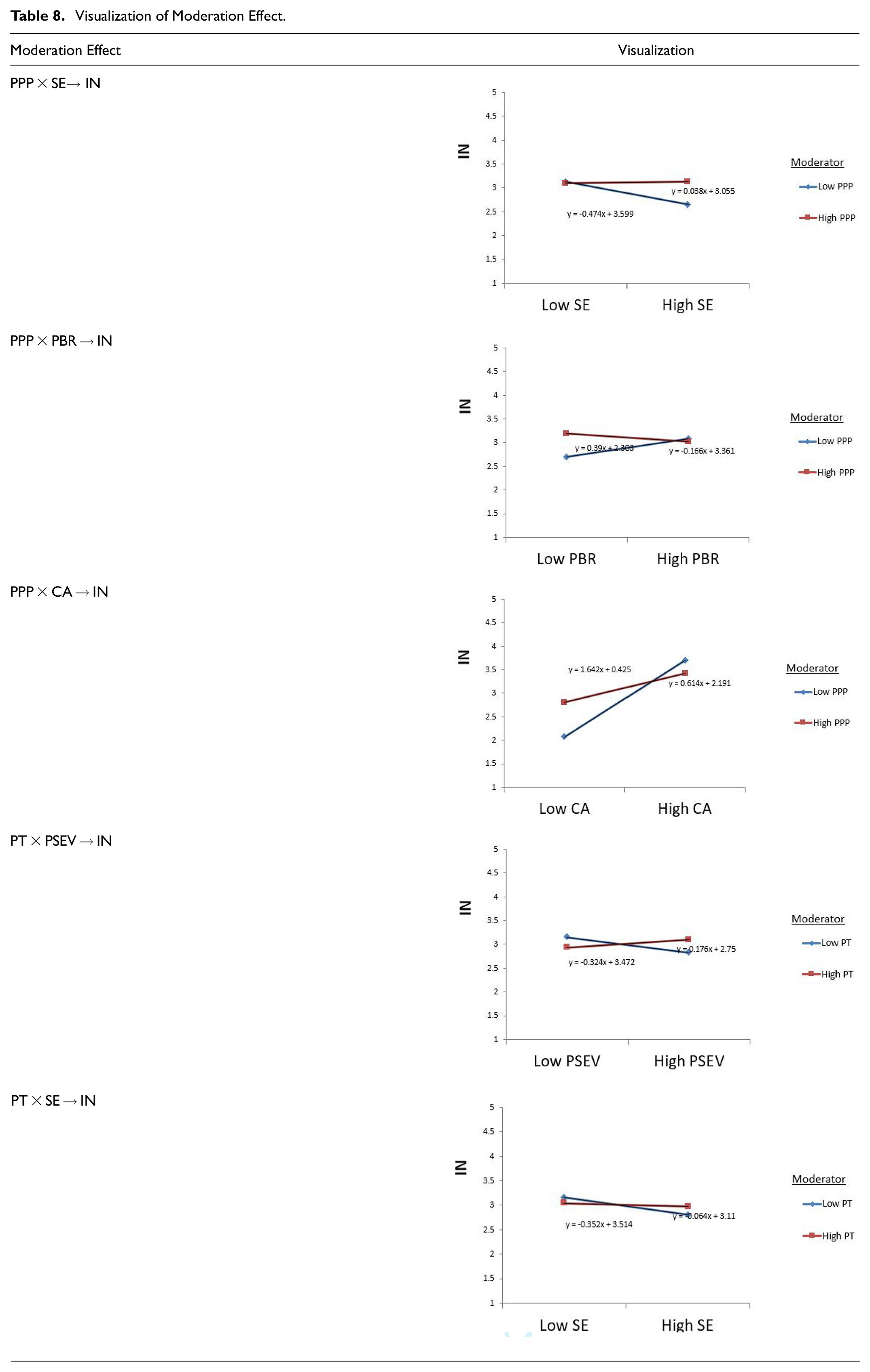
On the contrary, perceived privacy protection does not moderate the association between PSEV (t = 1.85, b = .431, p = .064), perceived susceptibility (t = −1.261, b = −.159, p = .207), and perceived benefit (t = 1.164, b = .112, p = .244) in the intention to use an EAP. Therefore, hypotheses 1a, 2a, and 3a were rejected.
The perceived trust moderates the association between PSEV (t = 2.181, b = .203, p = .029) and self-efficacy (t = 2.306, b = .124, p = .021) in the intention to use an EAP. On the contrary, perceived privacy protection does not moderate the association between perceived susceptibility (t = −1.012, b = −.071, p = .311), perceived benefit (t = 0.072, b = .007, p = .942), perceived barrier (t = −1.829, b = −.102, p = .067) and cues to action (t = −1.136, b = −.137, p = .256) in the intention to use an EAP. Therefore, hypotheses 1b, 3b, 4b, and 6b were rejected.
Discussion
The results align with Attridge’s (2019) study, which found that although employees of all ages may experience work-related stress, new hires and early-career employees are at particularly high risk. Older employees have low expectations and high satisfaction with their lives (Sirgy, 2002; Warr, 1999). This is because aging has been associated with more positive feelings, and emotional experiences become more stable (An et al., 2020). Furthermore, full-time employees with long work hours frequently experience stress (Barck-Holst et al., 2021). Similarly, Kaewanuchit (2015) found that employees who had worked for their current employer for 4 to 5 years were most likely to use an EAP, indicating a relationship between the length of employment and occupational stress.
Accordingly, it appears that employees who are susceptible to mental health disorders would be more likely to seek help when they see clear benefits (O’Connor et al., 2014). Therefore, employees’ intention to seek help to alleviate work stress is still unpredictable. Perceived susceptibility and perceived severity are considered as perceived threats, which are more evident in nonrepetitive preventive behaviors and perceived severity is the weakest predictor of adopting health-conscious behaviors as presented in the study on oral health behavior (Ashoori et al., 2020; Glanz et al., 2015). Although expenses, time, availability, inconvenience, and stigma are significant barriers to accessing EAP counseling service (Emily et al., 2018; Oleski et al., 2010; Vi, 2021), in Thailand, EAP utilization does not correlate with perceived barriers. This finding is consistent with studies by Henshaw and Freedman-Doan (2009) and Langley et al., (2018) which suggests that indirect treatment costs (e.g., taking time off work or traveling to appointments) may not be the primary issue.
The perceived benefit supported the concept of HBM when employees believe that EAP is beneficial to reducing stress, leading to help-seeking behaviors (Henshaw & Freedman-Doan, 2009; Kim & Zane, 2016; Knippen et al., 2018). In addition, when the benefit includes greater performance, fewer expenses, job satisfaction, and a positive working relationship, the organization tends to implement the program for employees (Guest, 2017). Moreover, cues to action have the strongest positive influence on EAP utilization, supporting prior research that suggests increasing awareness of EAPs can effectively encourage their use (Roberts, 2015; Siyangaphi, 2018). Some cues to action can occur from social prompts such as referral by a friend or family (Moeini et al., 2018; Reynolds & Lehman, 2003). However, self-management requires substantial confidence in one’s abilities and a strong sense of self-efficacy. Consequently, an employee with strong self-efficacy may be less likely to seek counseling, believing they can handle the issue independently (Andersson et al., 2014; Keeling et al., 2020). Moreover, employees are more willing to join an EAP if high standards for confidentiality and privacy are established (Hattingh et al., 2015). In contrast, some studies have found that the main reason people avoid using EAPs is their reluctance to discuss their problems with strangers (Matthews et al., 2021; Roca et al., 2009). Therefore, to enhance employees’ utilization of EAPs, it is crucial to develop long-term relationships to build trust (Sherman & Hauge, 2021).
The relationship weakens when perceived privacy protection is high. This suggests that even with a privacy policy, employees facing barriers like time constraints or other priorities may not see its importance, especially those who are more vulnerable, such as individuals with psychological conditions (Powell et al., 2018). When perceived high privacy protection, those who are in psychological distress also frequently lack self-confidence or self-efficacy. They prefer to be alone by themselves and highly value their privacy (Carrard et al., 2021). Lastly, even though cues to action have a direct effect on the intention to use social support and reminders, most mental health providers sometimes need to break client confidentiality and inform the victim if a client threatens self-harm or others (Costa & Altekruse, 1994) which could deter the intention to use EAP.
However, perceived privacy protection does not moderate the relationship between perceived susceptibility, perceived severity, and perceived benefit toward the intention to use EAP. Employees may misinterpret the policy regarding privacy and data security (Kim & Zane, 2016; Mackert et al., 2016). Employees may become increasingly worried about long-term or life-changing issues when they realize the severity of mental health issues. Alternatively, N. Berry et al. (2019) mentioned concerns regarding the use of digital health interventions as replacements for current mental health treatments, highlighting potential issues with privacy and confidentiality. Finally, perceived benefit strongly influenced the intention to use an EAP. Perceived privacy protection can slightly improve employee perception, but not significantly because of the need to weigh its risks and benefits (Chan et al., 2016; Torous et al., 2018).
Owing to the severity of distress, which can be associated with lower trust (H. Berry & Rodgers, 2003), employees may feel uncomfortable discussing personal and possibly distressing issues with experts. Therefore, they may put off seeking treatment until those whom they know, and trust encourage them to do so (O’Connor et al., 2014). Perceived trust positively moderated the relationship between self-efficacy and intention to use EAP because trust can minimize uncertainties (Grabner-Kräuter & Bitter, 2014) and increase the competence of services (Roca et al., 2009). Self-efficacy negatively affects the intention to use EAP because employees believe they can handle the problem themselves (Andersson et al., 2014; Keeling et al., 2020). Enhancing trust and confidence in obtaining adequate stress relief could reduce negative perceptions of utilizing EAP (Ceka & Ermasova, 2020).
Employees with lower health literacy may not prioritize the effectiveness of the service. Additionally, those who distrust the healthcare system often have higher health literacy levels (Tian et al., 2023). Employees might use EAP services without considering trust if they already know the benefits (P. Brown et al., 2009). Hammarlund et al. (2018) stated that employees may commit to the service if they see a high level of commitment from the EAP, especially if they perceive barriers like cost, time, or stigma. Ultimately, trust increases when employees perceive more benefits than drawbacks in using EAP services. Certain sources of cues may heighten employees’ risk, as their recommendations may lead to a reluctance to use the EAP due to personal reasons, such as avoiding seeking assistance because of the stigma associated with “others” and “self” (Ting, 2011).
Theoretical Implications
The Health Belief Model (HBM) serves as a framework for understanding an individual’s readiness to engage in public health programs (Rosenstock, 1974; Rosenstock et al., 1988). It has found application in various health interventions, including vaccinations, health wearable devices, physical activities, and breast cancer screening (Almutari & Orji, 2021; Chin & Mansori, 2019; Jernejcic & El-Gayar, 2022; Jones et al., 2015; Liu et al., 2022; Suess et al., 2022). Additionally, HBM has been extended to non-health-related contexts such as computer security and mobile payment (Ng et al., 2009; Tang et al., 2022). Moreover, researchers have examined its utility in adolescents’ stress management and mental healthcare-seeking behavior (O’Connor et al., 2014). Hence, the theoretically grounded HBM offers a valuable framework for quantitative research on stress management among employees, particularly within the context of Employee Assistance Programs (EAPs).
The initial findings revealed that only three factors of HBM significantly impacted the intention to use an EAP. Employees are more inclined to use EAP services if they can see the benefits of doing so (Henshaw & Freedman-Doan, 2009; Kim & Zane, 2016; Knippen et al., 2018). Second, cues to action have a positive significant impact on the intention to use an EAP. They can be in various forms such as formal communication or referral from friends or family, which agree with the literature (Moeini et al., 2018; Reynolds & Lehman, 2003; Roberts, 2015; Siyangaphi, 2018). Lastly, the empirical findings showed that self-efficacy has a negative significant impact on the intention to use an EAP. Employees with high self-efficacy are less likely to use an EAP because of their belief that they can handle the matter on their own (Andersson et al., 2014; Keeling et al., 2020).
The findings reveal insignificant effects of perceived susceptibility, perceived severity, and perceived barriers, a departure from previous research (Emily et al., 2018; Kim & Zane, 2016; Milot, 2019; Pyne et al., 2004; Rose et al., 2011). The lack of significant influence from perceived severity and perceived susceptibility may be due to their categorization in the HBM by Ajzen (1998), primarily designed to explain physical health diseases (Orji et al., 2012). Additionally, EAPs are not widely utilized in Thailand, and employees generally lack awareness of their potential as the primary resource for addressing psychological issues. The findings also indicated that Thai employees did not perceive themselves as vulnerable to mental illness. Furthermore, perceived barriers do not significantly influence the decision to use an EAP, as it is a free service provided by employers (Henshaw & Freedman-Doan, 2009; Langley et al., 2018).
This study supports extending the HBM, especially in EAP for stress management by using perceived privacy protection and perceived trust as moderators. The results indicated that perceived trust could strengthen the relationship between self-efficacy and perceived severity since trust can increase the degree of confidence in service (Grabner-Kräuter & Bitter, 2014; O’Connor et al., 2014; Roca et al., 2009). Perceived privacy protection plays a significant role in both strengthening and weakening relationships in this context. According to the Unified Theory of Acceptance and Use of Technology (UTAUT), privacy protection is considered crucial for enhancing EAP usage (Alzahrani, 2021; Baskar et al., 2021). By strengthening the relationship between perceived barriers, privacy protection could reduce the stigmatizing force (Powell et al., 2018; Vi, 2021). Lastly, the perception of privacy may disrupt the relationship between cues to action and self-efficacy since an employee under high stress may occasionally want to remain isolated because the EAP is possibly incapable of securing the employee’s information safety (Carrard et al., 2021; Costa & Altekruse, 1994).
Based on previous studies, perceived trust and perceived privacy protection have been identified as enhancement factors in the context of innovative products and services, such as e-mental health, health trackers, and e-banking, online services (Grabner-Kräuter & Bitter, 2014; Kaur & Arora, 2021; Lafraxo et al., 2018; Nelson et al., 2016; Rehman et al., 2019; Zhang et al., 2021). Therefore, incorporating these factors can broaden the applicability of the HBM to these products and services.
In summary, this study utilizes the Health Belief Model (HBM) to investigate the utilization of Employee Assistance Programs (EAPs) for stress management, highlighting its applicability beyond traditional health interventions to encompass mental health and stress management contexts. The theoretical contributions are divided into four sections. The results affirm the significance of perceived benefits and cues to action, while also revealing a noteworthy negative association between self-efficacy and EAP utilization. This implies that individuals who feel confident in managing stress independently are less inclined to seek EAP services. Additionally, the study introduces perceived privacy protection and trust as moderators, uncovering their intricate effects on EAP utilization.
Managerial Implications
The organization and EAP provider can tailor communication strategies to different demographic groups effectively. For Generation Y (31–60), methods like referral programs, workshops, or seminars may be suitable, while Generation Z (18–30) may respond better to social media campaigns such as short videos, infographics, and instant messaging. Additionally, the organization should manage employee work hours to prevent excessive stress and safeguard well-being. Enforcing policies that limit daily and weekly the number of hours employees can work hours per day, in accordance with the Labor Protection Act’s maximum weekly work hours, this is crucial, particularly for employees with long work hours, as they are more prone to stress.
Cues to action and perceived benefit are the most significant factors when the organizations may increase awareness of the advantages of utilizing EAP such as sharing anonymous testimonials from EAP users. Moreover, providing anonymous testimonials to EAP users might make the referral more effective including highlighting the benefits of using EAP. To guarantee that the confidentiality of the information will be maintained, employers and employees must be strictly informed of the privacy protection policy. Regardless of whether the EAP is paid by the employer, information cannot be conveyed to the employer without the employees’ permission. EAP providers and organizations should assess self-care versus professional care for employees with high self-efficacy and privacy concerns. Offering service options such as telephone or online sessions may increase their comfort level in enrolling in an EAP.
The intention to use EAP might be deterred by privacy concerns, especially with the vulnerable groups who are unaware of the privacy policy and how employee information will be protected, or providers sometimes may be required to disclose information breaching employee confidentiality and inform someone if an employee makes threats or self-harm. Managerial implications can be suggested to maintain the standards of professional healthcare on confidentiality protection and relevant legal requirements or inform the consent of protocol or procedures of revealing the information with consent. Additionally, organizations can conduct regular training sessions for EAP providers to ensure that they are up to date with confidentiality protocols and understand the importance of maintaining employee privacy.
Employees’ perceptions of the EAP’s benefits over potential risks are typically more trustworthy, even to those who feel insecure or with high self-confidence. Employees may be more likely to be persuaded by individuals whom they trust, such as friends or family members, who can provide recommendations for utilizing an EAP service during their initial encounter such as buddy systems, family awareness programs, and anonymous Q&A platforms. Later, EAP services can offer professionals with whom employees feel comfortable relying and ensuring that the program will have a high commitment to stress management and improve employee well-being.
In conclusion, the practical implications of this study underscore the importance of tailored communication strategies for Employee Assistance Program (EAP) engagement across various demographic groups. It advocates the use of generation-appropriate channels, such as referrals for Generation Y and social media for Generation Z, to effectively reach and engage employees. The study also highlights the significance of managing work hours to prevent stress-related issues, especially for individuals with longer working hours by Implementing policies or practices that could promote work-life balance and reduce the risk of burnout. Enhancing awareness of EAP benefits through cues to action and the sharing of anonymous testimonials is identified as crucial for increasing program utilization. Furthermore, the study emphasizes addressing privacy concerns by strictly adhering to confidentiality policies and offering service options that cater to individual privacy preferences, such as online or telephone-based services. These measures are aimed at encouraging wider EAP utilization and underscore the comprehensive approach needed to effectively implement and promote EAPs.
Regarding the economic impacts, our findings suggest that by implementing Employee Assistance Programs (EAPs), organizations can reduce their annual costs, enhance employee productivity, and foster sustainable economic growth. Improved well-being among employees leads to increased performance levels and reduced staff turnover. Furthermore, upholding confidentiality and effectively communicating privacy policies fosters trust in EAP services, contributing to a healthier and more productive workforce. This approach can yield significant economic benefits for companies, including reduced healthcare expenses and greater productivity, ultimately resulting in considerable savings for both the organizations and the broader public health system.
In terms of social impact, our study highlights the benefits of enhancing mental health awareness and well-being. This inclusivity and adaptability underscore a commitment to employee well-being, which can lead to improved mental health outcomes, reduced workplace stress, and overall enhanced productivity and satisfaction among employees. Adopting this strategy not only encourages more employees to consider EAPs as a viable option for stress management but also contributes to a broader cultural shift toward accepting and supporting mental health care, thereby improving quality of life, equity, and social cohesion within a supportive community environment. By addressing both economic efficiency and social welfare, enhancing EAPs supports a more holistic approach to stress management, paving the way for comprehensive and sustainable solutions.
Limitations and Future Research
This study was not limited to a single industry due to the constraint on companies offering EAP services. Collecting data from various industries can enhance the analysis of information. The objective of this study is to investigate the influence of Health Belief Model (HBM) factors and moderator effects on the intention to utilize Employee Assistance Programs (EAP). Furthermore, perceived trust has been examined as a mediator in various contexts, such as technology adoption and service marketing (Adiratna & Wulansari, 2021; Yuen et al., 2021). Thus, the researcher examined the role of perceived trust as a mediator for exploratory purposes and found significant relationships between HBM factors and the intention to use EAP, with perceived trust acting as the mediator. Consequently, future research can develop a mediator framework within the HBM framework, which could provide valuable insights. Additionally, this research was conducted using only quantitative data, which examined the relationships between variables. It is suggested to include in-depth interviews or focus group discussions for qualitative analysis to obtain deeper and broader insights. The research may encounter temporal validity challenges due to factors like the timing of data collection, particularly post-COVID-19. Longitudinal research could mitigate this issue by tracking changes over time, and assessing whether the observed relationships remain stable or fluctuate due to evolving conditions.
Footnotes
Acknowledgements
This research project was the part of the doctoral degree program. The first author is grateful to the School of Management, Asian Institute of Technology, Bangkok, Thailand, and Khon Kaen University for providing fellowship to pursue the doctoral degree program.
Declaration of Conflicting Interests
The author(s) declared no potential conflicts of interest with respect to the research, authorship, and/or publication of this article.
Funding
The author(s) received no financial support for the research, authorship, and/or publication of this article.
Ethical Approval
The research procedure and questionnaires received ethical approval RERC 2022/012 from the Asian Institute of Technology Research Ethics Review Committee (RERC), Thailand.

Data Availability Statement
The datasets generated during and/or analyzed during the current study are available from the corresponding author on reasonable request.