




Abstract
Securing employment is a primary objective for many individuals, particularly among the youth, after completing their education. Nevertheless, with the growing number of graduates, organizations seek additional qualities beyond academic qualifications. In this regard, soft skills have gained prominence in the contemporary workforce as they facilitate achievement in the workplace, and are a pivotal component of academic and professional triumph. Therefore, the goal of this study was to ascertain how soft skills can improve postgraduate employability at Taif University. The significance of the findings can be seen in investigating the nature of the connection between soft skills and improving employability for postgraduate students at Taif University may also be helpful to universities in creating their plans to enhance and develop students’ abilities to find employment. Both qualitative and quantitative data were analyzed using descriptive statistics, and the questionnaire’s validity and dependability were confirmed. The study found that postgraduate students possess a notable level of networking abilities, anger-management skills, and understanding of employability. These individuals also exhibit a moderate degree of proficiency in negotiating and engaging in self-promotion. Furthermore, the study established a direct and statistically significant correlation between soft skills and employability. As such, the research recommended an expansion of soft skills development initiatives for postgraduate students to enhance their self-sufficiency and equip them with appropriate soft skills that align with the demands of the labor market.
Keywords
Introduction
In today’s challenging and competitive job market, young graduates from various educational institutions face numerous difficulties. With an increasing number of graduates, employers seek additional qualities beyond academic qualifications. While securing employment is a primary objective for many individuals, particularly among the youth, employers consider various factors in their hiring decisions. In the past, technical abilities, also known as “hard skills,” were the only competencies deemed necessary for professional employment. However, contemporary workplaces have shown that having technical skills alone is inadequate to ensure job security, particularly when firms are downsizing and eliminating positions (Hajjaj & Mandysova, 2017). The required knowledge, skills, and abilities for upcoming professionals to acquire and learn in higher education institutions have significantly increased in standard. Consequently, the significance of “soft skills” has risen, and they play a pivotal role in achieving the highest level of professional competence and application (Vasylenko et al., 2022). Despite the fact that both soft and hard skills are required for a successful career, soft skills are frequently seen as being more crucial, particularly given that they “may be deemed applicable across many various jobs or professions” and their increasing significance in the near future (Pranic et al., 2021). Soft skills are a collection of character traits, attitudes, habits, and manners that contribute to one’s ability to work well with others and be a productive employee. Skills can be categorized into two groups: hard and soft skills. While hard skills are necessary for job-specific technical tasks, soft skills are essential for effective workplace communication. Soft skills encompass personal and interpersonal qualities that enhance job performance, career advancement, and interpersonal interactions (Vasanthakumari, 2019).
Despite the frequent use of the term “soft skills” in educational theory, a review of the literature pertaining to this subject suggests that there is no consensus on how to accurately define this concept using scientific means. According to Feraco et al. (2022), soft skills are adaptable personality traits that control our cognition, behavior, and emotions, and help us accomplish our goals. Soft skills are crucial to the labor market’s outcomes because they increase people’s chances of finding work, achieving success at work, and producing innovative outputs. Moreover, this certain category of skills is defined as personal qualities that improve an individual’s ability to communicate effectively and perform their job duties. These traits can be described as a unique combination of behaviors, dispositions, skills, and abilities that enable individuals to overcome personal and professional challenges. Soft skills are a wide-ranging set of competencies that greatly influence an employee’s communication proficiency (Tanković et al., 2021).
Soft skills encompass a combination of personality traits and social abilities that significantly impact an individual’s ability to work effectively and interact with others. Developing and enhancing these skills can lead to improved job performance and career advancement. Moreover, soft skills are vital for achieving holistic personal development and increasing the potential for job market integration. Therefore, candidates must possess these competencies to be considered for any position (Volkov et al., 2022). They are additionally divided into two categories by Gejdoš et al. (2021): intrapersonal and interpersonal skills. The ability to control oneself for the best development of works, such as creative thinking, stress management, and time management, is referred to as intrapersonal talent. Interpersonal skills, on the other hand, are the capacity to inspire, lead, and negotiate in order to manage relationships with people for the benefit of one’s professional development.
A variety of studies have been conducted by researchers in various institutions around the world to determine the level of soft skills among different societal groups. In this regard, Chova et al. (2016) has noted that soft skills play a crucial role not only in seeking a job but also in developing self-awareness and understanding cultural changes in new workplaces. Majid et al. (2019) determined the importance of soft skills in comprehending how employers and students perceive their value and identifying any mismatches between market expectations and student abilities. Zuma (2021) additionally stated the adaptability as the most critical soft skill in the workplace. According to the performed study, developing and utilizing soft skills in all aspects of life, both personal and professional, significantly boosts the likelihood of obtaining attractive career opportunities for business graduates. Schislyaeva and Saychenko (2022) have underscored the increasing demand for soft skills, which are crucial during job interviews, and companies require employees with advanced soft skills to successfully complete various work-related tasks in new areas of activity. Therefore, it is imperative for employees to possess soft skills to excel in their jobs and remain competitive in the job market.
Taif University works hard to improve and develop the talents of university students via curricula, lectures, training sessions, seminars, and other methods. However, there are few studies that dealt with the soft skills of university students and none that dealt with their employability, so this study aims to identify the soft skills of postgraduate students at Taif University and their relationship to employability.
Problem of the Study
Most organizations seek to hire, engage with, and advance individuals who are dependable, ethical, and resilient in addition to those who are self-driven, willing to negotiate and raise, and who have a positive outlook (Sharma, 2018). Employers often look for staff with a diverse range of skills (Chandhok, 2021). According to Brungardt (2011), there is a lack of soft skill development among new hires, which frequently hinders the organization’s ability to succeed as a whole. The results of the Ngang et al. (2015) study revealed discrepancies between the participants’ actual and predicted levels of soft skills in the workplace. Weak motivation, disobedience, random behavior, clash and distrust are commonly the outcomes from the lack of soft skills. Soft skills are essential for a person’s overall personality development, which positively affects their employment prospects (Khanna, 2015). Employers continue to struggle to fill a number of openings despite the rising demand for labor on the market, because of the argument that the majority of graduates from higher education are lack the necessary skills (Okolie & Asfa, 2017). According to Sukardi and Subiyono’s (2017) study, the quality of students’ soft skills is still lower than needed. Binsaeed et al. (2017) stated that privatization of economy and globalization have greatly increased the number of job chances for persons. Paradoxically, because of a dearth of skilled personnel, employers are still unable to benefit from this expansion of prospects (Azmi et al., 2018).
Vyas (2018) stated that individuals with management degrees are facing difficulties in finding employment due to the lack of industry-ready skills and abilities. Sharma and Shekhawat (2020) have progressively emphasized the importance of developing soft skills among students to enhance their competitiveness in the job market. Practitioners and scholars in the field of education have long been interested in improving the soft skills of potential employees, as these competencies are no longer sufficient to secure suitable employment opportunities in light of changing lifestyles and developments in national and international labor markets (Malykhin et al., 2021). According to industry reports, a staggering 89% of new employees fail in their jobs due to a lack of soft skills (Janove, 2021). Alam et al. (2022) found that university graduates are aware of the need to enhance their soft skills to increase their employability in the future. Nevertheless, recent graduates may face difficulties in accessing opportunities for developing these crucial skills.
The aforementioned is a clear evidence that soft skills are crucial during job interviews, and are a crucial part of a future person’s competitiveness. A potential employee should develop not only hard talents but also soft skills in order to start a successful career in any area of human endeavor because they increase their employability. In order to explore the significance of soft skills to employability improvement, the research question focused on soft skills roles for enhancing employability from the viewpoints of postgraduate students.
Study Questions
The study was guided by the following research question as:
– What is the level of soft skills proficiency among postgraduate students at Taif University?
– What is the degree of possessing the employability of postgraduate students at Taif University?
– What is the relationship between possessing soft skills and employability for postgraduate students at Taif University?
– Do the variables of gender, specialization, training courses, and academic level have statistically significant effects on the averages of the sample responses?
Purpose of the Study
Research objectives in this study are:
– Determining the level of possession of soft skills for postgraduate students at Taif University.
– Determining the level of possessing the employability skills for postgraduate students at Taif University.
– Investigating the nature of the relationship between soft skills and enhancing employability for postgraduate students at Taif University.
Significance of the Study
This study holds significant value in terms of the potential benefits that Saudi universities may derive from its outcomes regarding soft skills and employability, including the identification of critical soft skills necessary for securing employment. The study addresses a common problem faced by individuals, namely the challenge of obtaining employment. Furthermore, it serves to enlighten postgraduate students on the importance of soft skills and their role in enhancing job performance, thereby increasing their chances of obtaining suitable employment opportunities. The study also provides universities with valuable insights for developing plans to enhance and improve students’ employability skills.
Literature Review
Study Terminology
Soft Skills
There are many different definitions of soft skills, for instance, they are widely acknowledged as significant personal traits that advance a person’s success and well-being (Feraco et al., 2022). According to Oxford Learner’s Dictionaries (2023), “soft skills” is defined as; personal qualities that enable you to communicate well with other people. Coates (2020) contends that the term “soft skills” is overly inclusive because it refers to a person’s overall level of social, emotional, and cognitive abilities. They are critical abilities that include communication abilities, social skills, problem-solving, critical thinking, and interpersonal communication. These five qualities have been shown to predict success at work and are those that organizations look for in candidates. Tureck and Tierean (2021) described soft skills as the collection of fundamental abilities required to fulfill the three graduation requirements that every student must complete: the ability to meet employer expectations, the desire to continue learning throughout one’s life, and to be a good citizen.
Employability
Employability is referred to as the collection of abilities that aid in the development of a person’s comprehension of the principles of professional activity. In other terms, this refers to a person’s capacity for effective workplace performance (Tureck & Tierean, 2021). According to Oxford Learner’s Dictionaries (2023), “Employability” is defined as; the extent to which somebody has the skills, knowledge, attitude, etc. that make them suitable for paid work. Individual employability is a set of talents, abilities, and accomplishments that make it easier for graduates to gain, maintain, and advance professionally (Somogyi, 2021). Employability skills are generic in nature and comprise the cognitive and soft abilities that allow a person to use the knowledge and skills they have learned, according to Koloba (2017).
Importance of Soft Skills
The business environment of today is highly competitive, complex, and uncertain for a variety of reasons. All business types view human capital as their most valuable resource since it is so important to the success and effectiveness of their operations (Majid et al., 2019). Employers are seeking experts with the correct set of abilities more than ever today (Jardim et al., 2022). In any organizations, soft skills are seen as a strategic component that requires considerable attention from human resources management, not only throughout the hiring process but also over the course of an employee’s professional career (Cimatti, 2016). According to the findings of one survey, 22% of all jobs in 2000 required soft skills. Approximately 39% of all workplaces in 2010, having soft skills was a defining characteristic. Around 52% of all workplaces in 2020, soft skills were a requirement (Deloitte, 2019). More crucially, Schislyaeva and Saychenko (2022) claim that soft skills would be necessary for employees. As a result, it is possible to construct indicators that will predict labor market demand for employees’ possession of soft skills. In instance, it is anticipated that 56% of employers will demand that employees possess soft skills by 2025. It is anticipated that 61% of employers will demand that employees possess soft skills by 2030. And last, 64% of workplaces are predicted to demand soft skill proficiency by 2035. It should be emphasized that depending on the particulars of the national economy, different forms of soft skills are required by employers. Additionally, soft skills are crucial since they aid in managing interpersonal relationships, making wise judgments, communicating effectively, making a good impression, and having an impact on professional development (Vasanthakumari, 2019). Another advantage of soft skills in the workplace is that they aid people to adapt to changing conditions (Chavan, 2020).
Soft Skills for Employability
The current labor market is experiencing rapid changes, resulting in a greater emphasis on soft skills compared to the past (Tureck & Tierean, 2021). Soft skills, such as the ability to collaborate effectively, communicate efficiently, demonstrate initiative and self-direction, solve problems, and exhibit a positive work ethic, are in high demand by employers today (Samantray et al., 2016). For students, the acquisition of soft skills could be the deciding factor in obtaining a position in their desired profession. In contrast, lacking interpersonal skills, despite possessing technical proficiency and professional knowledge, could derail a promising career (Robels, 2012). Costantino and Rodzinka (2022) have highlighted that possessing soft skills enhances career potential, daily communication, and productivity, and the competitiveness level of graduates in the job market is determined by the number of soft skills they possess (Tureck & Tierean, 2021). Coates (2020) has found that organizations are no longer focused on traditional education programs due to significant changes in the job market. Studies have demonstrated that employers seek graduates with a range of soft skills, including decision-making abilities, critical thinking, and communication. On the other hand, according to Gibb (2014), the development of soft skills promotes performance, enhances mastery experience, and engages individuals in work-related behaviors. Soft skills also improve the quality of human capital, which ultimately increases an individual’s productivity.
Types of Soft Skills for Employability
Networking
Networking has become an essential aspect of modern-day professional life. According to Baumann (2021), networking refers to the development of a relationship system by individuals that allows them to access professional information relevant to the organization both internally and externally. Social network scholars have convincingly demonstrated the benefits of having extensive professional networks, supporting the belief that “it’s not what you know, it’s who you know.” Professional networking involves the process of establishing and maintaining relationships that could be beneficial to individuals in their careers or at work (Raj et al., 2017).
Securing a job as a recent graduate can be challenging, and networking plays a crucial role in a successful job search. A robust and extensive network provides valuable information about potential job opportunities. Social networks facilitate the maintenance of existing connections and enable the establishment of new relationships and contacts (Chakir, 2020). Professional networking, which is described as “the attempt of an individual to establish and sustain relationships with others who have the ability to aid them in their career or work,” is a crucial technique for achieving professional success (Baumann & Utz, 2021). Moreover, multiple studies have shown a positive relationship between networking and career outcomes (Baumann, 2021; Berau, 2020; Bon et al., 2018; Qureshi & Saleem, 2016). The Wall Street Journal reported a few years ago that 94% of persons who had found a certain job had actually been successful at networking (Chakir, 2020). According to Berau (2020), when looking at it by nation, 5 out of 5 in Morocco, 6 out of 11 in Finland, and 5 out of 15 in France, have used networking to advance their careers. Therefore, networking is crucial to building strong interpersonal relationships that ultimately produce positive outcomes through the sharing of knowledge, encouraging of dialogue, and development of wide-ranging direct and indirect relationships.
Self-Marketing
Having a degree and being qualified may not be enough in today’s increasingly competitive and global employment environment. A person must demonstrate effective self-marketing abilities to demonstrate that he or she is a good fit for the position. Possessing self-marketing skills may contribute to lower unemployment rates for business graduates and reduce the amount of time these graduates spend unemployed (Manai & Holmlund, 2015). Self-marketing is the act of trying to communicate to others some aspect of oneself or an image of oneself. It may also give students a set of competitive abilities and techniques that they may use not only after graduation when searching for jobs but also throughout the course of a lifetime as their careers change (Manai & Holmlund, 2015). According to Abakumova et al. (2020), it is the act of communicating information about oneself to others in an effort to leave an impression. People try to express information about their personality traits, as well as their status, beliefs, roles, moods, attitudes, etc. It is a constant endeavor. Eliot and Prufrock (2013) stated that self-presentation is not only a common but also a crucial component of life. Success in life are greatly influenced by ability to persuade people by possessing a variety of qualities.
In today’s society, self-presentation is essential to daily living. As without introducing oneself and one’s personal, professional, or other attributes, no social encounter is complete (Abakumova et al., 2020). Self-marketing involves more than merely searching for or considering job opportunities. Instead, individuals should invest time in reflecting on their abilities, identifying their skills, and determining the most effective way to promote themselves and their competencies to prospective organizations. Employers seek candidates who can effectively articulate their skills and demonstrate their competencies in a unique manner.
Negotiation
Negotiations occur daily, with individuals engaging in bargaining in various settings, including both personal and professional environments. It is arguable that employing the right techniques in a negotiation results in a more favorable negotiation outcome than employing the wrong ones (Maiwald, 2015). People are bargaining whenever they need the help of others to accomplish their goals. Individuals engage in bargaining when they require the assistance of others to achieve their objectives. Negotiation is considered a prevalent social activity, and the actions, cognitions, emotions, and motivations of the negotiating parties all contribute to the negotiation process (Thompson et al., 2016). Keough (2017) claims that negotiation is an interactive process amongst interdependent parties in an effort to arrive at a consensus. According to Mills (2019), negotiation can take place at all levels of human activity and in some circumstances, high degrees of specialized competence are needed. We frequently communicate in the form of negotiation without even being aware of it. In all of its manifestations, bargaining helps to most facets of daily life by offering a dependable method for deciding on matters both little and significant.
According to Sălceanu et al. (2021), negotiation skills are essential, particularly for individuals who engage in negotiations frequently in their daily lives. . Effective negotiators secure resources, and reach difficult agreements in circumstances where they might have otherwise failed. Additionally, those who are skilled at negotiation are able to handle conflict well and avoid giving in or withdrawing. They can also adjust to psychological motives, maintain their composure, or balance power disparities. Thus, negotiation skillfulness is associated with career success. Therefore, negotiation is a critical component of professional life, as individuals in any organization require the ability to interact effectively with others to achieve satisfactory agreements on specific issues or topics, reconcile differing perspectives, and achieve gains.
Anger Management
Anger is an emotion characterized by hostility toward something or someone you believe has intentionally wronged you. Negotiation can offer various advantages, including providing a platform for the expression of dissatisfied emotions and motivating individuals to resolve issues. However, constantly being angry can pose problems. Individuals can learn to manage their anger by becoming aware of it, which aids them in handling conflicts in their interpersonal interactions. The manner in which an individual expresses or controls their anger is known as their anger management style (Tosun, 2014).
According to Alshammari (2020), anger management refers to a people’s ability to keep an eye on their actions, identify behavioral reactions, comprehend anger, and utilize strategies to deal with angry situations, such calming down. People use anger management techniques and strategies to deal with and cope with their own anger. Additionally, according to Balakrishnan (2021), anger management refers to the capacity for a person to recognize when they or others become angry and take the appropriate action to resolve the issue. It is a fact that controlling one’s anger can help one become more productive. The purpose of anger management is to diminish both emotional sentiments and the physiological arousal that anger creates (Pashupati & Dev, 2011). In other words, anger management refers to a person’s capacity to regulate his or her level of rage in order to express it more effectively, which reduces aggression and improves how they interact with others. This is what employers look for in candidates for employment.
Methodology
The main goal of this study is to find how possession of soft skills affects employability.
Population and Sample
The study population consisted of all postgraduate students at Taif University, a total of 1,597 in the 2022/2023 academic year. The sample size was calculated using the Richard Jaeger equation (1), and it was 315 individuals (Jaeger, 1984). (The result of applying the equation was that the sample should not be less than 310.) The characteristics of the participants in this study are indicated in Figure 1.

where n: is study sample, N: is population of the study (1,597), z = 1.96, d = 0.05.
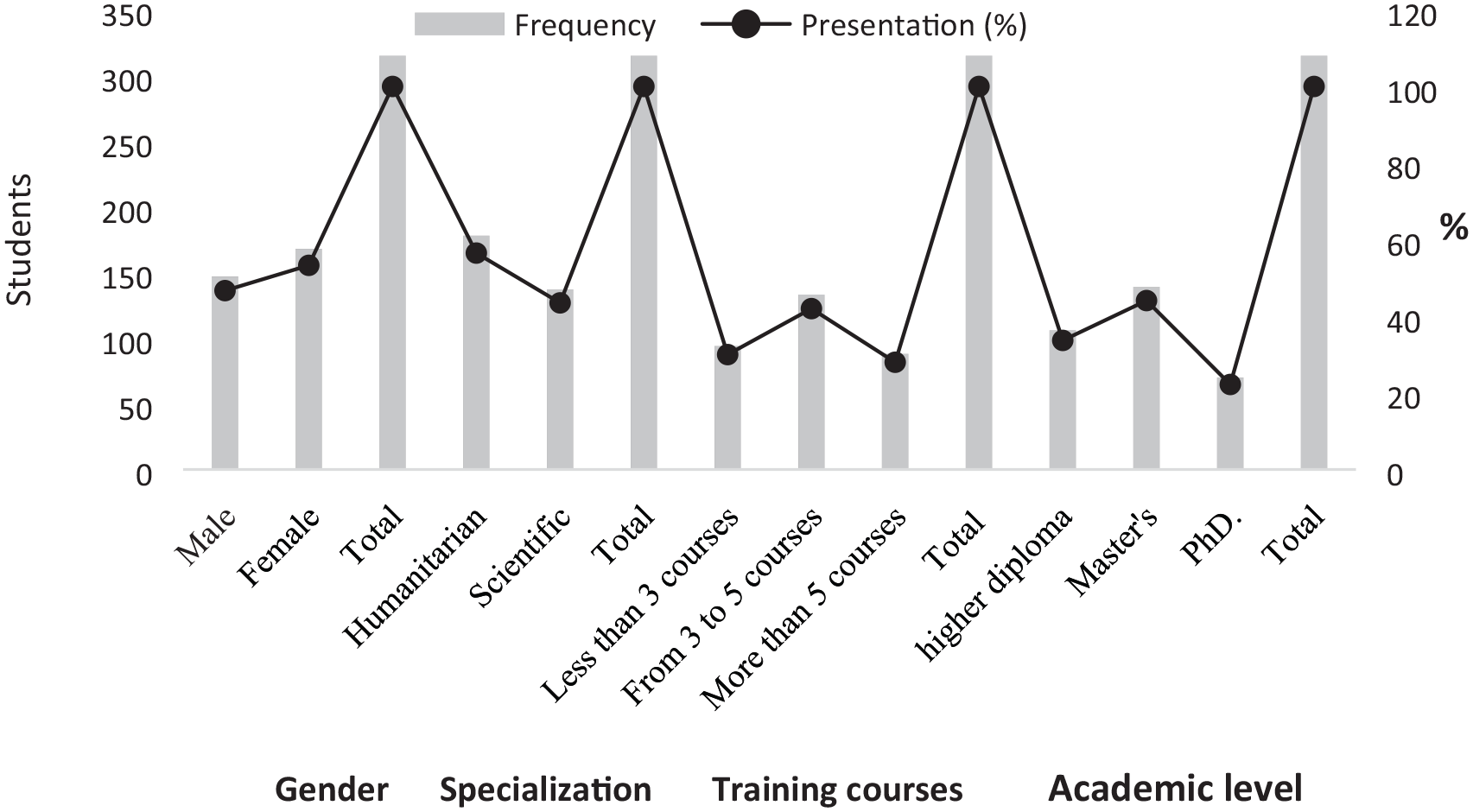
Gender, specialization, and training courses, and academic level.
Figure 1 demonstrates that the sample contains a high percentage of females, which is a result of the university’s substantial female student body. It should be noted that 56.5% of the sample comes from the humanities faculties. This is due to the fact that students in the humanities faculties are more numerous than those in the practical faculties, and they may also be more relevant to the study’s findings because they include students from the Faculty of Administrative Sciences, who study administrative skills, the labor market, and self-marketing. Additionally, the “3 to 5 courses” category has the most courses. The master’s sample was the highest in terms of academic level, the sample distribution may be unbalanced, but the reason is that all groups are represented in the sample.
Study Instrument
A literature review was conducted to develop a structured electronic questionnaire using Google Forms for the purpose of collecting data from postgraduate students. The questionnaire comprised two sections. The first section focused on gaining knowledge of the demographic details of the study sample, such as gender, specialization, training courses, and academic level. To assess the soft skills and employability of postgraduate students, the second section was separated into two axes. Thirty-four paragraphs make up the first axis, which is labeled “Soft Skills.” Eight paragraphs make up the “Employability” axis, which is the second axis. The questionnaire was written in English, translated into Arabic by experts in both languages, and then sent by email to the university’s postgraduate students. A Microsoft Excel spreadsheet connected to the online survey was used to store all of the data. In order to analyze the background data (Gender, Specialization, Training Courses, and Academic Level), descriptive statistical methods such as tables of percentages and frequency counts were used. Cronbach’s alpha and Pearson values were also used to confirm the validity and reliability of the study tool. The research issues were also addressed using the Mean score, standard deviation, Independent Sample t-test, and One Way-Analysis of Variance (ANOVA). The data collected was subjected to statistical analysis using the software program Statistical Package for the Social Sciences (SPSS, Version 22).
Validity and Reliability of the Study Instrument
To ensure the validity of the instrument, two validation methods were employed. Firstly, the instrument was presented to experts in the field who evaluated the validity of the items, their relevance to the study’s themes, and their appropriateness for achieving the study’s objectives. The experts suggested some revisions, which were subsequently incorporated. Secondly, the subjective validity of the instrument was assessed by estimating the “Pearson” correlation coefficient. Soft skill axis correlation coefficient was .907, instrument correlation coefficient was .883, and instrument correlation coefficient for employability was .895. All these values are high, indicating that the tool is actually testing what it is measuring.
Cronbach’s alpha measured the stability of the instrument. The alpha coefficient for networking was .832, for self-marketing it was .849, for negotiation it was .768, for anger management it was .901 and for the instrument as a whole it was .837, and for employability it was .960. All of which are large coefficients of reliability that affirm the validity of the application tool. All the questionnaire items follow a 5-level Likert-scale, where respondents were asked to give an answer ranging from 1 to 5 (1 = strongly disagree, 5 = strongly agree). In order to explain the findings in each class, the author gave the following ratios: Low in the category from 1.80 to less than 2.60, moderate in the category from 2.60 to less than 3.40, strong from 3.40 to less than 4.20, and very strong from 4.20 to 5.
Results and Discussion
To ascertain respondents’ perceptions of soft skills and employability and to ascertain the extent to which Taif University postgraduate students possess these skills and are employable, descriptive analysis, including standard deviations and mean, is utilized.
Networking
Table 1 indicates that postgraduate students possess a high level of awareness regarding networking, which suggests that they are likely to participate in networking activities. With a mean of 3.555 and a standard deviation of 1.334, they agreed that networking occurs to a high or moderate degree. The items’ averages were between 4.165 and 2.619. This finding can be attributed to the recognition among the sample that networking represents an effective means for sharing information, enhancing professional skills, strengthening individual positions, facilitating problem-solving, and empowering network members to effectuate desired changes. These results are in line with those of Baumann (2021), who point out the importance of professional networking for advancing one’s career. These results also corroborated Chakir’s (2020) assertion that networking is a crucial component of career success. A strong and extensive network offers an overview of trends and details on new career opportunities. Social networks make it easier to keep up with relationships and meet new people, opening up new contacts.
The Responses of Individuals from the Research Sample Aligned with Networking.
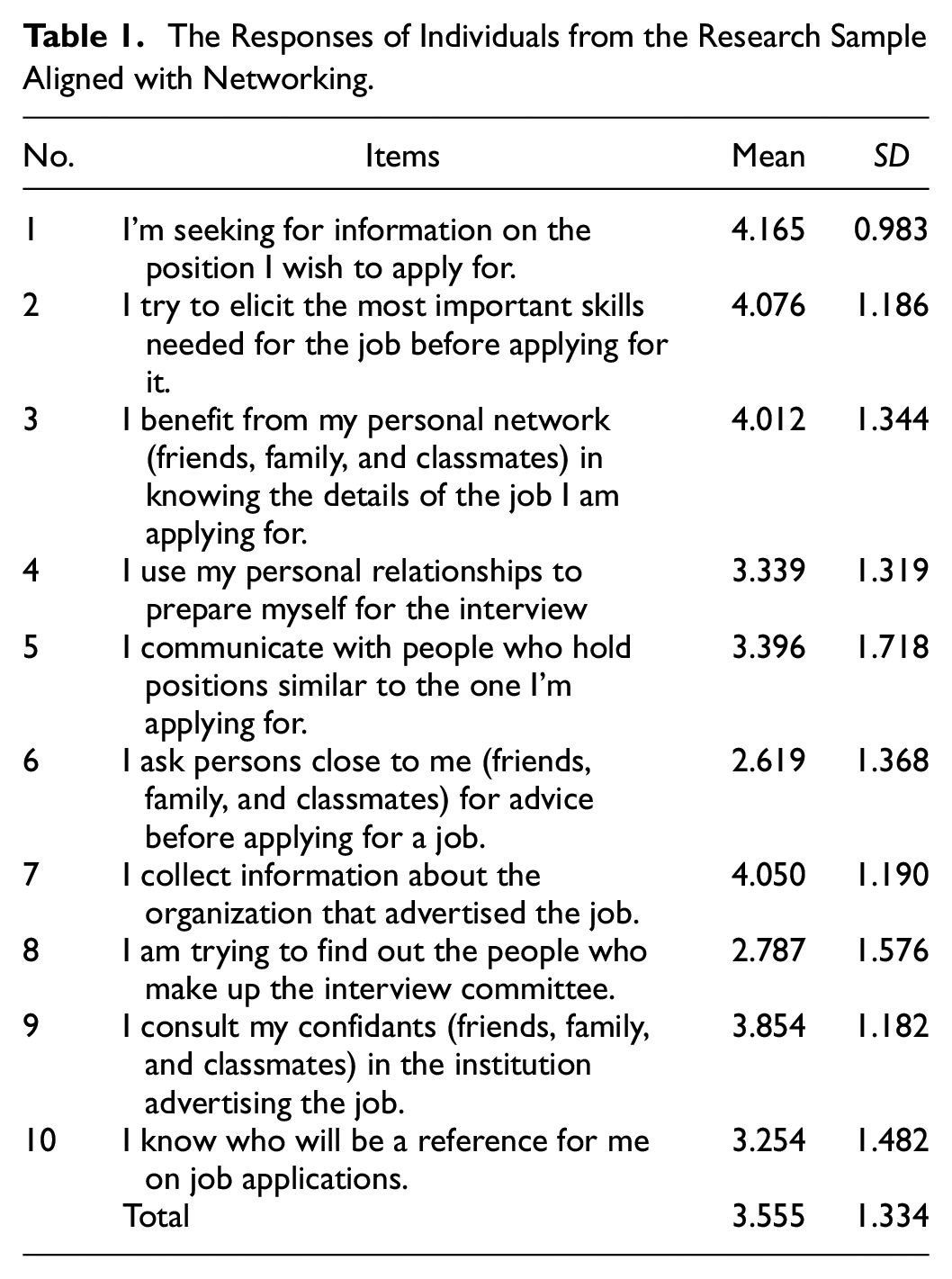
Furthermore, the participants emphasized the significance of interpersonal relationships and effective communication skills in the job search process, which includes obtaining information about job opportunities and the hiring organizations. This information enables individuals to assess the suitability of the job based on their skills and capabilities, as well as the soft skills required for the position. These findings could be attributed to the societal and religious values in the Kingdom of Saudi Arabia that promote cooperation, knowledge sharing, dialogue, mutual support, and discourage isolation. This research supports the claims made by Macintosh and Krush (2018) that networking can help young grads find their first job even if they lack experience. This result is consistent with Payne’s (2018) research, which discovered a link between soft skills and employment outcomes through individual job search activity. According to Payne’s (2018) research, recent graduates who have a high degree of soft skills will be more confident in their abilities to conduct a successful job search. Furthermore, the results showed a moderate to substantial correlation between self-efficacy in the job hunt and soft skills. Numerous studies have shown a correlation between networking and successful career outcomes (Baumann & Utz, 2021; Berau, 2020, p. 15; Chakir, 2020; Pelaez-Verdet et al., 2019). Networking has always been a potent means to build solid professional connections based on mutual respect and interest. In certain countries, networking is considered the most effective approach for recruiting candidates for job positions. Nonetheless, building a professional network provides a considerable advantage in the job search process. Furthermore, networking plays a crucial role in enhancing student performance.
On the contrary, the remaining items were of moderate importance. This finding could be attributed to the students’ lack of interest in certain aspects of the job interview process, such as the psychological aspects or the composition of the interview panel. Additionally, it could be due to the students’ limited reliance on referrals when seeking employment opportunities.
Self-Marketing
According to the responses in Table 2, participants generally had a relatively positive opinion of their self-marketing abilities. Students already possess the ability to advertise themselves, but it is not yet reliable. These results concur with those of Abakumova et al. (2020), who claim that self-marketing is a necessary component of daily life in contemporary society. They additionally confirmed Merdin’s (2011) explanation that, self-marketing tactics are not restricted to the time immediately following graduation or the job search. The requirement for self-marketing and the associated skills persists even after landing a job. The self-marketing strategy is a workable response to the fresh issues that recent graduates and working professionals are encountering. Manai and Holmlund (2015) highlighted the significance of self-marketing by pointing out that it may give students a set of competitive skills and tools that they can use not only after graduation when applying for jobs but also over the course of a lifetime as they change careers and expand their business relationships. In contrast, Uchendu et al. (2015), discovered that respondents’ capacity to promote themselves had significantly decreased. In addition, Rui et al. (2013) also noted that respondents are typically unfamiliar with online personal marketing.
The Responses of Individuals from the Research Sample Aligned with Self-Marketing.

As shown in Table 2, the item “I have the skills to write a curriculum vitae (CV).” came in first place with an average score of (3.831), which is strong and suggests that the sample has a high level of agreement with that paragraph. The sample recognizes the importance of the English language at the moment, whether in the areas of local or international work, which includes dealing with people of different nationalities, especially in the private sector. The item (I am working on developing my English language to be ready to introduce myself if asked.) came in second with an average of (3.644), which is high. These findings are consistent with those of Jocoy (2019), who found that individuals who know and accept themselves are more consistent and able to self-market.
Nevertheless, the items that received moderate ratings indicated that the participants had some level of awareness about the importance of self-promotion in securing a job, whether through a well-crafted resume or an effective interview. They also recognized the value of expanding their network of contacts and relationships, as well as improving their knowledge and skills, to varying degrees, to enhance their chances of finding their desired position. Similarly, the majority of participants held a modest belief that the ability to market oneself effectively is closely linked to finding employment, particularly in the current challenging economic climate characterized by rising unemployment rates and increasing numbers of graduates. However, the fact that these items received average ratings suggests that the participants were hesitant to respond, uncertain about their answers, and unsure about their familiarity with these practices. This finding partially contrasts with those of Rahman (2020), who explains that the majority of respondents recognize that they believe strongly that self-marketing is necessary if they want to succeed and land a decent job.
Negotiation
According to Table 3 the participants had a relatively positive opinion of their bargaining abilities. It was specifically stated in the item (I do not find it difficult to deal with people who disagree with me.) that they can think clearly under pressure to negotiate and do not find it difficult to deal with people who disagree with them. Furthermore, these findings indicate that a significant proportion of postgraduate students possess negotiation skills and consider negotiation to be a straightforward process. This suggests that the sample is adept at communicating effectively and performing well under pressure, demonstrating their ability to make informed decisions, listen attentively to others, and consider opposing viewpoints with an open mind. These results support Maiwald’s (2015) research, which found that negotiating tasks increased self-gain and that high-power negotiators were more likely to succeed than low-power ones. Moreover, Agçam and Dogan (2021) explained that participants had a generally positive perception of their soft abilities. These findings are in line with Taufik et al.’s (2023) study which stressed that negotiation skill is one of the most important soft skills in 21st century.
The Responses of Individuals from the Research Sample Aligned with Negotiation.
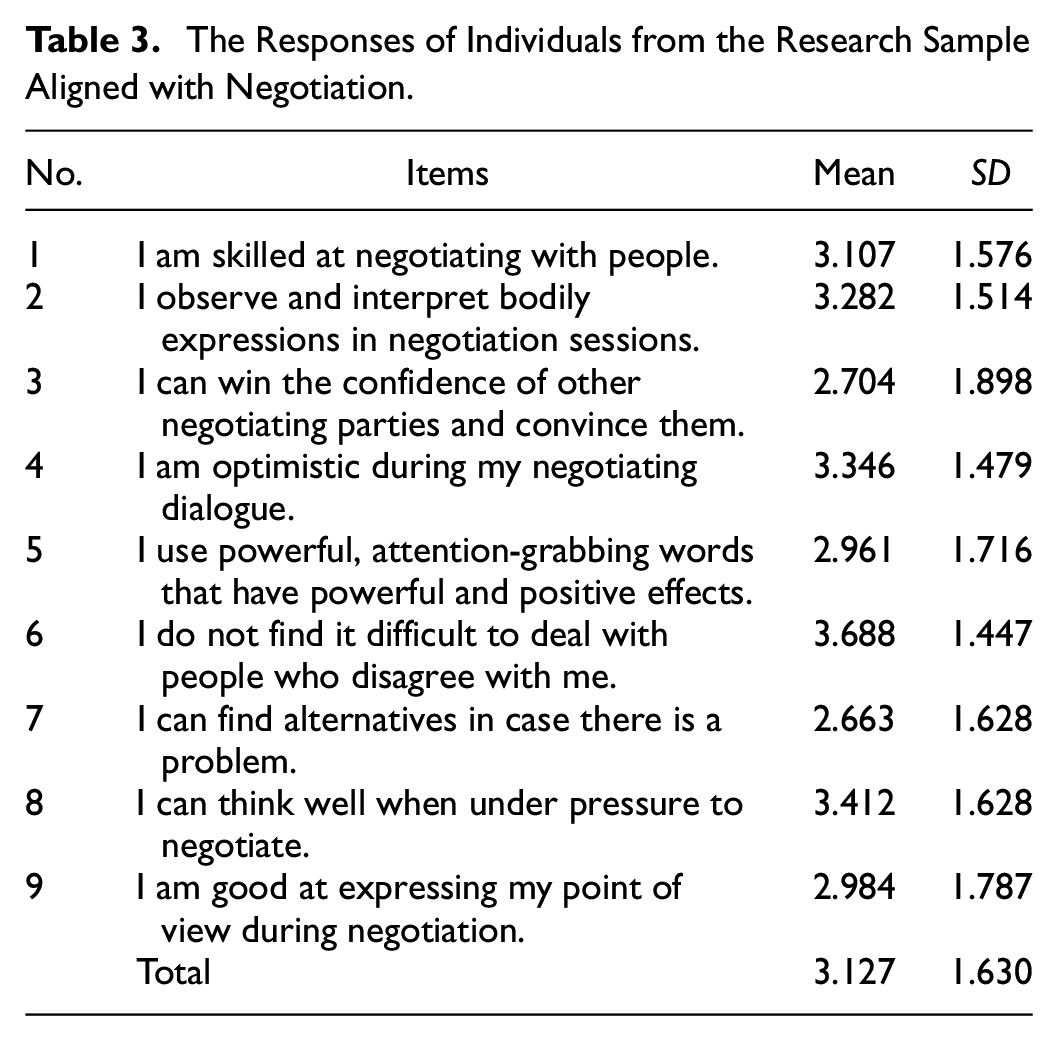
On the other hand, some of participants lacked sufficient self-assurance, when it came to statements like “I am optimistic during my negotiating dialogue,”“ I observe and interpret bodily expressions in negotiation sessions,” and “I am skilled at negotiating with people.” A portion of the sample did not feel confident in their ability to convince other negotiating parties of their position, such as “I am good at expressing my point of view during negotiation,”“I use powerful, attention-grabbing words that have powerful and positive effects.” and “I can find alternatives in case there is a problem.” These results support those of Shahida and Nagaraju (2020), who discovered that many students believed their soft skills were not as strong as they could be. In addition, Costantino and Rodzinka (2022) confirmed that the soft skills that job candidates most frequently lack include decision-making, emotional intelligence, negotiation, and teamwork.
These findings may be explained by the students’ tendency to be a little reserved when expressing their thoughts, their lack of negotiation skills, their poor ability to ask and respond to inquiries, and their inability to make wise decisions in stressful circumstances. These outcomes could also be a result of students’ lack of knowledge, hurry and uncertainty during the employment negotiation process, poor preparation for the negotiation, and their fear of failing. Additionally, these findings indicate that individual, social, and societal conditions all affect negotiation.
Anger-Management
In Table 4, postgraduate students agree that they possess the ability to manage anger with a high degree, with a mean of 3.552 and a standard deviation of 1.448, indicating that they have the capacity to regulate their emotions and control their behavior, making them socially acceptable. The items’ averages were between the ranges of 4.342 and 2.638. The presented results align with those of Tosun (2014), who found that individuals tend to view anger management as a positive and socially desirable trait. They are also somewhat consistent with Awaliyah et al.’s (2019) study, which showed that students’ ability to control their anger falls within the moderate range, suggesting that students possess this skill to a certain extent.
The Responses of Individuals from the Research Sample Aligned with Anger Management.

Some of the items received high scores, with an average ranging from 4.342 to 3.730, indicating that the sample believes they possess the ability to manage their anger effectively in stressful situations. They tend to employ strategies such as calm breathing and focusing on their future goals to control their anger. This finding can be attributed to the participants’ recognition that anger management can prevent potential conflicts with others, particularly during direct interactions with various groups and customers. This result is consistent with the explanation provided by Ozcelik and Riolli (2015), who found that employees with higher levels of trait anger were more likely to engage in proactive behaviors, such as identifying and addressing work-related issues. Moreover, traits of anger were found to be associated with withdrawal behaviors.
The remaining paragraphs, on the other hand, were of a medium degree, with a mean of (3.273–2.638), respectively, confirming that the sample has a sense of humor to some extent and is quick to anger and quick to satisfy, which may help to explain why they have a balanced personality. The sample attempts to maintain composure when angry and refrains from wanting to vent their rage on other people. These results are reinforced by Çevik (2017), who discovered that anger management and all other dimensions of anger had negative associations with life satisfaction and positive relationships with it. Moreover, in line with Alshammari (2020), who noted that anger management programs result in a reduction in students’ violent and irrational behavior. Additionally, these results contrast with that of Prabhu et al. (2016), who discovered that 70% of students acknowledged having a bad temper “occasionally.” Furthermore, only 3% of students claimed that they would “never” act as if they could tolerate or suppress their emotions.
Employability
Table 5 revealed that postgraduate students have a high awareness of employability, demonstrating that they possess soft skills. They also agreed that employability occurs to a high degree, with a mean of 3.778 and a standard deviation of 1.374. The items’ averages varied from 4.425 to 3.247. As indicated in Table 5, participants are confident in their employability. For example, the statement “I got the job because of my constant search for opportunities” came first, indicating that the study participants are constantly attempting to find a suitable job in order to achieve financial stability, satisfy needs and desires, increase a sense of psychological satisfaction, and achieve various social, economic, and other goals. Particularly considering that, as of the third quarter of 2022, projections from the General Authority for Statistics in the Kingdom put the jobless rate in the Kingdom of Saudi Arabia at 9.9%.
The Responses of Individuals from the Research Sample Aligned with Employability.
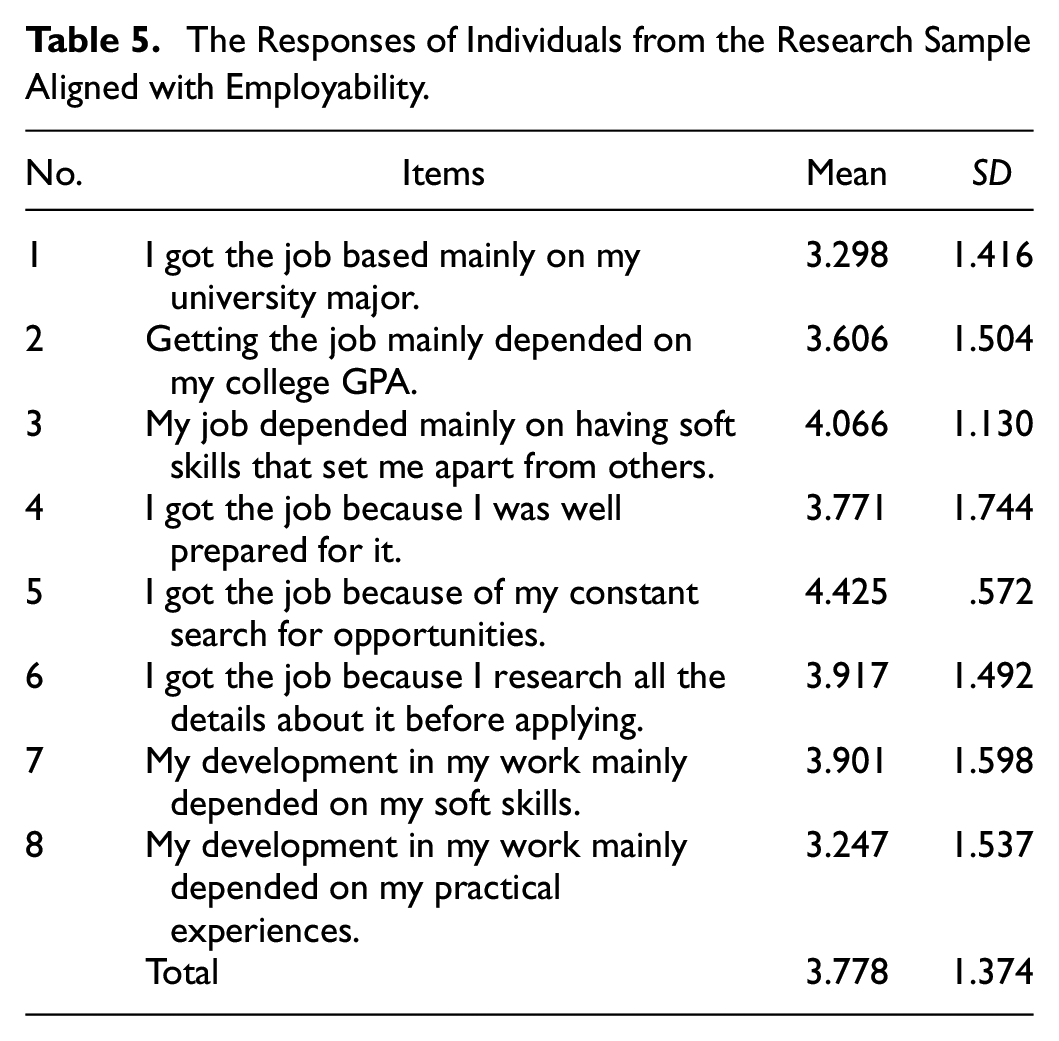
Items (3, 6, 7, 4, and 2) had a high degree, with an average range between (4.066 and 3.606), indicating that the majority of undergraduates believe they are employable. They were considering the career they would pursue after graduating, and they were working to improve their soft skills as a crucial pillar to increase their chances of landing a job. These results support the sample’s belief that soft skills are now extremely important to job seekers because employers are no longer solely looking for candidates with university degrees. Instead, candidates with soft skills are sought after in job advertisements, and passing an interview and having a strong CV are just two of the requirements for landing a job.
With an average of (3.298–3.247) respectively, the items “I got the job based mainly on my university major.” and “My development in my work primarily depended on my practical experiences” came in last and moderately, respectively, indicating that the sample recognizes the importance of academic specialization and practical experience, but to varying degrees. These results support the assertion made by Schislyaeva and Saychenko (2022), that employees’ skills, not their titles or academic credentials, will eventually become the “currency” of the labor market. Regardless of their professional classifications, individuals can meet the needs of their employers thanks to their skills, which can be specialized, adaptable, physical, technological, digital, or human.
According to Table 6, there are statistically significant gender-related variations between the average responses of the study sample members regarding negotiation at the level (p < .05), with gender-related disparities favoring women. This suggests that women understand negotiating better than men. This may be because women have a strong desire to work, especially now that there has been an increase in the appointment of women to various positions in both the public and commercial sectors. These findings concur with those of Siddiky (2020), Nicks et al. (2022), Ladrón et al. (2023) but differ from those of Agçam and Dogan (2021), Dogan (2021), which suggests that there are no gender differences.
Results of the t Test of the Differences Between the Average Responses of the Research Sample According to Variable of Type.

In the remaining dimensions, there were no statistically significant differences between male and female participants, indicating that both groups share similar views. This finding suggests that an individual’s employability is not influenced by their gender, as both males and females possess the necessary skills for the employability process. These skills can be acquired through training and experience, regardless of gender. Despite the cultural norms and traditions in Arab society that may favor men in employment, the Kingdom of Saudi Arabia has recently made efforts to focus on women, provide them with soft skills, and combat gender discrimination in the workplace. These findings support the claim made by Agçam and Dogan (2021) that there is no correlation between gender and soft skills. However, they differ from the results of Hjetland et al. (2022), who highlight gender differences in the emphasis placed on self-presentation skills. Furthermore, the findings diverge from those of Siddiky (2020), who found that, except for the development of presentation skills, gender significantly impacts the development of soft skills. In the area of anger management, Tosun (2014) noted that women tend to be more adaptable than men in transforming their angry behaviors into appropriate ones.
According to Table 7, the specialization variable does not statistically significantly affect the response averages of the study sample with regard to soft skills and employability. This result explains that there is agreement among the respondents in their appreciation of soft skills and employability, which means that scientific specialization has no effect on the responses of the respondents, meaning that they are all looking for job opportunities. All respondents, with their varied experiences, also agree on the significance of soft skills because they believe it can help them improve their personal and practical lives in profound ways. These results are consistent with the findings of Lee and Kusumah (2019), who found no differences in scientific specialization.
Results of the t Test of the Differences Between the Average Responses of the Research Sample According to the Variable of Specialization.

ANOVA was analyzed between different groups in the study sample using a (p) test in order to identify differences in averages for soft skills and employability that are caused by the variable of training courses (Tables 8 and 9). In terms of self-marketing, anger control, and employability, the average sample responses are not significantly different, as shown in Table 8, which denotes the respondents’ consensus on these dimensions. Additionally, there are statistically significant differences in the average sample responses for networking, negotiating, and overall based on the training course variable (p < .001). This indicates that the sample’s participants have diverse opinions on these aspects. To ascertain whether the direction of the differences favored any of the training courses, Schiff’s test was used.
Results of the (F) Test of the Differences Between the Response Averages of the Study Sample According to the Variable of Training Courses.

“Chefia” Test of the Directions of Differences Between the Categories of Training Courses.

“*” = significant at ≤ 0.05.
According to Table 9, there are statistically significant variations in the dimensions of networking, negotiation, and total between the categories of 3 courses or less, 3 courses to 5, and 5 courses or more, with the category of 3 courses or less having the advantage. Between the category of 3 to less than 5 courses and the category of 5 courses or more, there are differences in the two dimensions of networking and total, favoring the latter. Thus, the quantity of training courses taken is not a requirement for having soft skills and landing a job. This could be attributed to the fact that what matters—not the amount of training courses—is the level of interest and knowledge of soft skills as well as the desire to find employment. Some people took fewer classes, but they still had the capacity to learn and develop their skills, improving their employment prospects.
ANOVA was analyzed between multiple groups in the study sample using a (p) test to identify differences in averages about the soft skills and employability that are related to academic level (Tables 10 and 11). The average sample responses for the three categories of self-marketing, anger control, and employability are not statistically different, as shown in Table 10. Additionally, there are statistically significant differences in the average sample responses for networking, negotiating, and overall based on the academic level (p < .001). This indicates that the sample’s participants have diverse opinions on these aspects. To ascertain whether the direction of the differences favored either of the Academic level, Schiff’s test was used.
Results of the (F) Test of the Differences Between the Response Averages of the Study Sample According to the Variable of Academic Level.

“Chefia” Test of the Directions of Differences Between the Categories of Academic Level.

“*” = significant at ≤ 0.05.
Table 11, which compares the networking, negotiating, and overall dimensions between the higher diploma category and the master’s category, reveals statistically significant differences in favor of the higher diploma group. Additionally, there are statistically significant differences favoring the master’s category over the PhD category. Additionally, there are differences in the networking dimension favoring the higher diploma category over the PhD category. The variation in the possession of soft skills and employability is influenced by the academic level of individuals to varying degrees. Just as academic levels differ, so do the levels of employability and possession of these skills among people. This is due to the fact that proficiency in a particular skill is largely dependent on an individual’s thought processes and their capacity for learning and growth. Nonetheless, individuals with higher academic levels may possess more skills and be deemed more employable.
The Pearson correlation coefficient was utilized to detect correlations between soft skills and employability for postgraduate students at Taif University in order to ascertain the relationship between the two. The outcomes are presented in Table 12 as it demonstrates that there is a direct and statistically significant correlation between soft skills and employability, which indicates that postgraduate students’ who possess soft skills increase their career opportunities and employability.
Pearson correlation coefficients between soft skills and employability.

p-value < .001.
The table also demonstrates a direct correlation between each of the dimensions individually and employment opportunities, with a significance level of (p < .001) in each case. This is attributable to the value of networking, self-marketing, negotiation, and anger management in the workplace, as these skills aid job seekers in learning about the nature of the position they are applying for and its requirements, as well as how to prepare for the position, manage their emotions, and develop relationships in order to meet the position’s requirements. They also help job seekers learn about the institution posting the position and the type of work it entails, which helps them prepare for and ace the interview. These results support Agçam and Dogan’s (2021) assertion that participants typically had positive perceptions of their soft skills. This is also in accordance with Vasanthakumari’s (2019) explanation of how soft skills improve relationships, performance at work, and career prospects. It prepares them for successful performance in both their academic and future job environments. Additionally, Zuma (2021), discovered that soft skills are gaining popularity since they help with personal growth, learning engagement, and job success. Samantray et al. (2016), also found that soft skills are essential for students’ employability and play a significant role in professional development.
Recommendations
The study’s findings suggest several recommendations for Taif University’s postgraduate students to enhance their soft skills and improve their employability. First, there is a need to expand the acquisition of soft skills among postgraduate students to promote independence and equip them with the necessary skills that align with the demands of the labor market. Secondly, the institution should periodically review their available majors, programs, and curricula to meet the developmental and labor market requirements. Thirdly, training courses on soft skills should be made available to college students, as they are often a requirement for job seekers. Fourthly, training programs should be developed to help students improve their self-marketing abilities, such as marketing concepts and skills. Fifthly, students should be taught how to create a network of contacts to gather information about the desired job position or the organization offering job opportunities. Sixthly, postgraduate students should be encouraged to improve their English language proficiency, as it is a crucial skill in today’s job market. Lastly, training sessions should be provided to help students manage their anger effectively by enhancing their ability to control their emotions, actions, and behavior.
Footnotes
Acknowledgements
The author extends appreciation to The Scientific Research Agency at Taif University in Saudi Arabia for funding this research through project number 16- 442 - 1.
Declaration of Conflicting Interests
The author declared no potential conflicts of interest with respect to the research, authorship, and/or publication of this article.
Funding
The author(s) disclosed receipt of the following financial support for the research, authorship, and/or publication of this article: This research was funded by The Scientific Research Agency at Taif University in Saudi Arabia, project number 16- 442 - 1.

Data Availability Statement
Data sharing not applicable to this article as no datasets were generated or analyzed during the current study.