




Abstract
This study aimed to investigate the effects of Storytelling Narrated Videos (SNV) on students’ knowledge retention and transferability. A total of 56 students from a university in Indonesia were randomly assigned to a quasi-experimental research design exposed to SNV and to Lecture Narrated Videos (LNV). Two videos were created to deliver content on Bloom’s Taxonomy, one using a lecture-style format and the other adopting a storytelling approach. Data were collected through tests, questionnaires, and essays. The findings revealed that participants exposed to SNV had higher retention memory scores, indicating a positive impact on knowledge retention compared to those who watched LNV. Moreover, the storytelling videos facilitated cognitive skill progression, enhanced understanding through engaging visuals, and fostered a strong connection with a familiar narrator, resulting in a more dynamic and memorable learning experience. The study also examined knowledge transfer and found that participants who watched the storytelling videos performed better in applying Bloom’s Taxonomy concepts to planning teaching objectives in the essay test. This suggests that the incorporation of storytelling narration and promoting transfer knowledge activities can enhance students’ understanding, retention, and practical application of the learned material. Overall, the findings highlight the potential of incorporating storytelling in narrated videos to improve students’ knowledge retention, transferability, and engagement in educational settings.
Plain language summary
This research aimed to explore how using Storytelling Narrated Videos (SNV) affects students’ memory and ability to apply what they’ve learned. The study involved 56 students from an Indonesian university who were randomly assigned to either watch SNV or Lecture Narrated Videos (LNV). Two different videos were created to teach about Bloom’s Taxonomy—one presented information in a traditional lecture style, while the other used storytelling. Data were collected through tests, questionnaires, and essays. Results showed that students who watched SNV had better memory scores, suggesting that storytelling videos helped them remember information better compared to those who watched LNV. Additionally, storytelling videos helped students improve their thinking skills, made the content more understandable with engaging visuals, and created a stronger connection with the narrator, resulting in a more interesting and memorable learning experience. The study also looked at whether students could use what they learned in practical situations, and found that those who watched storytelling videos performed better in applying Bloom’s Taxonomy concepts in the essay test. This indicates that using storytelling in videos and encouraging students to apply what they learn can improve their understanding, memory, and ability to use the information in real-life scenarios.
Introduction
Storytelling is an essential aspect of human communication, and it has been used for centuries to pass on knowledge and experiences from one generation to another. Stories can capture people’s attention and evoke emotions, making them a powerful tool for conveying information and ideas (Arifani, 2020; Caminotti & Gray, 2012; Loniza et al., 2018; Verhallen & Bus, 2011).
Storytelling has evolved with the rise of digital media, and one of the most popular forms of digital storytelling is narrated videos (Akgün & Akgün, 2020). Storytelling Narrated Videos (SNV) are video recordings with voice-over narration, explaining the content clearly and concisely (Paivio, 1986; Plass et al., 2009). This kind of medium is increasingly popular, with many teachers and instructors using it to enhance teaching strategies (Bartsch & Cobern, 2003; Tabbers et al., 2004). With the integration of visual media, such as images and animations, SNV can provide a rich and engaging learning experience, which is a crucial factor in the retention of information (Guo et al., 2014).
In recent years, researchers have investigated the use of narrated videos as a teaching tool and have found that this form of media has several benefits for knowledge retention (Efendioglu, 2016; Zaini & Mazdayasna, 2014). For example, students who watched narrated videos have been found to retain more information than those who read text-based materials alone (Loniza et al., 2018). Narrated videos engage multiple senses and provide a more immersive learning experience than traditional text-based materials (Mayer, 2001, 2014).
Using stories in narrated videos can further enhance their effectiveness in teaching. Stories can connect emotionally with students, making the material more memorable and easier to retain (Mayer & Anderson, 1992; Mayer & Moreno, 2002). Stories can also provide context for complex concepts, making them more accessible to students who might otherwise struggle to understand them (Teng, 2023; Verhallen & Bus, 2011).
The benefits of narrated videos and storytelling in education have not gone unnoticed, and educators are increasingly using this approach to enhance their teaching strategies. However, the effectiveness of SNV for teaching complex concepts to pre-service teachers has not been widely studied. Despite some evidence that narrated videos can enhance knowledge retention, it is unclear how long the effects last or how transferable the knowledge is to other contexts. The problem addressed in this research is the lack of empirical studies on the effectiveness of using SNV to teach complex concepts to pre-service teachers. Although the use of narrated videos in education has been shown be beneficial, there is a research gap regarding the effects of incorporating storytelling in these videos.
Consequently, this research aims to investigate the potential retention effects and the transferability of knowledge acquired through SNV in pre-service teachers. Participants were evaluated on their capacity to apply Bloom’s Taxonomy concepts when planning teaching objectives in a separate essay test. This study examines the impact of incorporating storytelling in these videos on knowledge retention and transferability across different settings and populations. This study is intended to fill the gap in the literature on the effects of using SNV for educational purposes.
Review of Related Literature
Storytelling Narrated Video (SNV)
This literature review explores the impact of SNV on pre-service teachers’ knowledge retention. Studies have investigated the effectiveness of this teaching tool on student learning outcomes, with a particular focus on the use of stories in narrated videos to enhance knowledge retention (Karsenti & Bugmann, 2018; Moulton et al., 2017; Noroozi et al., 2020).
The strongest learning videos connect viewers emotionally with the topic presented (Victor, 2017). Incorporating personalized principles into the narrative makes it even more engaging and relatable for the audience. Narrated videos have the advantage of using voice-over narration, which can evoke specific emotions; the storyteller can emotionally impact the viewers by carefully crafting the script and utilizing tone, pacing, and inflection. Connecting with emotions such as empathy, joy, sadness, or inspiration can make the content more memorable.
The use of narrated videos as a teaching tool has positively impacted students’ academic performance and engagement. For example, Zaneldin et al. (2019) investigated the impact of video-based learning on student performance in an engineering course. The study found that students who watched video lectures had better academic performance than those who did not. Similarly, Seckman (2018) compared the effects of narrated videos to traditional text-based materials on nursing students’ learning outcomes. The results showed that students who watched the narrated videos had higher levels of knowledge retention and were more engaged in the learning process.
Using video in the educational setting can generate an immersive atmosphere that helps students better remember key concepts and fosters the development of critical thinking skills (Mora, 2016). The primary objective of knowledge retention is to facilitate the transfer of newly acquired information from short-term to long-term memory (Mithun & Evans, 2018). Overall, the flipped classroom led to higher student performance and longer-term recall of material. While the traditional technique of teaching is superior in terms of short-term retention (up to 3 months), incorporating videos in teaching excels in terms of long-term retention (up to 12 months) (Shatto et al., 2017). Students who focused on note-taking rather than thinking and processing the material typically lead to poor knowledge retention or long-term memory (Hadie et al., 2019). Using the flipped classroom ultimately improved student retention rates and grade point averages (Mithun & Evans, 2018).
Stories in narrated videos are particularly effective in enhancing students’ knowledge retention. Susantiniet al. (2016) investigated the impact of a video with a narrative approach on students’ understanding of biology concepts. The study found that the narrative method was more effective than a traditional approach in improving students’ understanding of the material. Similarly, Salajan et al. (2015) investigated the impact of storytelling in videos on adult students’ motivation and engagement. The study found that storytelling effectively improved students’ motivation and engagement, leading to improved learning outcomes.
Pre-service teachers are important students who can benefit from SNV. Hu and Sperling (2022) investigated the impact of a narrative-based video on pre-service teachers’ attitudes toward teaching. The study found that using narrative in the video led to more positive attitudes toward teaching and increased motivation to become a teacher. Similarly, Diaz (2016) investigated the impact of a story-based video on pre-service teachers’ understanding of pedagogical content knowledge. The study found that using stories in the video led to a deeper understanding of the material and improved learning outcomes.
In addition to improving knowledge retention and understanding, SNV can positively impact pre-service teachers’ attitudes toward teaching. This is significant in that pre-service teachers with positive attitudes toward teaching are more likely to be effective teachers and remain in the profession long-term. While using SNV in pre-service teacher education has many potential benefits, it is also important to note the challenges associated with this teaching tool. For example, the design and implementation of narrated videos can be time-consuming and require significant resources.
Retention and Knowledge Transfer
Retention refers to students’ ability to remember the information they have learned over time. It encompasses the process of encoding, storing, and later retrieving information from long-term memory (Rinne et al., 2011). Retention is an essential aspect of learning because it reflects the extent to which knowledge and skills acquired during the learning process can be accessed and applied in future situations.
Retention is affected by the amount of mental processing (cognitive load) imposed on students during the learning experience. Educators can improve students’ cognitive processing by minimizing unnecessary mental processing (extraneous cognitive load) and optimizing meaningful learning processes. Consequently, students are more likely to encode and store information in long-term memory. (Castro-Alonso et al., 2021).
Transfer is the application of knowledge from one context in another (Anderson, 2005). Researchers have identified different types of transfer along three dimensions: positive, negative, and zero transfer; near and far transfer; and lateral and vertical transfer (Barnett & Ceci, 2002). Positive transfer occurs when knowledge from one situation benefits learning in a new situation. Negative transfer, on the other hand, hinders learning in a new situation. Zero transfer indicates no effect on learning. Near transfer refers to transfer between similar situations or tasks, while far transfer involves dissimilar situations. Lateral transfer occurs between tasks of similar complexity, and vertical transfer is between less complex and more complex tasks. Notably, positive/negative, near/far, and lateral/vertical transfers can occur simultaneously, as they involve the transfer of knowledge among similar pieces of knowledge. One method to promote knowledge transfer is through deep and meaningful learning, involving understanding concepts rather than memorizing information, which has been found to facilitate greater transfer (Argote, 2012). In addition, conceptual learning emphasizes problem-solving within relevant knowledge frameworks and actively engaging in elaboration and making connections between ideas during the learning process enhances deep processing and transfer (Chi & Wylie, 2014).
Transfer is a commonly explored concept in multimedia learning research, often assessed as a measure of whether learning has occurred. The focus of current research is on near, positive, and lateral transfer immediately after instruction (Sorden, 2012). For instance, the use of multiple representations, such as printed text and graphics, has been found to increase transfer (Sorden, 2012). In multimedia learning research, knowledge transfer is often assessed through problem-solving transfer questions that measure near, lateral, and positive transfer; the ability of students to answer these questions determines the level of transfer achieved (Mariano, 2014).
Early Studies
Granito and Chernobilsky (2012) found that incorporating storytelling in instructional videos improved knowledge retention compared to traditional lecture-style videos, and suggested that the narrative elements and emotional engagement in storytelling videos contributed to enhanced retention. Dohn et al. (2020) observed that engaging students in transfer knowledge activities significantly improved their ability to apply learned concepts in practical scenarios.
The role of visuals in facilitating retention and knowledge transfer has also been extensively examined. Mayer and Anderson (1992) found that the use of diagrams, illustrations, and animations can enhance comprehension and improve knowledge retention. Zhang et al. (2006) explored the effects of incorporating interactive elements in instructional videos and found that videos with interactive features, such as quizzes and simulations, had a positive impact on retention and knowledge transfer to real-world situations.
Baehr (2012) investigated the influence of collaborative learning on knowledge transfer and found that students who engaged in collaborative activities demonstrated higher levels of knowledge transfer compared to those in individual learning settings. Chandler and Sweller (2009) emphasized the importance of instructional materials with low cognitive load, as concise and well-organized content significantly improved retention and facilitated knowledge transfer to new contexts. Motivation was found to play a significant role in retention and knowledge transfer. Ryan and Deci (2017) highlighted that intrinsically motivated students with a sense of autonomy and competence exhibited higher levels of knowledge retention and transfer. Simonsmeier et al. (2020) demonstrated that students who actively engaged in reflection and metacognition showed greater transfer of knowledge and better application of learned concepts. Overall, incorporating storytelling, interactive elements, visuals, collaborative learning, reducing cognitive load, and promoting intrinsic motivation and metacognition can contribute to improved knowledge retention and transfer across various educational contexts.
Method
Design
This research adopts a quasi-experimental design to explore the impact of two distinct video formats, namely lecture-style (LNV), and storytelling-oriented videos (SNV), on participants’ retention of knowledge and its transferability. To mitigate possible order effects (Rogers & Revesz, 2019), participants were provided with intervals of rest following each session of video viewing, aligned with Bloom’s Taxonomy. Specifically, while LNV was administered on the initial day, SNV was presented on the subsequent day to facilitate mental recuperation and mitigate the risk of carryover effects (Cruz et al., 2023). These scheduled intermissions were implemented to alleviate cognitive fatigue, enhance cognitive preparedness, and maintain the validity of assessments.
Participants
The study involved 56 students attending different study programs at a university in Indonesia. All participants were aged between 20 and 21 years old. They are pre-service teachers studying in English and Mandarin Language programs.
Informed consent was obtained from all these participants before their inclusion in the study to ensure that they fully understood the purpose of the research and what was expected of them. To do this, a written informed consent form was provided to participants that outlined the purpose of the study, what was required of them, the potential risks and benefits of participation, and how their data were used. The participants were encouraged to ask questions about the study and the informed consent form. The researchers were available to answer these questions and provided any additional information as needed. Participants were informed that their participation in the study was voluntary and that they could withdraw at any time without consequences. The university’s Ethics Committee of the Faculty of Language and Arts approved the study.
Materials
For this study, two videos were created to deliver the content on Bloom’s Taxonomy. Video 1 was designed in a lecture-style format (LNV), featuring a knowledgeable narrator who explained the subject matter straightforwardly, with a focus on providing clear explanations, presenting key concepts, and emphasizing the logical progression of ideas. The narrator also used visual aids, slides, and demonstrations to provide visual representations of the concepts being discussed, in order to enhance participants’ understanding of the content. The primary goal of this particular video was to give a concise and informative overview of Bloom’s Taxonomy for comprehension.
Video 2, on the other hand, followed a storytelling-oriented approach, presenting the same content in a narrative format with engaging visuals and a compelling storyline. This SNV employed a narrative approach to deliver information or content to the audience. Rather than relying solely on presenting facts and information, the SNV incorporated storytelling elements such as characters, plot, and conflict to deliver the information. In addition, the teacher, served as the narrator, in order to create a sense of familiarity and foster a sense of engagement and trust. The SNV also included engaging visuals, such as illustrations to stimulate the viewers’ imagination and facilitate their understanding of the concepts being discussed.
This study used various online communication platforms. First, MS Team was used for live teleconferencing, allowing the lecturer and participants to connect and interact during the video sessions. Second, WhatsApp was used to deliver video content to participants. Third, the Socrative platform was used to conduct online tests. Fourth, Google Forms was used to conduct an essay test.
Data Gathering Procedure
The data was gathered separately on two occasions over two days using exactly the same procedure for both videos. A total of 56 participants were assigned to both the lecture-style and storytelling-oriented video groups, ensuring that they all had exposure to both types of videos. However, we encountered difficulties collecting data from 15 students due to technical difficulties or prior commitments, resulting in data from only 41 students.
The lecturer instructed participants to be present online in MS Team before watching the video via WhatsApp. Participants checked their electronic devices (e.g., Android phones, laptops) and ensured stable internet connections. A live teleconference session was conducted on MS Team, during which the lecturer shared his screen to enable participants to watch the video. After completing the video, the lecturer informed the participants about the procedure for the online test. Participants were prohibited from opening other browsers and were required to activate their web cameras. They logged in to their student accounts on the Socrative platform and completed the post-video test within the allocated time frame. Finally, the lecturer dismissed the class.
Both groups watched both videos, but in different order. They were given a rest period between videos to minimize the effects of order bias, that is, effects of the first video on their perception of the second video. However, the differentiation in the effects of the two videos on memory and transfer was achieved through the implementation of a repeated measures experimental design. In this design, each participant served as their own control, experiencing both the LNV and SNV conditions. By comparing participants’ performance within each condition, we were able to assess the impact of the different video formats on memory and transfer.
In addition to the knowledge retention test (the Socrative platform), this study included a questionnaire to gather information about participants’ engagement and satisfaction with the videos. This questionnaire allowed participants to provide feedback on their attitudes toward the videos and how engaged they felt while watching them.
Over the following 4 weeks, we also conducted an essay test in the laboratory. All participants were requested to complete the test through a Google Form link. The test prompt assessed participants’ ability to plan teaching objectives based on Bloom’s Taxonomy. Participants were given 60 min to complete the test. They were asked to imagine themselves as teachers planning a lesson on a subject of their choice. Their task was to create three teaching objectives aligned with specific Bloom’s Taxonomy levels that matched their lesson’s desired learning outcomes. Each teaching objective was required to clearly define the corresponding level of Bloom’s Taxonomy and explain how student achievement would be assessed. Participants were also instructed to provide an example activity to help students meet each objective. For example, participants were asked to select a subject or topic, such as English. They then generated teaching objectives based on different levels of Bloom’s Taxonomy. They outlined how the achievement of each objective would be assessed and provided relevant activity examples to assist students in meeting the objectives.
We intended to measure the students’ transfer of knowledge from the test as mentioned earlier. By analyzing their responses, we aimed to assess the extent to which participants demonstrated the transfer of their understanding of Bloom’s Taxonomy and their ability to effectively apply that understanding in planning measurable teaching objectives aligned with its levels. This analysis provided valuable insights into participants’ knowledge acquisition and their practical application of Bloom’s Taxonomy in instructional planning.
Data Analysis Technique
The data from the pre-test, post-test, and survey were analyzed using a t-test to identify any significant differences between the two groups regarding knowledge retention and transferability with the videos. Possible study limitations include the small sample size of 56 students and the limited study duration covering only two videos. Overall, this method provided a straightforward way to test the impact of story-telling narrated videos on students’ knowledge retention and transferability.
Findings and Discussion
Statistical Validation
Positive Impact of the Storytelling Narrative Videos on Retention
The paired samples test revealed a statistically significant difference between the retention scores of students when exposed to LNV compared to SNV. On average, the short-term memory scores were higher by approximately 1.143 units for students watching SNV compared to LNV. The confidence interval suggests that the true mean difference is likely to fall between 1.626 and 0.660 units. This indicates that SNV may result in better retention that LNV, as the average short-term memory scores were higher for students exposed to SNV (Table 1).
Paired Samples Test.

Paired Sample t-Test Mean Differences
The mean of the retention score for students in the SNV group was 7.25, while the mean for students in the LNV group was 6.11. This suggests that students who watched SNV had a higher average short-term memory score compared to those who watched LNV.
The standard deviation measures the variability or spread of the scores within each group. In this case, the standard deviation for SNV (1.832) is slightly higher than that of LNV (1.723). The standard error mean reflects the precision of the estimate of the mean. The standard error means for both groups indicate the estimated variability of the sample means around the population means. In summary, based on these statistics, it appears that students exposed to SNV had a higher average short-term memory score compared to those exposed to LNV. It is noteworthy that statistical tests, such as the paired sample test, are typically conducted to determine if the observed differences are statistically significant and not due to random chance alone.
Despite potential overlap in means and standard deviations, the overall trend and statistical significance of observed differences are crucial. The paired samples test revealed significant disparities in retention scores between students exposed to lecture-narrated and storytelling-narrated videos, with the latter yielding higher short-term memory scores. Furthermore, ANOVA results underscored significant differences in test scores among lecture-narrated, storytelling-narrated, and transfer knowledge conditions. Multiple comparisons affirmed these distinctions, highlighting the impact of varied instructional approaches on learning outcomes. These findings align with theoretical perspectives on the efficacy of storytelling narration and transfer knowledge activities in enhancing learning outcomes, suggesting their positive influence on students’ understanding and retention. Thus, despite some overlap, the significant differences observed substantiate the validity of our results (Table 2).
Paired Samples Statistics.

Correlation
The correlation coefficient between LNV and SNV is .487. This coefficient represents the strength and direction of the relationship between the two variables. The p-value associated with the correlation coefficient is .000, which is less than the conventional significance level of .05. This indicates that the correlation between LNV and SNV is statistically significant.
In summary, the paired sample correlation analysis reveals a statistically significant positive correlation of .487 between LNV and SNV. This suggests a moderate positive relationship between these two variables. As one variable increases, the other variable tends to increase as well. The significant correlation coefficient indicates a systematic association between lecture-narrated videos and storytelling-narrated videos regarding their impact on the measured outcome (Table 3).
Paired Samples Correlations.

Transferability: Comparing Lecture and Storytelling Videos with Transfer Knowledge
After obtaining participants’ essay results, we conducted an ANOVA test to check for any differences in the mean test scores among the LNV, SNV, and transfer knowledge. The ANOVA results indicate a significant difference in the mean test scores among the video with lecture narration (LNV), video with storytelling narration (SNV), and transfer knowledge conditions (F[2, 165] = 108.856, p < .05). Next, the multiple comparisons test (Tukey HSD) demonstrated significant mean differences among the different conditions.
The mean test score for the LNV was be significantly lower (−1.14286) that that of the SNV (p < .05). Similarly, when comparing the LNV to the transfer knowledge, the mean test score for the LNV was significantly lower (−2.89286) than the transfer knowledge condition (p < .05). On the other hand, when comparing the SNV to the transfer knowledge condition, the mean test score for the SNV was significantly higher (4.03571) than the transfer knowledge condition (p < .05). These results indicate that participants who watched the storytelling-narrated videos (SNV) outperformed those who watched the lecture-narrated videos (LNV) regarding test scores, and participants in the SNV also achieved higher scores compared to those in the transfer knowledge condition. The findings of the ANOVA test and the results of the multiple comparisons are set out below (Tables 4 and 5).
ANOVA Test Result.

Multiple Comparisons.

The mean difference is significant at the .05 level.
The findings regarding the positive impact of SNV on short-term memory retention align with the theoretical understanding that incorporating storytelling in instructional videos improves knowledge retention compared to traditional lecture-style videos (LNV). The narrative elements and emotional engagement in storytelling videos contribute to enhanced retention (Granito & Chernobilsky, 2012). Similarly, the finding that engaging students in transfer knowledge activities improves their ability to apply learned concepts in practical scenarios is consistent with the theoretical perspective that collaborative learning and activities facilitate the transfer of knowledge (Baehr, 2012; Dohn et al., 2020). The role of visuals in facilitating comprehension and improving knowledge retention is supported by theoretical research that highlights the effectiveness of visuals such as diagrams, illustrations, and animations in enhancing understanding and retention (Mayer & Anderson, 1992).
Furthermore, the statistical findings regarding the significant differences in test scores among the LNV, SNV, and transfer knowledge conditions are consistent with the theoretical understanding of how different instructional approaches, such as storytelling and promoting knowledge transfer, can positively impact learning outcomes (Ryan & Deci, 2017; Simonsmeier et al., 2020).
These results indicate that the method of narration (lecture vs. storytelling) and the transfer knowledge condition significantly impacted the participants’ test scores. Specifically, participants who watched the SNV and engaged in transfer knowledge activities achieved higher scores compared to those who watched the LNV. These findings suggest incorporating storytelling narration and facilitating transfer knowledge activities can positively influence students’ understanding and retention of the material. It implies that engaging and interactive teaching methods, such as storytelling and promoting knowledge transfer, can enhance learning outcomes.
Factors Affecting the Retention and Transferability
A Storytelling Narrated Video (SNV) Connects Viewers Emotionally to the Subject Matter
We asked participants about their perception of whether the SNV aids in their comprehension of Bloom’s Taxonomy by its emotional aspects. Most respondents (82.9%) either agreed or strongly agreed that the second video with the storytelling style emotionally moved them and enhanced their understanding of Bloom’s Taxonomy. This is a positive response, indicating that a significant proportion of respondents felt a connection with the video and found it impactful in their comprehension of Bloom’s Taxonomy. The fact that only a small percentage of respondents (17%) disagreed or strongly disagreed suggests that the storytelling style of the video generally resonated with the audience. While some individuals may have had a different perception or response, the overall sentiment was largely positive (Figure 1).
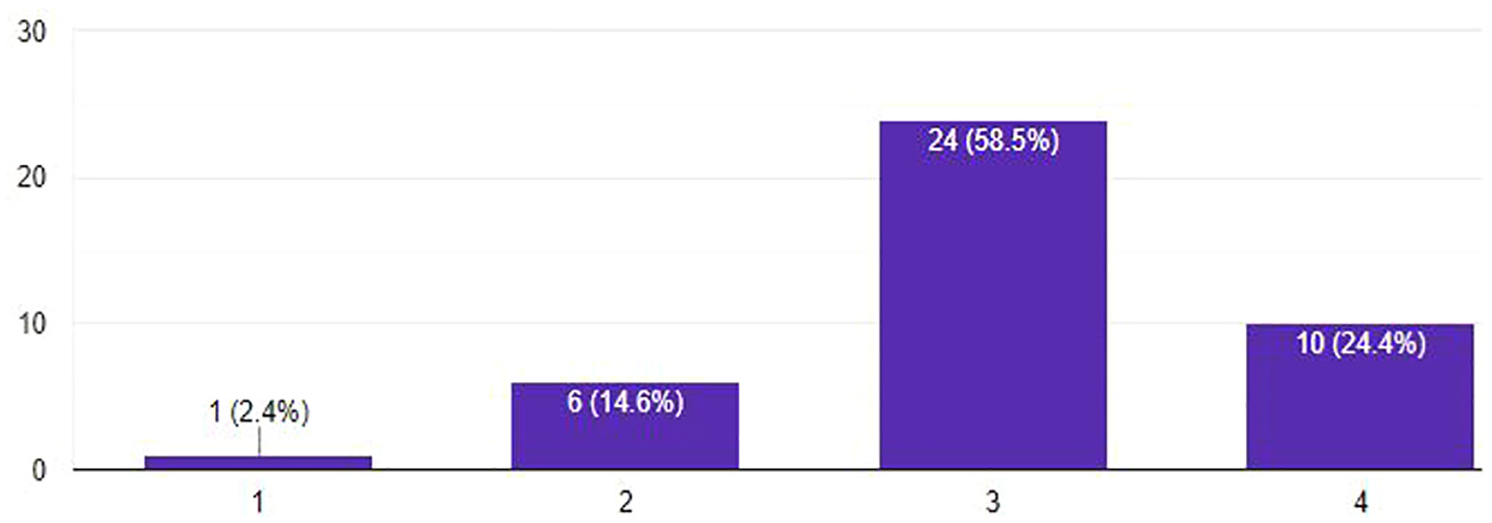
Perception of SNV’s impact on understanding Bloom’s Taxonomy by emotional aspects.
Student A says:
The delivery of the second video (Mr. Ginting) made me feel more comfortable in absorbing the theory because I felt a warm feeling during Mr. Ginting’s presentation. The part that really got to me was when the presenter in the second video talked about their experience in Chicago, especially during the evaluation and conclusion part. The presenter was able to compare ticket prices, services, and operating hours using Bloom’s Taxonomy.
Student B mentions:
The video with storytelling is easy to understand because we can imagine and get a clearer picture. The moment when the teacher shares experiences or examples that the audience can relate to. By actively understanding and remembering, it becomes easier and more enjoyable.
Students C says:
I feel more comfortable with the story telling video because it’s more like telling a story than lecturing, so I can understand more and not get bored.
The response indicates that a SNV could evoke various emotions, such as joy, surprise, excitement, sadness, or empathy. It can be a way to engage students and enhance their learning experience. Emotional moments within the SNV can leave a lasting impact on students, making the learning experience more memorable and emotionally significant. These emotional resonances can enhance students’ recall of information and create lasting associations with the content (Mayer, 2001). Zak (2015) has researched neuroscience of how storytelling, including narrative videos, can elicit oxytocin release and foster emotional connection, trust, and empathy. When narrative videos depict relatable characters and their experiences, students can develop a sense of empathy and emotional connection (Ferarri et al., 2022). This emotional connection can foster a deeper understanding of the content and make it more personally meaningful to the students.
SNV Promotes the Progression of Cognitive Skills to Make the Learning Experience Dynamic
We queried the participants regarding whether the SNV establishes connections between newly acquired information and their existing knowledge and experiences, resulting in a more dynamic and memorable learning experience. Most respondents (97.5%) either strongly agreed or agreed that the narrated storytelling video effectively connects newly learned information with previous knowledge and experiences, enhancing the learning experience. This implies that the storytelling style used in the video helped students make meaningful connections between the content presented and their existing knowledge, resulting in a more dynamic and memorable learning experience (Ginting, 2022). By incorporating storytelling, the video engaged the audience on a deeper level, facilitating the assimilation of new information by relating it to familiar concepts or personal experiences. This approach can enhance comprehension, retention, and overall engagement with the material. The positive response from the respondents indicates that the storytelling style is an effective pedagogical strategy that can be utilized to create more impactful and memorable learning experiences (Figure 2).

The storytelling style promotes the progression of cognitive skills to make learning experience dynamic.
Student A says:
A storytelling-style learning video helps me look at a particular theory from a wide POV, encouraging me to learn the theory in a new manner and make it memorable, thus enhancing my prior knowledge and experiences.
Student B says:
Storytelling-style videos enhance learning by connecting new information with prior knowledge and experiences, promoting comprehension, retention, and overall learning outcomes. They make learning dynamic and memorable through relatability, contextualization, emotional engagement, visualization, and story structure.
Student C says:
It reiterates some moments that happen in my past and by restating what I have experienced, the moments get stronger and more connected to the newly mentioned information.
In our findings, SNV promoted the progression of cognitive skills to make the learning experience dynamic and memorable (coherent principle) because the majority of respondents (97.5%), either strongly agreed or agreed that the narrative video was effective in connecting newly learned information with previous knowledge and experiences, hence boosting the learning experience for the viewer. This aligns with the findings of past studies that video-based instruction is a highly effective approach for improving students’ retention in context-based learning (Ge, 2015). Based on students’ feedback in the context-based online learning scenario, it was observed that the video-based instruction was more memorable than the text-based instruction delivered through traditional means. In addition, the use of video has been shown to boost language skills, facilitate practicing, and enhance learning outcomes when implemented in language instruction (Gloudeman et al., 2018; Lopes and Soares, 2016; Özkurkudis & Bümen, 2019).
Engaging Visuals in the Storytelling Video Facilitate Understanding
We surveyed the participants to determine if the narrated storytelling video and its visual presentations assisted them in comprehending Bloom’s Taxonomy. Most respondents (92.7%) either strongly agreed or agreed that the SNV, with its visual presentations, helped them understand Bloom’s Taxonomy. This implies that the combination of storytelling and visual aids in the video effectively conveys the concepts and principles of Bloom’s Taxonomy, making it easier for students to comprehend and grasp the content. The respondents’ positive response indicates that the storytelling style, coupled with visual presentations, is valuable in teaching and learning about Bloom’s Taxonomy, and that video engages students visually and emotionally, enhancing their understanding and retention of the subject matter (Figure 3).
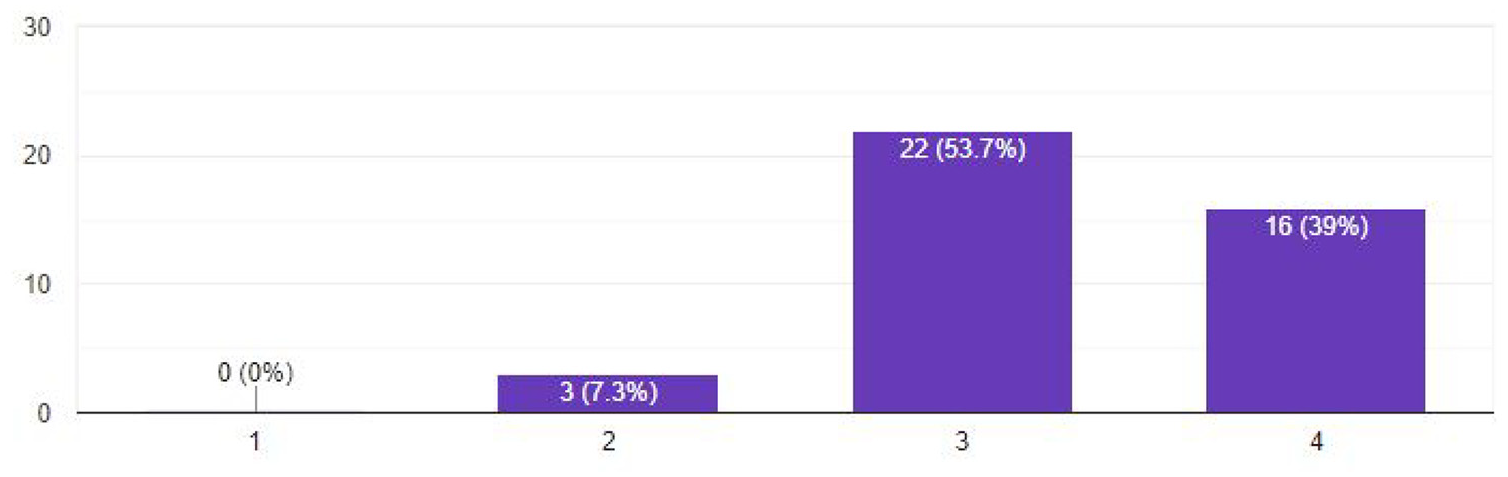
Engaging visual presentations in the storytelling video facilitate understanding.
Visuals in SNV were reported to affect positively the students’ understanding because, in general, students can understand information better when they see it. Moreover, the visuals helped improves students’ retention of information or knowledge. In this regard, Student A shared his opinion:
When they use visuals in those storytelling-style videos, it’s like super cool, man. It helps us process the concepts better and understand them more easily. You know, seeing those visual representations really takes off some mental strain, and it even helps us remember stuff better. It just makes the whole learning experience richer, you know?
Students voiced the view that the visuals in storytelling videos were helpful in that they provided concrete representations of abstract concepts or ideas, making them more accessible and easier to comprehend. They could illustrate relationships, processes, or spatial information that might be challenging to convey through words alone. This allowed students to visualize and understand complex procedures or sequences of events, making them more accessible and memorable. This is consistent with the concept of visual learning, which emphasizes the importance of visual aids by which students come better to understand and retain information by associating ideas, words, and concepts with images (Raiyn, 2016). This is very probably because the visuals in narrated storytelling videos can support better encoding and retrieval of information, as they tap into different sensory channels and provide multiple pathways for learning and recall (Mayer & Moreno, 2002).
Another way the visuals help increase students’ understanding is because they are attractive and consequently better able to catch students’ attention and involve them more actively in the learning process. To illustrate this point, Student B stated:
Those illustrations in the videos are off the hook! They make the whole thing so much more interesting and appealing. It’s like they grab my attention and make me really get what they’re trying to show with those examples. And you know what? It even makes me want to learn more and keep watching those videos. It’s just cool.
This response indicates that the visual features in narrated-storytelling videos can make learning more enjoyable and interactive, resulting in increased focus and participation. Learners actively engaging with visually appealing content are more likely to understand and retain the presented concepts. This student’s voice concurs with other studies revealing that engaging visuals such as images, animations, or texts can help teachers stimulate students’ attention and create a more immersive learning experience (Shabiralyani et al., 2015). Similarly, a study by Quecan (2021) found that classroom activities that involved visual aids promoted the students’ engagement in the learning process and facilitated their understanding of material. In addition, they can evoke emotions, spark curiosity, and stimulate interest in the content, resulting in increased motivation and engagement with the material.
In language learning, visual aids can help students visualize and contextualize the use of the language because they give a visual context that supports the understanding of the target language usage. They can depict real-life situations, cultural settings, or visual cues that help students connect the language to its practical application. As for this, Student B expressed that:
When they throw in pictures, animations, and all that jazz, it’s like they’re giving us a helping hand, man. It’s like they’re guiding us to imagine stuff more clearly, you know what I mean? It’s like the storyteller’s got a direction in mind, and those visuals just help us get there.
This comment suggests that incorporating visuals, such as pictures and animations, in narrated storytelling videos greatly enhances students’ comprehension and ability to visualize concepts. The visuals are viewed as a supportive tool that guides students’ imagination and facilitates a clearer understanding of the information. This aligns with research in English language teaching that emphasizes the positive impact of visuals on vocabulary acquisition and retention (Konomi, 2013; Sabet & Shalmani, 2010; Sato et al., 2022). These studies suggest that when encountering new words, students benefit from visuals because they help establish connections between words and corresponding images or visual cues, aiding in the comprehension of word meanings.
Familiar Narrator in the Video Fosters a Strong Connection and Transferability
We surveyed participants to investigate whether including a familiar narrator in the video impacted the emotional response of viewers and amplified the personal and meaningful nature of the learning experience. Twenty-nine percent of the respondents strongly agreed, 51% agreed, and 19.5% disagreed with this statement. These responses suggest that a familiar narrator in the video impacts the emotional engagement of viewers. Encountering a narrator whom students recognize and to whom they feel connected, evokes a stronger sense of personal involvement and meaning in the learning process. This familiarity appears to create a sense of companionship and guidance, fostering a deeper connection between the viewer and the content. The perspectives of the 19.5% who disagreed may stem from personal or alternative preferences regarding the narration style (Figure 4).

Familiar narrator in the video fosters a strong connection and engagement.
Student A:
Honestly, I think the reason I got all emotional is because I actually go to that narrator’s class. We’ve got this teacher-student bond going on, you know? Since I’m familiar with the way they teach, it just makes the whole learning experience feel more personal and meaningful. It’s not like that other video where I have no clue who’s teaching and how they do it.
Student B:
Having a familiar narrator in a video is like a warm blanket of comfort. It’s like, I can focus better when there’s someone I recognize guiding me through the material. It just makes everything feel so personal and meaningful, you know? It’s like we’ve got this connection, and that helps build trust, relatability, and emotional resonance. It’s like the real deal, and it totally boosts my comprehension, retention, and overall engagement with the stuff.
Student C:
Oh, for sure, having a familiar narrator makes a big difference. It’s like having a buddy explaining things to me. I feel at ease, you know? And when I’m comfortable, I can understand the material way better. It’s like we’ve got this connection, which makes the whole learning experience smoother and more enjoyable.
Having a familiar narrator put students at ease. This is consistent with previous research. According to Darejeh et al. (2021), the inclusion of a familiar narrative in an e-learning system has the potential to effectively decrease cognitive load in comparison to systems that lack a narrative or utilize an unfamiliar narrative. This finding holds true for educational materials characterized by both low and high levels of engagement. Research has indicated that individuals exhibit enhanced learning of new software applications when they are presented with familiar context worked-examples, which facilitate the integration of novel material with their existing knowledge.
The findings of this study, which highlight the impact of a familiar narrator on emotional engagement and connection, align with the personalization principle of multimedia learning. According to the personalization principle, incorporating elements that create a sense of personal relevance and connection can enhance learning outcomes (Mayer, 2014). Having a familiar narrator in the video evokes a stronger sense of personal involvement and meaning in the learning process, leading to increased emotional engagement. Research by Darejeh et al. (2021) supports this idea, showing that the inclusion of a familiar narrative in an e-learning system decreases cognitive load and enhances learning outcomes. Learners are more likely to engage with the content and feel at ease when they encounter a familiar narrator (Darejeh et al., 2021). Research by Mayer and Johnson (2008) supports the notion that personalization enhances learning. They found that personalizing instruction by using conversational style and addressing students directly improved learning outcomes. Similarly, studies by Höffler and Leutner (2007) and Moreno and Mayer (2007) demonstrated that personalization through the use of human voices and agents increased learning performance and engagement. These findings suggest that when students perceive a personal connection with the instructional materials, their engagement and comprehension improve. Overall, the personalization principle suggests that incorporating elements that foster a sense of personal relevance and connection, such as a familiar narrator, can enhance learning outcomes.
Overall, the findings and discussions from this study provide valuable insights into the effectiveness of SNV in enhancing short-term memory retention, knowledge transfer, emotional engagement, comprehension, and engagement. The statistical analysis revealed a statistically significant positive impact of SNV on short-term memory retention compared to LNV. The correlation analysis further supported a moderate positive relationship between LNV and SNV. Moreover, the ANOVA test and multiple comparisons demonstrated significant differences in test scores, with participants who watched the SNV outperforming those who watched the LNV. Participants also reported that the SNV facilitated emotional connection, promoted the progression of cognitive skills, and aided comprehension through engaging visuals. These findings highlight the potential benefits of incorporating SNV in educational settings and suggest avenues for future research in this area.
The views of students in the experimental group regarding the application of SNV were largely positive. They appreciated the engaging and immersive nature of SNV, which facilitated deeper understanding and retention of the subject matter. Many students found SNV to be a valuable tool for enhancing their learning experience.
SNV can enhance student engagement and provide better educational outcomes by fostering active participation, critical thinking, and creativity. The interactive and multimedia elements of SNV captivate students’ attention and stimulate their interest in the learning material. Additionally, SNV offers opportunities for personalized learning experiences, accommodating diverse learning styles and preferences.
Lecturers perceive SNV as an effective pedagogical tool for promoting student learning. They observe increased student engagement, motivation, and participation when using SNV in their teaching. Lecturers appreciate the ability of SNV to create dynamic and interactive learning environments that support deeper comprehension and knowledge retention. Overall, they recognize SNV as a valuable resource for enhancing the quality of education delivery.
Conclusions
In conclusion, this study focused on the effects of using storytelling-narrated videos (SNV) on students’ knowledge retention. The findings of this research contribute to the understanding of the potential benefits of incorporating storytelling in narrated videos for educational purposes. The study revealed several important conclusions and implications.
First, SNV was found to positively affect short-term memory retention compared to LNV. Students exposed to SNV demonstrated higher short-term memory scores, suggesting that storytelling videos are more effective in helping students retain information in the short term.
Second, the study indicated that storytelling in narrated videos enhances knowledge retention and transferability. By engaging students emotionally and connecting new information with previous knowledge and experiences, storytelling videos can improve students’ understanding of the material and ability to apply it in different contexts. This implies that storytelling in educational videos can contribute to more meaningful and applicable learning experiences.
Moreover, engaging visuals in storytelling videos were found to facilitate understanding. The combination of storytelling and visual presentations in videos helped students comprehend complex concepts more easily. Visuals provided concrete representations of abstract ideas, making the content more accessible and memorable. This suggests that incorporating visual aids in storytelling videos can enhance comprehension, retention, and overall engagement with the material.
Additionally, a familiar narrator in videos fostered a strong connection and engagement. When students encountered a narrator whom they recognized and to whom they felt connected, it they had a stronger sense of personal involvement and meaning in the learning process. This familiarity created a sense of companionship and guidance, leading to a deeper connection with the content. Educators can consider incorporating familiar narrators in videos to enhance students’ engagement and emotional connection with the material.
Limitations and Suggestions
Nevertheless, this study has some limitations. The sample size was relatively small, consisting of 56 students from a single university in Indonesia, and 15 them were unable to submit data, leaving an active sample of only 41. The study duration was also limited to two videos. These limitations may impact the generalizability of the findings. Future research should consider larger, more diverse samples to validate and generalize the results. Additionally, the study focused on short-term memory retention, and the long-term effects of SNV on knowledge retention should be explored.
Several suggestions emerge from the findings of this study. Educators can consider incorporating storytelling techniques, engaging visuals, and familiar narrators in their instructional videos to enhance students’ knowledge retention and engagement. They can design videos that evoke emotions, make meaningful connections with previous knowledge, and provide visual representations of concepts. Furthermore, future research could investigate the long-term effects of SNV and explore the impact of different storytelling techniques on knowledge retention and transferability.
Future research in this area could also investigate the long-term effects of SNV on students’ knowledge retention. The current study provided insights into short-term effects, but exploring the durability of these effects over an extended period would provide a more comprehensive understanding of the effectiveness of SNV. Comparative studies could also examine the effectiveness of different storytelling techniques in narrated videos. This could involve comparing various narrative structures, storytelling styles, or levels of emotional engagement to determine which approaches are most effective in enhancing knowledge retention and transferability.
Expanding the study to include more diverse populations, such as students from different educational levels, cultural backgrounds, or age groups, would help determine if the findings hold across various contexts and if there are any differences in the effectiveness of SNV based on demographic factors. By combining quantitative measures with qualitative analysis, researchers could gain a deeper understanding of students’ experiences with SNV and explore the specific aspects of storytelling that resonate with them. Researchers could also explore how SNV could be effectively integrated into different subject areas and disciplines to determine the generalizability of the findings. Considering the impact of different learning styles on the effectiveness of storytelling videos and exploring strategies for effectively integrating these videos into pedagogical practices would be beneficial. Overall, these suggested areas of future research would contribute to our understanding of the effects of SNV on students’ learning outcomes and guide educators in creating effective multimedia learning experiences.
Footnotes
Appendix
Test Prompt:
Imagine you are a teacher planning a lesson for a specific subject of your choice. Create three teaching objectives based on Bloom’s Taxonomy that align with the desired learning outcomes for your lesson. For each objective, clearly define the level of Bloom’s Taxonomy it corresponds to and explain how you would assess students’ achievement of that objective. Additionally, provide an example activity that would help students meet the objective.
In your response, make sure to include:
Holistic Rubric for Scoring Students’ Work
Acknowledgements
I would like to acknowledge and extend my sincere appreciation to the Indonesian English Lecturers Association (IELA) and Tungku Abdurahman University for their invaluable support and cooperation in accommodating the research partnership for this study. Their assistance and collaboration have played a crucial role in the successful completion of this research. I am grateful for the resources, facilities, and opportunities provided by IELA and Tungku Abdurahman University, which have greatly contributed to the advancement of knowledge in this area. Thank you for your support and dedication to promoting educational research.
Declaration of Conflicting Interests
The author(s) declared no potential conflicts of interest with respect to the research, authorship, and/or publication of this article.
Funding
The author(s) received no financial support for the research, authorship, and/or publication of this article.

Data Availability Statement
The datasets generated during and/or analyzed during the current study are available from the corresponding author on reasonable request.