



Abstract
This study investigates the phenomenon of “music fever” in the Chinese immigrant community in the UK, a relatively neglected research field in the English language literature. It explores the attitudes of Chinese immigrant parents towards their children’s music learning through three key concepts in Bourdieu’s cultural theory: capital, habitus, and field. Although the interviewees generally displayed a positive attitude towards their children’s music learning, it was conditional on it not interfering with their children’s academic studies. This study extends existing research on East Asian immigrants’ and parents’ perceptions of children’s music education, and contributes to the application of Bourdieu’s theoretical tool in research on East Asian cultural groups in both Western and non-Western contexts.
Introduction
In 2011, Amy Chua’s Battle Hymn of the Tiger Mother was an almost worldwide sensation which triggered a widespread discussion on social media about Chinese immigrant parenting and their children’s music education (Yu, 2014; Lu, 2014). However, empirical research on Chinese, and even the wider category of East Asian immigrant, parents’ perceptions of children’s music learning is still limited and, of the handful of studies that do exist, most are focused on the United States. For example, Wang (2009) proposes the concept of the Asian “music mum” as compared to the American “soccer mom,” presenting an image of the self-sacrificing East Asian mothers’ boundless passion for classical music. Yu (2014) noted that participant parents in Philadelphia place a high value on children’s musical learning and Confucian cultural values have a strong influence on Asian immigrant parents’ choice of children’s music education. In a more recent study, Hwang and Cho (2019) conclude that Korean immigrant mothers in the US prefer to develop children’s lifelong musical engagement, which differs from the view of native Korean mothers who invest in children’ music education with more focus on children’s music grade scores.
Research on the music education of East Asian immigrant children has been scarce. The phenomenon of “music fever” has been also relatively neglected by media. “Music fever” is a term used to describe the passion and pursuit of Chinese families for their children to learn Western classical music, particularly the piano and violin, over the past few decades. Since the 1980s, an increasing number of Chinese children have chosen to learn Western classical music as part of their musical education (Bai, 2021). In the 21st century, the publication of the book “Battle Hymn of the Tiger Mother” in the United States has also brought attention to the trend of Chinese American families showing a similar craze for Western classical music. This phenomenon, known as “music fever,” has also been observed among East Asian children especially those of Chinese descent in Western countries (Wang, 2009).
In the only published literature available on Chinese children’s musical learning in the UK, Y. Wu (2018) noted the enthusiasm of Chinese immigrant mothers for children’s music learning. All of the 20 Chinese immigrant mothers she interviewed in the UK were extremely supportive of their children’s learning of musical instruments. They believed that learning music benefited children’s brain development and they also positively associated learning music with building characteristics such as discipline and patience (Y. Wu, 2018). However, as her research focused more on the musical development of young children under the age of five, she did not explore the parents’ perceptions towards children’s musical learning, particularly instrumental learning, in depth.
In the UK, the overall Chinese population has increased substantially over the last two decades. Traditionally, the UK has been a migrant-receiving country (Luk, 2008) and the increasing number of immigrants from Eastern Europe, Asia and Africa in recent decades has made Britain more ethnically diverse (Wills, 2017). According to the 2011 census, Asians constituted 7.5% of the ethnic mix in England and Wales and specifically, 0.7% (440,847 people) of Asian descent identified themselves as ethnic Chinese (Office for National Statistics, 2012). This was an increase of 55% on the 2001 census (243,258 people; UK Government, 2018) which itself had increased by 55% since the 1991 census. However, it is worth noting that the actual numbers of the Chinese population in the UK is much higher (Silva & Rienzo, 2019) as there are limits to using censuses to estimate the population of immigrants (Kordos, 2017). Since 2000, the academic success of Chinese immigrant children in the UK has been gradually noted by educators, in particular, their significant achievement in mathematics (Francis et al., 2017). However, Chinese children’s music education in the UK environment has not received much attention. Y. Wu (2018) stressed that there is a need to enrich the extremely limited research available on Chinese children’s music education in the UK. This study aims to fill the gap in this research area.
This study aims to explore the attitudes and perceptions of Chinese immigrant parents in the UK towards their 5 to 13-year-old children’s musical learning. The research question focuses on identifying these attitudes in order to expand upon the limited existing research on Chinese children’s music education in the UK, and provide educators with a more comprehensive understanding of Chinese immigrant children’s music learning. In this study, parents’ attitudes refer to their feelings, opinions, beliefs, values and aspirations. In order to gain a deeper understanding of parents’ inner thoughts and perspectives, a qualitative approach is used.
Literature Review
Music educators broadly propose that parents are typically the first adults providing children with a nurturing musical environment in which children could be prepared for later learning musical skills (Creech, 2010). Thus, to better understand children’s music learning, exploring parents’ perceptions towards music learning has attracted extensive research by music educators.
In the existing studies, researchers have taken a quantitative approach to explore Chinese parental attitudes towards children’s musical learning. According to statistical data, they found that most parents hold positive attitudes toward children’s music education. For instance, in Taiwan, S. M. Wu (2005) investigated parents’ attitudes towards children’s music education and found that 95% of respondents agreed that music should be a part of early childhood education, and 86% believed that children have the potential to learn music at an early age. Tai et al. (2018) found that parents in Hong Kong have high expectations of their children’s music education, including a desire for their children to take music grading exams. Cui’s (2021) study shows that most Chinese parents have positive attitudes and they believed learning music can bring emotional benefits. The same findings are also reported in qualitative studies (Cho, 2015; Creech, 2009; Young, 2012). However, compared to quantitative research, studies that adopted qualitative approaches when exploring parents’ attitudes provided a more detailed reflection of parental perceptions.
In addition to the perception that music can have a positive emotional effect, some parents recognize that musical activities can enrich children’s lives (Hwang & Cho, 2019; Kong, 2021), which is another common theme frequently mentioned by parents in earlier studies (Pitts, 2012; Samuelsson et al., 2009). Some parents also expect their children to build musical skills and broaden musical perspectives (Cali, 2015; Leong, 2008; Youm, 2013). In addition, parents hope that their children will become aesthetically sensitive and musically intelligent through exposure to music (Ilari et al., 2019). Early exposure to music may subsequently be able to deepen the children’s ability to appreciate music in the future, especially classical music (Cho, 2015; Rodriguez, 2019). Parents appeared to believe that children’s musical engagement would promote various other aspects of their development, including cognition and social skills (Burnard & Murphy, 2017; Koops, 2011), language and motor skills (Lum, 2016; Y. Wu, 2018), and intelligence and creativity (Pitt & Hargreaves, 2017; Lai, 2015; Youm, 2013).
However, some studies showed different results about parents’ views. For example, in Korea, Choi et al.’s (2005) study shows some parents worried that the time spent practicing an instrument might delay (older) children’s progress in other (academic) schoolwork. Some parents think that spend much time in learning music and developing career about music that cannot give children a solid income and future (Hofvander-Trulsson, 2015) while others believe that their children are not musically gifted and do not have positive beliefs about children learning music (Cutietta, 2013).
In sum, despite a number of studies exploring parents’ attitudes towards their children’s music learning, the findings have shown that attitudes are varied and unpredictable, especially among immigrant parents who face complex dual cultural and social environments (Hwang & Cho, 2019; Ilari, 2018). These parents’ reciprocal relationship with the host society can shape and reshape their perceptions and practices of parenting. While there is growing interest in East Asian immigrant populations and some studies have explored immigrant parents’ parenting (e.g., Cho, 2015), the findings are often context-specific and may not apply to other social contexts. Therefore, there is still much to be explored in terms of parents’ attitudes and behaviors towards their children’s musical learning in diverse social contexts.
Theoretical Perspectives
To better analyze Chinese immigrant parents’ attitudes towards children’s music education, this study draws on Bourdieu’s cultural theory, which contains three key concepts, capital, field and habitus. Bourdieu (1973) proposed that social life can be conceptualized in terms of a competitive “game,” and the aim is to maintain the player’s position in the game by accumulating various qualifications. He described these qualifications as capital, which takes four forms: economic, cultural, social, and symbolic (Bourdieu, 1986). Of these four, cultural capital, which refers to the cultural and educational resources people attain in their social lives, such as certain types of knowledge, tastes, languages, and officially recognized educational diplomas, was used most significantly by Bourdieu for the study of education, consumption and taste (Bourdieu, 1989; Bourdieu & Passeron, 1990). In this study, Chinese immigrant children’s extracurricular music learning can be seen as an approach to accumulating cultural capital. As Cho (2015) stated, involvement in formal music activities requires specialized cultural skills such as musical knowledge and the ability to play musical instruments which can be acquired through formal music lessons.
According to Bourdieu (1986), cultural capital can exist in three forms, the embodied state, the objectified state and the institutionalized state. Thus, it is easy to understand that cultural capital related to music can exist in different forms: instrumental music skills and knowledge acquired through learning music (embodied cultural capital); graded music certificates (institutionalized cultural capital); and music instruments such as pianos, violins and music scores (objectified cultural capital). Moreover, Moore (2013), in her research exploring musical values in Irish higher education, found that different forms of cultural capital hold different values in different situations; this aligns with Bourdieu’s (1986) proposal that cultural capital is hierarchical—certain kinds of cultural capital are highly valued, such as having the taste and ability to appreciate “highbrow” aesthetic culture (e.g., classical music and fine art). These kinds of capital often require a large amount of time investment and are greatly dependent on early development in childhood. In contrast, the appreciation of popular music may not require such a large investment and it can be seen as cultural capital that holds lower power (Green, 2012). Accordingly, as Söderman et al. (2015) stated, music opens up a new social context and classical music creates cultural capital; knowledge of opera and classical music increases symbolic assets, thus conferring a higher status and position in the societal hierarchy. However, in different “games,” each cultural capital may be valued differently (Xiao & Liu, 2022). For example, the skill of playing the er’hu ( , a Chinese musical instrument) may not be as valuable in a Western orchestra as it is in a Chinese traditional music orchestra. This touches upon another concept in Bourdieu’s theory, the “field.”
Bourdieu (1973) described the field as the social environments inhabited by a number of groups. For example, different ethnic, cultural and religious groups exist in the “UK field” and the Chinese immigrant group is only one of the minority groups. In this study, the field can be seen as either the wider society that the Chinese immigrant mothers are involved in, that is, the UK, or, more narrowly, the Chinese community in the UK.
For Bourdieu, the location of a game is dynamic, and it is any area where players struggle for dominance in position and power (DiMaggio, 1982). To be involved and fight in any kind of “field” requires a certain amount of capital; and certain forms of capital are particularly effective and valuable in particular games. The power that a player has in a game is determined by the value of the capital they acquire; and not all of the players in the same game hold the same amount of capital. This means that “capital is both a weapon of struggle and a stake in the struggle in the game” (Wright, 2015, p. 4) and cultural capital has always been regarded as a prerequisite for fighting in the game as it holds great power.
The position that each player occupies in the game is determined by the amount of capital s/he possesses. Players who hold certain capitals and have excellent conditions can occupy a dominant position in the game and, most importantly, hold enough power to maintain the rules of the game, for example, determining what the more valuable forms of capital are and aggressively seeking them out (DiMaggio, 1982). In contrast, those who are not in a superior position have to follow the game rules set by others. They may not be familiar with the rules and consequently may find it difficult to strive for a better position in the field. This is the social reproduction of players’ position in the field. Thus, one common understanding of Bourdieu’s theory is that immigrant families may face more disadvantages than the local population (Benjamins, 2018). For example, in the “field” of the UK, the game rules are maintained by the British. Compared with Chinese immigrants, native British are more familiar and comfortable with the rules of the game in the “UK field.” The Chinese immigrants who came from another field (China) may not be as familiar with the social rules and so may lack certain capital in the “field” of the UK. Here, “the feeling of the game,” which is an essential concept in the current study, is “habitus.”
According to Bourdieu (1973), “habitus” can be interpreted as the habits, norms, values, beliefs and traditions of a particular society or community of like-minded people. The players’ dispositions or behavioral tendencies shown in the games are derived from habitus; “habitus is a habitual state (especially of the body) and in particular a predisposition, tendency, propensity or inclination” (Bourdieu, 1973, p. 214). Habitus shapes an individual’s mindset and establishes ways of seeing and responding to the world (Bourdieu, 1989). In this sense, the concept of habitus can be useful to understand one’s feelings and why individuals act in a certain way and are more likely to choose certain actions rather than others. According to Valenzuela and Codina (2014), the concept of habitus is closely linked to attitude and interest, which can be helpful in explaining an individual’s willingness to learn music. Hofvander-Trulsson (2015) proposes that attitudes and behaviors in relation to music-learning activities are the result of an interplay of habitus. A person’s perception of the value of a particular cultural capital is a manifestation of his or her habitus. Thus, in this study, understanding immigrant parents’ attitudes to their children’s music education can be seen as an understanding of their habitus. Their attitudes to children’s music education could reveal how they perceive the value of the cultural capital accumulated from music learning.
Bourdieu (1973) theorized that the formation of an individual’s habitus was historical and social, and family is essential in shaping habitus. In other words, an individual’s habitus can be viewed as the product of past experiences in life and social living (Wright, 2015). More specifically, on one hand, habitus is a product of early childhood experience and is especially influenced by the family and the social group in which the family is located; on the other hand, some claim that habitus is continually re-structured by individuals’ encounters with the social world (Reay, 2004). This is because family acts as the cultural context of childhood and family habitus structures children’s everyday lives (Tomanović, 2004).
Undeniably, every individual is equipped with a unique habitus, but each habitus shares commonalities with others (Vincent et al., 2008). Different social groups have a group or class habitus based on their common living conditions (Lareau, 2011). This is because structures constitutive of a particular type of environment produce a particular habitus. As living conditions vary for different socio-economic and ethnic/cultural groups in society, so does the structure of their habitus. Accordingly, individuals from different social backgrounds tend to see “right,” “natural,” and even “necessary” practices (actions/behaviors) differently because of their different schemes of perception and conception conditioned by their different habitus (Bourdieu, 1989).
Methods
The purpose of this study is to explore the attitudes of first-generation Chinese immigrant mothers towards their children’s music education. Ilari (2018) proposed that parents’ attitudes toward music education are highly subjective and strongly linked to their own life experiences and social environments. Also, each individual’s subjective perceptions and life experiences are multi-faceted and unique (Ilari & Young, 2016). Thus, qualitative methods are used in this study. They can provide detailed descriptions of complex phenomena, such as people’s personal thoughts, feelings, attitudes and emotions, which would be difficult to extract or acquire through quantitative methods (Denscombe, 2017). According to Merriam and Tisdell (2015), qualitative researchers are interested in understanding the meaning people have constructed; that is, how people make sense of their world and the experiences they have in the world.
Participants
To ensure the sampled participants were appropriate, this study used purposeful sampling. According to Patton (2005, p. 169), “the logic and power of purposeful sampling lie in selecting information-rich cases for study in-depth. Information-rich cases are those from which one can learn a great deal about issues of central importance to the purpose of the research.” Purposeful sampling selects the people, places, or experiences that can provide the richest and most detailed information to help us answer research questions (Cohen et al., 2018). In this study, participants were the first-generation Chinese immigrant parents who had grown up in mainland China and had been settled in the UK for a minimum of 5 years. First-generation immigrants were chosen for this study because they possess dual cultural backgrounds (Chinese and British) and their unique experiences may affect their perspectives when they consider their children’s music education. The length of settlement in the UK was specified to ensure that participants had a “minimum” understanding of lived experience in both China and the UK. Moreover, the families chosen to participate in this study had to have at least one child who had been studying a musical instrument in the UK for a minimum of 1 year. This was to ensure that the participants are more or less exposed to and knowledgeable about their children’s music education and thus have more thoughts to explore.
Yin (2018) suggested that for a multiple case study, 6 to 10 participants or cases would be sufficient. This study finally identified 10 first-generation immigrant mothers as participants. Participants were recruited from a snowball-sampling approach in Glasgow because one of the authors was working at a Glasgow Chinese language school in her spare time. Upon receipt of approval by the UCL-IOE (University College London) Research Ethics Committee, the researchers visited the Chinese language school to ask for permission to recruit participants there. The school administrator introduced seven potential participants who then introduced seven more Chinese immigrant families. The snowball sampling method allowed both participants and the researchers to develop a mutual sense of trust. This method facilitated deeper interaction and rich data on the participants’ thoughts and experiences (Roulston, 2014). After explaining the research aims and extending interview invitations, 10 expressed interest in this study while four declined.
With the exception of two families (single mothers), all participating families were nuclear families (two-parent households), with one to three children. All the participating families had immigrated to and been settled in the UK for over 10 years, which suggests that the majority of participants had extensive life experience in both China and the UK. Participants’ children were aged between 5 and 13, all studying at least one instrument. Piano and violin were the most popular. All parents hired one-to-one private music teachers for their children on a weekly basis. A few of the children had previously taken music lessons organized by community councils or schools which cost less, but at the time of the research all had switched to much more expensive one-to-one private lessons. Although the private lessons are more costly, parents commonly stated that their children progressed more quickly with these extra-curricular private lessons.
The occupational and family educational backgrounds of participating mothers varied considerably: two have postgraduate degrees, three hold college degrees, three had finished high school (around 18 years old) and two junior middle school (around 15 years old). Most families were in the restaurant business, managing and/or working in restaurants or takeaways (Table 1).
Participants’ Background Information.

Data Collection
The COVID-19 epidemic had an effect on the intended plans for face-to-face data collection. During the social distancing measures, the originally interview plan had to be replaced by online ones. The advantage of the online interview is that the location of the interview is flexible. However, on-line interviews have limitations especially when participants express emotion as the interviewer are not able to feel it face-to-face although they can perceive the nuances of the interviewee’s tone. Thus, to ensure the accuracy of the data and to avoid the negative effects of online interviews, the researchers double-checked the interview data to detect as much emotions as possible during the interview.
The study used semi-structured interviews, a flexible and widely used technique in small-scale educational research (Galletta, 2013). Semi-structured interviews allow researchers to encourage interviewees to express their thoughts and discuss topics in more detail, as well as giving interviewees more opportunities to elaborate on and clarify issues as they speak (Cohen et al., 2018; Liu, 2018). In this study, the interviews began with simple, closed-ended questions aimed at gathering general information about the participants, such as their jobs, number of children, and their ages. These types of questions can also be seen as an icebreaker at the beginning of each interview (Liu & Burnett, 2022), helping the interviewees to build trust with the interviewer (Mertler, 2018). The second part moved on to pre-designed and open-ended questions to elicit deeper insights into Chinese immigrant mothers’ attitudes to children’s music education, mainly covering parents’ choices, views and expectations of their children’s participation in music. These open-ended questions encouraged the interviewees to share their narratives and experiences.
When choosing the language for the interviews, all participants chose Mandarin, their mother tongue. Conducting the interviews in the interviewees’ mother tongue helped to foster a comfortable atmosphere, which helps them to open up to the interviewer (Mertler, 2018). All of participants were active in answering questions and sharing their narratives. None expressed discomfort to the interviewer during the interview, nor did any withdraw from the study after the interview. The interviews in this study lasted approximately 45 to 90 min each, and a large amount of data emerged, producing a total of approximately 13 hr of recordings.
Data Analysis
The interview data were fully transcribed prior to analysis. As all interviews were conducted in Chinese, the data analysis and interpretation process were carried out in Chinese. Nes et al. (2010) recommend transcription, analysis and coding using the same language as the interview as this helps to minimize the potential risks implicit in the translation process, thereby increasing the validity of the data analysis. Cross-case analysis was conducted by means of a process that Stake (2013) referred to as “categorical aggregation,” which can help researchers compare any commonalities or differences between individual cases. This study also applied the qualitative data analysis research software NVivo to assist in coding, classifying, archiving and linking the interview data (Houghton et al., 2013).
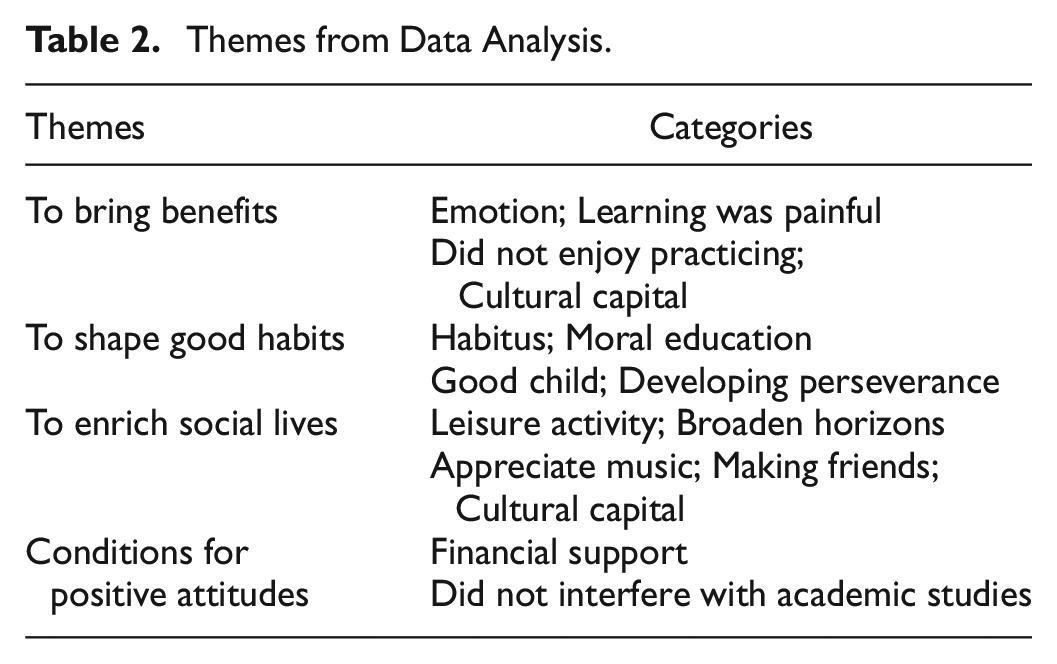
Thematic analysis was used to identify key themes in this study. After exploring the whole of the Chinese data to get an overall sense, data relevant to the research questions were coded in Chinese. Based on the literature review and the recurrence of content in the data, an initial list of codes was generated which was then further refined by reflection and re-examination of the data. After grouping the initial categories together, the researchers conducted a final careful analysis of the collected data for themes. The list of codes in Chinese was translated into English after grouping the initial categories, and the data associated with the codes were also tagged and translated with careful consideration of linguistic expressions and nuances. In addition, during the subsequent writing process, the thematic categories were continually challenged as needed to ensure that the categories not only came together in a meaningful way, but also did not exclude any new themes that emerged. Category labels and definitions were also adjusted at the writing stage to ensure that they truly represented the content. Table 2 presents the themes from the data analysis.
Themes from Data Analysis.
Researchers are responsible for guaranteeing the confidentiality of their participants (Gregory, 2003, p. 51). In this study, pseudonyms instead of real names were used and all records and field notes kept in password-protected files.
Findings and Discussion
Learning Music Is Fundamental
All of the participants offered rich descriptions and responded positively to the question, “how do you value children’s music education? Do you think it is important?” For example:
Absolutely, yes. I think involving children in piano lessons is as normal as letting them go to school. (Fiona) This is the same as letting a child learn English and Maths…that’s all fundamental knowledge in contemporary society. (Diana)
In this study, all of the participating mothers considered children’s musical instrument learning to be a common activity and attending music lessons a normal part of children’s daily lives. Although the mothers generally reported that learning music required financial support and their families had faced many financial challenges, they did their best to support their children’s musical studies. The participant mothers’ positive attitudes towards their children’s musical learning are shown in their discourses: “No matter how hard it is, children must not suffer. No matter how poor we are, education must not suffer” (Cora).
All the mothers in this study reported that their children’s private tuition cost around £25 an hour, with children usually having weekly lessons. All families had bought instruments for their children at a significant cost. Bella mentioned she had purchased a refurbished piano for her daughters; she reluctantly explained that buying a new one would have been out of her budget, but she felt she had to provide her daughters with a piano to practice on, so she chose the cheaper option:
If I decide to let my children learn music, they have to own instruments. Otherwise, it would be difficult for my two daughters to progress without practice. (Bella)
Bella, as a single mother, worked at several nail salons, using her labor to accumulate economic capital in order that her two daughters could acquire cultural capital. The ethos of self-sacrifice emerges clearly in her discourse.
Ella’s story reinforced Bella’s discourse. During the COVID-19 lockdown, her husband’s takeaway business closed, but her children’s piano lessons were moved online so she still needed to pay the tuition fees. Ella reported financial strains during the lockdown period and said that in order to earn enough money to provide adequate financial support for the children, her husband only stayed at home for 1 month and then returned to work despite the ongoing pandemic.
I must say, as parents, we earn money mainly for our children. My three children all need to learn the piano. (Ella)
According to Bourdieu (1986), certain kinds of higher-valued cultural capital, such as Western classical music, require the input of economic capital. The financial capacity of the family is one of the most important factors influencing parental attitudes to children’s music instrumental education and some families are unwilling, or unable, to spend money on children’s music learning due to financial constraints (Pitt & Hargreaves, 2017). However, Purves (2017) proposes that less affluent families who value music instrumental tuition highly may attempt to “find the money” (p. 160). This study reflects this argument as the reality of Chinese first-generation families in the UK. It was evident that participating families value the cultural capital gained through learning music instruments highly. They showed their spirit of self-sacrifice to acquire enough economic capital to invest in their children accumulating cultural capital.
Many researchers posit that encouraging children to learn musical instruments in private lessons has been seen as the habitus of middle- and upper-class families (e.g., Lareau, 2011; Vincent & Ball, 2007). Reay (2015) agrees that the key cultural capital related to classical music is usually more widely recognized by people from more advantaged social-economic backgrounds. However, it is worth mentioning that none of the participants in this study, whether based on their previous standing in China or their current careers, could really be referred to as middle class in the field of the UK. Although it is notoriously difficult to determine the meaning and divisions of social classes, some sociologists have proposed that the “middle class” is usually associated with the social group which has specific reputable professional roles, broader employability and job security (Archer & Francis, 2006). For the first-generation Chinese immigrant families in this study, the nature of their current careers and social stability can hardly be classified as traditional middle class in the UK. Moreover, Francis and Archer (2005) pointed out that it was difficult to assign the Chinese immigrants in their study into a specific traditional social class as, for example, normally a business owner would be solidly “middle-class,” but for Chinese immigrants in the restaurant/takeaway business, their working hours, quality of life, power and influence within the host society and so on differ significantly from those of the traditional (white) British middle class.
However, Chinese immigrant mothers in this study seemed to view their children’s music instrument learning as a natural choice. This may mean that the value Chinese immigrant mothers attach to music education has no clear connection to their social status and identity: the habitus they exhibited seems to be similar to those of upper-middle-class parents in the UK, and were different from those shown by native British parents in a similar social position in recent studies conducted in the UK (e.g., Vincent & Ball, 2007; Wright, 2015).
This finding confirms Francis and Archer’s (2005, p. 104) proposal that Chinese immigrants in the UK have their own unique “diasphoric habitus” of educational values. The current study reinforces this argument and indicates that Chinese immigrant mothers also have their own unique habitus of music educational values and considering it as fundamental is one of such values.
Learning Music Brings Non-Musical Benefits
Emotional Stability
The participating mothers fully recognized the emotional power of music. For example, Fiona and Cora stated that music is a medium for emotional expression:
When they’re feeling down or in a good mood, they can play the piano to vent. (Fiona) I’m sure if a person can play music, it must be a great way to adjust negative emotions. (Cora)
It can be seen that these parents believe that playing a musical instrument can foster emotional stability. This idea was shared by other mothers. Interestingly, however, six mothers mentioned that their children did not seem to enjoy practicing their instruments. Urging children to practice was always the trigger for “family wars breaking out” (Gianna). However, the mothers seemed convinced that the process of learning was normally “painful” but stressed that once the children mastered these techniques, they would be comfortable and feel inner pleasure in playing music.
This viewpoint seems unique but not unexpected. Francis and Archer (2005, p. 96) reported that British Chinese parents promoted the concept of “deferred pleasure” to their children. Anna, Bella and Emma mentioned that playing instruments, singing, and dancing had had benefits for their children’s emotional regulation during the COVID-19 crisis. For instance, Isabella’s child had told Isabella that she was bored but very happy she could play the piano. The link between music and emotions has been examined by many researchers (e.g., Juslin, 2019; Marsh, 2013; Sloboda & Juslin, 2001). During COVID-19 lockdowns, music definitely played a part in fostering community spirit: concerts were streamed online for people to enjoy in their homes and neighbors sang and/or played together from their homes to uplift each other. Mastnak (2022) states that, through singing, people can express gratitude and escape anxiety, loneliness and stress. In this study, the mothers’ discourse suggested that they not only expected their children to feel joy and relief in singing and listening to music, but also expected them to be able to express their emotions and perceived playing and making music as a pleasure time. This kind of inner ability, according to Bourdieu (1986), is a kind of “embodied cultural capital.”
The mothers’ statements may reflect that the benefits of embodied cultural capital gained through learning music are associated with emotional release. In other words, participating mothers seem to have discovered the significance of the subjective influence of cultural capital. This finding reinforces Kim and Kim’s (2009) argument that “cultural capital is closely connected not only with objective change in social class at the macro level, but also with subjective change in individual well-being” (p. 297). In previous studies on cultural capital and music education, researchers have repeatedly demonstrated the objective benefits of cultural capital. Most commonly, for example, institutionalized cultural capital such as graded music certification can be the key to admission to elite universities (Wang, 2009). However, this study shows that the subjective benefits of cultural capital may also be significant. This is one of the positive beliefs expressed by the mothers about their children’s music education.
Shaping Good Habits
The mothers in this study shared their beliefs that good personal qualities can be developed through long-term musical instrument studies. Although each mother had a different definition of these qualities, all agreed that developing them was the key to shaping a “good child.” Two-thirds of mothers mentioned that establishing a regular daily instrumental practice routine contributes to nurturing a vital good quality—perseverance.
Practising the violin is boring, especially in the early learning stage – the sound is like sawing wood. But if a child can stick with it, the sound will become beautiful…to keep practising is a key process in developing perseverance. (Diana)
Hallam (1998) notes that wholeheartedly and consistently practicing an instrument is not easy for most children and this seems to be mirrored in the Chinese mothers’ idea that the process of learning or forming good habits is normally “bitter,” but the ability to “eat bitterness”—that is, endure hardship—is a good personal quality (Buckley, 2011). Emma supported this view: “perseverance is the prerequisite for a caterpillar becoming a butterfly…practicing the piano needs repetition.”
A child who can be disciplined, conscientious, and well-mannered and follow the teacher through the entire music lesson is a good child. (Cora).
This statement reflects the benchmarks of “a good child” in most East Asian parents’ minds (H. Huang, 2012). The discourse that learning music can help children to be more disciplined and conforming resonated with other participating mothers. In fact, in Confucian culture, practicing and appreciating music is itself a form of moral education (Yu, 2014). Moral education means nurturing spiritual qualities and good moral habits in the learning process (Ambrogio, 2017). In previous studies on East Asian parents’ perceptions of music education, both in East Asian (e.g., Cho, 2015; Ho, 2018; Lum, 2016) and Western countries (Y. Wu, 2018; Yu, 2014), parents consistently expressed the belief that music education is a form of moral education and this study’s findings support this.
According to Bourdieu (1973), habitus refers to the deeply ingrained habits, lifestyles and dispositions that individuals possess through life experiences. The habits that the interviewed Chinese immigrant mothers believed their children could acquire from practicing musical instruments, such as persistence and discipline, can be understood as the habitus. This habitus was perceived by participating mothers as “good.” Mothers expected their children to obtain this habitus through leaning music.
Enriched Social Lives
The first-generation Chinese immigrant mothers interviewed mentioned another belief, that music is a life-enhancing tool. They wished their children to have a variety of musical entertainment in their daily lives.
After my daughter grows up and she has her own family, the families can play the piano together. I can watch my daughter and my granddaughter play a duet! What a wonderful scene that would be. (Anna)
This mother mentioned that her daughter and son sometimes played violin and piano duets at home. These kinds of family musical activities were a “flavoring agent” in the children’s otherwise monotonous school lives. Likewise, another mother mentioned that her daughter learned to play a K-pop melody on the piano so that she could accompany herself as she sang. In her eyes, being able to play the piano gave her daughter the opportunity to explore leisure activities.
Emma and Fiona also mentioned their children’s future lives. Emma stated that she firmly believed that learning music helped her children to broaden their musical horizons, and develop a taste for music, thereby instilling in them a lifelong love of music. Fiona stated that if her children were able to appreciate the beauty of classical music, they would be more willing to go to classical music concerts on a regular basis. She recalled that she used to take her children to classical concerts, but she slept through them because she could not appreciate and/or understand symphonic music: “For me, listening to classical music is like hypnosis.” However, she sincerely desired her children to truly understand music and, when they grew up, she hoped they would go to concerts often and appreciate them.
Bourdieu (1986) noted that attending concerts cannot be equated with possessing an understanding of the music; only those who are familiar with and understand the inner logic of these musical pieces truly appreciate music. In other words, although people may have a certain predisposed action, such as attending concerts regularly, only those who have the ability and taste to appreciate classical music can be considered as possessing a feeling for the game, which is the habitus. The ability to recognize and appreciate musical pieces can be seen as embodied cultural capital and it is evident from the mothers’ discourses that they believed that studying music would allow their children to acquire these skills and tastes. Furthermore, if their children retain this embodied cultural capital, they would be more likely to form habits, such as actively participating in a variety of musical activities, which as a habitus the mothers aspired to for their children. Another mother further mentioned that participating in a variety of musical activities gives children more opportunity to make friends.
Whether people sing in the choir together or play ensembles, it’s a way to know other people. If you stay at home every day, nobody gets to know you. (Fiona)
Cultural capital can be transformed into social capital. Thus, the amount of capital a person possesses influences the formation of habitus, and individuals with similar habitus are more likely to enter the same field and build social networks (Söderman et al., 2015). Fiona believed that learning music could offer children more opportunities to enrich their social lives. The mothers expressed their positive attitudes toward their children’s musical learning as having a vision of a better future for their children.
In sum, through the narrative above, it is evident that mothers actively believe that learning music can bring children emotional development, spiritual enjoyment, instill good habits, and contribute towards an enriched life. This finding seems to indicate that the mothers interviewed placed more emphasis on the intrinsic influence of cultural capital on their children. Interestingly, in the interviews, they rarely mentioned music exams (institutionalized cultural capital). This finding is very surprising. As mentioned in the literature review, East Asian mothers tend to be utilitarian in their children’s musical learning and expect children to have the opportunity to go to a better university by learning a musical instrument. However, this study revealed a different attitude.
Learning Music Should Not Interfere with Academic Studies
Two-thirds of the mothers said that learning music should not interfere with their children’s academic studies. This idea, to some extent, seemed to limit their positive attitudes towards music education. Also, notably, these discourses seemed partially to contradict their initial assertions that musical knowledge is as basic as academic knowledge. The following descriptions show how the mothers seemed to place different values on different kinds of cultural capital:
It’s best not to take too much of a child’s precious study time to play the piano. To obtain good grades in maths, you need time and to concentrate on it. (Bella) My son doesn’t have a lot of academic pressure right now but when he goes to middle [secondary] school, he will focus more on school subjects and have less free time to learn music. (Cora)
The gist of the statements seems to be that music studies would need to be suspended if their children’s study time could not be guaranteed, or if their academic performance was not as good as expected. A possible explanation for this could be that the mothers considered the cultural capital gained through academic studies to be more valuable than that related to music. This would be consistent with Francis and Archer’s (2005) and Y. Wu’s (2018) research. Francis and Archer (2005) proposed that British Chinese parents placed the highest priority on their children’s academic grades. However, Archer and Francis (2006) also pointed out that British Chinese parents generally focused only on their children’s academic performance at the expense of other aspects of their education, such as music, art, physical education, educational trips, and educational materials. Yet the finding from this study may challenge this argument. The participating mothers in this study valued, and were willing to invest time and money in, the cultural capital which could be accumulated through education in different subjects: they simply assigned a hierarchical value to each. It may be that the educational attitudes and practices of Chinese immigrant families in the UK have changed slightly over the 15 years between this study and those conducted by Francis and Archer (2005), yet one thing remained unchanged: all of the Chinese immigrant mothers firmly believed that high academic achievement would enable their children to get into a better university.
However, all the mothers gave vague negative answers when asked if they thought studying music would help their children to attend a better school and university. This finding seems inconsistent with most previous studies which explored how East Asian parents perceive children’s music learning to be high value (Han, 2012; Hwang & Cho, 2019). This key cultural capital is usually possessed in social games by the more privileged and rule-savvy players (Bourdieu, 1986) and, when these players make the educational system rules, they are more likely to defend the capital they have and their position by excluding players who do not have such capital. If, however, other players who are relatively disadvantaged in the game gain access to this key capital, they likewise can achieve upward mobility in the field (Wright, 2015). Parents, therefore, scramble to help their children gain an edge in the educational field by means of this key cultural capital through learning music. The rules of the game, though, seem to have changed in the field of the UK.
Diana uncertainly mentioned that some secondary schools, especially private schools, used to give an admission advantage to children who had music certificates as well as those who could play music over non-musical children. However, in the last few years, it seemed that these schools in Glasgow had eliminated that “rule.” Diana had heard this was because some parents from disadvantaged social-economic backgrounds had complained that learning a musical instrument was an extra [financial] burden for them.
Some parents felt that the school’s selection criteria were unfair, and it seems that schools don’t have this standard anymore. (Diana)
If the facts are as Diana described, her uncertain discourse may indicate that some underprivileged players who appealed the “rule” seem to be breaking some of the “rules of the game” and fighting for their rights in their field. Accordingly, it seems that the previous high value of the cultural capital associated with classical music has been reduced. In other words, it may mean that cultural capital related to Western classical music does not help players obtain a better position in this particular educational playing field. From this, it might be understood that the same cultural capital has different values in different fields.
The main goal of the mothers interviewed was their children’s admission to a good school/university. In this field, the knowledge acquired from academic schoolwork appears to have more potential to help children get access to universities. Because Chinese immigrant parents want their children to acquire as much powerful cultural capital as possible, it is understandable that the condition that limited mothers’ positive attitude towards music education was that it might interfere with the children’s academic work.
Conclusion
This study draws on Bourdieu’s cultural theory to analyze the music education of Chinese immigrants in the UK context, thus contributing to the application of Bourdieu’s theoretical tool in research on East Asian cultural groups. It deviates from the common approach of analyzing East Asian mothers’ views about music education through the lens of “traditional Confucian cultural values,” instead drawing on three key concepts in Bourdieu’s (1973) cultural theory: capital, habitus, and field. It found that Chinese immigrant mothers generally held positive attitudes towards their children’s musical instrument learning, but it was conditional. Interviews revealed that the habitus of music educational values of Chinese immigrants differs from that of local British people. While for the British, learning Western classical music has always been more recognized by the upper and middle classes (Wright, 2015; Vincent & Ball, 2007), the Chinese immigrant mothers in this study, even those from a relatively disadvantaged social-economic background, actively showed positive attitudes toward children’s Western classical music learning. This may suggest that the value Chinese immigrant mothers ascribe to music education has no clear connection to their social status and identity.
In addition, most existing studies have analyzed “music fever” among East Asian children from the perspective of traditional cultural beliefs, proposing that East Asian parents’ emphasis on children’s musical education is due to the fact that the precision of Western classical music fits with the values of Confucian cultivation and moral discipline. However, this study suggests that this is by no means the whole story: for immigrants in particular, analyzing their educational values only in terms of Confucian educational values weakens the impact of their social experiences.
This study shows that in the common field of the UK, the habitus of Chinese immigrants is inconsistent with the habitus of the local British. This confirms Francis and Archer’s (2005, p. 104) proposal that Chinese immigrants in the UK have their own unique “diasphoric habitus” of educational values. This study also found that the participating mothers were aware of the significance of the subjective influence of cultural capital. They believed that music fosters emotional stability, happiness and spiritual satisfaction in their children; and that the mastery of the necessary skills can transfer into shaping lifelong “good” lifestyles and habitus. It is of note that the most commonly cited objective benefit of this cultural capital cited in previous studies—that studying music could help children to get into a good university—was present to a much lesser extent here. In this study, participants perceived that being able to play instruments would not necessarily improve their children’s chances of getting into a good or “better” school or university. It appeared that this is because the rules of the game have changed. In one particular case raised by a participant, some underprivileged players seem to be changing some of the “rules of the game” by fighting for their rights, thus reducing the previous high value of the cultural capital associated with classical music in this field. The mothers have realized that traditional academic knowledge has more potential to realize their desire that their children gain admission to a good university. Thus, the condition that limits mothers’ generally positive attitudes toward music education is that music learning should not interfere with their children’s academic performance. This condition reveals that Chinese immigrant mothers are actively engaged in discovering the rules of the field that their children are involved in and acquiring as much powerful cultural capital as possible so as to be able to take advantage of the greater benefits.
The most obvious limitation of this study is the composition of the sample—it is limited in size, geography and gender, and therefore any findings cannot be generalized to the wider population of Chinese in the UK. However, the purpose of this study was not to broadly explore the Chinese immigrant community’s views, but rather to gain a deep insight view, while attempting to listen to individuals’ voices and stories. Therefore, the research questions and aims of this study were not suitable for a large sample size or the quantitative research approach. Future research could attempt to increase the sample size in order to gain a broader understanding of Chinese immigrants’ music education. Also, given that the context of this study was in Glasgow, Scotland, similar studies could be conducted in different countries (including other countries in the UK) and the results compared to ascertain whether Chinese immigrant families’ attitudes towards their children’s music learning behave differently in different contexts.
Footnotes
Declaration of Conflicting Interests
The author(s) declared no potential conflicts of interest with respect to the research, authorship, and/or publication of this article.
Funding
The author(s) disclosed receipt of the following financial support for the research, authorship, and/or publication of this article: We appreciate support from the Chinese National Education Science Funding: Research on the Growth Patterns and Cultivation Paths of High-Level Research and Technology Reserve Talents (BIA230215).

Data Availability Statement
Research data is available when contacting the corresponding author.