



Abstract
Agribusinesses play an important role in the process of green and low-carbon transformation of China’s economy. It is extremely necessary to explore how to promote green entrepreneurship in agribusiness to promote a win-win situation for the environmental and economic and social performance to achieve the sustainable development goals of agribusinesses. Based on intellectual capital theory and natural resource-based theory, this study introduces green intellectual capital (GIC) and sustainable business model innovation (SBMI) as chain mediators to build a theoretical model for exploring the impact mechanism of green entrepreneurial orientation (GEO) on sustainable performance (SP) of agribusinesses. Through the empirical analysis of 621 agribusinesses’ research data, the results show that (1) GEO has a positive impact on SP of agribusinesses; (2) GIC and SBMI are important transmission factors for the transformation of green entrepreneurial orientation into the sustainable performance of enterprises, and play a mediating role in the relationship between GEO and SP of agribusinesses; and (3) GEO promotes SBMI through the accumulation of GCI, which in turn enhances SP of agribusiness. This study not only enriches the theoretical scope of green entrepreneurship research in terms of subdimensions, but also provides theoretical references and practical guidance for agribusinesses to improve their sustainable performance.
Plain language summary
Facing the increasing pressure of institution, customers and environment, green entrepreneurship, as an important way to provide eco-friendly products, solve environmental problems and undertake corporate social responsibility, has become the development direction of the whole society. Agricultural enterprises not only rely on environmental resources, but also directly affect the ecological environment. Agricultural entrepreneurs must seek for solutions to environmental problems, play an active role to balance economic and ecological objectives, and enhance their commitment to green business and corporate social responsibility engagement to obtain long-term sustainable competitive advantage. In this circumstances, based on intellectual capital theory and natural resource-based theory, this study introduces green intellectual capital (GIC) and sustainable business model innovation (SBMI) as chain mediators to build a theoretical model for exploring the impact mechanism of green entrepreneurship orientation (GEO) on sustainable performance (SP) of agribusinesses. Through the empirical analysis of 621 agribusinesses’ research data, the results show that (1) GEO has a positive impact on SP of agribusinesses; (2) GIC and SBMI are important transmission factors for the transformation of green entrepreneurial orientation into the sustainable performance of enterprises, and play a mediating role in the relationship between GEO and SP of agribusinesses; (3) GEO promotes SBMI through the accumulation of GCI, which in turn enhances SP of agribusiness. This study not only enriches the theoretical scope of green entrepreneurship research in terms of subdimensions, but also provides theoretical references and practical guidance for agricultural enterprises to improve their sustainable performance. This study will focus on the possible SP of GEO to provide empirical support for the relationship between GEO and the SP of agribusiness. Second, we propose a mechanism to mediate between GIC and SBMI in the relationship between GEO and sustainable agribusiness performance and open the “black box” of the relationship between GEO and sustainable agribusiness performance. Currently, some scholars have begun to focus on the role of GEO on the SP of agribusiness, but insufficient attention has been paid to the mediating mechanisms in the transformation of GEO to the SP of firms. Based on intellectual capital theory and resource-based theory, this paper further explores the impact of GEO on SP of agribusiness through GIC and SBMI based on the overall logic of “orientation-resource-result” to clarify the path mechanism and fill the gaps of existing research. This paper uses large-scale questionnaire data to conduct exploratory factor analysis and validation factor analysis. The empirical results show that the measurement scale developed for SBMI has high reliability and validity and can well reflect the connotation and dimensions of SBMI, which can make up for the lack of existing research scales and provide a useful reference for subsequent research on SBMI in the Chinese context.
Keywords
Introduction
Climate change, high resource consumption, ecological damage, and carbon emissions have posed serious challenges to human society, and how to deal with environmental problems and promote green and low-carbon economic transformation has become a focal and urgent issue. It is also prompting more companies to achieve environmental, economic and social sustainability development goals. Green entrepreneurial orientation (GEO) is seen as a “panacea” that can simultaneously meet the synergy of environmental, economic, and social development (Makhloufi et al., 2022). Compared to industrial enterprises, agriculture has become the largest source of pollution in China’s industries. At present, agriculture in many areas of China still continues to develop in a crude way, and production methods that violate environmental principles still practiced, such as misuse of pesticides and fertilizers and indiscriminate logging and fishing, which not only cause serious deterioration of the natural environment, but also endanger agricultural processing efficiency, product quality and product service levels (Fatoki, 2019; Zhang et al., 2022). For example, the quantity of pesticide and fertilizer input per unit of planting area needs to be maintained in a reasonable proportion, otherwise it will easily cause problems in the quality of agricultural products and environmental pollution (Zhang & Li, 2021); the quantity of agricultural products and market demand also needs to be maintained in a reasonable proportion, otherwise it will easily cause economic losses such as product stagnation (M. Wang et al., 2022).
Green entrepreneurship in agribusiness can not only reduce environmental pollution, prevent ecological degradation, and ensure food safety, but also increase corporate profits, and taking into account the “triple bottom line” of the environment, economy, and society. Therefore, driving agribusinesses to implement green entrepreneurship-oriented strategies have become important issues of concern and urgency for scholars and entrepreneurs. The development of agribusiness is facing strategic and resource dilemmas. Agribusiness managers not only focus on short-term profits, but also expect agribusiness to maintain the “triple bottom line” of the economic, environmental and social value creation (Guo et al., 2020). Therefore, to win the future market, agribusiness must put forward innovative solutions. In our paper, green entrepreneurship of agribusiness refers to economic participants who focus on the use of clean materials, environmentally friendly technologies or processes in the production and marketing of agricultural products, and transform agricultural product prototypes into commercial products (Aslam et al., 2021). They encourage green growth through innovative thinking, market orientation and technology application, and mitigate human impact on the environment by addressing environmental issues such as land degradation, climate change and biodiversity loss. Green entrepreneurship of agribusiness has both economic benefits and sustainability (Fatoki, 2019). On the one hand, agribusinesses improve soil fertility, protect natural resources and biodiversity, and ultimately contribute to sustainable development; likewise, they use green practices, which means that it is cost-effective to effectively allocate and manage available resources (Tze San et al., 2022). At the same time, the domestic and international green product markets also provide producers and exporters with huge business prospects.
Scholars generally agree that green entrepreneurship is an entrepreneurial activity that combines both corporate entrepreneurship and sustainable development, and is an important strategy for achieving corporate sustainability goals (Makhloufi et al., 2022; Zhang & Li, 2021). In recent years, studies on GEO have mostly focused on financial performance and competitive advantage of enterprises; and the investigation subjects are mostly manufacturing industries, with positive and negative findings (El-Kassar & Singh, 2019; Guo et al., 2020; Jiang et al., 2018). First, the positive effect view suggests that GEO can lead to an increase in firm performance. From the perspective of market resource supply and demand, innovations in environmental technologies and processes achieve cost savings through energy conservation, pollution prevention, waste recycling and reuse; the green image facilitates the formation of a competitive differentiation advantage, the pursuit of higher prices and the development of new value-oriented markets (Schaltegger & Wagner, 2011; Tze San et al., 2022; C. Wang et al., 2022; Zhang et al., 2022). Second, the negative effect view is that GEO will bring about an increase in corporate costs, which in turn will lead to a decrease in corporate performance. The need to balance the “green” demand for a product or service may hinder the increase in productivity of the firm, which in turn increases the cost of inputs in all parts of the supply chain and leads to lower economic efficiency (M. Wang et al., 2022). Third, the mixed-effects view suggests that the impact of GEO on firm performance varies from case to case, depending on the size of the firm, the industry in which it operates, and the firm’s resource management capabilities (Vrontis et al., 2022). Thus, the effect of GEO on firm performance is not simply positive or negative, but has different cost effects depending on the firm’s ability to identify, match, and utilize resources, thus forming a new core resource system. Studies have not focused on the combined effects of the cost and benefit effects of GEO on agribusiness performance and the role played by the capability to integrate resources in the relationship between the two.
Therefore, there is a lack of in-depth discussion on how GEO affects sustainable agribusiness performance and on the intermediate path transformation mechanisms. Increasingly, companies are looking at green intellectual capital (GIC) and sustainable business model innovation (SBMI) as important tools for achieving sustainable performance (SP). According to the theory of intellectual capital, knowledge is an important intangible resource for the survival of an enterprise, and intellectual capital is the sum of all knowledge, ability, and other intangible assets that can create value for an enterprise, which plays an important role in the survival and development of an enterprise (Yusoff et al., 2019). Chen (2008) combined the concept of intellectual capital and environmental protection and proposed the concept of GIC. GIC is the sum of knowledge, skills, experience, and abilities of an enterprise that combines environmental protection and intellectual capital, and consists of three main components: green human capital, green structural capital, and green relational capital. GIC can improve a company’s responsiveness to environmental protection issues, help it gain a first-mover advantage, and quickly capture markets, and is an important way for companies to achieve SP. At the same time, whether GEO leads to SP also depends on the business model choice of the company, and different business models can have different effects on performance (Geissdoerfer et al., 2018). SBMI is a comprehensive innovation of enterprises seeking value proposition, value acquisition, value creation, and value network. It is based on the concept of sustainable development, which fully integrates the enterprise’s contribution to sustainable development, the requirement of being responsible to stakeholders and society, and finally realizes the integrated value creation (Geissdoerfer et al., 2018; Kollmann & Stöckmann, 2014).
Although studies have explored the relationship between GEO and agribusiness performance (Zhang & Li, 2021). However, little research has been conducted on the mechanisms through which GEO affects sustainable agribusiness performance, and there is a lack of clear explanations of the pathways underlying the interaction between GEO and sustainable agribusiness performance. According to the natural resource base view, today’s companies must consider not only the resources and capabilities they possess, but also new resources and capabilities related to environmental sustainability. Thus knowledge and innovation are key resources and capabilities to ensure the successful implementation of entrepreneurship (Li, 2014). GIC can help companies to accumulate, master, and transform heterogeneous knowledge that can contribute to the development of green entrepreneurship in a timely manner (Chen, 2008); SBMI emphasizes proactively seeking to embed social and environmental opportunities into a company’s business model design while achieving economic sustainability, ultimately creating multi-dimensional value capture (Geissdoerfer et al., 2018). Green entrepreneurship has become the inevitable choice to lead economic growth and build an ecological civilization. Can GEO, as a determinant of corporate green entrepreneurial success, be translated into a source of SP? Do GIC and SBMI play an indirect role in the relationship between GEO and SP? Can GIC contribute to SBMI and thus influence SP? In order to unravel the “theoretical black box” between GEO and SP, this paper aims to explore the role of GIC and SBMI in mediating the chain between GEO and SP of agribusiness and to provide guidance for green entrepreneurial practices.
To this end, this paper used survey data from 621 agribusiness in China, attempts to make the following marginal contributions: first, to explore the relationship between GEO and SP of agribusiness. There have been two contradictory views in academia and practice as to whether the implementation of a GEO in companies can truly improve corporate performance. Some believe that green-related costs and expenses can overburden companies and thin profits, which can have a negative impact on short-term profitability (Pacheco et al., 2010). Another group believes that a green strategic orientation can reduce long-term operational risks, enhance corporate image, accumulate a stable customer base, and help companies build a good reputation, which in turn improves corporate performance (Demirel et al., 2017). Based on this, this study will focus on the possible SP of GEO to provide empirical support for the relationship between GEO and the SP of agribusiness. Second, we will propose a mechanism to mediate between GIC and SBMI in the relationship between GEO and sustainable agribusiness performance and would open the “black box” of the relationship between GEO and sustainable agribusiness performance. Currently, some scholars have begun to focus on the role of GEO on the SP of agribusiness, but insufficient attention has been paid to the mediating mechanisms in the transformation of GEO to the SP of firms. Based on intellectual capital theory and resource-based theory, this paper will further explore the impact of GEO on SP of agribusiness through GIC and SBMI based on the overall logic of “orientation-resource-result” to clarify the path mechanism and fill the gaps of existing research. When agribusiness is accompanied by a strong green entrepreneurial tendency, it will drive the organization to generate new knowledge and ideas beneficial to the sustainable development of the environment from within the firm, thus promoting the promotion of GIC of the firm (Asiaei et al., 2022). The green knowledge construction process allows more ideas to enter the stage of green product design and value creation, catalyzes the innovation of sustainable business models, and then improves the sustainable performance of agribusiness (Donner & Vries, 2021). At the same time, GIC reflects the firm’s commitment to protecting the ecological environment, helps the firm obtain customer satisfaction and loyalty, legitimacy and organizational identity, and helps stimulate the enterprise’s SBMI (Ben Amara et al., 2020), thus promoting the improvement in firm performance (Schaltegger & Wagner, 2011). Third, this paper uses large-scale questionnaire data to conduct exploratory factor analysis and validation factor analysis. The empirical results show that the measurement scale developed for SBMI has high reliability and validity and can well reflect the connotation and dimensions of SBMI, which can make up for the lack of existing research scales and provide a useful reference for subsequent research on SBMI in the Chinese context.
Theoretical Development and Hypotheses
GEO and SP
Miller (1983) first introduced the concept of “entrepreneurial orientation” into the field of entrepreneurship, which focuses on the strategic decision-making process of business managers and is defined as a holistic strategic orientation that includes innovation, initiative, and risk-taking. GEO is a concept derived from entrepreneurial orientation, both of which are strategically oriented and derive from the convergence of green entrepreneurship and entrepreneurial-oriented research to achieve economic and environmental benefits (Zhang & Li, 2021). GEO is a strategic tendency that focuses on green production activities, which mainly include three aspects of green innovativeness, green proactiveness, and green risk-taking (Jiang et al., 2018). Among them, green innovation refers to the tendency of enterprises to enhance their core competitiveness by developing new green products, new green technologies, and new green services (Li, 2014). Green proactiveness reflects a company’s desire to outperform competitors and thus introduce new products faster than competitors to increase responsiveness to green practices (Zhang & Li, 2021); Green risk-taking reflects the tendency of companies to invest in high-risk, high-return green projects and to capture green opportunities in the face of a dynamic environment (Jiang et al., 2018). GEO orientation is considered key to solving sustainable development (environmental, economic, social) issues (Zhang & Li, 2021). The reason is that GEO, as an important branch of entrepreneurial orientation, attempts to link entrepreneurship with social sustainability and achieve synergistic environmental, economic, and social development (S. Sharma & Ruud, 2003).
Elkington (1994) introduced the concept of “triple bottom line,” which means that companies should achieve an economic bottom line while taking into account the environmental and social bottom line. One approach to measuring SP is the “triple bottom line” approach, which adds environmental and social aspects to traditional financial evaluation. In particularly, environmental performance is related to the reduction of environmental damage, the decrease in energy and material consumption, the conservation of resource development, and the increase in knowledge of environmental management (Ge et al., 2016). Economic performance is related to business results, including long-term economic return strategies and sustainable operating practices, as well as the assessment of future profitability and solvency (Yusliza et al., 2020). Social performance is closely related to the well-being of employees, customers, and other stakeholders, such as providing valuable differentiated services to customers, building good partnerships with upstream and downstream suppliers and channels, and helping to build a fair and transparent working environment in society (Makhloufi et al., 2022).
GEO enhances agribusinesses sustainable performance (environmental, economic, and social) in three ways, which are related to the characteristics of GEO: green innovativeness, green proactiveness, and green risk-taking (Jiang et al., 2018). First, GEO can influence agribusiness sustainable performance through its green innovation. On the one hand, firms adopt green innovation technologies to reduce pollution and energy consumption and capture environmental value (Ge et al., 2016); On the other hand, by adopting green production methods to reduce the consumption of materials, energy, and water, companies can reduce corporate costs and produce environmentally friendly products, while improving resource utilization and ultimately economic performance (Zhang & Li, 2021). Furthermore, GEO of agribusiness helps establish a good green image for the company by implementing green innovative behaviors to connect with customers on green products and green services, and win reputation and social value for the company (Jiang et al., 2018).
Second, GEO can influence agribusiness sustainable performance through its green firsts. Organizations with green firsts respond quickly to customer environmental needs ahead of their competitors and take the lead in shaping environmental industry standards to curb environmental degradation (Zhang & Li, 2021); Besides, agribusinesses prioritize the launch of new green products to seize green opportunities in the market, capture market share and gain economic benefits (Guo et al., 2020). In addition, the implementation of green initiatives can help companies to seize the opportunity in the future trend of environmental protection, and reach an early consensus with stakeholders in the procurement of green materials and the sale of green products, which will lead to a chain reaction and promote the overall level of social performance (Yusliza et al., 2020).
Finally, GEO can influence agribusiness sustainable performance through its green risk-taking nature. Agribusinesses dare to introduce high-risk and high-reward green projects to reduce the emission of toxic and harmful substances generated in the production process, establish a good reputation and enhance environmental performance through environmentally friendly business practices. Similarly, the introduction of high-risk green products and services attracts environmentalist consumers to participate in the value creation of the firm, enhances customer responsiveness, rationalizes response to external risks, and obtains higher financial performance (Zhang & Li, 2021). Further, when agribusinesses face a highly uncertain external environment, they can adopt risk-taking strategies to seize new opportunities in the environment, motivate employees within the firm to accumulate environment-related knowledge and skills, increase organizational commitment and employee satisfaction, and attract followers to green production activities, ultimately achieving the goal of greener and healthier lives for employees, competitors, and the rest of society. In summary, GEO can enhance the environmental, economic, and social performance of agribusiness in three ways: green innovation, green proactiveness, and green risk-taking. Based on this, the following hypothesis can be set:
Hypothesis 1. GEO has a positive impact on SP.
The Mediating Role of GIC
The intellectual capital theory emphasizes that the enterprise itself is a knowledge integration system, and the knowledge in the enterprise creates value for the enterprise by creating, acquiring, sharing and applying, and transforming (Jardon et al., 2012). The intellectual capital of an enterprise and its different knowledge components affect the profitability of an enterprise (Stewart, 1994). GIC is the intangible asset integration of environmental issues and green knowledge and skills, mainly including green human capital, green structural capital, and green relational capital (Chen, 2008). Green human capital refers to the knowledge and commitment of employees to participate in environmental protection and green innovation regarding environmental stewardship. Since environmental knowledge and commitment are rooted in green human capital, more green human capital tends to make a greater contribution to the development of green businesses (Yusliza et al., 2020). However, human capital alone is not enough to change environmental issues, as strategic decisions also need to be supported by organizational culture and organizational systems (Yong et al., 2019). Green structural capital is an important vehicle for environmental protection or green knowledge innovation within the company, including strategic assets such as organizational culture, intellectual property, information technology, corporate image, patents, and trademarks (Chen, 2008). Green relationship capital is the sum of intangible assets based on the organization’s suppliers, manufacturers, customers, and external partners regarding corporate environmental governance aimed at gaining a competitive advantage.
The knowledge base view suggests that firms are more likely to transfer, reorganize and create knowledge effectively and efficiently than market mechanisms (Jardon et al., 2012). Therefore for a company to achieve SP, it must increase its green-related knowledge and the knowledge it acquires from its employees in order to commit to green production practices. Intellectual capital is the most important source of competitive advantage for a company, and a company’s ability to innovate and be sustainable is strongly dependent on its ability to capture and extract value from intellectual capital. However, with the excessive consumption of resources and environmental issues becoming increasingly prominent, companies should transform their traditional intellectual capital into GIC (Chen, 2008). GEO is conducive to the formation of GIC. First, green innovation makes enterprises continuously learn new technologies and new knowledge, stimulates employees’ green innovative thinking, enhances employees’ environmental commitment, helps establish green knowledge management systems to reduce energy consumption, and promotes the formation of GIC.
Second, green proactiveness forces enterprises to take green actions ahead to adapt to changes in the market environment, and enterprises will adjust their business models and organization system, introduce new green knowledge and technology (Allameh, 2018), enrich their knowledge system, and establish GIC. Green risk-taking drives firms to focus on green projects with higher risks and benefits, which may help to form new networks of customers, suppliers, strategic partners, and other relationships (Nisar et al., 2021), contributing to a strong green relational capital. Therefore, green human capital may lead to the acquisition of environmentally relevant knowledge, skills, and competencies by organizational members and contribute to the implementation of green strategies to achieve SP in a dynamic competitive environment. Green structural capital can help companies reduce environmental pollution through green product design, clean production processes, and recycling and reuse of raw materials (Jardon et al., 2012), and enable companies to comply with environmental regulations or customers’ green needs thereby contributing to SP.
In addition, relationships with key stakeholders play an important role in enhancing SP, For example, leveraging stakeholder information in new product development can help improve a company’s competitiveness, while companies seek to leverage stakeholder ideas, knowledge, and expertise to improve their innovation capabilities (Donaldson & Preston, 1995). Green relational capital can motivate employees to increase their green commitment to the organization, which is essential to promoting SP. In recent years, customers’ expectations have begun to focus on the sustainable environmental behavior of companies and are not limited to the products, prices, or services available. Green knowledge transfer can be achieved between organizations and their suppliers, network members, and partners to promote green identity among network members and thus enhance corporate performance (Nisar et al., 2021). Accordingly, agribusiness will pay special attention to GIC related to their products or services, and expand their influence on GEO. Thus, excellent performance depends on the unique resources and capabilities of agribusiness (Ben Amara & Chen, 2022). The improvement of GIC can promote agribusiness to accumulate more knowledge and find more profitable opportunities (Asiaei et al., 2022; C. H. Wang & Juo, 2021; G. Wang et al., 2022), which has a positive impact on SP. Therefore, GEO can improve the level of green knowledge acquisition and green consciousness of enterprises and form GIC, thus enabling enterprises to achieve SP. Based on this, the following hypothesis can be set:
Hypothesis 2. GIC has a mediating role between GEO and SP.
The Mediating Role of SBMI
Teece (2010) argues that business model innovation is the architecture of how a company creates and delivers value to its customers and is a key source of sustainable competitive advantage (Foss & Saebi, 2017). In the context of green entrepreneurship or eco-entrepreneurship, companies’ business model innovation needs to transform to greening and form an environmental value-based business model innovation (Geissdoerfer et al., 2018; Zott & Amit, 2007), which is a comprehensive innovation at the level of corporate value proposition, supply chain, customer and operational revenue and expenditure model with a sustainable development orientation and with the purpose of being responsible to stakeholders and society. Schaltegger et al. (2016) argue that business model innovation based on environmental orientation is a new business model design that takes into account economic, social and environmental aspects, which can add value to customers and companies, but also focus on social and environmental issues and reduce negative impacts on the environment at the source.
The strategic orientations implemented by the company do not directly affect firm performance, they first influence the choice of a business model (Teece, 2010). With the implementation of GEO, the business model innovation elements of enterprises need to meet the needs of green development and form a business model innovation based on a green (environmental) value proposition (Evans et al., 2017). Green innovation orientation, which is the core element of GEO, facilitates agribusiness to adopt green innovation behaviors, such as adopting cleaner production technologies, implementing green management processes, and launching green products or services, which are “green innovation behaviors” focused on environmental protection and ecological optimization and are important for business model innovation to function better. On the one hand, they can stimulate enterprises to strengthen green innovation investment in R&D, produce green products favored by consumers, and enhance economic value creation. On the other hand, they can also help guide enterprises to implement the concept of green development and innovation development, enhance the environmental and social value creation of business models, and ultimately realize comprehensive value creation of enterprises (Schaltegger & Wagner, 2011). Secondly, green proactiveness orientation prompts agribusinesses to use their first-mover advantage to explore new markets, innovate business models to seize green market share, establish industry standards and build stakeholder ecosystems before their competitors, and ultimately achieve multi-dimensional value capture and comprehensive value creation. Finally, green risk-taking means that enterprises have the commitment to environmental and social responsibility and the ability to cope with possible potential risks, and such an approach makes it easier for agribusinesses to obtain the positive brand image and investment evaluation, attract the attention of consumers who value environmental protection and investment institutions that favor green development, enhance the green image of enterprises, promote the formation of product premiums, and provide guarantees for the promotion and implementation of business model innovation (Teece, 2010).
Sustainable business model innovation is an important foundation for companies to continuously create value, maintain a competitive position, and improve corporate performance. First of all, the design of the transaction structure, profit model, and revenue and expenditure method of SBMI itself meets the requirements of the triple bottom line. By improving the value proposition and value acquisition, enterprises take multiple stakeholders into account, minimize the impact on environmental pollution as much as possible, and respond positively to society, without setting discriminatory pricing for profit, respecting the principle of transaction contract, and ultimately realizing the sustainable development of ecological environment and economy and society (Evans et al., 2017). Second, the traditional income and expenditure profitability model has been extended and developed by SBMI, and the “cost-revenue” oriented economic value of the traditional business model has been gradually extended to include customer use value, environmental and social value, helping agribusinesses to achieve SP (Li, 2014). Finally, in addition to the positive value spillover effects, SBMI also effectively avoids potential negative impacts, such as environmental degradation, value conflicts, and trade-offs. Agribusiness with strong GEO will demonstrate environmentally responsible management and innovation in products or business models, so as to minimize the impact on the environment after the use of products. In short, SBMI is an environmentally responsible behavior (Donner & Vries, 2021). Active exploration and innovation will not only help agribusiness cope with complex and volatile market trends, prevent their products from falling into environmental protests and legal penalties, but also help establish industry standards in the green niche market (Ben Amara et al., 2020; Vrontis et al., 2022), become a “leader” or benchmark brand, and achieve high-quality performance. Therefore, SBMI is essentially based on a triple bottom line approach to provide triple bottom line values for the natural environment, stakeholders, and society, which will inevitably have a positive impact on corporate SP. Based on this, the following hypothesis can be set:
Hypothesis 3. SBMI has a mediating role between GEO and SP.
Chain Intermediary Role
Companies can effectively carry out activities such as pollution prevention, energy conservation, waste minimization, and green product design under the guidance of green entrepreneurship strategies. However, how to improve the SP of agribusiness through intellectual capital accumulation and the establishment of sustainable business models has not been explained by existing studies. Combining the previous hypotheses, this study suggests that GIC and SBMI have a chain mediating effect between GEO and agribusiness sustainable performance. It is found that firms with a strong GEO have a higher propensity to manage green environmental knowledge and are more likely to accumulate GIC to shape a more sustainable business model (Chen, 2008; Guo et al., 2020). Yusoff et al. (2019) argue that intellectual capital, as a valuable intangible asset of a company, will eventually be transformed into corporate value, provided it is effectively managed and controlled. GIC is a combination of intellectual capital and the environmental proposition that includes all intangible assets, that is, knowledge, competencies, and cooperation at the individual and organizational levels. Thus, when both organizations and individuals make a commitment to environmental management and follow environmental regulations practices, they will ultimately improve environmental management. In this way, GIC creates sustainable value for companies and enables SBMI in agribusiness.
In summary, GIC lays the foundation for companies to implement SBMI practices, and companies can only achieve a high level of SBMI if they have good environmental management knowledge and capabilities. Compared with GIC, which focuses on green knowledge management, SBMI has a broader scope of concern. SBMI is a comprehensive innovation in which enterprises seek hybrid value proposition, multidimensional value acquisition, and comprehensive value creation oriented to sustainable development, which fully integrates the support of environmental management, contribution to economic development and requirements of stakeholders, and finally creates comprehensive value and shared value covering environment, economy, and society (Bocken et al., 2014). That is, GIC construction is relatively easier and change is smoother, while SBMI expands the scope of agribusiness for green product production and environmental protection over a longer period of time and with greater resistance to change (Tiscini et al., 2020). GIC can encourage employees to accumulate green-related knowledge and skills, enhance their ability to acquire, utilize, analyze and integrate environmental knowledge, establish a database for corporate green development, form a new model of a virtuous cycle of green knowledge between organizations and individuals, within and between organizations, and help companies find new niche markets and broaden the space for corporate value creation (Chen, 2008; Yusliza et al., 2020). Therefore, enterprises can implement green production concepts among employees through relatively easier and less costly change GIC, attach importance to users’ pursuit of product quality and environmental consciousness, reduce costs with economies of scale, and increase enterprises’ share in market segments, which in turn brings more environmental premiums (M. Wang et al., 2022), which in the long run will certainly prompt employees to consciously protect the ecological environment and actively seek to embed green.
In the long run, employees will be motivated to consciously protect the ecological environment, actively seek to embed green business opportunities into the design of the enterprise’s business model, achieve green organizational identity, and thus achieve multidimensional value capture of environmental benefits, customer benefits, shareholder value, and economic growth (Yang et al., 2017), and possibly work toward the enterprise’s sustainable development goal (increasing the happiness of all people). Specifically, GIC can not only promote agribusiness to transform new and valuable green knowledge into entrepreneurial activities and gain first-mover advantages, but also promote agribusiness to accumulate more knowledge and technology for SBMI. When this creative knowledge is implemented, for example, lesser resources are used to reduce the impact and risks of products or production processes on the environment. Even at the stage of product development and design, waste is prevented (Galati et al., 2018; M. Sharma et al., 2022; Tze San et al., 2022). This kind of enterprise that takes the lead in the industry at a certain stage of the product life cycle or in the whole process will gain the first-mover advantage, which is conducive to improving the reputation and brand image of the enterprise, and can enjoy the higher profits brought by product differentiation. In summary, there may be a path of “GEO → GIC → SBMI → sustainable agribusiness performance.” Based on this, the following hypothesis can be set:
Hypothesis 4. GIC and SBMI play a chain mediating role between GEO and SP.
The framework of the study is shown in Figure 1.

The framework of this research.
Research Design
Sample and Data Collection
This study takes agribusiness as the research object and aims to explore the relationship between GEO and sustainable agribusiness performance. Influenced by the epidemic situation, questionnaires were distributed online and offline. The respondents were mainly CEOs of agribusiness and the heads of research and development departments, production departments or environmental departments. First, in order to avoid potential common method variance, we used an anonymous approach and emphasized that there is no right or wrong in the questionnaire results. Before officially distributing the final questionnaire, we conducted a pre-test on 30 agribusiness in Jilin Province, and the scale items were evaluated and adjusted according to the respondents’ feedback. Based on the results of the pre-test, we revised the questionnaire to ensure the content validity of the questionnaire.
During the formal investigation process, this study used stratified sampling to select regions with high, medium, and low levels of economic development, marketization, geographic location, and ecological level for data collection. In terms of data collection, questionnaire data were collected from agribusiness in six provincial administrative regions of China, including Henan, Inner Mongolia, Jiangxi, Sichuan, Shandong and Jilin. The six regions were selected for data collection because they represent different levels of agricultural development and market economy. According to the ratio of the total output value of agriculture, forestry, animal husbandry and fishery in 2022 (100 million yuan) to the regional GDP (100 million yuan) published by the National Bureau of Statistics of the People’s Republic of China, we randomly selected regions in a hierarchical way. Considering the availability of data, it includes 31 provincial administrative regions, excluding Taiwan Province, Hong Kong Special Administrative Region (SAR), and Macao SAR. There are nine regions with a ratio of more than 0.2. We randomly selected Shandong and Jilin. There are 10 regions with a ratio between 0.15 and 0.2. We randomly selected Sichuan and Henan. The ratio of 12 regions is lower than 0.15. We randomly selected Inner Mongolia and Jiangxi. In this way, we not only ensure the representativeness of the sample, but also eliminate the selective bias of the sample to a certain extent. In addition, we randomly selected 1,000 enterprises (167 in each region) according to the local enterprise directory to reduce the potential impact of regional deviation. Participants were invited to participate in our survey by telephone or email. Among them, 800 enterprises that initially agreed to participate received a letter explaining our research intention. Finally, 630 agribusinesses accepted our request to investigate their executives. A total of 170 questionnaires were returned. After excluding four questionnaires that took less than 120 s to answer and five questionnaires that failed to pass the attention test, a total of 621 valid questionnaires were collected, and the effective feedback rate was 62.1%.
The sample composition distribution is shown in Table 1.
Characteristics of the Sample (N = 621).

Measures
Except for SBMI, all constructs in this study were measured by foreign mature scales, and the methods of translation and back-translation were used to ensure the language equivalence of the scales. After many discussions and feedback, several unclear and ambiguous questions were revised, and the questionnaire was finally completed. Except for the control variables, all items are measured on a 5-point Likert scale, ranging from complete non-compliance (1 point) to complete agreement (5 points). This study referred to the research of Jiang et al. (2018), and Makhloufi et al. (2022) to measure GEO from three dimensions: green innovativeness, green proactiveness, and green risk-taking. The scale consists of nine items. According to the studies of El-Kassar and Singh (2019), Mousa and Othman (2020), and Li et al. (2019), SP includes three core dimensions: environmental performance, economic performance, and social performance. This study used 12 items to measure SP. Referring to the research of Chen (2008), Huang and Kung (2011), GIC was measured from three dimensions: green human capital, green structural capital, and green relationship capital, including a total of nine items. For details of constructs and items, see the appendix. For the measurement of SBMI, we have not found a standard that meets the requirements. After reviewing literature and collecting interview cases and other research materials, the SBMI scale was designed, including three measurement directions: blended value propositions, multidimensional value capture, and integrative value creation, with a total of 15 items (see Table 2). In addition, previous studies have found that firm age and firm size, etc. will have a certain impact on firm performance (Zhang & Li, 2021). Therefore, firm age, firm size, and business field were included as control variables in this study. For details of constructs and items, see the Appendix.
SBMI Items.

This research used survey data from 621 agribusinesses in China, and uses statistical analysis software such as AMOS24.0 and SPSS23.0 to test the data using traditional hierarchical regression, test the main effect, intermediary effect of the proposed hypothesis, and deeply analyze the relationship between GEO and SP of agribusiness.
Results
Common Method Variance (CMV) and Multicollinearity
Pre-control and post-test were used to reduce the possible impact of CMV. In the aspect of prevention beforehand, the questionnaire design adopted the way of promising that there is no right or wrong answer, making the questions as concise and easy to understand as possible, and being anonymous to reduce the influence of CMV. In the post hoc test, three methods were used. The first one used exploratory factor analysis to carry out Harman’s single-factor test. The results showed that six factors with eigenvalues greater than 1 were precipitated. The cumulative variance contribution rate of the factors was 73.323%. The first factor is explained 35. 432% variation of all items, less than 40%. Second, the method of controlling an untested single latent factor is used to test the common method deviation, and the confirmatory factor analysis model M1 was constructed. The main fitting indices of the model are: χ2/df = 1.861, NFI = 0.915, IFI = 0.959, CFI = 0.959, RMSEA = 0.065. Then, a model M2 containing the method factor was constructed. Comparing the main fitting indices of model M1 and model M2: △CFI = 0.016, △IFI = 0.016, △NFI = 0.02, △RMSEA = 0.011. The variation of each fitting index was less than 0.03, indicating that the model was not significantly improved after adding the common method factor, so it can be said that there is no obvious common method variance in the measurement. The third method used confirmatory factor analysis to test for common method deviation on all items, and the results showed that the single-factor model fit varies greatly and the results are poor: χ2/df = 11.018, CFI = 0.508, IFI = 0.510, TLI = 0.458, NFI = 0.486, RMSEA = 0.221. In addition, tested the correlation coefficient between variables, if the correlation coefficient between the variables is greater than .9, it means that the homologous error problem is relatively large. According to the calculation results, the highest correlation coefficient between variables was .565, which is much lower than .9, the variance inflation factor VIF values were all less than 2, and the tolerance between variables was greater than .6. Therefore, the multicollinearity problem can be ignored.
Reliability and Validity
As shown in Table 3, Cronbach’s α coefficient values of GEO, GIC, SBMI, and SP were all greater than .8, and Cronbach’s α after deletion of items did not increase significantly, indicating that each construct has a good internal consistency. At the same time, it can be seen from Table 3 that the KMO value of GEO is .890, the KMO value of GIC is .953, the KMO value of SBMI is .864, and the KMO value of SP is .834. Sig values for Barlett’s sphere test were all .00. Therefore, factor analysis can be performed. The factor loading coefficient of each variable was higher than .7, the average extraction variance value (AVE) was higher than .5, and the combined reliability (CR) was higher than .8, indicating that the scale had good convergent validity. In addition, this study used AMOS 24.0 for confirmatory factor analysis, and the study showed that the fitting effect is better (χ2/df = 1.861, CFI = 0.959, TLI = 0.953, IFI = 0.959, NFI = 0.915, RMSEA = 0.065).
Reliability and Validity Test.

Reliability and Validity Test of SBMI Scale
In this study, SPSS 23.0 was used to make an exploratory factor analysis on 15 SBMI projects, so as to determine the best measurement scale structure. Principal component analysis was used to perform factor analysis on 621 valid samples. Combined with the scree plot, it was found that there were three eigenvalues greater than 1. Therefore, three factors were precipitated in this study, and orthogonal rotation was performed. The factor analysis results of each dimension of SBMI are shown in Table 4. The factor loadings of the three common factors were all above .7, and the cumulative variance contribution rate was 76.567%. The Cronbach’s α value of each dimension was greater than .8, indicating that the scale developed in this study has good reliability. Subsequently, this study used AMOS 24.0 to make a confirmatory factor analysis on the extracted 15 items. The fitting index of the model is as follows: χ2/df = 1.623, CFI = 0.981 (greater than 0.9), TLI = 0.977 (greater than 0.9), NFI = 0.952 (greater than 0.9), PGFI = 0.813 (greater than 0.5), PNFI = 0.789 (greater than 0.5), and RMSEA = 0.055 (less than 0.08). The results showed that the model has good goodness of fit. Meanwhile, the confirmatory factor analysis model is shown in Figure 2. Figure 2 shows that the path coefficients of all latent variables are greater than 0.5, and the minimum combined reliability of the three variables is 0.815 (all greater than 0.7). It can be seen that the measurement items included in the SBMI scale can well reflect the three latent variables and have good reliability and validity.
Exploratory Factor Analysis Results of SBMI.
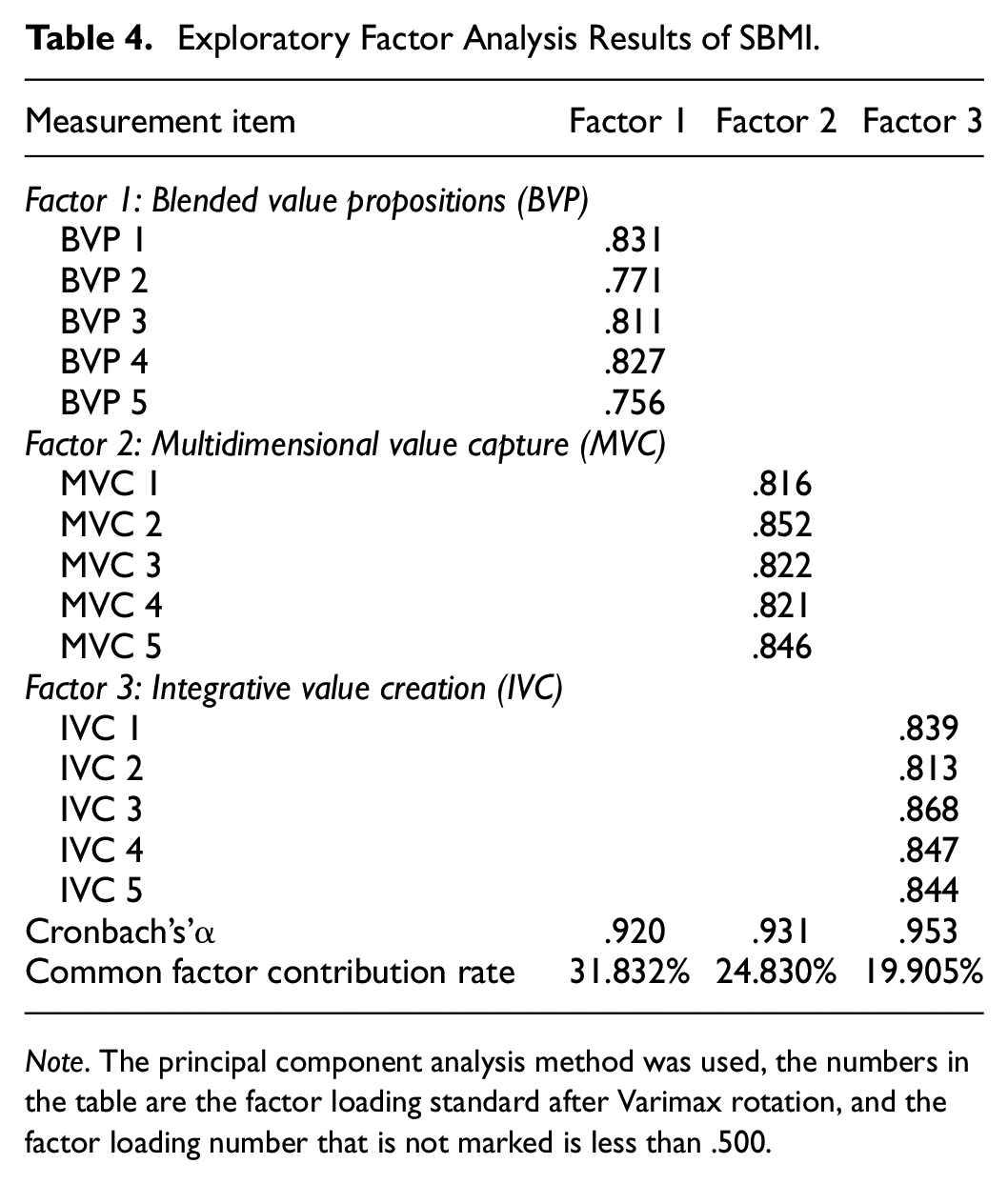
Note. The principal component analysis method was used, the numbers in the table are the factor loading standard after Varimax rotation, and the factor loading number that is not marked is less than .500.

Confirmatory factor analysis of SBMI.
Correlation Analysis
The mean, standard deviation, and correlation coefficient of each variable are shown in Table 5. The result showed: (1) GEO and SP (r = .546, p < .01) were significantly positively correlated; (2) GEO was significantly positively correlated with GIC (r = .456, p < .01) and SBMI (r = .315, p < .01); (3) There was a significant positive correlation between GIC and SP (r = .565, p < .01), SBMI and SP (r = .435, p < .01) were significantly positively correlated; (4) GIC was significantly positively correlated with SBMI (r = .362, p < .01). The square root of AVE was greater than the correlation coefficient between any two constructs, indicating that the scale has good discriminant validity.
Descriptive Statistics and Correlation Coefficient.

Note. The value on the bold diagonal is the square root of AVE.
p < .05. **p < .01. ***p < .001.
Hypothesis Testing
This research used SPSS 23.0, Process plug-in, and Amos 24.0 software, and adopted linear regression, and the Bootstrap method to test the hypothesis.
Direct Effect
As shown in Model 6 in Table 6, GEO has a significant positive impact on SP (β = .547, p < .001). GEO effectively explained 29.3% of the variance in SP, so hypothesis 1 was supported.
Regression Analysis Results of Mediation Effect.

Note. GEO = green entrepreneurial orientation; GIC = green intellectual capital; SBMI = sustainable business model innovation; SP = sustainable performance.
p < .05. **p < .01. ***p < .001.
Test of Intermediary Function of GIC
As shown in Table 6, it can be seen from Model 2 that GEO has a significant positive impact on GIC (β = .445, p < .001). It can be seen from Model 7 that GIC has a significant positive impact on SP (β = .567, p < .001). At the same time, Model 8 examines the impact of GEO on SP through GIC. The results show that GEO (β = .369, p < .001) and GIC (β = .400, p < .001) still have significant positive effects on SP. However, the regression coefficient of GEO dropped from .547 to .369. Therefore, GIC plays a partial mediating role between GEO and SP, so hypothesis 2 was supported.
Test of Intermediary Function of SBMI
As shown in Table 6, it can be seen from Model 4 that GEO has a significant impact on SBMI (β = .330, p < .001). According to Model 9, SBMI has a significant positive impact on SP (β = .439, p < .001). At the same time, Model 10 shows that GEO (β = .451, p < .001) and SBMI (β = .291, p < .001) still have significant positive effects on SP. But the regression coefficient for GEO dropped from .547 to .451. Therefore, SBMI plays a partial mediating role between GEO and SP, hypothesis 3 is supported.
Chained Mediation Test
In this study, the Bootstrap method was used to verify the chain mediation effect, and the specific results are shown in Table 7. From the upper and lower limits of the confidence interval in Table 7, it can be seen the indirect effect of GEO on SP is significant (effect value is 0.209). The effect value of GIC as an intermediary variable is 0.144 [0.077, 0.218]. The effect size of the mediating variable with SBMI is 0.040 [0.007, 0.086]. The effect value of GIC and SBMI as chain mediating variables is 0.024 [0.008, 0.046]. Therefore, GIC and SBMI have a chain mediating role in the relationship between GEO and SP, hypothesis 4 was supported.
Bootstrap Chain Mediation Effect Analysis Results.

Note. X is GEO; Y is SP; M1 is GIC; M2 is SBMI.
Discussion
At present, the academic community has elaborated the impact of GEO on enterprise performance from different perspectives. The conclusion is different. There is also a mixed effect view that the impact of GEO on enterprise performance varies under different circumstances, such as the difference of enterprise size, industry and enterprise resource management ability (Bassetti et al., 2021; Schaltegger & Wagner, 2011; Tze San et al., 2022; G. Wang et al., 2022; Zhang et al., 2022). It can be seen that the role of GEO on agribusiness performance is not simple positive or negative, but different cost effects will be generated with the different ability of enterprises to identify, match and use resources, and then a new core resource system will be formed. Previous studies have not focused on the comprehensive impact of the cost and benefit effects of GEO on the performance of agribusiness, and the role of resource integration ability in the relationship between the two. Our paper used survey data from 621 agribusiness in China, and takes agribusiness as the research object and aims to explore the relationship between GEO and SP. The respondents were mainly CEOs of agribusiness and the heads of research and development departments, production departments or environmental departments. As agribusiness contains a variety of industries, it is important to deepen the discussion on the performance and impact of different industrial characteristics on different GEO and SP. Our study selected agribusiness production, processing and manufacturing, product distribution and service categories to verify the positive impact of agribusiness green entrepreneurship on SP from a more micro perspective. In addition, although the theoretical literature on intellectual capital shows that enterprises have the opportunity to use intellectual capital to innovate their business models to achieve outstanding performance (Galati et al., 2020), so far, no empirical research has been conducted to investigate whether and to what extent green intellectual capital has affected the innovation ability of enterprises’ sustainable business models. Recent empirical literature has recognized how sustainable business models can promote innovation in different business environments (Demirel et al., 2019). However, as far as we know, there is no research to explore whether and how these changes brought about by the use of SBMI can be used to guide practice (Li et al., 2020). This research fills this gap. Specifically, we use the scale development to test (1) whether SBMI is applicable to the research on green entrepreneurship of agribusiness in the context of China, and (2) whether there may be a chain intermediary relationship between GIC and SBMI.
Theoretical Implications
The theoretical significance of this study has three main points: First, this study extends the research on the relationship between GEO and agribusiness performance from the perspective of SP. Previous research has mainly focused on financial performance and environmental performance (Jiang et al., 2018). This research systematically interprets the comprehensive impact of GEO on the environmental performance, financial performance, and social performance of agribusiness, and expands the research scope of GEO and agribusiness performance. Previous studies have explored the relationship between GEO and corporate financial performance or competitive advantage, especially its impact on financial performance. In addition, the existing research is controversial. Some scholars believe that the additional costs related to green make the development of enterprises at a competitive disadvantage, which in turn affects the profitability of enterprises. Based on the NRBV, this study focuses on the environmental, economic, and social performance that GEO may bring, and compares the impact of GEO on environmental performance, financial performance, and social performance from a more microscopic perspective, so as to provide a new explanation perspective for the differences of financial performance of green entrepreneurial enterprises.
Second, based on the dialectical perspective of intellectual capital theory, this research proposes a research framework of “GEO—GIC—SP.” By organically coupling intellectual capital, GEO, and SP, this study makes up for the limitation of the current “theoretical black box” research on the relationship between GEO and sustainable agribusiness performance and also complements the literature on GIC (Chen, 2008; Yusliza et al., 2020; Yusoff et al., 2019). Previous research on GEO mainly explained the motivation of enterprises to implement GEO from the perspectives of “opportunity resources” and “institutional logic” (Guo et al., 2020; Jiang et al., 2018; Makhloufi et al., 2022), but has not yet revealed the impact mechanism of GEO on the acquisition of “intellectual capital.” Based on the intellectual capital theory, this study deeply interprets the transmission role of GIC in the relationship between GEO and agribusiness sustainable performance from the three classic perspectives of green human capital, green structural capital, and green relationship capital. Thus, it provides a unique theoretical perspective for understanding the internal process between GEO and agribusiness sustainable development and further reveals the complex role of intellectual capital in the implementation of green entrepreneurship in enterprises under the background of environmental and knowledge-based economic transformation. This study expands the application of intellectual capital theory in the field of green entrepreneurship.
Third, this study further explores the impact of GEO on agribusiness sustainable performance through SBMI. The existing research on SBMI is mainly qualitative analysis (Bocken et al., 2014; Geissdoerfer et al., 2018), and less attention is paid to the empirical research of SBMI in the field of green entrepreneurship. Based on the triple bottom line principle, this study incorporates SBMI into the logical framework of “GEO—SP.” This study provides a new research perspective for understanding the internal mechanism between GEO and agribusiness sustainable performance. In addition, according to China’s situation, this paper develops an SBMI scale and makes an empirical study by using large-scale questionnaire survey data. The empirical results show that it can well verify all dimensions of SBMI, and can provide a positive reference value for follow-up research.
Management Inspiration
The management implications of this study are as follows: First, agribusiness should pay high attention to the importance of GEO to sustainable development, actively integrate green development concepts into the green innovation process, and continuously improve green production processes and green product quality. Enterprises should rationally weigh resource investment according to their own strategic orientation and positively view the impact of resource constraints, adopt scientific and reasonable GEO decisions, continue to invest in clean production and green innovation practices for a long time, and continuously improve core capabilities, so as to benefit from green entrepreneurship. For managers, it should be noted that although GEO, GIC, and SBMI are important predictors of sustainable performance of agribusiness, it is necessary to ensure that the objectives and indicators, environmental management system, products, marketing, external technical changes, etc. centered on green can be reviewed and fed back regularly.
Second, agribusiness should fully recognize the scientific nature of incorporating GEO, GIC, SBMI, and SP into the corporate performance management framework, and actively establish a good corporate image to build trustworthy relationships network, strive to increase the investment of its GIC, provide employees with more knowledge and skills training that meets the requirements of their green practice work, and gradually establish an environmental management system and a green product value chain system. Especially under the background of “carbon peaking” and “carbon neutrality,” enterprises should not only create a green and high-quality image that meets the ecological balance but also enhance the comprehensive value creation of business models. In the process of operation and management, enterprises should establish and attach importance to the concept of green development, and embed the dual logic of market and environment to promote green transformation and sustainable development of enterprises.
Third, for policymakers, under the Chinese green ecological governance concept that advocates “the harmonious relations between human beings and nature,” the government needs to be aware of the effective promotion of environmental incentive policies such as green subsidies, green procurement, and green bonds (Makhloufi et al., 2022). In this way, enterprises are constantly motivated to invest more resources in green production activities for a long time and encourage enterprises to carry out active behaviors of actively fulfilling environmental and social responsibilities. In addition, resource-saving and environmentally friendly business are not innate, it requires a transition from light green (social obligation) to dark green (social responsibility). Therefore, government departments should play a guiding role and can guide entrepreneurs to actively participate in various environmental protection associations and green management training through government-enterprise cooperation and other means, help enterprises establish and strengthen the environmental responsibility awareness of “harmonious symbiosis,” and effectively guide agribusiness to green entrepreneurship to achieve sustainable development.
Policy Implications
Environmental issues have become the mainstream and focus of the world. Many enterprises are looking for opportunities to seize this opportunity, not just to comply with environmental regulations. Therefore, agribusiness should pay enough attention to environmental issues in strategic selection, and carry out business activities in a competitive and environmentally sensitive sustainable way. First, the 18th CPC National Congress put forward the construction of ecological civilization, and pointed out that “the construction of ecological civilization should be put in a prominent position, integrated into all aspects and the whole process of economic construction, political construction, cultural construction, and social construction, and strive to build a beautiful China to achieve the sustainable development of the Chinese nation.” It can be clearly found from the report of the 18th CPC National Congress that there is no conflict between the construction of ecological civilization and economic construction, It can even “integrate” the construction of ecological civilization into the economic construction, which shows that the integration of economic construction and the construction of ecological civilization is an important part of achieving a beautiful China and the sustainable development of the Chinese nation.
Second, as a developing country with unbalanced regional development, in the implementation process of the ecological development of agribusiness, many rural areas still focus on economic development, especially in areas where the ecological environment is originally fragile. Without the government’s environmental policies, it is likely to cause environmental damage and cause a new round of “pollution before treatment” dilemma. Government environmental policies can play a role in the dual balance and dual complementarity of environmental and economic orientation (Makhloufi et al., 2022).
Finally, for the government, they should not only strengthen the use of emission standards, fines and other command and control measures, but also increase the use of green tax and other incentives to promote the development of agribusiness with green entrepreneurship and effectively guide the green and low-carbon transformation of agribusiness.
Conclusion
This study explores the relationship between GEO, GIC, SBMI, and SP, with the aim of explaining how green entrepreneurship promotes green practices and SP in agribusiness. Through the survey data of 621 agribusiness, the following conclusions are drawn: (a) GEO plays a key role in improving green practices in agribusiness to adapt and promote environmental activities, which will help capture ecological opportunities and improve SP. (b) GIC has a mediating role between GEO and SP. GEO helps companies build knowledge bases related to environmental topics, and can increase employees’ commitment to corporate green activities, which is conducive to companies’ accumulation of GIC. Through GIC, enterprises form a green knowledge management ecosystem and enhance the cumulative interaction with customers, suppliers, and partners in environmental management and green innovation, thereby helping enterprises achieve SP. (c) SBMI has a mediating role between GEO and corporate SP. Agribusiness with GEO can quickly allocate precious scarce resources, explore new green knowledge and technology, develop new business solutions, integrate green elements into product research and development, and promote comprehensive innovation in manufacturing, logistics, and material recycling (Makhloufi et al., 2022), thereby realizing comprehensive value creation. (d) Empirical research finds that GIC and SBMI play a chain mediating role between GEO and sustainable agribusiness performance. Therefore, enterprises should pay attention to the joint effect of GIC and SBMI.
Limitations and Avenue for Future Research
There are still some limitations of this study that need to be further explored in future research. First, this study only explores the impact of green innovativeness, green proactiveness, and green risk-taking on sustainable agribusiness performance. On this basis, subsequent research can introduce dimensions such as environmental orientation and social orientation to improve the scope of this study. Second, due to the limited space and complexity, this study only explores the influence mechanism of green entrepreneurial orientation from the perspective of GIC and SBMI. In practice, there are other important transmission factors that will affect the relationship between GEO and agribusiness sustainable performance. Furthermore, as agribusiness contains a variety of industries, it is important to deepen the discussion on the performance and impact of different industrial characteristics on different GEO and SP, and to provide deeper insights.
Footnotes
Appendix
Construct Items.

| Constructs | Label | Measurement items | Sources |
|---|---|---|---|
| GEO | GIO1 | Our company accelerates the greening of existing products or services | Jiang et al. (2018) and Makhloufi et al. (2022) |
| GIO2 | Our company minimizes the use of raw materials in the production of green products | ||
| GIO3 | Our company emphasizes green product or service innovation, pursues technological leadership, and has a more prominent degree of research and development | ||
| GPO1 | Generally speaking, our company is the first to act, and then our competitors follow or respond | ||
| GPO2 | Our company typically seizes market opportunities ahead of our competitors and takes early action to respond to market changes | ||
| GPO3 | Our company tends to be an industry leader and is always the first to introduce new green products, technologies and services | ||
| GRO1 | The extent to which our company is involved in developing green projects with high risks and high rewards | ||
| GRO2 | The extent to which our company typically takes swift, risky action to achieve corporate goals | ||
| GRO3 | Our firm’s approach to identifying and exploring green opportunities is often bold and aggressive | ||
| GHC1 | Our employees’ contribution to environmental protection is better than our main competitors | Chen (2008) and Huang and Kung (2011) | |
| GHC2 | Our managers fully support our employees in achieving their goals in terms of environmental protection | ||
| GHC3 | The knowledge management system of our corporate environmental management facilitates the accumulation of environmental management knowledge | ||
| GIC | GSC1 | Our company invests more in environmental facilities than our main competitors | |
| GSC2 | The overall operation process of our corporate environmental protection is running smoothly | ||
| GSC3 | Our company’s environmental management system is better than our competitors | ||
| GRC1 | Stable partnerships between our companies and downstream customers or channels in environmental protection | ||
| GRC2 | Our company has a good relationship with strategic partners in environmental protection | ||
| GRC3 | Our company has a stable partnership with upstream suppliers in environmental protection | ||
| ENP1 | Our company can reduce pollution | El-Kassar and Singh (2019), Mousa and Othman (2020), and Li et al. (2019) | |
| ENP2 | Our company can reduce energy and material consumption | ||
| ENP3 | Our company is able to reduce the consumption of hazardous materials | ||
| SP | ENP4 | Our company can reduce the frequency of environmental accidents | |
| ECP1 | Our company is growing in sales | ||
| ECP2 | Our company’s market share is growing | ||
| ECP3 | Our company’s profit margin is growing | ||
| ECP4 | Our company’s overall financial performance is good | ||
| SOP1 | Our company cares about and improves the quality of life and safety in our communities | ||
| SOP2 | Our company is committed to reducing environmental impacts and risks to the public | ||
| SOP3 | Our company strives to improve the occupational safety and employment of our employees | ||
| SOP4 | High transparency of information provided by our company |
Note: GEO = green entrepreneurial orientation; GIO = green innovativeness orientation; GPO = green proactiveness orientation; GRO = green risk-taking orientation; GIC = green intellectual capital; GHC = green human capital; GSC = green structural capital; GRC = green relationship capital; SP = sustainable performance; ENP = environmental performance; ECP = economic performance; SOP = social performance.
Acknowledgements
We would like to thank The National Social Science Fund of China (20BGL059) for supporting this research.
Declaration of Conflicting Interests
The author(s) declared no potential conflicts of interest with respect to the research, authorship, and/or publication of this article.
Funding
The author(s) disclosed receipt of the following financial support for the research, authorship, and/or publication of this article: This research was supported by the National Social Science Fund of China (grant 20BGL059).

Data Availability Statement
The data that support the findings of this study are available from the corresponding author, [Xiu-e Zhang, Emai: