




Abstract
Emotions play an important role in the process of media messages transforming the audience. In our study, starting from the question of what might be the dominant emotions in old age-themed cinema texts, it is aimed to obtain clues about how old age is constructed in cinema through these emotions and what kind of emotional structure about old age is imposed on the audience. In this direction, emotion analysis was applied to the dialogues of 379 old age-themed films shot in a period of 100 years to determine what kind of emotional structure is constructed in all old age-themed cinema texts. As a result, it was found that the most dominant emotion was anger and disgust. The findings were categorized according to three different periods (1920–1969, 1970–1999, 2000–2020) and interpreted in a descriptive approach in a historical perspective and within the framework of the cinemas of the in addition to the EU, Germany, France, the UK, and Japan, Turkish cinema to make a comparison, where the most old age films were made. It is expected that our study will set an example for text mining research in cinema and offer an alternative perspective to the discussions on the phenomenon of aging in cinema.
Introduction
The definition of old age may differ according to culture and time. Advancing technology and falling birth rates are transforming living conditions for people of all ages. The elderly are undoubtedly the most affected by this transformation. The reason for this is the prolongation of human life span thanks to advancing medical technologies and the decrease in birth rates due to socioeconomic and cultural reasons. Under these conditions, the proportion of the world’s elderly population is increasing, which creates different socioeconomic and cultural conditions.
Although there are some generalizations about old age, it is actually a phenomenon that differs according to historical processes and cultures. According to Giddens et al. (2006), old age refers to the combination of psychological, biological, and social processes that affect the individual due to the progression of age. In terms of countries, the US population is aging faster than at any time in its 200 year history (Crosthwaite, 2014, p. 27), and this is considered a source of concern in terms of work and retirement (Ameriks et al., 2020). On the other hand, it is known that the unique characteristics and culture of the Japanese are collectivist and have strong ethical roots. In this respect, compared to Western culture, Asian societies seem to adopt a more positive perspective toward aging (Tello Díaz, 2019, p. 586). The term “positive” here should not be confused with the concept of “active aging.” In countries such as Japan, China and South Korea, aging is associated with increased respect and greater influence in society (Chang et al., 1984; Sung, 1994). Such beliefs and practices are often derived from the strong influence of Confucian values that emphasize notions of respect for elders and give these older members a more respected role in both familial and social contexts (Levy and Langer, 1994; Sung, 1994).
Perceptions of aging can influence societal behaviors and expectations toward older people (Pasupathi & Löckenhoff, 2002, p. 201–246) as well as older adults’ coping processes with aging (Levy & Myers, 2004, p. 628). Media plays a very important role in the construction of the perception of old age (Vesperi, 2009). Dahmen and Cozma (2009) argue that the way older people are portrayed in the media can influence how young people envision their future, how they interact with older people and how older people are positioned in society. Cinema, as a media organ, both reflects the social dynamics of the age and contributes to the production of these dynamics (Kracauer, 1997, p. 300). As Gravagne (2013) points out, cinema is a cultural medium that has the ability to change our understanding of the aging process. Based on the impact of media messages on individuals’ perceptions, it is possible to say that the perception of old age produced in films with the theme of old age shapes our perceptions of old age in real life.
Emotions play a major role in the transformation of cinema messages into perception (Kubrak, 2020, pp. 2–4; Rancière, 2019, pp. 2, 26, 79; Tan, 1995, pp. 7–32; Tan, 2018, pp. 1–20). Emotions can be considered as the product of a physical, spiritual and cognitive interaction triggered by our five sense organs. Emotions are influenced by external factors and have the power to influence external factors. In this respect, emotions can be considered both a part of a geno-cultural process and a determinant and shaper of it. Cinema plays an active role in shaping emotions because cinema contains cultural and universal codes, kneads, and shapes them. It also takes shape together with these codes. Similarly, emotions are also shaped and molded by cultural and universal codes. In this respect, cinema texts constitute a favorable ground to trace the emotions that play an active role in understanding the meaning and culture produced through cinema.
In this study, which is based on the effect of emotions in the process of transforming the audience through cinematic messages, aims to obtain clues about how old age-themed films may shape our perception of old age in real life. In this direction, answers were sought to the questions of “what the dominant emotions in the dialogues of old age-themed movies might be and which emotions are imposed on the audience in this way.” It is thought that understanding the emotions with which dialogues are constructed in old age films is important in two aspects: (a) To provide an alternative perspective to the discussions on what kind of an image of the elderly is produced for the audience in cinema texts through dominant emotions and the change of this image over time. (b) Accordingly, to contribute to the discussions on whether the emotional atmosphere produced in cinema texts about old age overlaps with the dominant attitudes toward old age in society. In this direction, a descriptive emotional map of all old age-oriented films shot within a century has been tried to be created.
In order to create a sentiment map, our study was motivated by the potential of data mining techniques, which have been developed to acquire, process and transform large amounts of data into meaningful results, to offer a holistic perspective on old age constructed through cinema. Since the audience plays an important role in the formation of emotions and perceptions (Kozloff, 2000, p. 33), we focused on film dialogues (subtitle texts) to reveal the emotional structure of old age-themed films. At this stage, sentiment, and emotion analysis were applied to the subtitle texts of the films, taking advantage of the integration of the data that emerged as a result of the dynamics and requirements of the digital age with cinematic possibilities. As a result, all films (379 films) made within a period of 100 years, in which aging is at the center, were analyzed descriptively in terms of emotional structures by text mining method and the results were discussed within the framework of social aging and cultural politics of emotions by considering aging within the social structure.
To reveal whether the language and emotions in the old age-themed films differed from the other films, the same process was carried out for the comparison group films. The comparison group here should not be considered as a control group as in experimental research. It is possible to think of the comparison group in our study as a qualitative comparison group created to compare the categorical variables in our focus. Afterward, the results obtained are interpreted descriptively in terms of both historical and national cinemas in the context of the cultural politics of emotions.
Finally, to avoid conceptual confusion, it is important to underline that this research is not a representational study. In our research, we focused on the description of the emotional structure embedded in old age-themed films through data mining methods. Through the emotional structure revealed, it is expected that our study will both set an example for text mining research in cinema and offer an alternative perspective to the discussions on the phenomenon of old age in cinema.
Firstly, the conceptual framework is given and then the methodology of the study is discussed. Afterwards, the results of the application we carried out to create the emotional map of old age-themed films are discussed in detail.
The Theme of Old Age in Cinema
In our study, we focus on how older individuals interpret themselves from a “socio-cultural perspective” and how this interaction reveals a structure of feeling depending on how the environment they are in constructs them. Social aging approaches aging within the social structure and interprets situations related to aging in terms of the interaction of older individuals with social structures in society (Cowgill & Holmes, 1972).
The World Health Organization [WHO] (2015) defines old age as “the gradual decline in the ability to adapt to the environment.” In the last 30 years, due to the changing demographic structure of the world, there has been a need to reclassify old age, especially in developed countries. Accordingly, 65 to 74 is defined as early old age, 75 to 84 as old age and, 85 and above as old age (Rudnicka et al., 2020). Population aging is accelerating significantly worldwide, including in middle- and low-income countries. The United Nations population report showed that the number of countries and territories where more than 15% of the population is over 65 has increased from 3 in 1990 to 51 in 2019 and is projected to increase continuously (Unicef, 2019). By 2050, the proportion of people over 60 is projected to double (WHO, 2015).
Keeping in mind the fact that we live in an aging world, it is possible to say that cinema can function as a kind of laboratory where different scenarios can be played out culturally, different situations can be experienced, and different subjectivities can be constructed and occupied. Cultural gerontologist and film critic Chivers (2011, p. 1) coined the term “silvering screen” in her work on cinematic representations of aging to refer to the growing number of films that prominently feature aging and its symptoms (silver-haired actors, silver stars). At the end of her in-depth study of a range of old age films, Chivers concludes that, in general, the silvering screen is underpinned by dominant economic values, and that these values are related to the political economy rather than morality. In a more recent publication, Dolan (2018, p. 15) continued to make use of the term, referring both to the increasing visibility of old age in mainstream cinema through new roles for its aging stars and to the profitable impact of films on old age. In today’s picture, with the aging of the so-called baby boom generation, there is a widespread emergence of “silver” stars in the film industry.
In his recent research focusing on the role of cinema in the mass influence of representations of old age, Casado-Gual (2020, p. 2257) argues that the radical demographic shift caused by the aging population has led to the transformation of popular culture in the Western world, and that cinema is one of the popular arts that has been particularly affected by the so-called “longevity revolution.” According to Crosthwaite (2014, p. 27), in most cases older characters are reduced to the margins of the main action and thus to the margins of life. Another view on representations of the elderly in cinema belongs to Cohen-Shalev. In Cohen-Shalev’s (2009, p. 53) view, despite the recent increase in films dealing with aging or old age, almost all mainstream films tend to provide a misleading, challenging, and demeaning image of old age. Cohen-Shalev attributes a significant part of these misunderstandings to the dominance of the middle-aged view of the aging process in the film industry (2009, pp. 1–2, 14). On the other hand, Greenberg et al. (2002) suggest that fears of old age can begin at an even earlier age. Similarly, many different studies on media representations of old age have found that, in general, older people are represented as ineffective, dependent, lonely, poor, angry, overly wrinkled, ugly, dirty, disabled, less physically active, and less healthy than younger adults (Doka, 1986; Falchikov, 1990; Middlecamp & Gross, 2002). Since today’s children and adolescents have less contact with older people than in years past, some young people likely get most of their information about older people and aging from the media. In this respect, it is possible to say that rather than portraying the reality of older people on the screen, old age-themed movies convey the concerns of young and middle-aged individuals who are afraid of aging. In other words, a perception of old age that belongs to young and middle-aged individuals continues to be reinforced through movies.
As Luhmann (2000, p. 1) put it: “Whatever we know about our society, or indeed the world in which we live, we know through the mass media.” In this sense, the media should not only be seen as second nature but also as an integral part and active agent of a multifaceted reality. In this respect, cinema, as an effective mass media, is a meaningful indicator to measure the role and practices of the media toward the phenomenon of aging in a historical and cultural perspective. As can be seen, the measurements on this issue to date have largely pointed to problematic representations of the elderly.
To the best of our knowledge, none of the studies conducted to date have examined all old age films and their changes over time in a period as wide as 100 years. In order to look at old age films in a holistic perspective, our study utilized data mining, a method that has not been used for such a purpose before, and emotion analysis was applied to the subtitle texts of old age-themed films in order to understand what kind of emotional state old age films actually reveal, as they contain clues about the phenomenon of old age. In this context, in the next section, emotions are explained in relation to sociology and cinema.
Cultural Politics of Emotions and Cinema
Emotions have important functions in human life and motivation (Matsumoto et al., 2013, pp. 454, 465). For example, while the emotion of fear can mediate the continuation of one’s life, the emotion of anger provides the protection of the self (Greenberg, 2004, pp. 5, 9). In the literature, there are various discussions about which emotions should be included in core emotions. According to Ekman and Cordaro (2011, p. 365), basic emotions should have distinctive universal and physiological symptoms, be the result of automatic arousal, have similar triggers that elicit emotions and have similar symptoms in other primates. According to Ekman, six basic emotions fit these criteria. These are surprise, anger, fear, disgust, disgust, sadness, and joy (Ekman, 1992a, pp. 193–194). In a later study, Ekman (2000) developed these emotions and expanded the basic emotions as amusement, humiliation, contentment, embarrassment, excitement, guilt, pride, relief, satisfaction, pleasure, and shame. Some researchers (Izard, 2007, pp. 269–273) argue that shame, curiosity, and guilt can also be basic emotions.
In addition to studies on the definition of basic emotions, there are also definitions of the concept of emotion in different contexts in the literature. According to one definition, emotion is “automatic responses to universal shares, culture, and individual-specific events that have distinctive characteristics” (Ekman & Cordaro, 2011, p. 364). On the other hand, according to Lazarus (1984), emotions should be seen not only as automatic reactions but also as a result of individuals’ evaluation of environmental events and the meanings they give to these events. By emphasizing the cognitive aspect of emotional experiences, this approach provides an important framework for understanding how emotions are formed and how they can be managed. In this study, emotions as a part of our reality shaped by universal exchanges, culture, and individual-specific events are associated with social constructionism (Berger & Luckmann, 1966), which is based on the idea that emotions arise from human interaction rather than being natural, objective, or given. The social construction of reality is neither neutral nor necessarily fair. Rather, as Ahmed (2004a) points out, socially constructed reality tends to include certain subjects and certain ways of being, while excluding or ignoring others. In other words, emotions have the power to bring people together or to separate them from each other. Rather than perceiving emotions as psychological states, Ahmed (2013b) describes them as social and cultural practices constructed within the surrounding society. According to Ahmed, emotions are not only individual experiences, but also intertwined with social structures, power relations and socio-cultural practices. Emotions such as fear, trust, friendship, and resentment toward an imagined “us” and “others” are organized and reproduced in politics, discourses, and everyday practices (Slaby & von Scheve, 2019). For this reason, this study focuses on the cultural and political implications of the emotions constructed in films on the theme of old age and the relationship between this construction and existing approaches to old age in social life.
Emotions can be considered both a part of a geno-cultural process and a determinant and shaper of it. Cinema plays an active role in shaping emotions. Because emotions play a major role in the transformation of cinematic messages into perception (Rancière, 2019, p. 2). Film is a medium known for its potential to increase the response to emotional stimuli due to its immersive capacities (Gross & Levenson, 1995, p. 88). In this respect, cinema contains universal codes along with cultural codes, kneads, and shapes them. It also takes shape together with these codes. Emotions are similarly shaped by cultural and universal schemas and give shape to these schemas.
Cinema, on the other hand, can construct reality in many different ways. For example, the narrator, through dialogues, provides the audience with clues about the reality of events; he creates an atmosphere of lived experience for the audience through the connections he establishes between events. In her study on film dialogues in cinema, Kozloff (2000, p. 6) states that although many studies are focusing on a wide range of topics related to the narrative elements of cinema, film dialogues have been little studied. According to Kozloff (2000, pp. 33, 51), film dialogues play a critical role in the experience of the film, in the formation of emotions and perceptions and, in parallel, in the construction of meaning. In this respect, film texts constitute a convenient source for tracing the emotions that play an active role in understanding the meaning and culture produced through cinema.
Emotion Analysis and Mining Research in Cinema
Data mining is the process of extracting valuable information from large amounts of data. The process of extracting, organizing, and processing data according to specific guidelines is called data mining (Bhatia, 2019). Data mining, also called knowledge discovery in databases (KDD), is the field of discovering new and potentially useful information from large amounts of data (Fayyad et al., 1996). Although text mining is considered a part of data mining, it is different from conventional data mining. The main difference is that in Text Mining, patterns are extracted from natural language texts rather than from event-based databases. The main idea of text mining is to extract valuable information from data given in texts, including written and spoken ones, using natural language processing (NLP) methods.
In our study, sentimental analysis was conducted. Sentimental analysis finds the emotional poles in different texts, such as positive, negative, or neutral, as well as specific emotions and hate speech in the text. There are basically two different methods for conducting sentimental analysis. These are word-based sentiment analysis and Machine Learning.
Lexicon-Based Sensitivity Analysis (Lexicon-Based Method)
Lexical sentiment analysis calculates sentiment from the semantic orientation of words or phrases in a text.
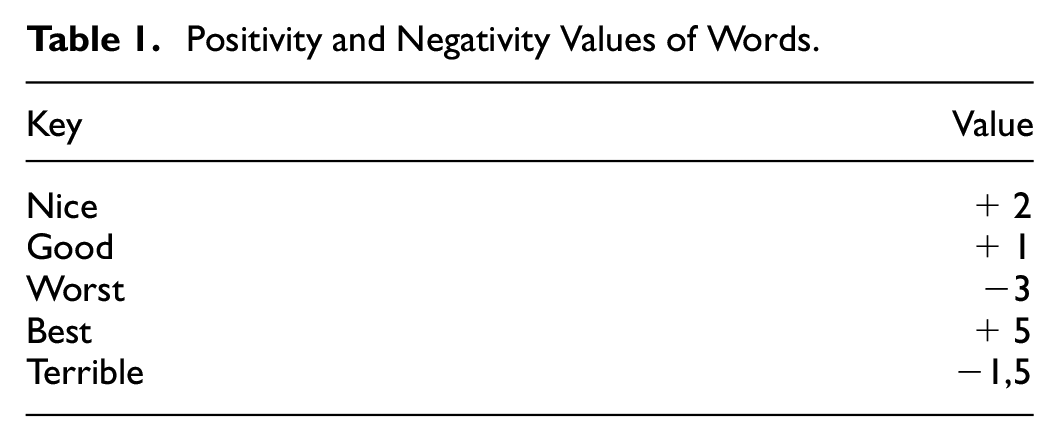
It creates a dictionary of positive and negative words or different emotion expressions and assigns values to each word according to its emotional state. For each word, for example, the dictionary of positive and negative values can be defined as follows:
P(positive|w) for positive w
P(negative|w) for negative w
Thus, it creates a dictionary-like schema as in Table 1:
Positivity and Negativity Values of Words.
For example, if we want to apply sentiment analysis to the following sentence using word-based sentiment analysis, the following steps are performed:
“I don’t like you because you’re a terrible man, but you like me.” Like: +5 Like: +2 Terrible: −1,5 Overall sensitivity = +5 + 2 + (−1.5) = +5.5
Machine Learning Method
The machine learning method is superior to the dictionary-based method, but requires labeled data sets. It requires a training dataset that recognizes emotions. The distribution of the data has an impact on inference. At the same time, decisions may be biased. Table 2 shows a dataset on women’s clothing reviews.
Rating of Sentences.

Labeling was performed on the above dataset by applying the following rules and exemplified in Table 3:
Polarity of Sentences.

If rating > 3, polarity_rating = “Positive”
If rating == 3, polarity_rating = “Neutral”
If rating < 3, polarity_rating = “Negative”
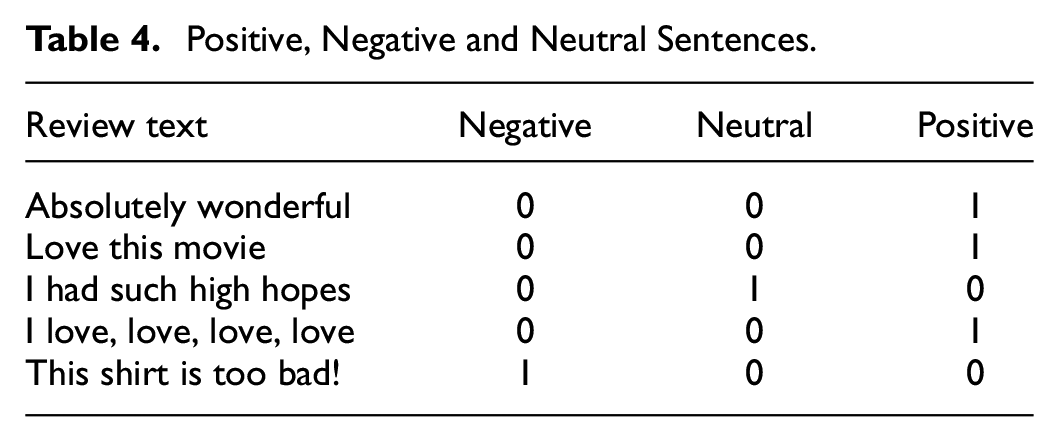
Then, as can be seen in Table 4, One Hot Encoding was applied on the negative, neutral, and positive for better classification by the computer:
Positive, Negative and Neutral Sentences.
Usually, the data set is divided into training and test. Then, the model is trained with the training data. Then, evaluation is done with the test data set. SVM, bayes, random forest and deep learning are some of the machine learning algorithms used to train the model. The performance of the results found using machine learning can be found by methods such as accuracy, sensitivity, F1 score.
Studies where keywords such as big data, data mining and text mining intersect with cinema research can be broadly divided into three different categories. The first category is research on “predicting box office potential and movie success (popularity)” (Arrowsmith et al., 2014; Latif & Afzal, 2016; Karpov & Marakulin, 2021). The second is “mining for the analysis of movie content” research (Almeida et al., 2021; Basari et al., 2013; Carrive et al., 2021; Wu et al., 2021). The third category is “database building for cinema corpus” research (Agocuk & Çiftçi, 2020; Casas-Tost & Rovira-Esteva, 2019; Savk & Dogu, 2021). In this respect, it is possible to evaluate our research within the scope of the second category, “mining research for the analysis of film content.”
In the most recent literature on the subject, in a study using sentiment analysis, a model that can predict the success of a movie at the box office was developed by analyzing both the movie’s metadata and the sentiment structure of user reviews (Yang et al., 2023). Another important paper explored what matters to people when evaluating movies. Using sentiment analysis, the authors found that Hedonism, Actors’ Performance and Narrative are the most critical issues in movie evaluation (Schneider et al., 2020). Finally, another recent study investigated the sentiment structure in adventure movie scripts using text mining and sentiment analysis techniques (Rahman et al., 2020). The paper collected a dataset of 20 adventure movie scripts for sentiment analysis. The experimental results showed that fluctuations in the sentiment structure of adventure genre movies reflect the audience’s mindset as public opinion for social impact. In this respect, the article is a pioneering study in which sentiment analysis is applied to the film text, unlike the standard audience study or box office prediction research in the literature. The main difference of our study from this research is the use of dialog texts instead of script texts. This is because script texts and film dialogues contain texts that do not reach the audience.
On the other hand, dialog texts consist of texts that directly reach the audience. In this respect, they are more suitable for tracking emotions that directly touch the audience. Another difference is that the sample set consists of a large number of films with a specific theme shot in a wide period such as a century.
To summarize, in most cinema mining research, cinema data is used for computer-based developments. Studies in which computer-based actions enrich cinema research are limited in the literature and are mostly audience-oriented. To the best of our knowledge, our study is the first in the literature on the application of mining methods, which are used in many fields from literature to marketing, education to finance, on dialog texts in cinema.
Method
In our study, in order to get clues about how movies shape our perception of old age in real life, we tried to describe the perception of old age embedded in movie texts through emotions in a historical and cultural perspective. To create a descriptive emotion map, films that were shot within a 100 year period and in which old age is at the center were identified. To reveal the perception of old age embedded in the films, we focused on “film dialogues (subtitle texts)” since the audience plays an important role in the formation of emotions and perceptions (Kozloff, 2000, pp. 33, 51).
In this article, text mining (Sentiment Analysis, Emotion Analysis) method, which is widely used by many different disciplines today (Olesen & Kisjes, 2018, pp. 129–133; Shen et al., 2019, pp. 10–11), was used in the data collection and processing phase. In this framework, the subtitles of movies that center on the phenomenon of aging were analyzed using the text mining method. The reason for choosing this method is to create a comprehensive idea about the emotional structure of all old age-themed movies on IMDB.
To determine the sample of the study, a total of 709 films were encountered when the Internet Movie Database (IMDB) was searched on February 20, 2022 with the tag “old age” (The site was searched with the words “elderly, senile, older people, older person, aging, grandmother, grandfather”). However, in a significant number of these movies, there is only an elderly character and the movie is not about the theme of aging in general. For this reason, the content of 709 films was manually analyzed for the purpose and 376 films were identified in which the theme of old age was central in addition to the elderly characters. Therefore, all films focusing on old age were selected for analysis and all films included in the study population were analyzed. For this reason, the term “analysis films” was used instead of “sample films” in the study.
In order to reveal whether the language and emotions in old age films differ from other films, a qualitative comparison group was formed in our study. The comparison group was formed to make comparisons with the analyzed films. The comparison group here should not be considered as a control group as in experimental research. The comparison group in our study was created to compare the categorical variables in our focus. Unlike the control group in experimental research in which data manipulation is performed, the comparison group will allow us to make a comparison, for example, about which emotion is dominant. In this respect, it is referred to as the comparison (test) group. In our study, 250 movies under the title of “Top 250 Movies,” which lists the movies with the highest scores on IMDB, were selected for the comparison group.
To retrieve the “tag” information of 379 films from the internet, the API (Application Programming Interface) provided by OMDB (The Open Movie Database) was used. OMDB is an open-source mirror (copy) of IMDB.
The films were categorized according to three different periods (1920–1969, 1970–1999, 2000–2020) through the “year of film production” information included in the film credits. The reason for determining the historical periods in this way is related to the fact that the oldest old age-themed films were made in the 1920s, as well as the ruptures in the ratio of the elderly population to the general population in the world. Another factor that we take into consideration while creating historical periods is technological breaks. Because such breaks constitute relevant determinants that extend to the extension of human life span as well as cinema technologies. In this respect, the reason why we take the year 1920 as a starting point to determine the historical perspective is that the first old age-oriented film was made in that years. The period from the 1920s to the 1970s was a time when old age was not a problem for the world population. At the same time, this period represents a period of infancy, from the beginning of sound cinema to the formation of established film cultures, when the social destruction caused by the World Wars was tried to be overcome. The period from the 1970s to the 2000s is the period when it was predicted that old age would slowly turn into a global demographic crisis, and technologically, it marks the time when the internet became widespread, movie companies turned into large monopolies, medical technologies gained momentum, and thus human life and well-being gained a new dimension. The period from the 2000s to the present is a new period in which technological developments have transformed both cinema culture and living standards, as well as human life span. However, in this period, old age constitutes a more significant majority in the world demographics than ever before and is referred to as the “crisis of the modern age” (Sivaramakrishnan, 2018). Therefore, the period in question refers to a period in which social policies related to old age are rapidly transformed and updated, and in parallel with this, the number of films on the theme of old age has increased.
Afterward, the films were categorized “by country” based on the information provided in the film tags to identify the countries where the most old age-themed films were made. Accordingly, the countries with the highest number of old age-themed films are the USA, the UK, Germany, France, and Japan, respectively. In addition, although not included in the top five, the subtitles of films from Turkey were also evaluated in order to reveal the Turkish perspective, and the results were interpreted by comparing the data of the top five countries that produced the most old age films.
The next stage is the acquisition of subtitles. The English language subtitles of the sampled films were obtained by downloading them from the website “OpenSubtitles.” Each subtitle (as well as each movie due to their IMDB IDs) was separated first by country and then by year. Subsequently, the subtitles were separated by duration. The purpose of doing this is to be able to identify and interpret emotional ups and downs during the duration of a movie.
In the text mining phase, the Pysentimiento (Pérez et al., 2021) program was used to detect various emotions (sentiment analysis, emotional analysis) in the texts. The sentiment analysis tool (Pysentimiento) measures Ekman’s (1992b, p. 550) six basic emotions (surprise, anger, fear, disgust, sadness, and amusement) as well as the tendency of positive and negative emotions in the text. We chose the Pysentimiento instrument because it is the most recent and popular instrument with proven validity and reliability at the time we conducted the analyses.
The data obtained on the emotional structure of 379 films on the theme of old age, shot over a period of approximately 100 years, were analyzed with a descriptive approach in a historical and intercultural perspective.
Detailed data and findings are available on GitHub (https://github.com/savastakan/yaslilik).
Results
In this section, the diversity of emotions and positive-negative emotional structures in the subtitle texts of aging-themed films are analyzed and the results are discussed.
Genre Breakdown of Old Age Films
Looking at the genres of old age-themed films (Figure 1), a total of 341 old age films belonging to the “drama” genre were found at all times. This ratio shows that 48.6% of the old age films in the analysis group were made in the drama genre. The second most common genre in old age films is “comedy.” There are 123 films in the comedy genre. At the same time, according to this ratio, 17.9% of total films are in the comedy genre. The third most common genre in old age films is “romantic” films. Fifty-seven films are in the romantic genre. Old age-themed films in the romantic genre make up 8.5% of all films. These three genres are followed by “thriller, biography, crime, and mystery.” The three least common genres in old age films are “musical (0.6%), film-noir (1.1%), and animation (1.3%).” When analyzed by years, except for the increase in the number of films, the genre ranking has generally remained the same.

Types of old age films by year and country.
To summarize, when old age-themed films and comparison films were compared according to their genre distribution, different results were obtained except for the commonality of the drama genre. While the drama genre was followed by comedy and romantic genres in most of the old-age themed films, the drama genre was followed by adventure and action genres in comparison films.
Emotion Diversity (Emotion Analysis)
Looking at the diversity of emotions in the subtitle texts of the old age-themed films, the emotion “anger” was the most common emotion among the six emotion expressions listed within the framework of the emotion analysis tool we used. As can be seen in Table 5, according to the results, the least common emotion in the subtitle texts of old age-themed films is “surprise (wonder).”
Emotions According to Movie Duration.

In the historical perspective, the films were divided into 30-min periods for the years 1920 to 1969, 1970 to 1999, and 2000 to 2020 (Figure 2). Looking at all three time periods in general, it was observed that the emotions of anger and disgust were more constant in each 30 min than the other emotions, while the emotion of sadness decreased in the last 30-min periods of the films without exception. In other words, based on the subtitle texts, it is possible to say that films on the theme of old age generally end with an ending in which sadness decreases. On the other hand, it can be said that in the years 1920 to 1969, the emotional ups and downs from the beginning to the end of the films were very high, while from the following period to the present day, these ups and downs are less pronounced and have a balanced intensity that includes all emotions.
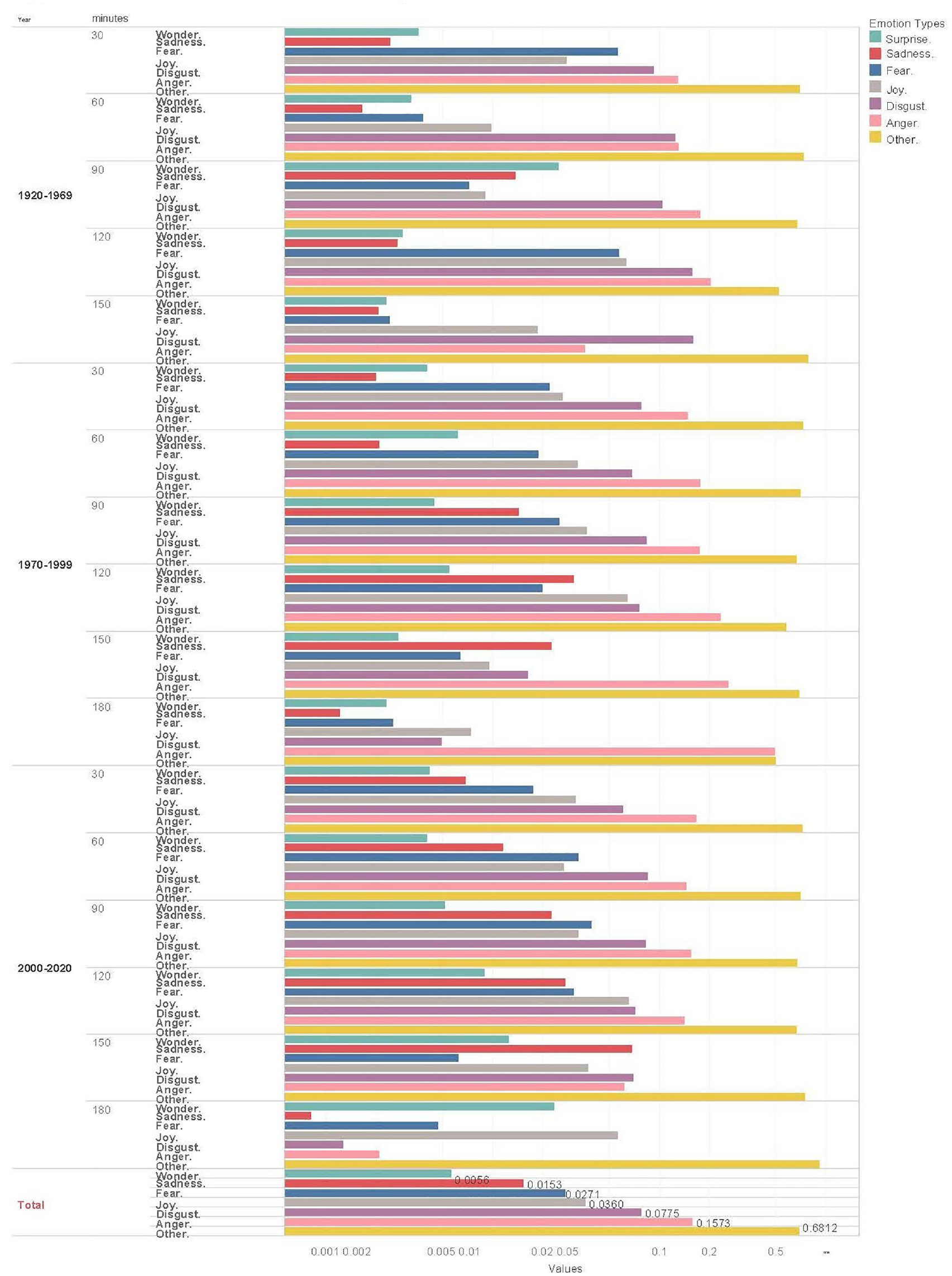
Emotional diversity in subtitle texts of old age films between 1920 and 2020.
The emotion “anger” was the most common emotion at all times in the subtitle texts of US-made old age-themed films. The least common emotion was “surprise.” When we look at it from a historical perspective, it is noteworthy that the intensity of the emotions of fear and disgust has decreased from past years to the present, while the emotion of joy has consistently maintained its presence and intensity. In other words, as we get closer to the present day, it is possible to say that the emotion of joy has become prominent in US-made old age-themed films.
The emotion of “anger” is more common in the subtitle texts of German-made films on the theme of old age. The least common emotion in the subtitle texts of German-made films on the theme of old age is “surprise.” When we look at the historical perspective, it is seen that the most prominent emotion between 1920 and 1969 was disgust, but the intensity of emotions converged over time. In addition, it is noteworthy that the emotion of sadness has increased in a remarkable and regular manner from the past years to the present. In this respect, it is possible to say that as we get closer to the present day, German films on the theme of old age take on a sadder tone.
In the subtitle texts of French films on the theme of old age, the emotion “anger” was the most common emotion at all times. The least common emotion was “surprise.” In a historical perspective, while the emotions of fear and sadness were almost non-existent between 1920 and 1969, they became dominant over time. Accordingly, it is possible to say that as we get closer to the present day, French films on the theme of old age take on a more tense and sad tone.
The emotion “anger” was the most common emotion at all times in the subtitle texts of UK-made films on the theme of old age. The least common emotion was “sadness.” In historical perspective, between 1920 and 1969 and 1970 and 1999, the emotions of fear and sadness remained in the background compared to other emotions, while they became more prominent closer to the present day. Unlike other countries, the emotions of joy and amazement are evident at all times in UK-made old age-themed films. In this respect, it is possible to say that, in general, UK-made old age-themed films have a more cheerful tone compared to other countries.
In the subtitle texts of Japanese films on the theme of old age, the emotion “anger” was the most common emotion at all times. The least common emotion was “surprise.” From a historical perspective, the emotion of sadness was almost non-existent between 1920 and 1969, but became dominant over time. Anger, fear, disgust, and surprise are the dominant emotions in the first time period. Over time, these emotions become less dominant. In other words, in general, it is possible to say that in Japanese films on the theme of old age, various emotions have found a more balanced place over time.
When we look at the diversity of emotions in the subtitle texts of Turkish films on the theme of old age, the emotion of “anger” is the most common emotion at all times. This is followed by “disgust, joy, sadness, and fear.” According to the results of the analysis, the least common emotion was “surprise.” In historical perspective, between the years 1920 to 1969, there were no old age-themed films produced in Turkey in the analysis group. Between 1970 and 1999, while the elements of surprise, sadness and fear were almost non-existent, they increased over time. The emotions of anger and disgust are more intense than other emotions in all periods. Although the sharpness between emotions tends to decrease over time, the dominance of these two emotions has not changed.
When the comparison group films are compared with the old age-themed films in terms of their emotional states in historical perspective, the striking picture is that all emotions are more balanced in the old age-themed films as they approach from the past to the present, whereas in the control group films, emotions are in ups and downs at all times of history.
Sentiment Analysis
In three different time periods, it was analyzed whether the dominant emotions in the subtitle texts of old age-themed films were positive, negative, or neutral (Table 6) and it was found that neutral emotions were dominant in all time periods. As can be seen in Figure 3, another noteworthy point in the findings is that in all three time periods, positive tendencies outweigh neutral and negative tendencies only in the last 30 min of the movies. At the same time, negative emotions are always at the lowest level in the same minute of the movies (last 30 min) compared to the other minutes. In this respect, based on the subtitle texts, it can be concluded that old age-themed films generally end with a positive atmosphere across all periods. Moreover, this is more pronounced than ever between 2000 and 2021.
Emotions by Years.


Trends of positive and negative emotions in subtitle texts of old age films by years.
In the subtitle texts of US-made old age-themed films, neutral emotions were found to be dominant in three different time periods. Another noteworthy point in the US-made old age films is that, similar to the general picture, positive emotions are most prevalent in the last 30 min of the movie in all three different time periods. Similarly, in the same minute of the films (the last 30 min), negative emotions are the least common compared to the other minutes. Based on the subtitle texts, it can be concluded that US-made films on the theme of old age generally progress in a negative tone in all periods and end with positive emotions.
In the subtitle texts of German-made films on the theme of old age, neutral emotions were found to be dominant in three different time periods. Based on the subtitle texts, it is noteworthy that in German-made old age films between 1920 and 1969, unlike the general picture, the films start with positive emotions and end with negative emotions. It is possible to say that positive, negative, or neutral emotions in German-made old age-themed films vary considerably throughout the duration of the films, but the same emotions exist in a balanced way in terms of historical periods.
In the subtitle texts of French films on the theme of old age, neutral emotions were found to be dominant in three different time periods. It is noteworthy that between 1920 and 1969 and 1970 and 1999, unlike the general picture, the films start with negative emotions and end with more negative emotions. This is because the general picture is the opposite (See Table 7). Although the presence of positive emotions increased in the 2000 to 2021 period, contrary to the general picture, French-made old age-themed films have never ended with a happy (positive) ending in a historical perspective.
Emotions by Country.

In the subtitle texts of UK-made old age-themed films, neutral emotions were found to be dominant in three different time periods. In the 2000 to 2021 period, positive emotions increased remarkably and in this period, it was observed that UK-made old age-themed films painted a more positive picture than any other period in historical perspective.
In the subtitle texts of Japanese old age-themed films, neutral emotions were found to be dominant in three different time periods. In the period 2000 to 2021, it was found that the positive trend increased remarkably and compared to the previous periods, Japanese-made old age-themed films ended with happy (positive) emotions more than in any previous period.
In the subtitle texts of Turkish films on the theme of old age, neutral emotions were found to be dominant in three different time periods. In addition, negative emotions were found to be significantly more intense than positive emotions. Another noteworthy point is that between 1970 and 1999, the films start with a negative tone and end with a completely neutral tone. In the years 2000 to 2020, on the other hand, movies start with negative emotions, show ups and downs, and then end with positive emotions very sharply in the last 30 min of the movie.
It was observed that the comparison group films were not static in terms of positive, negative, or neutral emotional intensities in historical perspective, but exhibited a fluctuating picture. On the contrary, in the general picture of the old age-themed films, it was determined that the films exhibited emotional changes within the time flow of the films themselves instead of the historical perspective.
Discussion and Conclusion
In our study, a different approach was tried in order to understand the perception of old age constructed through media messages and an emotional map of the dialogues in old age-themed films was tried to be created. For this purpose, sentiment analysis (sentiment, emotion) was applied to the films of the top five countries that produced the most films on the theme of old age, as well as Turkish cinema, for the years 1920 to 1969, 1970 to 1999, and 2000 to 2021. According to the data we obtained, first of all, when we look at the position of old age films in the general film market, while the USA is the country that produces the highest number of old age films, France is the country that has the highest number of old age-themed films in terms of the total number of films produced. While old age-themed films have been increasing numerically from the past to the present, they have been in a decreasing trend for the last 20 years in terms of the ratio of total films. Another noteworthy point is that almost all of the old age-themed films produced in Germany have been made in the last 20 years.
In terms of emotional diversity, the dialogues of old age films were analyzed for the six basic emotions (surprise, anger, fear, disgust, sadness, and amusement) defined by Ekman (1992a). In terms of the diversity of emotions, the emotions of “anger and disgust” were found to be the most intense emotions at all times in the “subtitle texts” of old age-themed films. These emotions are followed by “joy, fear and sadness.” The least common emotion was “surprise.”
According to Klein (2011), the emotion of anger, which is the most intense emotion in the dialogues of old age-themed films, is a consequence and the main cause is the emotion of “greed fueled by fear,” in other words, envy. On the other hand, anger is usually attributed to a specific source over which the individual feels that he/she exerts control (Valentino et al., 2011). According to Lazarus (1984), anger arises in response to the violation of the rights of a person or those with whom the person identifies. In this approach, anger is seen as a reaction to a person’s humiliation, belittlement, or damage to his/her honor. Lazarus states that anger is a “core relational theme” and that this emotional category is considered as a reaction to a specific type of harm or threat to the person or to someone the person cares about. According to Lerner and Keltner (2001), anger triggers risk-taking behavior and reliance on simple heuristics and previous behavior patterns. Accordingly, those who experience anger will tend to cope with threats by relying on previously learned routines. Anger has also been shown to reduce cognitive effort (Vasilopoulos et al., 2019). This emotion leads to relying on simpler processes and heuristics to make quick decisions (Bodenhausen et al., 1994). In addition, anger is associated with risk (Huddy et al., 2007) and angry people tend to make risky choices (Lerner & Keltner, 2001). Anger has also been shown to exacerbate problems with motivated reasoning; in the presence of anger, there is a greater likelihood of turning to false messages that are consistent with prior beliefs or rejecting messages that contradict prior attitudes (Weeks, 2015).
As can be inferred from the research on the emotion of anger, it is seen that this emotion develops in situations in which individuals feel the existence of an element of pressure or control over themselves and in a sense feel that they have no way out. The feeling of anger that develops in this way triggers the tendency to act with existing patterns (foreknowledge, template) against these restrictive elements. Accordingly, the fact that anger is the most intense emotion in the dialog texts of old age-themed films can be interpreted in two ways. Firstly, one can talk about the anger that older individuals develop toward social norms in response to a series of restrictive situations related to the fact that the elderly and the phenomenon of old age are pushed out of normative body, mind and living standards, and even imprisoned. The second is the anger that non-elderly individuals who do not want to grow old develop toward the phenomenon of old age due to the inevitability of old age and aging. However, considering that the second most intense emotion is disgust, the possibility of positioning old age as another is strengthened, and thus the idea that these two dominant emotional structures in the film dialogues come to the fore as a reaction to the inevitable fact of aging. In both respects, the fact that anger is the most prominent emotion in the dialogues of old age-themed films does not seem surprising, given the age at which the screenwriters and directors of these films, who grew up exposed to the current discourse on old age, produced these films, in addition to the fact that these dynamics are reproduced over and over again through the media, in addition to the divisive socio-cultural dynamics of old age.
Disgust is another emotion that is most prominent in the dialog texts of old age-themed films. According to Lazarus (1984), disgust is an emotion that arises against a situation that is considered as a danger or threat. Lazarus considers disgust as a threat to one’s physical or psychological integrity. This threat can arise from the fact that an object, person, or situation is physically dirty or dangerous. For example, a person’s dirty clothes, the smell of rotten food, or a person being sick can cause feelings of disgust. Ahmed (2013a) draws attention to the psychological dimension of disgust rather than explaining it only in terms of concepts such as taste and smell. For example, any foreigner belonging to a group that is coded negatively from a cultural-political point of view creates a feeling of disgust in people. Even if the native is not dirty and filthy, it still causes a feeling of disgust. What creates the feeling of disgust is the idea that intimacy with the other body is disgusting. Seeking an answer to the question of how the feeling of disgust causes a relationship between bodies, objects and others, Ahmed begins by investigating the texture and quality of the things that are disgusted and how the surfaces of bodies that are considered disgusting are shaped. According to Ahmed (2013b, pp. 107–109), the disgusting tissue is sticky and disgusting. The individual avoids such contacts. Because closeness with the “disgusting object” is uncomfortable and causes nausea.
Ahmed does not discuss emotions in the classically conceived way. He focuses on reading the cultural politics of emotions. In doing so, he focuses on what is felt in relation to others. When we look at how the intensity of emotion, which he defines as “social skin,” perceives others, the reaction has a history, a lived experience. This stems from the evaluation of emotions toward the “other subject” in social memory (Ahmed, 2004b, pp. 30–32). In other words, Ahmed says that bodies are objectified through disgust and pushed to a certain position. Ahmed’s approach to the emotion of disgust can be interpreted as a discriminative emotion that is felt against the smooth skin of a young body versus the wrinkled skin of older bodies because it is positioned as the other of what is considered normative.
Due to the methodology used in the study, it is not possible to distinguish whether the emotions of anger and disgust are felt by the elderly or whether they are felt toward the elderly, but in general, it is thought that their prominence in the dialogues of old age films may have ideological meanings. Another situation that supports this idea is the existing studies showing that older individuals report higher levels of well-being compared to younger people (Charles & Carstensen, 2007; Piazza et al., 2007; Varma et al., 2021). Accordingly, while the elderly have positive feelings about themselves in their own world, the idea that the outside world has more aggressive feelings toward the elderly is strengthened. Considering that the filmmakers are not elderly (Cohen-Shalev, 2009), the fact that the prominent emotions in the dialogues of the analyzed films are negative emotions such as disgust and anger strengthens the argument that the emotions present are not the emotions felt by the elderly but the emotions felt toward the elderly. This shows that old age is constructed as a non-normative and avoided other through the dialogues of the old age-themed films themselves, with both anger and disgust being at the forefront, and this construction thus continues to reinforce and reinforce the already existing dominant negative understanding of the phenomenon of old age by non-older people, in line with Gerbner (1977). This, in turn, reveals a sentiment structure that is in line with the divisive and problematic representations of old age in the media and cinema so far. Apart from the general structure that draws attention both in the existing literature on aging and in this study, when we interpret the findings in the historical process, it is possible to say that the feelings of anger and disgust are at the forefront in all cinematic processes, but as we approach the present day, there is less anger and less disgust than in the past. This shows that the socio-cultural view of old age, at least in cinematic texts, has shifted toward more positive feelings over time, albeit limited.
When all the old age-themed films are divided into 30-min segments, it is noteworthy that the emotional transitions in the dialogues of the films between 1970 and 1999 are less sharp and the intensity of each emotion is close to each other. On the other hand, it was observed that in the last 30 min of the films in general, negative emotions decreased and positive emotions increased. To summarize, it can be said that in the years 1920 to 1969, the emotional ups and downs from the beginning to the end of the films were very high, whereas from the following period to the present day, these ups and downs are less sharp and have a balanced intensity to include all emotions. This suggests that while the early films in cinema reveal a remarkable fluctuation of emotions about old age, they build more balanced emotions toward the present day. The current emotional structure suggests that cinematic texts, in which old age is constructed as a problem and the elderly as the other, have positioned old age less as a problem and the elderly less as the other from the past to the present. In addition, the decrease in negative emotions and increase in positive emotions in the last 30 min in almost every period shows that the films tend to end with a consensus toward old age and the elderly. In a way, this can be interpreted as the transformation of internal and external conflicts regarding the phenomenon of old age into an inevitable acceptance, albeit to a certain extent.
Looking at the diversity of emotions in the dialogues of the comparison group films, it can be said that the emotion of anger stands out. However, much more emotional ups and downs and sharp emotional changes were found in the dialogues of the comparison films. In other words, it can be said that emotional contrasts are felt together and at varying levels. When we make a comparison, it is observed that in the old age-themed films, all emotions are more balanced as we approach from the past to the present, whereas in the comparison group films, emotions are in a remarkable state of ups, and downs at all times of history. Emotional ups and downs express emotional tension. In this respect, it can be said that films with the theme of old age contain less emotional tension than the comparison group. This suggests that there is a generalized and specific feeling structure regarding the phenomenon of old age and that this structure is generally preserved in the films.
Afterward, the dialog texts of the old age-themed films were compared with the films belonging to the comparison group in terms of positive, negative, or neutral emotional intensity. To summarize, the dialog texts of the films on the theme of old age from the past to the present are generally dominated by negative emotions. However, while negative emotions have decreased from the past to the present, positive emotions have increased. In addition to this, a more positive picture was encountered in the dialogues of Japanese films on the theme of old age. In this case, it is possible to say that in general, the dialogues in old age films have shifted from negative emotions to positive emotions in the historical process and the most positive emotional structure regarding old age is found in the dialogues of Japanese films.
In order to put the findings in the right context, when we look at the phenomenon of aging independently of cinema, it is seen that somehow there are basic components of aging such as chronological, biological, psychological, and social-cultural aging. In this respect, aging is divided into various areas of specialization as topics that need to be managed. Although there is a general consensus that aging cannot be prevented, there is a similar acceptance that it needs to be managed. In this respect, it is thought that it would be useful to approach the findings of our study with a focus on how old age is constructed and managed in terms of its social components.
There are various theoretical approaches in social sciences regarding how old age is constructed and managed in terms of its societal components. Continuity theory, subculture theory, role theory, symbolic interactionism theory, labeling (stigmatization) theory, age stratification theory, competence theory, and social exchange theory are some of them (Hooyman & Kiyak, 2008). To summarize, social aging addresses aging within the social structure and interprets the situations related to aging in terms of the interaction of older individuals with the social structures within the society. Interpretations of aging from the perspective of social aging generally focus on how older individuals establish their relationship with the environment and themselves due to their physical old age, and this is highly related to cultural dynamics. Through this study, it is possible to think that the result obtained when looking at the cultural construction of emotions in cinema texts can negatively shape the view of old age of young people as well as older individuals in the context of social aging approach.
In our study, how older individuals interpret themselves from a social-cultural point of view and what kind of emotional structure this mutual interaction reveals depending on how the environment they are in constructs them is described through film dialogues. In this respect, it is possible to say that the findings obtained, in other words, the emotional structure in the dialogues of films with the theme of old age, reveal results that are generally compatible with the cultural dynamics of the countries producing the films.
For example, compared to Western cultures, Asian societies adopt a more positive view of aging (Simpkins & Simpkins, 2007). The term “positive” here should not be confused with the concept of active aging.” Because “positive aging” is defined according to four characteristics (Hill, 2011): Mobilization of latent resources, psychological flexibility, positive decision-making style, and a tendency to respond optimistically to the stressors inherent in age-related decline. On the other hand, the World Health Organization (WHO) defined the policy goal of active aging in 2002 as follows: “Active aging is the process of optimizing opportunities for health, participation, and security in order to improve quality of life as people age” (WHO, 2002). In other words, positive aging is a broader concept that encompasses active aging and includes many positive trends such as mental well-being, stress management, optimism, tolerance, understanding, etc. as well as activities. In countries such as Japan, China and South Korea, aging is associated with increased respect and greater influence in society (Chang et al., 1984; Sung, 1994). Such beliefs and practices are often derived from the strong influence of Confucian values that emphasize notions of respect for elders and give these older members a more respected role in both familial and social contexts (Levy & Langer, 1994; Sung, 1994). This cultural attitude of Japanese society toward old age is reflected in Japanese cinema, even though it has been undergoing social and ontological changes since the second quarter of the 20th century (Tello Díaz, 2019). These cultural tendencies are reflected in our study in the form of the fact that Japanese films on the theme of old age reveal a slightly more optimistic emotional structure compared to other countries.
On the other hand, in today’s context of a global elderly population problem, new forms of aging, such as “active aging,” have been established since the very beginning of the 21st century, especially through the media (Ylänne, 2015). To summarize, since the 1990s, older people, especially the young-old (third age), have increasingly been portrayed as having positive qualities. In addition, the older-old (fourth age) age group has continued to be portrayed in programs and advertisements with more positive qualities than before, but less positive qualities than younger people (Edström, 2018). According to Edström (2018), this is reflected in the marked increase in media visibility of young-older people with positive qualities such as being active, enjoying life and leading a healthy lifestyle, in line with the discourse on successful aging over the last 15 to 20 years. In support of this, Loos and Ekström (2014) argue that the positive trend in representations of older people may be the result of the fact that, at a certain point in time, older people are seen as potential consumers by marketing strategists. Our findings support this discourse of successful aging in the form of a strengthening of positive sentiment toward the present. However, a similar situation was also observed in comparison group films. In other words, from the past to the present, especially since the 2000s, it has been observed that the emotional structure in the texts of both old age-themed films and popular films has evolved to a slightly more positive point. This can be attributed to the fact that public sanctioning has become a more transformative element than in the past (Baek, 2018; Hou, 2020; Pain, 2021; Schmitz et al., 2020) due to reasons such as increasing global demographic mobility, exposure to much more diverse cultural structures due to the elimination of time and space constraints through the web, the fact that these differences are more visible and known through the internet than in the past, and the strengthening of individual and social activism.
Although the aforementioned transformative elements are related to intense globalization, the stories and characters constructed with the values of the culture in which the cinema is produced still contain some clues to the dynamics of the culture in question. Because of this feature, cinema can be considered a rich source of data through which cultural diversity can be monitored -perhaps for some time to come. In support of this, in our study, it is possible to trace the direct or indirect effects of cultural dynamics formed by the influence of geography or time on the phenomenon of “old age and aging” in terms of emotional structure and motion pictures, and to address these traces in different contexts in different studies.
Finally, it would be useful to mention the limitations of the study. Because, in this study, a known method has been applied to an area that has not been tried before. Data quality is very important in mining studies. This also means that data quality should be assessed, improved and controlled throughout the entire research cycle as it directly affects the results of the analysis phase (Maydanchik, 2007, pp. 28–48; Sreenivasan, 2013, pp. 1–2). In our study, the Pysentimiento (Pérez et al., 2021) tool, which has proven its validity and reliability, was preferred in order to avoid problems related to data quality, and data quality was reviewed throughout the research cycle within the framework of the findings obtained.
Another limitation is that some of the selected films consist of subtitle texts translated from various languages into English. Another point is that the tools used to perform sentiment analysis are usually modeled with data generated from social media such as X (Twitter).
Due to the date of the study, some of the productions in 2022 and all of the productions in 2023 could not be included in the figures given in the study. On the other hand, the number of old age films was determined manually by two people. In this way, 379 films focusing on the elderly and the phenomenon of old age were identified. However, it is possible that this number may vary slightly by experts who approach this issue differently.
Moreover, although dialog is an important part of cinema, it is not the only element of narrative. Apart from dialog, there are also narrative elements such as sound, image, etc. On the other hand, there are also details such as intonation and emphasis within the dialogue itself in terms of conveying emotion. Since it is not possible to look at all of these in terms of time, source, and method, it was thought that the script or subtitle text was more suitable for this kind of analysis. However, in our study, due to the abundance of meta-information in the scripts of the films, the subtitle texts of the films were used directly “to better understand the emotions as they reach the audience.”
While the results generally support previous studies on old age-themed films, they offer a new approach that can be analyzed in depth and interpreted in various contexts in many ways beyond our conclusions. In this respect, we hope that the emotional structure of the cinema of old age that this study has tried to reveal will provide insight into old age in future academic studies and film productions and that the results will constitute a convenient source for discussion in different contexts. In addition, our study is expected to contribute to the literature on “social aging” and “cultural politics of emotions” in the media and to provide an alternative perspective to the field by applying a known method to a new field.
Footnotes
Acknowledgements
With our thanks to Prof. Dr Oya Paker.
Declaration of Conflicting Interests
The author(s) declared no potential conflicts of interest with respect to the research, authorship, and/or publication of this article.
Funding
The author(s) received no financial support for the research, authorship, and/or publication of this article.
Ethical Approval
The study does not require an ethics committee declaration for animal and human.
