




Abstract
Earthquakes pose a growing threat to Indonesia, and the country’s limited resources for risk mitigation propagate its vulnerability. The heavy reliance on ad-hoc government relief for risk transfer is not sustainable. This study aims to provide scientific evidence for formulating disaster risk financing strategies in Indonesia, focusing on active fault areas with high population density. By analyzing people’s responses to risk financing after the November 21, 2022, earthquake in Cianjur Regency, the study examines emotional reactions, risk perceptions, and willingness to participate in risk insurance. The findings highlight three major issues: low participation in insurance programs due to limited insurance literacy and enrollment, the significant financial burden on the government from material losses, and the critical need for disaster insurance schemes for homes and fixed assets. The study emphasizes the urgency of implementing disaster risk financing in Indonesia, with a focus on the vulnerability of poor and low-income households. It also stresses the importance of enhancing disaster risk governance and promoting public-private partnerships on small-scale insurance schemes.
Plain language summary
This study explores the aftermath of the Cianjur earthquake in Indonesia in November 2022, focusing on the vulnerability and socio-economic impacts on affected communities. It reveals that despite frequent earthquakes, many locals lack disaster preparedness knowledge. The study also highlights the potential of insurance schemes to protect valuable assets like homes, but participation varies due to factors like income, insurance knowledge, and government relief availability. The study proposes several recommendations to improve disaster risk financing mechanisms. These include conducting further studies to create a disaster risk index, enhancing educational interventions to increase insurance literacy, and improving governance by clearly defining authority between central and local governments. The study also suggests conducting pilot projects to test insurance schemes and exploring public-private partnerships for disaster risk financing. These steps aim to foster a more resilient society that can better cope with the socio-economic consequences of natural disasters.
Keywords
Introduction
A growing body of evidence suggests greater intensities of geological disasters across countries. This trend can be attributed to factors such as the concentration of populations and valuable assets in vulnerable areas, as well as increased climate variability. As a result, developing countries face escalating fiscal and economic risks each year. Many countries are at risk of catastrophic events, which, if not effectively managed, pose a significant threat to long-term development efforts. While much emphasis has been placed on the importance of risk mitigation, a growing body of research focuses merely on governments’ capacity to respond to major disasters. Specifically, this research examines governments’ ability to financially support relief and reconstruction efforts following such events (for further exploration, refer to Clarke et al. [2016] and Deutschmann [2011])
Between 2005 and 2017, a total of $137 billion was globally provided as development assistance for disasters. Out of every $10 spent, $9.60 was allocated to emergency response, reconstruction, relief, and rehabilitation. However, only a small fraction, less than 4% ($5.2 billion), was invested in disaster prevention, mitigation, and preparedness (Becker et al., 2020). The lack of investment in disaster resilience stems from the misconception that it is politically risky, as it entails costs for events that may not occur during a political term. This perception is fueled by the absence of visible and effectively communicated incentives. Consequently, countries and regions prone to disasters find themselves trapped in a detrimental cycle where the financial burden of disasters escalates rapidly, limiting governments’ ability to mobilize and provide necessary funds (Schwarcz, 2020). While progress has been made in proactive risk reduction, there is still a strong inclination toward reactive response, reconstruction, and rehabilitation. Governments, businesses, and financial institutions often overlook incorporating considerations of their exposure and vulnerabilities to various hazards identified by the Sendai Framework in their financial decision-making processes (Ahn et al., 2021). As a result, these risks remain externalized. The continued reliance on short-term perspectives in financial decision-making also significantly contributes to the failure of policymakers, investors, corporations, and project developers to fully acknowledge and address disaster risks (Charpentier et al., 2022).
Recent analysis of catastrophes reveals that funding for relief and reconstruction in developing countries differs from that in industrialized nations. In advanced economies, natural disaster losses are typically funded through a combination of private risk financing arrangements and an efficient public revenue system based on broad taxation coverage (Sawalha, 2020). However, middle and low-income countries, which have lower tax ratios and ongoing fiscal pressures, rely on diverse funding sources for post-disaster reconstruction. They often heavily depend on borrowing after the event and assistance from international donors. Multilateral financial agencies play a crucial role in middle-income countries, while bilateral donors dominate support in low-income countries.
The risk posed by natural disasters has long been serious threats to Indonesia, which lack of financial and material resources constrains the country to effectively mitigate such risks (Wiyanti & Halimatussadiah, 2021). Currently, most risk-transfer mechanisms in Indonesia rely mainly on ad-hoc government relief, which is unsustainable. Although Law No. 24/2007 focuses on Disaster Management, it has not been successful in establishing inclusive schemes related to disaster risk financing.
Therefore, urgent action is needed to establish insurance schemes through collaboration between the government and private sector (public-private partnership) due to the country’s frequency and intensity of disasters, such as the 2004 Indian Ocean Tsunami, the Triple Disaster in Central Sulawesi (earthquake, tsunami, and liquefaction), and the significant Lombok earthquake in 2018. To the best of our knowledge, there is currently no empirical study available to determine the level of participation of households and businesses in insurance programs based on the region’s disaster risks.
The objective of this study is to provide scientific evidence to formulate strategies for financing disaster risks in Indonesia, focusing specifically on geological disasters occurring in active fault areas with high population density. The study aims to assist policymakers in assessing the community’s potential and readiness to participate in schemes for financing disaster risks. To achieve this, the research conducted rapid observations and assessments following the earthquake that took place in Cianjur Regency on November 21, 2022, in West Java, Indonesia. Field observations were made, and the immediate responses of people to the concept of risk financing in the aftermath of the Cianjur earthquake were examined. Data was collected promptly from 50 respondents 1 week after the earthquake, and the analysis was further reinforced through discussions with stakeholders from the National Disaster Management Agency (BNPB). The information obtained shed light on people’s emotional reactions, perceptions of risk, and immediate willingness to obtain risk insurance.
The structure of the paper is as follows: Section “Socio Economic Impact of Natural Disaster” revisits the existing literature on disaster risk financing, particularly focusing on earthquakes. Section “Methodology” introduces the empirical methodology employed to collect data in the context of the Cianjur earthquake. Section “Results and Discussion” presents the results, discussions, and reflections on risk financing in Indonesia. Finally, Section “Conclusion” concludes the paper.
Socio Economic Impact of Natural Disaster
The theoretical discourses surrounding disaster resilience has evolved toward a multi-disciplinary perspective, accumulating the adaptive capacities of systems, communities, and individuals in anticipating, coping with, and recovering from adverse events. Disasters, stemming from both intensive and extensive risks, greatly affect lives, livelihoods, and can cause severe losses (Wen et al., 2023). With respect to disaster risk financing, the core focus is to manage and mitigate financial loss exposures. Linnerooth-Bayer and Mechler (2006) addressed the role of insurance in providing an essential mechanism, orchestrating risk pooling and transfer, thereby increasing a community’s or household financial resilience against calamities. However, the reluctance on disaster insurance remains a major hindrance. According to Gallagher (2014), the dynamics of learning from infrequent events of disaster and delineates how individuals’ risk attitudes significantly affect their insurance decisions. Kunreuther (2015) puts forward the notion that the spectrum of risk attitudes, extending from risk aversion to risk seeking, substantially influences the sensitivity of community or individuals toward insurance procurement, emphasizing critically the determinant role of insurance literacy and knowledge (Kunreuther, 2015). In contrast, the lack of such knowledge leads to misconceptions and, consequently, aversion toward their attitude in accepting disaster insurance scheme.
Disaster in a country often have a significant impact on fiscal and non-fiscal stress due to substantial needs of additional and/or reallocation of resources to restore and affected assets. Insufficient attention to develop and implement a quantitative framework for estimating potential economic impacts of any disaster can be an initial indicator of incapability to protect economic capital. Exposure to disaster may force countries to invest in several programs associated with emergency response, recovery, and rehabilitation and reconstruction phase that may lead to significant budget reallocation and borrowing on unfavorable terms (Benson & Clay, 2004; World Bank, 2020). Concerning social economic impacts of disasters can encourage countries to develop and implement sovereign Disaster Risk Financing and Insurance (DRFI) instruments for minimizing and mitigating the impact of the events (Goes & Skees, 2003).
With regard to Chille Disaster, Marulanda et al. (2022) stated that the country successfully minimized the impacts by setting up a comprehensive risk financial structure based on loss estimation criteria. It was undertaken using multiple alternative disaster financing like insurance (private and public), disasters’ reserves, contingency credits contract, and investing in prevention and mitigation of reducing economic potential loss (Cantelmo et al., 2023; Marulanda et al., 2022; World Bank, 2020). The Latin America and Caribbean (LAC) region is highly exposed to disasters and climate-related events, such as hurricanes Irma and Maria in 2017. As a result, varying levels of disaster risk financing are needed to cover all affected people, especially the poor who may not be able to afford insurance (Cubas et al., 2020; Gaborit, 2022). Disaster financing should be associated with strategies aimed at preventing and mitigating disasters to reduce potential economic losses (Altay et al., 2013; Marulanda et al., 2022). It should also include adaptive social protection measures to cover all affected people of disasters especially for the poor who may not have insurance (Cubas et al., 2020).
Indonesia already has several programs linked to both social protection and social insurance programs such as BPJS-Kesehatan, BPJS-Ketenagakerjaan, cash and non-cash transfers namely family of hope program (PKH), school operational assistance (BOS), Indonesian Smart Card (KIP), and others (Handoyo, 2020; Ministry of Finance Indonesia, 2018). These programs should be included as part of a comprehensive disaster financing scheme and adaptive social protection strategies to face disasters and climate-related events (Cubas et al., 2020; Handoyo, 2020; Ministry of Finance Indonesia, 2018).
In addition, to improve the efficiency and effectiveness of those programs, the government is preparing the national social registry. Utilizing the social economic registry data, it can be an initial stage to develop a scheme of insurance for disasters. Should it be social insurance or purely market-based insurance or half and half insurance? But it should be developed market-based to protect at least physical assets that may be destroyed in the event of disaster. Regarding disaster risk financing, Indonesia has also initiated strategies including government reserves, contingency budgets/funds, contingent credit at concessional interest rates, pooling funds, and risk transfer to disaster insurance (Ministry of Finance Indonesia, 2018).
One of the five instruments, namely disaster insurance, has been implemented only for public or private assets with a market-based mechanism but not yet for household assets (McCord and Osinde, 2005; Ministry of Finance Indonesia, 2018). This is related to the affordability of households in Indonesia to pay the insurance premium. Moreover, disaster events may not happen in the near future and are not easy to predict as well (Kalfin et al., 2022; McCord et al., 2005). This condition makes disaster insurance unpopular, even though Indonesia is in the Ring of Fire (Clarke et al., 2016). This situation is further complicated by the lack of trust of Indonesians in insurance companies due to concerns about the credibility of these companies in paying out claims.
However, related to the rehabilitation and reconstruction phase will lead a big burden for the state fiscal budget because for some reasons (Altay et al., 2013; Benson & Clay, 2004; Handoyo, 2020; Marulanda et al., 2022; Ministry of Finance Indonesia, 2018; World Bank, 2020). First, the difficulty of estimating the cost of rehabilitation and construction due to the time of the event, number of assets destroyed, and the need for many resources lead to a big national budget deficit. Second, too much reserve budget may lead to opportunity cost of development. Third, by the experiences of disaster in Indonesia, the rehabilitation and reconstruction money from the government may not be enough to build the property as previously. Insurance for disasters is the last instrument that may need to be prepared by the government of Indonesia. Thus, developing the proper disaster insurance will help not only the government of Indonesia but also households’ welfare to transfer the risk of disaster for both social and economic assets.
According to Murakami (2017), studies on consumption/income risk and risk sharing among households, vulnerability to poverty, and risk-adjusted poverty can be categorized into these three categories. As risk (aversion) rises, household consumption drops, and poverty rises. Poverty is more likely to result from higher risk exposures. Lower consumption and greater poverty are associated with higher risk and risk aversion (Silbert and Useche, 2012). Household characteristics play a significant role in determining consumption risk, and the availability and usability of coping mechanisms are crucial considerations when selecting coping mechanisms. Following Cruces and Wodon (2007), household consumption is adjusted for risk by considering consumption’s risk aversion and volatility. In addition, household consumption risk is a difference between the certainty equivalent consumption and observed consumption and determines sources of risk using household and community characteristics. Cruces and Wodon (2007) derive a measure of risk-adjusted consumption and premium using the standard concepts of risk aversion and welfare comparable to certainty. Consumption was used as the welfare indicator because families more accurately report consumption than income. Households prefer stable and fluctuating consumption with the same average claims (Murakami, 2017). To avoid uncertainty and gain more consistent but lower welfare, households will be prepared to pay. Then, household risk aversion and the variation in per capita consumption levels define the confidence of equal consumption.
Methodology
Participants
We utilized survey data from 50 individuals collected by local volunteers in Cianjur, 7 days after the 22 November earthquake. The surveys specifically targeted the head of household, who were survivors of the earthquake. The survey questionnaires were administered to individuals living in Cugenang Sub District of Cianjur, the area most affected by the earthquake and densely populated, after obtaining written informed consent. While the survey participants were all affected by the earthquakes and had some relationship with insurance companies, it should be noted that the survey data may not represent the entire population accurately. Therefore, the survey data is intended to be illustrative rather than fully representative. Future research may explore more comprehensive data across the entire population to examine insurance market responses from the demand side. The data was collected using Google Forms as a practical and efficient alternative to paper-based surveys, considering the necessity to move between shelters during data collection.
Data Analysis
In our analysis, we examined respondents’ data regarding housing recovery type, age, household size, and economic situation. Participants were asked to report their age and indicate the number of people in their household, including themselves. They were also asked to choose from various alternatives to indicate their housing situation at the time of the survey, including emergency temporary housing, public disaster housing, private chartered housing, repaired housing, reconstructed housing, their own undamaged home, or other. The economic situation variable encompasses income, expenses, alternative livelihood, participation in insurance programs, and awareness related to disasters. It aims to capture various aspects of participants’ financial circumstances and their engagement with insurance and disaster-related information.
The survey data analysis consists of two parts. The first part, which constitutes the main findings of this survey, involves simple descriptive analysis. The purpose of this approach is to present, in a straightforward manner, the changes observed in insurance demand-related variables after the earthquakes (Li & Liu, 2023; Mumo & Watt, 2019). When appropriate, a chi-square test of independence was used to examine differences in participants’ responses. It is important to note that insurance decision-making, including changes in insurance coverage, is closely associated with the value of the insured asset and supply-side policy conditions, which can be influenced by several variables such as property value, age, gender, income, education, or risk perception. To isolate and investigate the effect of individual variables, a robust statistical approach is typically preferred. However, considering the survey questions and the potential interactions between demand and supply determinant variables, this study acknowledges the inherent statistical limitations that arise when applying regression analysis to this dataset. Specifically, the issue of endogeneity has already been identified (Brody et al., 2016). Consequently, the second part of the survey analysis focuses on a simple yet tractable statistical analysis: correlation analysis of the demand determinants and associated variables.
Results and Discussion
Overview of Research Location
Cianjur Regency, a region known for its vulnerability to various hazards, has faced multiple challenges in recent years. Between 2019 and 2021, approximately 302 villages were identified as landslide-prone areas, while 58 other villages were susceptible to flooding. Moreover, within Cianjur, there were 126 villages in rural areas prone to earthquakes, 173 villages susceptible to forest fires, and 318 villages facing the threat of drought. One of the most severely affected areas during the November 2022 Cianjur earthquake was Cugenang District, characterized by a high population density of 1,561.62 people per square kilometer, significantly exceeding the overall population density of Cianjur Regency at 685.48 people per square kilometer. The district’s economy is primarily based on agriculture, tying its livelihoods closely to the use of natural resources, which are also susceptible to climate change impacts. Before the 2022 earthquake, Cugenang had already experienced multiple natural disasters, including earthquakes, floods, and landslides. During the period from 2019 to 2021, three villages in the district encountered landslides, and one village faced flash floods. In 2021, data from the Central Bureau of Statistics (BPS) revealed that only Padaluyu Village had an early warning system and evacuation routes in place to address natural disasters. Surprisingly, none of the villages in Cugenang District had access to safety equipment for disaster preparedness or mitigation.
In addition to these recent challenges, historical data points to Cianjur’s susceptibility to damaging earthquakes, with records of such events dating back to 1834, 1844, 1910, and 1912 (Supartoyo et al., 2014). While the precise epicenter locations of these destructive earthquakes remain uncertain, their significant impact suggests a possible association with active faults on land (Table 1).
List of Damaging Earthquakes in the Cianjur Region.

Source. Supartoyo et al. (2014).
Despite its moderate magnitude, the earthquake on November 21, 2022, inflicted significant damage. Initially believed to have originated from the well-known Cimandiri fault, which stretches from Mount Tangkuban Perahu to Pelabuhan Ratu in a northeast to southwest direction, further analysis by the BMKG (Meteorology, Climatology, and Geophysics Agency) revealed a different culprit: the Cugenang fault, lying beyond the Cimandiri fault’s boundaries (Figure 1). The affected region within Cianjur district is part of the volcanic mountain’s morphology, situated to the east and southeast of Mount Gede. Typically, this terrain encompasses agricultural zones, residential areas, and rice fields. Up until mid-2022, there were 12 Disaster Preparedness Villages (Desa Tangguh Bencana/Destana) in Cianjur. Unfortunately, due to insufficient resources and weak collaboration, when disaster struck, there was considerable confusion among these villages about how to respond effectively.

Earthquake epicenter map of Cianjur by November 24, 2022 issued by BMKG.
Vulnerability and Economic Impact of Earthquake
Over the last 10 years, the data from BNPB (2013–2022) in Figure 2 shows the significant impacts of natural disasters in Indonesia including 1,126 fatalities or missing, 5.2 million victims who suffered and experienced as refugees, and 104,305 houses damaged. In this decade, the most devastating impacts of disasters occurred in 2018, mainly due to the 7 SR earthquake in Lombok, Bali, Sumbawa, and East Java regions; the 7.4 SR earthquake, tsunami, and liquefaction in Central Sulawesi, as well as tsunami in Sunda Strait. In 2021, it was associated with earthquakes in East Java and West Sulawesi, as well as floods and landslides in various regions in Indonesia. Furthermore, the highest number of fatalities and damaged houses was in 2022, linked to the Cianjur earthquake. Looking at the proportion of national level data (Table 2), the impact of the Cianjur earthquake represents 70% of the total fatalities, 90% of the total victims with injuries, 63% of the total houses damaged, and 50% of the total facilities damaged as results of earthquakes in Indonesia throughout 2022 (BNPB, 2018, 2019, 2021, 2023a, 2023b).

The impact of natural disasters in Indonesia during 2013 to 2022: (a) total number of deaths/missing and victims suffering and refugees and (b) total number of houses damaged.
The Impact of Earthquakes in Indonesia and Cianjur in 2022.

Source. BNPB (2023a, 2023b).
Our rapid assessment of the Cianjur earthquake recognized that most affected households had a severe consequence to the socio-economic life of the affected community. A large number of affected households lost their family members, income, jobs, and properties. In line with data released by the National Disaster Management Agency (BNPB), the Cianjur earthquake caused material losses with total of 67,504 houses were damaged, categorized as heavy (21,465 units), moderate (16,413 units), and light damage (29,626 units) (BNPB, 2023b). The Cianjur earthquake also put a significant burden on the government, specifically in distributing repair assistance to the housing owners. The amount of budget that must be provided at least around Rp 2.22 trillion (approximately USD 1.4 billion). This does not include the costs incurred during the emergency response (BNPB, 2023b).
The immaterial losses due to the Cianjur earthquake include 602 fatalities, 593 victims were seriously injured, two victims were still being treated in hospitals, five victims have not been found, and 114,683 victims had to evacuate to safe places due to damage to their homes (BNPB, 2023b). Most victims were children hit by a collapsed house while taking a nap or playing (interview with AA, January 2023). The loss of playground areas and the disruption of the learning process gives an indication that children face enormous risks and immaterial losses in the forms of long-term schooling delays due to the disaster. The Cianjur earthquake also caused damage to public and social facilities, including 18 offices/buildings, 281 units of worship facilities, and 18 units of health facilities spread across 16 districts and 180 villages (BNPB, 2023b). Those further hampers public services for the community.
Moreover, the deaths and injuries (severe or minor) have an impact on the disruption of household economy and businesses. These immaterial impacts multiply losses on lives, works, education, and may reduce productivity. Additional issues faced during the evacuation period, including costs due to injuries, as well as limited access to education and health facilities. Figure 3 shows the number of refugees during the Cianjur earthquake based on age and vulnerability. They were the majority of the vulnerable group (69.11%), compared to non-vulnerable group (30.89%). The proportions in each age group and vulnerability category show that the number of refugees of the Cianjur earthquake represented 66% of the average number of breastfeeding mothers and 25% of the average number of children (0–17 years) per regency in Indonesia (BNPB, 2023b; BPS, 2022a, 2022b, 2022c, 2023). This condition shows that the losses caused by the natural disaster had a very significant impact to socioeconomy of the affected community (Figure 4). Although the government has made various efforts to help minimizing earthquake impacts to the affected community, more time and efforts are required to restore people’s living condition closer to pre-earthquake period.
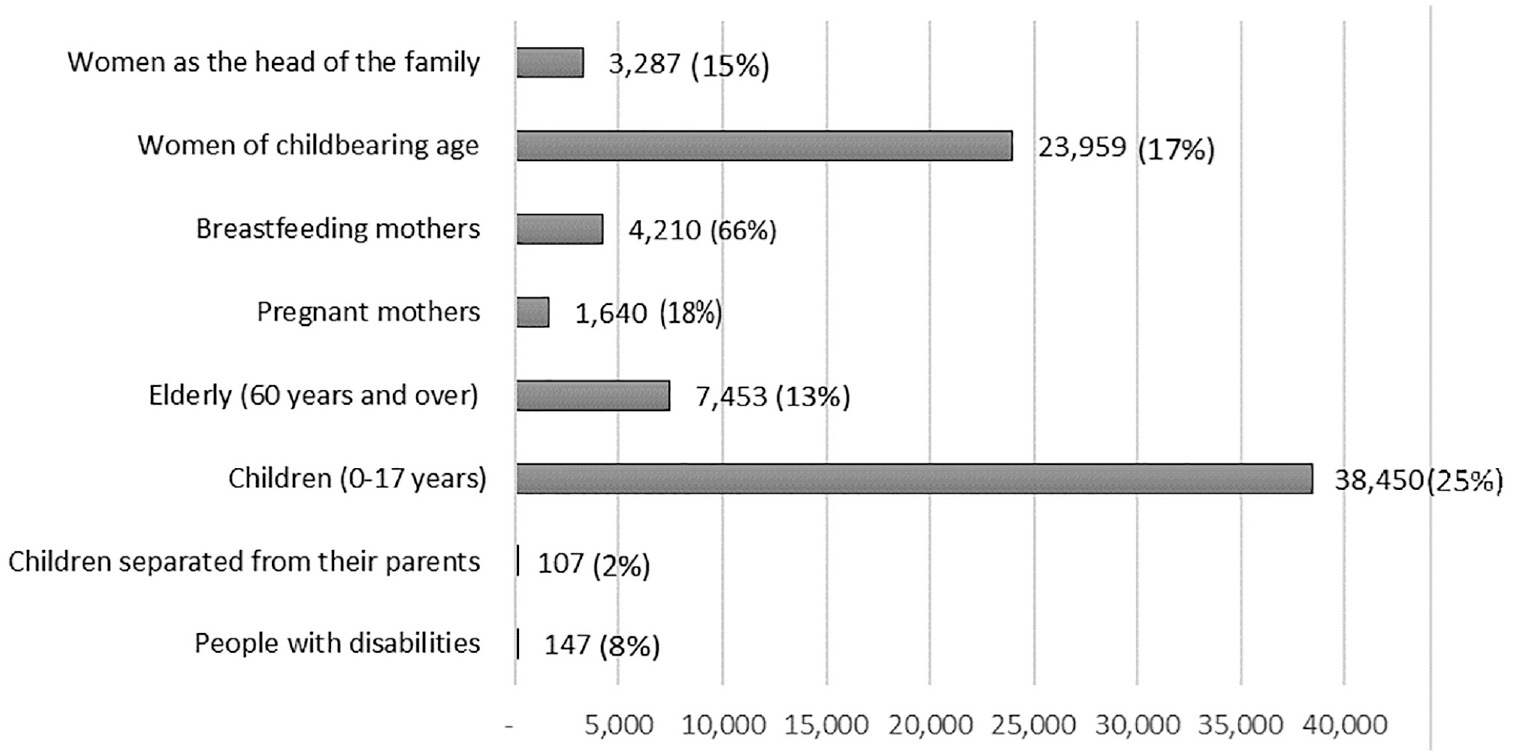
Number of refugees of the 2022 Cianjur earthquake by age and vulnerable groups.

Number of house destruction and refugees by earthquake in Cianjur and Indonesia 2022.
The Cianjur event has significantly contributed to the number of refugees and house destruction nationally in 2022. The number of 5,389 refugees accounted for about 100% of nationwide levels due to disaster events in 2022. Then, the house destruction in Cianjur was 2,722 units, approximately contribute to about 75.4% nationwide housing destruction due to earthquake disasters. Moreover, the research team conducted an investigation related to risk transfer efforts, by in-depth interviewing the affected individuals about the perspectives on protecting their valuable assets. Based on the survey results, most respondents (56.49%) said they needed disaster insurance for their homes. In addition, 31.81% of respondents needed fixed asset (land and building) insurance. Perception of the need for this scheme considering that some earthquake victims faced a loss of land due to landslides. In succession, several respondents said they needed health insurance (25.15%), accident (15.79%), life (14.62%), and education (12.11%). This provides an initial indication that the experience of dealing with the current earthquake in Cianjur has increased public awareness on the importance of protection schemes for the various assets they own, both material and immaterial such as health, life and education (Figure 5).

Types of insurance needed by the community.
To comprehend the individuals’ perception on disaster risk, the research team also asked respondents about his/her hesitation to have a disaster insurance scheme. Figure 6 shows that the reluctance to have a disaster insurance scheme can be divided into three groups based on socio-economic background. First, individuals with a high socio-economic background are still reluctant to have a disaster insurance scheme due to their distrust of insurance companies (36%) and fear of not getting paid after a disaster occurs (19%). This group can be categorized as conditional willingness, which is the easiest to join disaster insurance. If the insurance company shows good behavior and performance to reduce moral hazard, this group will easily join. Meanwhile, individuals with medium socio-economic conditions hesitate to have a disaster insurance scheme because of their limited knowledge regarding the insurance business (24%). This asymmetric information can be reduced through the socialization of insurance programs. They are more likely to join once they receive literacy regarding insurance schemes. Finally, in groups of people with low socio-economic conditions, the reluctance is more because of the inability to pay premiums (27%). Besides, this group of people considered insurance unnecessary since they would receive disaster relief from the government. The dependency on government programs and income constraint makes it harder for this group to join the insurance program. This empirical fact indicates that disaster risk transfer needs to be carried out comprehensively to mitigate disaster risk.

Reluctance to become an insurance participant.
Obstacles in transferring disaster risk to market mechanisms through insurance also occur because of several things, including compensation for aid and infrastructure development and government subsidies. It is necessary to realize that government intervention in the community in various aspects of life is a “cushion” that is quite comfortable for most people. Figure 7 shows the condition of the people affected by the Cianjur earthquake in terms of expectations of assistance from the government. The survey results show that the people who were both affected and did not suffer damage until their houses collapsed expected compensation from the government as disaster assistance (42%–55%). Unfortunately, people’s expectations of the government to provide subsidies for insurance programs are only around 5% to 11%.

Community expectations of the government based on damage to assets due to the earthquake.
The absence of information regarding the direct impact of subsidized insurance programs is likely to be the reason that only a few people have this view. However, the community’s expectation of receiving compensation and assistance in the event of an earthquake cannot be implemented continuously because it will impact the fiscal burden (national and regional), and the potential for post-disaster recovery will slow down due to the government’s fiscal limitations. This means that literacy among people at various socio-economic levels is important, at least for mitigating financial risks due to natural disasters. Good public knowledge regarding disaster risk mitigation will potentially accelerate economic recovery, and the fiscal burden can be focused especially during the emergency response period.
Vulnerability and Social Impacts of Disasters Events
According to the United Nations Office for Disaster Risk Reduction (UNDRR, 2017), disaster risk results from catastrophe incidence (hazard), exposure level, and vulnerability. Many factors, including physical, socioeconomic, and environmental characteristics, determine the level of exposure and sensitivity. The intricacy of these factors can reduce or increase resilience and limit people’s and communities’ ability to cope with the effects of natural disasters. Poverty levels, inequality, handicap, age, social exclusion, gender discrimination, social standing, and numerous psychological elements are all susceptibility markers.
Social protection programs, disaster insurance schemes, boosting livelihoods (income generation), increasing awareness and education, and natural disaster preparedness initiatives can all help reduce this risk. Cutter et al. (2003) also said that education level, type of work, source and value of income, gender status, ethnicity, age, and geographical characteristics of the location (village/city) can all affect social vulnerability. Vulnerability to disasters affects the degree of the impact directly and indirectly on people’s living situations. This impact also encompasses tangible or intangible effects caused by the disaster’s objects (Ademola et al., 2016).
Aside from physical, economic, and environmental effects, there are also social effects on humans, such as health (physical damage, personal psychology, and mortality), culture and tourism (tourist goods and attractions, historical buildings), and social order (Stephenson, 2010). The social impact of disasters can be perceived in three ways: psychosocial, demographic, and sociopolitical (Lindell & Prater, 2003).
Furthermore, the number of refugees, homeless, temporary, or permanent housing aid, community morale, social contacts, and psychological distress are all associated with social disturbance (Bull, 1992; French et al., 2010). According to Stephenson (2010), intangible losses include social repercussions connected with stress and anxiety and community weakening due to disturbance of social cohesion (social fabric) between people or surrounding community groups.
In the aftermath of the Cianjur earthquake, a stark reality emerged: many individuals faced myriad difficulties, grappled with anxiety, and were compelled to undertake forced relocations. Notably, community vulnerability exacerbated the extent of damage, as it became evident that these disasters disproportionately affected vulnerable communities. In response to such challenges, disaster recovery efforts must extend beyond mere reconstruction; they must strive to fortify communities, reducing their vulnerabilities, and fostering greater resilience (Shaffril et al., 2021). This contemporary interpretation of community resilience emphasizes not just bouncing back but also bouncing forward. Furthermore, the importance of reinstating infrastructure should not overshadow another critical facet of community resilience: social cohesion. Social cohesion serves as the cohesive force that binds individuals within families, groups, organizations, and communities together. It fosters the cultivation of shared values, mitigates disparities within communities, and enhances cooperation among community members in the wake of a disaster (Bronfman et al., 2020). While social cohesion is undeniably impactful in the immediate aftermath of a disruption, its influence on the recovery rate appears to wane as communities progress in their recovery efforts. This nuanced relationship underscores that while the recovery rate experiences a notable boost with heightened social cohesion initially, this effect diminishes as communities make strides toward recovery. In summary, the post-disaster journey of a community hinges not only on rebuilding infrastructure but also on nurturing the vital bonds of social cohesion.
Lindgaard et al. (2009) discovered that families affected by disasters are forced to alter their daily routines to conditions that were not present before the event. Changes in this pattern will impose their stress, particularly regarding spending energy, time, and recreational opportunities. Some families cannot engage in recreational activities as they once did, for example, due to anxiety or stress associated with the incidence of disasters. This can also happen if calamities harm recreation areas, tourist attractions, connected roads, or ways of transportation. This may impede post-disaster recovery due to recreational requirements to overcome the emotional effects of natural disasters. Based on the data presented above on damage to productive facilities caused by the Cianjur earthquake disaster, including educational facilities (701 units), health, worship, and workplaces or structures, it reveals not only material losses but also non-material or social aspects. According to information obtained from an interview with AB (January 2023), a resident of Cijedil Village, Cugenang District, the biggest issue at the time was the necessity for his child’s education.
They needed resources for school fees and housing necessities about one and half months after the earthquake’s peak because their houses were extensively damaged (they immediately collapsed when the earthquake first happened) and they couldn’t make their tents to evacuate temporarily. AC (interview, January 2023), a resident of Sarampad Village who is the leading activist for the continuation of teaching and learning activities at local Islamic boarding schools, including during the evacuation period, is also concerned about the importance of children’s education, particularly for those affected by disasters. Other concerns and challenges encountered in delivering aid to impacted citizens include assistance in the construction of permanent housing or the relocation procedure for disaster-stricken residents. There are 200 earthquake-resistant Simple Healthy Instant Houses (RISHA) ready for occupation in Sirnagalih Village, Cilaku District, with electrical connections.
Many residents, however, refuse to accept relocation help, owing to the distance between their child’s school and their place of employment. Furthermore, the relocation endeavor was rejected since some people believed they did not receive certainty data as recipients of RISHA aid (Tempo.co, 2023). Another obstacle, according to the Cianjur district government, is acquiring land for a second relocation of 3 ha that is not too far from the occupants’ first dwelling (Ginanjar, 2023).
Considering the complex socio-economic challenges underscored above, the immediate need for comprehensive disaster risk financing at the household level becomes clear. One cannot understate the significance of introducing household disaster risk insurance as a pivotal component of this financing framework. Such insurance schemes would serve as both a buffer and a catalyst for impacted households. As a buffer, insurance has the potential to provide immediate financial relief, mitigating thus the immediate impacts of disasters. As a catalyst, it would foster longer-term recovery by enabling households to rebuild their lives more smoothly and effectively.
However, there exists a compelling argument for a dual approach to these insurance schemes: fully paid policies by households and those subsidized by the government. The former allows households with the financial capacity to ensure total coverage against potential losses. It not only provides them with an effort for risk mitigation but also reflects a sense of ownership and responsibility toward their assets and futures. On the other hand, the latter, government-subsidized insurance schemes, ensure that even the most vulnerable and financially constrained segments of society are not left unprotected. Given the societal factors contributing to vulnerability, such as education, income sources, and risk exposure due to geographical characteristics, it is important to make sure that no household remains exposed by disaster due to economic limitations. Government subsidies would play an essential role in achieving universal coverage, ensuring that all households, irrespective of their socio-economic standing, can access and benefit from disaster risk insurance.
In short, the integration of household disaster risk insurance, both fully paid and subsidized, into the broader disaster management and social protection framework is important. Not only does it promise immediate relief, but it also needs a better solution, for affected socio-economic structures, through a proper coordination among stakeholders in making a policy resilient forward for communities in the face of possible disasters in the future.
Urgent Need for Disaster Risk Financing in Indonesia
The occurrence of the earthquake has given valuable experiences for the community. These experiences highlight the importance of evacuation and seeking assistance, awareness of limited accessibility, and the importance of achieving economic independence in dealing with the long-term impacts of disasters. Furthermore, this disaster incident raised public awareness to protect their assets from the risk of damage, set aside funds as savings, and anticipate emergencies due to disasters that require unexpected costs. In addition, they also realize the importance of building houses with more concrete and disaster-resistant structures to anticipate the possibility of a similar disaster occurring after knowing earthquake-prone areas. Several residents acknowledged the necessity of disaster insurance as a means of mitigating the consequences of disasters. However, economic constraints hindered their willingness to participate in insurance schemes, as they were unable to afford the required premiums. Additionally, some individuals perceived the insurance processes as overly intricate due to their limited literacy levels. This observation aligns with the data indicating that a mere 12.1% of households possessed insurance coverage under the disaster risk transfer scheme. The low participation of the public in this insurance scheme is generally related to the low literacy of insurance products, which is around 15.8% (Katadata, 2018). The implementation of earthquake micro insurance in Indonesia also shows low participation and coverage. Table 3 delivers the performance of several earthquake micro insurances in Indonesia. The government has demonstrated their ability to cope with the disaster impact and mitigation. However, it has not yet met the community’s expectations because it is related to the diverse causal factors and the severity of disasters specific to each location. The earthquake in Cianjur (5.6 Magnitude; November 21, 2022) illustrates the numerous challenges encountered in disaster management, including the persistent displacement of refugees residing in shelters, compounded by subsequent 4.4 Magnitude aftershocks on January 24, 2023 (Tempo.co, 2023). Handling the earthquake in Cianjur also left problems related to the slow logistics process to the slow distribution of government assistance to repair affected homes (DetikJabar, 2023; RepJabar, 2023).
Earthquake Micro Insurance in Indonesia.

Source. Tri Pakarta, 2019; Asuransi Astra, 2019; ACA Asuransi, 2019 in Kusumawardhani et al. (2019).
In addition, insurance schemes for low-income people (MBR) can be implemented through Savings-Based Housing Financing Assistance (BP2BT) (Kusumawardhani et al., 2019). Disaster insurance schemes integrated with BP2BT can be carried out by taking into account income limits, types of houses being financed, and insurance payment schemes that can be included in the first payment, amounting to 5% of the house value or monthly mortgage installments (Kusumawardhani et al., 2019). Disaster micro insurance payments can also be calculated by considering the value of Land and Building Tax (PBB). The earthquake disaster micro insurance premium calculation can be in the range of IDR 20,000 to 50,000 per year with coverage from IDR 600,000 to 3,000,000. Referring to the 2017 Financial Services Authority (OJK) circular letter, MBR’s expected disaster insurance coverage value with the BP2BT or PBB scheme will be higher if the insurance premium value increases. For example, a house valued at IDR 150,000,000 will have a monthly insurance premium of IDR 240,000 per year, accounting for an income of IDR 6,000,000 per month (Kusumawardhani et al., 2019). Then, in the 15th year, assuming an increase in income of 3.76% per year with an increase in property prices to IDR 359,000,000, the insurance premium will be raised up to IDR 575,100 per year.
Natural disasters pose latent threats to the people of Indonesia, encompassing risks to life safety, asset loss, and various socio-economic problems. Despite the uncertainties inherent in disaster’s condition, it is crucial to align community perceptions of potential risks with the realities they experience for effective risk mitigation. The experiences gained during a challenging disaster situation have not fully translated into public perceptions regarding the necessity of disaster insurance (Kalfin et al., 2022; Wang et al., 2012). This means that awareness of disaster risk has yet transferred into willingness to finance risk mitigation. They still rely on government, private, and community organizations for assistance and charitable support in the aftermath of a disaster.
Further, disaster illiteracy also contributes to the lack of awareness among the community in preparing themselves to face disaster risks. This is evident from the statement of a resident who sought information about earthquakes in their area only after the earthquake occurred in November 2022. This was confirmed during an interview with AD (January 2023), a victim of the earthquake and a migrant resident. He was unaware of the historical occurrences of the earthquakes in the Cianjur area, particularly those with similar impacts to the one he experienced. According to reports from BBC News Indonesia (2022), earthquakes have been recorded in the area in 1844, 1910, 1912, 1968, 1982, and 2000, with a pattern of recurrence approximately every 20 years. Additional sources cited in the report (Kompas.com, 2022) provide detail information on earthquake events in the past 20 years, including occurrences in 2000, 2011, 2012, and 2020, with varying magnitudes. There is also a warning of the potential for a more significant earthquake (up to 6.7) in the Cianjur area, posing a higher risk of severe damage (BBC News Indonesia, 2022). In light of this information, the government is actively engaged in public outreach efforts to emphasize the importance of early warning systems, impact anticipation and mitigation, evacuation routes, and designated gathering points in areas prone to disasters, with a focus on saving lives and protecting property (Zhang & Qian, 2018).
Conclusion
This study has examined the observations and rapid assessments of the Cianjur earthquake in November 2022, focusing on the vulnerability and socio-economic impacts experienced by affected communities, as well as the implications for perceptions of risk protection schemes through disaster insurance. In general, the case of the Cianjur earthquake sheds light on the susceptibility of Indonesian society to disaster risks and the significant socio-economic burden, both at government and household levels it entails. In particular, it can be concluded that the affected individuals have insufficient knowledge about disaster preparedness, though series of earthquakes had occurred several times in the Cianjur region. With regard to socioeconomic impacts of the disaster, many affected individuals consider the importance of having insurance schemes to protect their valuable assets, especially homes and other buildings. However, the willingness to participate in such scheme varies with respect to income size, insurance-related knowledge, and the availability of government relief program. The relief program from the government has the potential to discourage people to participate in insurance schemes.
In response to the pressing challenges and urgency surrounding disaster risk financing mechanisms, we propose several recommendations for policy action and further research. These range from intensifying insurance literacy at the micro level to leveraging disaster management at the national level. Firstly, it is crucial to conduct further studies on creating an index. This will provide a more structured and quantifiable approach to understanding and managing disaster risks. Secondly, we suggest enhancing educational interventions and policy frameworks that are key to overcoming existing barriers to disaster insurance adoption. This will foster enhanced societal resilience to disasters. It involves fostering an understanding among individuals and local communities about the benefits of disaster insurance. This can be achieved through targeted educational campaigns that clarify insurance practices and highlight the long-term advantages of disaster risk insurance in mitigating the economic impacts of natural calamities. Thirdly, we recommend enhancing the governance of disaster risk financing by establishing clear delineations of authority between central and local governments. A clear distribution of authority and responsibility between these levels of governance will pave the way for more organized and effective disaster risk management. This structural clarity is essential for the efficient functioning of each type of insurance scheme intended to mitigate the impacts of multi-hazard scenarios. Fourthly, we propose conducting pilot projects to test the effectiveness of disaster insurance schemes. These pilot projects could provide valuable insights and data, which could be instrumental in refining and optimizing the insurance schemes to better cater to the diverse needs and willingness of people. They will also provide a template for scaling up these projects at a national level, thus encompassing a wider demographic within the safety net of disaster risk insurance. Lastly, we suggest exploring public-private partnerships and community involvement in disaster risk financing. By coordinating resources and expertise from both the public and private sectors, a more robust and versatile disaster insurance framework can be conceived. Additionally, involving communities in the decision-making and implementation process cultivates a sense of ownership and understanding, which is conducive to the sustained success and acceptance of disaster risk financing mechanisms. These recommendations are likely to foster a more resilient society better equipped to mitigate and cope with the socio-economic consequences of natural disasters. Moreover, they will contribute to establishing comprehensive and sustainable mechanisms for financing disaster risks, ultimately safeguarding the well-being and livelihoods of affected communities.
Footnotes
Declaration of Conflicting Interests
The author(s) declared no potential conflicts of interest with respect to the research, authorship, and/or publication of this article.
Funding
The author(s) disclosed receipt of the following financial support for the research, authorship, and/or publication of this article: This work was funded by the Indonesia Endowment Fund for Education (LPDP) and the National Research and Innovation Agency (BRIN) under the Riset dan Inovasi untuk Indonesia Maju (RIIM) project grant number 65/II.7/HK/2022.

Data Availability Statement
Data sharing not applicable to this article as no datasets were generated or analyzed during the current study.