




Abstract
Sustainable project management (SPM) is pivotal for enhancing sustainable project success (SPS) and transforming organizations into sustainable practices. Many prior studies empirically found that SPM is positively associated with SPS. This association can be further enhanced through sustainable leadership. However, the role of sustainable leadership as a moderator on the association between SPM and SPS has not been fully grabbed in the prior studies, especially the public sector development program (PSDP) in Pakistan remained unexplored. The study aimed to investigate the moderating role of sustainable leadership on the association between SPM and SPS in the PSDP projects in Pakistan. Using a quantitative survey-based design and the data from 285 completed PSDP projects collected through a single informant strategy, the hypothesized relationships were tested with the PLS-SEM-based hierarchical component modeling approach. The results revealed that SPM is positively associated with SPS and sustainable leadership moderates the association between SPM and SPS in this context. The study provides important insights into the emerging trend of SPM and SPS and evocatively contributes to the existing literature. The study also contributes to the practice and assists project managers, decision-makers, and policy-makers in planning and developing PSDP projects more effectively to achieve sustainable development goals (SDGs). The findings are also beneficial for other countries operating in similar circumstances.
Plain language summary
The study investigates the moderating role of sustainable leadership on the linkage between sustainable project management (SPM) and sustainable project success (SPS) in the public sector development program (PSDP) projects in Pakistan. Using a quantitative survey-based design and the data from 285 completed PSDP projects collected through a single informant strategy, the hypothesized relationships were tested with the PLS-SEM-based hierarchical component modeling approach. The results indicated that SPM is positively associated with SPS and sustainable leadership moderates the association between SPM and SPS in this context. The study contributes to theory and practice.
Keywords
Introduction
Projects are temporary endeavors that utilize and consume resources and facilitate organizations to achieve their long-term objectives (Armenia et al., 2019). However, these organizations usually face challenges in developing their projects successfully (Madureira et al., 2022). Haugan (2016) claimed that the traditional measures of project success (PS) such as time, cost, and quality aspects (iron triangle criteria), to maximize the benefits for stakeholders, are very reductionist over time to ensure PS. He advocated that PS should be evaluated through sustainability measures such as economic, social, and environmental benefits (triple bottom line (TBL) criteria). Thus, sustainability must be integrated as a criterion in project management (PM) to achieve PS in the long run (Martens & Carvalho, 2016). Many researchers proposed and analyzed sustainable project management (SPM) with TBL to achieve sustainable project success (SPS) (Chow et al., 2021; Dubois & Silvius, 2020; Shaukat et al., 2022; Sunassee et al., 2020).
SPM can be defined as “an activity that consists in planning, organizing, leading, and controlling, carried out in accordance with the principles of sustainability, as a result of which the project team achieves project goals” (Brzozowska et al., 2021). SPM not only covers the overall PM life cycle but also the life cycle of products and assets through which products are developed (Armenia et al., 2019). The underlying objective of SPM is to make decisions that are in the best interest of the organization, society, and environment. Sustainability specifies criteria for appropriate utilization of resources and assessment of results in terms of economic, social, and environmental impacts. Thus, the PM models and approaches should be developed with a balance between traditional measures and trade-offs among sustainability measures (Martens & Carvalho, 2016).
Nevertheless, prior literature on the integration of sustainability in projects is rather fragmented and provides several inconsistent views about its conceptual and theoretical underpinning (Friedrich, 2023). Some studies interpreted sustainability as a risk (e.g., Chawla et al., 2018), a challenge (e.g., Toljaga-Nikolić et al., 2016), or even a constraint (e.g., Verrier et al., 2014). However, other studies considered sustainability as an opportunity (e.g., Fernández-Sánchez & Rodríguez-López, 2010) or a goal (e.g., Marnewick, 2017). Some scholars argued that sustainability generates tension and contradiction (e.g., Gluch & Räisänen, 2012) whereas others advocated that sustainability leads toward synergies (e.g., Byggeth & Hochschorner, 2006). Some researchers declared sustainability as a paradigm shift (e.g., Økland, 2015) and others termed it as a green PM or new standard of SPM (Carboni et al., 2018; Dai & Xu, 2011).
Prior literature also reflects conflicting results regarding the association between SPM and SPS. For instance, many studies conducted in various contexts revealed that SPM is positively associated with SPS (Chow et al., 2021; Dubois & Silvius, 2020; Shaukat et al., 2022). However, Bernat et al. (2023) found no association between SPM and SPS in a survey of 210 PM professionals in the Brazilian context. Moreover, Adriana and Ioana-Maria (2013) found a mixed association between SPM and SPS in a study of 35 companies in 10 countries. These contradictory results might be due to the diverse SPM and SPS measures used under diverse contexts. However, Khalifeh et al. (2020) mentioned that there is little relevant empirical evidence in prior literature that SPM improves SPS. They proposed further empirical investigation on this topic.
Sustainable leadership is an emerging and dynamic type of leadership that contributes to sustainable performance in existing and future circumstances (McCann & Holt, 2010). This type of leadership inspires and stimulates project teams by focusing on their needs and formulation and accomplishment of sustainable goals through the involvement of all the stakeholders in decision-making. Sustainable leadership encourages knowledge sharing, development, participation, and empowerment of employees in organizations (Iqbal et al., 2022) and projects are no exception. It enhances shared responsibility and understating to ensure economic and social benefits and avoid environmental degradation (Di Fabio & Peiró, 2018).
Prior literature mainly investigated sustainable leadership at the organizational level and demonstrated a positive association between sustainable leadership and sustainable performance (e.g., Iqbal et al., 2020; Nartgün et al., 2020). However, prior literature scarcely analyzed the role of sustainable leadership at the project level. Moreover, prior studies mainly analyzed the moderating role of other types of leadership (ethical, transformational, and servant leadership) on the association between various independent and dependent variables in sustainability perspectives. For example, Li et al. (2021) found that ethical leadership positively moderates the association between green behavior intentions and employee green behavior. Rehman et al. (2023) revealed that the relationship between green knowledge management and sustainable development is positively moderated by transformational leadership. Bouichou et al. (2022) found that responsible leadership positively moderates the linkage between social corporate responsibility and employee commitment, engagement, and organizational citizenship behavior. However, the moderating role of sustainable leadership has not been fully grasped in prior studies. Especially, the PSDP projects in Pakistan remained fully unexplored.
Pakistan being a signatory of the United Nations’“2030 Agenda for Sustainable Development” has aligned its PSDP and Vision 2025 to SDGs and allocated a budget of Rs. 2,043 billion for this purpose. In Pakistan, PSDP is the main policy instrument for obtaining sustainable socio-economic growth in the country. This program is executed in the form of various development projects belonging to various sectors such as social, infrastructure, production, governance, science and information technology, special programs, etc. However, most of the projects under this program have ended unsuccessfully (M. I. Ali & Ahmed, 2019). These projects lack appropriate policy framework and governance, innovation, consistent strategies, and efficient use of resources (Ahmed & Azmi bin Mohamad, 2014). Therefore, the majority of the projects face challenges in streamlining stability and handling variability due to a lack of comprehensive business sustainability. Although some executing organizations have adopted sustainability in their approaches, great variability exists in their practices. Due to the scarcity of research, the relationship between SPM and SPS is not very clear in this context. As a developing economy demonstrates a unique setting to analyze and extend existing theories (Bruton et al., 2008), the PSDP projects in Pakistan exhibit an ideal condition to conduct this study.
Nevertheless, previous literature on SPM, although makes valuable contributions, does not resolve the conceptual and theoretical inconsistencies in and across the discipline (Friedrich, 2023). Although there are discrepancies in the prior studies that SPM positively influences SPS, no empirical study has examined the moderating role of sustainable leadership on the relationship between SPM and SPS and the PDSP projects in Pakistan remained unexplored. Thus, it is not rather clear whether SPS can positively be enhanced through SPM and whether sustainable leadership can moderate the relationship between SPM and SPS in this context.
This study aimed to fill the aforesaid research gaps by examining the following two research questions:
The study formulated two hypotheses based on the theoretical background, developed an explanatory model depending on the hypotheses, and tested the model using data from 285 PSDP projects in Pakistan by applying the standard paradigm of empirical research.
Literature Review and Theoretical Background
According to the resource-based view (RBV), organizational resources and capabilities are vital for achieving sustainable competitive advantage (Miller, 2019). Organizations compete based on their heterogeneous and immobile resources and capabilities which can be sustained over time (Madhani, 2010). The superior business performance depends on the uniqueness, inimitability, rarity, value, and non-substitutability of the resources and capabilities (Baia et al., 2020). Yazici (2020) found that PM capability strengthens the influences of sustainability efforts, especially in economic and social sustainability. Nevertheless, the PM capabilities that are developed over time for a specific environment cannot be easily imitated and lead to better performance. Thus, SPM can be assumed as an organizational capability of immense importance to improve SPS. Moreover, sustainable leadership as a resource can be deemed as a suitable type of leadership for sustainable development (Iqbal et al., 2020). Thus, it is reasonable to believe that SPM along with sustainable leadership may lead toward SPS. Depending on the resource-based view, we theorize that sustainable leadership moderates the relationship between SPM and SPS in the PSDP projects in Pakistan. A brief overview of SPM, sustainable leadership, and SPS is provided as under:
Sustainable Project Management
The notion of sustainability and sustainable development is related to TBL that is economic, social, and environmental aspects (Martens & Carvalho, 2016). Elkington (1994) mentioned that sustainability embraces harmony or balance between economic, social, and environmental interests. The economic aspect ensures the access of society to basic needs at a minimum level of satisfaction. Social interest ensures equal access to resources and opportunities by all the members of society. The environmental aspect ensures the prevention of the environment by human activities. Depending on the crucial role of projects in sustainable development, A. J. Silvius and Schipper (2014) utilized and integrated the sustainability concept in project planning, organizing, executing, managing, and governing. Sabini et al. (2019) mentioned that several researchers have addressed the integration of sustainability into PM. Consequently, SPM has emerged as a top worldwide PM trend these days. SPM deals with developing and implementing projects to fulfill the existing needs of the target groups and assists future generations by providing economic, social, and environmental benefits (Chow et al., 2021). SPM covers and ensures project delivery processes throughout the entire PM life cycle. A. J. Silvius and Schipper (2014) conducted a literature review and revealed that the most used interpretation of sustainability is based on TBL. Prior studies on SPM frequently applied the TBL concept and developed various sets of indicators to assess SPM (e.g., Chow et al., 2021; Dubois & Silvius, 2020; Martens & Carvalho, 2016). However, Martens and Carvalho (2016) suggested a comprehensive set of variables and indicators to evaluate SPM with TBL. This set of variables and indicators seems to be more relevant to the development projects as it covers almost all the aspects of SPM needed for the appraisal of these projects.
Sustainable Leadership
To ensure sustainability, organizations require leaders to formulate policies and develop programs and approaches to implement sustainable practices to augment economic, social, and environmental success (Metcalf & Benn, 2013). Therefore, sustainable leadership is imperative for ensuring sustainable practices. This type of leadership provides opportunities in terms of continuous improvement, innovation, and competitive advantage (McCann & Holt, 2010). Iqbal et al. (2022) described that sustainable leadership encompasses those behaviors and practices that provide durable value to stakeholders such as existing and future societies. This type of leadership formulates a long-term strategy for decision-making, realizes sustainability challenges, and strengthens the core values of sustainability to offer quality and innovative products/services. Organizations with sustainable leadership practices can achieve many benefits including efficiency, reduction in energy and water consumption, waste management, recycling, image improvement, decreased cost, and increased productivity (Jafri, 2020). Al-Zawahreh et al. (2019) provided three measures to evaluate sustainable leadership in organizations: sustainable management, sustainable initiatives, and sustainable actions. These measures are relevant to evaluating sustainable leadership in development projects.
Sustainable Project Success
The concept of PS or PM success is one of the most studied concepts in the discipline of PM research (Ika, 2009). The majority of the prior studies on PS mainly focused on three conventional measures that is time, budget, and quality formally known as iron triangle criteria to determine PS. However, several researchers suggested that PS should be measured after project delivery and include benefits that projects generate for stakeholders. For instance, Almahmoud et al. (2012) proposed health, safety, and environmental performance criteria for measuring PS. They emphasized that in addition to traditional measures, strategic measures should be added. Ika et al. (2012) emphasized that relevance, efficiency, effectiveness, impact, and sustainability measures should be included as PS criteria for international projects. Other researchers have also suggested elements that contribute to this approach (Carvalho & Rabechini, 2015; Ofori-Kuragu et al., 2016). However, Martens and Carvalho (2016) validated five dimensions to measure SPS including efficiency, impact on customers, business success, preparation for the future, and sustainability. These dimensions are pertinent to assess the SPS of development projects.
Relationship Between Sustainable Project Management and Sustainable Project Success
Project delivery phase and final deliverables can be beneficial for the existing circumstances but detrimental for the future circumstances. For instance, a project may consume energy and produce environmental, social, and economic effects which specifies the project’s sustainability level. Sustainability provides a community vision for judicious utilization of resources so that existing communities can obtain a high level of economic security while preventing the integrity of ecological systems and life. According to Kleindorfer et al. (2005), sustainability encompasses environmental, social, and economic responsibility for ensuring the rational use of existing resources without undermining the ability of future communities to fulfill their needs. Sustainability helps project managers to consider economic, social, and environmental effects during and after the project life cycle. The objective is to warrant that decisions made are in the favor of the customers without compromising the environment and society (Zainul-Abidin, 2008).
Many prior studies performed in various contexts revealed that SPM is positively associated with SPS. For instance, Chow et al. (2021) investigated the relationship between SPM and SPS in a Malaysian manufacturing organization. Based on 231 responses, the results revealed that SPM is positively associated with SPS and sustainable project planning. Moreover, sustainable project planning is positively associated with SPS. Furthermore, sustainable project planning mediates the relationship between SPM and SPS in this context. Dubois and Silvius (2020) surveyed Europe to examine the association of SPM and SPS. Depending on 112 responses, the results revealed that SPM and SPS are strongly correlated with each other. The results of the study conducted by Keshavarzian and Silvius (2022) revealed a positive perceived association of SPM with all criteria of SPS. Moreover, Carvalho and Rabechini (2017) revealed that SPM is positively related to SPS in their study of 222 projects in two countries and eight industries. Similarly, Malik et al. (2020) exposed a moderated positive correlation between SPM and SPS. Khalifeh et al. (2020) claimed that SPM supports SPS and no negative relationship exists between SPM and SPS. However, due to the limited scope of these studies, Khalifeh et al. (2020) commented that the association between SPM and SPS has been inadequately addressed in prior literature and suggested the need for further research. Based on the aforesaid discussion, we can hypothesize that:
H1: The extent to which SPM is exercised in the PSDP projects in Pakistan positively affects SPS.
Moderating Role of Sustainable Leadership on the Association Between SPM and SPS
The role of leadership has long been recognized as a success factor at organizational level but the concept is less prevalent in the discipline of PM (Müller & Turner, 2010). Nevertheless, due to advancements in leadership theory, leadership in PM mainly focused on applications of tools and techniques rather than the leadership styles of project managers. Müller and Turner (2010) described the generic skills and technical competencies of leaders as project managers. They evaluated the relative importance of the attitudes and competencies of project managers for achieving PS. They concluded that project execution mainly depends on the project manager’s attitudes and emotional intelligence. However, sustainable leadership has not been largely studied in the PM discipline. This type of leadership has the potential to share social responsibility and provide long-term value for society. Sustainable leadership demonstrates the role of leaders to balance TBL objectives about economy, environment, and society and is an integral part of leadership theory (Liao, 2022). Some researchers argued that project managers play a critical role in integrating sustainability into PM (e.g., Magano et al., 2021; A. G. Silvius & de Graaf, 2019). SPM can lead toward effective project planning that resultantly enhances SPS (Chow et al., 2021). Jones et al. (2017) argued that with the growing need for social performance issues to transform sustainable practices, leadership must envision sustainability as an essential element of projects and organizations.
Although the role of sustainable leadership in enhancing sustainable performance has been confirmed by many studies (e.g., Iqbal et al., 2020, 2022; Nartgün et al., 2020), there is a lack of research on the moderating role of sustainable leadership especially, on the association between SPM and SPS. However, many researchers examined other types of leadership (ethical, transformational, and servant) as moderators on different relationships in various contexts and found that their proposed type of leadership positively moderated the proposed relationships in these studies (Bouichou et al., 2022; Li et al., 2021; Rehman et al., 2023). Moreover, Chen et al. (2023) revealed that leadership support positively moderates the association of technological advancement, green supply chain management, and knowledge management with sustainable business performance. Similarly, Birasnav et al. (2013) advocated that leaders with a vision and inspirational motivation are more willing to consider partners’ needs and resultantly enhance performance. This justifies that sustainable leadership like ethical, transformational, and servant leadership can be used as a moderator variable. Based on the above discussion, we can assume that sustainable leadership like other types of leadership positively moderates the association between SPM and SPS. Thus, we hypothesize that:
H2: The extent to which sustainable leadership is provided in the PSDP projects in Pakistan positively moderates the effect of SPM on SPS.
Research Model
Depending on the aforementioned hypotheses, an explanatory research model was developed using a hierarchical component modeling approach as shown in Figure 1. Hierarchical component models contain variables with more generic concepts at higher levels of abstraction and typically involve the estimation of second-order variables (Becker et al., 2012). These models reduce the model complexity, decrease multicollinearity issues, minimize discriminant validity problems, and make the model more parsimonious (Hair et al., 2017). As SPM, sustainable leadership, and SPS are complex and generic concepts, these concepts were modeled as second-order variables in line with the previous studies. Previously, Chow et al. (2021) and Martens and Carvalho (2016) modeled SPM and SPS as second-order variables in the PM context. Similarly, Al-Zawahreh et al. (2019) categorized and statistically validated the concept of sustainable leadership into three factors: sustainable management, sustainable initiatives, and sustainable actions based on the scale developed by McCann and Holt (2010). This justifies the use of sustainable leadership as a second-order variable. Therefore, the research model depicts that SPM is a second-order independent variable represented by its three first-order variables (economic sustainability, environmental sustainability, and social sustainability) and SPS is a second-order dependent variable represented by its five first-order variables (efficiency, impact on customer, business success, preparation for the future, and sustainability). However, sustainable leadership is a second-order moderating variable represented by its three first-order variables (sustainable management, sustainable initiatives, and sustainable actions).
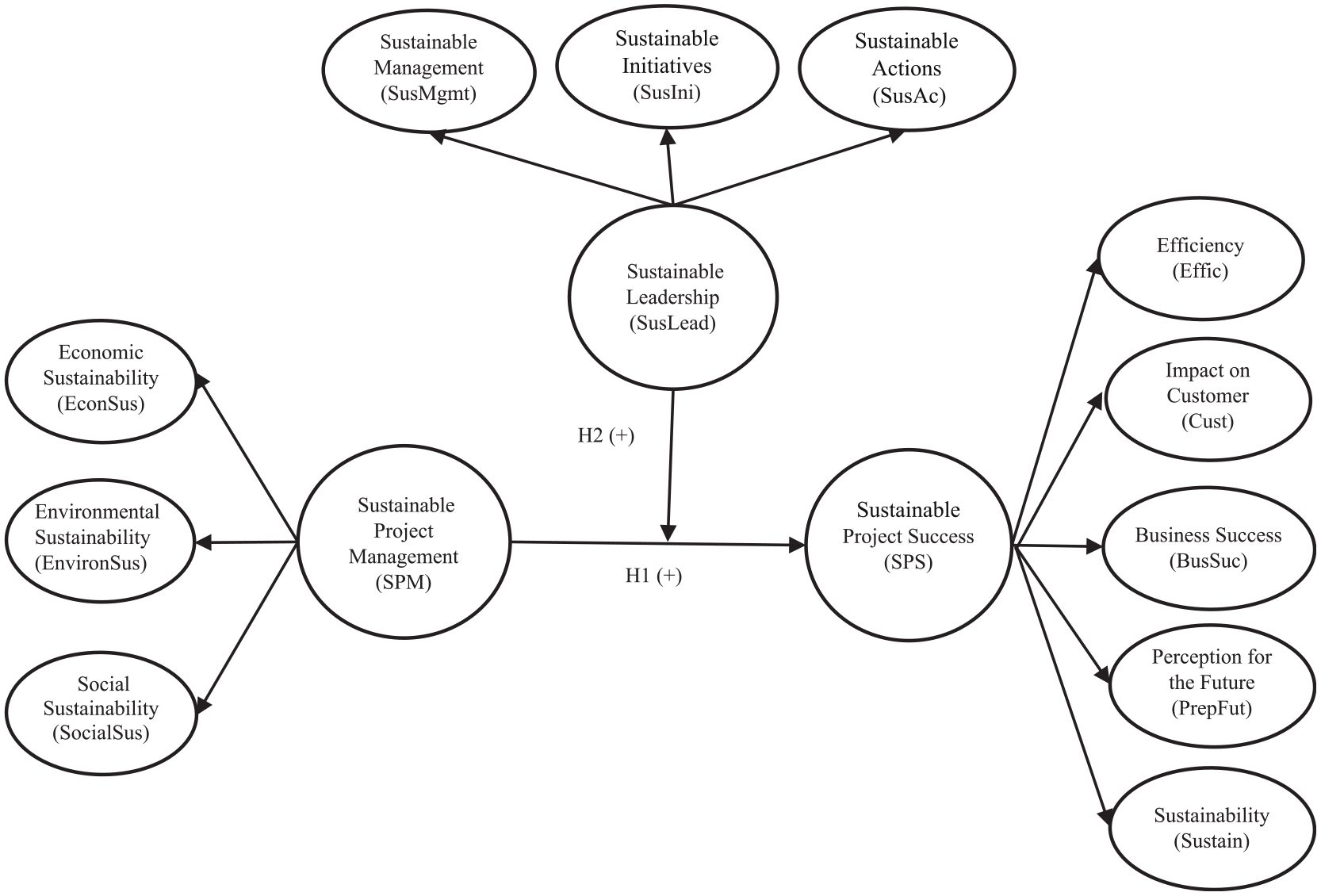
Research model.
Methodology
Measures and Instrument
In the higher-order component modeling approach, the higher (second-order) variables are represented (reflective) or constituted (formative) from their underlying first-order variables because these variables are abstract concepts that do not exist without their underlying first-order variables (Becker, et al., 2012; Hair et al., 2017). Thus, the second-order variables in this study were represented from their underlying first-order variables as shown in Figure 1. The justification for modeling SPM, SPS, and sustainable leadership as second-order variables is provided in the previous section. The items to assess the first-order variables were taken from the prior literature to ensure the credibility of the research instruments. The description of each of the variables is as under:
Sustainable Project Management (SPM)
This second-order independent variable was reflected by its three underlying first-order variables (economic sustainability, environmental sustainability, and social sustainability). The items to represent SPM were adapted from Martens and Carvalho (2016). They have validated five items for economic and social sustainability and six items for environmental sustainability through the qualitative and quantitative opinions of the expert panels in the PM context. This validated set of items was used to measure economic, environmental, and social sustainability in this study.
Sustainable Leadership (SusLead)
The second-order moderating variable was reflected by its three underlying first-order variables (sustainable management, sustainable initiatives, and sustainable actions). The items to represent SusLead were adapted from Al-Zawahreh et al. (2019). They have validated seven items for sustainable management, four items for sustainable initiatives, and three items for sustainable actions in higher education context based on the scale developed by McCann and Holt (2010). This validated set of items was used to measure sustainable management, initiatives, and actions in this study.
Sustainable Project Success (SPS)
This second-order dependent variable was reflected by its five underlying first-order variables (efficiency, impact on customers, business success, preparation for the future, and sustainability). The items to represent SPS were adapted from Martens and Carvalho (2016). They have validated three-items for each variable through the qualitative and quantitative opinions of the expert panels in the PM context. This validated set of items was used to assess efficiency, impact on customers, business success, preparation for the future, and sustainability in this study.
Based on the aforementioned items, a questionnaire was developed in the English language. The questionnaire was first consulted with four PM experts and three academicians for the appropriateness of its understanding. They suggested some minor changes in terms of framing of questions and appropriate word selection so that every respondent can understand each of the questions (statements) easily and similarly. These minor changes were incorporated into the questionnaire. The construct reliability and convergent validity of the instrument were further tested through an initial pilot test. For this, we surveyed 45 PM experts working on PSDP projects in Pakistan using a random sampling technique. The purpose of the initial pilot test was to check whether the respondents could correctly understand the wording and meaning of the questions and whether the instrument could demonstrate construct reliability and convergent validity. The results are given in Table 1. The results indicate that the “outer loading,”“Cronbach’s alpha coefficient,” and “composite reliability (CR)” are greater than 0.7 and “average variance extracted (AVE)” is higher than 0.5 for all the principle variables (first-order variables) which are the required thresholds to ensure construct reliability and convergent validity (Hair et al., 2017).
Pilot Test Results (Construct Reliability and Convergent Validity).

The final questionnaire is shown in the Appendix. The hypotheses were tested through structured questionnaire surveys. The questionnaire comprised the demographic information (Part 1) and questions (statements) to assess study variables (part 2). It contained 11 scales and 45 statements. Each statement was assessed on “a five-point Likert scale ranging from 1 (strongly disagree) to 5 (strongly agree).”
Population and Sample
The study population comprised all of the PSDP projects in Pakistan approved during the period from 2001 to 2023. During that period, 534 to 2,227 PSDP projects were approved, revised, and/or extended each year resulting in a total of around about 28,872 projects in 23 years to accelerate the socio-economic development of the country (Ministry of Planning, Development, and Special Initiatives [MPDSI], 2023). The MPDSI is a principal organization in Pakistan for planning, approving, and monitoring development work at the national level. The sampling frame was the manuals of the MPDSI from where the names of the projects, executing organizations, contact persons, and other relevant details were obtained. The selection criteria were that the project was approved by the “Executive Committee of National Economic Council (ECNEC)” (the highest approving body for PSDP projects at the national level) and declared “completed” officially. Moreover, the planned duration of the project was not less than 3 years with a planned budget of more than one billion. Furthermore, the project was approved during the period from 2001 to 2023 and currently is providing services to the government, target groups, and the general public after its completion. Other PSDP projects were not part of this study. Based on the selection criteria and consultation with one representative from the MPDSI, 450 projects were finalized.
The minimum required sample size was calculated using the “A-priori Sample Size Calculator for Structural Equation Models” designed by Soper (2023). This is important to mention that this calculator does not calculate sample size based on the population size rather it uses the number of latent and observed variables in the model along with effect size and statistical power to calculate the sample size. Assuming an effect size of 0.3, statistical power of 0.8, and depending on the number of latent and observed variables in the model, we obtained a minimum required sample size of 212. This shows that the responses from at least 212 PSDP projects out of 450 were needed to meet the minimum requirement of the sample size. The purposive sampling technique was applied to gather data from the respondents. The unit of analysis was the project. The sample characteristics and response rate is given in section “Sample Characteristics.”
Data Collection
Due to the quantitative and causal nature of this study, the survey questionnaire technique was applied to collect the data. This is the most frequently applied technique in quantitative studies to approach a large number of respondents efficiently and economically (Bell et al., 2022). A single informant strategy was adopted for all the projects to collect meaningful data from high-quality respondents. The projects were selected based on the selection criteria given in the last section. The respondents were approached through their emails and contact numbers taken from the project manuals of MPDSI. One representative from the MPDSI also helped to approach the respondents. Adopting a purposive sampling technique and a single informant strategy, one questionnaire was sent to each respondent in each project. A total of 450 questionnaires were sent through mail, email, and by hand depending on the convenience of the respondents. Executive/managing directors, director generals (projects), program directors/managers, project directors/managers, monitoring and evaluation (M & E) personnel, project coordinators/officers, project key users, and project key beneficiaries were among the respondents. The whole process of data collection was completed between May 2023 and July 2023.
Data Analysis
PLS-SEM is a well-known and frequently used approach for data analysis in quantitative studies. This approach can analyze extremely complex models with numerous variables including moderators and mediators without imposing normality assumptions on the data sets due to its nonparametric nature (Hair et al., 2019). Thus, in this study, we applied the PLS-SEM approach to analyze the data. Specifically, we used SmartPLS version 4.0 for testing the research model and associated hypotheses.
Results
Sample Characteristics
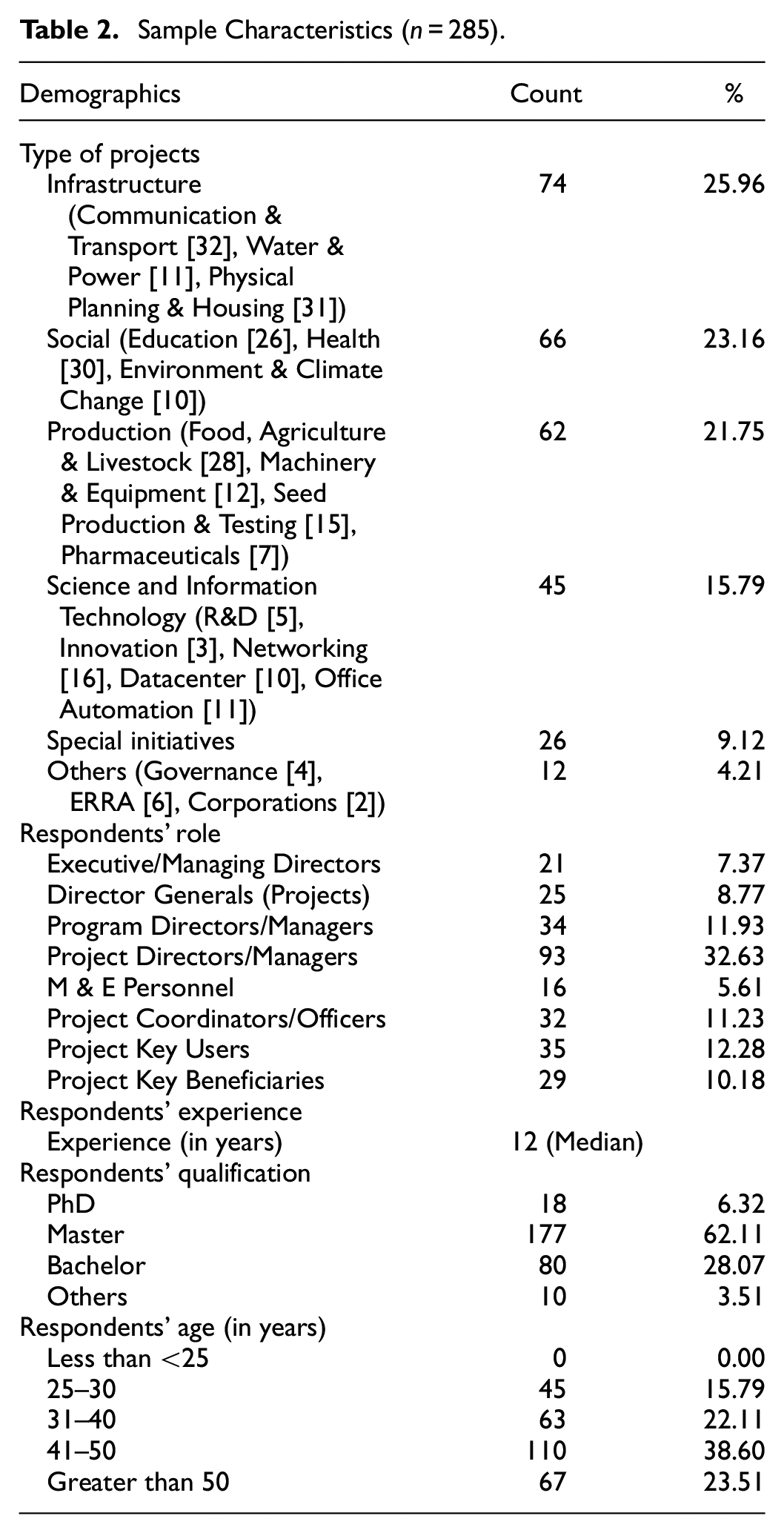
We received 164 valid responses within the stipulated time. Consequently, we sent a reminder to the remaining respondents due to which we received 121 more valid responses. In this way, we received 285 filled questionnaires that turned into a response rate of 63.33%. The characteristics of the sample in terms of project type that is sectorial (sector-wise) distribution, respondents’ role in the project, experience, and qualification are provided in Table 2. First, the characteristics of the sample indicate the distribution of the studied projects into multiple sectors including infrastructure (25.96%), social (23.16%), production (21.75%), science and information technology (15.79%), special initiatives (09.12%), and others (04.21%) including governance, Earthquake Reconstruction and Rehabilitation Authority (ERRA), and corporations projects. This shows that the majority of the projects belonged to infrastructure, social, and production sectors. Second, the sample characteristics indicate the role of respondents in organizations or projects including executive/managing directors (07.37%), director generals (projects) (08.77%), program directors/managers (11.93%), project directors/managers (32.63%), M & E personnel (05.61%), project coordinators/officers (11.23%), project key users (12.28%), and project key beneficiaries (10.18%). This shows that the respondents from almost all the levels of project and product life cycle were involved. Third, the respondents demonstrate an average experience of 12 years. This shows that the respondents are well-versed in PM discipline and related methodologies. Fourth, the participation of the respondents in terms of qualification demonstrates that most respondents are master’s degree holders (62.11%) followed by bachelor’s degree holders (28.07%). Moreover, some participants hold PhD degrees (06.32%). However, fewer participants hold diplomas or other qualifications (03.51%). This shows that the respondents were highly educated and equipped with the necessary knowledge and understanding of the PM discipline. Lastly, more respondents belong to the 41 to 50 years age bracket followed by more than 50 and 31 to 40 years age brackets. Hence, we can assume that our sample is representative.
Sample Characteristics (n = 285).
Non-Response and Common Method Bias
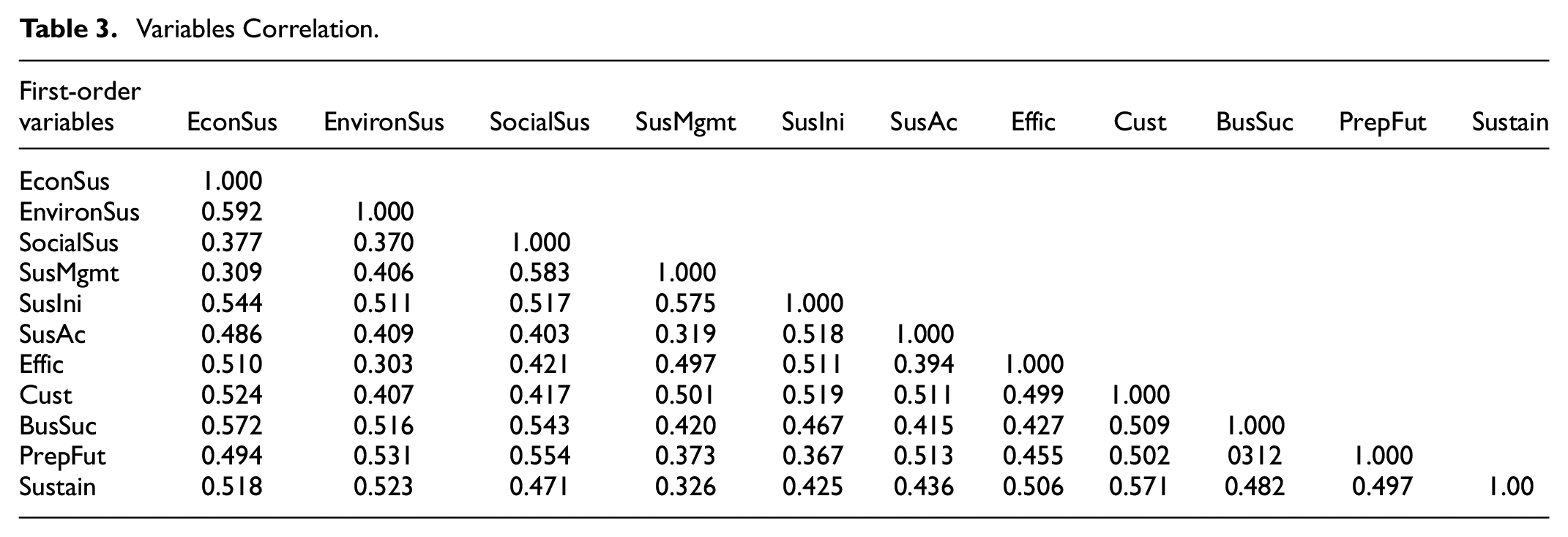
We first analyzed non-response and common method bias to know whether the data is safe for PLS-SEM-based analysis or otherwise. The occurrence of these types of bias largely affects the credibility of the results (A. Ali et al., 2021). We applied “Levene’s Test for Equality of Variances” in SPSS to check non-response bias. We found that no significant difference emerged in the early and late responses that is p-value > .05. Then we applied “Harman’s single factor test” in SPSS to check common method bias. We found that 43.577% (below 50%) total variance was explained by a common factor. Moreover, we used the “correlation matrix procedure.” We found no substantially strong correlation among variables that is r < 0.9 as shown in Table 3. Hence, our data is free from non-response and common method bias.
Variables Correlation.
Measurement Model of First-Order Variables
This model comprises the first-order variables and their indicators. The first-order variables in the research model are reflective. Therefore, we checked “outer loadings,”“Cronbach’s alpha coefficient,”“CR,” and “AVE” as suggested by Hair et al. (2017). The results of the PLS algorithm are shown in Table 4. The results indicate that the outer loading values are higher than 0.7 (0.713–0.879), Cronbach’s alpha coefficient is larger than 0.7 (0.790–0.848), CR (rho_a) is higher than 0.7 (0.765–0.831), CR (rho_c) is greater than 0.7 (0.797–0.878), and AVE is higher than 0.5 (0.598–0.737) as proposed by Hair et al. (2017). Thus, there is no issue of “reliability,”“internal consistency reliability,” and “convergent validity” in the study.
Construct Reliability and Convergent Validity Results of First-Order Measurement Model.

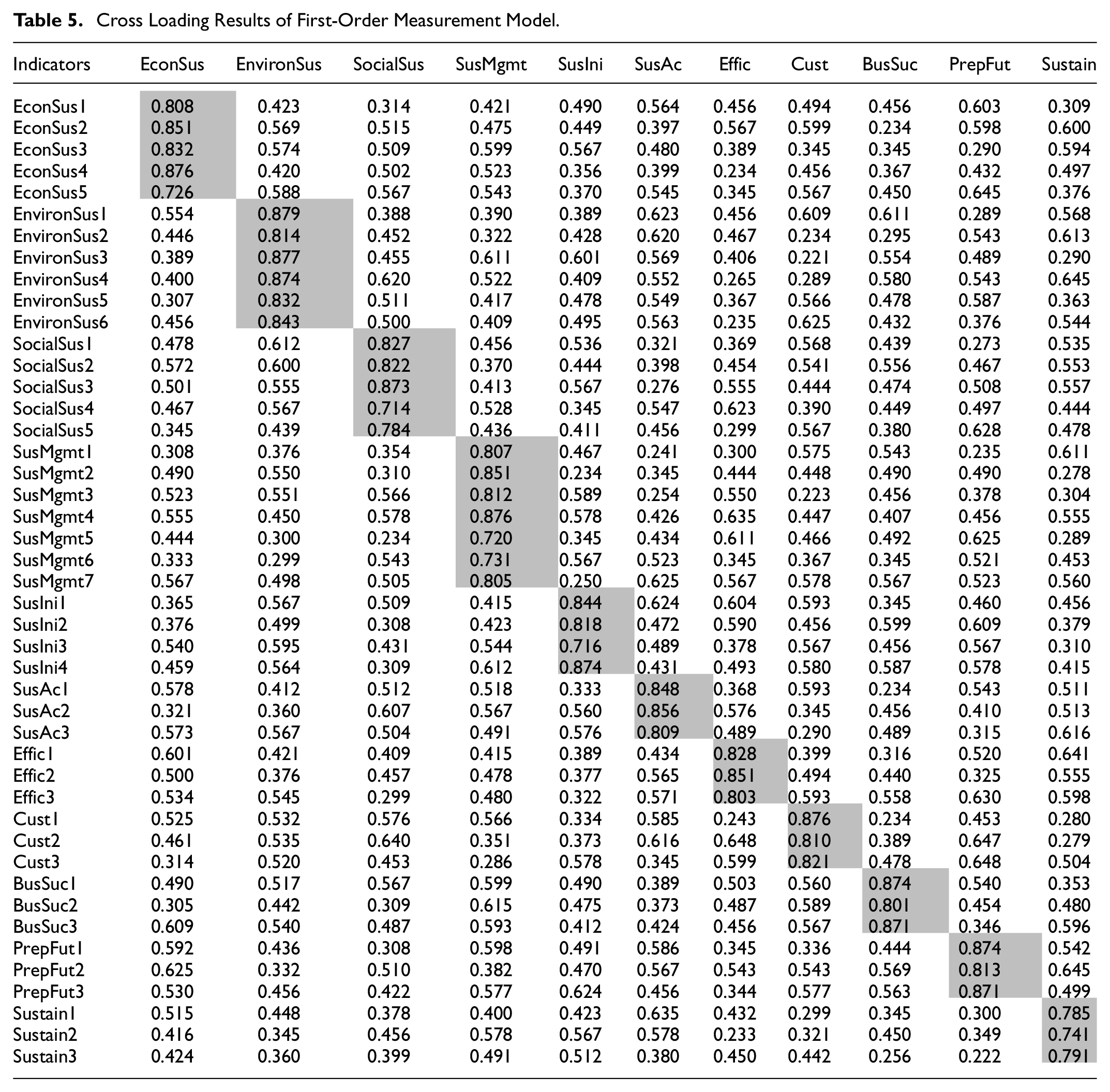
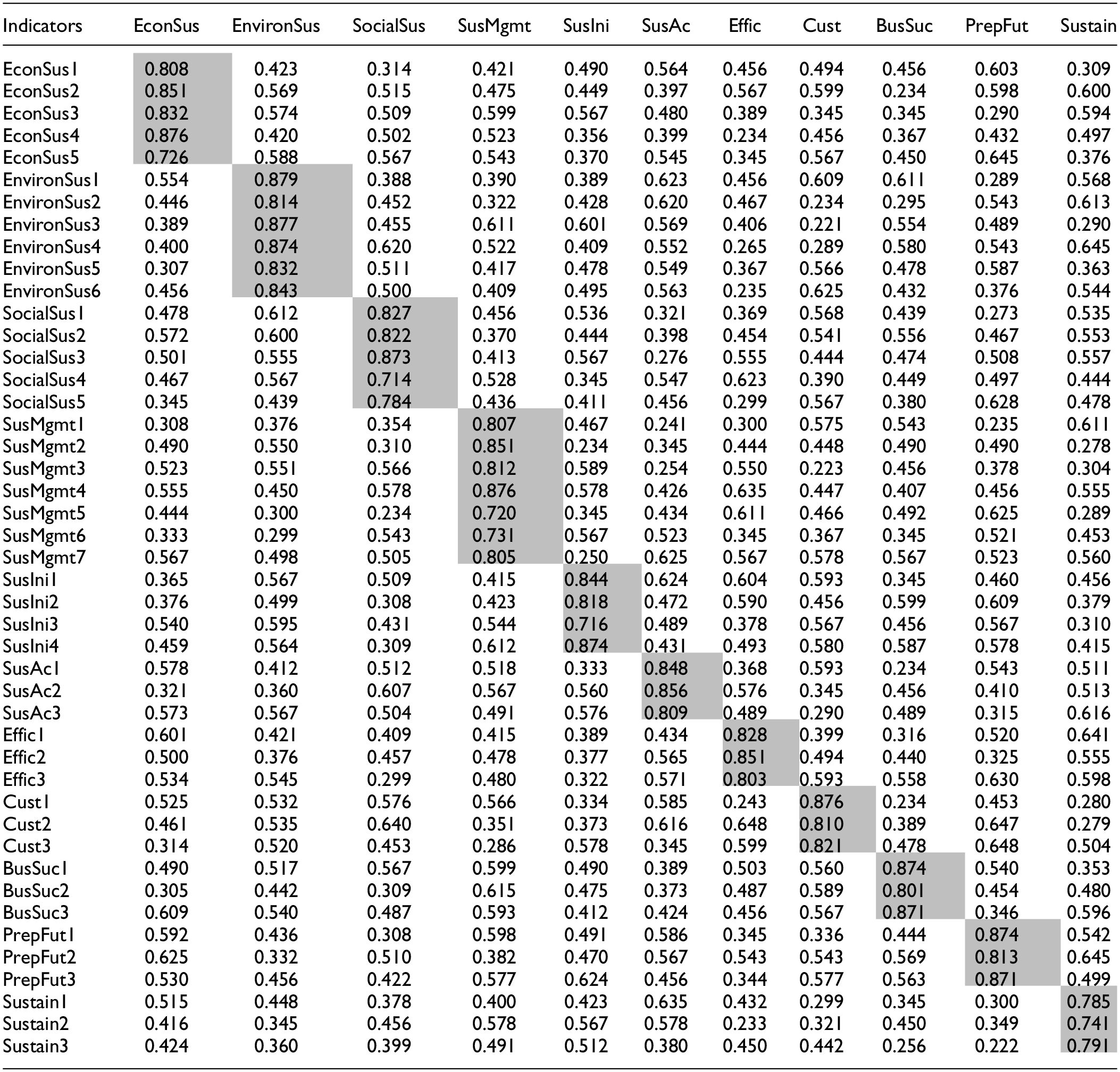
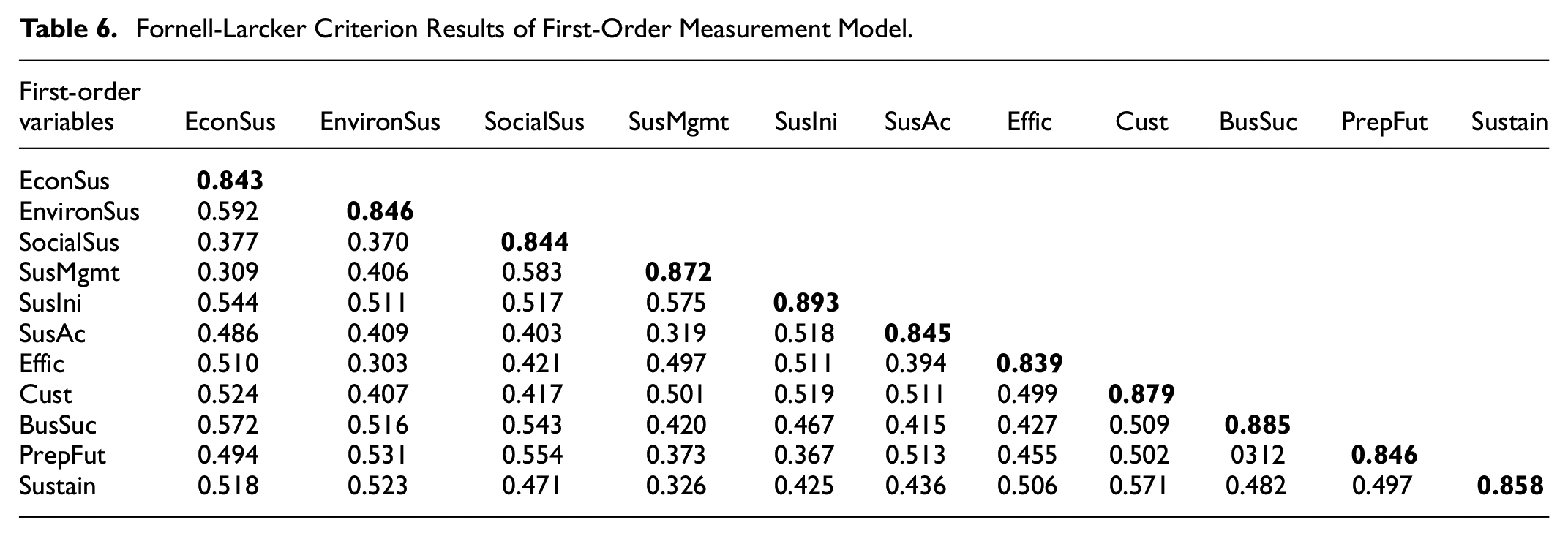
Consequently, we applied three approaches to check “discriminant validity”: 1) items’ cross-loading, 2) Fornell and Larcker criterion, and 3) the HTMT criterion. The results are given in Tables 5 to 7. Table 5 indicates that items’ loading on their variable is higher than the loading on the other variables which is the required condition to meet the cross-loading standard (Hair et al., 2017). Table 6 shows that the values of the square root of AVE of all the variables are higher than their correlation with the other variables which is the required condition to fulfill this criterion (Fornell & Larcker, 1981). Table 7 demonstrates that all the HTMT values are lower than 0.85 and the confidence interval (CI) does not contain 1 which is the required condition to meet the HTMT criterion (Henseler et al., 2015). Hence, there is no issue of discriminant validity in the study.
Cross Loading Results of First-Order Measurement Model.
Fornell-Larcker Criterion Results of First-Order Measurement Model.
HTMT Criterion Results of First-Order Measurement Model.

Measurement Model of Second-Order Variables
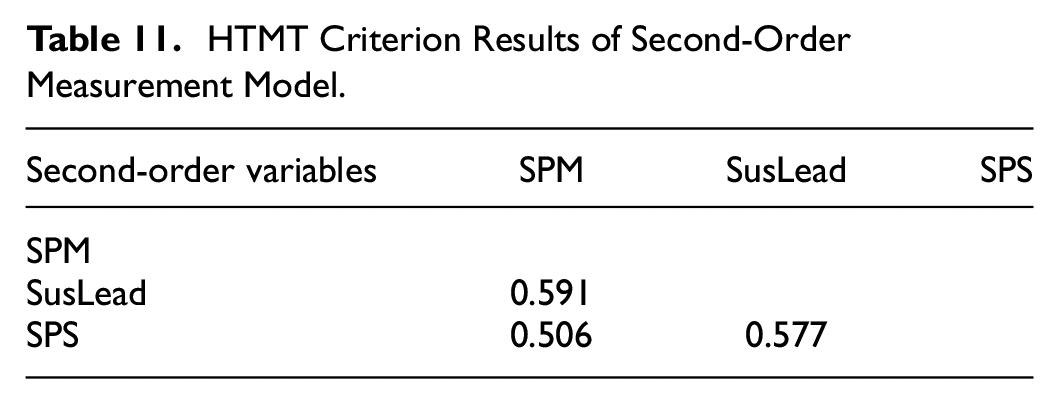
This measurement model of second-order variables encompasses the second-order variables and their indicators (first-order variables). We applied the two-step approach in which the latent scores of the first-order variables are used as indicators of the second-order variables (Becker et al., 2012). As the second-order variables are also reflective ones, we repeated the same criteria as applied to the first-order model. The results of construct reliability and convergent validity are given in Table 8. The results indicate that there is no issue of construct reliability and convergent validity because all the values are above the minimum thresholds mentioned in the previous section. The results of discriminant validity are given in Tables 9 to 11 which indicate that all three criteria of discriminant validity (items’ cross loading, Fornell and Larcker criteria, and HTMT criterion) have also been fulfilled for the second-order model. Thus, SPM, sustainable leadership, and SPS are good reflective variables.
Construct Reliability and Convergent Validity Results of Second-Order Measurement Model.
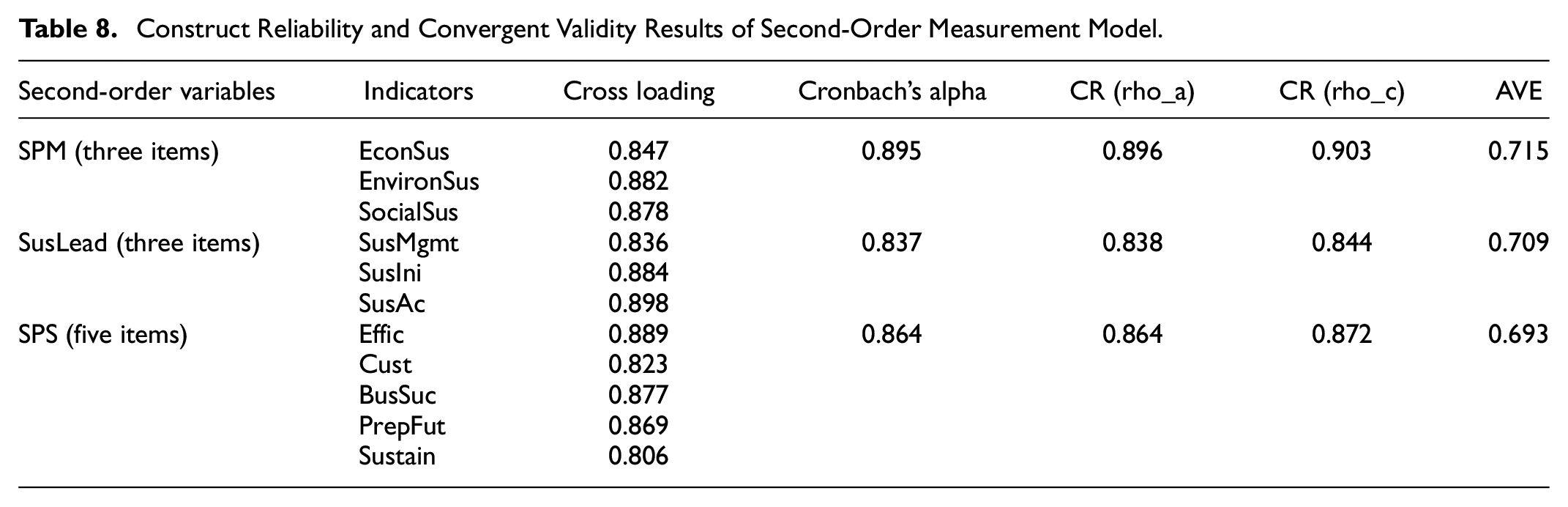
Cross Loading Results of Second-Order Measurement Model.

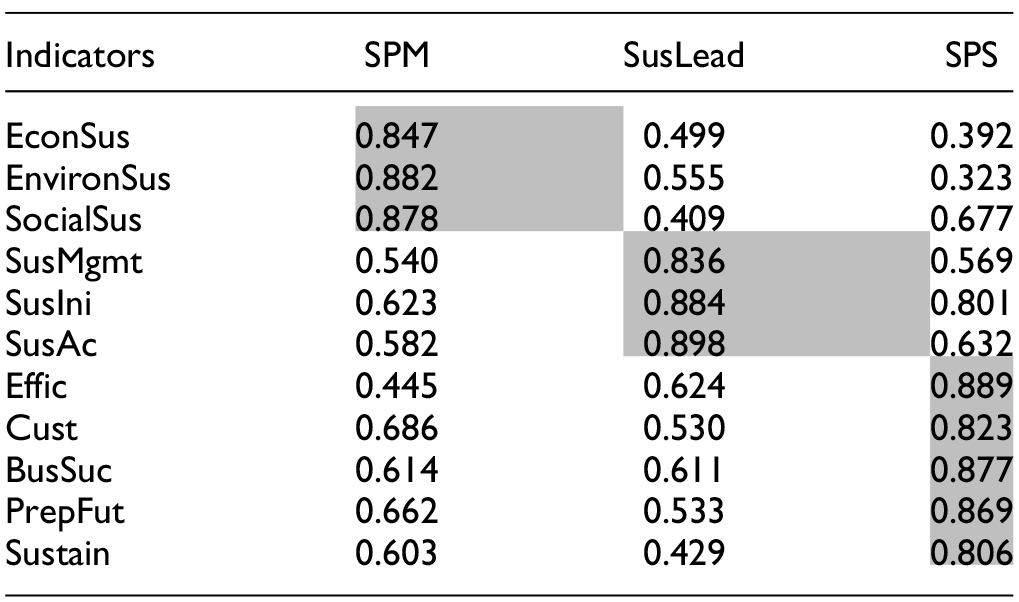
Fornell and Larcker Criterion Results of Second-Order Measurement Model.

HTMT Criterion Results of Second-Order Measurement Model.
Structural Model
This model is used to test hypotheses. To test the hypothesis (H1), we estimated the direct effect of SPM on SPS without involving sustainable leadership in the model as suggested by Hair et al. (2017). We performed a PLS algorithm with 5,000 maximum iterations and bootstrapping with 5,000 subsamples. The results are provided in Table 12 which indicate that SPM positively affects SPS (β = .643, t = 14.474). Hence, HI is supported. The value of variance (R2 = 0.559) indicates that 55.9% variance in SPS is explained by SPM. This value of R2 is acceptable as recommended by Cohen (2013). Gefen et al. (2011) argued that the value of effect size (f2) ascertains the effect of exogenous variables on endogenous variables. Cohen (2013) mentioned that an f2 value of 0.35 represents a large effect, 0.15 represents a medium effect, and 0.02 represents a small effect. Table 12 demonstrates an f2 value of 0.638 that represents a large effect size. We applied a blindfolding procedure to assess the predictive relevance of the research model. Hair et al. (2017) specified that this procedure should be applied to endogenous variables with reflective measures. They further recommended that the predictive relevance of an endogenous variable exists if the Q2 value is greater than 0 (a Q2 value of 0.35 reflects a large, 0.15 reflects a medium, and 0.02 reflects a small predictive relevance). Table 12 demonstrates a Q2 value of 0.267 which means the endogenous variable (SPS) has medium predictive relevance. We checked the variance inflation factor (VIF) value to detect multicollinearity. Ringle et al. (2012) argued that multicollinearity does not exist if 2 < VIF > 5. Table 12 demonstrates a VIF value of 2.305 which means no issue of multicollinearity,
Structural Model Results.

Note. SPM = sustainable project management; SPS = sustainable project success.
p < .05 (two-tailed test).
For estimating the moderating effect of sustainable leadership, we first ensured that SPM has a significant effect on SPS. Awang (2012) asserted that the moderator should be involved in the model when the predictor has a significant effect on the criterion. As the effect of SPM on SPS is significant as shown in Table 12, we involved sustainable leadership as a moderator into the model. Awang (2012) further described that when the moderator is involved in the model, the causal effect may change because of some interaction effect between the predictor and the moderator. Moderation analysis is performed in these steps: 1) estimating the effect of the predictor on criterion, 2) estimating the effect of moderator on criterion, and 3) estimating the effect of the interaction term (predictor*moderator) on criterion (Hair et al., 2017). The moderation model is shown in Figure 2. The conceptual moderation model in Figure 2a depicts that the criterion (SPS) is positively predicted by the predictor (SPM) and this prediction is further strengthened by the moderator (SusLead). The equivalent statistical moderation model in Figure 2b was tested in the SmartPLS. For this, the predictor (SPM), the moderator (SusLead), and their interaction term (SPM*SusLead) were taken as independent variables, whereas criterion (SPS) was taken as the dependent variable. Moderation occurs when the effect of the interaction term is significant (Hair et al., 2017). The results of PLS bootstrapping are shown in Table 13. The results indicate that sustainable leadership moderates the positive effect of SPM on SPS (β = .327, t = 5.183, p < .001). Therefore, H2 is also supported.

Moderation model. (a) Conceptual moderation model. (b) Statistical moderation model.
Moderating Effect Results.

Note. SPM = sustainable project management; SusLead = sustainable leadership; SPS = sustainable project success.
p < .05 (two-tailed test).
Discussion
Due to the emerging trend and growing importance of SPM in improving SPS, this study examined the association between SPM and SPS in the selected 285 projects under the umbrella of PSDP in Pakistan. The study also analyzed the moderating role of sustainable leadership on the association between SPM and SPS. The RBV was applied as a lens of perspectives in this study. The results revealed that SPM is positively associated with SPS. Moreover, sustainable leadership positively moderates the association between SPM and SPS in this context. Thus, special attention should be given to these areas. The results suggest that SPM in terms of economic, social, and environmental aspects has enormous potential to improve SPS in terms of process efficiency and product effectiveness. This is also supported by several previous studies (e.g., Chow et al., 2021; Dubois & Silvius, 2020; Shaukat et al., 2022). The results also revealed that sustainable leadership acts as a moderator to strengthen the association between SPM and SPS. Although SPM significantly improves SPS, sustainable leadership and related competencies are still indispensable and imperative for envisaged improvement in SPS in the development context of a developing country. Many previous studies also demonstrate similar findings (e.g., Bulmer et al., 2022; Cleveland & Cleveland, 2020). Hence, sustainable leadership should also be given priority in this context. The PSDP authorities and management should focus on SPM along with sustainable leadership to achieve the desired results. Sustainable leadership in terms of sustainable management, initiatives, and actions provides conditions for SPM and resultantly improves SPS. Through sustainable management, sustainable project plans, processes, and deliverables can be ensured with proper risk management strategies which are crucial for SPS. Through sustainable initiatives, projects are prioritized, appraised, and approved based on sustainability criteria and ultimately lead toward SPS. Through suitable actions, sustainability is ensured in every phase of the project management life cycle and projects are developed, controlled, and measured based on sustainability standards and criteria, Thus, SPM along with sustainable leadership competencies keeps the projects on sustainability track and ultimately results in SPS.
Theoretical Implications
The study extends the existing body of knowledge and provides several theoretical implications. First, the study was developed based on the prior literature regarding SPM, sustainable leadership, and SPS in the form of an explanatory model. The SPM and sustainable leadership are the concepts that could be drawn from the RBV. Thus, it is logical to utilize RBV to develop and interpret the model. By examining the moderating role of sustainable leadership, the study used RBV to describe the association between SPM and SPS and the moderating role of sustainable leadership on this association. Second, the study investigated the association between SPM and SPS and found that SPM is positively associated with SPS. As per RBV, organizational resources and capabilities lead to superior performance (Miller, 2019). Hence, SPM as an organizational capability improves SPS. This is also supported by Yazici (2020) who found that PM capability strengthens the influences of sustainability efforts. Third, the study investigated the moderating role of sustainable leadership on the association between SPM and SPS and found that sustainable leadership acts as a moderator on this association. The RBV illustrates that organizations compete based on sustainable resources and capabilities (Madhani, 2010). Thus, sustainable leadership as an organizational resource acts as a catalyst to strengthen the association between SPM and SPS. Lastly, the study is beneficial to the existing knowledge base and literature on SPM, sustainable leadership, SPS, and the integration of sustainability in the discipline of PM.
Managerial Implications
The study also provides several managerial implications for project managers, decision-makers, and policy-makers. The findings are vital for practitioners as they point to SPM, sustainable leadership, and SPS in the PSDP context of a developing country. Through SPM, they can integrate and utilize sustainable practices in their projects to achieve economic, environmental, and social sustainability (Chow et al., 2021; Keshavarzian & Silvius, 2022). By demonstrating sustainable leadership, they can adopt sustainable initiatives, perform sustainable actions, and ensure sustainable management (Al-Zawahreh et al., 2019) in this context. Given that sustainable leadership is crucial for envisioning sustainability as an essential element of projects and organizations (Jones et al., 2017) and acts as a catalyst, they can extend their SPM practices for improved SPS. Policy-makers and decision-makers can use the results to formulate an effective sustainable strategy for PSDP projects in Pakistan to achieve sustainability goals and establish a sustainable society. Due to the enormous potential of sustainable leadership, public managers in the PSDP projects can perform SPM by considering economic, social, and environmental aspects and improve SPS by attaining efficiency, impacting customers and other stakeholders, achieving business success, realizing future needs, and implementing sustainable practices.
Conclusion
The study analyzed the moderating role of sustainable leadership on the association between SPM and SPS in the PSDP projects in Pakistan which were previously unexplored. The RBV was applied as a lens of perspectives in this study. The findings revealed that SPM is positively associated with SPS. Moreover, sustainable leadership positively moderates the association between SPM and SPS in this context. Thus, PSDP projects in Pakistan should be developed through sustainability practices and measures to improve SPS. Sustainable leadership acts as a catalyst that makes the association between SPM and SPS stronger. So special focus should be given to sustainable leadership in this context. As PSDP is a policy instrument to achieve SDGs in Pakistan, SPM and sustainable leadership are pivotal for integrating and ensuring sustainability practices and measures to achieve SPS. Thus, sustainable leadership is a novel organizational resource and an effective contributor to the integration of sustainable practices in projects and organizations in the context of a developing country.
Although the study was performed to extend the knowledge on SPM, sustainable leadership, and SPS, it has a few limitations that need to be considered while interpreting the findings. The study also provides future research directions based on these limitations. First, we applied a single informant strategy to collect data from PSDP projects that could be a potential source of common method bias. However, the common method bias was statistically tested before performing the PLS-SEM-based analysis. Future researchers can gather data from multiple sources to provide triangulation and confidence in the results. Second, we collected data from 285 development projects in one country. This may restrict the external validity of the results. Future researchers can add more development projects even from more countries to enhance the generalizability of the findings. Third, the projects were selected from different development sectors including infrastructure, social, production sectors, etc. without considering the sector (project) type as a control variable. Future researchers can use the project type as a control variable so that the results can be compared based on the project type. The project type may have a strong influence on the results. Future researchers can also extend the research model with other project-level variables such as project complexity, project teamwork, project knowledge integration, and project control mechanisms, etc., as moderators and/or mediators.
Footnotes
Appendix
You have worked in the following PSDP project as per the record (manual) of completed PSDP projects (from July 1, 2001, to June 30, 2023) in the Ministry of Planning, Development, and Special Initiatives.
You are requested to please spare some time and participate in this survey by filling out the following questionnaire based on your experience in the project.
The questionnaire contains two parts. Part 1: demographic information and Part 2: statements (questions) regarding the measures of sustainable project management, sustainable leadership, and sustainable project success.
Filled by the authors with the consultation of one representative from the Ministry of Planning, Development, and Special Initiatives.
Declaration of Conflicting Interests
The author(s) declared no potential conflicts of interest with respect to the research, authorship, and/or publication of this article.
Funding
The author(s) received no financial support for the research, authorship, and/or publication of this article.

Data Availability Statement
Data supporting this study cannot be shared or made available due to the restriction imposed by the respondents and other valid ethical reasons.