




Abstract
In recent times, the number of studies examining the use of humor in teaching English as a second language (ESL) in Asian countries has increased as researchers have acknowledged the positive effects that humor has on language teaching. This study presents a systematic review focused on the use of humor in ESL teaching within Asian countries. Its objectives are to acquire comprehensive knowledge of the current research status, research participants and methods, and research perspectives, and to examine the outcomes of incorporating humor into ESL instruction in Asian contexts in order to pinpoint research gaps for future studies. This study included the Preferred Reporting Items for Systematic Reviews and Meta-Analyses (2020). Moreover, 35 articles relevant to the use of humor in Asian ESL teaching were identified as of the date when this study was conducted. After performing content analysis, the findings revealed that the first related articles in Asia were published in 2009, after which more and more articles emerged. These studies took place in 14 Asian countries, with most of them focusing on Turkey, Iran, and Indonesia. In addition, they involve diverse research methods and perspectives, whilst most of the participants are university students. This suggests that humor is more suitable for use when teaching high-proficiency English learners. Moreover, humor is a double-edged sword that has positive and negative impacts on ESL teaching in Asian countries. Finally, a number of recommendations for future studies have been proposed in this study.
Plain Language Summary
This study presents a systematic review focused on the use of humor in ESL teaching within Asian countries. Its objectives are to acquire comprehensive knowledge of the current research status, research participants and methods, and research perspectives, and to examine the outcomes of incorporating humor into ESL instruction in Asian contexts in order to pinpoint research gaps for future studies. This study included the Preferred Reporting Items for Systematic Reviews and Meta-Analyses (2020). Moreover, 35 articles relevant to the use of humor in Asian ESL teaching were identified as of the date when this study was conducted. After performing content analysis, the findings revealed that the first related articles in Asia were published in 2009, after which more and more articles emerged. These studies took place in 14 Asian countries, with most of them focusing on Turkey, Iran, and Indonesia. In addition, they involve diverse research methods and perspectives, whilst most of the participants are university students. This suggests that humor is more suitable for use when teaching high-proficiency English learners. Moreover, humor is a double-edged sword that has positive and negative impacts on ESL teaching in Asian countries. Finally, a number of recommendations for future studies have been proposed in this study.
Introduction
Humor is a cognitive process that involves making fun of something or perceiving its amusement (Farnia et al., 2020). It is also considered an emotional response to the perception of incongruity, demonstrated by laughter or a smile (Martin, 2007). Over the last 20 years, the role of humor and play in second language (L2) learning and teaching have become more prominent (Reddington, 2015), and have become an important topic for L2 scholars and teachers given its prevalence in interactions (Bell, 2011; Vega, 1990). Language teachers are often encouraged to use humor in their teaching due to the numerous benefits that it generates (Bell, 2009), such as assisting in the relaxation of students, the creation of a comfortable classroom environment, the formation of ties among classmates, the stimulation of student interest, and simply making studying more fun. Pomerantz and Bell (2011) claimed that humor provides a “safe house” for foreign language teaching because this mode of communication enables participants to dismiss any serious message underlying the humor through the claim that the speaker is “only joking.” In such classrooms, students can speak their second language freely without worrying about being judged or met with unfavorable feedback from peers and teachers (Salmee & Arif, 2019).
Many L2 language teachers have practiced and studied humor in their classrooms (Bell, 2011). However, most of these teachers have carried out their research in western countries and focus on other languages than English (Banitz & San Andrés Cholula, 2018), such as Chinese (Tong & Tsung, 2020). The situation in Asian countries is different; most Asian countries are non-English-language countries, and English plays a critical role in their work and lives. English language is a compulsory course for students in many Asian countries, starting in primary school and the purpose of this is to cultivate qualified individuals who are capable of communicating with English speakers. In recent years, there has been a surge of interest in research examining the roles and functions of humor in Asian ESL classrooms (Gonulal, 2018). The ESL humor research has been performed in a variety of learning contexts including Vietnam (Petraki & Nguyen, 2016), Japan (Neff & Rucynski, 2017), and Turkey (Gonulal, 2018). The potential benefits of humor (such as attracting attention, increasing motivation, improving retention, and reducing anxiety) have been highlighted by previous researchers, although most such studies neglected to explore the negative impacts of employing humor in ESL classrooms. In addition, several researchers and scholars (including Gonulal, 2018; Neff & Rucynski, 2017, 2021) point out that humor can be culturally and contextually specific, hence, humor practice in Asian countries’ English classrooms has its own characteristics. Moreover, in the existing literature, very few studies have provided an overview of the status of humor and ESL teaching in Asian countries. Thus, the present study aims to conduct a systematic review of humor used in ESL teaching in Asia to address the gap in existing research and provide an overarching view of its status in this context. To be more precise, the research objectives of this study are to determine the current research status of humor in ESL teaching in Asian countries, identify the samples and research methods used in previous studies, examine the perspectives of humor in ESL teaching in different countries examined in previous research, and investigate the results of using humor in Asian ESL teaching.
Hence, the findings of the study could help us figure out the researchers in which Asian countries have conducted relevant studies to gain a clear view of their research participants, methods, and perspectives. Also, the results of using humor in Asian ESL classrooms are summarized to provide a reference for ESL teachers in Asian countries who would like to employ humor in their English classes. In the following section, this study reviewed the studies of humor and education and humor’s implications in English as a second language teaching.
Literature Review
Humor and Education
In the past, individuals have thought of humor as an approach that is used to deal with difficulties in life (Thorson & Powell, 1993). Martin and Lefcourt (1984) defined the term sense of humor as “the frequency with which the individual smiles, laughs, or otherwise displays amusement in a variety of situations” (p. 147). It can be expressed verbally (via wordplay) or nonverbally (via facial and body movements or visual gags) (Harida, 2018; Neff & Dewaele, 2023; Ziyaeemehr & Kumar, 2014). In ancient times, humor was seen as a low, degenerative quality and a trait of ignorant and foolish people (Harshavardhan et al., 2019; Ibraheem & Abbas, 2016). This is because early philosophers believed that laughter resulted from a perversion of the mind and body. It was considered to be beneath the arts, spirituality, ethics, and values, and thus was regarded as being deplorable. Nonetheless, humor has come to be seen as more significant over time. Nowadays, a sense of humor is considered to be crucial in living a long and happy life. More and more researchers and scientists acknowledge the numerous social functions that humor, laughter, and smiles serve (Harshavardhan et al., 2019).
According to modern research, humor can help to establish interpersonal interactions, reveal each other’s attitudes, lay strong foundations for trust and partnerships, bring about changes in social groups, and strengthen relationships (Wang, 2009). In 2016, Bell and Pomerantz classified humor’s functions into psychological, social, and behavioral components. Humor is widely known nowadays for having a psychological effect on defusing tension. Therefore, humor’s function is not ignored in education fields. As early as 2011, Banas reviewed the humor usage in educational settings and summarized the types of humor used in classrooms by teachers, such as affiliative humor, power-based humor, funny stories, etc. The study conducted by Shahid and Ghazal in 2019 established a clear correlation between teachers’ incorporation of humor and several positive outcomes for students. Their research identified links between humor usage and increased student motivation, reduced anxiety, heightened class participation, strengthened teacher-student connections, and enhanced teaching efficiency. Particularly, students perceived educators who infused humor into their teaching style as more effective compared to those who did not. The implications of these findings extend beyond mere recognition, offering valuable insights into the potential for improving teaching quality and effectiveness through the development and implementation of targeted training modules.
In a subsequent investigation, Şahin (2021) delved into a nuanced examination of teachers’ humor types and the purposes underlying their use of humor in both school and classroom settings. The study aimed to elucidate teachers’ metaphorical perceptions, shedding light on the multifaceted dimensions of humor in educational contexts. Şahin’s findings revealed a predominant use of positive types of humor, including affiliative humor, self-enhancing humor, and situational humor. Notably, these humor types were employed strategically to enhance both managerial and pedagogical efficiency within classrooms. In summary, the collective findings emphasize the diverse benefits of incorporating humor into teaching practices, ranging from motivational boosts and anxiety reduction to improved class dynamics and teaching efficiency. Humor in education is a valuable tool that teachers can use to improve student learning by creating a motivating classroom environment (Latifi et al., 2022).
Humor Implications in Teaching English as a Second Language
Research studies have acknowledged the need to integrate humor strategies into language instructions due to the growing understanding of humor’s importance in second language learning (Bell, 2009, 2011; Bell & Pomerantz, 2016; Reddington, 2015). Research evidence has shown that students appreciate teachers who are upbeat, funny, joyful, organized, supportive, and respectful of their students (Jiang & Dewaele, 2019). Compared to traditional ESL classes that rely on rote memorization and strict attention to form, humor-integrated ESL teaching can provide a more enjoyable atmosphere for both teachers and their students (Dewaele et al., 2018). Moreover, Aboudan (2009) argues that teachers have a responsibility as educators to foster a relaxing, optimistic atmosphere in the classroom, which could enhance students’ learning whilst encouraging them to talk more and enjoy themselves in the classroom environment. Nayyar and Zeeshan (2017) further argued that, instead of relying on the traditional teaching method in the English language classroom, English language teachers could increase the effectiveness of their lessons by incorporating humor. Thus, it is important that ESL teachers understand how to create an effective environment in the second language classroom.
Over the last 20 years, scholars in Asia have been keen to practice and study humor in ESL teaching. Teachers’ effective use of humor in the classroom is widely regarded as a positive factor (Anggraeni et al., 2019). According to Medgyes (2002), humor is one of the best tools to use when teaching foreign languages and its ability to inspire students can never be overstated. Moreover, he considers TEFL or TESL classrooms to be some of the most encouraging places to generate humor as puns can be made in a bilingual and even multilingual environment. Humor has a positive impact on students’ ESL learning. For example, it eases tension in the classroom, increases student-teacher rapport, facilitates learning, and increases students’ English learning motivation and interest (Aboudan, 2009; Motlagh et al., 2014; Tunnisa et al., 2019).
However, some teachers avoid using humor in ESL classrooms, according to findings of a survey carried out by Ziyaeemehr et al. (2011). The latter researchers also found that such teachers are more content-oriented, lack the ability to create humor in L2, and have a lack of humor in their personalities. Therefore, a teacher’s sense of humor plays a vital role in determining whether they could employ humor in ESL teaching based on their humor styles. Meanwhile, Petraki and Nguyen (2016) found that humorous comments, jokes, and funny stories are the three most popular types of humor that English teachers in Vietnam used to lighten the mood and increase the teachers’ accessibility. Additionally, Andarab and Mutlu (2019) identify the humor styles of English teachers based on their gender, educational level, and age. Their findings also show that there was no significant difference in humor styles used in the classroom between different genders, educational levels, and the age of teachers. In the same year, Heidari-Shahreza (2018) examined ludic language play and verbal humor used by teachers in English (EFL) instruction. However, he found that the humor style of ESL teachers could be affected by Learners’ L2 proficiency. Additionally, this humor may be used (and “extended”) to achieve managerial, affective, and/or (pro)social goals, which is in line with the findings revealed by Ziyaeemehr et al. (2011), who highlighted the benefits of using humor in English classrooms, most of which are psychological, social, and instructional advantages.
Some empirical studies have been conducted to examine the use of humor in Asian ESL classrooms. Most such studies use two groups of students, one experimental group and one control group. The results of the studies have revealed that the experimental groups who were taught language functions in context with humor outperformed other groups (Andarab, 2019; Azizifard & Jalali, 2012; Kavandi & Kavandi, 2016; Wahyuni & Naim, 2019). Furthermore, there are no significant differences in performance between male and female participants. Nonetheless, many researchers have tried to investigate students’ opinions on teaching English using humor. For instance, Gonulal (2018) invited 250 EFL college students in Turkey to partake in a study designed to uncover EFL learners’ perspectives on the roles of humor in EFL classrooms. The participants generally demonstrated positive attitudes toward using humor in English classes. Additionally, they believed that humor was a powerful pedagogical tool that could improve student-teacher rapport whilst simultaneously increasing students’ attentiveness and attention spans in English classes. Meanwhile, Híşmanoğlu et al. (2018) conducted a very similar study involving 110 English preparatory students in Turkey and received the same results. The following year, Salmee and Arif (2019) examined students’ perceptions of how humor affects their intrinsic motivation to learn English. The results indicate that most respondents firmly believed that humor increases students’ intrinsic motivation to learn English, whilst also serving as an effective teaching tool in encouraging the intrinsic motivation of second language learners. These findings were also confirmed by the results of a subsequent survey administered to ESL instructors by Neff and Rucynski (2021), ESL instructors generally agree with the use of humor in the language classroom and its effectiveness in improving the learning process, although limitations were expressed regarding the personalities of the structures. However, the views of the instructors were far from unanimous, and there were considerable differences in individuals’ perceptions of the use of humor in the classroom.
To conclude, the above studies focus on investigating such things as humor’s functions, students and teachers’ perceptions, and humor’s benefits on improving students’ English proficiency when humor is conducted in English as a second language teaching in Asian countries. Almost no researcher has conducted a literature review of this topic, including the countries and years of publishing, their research participants, research methods, and their research focus points. Additionally, there is no doubt that using humor in ESL teaching has many benefits. However, very few studies have discussed the negative results of using humor in ESL classrooms. Thus, this study is significant in determining the status of the related studies and facilitating future studies into the topic. To achieve the research objectives of the present study, the following research questions are put forward:
What is the current research status of humor in ESL teaching in Asian countries?
Which populations have been studied by the included research and which research methods have they adopted?
What are the included studies’ research perspectives on humor and ESL?
What were the results of humor employed in Asian ESL teaching?
Materials and Methods
This systematic review was performed in accordance with the Preferred Reporting Items for Systematic Reviews and Meta-Analyses (Page et al., 2021).
Literature Sources and Inclusion Criteria
The literature sources for this study were Scopus, Eric, and Google scholar. Scopus covers a large amount of social science literature, whilst Eric is a large database of teaching-related articles, and Google scholar includes articles on a wider range of topics. Thus, these sources enable all relevant literature to be collected. Before searching for articles, a criterion for article collection was established. The articles must have been published from 2002 to 2023 and must take the form of published journal articles. This is because most of the articles published in journals are peer-reviewed, and the quality and reliability of the data meet the standard of the study. Thus, conferences, books, book chapters, and other types of literature were excluded. In addition, papers written in languages other than English were not included, as English papers are the main form of presentation for international academic communication, and it has a wider readership and reference value. During the article collection process, only articles about English language teaching in Asian countries were screened due to the scope of the study, and articles from other non-Asian countries were excluded. If it was uncertain whether an article was about teaching English in Asian classrooms, a judgment was made from the author’s affiliation to determine whether it was carried out in a country located within the Asian region, thus further confirming whether the article is eligible.
Searching Procedures
During the article search process, the keywords “humor,”“humorous,”“joke,”“language teaching,”“English teaching” were entered to search the databases. When searching the Scopus database, the advanced search model TITLE-ABS-KEY was used, and keyword combinations ((humor* or joke) and (language or English) and (teach*)) were used to search the most relevant articles. A total of 215 articles that met the inclusion criteria were retrieved from this search, with these articles being exported for screening via CVS forms. The exported CVS form contains the title of the article, keywords, abstracts, and author information. Next, the Eric database was searched, and the articles were filtered using a combination of keywords such as “humor and English teaching” and “humor and language teaching.” The final search identified the 13 most relevant articles based on the inclusion criteria. These 13 articles were saved in NBIB format, including title, author, keywords, abstract, year of publication, and other relevant information. Finally, a search on Google Scholar was conducted. An iterative search of the relevant literature was performed using the above keyword combinations and various key phrases, with 45 relevant articles ultimately being identified. This search identified a number of articles that were in the process of publication to ensure that new and eligible data was not missed before the final coding process. Thus, the last search of the three databases for this study was performed on 12th October 2023.
Screening and Collection Results
The next step was to screen the retrieved articles to verify that they met the criteria for the present study. Two researchers were assigned to screen the collected data individually by examining the titles, keywords, and abstracts in order to determine if they were relevant to the current study. In addition to meeting the screening criteria, eligible articles had to be relevant to the use of humor in Asian English classrooms, otherwise, they were eliminated as ineligible. If duplicate articles were found, one of them was excluded and recorded. The search results of the two researchers were compared and, in the case of controversial articles, a third researcher screened the article and decided whether it was eligible. Subsequently, all eligible articles were downloaded, saved, and renamed based on the author’s name and year of publication. Thus, it was easy to see if they were duplicate downloads and to determine the distribution of downloaded articles by year.
Figure 1 presents the flow of the literature search process and the results of the data screening. A total of 273 relevant articles were collected from the three databases, and 12 duplicates were removed, leaving 261 articles. The titles, keywords, and abstracts of the articles were screened, and 198 articles were excluded. The remaining 63 articles were downloaded, and five articles were identified as not being in full text. The final full text of the 58 articles was read and evaluated, with 23 of them being incompatible with the study (including ten articles that were conducted in non-Asian countries, eight that were relevant to the teaching of languages other than English, three were conference papers, and two were ineligible for other reasons). Therefore, a total of 35 final eligible articles were coded for analysis and considered eligible for this study.

PRISMA flow of data identification, screening and included reports results.
Coding and Analysis
Atlas.ti 2022 was used as the coding tool in this study. All eligible documents were imported to Atlas.ti and the content of the articles were coded based on the study objectives. Firstly, the country and date of publication for each article were coded, after which the participants and research methods were coded. To achieve research objective three, the study coded and categorized the research perspective of each eligible article. Finally, to fulfill research objective four, the results of using humor in English classrooms in Asian countries were categorized and coded. After the coding was completed, the data was exported and saved in excel format for data analysis. During the data analysis phase, this study analyzed and discussed each research question. A network analysis of Atlas.ti was also carried out to establish links between the data and to conduct a deeper investigation into the research findings.
Findings
Current Research Status of Humor in ESL Teaching in Asian Countries
To address research question one, the countries and years of publication for the studies were summarized. Table 1 shows the Asian countries examined, as well as the articles that have been published over the past two decades. It shows that Turkey (n = 7), Iran (n = 6), and Indonesia (n = 6) have published the most relevant articles on humor and ESL. The next most significant countries in this regard were Japan and Malaysia, each of which published three articles. The rest of the Asian countries except Vietnam (n = 2) (including the Philippines, China, Uzbekistan, Pakistan, India, the state of Palestine, the United Arab Emirates, and South Korea) have published only one article each in the past 20 years. However, no relevant articles could be found for other countries, such as Singapore and Laos.
The Countries and Years’ Distribution of Publishing.

Figure 2 shows the number of articles published in the last two decades. It can be seen from this figure that no studies conducted in Asian countries between 2002 and 2008 investigated humor in ESL classrooms. The earliest study on humor and ESL in Asian countries was conducted in 2009. From 2009, a relevant article was published almost every year until 2016 (with the exception of 2014, when two studies were published). However, from 2017 onwards, three articles on humor and ESL appeared, and in the following years, more and more relevant articles were published. Most of the articles were published in 2019, with a total of seven related articles published. It dropped down a little in 2020, although more articles were published in 2021 (six articles found). In 2022, two relevant articles were published, followed by an increase to four relevant articles in 2023. Overall, over the past two decades, there has been a notable rise in the attention paid by Asian scholars, particularly in the latter decade, toward the incorporation of humor in English language teaching and learning.
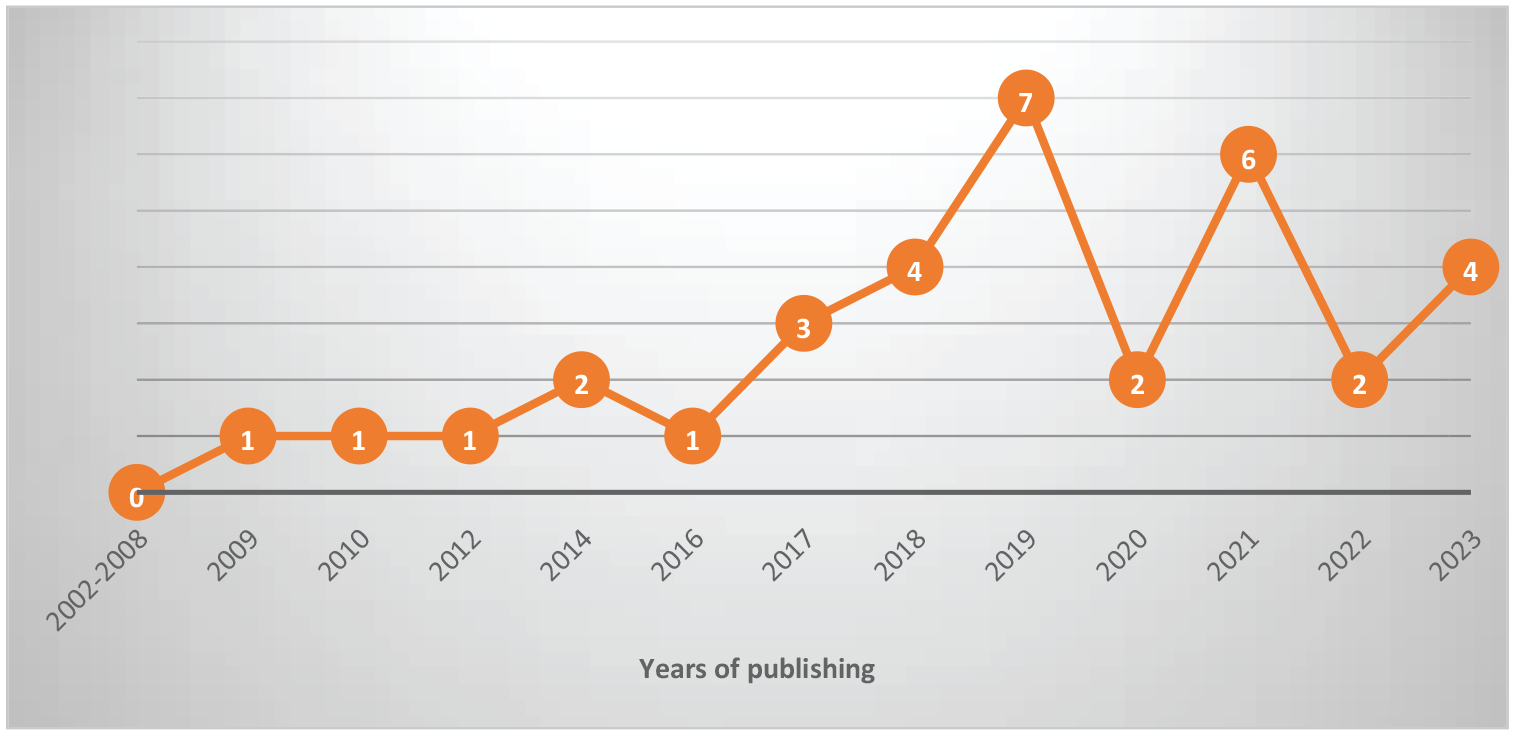
The years of article publishing.
Participants and Research Methods
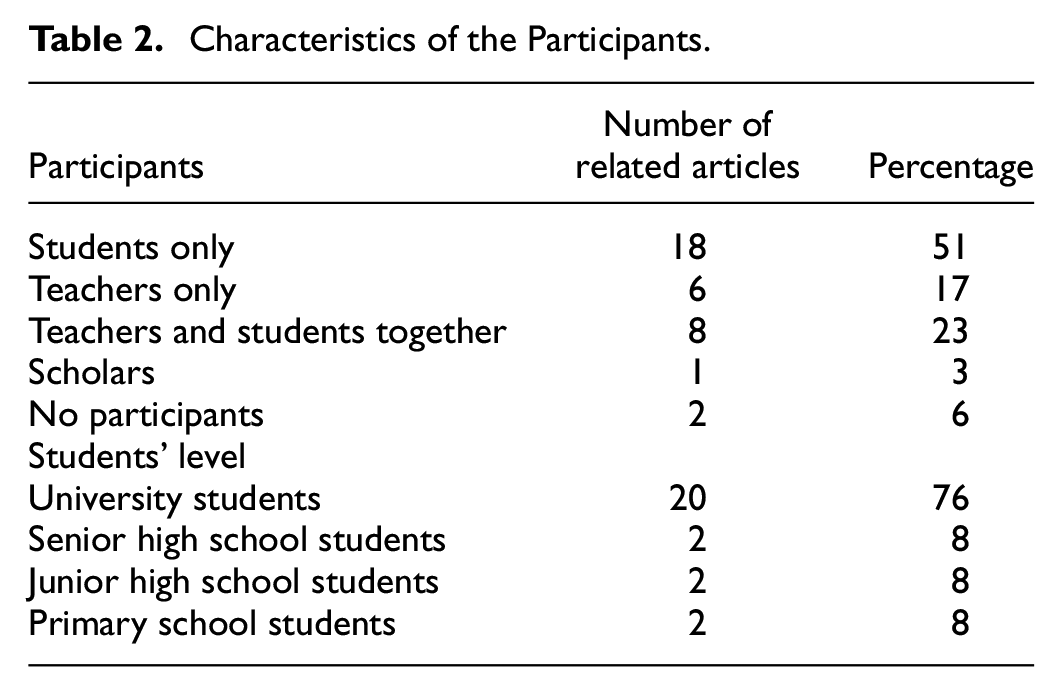
To address research question two, the characteristics of the participants are presented in Table 2, whilst the research methods are presented in Table 3.
Characteristics of the Participants.
Profile of the Research Methods.

Table 2 presents the participant characteristics of the included 35 studies. The participants of 18 studies were students, accounting for 51% of all the included articles. Six researchers asked teachers or instructors to participate in their studies, which accounts for 17%. Meanwhile, eight studies included teachers and their students, which accounts for 23% of the included articles. Furthermore, one study employed a group of scholars as their participants and two studies did not include any participants.
By observing the student participants, 26 articles involved students. Table 2 also highlights the students’ education levels. Additionally, the participants in 20 studies were college-level students, indicating that most of the research was conducted in universities. Meanwhile, senior high school, junior high school, and primary school students are investigated twice, respectively. Moreover, with regard to the education levels of the participants, college-level participants accounted for 76%, while other levels accounted for much less. The results indicate that humor is more often embedded in college ESL classrooms in Asian countries.
In Table 3, the research methods used in the 35 selected studies are presented. Three research methods employed by previous researchers include quantitative research, qualitative research, and mixed research methods. Eleven such articles used quantitative research methods, whilst 13 adopted qualitative research methods and 11 articles applied mixed research methods. There is no significant difference in the number of studies adopting each of these research methods. Nonetheless, by observing the instruments used, it is evident that questionnaires and experimental test results are the most common tools used by researchers who adopted quantitative research methods in their studies. However, the researchers who adopted qualitative research methods tended to use interviews, open-respond questionnaires, and class observations as their study tools. Finally, the researchers who adopted mixed research methods used a variety of research instruments, including observations, interviews, questionnaires, experimental test results, and document records. The vast range of research methods and instruments used in the selected studies implies that studying the use of humor in ESL teaching and learning is practicable and accessible, which enriches the methods references employed in the following related studies.
Research Perspectives on Humor and ESL
To address research question three and examine the research perspectives they have adopted on this topic, this section classifies the research perspectives of the 35 articles included (see Table 4).
Research Perspectives of Previous Studies.

After reading the selected articles and carefully analyzing the classification, the perspectives of previous Asian studies were separated into nine clusters. The first study clusters include studies that focus on ESL students’ or ESL teachers’ perceptions of humor usage in ESL classrooms. To be more precise, these studies aimed to obtain teachers’ or ESL students’ views on employing humor in ESL teaching. This is the largest category of studies, containing 16 articles from 10 countries. The second cluster included studies that examined whether using humor in the English classroom can help students to learn English language skills (i.e., by determining its impact on students’ ESL teaching and learning). This category included studies from the United Arab Emirates, Iran, Turkey, South Korea, and Indonesia. The third cluster included studies that examined the effects that specific humor techniques had on ESL learning. The studies in this category were carried out in four different Asian countries, among which four articles published in the 2019, and one article published in 2022. Firstly, Anggraeni et al. (2019) examined animation humor’s effects on students’ English language learning. Secondly, Harshavardhan et al. (2019) proposed a method of teaching English in the digital age that makes use of humor (via internet memes) in the ESL classroom. Thirdly, Andarab (2019) looked at the impact of humor-integrated pictures on vocabulary learning. Fourthly, Wahyuni and Naim (2019) examined whether teachers could use humor in English classes could enhance the rapport between them and whether this could increase students’ learning and achievement. Finally, Wang (2022) found that the joking action (verbal and non-verbal humor) was used freely and extensively by English-native teachers when they were teaching English to Chinese primary students, and it was evident that this improved the students’ grasp of a foreign language. The fourth cluster considered whether using humor could promote one specific English skill. The researchers investigated the relationship between humor and English learning in areas such as English grammar performance (Kavandi & Kavandi, 2016), listening comprehension (Abida et al., 2020), and reading comprehension (Motlagh et al., 2014; Octaberlina & Asrifan, 2021). Moreover, these studies were conducted in Iran and Indonesia. The rest of the five articles had a different focus from the other studies, so they are categorized separately. Heidari-Shahreza (2018) scrutinized teachers’ humor and language to determine their effects on English teaching and their relationship with the learner’s English proficiency. The key purpose was to determine whether the English learner’s proficiency impacts the humor style of the ESL teacher. Meanwhile, Andarab and Mutlu (2019) aimed to identify the humor styles used by English teachers based on different genders, educational levels, and ages. The seventh cluster, Rucynski and Prichard (2021), illustrated how to apply humor in English language classrooms in Japan effectively. More recently, in the eighth cluster and the ninth cluster, Solhi and Shirvan (2023) firstly investigated the English teacher’s language teaching enjoyment and their humor types, and then Solhi et al. (2023) further examined the relationship between students’ perceptions of teachers’ humor and their language learning boredom and enjoyment.
Overall, nine clusters of research perspectives in Asian countries have been identified.
Results of Humor Employed in Asian ESL Teaching
To address research question four, the results of the studies that have examined the use of humor in Asian ESL teaching were examined. This study identified the positive and negative results of using humor in ESL classrooms (see Figures 3 and 4).
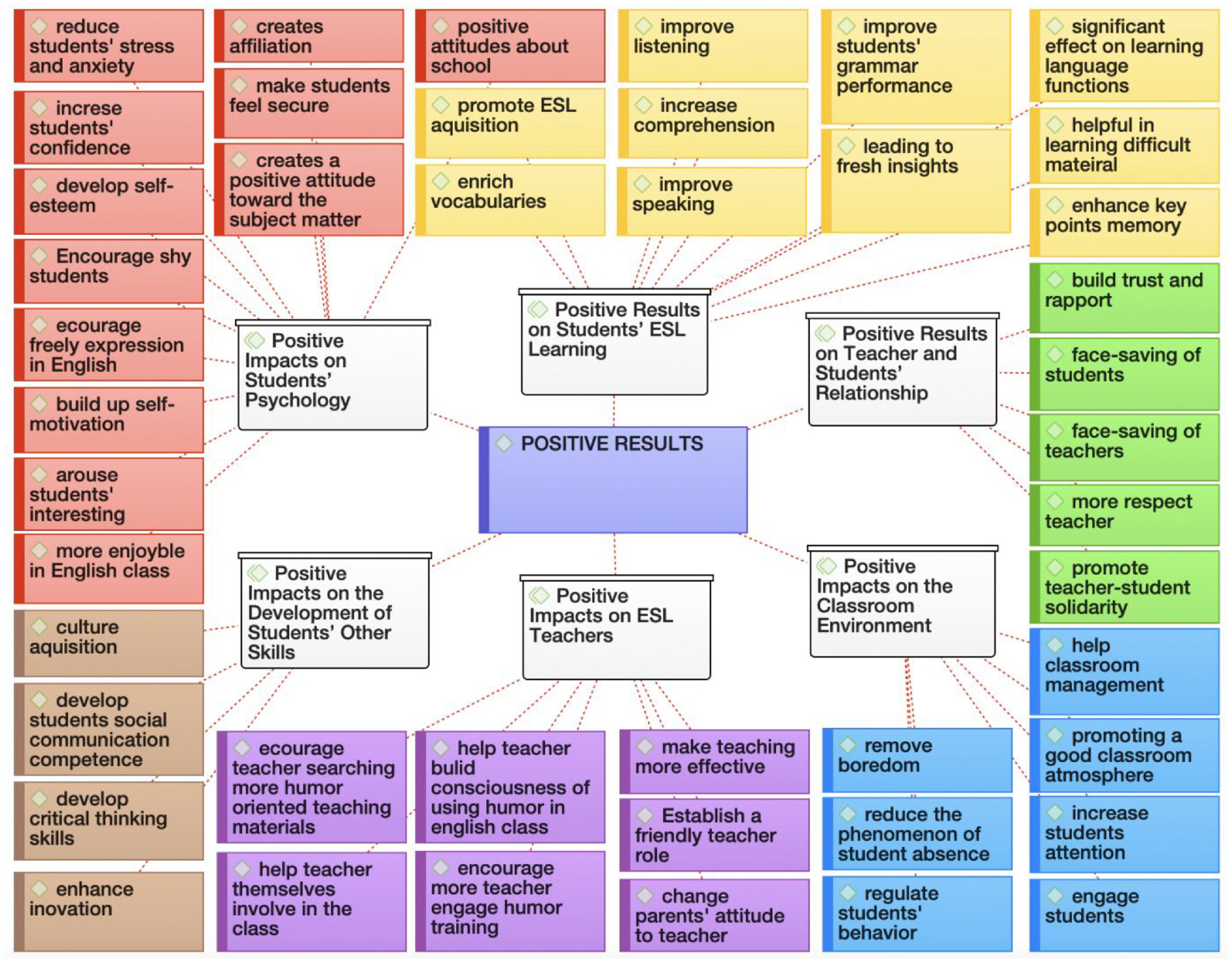
Positive results of using humor in ESL teaching and learning.
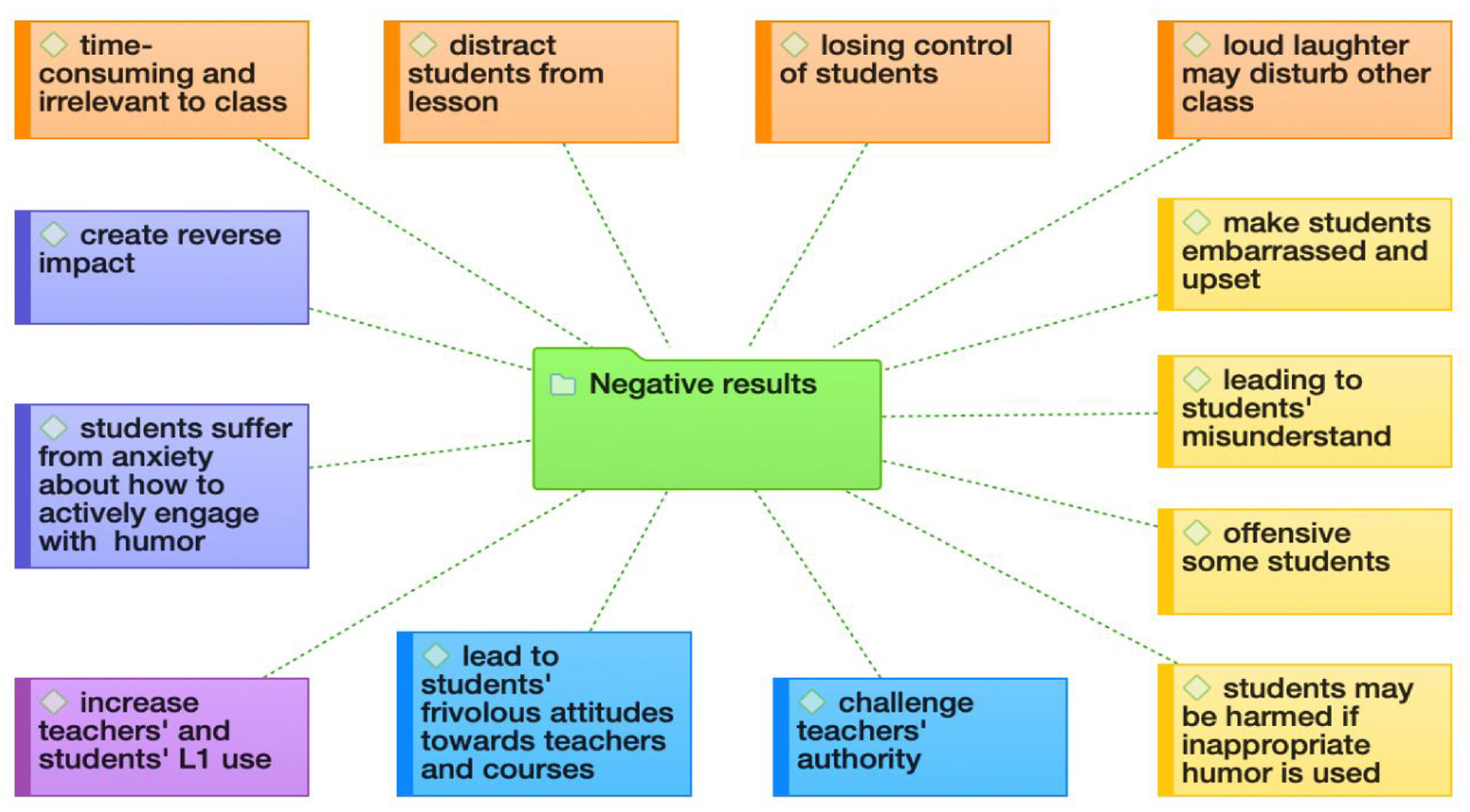
Negative results of using humor in ESL teaching and learning.
Figure 3 presents the positive results of applying humor in ESL teaching. The present study identified 45 positive outcomes of using humor in ESL classrooms and further classified them into six groups of results:
Positive Result 1: Positive Impacts on Students’ Psychology
The use of humor in teaching English can have several different positive psychological effects on students. This includes a regulating effect on their personal emotions and their perception of themselves, their classroom, and their school environment. As English is an important foreign language in Asian countries, anxiety about learning a foreign language is one of the most mysterious personal factors in language learning (Piniel & Zólyomi, 2022). Thus, anxiety is a crucial factor that influences students’ performance when they are learning English. Moreover, in terms of regulating students’, the use of humor in the classroom by ESL teachers can reduce students’ stress and anxiety in class, enabling them to learn English in a more relaxed state (Andarab & Mutlu, 2019; Harshavardhan et al., 2019). Furthermore, a number of researchers have also suggested that humor in the ESL classroom can also help to increase students’ self-confidence and self-esteem and encourage shy students to speak up (Aboudan, 2009; Kim, 2021; Nayyar & Zeeshan, 2017). For example, Kholmatov’s (2021) study conducted an interview with 15 English teachers at Westminster International University in Tashkent. When teachers were asked why they use humor in their classes, they said that it could help them correct the students’ mistakes in a more comfortable way and encourage shy students to engage with the class. With regard to changes in students’ perceptions of themselves, Motlagh et al. (2014) argued a teacher’s sense of humor could enhance Iranian students’ intrinsic motivation. Motlagh et al.’s (2014) findings reveal that teachers’ humor affects students’ study attitude; the students show a more positive attitude toward English reading after implementing of humor in teaching English reading comprehension. His view was supported by other Asian scholars, including Petraki and Nguyen (2016), Qasrawi and Saleem Alzboon (2020), and Neff and Rucynski (2021). More importantly, humor has also been found to enhance students’ interest in learning and gives them a greater sense of enjoyment in the English classroom (Kholmatov, 2021; Kim, 2021). Scholars such as Yagcioglu (2017), Tunnisa et al. (2019), Salmee and Arif (2019), etc. found that students feel more fun and happiness when teachers combine humor with language teaching and learning activities. Additionally, Ziyaeemehr et al.’s (2011) survey revealed that 10.6% of students express humor in ESL academic classes, enabling them to create affiliation. Qasrawi and Saleem Alzboon (2020) also pointed out that teachers use humor in classes to break down the psychological barriers between students and teachers, which makes the students feel secure. Hence, these changes enable students to develop a positive attitude toward English class (Aboudan, 2009) and even their school (Kavandi & Kavandi, 2016) over time.
Positive Result 2: Positive Results on Students’ ESL Learning
The findings of the included studies revealed that the use of humor in Asian ESL teaching can be beneficial for students’ English learning (Aboudan, 2009; Heidari-Shahreza & Heydari, 2019). If a teacher uses humor in the ESL classroom, it can promote students’ English skills acquisition in many areas, including vocabulary (Andarab, 2019; Anggraeni et al., 2019), listening (Abida et al., 2020), reading comprehension (Motlagh et al., 2014; Octaberlina & Asrifan, 2021), speaking (Kholmatov, 2021), and grammar performance (Kavandi & Kavandi, 2016). For instance, Abida et al. (2020) examined the use of humor in an English listening class. Their study revealed that the humor application could improve the students listening skills, and they obtained higher scores compared to before. Then, according to Kholmatov’s (2021) survey on the effects of humor use in English learning, it not only improves students’ listening skills but also benefits students’ speaking skills. Additionally, Nayyar and Zeeshan (2017) claimed the students can understand the contents of the English reading material more easily by explaining the content in a humorous way. Furthermore, it can give students new perspectives on their studies and language functions (Andarab & Mutlu, 2019; Qasrawi & Saleem Alzboon, 2020). During interviews with students, several researchers found that humor could help the students master more difficult learning materials (Aboudan, 2009; Manlongat et al., 2021; Tunnisa et al., 2019). It can also help them to remember the key points and retain them for a longer time (Petraki & Nguyen, 2016; Rucynski & Prichard, 2021).
Positive Result 3: Positive Results on Teacher and Students’ Relationship
The third positive of using humor by ESL teachers is that humor can help teachers and students develop better and more trusting relationships (Híşmanoğlu et al., 2018; Kholmatov, 2021). Humor will shorten the distance between the English teacher and their students and make the atmosphere in the classroom more comfortable. Since the classroom situation is dynamc, anything could happen during language teaching (including embarrassing moments), and thus humor can help to save the faces of the teachers and their students (Heidari-Shahreza & Heydari, 2019; Kim, 2021), especially when some students make a mistake in their language learning. The English teacher could tell a joke to avoid embarrassment or transfer students’ focus. By doing so to save the faces of their students, students are likely to show the English teacher more respect (Kavandi & Kavandi, 2016), which could strengthen the relationship between the two parties (Gonulal, 2018).
Positive Result 4: Positive Impacts on the Classroom Environment
Heidari-Shahreza (2018) claimed that the use of humor in ESL teaching can help teachers manage the classroom, and this view is supported by Kholmatov (2021). In addition, many researchers have mentioned that humor can promote a better ESL classroom atmosphere (Andarab & Mutlu, 2019; Heidari-Shahreza & Heydari, 2019; Kholmatov, 2021). In a comfortable classroom environment, a teacher’s humor can draw the students’ attention and enhance their engagement with the teaching (Manlongat et al., 2021). More specifically, it can promote the students’ English learning motivation because “students will learn when they want to learn” (Ziyaeemehr et al., 2011, p.116). Hence, the English class becomes more interesting and removes boredom from the class, which reduces students’ absences and regulates their behavior in school (Kavandi & Kavandi, 2016; Kim, 2021).
Positive Result 5: Positive Impacts on ESL Teachers
Not only does humor has a positive impact on students, but it can also benefit ESL teachers. Due to the positive impact that humor has on the classroom, it can be effective for use in ESL teaching (Nayyar & Zeeshan, 2017). ESL teachers with a good sense of humor demonstrate that they are friendly and not strict (Kholmatov, 2021), which helps them to establish good relations with their students and their parents (Kavandi & Kavandi, 2016). For instance, students exhibited greater respect for their teacher, and several parents asked that the teacher provide their kids with individual instruction after class. There are many positive aspects of using humor in ESL teaching, including that it encourages more English teachers to understand the importance of employing humor in their classes by taking part in some humor training lessons or searching for humor-related teaching materials for their students (Ziyaeemehr & Kumar, 2014). A strong link between humor and learning could motivate English teachers and material creators to create lesson plans that use more humorous teaching resources. Teacher education programmers consider including pre-service and in-service courses and workshops that teach teachers how to successfully use appropriate humor in English as a second language teaching and learning processes to reap the benefits of humor (Ziyaeemehr & Kumar, 2014). In this way, English teachers who employ humor skillfully may act as mentors and role models in their school. After teachers practice humor techniques in their English teaching, the active responses from their students can also help them become more involved in the class (Petraki & Nguyen, 2016).
Positive Result 6: Positive Impacts on the Development of Students’ Other Skills
Híşmanoğlu et al. (2018) claim that, through exposure to native humor, students gain a deeper understanding of the culture associated with the foreign language. Thus, using humor in English teaching could also expand students’ cultural knowledge (Ziyaeemehr et al., 2011). In addition, some researchers propose that the use of humor in ESL classrooms can improve students’ social communication competence because, in a relaxed classroom, students are more willing to communicate with the teacher and their classmates (Gonulal, 2018; Manlongat et al., 2021). Moreover, as Pomerantz and Bell (2011) described a classroom with humor serves as a “safe house” (p. 149) for students to develop their communicative competence. Students’ critical thinking skills and innovation can also be developed in humorous English lessons. When conducting a survey to uncover the advantages of using humor in English teaching, Manlongat et al. (2021) found that students’ critical thinking skills can be improved through engagement in dialog and funny but meaningful conversations. More surprisingly, Anggraeni et al. (2019) examined humor and animation in college students’ English teaching and found that students could create new animation styles. Also, Kholmatov (2021) discovered that some students felt more comfortable making jokes after experiencing the teacher’s humorous teaching. This shows that humor helps students to develop other skills in addition to English language skills.
Despite the positive results of using humor in ESL teaching, negative results have also been identified by some researchers (see Figure 4).
The negative results of using humor in ESL teaching are summarized in Figure 4. Firstly, if humor is not relevant to the teaching content, it is a time-consuming waste of valuable class time (Heidari-Shahreza, 2018). Moreover, if the teacher spends too much time producing humor in class, this may distract students from the lesson and may even cause them to become out of control. Loud laughter may also disturb other classes (Kavandi & Kavandi, 2016). Kholmatov (2021) investigated the effects of using humor in English class, and the results show that about 4.2% of the participants felt the humor made them unable to concentrate on learning language knowledge. Students underestimate the importance of classroom instruction and the teacher’s efforts. Apparently, the usage of classroom humor should not be too much (Gonulal, 2018). Secondly, some students report feeling embarrassed when their teachers make jokes about sex, religion, and preference (Manlongat et al., 2021). Manlongat et al. (2021) found that students would be unhappy when their teacher made fun of some specific students or produced humor by using sexual, violent, and religious content. They also become annoyed when their teacher makes jokes using slang or language from the younger generation. Additionally, if the teacher fails to use humor properly, it can cause misunderstandings and be construed as offensive or even hurtful (Andarab & Mutlu, 2019; Manlongat et al., 2021; Neff & Rucynski, 2017). Some students show their opinion by taking offense at the teacher’s occasionally scathing humor (Kholmatov, 2021). Thirdly, in Asian countries, teachers are traditionally regarded as serious, knowledgeable, and respected by their students. However, the use of humor by ESL teachers challenges the teachers’ authority, which can cause frivolous attitudes among students toward their teachers and courses. Then some students made fun of their English teacher and labeled their humorous teacher as “a buffoon” (Kavandi & Kavandi, 2016, p. 1475). Fourthly, most ESL teachers in Asian countries are not native speakers of English, so they tend to use L1 to make jokes in the classroom. Some researchers have also found that humor production can increase teachers’ and students’ frequency of L1 use, meaning that they fail to achieve the desired teaching objectives (Heidari-Shahreza, 2018). Finally, even though many previous researchers have proved that humor can ease students’ tensions and anxiety, other findings indicate that it can also make them more anxious, particularly if students do not know how to engage actively in humor (Rucynski & Prichard, 2021). In conclusion, humor used in ESL teaching sometimes has the reverse effect (Gonulal, 2018).
Discussion
The key purpose of this study was to conduct a systematic review of the use of humor in ESL teaching in Asian countries. This section will analyze and discuss the findings.
In response to question one (i.e., what is the current research status of humor in ESL teaching in Asian countries?), the findings show studies on humor in ESL teaching have been carried out in 14 countries (Table 1). However, somewhat surprisingly, many other countries (e.g., Singapore and Laos) are not found in related articles. This suggests that the utilization of humor in English language instruction has yet to capture substantial attention within these regions. The distribution of the articles by country also indicates that relatively more English teachers in these countries, such as Turkey, Iran, and Indonesia, use humor in the classroom and that more academics have focused on examining the use of humor in the English classroom. It is evident from the distribution of the articles’ publication years presented in Figure 2 that the study of humor in ESL teaching has been given much more attention in the last 10 years, with no related articles published in Asia before 2009. However, Bell (2011) mentioned that humor has received a great deal of attention from language scholars in the preceding 20 years (i.e., between 1991 and 2011), but very few started to conduct studies in Asian countries (where English is a second language) until 2009. This suggests that the awareness of studying humor in ESL classrooms is still lagging in Asia. Even now, many Asian countries teach English as a second language in a humorless way, without any joy in the classroom. This is considered to be an ineffective language-teaching approach and can result in students becoming bored with learning (Halula, 2013). Therefore, integrating humor in the ESL classroom must be further promoted as this innovative English teaching style can help to improve student outcomes.
In response to research question two (i.e., who are the previous studies’ research participants, and what research methods did they employ?), it can be clarified that the participants of the included studies were students, teachers, and scholars. Nonetheless, there were two articles with no participants (Table 2). Meanwhile, students were the main participants in previous studies Subsequently, the participants’ educational levels varied between university students, senior high school students, junior high school students, and primary school students, while university students were the most frequently included group in the studies. This suggests that college teachers use humor in their ESL teaching more often than other schooling levels and that humor is more suitable for high-proficiency learners. This coincides with Neff and Rucynski’s (2017) assumption that those with stronger English skills expressed significantly more ease with humor use in the language classroom. Understanding humorous aspects of the language under study are undoubtedly less of a linguistic challenge for these learners. Meanwhile, Bell (2005) identified a strong relationship between the use of language play and language proficiency. Bell contended that as proficiency levels increase, the chances of understanding and producing native-like humorous utterances also increase. Hence, embedding humor in high proficiency level students is more effective and priceable (Gonulal, 2018; Qasrawi & Saleem Alzboon, 2020). The methods that have been used in the included articles are diverse and include quantitative research methods, qualitative research methods, and mixed research methods (see Table 3). They are used on an equal scale in different articles, suggesting that all kinds of research methods can be used to effectively examine humor in ESL teaching. However, the most commonly employed research tools include questionnaires, experimental tests, interviews, and observations. This work provides a research method reference for those who would like to conduct related studies on humor and ESL teaching.
To address question three (i.e., what are the previous Asian countries’ research perspectives on humor and ESL?), nine study perspectives in Asian countries are summarized in Table 4. Most of the included studies focused on ESL students’ and teachers’ opinions regarding the use of humor in the ESL classroom. Many of these studies investigated students’ opinions and attitudes toward teachers’ humor in ESL teaching. Moreover, their findings revealed that humor can bring many benefits to students’ ESL learning, which gives ESL teachers more courage and confidence to use humor in their classes. On the other hand, Qasrawi and Saleem Alzboon (2020) argued that, in countries such as Palestine, humor in education is still viewed negatively, and many educators consider classroom humor to be an unprofessional and uncontrolled act. Meanwhile, some empirical studies provide evidence to support the positive aspects of applying humor in teaching English in several Asian countries. This shows that ESL teachers have attempted to practice incorporating humor into their English teaching. Additionally, several studies have been conducted from other perspectives to examine humor with other variables in the English classroom, including the relationship between the teacher’s humor types and English learners’ L2 proficiency (Heidari-Shahreza, 2018), teachers’ humor style and their gender, age, and educational level (Andarab & Mutlu, 2019), and methods of introducing humor in the ESL classroom (Rucynski & Prichard, 2021). In future, researchers can use this reference to identify research gaps and important trends in this field. Thus, humor can be examined in ESL classrooms with some more specific elements to determine whether such factors impact teaching.
In response to research question 4 (i.e., what are the impacts of humor employed in Asian ESL teaching?), Pujiastuti (2009) identified two potential classroom outcomes that can result from humor, namely chaos and chance. The results of this study support this belief. Not only was humor in ESL teaching found to have positive impacts, but several negative effects were also identified. The findings show that there are six categories of positive results that are prominent in the included articles, namely: positive impacts on students’ psychology, students’ ESL learning, teacher and students’ relationships, classroom, ESL teachers, and students’ other skills (see Figure 3). Combined with these positive results extracted from the included studies, the present work further supports the ideas put forward by Bell (2009, 2011) and other researchers (Híşmanoğlu et al., 2018; Kholmatov, 2021; Kim, 2021) pertaining to the belief that humor has many benefits for language teaching. More interestingly, this study found that the positive impacts of using humor in ESL teaching also benefit the ESL teachers themselves, which is a rarity given that most previous studies focus on the benefits to students. However, no study to date has investigated the advantages to teachers of using humor in their teaching, which gives us a new perspective on this field of study. In addition, one more surprising finding revealed in the current study is that humor in ESL teaching can cultivate students’ other skills, such as critical thinking, innovation ability, and social communication competence (Gonulal, 2018; Kholmatov, 2021; Manlongat et al., 2021). ESL teachers can use these positive findings to learn how to apply humor in their language teaching. However, humor was also found to have a negative impact in some studies. For example, Gonulal (2018) and Neff and Rucynski (2021) both found that humor can be a double-edged sword. Moreover, this innovative English teaching method also has some flaws in its effects. In Figure 4, five clusters of negative results have been identified. For instance, while appreciating humor may offend or hurt students (Andarab & Mutlu, 2019; Manlongat et al., 2021; Neff & Rucynski, 2017), too much humor can cause students to become out of control (Kavandi & Kavandi, 2016). These may explain why some Asian English teachers don’t want to add humorous elements to their teaching. Therefore, based on the negative effects of humor use in English language teaching, this study put forward some suggestions for Asian English teachers who use humor in ESL teaching.
Firstly, the use of humor in ESL teaching must be carefully and thematically planned whilst also being relevant to the teaching content. Otherwise, students may perceive it as a waste of valuable class time (Kim, 2021; Petraki & Nguyen, 2016). Secondly, language and humor should be suitable for their student’s proficiency level, personality, age, gender, curricular requirements, cultural background, and language-learning objectives. These points are emphasized by many researchers (e.g., Bell, 2011; Gonulal, 2018; Heidari-Shahreza, 2018; Neff & Rucynski, 2017, 2021; Qasrawi & Saleem Alzboon, 2020). Thirdly, it is important that English language teachers establish a balance between “tense” and “relaxed,” meaning that humor should not be overused, and teachers must understand when and how to use humor in the classroom appropriately (Gonulal, 2018; Manlongat et al., 2021). Finally, teachers should avoid using inappropriate humor and making jokes related to politics, sex, religion, or obscene and taboo topics. Aggressive, disparaging humor is also discouraged. They must also be cautious to avoid using irony, sarcasm, or cynicism to produce humor, which may hurt students (Kholmatov, 2021; Qasrawi & Saleem Alzboon, 2020). In order to produce better English teaching outcomes by implementing humor, English teachers must familiarize themselves with their students’ favorite humor styles and adjust their humor techniques accordingly (Kholmatov, 2021). Moreover, Qasrawi and Saleem Alzboon (2020) claim that teachers should cultivate positive relationships and trust with their students to ensure that their humor is appreciated, and they should avoid forcing humor on students who object to it. Overall, humor should be used as a natural component of the learning objective in the classroom, rather than as a special tool (Aboudan, 2009).
Conclusion and Implications
The key objective of this study is to conduct a systematical review of the use of humor in Asian countries’ ESL teaching and to synthesize the results of humor in their ESL teaching. The findings of the present research demonstrate that researchers in Asian countries have focused more on the use of humor in ESL teaching since 2009 (although this is later than in other countries), and the number of related articles is increasing year by year. Most of the participants in the selected studies were university-level students, which indicates that humor is more suitable to be embedded in ESL classrooms with university students or high English proficiency groups (Qasrawi & Saleem Alzboon, 2020). Moreover, these studies use a variety of research methods and instruments, implying that studying humor in ESL teaching is applicable and accessible. In addition, with regard to the research perspective of these articles, the results show that most of the included studies focused on understanding students’ and teachers’ perceptions of humor and its effects on ESL teaching. However, very few have examined humor with specific variables in English class. Most researchers in this field have conducted more general studies on this issue. Furthermore, this study examines the results of applying humor in ESL teaching in Asia. The findings indicate that there are six key positive impacts that humor has on ESL teaching, although some negative impacts were also identified. Hence, the suggestions and recommendations proposed by this study can help future researchers and teachers improve their studies.
This study is significant for researchers and teachers who are interested in implementing humor in ESL teaching as it helps them to identify research participants, methods, and gaps. For instance, humor has been predominantly studied among university-level students, with limited exploration among junior and senior high school students. Future studies could delve into these distinct student groups and compare the impact of humor in ESL teaching across varying demographics. Moreover, research could extend to adult English language instruction and online teaching settings, scrutinizing the effectiveness of humor implementation. Such investigations aim to enhance educators’ comprehension of leveraging humor in ESL teaching by assessing its advantages, disadvantages, and recommendations. By synthesizing the positive and negative effects identified in these studies, English teachers in Asian countries can refine their selection of appropriate humor in language instruction, optimizing classroom dynamics. These findings serve as a valuable guide for educators, enabling them to integrate humor into their English classrooms, considering students’ proficiency levels and preferences. However, this study is not perfect and has a number of limitations. For instance, even though this study used data from the years 2002 to 2023, it only collected information from published journal articles. Thus, other types of articles were not examined. Additionally, this study only involved studies carried out in Asian countries and excluded other non-English countries. Therefore, in future, it is recommended that researchers expand their search range of data resources and countries to enrich existing knowledge regarding the use of humor in ESL teaching.
Footnotes
Declaration of Conflicting Interests
The author(s) declared no potential conflicts of interest with respect to the research, authorship, and/or publication of this article.
Funding
The author(s) received no financial support for the research, authorship, and/or publication of this article.

Data Availability Statement
Data sharing not applicable to this article as no datasets were generated or analyzed during the current study.