




Abstract
This study presents a bibliometric review of teacher professional identity (TPI) research from 2004 to 2023. 4,066 SSCI-indexed papers retrieved from the Web of Science database were identified for analysis using CiteSpace. The major findings are: (1) The publications have increased significantly from 2004 to 2021, there is a slight decline in recent 2 years. (2) Top contributing country, institution, and journal are the US, University of London, Teaching and Teacher Education respectively. (3) The top productive authors are Yuan Rui, Trent John, and Nazari Mostafa respectively, the top cited authors are Beijaard D, Gee JP, and Lave J. (4) TPI research has evolved in terms of multiple theoretical lens, diversity of discipline and participants, and methodological shift. (5) Emerging trends include teacher agency, positioning theory, and English-medium instruction (EMI) policy. This study has implications for future researchers.
Introduction
Teacher professional identity (TPI) is a teacher’s understanding of “who I am as a teacher” (Beijaard et al., 2004; Liu & Chen, 2019). Examining TPI is significant for understanding classroom teaching, student learning, and curriculum reform (Hao, 2011; Xu & Tao, 2020). Research on TPI increased in the 1980s and developed into a distinct research area in the 1990s (Pillen et al., 2013; Solari & Martín Ortega, 2022; Xu, 2011).
Thus far, the concepts of TPI have been thoroughly discussed from multiple theoretical lens (Akkerman & Meijer, 2011; Bahari, 2022; Beijaard, 1995; Yan et al., 2024; Yazan, 2018; Zembylas, 2003), despite the inconclusive definitions and dimensions, TPI is generally accepted as fluid, multi-faceted, and context-dependent (Buchanan, 2015; Izadinia, 2013; Nazari et al., 2021; Stenberg & Maaranen, 2020; Xu et al., 2023). Three main themes have been widely discussed. The first is the TPI formation, development, construction and reconstruction process (J. L. Chen & Mensah, 2018; Kaya & Dikilitaş, 2019; Prabjandee, 2020; Seyri & Nazari, 2023; Trent, 2016; Trent & Lim, 2010; Yuan, Liu, & Lee, 2019), as well as TPI shift (Nel, 2012; L. Yang & Huang, 2022). The second theme explores TPI among native and non-native language teachers (Aneja, 2016; Ellis, 2016; Guo et al., 2021; Zhang & Zhang, 2018). These studies tend to use case study or narrative inquiry to unpack the complexities of TPI. Research devoted to the measurement of TPI led to the third theme that examines TPI levels (Cai, 2021), TPI and socio-demographic factors; Doğan & Erdiller Yatmaz, 2018; Yan, 2023), and the relationship between TPI and other constructs (Lin et al., 2017; Qin & Liu, 2023; Sheybani & Miri, 2019; Zarrinabadi et al., 2023).
The significance of TPI has prompted quite a number of reviews that involved student teachers (Izadinia, 2013; Rodrigues & Mogarro, 2019), and language teachers (Sang, 2022; Y. Teng, 2018; Xun & Zheng, 2014; Yan & Bava Harji, 2023; Yuan, 2019). Scholars have also synthesized the measuring instruments of TPI (Hanna et al., 2019), TPI studies conducted in China (Shi & Cheng, 2020), focused on TPI development in the university context (van Lankveld et al., 2017), and TPI formation through classroom practice (Golzar, 2020). However, they are limited in the number of reviewed papers, ranging from 20 to 115. This may result in the authors overlooking important studies on TPI, thus failing to capture the dynamics of TPI research over the decades. In addition, while most of these reviews revealed that qualitative approach were predominant (Izadinia, 2013; Y. Teng, 2018; van Lankveld et al., 2017; Xun & Zheng, 2014), Shi and Cheng (2020) pointed out in their review that quantitative approach is the trend and mixed-methods approach is on the rise. Given the divergent findings, it is pertinent to conduct a review over a longer timespan to gain a broader and holistic view of TPI research.
Bibliometric methods are frequently used in many research fields to provide quantitative analysis of academic literature (D. Chen et al., 2016). By analyzing large datasets and generating visualized networks of authors, institutions, keywords and co-citations, bibliometric methods enable tracking the development trend of a certain domain (Barbosa & Ferreira-Lopes, 2023; C. Chen et al., 2012). Compared with other softwares such as RefViz, HistCite, and SATI, CiteSpace allows for a wider range of analysis, including networks, hotspots and evolution (Geng & Maimaituerxun, 2022; X. Wang et al., 2021).
Given Beijaard’s seminal work was published in 2004, and the observation that earlier studies often fail to explicitly define TPI, this study aims to track the evolution of TPI studies from 2004 to 2023 by empirically identifying the key authors, journals, research evolution, and emerging trends in TPI research. Specifically, the following questions are addressed:
What is the research output growth pattern of the TPI literature published between 2004 and 2023?
Which countries/regions, institutions, and journals have evidenced the greatest contributions to TPI research?
Who are the top productive and cited authors in this field?
How does the TPI research evolve?
What are the emerging trends of TPI research?
This study adds to the existing reviews of TPI and adopts a quantitative method to literature review, which minimizes subjectivity and enhances credibility of results. The findings will be of great interest to both established and new TPI researchers in determining the most important and emerging topics for TPI research.
Methodology
Data Collection
Only SSCI-indexed papers from WOS database were included, because SSCI indicates high quality papers and WOS is an internationally recognized database for almost all bibliometric analysis (Li & Wang, 2023). The data retrieval procedure is illustrated in Figure 1.

Schematic for Searching the Bibliographic Records Related to TPI (2004–2023).
First, the search terms, teacher identity and teacher professional identity, were used to screen the literature. The source includes any of these terms in the title, abstract, or keywords. Document type and language were specified as Article and English respectively. The initial search yielded 6,708 records. The search data was 10 August, 2023. Second, the WOS categories were further examined. Some irrelevant categories such as “psychology clinical” and “political science” were removed. The citation topics meso were further examined and some irrelevant topics such as “psychiatry” and “risk assessment” were further removed, resulting in 4,179 studies. Thirdly, the abstracts for their relevance to the topic were screened. 113 records were deleted for irrelevance. After sifting the records further by selecting two of the relevant categories, a total of 4,066 articles were identified and formed the bibliographic records for analysis.
Data Analysis
Data analyses included descriptive statistics, country, institution, journal, and author analysis, as well as keyword and burst detection analysis. The software parameters were set as follows: the time slice was set as 2 years, the standard was g-index, k = 25. Pathfinder, pruning sliced networks, and pruning the merged network were selected for the pruning. The choice of node type depended on the specific analysis conducted.
Results
Figure 2 illustrates the temporal distribution of the 4,066 papers. The yellow lines indicate the volume of publications, the green line shows the yearly publication trend, and the red dotting line is the fitting curve. The figure clearly demonstrates that the observation period of 2004 to 2023 can be divided into three distinct phases: In the early, “emergence phase,” 2004 to 2007, less than 70 articles were published per year. The next phase (2008–2013) witnessed a slow but steady growth, with publications ranging from 104 to 189. During the third “rapid growth phase” (2014–2022), an exponential increase occurred, with publications ranging from 170 to 479.

Publication volume and growth trend (2004–2023).
Country/Region Analysis
Figure 3 shows the country/region diagram, which contains 112 connection values, 99 nodes, and had a density of 0.0231. The larger the node size, the greater number of publications. The purple rings represent high centrality. Table 1 provides further details of the top 10 contributing countries. As can be seen from Figure 3 and Table 1, the USA is the top contributing country as the size of the nodal circle far surpasses that of other countries with 1,562 publications, followed by England, China and Australia, with publications of 462, 384, 364 respectively.
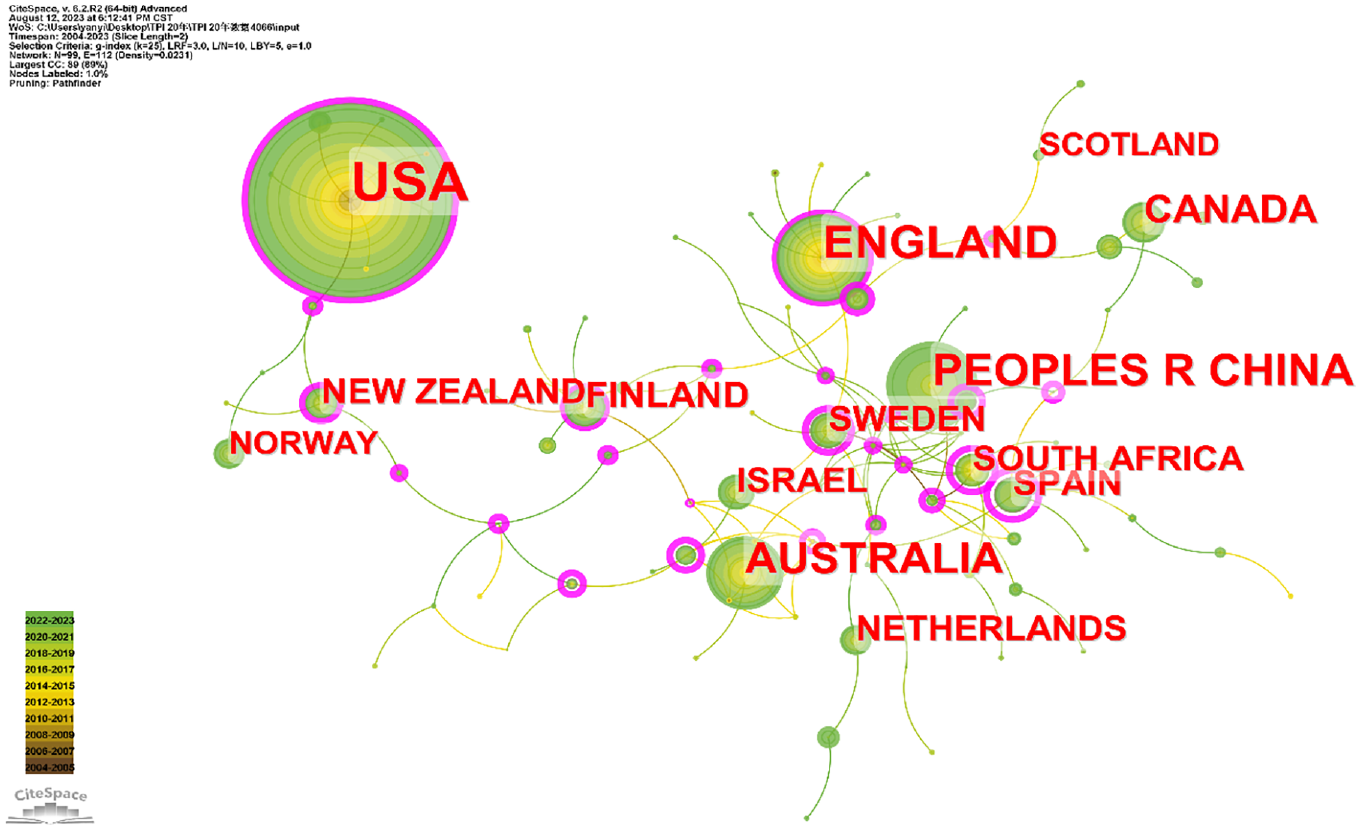
Country/region diagram.
List of Contributing Countries and Number of Publications (2004–2023).

Institution Analysis
Figure 4 and Table 2 evidently depict the University of London as the top contributing institution. Among the top 10 productive institutions, eight are located in the USA, only one was in Hong Kong, China.

Institution co-occurrence network.
Top Productive Institutions.

Journal Analysis
Journal analysis was conducted to assess which journals play a key role in the development process of the TPI field (Ren et al., 2023).
As shown in Figure 5 and Table 3, Teaching and Teacher Education ranked the first by accumulating the largest number of citations (1,930), which is almost twice that of the second rank Journal of Teacher Education (1,038). In terms of centrality, the most influential journals are Journal of Educational Psychology (0.28), Language Learning (0.2), Science Education (0.19), Sociology of Education (0.19), Action in Teacher Education (0.18). Another finding is that TESOL Quarterly ranks the sixth in terms of citation count and the seventh in terms of centrality, suggesting this journal is influential in TPI research.
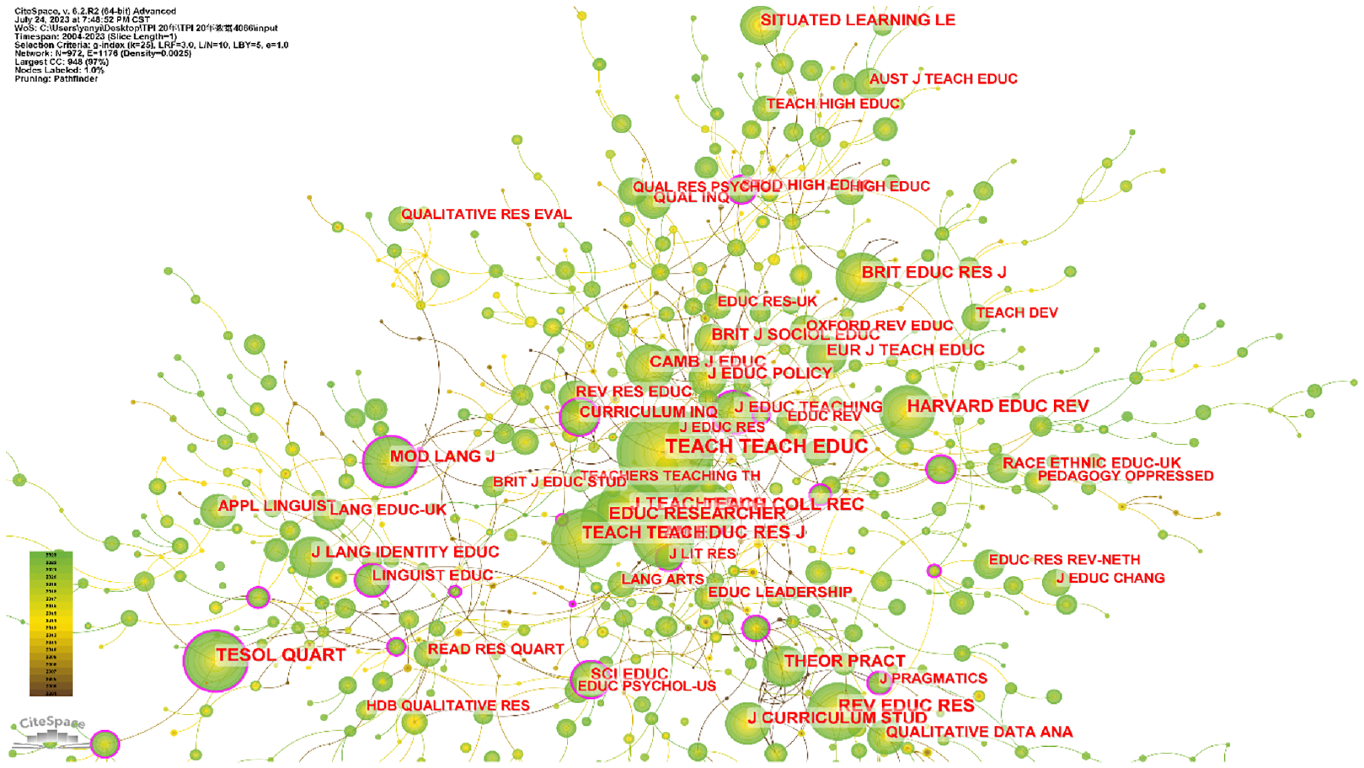
Visualization of cite journal network.
Top Journals on TPI Research.
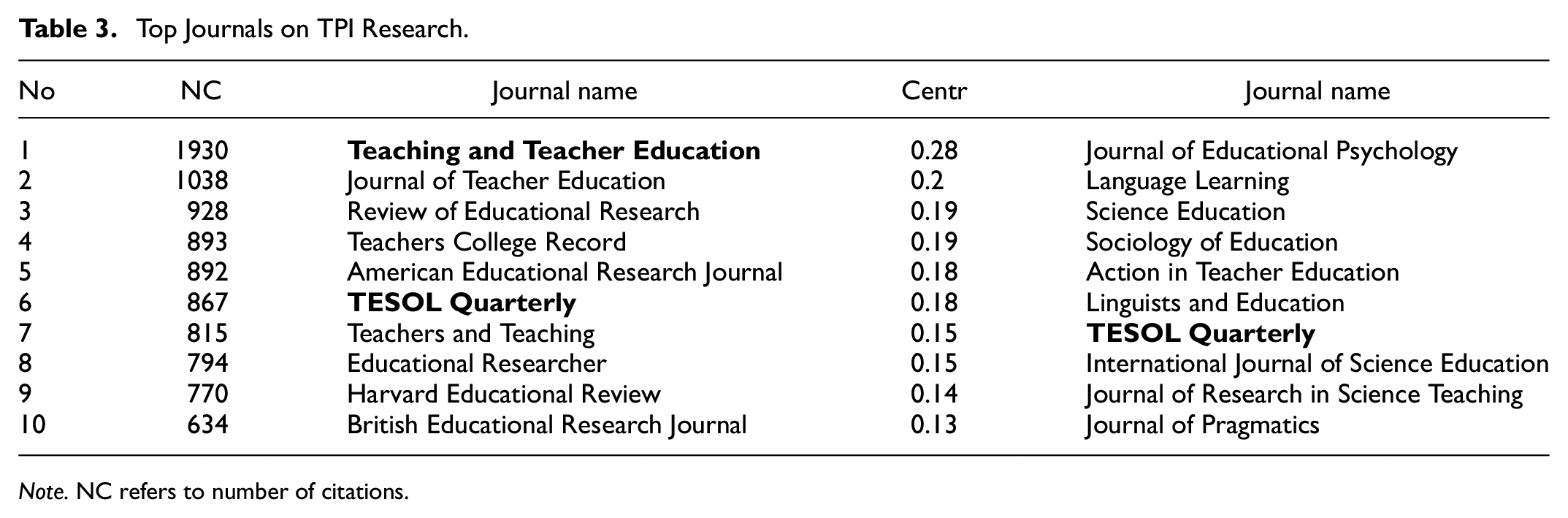
Note. NC refers to number of citations.
Author Analysis
This section presents the identification of top productive and cited authors respectively.
Top Productive Authors
The node type was set as author, an author co-occurrence network was generated (Figure 6). The node represents the author. The larger the node, the more publications the author has.

Top productive authors.
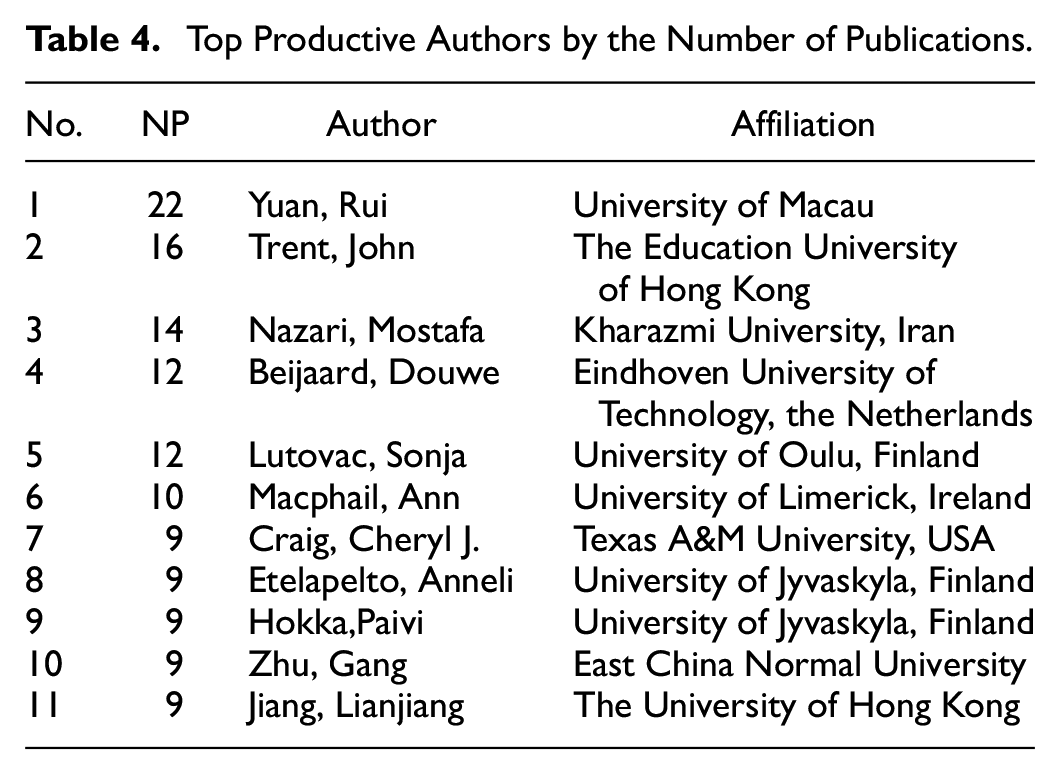
As can be observed from Figure 6 and Table 4, the top three productive authors are Yuan Rui (N = 22), Trent John (N = 16), and Nazari Mostafa (N = 14) from Macau, Hong Kong, and Iran respectively.
Top Productive Authors by the Number of Publications.
Top Cited Authors
The node type was selected as cited authors.
As seen from Figure 7 and Table 5, the top cited authors include Beijaard, Gee, Lave, Day, and Beauchamp. The second most cited author Gee’s definition of teacher identity as “being recognized as a certain kind of person in a given context” (Gee, 2000, p. 99) is also influential and widely drawn upon by subsequent studies (Donaghue, 2020; X. Wang & He, 2022). As expected, Lave and Wenger are top cited authors, their Community of Practice (CoP) theory is recognized as the most frequently cited theory in TPI research.

Author co-citation network.
Top Co-cited Authors by Citation Counts.

Research Evolution
Figure 8 is the keyword co-occurrence network. A total of 599 high-frequency words and 825 connection lines are presented. The higher citation frequency indicates greater influence, and keywords with a centrality value exceeding 0.1 has more influence. The nodes with high frequency and high centrality value are key nodes, meaning that they have strong influence in the whole network (Su et al., 2019).

Keyword co-occurrence network.
To reveal the research evolution, the timezone diagram of keyword co-occurrence was depicted in Figure 9. The graph shows keywords that have appeared at least 10 times. The specific year marked in green color indicates the time when the keyword first appears. The keywords in each circle were listed in order of frequency from high to low.

Timezone diagram of keyword co-occurrence.
The year 2004 witnessed the majority of keywords, including identity, teacher education, professional development, construction, context etc. A close look at the node details of construction shows that it appeared in 123 records from 2004 till 2023 (Figure 10). Relevant citing articles examined student teachers’ identity development (Lamote & Engels, 2010), beginning teachers’ identity tensions (Pillen et al., 2013), Chinese as a Foreign Language teacher identity negotiation and transformation (S. Yang & Han, 2022), EFL teachers’ identity reconstruction (Yüzlü & Dikilitaş, 2022). Other studies involved physical science teachers (Stears et al., 2012), and non-native English-speaking (NNES) teachers (Duran & Saenkhum, 2022; Park, 2012; Seo, 2023).
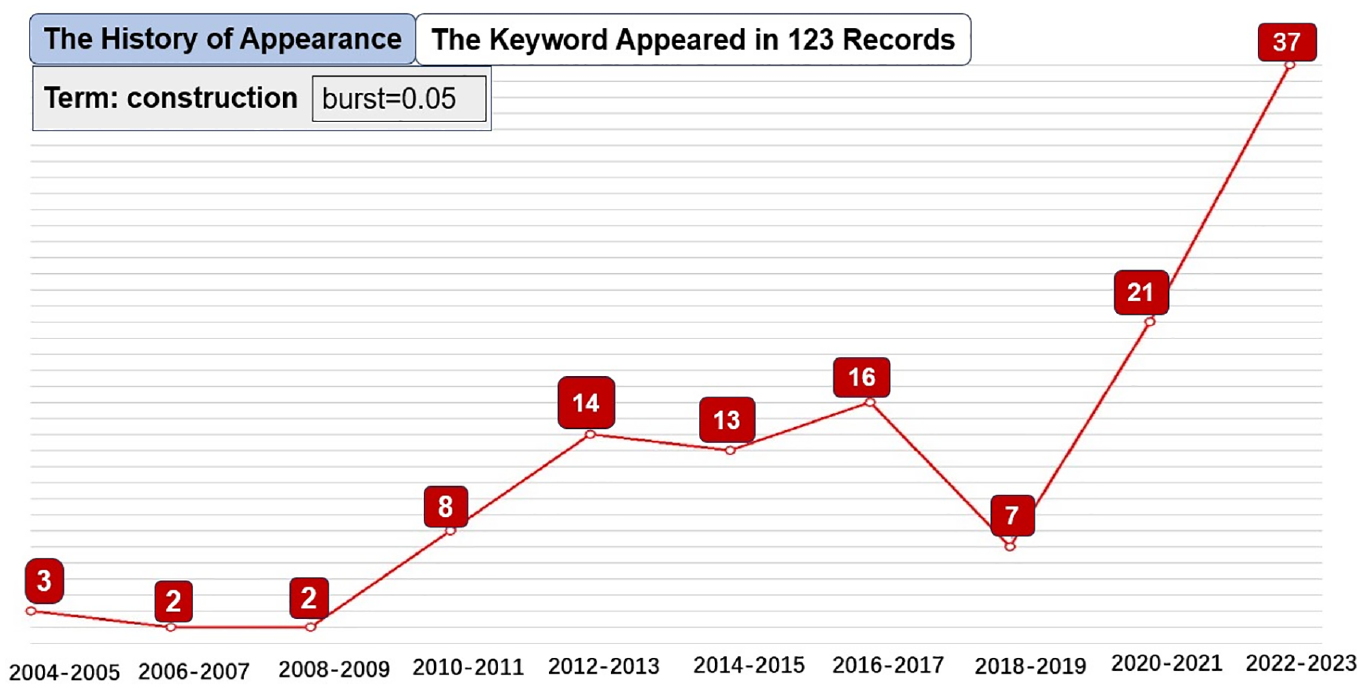
Node detail of the term “construction.”
The main topics on TPI from 2005 to 2007 include English, race, preservice teachers, beginning teachers, policy etc. From 2008 to 2009, researchers began to center around pedagogy, narrative inquiry and community of practice. New research topics revolving around higher education, challenges, teacher educators, math and physics and burnout, etc. emerged from 2010 to 2013. From 2014 to 2015, the research topics gradually evolved into socialization, professional agency, and action research. Between 2016 and 2019, topics shifted toward teacher agency, support, technology, early childhood, and job satisfaction. In the latest 3 years (2020–2023), research themes continue to center on teaching practicum and teaching. This period also revealed changing theoretical lens (self-determination theory and critical theory), and new topics such as emotional labor and stress.
Emerging Trends
Burst detection of keywords and references could be used to identify the emerging trends (C. Chen et al., 2012). Table 6 presents the top 10 keywords and cited references with the strongest citation bursts. Keywords or references that have strong values in the “Strength” column indicate critical milestones in TPI.
Top 10 Keywords and References in TPI (2024–2023).

As seen from the burst detection of keywords, teacher education ranks first both in terms of strength value (13.52) and the length of duration (10 years). Discourse analysis records the second highest strength value (10.13), and community of practice (CoP) has the second longest duration of 9 years. Earlier studies from 2004 to 2006 focus more on culture, as evidenced by keywords such as culture and multicultural education. In the year 2008 and 2009, the focus was shifted to discursive identity and CoP. Starting from 2010, discourse analysis, knowledge, conceptions, literacy and identity gained more attention. From 2021 onward, the keyword positioning theory became the new research focus, as it remains dynamic till 2023 (the latest year of study).
Among the top 10 references, Beauchamp and Thomas’s (2009) article Understanding teacher identity: an overview of issues in the literature and implications for teacher education has the highest strength value (21.9), in which major issues related to TPI were discussed, including the problem of defining the concept; the place of the self, and related issues of agency, emotion, narrative and discourse; the role of reflection; and the influence of contextual factors. Buchanan’s (2015) paper recorded the second highest strength value (16.99), in which TPI construction process was examined under the educational reform context in US. Earlier TPI researchers focused on negotiation of personal and professional self (Alsup, 2006), the contextual influences upon the ways in which new teachers’ identities are shaped and reshaped over time (Flores & Day, 2006), and the theorizing of TPI using the theory of dialogical self (Akkerman & Meijer, 2011).
Recent emerging trends can be observed in articles published from 2015 onward. Two publications are classic books for qualitative researchers: Merriam and Tisdell (2015) Qualitative Research: A Guide to Design and Implementation, and Saldaña (2015) The Coding Manual for Qualitative Researchers. The other two are articles that investigated teacher agency (Biesta et al., 2015; Tao & Gao, 2017). This shows that TPI is closely linked to teacher agency and that qualitative paradigm is still significant in TPI research.
Based on the discussion of burst detection of keywords and references, it is evident that teacher agency, positioning theory are the emerging trends. To detect more emerging trends, positioning theory is further analyzed by their major citing articles (Figure 11).
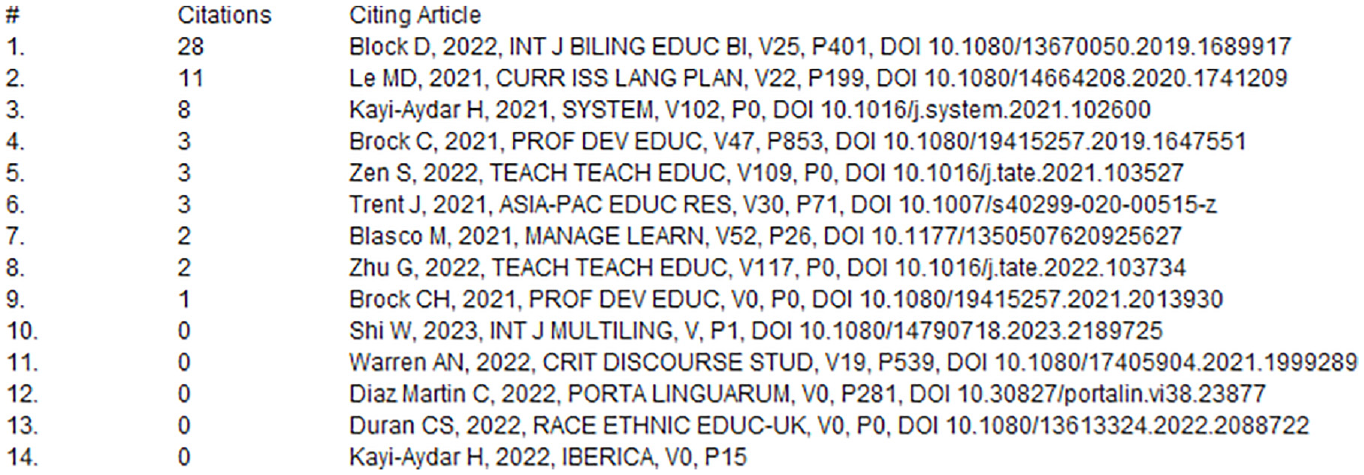
Citing articles of positioning theory.
By scrutinizing these citing references, it was found that scholars pay more attention to teachers’ response to and implementation of language policies, including EMI (Block & Moncada-Comas, 2022; Kayi-Aydar & Steadman, 2021), the role of leaders in teachers’ professional learning (Brock et al., 2021), teacher reflection (Blasco et al., 2021; Zhu & Chen, 2022). The citing articles also confirmed teacher agency as an important emerging trend (Le et al., 2021; Warren & Ward, 2022).
Discussion
Based on the above findings, a framework was drawn to capture the TPI research from 2004 to 2023 (Figure 12).
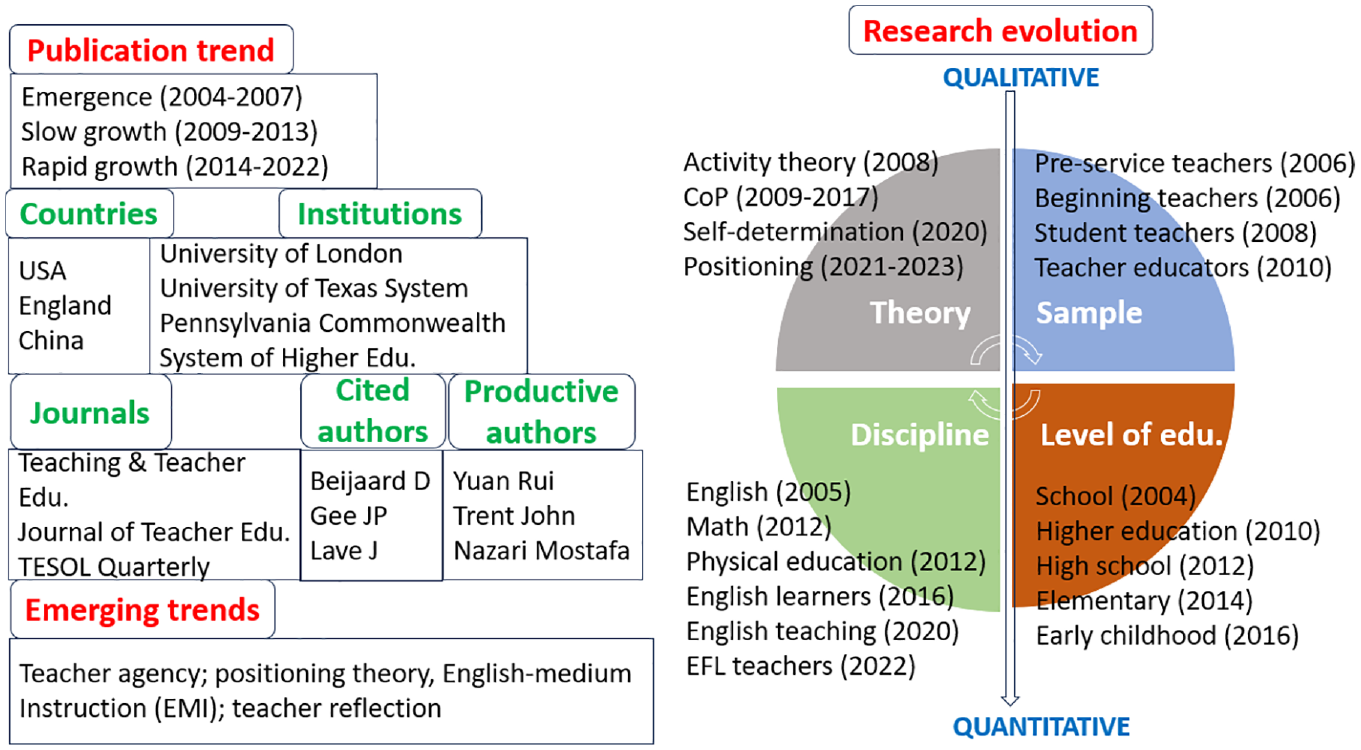
The framework for research on TPI (2004–2023).
Concurring Rodrigues and Mogarro’s (2019) observation that few papers were published before 2007, this study showed less than 60 publications per year before 2007. Additionally, the consistent upward trend of TPI publications from 2004 to 2021 was confirmed. Additionally, this study identifies the USA as the leading country in TPI research, with the largest number of publications and 80% of the top productive institutions. Interestingly, however, three top productive authors are from Macau, HK, and Iran, implying the worldwide scholarly attention to TPI.
The author analysis results support previous claims that review articles by Beijaard et al. (2004), Beauchamp and Thomas (2009), and Gee’s works are seminal (Izadinia, 2013; Rodrigues & Mogarro, 2019). In fact, Beijjard’s (2004) definition of TPI as a question of “who am I at this moment” and “who do I want to become” has left an imprint in the subsequent conceptualizations of TPI (Hao, 2011; Miller, 2009; Sang, 2022; Singh & Richards, 2006; J. Tang, 2015). Lave and Wenger were among the top author list due to their widely applied CoP theory to analyze TPI formation (Gu & Benson, 2015; Nguyen & Loughland, 2018; Vallente, 2020), transformation (Yuan & Burns, 2017), negotiation (Vega et al., 2021), development (Chu, 2021; Mehdizadeh et al., 2024), and construction (Cho, 2016; F. Teng, 2020; Trent & Lim, 2010; Yuan & Burns, 2017).
With regard to subject discipline, the names and scopes of top journals reveal that TPI has gained momentum in science and language education, which confirms Rushton et al.’s (2023) finding that science teacher identity literature is growing rapidly in the past decade. Keyword analysis further illustrates that math and physical education are also gaining scholarly interest. TPI development during the teaching practicum appears to be a persistent topic, as evidenced by the preservice teachers which appeared in 2006 and 2009, and teaching practicum in 2020. Another commonly investigated topic is TPI construction.
This study argues that the shift from qualitative to quantitative paradigm has taken place. While keywords such as construction (2004), narrative inquiry (2008), activity theory (2008), identity construction (2014), qualitative research (2014) support previous review findings that qualitative methodology is prominent (Carrillo & Flores, 2018; Izadinia, 2013; Xun & Zheng, 2014), the quantitative research method can be inferred by more recent keywords such as support (2016), and job satisfaction (2018). In terms of support, quantitative research methods were used (Andreasen et al., 2019; Bjorklund et al., 2020; Blank et al., 2016; J. Wang et al., 2020). Andreasen et al. (2019) used quantitative method examined the predicting effect of leadership support on teacher educator identity. With regard to job satisfaction, in addition to qualitative approach (Marschall, 2022), quantitative methods were also used in the relevant citing papers (Granjo et al., 2021; Han et al., 2022; Padmanabhanunni & Pretorius, 2021; Polizzi et al., 2021; Y. Tang, 2020). Specifically, Y. Tang (2020) used two-level modeling to examine the moderating effect of TPI on job satisfaction. Using structural equation modeling, Granjo et al. (2021) explored the relationship among TPI indicators. Han et al. (2022) found that TPI mediates between school atmosphere and job satisfaction.
In terms of research content, research initially centered on discussing the connotations of terms such as identity, teacher identity, professional identity, but then started to examine the influencing factors of TPI, as well as the process of TPI construction or development. Narrative inquiry and case study were frequently adopted. At this stage, pre-service teachers and beginning teachers were largely sampled. With the development of instruments to measure TPI, a methodological shift has taken place, with more studies examining the relationship between TPI and other constructs, work constructs such as job satisfaction, burnout and turnover intention were more frequently examined. The burst detection analysis reveals that teacher agency, positioning theory are current prominent trends, the citing articles of detected keywords further show that teachers’ response to language policy such as EMI, and teacher reflection are also the new frontiers.
Implications
With due reference to the findings and discussions, the recommendations for future TPI research are presented as follows: First, given the characteristics of samples recruited for extant studies, this study calls for more research on in-service teachers. Second, despite the methodological shift, the qualitative approach remains predominant, hence more quantitative and mixed-methods studies are needed. Researchers can use structural equation modeling to explore the antecedents and outcomes of TPI, as well as the relationship between TPI and other “new” constructs other than the frequently examined work constructs. This also calls for more studies on the measuring instruments of TPI, researchers could further develop and validate instruments for teachers of different subject matters, such as math and physics. Third, researchers have drawn upon various theories (CoP, activity theory, self-determination theory) to shed light on TPI. Future research should continue to tap into theories from other disciplines.
Limitations and Future Research Directions
Several limitations should be acknowledged. First, this study relied only on CiteSpace to generate visualizations. Future researchers could consider adopting alternative bibliometric tools such as R package and VOS viewer to complement the findings of this study. Second, this study is confined to the WOS database and SSCI-indexed papers, future researchers could incorporate ESCI-indexed papers, or use other databases such as Scopus, CNKI, EBOSCO, ERIC. Third, this study only includes publications in English language, future researchers are encouraged to conduct review studies by sourcing data from publications in other languages.
Conclusion
Using a bibliometric approach, the current study has identified the influential countries, institutions, journals, notable researchers, research evolution, and emerging trends of TPI research during the past 20 years. In summary, TPI research has deepened in terms of multiple theoretical lens (from sociocultural theory to self-determination theory), methodological shift (from qualitative to quantitative) and diversity of disciplines (English, math, physical education), and participants (pre-service teachers, student teachers, beginning teachers, teacher educators).
This study contributes to the existing knowledge domain by depicting the research development and helps researchers to learn TPI research in recent 20 years more directly. All of these research findings provide valuable information for future researchers to understand the research status and trends in the TPI domain.
Footnotes
Acknowledgements
The author would like to thank all the three anonymous reviewers for their invaluable insights.
Declaration of Conflicting Interests
The author declared no potential conflicts of interest with respect to the research, authorship, and/or publication of this article.
Funding
The author disclosed receipt of the following financial support for the research, authorship, and/or publication of this article: This work was supported by the Research Start-up Program of Hangzhou Dianzi University [Grant Number: KYS115624214].
Ethics Statement
None.

Data Availability Statement
Data will be made available on a reasonable request.