




Abstract
This study investigates turnover intentions within the context of Brazilian public organizations, focusing on Information and Communications Technology professionals. Moreover, the research highlights the factors influencing turnover intentions and underscores the critical role of remote work and compensation satisfaction, particularly salary, in shaping these intentions. The desire for the flexibility inherent in remote work and the emphasis on equitable and competitive compensation packages emerge as critical drivers for retaining technology professionals. In addition to these key factors, these findings underscore organizations’ need to adopt effective retention strategies, encompassing policies that endorse remote work alternatives and establish competitive compensation norms. By addressing these factors, Brazilian public institutions can cultivate a stable and committed technology professionals workforce. Consequently, this study enriches the understanding of strategic decision-making and human resource practices, offering pertinent insights for organizational enhancement.
Plain Language Summary
This study dives into the reasons why professionals working with technology in Brazilian public organizations might decide to leave their jobs. It turns out that the ability to work remotely and being satisfied with their pay, especially their salary, play a huge role in their decision-making. Essentially, the study found that these tech experts value the flexibility of being able to work from different locations and want to be fairly compensated for their skills, with a particular focus on their salary. The results highlight the importance of organizations offering options for remote work and making sure that their employees feel they are being paid fairly. These factors are not only crucial for keeping technology professionals on board but also contribute to creating a stable and dedicated workforce in the field. The study suggests that organizations, especially in the public sector in Brazil, need to put in place effective strategies to retain these valuable professionals. This includes establishing policies that support remote work and ensuring that the compensation offered is competitive. In a nutshell, the findings of this study provide useful insights for organizations looking to improve their decision-making and human resource practices. By addressing the specific needs and desires of technology professionals, such as the flexibility of remote work and fair compensation, Brazilian public institutions can foster a work environment that retains skilled IT professionals and ultimately enhances organizational performance.
Introduction
Information and communications technology (ICT) organizations face significant challenges related to scarcity of skilled personnel, decreasing production, elevated turnover intentions, and substantial annual revenue losses. Among these threats, the issue of high turnover intention garners remarkable attention. Thus, a critical need arises to delve into the factors influencing the turnover intention of these professionals (Al-Dalahmeh et al., 2020; Farooq et al., 2022).
The attraction and maintenance of ICT experts remain a persistent concern for organizations and researchers. Job satisfaction and organizational commitment exert a substantial influence on turnover intention. These professionals demonstrate an elevated inclination toward turnover, driven by work fatigue and stress (Moquin et al., 2019).
The turnover rate among ICT professionals stands significantly higher compared with other sectors. Critical factors encompass teamwork, career management, salary, and compensation plans. These variables directly influence the turnover intention observed within the ICT professional domain. These components positively impact employee turnover and retention intentions while incorporating job satisfaction, commitment, security, and recognition indicators (Kumar, 2022).
In an extensively interconnected world, ICT professionals exhibit remarkable mobility. With the ability to operate from any location equipped with an Internet connection, developers possess the potential to switch jobs effortlessly. Alongside this adaptability, it is a prevalent practice for developers to transition to a new organization every few years (Miller, 2018).
Aguiar Do Monte (2012) investigated the relationship between job dissatisfaction and labor turnover utilizing data from the monthly employment survey in Brazil, which provides detailed information on individual and job characteristics. Despite numerous studies and methodologies for assessing job satisfaction, there is a scarcity of research employing behavioral variables as measures of job satisfaction. Furthermore, there is a notable gap in the Brazilian labor market literature regarding the connection between job satisfaction and labor turnover. The results align with findings in the literature from other countries, underscoring the significance of job satisfaction in predicting future mobility, particularly in job-to-job turnover.
A distinctive feature of the Brazilian labor market is its high turnover rate, consistently placing Brazil among the countries with the highest turnover rates in international comparisons (Gonzaga & Cayres Pinto, 2014). Brazil experienced robust economic and labor market performance in early 2000, with an upswing in formal employment and declining unemployment rates (Corseuil et al., 2014). Despite these positive labor market trends, there was a simultaneous stagnation in labor productivity during this period. This paradox, in which improved employment metrics coincide with stagnant productivity, suggests a nuanced interplay of factors and highlights the need for a comprehensive study of the complex relationship between turnover dynamics and productivity in the Brazilian context.
da Rocha et al. (2019) investigated the impact of high job market turnover on Brazilian manufacturing firms’ productivity from 1996 to 2013. Initially, the study provided a comprehensive description of the turnover rate’s behavior in the Brazilian formal job market over recent decades. The consistently high turnover rate was a significant impediment to productivity growth. Drawing from the learning-by-doing literature, which posits that intra-firm productivity gains stem from efficiency improvements achieved through the accumulation of learning during the production process, the study proceeded to estimate a learning measurement. This metric aimed to capture the loss of human capital from turnover and its subsequent effect on productivity.
The continuous renewal of knowledge is essential for ICT professionals and critical for maintaining the organization’s competitiveness. To maintain professional competence, ICT professionals must remain updated on technological advancements and uphold their knowledge base. This renewal process requires continuous learning, routine maintenance, enhancement, and expansion of knowledge (Sharma & Stol, 2020).
Disruptive technological changes pose career-related hurdles for ICT professionals. They are consistently enhancing their knowledge and technology-oriented skills to sustain their expertise. This constant pressure to acquire knowledge often results in an augmented workload. A workload surge can amplify work fatigue among these specialists (Gaudioso et al., 2017).
Retaining professionals is a persistent challenge in organizational environments, especially in the ICT sector, characterized by labor shortages in the Brazilian context (Pereira et al., 2021). Understanding the factors influencing voluntary turnover or intention to leave is crucial for organizations to design effective Human Resources strategies to retain skilled professionals (Andrade et al., 2020). Addressing these considerations is essential for organizations to develop and implement effective strategies to mitigate turnover and retain a talented workforce.
Literature Review
Employee turnover is the reduction in the organization’s workforce resulting from departures. However, this concept is related to the conscious willingness to depart from the organization. The repercussions of turnover intention encompass reduced performance and a decrease in productivity. These adverse outcomes contribute to a decreased inclination among employees to remain with the organization over an extended period. Recent investigations have directed their attention toward comprehending employee turnover intention across diverse sectors (Sathyanarayan & Lavanya, 2018). In the IT sector, a high rate of turnover intention has been noticed due to different challenging issues such as work stress, lack of job satisfaction, and inefficient compensation plans (Al-Dalahmeh et al., 2020).
The effort to retain skilled employees influences the organizational and workplace environment. A high-quality work environment that fosters career growth, training, and learning opportunities contributes to heightened performance and productivity. ICT employees seek fresh career prospects within their current workplace or at prominent, well-known companies (Sathyanarayan & Lavanya, 2018).
Furthermore, turnover intention refers to the employee’s desire to seek new job opportunities or switch companies voluntarily. Gupta (2020) highlights the significance of identifying factors that influence ICT professionals’ decisions regarding turnover. The study concludes that turnover among technology professionals is associated with organizations failing to meet the career anchors, with lifestyle, organizational stability, and learning incentives.
The turnover rate of ICT professionals has become a significant challenge for organizations worldwide. Conversely, organizations must retain their ICT personnel since they possess valuable tacit knowledge about the internal workings of systems. The turnover of these professionals results in direct expenses for companies in terms of recruiting and training (Murali & Aggarwal, 2020).
ICT professionals have high job mobility. The reasons for this mobility are multifaceted, stemming from the inherent nature of ICT professionals who constantly need to acquire new knowledge and confront new challenges. Other factors include the project-oriented nature of ICT work and the competitive and demanding labor market that offers various alternative work opportunities (Armstrong et al., 2015).
The high rate of job turnover in Brazil, identified as a constraint to labor productivity growth (Corseuil et al., 2014), is a worrying trend particularly evident in the last decade. The impact of this phenomenon on productivity at the micro level is articulated through two main reasons. First, high turnover harms the accumulation of knowledge at the firm level, thereby affecting organizational learning. Second, the effects of high turnover extend to lower labor productivity due to reduced commitment and investment in training, a trend observed at both the worker and the firm level. In such a context, future benefits are significantly discounted, highlighting the multifaceted relationship between turnover and productivity in the Brazilian labor market. This finding underscores the urgency of targeted policies and strategies to mitigate the adverse effects of turnover on knowledge dynamics and, ultimately, to promote sustainable productivity growth (Gonzaga & Cayres Pinto, 2014).
Ramalho Luz et al. (2018) conducted a quantitative investigation employing a case study methodology within the information technology and communication sector in Porto Digital, Northeast Brazil. Data were analyzed using 172 self-administered forms with closed Likert scale questions and an open questionnaire. The study explored organizational commitment and job satisfaction dimensions, correlating these with turnover intentions. Significant correlations were found between affective and normative commitments, satisfaction with pay, promotions, and the nature of work, all influencing the intention of negative turnover. Notably, age was the sole demographic factor negatively correlated with turnover intent. Multiple regression analysis highlighted affective commitment, satisfaction with salary, and normative commitment as the primary variables impacting turnover intention.
Disruptive technology innovations present career-related hurdles for ICT professionals. They must consistently enhance their knowledge and skills in technology to maintain their competence. This constant need for knowledge acquisition often results in an augmented workload. The rise in workload can potentially contribute to increased work exhaustion among ICT professionals (Venkatesh et al., 2020).
Certain employees may feel overwhelmed by work due to the efficiency with which work demands via modern technologies. This technological burden is generally known as techno-overload. It is crucial to examine such techno-stressors because they can indirectly result in increased work pressures, perceptions of excessive workload, information fatigue, frustration, job burnout, poor job performance, intentions to quit, and turnover (Tarafdar et al., 2013)
Elevated levels of perceived difficulty experienced when dealing with technology can escalate the workload. The experts must dedicate extra time and effort to update their knowledge and sustain their work in a particular technology. ICT professionals’ self-confidence in acquiring skills related to newer technologies may influence their assessment of a technology (Rong & Grover, 2009).
Development team members are among the most critical factors in producing high-quality software applications. Whenever an organization hires a new software developer, it becomes imperative to familiarize them with its dynamics, procedures, and culture. Recruiting individuals with the appropriate skills and compatible personality traits is significant for the success of organizations and their projects. However, recruitment comes with a substantial cost due to the learning curve that every employee must navigate before reaching optimal productivity (Asfa & Gandomani, 2023).
The increase in turnover will result in lower productivity (Huffman et al., 2014). The disruption of performance led to the loss of efficiency caused by the voluntary departure of the professional and the cost of having a vacant position while searching for a replacement (Juhdi et al., 2013). In recent years, interest in understanding and managing the turnover of various employee groups has intensified. The interest in understanding the mobility of specific groups reflects a belief that the loss of professionals is a difficult-to-control factor, costly to replace, and diminishes an organization’s status when its professionals choose to leave (Call et al., 2015; Kehoe et al., 2018).
Massoni et al. (2019) examined voluntary turnover among software developers in Brazil. The study has explored the multifaceted nature of voluntary turnover, considering potential factors such as workplace issues, personal career decisions, and their connection to job characteristics, Job satisfaction, and work exhaustion. The research has presented a quantitative study involving 78 departed software developers. On average, the developers exhibited low to moderate levels of autonomy and satisfaction, with mild exhaustion before leaving their positions and a perception of high task significance. Notably, testers reported significantly lower job satisfaction compared to programmers. These findings have provided a basis for formulating hypotheses to guide studies in this domain.
The focus on retaining top talent is not new, but its importance is increasing. Talent is the foundation for creating an organization capable of innovating and making changes for a competitive advantage (Gallardo-Gallardo, 2018). Globalization increases the need to locate and retain the best talent, as employers now compete for regional and global talent with no geographical barriers, requiring a workforce with skills and readiness to start activities in other organizations (Farndale et al., 2010).
Turnover rates among ICT professionals are increasing globally (Arshadi & Shahbazi, 2013). In this challenge, organizations find it increasingly difficult to retain their professionals (Ertürk & Vurgun, 2015.; Woźniak & Łubieńska, 2023). Employee replacement is costly regarding staff turnover, training new professionals, system development, productivity, and quality (Chang, 2010; Gunasekaran et al., 2008).
Gaining control over this issue is essential for those involved, as it is associated with various failures in ICT systems and projects and is related to the inadequate implementation of Information Systems in organizations (Charalampous et al., 2019; Hung, 2009).
The ability of professionals to perform their tasks remotely, away from their workplace, has become a virtually ubiquitous feature, promising to bring significant benefits to both workers and organizations. Remote work is becoming a trendy way for companies to retain professionals, allowing them to alleviate the growing demands of work while still meeting personal and family needs. Due to advancements in ICT that facilitate remote work and render it achievable, many companies partially embrace it (Ferreira et al., 2021; Shifrin & Michel, 2022).
Employees working remotely away from the conventional workplace has become a global phenomenon. This practice is possible due to the driving force of technological means available to individuals and organizations (Hoeven & Zoonen, 2015).
When professionals can perform their activities remotely, they become more satisfied with their work, more committed to their organizations, and experience less stress related to the daily office routine and commuting (Kelliher & Anderson, 2010).
The ICT sector faces considerable employee turnover, exceeding that of other private industries. This elevated turnover rate imposes a significant financial strain on ICT companies, leading to productivity loss and costs growing related to recruiting, selecting, and training new personnel. The profound impact of turnover on businesses has attracted substantial research and analysis within the management and organizational literature.
Method
This research undertook a systematic review encompassing 62 peer-reviewed articles published in indexed journals. The selection of the Preferred Reporting Items for Systematic Reviews and Meta-Analyses (PRISMA) guidelines as the method for conducting the review in this study is well justified. Subsequently, PRISMA is an established and widely accepted methodological framework to improve the transparency and completeness of systematic reviews and meta-analyses. It provides a comprehensive and structured framework covering all essential aspects of a review, from selecting studies to extracting and synthesizing data. The guidelines aim to improve systematic reviews’ transparency, reproducibility, and methodological quality. This choice of methodology is suitable to minimize biases and errors in the review (Moher et al., 2009; Page et al., 2021).
Following this, the PRISMA statement, initially designed for systematic reviews assessing health interventions, proves versatile in its application to diverse review objectives and study designs. While its checklist items are well-suited for reports on interventions beyond the health domain, they also find relevance in systematic reviews with objectives other than intervention evaluation, such as those exploring etiology, prevalence, or prognosis. PRISMA accommodates reviews with or without synthesis, making it adaptable for pairwise meta-analyses or single-study reviews (Page et al., 2021; Rethlefsen et al., 2021).
This systematic approach facilitated the comprehensive inclusion of pertinent literature, underscoring the utmost relevance. An essential aspect of our methodology involved explicit inclusion and exclusion criteria (Brendel et al., 2020). This critical step ensured that only the most pertinent articles were deemed suitable for in-depth analysis. Following this, this selection process significantly bolstered the reliability and validity of our study.
This research has investigated the turnover intentions of Information and Communication Technology (ICT) professionals in Brazilian public organizations, specifically focusing on the context of the Brazilian Audit Courts. The primary objective was to identify and analyze the drivers of turnover among IT professionals from the perspective of their managers. Given the increasing importance of ICT professionals in the public sector and the challenges associated with retaining talent, this research addresses a timely and critical issue. The study has outlined intermediate objectives that aim to uncover the key characteristics of the rotation processes and identify the barriers to retention within the Brazilian Audit Courts, providing a comprehensive understanding of turnover dynamics.
The study has analyzed the influence of administrative decisions and organizational factors on staff turnover intentions. Subsequently, this approach contributed to the academic view on turnover and provided relevant insights for managers in Brazilian public institutions. Following this, this study enhanced the understanding of organizational behavior and management. The research questions and objectives were clearly defined, emphasizing theoretical and practical contributions.
Idell et al. (2021) conducted a study including 793 organizations representing 23.3% of the US GDP. They analyzed turnover intentions from the participants’ perspective, comparing the importance of trust that ICT employees have placed in their colleagues versus their general distrust in the organization. Subsequently, the authors formulated a model that investigated the main issues related to professional turnover, identifying the dimensions that influence the departure of professionals.
Building on the findings of Idell et al. (2021), we have developed a framework to investigate the turnover intentions of ICT professionals in Brazilian public organizations. This framework is comprised of six dimensions, as illustrated in Figure 1.

Framework model.
D1—Satisfaction With Compensations
Employees’ job satisfaction is essential in motivating and achieving organizational goals (Platis et al., 2015). Job satisfaction reflects achievement related to various aspects of the work environment, such as working conditions, benefits, satisfaction with supervisors, and relationships with co-workers.
Alam and Asim (2019) emphasized that job satisfaction stems from the perception of one1’s achievements in the workplace. Therefore, it is essential to actively create and nurture job satisfaction as a fundamental element in fostering a positive work environment and employee commitment.
D2—Professional Obsolescence
Setor et al. (2015) have established the relationships between the threat of professional obsolescence and problem-focused and emotion-focused coping mechanisms. The study aimed to advance the theoretical comprehension of professional obsolescence and offer practical insights for ICT professionals.
Retaining skilled professionals is a pressing concern for organizations due to the potential impact of employee turnover on service quality and associated costs. Harden et al. (2018) employed the social exchange theory framework to construct a model examining the intricate relationships among turnover intentions, organizational commitment, and factors particularly relevant to ICT professionals.
D3 Trust in the Supervision
Zeffane and Bani Melhem (2017) conducted a comparative analysis examining the effects of job satisfaction, trust, and perceived organizational performance on turnover intentions in public and private sector organizations. The study results indicate that public sector employees have higher job satisfaction, trust, and lower intentions to leave their organizations than their private sector counterparts. Trust in a supervisor and affective organizational commitment were identified as factors negatively impacting turnover intentions. The practical implications highlight the importance for managers to prioritize cultivating trust between managers/supervisors and subordinates as a critical criterion in management promotion, recruitment, and hiring processes (Borges, 2013).
Grandy (2009) argues that a critique of new public management focuses on its association with the efficiency typically associated with private management. The concept of efficiency in public organizations fundamentally differs from that of private organizations, as the latter operates in a competitive environment with a primary focus on profit maximization. In contrast, public organizations may prioritize social values over efficiency. Several other differences between public and private organizations have been highlighted, including differences in objectives, organizational structure, motivation, and human resource management.
D4—Trust in the Team
Trust is one of the main characteristics of any working relationship and a construct of great interest to many researchers (De Jong et al., 2016). Despite several studies, the dominant assumption in the literature is that team trust benefits organizations’ performance (Braun et al., 2013).
Working in a team is significantly different from working in a hierarchical relationship. Team members must discover and adapt approaches to develop team spirit, even in the face of external pressures. Once these relationships are established, the result may be a superior performance from each party. Consequently, a trust-based team generates practical cooperation, and as a result, organizational performance is strengthened (Bulińska-Stangrecka & Bagieńska, 2019).
D5—Distrust in the Organization
Human relationships, such as interpersonal trust, can be critical in the organizational environment. Therefore, understanding the dynamics of trust and distrust within social networks is essential (Marineau, 2017). Corporate distrust has been linked to higher turnover rates and lower job satisfaction. Employees often exhibit higher turnover intention, absenteeism, increased stress, and reduced productivity. Management intervention and improving employee relations are crucial in creating a trusting workplace (Çınar et al., 2014).
Obeng et al. (2020) observed that trust significantly influences turnover intention. These findings underscore critical points: While job satisfaction is essential to determine employee turnover intentions, the impact of trust or distrust is also substantial. Positive supervisor support alone may not inherently reduce the likelihood of turnover intentions. Positive feelings of trust must accompany supervisor support to reduce turnover intentions effectively.
D6—Remote Work
The rapid development of information and communication technology has caused several changes in professional life (Allen et al., 2015). Professionals can access work anywhere and anytime through laptops, tablets, and smartphones (Maitland & Thomson, 2014).
From the moment organizations began to provide remote work, this became a facilitator for recruiting professionals in the technology sector. The opportunities for permanent remote work, combined with the high salary offers offered by the market, encouraged the intention of professionals to rotate (Pereira et al., 2021). Remote employees have become a global phenomenon. This practice is possible due to the advancement of technological means available to individuals and organizations (Brynjolfsson et al., 2020).
The research provides actionable knowledge for organizational leaders to address the challenges of retaining and managing ICT talents. By clearly stating its research questions and aims and integrating theoretical frameworks, this study significantly contributes to the academic debate on turnover dynamics. It thus advances our understanding of this complex interaction between human resources, technology innovations, and organizational success.
A semi-structured interview was conducted to gather qualitative data from representatives of the ICT Sector of the Courts of Accounts in Brazil. The research involved all 33 courts of Account existing in Brazil.
Regarding demographics, 83% of the individuals in the study were identified as male, and half of the participants hold a master’s degree. Furthermore, 83% of the participants possess more than 15 years of experience.
The survey encompassed several critical areas, beginning with demographic inquiries such as name, age, profession, and residence. Subsequently, the focus shifted to probing turnover intentions among IT professionals. Participants were asked to share their observations on the movement of IT employees seeking similar or better opportunities and to identify the primary factors driving professionals in this sector to explore new prospects. Furthermore, the study sought insights from individuals who had left their positions, prompting them to elaborate on the reasons behind their decisions.
Respondents were asked about their perceptions of employee satisfaction regarding net salary and overall compensation levels in investigating satisfaction with compensations. The aim was to discern whether remuneration contributes to retention or propels attrition.
The questionnaire also delved into the perception of obsolescence, aiming to identify critical characteristics influencing turnover related to concerns about technical obsolescence. Participants have expressed their understanding of intrinsic characteristics within the public sector concerning technological innovation and employee retention in the technology field.
Questions about trust in management and team members have measured trust as a factor in retention. Participants were asked to assess whether employees trust their managers and feel comfortable in the workplace. In addition, the survey sought insight into overall trust in the team and whether the working environment inspires trust.
In exploring potential barriers to retention, questions addressed perceptions of organizational fairness and honesty. Respondents have provided their perspectives on whether employees feel well treated and honestly within the organization, identifying potential points of discontent.
Finally, the survey delved into perceived alternatives, specifically remote work opportunities. Participants have shared their perceptions of the remote job market and whether professionals quickly secure remote employment opportunities.
The collected data served as the foundation for the analysis presented in this study. By employing qualitative analysis methods and integrating the revised theoretical framework, the research aimed to address the following question that motivated the study: Investigating Turnover Intentions of ICT Professionals in Brazilian Public Organizations
Results and Analysis
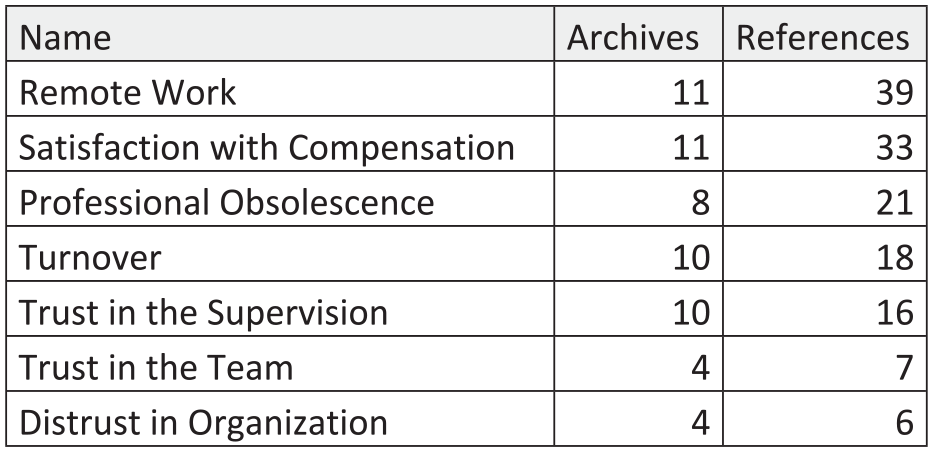
After transcription, coding was performed using the Nvivo application. As a result, Figure 2 below illustrates the coding of these interviews, the number of interview files in which each code appeared, and the total number of references ordered from the highest to the lowest number of references.
Coding of interviews in Nvivo.
The table shows that the codes related to “Remote” and “Satisfaction with Compensation” stand out from the others, being the main protagonists in the responses obtained through the interviews. Figure 3 represents the word cloud generated considering the 20 words with more than five letters used most frequently, considering all the interviews and responses to the questions.

General word cloud.
The collected evidence was analyzed to identify and analyze the impacts of remote work and compensation on the turnover of technology professionals in the Courts of Accounts in Brazil, under the perception of their managers, through interviews based on the theoretical framework constructed by Idell et al. (2021), which point out some issues as being the most relevant for favoring the turnover of ICT professionals, such as Satisfaction with Compensation, Professional Obsolescence, Trust in the Administrator, Trust in the Team, Distrust in the Organization, and Remote Work. This implies that according to Urbancova and Linhartova (2011), employees of an organization are considered the main competitive advantage and the most critical asset. Employees who leave an organization take with them all the knowledge acquired. The loss of ability is a potential threat to the continuity of an organization’s services. Some interviewees also considered this threat.
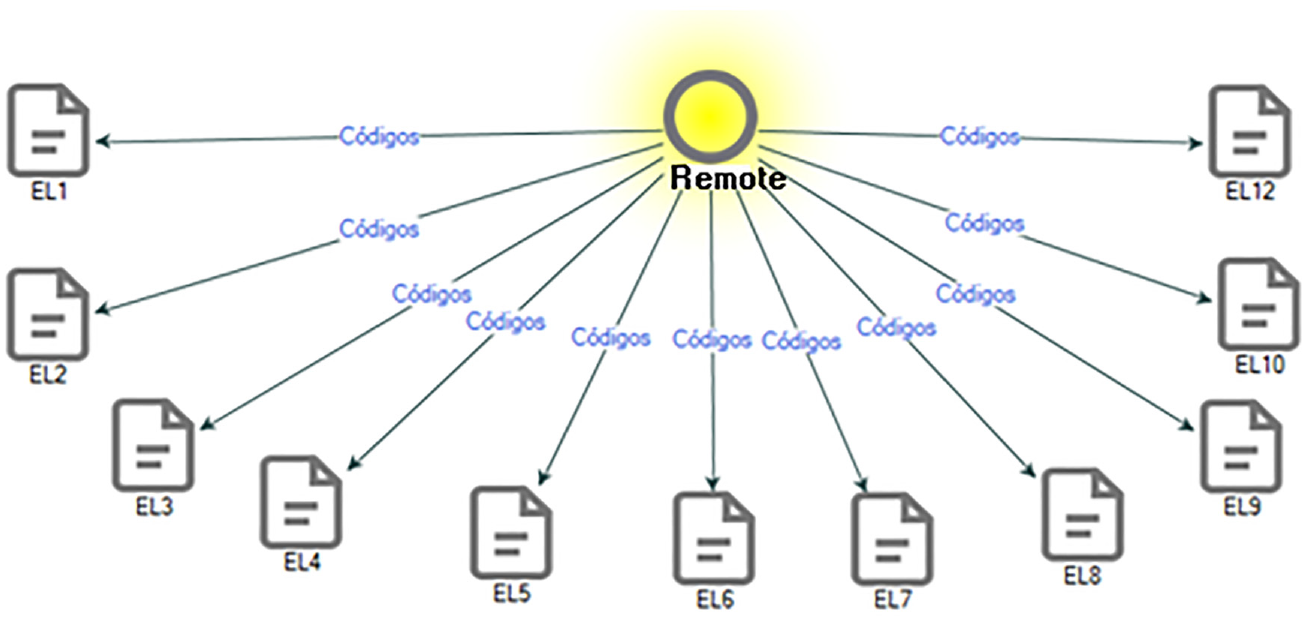
Remote work was firmly pointed out as one of the factors that most influenced the intention of turnover of professionals and was observed in almost all of the interviews conducted, as shown in Figure 4.
Interviews that mentioned remote work.
The interviews highlight the importance of remote work and its impact on employee turnover. Many interviewees reported that employees left their positions due to a lack of flexibility and a change in management that restricted the possibility of hybrid or remote work. The threat of returning to in-person work also caused concern and led many to consider leaving their positions. Those who chose to leave found more attractive opportunities in the market, where remote work was widely adopted.
Remote work has become an essential reality, and companies that have not adapted risk losing their professionals to organizations that offer this flexibility. The market dynamics have changed, making it challenging to find professionals willing to work in person, while remote work attracts more candidates. This shift in professional preference puts companies in difficulties in hiring and retaining talent, highlighting the need to adopt remote work as an urgent measure. Therefore, the issue of remote work is a central concern in the interviews, emphasizing its impact on professionals’ decisions to leave their jobs and on companies’ hiring and talent retention strategies.
Figure 5 below presents the interviews that mentioned satisfaction with compensation as an essential point to be considered in the research.

Interviews that mentioned satisfaction with compensation.
Among the interviewees, the issue of satisfaction with compensation, treated in the context of perception of financial matters, was portrayed as a highlight point related to the high turnover rates of ICT professionals faced by the Courts of Accounts.
The interviews reveal that dissatisfaction with remuneration is a significant factor that led to the departure of professionals. Many individuals received offers of higher salaries and attractive benefits in the market, including proposals in foreign currency. The Court of Accounts could not compete with these offers, resulting in the loss of qualified talent. The lack of an attractive salary has become a crucial issue in retaining professionals, and the expanding market has further increased global competition, making it difficult for the Court of Accounts to retain its professionals. The general perception is that salary has become the most relevant factor in the decision to change jobs, and the lack of adequate financial compensation has negatively impacted the retention and replacement difficulty of professionals at the Court of Accounts.
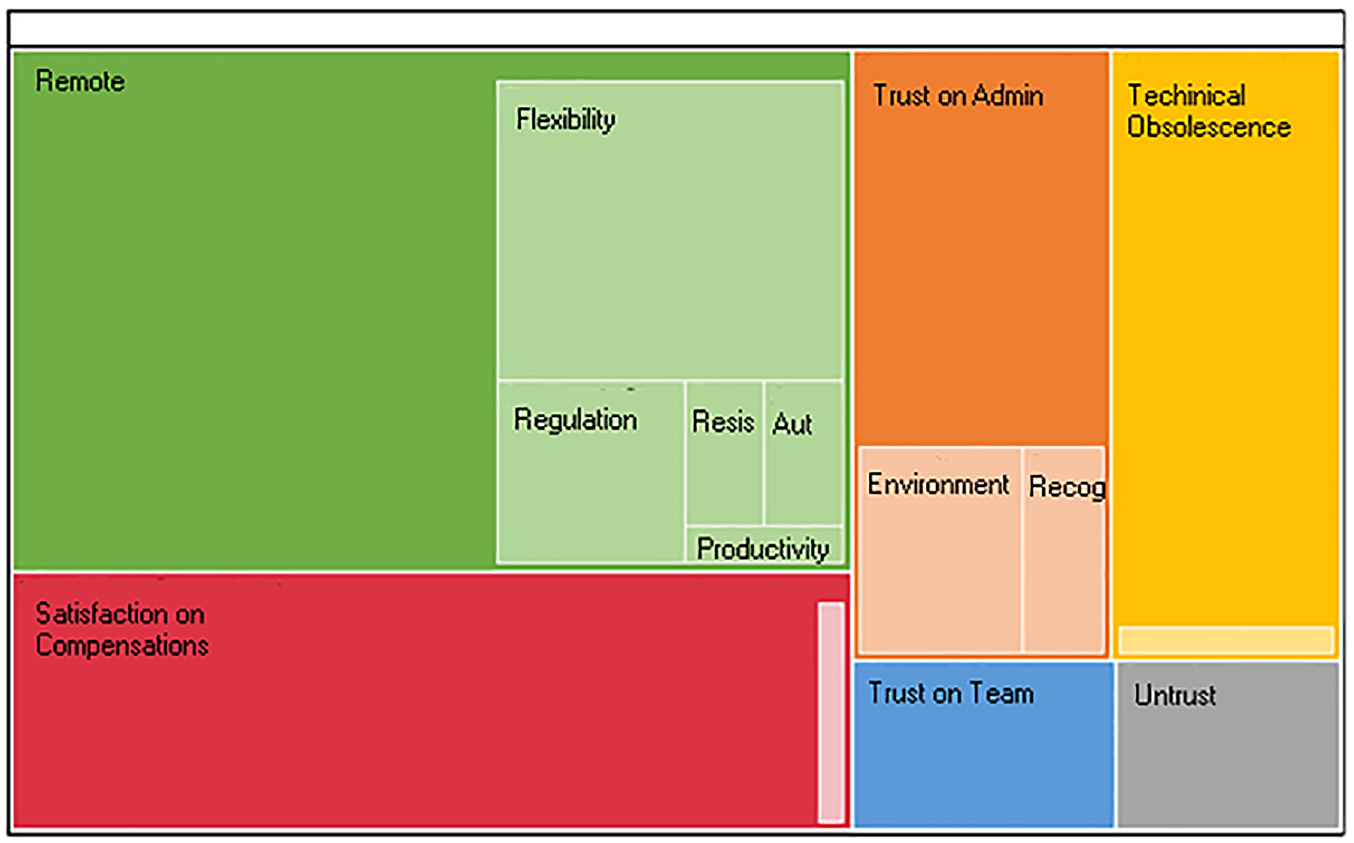
After the treatment and analysis of the evidence in this research, through the transcription of the interviews for subsequent reading, organization, analysis, and coding of the groups, it was possible, with the help of the NVIVO software, to represent the Coding Hierarchy in Figure 6.
Coding hierarchy.
The most cited topic by the interviewees was “Remote,” which was considered the main point of intention for turnover in organizations due to the heating of the technological market and various offers free of geographical barriers, allowing the professional to work independently of their location.
Some points regarding remote work have been clarified by the interviewees, such as the advantage obtained with the flexibility and autonomy offered in the remote work environment, which allows the employee to perform their activities in a self-managed way, organizing their time and workplace according to their needs. The need for regulation in institutions was also highlighted so that the implementation of remote work can be defined in a regulatory manner without depending on the individual action of the holder at the time. Regulation could bring a security that does not exist in some organizations interviewed. Many interviewees cited increased productivity by professionals who worked remotely without harming activities previously performed in person, highlighting that technology professionals could work remotely.
The significance of compensation satisfaction and remote work in influencing turnover intentions, aligning with the findings of previous research (Chaudhry et al., 2011). However, our study aims to enhance and extend these contributions by incorporating nuanced perspectives and providing actionable recommendations for organizations.
In alignment with the insights from Lemos et al. (2021), our study emphasizes the advantages of remote work. Beyond the conventional benefits of flexibility and cost savings, our research explores the intersectionality of remote work with domestic and family responsibilities.
The interviewees heavily referenced satisfaction with compensation as an issue that did not offer many risks regarding turnover intention. Still, when combined with remote work, it began to culminate in the voluntary departures of professionals from various organizations. The interviewees cite the heating of the market as a factor that enabled the search for greater satisfaction with compensation, primarily financial.
Conclusion
This study contributes to the existing literature by illuminating the critical role of turnover intentions among ICT professionals in shaping workforce dynamics within Brazilian public organizations, diverging from previous research predominantly centered on motivation and turnover in the private sector. By examining challenges faced by the Brazilian Court of Accounts in retaining ICT professionals, the study unveils broader trends and dynamics prevalent in the ICT workforce across public organizations in the country. This shift in focus enhances our understanding of turnover dynamics, offering valuable insights into ICT professionals’ challenges in Brazil’s public sector, particularly during the post-COVID-19 era. The turnover observed in the Brazilian Court of Accounts is a representative indicator of the intentions of ICT professionals in public organizations across Brazil.
The findings of this study highlight the significance of turnover intentions among ICT professionals in shaping the workforce dynamics within Brazilian public organizations. The challenges faced by the Brazilian Court of Accounts regarding the turnover of ICT professionals reflect the broader trends and dynamics observed in the ICT workforce across various public organizations in the country.
Based on this context, turnover intentions among ICT professionals in Brazilian public organizations are influenced by two primary factors: remote work and satisfaction with compensations, such as salary.
The data collected from the interviews provided valuable insights into the determinants contributing to a heightened likelihood of ICT professionals seeking new job opportunities. It became evident that remote work played a significant role in the turnover intentions of ICT professionals. The flexibility and freedom offered by remote work arrangements were seen as appealing options that allowed professionals to explore new opportunities that better suited their preferences and work-life balance.
Furthermore, satisfaction with compensation, particularly in terms of salary, emerged as another critical factor impacting turnover intentions. ICT professionals expressed a strong correlation between their intention to leave their current positions and their satisfaction with their compensation packages. It highlights the importance of fair and competitive compensation practices in retaining ICT talent within Brazilian public organizations.
These findings have significant implications for strategic decision-making and human resources practices. Organizations must recognize and address the factors influencing turnover intentions among ICT professionals to develop effective retention strategies. Implementing policies that support remote work options and ensuring competitive compensation packages can help promote a stable and engaged ICT workforce within Brazilian public organizations.
In conclusion, this study provides valuable insights into the turnover intentions of ICT professionals in Brazilian public organizations. The findings underscore the impact of remote work and satisfaction with compensations, such as salary, on ICT professionals’ decision to seek new job opportunities. By understanding these factors and implementing appropriate retention strategies, public organizations in Brazil can foster a stable and engaged ICT workforce, contributing to their overall effectiveness and success in the evolving post-pandemic landscape.
Footnotes
Declaration of Conflicting Interests
The author(s) declared no potential conflicts of interest with respect to the research, authorship, and/or publication of this article.
Funding
The author(s) received no financial support for the research, authorship, and/or publication of this article.
ORCID iDs

Data Availability Statement
Data sharing not applicable to this article as no datasets were generated or analyzed during the current study.