




Abstract
The COVID-19 pandemic has left a profound impact on higher education, prompting the need to assess its effects and provide guidance for future pandemics or disasters. While previous research has often focused on individual courses and short-term consequences, there is a limited understanding of the broader college experience. This study conducts a comparative analysis of graduate performance throughout different phases of the COVID-19 pandemic, utilizing a Graduate Learning Experience questionnaire with a five-point Likert scale. Scores for graduate attribute items were collected and compared across three distinct phases: pre-pandemic, pandemic era, and post-pandemic. The results reveal significant shifts in the student learning experience during these timeframes, with notable differences between on-campus and off-campus learners concerning their learning environments. The study also examines the reasons behind these variations, particularly among students living in on-campus hostels versus those off-campus. Additionally, it assesses the university’s response to the pandemic’s adverse effects and evaluates the effectiveness of these response measures. These findings offer valuable insights into the factors influencing graduate attributes in the context of online learning, with a specific focus on Hong Kong. They also provide policy recommendations for shaping the future of higher education in the aftermath of pandemics or disasters. Furthermore, these results can serve as a guiding framework for addressing similar challenges in other regions dealing with post-disaster recovery.
Plain Language Summary
Purpose: This study aimed to examine the impact of the COVID-19 pandemic on graduate students’ educational experiences in higher education. It focused on changes across different pandemic phases and differences between on-campus and off-campus students. The study also evaluated the university’s pandemic response and provided recommendations for future higher education disaster planning. Methods: Data were collected through a questionnaire, measuring graduate students’ experiences pre-, during, and post-pandemic. This facilitated the identification of shifts in learning experiences. The study also explored reasons for variations between on-campus and off-campus students’ experiences and assessed the effectiveness of the university’s pandemic response. Conclusions: Significant changes in graduate students’ learning experiences were observed during different pandemic phases, with notable distinctions between on-campus and off-campus learners. Key factors contributing to these disparities were identified, and the university’s pandemic response was evaluated. Implications: This research carries substantial implications for the future of higher education, particularly disaster preparedness. It underscores the importance of considering the unique needs of on-campus and off-campus students in online learning environments. Lessons drawn from the pandemic response can inform strategies for addressing future crises in higher education. Limitations: The absence of a control group of unaffected students makes it challenging to precisely measure the pandemic’s impact on graduate attributes. Additionally, focusing on a single university in Hong Kong may limit the generalizability of findings to other regions and institutions. Finally, the study does not explore the pandemic’s effects on faculty and staff, who also have significant roles in shaping the higher education experience.
Introduction
The COVID-19 pandemic, which began in early 2020, has had a profound impact on various aspects of society, including higher education. With schools closing worldwide, traditional in-person teaching and learning methods were swiftly replaced by emergency remote education. This shift presented a host of challenges, encompassing issues related to instructional delivery, knowledge acquisition, scholarly research, knowledge dissemination, financial considerations, and institutional governance. As a result of this global health crisis, the field of education underwent significant disruption, affecting approximately 1.6 billion students across more than 190 countries. Unfortunately, the most vulnerable learners have been disproportionately affected (United Nations, 2020). Despite the World Health Organization’s declaration that COVID-19 is no longer classified as a global health emergency and many countries are eager to return to pre-pandemic norms, the effects of COVID-19 on higher education continue to persist. Online learning and teaching are expected to remain integral to the future of higher education (Bordoloi et al., 2021; Hassanpour, 2023).
During the transition to emergency remote education, online teaching, and learning quickly gained global acceptance, raising expectations for its potential impact on students’ educational experiences and overall quality (Han & Sa, 2022; Hatch, 2021). El Said’s (2021) findings suggest that the abrupt shift to online distance learning during the pandemic did not lead to poor learning experiences, as indicated by students’ examination grades. However, it’s essential to recognize that examination grades represent only one facet of the learning experience. Other researchers noted that students faced challenges such as maintaining focus and experiencing Zoom fatigue due to numerous online sessions (Asgari et al., 2021). Additionally, some students expressed lower satisfaction with their courses (Warfvinge et al., 2022).
To gain a comprehensive understanding of students’ perceptions of this novel educational approach, researchers considered both technological platforms and the social and emotional aspects of communication. During the COVID-19 pandemic, various online education platforms, including Wechat Meeting, Zoom, and Microsoft Teams, emerged to facilitate the transition to online learning (Kumar et al., 2022). These platforms, coupled with the development of micro-credentials, equipped students with the necessary tools for engaging in online education. However, despite the availability of these technological resources, students continued to encounter challenges in their perception of online learning. The psychological impact of the COVID-19 pandemic significantly affected social and emotional communication (Agarwal et al., 2021). One notable challenge relates to the social and emotional communication aspect of online education, which can be complex to navigate without in-person interaction (Lemay et al., 2021). A survey conducted by Cao et al. (2020) also revealed that 24.9% of college students at Changzhi Medical College experienced anxiety and pressure when the pandemic began. These feelings, likely exacerbated by isolation and social distancing measures, unquestionably had a detrimental impact on students’ learning experiences (Qin et al., 2022). In addition to the psychological effects, the learning environment also played a pivotal role in students’ experiences during the pandemic. With students engaging in remote education from home, their learning experiences were influenced by their home environments, and interaction and collaboration among students were disrupted by the online learning environment (Ben-Amram & Davidovitch, 2021; Dastidar, 2021).
Given the significant impact of the COVID-19 pandemic on students’ learning experiences, there is a need to explore methods for improving these experiences (Lee et al., 2023). To achieve this goal, it is essential to develop a comprehensive learning experience assessment framework. For instance, Dwikurnaningsih and Waruwu (2021) utilized traditional interviews and open-closed questionnaires to create an assessment framework for evaluating the effectiveness of online education during the pandemic. Similarly, Fujs et al. (2022) developed a Kano-based evaluation framework to enhance the effectiveness of remote conference tools. However, these frameworks often rely on temporary surveys for specific courses or short periods of time, rather than adopting a long-term approach.
Anticipating the possibility of future disasters and the increasing prevalence of online teaching and learning in higher education, it becomes imperative to analyze graduate attributes within this teaching and learning paradigm using conventional graduate questionnaires. In response to the pandemic’s impact on graduate attributes, this study introduces a new evaluation framework comprising three key steps. Firstly, a graduate questionnaire was administered to graduating students, and the responses were utilized to calculate scores for graduate attributes. This assessment employed a five-point Likert scale, focusing on three specific years: 2019 (a pre-pandemic period marked by normalcy), 2020 (the year of the pandemic outbreak and societal lockdown), and 2021 (the post-pandemic era with the pandemic either controlled or coexisting). Secondly, the scores for the learning environment were computed and compared across these three specific years, recognizing the pivotal role of the learning environment in shaping online teaching and learning experiences. Through this comparative analysis, we discerned inherent patterns in online teaching and learning. Finally, building on these patterns, the study generated recommendations to enhance online teaching and learning practices. Given the ongoing likelihood of the disasters coexisting with us, the insights gleaned from this research can serve as a guiding framework for future higher education endeavors.
Material and Methodology
Description of the Research Scenario
In this study, a prestigious liberal arts university in Asia serves as the research scenario to critically examine the impact of COVID-19 on students’ learning and self-assessment of their achievement in the intended learning outcomes.
According to Parry (2020), the COVID-19 pandemic first appeared in Hong Kong in early February 2020. In response to the rapid increase in hospitalizations and deaths attributed to the virus, many schools and universities in Hong Kong quickly moved to fully online modes of education in March. The investigated University was no exception, transitioning to remote e-learning for the spring semester of 2020 and returning to normal operations in February 2021. The unique cohort of undergraduate students graduating in 2020 experienced both face-to-face and online classes during the pandemic. To understand their experiences and perceptions of the transition to online learning, as well as the impact of the pandemic on higher education, this paper analyzed the Graduate Students’ Learning Experience Survey conducted in 2019, 2020, and 2021.
Learning is influenced by various factors that can either positively or negatively impact the overall learning experience. These factors encompass both internal and external elements, such as the availability of learning resources, the quality of instructional design, the level of teacher-student interaction, and the level of student engagement. The COVID-19 pandemic has significantly affected these factors, leading to both challenges and opportunities in the online learning environment. For instance, the availability and accessibility of learning resources have been affected by the closure of physical libraries and limited access to campus facilities. Instructional design has undergone a rapid transformation to accommodate online delivery, with varying degrees of effectiveness. Teacher-student interaction has shifted to virtual platforms, presenting new challenges in establishing and maintaining meaningful connections. Moreover, student engagement has been impacted by the absence of face-to-face interactions and the need for self-motivation and discipline in an independent learning environment. These factors and their specific impacts during the pandemic will be further discussed and analyzed in the subsequent sections, shedding light on the changes and adaptations required to enhance the learning experience in the new normal.
Survey Design
According to the Graduate Student Learning Experience Survey (GSLES), all final year undergraduate students (graduates) at the investigated University are required to complete the survey online between March and June of each year. the survey focuses on students’ experiences in learning and their self-assessment of their achievement of intended learning outcomes, particularly in regards to Graduate Attributes (GAs). As the GSLES is conducted during a crucial time period and serves as an important means of gathering feedback from graduating undergraduate students, it was chosen for this study to analyze changes in student learning experiences over different time periods (before, during, and post pandemic) in order to support quality assurance and improvement.
The survey questionnaire consists of 64 questions, including 62 Likert scale questions with five-point rating choices and two open-ended questions. These questions focus on the overall evaluations of university life by graduates. The Likert scale questions offer a range of answer options from 1 to 5, with 1 indicating “Strongly Disagree” and 5 indicating “Strongly Agree.” The full questionnaire can be found in Supplemental Information 1. To improve clarity, the survey questions have been organized into 31 items, divided into three categories, and presented in Table 1. Additionally, the related questions for each item are also listed in Table 1. These items correspond to individual survey questions or sets of logically consistent survey questions. Further details can be found in Supplementary Information 2.
Various Graduate Attribute Items for the Graduate Student Learning Experience Survey.

Note. The abbreviation for each graduate attribute is listed in brackets and can be used in the following figures.
As per the protocol of the Graduate Student Learning Experience Survey (GSLES), all graduating undergraduate students (graduates) at the investigated University are required to participate in the online survey, typically conducted between March and June each year. The primary focus of this survey centers on students’ learning experiences and their self-assessment of achieving intended learning outcomes, with a specific emphasis on Graduate Attributes (GAs). Given the critical timing of the GSLES and its role in gathering feedback from graduating students, it was chosen as the basis for this study, enabling the analysis of changes in student learning experiences across different time periods (pre-pandemic, during the pandemic, and post-pandemic). This analysis contributes to the overarching goals of quality assurance and improvement.
The GSLES questionnaire comprises 64 questions, which include 62 Likert scale questions offering five-point rating choices and two open-ended questions. These inquiries primarily concern the graduates’ overall evaluations of their university experience. The Likert scale questions provide a range of response options, spanning from 1, indicating “Strongly Disagree,” to 5, indicating “Strongly Agree.” For enhanced clarity, the survey questions have been categorized into 31 items, further subdivided into three categories, and presented in Table 1. Additionally, Table 1 outlines the associated questions for each item. These items correspond to individual survey questions or coherent sets of survey questions. Additional comprehensive details can be found in Supplemental Information 2.
In 2021, out of 741 graduates, 398 responses were received (response rate = 53.7%). Meanwhile, in 2020, 293 responses were submitted from graduates (44% response rate), as compared to 270 responses out of 701 graduates (38.5% response rate) in 2019. The data from these 3 years (2019, 2020, and 2021) are analyzed in the following Major findings section.
Data Analysis Method
The Likert Scale was converted into numbers and statistical analysis was carried out using IBM SPSS and Matlab based on the data collected through the Graduate Learning Experience Questionnaire. Despite the fact that the data collection had been available for more than 15 years, only the data from the years 2019, 2020, and 2021 were selected for comparison of the learning experience of online education during the before, during, and post pandemic periods. The mean scores and standard deviations for the graduate attribute items under various years were calculated and compared to identify the major influencing factors. In addition, the mean scores and standard deviations for the learning environment subsets, including on-campus subsets and hostel life subsets, were also calculated and compared. Finally, a T-test was employed to determine the statistically significant differences between the various graduate-related item performances before, during, and post-pandemic for both the learning experience evaluation and learning environment evaluation.
Major Findings
Changes in Students’ Experience of Online Education Before, During and Post COVID-19 Pandemic
Due to differences in individual access to learning materials, the mode of information exchange, and the exploration of new forms of collaboration between teachers and students in online learning, student performance has varied, as reflected in their graduate attributes. To better assess changes in students’ learning experiences, the mean rating scores for various attributes before, during, and post-COVID-19 pandemic are summarized and depicted in Figure 1 and Tables 2 to 4.
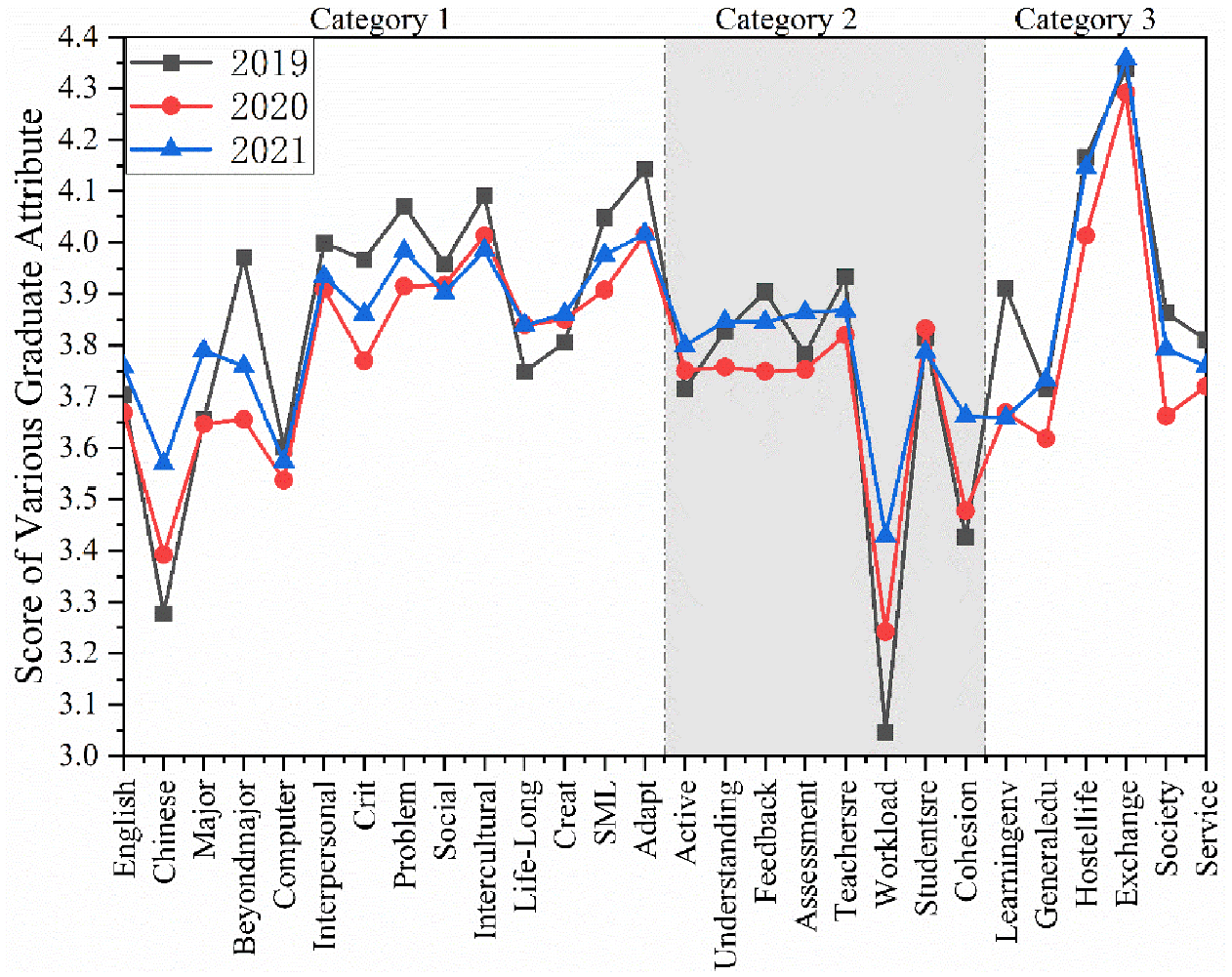
Mean score of various items for year 2019, 2020, and 2021.
The Mean and Median Scores of Items Related to Graduate Requirements of Year 2019, 2020, and 2021.

Note. n = no. of respondents.
significant difference between 2019 and 2020, + significant difference between 2020 and 2021.
The Mean and Median Scores of Items Related to TLE of Year 2019, 2020, and 2021.
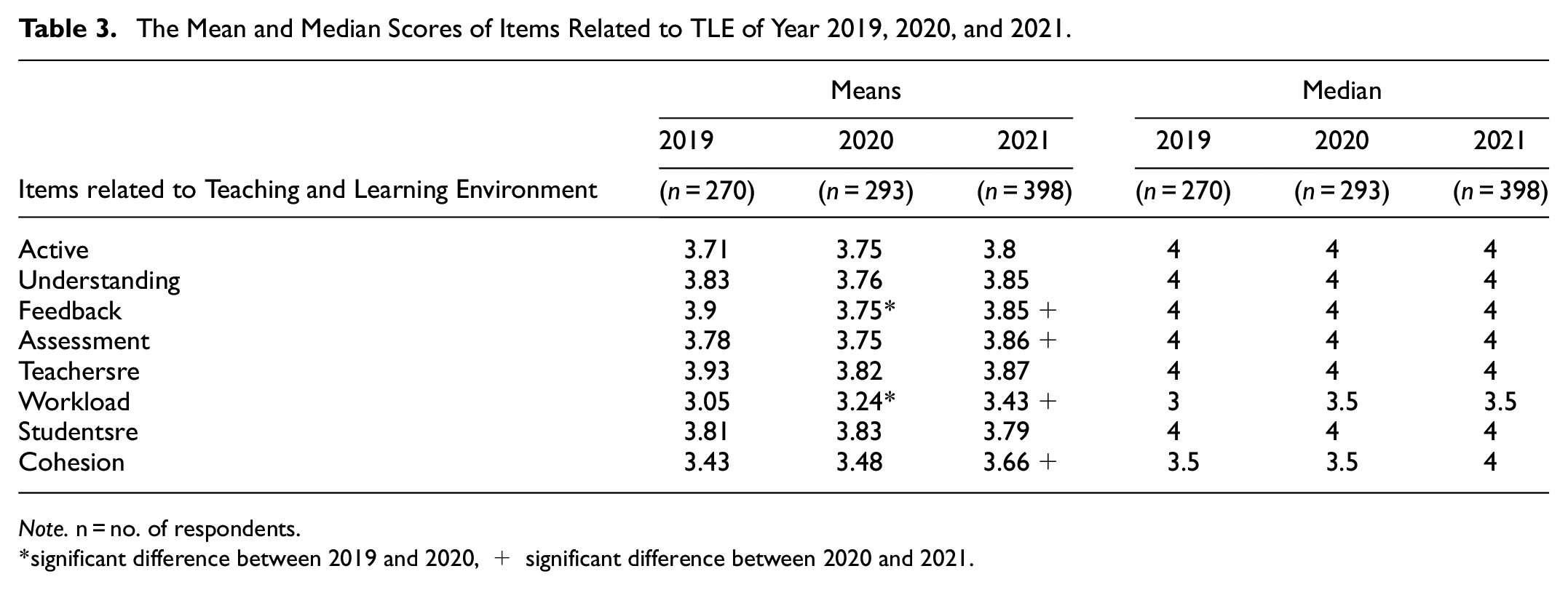
Note. n = no. of respondents.
significant difference between 2019 and 2020, + significant difference between 2020 and 2021.
The Mean and Median Scores of Items Related to Overall Impression of the Learning Experience of Year 2019, 2020, and 2021.

Note. n = no. of respondents.
significant difference between 2019 and 2020, + significant difference between 2020 and 2021.
As shown in Figure 1, the majority of graduate requirements (category 1) show a similar downward trend. The mean scores have significantly decreased due to the transition from traditional to online learning during the COVID-19 pandemic (comparing 2019–2020). Table 2 shows that the ratings for Chinese Language Competence, Understanding Beyond Confines of Major, Interpersonal Skills, Critical Thinking, Problem Solving, Self-Managed Learning, and Adaptability in 2020 are significantly lower than those in 2019. This indicates that the pandemic has greatly hindered students’ self-learning skills, and their study performance has undergone a significant change due to the rapid shift to an online teaching and learning model, which can lead to an imbalance in student engagement, low levels of interaction, and unproductive collaborations.
In the Teaching and Learning Environment (TLE) category 2, there has been a noticeable decline in the areas of teaching for effective understanding, assistance and feedback to enhance learning, the relationship between teachers and students, and assessment in 2020 compared to 2019. Additionally, the rating scores for assistance and feedback to enhance learning and workload in 2020 are significantly lower than the rating scores from the previous year (as shown in Table 3). This is further evidence that the COVID-19 pandemic has negatively impacted students’ learning experience and satisfaction as they have encountered various challenges while transitioning to an online learning model from traditional face-to-face instruction.
Numerous challenges have emerged from students’ experiences with the integration of new technology into online learning. These challenges include feelings of unease when posing questions to professors in a Zoom call where all participants can hear and initial unfamiliarity among teachers with the devices used for online learning. Nonetheless, it’s noteworthy that some students have expressed gratitude for the dedicated efforts of their teachers who have diligently worked to compensate for the absence of face-to-face interactions.
Several key factors contribute to the effectiveness of online learning, encompassing both educational and social dimensions. These factors entail the ability to study effectively, work independently, access learning materials at any given time, and exercise control over the pace of one’s studies. In the online learning paradigm, students are expected to take on more active roles in their education, moving beyond passive information reception. Therefore, teachers must adapt their approaches to encourage students to share their ideas, engage with their peers, and articulate their thoughts and viewpoints during the e-teaching process, facilitating this shift toward greater student involvement in their own education.
In response to the substantial decline witnessed in 2020, the university initiated a series of events and workshops aimed at addressing and rectifying the situation. These efforts included the introduction of blended learning training courses, such as the Teaching and Learning Innovation Week, the Integrated Learning Program, and a course focusing on the creation of mobile apps for iOS and Android using Thunkable. Through the implementation of these programs, in conjunction with supportive strategies, a significant reversal of the downward trend was achieved. By 2021, most attributes had rebounded to levels akin to those observed in 2019, as illustrated in Figure 1. This outcome underscores the efficacy of the initiatives undertaken in 2020 amid the challenges posed by the COVID-19 pandemic.
Moreover, these positive results suggest that higher education institutions can derive substantial benefits from conducting comprehensive reviews of their online curricula. This process ensures that critical thinking, problem-solving, and other pivotal elements of teaching and self-learning are adequately covered through the alignment of curriculum, teaching methods, learning approaches, and assessment methods.
However, it is a matter of concern that recent years have witnessed a consistent decline in student feedback pertaining to the quality of the learning environment, particularly in category 3: Overall Impressions of the Learning Experience, as depicted in Figure 1 and Table 4. This decline is manifest in student feedback regarding various learning resources, including the library, IT access, and study spaces, as well as opportunities for engagement with teachers and fellow students through programs such as student exchanges, hostel life, internships, the Integrated Learning Program (ILP), and community service. Open-ended comments have shed light on the insufficiency of support in these areas, with specific issues such as limited study space in the renovated library, unstable on-campus WiFi, and the suspension of popular exchange programs causing disappointment among students. These concerns warrant careful consideration and further action to enhance the overall learning experience.
Furthermore, as depicted in Figure 1, three attribute items, Chinese Language Competence, Workload, and Curriculum Cohesion, exhibited only marginal growth in 2020. This could be attributed to the introduction of research-based writing workshops and presentation skills training courses, organized by the Department of Chinese and the Chinese Language Education and Assessment Center during the same year. However, a closer examination of Figure 1 and Table 2 reveals that both English Language Competence (rated 3.70 in 2019, 3.67 in 2020, and 3.37 in 2021) and Chinese Language Competence (rated 3.28 in 2019, 3.39 in 2020, and 3.57 in 2021) received ratings below the 4.0 threshold, indicating that there is room for improvement in these areas. Consequently, these aspects warrant further investigation and attention from the relevant academic units and the university as a whole. The Workload attribute item consistently garnered low ratings, though it did experience a modest increase from 3.05 in 2019 to 3.24 in 2020 and 3.43 in 2021. This upward trend may be attributed to a reduction in “learning outcome expectations” for students. Consequently, it merits continued consideration and scrutiny in the future.
Learning Experience Difference Between Students Residing in Student Hostels and Those Living Off-Campus
In the early months of 2020, the COVID-19 virus quickly spread throughout Hong Kong. In response, the investigated University decided to switch to online classes in February. As shown in Table 5, the percentage of students living off-campus increased significantly in 2020, as more and more students chose to take the real-time online learning from home due to the pandemic. The proportion reached 56.78% in 2021. Both online and face-to-face courses were available to all students. By comparing the graduate attribute scores of students living in student hostel and those living off-campus, some interesting findings emerged.
The Proportion for the Students Lived Off Campus.

One significant finding is that the attributes of students living in the student dormitory were much better than those who studied off-campus (Figure 2). Therefore, although all learning activities were conducted online, living in the dormitory provided a better environment for studying and increased cultural awareness for the students’ learning experience. In 2020, the university strongly encouraged students who planned to continue living in the dormitory to stay on campus, avoid social gatherings with roommates or friends, and not spend the night outside of campus due to the special circumstances. Additionally, various health and safety measures were implemented by the university to provide round-the-clock support for students’ needs, including special arrangements for confirmed and potential cases, immediate disinfection of affected areas, and emotional support and advice for students in need. These measures ensured the safety and well-being of students living in the dormitory and provided them with a stable learning environment.

Mean rating scores of various attributes for the students lived in the student hostel and off campus: (a) 2019, (b) 2020, and (c) 2021.
Overall, the performance of students living in the student hostel seemed to be better than those living off-campus, but the differences between individuals should also be taken into consideration. Figure 3 illustrates the standard deviation of various attributes for students living in the student hostel and off-campus from 2019 to 2021. In 2019, the rating scores of students living in both the student hostel and off-campus were similar. However, in 2020, the differences between individual students living off-campus were more pronounced, which may be due to the change in their living environments as many students moved off-campus and returned to their families. In 2021, the differences between individuals living in the student hostel were larger than those living off-campus, and this may be attributed to the challenges of adapting to the pandemic. Based on this analysis, higher education institutions should be prepared for future pandemics like COVID-19 and strive to create a safer and more convenient learning environment for students, particularly by encouraging more students to live in the student hostel and providing training for faculty members to help ease students’ stress during times of crisis.
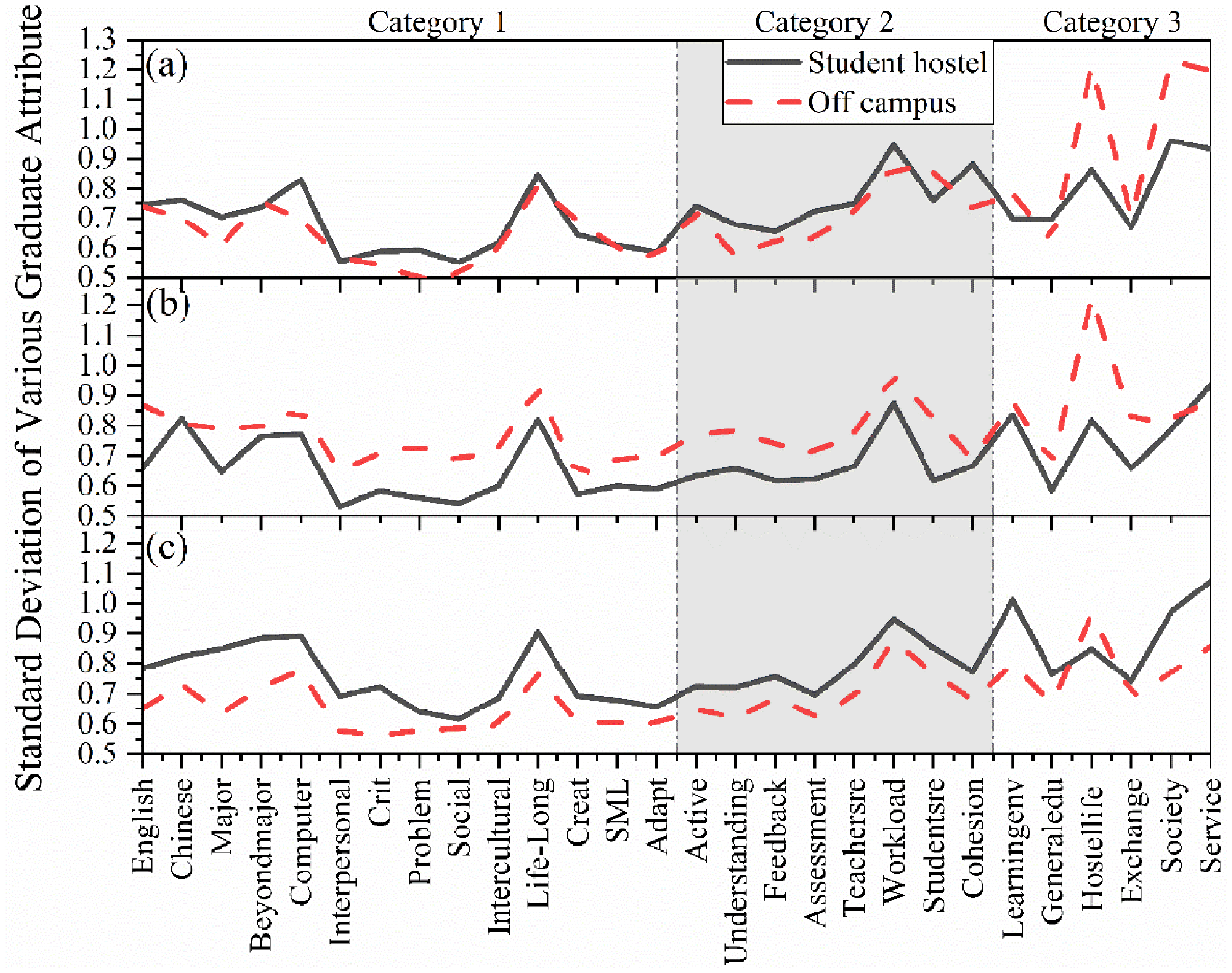
Standard deviation of various attributes for the students lived in the student hostel and off campus: (a) 2019, (b) 2020, and (c) 2021.
Recommendation for Teaching and Learning During the Epidemic
Based on our analysis of past data, it has become evident that students face challenges in maintaining their self-learning skills within the e-learning system. To address this issue, we recommend that relevant academic units closely monitor the factors contributing to this challenge. Students should have the opportunity to regularly report their self-perceived difficulties in achieving their learning goals. It’s worth noting that our ratings have shown improvement from 2019 to 2021, indicating that the measures implemented by the investigated University have had a positive impact on students’ learning experiences. However, we advise academic units to conduct periodic reviews and updates of their programs and courses to ensure they align with the practical requirements of various career paths. This includes considerations related to course design, curriculum cohesion, workload, and the breadth and depth of courses within specific majors. Feedback from external academic advisers and input from various sources, including course evaluations, staff-student consultation committees, faculty members, and students, should be integral to this review process.
As the landscape of teaching and learning evolves rapidly, data analysis suggests that merely implementing blended learning, flipped classrooms, and multimedia technologies may not be sufficient. Consequently, academic units and program teams must undertake comprehensive reviews of their curricula to ascertain that they encompass critical thinking, problem-solving skills, information and communications technology literacy, and other essential elements of self-directed learning. This becomes especially crucial in the face of the ongoing fifth wave of the pandemic, where the University must provide ample resources and support services to enhance student well-being. To address this imperative, the University is currently in the process of designing blended learning training courses and materials aimed at helping students develop the requisite skills in e-learning and digital literacy while reinforcing curriculum cohesiveness.
In response to the substantial decline in the Quality of Learning Environment observed from 2019 to 2021, the University Senate has approved the Blended Learning Policy and Guidelines. These resources are designed to benefit both staff and students and have a dual purpose: ensuring a fair and consistent approach university-wide while fostering informed innovations in teaching and learning. The policy and guidelines provide explicit guidance to academic staff on various aspects, including the design, development, delivery, and assessment of educational provisions within a blended and online learning context. They strike a balance between granting autonomy to educators to embrace innovative blended learning approaches and the imperative to adhere to the rigorous quality assurance processes for any alterations to courses, safeguarding equity in the learning and teaching experience.
It is crucial to underscore that the quality of teaching and learning is paramount in the student learning experience, surpassing the mere mode of content delivery. The effective implementation of Online Blended and Technology-Enhanced Learning (OBATL) and the thoughtful design of curriculum learning outcomes, along with robust assessment and feedback mechanisms, serve as the bedrock for maintaining high standards in blended learning. Moreover, blended learning offers valuable insights into students’ progress and learning journeys. Leveraging learning analytics through online systems and platforms can help identify students who may be at risk of underperformance or struggling, enabling timely intervention and support. It also aids in identifying gaps in knowledge or skills within the curriculum, informing teaching practices, and enhancing the overall educational experience.
It’s imperative to acknowledge that language competence stands as a pivotal skill for graduates, holding significant practical value as students transition into the workforce. Consequently, the decline in students’ English proficiency and the consistently low scores in students’ Chinese language competence warrant heightened attention and concerted efforts for improvement. To effectively address this issue, it is crucial to allocate additional resources and focus on course development for educators. Furthermore, we recommend that relevant academic units and programs organize a series of open seminars or workshops with a specific focus on academic writing, practical writing, small group activities for oral communication, and comprehensive presentation skills training. These initiatives can play a pivotal role in enhancing students’ language skills and ensuring they are well-prepared for the demands of their future careers.
Limitation of This Study
While the Graduate Learning Experience questionnaire utilized in this study has been a staple in annual program reports since 2001 and is well-designed to encompass various aspects of student learning experiences affected by the COVID-19 pandemic, it is important to acknowledge that it may not fully capture the entirety of students’ experiences and perceptions. Furthermore, a notable limitation is the absence of a control group consisting of students who did not experience the pandemic, which makes it challenging to precisely gage the extent to which the pandemic influenced graduate attributes. Additionally, the study’s exclusive focus on one university in Hong Kong restricts the generalizability of its findings to other universities and regions. Lastly, the research does not delve into the pandemic’s impact on faculty and staff, who also hold pivotal roles in shaping the higher education experience.
Conclusion
This study delves into the profound impact that the COVID-19 pandemic has had on students’ learning experiences and the cultivation of their graduate attributes. The abrupt transition to online learning during the pandemic has had a discernible impact on student performance, as evidenced by shifts in their graduate attribute scores. Notably, we have observed a significant decline in several essential graduate requirements, which underscores the formidable challenges students encountered while adapting to the rapid shift to online teaching and learning. These challenges encompassed disparities in student engagement, limited opportunities for interaction, and less productive collaborative efforts.
However, it is heartening to report that the implementation of blended learning training courses and initiatives such as the Teaching and Learning Innovation Week, the Integrated Learning Program, and mobile app development courses has effectively reversed the downward trend in graduate attribute scores. These endeavors serve as compelling evidence of the effectiveness of such initiatives in enhancing students’ learning experiences and bolstering their academic performance.
Furthermore, our study highlights the critical importance of establishing a supportive and conducive learning environment. Students have articulated concerns about access to learning resources, the quality of IT infrastructure, availability of study spaces, and opportunities for meaningful engagement with both instructors and peers. These concerns underscore the urgency for higher education institutions to bolster their support systems and proactively address the identified issues, with the ultimate goal of nurturing a positive and satisfying learning experience for students.
In addition, the findings underscore the imperative for educators to adapt and refine their pedagogical approaches to suit the demands of online teaching. Encouraging active participation from students, fostering collaborative exchanges among peers, and creating platforms for students to express their thoughts and ideas emerge as crucial elements in ensuring the efficacy of online education.
As we transition into the post-pandemic era, the insights gleaned from this study bear significant implications for the future landscape of online education. Higher education institutions must prioritize the development of graduate attributes, institutional advancement, and the augmentation of students’ self-directed learning competencies. A comprehensive reevaluation of educational goals and values is imperative to safeguard the attainment of student learning outcomes and to sustain the overall quality of education.
The proactive measures and recommendations set forth by the investigated University in response to the challenges presented by the COVID-19 pandemic serve as valuable benchmarks for other institutions and universities. By drawing upon these insights, higher education institutions can formulate effective strategies to uphold the standards of educational quality and to meet the evolving needs of students in the post-pandemic era.
In summation, this study offers invaluable insights into the far-reaching ramifications of the COVID-19 pandemic on students’ learning experiences and underscores the critical importance of addressing the complexities inherent in online education. The adoption of the proposed measures will empower higher education institutions to create an enabling and supportive learning environment that fosters robust student engagement, amplifies the development of graduate attributes, and ensures the continuity of high-quality education in the face of future crises.
Supplemental Material
sj-docx-1-sgo-10.1177_21582440241239889 – Supplemental material for Assessing the Impact of the COVID-19 Pandemic on Graduate Learning Experiences in Higher Education: Insights and Recommendations
Supplemental material, sj-docx-1-sgo-10.1177_21582440241239889 for Assessing the Impact of the COVID-19 Pandemic on Graduate Learning Experiences in Higher Education: Insights and Recommendations by Linfeng Zhang, Qingyun Li, Peter Duffy, Zhongyang Zhang, Junyi Xu and Jingming Cai in SAGE Open
Footnotes
Author Contributions
All authors contributed to the study conception and design. Material preparation, data collection and analysis were performed by Linfeng Zhang and Qingyun Li. The first draft of the manuscript was written by Linfeng Zhang and Qingyun Li, all authors commented on previous versions of the manuscript. All authors read and approved the final manuscript.
Declaration of Conflicting Interests
The author(s) declared no potential conflicts of interest with respect to the research, authorship, and/or publication of this article.
Funding
The author(s) disclosed receipt of the following financial support for the research, authorship, and/or publication of this article: This paper is supported by the Hong Kong Scholars Program and Jiangsu Province Higher Education Teaching Reform Research Program (Grant No. 2021JSJG334).
Ethical Approval
The data collected for this project received the necessary clearance from the University Ethics Review board and was collected with the consent of the participants involved in the study.

Supplemental Material
Supplemental material for this article is available online.
Data Availability Statement
The data that support the findings of this study are available from the corresponding author upon reasonable request.
References
Supplementary Material
Please find the following supplemental material available below.
For Open Access articles published under a Creative Commons License, all supplemental material carries the same license as the article it is associated with.
For non-Open Access articles published, all supplemental material carries a non-exclusive license, and permission requests for re-use of supplemental material or any part of supplemental material shall be sent directly to the copyright owner as specified in the copyright notice associated with the article.
