




Abstract
Culinary tourism is part of cultural capital that could generate income for local communities if well developed. Persuasive media, presented in various ways, plays a vital role in this development. The objective of this research, to create media with interesting and informative content to persuade foreign tourists to explore local Phitsanulok cuisine. This information was in-depth interviews that were conducted with 32 government tourism officials, 9 Chief Executives of the Sub-district Administrative Organization, 2 French nationals who were qualified chefs, and other foreigners resident in the Province. The second stage included the design and production plans for media to be developed highlighting and presenting local cuisine from each of the nine districts. The planned media was refined under the theme “Phitsanulok, a culinary delight.” This process included two French nationals who were residents in the Province who had created a unique genre of Thai Chinese fusion food. The media were focused on storytelling by these and other residents who were local participants in the culinary scene in Phitsanulok Province, intending to provide a first-hand account of the local traditional cuisine, and the enhanced genre provided by the French chefs. These stories were evaluated by 7 academicians, 3 media experts, and 3 tourism entrepreneurs, also taking into account feedback and responses from 275 social network users. This showed that Phitsanulok has the potential to be developed into a cultural city, scoring 8.13 based on the UNESCO City of Gastronomy project accreditation guidelines.
Introduction
UNESCO’s City of Gastronomy project, launched in 2004, introduced the creative city strategy as an innovative solution for developing hubs of experimentation in local culinary traditions in many countries to promote unique local and traditional cuisine. The UNESCO guidelines require a well-developed gastronomy supported by a vibrant gastronomy community, utilizing local ingredients in traditional dishes prepared in traditional ways. These attributes can be seen in communities in three geographical and cultural sub-groups: the Mekong region, the Malay Peninsula region, and the Philippines region. Each region produces local foods to accommodate local needs as well as to earn extra income. Due to the warm and humid climate, the environment in Southeast Asia is suitable for a wide diversity of plants and animal life (ASEAN Secretariat. (2001). This diversity means that there is a wide range of local ingredients available to be used in local cuisine. Given that local foods are also representative of local traditions and religious observances, local food can play a role in cultural transfers.
In Thailand, many rich food cultures exist that can help boost the export of Thai food products and attract foreigners to visit Thailand to enjoy local food as well as the enriching experience available to them. The development of cultural experiences, particularly cuisine and gastronomy, earns income for local communities and enhances the local economy and local living conditions. In local communities, food served to tourists is generally prepared by local people living in impoverished conditions, so to be able to sell their food to tourists at a higher price, whether in restaurants or at cultural events, can help improve the economy of the local communities. The input cost of the food will not necessarily change, as they are sourced from local farmers, which also spreads the benefits beyond the immediate community.
Overall, the security and sustainability of local fresh food depend on small and mid-scale farmers as robust channels to deliver locally grown food to urban consumers without the barrier of a wholesaler or marketing institutions standing between the farmer and the local consumer. Local producers can supply ingredients to local restaurants through direct marketing. According to numerous researchers who have conducted studies in the tourism sector, authentic cuisine experience draws tourists seeking native foods in the countries they visit (Reynolds, 1993). Food can create a profound experience for travelers beyond merely providing sustenance. It is also a significant aspect of the travel experience (Quan & Wang, 2004; Smith & Costello, 2009). Traditional cuisine and gastronomy as part of cultural tourism are vital to local economic development, and the food experience can boost brand recognition and promote tourist destinations, particularly when the food is representative of and unique to the local culture, attracting tourists (Hjalager & Richards, 2002; OECD, 2009). As such, food is regarded as a tangible heritage asset to enrich tourist experiences in a tourism community.
The role of local government organizations in promoting ecotourism in the area of Noen-Poem Subdistrict, Nakhon Thai District, and Phitsanulok Province has been researched by Bodeerat (2018); Jongsuksomsakul (2022) who identified the various necessary supporting factors in developing and managing cultural tourism. Such factors include the involvement of officials and personnel in local government agencies as well as local people whose knowledge can improve tourist services including the development of public utilities, public facilities, transport, and conveniences. Phugan and Inket (2016) identified 148 popular dishes in Phitsanulok, including 126 savory dishes and 22 sweet dishes, that are available in 64 communities in the municipal areas of Phitsanulok province. Five menus were chosen for ingredient classification: four savoury foods and one sweet food. Overall, key ingredients used in most local food consist of culinary herbs such as banana tree leaves, cocoyam, lotus, mushroom, jackfruit, and water spinach; and a variety of river fish processed into fermented fish sauce and pickled fish sauce with chillies and coconut milk. Key ingredients in beverages are sugar palm, butterfly pea, Centella Asiatica, and Bael. All of these local ingredients and the way that they are incorporated into local foods comply with the requirement for indigenous ingredients used in traditional cooking stated in the UNESCO City of Gastronomy project guidelines. Thai food is protein-rich with fish, chicken, eggs, and meat prominent as ingredients, developing a healthy and delicious cuisine. However, the literature review undertaken by the researcher has shown that there is a shortage of food nutrition analysis for foods in the nine districts of Phitsanulok which is therefore not included in the narrative for indigenous cuisine and ethnic food.
This extensive array of traditional dishes, local ingredients, and healthy food, demands a well-informed and persuasive media that can raise awareness among local people of the potential of their traditional foods in supporting and promoting cultural tourism in their villages and towns. The challenge, therefore, is to develop, produce, and present media to promote perspectives of local food consumption to inform and attract foreign visitors which will have a direct effect on tourism activity and the local economy according to the UNESCO index.
Developing such media requires input from all interested parties and stakeholders. This was a significant aspect of this research: the co-creation of the media as a key stratagem. The interested parties and stakeholders involved in this co-creation activity included the local people, provincial and district municipal officers, and food entrepreneurs both foreign nationals resident in the Province and locals involved in local gastronomy whose stories and experiences would be featured in the media. In addition to the culinary and gastronomical aspects of the research, the development of associated activities and facilities necessary to maximize the economic benefits for the communities were also considered. These implied a cost as well as a benefit. This was also considered in the research, particularly when the local government and municipal officials were involved, as the main contributors to tourism infrastructure development.
Research Localities
This research was undertaken in all nine districts of Phitsanulok province, which is located in the lower northern part of Thailand. The nine districts include the central administration city of Phitsanulok: the Meuang district, and the districts of Wang Thong, Bang Rakam, Chart Trakarn, Nakorn Thai, Wat Bot, Phrom Phiram, Noen Maprang, and Bang Krathum.
Objectives
To seek and compile relevant data for use in the development of appropriate media regarding the indigenous cuisine of the Phitsanulok province of Thailand.
To develop and present interesting and persuasive media through storytelling based on the experiences of local people, in the form of videos, to inform both Thai and international tourists about the indigenous cuisine of the Phitsanulok province of northern Thailand.
Literature Review
Co-creative Media Concept
The concept of co-creative media stems from communication development and community participation concepts. Spurgeon et al. (2015); Meadows (2003); Spurgeon (2013); Spurgeon (2014) and others showed that co-creative media presentations emerged from community broadcasting, indigenous media, and practitioner media education in the social space. This incorporates various institutional pillars including major cultural institutions such as screen culture agencies, libraries, museums, galleries and public service broadcasters and, in Australia, the Community Arts and Cultural Development sector which is historically supported through various programs of the Australia Council for the Arts. This illustrates the creative potential of the Australian population through the ongoing development and application of participatory storytelling methods and media. McWilliam (2016) suggested the term “digital storytelling” as meaning the presentation of local cultural traditions and their articulation through film which has underpinned the best-known national cinema movements, more recently by video presentations on social media. Digital storytelling is not only the gathering of media from digital archives, based on first-hand experience and anecdotes, but it can also be seen as digital story-making to present genuine details of traditional food with traditional content prepared and presented traditionally (Collste et al., 2017; UNESCO, 2008). This is a food culture that has been handed down from generation to generation but which may have, from time to time, been modified and presented as fusion food.
Extended Mixed Methods
Based on ethnographical research methods, such as Creswell and Plano Clark (2018), the concept and practices of participatory action research within communities have developed as a mixed-methods research design that has philosophical assumptions and methods of inquiry that combines both positivism and interpretivism as Fetters (2016); Maxwell (2016); Enosh et al. (2014) mentioned the flexible methodological as enabling a depth and breadth of information to be gathered and used to generalize the issues, findings and implications to the whole population. Fulton et al.(2023); Kerrigan and McIntyre (2019) applied this method with Practitioner-Based Enquiry (PBE) and called it the extended mix method. Fulton et al. (2023); Kerrigan and McIntyre (2019) argued this to be constructivist epistemology following Csikszentmihalyi’s model which comprised an assemblage of conventions, pieces of knowledge, symbolic codes, and techniques. Many scholars have used co-creative media to facilitate a participatory culture that includes digital storytelling (Tacchi & Grubb, 2008) as well as best practices and processes for managing, coordinating, and evaluating co-creative media applications in different contexts. The effectiveness of remediating social participation gaps includes effective communication of knowledge by digital storytelling as a co-creative media technique which focuses explicitly on the inter-relationships between a range of different agents who are or could be, involved in bridging participation gaps in communities and groups.
Gastronomy, according to Fusté Forné (2017); Lejavitzer (2016); Aulet et al. (2016) is defined as the art of enjoying, understanding, and clarifying authentic food, knowledge of which has been transmitted from generation to generation over time.
The contemporary practice of publishing stories about local cuisine, especially those local dishes usually termed “street foods” (obviously because they are available from street-located food stalls), is now a common and frequent presence on social media and from video providers. Gastronomy also includes chefs who cook creatively by using local ingredients from good agriculture practice (GAP) farms and meat produced with organic farming. Chawarinth et al. (2022) referring to M. A. Karim and Chi (2010), explained tourism in categories of food tourism, culinary tourism, and gastronomy tourism. Many studies have suggested that food tourism activities are a type of cultural tourism and are an important driver of the decisions of visitors to travel to destinations where gastronomy is well-known (Boyne et al., 2003; Corigliano, 2002; Henderson, 2004, 2009; S. A. Karim, 2006; Sims, 2009).
The communication of cultural expressions in terms of symbols and images of idealized reality can reflect a distinctive national culture to promote culinary tourism. Generally, tourists connect with local food experiences, which is beneficial for local people (Boniface, 2003, Sims, 2009). López-Guzmán (cited in Gӧssling et al., 2011) argued that local gastronomy that reflects the tangible heritage of the tourist’s destinations can enhance the identity of that destination as well as contribute to the sustainability of tourism.
Many scholars such as Aguirregoitia Martínez and Fernández (2015, 2017); Sánchez-Gómez et al. (2011); Segarra-Saavedra et al. (2015); and Rodríguez-Monteagudo et al. (2014) discussed the interest in gastronomy in various platforms such as journals and magazines, news programs, features, game shows, animated presentations, and interviews with political and cultural identities. This widespread interest in such diverse sources represents significant soft power that can be harnessed in the interests of local people and local food and lifestyles. Spain, for example, exerts their soft power concerning their wines and their essentially “Spanish” cuisine. While Spanish cuisine can be found in many other countries, particularly Central and South America, it is subtly manifested in many different ways in each country, and parochially.
Notably, the volume of research pertaining to these various topics has been subdued in the last 3 years, presumably as a result of the severe downturn in travel and tourism activities brought about by the COVID-19 pandemic. This may be considered as reinforcing the relationship between tourism activities and cultural cuisine.
Nonetheless, gastronomy has received great interest over many years from the media. The gourmet magazine was the first style of gastronomy media to introduce the concept of foodie tourists while two famous columnists of the New York Times, Jane Nickerson, and Jeanne Voltz, have been well-known for their food columns since 1960. Media scholars assert that the role of foodie tourists in popular culture has been almost a genre of movie plots and television series for a long while.
In Thailand, gastronomical information was initiated as a promotional topic by the Department of Cultural Promotion with the showing of the movie “Pad Thai: The Secret Recipe” at the Montagnosa Film Festival in March 2022 (Ban Muang, 2022). This is an example of published information under the theme of the 5Fs: Food, Film, Fashion, Fighting, and Festival (Charoenkan & Satyanurak, 2020). Another example is the first animated film “Our Floating Dreams” which presents Pineapple Rice through cartoon-style animation. There is also a collaboration by a Thai animator to adopt Japanese Manga to represent food culture in “Pinto: Love in a Lunchbox” (Anime Zone, 2022). The idea of gastronomy tourism has been introduced into five provinces in Thailand: Bangkok, Sukhothai, Chiang Mai, Phuket, and Phetchaburi to reflect the food culture and to introduce it to global citizens. That is, food consumption tourism includes the local food cooking process, local lifestyle, travel, living style, and historical sustainability in every community (Henderson, 2004, 2009; Jiménez Beltrán et al., 2016; Okumus et al., 2007).
Persuasive Technique: Message Design Strategy
Downing (2006) referred to rhetoric theory when they mentioned the ethos component which should be prioritized by the communicator to gain credibility and knowledgeability in a particular matter. To be persuasive, the communicator is required to have experience, communication skills, and a trustworthy personality with a pleasant voice. These qualities are persuasive strategies referred to at the group level or the Law of Association. Acknowledgment of their specialization or expertise comes from followers or reviewers who provide testimony to the persuasiveness of celebrities or prestigious persons in the community. When communicators convey their experiences to their audience, they tend to gain support and approval. Storytelling about relatable experiences and memories is a successful technique used by communicators to influence their audience and gain empathetic support.
The media production approach adopted in this research was to develop an inspiring theme and plot by adopting the persuasive technique of storytelling, so documentary-style storytelling illustrating real lived experiences of food entrepreneurs was considered to be most relevant. This, therefore, deeply involved the stakeholders in the decision-making processes and the ultimate productions, demonstrating the co-creation principles and practices which were applied in all phases of the project: understanding, conceptualization, and finally testing.
Research Methodology
This research is part of an ongoing research project whose methodology consists of document analysis, in-depth interviews, and participatory action research to support media production, to explore the gap between the world view of cultural policy and its implementation at the local level through the innovative media and broadcasting sector, to investigate the interplay among ethnic people, local political bodies, producers, and social network audiences. In this research, the current state of gastronomy is examined for its role in political strategic policy and the national regulatory regime. The comparison of gastronomy in local policies, approaches, and media is also conducted to answer whether global engagement is needed.
This current research was an initiative to publicize local community cuisine and culinary styles through media-based communication in the form of short films, advertisements, and musical marketing. This initiative actively engaged people in local communities in content design and media creation (Škripcová, 2017). Community members actively participated in the media design and production as actors, location providers, coordinators, and local wisdom providers in a real-world setting with authentic storytelling, and the audiences in the community were also active participants who expressed their opinions through comments on social media or interviews in local media programs.
Phase 1: Used the qualitative descriptive approach to search preliminary data from content in a digital archive. This data encompassed 23,400 online food programs extracted from 33,700,000 responses from the Google search engine. Key messages regarding gastronomy in Thailand were extracted and analyzed to identify active and popular social networks. In the analysis, duplication of content, content style, and possible copyright infringement was assiduously avoided to ensure that the information ultimately presented in the video documentaries was new and unique, and that the style of the culinary documentaries was singular.
Phase II: The themes that emerged from Phase I were elaborated in the production scripts and production plans to be relevant to each of the nine districts. The data and information gained from in-depth interviews and focus groups were analyzed. Focus groups were formed to enable an exchange of ideas via semi-structured interviews (n = 47) arranged with 32 government officers from 19 local government agencies, including the Chief Executive of the Provincial Administrative Organization (PAO), Chief Administrator of the PAO, Mayors and Municipal Clerks, Chief Executives of the nine Sub-district Administrative Organizations (SAOs), and the Cultural Department of Phitsanulok, Public Relation Department of Phitsanulok, Army Region 3 Radio Station, and other local agencies in Phitsanulok who are associated with tourism and the hotel and hospitality industry. There is also a cultural network consisting of the President of the Cultural Council in each district who provided basic information on cultural capital. Their expertise was related to tourism and hotel management services, media production, and technology, all the findings were merged (Figure 1).

Data gathering from the field.
After analyzing the selected data, the researcher curated the details and identified any problems that may arise by developing a business model for gastronomy in Phitsanulok. The analysis was made with the collaboration of 10 research advisors to create the Communication Chain format by turning a fishbone model into a storytelling canvas (Figure 2).

Fishbone model for storytelling canvas.
The Communication Chain builds communication through storytelling by individuals whose stories inspired or were inspired by, other storytellers. Key messages came from foreigners who are long-term residents in Phitsanulok, some of whom have organic vegetable gardens and keep chickens and ducks for meat, and grow fish. Also, one local woman who is a media personality conveys and narrates stories regarding social conditions and promotes nutrition, food safety, and household budgeting, all appropriate at the community resident level.
Phase III Short scripts were prepared for use by the production team and for the editing of the video recordings. The video material was shared in our team meetings as it was important for the team to be aware of the material gathered from the field. Three stakeholder meetings were held where the material was evaluated and commented upon to ensure that it was accurate. Stakeholders included people from the local government, the business community, indigenous people, and those involved in tourism. The participatory action research approach was employed to involve the researcher, local young people, and foreigners in an iterative and interactive approach to develop a creative theme for the culinary food media production representing Phitsanulok food culture and ethnic diversity. The researcher acting as producer and participated in video shoots, dealt with radio and television operatives, flew interstate for promotional ventures, and dealt with agents and promoters, on behalf of the production group. Narratives about local cuisine and gastronomy were developed together with local participants. As social media is employed to engage and stimulate young people’s interest in food culture, the group discussions about culinary food identity events were related to the interests of local young people (Figure 3).

Youth and community participation in media production.
Though effective in raising awareness, improving analytical skills, and building a social capacity for overall gastronomy driven by media design, culinary ethic food programs should generally focus on identifying the information sources and verifying food facts quoted in the message with cross-cultural monitoring for information collected from the field.
Phase IV: Media Development and Co-creative Production
Understanding which factors will boost the efficiency of storytelling, and what risks may be met, are important considerations when developing storytelling as innovative media development and utilization. The information that was collected was analyzed and synthesized to create a storytelling framework and canvas. A value proposition McKinsey & Co was developed describing how the customers will gain value from a particular service and product (Golub et al., 2000). The factors identified not only encompassed matters of taste and presentation, but also include such critical components as food ingredient quality, organic produce from local farms, and hygiene both in the distribution of produce from suppliers, but also in food preparation. To identify the appropriate value proposition for the Phitsanulok culinary community, if that term can be used to encompass the food tourism scene in Phitsanulok, a target group of foreign tourists visiting Phitsanulok together with foreign residents, was created to identify the value proposition that would be the foundation for the implementation phase of the. The research team worked on the design of a business and storytelling canvas to generate a distinctive and unified narrative appropriate to the province to be used for the documentary films. The video recording with one foreign tourist who was an internationally experienced chef and a foreigner who works and lives locally were the target presenters and non–specific foreigner’s online receivers. Finally, the media that was produced was made available on Facebook as well as Thai social networks and could also be accessed through tourist networks and YouTube (Figure 4).

Co-creative media production with foreigners and a private company.
Findings
Definition of Local Cuisine in the Dimension of Sustainability
The local cuisine of Phitsanulok Municipality can be differentiated from that of other regions in Thailand. It can also be considered as a sustainable tradition. Sustainability in this context means that food with the unique taste of Phitsanulok can be developed and promoted and served as an ideal and quality menu for travelers to generate revenue and to maintain that uniqueness and quality into the future.
To some extent, there are two technical terms for indigenous foods: (1) Ethnic food means foods whose aspiration is derived from the beliefs and faiths of ethnic people who have lived in the area for a long time. (2) Local cuisine refers to food created by locals at a particular time, using locally sourced agricultural products, with a taste that has become characteristic of the local people, creating cultural succession to maintain that uniqueness. For example, a particular rock salt called Colocasia esculenta (L.) Schott or known to Thai people as “Bon,” is a recognized local ingredient that is used to ferment and marinate fish together with chili peppers, and differentiates local cuisine from that of other Provinces.
Apart from the significant cultural tourism aspects of local cuisine, the community and local people must be concerned about hospitality and service standards offered to visitors. Excellent food safety practices, food service standards, and restaurant facilities must be developed while maintaining a traditional local lifestyle. That is to say, the value-added tourism experience must be created in a manner well designed to maintain the traditional cultures in the face of the urgent challenge to prevent traditional culture from being overwhelmed in favor of modernity, and efforts must be made to preserve the local traditions and cultures. Value-added cultural tourism should also be developed by way of cultural events and festivals featuring local customs and activities and where local food is prepared and served.
Another dimension of cultural tourism policy and practice is to integrate other tourist attractions available in Phitsanulok. There should be an inbound-outbound linkage across every route in the province such as creating tourist trails with cooking, community decks with menus during stopovers, leisure stops, or hotel services. In addition, research into the nutritional value of local foods should be undertaken. Several ingredients used in local cuisine have high nutritional value and healthcare properties to prevent or treat blood disorders, diabetes, cancer, and cough, as well as having deodorant qualities (Luang-nateep, 1997). There are many ingredients claimed to have and traditionally believed to have medical properties; however, such properties are required to be scientifically confirmed.
Co-creative Design
The researcher has researched food as cultural capital which has provoked efforts to create and publish the stories of food history and local cuisine to inspire people in the local community as well as in a wider audience. Under this initiative, the city of Phitsanulok, the central administrative center of the province, is planning to become a wellness tourism hub over the next few years where visitors can explore the local city and the broader neighborhood to eat a variety of indigenous and street food.
Over time, this has become traditional knowledge and traditional cuisine and is viewed by tourists as part of the cultural capital of the province. Traditional cuisine connects food to intellectual discourse and expands cooking to an established set of theoretical rules and categories of practice (Ferguson, 2004; Rao et al., 2005).
The number of Chinese tourists traveling to Thailand between 2015 and 2020 was greater than from Russia, Malaysia, the United Kingdom, and Japan. Also, historically, many Thai families have Chinese ancestry. It is noteworthy, therefore, that Chinese food culture has greatly influenced local Thai cuisine. The most evident example is silkie chicken or black chicken soup with herbs which has already become the main dish for Thai people. The Chinese have traditionally prepared this dish for treating gynecological disease since the silkie chicken is rich in vitamin B, protein, and amino acids (Figure 5).

Black chicken soup.
Co-creative Media Production
The series of short documentary films developed in this project aimed to tell a story of local ethnic food cultures to as wide an audience as possible. The scheme and theme of the films were created and co-produced with foreign residents who live in Phitsanulok so that the films can persuade foreign visitors to engage in media and would like to visit Phitsanulok. The data and perspective gained from the foreigners living in Phitsanulok and Thailand (Ethos) can help make the films authentic and convincing for foreign visitors who travel to Phitsanulok. The actors are credible, knowledgeable, understanding, and are experienced with good communication skills and pleasant voices and present themselves as trustworthy and presentable. The messages are also planned with persuasive strategies, group-level meetings, as well as the consideration of the regulations of associations. The testimony style message strategy based on local experiences tells a persuasive story, inviting the audience to be part of the enjoyment and have memorable experiences, and fond memories, and to develop a passion that they can share the media with others. It is to be hoped that the attractions of good food and entertainment and cultural events with a local flavor would encourage visitors to come and spend time in Phitsanulok and enjoy all that it has to offer (Figure 6).
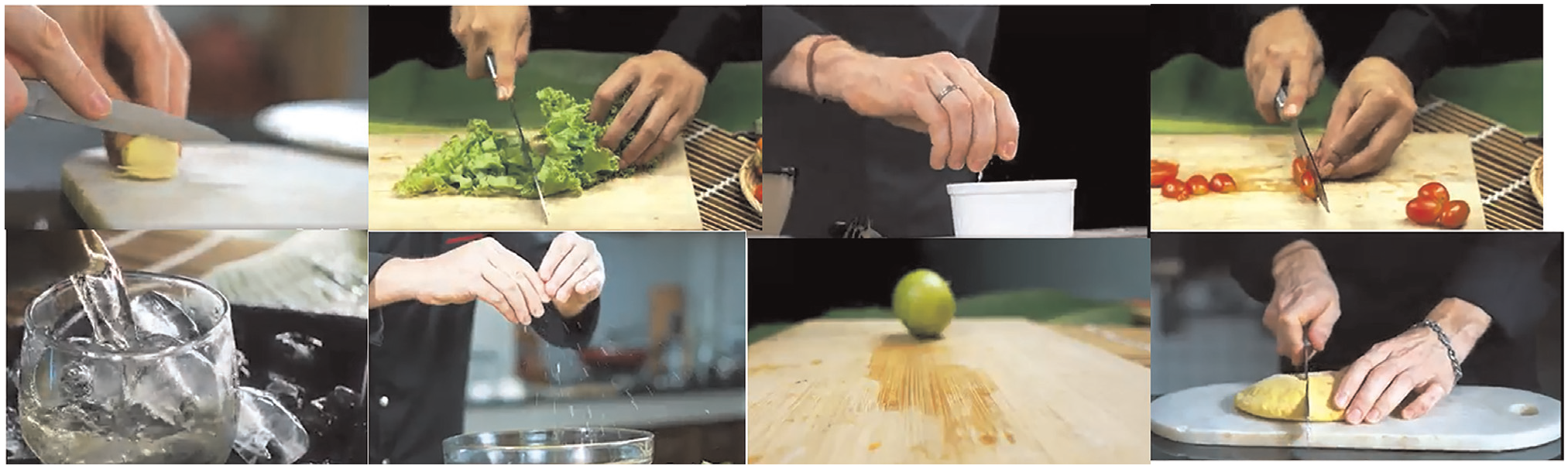
Shows the actions to engage audiences.
Table 1 illustrates the images and stories introducing the black chicken farms and black chicken stew with Chinese herbs for which Phitsanulok City is now well-known, and which is a menu rooted in the descendants of the Chinese diaspora who live downtown. The data supporting these stories were collected during the period of 14 to 30 September 2022, and the data analysis is shown in Table 1.
Script and pictures were captured from the show.

The researcher collaborated with four foreigners who are working in Phitsanulok City and the chef with professional experience in several countries including France, China, Taiwan, and Thailand, who presented a fusion-style menu of chicken and palm juice as an example of contemporary developments in local cuisine. The palm plants grown in the Wat Bot district provide a noticeably different taste of palm juice, making this ingredient distinct from those from other areas. This new fusion-style menu was prominent in the storytelling canvas to promote the theme “A city of Gastronomy: Phitsanulok, a culinary delight.” Subsequently, the storytelling canvas for “A trend beyond a City of Gastronomy: Phitsanulok, a Culinary Delight” was made under the headline: “Phitsanulok: serving your heart’s design for food.” The video can be viewed on the Facebook page: https://www.facebook.com/Culinary-Food-Innovative-Media-106039932093237 and YouTube: https://www.youtube.com/watch?v=YOn583OWE4o&list=TLPQMTYwOTIwMjJKghxexXBdew&index=3 with hashtags #gastronomy #culinaryskills #farangthailand #food #gastronomy #foodie #phitsanulok. (Please scan the QR code to see the video)
Both videos are shared on the Facebook pages of Phitsanulok Provincial Public Relations, Radio Thailand of Phitsanulok, Phitsanulok Banroa, Academician, and the Facebook pages of foreigners.
Co-creative Media Assessment
The potential for developing Phitsanulok as a cultural city of local and healthy food according to UNESCO guidelines was discussed with 7 academicians, 3 media experts, 3 tourism entrepreneurs, and 275 social network users. Their recommendations are shown in Table 2
Shows Indicators of the Potential of Using Local Food for the Development of Gastronomy Through Storytelling Via the Media.
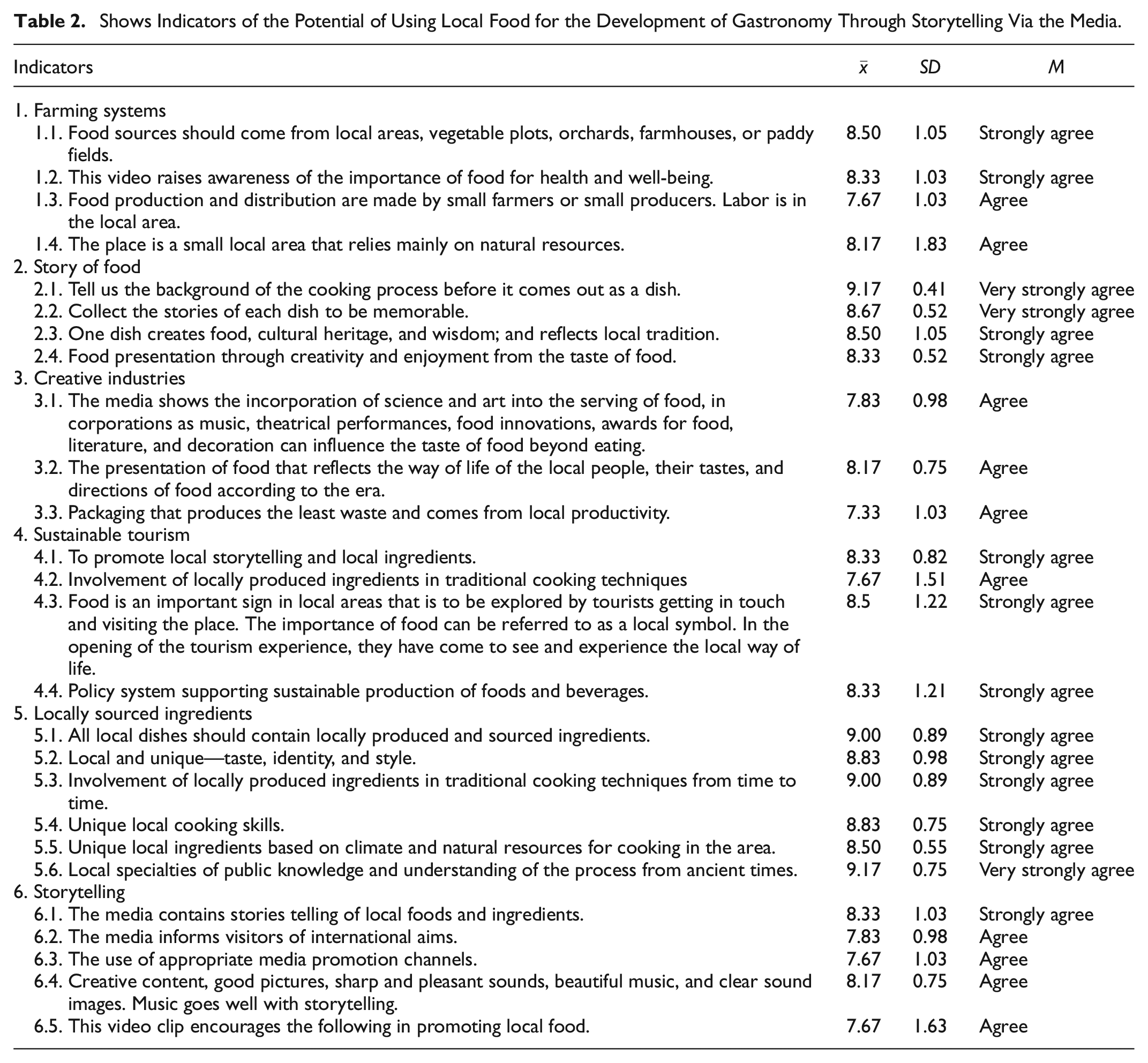
Table 2 shows the indicators of the potential of local foods represented in the video to transform Phitsanulok into a city of gastronomy through storytelling in the media. All the indicators were rated with the range between “agree” and “very strongly agree,” showing that Phitsanulok province could develop into a gastronomy tourism attraction. Media have shown the potential of message content and advertorials to persuade tourists to understand the sufficiency living lifestyle in Phitsanulok. Meanwhile, the potential score of the province was 8.13 when assessed under the UNESCO guidelines which indicates that Phitsanulok has the potential to be developed by cultural tourism. It is also suggested that the created media should also be provided in other languages and there should be more local cultural food included in the promotional media.
Discussion
This research provides an analysis of information about the potential for Phitsanulok Province to become a popular destination for culinary and cultural tourism and the production of innovative content materials to that end. Among the cultural policies, UNESCO introduced three approaches of cultural factors to develop human potential and to move toward sustainability agendas to reduce poverty, improve education, and focus on people’s health. There is no doubt, culture is regarded as a unique dimension to drive and enables those factors. The transformation of co-creative media, a new research technique of storytelling in the form of video productions with foreigners who are both tourists and residents, which are then broadcast on digital platforms, can play a significant role in promoting soft power among the global audience. The story-telling about the creation of fusion food, presented by a foreign resident in the role of a visiting chef, was a good strategy for highlighting a modern cuisine based on a traditional cuisine that originated from the Chinese ancestors of Thai families in Phitsanulok.
Social media and the Internet enhance the channel of broadcasting the story of ethnic people in small areas globally. Although social media does not necessarily target specific kinds of audiences, the power of the audience to access the content themselves can be strengthened in the post-national media era. The younger digital age group or “digital native” is among the reasons why the researcher chose the video clip to broadcast on social media platforms to disseminate the local and ethnic food tourism content that nobody knows before.
The findings also showed that the concept of gastronomy tourism creation through food culture has been adopted into the cultural policies and cultural institutions in Phitsanulok province. There is no doubt, the story content is a critical element. The community head indicated his desire to see the cultures of ethnic groups coexist with modern society as well as to see the ethical culture employed as part of soft power to compete in the global arena. The finding also shows the demand for more budget to improve the infrastructures such as roads, public vehicles, wellness, and hospitality services as well as to upgrade the skills of local people so that they can accommodate the demands of tourists more properly.
Given the potential of these aspects of both traditional and modern cuisine and gastronomy in Phitsanulok, significantly greater support, collaboration, and competition in the province is necessary to fully reap the economic and social benefits likely. This support must come both from the ground roots level, and from government bottom-up policy. Also, the know-how gained from the perspectives of foreigners working and visiting the province as well as the shared foreigners’ foresight, should be employed as a model to support cultural and gastronomy tourism elsewhere in Thailand such as Chiang Mai, Phuket, and other cities. The promotion of gastronomy travel in Phitsanulok can contribute to the impoverished farmers and ethnic minorities who fundamentally support gastronomy culture so that they can be proud of their story and their effort as part of food cooking and preparation to attract more tourists to the area.
Recommendations
To transform Phitsanulok into a city of gastronomy, three parties of administrative board committees in Phitsanulok should be authorized: army, local, and provincial levels so that they can monitor the power and budget. The creative economy should be adopted as a policy to fight against poverty among the local people in eight districts as well as to encourage people to appreciate ethnic and cultural diversity. Moreover, the local people in Phitsanulok should be trained to understand the different tastes and expectations of foreign visitors when they travel or live in the province.
This research gives a suggestion that should be a public push for a provincial budget allocation to allow all relevant agencies to collaborate in holistically developing tourism. Places, farmland, and education should be provided to empower people in the province. The improvement in transport routes should be emphasized to ensure the connectivity and convenience of traveling among locations.
The creative media with storytelling techniques allows the narrative to identify food suitable for visitors’ tastes and encourage active participation from the youth in local areas while conducting the critical analysis of how the youth and people at the grassroots respond to share their culinary local food stories on social media platforms. Everyone should be informed of the influence of using the media to represent citizens’ views and narratives toward life, policy-shaping, and governmental responses.
Policy: The Thailand National Strategy administration that had its inception in 2013 should be modified to support the development of co-creative media to integrate all the authorized organizations in Phitsanulok in collaboration to develop the human resources that include rural people and organic farmers, as well as local government officials. Public policies together with more substantial budgets are necessary to support the creation of transmedia such as movies, games, manga, animation, “gashadogo” or souvenirs of local food models that can be distributed in many different ways to provide memories and souvenirs for tourists to remind them of their experiences of local food in Phitsanulok. Through this, the visiting tourists will be more likely to become an intermediary in the narrative of local food culture. As a result, the visiting rate of tourists will be higher.
Footnotes
Acknowledgements
I wish also to thank Mr Roy I. Morien of the Naresuan University Graduate School for his editing of the grammar, syntax and general English expression in this manuscript.
Declaration of Conflicting Interests
The author(s) declared no potential conflicts of interest with respect to the research, authorship, and/or publication of this article.
Funding
The author(s) disclosed receipt of the following financial support for the research, authorship, and/or publication of this article: This study could not have been accomplished without the financial support of the Faculty of Business, Economics, and Communication, Naresuan University, Phitsanulok Thailand.
Sampling Protection/Human Research
This research was conducted based on Ethics Certification of Human Research by the Human Research Committee.

Data Availability Statement
The datasets generated during and/or analyzed during the current study are available from the corresponding author on reasonable request.