




Abstract
This study uses an education in emergencies (EiE) lens and a scientometric approach to examine the educational research landscape during the COVID-19 pandemic by analyzing 95,628 publications indexed in the Web of Science Core Collection database from 2020 to February 2023. It employed descriptive and network approaches to map growth trajectory, productivity, social structure, conceptual structure, and research methodologies used in the retrieved sources. The findings reveal a steady increase in publications on education and COVID-19 since the onset of the pandemic. However, the majority of productive countries and institutions are in the Global North, with limited representation from the Global South, except for China. English is the dominant language in publications, and funding agencies from English-speaking countries are the most active. The most frequently occurring keywords revolve around performativity, institutions, teaching methodologies, attitudes, and experiences, while keywords related to social justice are a peripheral focus. Publications mainly focus on technical and methodological aspects of education, such as online teaching and learning. Most productive journals represent a mix of foci and are not limited to distance learning. The extracted literature showcases diversity in research methodologies used. Future studies should use systematic reviews on narrow topics to evaluate the effects of the pandemic, inform decision-making, enhance education system resilience, and envision a more equitable education system. The study’s contributions are notable for its unique EiE perspective, comprehensive scope, extensive data extraction, and meticulous examination of research design, effectively addressing limitations in bibliometric software.
Plain Language Summary
This study looked at 95,628 research papers about education during the COVID-19 pandemic indexed in the World of Science Core Collection Data Base published since the onset of the pandemic until February 2023. The researchers found that there has been a steady increase in these papers since the start of the pandemic. However, most of the countries and institutions that produce these papers are in northern high-income countries, with limited representation from southern countries (for example, Africa and most of Asia), except for China. The papers are mostly written in English, and the funding for the research comes mostly from English-speaking countries. The most common topics in the papers are about how schools and teachers are performing, different teaching methods, and people’s experiences with education during the pandemic. The focus on fairness and social justice is not as strong. The papers cover a variety of research methods and topics, showing a lot of diversity. The large number of papers shows the need for more focused reviews to understand the effects of the pandemic on education and to make decisions that will make the education system stronger and fairer. The study’s contributions are notable for its unique perspective, comprehensive scope, extensive data extraction, and examination of research design.
Introduction
Education is often the most affected sector during emergencies, as education systems lack sufficient fail-safe features to withstand recurrent crises (Chabbott & Sinclair, 2020). The field of education in emergencies (EiE), that is, the provision of schooling and other structured educational activities in emergency situations, emerged in the 1990s as a response to the recognition of the need for providing education in emergencies (Burde et al., 2017; Kagawa, 2005; Lopez Cardozo & Novelli, 2018; Sinclair, 2002). Past crises and emergencies primarily affected school systems in the Global South (Lopez Cardozo & Novelli, 2018; Smith & Vaux, 2003), whether because of war, conflict and displacement, natural disasters or health crises such as Ebola and HIV. In contrast, the COVID-19 pandemic affected education systems worldwide (Meinck et al., 2022; Naidu, 2023; Selvanathan et al., 2020), affecting learners at all levels (United Nations [UN], 2020). At its peak, the pandemic affected 94% of learners globally, impacting 1.58 billion children and youth across 200 countries (UN, 2020). Despite the passage of 21 months, many educational institutions remained closed, putting millions of children “at risk of never returning to education” (UNESCO et al., 2021, p. 5).
To examine the ongoing impact of COVID-19 on different sectors of society, there has been a significant increase in research publications related to COVID-19 across different disciplines (Aviv-Reuven & Rosenfeld, 2021; Karakose, Polat, & Papadakis, 2021; Torres-Salinas et al., 2020), including education. This study aims to map out the publication output on education during the COVID-19 emergency, utilizing a scientometric approach to understand the research landscape of EiE in the context of the pandemic. The objective is to examine how the pandemic has impacted research trends in the field to identify gaps in topic areas. This understanding provides researchers, policymakers, educators, and funding bodies with a comprehensive view of the existing knowledge and areas that require further research (Donthu et al., 2021). Additionally, analyzing citation patterns and publication outlets enables the identification of influential studies on EiE that can inform future research endeavors (Mukherjee et al., 2022) and help authors target appropriate outlets (Donthu et al., 2021). Reviewing this knowledge is crucial to enhancing the preparedness of education systems for future emergencies (Zhao & Watterston, 2021).
The present study has several advantages over existing bibliometric research on education during the COVID-19 pandemic. Firstly, it takes a unique approach by analyzing the literature through an EiE perspective, which is broader than the commonly used “online distance education” lens in previous studies (e.g., Fauzi, 2022; Mishra et al., 2021; Zhang et al., 2022). Secondly, it has a comprehensive scope, encompassing all education sectors and disciplines, unlike previous studies that focus on specific sectors (e.g., Fauzi, 2022; Su et al., 2022; Zhang et al., 2022), disciplines (e.g., Jatmiko et al., 2021; Peng & Hu, 2022), or regions (e.g., Pathak & Singh, 2023). This provides a broader understanding of the subject matter. Thirdly, the study extracts data on a larger scale compared to previous research, allowing for a more comprehensive analysis. Fourthly, it provides developments within the EiE field, explaining key terminology and challenges in education delivery during the pandemic. Lastly, it goes beyond the limitations of bibliometric software by manually examining the research design dimension.
Following this introduction, the subsequent two sections employ a literature review. The “Overview of the EiE Field” briefly discusses the evolution of the EiE as a field of practice and research. The subsequent section, “Education during the COVID-19 Emergency,” summarizes the emerging issues specific to EiE within the context of the COVID-19 crisis. The “Methodology” section outlines the search strategy, the data extracted and the analysis used. The “Findings” section presents the analysis of data around six themes: the growth trajectory of publications, the productivity of countries and institutions, the social structure, the intellectual structure, and the conceptual structure of the field and the methodology and methods utilized within the literature. Lastly, the “Discussion and Conclusion” section summarizes the key findings, discusses them in relation to existing studies, and offers insights into the study’s limitations and implications.
Overview of the EiE Field
“Emergencies” can be divided into natural disasters (e.g., floods, earthquakes, tornadoes, hurricanes, droughts, and pandemics) and human-caused disasters (e.g., armed conflict, genocide, terrorism, industrial accidents, and civil unrest) (Pigozzi, 1999). Nonetheless, this distinction is not always straightforward, as Kagawa (2005) points out that “natural” disasters can also be influenced by human factors (p. 493). Furthermore, natural disasters may overlap with human-caused disasters, compounding their disruption (Nicolai, 2003). The term “complex emergencies” emerged to describe long-lasting conflicts and emergencies, which often lead to forced migration and displacement. Chronic emergencies, such as persistent poverty and the HIV pandemic, also exist (Pigozzi, 1999). Each emergency requires a unique response to protect the right to education (Sinclair, 2002).
Lopez Cardozo and Novelli (2018) attribute the emergence of EiE as a distinct and coherent field to the end of the Cold War in the early 1990s. This period marked a shift in development and education policies, with a greater focus on addressing the needs of the least-developed countries and marginalized populations. This shift was reflected in the 1990 “Education for All” (EFA) commitments that emerged from a high-profile meeting in Jomtien, Thailand. Ten ears later, when the EFA progress was assessed at Dakar in 2000, the Framework for Action adopted required countries to expedite progress toward EFA, including the pledge to address the needs of education systems impacted by conflict, natural disasters, and instability (Sinclair, 2002).
The adoption of the Millenium Development Goals (MDGs) (2000–2015) following the Millenium Summit of the UN in 2000 highlighted the significant impact of conflict on international development objectives, particularly in education, as global statistics indicated that 82% of the reported 113 million out-of-school children lived in crisis and post-crisis countries (Smith & Vaux, 2003). While the yearly statistics on out-of-school children fluctuated, the prevalence of such children in countries affected by conflict remained constant (Winthrop & Mendenhall, 2006). It became increasingly evident at the level of policy and funding that education is crucial in crisis and post-crisis contexts for saving and sustaining lives, achieving international development targets and fostering lasting peace and development (Smith & Vaux, 2003; Winthrop & Mendenhall, 2006).
The Inter-Agency Network on Education in Emergencies (INEE) was established as a result of the “Interagency Consultation on Education in Situations of Emergency and Crisis” hosted by UNESCO, United Nations High Commissioner for Refugees (UNHCR) and United Nations Children’s Fund (UNICEF) in November 2000 (Smith & Vaux, 2003). INEE aims to enhance communication and collaboration among different agencies, minimize duplication of efforts, and advocate for supporting education in crisis contexts (Winthrop & Mendenhall, 2006). While funding for EiE still lags behind other sectors, prominent bilateral donor agencies now earmark funds for education as part of their humanitarian aid, with INEE playing a positive role (Burde et al., 2017). Since its formation, INEE has emerged as a significant actor involved in developing minimum standards for EiE and training staff involved in EiE (Lopez Cardozo & Novelli, 2018; Shah et al., 2020).
UNESCO’s annual monitoring of global targets of MDGs and the Sustainable Development Goals (SDGs) also focuses on the provision of EiE. For example, UNESCO’s annual report on EFA and MDGs, titled The Hidden Crisis: Armed Conflict and Education, focused exclusively on the interrelationship between education and conflict (UNESCO, 2011). The report emphasized the need for increased allocation of education resources in humanitarian aid, with equitable distribution across conflict-affected countries. It also advocated for integrating education into broader peacebuilding strategies. The report emphasizes the importance of considering emergency risks in education sector plans and strengthening government capacity at all levels to minimize disruptions to education services during all phases, from emergency response to recovery. The 2019 Global Education Monitoring Report titled Migration, Displacement and Education – Building Bridges, Not Walls highlighted the detrimental impact of conflict, as well as natural disasters, on education. (UNESCO, 2018).
During the COVID-19 emergency, UNESCO played a crucial role in guiding countries and ministries to protect the right to education. In 2020, in response to the global disruption of education systems caused by the pandemic, UNESCO created the Global Education Coalition (GEC), which aims to ensure continuity in education, provide demand-driven interventions, support teachers, promote connectivity and gender equality, and strengthen data, knowledge production and advocacy (UNESCO, 2023).
Education During the COVID-19 Emergency
Before presenting key highlights of the literature, it is important to note that bibliometric reviews, unlike systematic reviews, do not provide a comprehensive examination of all studies in a particular field (Linnenluecke et al., 2020). As this study is a bibliometric review, the synthesis of the literature presented does not claim to be systematic or exhaustive.
The COVID-19 pandemic can be described as a “complex emergency” due to its scale, duration, and multidimensional impacts on the economy, society, and education in both the short and long term (UNESCO, 2022). As educational institutions shuttered and quarantine measures were implemented, many education systems shifted to remote teaching and learning, raising equity and access concerns as well as the well-being of stakeholders. Various terminologies emerged for education delivery during the pandemic, which would benefit from clarity. Furthermore, access, quality, learning loss, and well-being emerged as critical issues in education delivery during the pandemic, warranting further discussion.
Terminology
Emergency remote education is a sudden and temporary shift of education delivery to an alternate delivery mode due to a crisis, often using online platforms for real-time interaction (Barbour et al., 2020). Distance schooling provides educational materials to students, either digitally or physically, without a set class schedule or in-person teacher interactions (Bokayev et al., 2021). Online schooling involves students using information technologies and communications to work from home, with lessons being synchronous, asynchronous, or blended (Basilaia & Kvavadze, 2020). Synchronous teaching occurs in real-time with a teacher by video or audio conferencing, while asynchronous teaching involves regular content delivery through emails, forums, and discussion media (Basilaia & Kvavadze, 2020; Fiş Erümit, 2021). Blended lessons involve combining online teaching with in-person teaching.
Globally, 83% of countries used internet-based remote education, but its usage decreased with lower grade levels (UNICEF, 2020). TV-based remote education was provided by 72% of countries worldwide, while radio-based remote education was accessible in 48% of countries. While middle-income countries predominantly used digital media or television, low-income countries primarily used radio-based instruction (UNICEF, 2020).
Equitable Access
Although most countries provided remote learning opportunities, the extent and quality of these initiatives varied significantly (Akabayashi et al., 2023; Betthäuser et al., 2023). The impact of school closures on access to quality education during the shift to home-based learning was unevenly distributed and associated with the national wealth of countries and households (Betthäuser et al., 2023; UNESCO, 2021a; UNICEF, 2020), as well as a range of contextually relevant markers of disadvantage including gender (UNESCO, 2021b, 2022) and rurality (UNICEF, 2020).
In response to school closures, over 90% of education ministries swiftly implemented remote education policies, reaching over a billion students worldwide (UNICEF, 2020). However, an estimated 31% of children were left behind due to a lack of household infrastructure or supportive policies, with exclusion rates varying by region, location and country income (UNICEF, 2020). For example, 48% of students in West and Central Africa and 49% in Eastern and Southern Africa could not access digital or broadcast learning options. Likewise, only 30% of rural students worldwide had access to remote technologies. The share of excluded children was much higher in low-income and fragile countries experiencing humanitarian crises pre-COVID-19 (UNICEF, 2020). Overall, girls and boys were equally affected, but in some countries, parents were reluctant to allow daughters to use smartphones, resulting in boys having greater digital access (United Nations Girls’ Education Initiative [UNGEI], 2022). UNESCO (2021a) notes that prolonged school closures have derailed efforts to achieve universal schooling.
Equitable Quality of Remote Education
A growing number of studies suggest several challenges limited the quality of distance education, with such challenges amplified for students in disadvantaged contexts marked by rurality (Landa et al., 2021), the digital divide, family circumstances (Akabayashi et al., 2023), school types, teachers’ digital literacy and the availability and use of interactive digital platforms (Durrani et al., 2023).
Teacher Capacity for Digital Instruction
Many studies report that at the beginning of the pandemic, teachers were unprepared for online teaching and struggled with selecting and using digital tools (Azhari & Fajri, 2022; König et al., 2020; Palau et al., 2021; Timotheou et al., 2023; Trust & Whalen, 2020). Stakeholders generally viewed distance education negatively due to the limited use of communicative and interactive practices (Durrani et al., 2023; Kumar & Verma, 2021; Orhan & Beyhan, 2020; Vikas & Mathur, 2022). Teachers from less developed countries faced challenges in creating quality online resources (Tsui et al., 2020), and public school teachers had lower digital literacy compared to private school teachers (Parker et al., 2020). Older teachers and female teachers with domestic responsibilities faced additional difficulties (Durrani et al., 2023; Parker et al., 2020). Several countries offered online professional development programs to help teachers develop their digital competence (Karakose, Yirci et al., 2021; Kosaretsky et al., 2022), but their availability varied across countries and locations (Demeshkant et al., 2022).
Home Environment
The impact of remote teaching on student academic achievement and learning outcomes varied due to differences in home environments. Remote education posed significant challenges for less advantaged parents in terms of access to digital infrastructure, study space, and parental supervision (Durrani et al., 2023; Palau et al., 2021; Parker et al., 2020). Families with limited access to quiet study spaces, such as those with multiple children or larger families, faced challenges in providing a conducive learning environment (Andrew et al., 2020; Easterbrook et al., 2023; Tate & Warschauer, 2022; Trinidad, 2021). Parental struggles in supervising their children’s learning during school closures also varied based on income, academic and digital literacy, and the ability to work remotely. Homeschooling posed particular challenges for various groups of parents, including those with primary school children, parents in blue-collar jobs or lacking academic skills, rural parents, and single mothers (Durrani et al., 2023; Ewing & Cooper, 2021; Sosa Díaz, 2021; Trinidad, 2021). Furthermore, studies indicate that parental engagement and support varied based on a child’s gender, with boys being disadvantaged in some contexts (Easterbrook et al., 2023) and girls in others (Jones et al., 2021).
Equity Oriented Leadership
During the COVID-19 pandemic, education leaders prioritized the expansion of digital access and the enhancement of teachers’ skills in remote teaching to tackle the disparities in digital infrastructure and literacy (du Plessis, 2021; Harris & Jones, 2020; McLeod & Dulsky, 2021; Netolicky, 2020; Okilwa & Barnett, 2021). Numerous studies indicate the emergence of equity-oriented (Elomaa et al., 2022; Heffernan & Mills, 2023; Magill & Rodriguez, 2022; Wharton-Beck et al., 2024), compassionate, and caring (Fernandes et al., 2023; Stone-Johnson & Miles Weiner, 2020) leadership as crucial in dealing with the educational disruptions caused by the pandemic. Education leaders dedicated significant time to providing pastoral care and support to students, teachers, and families (Harris & Jones, 2023).
Learning Loss and Equity
School closure is expected to have long-term effects on student learning, widening achievement gaps based on school socioeconomic status (UNESCO, 2021a). The differential access to technology and remote instruction will further widen the achievement gaps (Kuhfeld et al., 2020; Schuurman et al., 2023; Timotheou et al., 2023). Patrinos (2023) found that for every week of school closure, “learning levels declined by almost 1% of a standard deviation” (p. 1). There is substantial evidence indicating a learning crisis globally due to the inadequate quality of remote teaching (Angrist et al., 2021; Azevedo et al., 2022; Engzell et al., 2021; Monroy-Gómez-Franco et al., 2022; Reimer et al., 2021), although the impact on student academic achievement and learning outcomes varies. Parental education and household income have been reported as key markers of disadvantage and privilege (Engzell et al., 2021; Haelermans et al., 2022; Haser et al., 2022). Furthermore, van Cappelle et al. (2021) found that public school and younger students perceived that they were learning less or significantly less than private school students and older students.
Stakeholders’ Well-Being
Emergencies present substantial risks to individuals’ psychosocial and physical well-being. Therefore, it is crucial to prioritize well-being in order to cope with the crisis effectively (Shohel et al., 2021). Social isolation, remote work, lack of physical exercise, seeing loved ones, friends and relatives contracting the infection and experiences of loss of life all took a heavy toll on students, teachers, families and school leaders (Mendoza et al., 2023).
School closures disrupted the provision of critical services such as “school feeding, protection, and psychosocial support,” severely affecting “the overall well-being and mental health of children” (UNESCO, World Bank, & UNICEF, 2021, p. 7). Past emergencies led to an increasing recognition that emergencies impact men and women differently because of gender norms, gender hierarchies and roles (Kirk, 2006) and evidence in the context of school closures points to gendered outcomes on stakeholders’ well-being. Both boys and girls have reported experiencing adverse effects on their mental health (UNESCO, 2021b). However, girls, in particular, have reported higher levels of mental health issues, which can be attributed to pre-existing gender norms that restrict girls’ mobility and socialization opportunities, resulting in increased social isolation (UNESCO, 2021b). A study of four African countries concluded that the protracted trauma experienced by girls during COVID-19 is likely to have a long-lasting effect on their psychological and emotional health, making their return challenging without sustained care for their overall well-being (Oulo et al., 2021). Additionally, headteachers in Ethiopia expressed concerns about the difficulty of reaching girls through distance learning provisions.
Studies across high-, middle-, and low-income countries highlighted increased stress within families, with mothers experiencing profound stress due to the closures of childcare services and the disproportionate burden of homeschooling (UNESCO, 2022).
Similarly, research indicates that the COVID-19 pandemic has exacerbated depression, stress, anxiety, and burnout among teachers, significantly affecting their well-being (Bianchi & Caso, 2022; Billett et al., 2022; Karakose, Yirci, & Papadakis, 2022; Kim et al., 2022; Mendoza et al., 2023; Sigursteinsdottir & Rafnsdottir, 2022; Weißenfels et al., 2022). This increase in stress levels has also heightened the risk of teacher attrition (Lücker et al., 2022; Marshall et al., 2022), with female teachers being particularly susceptible to elevated stress levels (Arruti et al., 2022). Furthermore, due to COVID-19′s impact on quality of life, teachers experienced increased loneliness, leading to internet addiction (Karakose, Yirci, & Papadakis, 2022).
During school closures, school leaders were tasked with supporting the well-being of students and teachers. However, they faced immense stress navigating a rapidly changing and uncertain educational landscape. Recent research indicates that school leaders experienced high levels of stress (Anderson et al., 2020; Arnold et al., 2021; Bellemans et al., 2023; Doyle Fosco et al., 2023; Lien et al., 2023), with female leaders who are also mothers finding it particularly challenging to balance work and familial responsibilities and find time for self-care (Crosslin & Bailey, 2021). Research further indicates that the psychological distress school leaders faced due to COVID-19 strongly predicted their burnout and that leaders’ burnout significantly and positively predicted their levels of depression (Karakose, Ozdemir et al., 2022).
Methodology
Study Questions and Design
This study utilized a bibliometric design to map the literature on education and COVID-19, with a focus on understanding the landscape of EiE since the outbreak of the pandemic in 2020.
Specific research questions guided the analysis and provided a focused approach to analyzing the retrieved literature on education and COVID-19:
How has the literature in this field grown over time?
Which countries and institutions have produced the most research in this field?
What is the extent of research collaboration between countries and institutions in this field?
What is the intellectual landscape of this field in terms of language, funding agencies, and the most influential journals?
What is the conceptual structure of the field with respect to keywords, topic foci and most cited papers?
What research designs, data collection methods, and analytical approaches are commonly used in the literature?
Data Search and Identification
This study analyzed metadata extracted from the Web of Science (WoS) Core Collection database. According to Ivanović and Ho (2019), the WoS is the most often used database for bibliometric review in various research areas, including education.
The data was extracted on Feb 12, 2023. Since the WoS is an interdisciplinary database, data was gradually narrowed down to the area of focus, and only relevant literature was retained (Figure 1).

Data extraction strategy.
In the first stage, extraction was performed on all research fields through a set of word threads, Education OR School AND COVID OR COVID-19 OR Coronavirus, through which 1,774,162 publications were retrieved. In the second stage, document types were limited to articles, book chapters, and books. As a result, the total number of literature sources decreased to 1,438,803. Finally, publications from the Education and Educational Research journal category were retrieved, yielding 95,628 publications. Given that there exist different types of Coronaviruses, and this analysis focuses on the latest pandemic related to COVID-19, only publications since 2020, the year the World Health Organization (WHO) declared the pandemic, were considered. The final metadata extracted from the WoS contained 95,628 publications, including titles, years of publication, countries, institution names, journal publications, affiliated institutions, languages, funding agencies, publishers and keywords. Among the extracted 95,628 publications, journal articles were predominant at 91.4%, while 7.4% and 1.2% were book chapters and books, respectively.
Data Cleaning
Before conducting the bibliometric analysis, we cleaned the data to ensure accuracy. We started by extracting the metadata from the WoS in plain text format (.txt) and transferred it to a Microsoft Excel file (.xls). In this process, we removed duplications, errors, and inconsistencies. As a result, the final dataset contained 95,628 publications, a reduction from the original 96,469.
Data Analysis
This review applied a methodological framework constituting two analytical approaches, descriptive (performative) and network (scientific), allowing us to have an in-depth understanding of the field, both from quantitative and qualitative perspectives (Figure 2). Under the two overarching approaches, the extracted dataset was analyzed through six dimensions: growth trajectory, productivity, social structure, intellectual structure, conceptual structure and research design and methods.

Analytical framework.
We utilized descriptive bibliometric analysis with the WoS display features to track the growth trajectory and productivity of countries and institutions in the field of education and COVID-19. Additionally, we employed network analysis to identify overall trends in co-authorship and thematic focus of existing publications. The analysis was facilitated by the use of VOSViewer (https://www.vosviewer.com/), a bibliometric software that organized data and provided visual mappings. It is important to highlight the significance of our approach, as bibliometric analyses often neglect the research design dimension due to limitations in available software capabilities (Donthu et al., 2021; Hernández-Torrano et al., 2021). However, in this study, we addressed this limitation by manually examining the research dimension while utilizing VOSViewer for network analysis to explore all other dimensions.
Findings and Discussions
Growth Trajectory of the Field
The descriptive analysis revealed a slight but steady increase in publications on education and COVID-19 since the onset of the pandemic (Figure 3).
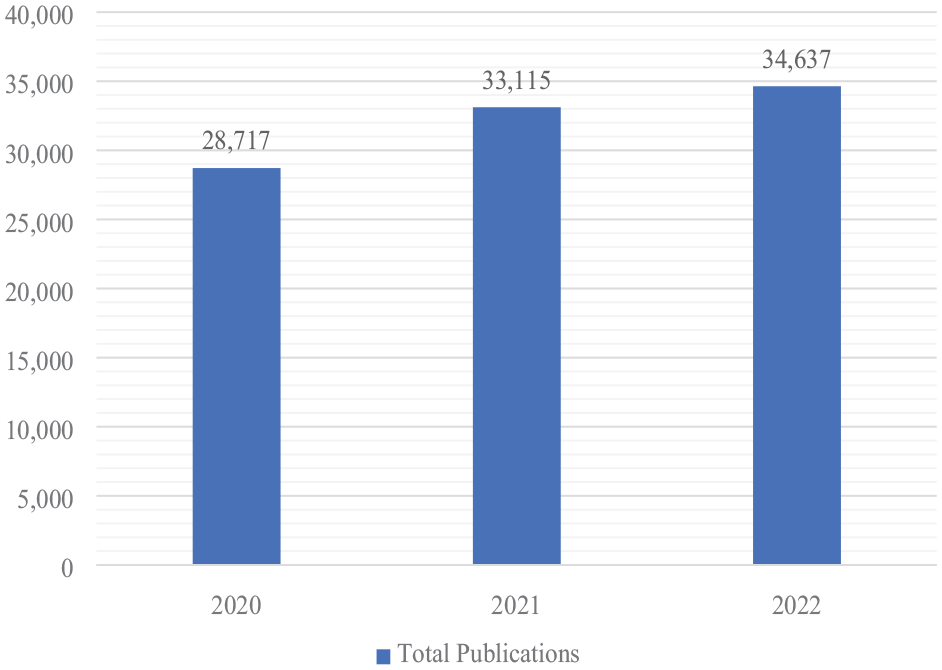
Publication growth of literature on education and COVID-19.
Productivity Analysis of Countries and Institutions
Most Productive Countries
The research area of education and COVID-19 since 2020 has seen the highest productivity from countries primarily located in the Global North. Among the top 20 most productive countries, the USA, UK, Australia, and Spain stand out, collectively contributing approximately 48% (n = 47,799) of the total publications (Table 1). On the other hand, China, Brazil, Turkey, and South Africa have been the most productive countries in the Global South, collectively contributing 17% (n = 16,719) to the literature. This highlights a notable discrepancy in knowledge production between the Global South and the Global North.
The 20 Most Productive Countries Between 2020 – 2022.

Note. Figures for England, Wales, Scotland, and Northern Ireland were combined to create a unified dataset for the United Kingdom. This was necessary because the Vosviewer software had counted separate figures for each constituent part of the UK.
We found a relationship between a country’s productivity and its number of COVID-19 cases, indicating that countries with higher case numbers tended to be more productive (Table 2). However, despite significant case numbers, some countries in the Global South (e.g., India and Viet Nam) and the Global North (e.g., France and Italy) were absent from the list of 20 most productive countries. Notably, all those excluded countries were non-English speaking, except India, where English is one of the official languages (Maxwell et al., 2023). This suggests that the knowledge production gap may be influenced not only by the divide between the Global South and North but also by linguistic differences. It’s worth mentioning that most publications on education and COVID-19 are primarily in English, which we will discuss in more detail in the “Language of Publications” section.
The 20 Most Covid-19 Affected Countries.

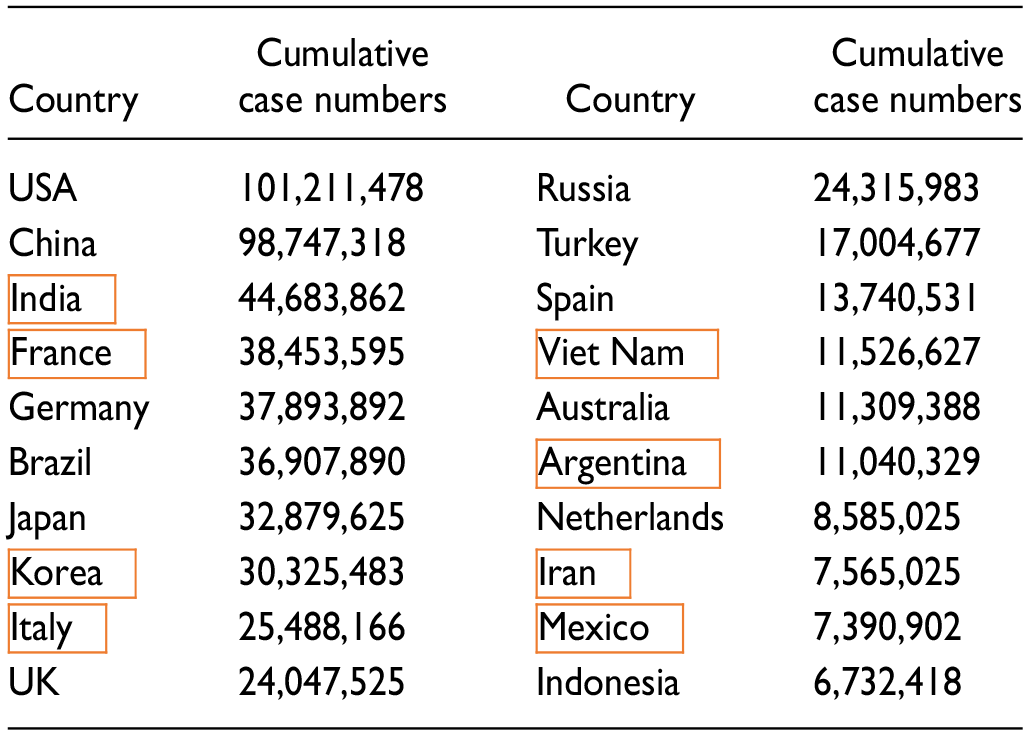
Note. WHO Coronavirus (COVID-19) Dashboard, WHO (2022) . Retrieved on February 12, 2023. https://covid19.who.int/table. Countries absent from the 20 most productive countries are circled in orange.
Most Productive Institutions
The institution-wise productivity analysis also underlined the Global South/North discrepancies in knowledge production since publications were dominated by Western institutions with no institutions from the Global South (Table 3).
The 20 Most Leading Institutions in Educational Research on Covid-19.

Social Structure: Collaborative Network Analysis Between Countries and Institutions
Collaboration Between Countries
Following the descriptive analysis, a co-authorship analysis was conducted to examine the patterns of intellectual collaborations between countries and institutions. Only countries with five or more co-authored publications were retained (n = 147). The size of the nodes indicates the level of publication activity, with larger nodes representing more active publications. The proximity of nodes reflects the strength of the co-authorship relationship, with closer nodes indicating a tighter relationship.
The analysis revealed several distinct collaborative clusters, as shown in different colors, mainly formed around geographical proximities, including Africa, South America, Euro-Central Asia, South East Asia, East Asia and Oceania, Europe, and Africa (Figure 4).

Global scientific collaborative networks. Country co-authorship networks for all countries with five or more publications in the dataset (n = 147).
The network analysis revealed four key findings. First, the Global North countries, predominantly Western, displayed a higher level of global connectivity, particularly the USA, England, and Australia. The USA stood out with its prominent position in global scientific collaborative networks, as indicated by the largest-sized nod (Figure 5a).
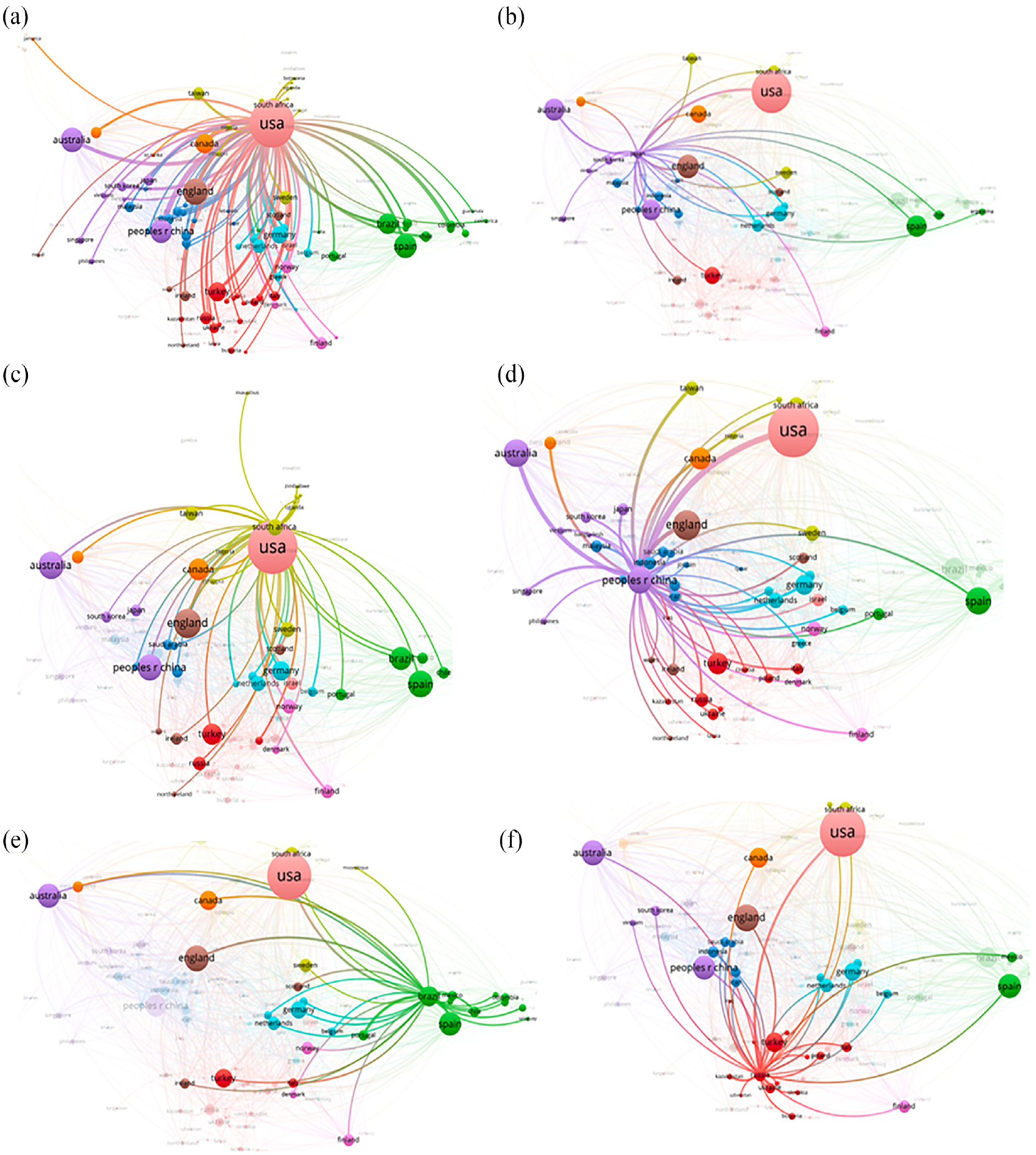
(a) Well-connected western countries’ collaborative networks: USA. (b) Global North Asian countries’ collaborative networks: Japan. (c) South Africa’s collaborative networks. (d) China’s collaborative networks. (e) South American countries’ collaborative networks: Brazil. (f) Russia’s collaborative networks.
Second, non-Western Global North countries had localized and less visible collaborative networks compared to Western countries, which had extensive global collaborations. For example, Japan, despite being a top country, had relatively small and localized networks in Asia despite worldwide collaborations (Figure 5b).
Third, the collaborative networks of Southern countries were generally smaller than those of the Global North, with South Africa and China being exceptions. This suggests a discrepancy in knowledge production between the Global South and North, reflecting the asymmetries already indicated through the productivity analysis.
South Africa stood out as a productive state in Africa, with active collaborative networks both within and outside the continent (Figure 5c).
China also presented an exceptional pattern within Southern countries as it had wider worldwide networks than other Asian countries (Figure 5d).
Fourth, collaborative networks were influenced by geographical and linguistic proximities, and political alliances. For example, Brazil had collaborative networks mainly within South America and with Spain (Figure 5e).
Likewise, Russia, the top knowledge producer in its region (Hernández-Torrano et al., 2021; Kataeva et al., 2023), had active collaborations with post-socialist states, highlighting the influence of political factors and geographic and linguistic proximities (Figure 5f).
Collaboration Between Institutions
The study examined collaborative networks based on co-authorship between institutions, specifically focusing on institutions with 15 or more co-authored publications (n = 1,795). The size of the nodes in the network indicates publication activity, while the proximity of nodes reflects the strength of the co-authorship relationship. Bigger nodes represent more active publications, and closer nodes indicate tighter co-authorship relationships. The analysis indicated frequent collaborations among institutions, particularly at the country and regional levels, as shown by differently colored clusters (Figure 6). The institutions with the largest collaborative networks, mostly located in the Global North, tended to have networks concentrated within the same country, such as in the United States, Australia or China.

Institutional collaborative networks. Institutional co-authorship networks for all institutions with 15 or more publications in the dataset (n = 1,795).
Intellectual Structure Analysis
Language of Publications
The analysis of the intellectual structure of the data set revealed disparities in knowledge production between the Global South and North, as well as within the North, as English dominated the existing literature on education and COVID-19 (Table 4).
Languages of Publications.

Funding Agencies
Similarly, the top 20 funding agencies were all from the Global North (Table 5), with the most active ones being from English-speaking countries like the USA, UK, Australia, and Canada (Table 6).
Funding Agencies.

Countries of the 20 Most Active Funding Agencies.

Journals With Highest Level of Productivity
Table 7 ranks the most productive journals. The top three journals are Education Sciences (n = 1,960), BMC Medical Education (n = 1,888) and Frontiers in Education. All three are Open Access journals, and overall, nine journals are open-access for users. The journals are mixed in terms of focus. Seven journals are broader in thematic scope and education sectors (#1, 3, 6, 10, 12, 15 and 16), four focus on technologies (#4, 5, 8 and 9) and two each on health (# 2 and 19), teaching and teacher education (# 7 & 11), and higher education (#14 and 18). The remaining three journals focused on one or another specialized area (#13 and 17) or sector (# 20).
Top 20 Journals for the Published Articles.
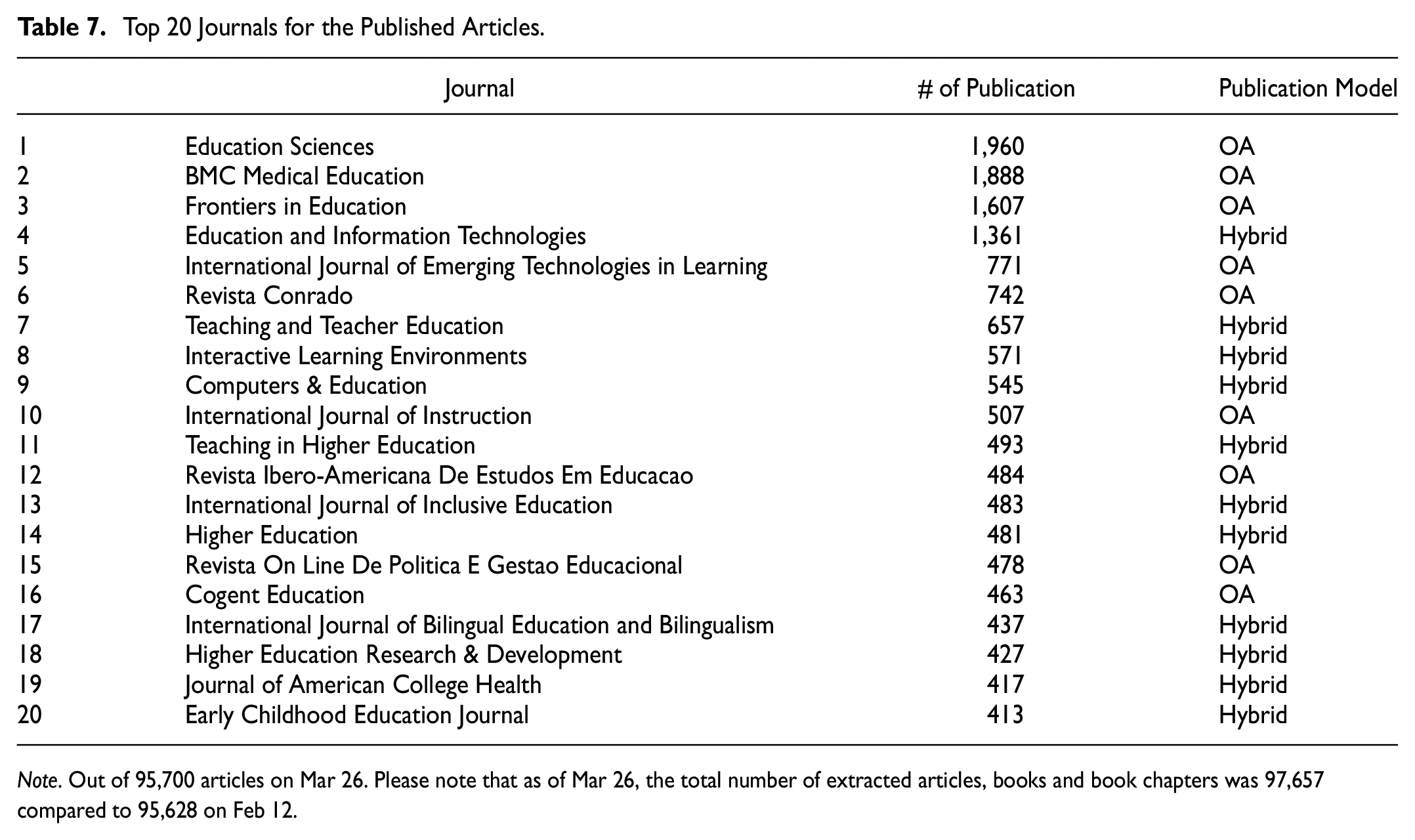
Note. Out of 95,700 articles on Mar 26. Please note that as of Mar 26, the total number of extracted articles, books and book chapters was 97,657 compared to 95,628 on Feb 12.
Conceptual Structure Analysis: Trends in Thematic Foci
To explore the themes in the literature on education and COVID-19, a co-occurrence analysis of keywords in the titles, abstracts, and keyword lists of publications was conducted. Only keywords with 50 or more co-occurrences were included (n = 1,726). The analysis found that the majority of keywords were related to performativity, institutions, teaching methodologies, attitudes and experiences. However, keywords related to equity and social justice were largely absent, except for gender (Table 8).
The 20 Most Frequently Occurred Keywords.

The mapping of co-occurring keywords also indicated similar trends. The analysis identified six thematic clusters of the publications based on the co-occurred keywords: (1) language and literacy; (2) cognition; (3) competency and performance; (4) teaching and learning methods; (5) well-being; and (6) pedagogy and inclusiveness (Figure 7). However, only the pedagogy and inclusiveness cluster (in red color) was related to the concept of equity and social justice. Other clusters focused more on the practical and technical aspects of education. Many keywords related to equity and social justice had low co-occurrences (Table 9).

Thematic foci of the existing publications on education and covid-19. Co-occurrence networks for all keywords with 50 or more publications in the dataset (n = 1,726).
Keywords Related to Equity and Social Justice.

To understand trends in the thematic foci of publications, keywords were analyzed biannually (Figure 8a–c). This analysis did not reveal a significant change in thematic foci. The “social justice cluster” has remained a peripheral focus, gradually becoming a distinct cluster separate from other clusters, suggesting a decrease in its relation to other clusters, including the central keyword “education.”

(a) Keywords related to equity and social justice – 2020 January – December, (b) keywords related to equity and social justice – 2021 January – December, (c) keywords related to equity and social justice – 2022 January – December.
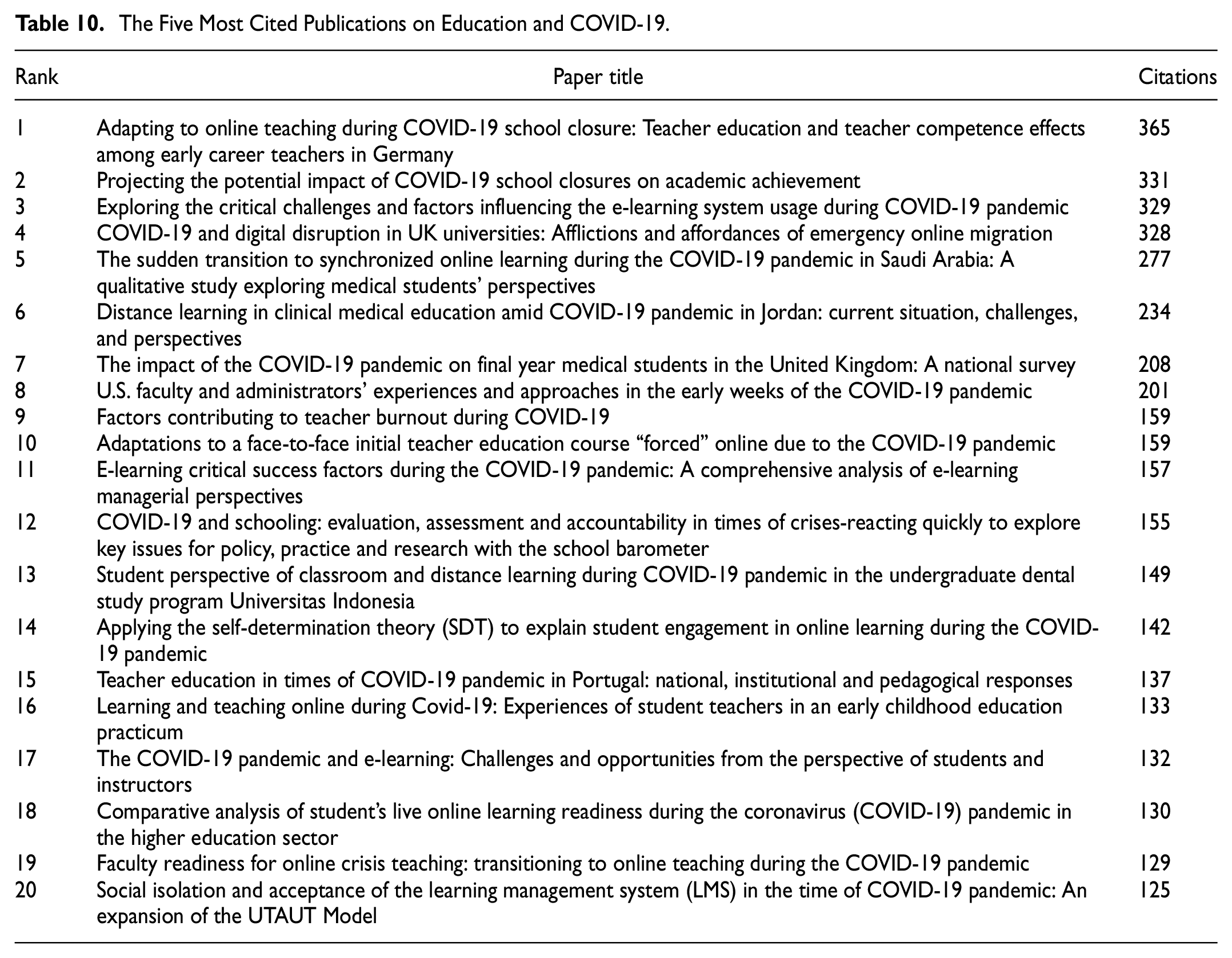
The most cited publications on education and COVID-19 primarily focused on the technical and methodical aspects of education (Table 10), such as online teaching-learning, confirming the trends observed through co-occurrence analysis (Table 8). However, there was a surprising lack of emphasis on equity and social justice, despite reports from organizations like UNESCO (2021a) and UNICEF (2020) highlighting the inequitable access to education during the pandemic.
The Five Most Cited Publications on Education and COVID-19.
Research Design and Methods
The research designs employed in the publications were manually examined to understand how the field was studied. This was necessary as the WoS database does not provide information on the specific research methods utilized in the studies. The most frequently used designs were qualitative (60%; n = 13,720), followed by quantitative (25%; n = 5,745), and mixed-methods (15%; n = 3,318). In terms of data collection methods, surveys or questionnaires were the most frequently used method, followed by interviews and observations (Table 11).
Data Collection Methods

The most frequently utilized methods were content analysis, thematic analysis, and discourse analysis (Table 12).
Data Analysis Methods.

Discussion and Conclusion
This study used a bibliometric approach to map the literature on education during COVID-19 from the lens of EiE. Unlike previous emergencies such as conflict, natural disasters or infectious diseases, which mainly affected education systems in specific geographic locations, particularly in the Global South, the COVID-19 pandemic had a worldwide impact. This global influence is evident in the research productivity on the topic. A total of 95,628 publications were retrieved from the Education and Educational Research journal category indexed in the WoS Core Collection database from 2020 to February 2023. There was a slight but steady growth in publications over time, as well as the spread of publications across countries and institutions showcasing the global nature of knowledge production in the field.
The study found that the Global North countries were dominant in knowledge production, with a larger share of the literature and all the most productive institutions located there. Interestingly, some countries with high numbers of COVID-19 cases were not among the top productive countries. All of these countries, except India, are non-English speaking countries. This dominance of the Global North countries was also reported by Zhang et al. (2022), who noted that 62% (n = 808) of the literature represented the Global North countries, while the share of scholars from the Global North accounted for 38% (n = 496). Likewise, Su et al. (2022) found that all six of the top productive countries in their analysis of the literature on early childhood education during COVID-19 were from the Global North, except for China. However, Mishra et al. (2021) found a more optimistic picture in their study on online distance education during the pandemic, with several Global South countries, including India, Pakistan, Malaysia, and the Philippines, among the top 20 most productive countries. It is worth noting that Mishra et al.’s (2021) study focused on post-compulsory education and had a smaller scale.
The analysis of the field’s social structure shows substantial global collaboration, which aligns with the expectation that the widespread use of technology, social media, and virtual research during the COVID-19 pandemic (Kobakhidze et al., 2021; Sah et al., 2020) would enable broader participation from underrepresented countries. However, while most countries in the Global North had strong global collaborations, South Korea and Japan had a relatively smaller share of global collaboration and their collaborative networks were predominantly localized in Asia.
In contrast to the Global North countries, collaborative networks among Global South countries tend to be localized and influenced by geography, language, and political alliances, except for China, which has broader worldwide collaborations. China’s unique position as the origin of the COVID-19 outbreak (WHO, 2020) and its large number of cases may explain this (Table 2). However, China’s research productivity is increasing. In 2018, China surpassed the USA in the number of original research articles in the WoS Core Collection’s Science Citation Index Expanded database (Zhu & Liu, 2020). Additionally, China’s international research collaborations, particularly with the USA, are growing stronger (Lee & Haupt, 2020).
This study observed disparities in the intellectual structure of the publications across and within northern and southern countries. The majority (89%) of the publications were in English, highlighting the importance of English in knowledge hierarchies. The current study provides a valuable contribution to the literature by examining the role of funding agencies in the creation of knowledge hierarchies. Unlike previous bibliometric papers, this study focused on the involvement of funding agencies. The findings revealed that the funding agencies supporting the studies were exclusively from the Global North, with a significant presence from English-speaking countries like the USA, UK, Australia, and Canada. This highlights the importance of funding agencies in these countries in shaping the knowledge landscape and raises questions about the potential biases and limitations in the dissemination of research.
This study found that the focus of the most productive journals extended beyond technology-focused ones. Mishra et al. (2021) also noted a similar trend, where none of the top journals publishing studies on online distance learning during COVID-19 were included in pre-COVID bibliometric analyses on e-learning. This suggests that a wide range of issues beyond technology emerged, which explains the interest of non-digital learning-focused journals in publishing education studies in the context of the COVID-19 emergency. The top three most productive journals were Education Sciences, BMC Medical Education and Frontiers in Education. Notably, Education Sciences and Frontiers in Education were also among the top 10 most productive journals in Mishra et al.’s (2021) study. Nine out of the 20 most productive journals were open-access. This suggests a preference for open-access outlets among authors or funders, or it could indicate more efficient peer-review processes used by open-access journals.
The analysis of the conceptual structure of the literature, conducted by examining keywords and co-occurring keywords, revealed a predominant emphasis on performativity and teaching methodologies with limited attention to equity and social justice, except for gender. In the co-occurrence analysis, equity and social justice were not among the top keywords. Social justice and equity were also not among the top 10 keywords in the co-occurrence analysis of Fauzi’s (2022) study. The current study expands on previous research by examining the evolution of the literature’s conceptual structure over time. The findings reveal that there has been a persistent marginalization of the thematic focus on social justice since 2020. However, it is promising that gender is considered in the context of education and emergencies during the pandemic since pre-pandemic research on EiE has consistently argued for a greater focus on gender in examining the relationship between education and emergencies (Datzberger & Le Mat, 2018; Durrani & Halai, 2018; Kirk, 2006).
The current study significantly builds upon previous bibliometric research conducted in the field of education during the COVID-19 pandemic by mapping and categorizing the research designs, data collection methods and analytical procedures used within the retrieved literature. A variety of research designs were used in the studies, with qualitative designs being the most prevalent, accounting for 60% of the total. Quantitative designs were used next, followed by mixed-methods designs. Surveys or questionnaires were the most frequently used data collection method, followed by interviews and observation. The most commonly used data analysis methods included content, thematic, and discourse analysis. Interestingly, there is an under-representation of analytical methods related to surveys, possibly due to a lack of explicit mention in abstracts, titles or keywords.
Limitations
The study’s fundamental limitation pertains to the over-dominance of English within the extracted datasets, which underscores the limitations of databases like the WoS, which do not include major world languages, a limitation well-noted by other scholars (Hernández-Torrano et al., 2021; Kataeva et al., 2023). Furthermore, the current lack of representation of scholars from the Global South in databases like the WoS fails to fully acknowledge the valuable contributions made by these scholars. This is due to various barriers, such as language, which may lead them to publish their research in non-indexed journals, commissioned studies, research reports, and gray literature. Finally, the extracted data was narrowed down to the Education and Educational Research Journal category, and thus, papers published in other disciplines but with some focus on education might have been excluded.
Implications
Research
The extensive volume of literature generated on education and the COVID-19 emergency highlights the need for systematic reviews that involve a structured approach to gathering, organizing, and evaluating existing research using content and thematic analyses and are particularly well-suited for narrow or specialized research areas (Donthu et al., 2021). These methods are necessary to assess the immediate and long-term effects of the pandemic on education and stakeholders (e.g., what is the impact of school closures on teacher burnout in the short- and long-term?). Additionally, systematic reviews offer an opportunity to learn valuable lessons on how to enhance the resilience of education systems to global emergencies and explore possibilities for envisioning a more equitable education system. Understanding this information is vital in improving the readiness of education systems for future crises and leveraging the knowledge gained to reimagine education (Zhao & Watterston, 2021). Moreover, researchers should also broaden their thematic focus to include social justice in education during emergencies and post-emergency reconstruction of education systems.
Policy
Given the global impact of the COVID-19 pandemic on education systems, policymakers should prioritize international collaboration and knowledge-sharing to address common challenges and develop effective strategies. Efforts should be made to promote equitable funding distribution and support research from underrepresented countries. Supporting accessibility and open-access publications will ensure research findings are readily available to all for improving policy and practice and identifying under-researched areas. Furthermore, efforts and investments should be made to translate and distribute research findings in multiple languages to ensure broader accessibility.
Practice
Education practitioners should consider the diverse range of issues that have emerged in the context of the pandemic beyond a focus on technology. Additionally, practitioners should pay attention to equity and social justice, particularly in relation to gender, and work toward integrating these themes into institutional policies and practices.
Footnotes
Declaration of Conflicting Interests
The author(s) declared no potential conflicts of interest with respect to the research, authorship, and/or publication of this article.
Funding
The author(s) disclosed receipt of the following financial support for the research, authorship, and/or publication of this article: This study is funded by Nazarbayev University via Grant no. 021220CRP1122 awarded to Naureen Durrani and the Global Challenges Research Fund (GCRF) via the Arts and Humanities Research Council (grant number AH/T008075/1).

Data Availability Statement
All relevant data are within the paper.