




Abstract
Previous studies on civic engagement have been reviewed in their contextual factors, for example, factors in organizational, pedagogical, and psychological domains, while little research has confirmed the structural linkage of related latent variables in this topic. This study intends to investigate college students’ civic engagement efficacy that might affect the entire sustainability of society in their later careers. We assumed students in Science, Technology, Engineering, and Mathematics (STEM) programs in higher education, typically viewed as science-oriented education, might neglect students’ civic engagement. To detect the issue in the specific field, we designed that civic engagement and its implementation were based on students’ self-efficacy measurement. This study considered the time spent on related activities in STEM which might impact students’ involvement in civic activities. A total of 322 survey responses were analyzed, the reliability and construction of the survey instrument were verified, and structural equation modeling (SEM) was applied to examine the causal relationships among observed and latent variables. The findings suggest the two dimensions of civic engagement in terms of civic engaging and implementing might impact students as active citizens and their involvement in local and global activities. While students’ time spent did make significant influence in this model. This study provides an example to detect a specific student’s issue in STEM programs. The findings can bridge the gap of knowledge in STEM education and civic engagement, and provide a practical approach to detect civic engagement efficacy and its impacts in higher education settings.
Plain Language Summary
This study intends to investigate college students’ civic engagement efficacy that might affect the entire sustainability of society in their later careers. We assumed students in Science, Technology, Engineering, and Mathematics (STEM) programs in higher education, typically viewed as science-oriented education, might neglect students’ civic engagement. To detect the issue in the specific field, we designed that civic engagement and its implementation were based on students’ self-efficacy measurement. The findings suggest the two dimensions of civic engagement in terms of civic engagement and implementation might impact students as active citizens and their involvement in local and global activities. While students’ time spent did have a significant influence on this model. This study provides an example to detect a specific student’s issue in STEM programs. The findings could bridge the knowledge gap between STEM education and civic engagement. There are several implications of this study, for researchers, this study found that the design of this study adopted the notion of self-efficacy can be used to investigate college students’ civic engagement progress. In this sense, the findings may provide helpful information for related policy makers. The related findings can enhance the benefits of implementing student’s civic engagement in specific programs. For institutional leaders, the findings may lead to in-depth discussions on the effects of civic engagement efficacy and the time spent on implementing efficacy. In STEM education, how to enhance students’ participation and reciprocal communication by way of extracurricular activities may give priority to institutional strategies.
Introduction
Enhancing students’ competences in STEM (Science, Technology, Engineering, and Mathematics) majors has become an emerging topic addressed persistently in higher education. For example, how do students enhance their knowledge and skills in STEM education? Moreover, how do students extend their capabilities to a wide society or a global context? It has become increasingly important and concerned in the research community, government and non-government bodies. Previous studies have indicated that science knowledge can help (Hurtado et al., 2012; Ro et al., 2022); civic values, attitudes, or behaviors have been studied with STEM students (Astin, 1993; Garibay, 2015; Nicholls et al., 2007); the engineering accrediting body introduced civic-focused student outcomes criteria, students need to be able to consider the impact of engineering solutions in global, economic, environmental, and societal contexts (Accreditation Board for Engineering and Technology, 2021). In STEM disciplines, researchers argue learning focused on science related literacy is not sufficient, engaging experimental activities in related social and global issues can reinforce students’ civic engagement. For instance, the related studies suggest that taking service-learning courses or study abroad courses can support civic engagement (Alcantar, 2017; Bowman, 2011; Engberg, 2013; Lott, 2013). This format of experimental learning is getting important in college’s education. Moreover, Ehrlich (2000) indicates that civic engagement can make a difference in civic life and encourage developing the combination of knowledge, skills, values, and motivation to make that difference in communities. Previous studies have shown a substantial body of higher education literature and indicate that college students can learn civic values and commit to civic engagement through their curricular and co-curricular experiences (Bowman, 2011; Hurtado et al., 2012; Ro et al., 2022). While researchers argue that a little study on these disciplines has clearly assessed and confirmed the meaningful connections with both (Rudolph & Horibe, 2016). Studies on the civic engagement have reviewed in the context factors of community, for example, organizational, pedagogical, and psychological issues, a little research confirmed the related structural linkage among the latent variables. Previous researchers indicate the ongoing activities for students are incompatible with STEM education (Buzinski et al., 2013). Perceiving the importance of civic engagement for students in STEM, we decide to engage in this research topic and focus on detecting their structural relationship.
Context of the Study
In Taiwan, integrated STEM education in higher education has been initiated in the Teaching Excellence Project (Chang & Yeh, 2012) and the Higher Education Sprout Project (HESP) (Ministry of Education, 2017, 2018). Following the developing movement, the novel or high technological growth has accelerated STEM to become the most popular program on campus. There are many studies in the field exploring STEM programs such as National Science Foundation has been collected survey data for graduate students and post-doctorates in Science and Engineering. Studies have been exploring diversity, women in STEM, and STEM and how to integrate civic engagement in STEM classrooms (Chang & ChangTzeng, 2020; Labov et al., 2019). This study is based on the previous literature and explores how civic engagement structured among students in STEM programs. Taking Taiwan’s higher education as example, this study aims to investigate college students’ civic engagement with the concept of self-efficacy, which might affect the involving activities in a sustainable society. Within STEM education, in particular, we explore whether, and to what extent, the college students’ civic engagement related to their implementation. Considering that a self-report of self-efficacy has found with highly significant predictors of behavior change for different behavioral treatments (Borkovec, 1978). This study assumed the association between civic engagement and self-efficacy. With these purposes in mind, we answered the following research questions:
a. What are the influential factors that might prompt to students’ civic engagement in STEM programs?
b. To what extend that are the causal relationships between students’ civic engagement efficacy and implementing efficacy in STEM programs?
Literature Review
First, we addressed the emerging issue of STEM in higher education, then the neglect of STEM education and civic engagement. The other related literature will focus on studies in civic engagement, the notion of self-efficacy and its implications, and discuss the active citizenship and civic life to support the argument of implementing civic engagement.
Rising of STEM in Higher Education
Since higher education has been confirmed to play a crucial role in training the young generation to meet the demand for high skilled labor in different areas (Altbach, 2013; Wolff et al., 2014), it is extremely expected that potential students engaged in emerging high technological fields. Within the higher education contexts, extending STEM education has become an essential component of economic agenda in various countries. As the World Academic System’s (WAS) perspective, it argued that the expansion phenomenon in higher education has spread from a core country to a semi-periphery, and a periphery across a significant number of low-income countries (Ilie & Rose, 2016; Schendel & McCowan, 2016). For example, in the United States (a core country), studies argued that offering a specialized STEM program in a high school can boost the number of students majoring in a college’s STEM programs (Bottia et al., 2018; Means et al., 2016). Australian government (a semi-periphery country) has defined STEM competencies as 21st-century skills for citizens (The Department of Education, Skills and Employment, Australian Government, 2022). It is assumed STEM education can enhance students’ 21st-century skills, therefore expanding the STEM programs could be an optimal strategy. Simultaneously, the growth of STEM has also reached a new high in global higher education settings. The importance and demand of STEM have shaped a new landscape in the world.
STEM Education and Civic Engagement
The rapid development of STEM education has increased the concern of educators regarding the neglect of humanities and art. Therefore, the neglect of civic education in such programs has no exception (Spaulding & Nair, 2020). Educators cautioned that STEM education might develop rapidly at the price of sacrificing civic education. However, to what extent technology-oriented education might neglect students’ civic engagement is still unclear. Previous studies have explored how inquiry-based STEM curricula might have a positive effect on civic engagement (Condon & Wichowsky, 2018). Another study tries to find that inquiry approaches may integrate science and civic education. For example, researchers have found that service learning helps promote achievement, civic engagement, and social skills (Rimm-Kaufman et al., 2021). To clarify STEM education and civic engagement, previous studies have provided useful experiences to deal with this issue.
Studies in Civic Engagement
Reviewing the literature, we found there are various perspectives on civic engagement, related theories and practices have developed the notion of civic engagement in different settings (Berger, 2009; McIlrath, 2018). The ideas of civic engagement are related to the notion of “reciprocity, partnership, inclusion, and social justice.” In addition, civic engagement might be gratified various meanings in practices, for example, actions for “community service, regional engagement, public service, public engagement, and social innovation” (Mtawa, 2019). These notions can enrich the content of civic engagement and its implications. Within higher education settings, Locatelli (2018) suggested that the frameworks of education as a public good with the aim of developing democratic political institutes that enable citizens to have a greater voice in the decisions that affect their well-being. Jacoby (2009) provided a comprehensive guide to developing high-quality civic engagement experiences for college students. He emphasized that “higher education has become one of the few public spaces where students can learn to question authority, apply the ideals of engaged citizenship, restate the importance of the public good, and expand their ability to make a difference” (Jacoby, 2009). We expected that college students are educated, engaged in civic activities to address critical societal issues and contribute to the public good.
Since civic engagement has been viewed as values, knowledge, skills, actions, efficacy, and commitment that could be assessed (Ehrlich, 2000; Hallman, 2016; Ro et al., 2022). Research and assessment instruments measuring civic learning and engagement can focus on one or more of these dimensions (Reason & Hemer, 2015). In the United States, NSSE (National Survey of Student Engagement) conducted civic engagement survey examining students’ conflict resolution skills with engaging in local, state, national, and global issues. In 2021, NSSE has extended the topical module of civic engagement to the core survey about service-learning, community service, volunteer work, and becoming an active citizen (NSSE, 2022). Based on above discussion, this study assumes that creating meaningful civic engagement provisions can enhance college students’ effectiveness of the experimental leaning. For students participated in STEM programs, promoting civic engaged activities may enrich their civic engagement.
The Notion of Self-efficacy and Its Implications
For measurement reason, this study considered the notion of self-efficacy to detect student’s stock of civic engagement. Self-efficacy has been defined in social cognitive theory, it refers to individuals’ perceived ability to deal with a situation, which further leads to their actual ability to deal with the situation (Bandura, 1997; Chambon et al., 2014). Self-efficacy was first introduced by Bandura (1977, 1978), its applications have been extended to various academic disciplines. Previous studies found if individuals do not feel that their actions will be effective within the system they are engaging, they will avoid or reduce their involvement (Beaumont, 2010; Cicognani, 2014); It is also found that strong sense of self-efficacy positively predicts adolescents’ intentions to participate in civic activities (Ainley & Schulz, 2011; Manganelli et al., 2014; Schulz et al., 2010) as well as college students’ actual participation in civic activities (Dauer et al., 2021; Krampen, 2000; Pasek et al., 2008). Moreover, Pastorelli et al. (2001) argued successful civic engagement requires motivation and continued actions on the part of the individual. Previous studies indicated as exposure to civic engagement can also translate to lifelong commitment to civic involvement (Jennings & Stoker, 2004).
Regarding the relationship between self-efficacy and civic engagement, Nuangchalerm (2014) explored the relationship of self-efficacy and civic engagement when performing service learning. The study found not only is self-efficacy enhanced in the context of service learning, but civic engagement is as well. We may assume that not only is self-efficacy enhanced in the context of civic engagement, but civic engagement is as well. In this sense, the self-efficacy could be a valuable indictor to reflecting college students’ civic engagement activities. Borkovec (1978) indicated a self-report of self-efficacy has found with highly significant predictors of behavior change for different behavioral treatments. Based on the findings in previous studies, this study will focus on the concept of self-efficacy with civic engagement as latent variables which contents perceived actual participation in civic activities and commit to civic involvement in life.
Active Citizenship and Civic Life
In our testing model, we considered the implementing issue of civic engagement. The destination of college students is the entire society. Creative a sustainable society by way of civic participation or engagement is our goal. Therefore, the related provisions are very important for students in the higher education. Marinetto (2003) argued active citizenship in terms of the interrelationship between civic society and the political realm. What vision of governance do practices such as active engagement and civil dialog represent? Bee and Guerrina (2014) indicated that enhancing participation and reciprocal communication may diminish the gap between national polities and the organized civil society. The other important dimension is civic society, it has been addressed persistently in the literature. EU defines civil society as “all forms of social action carried out by individuals or groups who are neither connected to, nor managed by, the State” (EUR-Lex, 2022). Today, civil society is “recognized as a diverse and ever-wider ecosystem of individuals, communities and organizations” (WEF, 2013). Therefore, civil society occupies an important position in the development dialog as it provides opportunities to bring communities together for collection action, mobilizing society to articulate demands and voice concerns at local, national, regional and international levels (AfDB, 2012). Previous study argued that there is a tendency within the idea of “active citizenship” to depoliticize the very idea of citizenship (Biesta, 2008, 2009). Who wants to be an active citizen in next society? The questions should be reflected which program’s provision has been done. These notions can help the institutional leaders in higher education.
Civic life could be the public life of the citizens concerned with the affairs of the community, nation, and global as contrasted with private or personal life (Center for Civic Engagement, 2014). Although STEM education has its scientific and economic agenda, while we are confronted with a turbulent society, it needs more active citizens in future. In this sense, we argue there is no exception that STEM’s students should be encouraged participating in the civic society.
Method
In this section, we address the data collection, designed questionnaire, and how the data were analyzed, for example, reliability, factorial analysis, and SEM (structure equation modeling). We proposed a research framework to verify what works in SEM.
Population and Samples
Based on the statistics of Ministry of Education, the higher education enrollment is 1,185,830 in 2021. The STEM programs shared 43% of the student population in Taiwan (Department of Statistics, Ministry of Education, 2022). We considered that the fitted samples were collected using the following formula (Dillman, 2000):
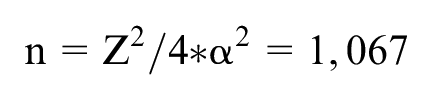
α = .03 (max acceptable error in sampling)
Z = 1.96 (at α = .05 significant level)
Due to the use of anonymous questionnaires and the survey is based on voluntary participation. Frist, ethical review related to waiver and Informed consent documents was approved by the Research Ethics Committee, National Taiwan University. Second, this study set the confidence level of 95% (Zα/2), and the sampling error was controlled within ±.03 (α). The suggested sample was 1067 participants in the target population. Since the STEM programs shared 43%, for parsimonious reasons, we assumed to invite 458 participants in STEM to fit the sample requirement. During 2021, we successfully sampled 350 students in STEM programs (it is covered 76.42% of the original sample plan), including 5 public and 6 private universities in Taiwan. After deleting incomplete questionnaires, there are 322 valid responses were collected. There are 63.0% male and 37.0% female, it reflects male dominated in current STEM programs. Table 1 shows 20.5% of students were in first year, 37.6% were in second year, 24.8% were in third year, 14.9% were in fourth year, and the other 2.2% were extended students. Most participants were taking technology, then science, engineering, and mathematics programs.
The Sample Distribution.

Instrument
This study targets students’ civic engagement and implementing information from college students in STEM programs. The data were based on the students’ self-efficacy rating which students will ask to their civic engagement and the status of implementing. In our instrument design, we considered the “demographic variables” (e.g., gender, college, and grade), while students’“time spent” (including academic activities, extra-curricular activities, and service activities), and their “civic engagement” related activities are key variables in the questionnaire. Some items of civic engagement were extracted from the module of NSSE (2021). The implementing of civic engagement includes student’s implementing in local, global civic activities, and being an active citizen. “Self-efficacy” in the civic engagement scale refers to “Is there anything you could do to impact this issue?” or “What are some things you intend to do and you experience do well?” The “Implementing” refers to “Do you think your actions regarding this issue will make a difference?” The details of items used to assess students’ time spent, civic engagement related activities are displayed as follows.
First, the time spent was used to evaluate students’ actual time spent on the activities on a week basis. We consider the following items to be assessed in students’“time spent”:
“Academics”: Spent time on engaging academic activities;
“Activities”: Spent time on extra-curricular activities;
“Service”: Spent time on service learning activities.
Second, the “civic engagement efficacy” scale was presented using a 5-point Likert scale, ranging from 1 (never) to 5 (always), students’ response will reflect their efficacy on the related items. The original eight items are adapted from NSSE’s (2021) survey module. While we considered the civic engagement activities with two dimensions, one is local related activities, another is global related activities. The items for local related activities include:
“CE1”: “Informed yourself about local or campus issues”;
“CE3”: “Discussed local or campus issues with others”;
“CE5”: “Raised awareness about local or campus issues”;
“CE7”: “Asked others to address local or campus issues”;
The items for global related activities include:
“CE2”: “Informed yourself about state, national, or global issues”;
“CE4”: “Discussed state, national, or global issues with others”;
“CE6”: “Raised awareness about state, national, or global issues”;
“CE8”: “Asked others to address state, national, or global issues.”
Third, the “Implementing efficacy” scale was also presented using a 5-point Likert scale, ranging from 1 (strongly disagree) to 5 (strongly agree) based on the self-efficacy in the following items:
“I_local”: “Organized others to work on local or campus issues”;
“I_global”: “Organized others to work on state, national, or global issues”;
“I_active”: “Be an active citizen to implementing local and global public activities”;
A Proposed Framework for Verifying
Figure 1 demonstrates the latent variables are organized by civic engagement efficacy, time spent and implementing efficacy. In the proposed framework, local and global dimension of civic engagement efficacy have four observed indicators, respectively. Implementing efficacy has three observed indicators. We assumed that the civic engagement efficacy includes local and global two dimensions. The high-level of civic engagement in local and global activities will impact students’ time spent and their implementing effects. Student’s time spent on related activities would have a mediation effect in the proposal framework or civic engagement directly impact the students’ implementing.

A framework of research.
Hypotheses for Testing
Based on the testing model, the hypotheses of the research are as follows:
Hypothesis 1. Students’ civic engagement efficacy will impact their time spent.
Hypothesis 2. Students’ civic engagement efficacy will impact their implementing efficacy.
Hypothesis 3. Students’ time spent will impact their implementing efficacy.
Hypothesis 4. Students’ civic engagement efficacy will, through time spent, impact their implementing efficacy.
Since there were three latent variables in the testing model, we assume there is a mediation effect existed in the structural equation model.
Statistical Analysis
IBM SPSS and AMOS (Analysis of Moment Structure) were used to analyze the data. In this study, we set the significant level at α = 0.05 as our verified criteria. The process of verification are as follows:
First, the reliability of the instrument was verified. Blanthorne et al. (2006) indicated a Cronbach’s α > 0.6 as an index of a measurement to fit SEM.
Second, we carried out factor analysis to determine the validity of the instrument. Typically, the acceptable variance of explanation is over 50% in the proposed survey scale. Concerning the factor loadings, we set the criteria for the candidate items are larger than 0.05. If the factor loadings are less than 0.50, it will be omitted (Bentler, 1990; Walker & Fraser, 2005).
Third, SEM was used to assess the structural relationships among the selected latent variables. We selected common goodness-of-fit indices for model fit in SEM which include Chi-square minimum (CMIN), the ratio of Chi-square to degrees of freedom (χ2/df < 5.0), number of distinct parameters (NPAR), goodness-of-fit index (GFI > 0.90), adjusted goodness-of-fit index (AGFI > 0.90), parsimonious goodness-of-fit index (PGFI > 0.50), and root-mean-square residual (RMR < 0.08; Schumacker & Lomax, 2004; Wardrop, 1987).
Fourth, this study applied the bootstrap method to estimate the mediation effect following Shrout and Bolger’s (2002) recommendation. We selected the number of bootstrap samples as 5000 in this study. When performing the bootstrap, the bias-corrected accelerated percentile (BCa) at 95% confidence level was used to estimate the range of mediation effect (Efron, 1987; Efron & Tibshirani, 1993; Jung et al., 2019; Shao & Tu, 1995).
Results
Reliability and Construct of the Measurement Scale
The reliability analysis revealed the Cronbach’s alpha of whole scale to be 0.863, it is 0.929 in civic engagement efficacy scale and 0.775 in implementing efficacy scale. The internal consistency of the scale implies Cronbach’s α > 0.6. While the Cronbach’s α in time spent scale only 0.494, it might reflect the variety of students’ time spent activities. Moreover, this measurement scale demonstrated that the removal of any item does not change the essential nature of the construct. Table 2 displays the item-total statistics in the measurement scale.
Item-total Statistics in the Measure Scales.

The Kaiser–Meyer–Olkin measure of sampling adequacy indicates the value is 0.87, implying the samples are fitted for factor analysis. The Bartlett’s test of sphericity is significant (χ2 = 2868.585, p = 0.000). Based on result of estimation, there are three factors in the constructs, namely civic engagement efficacy, time spent, and implementing efficacy. The total variances explained is 66.138%, which civic engagement efficacy explains 34.252%, time spent shares 11.722%, and implementing efficacy contributes 20.164%. The constructs of observed variables are displayed in Table 3. All the selected factor loadings are larger than .5. The construct of measurement is a good fit.
Constructs of Observed Variables.

Result of SEM
Before moving to SEM, we checked the distribution of observed variables. Kline (2015) suggested when the value of skewness is larger than ±3, it belongs to absolute skewness. The details of the skewness and kurtosis test are listed as Table 4. Since the values of skewness and kurtosis are small, the data for SEM fit the requirements of normal distribution assumption. This study found the unweighted least squares method (ULS) fits the data set. The results of SEM reveal that the CMIN was 151.401, and the degree of freedom was 71. The first index shows that the value of χ2/df was 2.132 (χ2 = 151.401, df = 71). It implies a good fit (2.132 < 3.00) of the testing model. The second and third indices are GFI and AGFI, the results reveal both are exceeded the acceptance level (GFI = 0.982 > 0.90, and AGFI = 0.974 > 0.90). We checked parsimonious goodness-of-fit index, the fourth index reveals PGFI = 0.683 > 0.50. Finally, we checked the estimated error with RMR, the result reveals RMR = 0.067 < 0.08. The estimated error is tended smaller in this model. Based on the results of the SEM, this study has confirmed the model fit.
Descriptive Statistics of Civic Engagement Efficacy, Time Spent and Implementing Efficacy.

The results of SEM suggest that the significant standardized coefficients are “Civic engagement efficacy”→“Time spent” (0.181) and “Civic engagement efficacy”→“Implement efficacy” (0.768). While the estimated standardized coefficient of “Time spent”→“Implementing efficacy” is 0.008, it is not significant at 0.05 (p = 0.924). Table 5 shows the estimated standardized coefficients and their significances. The details of the structural relationships in SEM are displayed in Figure 2.
The Estimated Standardized Coefficients and Their Significances.
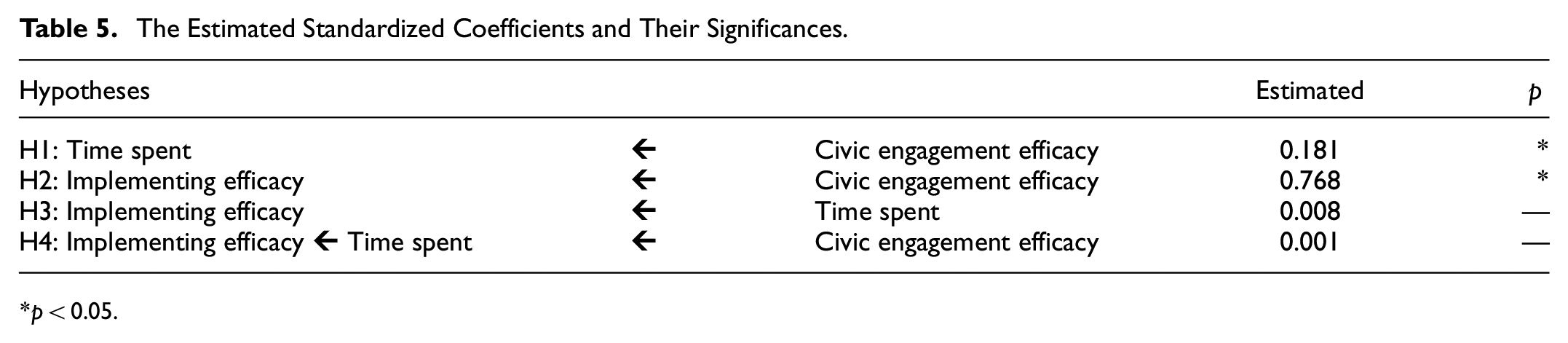
p < 0.05.
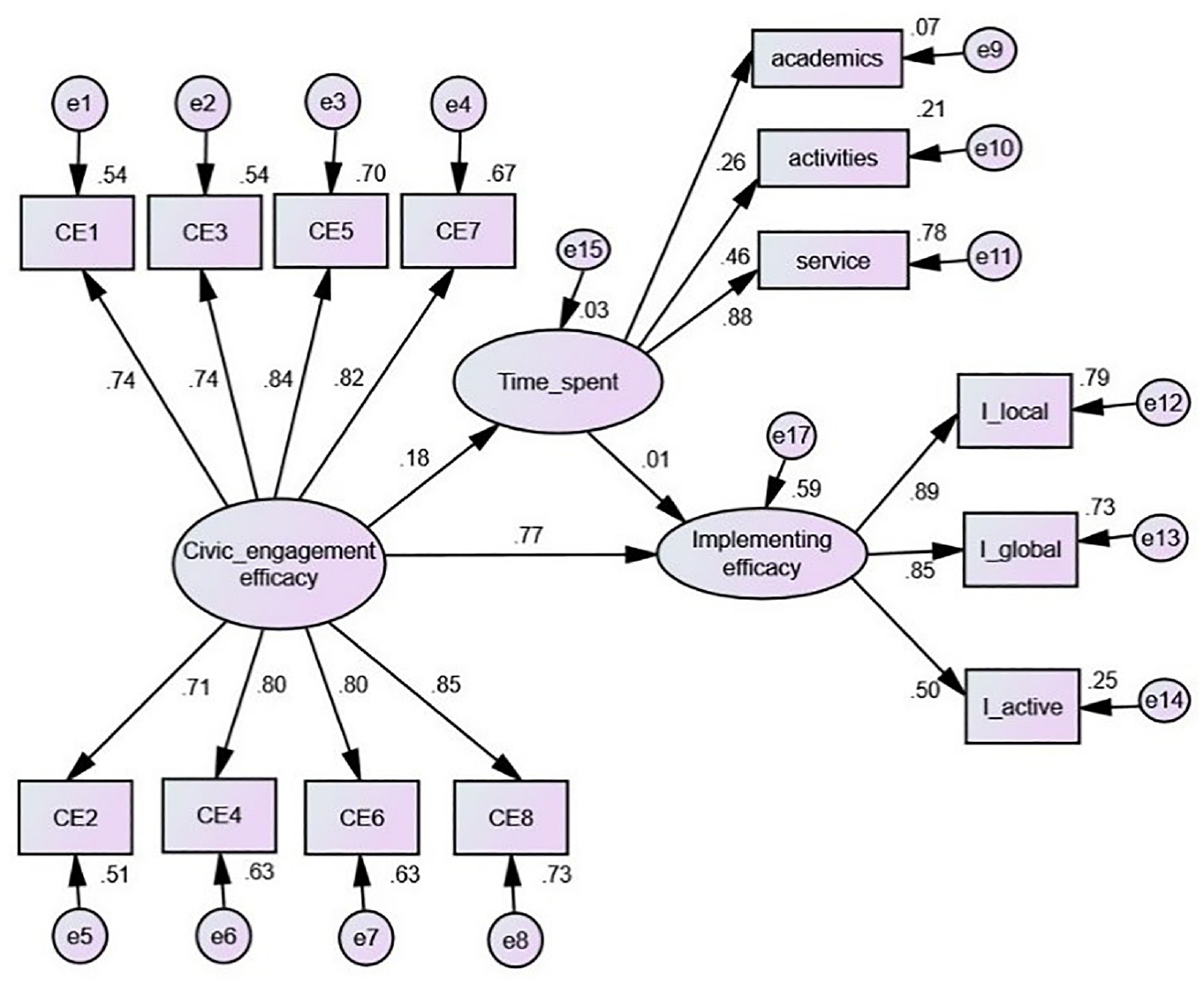
The result of SEM.
The results of the hypotheses tests are listed as follows:
Hypothesis 1. Students’ civic engagement efficacy will impact their time spent. (Accepted)
Hypothesis 2. Students’ civic engagement efficacy will impact their implementing efficacy. (Accepted)
Hypothesis 3. Students’ time spent will impact their implementing efficacy. (Rejected)
Hypothesis 4. Students’ civic engagement efficacy will, through time spent, impact their implementing efficacy. (Rejected)
Testing Mediation Effect
We found that the coefficient β1 (Civic engagement efficacy → Time spent) is significant (β1 = 0.181, p = 0.044), β2 (Time spent → Implementing efficacy) is not significant (β2 = 0.008, p = 0.924). The role of time spent is weak and the mediation effect may not exist in this model. Even though the direct effect of Civic engagement efficacy → Implementing efficacy is significant (β3 = 0.768, p = 0.001). To check the model’s robust and estimate the mediation effect, we conducted The result of bootstrap method with 5,000 samples in AMOS reveals that the effect of mediation (β1 × β2) was 0.001, and it was not significant at the 0.05 level (p = 0.855). The details of 95% confidence of bias-correction acceleration percentile (BCa) intervals are listed in Table 6. The findings suggest that the mediation effect with time spent in terms of indirect effect did not work in this model.
The Estimated Standardized Coefficients of Indirect, Direct and Total Effect with BCa.

Validation of Constructs
The direction of the relationship between the measures and latent constructs might cause measure model misspecification issues. The two types of measure construct are formative and reflective constructs in SEM model. High correlations among formative items could reflect that the scale is measuring essentially the same concept. In this study, the mean of inter-item correlations was 0.358. It is no multi-collinearity problem among the selected 14 observed items.
The reflective construct includes composition reliability (CR) and AVE. This study found the CR in time spent scale is 0.737 and in implementing efficacy scale is 0.784, both are better than the calculated Cronbach’s α. The result of AVE indicated civic engagement efficacy scale is 0.561, implementing efficacy scale is 0.553, and time spent scale is 0.486. Moreover, we checked the correlations and the square roots of AVE based on Fornell and Larcker’s (1981) suggestion. The findings confirm that the correlations among the three latent variables are less than the square roots of AVE. The validation of the reflective construct provides useful information to confirm that civic engagement efficacy scale, time spent scale, and implementing efficacy scale are good constructs for measurement. The details of information are displayed in Table 7.
Validation of the Constructs.

Note. The values of 0.749, 0.697, 0.744 are square roots of AVE.
Discussion
The STEM programs are springing up in the high growth higher education of the world. Accompanied by the science and technology development, this phenomenon has extended from a core country (e.g., USA & UK) to a semi-periphery (e.g., Australia, Germany & Japan), and a periphery across the rest of the world. Most of STEM programs have their economic agenda, while students’ civic engagement has been neglected in these programs.
What Works in Our Model?
Civic engagement is an emerging topic in research communities, it is also an important issue addressed by practitioners in higher education settings. Numerous studies have addressed this issue in varied fields (Berger, 2009; McIlrath, 2018; Mtawa, 2019). We agreed with the research focusing on this emerging topic in higher education. While previous studies on the civic engagement are reviewed in the context factors of community, for example, specific organizational, pedagogical, and psychological issues, a little research confirmed the related structural linkage (Bowman, 2011; Hurtado et al., 2012; Ro et al., 2022; Rudolph & Horibe, 2016). Successful civic engagement requires motivation and continued action on the part of the individual (Pastorelli et al., 2001). Based on this point of view, we considered the STEM programs as a target to build a practical causal model to tackle this issue.
In this study, we found the student’s civic engagement efficacy can link to their civic implementing well. If student’ self-efficacy is an important strategy the process of civic engagement preparation, it can make sense in the STEM education.
Since civic engagement has been viewed as values, knowledge, skills, actions, efficacy, and commitment (Ehrlich, 2000; Hallman, 2016; Ro et al., 2022), this study extended the original notion and confirmed it can be assessed with a causal structural model. This study answered the key questions in the introduction section. Based on the original civic engagement assessment in NSSE (2022), we selected and extended the meanings of the measure indicators. The progress of students’ civic engagement can be assessed with the designed instrument with the 14 indicators. This study provided a strong connection between civic engagement efficacy and implementation efficacy in STEM programs. Application of the notion of self-efficacy can help to detect the civic engagement issue. The application of the research design is not limited in STEM.
Implications of the Study
There are several implications of this study, first, Bandura (1997) argued an individuals’ sense of self-efficacy is developed early in life, and civic engagement education can be translated to lifelong commitment to civic involvement (Jennings & Stoker, 2004). For researchers, this study found that the design of this study adopted the notion of self-efficacy can be used to investigate college students’ civic engagement progress. In this sense, the findings may provide useful information for related policy makers. The related findings can enhance the benefits of implementing student’s civic engagement in specific programs.
For institutional leaders, the findings may lead to in-depth discussion on the effects of civic engagement efficacy and the time spent on implementing efficacy. For STEM education, how to enhancing students’ participation and reciprocal communication by way of extracurricular activities which may give priority to institutional strategies.
In a civic society, we are convinced the importance of the public good for shaping a sustainable society. Therefore, enhancing students’ ability of civic engagement to make meaningful leaning has become an emerging topic in contemporary higher education. This study may provide an example for further studies that are interested in this field.
Limitations of Specific Contextual Factors
Even though the findings of this study can bridge the knowledge of this field, the time spent may imply various activities for students in the STEM programs. This study focused time spent on specific academic activities, extra-curriculum activities, and service learning, it might become a limitation. The result suggests that only time allocation in service learning can exert significant association with civic engagement efficacy. However, the time spent scale did not effect on student’s implementing efficacy directly. This study also did not provide successfully evidences to support the mediation effect of time spent in terms of the connection from civic engagement efficacy through time spent to implementing efficacy. Since students in STEM is a unique group, their time spent patterns may be various in this self-efficacy survey. In addition, the instrument is not inclusive enough, extending related useful indicators could be value-added to the testing model. For further studies, we encourage extending the related indicators to wide meaningful time spent activities could be a better solution.
Conclusion
Civic engagement includes learning from others, comprehending diversity, developing empathy and social responsibility, working through controversy, developing perspectives on social issues, and taking an active role in public life. Through this study, we found the association with civic engagement and civic implementing efficacy. This study confirms students’ self-efficacy can make a difference in the process of enhancing civic engagement in STEM. The findings suggest the measurement of civic engagement efficacy could be a practical way used to tackle the progress of ongoing programs in higher education. In addition, the suggestion may go to institutional leaders in higher education who may advise the students’ time allocation and ameliorate ineffective learning practices in a specific field.
Since the growth of high technology has driven the STEM to be the most popular programs on campus. The issue in the hot programs will persist catching attention in the research community. This design can be used to explore civic engagement issues in STEM, but not limited. For further studies, this model can be extended to investigate similar issues in other higher education settings.
Moreover, this study intends to address the SEM transforming the data with academic criteria and make it clear. Since the statistical process is complicated, it did not fit every reader. This study tried to simplify the verification process, while a lot of technical terms still existed in the text. Hopefully, the design of study as a beginner can interpret what works and what should be enhanced in future.
Footnotes
Declaration of Conflicting Interests
The author(s) declared no potential conflicts of interest with respect to the research, authorship, and/or publication of this article.
Funding
The author(s) received no financial support for the research, authorship, and/or publication of this article.

Data Availability Statement
Data sharing not applicable to this article as no datasets were generated or analyzed during the current study.