




Abstract
This study examined the performance of the Community Markets for Conservation(COMACO), an integrated conservation and development program, in achieving its twin goals of conservation and increased income among rural households in Zambia. It narrows the knowledge gap on achievements of reformulated ICDPs focused on markets. Random sampling was used to select 143 respondents while purposive sampling was employed to recruit focus group discussants and key informant interviewees. Data was collected through structured and semi structured interviews, focus group discussions, field observations, and desk analysis. Qualitative data were analyzed using thematic analysis while quantitative data was analyzed using chi-square tests and measures of central tendency. Results show a significant relationship (χ2 = 143.0; p ≤ .0001) between market linkages and levels of conservation agriculture (CA)practice among COMACO households. We found that 72% of COMACO households linked to markets and provided with agricultural inputs had adopted CA. The dependency on COMACO for markets by farmers is unsustainable. There is little evidence on COMACOs success in reducing deforestation. COMACO’s ban on charcoal production and herbicide and mineral fertilizer use seem unrealistic given the low access to clean domestic energy and the high weed burden of CA. We conclude that the COMACO model is a repackaging of old ideas on ICDPs which yield mixed results and is in this sense is simply old wine in new skins. We recommend farmer training in value addition of their produce, branding, and linkages to markets so that they could sell to other aggregators and not be dependent on COMACO.
Plain Language Summary
This study examined the performance of the Community Markets for Conservation (COMACO), an integrated conservation and development programme, in achieving its twin goals of conservation and increased income among rural households in Zambia. It narrows the knowledge gap on achievements of reformulated ICDPs focused on markets. Random sampling was used to select 143 respondents while purposive sampling was employed to recruit focus group discussants and key informant interviewees. Data was collected through interviews, focus group discussions, field observations and desk analysis. Qualitative data were analysed using thematic analysis while quantitative data was analysed by looking for relationships between markets and type of agriculture system used, and membership to COMACO. Results show that 72% of COMACO farmers that sold their produce practiced conservation agriculture(CA) and were provided with agricultural inputs. The dependency on COMACO for markets by farmers is unsustainable. There is little evidence that COMACO had managed to reduce deforestation. COMACO’s ban on charcoal production and herbicide and chemical fertilizer is unrealistic when households have few options but to use charcoal in their homes and use herbicides to get rid of weeds. We conclude that the COMACO model is a repackaging of old ideas on ICDPs which yield mixed results and is in this sense simply old wine in new skins. We recommend farmer training in value addition of their produce, branding and linkages to markets so that they could sell to other aggregators and not be dependent on COMACO.
Keywords
Introduction
Integrated conservation and development projects (ICDPs) epitomize the thinking that interventions around protected areas should link conservation objectives with local development needs (Newmark & Hough, 2000; Wells & McShane, 2004). When they were first introduced in the 1980s (Rajski and Papalambros, 2021), proponents of ICDPs, most notably the International Union for the Conservation of Nature (IUCN) and the World Wildlife Fund for Nature (WWF), asserted that demonstrating economic value of protected areas to local people was imperative for securing both environmental conservation and local development, and that without the achievement of these twin goals, conservation of protected areas in Africa would fail (Barrow & Fabricius, 2002; Jimoh et al., 2012; Tumusiime & Vedeld, 2012). ICDPs promote a shift from the strict separation of conservation and socio-economic development to the integration of these dual aims (Dove, 2006).
Once they were introduced, ICDPs spread quickly to several African countries. However, the numerous attempts to achieve conservation and local development jointly have reportedly proved ambivalent (Busck-Lumholt et al., 2022; Tafon & Saunders, 2014; Wainwright & Wehrmeyer, 1998). Many ICDPs have failed to achieve their twin objectives (Dressler et al., 2010; Herrold-Menzies, 2006; Shackleton et al., 2010). In a study of ICDPs in Africa, Newmark and Hough (2000) concluded that ICDPs had either failed to achieve or had only modestly achieved their goals of promoting both economic development and nature conservation. McShane et al. (2011) similarly noted that only rarely have ICDPs realized outcomes that demonstrate how natural resources can be managed in ways that achieve benefits for local people while sustaining local and global biodiversity conservation values.
Rationale and Experiences of ICDPs
Results from ICDP initiatives have indicated that the approach achieves an economic win for a select few larger households, with disproportionate benefits going to more powerful stakeholders rather than the poorest groups or others that actually use or rely on the natural resource in question (Cagalanan, 2013; Wells et al., 2001). In a global meta-analysis of 165 protected areas, Oldekop et al. (2016) concluded that positive conservation and socio-economic outcomes were more likely to occur when protected areas adopted co-management regimes, empowered local people, reduced economic inequalities, and maintained cultural and livelihood benefits. A recent systematic review of ICDP literature covering the last four decades revealed three broad areas of importance for ICDPs as being community inclusion and income diversification, inadequate training and management, and inability to properly quantify data (Rajski & Papalambros, 2021).
A study on community benefits from the Serengeti ecosystem in Tanzania showed that very little of the wildlife income reached the communities and virtually nothing reached the households yet communities were paying a heavy price for conservation due to the loss of agricultural and grazing land, and destruction of crops and livestock by wild animals (Mwakaje et al., 2013). In some instances, ICDPs exacerbated negative ecological impacts by acting as growth magnets and encouraging people to migrate into project areas (Scholte & De Groot, 2010). Herrold-Menzies (2006) attributed the lacklustre performance of ICDPs to “the unexamined assumptions underlying their creation and implementation” (p. 385). She noted that ICDP promoters assumed that improving local living standards would enhance conservation by reducing local people’s dependence on and use of valuable natural resources. This, she argued, further assumes that local people will simply renounce illegal activities such as wildlife poaching, wood collection, and land reclamation, when they are provided with legal alternatives, as if households had fixed consumption and income needs. Poor households might not cease illegal activities even if they are engaged in alternative legal activities especially if labor was not completely absorbed by the new activities (Herrold-Menzies, 2006). This is the premise (that households will reduce destructive uses of natural resources if their basic food and income needs are met in ways that end reliance on destructive resource use practice) of a “new” ICDP model adopted by the Wildlife Conservation Society and implemented through its flagship program called the Community Markets for Conservation (COMACO).
The COMACO Model as an ICDP
Community Markets for Conservation (COMACO) was established in 2001 as a non-profit company for reducing rural poverty and achieving conservation of wildlife and habitat in Zambia (COMACO, undated). Its website states that the Wildlife Conservation Society focuses on alleviating poverty and enhancing food security in concert with halting environmentally destructive practices such as poaching and illegal charcoal production. COMACO engages agrarian communities from around Zambia’s national parks through extension programs, reforms poachers, and helps farmers use restorative measures to manage land and water while conserving ecosystems and wildlife (www.itswild.org). The website also explains COMACOs conceptualization of the problem, and its proposed solution. The problem articulated is that rural livelihoods are dependent on unsustainable use of natural resources that creates a poverty trap by removing future options of income choices. Small-scale farmers living with wildlife turn to poaching and wasteful exploitation of their natural resources for their livelihoods while low and declining agricultural yields, aggravated by poor farming practices and limited access to markets, result in widespread hunger and poverty. COMACO then provides a solution to the identified problem, namely, the provision of economically viable alternatives to destructive farming and land use practices. It asserts that when small-scale farmers are able to generate adequate income from their farms by understanding and adopting conservation practices, they are often very willing to stop poaching and other environmentally destructive behaviors (www.itswild.org).
In one of its brochures, the Wildlife Conservation Society explains that it established COMACO to reverse the trend of deforestation and wildlife slaughter. Today, farmers enrol in COMACO to grow ecologically smart crops such as rice, beans, groundnuts, soy and honey. Locally accessible trading centres serve as centres for farmer markets and training to diversify crops and improve yields. To access these benefits, farmers pledge to maintain conservation farming practices and not to poach wildlife or burn their forests. In return they receive continued COMACO support and a reliable source of income at Fairtrade prices. (COMACO, 2016)
By 2015, COMACO reported having worked with 142,519 farming households in 65 chiefdoms across 12 districts (COMACO, 2016). Each year, COMACO acquires over 4,000 tons of raw agricultural commodities, which it processes and packages using its brand called “its wild.” These branded products are sold in major food markets across Zambia with sales exceeding USD130,000 per month (COMACO, undated). What explains this substantial growth by COMACO when ICDPs elsewhere have been reporting limited success at best? This success has been attributed to “the COMACO Model.”
The COMACO model is framed as “a business partnership between COMACO and small-scale farmers and their leaders that offers economic rewards for good land stewardship and commitment to sustainable agriculture” (COMACO, undated). Its website explains COMACOs vision as “a market-based, science-smart model capable of improving rural livelihoods and restoring degraded landscapes through the adoption of sustainable, low-carbon agricultural practices and more effective community leadership with the potential of being replicated across multiple landscapes in southern Africa” (https://www.itswild.org/vision-mission-goals/). In practice, rural dwellers that sign up to participate in COMACO projects are asked to refrain from what are deemed to be environmentally destructive practices, namely charcoal production, use of mineral fertilizers in crop production, deliberate setting of bush fires, felling trees during harvesting of honey, and illegal hunting of wild animals. In exchange, COMACO provides input loans, training in environmental management and access to markets, which leads to increased incomes for participating households (Sikazwe, 2012). In a recent study from 217 respondents living near the Kafue National Park in Zambia, Mutti et al. (2023) found that access to a community micro-credit facility, donation of agro-input packs, and milking cows could potentially reduce poaching, in support of the COMACO model.
Old Wine in New Skins?
Much like the old ICDPs, the COMACO model is premised on the linkage between economic benefits and conservation. Thus, it is prima facie a repackaging of old wine into new skins. It uses old ideas about ICDPs and reinvigorates them under a new name. The model goes further by explicitly making the economic rewards contingent upon individuals, households, and communities engaging in predefined conservation activities and their discontinuation of activities perceived to be environmentally destructive by COMACO. According to USAID (2011), COMACO recognizes that people accustomed to bad practices often require incentives to change behavior and this process can take time and may require disincentives if change does not follow. COMACO monitors the transformation process and awards its incentives based on an annual conservation compliance audit, which it undertakes of all chiefdoms it operates in.
Simasiku et al. (2010) noted that the COMACO model focuses on ending biodiversity threatening activities such as charcoal production and poaching by providing training in livelihood skills such as vegetable growing, bee keeping, and carpentry. Additionally, D. Lewis et al. (2011) state that expected outcomes of the COMACO model include sustainable land use and natural resource management activities which should lead to both direct and indirect conservation of biodiversity. This study interrogates the stated premise of the COMACO model and assesses its performance through a case study of its activities in Shiwang’andu district in north eastern Zambia (Figure 1). The following research questions were used to guide this study: (1) What activities does COMACO promote among its member households in Shiwang’andu district? (2) What results has the COMACO model yielded in Shiwang’andu district? (3) What achievements and challenges have been experienced by both smallholder farmers and COMACO in Shiwang’andu district as a result of COMACO’s focus on both conservation and development? (4) Given the results, what is old and new about the COMACO model? We examine the implications of these results for future ICDPs and sustainability pathways. We aim to fill the knowledge gap on performance of an iconic ICDP in Zambia and whether a recent reformulation of the concept is a pathway to high success in conservation and development programs. We contribute to scholarly debates on the future of ICDPs in Africa.
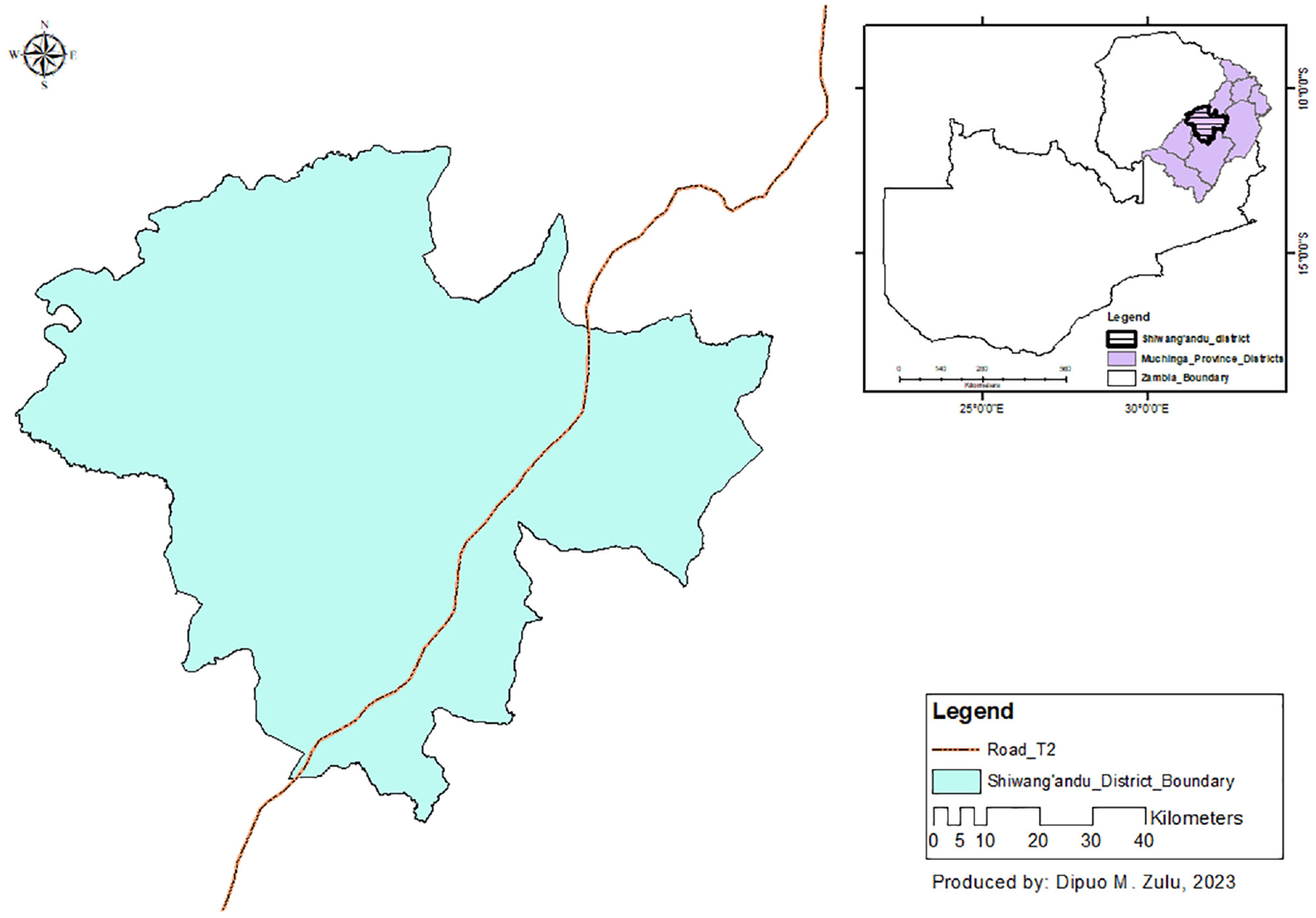
Location of Shiwang’andu district.
Study Area and Methods
Description of the Study Area
The fieldwork for this study was conducted between December 2015 and April 2016. The research was conducted in Shiwang’andu district, north eastern Zambia (Figure 1). Shiwang’andu district was purposively selected as a case study because COMACO has been operating there since 2007.
Shiwang’andu experiences a tropical type of climate characterized by three distinct seasons: the cool dry season, which stretches from May to August; the hot dry season from September to November; and the rain season from November to April. Temperature ranges from 18°C to 24°C. It receives average annual rainfall of between 1,000 and 1,500 mm. The District has a total surface area of approximately 9,837 square km out of which 60% is arable land, 25% is land under mountains, wetlands, and game management areas (Muchinga Province Provincial Administration, 2022). Due to high rainfall in the agro-ecological region the district is situated in, its soils are acidic due to loss of basic cations caused by leaching (Chapoto et al., 2016; Makungwe et al., 2021). Miombo type of woodlands tend to dominate in the district. The prominent tree species are that of Brachystegia Isoberlinia, Brachystegia speciformis, Julbernadia paniculata, Isoberlinia paniculata, Brachystegia Longfolia, and Colophospemum mopane (FAO & FD, 2016). The residents engage in small scale production of food and cash crops such as maize (Zea mays), cassava (manihot esculenta), groundnuts (Arachis hypogea), common beans (phasedus vulgans), soya beans (Glycine max), and sweet potatoes (Ipomoea batatas) to meet their subsistence, nutritional, and income needs. They also engage themselves in artisanal fishing from the local rivers, Chambeshi and Lubu Rivers.
Data Collection Methods
The target population comprised all the 357 households in Shiwang’andu district that joined COMACO between 2007 and 2013. COMACO allows only one individual per household to register for its program (D. Lewis et al., 2011). Four data collection methods were used to collect both qualitative and quantitative data: structured interviews, semi-structured interviews, and focus group discussions.
Structured interviews
A sample of 143 was randomly selected from the target population. This sample size was determined through a priori power analysis using the data analysis software, G Power 3.1.9. The sample size of 143 provided statistical power of 0.80 for detecting a moderate effect at the (two-tailed) 0.05 level of significance (Erdfelder et al., 1996). Power analysis is used to calculate the minimum sample size required to detect an effect of a given size with a given degree of confidence. The statistical power of a test is its ability to detect a statistically significant difference when the null hypothesis is in fact false, or in other words, to find a difference when a real difference exists (Faul et al., 2007). The 143 participants were then selected using random numbers generated using Microsoft Excel 2010. Structured interviews were thereafter conducted with sampled COMACO households. The small questions were asked to all respondents and the responses were recorded on the interview schedules, one for each respondent. The interviews were conducted in Nsenga, the most common local dialect.
Semi-structured interviews
Semi-structured interviews were conducted with six key informants that included a COMACO official and five lead farmers, all purposively sampled. Lead farmers are drawn from within communities and provided with training and material support before they are expected to train fellow farmers. Purposive sampling involves choosing participants considered to be knowledgeable about the topic of the study (McMillan & Schumacher, 2006). The interview sessions lasted for about 1.5 hours each. Interviewee responses were recorded in a field note book before transcription for analysis. Semi-structured interviews were used in accordance with the suggestion by Gray (2009) that the method permits probing of perceptions or views in instances where respondents need to expand on their responses. In this way, it was possible for the key informants to not only provide subjective meanings that they ascribe to COMACO’s performance, but also give new insights that helped to answer the research questions.
Focus group discussions
Focus group discussions (FGDs) were conducted with five out of the seven COMACO farmer groups involved in the study. The five farmer groups were picked using simple random sampling method. This is in line with the recommendation of Onwuegbuzie and Collins (2007) that a study must have a minimum of three FGDS to generate sufficient data and this was applied in this research. The number of COMACO households that participated in each focus group discussion ranged from 6 to 7. This is in line with the recommended size of between 6 and 12 participants (Onwuegbuzie & Collins, 2007). Each farmer group had 20 members but only 6 to 7 members from each group were invited to be discussants. The selection was based on gender and age in order to get heterogeneous groups comprising men and women discussants of various ages and presumably a diversity of experiences and perceptions. The discussions were facilitated around the topics of background to the formation of COMACO farmer groups in the area, their main activities under COMACO, and their perception of COMACO’s achievements and failures.
Data Analysis
The qualitative data from the focus group discussions and semi-structured interviews were analyzed using thematic analysis, with the aid of QDA Miner 3.2 (Provalis Research, 2009). The thematic analysis involved recording the verbal discussion with discussants and interviewees, transcribing it and breaking it into themes based on research questions. Quantitative data such as the number of households accessing markets and adopting CA was analyzed using the chi-square test and measures of central tendency (means) using the Statistical Package for Social Sciences (SPSS) version 20 software.
Ethical Considerations
Permission to conduct the study was obtained from the Natural Sciences Research Ethics Committee, University of Zambia. During fieldwork, informed consent was obtained from all research participants, all of whom were consenting adults. Care was taken in the handling and management of research data: The data was anonymized and kept in a password secured laptop folder, accessible to the authors only. The interviews were conducted after securing a place from which none other than the interviewer could hear respondents’ responses. At the beginning of the interviews, it was buttressed that the responses would be kept anonymized and there would be no fall out from COMACO or any other organization.
Results and Discussion
The following section presents and discusses the results of this study. Our results suggest that COMACO households provided with markets and agricultural inputs readily take up environmental conservation measures. We note that the provision of material incentives motivates behavioral change and creates a dependency on external support for good environmental stewardship.
Farmers’ Environmental Conservation Practices under COMACO
The households under study joined COMACO in different years. Upon joining, they individually signed a commitment pledge of environmental conservation. The 143 COMACO households interviewed were able to state some of the activities that they engaged in under COMACO. These activities were training in conservation agriculture (CA), beekeeping, gardening; poachers and charcoal producers’ transformation, and acquisition of agricultural inputs from and sell of agricultural products to COMACO. ACT (2014, p. 4) defines CA as “a management system based on three principles that are applied in a mutually reinforcing manner: minimum physical soil disturbance, permanent soil cover with live or dead plant material, and crop diversification in space and time.” According to Knowler and Bradshaw (2007), CA increases the organic content on the top layer of soil. Wolkowski (2003) also states that CA improves the physical and chemical properties of soil. Furthermore, according to Chivenge et al. (2007), CA increases biotic diversity and soil organic matter content from constant addition of crop residues.
Poacher transformation involves poachers voluntarily surrendering their muzzle loader guns and snares in exchange for agricultural inputs. In the same way, charcoal producers are given agricultural inputs for their compliance to the pledge they make when joining COMACO. Input supply is a regular activity by COMACO which involves the distribution of agricultural inputs (legume seeds, agricultural lime, grain bags, etc.) to members. Procuring farm produce from its members is at the core of COMACO’s mandate. Only crops produced following COMACO’s prescriptions are purchased.
Transformed poachers, charcoal producers, and Chitemene1 farmers are organized into small groups where they are trained in various environmental conservation activities. Out of the 143 COMACO households that were interviewed, 60% had been involved in charcoal production, while 30% used to practice Chitemene agriculture before joining COMACO.2,3 The rest (10%) had been poachers. Upon joining COMACO, 74% of the interviewed households adopted rain-fed CA only while 13% took up rain fed CA and beekeeping; 11% combined rain-fed CA and irrigated crop production while 1% combined CA and poultry.
All the interviewed households claimed to have abandoned their environmentally destructive activities once they joined COMACO. Most (65%) of them said they had experienced economic difficulties before joining COMACO. After joining COMACO, 54% reportedly increased their agricultural incomes while 19% experienced improved livelihoods. The rest (27%) maintained that their joining COMACO had not had any effect on their livelihoods. More than half of the households indicated that their food security had increased after they joined COMACO whereas 25% indicated that they had not experienced any change in their household food security after joining COMACO.
All the 143 interviewed households indicated that they had knowledge of CA because they were trained when they joined COMACO. Every year, new entrants to the program are trained in CA before they are given free agricultural inputs. The training is provided by COMACO extension staff and by fellow farmers, known as lead farmers. For instance, 71% of the households were trained by COMACO extension officers while 20% were trained by lead farmers. Over three-quarters (82%) of the COMACO households interviewed indicated that they were visited at least once in a month while 18% indicated they were not visited by COMACO extension staff.
Almost three-quarters (73%) of the interviewed households were still practicing CA whereas 27% had abandoned it. Levels of CA practice and benefits accruing to COMACO households were positively associated (x2 = 143.0; df = 1 p ≤ .0001). For instance, 71% indicated that they were practicing CA because of ready markets for their legumes and access to agricultural inputs while only 18% practiced CA due to its soil conservation benefits. The rest (11%) indicated they practiced CA because of its crop yield improvements. In a follow up question probing the rational for CA practice, 67% of the interviewed households claimed that they would continue practicing CA even if COMACO stopped giving them agricultural inputs while 33% admitted that they would discontinue. Noteworthy is the dissonance between the reasons they gave for CA practice (linked to material benefits) and the latter claim to continue without said material benefits. The latter response is arguably a desire to give a socially acceptable response by appearing to be environmentally conscious and not motivated by material benefits.
During the FGDs, members appreciated the role of COMACO in their livelihoods. Most of the participants indicated that their livelihoods had improved since they joined COMACO. The discussants observed that they had learnt about a lot about aspects pertinent to their livelihoods such as nutrition and family planning during meetings frequently arranged by COMACO. Observations made during fieldwork for this study showed that CA adoption levels were high among COMACO farmers. Interviewed households had a mean of 1 hectare of land under CA during the 2014–2015 agricultural season. Arguably, this is motivated by the benefits provided by COMACO and not necessarily a conviction of the environmental benefits of CA. Previous research alluded to the incentivizing nature of material benefits for short term adoption of conservation practices and described the adoption as ephemeral and not borne out of conservation ethics (Chaudhary et al., 2023; Habanyati et al., 2020; Umar & Kapembwa, 2020).
The key informant from COMACO noted that crop residue management—consisting of retaining crop residues in the fields—and crop rotation had been adopted by its farmers. He attributed the retention of crop residues to farmers no longer abandoning their fields due to low soil fertility and subsequent low crop yields, as was the case hitherto. This narrative was repeated by some discussants during the FGDs. Most members of the FGDs indicated that crop markets especially for legumes were good and that no other organization bought legumes in as large quantities as COMACO did. For the discussants, this was a much larger incentive than the agricultural inputs received from COMACO. Some contended that even if COMACO stopped giving them agricultural inputs in form of seed, agricultural lime or garden tools, they would continue being its members as long as markets for the legumes were being provided.
These findings reinforce the notion that COMACO-like models can promote indirect involvement of resource-poor communities in projects aimed at environmental conservation through the implementation of substitute livelihood activities as noted elsewhere in Africa (Ferraro, 2002; Salafsky & Wollenberg, 2000). Although in other countries, sustainable natural resource management has been achieved through community based related projects (e.g., safari hunting and eco-tourism), the COMACO model in Shiwang’andu district offers opportunities for private benefits. Other than waiting for implementation of community projects, COMACO participants at household level engage in livelihood activities that generate individualized benefits. The extent to which the benefits, which include food and cash incomes, function as instruments for long term conservation, is however debatable. Thus, COMACO performed well on its goal of economic benefits but its conservation achievement was less convincing.
Livelihoods Under COMACO
Findings of this study indicate that participation in COMACO project affects the livelihoods of the participating households. Rural livelihoods comprise a combination of natural (agricultural, wildlife, and forest lands) and financial (income and savings) capitals. A change in the livelihood status of most interviewed households (74%) whose livelihood before joining COMACO was anchored on charcoal production, poaching, and Chitemene farming is reported as having improved. They noted that their participation in COMACO projects has guaranteed them access to ready and better legume markets which were lacking in the absence of COMACO. Likewise, livelihoods are perceived to have improved on the basis of having more diversified foods (reported by 60%) as a result of crop diversification promoted by COMACO. A thought to ponder here is whether the improved livelihood outcomes are commensurate with aspired environmental conservation outcomes. For instance, has the change from charcoal production by 60% of the households resulted in reduced deforestation in their communities? Furthermore, is it realistic to demand a ban on charcoal production in a country where a large proportion of its rural dwellers do not have access to clean domestic energy sources? Do environmental conservation outcomes improve when rural households switch from charcoal production to legume and vegetable production but continue to cut down trees for domestic firewood use?
Knowledge of Conservation Agriculture by COMACO Households
All the interviewed households were able to state the topics covered during training and appreciated that CA was beneficial in that they experienced increased yields. Training of new entrants is mainly done by senior lead farmers as observed during this research. Over 70% of the interviewed COMACO households were trained by senior lead farmers. This is in line with Baudron et al. (2005) who say that effectively, CA must be advocated and demanded by farmers because it is their resources and livelihoods that are at stake. Whether the training received has translated into sustainable land management and abandonment of destructive practices is an important question.
Crop residue management was practiced by 73% of the interviewed COMACO households. Field observations indicated different levels of crop residues depending on the type of crop that was previously grown. COMACO farmers are advised to make fire breaks around their fields. However, there were incidences when some local people burnt the fields as they hunted for mice. Maize stalks, grass, or weeds used as cover (mulch) was observed in the fields. In situ crop residue retention is encouraged because it results in higher surface soil organic matter content and higher infiltration rates, reducing surface runoff and soil erosion (Hobbs et al., 2008). Regarding crop rotation, the study found sufficient evidence from field observations that households practiced crop rotation where maize was grown in rotation with legumes (common beans, soya beans, and groundnuts). Almost three-quarters (73%) of the interviewed COMACO households reported practicing crop rotation. This seems to suggest that the inputs (legume seeds) and ready market for legumes provided by COMACO was encouraging crop rotation. COMACO emphasized crop rotation because it saw the practice as a sustainable pathway for increasing crop yields and cash incomes which reduce the motivation to engage in destructive activities such as charcoal production and poaching.
However, the study notes that some interviewed COMACO households did not practice CA as prescribed by COMACO. For instance, there were instances where some COMACO farmers had used small ridges in their CA plots, contrary to the CA principle of minimum tillage. This was common in areas where lead farmers were not active. COMACO extension officers were aware of this trend by some farmers and were quick to say it was understandable in an area with high amounts of rainfall such as Shiwang’andu. In fact, some of the COMACO farmers reported having been advised by COMACO officers to use ridges once every 5 years. Ridges were common especially in low lying areas where crops would easily be submerged as a result of excessive rainfall. We argue that COMACO promoted tillage systems that were unsuited to the area and its member farmers made a show of using these tillage systems simply to access agricultural inputs and markets from COMACO. Further, we contend that COMACO unduly focused on CA, which can be considered a low hanging fruit compared to other sustainable land management practices.
Challenges Faced by COMACO Households and COMACO in Shiwang’andu District
COMACO household respondents reported that destruction of crop residues either by livestock or fire was a challenge in the area. Sometimes their fields are set ablaze by local residents that hunt mice as earlier alluded to. In addition, goats or pigs occasionally invade fields especially those fields that are adjacent to villages. Burning of crop residues was not a major challenge among COMACO members in that making fire breaks around cultivated fields was one of the conditions for one to access agricultural inputs from COMACO. Hence most of the COMACO farmers had fire breaks. However, there were reports of few fire incidences when non COMACO members would deliberately burn the fields of COMACO members as they hunted mice. Interviewees also reported that some people unintentionally burn crop residue during the routine practice of Chitemene farming. In such incidences, a COMACO member would still access agricultural inputs from COMACO since the burning would not have been done intentionally. Likewise, destruction of crop residue by livestock was not as serious in the study site as observed in eastern and southern Provinces of Zambia (Umar et al., 2011). In Shiwang’andu district, only about 1% of the interviewed COMACO households reared cattle. Likewise, most of the interviewed COMACO households live in villages while their fields are located over 2 km away from their homesteads. Livestock such as goats and pigs are kept within the vicinity of the villages, and thus are unlikely to frequently disturb such far off fields.
A key informant from COMACO outlined challenges faced during the purchase of farm produce as well as implementation of CA; some of the agricultural produce is purchased by its competitors that enter the markets earlier than COMACO.
Some interviewed COMACO households complained of late buying of farm produce by COMACO. COMACO usually buys the farm products around July while private buyers start buying as early as April. COMACO contended that it has to wait until around July before purchasing the agricultural produce from its farmers as it has to ensure that the crops are sufficiently dry to withstand long term storage without rotting. According to COMACO key informants, farmers that sell their produce in April are “simply acting desperate.” In this vein, COMACO is not different from the publicly owned agricultural marketing agency, the Food Reserve Agency, which only purchases maize from smallholder farmers after the central government of the Republic of Zambia announces its maize price around July/August every year. This suggests that premium pricing per se may not by itself help farmers meet their livelihood needs through increased cash incomes. The period when the cash is available is cardinal. Desperate households seem inclined to earn less cash income if it can be obtained a few months early, and used for pressing household needs.
COMACO members that had disadopted CA cited high labor requirements especially during weeding as the reason they had stopped it. Focus group discussants similarly complained of drudgery during land preparation and weeding as similarly reported by Chomba (2004). The discussants appealed to COMACO to provide herbicides at the time of weeding to ease the weed burden. However, COMACO discourages the use of both mineral fertilizers and herbicides on the basis that these products pollute soils. The use of herbicides among COMACO members remains contentious. The higher weeding requirements under CA has been acknowledged by many scholars writing on CA practice among smallholders in southern Africa (Arslan et al., 2014; Baudron et al., 2007; Bellotti & Rockocouste, 2014; Haggblade & Tembo, 2003; Sims et al., 2012; Umar, 2012). COMACO farmers requesting to use herbicides indicates that their practice of COMACO’s organic version of CA was superficial, as we have argued earlier.
COMACO is unique in taking a strong anti-herbicide standpoint unlike other CA promoters such as the Conservation Farming Unit (CFU). Conversely, it is like other CA proponents such as the FAO by sticking to its prescriptions for the practice of CA despite documented reports of bottlenecks experienced by smallholder farmers in adopting it as strictly prescribed. This is an example of the contradictions that invariably arise in the promotion of interventions that have livelihood development and conservation goals. We argue that despite its repackaging, the COMACO model remains an ICDP prone to the quintessential challenges of integrating conservation and development among resource poor and natural resource dependent communities in Sub-Saharan Africa. It is further plagued by another common challenge of promoting agricultural interventions which are at variance with the local bio-physical and socio-cultural conditions. In this sense, it is an old wine in new skins.
Benefits Accruing to COMACO Members
The purchase of legumes (groundnuts, common beans, and soya beans), vegetables, and honey was one of the major activities undertaken by COMACO in Shiwang’andu district. The iconic aspect of the COMACO model in Shiwang’andu district is the provision of a ready market for the produce of rain fed crop farmers, bee keepers, and vegetable gardeners. COMACO has extended its markets to its farmers irrespective of their physical distances away from major urban markets. In the process, local depots have been established in all chiefdoms where COMACO operates from to facilitate easy transportation of produce to processing plants and local green markets. All the interviewed households sold groundnuts and common beans to COMACO during the 2014/2015 agricultural season. COMACO procured 26,700 kg of soya beans, 20,950 kg of beans, and 21,300 kg of groundnuts from them during the 2014/2015 agricultural marketing.
Key informants observed that after harvest, COMACO farmers pool their produce together at designated places called collection points spread across their villages. COMACO then weighs and collects the “bulked” products from these points and pays the farmers on the spot. This reduces marketing costs on the farmers’ part. Therefore, COMACO addresses the challenges of markets and transportation costs faced by smallholder farmers in Zambia by taking markets close to where the farmers live.
Price comparisons between COMACO and its competitors (private buyers) reveal differences ranging from 0% to 20% (Table 1).
Comparisons of Legume Crop Prices Offered by COMACO & Its Competitors During the 2014/2015 Agricultural Marketing Season.

Therefore, benefits associated with crop marketing include markets for legumes and at prices better than those offered by other buyers for soya beans and common beans. The key informant from COMACO indicated that the number of COMACO households that sell legumes has been increasing since its inception in 2007 due to ready markets for legumes. However, the study notes that despite the increase in the number of participants, the production levels of legumes per household are still low. This was attributed to the low hectarage that individual households cultivated. As for honey production, not much seems to have been done as only 5% of the interviewed households had beehives.
Agricultural inputs given to COMACO members include common bean, soya bean and ground nut seed, and cassava stems. Each member household is given 10 kg of seed for each crop at the beginning of the agricultural season. They are expected to pay back 13.5 kg of common bean, 15.5 kg of soya bean, and 17.5 kg of ground nut seeds at the end of the agricultural season. Beekeepers receive free beehives while vegetable producers get garden tools such as garden folks, watering canes, and slashers. Agriculture lime is freely given to member farmers that request for it. If a member does not repay the input loan the same season, s/he is given two seasons in which to repay failure to which s/he can no longer access the agricultural inputs from COMACO. The study notes that agricultural input benefits in form of seeds were only available to the members for the first 3 years after joining COMACO. Thereafter, the farmer continues enjoying other benefits such as produce markets. Among the interviewed COMACO members, nearly 50% had stopped receiving agricultural inputs but sold their produce to COMACO. COMACO members are expected to be self-reliant after receiving agricultural inputs for three successful seasons. Some observers have argued that by providing markets for crops and other outputs by participating communities, incomes are channeled directly to individual households, creating an incentive to conserve biodiversity (Scherr, 2000; Swinton et al., 2003). We are concerned by the dependency on COMACO for markets created by this model and the contingent nature of any espoused environmental conservation benefits.
Compliance With COMACO’s Conservation Practices
Results from the FGDs and the key informant interviews revealed that COMACO pays higher prices for the produce it purchases from those of its members that adhere to its farming prescriptions. This premium price is only paid to those farmers that have stopped charcoal production, Chitemene and poaching and have been certified to be compliant by COMACO representatives. Lead farmers are mandated to disqualify fellow farmers who do not abide by COMACO standards. Additionally, COMACO farmers access agricultural inputs through their farmer groups upon recommendations from the lead farmers. Unlike the routine purchases by COMACO where payments are made upon collection of produce, “the premium” is paid at the end of the agricultural marketing season. An extra ZMW 0.05 per kg of produce sold was added for every crop that qualified for the premium during the 2014–2015 agricultural season. The premium seems to be effective as over half of the interviewed COMACO households appreciated this incentive. COMACO members noted that they managed to sell all they wanted to COMACO as it had the capacity to buy all their produce. Therefore, every member aims at qualifying for the premium.
Over 50% of the interviewed households practiced both conventional agriculture and CA while 44% practiced CA exclusively. Conventional agriculture was mainly practiced by those who grew cassava and sweet potatoes as these required mounds or ridges for them to do well. This is congruent with the findings by Umar et al. (2011) that almost all farmers she interviewed practiced both conventional agriculture and CA on different plots. Usually COMACO farmers maintained small plots ranging from 1 to 4 hectares where different types of crops were grown in rotation. However, COMACO does not disqualify such members but instead continues to encourage them to practice CA on all their plots. It was observed during fieldwork that a minority of the COMACO members were reselling the free agricultural inputs (especially seeds) received from COMACO. Others were cooking and consuming seeds such as common beans. This was common in areas where lead farmers were not active. We argue that despite COMACO offering free training in CA, beekeeping, gardening among others, the major interest of its members was access to ready legume markets it provides. Their piecemeal adoption of CA was for instrumental purposes and not because of its espoused environmental conservation attributes as noted by those who cited environmental conservation (18%) as the main goal for adopting CA.
Conclusion
This study aimed at examining the performance of the Community Markets for Conservation (COMACO) in Shiwang’andu district, Zambia and asked whether it was a new type of ICDP or it was merely a repackaging of old ideas. The study reveals that COMACO is engaged in a lot of activities which ostensibly contribute to sustainable management of natural resources. Among the prominent activities were transformation of charcoal producers, poachers and Chitemene farmers into CA farmers, bee keepers, fish farmers, and horticulturalists. The study reveals that two-thirds of the households under COMACO were willing to continue practicing CA as long as COMACO kept providing a market for their crop produce. The level of CA adoption was as high at 72% and analysis showed a significant relationship between market linkages and levels of CA practice (χ2 = 143.0; df = 1; p ≤ .0001). Consequently, participating communities experienced an increase in income levels and livelihoods due to market linkages provided by COMACO. The study further showed that the improvement in livelihood status is highly linked to CA since members receive market incentives for practicing it.
Despite registering improved livelihoods and incomes, the households faced some challenges. Prominent among the challenges was some members sticking to the conventional way of farming, which is perceived to be environmentally destructive. The study contests the claim that COMACO activities can lead to the protection of natural resources such as land, forests, and wildlife in the long term as the practices that would ensure this are only superficially adopted by farmers in order to access agricultural inputs and markets. Thus, without these benefits, farmers, and charcoal producers would most likely go back to their old ways. We therefore conclude that the COMACO is not different from traditional ICDPs which rarely sustainably deliver on the twin goals of conservation and development. It scores on economic benefits for community members without any clear conservation benefits. In this vein, the COMACO model is “old wine in new skins,” a repackaging of an old idea which makes the idea seem innovative but at its core, it remains and therefore achieves the same limited outcomes. Broadly, our study shows that rehashing unsuccessful ideas remains inimical to achieving the twin goals of conservation and development. Alternative livelihoods offered to park adjacent communities should not end at promoting environmental stewardship but encompass how to do so sustainably, ensuring that the alternative livelihood strategies continue beyond the lifecycle of the ICDP. The study makes a theoretical contribution to ICDP discourses by reaffirming the complexity in achieving their espoused conservation and development goals. Although the results of the current study are limited to one site, its results and their implications are applicable more broadly as the studies community typifies park adjacent communities.
We suggest that in order to make the COMACO model more sustainable, farmers should be trained in value addition of their produce, branding and creating linkages to markets so that they could sell to other aggregators on the market and not be dependent on COMACO. We recommend future research to examine forest cover changes and wildlife poaching dynamics in COMACO and non COMACO communities. ICDPs should have strong awareness campaigns aimed at enhancing conservation behaviors among park adjacent communities, as integral parts of their development initiatives.
Footnotes
Declaration of Conflicting Interests
The author(s) declared no potential conflicts of interest with respect to the research, authorship, and/or publication of this article.
Funding
The author(s) received no financial support for the research, authorship, and/or publication of this article.
