




Abstract
Since year 2020, researchers have conducted research on challenges and perceptions of emergency remote teaching and learning (ERTL) during the COVID-19 pandemic on students. Many studies were conducted on the effectiveness of online learning, but there is a lack of studies on ERTL where online learning differs from ERTL. Thus, this study aims to identify the challenges and perceptions of students on ERTL during the early COVID-19. The methodology employed in this study are systematic literature review which used Preferred Reporting Items for Systematic Reviews and Meta-Analysis (PRISMA), synthesis analysis and quality appraisal to review 51 selected articles. These articles are from two publishers (ScienceDirect and IEEE) and two databases (ERIC and Scopus). This study revealed that students experienced four types of challenges during the early period of ERTL namely technological, pedagogical, personal, and social issues. However, students have positive perceptions toward ERTL to pursue their studies during the difficult period. This study highlighted the students’ challenges and perceptions of ERTL during the COVID-19 pandemic in higher education. It is believed that this study will help future researchers to develop a strategic ERTL specifically for implementation during any crises in the future.
Plain Language Summary
Since the year 2020, researchers have studied students’ challenges and perceptions of emergency remote teaching and learning (ERTL) during the COVID-19 pandemic. Many studies have been conducted on the effectiveness of online learning, but there is a lack of studies how online learning differs from ERTL. Thus, this study aims to identify the challenges and perceptions of students in higher education regarding ERTL during the early COVID-19 pandemic. The methodology employed in this study includes a systematic literature review, which uses Preferred Reporting Items for Systematic Reviews and Meta-Analysis (PRISMA) as well as synthesis analysis and quality appraisal to review 51 selected articles. These articles are from two publishers (ScienceDirect and IEEE) and two databases (ERIC and Scopus). This study revealed that students experienced four types of challenges during the early period of ERTL, namely, technological, pedagogical, personal, and social issues. However, students have positive perceptions of using ERTL to pursue their studies during this difficult period. It is believed that this study will help future researchers to develop a strategic ERTL specifically for implementation during any crises in the future.
Introduction
At the beginning of the COVID-19 pandemic, countries across the world imposed stay-at-home measures and the closure of schools, businesses, and public places. ERTL was one of the Malaysian Government’s rapid responses ascribed to the outbreak of COVID-19 worldwide to ensure the continuance of education for all students. ERTL is a term used emergency remote teaching and learning sessions throughout an emergency, especially during a pandemic where face-to-face instruction had to be suspended for safety purposes. This situation created uncertainty regarding the consequences of education for all institutions, from the preschool level up to tertiary education. Thus, there was a sudden switch to online learning that is carried out remotely using online platforms which is ERTL. According to Cahyadi et al. (2021), the main goal of ERTL is to offer access during an emergency by using various appropriate media and not to completely convert conventional methods to online learning. After the emergency has ended, the modes of delivery will return to normal.
However, ERTL differs from well-planned online learning experiences as it is only offered in response to crises such as COVID-19 (Hodges et al., 2020). One of the characteristics of ERTL is its unplanned practice without any option to use other kinds of online or offline materials (Bond et al., 2021). Besides that, ERTL mainly focused on the continuation of the educational process so learners have quick and reliable access to education support in a protected and efficient system that is rapidly implemented (Khanal, 2021). The sudden change in instructional delivery in ERTL can cause learning and teaching sessions to become disorderly since the majority of students and academic staff are not ready to adopt this change (Juhary, 2020). Lecturers and students are forced to adapt to new situations due to the abrupt switch to full online teaching and learning. This situation raised doubt about the quality of learning and teaching using ERTL. Effective online education necessitates a learner-supportive environment that takes time to discover and develop (Hodges et al., 2020). Many studies have been done on the effectiveness of online learning (Sethi et al., 2019) but they are incomplete because online learning differs from ERTL as this approach is implemented in a hurry or during a crisis (Juhary, 2020).
During ERTL, there are some challenges faced by students. According to Tulaskar and Turunen (2022) findings, the most difficulties that the students encountered that affected their learning and engagement were scheduling, distractions, pessimistic emotions, longer period of learning and concentration. Furthermore, Husni Rahiem (2021) classified students challenges into three categories which are lack of structure, technological challenges, and financial limitations. According to Jili et al. (2021) research, some students and educators experience challenges of a lack of resources and exposure to using information and communication technologies remotely. Besides, there are several systematic reviews studies on the impact of technology in higher education during COVID-19 (Abu Talib et al., 2021), Strength, Weakness, Opportunities, and Threats (SWOT) analysis of ERTL (Santandreu Calonge et al., 2021), student’s perceptions on online learning in terms of motivation, task engagement, and acceptance (Mohtar & Md Yunus, 2022) and impact of COVID-19 for higher education (Khan, 2021).
In addition, there are a few empirical study of ERTL where Mohtar and Md Yunus (2022) identified students’ perceptions of online learning in terms of motivation, task engagement, and acceptance. Their study discovered that sense of ownership and accessibility as the main elements of motivation and acceptance. However, this article only focused on experiences although some other areas and perspectives can be explored on ERTL. Moreover, Khan reviewed the impact on learning, teaching, and assessment approaches adopted since COVID-19 revealing greater degrees of disruption in education. Most of the systematic reviews focused on higher education during the COVID-19 pandemic such as students’ experiences and perceptions of ERTL as well as the impact of ERTL. However, only a few studies were conducted on students’ challenges and perceptions of online learning during the early COVID-19 pandemic. Thus, this study aims to conduct a systematic review of students’ challenges and perceptions of online learning during the early COVID-19 pandemic. This study will investigate students’ challenges and perceptions faced by higher education during ERTL.
There are several contributions of this study, which are students will be more ready and prepared in several aspect such as technological, pedagogical, personal issues and social during ERTL. Furthermore, educators will be more aware and concerned of several issues regarding the challenges during ERTL in term of technological, pedagogical, personal issues and social challenges. Besides that, this study also contributes new knowledge in educational field regarding challenges and perceptions of ERTL. In the section on the literature review, a brief summary of emergency remote teaching and learning as well as online learning will be discussed.
Literature Review
The COVID-19 pandemic has caused teaching and learning sessions to undergo a major change in a short time (Hodges et al., 2020). If previously teaching and learning online was an option but when the pandemic hits, a new learning session known as Emergency Remote Teaching and Learning (ERTL) is seen as a must where all parties need to fully apply this learning concept at all levels studies (Hodges et al., 2020). However, ERTL is not the same as online learning even though the modality is virtual (Khanal, 2021). Although online learning and ERTL are almost the same, there is a significant difference between online learning and ERTL where ERTL is implemented in a less prepared state. Therefore, there is a difference between ERTL and online learning.
Online learning has developed over several decades as one of the mediums in teaching and learning. Various forms of distance teaching and learning have been worked on and improved at the end of the 20th century where online learning, e-learning, and blended learning have been introduced and used as a new medium in the field of teaching (Dvorakova et al., 2021). Online teaching and learning such as online learning or distance learning is a method of delivering and receiving knowledge that uses web-based technology or the internet as the main medium (Kumar, 2018). Besides that, online learning is used as a long-term solution in education and can be done voluntarily by the instructor with support from institutions. Preparation for one course appropriate for online learning takes between 6 and 9 months to construct and is built using a systematic model in which students voluntarily attend the online classes. Meanwhile Emergency Remote Teaching and Learning (ERTL) is a teaching and learning method that undergoes changes when there is a temporary transition from following existing teaching delivery methods to online mode when a crisis occurs (Hodges et al., 2020). ERTL is carried out when there is a critical situation such as during a pandemic where movement is limited (Dhawan, 2020). Furthermore, instructional mode learning to alternative learning modes will return to the previous format after the crisis recede. Thus, ERTL is construct in haste without planning in a short amount of time where students have no other option.
Furthermore, ERTL and online learning are different where ERTL is a teaching system that is not planned and needs to use external resources or online learning without having other options (Bond et al., 2021). Hodges et al. (2020) also stated that the learning experience for a well-planned online learning course is different from ERTL learning that is done when facing a crisis. The sudden change in the instructional delivery mode in ERTL causes the teaching session to become disorder because the majority of students and academic staff are seen as less prepared to accept this change (Al Lily et al., 2020). The COVID-19 pandemic, according to Gazi et al. (2023), had a negative impact on university students engaged in higher education programs. The rapid shift brought up many difficulties particularly for the students, despite the fact that online learning is quite common among educators in higher education institutions. However, many studies have been conducted on online learning, but there is a lack of studies on ERTL where online learning differs from ERTL. There are a few studies that have been conducted on emergency remote teaching and learning. Jili et al. (2021) conducted a study on challenges and opportunities of an emergency remote teaching in institutions of higher education where this study adopted a qualitative approach through relevant literature to critically analyze emergency remote teaching. The finding from this study show that educators and students struggle with challenges involving a lack of resources and exposure to using information and communication technology remotely. The article also urges higher education institutions to construct the necessary facilities, purchase appropriate information and communication technology equipment, and put laws and regulations in place to ensure its accessibility and proper maintenance.
Meanwhile, study conducted by Rahiem (2020a) only investigate the perceptions and observations of higher education learners on the technological constraints and challenges they faced when using information and communication technology (ICT) during the COVID-19 Emergency Remote Learning (ERL) where this study employed a qualitative phenomenological approach as the method of inquiry. The finding from this study found that device problems, poor internet access, high technology prices, and a lack of technological know-how were some of the technology hurdles and obstacles in using ICT. Incompatible devices, family device sharing, unstable connections to the internet, limited or unavailable internet access, data costs, the need to buy new devices, new programs, or new apps, lack of ICT experience and expertise, and inadequate learning environments were other issues that students encountered. Moreover, there are a few systematic reviews on ERTL which is to explore the type of learning was implemented during the COVID-19 pandemic and challenges were encountered (Nasution et al., 2022). Besides that, study conducted by Mohtar and Md Yunus (2022) only determine the perceptions of students toward online learning in terms of motivation, task engagement, and acceptability. Meanwhile, study carried out by Zainal and Yunus (2022) also investigate the perspectives of Asian university students on online English classes during COVID-19. However, there lacks of study that combined students’ challenges and perceptions of online learning during the early COVID-19 pandemic.
According to Looi et al. (2022), achieving learning outcomes is essential in education to ensure the effectiveness of education during ERTL. Thus, by implementing a digital transformation strategy capable of enhancing learning experiences and learning outcomes during the present pandemic and future crises where the lessons learnt must be applied to create forward-thinking and resilient HEI (Hodges et al., 2020). Therefore, early interventions can be given to students who are at possibility of not finishing their education during crisis by understanding the challenges that students face during ERTL (Madahana et al., 2022) and also will paves the way for future lesson plans that will enhance students’ learning. In order to maintain the quality of education, it is crucial to explore in depth about students’ challenges and perceptions during ERTL. The review is guided by the following research questions.
Research Questions
The following are the research questions for this study:
i. What are the students’ challenges of ERTL during COVID-19?
ii. What are the students’ perceptions of ERTL during COVID-19?
Method
The methodology used in this study are Preferred Reporting Items for Systematic Reviews and Meta-Analysis (PRISMA) framework, synthesis and quality appraisal. The PRISMA framework used in this study involved four main processes: identification, screening, eligibility, and included (refer to Figure 1). PRISMA is a global initiative created to overcome issues such as the lack of transparent and well-documented review methods in published review articles (Rethlefsen et al., 2021). PRISMA is used to conduct systematic literature reviews (Koehorst et al., 2021; Niskanen et al., 2021; Shen & Lai, 2022). The next step is synthesis analysis, which focuses on the SLR goals and organizes the variable of interests based on the overall features of the articles (Mengist et al., 2020). Besides that, quality appraisal must take into account whether the scale used to rate the quality of individual studies is appropriate for the types of designs under consideration (Schlosser et al., 2007).

PRISMA framework (adapted from Moher et al., 2009).
Preferred Reporting Items for Systematic Reviews and Meta-Analysis (PRISMA)
The study employed the PRISMA framework adapted from Moher et al. (2009). The formation of a protocol is an important phase in the systematic review process because it ensures that the review will be thoroughly organized and that what is planned will be explicitly documented before the review begins. This encourages the review team to act consistently and increases the accountability, research integrity, and transparency of the finalized review (Moher et al., 2009).
Steps 1: Identification
This study focused on two publishers (ScienceDirect and IEEE) and two databases (ERIC and Scopus) to search for a sufficient number of articles for this study. The first query search showed 368 articles: 190 articles from Scopus, 87 from ERIC, 72 from ScienceDirect, and 19 from IEEE as shown in Figure 1. Search String was used to searching the 368 articles as shown in Table 1. This study included important keywords such as “emergency remote education,”“emergency remote teaching,”“emergency remote learning,” and “emergency remote teaching and learning.” The search excluded any articles published before the COVID-19 pandemic to narrow down the search criteria. The following terms were chosen to explore the alternatives used worldwide for teaching and learning in higher education during the COVID-19 pandemic.
Search String.

Steps 2: Screening
In the screening phase, several criteria were included for identification such as language, year of publication, literature type, and research scope as shown in Table 2. This phase has removed 212 articles that did not comply with the criteria. Then, 51 articles were removed due to the duplication of articles as shown in Figure 1. Thus, only 105 articles were used for the subsequent phase.
The Selection Criteria for the Search.

Steps 3: Eligibility
For the third stage namely eligibility, the titles and key contents of all articles were thoroughly reviewed to fulfill the inclusion requirements of the present study. For this stage, 54 articles were excluded because they were irrelevant to the field of interest after reading the screened articles from the first stage.
Steps 4: Included
After eligibility, the final number of relevant articles to be reviewed in this study was 51 (see Figure 1).
Synthesis
The synthesis step included considered both the extraction and classification of relevant data from chosen papers to obtain information and conclusions. The procedure of extracting data from the chosen publications includes finding and removing relevant information (Mengist et al., 2020). In order to determine the challenges and viewpoints of ERTL, the criterion was categorized based on the articles’ features to address the SLR objectives. Table 3 shows the criteria used for the extraction of information from the selected articles.
The Criteria Used for the Extraction of Information From the Selected Articles.

Quality Appraisal
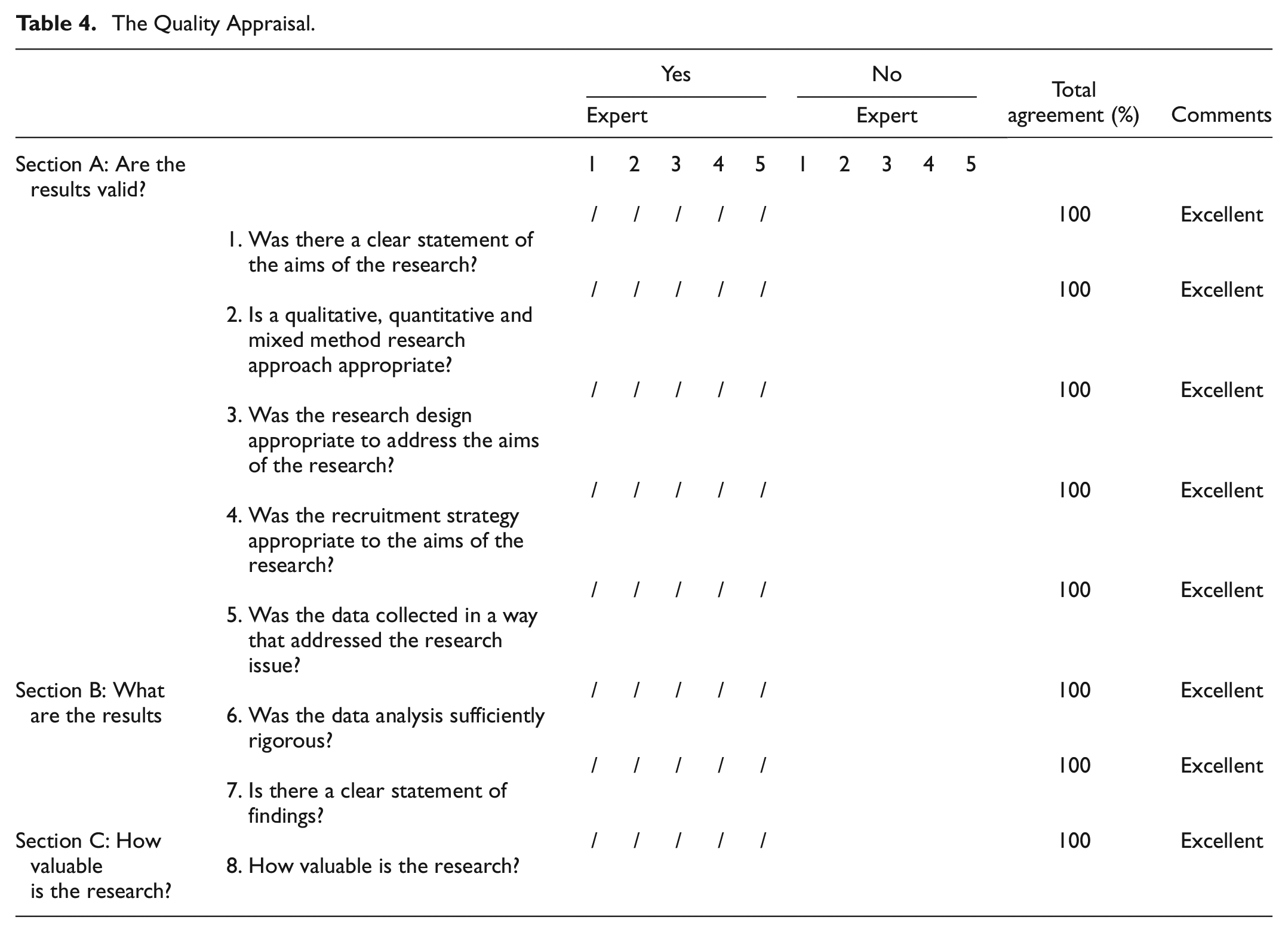
Five experts have been chosen to reviews and validate the 51 articles. This study used the Critical Appraisal Skills Program (CASP) checklist which has eight criteria (see Table 4). Quality appraisal were carried out by the qualified experts who have more than 10 years of work experience in online learning for the educational institutions. The checklist is used as a guideline for evaluating the quality of studies to evaluate various sorts of evidence critically (Long et al., 2020). There are three indicators for the quality appraisal which is excellent, good and moderate. Each article was evaluated for its quality in terms of clear statement of the research aims, relevance of its methods and research design, recruitment of appropriate strategy, data collection, data analysis, clear statement findings, and the value of the research which are critically examined as shown in Table 4. Lastly, the 51 articles were reviewed in Table 4 after quality appraisal.
The Quality Appraisal.
Data Extraction and Analysis
This study has compiled a complete list of all included papers, including their initial categorization from several sources into an Excel spreadsheet. To make the next steps easier and more systematic, the details of each article were recorded in an Excel spreadsheet: author(s), year of publication, title, country, research design, research instrument, samples, challenges, and perceptions. Next, the researcher continued with the process of summarizing, tabulating, and describing the major findings.
Results
This study selected 51 articles that were used to answer the research questions. Table 5 shows the results of this study which focused on students’ challenges and perceptions. The findings discovered four types of students’ challenges: technological, pedagogical, personal, and social issues.
Results of Students’ Challenges and Perceptions of ERTL During COVID-19.

Research Question 1: Students’ Challenges During Emergency Remote Teaching and Learning
This section explores students’ challenges throughout the ERTL during the COVID-19 pandemic. Figure 2 shows the students’ challenges during the ERTL.
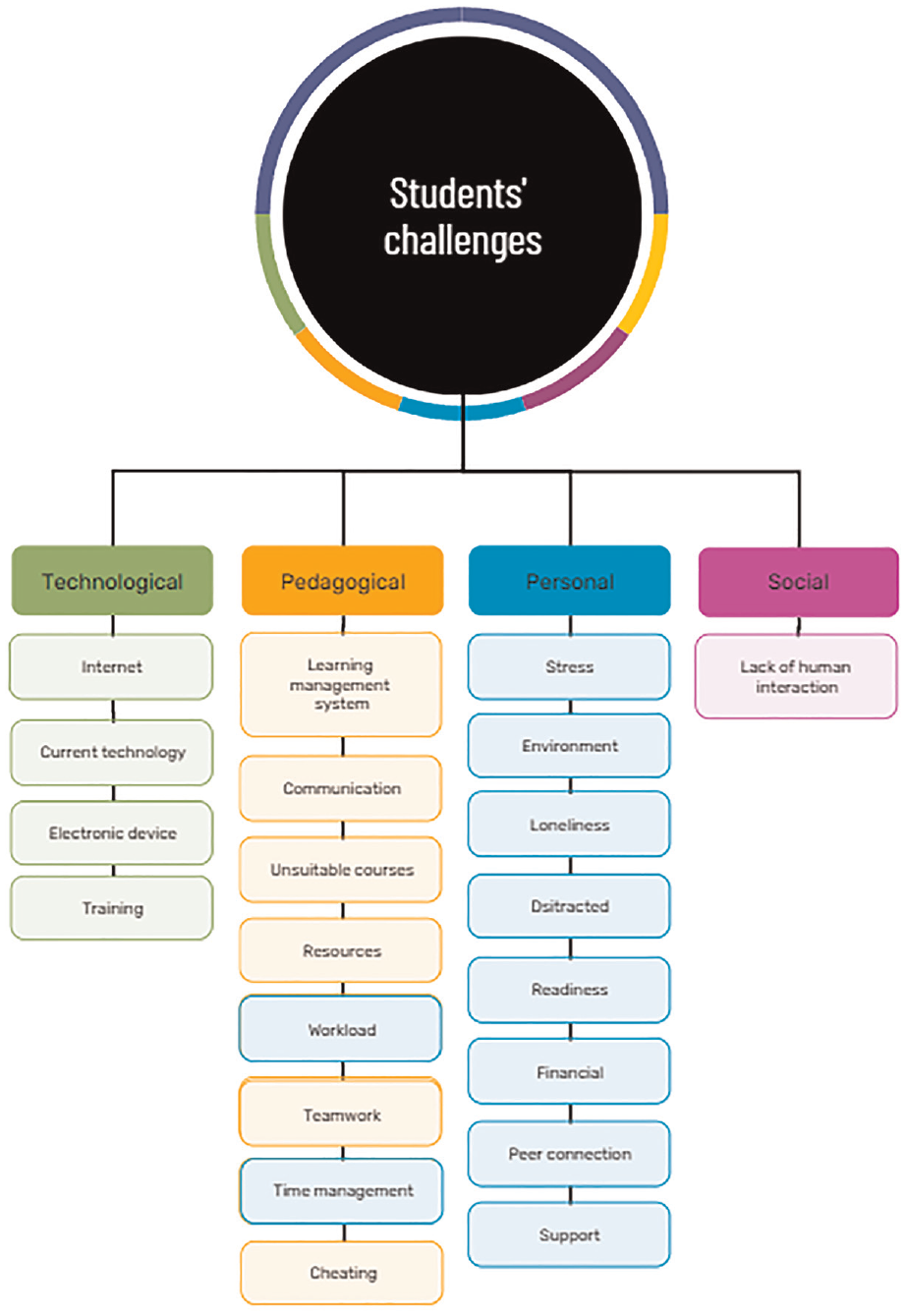
Students’ challenges during ERTL.
Technological
In response to emergency remote learning, digital technology is important to provide students with access to high-quality education. Thirty articles found that students faced technological challenges during ERTL. The use of technology in education is becoming more prevalent (See et al., 2022). This study found that technological challenges are internet, current technology, electronic devices, and training.
Internet
Twenty-three studies revealed that the most frequently reported challenge faced by students was the unreliability of internet connection during ERTL (Abubakar et al., 2022; Al-Hashmi, 2021; Alvarez, 2020; Amir et al., 2020; Bamoallem & Altarteer, 2022; Baran & Alzoubi, 2020; Basri et al., 2022; Chattaraj & Vijayaraghavan, 2021; Dorsah, 2021; Edmond et al., 2020; Gqokonqana et al., 2022; Jili et al., 2021; Korkmaz & Toraman, 2021; Kovačević et al., 2021; Lengetti et al., 2021; Matarirano et al., 2021; Pillay et al., 2021; Rahiem, 2020a, 2020b; Shim & Lee, 2020; Shin & Hickey, 2021; Sumardi & Nugrahani, 2021; Tulaskar & Turunen, 2022; Wilcox & Vignal, 2020). Three studies revealed that students could not afford internet data for online learning during ERTL (Edmond et al., 2020; Matarirano et al., 2021; Husni Rahiem, 2021).
Current Technology
Three studies stated that many students faced issues of unfamiliarity with the current technology during ERTL (Bond et al., 2021; Egan & Crotty, 2020; Tulaskar & Turunen, 2022).
Electronic Devices
Seven studies stated that students’ lack of electronic devices and outdated technology were the main students’s challenges during ERTL (Ensmann et al., 2021; Gelles et al., 2020; Gqokonqana et al., 2022; Rahiem, 2020a, 2020b; Shin & Hickey, 2021; Tulaskar & Turunen, 2022; Wilcox & Vignal, 2020).
Training
Five studies asserted that students’ lack of adequate training in computer and digital skills was the main challenge during ERTL (Dvorakova et al., 2021; Edmond et al., 2020; Kovačević et al., 2021; Looi et al., 2022; Husni Rahiem, 2021).
Pedagogical
This study found 32 articles revealing that pedagogical was one of the students’ challenges during ERTL. Pedagogical challenges were the most prevalent during the COVID-19 pandemic. This study found some pedagogical challenges during ERTL, including learning management system (LMS), communication, unsuitable courses, resources, workload, teamwork, time management, and cheating.
Learning Management System (LMS)
Two studies stated that students’ lack of formal orientation to use LMS as their pedagogical challenge during ERTL (Edmond et al., 2020; Sumardi & Nugrahani, 2021). Besides, another two studies indicated the university’s online management system such as system usability problems during the early period of the pandemic as the pedagogical challenges during ERTL (Abubakar et al., 2022; Gqokonqana et al., 2022).
Communication
Six studies reported a lack of communication and feedback from lecturers or faculty as one of the pedagogical challenges faced by students during ERTL (Alvarez, 2020; Baran & Alzoubi, 2020; Bawa, 2020; Minichiello et al., 2022; Shim & Lee, 2020; Wilcox & Vignal, 2020). In addition, six studies revealed that students experienced a lack of interactivity and motivation, whereas teachers lacked social and cognitive presence throughout ERTL (Al-Hashmi, 2021; Dvorakova et al., 2021; Ensmann et al., 2021; Looi et al., 2022; Lorenza & Carter, 2021; Tulaskar & Turunen, 2022).
Unsuitable Courses
Ten studies reported that not all courses are suitable for online classes. The courses did not provide clear instructions related to course completion during ERTL (Bamoallem & Altarteer, 2022; Basri et al., 2022; Dvorakova et al., 2021; El-Sakran et al., 2022; Gqokonqana et al., 2022; Ho et al., 2021; Kawasaki et al., 2021; Korkmaz & Toraman, 2021; Lengetti et al., 2021; Shin & Hickey, 2021). Moreover, one study found that there is a higher drop-out rate in some classes during ERTL (Lewis et al., 2021).
Resources
Seven studies stated that students lacked resources such as access to libraries and learning centers during ERTL (Bawa, 2020; Edmond et al., 2020; Ho et al., 2021; Lewis et al., 2021; Patricia Aguilera-Hermida, 2020; Rahiem, 2020a, 2020b; Wilcox & Vignal, 2020).
Workload
Thirteen studies revealed that excessive workload and excess online courses as one of the pedagogical challenges during ERTL (Al-Hashmi, 2021; Bawa, 2020; Dvorakova et al., 2021; Egan & Crotty, 2020; Ensmann et al., 2021; Gelles et al., 2020; Ho et al., 2021; Khanal, 2021; Kovačević et al., 2021; Looi et al., 2022; Shin & Hickey, 2021; Sumardi & Nugrahani, 2021; Tulaskar & Turunen, 2022).
Teamwork
Three studies reported students encountered teamwork difficulties during ERTL (Bawa, 2020; Korkmaz & Toraman, 2021; Petchamé et al., 2021).
Time Management
Besides that, two studies stated that students struggled with time management during ERTL (Bawa, 2020; Kovačević et al., 2021). Meanwhile, one study found that work-life balance issues as one of the pedagogical challenges during ERTL (Kovačević et al., 2021).
Cheating
Five studies reported cheating during online assessments as one of the pedagogical challenges during ERTL (Abubakar et al., 2022; Al-Hashmi, 2021; Iglesias-Pradas et al., 2021; Steinberger et al., 2021; Wilcox & Vignal, 2020).
Personal Issues
This study found 33 articles revealing personal issues as one of the pedagogical challenges during ERTL, including stress, environment, loneliness, readiness, distraction, financial issues, peer connections, and support.
Stress
Five studies revealed that students had the additional stress of caring for their children or younger siblings at home during ERTL (Al-Hashmi, 2021; Ensmann et al., 2021; Pillay et al., 2021; Rahiem, 2020a, 2020b; Tulaskar & Turunen, 2022) and one study stated home responsibilities (Pillay et al., 2021). Moreover, Husni Rahiem (2021) found that students were forced to reach their goals in their studies during ERTL. In addition, (Egan & Crotty, 2020) found that students felt stressed to be motivated to study during ERTL. Besides that, nine studies revealed that students faced psychological stress and burnout during ERTL (Basri et al., 2022; Bawa, 2020; Buttler et al., 2021; Castro & George, 2021; Dorsah, 2021; Edmond et al., 2020; Korkmaz & Toraman, 2021; Pillay et al., 2021; Yundayani et al., 2021).
Environment
A study by Gelles et al. (2020) found that students faced inconducive learning management that lacked a suitable home learning environment during ERTL.
Loneliness
Eleven studies revealed that students felt lonely during ERTL (Abubakar et al., 2022; Al-Hashmi, 2021; Bawa, 2020; Chattaraj & Vijayaraghavan, 2021; Ensmann et al., 2021; Gelles et al., 2020; Gqokonqana et al., 2022; Iglesias-Pradas et al., 2021; Matarirano et al., 2021; Minichiello et al., 2022; Pillay et al., 2021).
Readiness
Cahyadi et al. (2021) and Dvorakova et al. (2021) reported that students were not ready for ERTL.
Distracted
Four studies revealed that students were easily distracted, less interested, and less engaged in their courses during ERTL (Biwer et al., 2021; Chattaraj & Vijayaraghavan, 2021; Lewis et al., 2021; Tulaskar & Turunen, 2022). Moreover, 10 studies found that students often procrastinate and feel anxious during ERTL (Almoayad et al., 2020; Amir et al., 2020; Bawa, 2020; Castro & George, 2021; Edmond et al., 2020; Egan & Crotty, 2020; Kovačević et al., 2021; Lewis et al., 2021; Lorenza & Carter, 2021; Petchamé et al., 2021).
Financial Issues
Ten studies found that students experienced financial issues during ERTL (Bawa, 2020; Dorsah, 2021; Gqokonqana et al., 2022; Iglesias-Pradas et al., 2021; Lorenza & Carter, 2021; Pillay et al., 2021; Shim & Lee, 2020; Tulaskar & Turunen, 2022).
Peer Connection
Al-Hashmi (2021) and Kawasaki et al. (2021) reported that students lacked peer connections during ERTL.
Support
Alvarez (2020) revealed that some students experienced a lack of parental support during ERTL.
Social Presence
Ensmann et al. (2021) revealed social presence as one of the challenges during ERTL which is important to support students’ mental health and online learning.
Lack of Human Interaction
Twelve studies revealed that students lacked human interaction and felt disconnected from lecturers and friends during ERTL (Abubakar et al., 2022; Alvarez, 2020; Basri et al., 2022; Dvorakova et al., 2021; Edmond et al., 2020; Egan & Crotty, 2020; Gqokonqana et al., 2022; Juriševič et al., 2021; Korkmaz & Toraman, 2021; Lewis et al., 2021; Steinberger et al., 2021; Wilcox & Vignal, 2020). In addition, Gelles et al. (2020) reported that students experienced miscommunication during ERTL.
The Frequency of Students’ Challenges on ERTL
In this study, word clouds were used which is a visual representation of text to display the challenges and perceptions during ERTL. Word clouds highlight words based on how repetition they occur. This analysis of frequently used words offered deeper insights into the student’s challenges on ERTL. Figure 3 shows the most frequently appearing words were connected with personal issues, which reflect the challenges that students faced during ERTL. In addition, the words pedagogical, technological, internet, stress and distracted also depict the student’s challenges of ERTL.
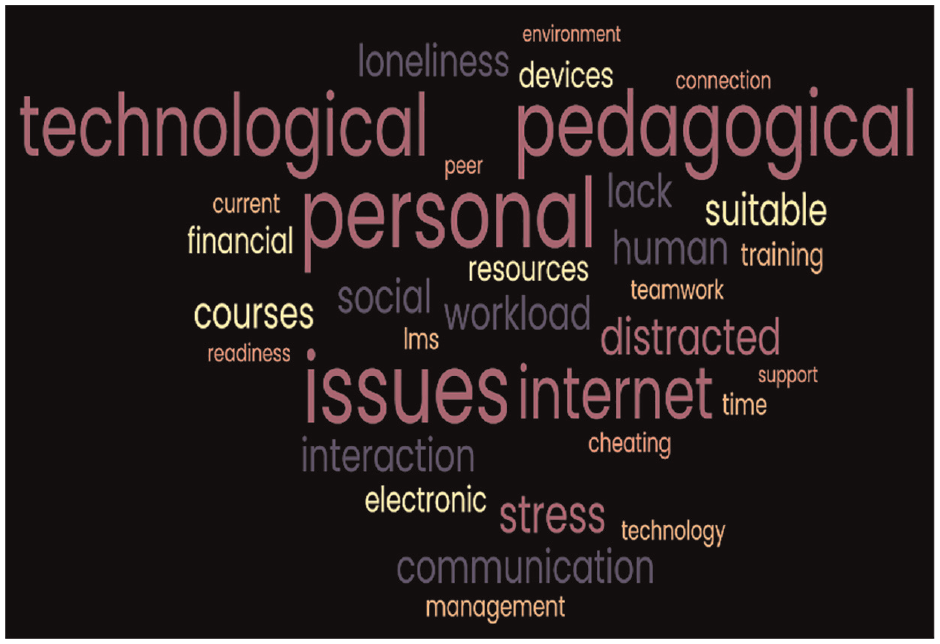
Word cloud showing student’s challenges appearing most frequently during ERTL.
Research Questions 2: Students’ Perceptions of Emergency Remote Teaching and Learning
Despite the various challenges during ERTL, there were some positive perceptions of ERTL. This study revealed students preferred ERTL for its flexibility, effective communication, accessibility, technical support, simplicity, adaptability, independent learning, and readiness as shown in Figure 4.
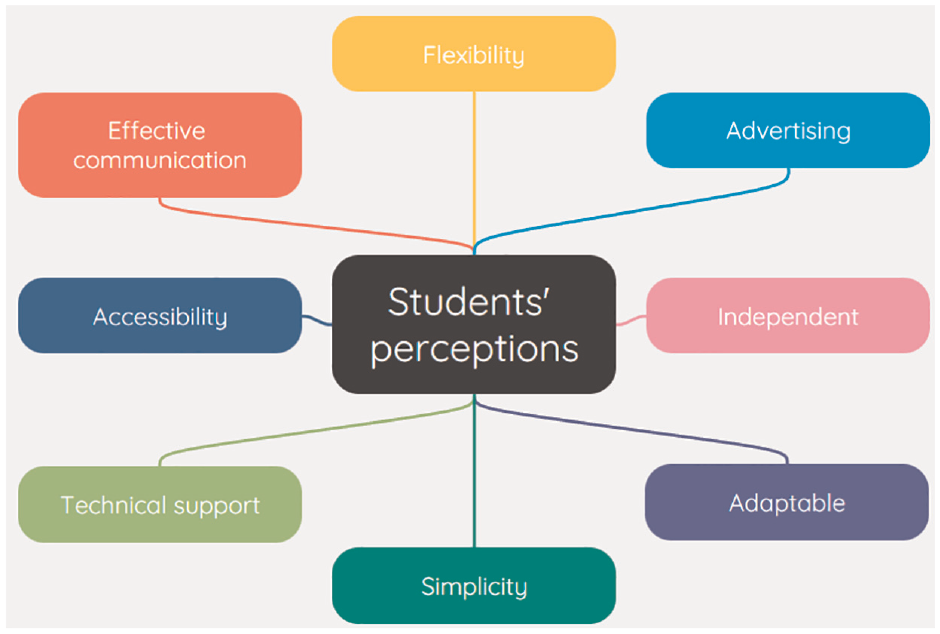
Students’ perceptions of emergency remote teaching and learning.
Flexibility
Three studies discovered that some students were satisfied with ERTL for its flexibility learning environment and time efficiency (Cahyadi et al., 2021; Dvorakova et al., 2021; Husni Rahiem, 2021).
Effective Communication
Five studies revealed that students experienced ease of interactions with lecturers or friends during ERTL (Bawa, 2020; Ensmann et al., 2021; Khanal, 2021; Matarirano et al., 2021; Petchamé et al., 2021).
Accessibility
Three studies discovered students were satisfied with the accessibility to the internet during ERTL (Abubakar et al., 2022; Gqokonqana et al., 2022; Korkmaz & Toraman, 2021). Meanwhile, nine studies reported that students were satisfied with the accessibility of learning material and online assessment during ERTL (Bamoallem & Altarteer, 2022; Bond et al., 2021; Cahyadi et al., 2021; Edmond et al., 2020; Ensmann et al., 2021; Gelles et al., 2020; Ho et al., 2021; Kovačević et al., 2021; Lengetti et al., 2021). Besides, Patricia Aguilera-Hermida (2020) revealed that students have access to technology during ERTL.
Technical Support
Three studies discovered students have reliable devices and technical support during ERTL (Ho et al., 2021; Korkmaz & Toraman, 2021; Lengetti et al., 2021).
Simplicity
Four studies revealed that students were satisfied with the simplicity of the learning media which were user-friendly and the ease to use the learning applications during ERTL (Cahyadi et al., 2021; Gelles et al., 2020; Minichiello et al., 2022; Saputra & Rusmana, 2021).
Adaptable
Five studies reported that students were ready for ERTL as they can adapt to the study environment and were self-motivated to interact with others during ERTL (Biwer et al., 2021; Gelles et al., 2020; Gqokonqana et al., 2022; Minichiello et al., 2022; Sumardi & Nugrahani, 2021). Khanal (2021) revealed that students were aware of academic integrity. Besides, Shim and Lee (2020) revealed students were interested to employ the new system more effectively.
Independent
Almoayad et al. (2020) found that students become independent during ERTL. Meanwhile, two studies stated that students were more responsible for their learning during ERTL (Almoayad et al., 2020; Khanal, 2021).
Readiness
Five studies found that students showed readiness of using the technology as they have improved their technological use and engagement with information technology (IT) during ERTL (Castro & George, 2021; Iglesias-Pradas et al., 2021; Lorenza & Carter, 2021; Rahiem, 2020a, 2020b; Yundayani et al., 2021).
The Frequency of Students’ Perceptions on ERTL
This analysis of recurrence used words offered deeper insights into the student’s perceptions on ERTL. Meanwhile, Figure 5 shows the words with the highest frequency for student’s perceptions during ERTL were accessibility which they were satisfied with internet, learning material, online assessment and technology. Other frequently appearing words include adaptable, effective, communication, flexibility, simplicity, readiness, independent and technical support that show the student’s perceptions during ERTL.
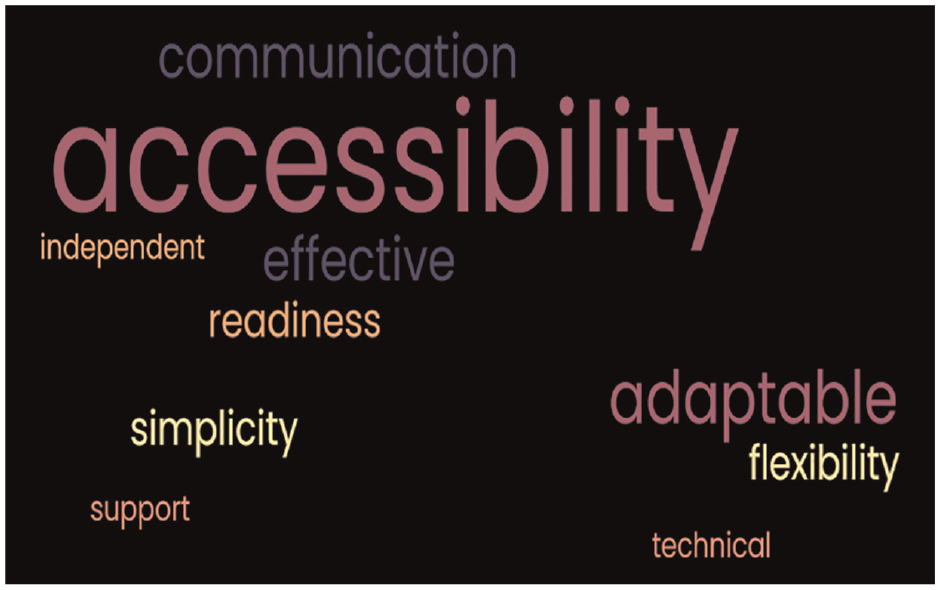
Word cloud showing student’s perceptions appearing most frequently during ERTL.
Discussion
The search uncovered 51 articles that met the inclusion criteria for the systematic review. Based on the systematic review, this study found four types of challenges faced by students during ERTL, namely technological, pedagogical, personal, and social issues. This study also revealed students’ perceptions of ERTL, which are flexibility, effective communication, accessibility, technical support, simplicity, adaptable, independent, and readiness.
Students’ Challenges of Emergency Remote Teaching and Learning
The objective of this study was to determine the challenges that arise from emergency remote teaching and learning during COVID-19. Education technology is one of the most crucial elements of 21st-century learning to provide quality teaching and learning experiences (Che Lah et al., 2022, 2023). The findings in this paper indicated that poor internet connections and the prohibitive cost of internet access were challenges during ERTL encountered by most of the learning community which the results of this findings are consistent with Sheerah et al. (2007), Ferri et al. (2020), and Toquero (2021). Hence, educators can motivate and encourage students to improve their self-efficacy with computers and the internet to increase their satisfaction with online learning. Moreover, these issues might affect their engagement in online education and academic progress due to difficulty in communicating with their peers due to internet issues where such findings are well aligned with previous research (Abou-Khalil et al., 2021; Pérez et al., 2020; Su et al., 2023). In addition, the results of this investigation are also consistent with this finding indicated that many students lacked the necessary electronic devices and had no formal training on online learning where this issue might have had a negative impact on their academic performance as well as their behavioral outcomes (Ferri et al., 2020). Thus, lack of experience with education technology made learning more challenging for some students and it is important for educators to not make assumptions about students’ digital skills as they might not be as prepared and ready for online learning.
Exploring students’ challenges toward home-based learning during the COVID-19 pandemic revealed that students faced several pedagogical challenges during ERTL. The most frequently mentioned on pedagogy challenge was workload which the findings are well aligned with previous research (Pather et al., 2020; Seabra et al., 2021). An increased workload during ERTL will make students feel unsatisfied and negative feeling with online learning. Thus, educators must understand how to deal with students’ negative learning behaviors and ensure that ERTL-based instruction is successful in helping students to achieve their lesson objectives. Besides that, one of the pedagogy challenges that students’ faces are communication which the results of this findings are consistent with (Peimani & Kamalipour, 2021) where the ability of online platforms to support student-to-student communication is one of the major issues with blended online teaching delivery. To improve the quality of education, educators should learn how to coordinate their pedagogical strategy using instructional platforms that are accessible and re-evaluate their pedagogical approach for its applicability to virtual classes (Santandreu Calonge et al., 2021). Instead of simply choosing approaches that are assumed to be effective, educators must be flexible in selecting teaching methods and online platforms by considering their students’ voices to encourage students to concentrate on their learning. Overall, student satisfaction was positively correlated with educators’ quality in terms of providing an engaging learning environment and utilizing technology to the fullest (Luo et al., 2019; Oumar et al., 2021).
This study showed how the COVID-19 pandemic makes an impact to people struggling with personal issues. The most widely mentioned challenge of personal issue among students was stress during ERTL. The sudden importance of the digital environment has confused students about their responsibilities, causing anxiety among them (Oumar et al., 2021; Stephan et al., 2019). Overall, students who are experiencing stress, burnout, lack of empathy for others, anxiety, and lack of motivation will produce low-quality project work, late submissions of online assessments, and poor academic performance (Hidalgo et al., 2021). Consequently, when stress levels increase, academic performance will also decrease. In order to help students manage their academic stress, it is crucial to lessen academic pressure. social change and education.
This study also discovered the challenges on the social aspect resulting from the COVID-19 pandemic. Students experienced a lack of human interaction between educators and peers during ERTL which the findings are well aligned with previous research (Agaton & Cueto, 2021; Sheerah et al., 2007). Students might feel isolated from one another due to the lack of interaction between students and instructors during online learning. According to the findings, educators should guide and provide social support to improve the quality of online learning delivery to students (de Klerk, 2022). Moreover, social interaction continues to be the foundation of education where the more you engage with people, the more you will learn. This finding is important for future study to overcome the challenges faced by students during ERTL because this challenge cannot be avoided in emergency remote teaching and learning. To achieve efficient teaching and learning, enhancements in education can be made.
Students’ Perceptions of Emergency Remote Teaching and Learning
The objective of this research was to explore students’ perceptions about emergency remote teaching and learning during COVID-19. During the pandemic, students were forced to transition from a physical to a virtual learning environment. Consequently, some universities provided students with high flexibility concerning material resources by allowing them to access video recordings at any time (Sheerah et al., 2022; Guskaroska et al., 2022). Additionally, students can learn ideas and solve problems at their own pace and under their own time constraints through pre-recorded lectures. Students also value the flexibility to complete coursework in several of ways which enables them to adjust to the new learning environment. Moreover, students state that they were also allowed to study at their own pace and control their learning by eliminating certain structural obstacles during ERTL (Vollbrecht et al., 2020; Xhaferi & Xhaferi, 2020). Besides, they also developed a greater sense of responsibility by dealing with procrastination, being more disciplined, and taking coursework more seriously (Rodriguez-Rivero et al., 2021). Thus, they become more responsible in managing their assignment and tasks given by their lecturers during ERTL.
In addition, student state that laboratory-based courses had to be adapted to a high workload where educators created virtual simulation environments from scratch using their digital skills since students could not physically access the labs (Raman et al., 2022). Thus, students gained accessibility for their learning during ERTL. To adjust to their new environment, students had to adapt and learn to cope with their anxiety, uncertainties, and inequities that were made worse by the pandemic (Sason et al., 2022). A suitable positive environment can be developed to lessen student stress while fostering stronger relationships between teachers and students. For example, the instructor can encourage connections by assigning team projects or online assessments. This approach is crucial, especially for first-year students who may not know how to form relationships with their peers and build a support system. Some students stated that their involvement during ERTL was better than face-to-face learning (Gqokonqana et al., 2022). It is believed that the creation of safe online spaces for social interaction has made students feel comfortable exchanging their views and ideas. This finding is important to understand the students’ perspectives on ERTL.
Limitations and Recommendations
Three limitations and recommendations can be offered based on the findings of this study. First, this study only focused on higher education students. In the future, it might be interesting to study students’ challenges and perceptions of ERTL among students in schools. The results might be difference and some new challenge and perception will be identified from school’s perspectives. Second, this study only focused on students’ challenges and perceptions during ERTL. For future study, it might be intriguing to study educators’ challenges and perceptions during ERTL. It might be revealed different challenges and perception on ERTL based on educators’ views. Furthermore, this study only selected two databases which are ERIC and Scopus. Future study can explore Web of Science as one of the databases for the systematic review. The result might be more interesting and unique due to the various databases.
Conclusion
The result of the systematic literature review revealed that 51 articles were comprehensive in discussing the students’ challenges and perceptions of ERTL. There are four types of challenges during ERTL had been identified in this study which are technological, pedagogical, personal, and social issues. Besides that, eight attributes of the students’ perceptions of ERTL also had been acknowledged which are flexibility, effective communication, accessibility, technical support, simplicity, adaptable, independent, and readiness. In conclusion, the ERTL gained both challenges and also has had positive effects on students. During the ERTL, the role of students is important for the success of their studies. The students were creative, active, and more independent in their learning, and became good problem solvers during ERTL. Thus, by understanding the challenges that students experience during ERTL will enable early interventions in education for future crises.
Footnotes
Acknowledgements
The authors would like to extend their gratitude to Universiti Pendidikan Sultan Idris (UPSI) which helped them to manage their grants.
Declaration of Conflicting Interests
The author(s) declared no potential conflicts of interest with respect to the research, authorship, and/or publication of this article.
Funding
The author(s) disclosed receipt of the following financial support for the research, authorship, and/or publication of this article: This research has been carried out under the Fundamental Research Grants Scheme (FRGS/1/2021/SS10/UPSI/02/54) provided by the Ministry of Higher Education of Malaysia.

Data Availability Statement
Data sharing not applicable to this article as no datasets were generated or analyzed during the current study.