



Abstract
In the modern era of the fourth industrial revolution, where collaborative systems are the real innovation, people are still not prepared for the results of the third revolution, namely, artificial intelligence readiness (AIR). Hence, people didn’t have enough time to adapt to the change. This paper aimed to explore the impact of resistance to change on artificial intelligence readiness and also explores the mediating role of task-oriented leadership, moderating role of high-performance work system. The study employs a quantitative research design and collects data of 450 working employees from hospitality sector of Pakistan. SmartPLS is used to analyze structural equation modeling (SEM) to through mixed-methods approach. The study findings are consistent with the proposed study hypotheses that resistance to change has positively impacts RI readiness and task-oriented leadership. Furthermore, the findings also elaborate the mediation of task-oriented leadership between latent constructs and moderating role of high-performance work system between resistance to change and task-oriented leadership. The study concluded that the hospitality sector should focus on developing task-oriented leadership and high-performance work systems to overcome resistance to change and increase its AI readiness.
Plain Language Summary
Resistance to Change on AI Readiness: Mediating-Moderating Model in the Hospitality Sector
The purpose of this study is to explore the impact of resistance to change on artificial intelligence readiness and also explores the mediating role of task-oriented leadership, moderating role of high-performance work system among studied variables. The study employs a quantitative research design and collects data of 450 working employees from hospitality sector and the data was analyzed through partial least square structural equation modeling (PLS-SEM) to through mixed-methods approach. The study findings shows that resistance to change has positively impacts RI readiness and task-oriented leadership. Furthermore, the findings also elaborate the mediation of task-oriented leadership between latent contracts and moderating role of high-performance work system between resistance to change and task-oriented leadership.
Keywords
Introduction
Change in management impacts individually and on corporate level in an organization; that refers to planning, initiating, implementing, controlling, and sustaining change processes (Limba et al., 2019). Change management is one of the most confusing and frustrating issues an employee faces as resistance to change (Ahmed, 2018; Fountaine et al., 2019). Technological change refers to innovation, which occurs when an organization adopts or develops new goods, services, policies, and procedures (Basyal & Wan, 2020). Task-oriented leadership is essential to overcome employee’s resistance to successful change, and many of the organizations are implementing for better change (Lettner et al., 2023). Task-oriented leaders actively communicate the reason to change to the employees and feels like the part of the process (Lee & Kim, 2022).
Change management creates friendly environment that encourages open dialog and conversation around potential obstacles (Yukl et al., 2019). According to M. Chen and Decary (2020), organizations should adopt new technologies, such as AI readiness, at their workplace. AI-based solutions can automate the routine tasks, and allowed the employee’s to more focus more on higher-value tasks, which will help them to understand the benefits of change (Spring et al., 2022). This will empower the employees to take ownership of the change process and lead to a higher level of acceptance and resistance to the change (Kinicki & Fugate, 2016; Pumplun et al., 2019). Prior research focused on change management models to describe how task-oriented leadership positively manages resistance to change in an organization (Weber et al., 2022).
Task-oriented leadership combined with AI-based solutions and build an environment of understanding, collaboration, and commitment toward successful organizational changes (Hussain et al., 2018). This will ensure the organizations that their employees accepted the new changes and adjusted successfully. According to Burnes (2015), task-oriented leadership and AI solutions are powerful tools to help organizations overcome employee resistance to change. By leveraging artificial intelligence-based solutions, employees can better understand how changes will benefit them and take ownership of the change process (Zhang et al., 2018).
Task-oriented leadership combined with AI solutions can be a winning combination for successful organizational changes in any context (Kolbjørnsrud et al., 2016). Despite employees’ resistance, task-oriented leadership and AI solutions can successfully implement organizational changes (Alas & Sun, 2007). Task-oriented leadership combined with AI solutions is powerful for any organization looking to drive successful change (Ahmed, 2018; Fountaine et al., 2019). Task-oriented leadership creates a collaborative environment, and leveraging artificial intelligence-based solutions empowers employees to take ownership of the process. Task-oriented leadership combined with AI solutions is powerful for organizations looking to drive successful change despite employee resistance effectively (Jaiswal et al., 2022; Matheny et al., 2019).
Over the past three decades, several studies have outlined that employee resistance to change can present a significant challenge for task-oriented leaders while implementing new processes and technologies in an organization (Weber et al., 2022). Even in the age of artificial intelligence, leaders still need to understand the employees’ concerns and help them create a conductive environment for adapting to change (Burnes, 2015). Task leaders must identify the causes of employee resistance to change, that will minimize the risk to be the unknown, lack of understanding, or negative experiences with previous implementations in the organization (Yılmaz & Kılıçoğlu, 2013), and why the changes are being made and how they will benefit employees and the organization (Magpili & Pazos, 2018). In addition, leaders must be available for employee queries and discussion about the proposed changes, as well as listen to their opinions, as their input can be valuable in developing a successful implementation plan (Warrick, 2023). The employee’s understanding resistance to change can increase the chance of successful implementation of a new processes and technologies (Fernandes Dos Santos & Aires, 2023), as well as will save time and money for the organization in the long run (Madlock, 2008; Palrecha et al., 2012).
Our study contributes in a several ways to the existing literature. We contribute to the literature on employee change by advancing the theoretical debate on attitudes toward organizational change in the context of AI readiness. Secondly, we contributed to the emerging literature on AI by exploring the role of task-oriented leadership. Thirdly, we endeavor to contribute to the literature by considering the role of HPWS as a moderator that moderates between resistance to change and task oriented leadership. The study also contributed into the prior literature by examining the role of task-oriented leadership as a mediator between resistance to change and AI readiness in the employees. In our study, we explore the individual-level HPWS as this constitutes a significant gap in knowledge on HPWS.
Theory Building and Hypotheses Development
Stimulus Organism Response (SOR-SR)
The Stimulus Organism Response Model (SOR Model) emerged as a critique of the Stimulus Response (SR) theory (Wang et al., 2023). In contrast to the SR theory, the SOR model, proposed by Mehrabian and Russell in 1974 (Gatautis et al., 2016), builds upon the stimulus-response framework by acknowledging that environmental input doesn’t directly trigger an individual’s approach or avoidance actions (Lazarus et al., 2023). Instead, it recognizes the vital role of the “organism,” or the person, in responding to stimuli. The SR model, on the other hand, fails to consider the subjective experiences, emotions, and feelings of the individual, rendering it incomplete in explaining human responses (Vuong et al., 2023).
The SOR model in psychology postulates that the “O” or the organism plays an active and mediating role in the process. It introduces the notion that a person’s internal state, including their emotions and feelings, mediates the relationship between external stimuli and their subsequent responses. As a result, the stimulus-organism-response formula offers a valuable framework for comprehending the intricate nature of human behavior (Kumalasari & Priharsari, 2023). In brief, the stimulus-organism response theory posits that a stimulus initiates a response within an organism (such as a person), guided by their internal emotions or behaviors. This internal processing of the stimulus may occur at a conscious or subconscious level (Hajdari, 2023).
Subsequently, this processing triggers an emotional reaction, which in turn leads to a specific response. This response can manifest either internally, as seen in physiological changes like an increased heart rate, or externally, such as the expression of emotions through crying. The SOR theory, to a significant extent, offers valuable insights into comprehending the factors underlying an individual’s behavior. Consequently, it holds particular relevance in addressing issues related to human behavior. Many of our actions are a direct result of various stimuli influencing our inner emotional states. Thus, when analyzing someone’s behavior, it becomes essential to grasp how different stimuli can impact their mental and emotional state.
In this research, the SR technique is used to elaborate on the hypothesized relationships among AI readiness, resistance to change, and high-performance work practices. This study explains several expected connections between AI technology, employee engagement, and high-performance performance work practices using the SOR theory, which enhances an organism’s cognitive and emotional impact on a person’s mind to produce a particular kind of physical reaction (Kim et al., 2020). Effective leadership style shapes the workplace atmosphere, and employee engagement is part of the SOR model. The SOR model has been utilized in recent research to explain shifting employee working patterns, impulsive purchasing, social media participation, and improved conversion rates in the hospitality industry. Base on SOR theory, AI technology is stimulus for consumer engagement on social media channels (an organism) that increases hospitality customers’ responses, such as conversion and repurchase intentions (Zhu et al., 2023).
Resistance to Change and AI Readiness Concepts
AI readiness refers to the readiness of an organization to adopt and integrate to operate. AI readiness can be measured with technical infrastructure, data readiness, human capital, and organizational culture (Jöhnk et al., 2021). Organizations with high level of AI readiness have the necessary resources, capabilities, and mindset to leverage AI to effectively drive business values (Varkkey & Dessler, 2018; Vos & Rupert, 2018). Moreover, when such experts identify employees’ negative attitudes and perceptions toward change in the context of organizational change, resistance can pose a significant challenge to the successful implementation of new technologies (Fernandes Dos Santos & Aires, 2023). Employees may feel threatened by the prospect of automation and job displacement, or they may be skeptical of the benefits of AI. Resistance can also arise from organizational factors, such as a lack of leadership support, poor communication, or inadequate training and support (Srivastava & Agrawal, 2020a).
Asbari et al. (2021) suggested that the future work is predicted to the alternative of AI radically. Still, the changes cause opposition among employees and hindering AI readiness or a lack of preparation for development. Sarkodie and Strezov (2019) examined that AI readiness suggested to transform industries and disrupt traditional business models. However, to realize these benefits, organizations must have a clear strategy for AI adoption, invest in the necessary technology and infrastructure, and develop the skills and knowledge needed to use AI effectively (Chowdhury et al., 2023). By focusing on AI readiness, organizations can position themselves to thrive in an increasingly digital and AI-driven world. Based on the existing literature we proposed that resistance to changes brings significant change with AI readiness.
Resistance to Change and Task-Oriented Leadership
Task-oriented leadership faces challenges in the presence of resistance to change, particularly in the context of rapid advancements in artificial intelligence (Ikumoro & Jawad, 2019). Leaders must adopt the flexible and open-mind team environment that encourages idea expression and meaningful contributions from all members (Moss et al., 2007). Artificial intelligence can provide valuable insights for addressing resistance and understanding the team members. Employing AI, task leaders develop the culture of supporting each other, collaboration, and innovation which ultimately ensure the project success (Mikhaylov et al., 2018). Task-oriented leadership focuses on empowering individuals with the tools and knowledge needed to embrace and leverage change effectively, rather than imposing it (Srivastava & Agrawal, 2020).
Utilizing the power of AI, task leaders can guide their teams to success despite resistance (DeLay & Clark, 2020). Thakhathi et al. (2019) highlights the critical role of task-oriented leadership in effectively managing resistance to change. Management support can hinder the AI’s readiness to make the leaders responsible for guiding teams through change, providing essential information and resources (Thakhathi et al., 2019).
Resistance to change is based on emotional reaction, cognitive rigidity, and short-term focus, which correspond to the behavioral habits, emotional stress, and cognitive adaptability (Johansson & Vinthagen, 2016). Task leaders should motivate their teams by illustrating the AIR adoption benefits and should identify its pros and cons for the better understanding (Moutousi & May, 2018). TOL plays a vital role in the organizational success, AI adoption and innovation, decision-making, understanding of team behavior, and fosters collaboration (Amoako et al., 2021). Team supportive behavior is beneficial for the task leaders, which provide the necessary tools and knowledge for successful team leadership (Latif et al., 2020). We posit that resistance to change impacts the behavior of task oriented-leadership in on organization for better performance and develop the hypothesis:
Task-Oriented Leadership and AI Readiness
Task-oriented leadership is pivotal for an organization’s AI readiness, facilitating the mitigation of resistance to change and promoting the adoption of AI technologies (Marshev & Marshev, 2021). Task leaders play a crucial role in tailoring their approach to suit each company’s specific needs and create an engaging environment for AI education (George & Wooden, 2023). Drawing upon their expertise, task leaders nurture a culture that fosters innovation and embraces the transformative potential of artificial intelligence (Volpi & Polani, 2023).
Task leaders are indispensable in ensuring a seamless transition into the AI era with knowledge and skills, leverage current AI trends and emerging opportunities, enabling organizations to maintain competitiveness and rapid evolution of the AI landscape (Hernández-Orallo, 2017). Task leaders adeptly identify and harness the most suitable technologies while addressing any encountered resistance, rendering task-oriented leadership an invaluable asset for organizations seeking to harness the full potential of artificial intelligence and remain at the forefront of their respective industries (Khairy et al., 2023). Recognizing the central role of task-oriented leadership is paramount for organizations aiming to fully capitalize on AI’s transformative potential (Abdullah Alshammari et al., 2023), as it equips them with the necessary tools and resources to effectively confront AI-related challenges and maintain a competitive edge.
Leadership is pivotal for a successful transition into the AI era. Task-oriented leadership is invaluable for organizations seeking to optimize AI utilization and maintain a competitive edge (Ressem, 2023). Task leaders offer unique insights to maximize AI’s effectiveness, ensuring success, guide the organization in handling available resources for AI challenges and competitors (Kelly, 2023). Task-oriented leadership plays a decisive role in an organization’s readiness for AI and empowers the organizations to leverage current AI trends and embrace new opportunities (Hradecky et al., 2022). This leadership approach is essential for achieving AI readiness and maintaining competitiveness in an ever-evolving landscape. Task leaders’ knowledge, skills, and adaptability are crucial for integrating emerging technologies effectively and fostering innovation in an AI-driven era. Task-oriented leadership positions companies for success in the AI era by capitalizing on current trends and seizing new opportunities. Based on the existing literature and relationship between task oriented we posit that TOL impacts AI readiness and develop the hypothesis:
Mediating Role of Task-Oriented Leadership
Task-oriented leadership is crucial for overcoming resistance to change and enhancing AI readiness. Task leaders require essential skills to guide their teams effectively in adopting new technologies, including artificial intelligence (Herrmann & Felfe, 2013). This leadership approach encompasses setting expectations, motivating action, managing change, and fostering a learning and improvement-oriented environment (McDermott et al., 2022). Task leaders must anticipate challenges, be equipped with appropriate tools, and ensure team understanding to sustain commitment over time. Through task-oriented leadership, organizations can efficiently manage resistance to change and attain AI readiness, as it plays a mediating role in facilitating fundamental workplace transformation in the face of AI-related challenges (Chryssolouris et al., 2023).
Successful AI adoption hinges on effective task-oriented leadership, which should also promote diversity and inclusion. Task leaders should cultivate an environment of respect and inclusivity, fostering active participation by all team members (Russo, 2023). Task-oriented leadership leverages diverse perspectives to enhance problem-solving effectiveness, enabling organizations to become AI-ready for a promising future (Richter et al., 2015). Task-oriented leadership is crucial for organizations to achieve AI readiness by mitigating resistance to change and facilitating the acceptance of new technologies (Philip, 2021).
Effective task leaders possess the requisite skills and a clear understanding of objectives and prioritize the diversity for AI-driven solutions (Hargett et al., 2017). Task-oriented leadership emerges as a pivotal determinant of successful AI adoption, promising increased efficiency and enhanced decision-making capabilities (Le Blanc et al., 2021). Organizations that invest in developing the necessary skills and strategies stand to unlock significant growth opportunities. Consequently, task-oriented leadership represents an invaluable asset for organizations on the path to AI readiness (Hernández-Orallo, 2017). The existing literature posit the mediating role of task-oriented leadership between RTC and AI readiness.
Moderating Role of High-Performance Work System
Prior research consists that high-performance work system can greatly assist in managing resistance to change with an effective system in place, task-oriented leadership becomes more efficient and successful at transitioning employees through the change process (Tabernero et al., 2009). The primary goal of a high-performance work system is to create an environment where resistance to change is not only accepted but also embraced (Messersmith et al., 2011). Task leaders can provide guidance and support while allowing employees the freedom to voice their opinions and accept changes. This develop collaboration between stakeholders for a smooth transition and higher levels of satisfaction across the board (Kloutsiniotis & Mihail, 2018). Thus, HPWS helped foster meaningful relationships between task leaders and resistance to change. By understanding resistance, task leaders can better create plans to address the resistance while allowing progress (L. Chen et al., 2022). This approach helps ensure everyone is on the same page throughout the change process, leading to increased productivity and successful transitions (Miao & Cao, 2019).
Overall, a high-performance work system provides numerous benefits in managing resistance to change and enhancing task-oriented leadership capabilities (Fernandes Dos Santos & Aires, 2023). These advantages in place, resistance to change becomes easier to manage, making the entire process much more manageable for everyone involved (Suseno et al., 2022). Hence, task leaders are the important factor in any organizations and success in the age of AI. Task leaders must be able to customize their approach best to meet the needs of each organization and employees to create an attractive and engaging environment for learning about these cutting-edge technologies (Herrmann & Felfe, 2013). We test the moderation of HPWS with RTC and TOL. In this context, we elaborate the following hypothesis.
Conceptual Model
To recognize the effect of resistance to change on AI readiness. We conceptualized the model with a
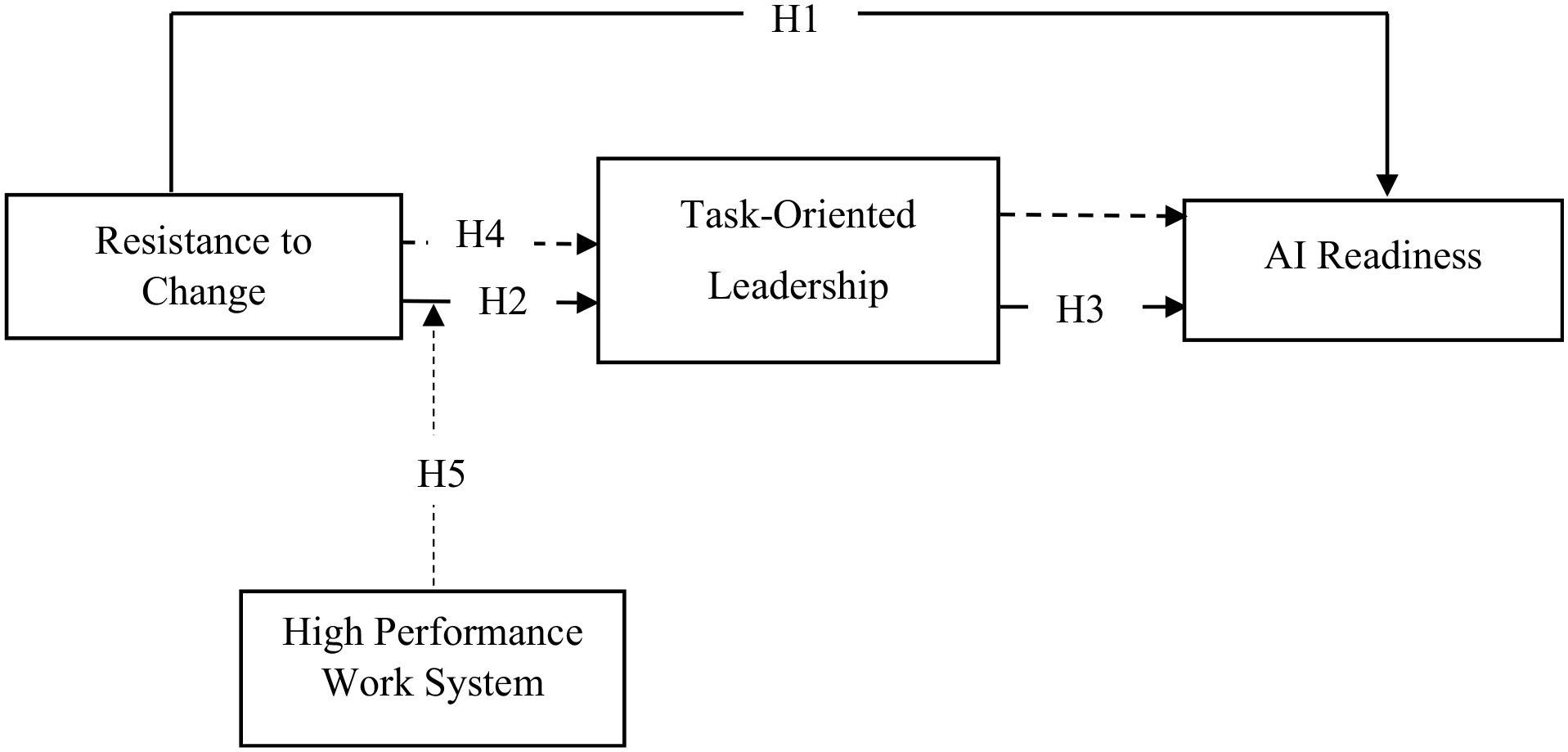
Conceptual framework.
Methods and Measures
Context Selection
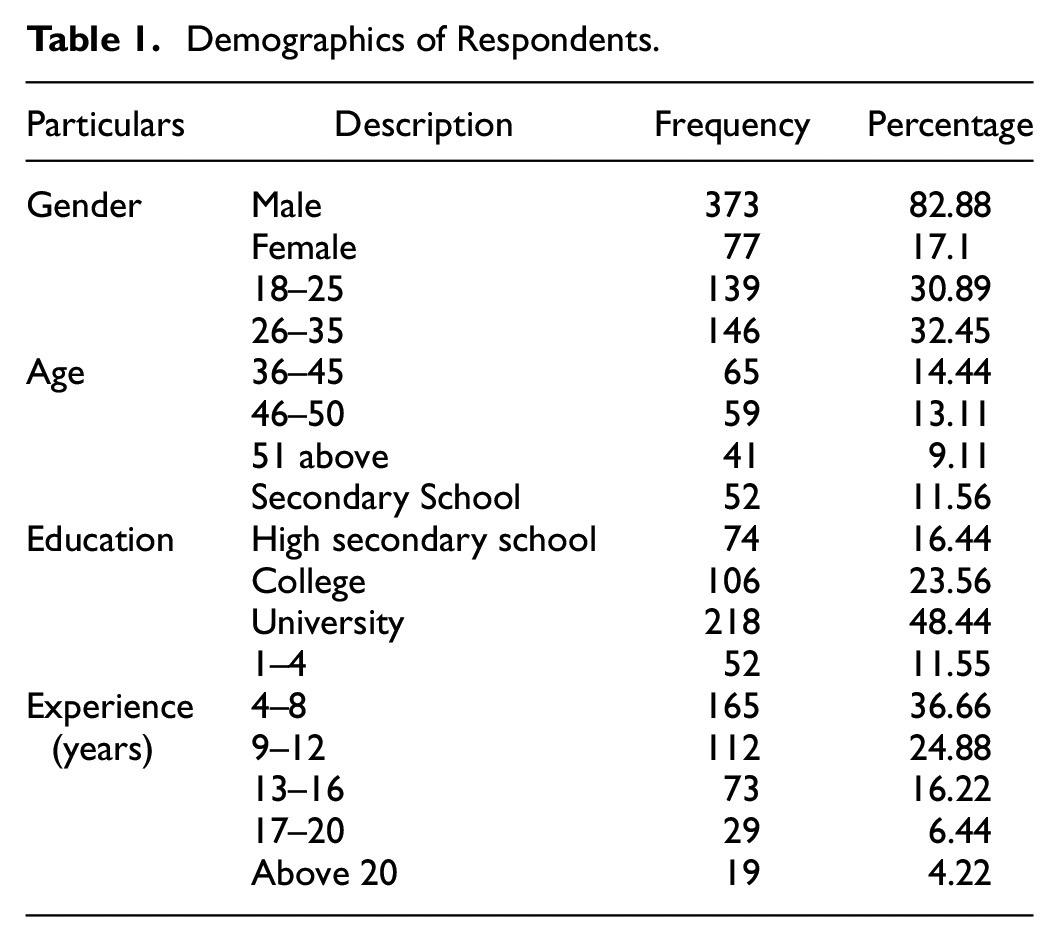
The proposed conceptual model was evaluated with quantitative approach and the numerical data was gathered from a large population to test the validity and reliability of data. Prior studies suggested to conduct the quantitative research to examine the link between latent constructs. The data was collected from hospitality sector in Pakistan and the data compilation was prolonged over 14 weeks. For the data collection, non-random sampling techniques was used to collect the data and information (Ferdinand et al., 2007; Webb et al., 1999). An online and physical survey was conducted to collect information from the employees and ensure the respondents that the responses will be anonymous and confidential. A total of 650 questionnaires were distributed, from which 450 participants returned the completed questionnaires. The response rate was 69.23% of the participant’s demographic information is given in Table 1.
Demographics of Respondents.
Although having over 200 responses in your sample is a positive starting point, it’s important to note that the ideal sample size for Structural Equation Modeling (SEM) depends on various factors, including the specific characteristics of your study and model (Hair et al., 2012). In light of previous research findings (J. Hair et al., 2017) and Cohen’s power theory (Cohen, 1988), this study seeks to assess whether the current sample size is adequate. To determine this, a post-hoc G*power analysis was conducted on all exogenous variables, employing a significance threshold of 0.05, an effect size of 0.15, and a sample size of 450 to ensure the robustness of the data. The results revealed a statistical significance exceeding .8, confirming the adequacy of the sample size for the analysis.
Measures
This study adapted measurement scales, that were previously used by the existing researchers to predict the role of resistance to change on AI readiness and task-oriented leadership, and high-performance work system. The responses of the participants were encoded using the 5-point Likert scale ranging from (1 = strongly disagree to 5 = strongly agree). The measure for each variable is discussed below:
Resistance to change was measured using a three-items scale developed by Oreg (2003). People respond by becoming more resistant to change. The factor that accounts for resistance is “routine seeking,” “emotional reaction to imposed change,” “cognitive rigidity,” and “short-term attention.”
We measured AI readiness by using five-items Likert scale developed by Pumplun et al. (2019).
Task-oriented leadership was measured using five items scale which was developed by Özsahin et al. (2011).
To measure the HPWS, we adopted a 27-item scale created by Sun et al. (2007). The illustrated Items include the following: Employees have limited opportunities for upward growth and Great efforts are made to choose the appropriate people for the job.
Results
Demographics
Table 1 listed the demographic information for the targeted respondents, including their age, education level, industry, and length. Majority of the customer was fall among the age group of 26 to 35.
Convergent Validity and Reliability Analysis
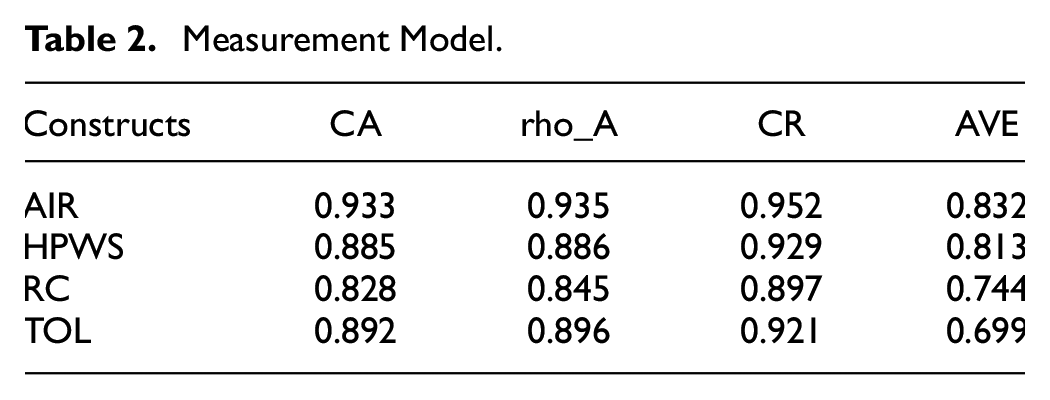
For the measurement model, a statistical framework used to evaluate the convergent validity Smart PLS are used to control the data fluency and flow in order to test the hypothesis (Mangenda Tshiaba et al., 2021). These tools also help to assess whether the measures used in a study are reliable and valid, which is crucial to ensure the accuracy and credibility of the research findings. For formative and reflective modes, multivariate analysis, moderating and mediating mode and path model by using Smart-PLS which uses variance structure equation modeling (VB-SEM) to examine quantitative data for assessing the hypothesized relationship between study variables with minimum sample size restrictions (Epezagne Assamala et al., 2022). The measurement structure assessment estimated the construct’s Cronbach’s alpha (CA = .80) essential value, factor loadings require threshold value should be greater and equal to the (.70), and composite reliability (CR = .70) is required. The value for average variance extracted (AVE = 0.50) required value (Sarstedt et al., 2019). As shown in Table 1, the factor loadings, CR, CA, and AVE proved that the threshold for the entire constructs is fulfilled (Sarstedt et al., 2021).
Table 2 shows the values for Cronbach’s alpha ranged from .828 to .933, composite reliability (CR) from 0.897 to 0.952, Rhoda valued from 0.845 to 0.935, and average variance extracted (AVE) ranged from 0.699 to 0.832. The threshold value for AVE is >0.5 and CR 0.7 (Fornell & Larcker, 1981). The study findings show that all construct values are acceptable. (Qader et al., 2022) suggested a minimum expected value for CA of 0.7; all studies reached the acceptable mark.
Measurement Model.
Discriminant Validity
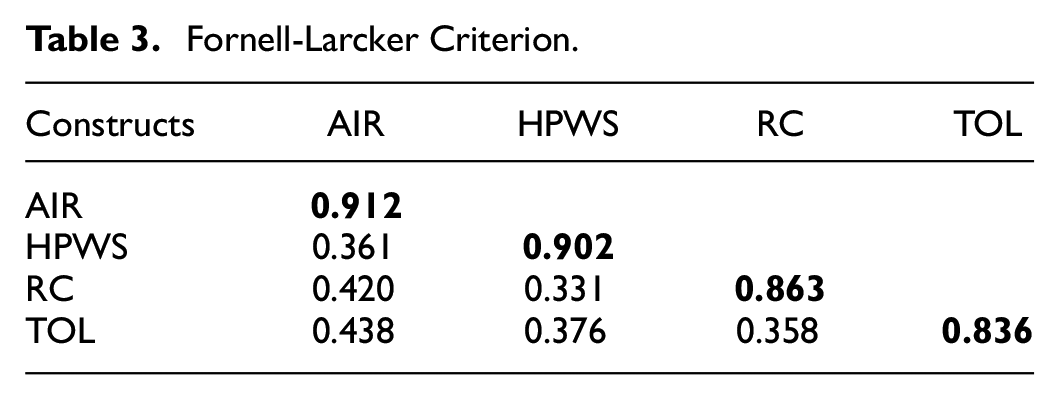
Table 3 displays the cross-loading values and the Fornell-Larcker criterion. Thus, the table demonstrates that no problem with discriminant validity was discovered.
Fornell-Larcker Criterion.
According to the heterotrait-monotrait ratio (HTMT) rule of thumb, each factor’s value should be 1. The results of the HTMT analysis, which looked at the values of discriminant validity, are shown in Table 4. The values were significantly closer. The table below demonstrates that all HTMT readings fall within the acceptable range. Thus, the HTMT has no discriminant validity issues.
Heterotrait-Monotrait Ratio (HTMT).

Factor Loadings
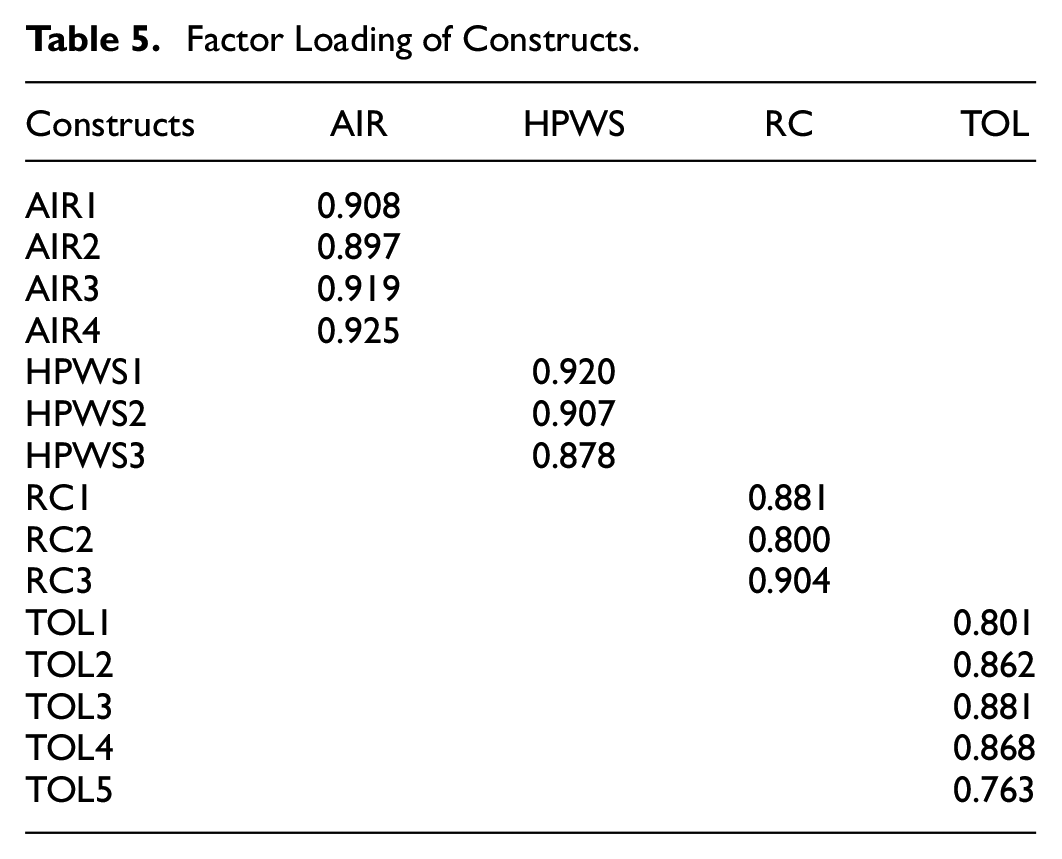
Table 5 presents the cross-loading values for studied constructs, which show no issue in factor loading values, and all are above a threshold value.
Factor Loading of Constructs.
Multicollinearity Test
The Harman test was used to avoid multicollinearity and to calculate the variance inflation factor (VIF) and common method bias (CMB). Hence, the structural model can be evaluated. Additionally, this study applied the variance inflation factor (VIF) test to check the issue of common method bias in the data (Podsakoff et al., 2003). The result outlined in Table 1 highest VIF value of (3.378), highlights no multicollinearity or common method bias CMB issues among the study variables. If the merged components account for <50% of the variance, there is no problem on the CMB. No value in Table 6 surpasses 10, demonstrating that there is no multicollinearity problem (Kock, 2020).
Collinearity Statistic (VIF).

Predictive Relevance
Table 7 represents the R2, and Q2 values. The value for R2 is .219, and .268, which posit a robust explanatory power accordingly (Chin, 1998). Meanwhile, Q2 estimated the effect size and value ranged from 0.151 to 0.219, representing the medium-range effects.
R-square and Q2.

Path Model Analysis
In this study, we utilized Smart-PLS 4 to employ the covariance-based structural equation modeling (SEM) approach (Hair et al., 2019). The primary objective was to investigate the relationships among various constructs. Given the presence of multiple variables, including mediators and moderators, we employed Sobel’s test to extract indirect relationships (Preacher & Leonardelli, 2001). The findings indicate that Resistance to Change (RTC) has a significant impact on Task-Oriented Leadership (TOL) and Artificial Intelligence Readiness (AIR), with p-values exceeding .05. Additionally, TOL has a significant influence on AIR within the hospitality sector, with p-values also exceeding .05.
Table 8 shows the direct effects of H1 RTC positively effects AIR (β = .302; t = 5.456; p < .000). H2 positively validate the impact of RTC on TOL and supported with (β = .302; t = 6.061; p < .000). H3 showed a direct impact of TOL on AIR with (β = .330; t = 6.554; p < .000). The propped H4 shows that TOL fully mediates between RTC and AIR (β = .100; t = 4.498; p < .000) and in H5 HPWS moderates positively between RTC and TOL (β = .035; t = 2.762; p < .006). Hence the all-proposed hypotheses are acceptable for this study.
Path Coefficients for Constructs Relations.

Smart-PLS is used to perform bootstrapping to extract the structural path model at 500 sub-samples, as illustrated in Figure 2. Standardized root means square residual (SRMR) was used to assess the model’s fitness, and a good model should have a value of 0.08.

Path model.
Discussion
This study suggested that organizations must prepare their employees to change, particularly for significant transformations such as the adoption of AI (Trenerry et al., 2021). The study’s findings reveal individuals’ beliefs and levels of AI-related anxiety that impact their readiness and embrace of AI adoption. In addition, individuals with a positive attitude are more likely to adopt AI as compared to people with anxiety related to AI. These findings contributed to the existing literature by highlighting the association between beliefs, behavior, and cognition (Ajzen, 2001). By applying this theoretical framework, our results offer insights into how individual beliefs regarding AI are likely to influence their readiness to embrace AI adoption.
The findings suggest that organizations should focus on developing task-oriented leadership and implementing HPWS to foster a culture of innovation and readiness for AI adoption. This research findings emphasize, that if the organization is implementing a massive shift, as in the adoption of AI organizations must make sure that their staff are prepared for change. Furthermore, an employee’s resistance to change and task-oriented leadership positively impacts AI readiness, which pertains to the affective aspect of attitudes. As for the mediator TOL, which mediates the relationship between resistance to change and artificial intelligence readiness, and the moderating effect of HPWS, the relationship between RTC and TOL which strengthen the relationship between constructs. While previous theoretical explanations highlight that HPWS influences organizational-level outcomes (Fu et al., 2017), the results from our study indicated that the way individuals perceive HPWS also influences their change readiness to adopt AI.
The findings suggested that resistance to change can impact on AI readiness, and this relationship is mediated by task-oriented leadership and moderated with high performance work system. Moreover, High performance work system was found to moderate the relationship between resistance to change and task-oriented leadership, with the presence of both facilitating a stronger positive relationship. Based on the stimulus response theory (SR) we proposed hypotheses and this study evaluated the H1 that resistance to change of employees impacts positively on the adoption of artificial intelligence in hospitality sector and the results are consistent with the previous studies (Chi et al., 2020; Ivanov & Webster, 2017). Meanwhile, the behavior of resistance to change impacts positively on the behavior of task-oriented leadership which helps him in focusing set goals and competitive advantages. H2 proposed that RTC positively impacts TOL and findings are consistent with the existing studies (Rehman et al., 2021; Salem et al., 2023).
Task oriented leaders always prefer to adopt the innovation top become the pioneer in the market and in hospitality sector the adoption of AI readiness. TOL plays vital role in the enhancement of AI readiness especially in hospitality sector, as the H3 proposed that task-oriented leadership impacts positively and significantly affects AI readiness. The finding is consistent with previous studies of Kelly (2023) and Labrague and Toquero (2023). Our study findings supported the mediating role of task-oriented leadership between resistance to change and artificial intelligence readiness in the hospital sector and findings confirms with H4 that TOL mediates between RTC and AIR. The H4 results are commented (Gelaidan et al., 2018; Le Blanc et al., 2021). As for the moderating effect of high-performance work system our results illustrated that HPWS, as perceived by individuals, moderates the relationship between individuals’ resistance to change and task-oriented leadership. While previous theoretical explanations highlight that HPWS influence organizational-level outcomes (Fu et al., 2017), the results from our study H5 indicated that the way individuals perceive HPWS influences task-oriented leadership with resistance to change and strengthen the relation, one unit change increase the task-oriented leadership performance/behavior. The results are commented with existing studies that high performance work system moderates between resistance to change and task oriented leadership (Imran & Iqbal, 2021; Miao & Cao, 2019).
Conclusion, Implications, Limitations, and Future Prospects
Conclusion
In the conclusion, this study aimed to offer a more comprehensive perspective on individuals’ readiness for substantial change, specifically in the context of adopting AI. The research provided valuable insights into the change readiness of employees concerning AI adoption. The employee’s beliefs move positively related to AI readiness and their perceptions of the implementation of high-performance work systems (HPWS) within the organization. Our study findings show the significance of acknowledging and addressing individuals’ beliefs, task-oriented leadership and resistance to change regarding and AI readiness adoption. Moreover, the study highlights the importance of business leaders’ attention to the effective implementation of HPWS as perceived by employees, as it contributes to reducing AI anxiety and enhancing their readiness for AI. However, there is much work that needs to be done to understand and explore the impact of resistance to change on AI readiness and strategies for ensuring that individuals within organizations are adequately prepared for this transformative change for task-oriented leadership. This study also discovered that resistance to change, high performance work behavior, and task-oriented leadership play a vital role in perceptions of the artificial intelligence readiness. The relationship between task-oriented leadership and resistance of the employees is to help AI readiness.
Theoretical Implication
Resistance to change is an important factor that can impact the adoption and implementation of artificial intelligence technologies. In the context of AI readiness research, understanding and addressing, this current study has contributed into three different ways by filling the gap in literature. Firstly, research on resistance to change can help to identify the specific factors that are preventing individuals or organizations from adopting AI readiness. This can help to inform the development of strategies and interventions that can address these barriers and facilitate the adoption of AI. Secondly, research on resistance to change can help to identify potential risks and challenges associated with the adoption of AI technologies. This can help to guide the development of policies and guidelines that can help to mitigate these risks and ensure that AI is adopted in a responsible and ethical manner.
Thirdly, research on resistance to change can help to identify opportunities for collaboration and engagement between different stakeholders. By understanding the concerns and perspectives of different groups, researchers can help to facilitate dialog and collaboration between stakeholders, which can help to build trust and support for the adoption of AI. Finally, research on resistance to change can help to guide the development of training and educational programs that can help individuals and organizations to build the skills and knowledge needed to adopt and effectively use AI. By addressing knowledge gaps and providing practical guidance on how to use AI, these programs can help to facilitate the adoption of AI and ensure that its benefits are realized. In conclusion, resistance to change is an important factor to consider in AI readiness research, and addressing this issue can make important contributions to the field by helping to facilitate the adoption of AI technologies in a responsible and ethical manner.
Practical Implication
This study contributes to the growing body of literature on AI readiness in the hospitality sector of Pakistan and provides practical implications for managers and policymakers in promoting AI adoption in the industry. It is also highlighting the importance of effective leadership and work systems in managing resistance to change and promoting AI readiness in the hospitality sector. This research contributes to several practical implications for organizational and employee planning to integrate AI at their workplaces. Firstly, it is essential that individual has to possess their necessary skills to work with AI, should have positive beliefs regarding AI readiness, concerning the potential changes with AI. Given the perception of AI as a substantial change, organizations adopting AI must convince their employees about its benefits and ensure job security (Hengstler et al., 2016).
Thus, it is not only important that individuals have positive beliefs about AI, but it its necessary that leaders must understand that someone the individuals may experience AI. Individuals with heightened AI-related anxiety may harbor concerns about the potential loss of independence (Johnson & Verdicchio, 2017). Consequently, these considerations may have implications for the organization’s culture and even its employee selection criteria. Organizations may wish to consider selecting employees who exhibit adaptability to change when making hiring decisions. Employees actually seek consistency and a leader who can create a secure environment. As a result, this research has a significant impact on organizations and their managerial perspective, including their employee relations approach. Self-development and self-leadership freedom might not be appropriate for all change processes. Particularly in the context of digital transformation and AI, managers and executives might need to reevaluate and modify their leadership styles.
Limitation and Future Research Direction
Here are some limitations and future research directions that could be considered for further studies: the sample size for this study was limited and researchers can enhance the sample size. The hospitality sector in Pakistan may not be very much familiar with AIR, which may result in a small sample size. Thus, the results may not be generalizable to other industries or countries with larger sample sizes. Data collection could be a challenge, especially in the hospitality sector, as employees may not be very responsive to surveys or interviews. To address this limitation, researchers could use alternative methods such as focus groups or case studies. Another limitation could be contextual factors such as cultural and social norms, which may differ from one region to another. Therefore, researchers should take into account these contextual factors when interpreting the results. For future direction a longitudinal study can be conducted to track changes in the resistance to change and AI readiness in the hospitality sector over time.
This would allow researchers to examine the causal relationship between resistance to change and AI readiness more rigorously. A cross-cultural study can be conducted to compare the results of the study in different countries and cultures. This would help to identify how contextual factors affect the relationship between resistance to change and AI readiness. Another direction is to conduct qualitative study can be conducted to explore in-depth the experiences of employees in the hospitality sector in Pakistan who have been exposed to AIR. This would provide insights into the factors that contribute to resistance to change and AI readiness. Further, the study emphasizes the importance of addressing employee resistance to change, which can be achieved through effective communication, training, and involvement in the AI adoption process. In future research also explore the role of other factors such as organizational culture and employee attitudes toward AI adoption in enhancing AI readiness. In particular, if the organization is implementing a major shift, as in the adoption of AI, the study emphasizes that organizations must make sure that their staff are prepared for change (Rafferty et al., 2013).
Footnotes
Acknowledgements
We thank the editorial board and anonymous journal reviewers for their insight into improving the manuscript.
Author Contributions
Cai Li: Writing—review and editing, Project administration, Funding and acquisition, supervision. Sheikh Farhan Ashraf: Conceptualization, Methodology, Software and data analysis, Writing—review and editing. Saba Amin: Conceptualization, Writing original draft, Data collection, Validation. Muhammad Nabeel Safdar: Data collection, Validation, Investigation.
Declaration of Conflicting Interests
The author(s) declared no potential conflicts of interest with respect to the research, authorship, and/or publication of this article.
Funding
The author(s) disclosed receipt of the following financial support for the research, authorship, and/or publication of this article: Jiangsu University Senior Talent Startup Fund.
Data Availability Statement
Data sharing not applicable to this article as no datasets were generated or analyzed during the current study.
