




Abstract
Emotional intelligence (EI) plays a critical role in English learning, as it fosters a better understanding of language nuances, enhances learner motivation, and improves communication skills, thereby leading to a more effective and enriching learning experience. However, the impact of EI on English language acquisition among Vietnamese learners remains underexplored creating a gap in educational studies. This study aimed to investigate the Vietnamese students’ perspectives of the impacts of EI on their second language acquisition (SLA). A mixed-methods approach was employed combining quantitative data collected through a questionnaire and qualitative data obtained from semi-structured interviews. The study involved 105 English-major students selected through convenience sampling. The findings revealed a positive correlation between EI and SLA, with characteristics such as motivation, self-confidence, interpersonal skills, a goal-oriented mindset, and emotional openness significantly impacting language learning outcomes. These findings have implications for language learning theory, pedagogy, and curriculum development, emphasizing the need to address learners’ emotional well-being and incorporate EI skills within language learning contexts. By integrating these elements, educators can create a conducive learning environment that enhances both linguistic and emotional competencies.
Introduction
The escalating importance of English in Vietnam’s societal fabric necessitates linguistic competency for international commerce, increased employment prospects, and cultural exchange (Le & Le, 2022; Sundkvist & Nguyen, 2020). This demand has stimulated a strong focus on English education acknowledging its cardinal role in national and international advancement (Hoa & Vien, 2019). The Vietnamese government exhibits steadfast commitment to English teaching quality embracing strategies such as teacher qualification enhancement, curriculum standardization, resource upgrading, and technological integration in classrooms (Nguyen, 2018; Vu et al., 2020). Collaborations with global bodies facilitate exchange programs, thereby augmenting pedagogical prowess. This underscores the government’s endeavor to impart effective English education enabling students to thrive in a globalized world (Anh, 2017; Van Canh, 2020).
Emotional intelligence (EI), epitomizing the ability to comprehend and manage personal emotions and empathize with others’, significantly influences academic performance (Zhoc et al., 2018). High EI students can better regulate stress and emotions fostering positive peer relationships, self-awareness, resilience, and social skills, thus creating conducive learning environments (Kant, 2019; Sekaryanti et al., 2023). However, while the general role of EI in academic performance is well-documented, its impact on specific learning areas like second language acquisition (SLA), particularly English language learning in a Vietnamese context, remains under-researched.
As previously mentioned, English language education in the context of Vietnam has taken center stage, driven by the global relevance of the language and its pivotal role in fueling economic progress (Le & Le, 2022; Sundkvist & Nguyen, 2020). The importance of EI for Vietnamese students learning English is unequivocal in this context of globalization. English proficiency extends beyond simple language mastery; it encompasses effective communication and adept management of interpersonal relationships across diverse settings (Petursdottir & Oliveira, 2023). Through honing their EI, Vietnamese learners can gain a deeper understanding and control over their emotions and the stress often associated with English language learning, known to be significant hurdles for them (Dau, 2022). Furthermore, improving their EI can bolster their resilience, motivation, and capacity to cultivate positive interactions with peers, educators, and future work associates (Kant, 2019; Sekaryanti et al., 2023). A comprehensive grasp and regulation of emotions could thereby alleviate language learning apprehension, enhance the classroom environment, and ultimately, escalate their proficiency in the English language.
Consequently, researching this would offer insights into classroom dynamics, teaching strategies, and student motivation, influencing language proficiency and anxiety levels (Cherniss et al., 2006). Integrating EI training into English curricula could potentially optimize instruction effectiveness (Moskowitz & Dewaele, 2020; Parker et al., 2017), an important consideration given the heightened focus on English education in Vietnam (Anh, 2017; Van Canh, 2020).
Literature Review
Emotional Intelligence
EI is typically characterized as the capacity to perceive, comprehend, and regulate one’s personal emotions, in addition to empathizing with and managing others’ emotions (Mayer, 2006). It comprises an array of competencies and skills fostering efficient emotional operations, including self-awareness (Kanesan & Fauzan, 2019; Killian, 2012), self-regulation (Laborde et al., 2014; Zhoc et al., 2018), empathy (Estévez et al., 2019), social adeptness (Rani & Yadapadithaya, 2018; Schutte et al., 2001), and motivation (Arias et al., 2022; Magnano et al., 2016). This construct transcends conventional intelligence metrics spotlighting the emotional dimensions of human conduct and interaction (Aguilar-Luzón et al., 2014; Drigas & Papoutsi, 2018; Erol et al., 2020). Scholars underscore EI’s relevance across diverse domains such as individual well-being (Sánchez-álvarez et al., 2016; Schutte et al., 2010), mental health (Shabani et al., 2010), interpersonal relationships (Schutte et al., 2001), leadership (Gómez-Leal et al., 2022; McCleskey, 2014; Sadri, 2012), and scholastic performance (Duong et al., 2020; MacCann et al., 2020). Academic discourse suggests that individuals exhibiting high EI possess superior capabilities to navigate obstacles, cultivate positive relationships, make judicious decisions, and adapt to shifting contexts (Kant, 2019; Sekaryanti et al., 2023). Cumulatively, the literature corroborates EI as a multifaceted construct instrumental in personal emotional well-being and social functionality.
Characteristics of Emotional Intelligence
EI encompasses a broad spectrum of attributes crucial for efficacious interpersonal communication and emotional comprehension (Caballero Domínguez et al., 2015; Morrison, 2006). Previous studies have scrutinized various EI traits and their pertinence in diverse social contexts. Within the literature, there is a substantial focus on the role of EI and its related traits in the realm of language acquisition. Fundamental to EI is self-awareness, which allows individuals to accurately discern their emotions profoundly influencing their communication (Kanesan & Fauzan, 2019; Killian, 2012). Complementing self-awareness is self-confidence, a quality that leverages personal strengths to encourage assertive and positive communication (Partido & Stafford, 2018; Upadhyay et al., 2020). Integral to this framework is self-regulation, which presides over an individual’s communicative behavior and response to various emotional contexts (Laborde et al., 2014; Zhoc et al., 2018). The virtue of empathy is emphasized as a key competency in understanding others’ emotions and needs. In this respect, it enhances relational connections (Estévez et al., 2019). Self-control, an underpinning for effective EI, aids individuals in conflict navigation without descending into negative behavior patterns (Alaei et al., 2017).
Social awareness and empathy response play a crucial role in recognizing and assisting with others’ weaknesses and emotions, shaping appropriate responses to social dynamics and fostering conflict resolution. This contributes to a supportive learning environment (Rani & Yadapadithaya, 2018; Schutte et al., 2001). Encouragement and emotional support facilitate a positive environment boosting resilience and enhancing motivation, leading to improved language acquisition outcomes (Romano et al., 2020). Motivation is identified as a driving force behind persistence in language learning as it helps achieve better results (Arias et al., 2022; Magnano et al., 2016).
Interpersonal skills and team collaboration, characterized by effective language acquisition through meaningful interactions, collaborative learning, and shared knowledge from diverse perspectives, are underscored (Schutte et al., 2001). Mentoring, leadership, and empowering others are seen as factors in building a sense of community and inspiring learners, positively affecting language acquisition within group settings (Gómez-Leal et al., 2022; McCleskey, 2014; Sadri, 2012). A focus on strength development and goal-oriented mindset are believed to enhance group performance and individual focus (Adigüzel & Kuloglu, 2019; Leon, 2018).
The importance of constructive communication, active listening, and diplomacy in fostering a supportive environment that encourages language learning is acknowledged. These traits promote effective communication and better comprehension (Pence & Vickery, 2012; L. Smith et al., 2008). Conflict resolution traits including forgiveness, expressing discomfort, and anger management, are viewed as essential to fostering a harmonious learning environment enabling effective exchange of ideas and opinions (Estévez et al., 2019).
The ability to remain calm under pressure helps individuals navigate language learning difficulties with resilience (Mohzan et al., 2013). Accountability encourages a culture of continuous learning and personal development in language learning (Abdullah et al., 2020; Burns, 2016). Emotional openness allows individuals to adapt and make progress in their language learning journey, with positivity fostering a conducive learning atmosphere (Houle et al., 2018; Mayer & Geher, 1996).
Awareness of privacy contributes to a respectful learning environment (Iqbal et al., 2022), while a positive ambiance enhances motivation and enjoyment in language learning (Alipour et al., 2021). Constructive reminders promote positive communication and accountability (Epstein, 1998; Vela, 2003). Impulse control is identified as supporting effective language learning by fostering thoughtful and intentional communication (Fox et al., 2011; Schutte et al., 1998). Lastly, sensitivity development (Goleman & Boyatzis, 2017; Killgore et al., 2016), self-reflection (Beauvais et al., 2019), and discomfort expressions (López-Martínez et al., 2019; McCloughen & Foster, 2018) play significant roles in promoting empathy, understanding, and continuous improvement, thereby creating a supportive language learning environment. According to the aforementioned scholarly literature, EI is delineated by distinct attributes, as illustrated in Figure 1.
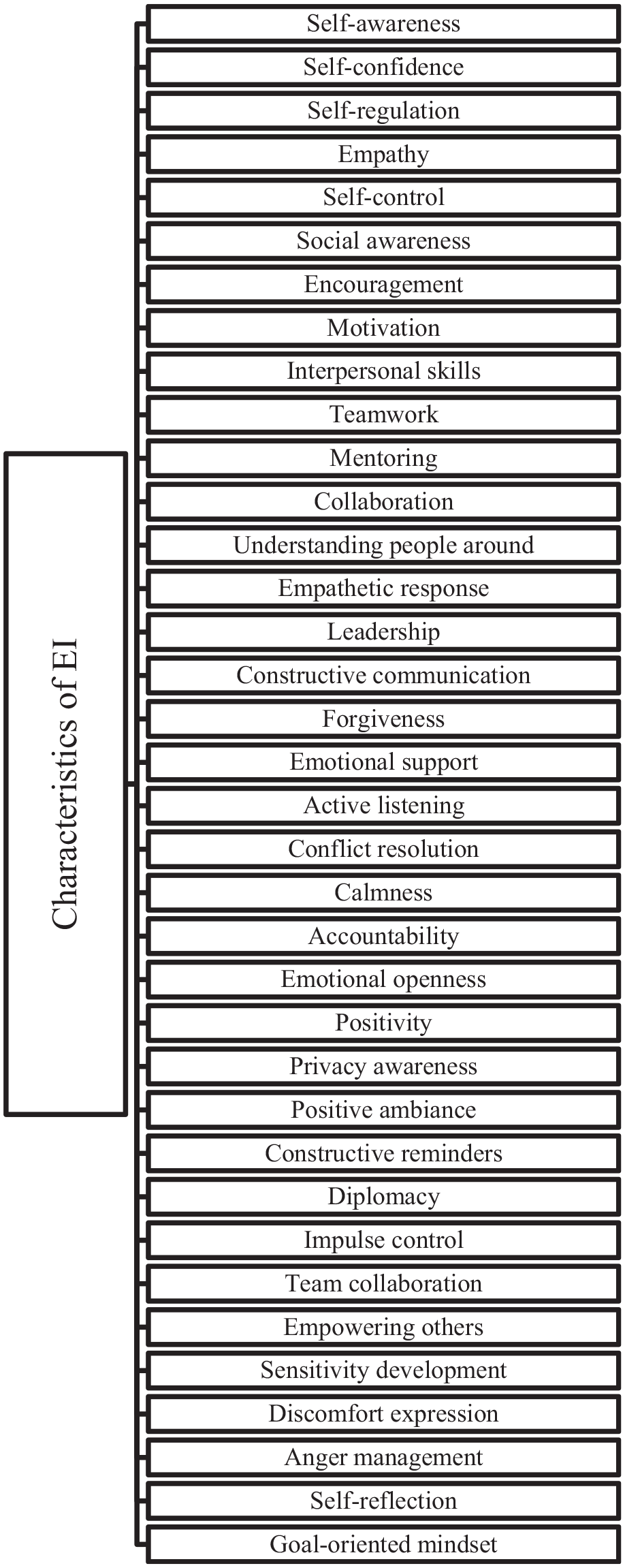
Characteristics of EI.
Second Language Acquisition
SLA is typically delineated as the process by which individuals assimilate a language disparate from their mother tongue (Krashen, 1981; Saville-Troike & Barto, 2017; VanPatten et al., 2020; VanPatten & Benati, 2015). This process engages cognitive, linguistic, and socio-cultural mechanisms by which proficiency in a new language is cultivated (Javadi & Kazemirad, 2020; Siyanova-Chanturia & Pellicer-Sanchez, 2018). Academic discourse accentuates the various influencing elements such as age (Bialystok, 1997; Bialystok & Miller, 1999), language aptitude (Winke, 2013), motivation (Anjomshoa & Sadighi, 2015; Dörnyei & Schmidt, 2001; Gardner & Smythe, 1975), and exposure to the target language (Al Zoubi, 2018; Muñoz, 2012). Scholars underscore SLA’s complexity and dynamism, featuring stages and patterns of language development, along with individual variability in learning results (Ellis, 2007; Mohammadi, 2020; Pallotti, 2022). A plethora of theoretical frameworks and models are employed to discern the contributory factors and underlying mechanisms fostering successful language acquisition (Adwani & Shrivastava, 2017; Sun, 2019). Additionally, the literature underscores the relevance of efficacious language teaching methodologies and instructional strategies optimizing SLA outcomes (Duman et al., 2021; O’malley & Chamot, 1990). Collectively, the literature review characterizes SLA as a multidisciplinary research domain examining the cognitive, social, and educational facets of SLA.
The Nexus Between Emotional Intelligence and Second Language Acquisition
The nexus between EI and SLA has garnered escalating scholarly interest. EI, comprising abilities to discern, comprehend, modulate, and manage emotions (Fox et al., 2011; Houle et al., 2018; Pence & Vickery, 2012), appears to positively influence SLA. Research indicates that individuals possessing superior EI often demonstrate amplified motivation, self-regulation, and resilience in their language learning pursuits (Taherkhani & Moradi, 2022; Tevdovska, 2017). They are more proficient at tackling common SLA challenges, such as language apprehension or error phobia (Pishghadam, 2009). Furthermore, EI bolsters effective communication and interpersonal abilities (Epstein, 1998; Fox et al., 2011; Schutte et al., 1998; Vela, 2003), key requisites for language acquisition (Renukadevi, 2014). It enables learners to empathize, comprehend cultural subtleties, and establish profound connections with native speakers of the target language (Estévez et al., 2019; Pence & Vickery, 2012; L. Smith et al., 2008). Additionally, EI fosters self-awareness and introspection permitting learners to track their progress, establish feasible objectives, and utilize effective learning strategies (Kanesan & Fauzan, 2019; Killian, 2012; Laborde et al., 2014; Zhoc et al., 2018). In sum, research denotes a positive correlation between EI and SLA underscoring the significance of fostering EI competencies to enhance SLA outcomes.
Theoretical Frameworks Underpinning the Study
The study utilizes two primary theoretical frameworks to guide its examination of the interplay between EI and SLA. The first framework is the set of EI characteristics modified from previous studies (e.g., Arias et al., 2022; Gómez-Leal et al., 2022; Magnano et al., 2016; Mayer, 2006; Rani & Yadapadithaya, 2018; Zhoc et al., 2018; …). This set offers a comprehensive perspective on EI, providing a platform to explore how various emotional competencies might impact language learning among Vietnamese students. The second framework is the socio-educational model of second language learning proposed by Gardner (1988). This model posits that the success of SLA is influenced by a variety of factors, including motivation and attitudes toward the language learning community. Notably, the model suggests that learners’ emotional reactions to the language learning process are crucial in determining their success in acquiring the language. By integrating this model with EI, the study investigates how Vietnamese learners’ emotional capabilities could affect their motivation, attitudes, and overall success in learning English. These theoretical frameworks guide the investigation into how EI, as understood through the set of EI characteristics, interacts with the key emotional elements in the socio-educational model to shape Vietnamese students’ SLA. The utilization of these theories serves to deepen the understanding of the complex relationships between EI and SLA.
Methods
Research Design
The investigation implemented a comprehensive descriptive research methodology with the intention of systematically explicating and scrutinizing the impacts of EI on SLA among students majoring in English in Vietnam. The methodology incorporated the gathering of data from the participants utilizing an amalgamation of quantitative and qualitative methods, a strategy known as a mixed-methods approach. The quantitative data collection encompassed the distribution of a questionnaire, specifically designed and meticulously validated for this study, intended to assess various dimensions of EI and its conceivable implications on SLA. Participants’ responses to the questionnaire produced numerical data that were subjected to statistical analysis to discern patterns, associations, and correlations between EI and language learning outcomes. Simultaneously, qualitative data were collected via semi-structured interviews to encourage participants to disclose their personal experiences, perceptions, and insights regarding emotional intelligence’s role in their language learning process. This qualitative data enriched the quantitative findings by providing a more profound comprehension of the participants’ perspectives. The mixed-methods approach facilitated a more holistic understanding of the influences of EI on SLA. By integrating quantitative and qualitative data, the methodology permitted a triangulation of findings. It, therefore, augments the validity and reliability of the study’s deductions.
Research Participants
The study incorporated 105 students majoring in English from a university in Vietnam, selected via convenience sampling based on their availability and willingness to participate. Particularly, there were 36 males and 69 females. Among the participants, the age distribution was as follows: 30 students were 18 years old, 34 students were 19 years old, and 41 students were 20 years old. All of them have been learning English for more than 12 years. Participation in the study was entirely voluntary, with detailed study information, including the purpose, procedures, potential risks and benefits, clearly communicated to all prospective participants. The process of participant recruitment included university channels, providing comprehensive study details. Participants were afforded the freedom to choose participation without negative repercussions. Privacy and confidentiality were preserved by assigning unique identifiers or codes to the participants, ensuring that their personal information was securely stored and solely accessible to the research team. Ethical clearance was obtained from the institutional review board, and informed consent was secured from each participant. From the total sample, 12 were deliberately selected for interviews to provide a more profound examination of the impacts of EI on SLA from their perspectives. The criteria for selecting these 12 included the mean scores on relevant measures, with the six highest and six lowest scores chosen, thereby ensuring diverse representation of perspectives and experiences.
Data Collection
The study deployed a bilingual (Vietnamese and English) 36-item questionnaire designed to assess various aspects of EI, ensuring content validity and alignment with research objectives. The questionnaire was constructed using a 5-point Likert scale, with 1 indicating “Strongly Disagree” and 5 signifying “Strongly Agree.” The questions were designed to gage the participants’ insights into how various facets of EI influence their SLA. For example, the statement “Being able to accurately recognize my emotions to avoid affecting those around me helps me learn English effectively” was included to evaluate their perception of how self-awareness, a key aspect of EI, impacts their SLA. The tool’s reliability was affirmed via Cronbach’s alpha coefficient computation, reflecting adequate internal consistency (α = .86). A pilot test involving 50 English-major students of similar characteristics from another institution facilitated the refinement of questionnaire clarity and comprehensibility prior to broader deployment. The finalized questionnaire was electronically distributed within a specified timeframe, with reminders periodically issued to maintain response rates. Anonymization and secure storage ensured data confidentiality.
Qualitative data were procured through the method of semi-structured dialogs executed individually with a specifically designated cohort of 12 respondents. This modus operando was favored to enable an exhaustive elucidation of their perspectives, personal experiences, and profound insights related to the domains of EI and SLA. The inquiries posed during the interviews were meticulously contrived to stimulate comprehensive elucidations that could encapsulate the complexity inherent in the respondents’ experiences. Importantly, these inquiries incisively probed into the respondents’ viewpoints concerning the salient facets of EI that demonstrated a consequential influence on SLA, according to the quantitative evidence. Antecedent to the implementation of the interviews, informed consent was obtained from the respondents, and the interviews were aurally documented and subsequently transcribed verbatim to facilitate further analysis. The information derived from these dialogs functioned as a synergistic adjunct to the quantitative evidence procured through the questionnaire, thereby enhancing an all-inclusive comprehension of the ramifications of EI on SLA among English-major students in Vietnam.
Data Analysis
The data compiled for this study were analyzed using the version 20.0 of the Statistical Package for the Social Sciences (SPSS) software. The central aim of this analysis was to explore the correlation between EI and SLA outcomes, as perceived by English-major students in Vietnam. To confirm the dependability of the questionnaire used for data collection, a scale validation test was conducted. Specifically, the internal consistency of the questionnaire items was evaluated by calculating Cronbach’s alpha coefficient, a measure to ascertain the degree to which the items measure the same construct. The Cronbach’s alpha value obtained revealed a satisfactory degree of reliability for the questionnaire. Descriptive statistics were used to summarize and elucidate the compiled data. Calculations such as minimum, maximum, means, and standard deviations were determined to provide an exhaustive depiction of the participants’ responses to the questionnaire items pertinent to EI and SLA outcomes. The utility of these statistics was instrumental in discerning patterns, trends, and central tendencies within the data.
Simultaneously, the subjective information obtained through the use of semi-structured interviews was methodically scrutinized via an established content analysis protocol. The literal transcriptions were rigorously examined employing a deductive approach to identify recurring homologous themes and patterns intrinsic to the respondents’ feedback. These elements were later allocated and organized based on their relevance to the study’s objectives, undergoing an iterative refinement procedure. This process was sustained until a definitive corpus of data was constructed. This integrative process of data interpretation, categorization, and synthesis facilitated the emergence of distinct, contextually grounded patterns that offer valuable insights into the phenomenon under investigation. In this procedure, emphasis was given to the significance of participants’ narratives in shaping the research findings. The interpretations were continuously checked against the raw data to ensure authenticity and credibility. This iterative process of data handling offered the opportunity to delve deeply into the nuances of the participants’ responses, thereby enabling the extraction of rich, context-specific insights pertinent to the research objectives. Ultimately, this rigorous process culminated in the creation of a comprehensive compilation, shedding light on the pertinent themes and trends inherent in the participant feedback.
Results and Discussion
To investigate the English-major students’ perspectives of the impact of EI on their SLA, a Descriptive Statistics test was conducted. The results collected from the analysis of the questionnaire are detailedly described in Table 1.
Impacts of EI on SLA.

Generally, the impact of EI on SLA, under the English-major students’ perspectives, is considered positive, as the mean value (M = 3.53) is above the midpoint of the scale (which is 3.00 in this case). The standard deviation (SD = 0.57) indicates a moderate amount of variability in the impacts reported. This implies that English-major students who possess higher levels of EI, to some extent, are likely to experience better outcomes in their language learning journey. In addition, the results show the five most influential characteristics of EI on SLA including motivation (M = 3.82), self-confidence (M = 3.74), interpersonal skills (M = 3.74), goal-oriented mindset (M = 3.72), and emotional openness (M = 3.71). These findings are in line with previous studies in the discipline (e.g., Adigüzel & Kuloglu, 2019; Arias et al., 2022; Upadhyay et al., 2020). Motivation has been persistently acknowledged as a pivotal constituent in the domain of language acquisition (Arias et al., 2022; Magnano et al., 2016), while self-confidence galvanizes learners to engage in risk-taking activities and surmount challenges (Partido & Stafford, 2018; Upadhyay et al., 2020). Interpersonal skills abet efficacious communication (Schutte et al., 2001), and a goal-centric mentality fosters strategic learning (Adigüzel & Kuloglu, 2019; Leon, 2018). Finally, emotional openness enables learners to engage with the affective dimensions of language (Houle et al., 2018; Mayer & Geher, 1996).
Qualitative data collected from the semi-structured interviews additionally show the reason why the English-major students considered these traits (motivation, self-confidence, interpersonal skills, goal-oriented mindset, and emotional openness) more impactful than others (see Table 1) in their SLA process.
Motivation
The findings show that most of the participants (n = 8 out of 12) reported on the important role of motivation in SLA. To illustrate, Participant 1 agreed that motivation “prompts a willingness to overcome their linguistic challenges.” Similarly, Participant 9 highlighted that motivation “amplifies active participation in language learning activities such as self-study and interaction with native speakers.” Participant 10 believed that motivation “directs learners to set clear objectives for their language learning journey.” The findings were in line with previous studies (Arias et al., 2022; Magnano et al., 2016) indicating that motivation significantly contributes to promoting learners’ SLA, driving them to devote time and effort toward language proficiency for socio-economic growth.
A notable portion of the participants (n = 7 out of 12) articulated the intricate relationship between motivation and self-regulation in the context of language learning. Participant 4 put forth that learners infused with motivation often “formulate explicit priorities.” Participant 12 underscored that the eliciting priorities driven individuals “focus intently on pivotal tasks,” while Participant 3 accentuated the essentiality of “competent time management” to ensure continual advancement in language proficiency. This illustrates the interlaced nature of motivation and self-regulation, where both components synergistically manage cognitive, affective, and behavioral domains to actualize anticipated outcomes, corroborating the findings of Laborde et al. (2014) and Zhoc et al. (2018).
Beyond its influence on self-regulation, motivation was reported to fortify resilience in the face of impediments (n = 3 out of 12). Participant 7 opined that “motivated learners perceive hurdles as catalysts for personal development rather than inhibitors.” Participant 8 supplemented that “this positive mental disposition empowers learners to persevere and solicit aid as required, culminating in holistic success in SLA.” This viewpoint is congruous with previous research (Arias et al., 2022; Magnano et al., 2016), underscoring the instrumental role of motivation in fostering resilience and tenacity.
Self-confidence
Over half the participants (n = 7 out of 12) underscored the instrumental role of self-confidence in their language acquisition journey. Participant 5 expounded, “learners with a high degree of self-confidence perceive mistakes not as hindrances but as valuable learning opportunities,” thereby creating an avenue for amplified practice and a deepened understanding of language and culture (Ghasemi et al., 2020). Participant 8 asserted that “those suffused with confidence proactively pursue opportunities for real-life language practice to bolster proficiency.” This active endeavor “augments confidence” as elucidated by Participant 9 and “sustains motivation” as delineated by Participant 5. Thus, self-confidence is of substantial significance in language learning (Partido & Stafford, 2018; Upadhyay et al., 2020).
The majority of participants (n = 7 out of 12) engaged in seeking feedback persistently for consistent skill refinement. Participant 7 underscored a pivotal aspect that “self-confidence amplifies resilience,” while Participant 10 spotlighted its function in “inculcating perseverance” in language learning, empowering learners to effectively navigate challenges (Partido & Stafford, 2018; Upadhyay et al., 2020). As reported by Participant 4, confident learners “establish ambitious goals and foster efficacious study habits” to attain these objectives. Those learners brimming with self-confidence are emboldened to venture risks and actively experiment with linguistic facets such as vocabulary, sentence structures, and communication techniques (Partido & Stafford, 2018; Upadhyay et al., 2020).
Lastly, as indicated by half of the participants (n = 6 out of 12), there exists a significant nexus between learners’ self-confidence and language production. As mirrored in Participant 10s words, it equips learners with the ability to “articulate ideas freely,” while “mitigating anxiety” as suggested by Participant 11 and “facilitating organic communication” as propounded by Participant 5. Such learners, by immersing themselves in demanding language situations, not only “enhance their proficiency” as stated by Participant 12 but also “expand their linguistic capabilities” shared by Participant 6, thereby augmenting their overall language proficiency. In congruence with previous studies (e.g., Partido & Stafford, 2018; Upadhyay et al., 2020), self-confidence exerts a significant influence on language production and fluency.
Interpersonal Skills
An overwhelming majority of participants (n = 8 out of 12) underscored empathy - a derivative of interpersonal skills - as an enhancer of language comprehension and articulation. Participant 9 shed light on how empathy equips learners with the ability to “decipher both verbal and non-verbal cues,” whereas Participant 8 acknowledged its instrumental role in aiding him to “bridge cultural disparities” and “nurture substantive connections.” Moreover, Participant 4 observed that empathy “facilitates efficacious collaboration in group-oriented projects,” subsequently enhancing language acquisition and intercultural communication proficiencies. Hence, empathy, a fundamental interpersonal capability, is pivotal to the amplification of language comprehension and expression (Rani & Yadapadithaya, 2018; Schutte et al., 2001).
Furthermore, half the participants (n = 6 out of 12) stipulated that social and cultural cognizance - a component of interpersonal skills - wields a significant influence in language learning. Participant 7 expressed that “this awareness enables learners to respect and comprehend cultural variances in communication.” According to Participant 1, social and cultural awareness is found to “modulate language usage based on social hierarchies and communicative context,” thereby ensuring effective communication. Similar to previous studies (e.g., Rani & Yadapadithaya, 2018; Schutte et al., 2001), social and cultural awareness, intrinsically tied to interpersonal skills, is deemed indispensable for language acquisition.
A scant of participants recognized interpersonal skills as a beneficial asset for their communicative interactions and comprehension of their surrounding social milieu (n = 2 out of 12). Participant 5 underlined how such skills empower learners to “react suitably within the course of discussions,” subsequently crafting a favorable ambiance for language acquisition. Participant 8 contended that “these competencies further foster a collaborative learning environment, enriching language learning experiences and cultivating transferrable proficiencies such as teamwork and conflict resolution.” Consequently, integral interpersonal proficiencies like active listening, empathy, and adaptability are deemed significant in language learning, promoting successful communication and comprehension (Pence & Vickery, 2012; Rani & Yadapadithaya, 2018; Schutte et al., 2001; L. Smith et al., 2008).
Lastly, a mere of participants discussed how interpersonal skills augment their comprehension of SLA and cultural aspects (n = 2 out of 12). Participant 5 reflected on how interpersonal skills allow learners to “apply language skills in real-world scenarios,” while Participant 4 noticed that the skills aid learners to “establish connections with the local populace,” consequently bolstering their confidence and proficiency. Essentially, real-world language usage fosters a deeper understanding of the nuanced aspects of the language and its cultural context (Ishihara & Cohen, 2021; Kramsch, 2014; Schutte et al., 2001).
Goal-Oriented Mindset
Half the cohort of participants (n = 6 out of 12) deliberated how a goal-oriented mindset assists language learners in grappling with the challenges encountered during their language acquisition journey. Learners with goal-oriented mindset often perceive, as postulated by Participant 7, “challenges as avenues for growth, even when confronted with impediments.” This mindset “paves the way for long-term triumph by nurturing an environment conducive to continuous evolution and augmentation,” as indicated by Participant 12. As previously found, an objective-anchored mindset spurs intrinsic motivation and resilience (Peterson & Dutton, 2022), thereby accentuating the necessity of perseverance (Zu, 2019), determination (Borrego, 2018), and a growth mindset (Mandel, 2023).
The findings also show that participants broached the concept that the meticulous planning and organization of linguistic activities, an attribute of the objective-driven mindset contribute substantially to the comprehensive success of language learning (n = 5 out of 12). It incites, as Participant 5 termed, “structure in study routines,” what Participant 7 referred to as “effective resource allocation,” and what Participant 4 designated as “regular progress monitoring,” along with “promoting efficient resource usage,” said by Participant 8. This systematic method also fortifies adaptability, inspiring learners to continually assess and recalibrate their strategies to optimize their language proficiency outcomes (Adigüzel & Kuloglu, 2019; Leon, 2018; Moreno, 2022).
It is noted that some participants (n = 3 out of 12) underscored the imperative role of a goal-oriented disposition in their SLA process. Such an inclination incites motivation and strategically allocates resources toward, as Participant 9 depicted, “well-articulated linguistic goals,” thus “magnifying language proficiency in alignment with learners’ aspirations,” as indicated by Participant 2. Within the framework of SLA, goal-orientation propels learners to demarcate explicit objectives, prioritize linguistic ventures, embark on challenges surpassing their comfort zones, and monitor progression (Adigüzel & Kuloglu, 2019; Leon, 2018).
Similarly, a trifling of participants conveyed that a goal-oriented disposition further stimulates self-evaluation and entreaty of feedback, cultivating self-regulated learning (n = 3 out of 12). In the context of the present study, Participant 8 expressed, “this practice nurtures metacognitive awareness.” Consequently, as suggested by Participant 11, learners can “optimize learning efforts,” ushering in more effective language acquisition. Therefore, a goal-oriented mindset enables learners to reflect on learning processes, adapt learning strategies, and constructively interpret criticism (Adigüzel & Kuloglu, 2019; Boonstra & Eguiguren, 2023; Leon, 2018).
Lastly, some participants addressed that a goal-oriented disposition incites a sense of achievement and gratification (n = 3 out of 12). Particularly when learners, as per Participant 3, “surpass the linguistic goals.” This sense of triumph escalates confidence, strengthens commitment to language learning, and positively influences emotional well-being (Adigüzel & Kuloglu, 2019; Leon, 2018). It further solidifies learners’ intrinsic motivation and fosters a positive self-perception and self-efficacy, thereby enabling them to, as suggested by Participant 5, “engage with more challenging linguistic tasks with enthusiasm and confidence.” These findings bear resemblance to the study conducted by Zu (2019).
Emotional Openness
A majority of participants (n = 7 out of 12) expounded on the ramifications of emotional openness on their language learning milieu. Emotional transparency allows for effective emotional regulation empowering learners to, as posited by Participant 7, “manage deleterious emotions,” while also assisting learners, as per Participant 1, to “alleviate situational anxiety” and, as underscored by Participant 10, to “promote emotional wellness.” As seen, emotional transparency facilitates the establishment of a propitious learning environment, augmenting motivation, resilience, and commitment in language acquisition, thereby preparing learners to adeptly navigate challenges and setbacks (Houle et al., 2018; Mayer & Geher, 1996; Rani & Yadapadithaya, 2018; Schutte et al., 2001).
Half of participants perceived the effects of emotional openness on language learners’ communication skills and understanding of socio-cultural contexts (n = 6 out of 12). As articulated by Participants 8, 10, and 11, respectively, emotional transparency nurtures “profound linguistic connections,”“cultural understanding,” and “advanced communication competencies.” Furthermore, Participant 4 noted that learners can “develop effective communication skills” that enhance overall language proficiency, thereby empowering learners to “navigate diverse socio-cultural contexts with authenticity and self-assuredness,” as stated by Participants 12. This promotes cultural sensitivity and genuine communication, aligning with findings from previous studies (e.g., Dailey, 2021; Nielsen et al., 2019).
Additionally, some participants denoted the usefulness of emotional openness for language learners in interpreting the feedback they receive as opportunities for their growth (n = 5 out of 12). As emphasized by Participant 7, emotional transparency bolsters learners’ receptivity to constructive feedback, fostering a growth-oriented mindset that perceives “feedback as an opportunity for improvement rather than a form of criticism.” Participant 6 pointed out that this receptive stance enables learners to “integrate feedback effectively.” The findings are similar to the study by T. Smith et al. (2018), which indicated that emotional openness enhances their linguistic proficiency and performance.
The findings also indicate that the participants underscored the significance of emotional openness in fostering a positive learning environment (n = 5 out of 12). Emotional transparency also, as noted by Participant 9, contributes to nurturing “a supportive and trustworthy environment,” strengthening positive relational dynamics with language educators and peers. Participant 7 maintained that such transparency engenders “tailored guidance,”“shared experiences,” and “an exchange of constructive feedback.” These effects are identified as a determinant that enriches the overall learning experience (Houle et al., 2018; Mayer & Geher, 1996; Rani & Yadapadithaya, 2018; Schutte et al., 2001).
Lastly, in line with the perspectives of some participants (n = 3 out of 12), emotional transparency augments metacognitive awareness and introspective capabilities. This amplified metacognitive discernment aids what Participant 7 referred to as the “identification of domains necessitating refinement” and permits what Participant 2 characterized as the “adaptation of pedagogical methodologies,” collectively contributing to a nurturing learning environment and enhanced academic results. Within the framework of SLA, especially as scrutinized in this study, emotional transparency amplifies metacognitive acuity and introspective capabilities, thus enabling learners to understand their emotional reactions, stimuli, and recurring patterns (Houle et al., 2018; Mayer & Geher, 1996; Rani & Yadapadithaya, 2018; Schutte et al., 2001).
Conclusion
This study engaged a descriptive research paradigm and a mixed-methods methodology to probe the ramifications of EI on SLA amongst undergraduates specializing in English in Vietnam. The insights extracted from a convergence of quantitative and qualitative data disclosed pivotal findings regarding the association between EI and language learning outcomes. The study incorporated 105 English-specialized participants, who voluntarily partook in the investigation. The evidence adduced insinuates that EI, as perceived by the respondents, exerts a substantial impact on SLA. The average score for EI’s comprehensive influence on SLA surpassed the midpoint of the scale, signifying a beneficial effect. Among the EI attributes, motivation, self-confidence, interpersonal skills, goal-directed orientation, and emotional openness were identified as the most influential on SLA by the student body. As deduced from the qualitative data, motivation engenders resilience, active involvement, and self-regulation in SLA. Self-confidence catalyzes proactive learning, augments resilience, formulates ambitious learning objectives, and amplifies language production. Interpersonal skills, specifically empathy and socio-cultural consciousness, emerged as indispensable for bolstering language comprehension, cultural cognizance, and efficacious communication. A goal-oriented disposition, accentuating intrinsic motivation, optimal resource allocation, and autonomous learning, acts as a facilitator for SLA. Emotional openness critically sways learners’ communicative competencies, socio-cultural understanding, receptivity to feedback, nurturing of a conducive learning ambiance, and enhancement of metacognitive awareness and introspective faculties.
The implications extrapolated from this study have significant bearings on both the specific context of Vietnam and comparable sociocultural environments, as well as divergent cultural contexts globally. The nexus between EI and SLA, as explored amongst Vietnamese undergraduates, fortifies the postulation that EI significantly influences SLA outcomes. In the context of Vietnam, these findings underscore the necessity to integrate EI-focused pedagogical strategies into the curriculum of English language learning. Given the magnitude of the reported influence of attributes such as motivation, self-confidence, interpersonal skills, goal-directed orientation, and emotional openness on SLA, educators should tailor their instructional methods to foster these traits in learners. Incorporating pedagogical approaches that cultivate resilience, proactive learning, and socio-cultural consciousness can be particularly beneficial. The emphasis on emotional openness suggests the need to nurture an educational atmosphere conducive to feedback and introspection.
In nations with cultural similarities to Vietnam, these findings advocate for a comparable integration of EI-centric teaching strategies in language education. The universal applicability of the identified EI attributes on SLA across various cultures reinforces the necessity of a globally applicable pedagogical paradigm that emphasizes EI development. In contrasting cultural contexts, the research serves as a seminal point of reference, encouraging similar investigations to comprehend the influence of EI on SLA within their unique socio-cultural environments. While the essentiality of EI in SLA appears to hold true universally, nuanced cultural distinctions may affect the relative importance of specific EI attributes. Therefore, region-specific investigations, utilizing this study as a foundational basis, would enable the development of bespoke pedagogical approaches tailored to different cultural contexts.
Some limitations warrant consideration in interpreting the study’s findings. The sample size of 104 participants and the employment of convenience sampling provoke concerns surrounding the generalizability of the study. The possibility of self-selection bias cannot be overlooked, as the distinct characteristics and motivations of the participants could potentially deviate from those of non-participants, thereby influencing the results. Furthermore, the study’s reliance on self-reported measures introduces an inherent bias and may not precisely reflect the participants’ abilities or behavioral tendencies. In light of the identified limitations, several recommendations can be proffered for subsequent research endeavors. Future studies should aspire to involve larger and more diverse samples, encompassing participants from varied backgrounds and language proficiency stages, to bolster generalizability. The inclusion of a control group within randomized controlled trials would assist in establishing a more robust causal relationship between EI and SLA. Employing longitudinal designs would enable the tracking of participants’ progress across a temporal continuum, providing insights into the dynamic nature of the relationship between EI and SLA. Supplementing self-reported measures with objective measures would procure a more comprehensive data set. Implementing cross-cultural studies would illuminate the influence of cultural elements on the EI-SLA relationship. Adherence to these recommendations could enable future research to circumvent limitations and contribute to a more comprehensive comprehension of EI’s influence on SLA.
Footnotes
Declaration of Conflicting Interests
The author(s) declared no potential conflicts of interest with respect to the research, authorship, and/or publication of this article.
Funding
The author(s) received no financial support for the research, authorship, and/or publication of this article.
Ethics Statement
This study was conducted adhering to strict ethical guidelines. Informed consent was obtained from all participants before starting the research. The confidentiality and anonymity of participants were assured, and all data were handled with utmost discretion and respect. Participants were informed that they had the right to withdraw from the study at any point without any adverse consequences. The study design, data collection, analysis, and dissemination of findings were carried out under the supervision of the relevant research ethics committee to ensure compliance with ethical standards and practices.
