




Abstract
Inbound open innovation (IOI) is credited with high productivity in businesses. However, this is marred by resource and structural constraints in Ghanaian SMEs. Therefore, this study explores the odds of Ghanaian SMEs engaging in inbound open innovation given SMEs characteristics and IOI collaboration modes. Further, we examine the mediating effect of SMEs’ CEO characteristics in increasing or decreasing these odds. Using a sample of 657 registered SMEs’ of the Association of Ghanaian Industries, the survey data is estimated with a stepwise logistic regression model to show the multiplicative effects of the variables. The results show that the odds of engaging in inbound open innovation is higher for; SMEs located in urban areas, SMEs with partnership or company ownership structure, SMEs with research and development departments, SMEs not collaborating with universities, manufacturing SMEs, and SMEs that are relatively bigger in size. Further, these odds increase when the characteristics of CEOs of the sampled SMEs are accounted for in the model. Thus, the characteristics and traits of CEOs are only useful given the right resources and environment. Relying on the major (main) outcomes of the study further feasible suggestions are recommended.
Introduction
Business strategy literature suggests that rivalry between firms and industries for market share begun centuries ago. As customer requirements evolve toward superior offerings, cost-effective products, and services, companies have employed cutting-edge solutions to meet these requirements (Santoro et al., 2019; Oduro, 2020). Consequently, open innovation has emerged as a viable strategy for companies to achieve sustainable competitive advantage through the process, product, and service improvements (Gassmann & Enkel, 2006; Greenstein & Nagle, 2014; Rauter et al., 2019). Per Chesbrough and Bogers (2014), inbound open innovation is a collaborative approach to innovation whereby firms integrate external knowledge and expertise into existing processes to create superior products and services. Contrary to practices where information is deliberately kept from external parties because of the need to protect trade secrets, intellectual property, and early market entry issues, inbound open innovation is a dynamic strategy to create, share, and develop knowledge to sustain competitive advantage irrespective of the potential risk of exposure (Brockman et al., 2018).
The wide acceptance of inbound open innovation practices by firms irrespective of size and location continue to drive research inquisition into this subject (Chesbrough & Bogers, 2014; Dahlander & Gann, 2010; Greenstein & Nagle, 2014). However, similar to technology diffusion, the practice of inbound open innovation in sub-Saharan Africa is relatively low (Abor & Quartey, 2010; Coffie et al., 2020; Vallejo et al., 2019). Ghanaian SMEs are unable to engage in inbound open innovation because of difficulties in finding the right partner, lack of internal flexibility, lack of resources, and managerial inefficiencies (Bartels et al., 2016; Oduro, 2020). Unlike bigger firms, smaller firms struggle with structural, absorptive, and partnership deficiencies making it difficult to engage in inbound open innovation (Chesbrough, 2010; Santoro et al., 2019). Nonetheless, firms with scarce resources can strategically identify suitable partners to create cost-effective collaborations to drive innovation (Rivotti, 2015; Santoro et al., 2019). Thus, this presents an opportunity for SMEs in Ghana to develop.
Ghana is home to a dozen businesses of which about 90% are classified as SMEs. The sector contributes to about 70% of the country’s GDP and employs more than 85% of the total workforce. However, most of these businesses struggle for survival because of inadequate capital, incompetent management, and the inability to innovate (Abor & Quartey, 2010). Although, inbound open innovation is a cost effective avenue for SMEs to innovate to improve firm performance (Bartels et al., 2016; Santoro et al., 2019), Hinteregger et al. (2019) assert that the practice of inbound open innovation in SMEs is still infantile. Yet, current existing studies in Ghana on inbound open innovation have so far failed to identify the rate (state) of inbound open innovation diffusion in SMEs as well as the determining factors. Majority of the studies focus rather on the end-result (contribution) of open innovation to SMEs performance (Mensah & Gordon, 2020; Oduro, 2020; Otchere et al., 2021). This gap raises unanswered questions about the creativity and sustainability of the sector without understanding the rate (state) of active participation in inbound open innovation. To close this gap, we estimate the survey response of 657 Ghanaian SMEs on the practice of inbound open innovation using a stepwise logistic regression model. Specifically, we seek answers to the research questions; what is the state of inbound open innovation practice in Ghanaian SMEs? What is the effect of inbound open innovation collaboration modes on inbound open innovation practice? What is the effect of SME CEOs and business characteristics on inbound open innovation practice in Ghana? The logistic regression estimates reveal that although business characteristics and collaboration mode affect the diffusion of inbound open innovation, Ghanaian SMEs are unwilling to collaborate with universities and research institutions for inbound open innovation. CEO characteristics marginally affect the relationship between business characteristics, collaboration model, and the practice of inbound open innovation by Ghanaian SMEs. This outcome is significant to researchers, industry practitioners, and policymakers because; it provides insight into the likelihood of Ghanaians to engage in inbound open innovation based on specific collaboration modes. Further, it adds to understanding the practice and the dynamism of inbound open innovation literature from the perspective of a developing country with a focus on the SMEs, and from the class of business context where decision making is mostly dependent on the business owner. Finally, the study tests the argument of Rivotti (2015) on companies with scarce resources and their ability to engage in inbound open innovation.
The remainder of the paper is organized as follows; review of literature on the subject relevant to the objectives of the study, appropriate research methods adopted, presentation of results, discussion, and provision of suitable recommendations for future policies and studies.
Literature Review and Hypothesis Development
This section discusses the literature on the practice of inbound open innovation, the collaboration model of inbound open innovation, and the practice of inbound open innovation by SMEs. Further, the hypotheses of the study are developed based on the knowledge of the literature discussed.
Inbound Open Innovation
According to the Oslo Manual (2005), the term innovation is the offering of novel or expressively improved products/services, novel marketing techniques, enhanced business processes, organizational structural improvements, or superior external relations which leads to customer satisfaction. Innovation is significant to sustainable competitive advantage irrespective of the location, size, or Mundus Operandi of the organization (Hungund & Kiran, 2019). Open innovation is a shared effort involving parties of both the internal and external business environments such as customers, universities, the government, and other stakeholders (Secundo et al., 2019; Tabachnick & Fidell, 2001). While outbound open innovation focuses on profit maximization by sharing ideas, technology, and intellectual property, inbound open innovation creates a competitive advantage for businesses through partnerships with suppliers, customers, competitors, and universities (Hinteregger et al., 2019; Gassmann & Enkel, 2006). Inbound open innovation involves a collaborative approach to integrating external knowledge and expertise (Chesbrough & Bogers, 2014). Led by Chesbrough (2019), the concept is hailed as a favorable method of innovation irrespective of the identified prospective bottlenecks like loss of control, managerial and organizational complexity, and increased cost (Manzini et al., 2017; Punch, 2013).
Bartels et al. (2016) identifies these as barriers to innovation in Ghanaian SMEs; skills-Information and Communication Technology (ICT) capability/capacity; unsophisticated markets; deficient fiscal policy; and organizational risks. However, as innovation practices evolve, the intricacies of the organization’s offerings and life cycles coupled with rapid changes in customer requirements push management to constantly seek superior capabilities which enable organizations to learn from the environment to provide the best solution (de Zubielqui et al., 2019). Thus, irrespective of the challenges of inbound open innovation, SMEs must find the optimal balance between the risk and benefits. Inbound open innovation has become a force in innovation management literature because of the boundless and transparent network of operations where ideas, work, and experiences could be shared irrespective of geographical locations (Öberg & Alexander, 2019). Therefore, Osei et al. (2016) suggest that SMEs in Ghana can collaborate with external parties both in Ghana and outside Ghana to develop innovative services and products. Inbound Open Innovation has a rich literature and numerous theories supporting exactly how companies can evolve to create and sustain competitive advantage from products/services, marketing activities, processes, and organizational structure as a whole (Manzini et al., 2017; Öberg & Alexander, 2019). Consequently, the models of inbound open innovation provide alternatives for businesses to engage in inbound open innovation by matching their resources, structures, and expertise with suitable collaborators (D’angelo & Baroncelli, 2020). This means that irrespective of the resource constraints of SMEs in Ghana, the numerous models: customers, competitors, suppliers, universities, and government institutions provide options for cost-effective collaborations (Abdulai et al., 2015; Mensah & Gordon, 2020).
Collaboration Model
Businesses engage in inbound open innovation in several ways (Öberg & Alexander, 2019). Choosing between these available models could be influenced by infrastructural development, government policies, and resource availability (Mensah & Gordon, 2020). Hongyun et al. (2019) suggest that improvements in infrastructure drive innovation. Therefore, government participation through the provision of state-of-the-art labs, roads, and electricity could drive innovation in Ghanaian SMEs. Ultimately, the purpose of inbound open innovation is to create a competitive advantage. Gassmann and Enkel (2006) indicate that both inbound open innovation and outbound open innovation are strategic channels to reduce the cost of research and development within businesses. This suggests that SMEs can innovate to increase productivity while keeping costs at the minimum. Chesbrough (2019) points to the fact that divergent collaborations between organizations and partners breed divergent innovation results which could positively impact the performance of the organization. D’angelo and Baroncelli (2020) discover that research and development partnerships with universities positively improve product innovation in SMEs. However, although Abdulai et al. (2015) find that the formal collaboration between SMEs and universities drives innovation and higher organizational performance in Ghana. Mensah and Gordon (2020) suggest that recent government effort to promote university-industry collaboration in the country has been marred by resource, infrastructural and structural constraints. This justifies the submission of (Hongyun et al., 2019) to indicate the positive role of resources in collaborations.
According to Brettel and Cleven (2011), most new product development performances can be attributed to collaborations between organizations and customers, universities, and supplies. Frempong et al. (2020) suggest that collaboration with customers stimulates creativity in Ghanaian businesses. This is a relatively cost-effective avenue to generate new ideas without heavy cash-outlay. Considering the different stages of the innovation process, Stefan and Bengtsson (2017) found in their research that universities, intermediaries, customers, suppliers, and competitors are beneficial in organizational performance depending on the different phases of the innovation process. This is an indication that different innovation phases might require different innovation collaboration as pointed by Chesbrough (2019). The level of collaboration commitment also has a varying effect on the innovation outcome and performance (Frempong et al., 2020). External collaborations with customers, suppliers, and research institutes with high commitments and resources produce high competencies for sustainable innovations (Lee et al., 2015; Secundo et al., 2019). Further, Brockman et al. (2018) ascertained that collaboration with external institutions provides a greater avenue for improvement in products, services, and processes within an organization. For sustainable innovation, Rauter et al. (2018) discovered that a broader inbound open innovation ecosystem encompassing parties directly associated with the organization such as customers, universities, and other stakeholders improve organizations outcome by helping overcome market failures and provide specific information and knowledge beneficial for the firm’s innovation activities.
SMEs and Inbound Open Innovation
The practice of inbound open innovation in SMEs is deemed to be infantile (Hinteregger et al., 2019; Otchere et al., 2021). This could be as a results of structural inefficiencies, technical limitations or resource constraint (Chen et al., 2019; Podmetina et al., 2013). Thus, although inbound open innovation offer significant innovation support to SMEs, these issues inhibit diffusion. Consequently, bigger firms are likely to explore the several modes of inbound open innovation than SMEs. Ghanaian SMEs like other SMEs in different regions are a class of businesses with relatively low capital, occasional structural, and managerial inefficiencies (Abor & Quartey, 2010). Therefore, the decision-making process and other procedures within SMEs are distinct from bigger firms (Coffie et al., 2020; Oppong et al., 2014). Therefore, it is important to understand how the available modes of inbound open innovation offer SMEs the opportunity to practice inbound open innovation given these underlying challenges. To begin with, inbound open innovation is strategic in nature affecting the entire direction of a business, and thus top management becomes key in the initiation and conservation of inbound open innovation culture within an organization (Singh et al., 2019: Chesbrough & Brunswicker, 2013). Subsequently, top management commitment is required to stimulate growth and resist opposition from others (Gassmann & Enkel, 2006). This suggests that managerial inefficiency could stifle the diffusion of inbound open innovation to a far extent. Accordingly, Donkor et al. (2018) suggest that there is a strong positive relationship between SMEs’ strategic goals and the ability to engage in innovative activities. Thus, the lack of any form of internal commitment and the presence of resistance should be avoided to diffuse inbound open innovation effectively (Öberg & Alexander, 2019). According to Ahn (2020), inbound open innovation awareness should be created for key decision-makers within SMEs to boost diffusion and performance. In most Ghanaian SMEs, because the decision making process is greatly influenced by the business owner or the Chief Executive officer (CEO), their expertise is significant to the practice of inbound open innovation (Otchere et al., 2021). Per Podmetina et al. (2013) the level of education and training of SMEs labor force and the availability of government support in terms of subsidies, tariffs and taxes affect the inbound open innovation environment. Thus, both internal and external business factors influences the ability of SMEs to practice inbound open innovation. Further, Pan et al. (2019) found that male CEOs in SMEs are more inclined to innovative practices compared to female CEOs. Therefore, there is a need to promote gender culture to enable female CEOs to engage more in innovative practices. While foreign-owned companies provide economic support in host countries, Chen et al. (2019), provide that inbound open innovation is higher amongst indigenous firms than foreign firms. This is an indication that SMEs with indigenous CEOs might have a higher probability of engaging in inbound open innovation compared to those with foreign CEOs.
Although financial constraints limit SMEs from engaging in inbound open innovation, Leckel et al. (2020) point that because of the resource constraints of SMEs, the best means of engaging in open innovation is to partner with collaborators within the same geographical location. This reduces the cost of collaboration. However, De Marco et al. (2020) reveal that SMEs granted funds in the European Union are less engaged in open innovation compared to those without grants. This means that other factors beyond financial constraints affect the diffusion of inbound open innovation. Thus, the availability of alternative collaboration modes could boost SMEs chances of engaging in inbound open innovation. Again, organizational risk-bearing threshold, organizational structure, procedures, and other supporting components could determine the extent of resource commitment toward open innovation by the organization (Chesbrough & Bogers, 2014: Schein, 2004). It is by no surprise that amongst the top challenges of open innovation cultural and organizational problems rank the highest (Van de Vrande et al., 2009). Chen et al. (2019) found a positive relationship between ownership structure and the diffusion of open innovation. Further, SMEs located in urban areas are more likely to diffuse and benefit from open innovation. An open innovation environment is described as an organization trying to enable open innovation within a specific field of expertise while, at the same time, acting as a key organization in the field (Aspenberg & Kumlin, 2012; Lozano, 2007). The ability of the organization to learn becomes crucial to the open innovation process and according to Rehman et al. (2020), absorptive capacity is the ability of an organization to accept and recognize the value of additional information, afterward assimilating it, and then applying the information to the firms’ commercial purposes. On the other hand, the adsorptive capacity of SMEs becomes the ability of an organization to accumulate and release knowledge toward collaborators which can process the same into productive commercial output. While the release of information in desorptive capacity is crucial, selecting the right collaborators which can use the information meaningfully is equally relevant (Lyu et al., 2019).
The Development of the Study Hypotheses
Per the evidence from existing literature (Donkor et al., 2018; Frempong et al., 2020; Osei et al., 2016). Businesses engaged in inbound open innovation show a positive relationship with higher firm performance. However, the literature on the preferred model for collaboration is scanty. Therefore, per existing literature and the research objectives, the following research hypotheses are developed to explore the practice of inbound open innovation in Ghanaian SMEs.
SMEs have characteristics that make them unique. The size of business (Leckel et al., 2020; YuSheng & Ibrahim, 2020), the location of the business (Chen et al., 2019), ownership structure (Chen et al., 2019; Öberg & Alexander, 2019), nature of business (Brockman et al., 2018), and the existence of a research and development department (Michelino et al., 2014 ) are found to positively affect the practice of inbound open innovation in SMEs. Further, universities and research institutions have unique resources that provide readily available platforms for firms to engage in cost-effective collaborations (Brettel & Cleven, 2011; Michelino et al., 2014). Therefore, Secundo et al. (2019), Stefan and Bengtsson (2017), and Lee and Kim (2011) provide that firms are likely to engage in inbound open innovation with universities and research institutions to benefit from their existing infrastructures. According to Cammarano et al. (2019), a collaboration between firms in the same industry reduces cost, lead time, and boost productivity. When firms have challenges that are beyond the reach of Universities and research institutions, firms within the industry serve as the most practical avenue for a solution (Frempong et al., 2020; Rauter et al., 2018; Secundo et al., 2019). Therefore, the study suggests that telecommunication firms in Ghana are likely to engage in inbound open innovation with firms within the industry. Finally, sources like customers, distributors, the government, and other stakeholders provide another valuable avenue for collaboration for inbound open innovation. According to the Oslo Manual (2005), Brockman et al. (2018) provide that aside from collaborations toward the development of products and services, other purposes serve as the basis for collaborations with other information sources. Therefore, the study postulates that business characteristics and the nature of inbound open innovation collaboration affects the practice of inbound open innovation in Ghanaian SMEs.
Hypothesis 1 (H1): The practice of inbound open innovation by Ghanaian SMEs is positively affected by SMEs characteristics and the collaboration model of the inbound open innovation
Given the nature of SMEs’ decision-making processes, the study predicts that CEOs’ characteristics positively mediate the nexus between the SMEs’ characteristics, the model of collaboration, and the practice of inbound open innovation in Ghanaian SMEs. Empirically, the age of CEOs is evidenced to affect decision making in SMEs (Corsi & Prencipe, 2019). Younger CEOs are likely to make decisions that create innovation within the business. The gender of CEOs is suggested to influence decision-making within SMEs (Coffie et al., 2020; Pan et al., 2019). Male CEOs are likely to engage in decisions that promote technology and innovation. The nationality of CEOs also affects decision-making in SMEs (Chen et al., 2019). SMEs with domestic CEOs are found to be likely to engage in inbound open innovation. Finally, the level of CEOs’ education significantly affects decision-making in SMEs (Ahn, 2020; Podmetina et al., 2013). CEOs with higher levels of education are likely to engage in innovative decision making because of the opportunity to learn. See Figure 1 for details.

Conceptual framework.
Hypothesis 2 (H2): SMEs’ CEO characteristics mediate the positive relationship between SMEs’ characteristics, inbound collaboration mode, and the practice of inbound open innovation by Ghanaian SMEs
Research Methodology
Data Source and Description
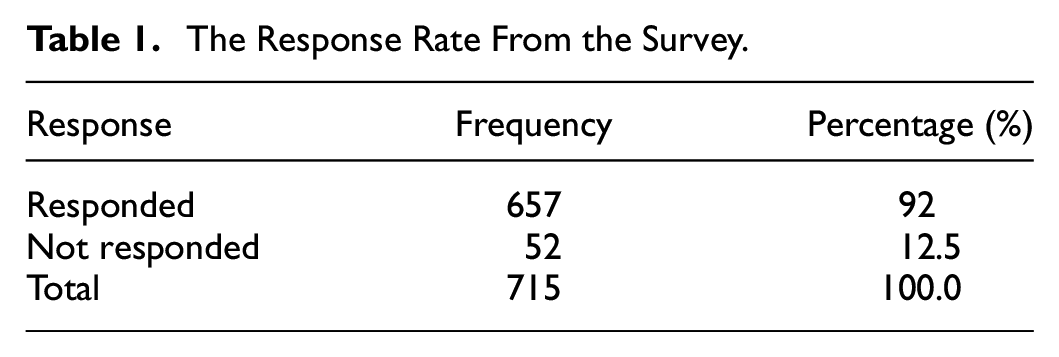
In investigating the practice of inbound open innovation in Ghana by SMEs, the quantitative research approach is employed to provide descriptive and empirical evidence to support the research inquiries. SMEs in the Ghanaian community is chosen as the study’s target population because the country’s business landscape is made up of more than 85% SMEs (Abor & Quartey, 2010). According to the international trade center’s report (2017), the Association of Ghanaian Industries (AGI) estimates more than 1,600 duly registered Ghanaian SMEs. However, a request to obtain the total registered AGI members in 2019 yielded a total of 1,826. While the number is estimated to be far above, most of the SMEs in the country are unregistered members of the AGI. Therefore, the study adopted 1,826 as the population for the survey. The entire survey processes and procedures run between January 2019 and August 2019. Further, because the entire target population is unreachable, a sampling decision was taken using the non-probabilistic purposive technique. Specifically, the selection criteria are based on the availability of email ID and telephone numbers. Initially, a total list of 1,130 SMEs with both email IDs and telephone numbers was generated. Further, to test for the validity of the email IDs, emails were sent to seek the consent of these SMEs. In all, 414 emails were found to be either invalid, unreachable, or erroneous. Therefore, using the telephone numbers obtained from the AGI, follow-up telephone calls were made to confirm the validity of these business emails. Finally, a total of 715 SMEs were obtained as the study sample. A structured closed-ended survey instrument made-up of separate segments was designed to collate data on the demographics of SMEs CEO, the SMEs’ characteristics, and the inbound open innovation practices among SMEs. The CEOs of SMEs are the best fit of respondents because inbound open innovation is strategic and thus CEOs have more knowledge on this topic than others within the business. However, the survey instrument was tested for validity in two different stages, first, using the split-half method, where the internal consistency of the instrument was tested amongst fifteen SMEs from the population in different locations of the country. After this test, changes were made in the choice of “wording” to eliminate overly technical terms which portray different meaning to different individuals based on their location and level of education. The second test conducted after the improved survey on samples from the first pre-test group and other respondents yielded an improved survey. To collect the data, respondents were contacted via email in an online survey because it is impossible to travel all over the country. Out of the total 715 SMEs contacted, a total of 657 completed surveys were returned. Table 1, therefore, depicts a high response rate which reduces the probability of non-response rate bias. The higher response rate is an indication of the survey design and the data collection efforts of the study.
The Response Rate From the Survey.
Measurement of Variables
The survey instrument evaluates the nexus between business characteristics, inbound open innovation collaboration mode, and the characteristics of CEOs in Ghanaian SMEs. The dependent variable which is the practice of inbound open innovation by Ghanaian SMEs is measured as a dichotomous response of yes or otherwise. The business characteristics include ownership structure (sole-proprietorship, partnership, and company), the size of the SME (number of employees), the location of the SMEs (urban or rural), and the existence of research and development department in the SMEs. The collaboration model was measured using collaborations with universities and research institutions, competitors, and other information sources like customers and the government. Specifically, business characteristics together with collaboration models are employed as explanatory variables. The age of the SME CEOs was measured in range, gender (male or female), level of education on three levels, and the nationality of the CEOs on two levels. See Table 2 for details.
Description of Variables.

Data Analysis
To provide empirical evidence to explain the research questions, the data collated from the survey are transformed into meaningful information using a series of data analysis processes. First, the data were cleaned to eliminate errors and then coded into machine readable codes following the measurement constructs employed in the data collection phase. To understand the overall outcome of the survey, three distinct stages of data analysis are performed. Initially, basic descriptive statistics and correlation analysis of the data is performed, followed by a multicollinearity test. After these critical analyses, the stepwise logistic regression analysis is employed to estimate the multiplicative effects of the proposed explanatory variables on the practice of inbound open innovation as the response variable by SMEs from the Ghanaian perspective. The statistical tools employed in the data analysis are SPSS version 20 and STATA 13.0.
Model Specification
Based on the identification of the data analysis processes in the preceding section, the study applies the stepwise logistic regression model to investigate the multiplicative effects of the SMEs’ characteristics and the collaboration model on the practice of inbound open innovation in Ghana by SMEs. While the practice of inbound open innovation by Ghanaian SMEs is employed as the dependent variable with a dichotomous response, the SMEs’ characteristics and the collaboration model are employed as the independent variables. The stepwise logistic regression model is an integral component of data analysis concerning the establishment of relationships between a dichotomous dependent variable with one or more explanatory variables which can either be continuous, categorical or a mixture of both continuous and categorical variables. The stepwise logistic regression model is a kind of generalized linear model (GLM) with two components which include the random (response variable part) and systematic components (the part containing the linear combinations of explanatory variables and their respective parameters). Thus the random component which representing engagement in open innovation is specified dichotomously as;

Where

where

where

Where
Empirical Results and Discussion
This section presents the empirical results from the various analysis performed on the survey data. The results provide intuition for the discussion of the nexus between the variables and the implication for practice and business management.
Descriptive Statistics and Multicollinearity Test
A summary of the descriptive statistics is presented in Table 3. The mean value of IOI practice as the main response variable in the study is 1.27 with a corresponding standard deviation of 0.44. Respectively, the mean and standard deviation are presented for; Gender of CEOs 1.40 (0.49), Age of CEOs 1.47 (0.59), Education of CEOs 1.74 (0.77), Nationality of CEOs 1.23 (0.42), Ownership structure of the SMEs 1.83 (0.87), Size of SMEs 1.33 (0.47), Location of SMEs 1.27 (0.44), R&D department, 1.37 (0.48) Nature of SMEs business 1.27 (0.45), and IO1 collaboration mode 2.61 (1.17) correspondingly. Specifically, the mean values for the variables are presented to reveal that the response collated from the SME CEOs are diverse and not concentrated on specific or same responses. This can be confirmed by the fact that all the mean values are above 1.0. Thus, this gives the model the chance to establish unbiased associations between the variables. Further, we estimate the skewness, kurtosis, and JB tests to determine the distribution of the data. All the variables except IOI collaboration mode show positive skewness flattened to the left instead of a normal bell curve distribution. Per the kurtosis, the nationality of CEOs is mesokurtic in shape because it has a value of approximately three. All the other variables show values approximately less than three and thus considered platykurtic. Notably, none of the measures of the kurtosis examination was evidenced to be Leptokurtic in distribution. Since none of the values of skewness and kurtosis assumes “0” and “3” respectively, all series of variables used in the study are assumed not to follow a normal distribution. This is thus supported by the JB-test which rejects the null conjuncture of variables being normally distributed all at a 1% level of significance. This suggests that the errors in the series are not normally distributed.
Descriptive Statistics.

This represents statistical significance at 1%.
To determine whether explanatory variables employed are significantly independent of each other, the test of multicollinearity is performed. Per the outcome of the multicollinearity test, the values depicted in the correlation matrix for the independent variables are significantly below .7. Again, the VIF, as well as the values for the tolerance, are less than 0.5 and more than 0.2 respectively. Therefore, the independent variables employed to explain the variations in the dependent variable are free from multicollinearity issues.
Generally given the categorical nature of variables with others being specifically dichotomous the Phi together with the Crammer’s V coefficients are estimated to examine the nature of relationships between the response variable and each explanatory variable as specified in the study’s logistic regression model. Results based on the aforementioned tests are therefore outlined in Tables 4 and 5. Specifically, it has been noted that all the demographic characteristics (gender, age, education, and nationality) together with ownership, nature of the business, and location are statistically significant and positively related with IOI whereas R&D, as well as the size of the business, are evidenced to be negative and significantly associated with IOI. Together with the descriptive part of the correlation test conducted, the respective nature of relationships established thus implies that in terms of demographic characteristics, male CEOs are likely to engage in IOI whereas, in the case of education, CEOs with a higher level of education are likely to have interest in IOI. SMEs with Ghanaian CEOs are likely to engage in IOI than those with foreign CEOs. Further young CEOs concerning age are likely to engage in IOI while in the context of ownership, sole proprietorships are more likely to engage in IOI with urban located SMEs characterized with a high possibility of engaging in IOI in terms of location. Considering R&D and the size of the business results from the Phi and Crammer’s V correlation test endorses that, SMEs with R&D together with medium-sized SMEs are more likely not to engage in IOI due to the adverse nature of relationship evidenced.
Test of Multicollinearity and Descriptive Statistics.

Indicate the significance of the correlation at 5% and 10% respectively. The statistical significance at a 5% level allows the rejection or non-rejection of the null hypothesis with a probability of type 1 error. The values in Table 4 are Pearson product-moment correlations are computed using the formula:
Phi Coefficient.

Represented statistical significance at 1% and 5% levels. The frequency is reported for only the Yes responses.
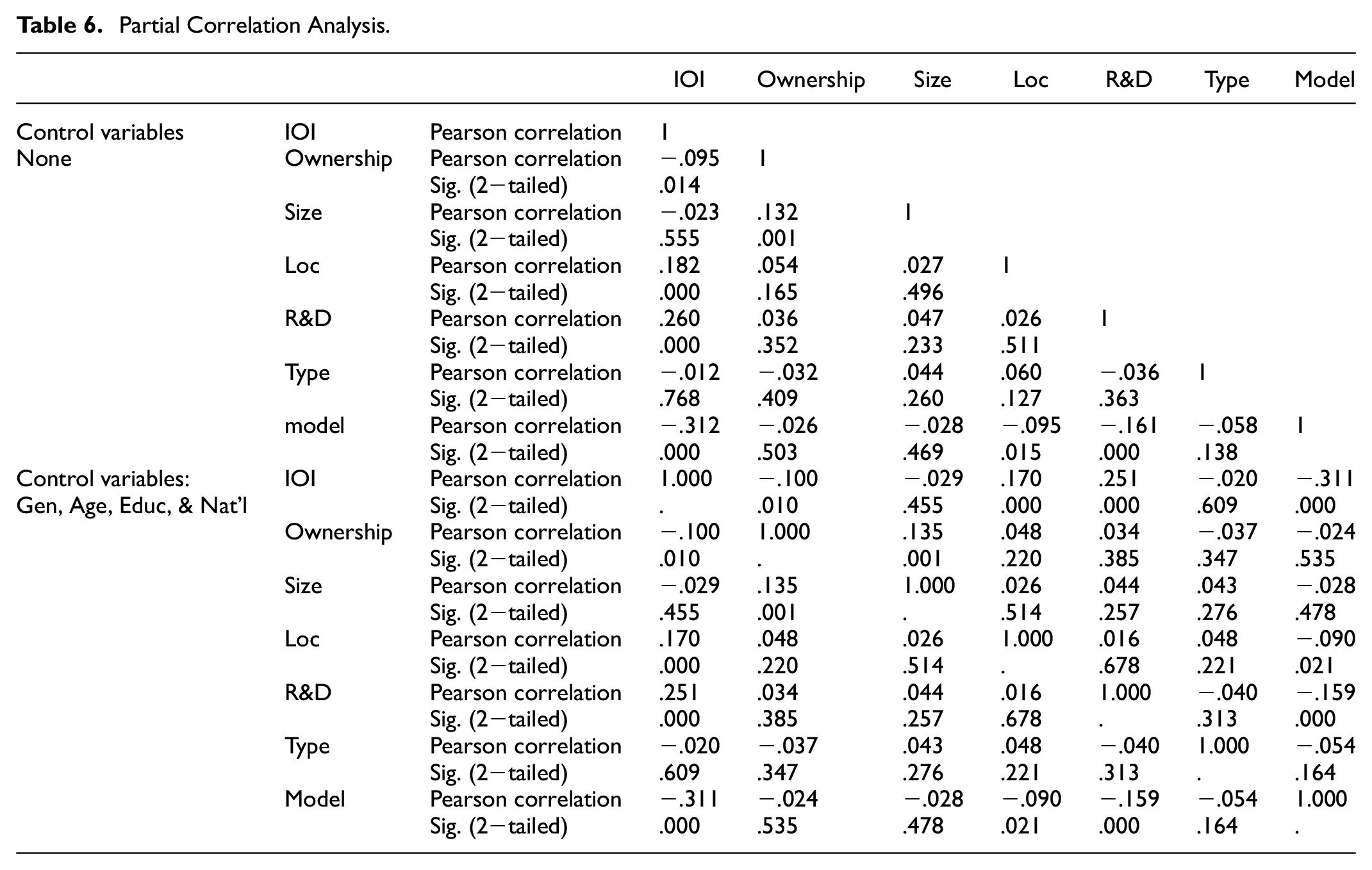
The direct relationship between variables could be explained by other variables. This situation therefore mostly likely leads to a spurious correlation between variables. Thus, since this relationship is accounted for by a third factor called the confounding factor which might not be visible during the initial estimation process, there is the need to test for the existence of these possible factors. This is required because spurious correlation and confounding factors could become key features in the result of a regression model estimation. Therefore, to estimate the existence of spurious correlation or confounding factors within the variables employed, the partial correlation analysis is applied. This method is proven by empirical evidence to detect and remove spurious correlation and confounding effects. The analysis is conducted in two stages. First, the variables are estimated without controlling for any observed correlation whereas, from the second phase, the control variables are introduced to examine the changes. See Table 6. Before the mediating variables were introduced the correlation coefficient of ownership structure was –.095 (p < .01), size of the business was –.023 (p < .01), SMEs location was .182 (p < .01), research and development were .0260 (p < .01), the type of business was –.012 (p < .01), and the mode of collaboration was –.312 (p < .01). However, after introducing the control factors (Gender, level of education, and the nationality of CEOS), ownership structure yielded –.100 (p < .01), size of business –.029 (p < .01), SMEs location .0170 (p < .01), research and development .0251 (p < .01), type of business –.020(p < .01), and collaboration mode –.311(p < .01). Indicatively, the changes in the relationship between the variables after the introduction of the control variables indicate minimal effects. Therefore, the observed relationships between the business characteristics, the model of inbound open innovation, and the practice of inbound open innovation are not mainly down to the influence of the SME CEOs’ characteristics. Thus, the study concludes that there are no spurious correlations between the variables employed in the estimation of the inbound open innovation among Ghanaian SMEs.
Partial Correlation Analysis.
Results and Discussion
The study explores the nexus between SMEs’ business characteristics, inbound open innovation mode, and the practice of inbound open innovation by Ghanaian SMEs. Further, it examines the mediating role of CEO characteristics in this relationship. Specifically, the multiplicative effects of these variables are estimated by employing the characteristics of the SMEs and the collaboration modes of the inbound open innovation as proxies categorically. This means that the first categories of each of the measurement construct become the reference point for the interpretation of the multiplicative effects of the variables in the relationship. Table 7, therefore, presents the results from the estimated stepwise logistic regression model concerning the parameter estimates standard error values, odds ratios, and level of significance represented by stars for the categories of constructs employed. Notably, the parameter estimates are explained in terms of the significance levels of the odds ratio (exp(β)). Statistically, the level of significance helps in identifying the variables accounting for the response variables, and the odds ratio (exp(β) manifests the multiplicative effects of the variables. The intercept of –1.142 with an odds ratio of 0.289 is statistically significant for only the first model.
Results From the Estimation of Logistic Regression Models.

Represented statistical significance at 1% and 5% levels. p-Values can be provided upon request
Results from Model 1 demonstrate that the characteristics of Ghanaian SMEs and the mode of collaboration affect the practice of inbound open innovation in Ghana. Specifically, the type of ownership structure exhibits a negative coefficient of –.353 to show that sole-proprietorship SMEs is 0.711 less likely to practice inbound open innovation. This is a revelation that SMEs with company or partnership ownership structures are more likely to practice inbound open innovation. This result is consistent with the literature because inbound open innovation is strategic in nature and thus SMEs with a structured organizational structure are more likely to engage in the inbound open innovation (Donkor et al., 2018). Again, this could be explained by the fear of sole-proprietors to lose trade secrets (Oduro, 2020). Therefore, sole-proprietors need information security assurance and education on the strategic significance of inbound open innovation to boost diffusion. Further, the size of SMEs indicates that smaller SMEs are less likely to practice inbound open innovation compared to bigger SMEs. This is supported by the negative coefficient of −.173 and odds ratio of 0.840. The result is consistent with the fact that financial constraints limit the ability of SMEs to engage in inbound open innovation (Coffie et al., 2020; Leckel et al., 2020). However, the availability of multiple models offering different cost-structures could be explored by Ghanaian SMEs to benefit from the practice of inbound open innovation (Mensah & Gordon, 2020). Consequently, the recent drive of the government of Ghana to promote university-industry collaboration should include SMEs (Mensah & Gordon, 2020). The management of SMEs should explore the several avenues for inbound open innovation to make informed decisions. Per the location of the SMEs, the result is supported by a positive coefficient of .836 communicates that SMEs in urban areas are 2.106 more likely to engage in inbound open innovation compared to those in rural areas. This is because urban areas have structures and systems which provide easy access and cost-effective structures to support the practice of inbound open innovation (Chen et al., 2019). This confirms that geographical location affects the practice of inbound open innovation by SMEs (Michelino et al., 2014). Since most businesses in Ghana are located in rural areas, government intervention to promote university-industry collaboration can be realized through improvements in infrastructure like electricity, schools, and the internet. This means the recent policy of the government of Ghana to increase the number of universities in the different regions would provide adequate support for SMEs in other parts of the country. Management of SMEs should take advantage of this initiative to improve innovation and productivity. Ghanaian SMEs with research and development departments are 2.017 times probable to engage in inbound open innovation compared to those without the research and development department. Thus, the lack of research and development departments within SMEs in Ghana limits the innovation capabilities of the businesses (Donkor et al., 2018; Mensah & Gordon, 2020). With a positive coefficient of 1.104, this supports the argument that the research and development department of SMEs drives innovative processes within the business (Michelino et al., 2014; Danneels & Kleinschmidtb, 2001). This surmises the need for SMEs to prioritize investments in research and development departments to promote innovation. Management of SMEs should prioritize investment in research and development although their financial resources are limited. Again, government agencies can provide service support to these businesses. Again, the type of business operation affects the probability of Ghanaian SMEs to engage in inbound open innovation. This is supported by a negative coefficient of –.168 and an odds ratio of 0.816 to convey that SMEs engaged in services are less likely to practice inbound open innovation compared to manufacturing SMEs. This could be explained by the fact that SMEs engaged in the production of physical products faced challenges from consumers, competitors, and governments and thus the need to innovate to remain competitive (Rauter et al., 2018; Secundo et al., 2019). This result explains the less innovation within SMEs in Ghana because the majority of these businesses are service-based (Oduro, 2020). This is contrary to the situation in other developed economies where service-based SMEs constantly innovate to drive productivity (Hinteregger et al., 2019: Chesbrough & Crowther, 2006). Consequently, to promote innovation within Ghanaian SMEs, the government should provide incentives to support service-based SMEs. Concerning the collaboration mode and the likelihood of Ghanaian SMEs to engage in inbound open innovation, the negative coefficient of –.793 intimates that SMEs collaborating with universities and research institutions are 0.413 times likely to engage in inbound open innovation. This is inconsistent with empirical evidence providing that businesses are more likely to engage in inbound open innovation with universities because of the already established structure of these institutions (Lee & Kim, 2011; Secundo et al., 2019; Stefan & Bengtsson, 2017).This explains the recent drive of the government of Ghana to promote university-industry collaboration (Mensah & Gordon, 2020). Rather, Ghanaian SMEs are more likely to practice inbound open innovation with other sources like customers, distributors, and government institutions (Frempong et al., 2020; Stebbins, 2001). Although these sources are useful in the development of innovative products and services, the unwillingness of the Ghanaian SMEs to partner with universities in the country is problematic because universities are endowed with better resources compared to other models of collaboration. This result establishes consistency with existing literature (Chen et al., 2019; Öberg & Alexander, 2019) to prove that business characteristics and the model of collaboration affect the practice of inbound open innovation in Ghanaian SMEs.
Model 2 depicts that SMEs CEOs’ characteristics positively mediates the relationship between SMEs characteristics, collaboration modes, and inbound open innovation practice in Ghana. This is proven with the increased odd-ratios. Consequently, Model 2 depicts a coefficient of –1.765 and an odds ratio of 0.355. The introduction of CEO characteristics (gender, education, age, and nationality of SMEs CEO) shows positive effects on the relationship between the business characteristics, the model of collaboration, and the practice of inbound open innovation in Ghanaian SMEs. Although this reinforces the results of Model 1 it also reveals key interaction of the mediating variables. The probability of SMEs with the sole-proprietorship ownership structure to engage in inbound open innovation decreases by 0.090%. The negative coefficient of –.355 reveals that irrespective of SMEs CEOs characteristics, the probability of SMEs engaging in inbound open innovation favors partnership or company ownership structure. Consequently, the high number of sole-proprietorship in Ghana is responsible for the less innovation (Abor & Quartey, 2010). Thus, the qualifications or traits of SME owners (CEOs) can become useful mostly within partnership or company setup. The probability of relatively small SMEs to engage in inbound open innovation decreases by 0.580% with a negative coefficient of –.188. The odds still favor bigger SMEs irrespective of the characteristics of SMEs CEO. Therefore, the resources of SMEs as proven by existing literature significantly affect the probability of SMEs engaging in inbound open innovation (Leckel et al., 2020; Mortara et al., 2009). Consequently, the qualification or traits of SME CEOs cannot completely overshadow limited resources. The odds of SMEs located in urban areas to engage in inbound open innovation increases by 0.108%. Therefore, consistent with (Corsi & Prencipe, 2019) the location of SMEs and the characteristics of SMEs CEO drives engagement in inbound open innovation. Consequently, CEOs’ characteristics and traits are useful in perfect environmental settings (Bartels et al., 2016). Further, the probability of SMEs with research and development departments to engage in inbound open innovation increases by 0.895%. Thus, irrespective of the qualification and traits of SME CEOs, the unavailability of resources and infrastructure could stifle initiative. Concerning the type of business operation of the SMEs, the odds of engaging in inbound open innovation increases by 0.054% for manufacturing-based SMEs. This is consistent with the popularity of inbound open innovation globally as an alternative to effective product and service innovation (Rauter et al., 2018; Secundo et al., 2019). Finally, on the model of collaboration, the results display the probability of Ghanaian SMEs engaging in inbound open innovation reduces by 0.080%. This supports the fact that Ghanaian SMEs are unlikely to engage in inbound open innovation with universities and research institutions. This reveals the former non-existence of government policies to promote university-industry collaborations (Mensah & Gordon, 2020). Consequently, the recent policy initiative of the government should drive university-industry collaborations.
Ghanaian SMEs with male CEOs are 1.525 more likely to practice inbound open innovation compared to SMEs with female CEOS. This is consistent with literature favoring males concerning the diffusion of innovation and technology (Pan et al., 2019). Until recently, the SME landscape of Ghana had been male-dominated (Abor & Quartey, 2010). Therefore, gender culture should be promoted within Ghanaian SMEs to improve the likelihood of SMEs with female CEOs to diffuse technology or engage in other innovation-related practices (Corsi & Prencipe, 2019; Pan et al., 2019). Younger SME CEOs 40 years or less are 1.672 times likely to engage in inbound open innovation than older CEOs. This is consistent with the findings of (Coffie et al., 2020). Younger people have a higher opportunity to learn and improve compared to older folks (Bartels et al., 2016). Therefore, government training programs should be designed to suit the needs of older SME CEOs too. On the level of education, highly educated CEOs have a higher probability of engaging in inbound open innovation. This is supported by the odds ratio of 0.982 and a positive coefficient of .422. The outcome proves that the technical and strategic nature of inbound open innovation requires SMEs with the awareness to drive SMEs toward this direction (Ahn, 2020; Podmetina et al., 2013). Finally, domestic CEOs show a 1.199 probability to engage in inbound open innovation than foreign CEOs. This could be explained by the fact that domestic CEOs are more accustomed to the environment of the country than their foreign counterparts.
Model Fitness Assessment
The model is tested for fitness to determine how well the model explains the data and the relationship between the variables. See Table 7 for the results of the Omnibus test and the Hosmer and Lemeshow test. The test results are for both model 1 and model 2 respectively. Although these tests serve the same function, the decision to employ both tests is to provide rigid results. They both show how well the models perform over empty models with no predictors. Nonetheless, the difference between these tests is that the Hosmer and Lemeshow test supports the model fit with a significant value above 5% and vice versa for the Omnibus test. Consequently, the result per the table shows that all the two models are statistically better fit compared to empty models because the significant levels are greater than 5% based on Hosmer and Lemeshow test and less than 0.05 relying on the Omnibus test correspondingly. Effectively, this suggests the effectiveness and efficiency of the models to predict the likelihood of variables to explain the practice of inbound open innovation by Ghanaian SMEs.
Conclusion
The study investigates the relationship between SMEs’ business characteristics, the inbound open innovation model, and the practice of inbound open innovation by Ghanaian SMEs. More so, the study studies the role of SME CEOs’ characteristics in this nexus.
The characteristics of the business and the mode of collaboration affects the practice of inbound open innovation in Ghanaian SMEs. However, the relationship between these variables shows diverse effects. Specifically, although sole-proprietorship dominates the business structure of Ghanaian SMEs, the probability of SMEs with sole-proprietorship ownership structure to engage in inbound open innovation is minimal compared to company or partnership structures. This could be explained by the fact that inbound open innovation is a strategic decision and thus companies with different management teams are better positioned for such decisions. Nevertheless, accounting for CEO characteristics in the model revealed that the odds of SMEs with the sole-proprietorship structure to engage in inbound open innovation reduces further. Therefore, awareness should be created on the significance of inbound open innovation to drive SMEs with a sole-proprietorship structure to diffuse inbound open innovation.
Smaller Ghanaian SMEs are less likely to engage in inbound open innovation compared to bigger SMEs. This could be explained by the fact that bigger SMEs have enough resources to engage in inbound open innovation than smaller SMEs with minimal resources. It could also support the fact that bigger SMEs are likely to have a company ownership structure to support major strategic decisions like inbound open innovation. Further, the odds of smaller SMEs reduce after accounting for CEO characteristics in the model. Although smaller SMEs are disadvantaged because of resources, the diverse model of collaboration could provide different cost-effective avenues to engage in inbound open innovation when the management of the SMEs have adequate knowledge of inbound open innovation.
SMEs located in urban parts of Ghana have a higher possibility of engaging in inbound open innovation compared to those in rural areas. This is explained by the fact that the infrastructural development in urban areas is far ahead of those in rural areas. Further, the incentives for SMEs in urban areas to engage in inbound open innovation could be indirectly driven by customers, regulatory requirements, and competitive forces. Further, the odds of SMEs in rural areas engaging in inbound open innovation decreases after estimating the effect of CEO characteristics. This reveals that the right infrastructure is needed to boost the diffusion of inbound open innovation. Again, the government should prioritize equal regional development to provide basic infrastructures to drive innovation in rural areas.
Research and development department availability increases the probability of Ghanaian SMEs to engage in inbound open innovation. This is because inbound open innovation is a strategic innovation-decision that is generally driven by this department. Further, accounting for CEOs’ characteristics increases the odds. This suggests that irrespective of the significance of the R&D department in inbound open innovation practice, the role of CEOs could determine if the SME would engage in inbound open innovation or not. The change in the odds ratio justifies the fact that SMEs have different structures that affect the decision-making scope based on the expertise of management. Therefore, although SMEs are financially constrained, priority should be given to R&D to promote innovation to boost productivity within SMEs.
Further, manufacturing-based Ghanaian SMEs are likely to engage in inbound open innovation compared to service-based SMEs. The result could be because of the fierce competition within the manufacturing sector which drives these SMEs to constantly look for avenues to innovate. More so, manufacturing firms produce physical products in which customers would like to see changes in performance, aesthetics, and durability. Nonetheless, the odds for service-based SMEs decreases after estimating the effect of CEO characteristics. Therefore, this suggests that irrespective of the characteristics or traits of SME CEOs, the resources of the business are crucial in the decision to engage in inbound open innovation.
Ghanaian SMEs are less likely to engage in inbound open innovation with universities and research institutions. Although this is contrary to existing literature, it can be explained by the previously non-existent academia-industry relationship allowing SMEs and businesses within the country to co-operate to innovate. Again, the willingness of Ghanaian SMEs to collaborate more with customers and government agencies could also signify the fact that these SMEs are choosing cost-effective or mandatory inbound open innovation. This result remains unchanged after accounting for the effect of CEO characteristics in the model. Therefore, the educational sector and the industrial sector of the country should develop policies that drive cost-effective innovative collaborations between universities and SMEs to boost productivity to sustain the economy.
SMEs with male CEOs are likely to practice inbound open innovation compared to those with female SMEs. Younger CEOs are likely to engage in inbound open innovation because of the opportunity to learn. CEOs with lower levels of education are less likely to drive their SMEs to engage in inbound open innovation in Ghana. Further, CEOs of Ghanaian origin are more engaged in inbound open innovation than those of foreign origin. These characteristics should influence the designers of SMEs’ training and development programs within the country to boost assimilation.
Limitations and Implication for Future Studies
The study result provides intuition for policymakers, industry practitioners, and scholars. However, the study is unable to cover a wider scope because of the unavailability of secondary data. Therefore, further studies to extend the sample size through direct data collection or secondary data. While the practice of inbound open innovation in Ghana is at the development stage, the challenges of inbound open innovation practice by Ghanaian SMEs should be investigated. This would provide policy insight for management and industry practitioners. Further, the unwillingness of Ghanaian service-based SMEs to engage in inbound open innovation with universities and research institutions should be investigated to find the answers. This is significant because these class of institutions are the backbone of national development and must be actively engaged in SMEs promotion. The study employs the hierarchical logistic regression method which focuses on a single period data collection. Further studies can employ time-series or panel data to examine this phenomenon over a period of time. This would provide further support to existing theories on the practice of inbound open innovation in SMEs. Finally, the output of inbound open innovation practice by Ghanaian SMEs can be estimated to determine the extent to which this practice affects the productivity of these businesses.
Footnotes
Declaration of Conflicting Interests
The author(s) declared no potential conflicts of interest with respect to the research, authorship, and/or publication of this article.
Funding
The author(s) received no financial support for the research, authorship, and/or publication of this article.
