




Abstract
Focusing on Indonesia’s Riau Province, this study examines the complexities of managing networks for forest governance, and how local governments should adopt and enforce policies in network settings based on multi-stakeholder participation. Data were collected through interviews and document analysis, and analyzed using network analysis. The finding show that network governance through regulation should be enforced through the network’s political structure, involve several local actors, and facilitate coordination and communication for mutual benefit, especially in forest land-use management. Trust and costs reflect the development of collaborative behavioral frameworks which can influence coordination capacity, including intergovernmental networks in forest land-use policy. Further, the separation of network governance from multiple linked actors, which seems more “ally” (i.e., lead-organization governed networks) than “join” (i.e., shared/participatory governance networks), is undoubtedly problematic. The network and building of trust between network stakeholders may never transform into multi-stakeholder management structures without enabling network governance.
Introduction
Network governance, which emphasizes weak multi-stakeholder relationships, in the context of forest governance may require the effective integration of forest land-use policies. This can impose significant policy constraints. The forest sector is one of the most dynamic areas of governance, requiring a different governance approach that integrates a bottom-up approach with horizontal coordination, referred to as network governance. In the context of network governance, Agranoff and McGuire (2003), Herranz (2009), Klijn et al. (2015) framed that actors do their work continuously “within their strategic networks.” This study identifies the potential for multi-stakeholder forestry governance through network governance.
As Indonesia’s deforestation rate is an estimated 1.17 million hectares per year (Margono et al., 2012; Obidzinski et al., 2012), open access to forests is considered sufficient to support the region’s growth and development (Gallant et al., 2020; Kazak et al., 2016). The country has three types of forests: production, conservation, and protected (Suhardi et al., 2016). Rauf et al. (2020) argues that production forests account for the majority of degraded forests. For instance, some legally or illegally occupied areas are being converted into oil palm and rubber plantations. However, as the new land-use management system is composed of several actors, the lack of clarify about roles and limited coordination have led to low-quality environmental governance.
Forest use depends on the broader social and economic contexts of the land (Ramdani & Lounela, 2020). In Indonesia, the land-use areas were formerly natural forests, and most land-use changes have been due to deforestation, including peatland burning (Margono et al., 2012). One may argue that deforestation is the result of the mismanagement of Indonesia’s natural resources. For example, current policies allow some people, especially those close to the authorities, to access natural resources (Purnomo et al., 2019; Purnomo, Agustiyara et al., 2021).
Several studies have shown that growth and economic development are the primary drivers of deforestation and degradation (Enrici & Hubacek, 2018; Hessevik, 2022; Irawan et al., 2013). Tropical deforestation can be attributed to factors such as smallholder and industrial plantations, and infrastructure development (Gibbs et al., 2010). There are substantial concerns about forest land-use, such as large-scale forest concessions, massive expansion of the timber production sector, climate impacts, lack of reliable estimates of the size of forests opened by companies and smallholders, transmigration projects, and many plantation owners using fire as an alternative and low-cost way to start their plantations (Roengtam & Agustiyara, 2022).
Under the Suharto administration in 1998, a lack of monitoring and openness in forest land-use by the Timber Business Group led to poor forest management (Margono et al., 2012; Obidzinski et al., 2012). Many concession holders were in conflict with each other, and there was a lack of common land-use (Obidzinski et al., 2012). Little has changed legally or politically since the time of Suharto. The state regulation of forest use remains (Nurfatriani et al., 2015). Furthermore, the Forestry Department’s statement that that “most” concession forests are “affected” is a reminder that deforestation in Indonesia threatens Indonesian and global ecology. Indeed, in 2015, Indonesia’s forest fires became a major international concern (Jakarta Globe, 2015; Kompas, 2015; The Jakarta Post, 2017), as approximately 2,089,911 hectares were burned (CNN Indonesia, 2015).
Furthermore, uncertain regulations are Indonesia’s biggest problem (Brockhaus et al., 2012; Margono et al., 2012; Prabowo et al., 2017). Over the past two decades, the policies and authorities responsible for forestland distribution in Indonesia have changed, resulting in political-economic agreements between the central and local governments (Nurfatriani et al., 2015). Decentralization has led to more autonomous local administration, which has hindered the formal and informal interests of the central government (Prabowo et al., 2017). Different actors are involved in the formally decentralized administrative governance system. Research shows that many factors contribute to the ambiguity in forest governance. First, there are both national and local government protected forest areas, production forests, and conservation forests. Second, forest policies are both industry- and community-driven. In this context, stakeholders and management processes should focus on their evolving positions in the forestry sector (Mayer, 2006). The local governments are also developing the Local Government Law No. 23/2014, which is specifically geared toward forest management. This may overlap with the regency or district and may be the result of conflicts between the state, society, and firms (Agustiyara et al., 2021). For instance, the expansion of large-scale industrial timber and palm oil plantations, and lack of policy instruments have environmental, economic, and social impacts (Afriyanti et al., 2016; Dutu, 2016; Y. S. Kim et al., 2016). This shows the need for research on network governance based on multistakeholder engagement, especially establishing networks to achieve shared goals for further collaboration on land-use policy implementation.
Further, given the conflict between the central and local governments, coordinated rules are essential for appropriately governing the protected forest areas, as well as production and conservation forests. This can help ensure that natural resources are managed sustainably. In this context, there is a need to understand the pursuit of network governance as a question of the capacity of governance institutions to coordinate the network’s overall management (Kapucu et al., 2010). Conceptually, network governance has similarities with intergovernmental linkages (Kumar et al., 2020; Mayer, 2006; O’Toole, 1997) and collaborative management (Ansell & Gash, 2008; Fisher et al., 2007; O’Leary & Vij, 2012). Here, we focus on a broader notion of network governance as a more organizational network method that demonstrates the potential for coordination between various actors in the context of organizational and interpersonal interactions between stakeholders. It also emphasizes that in some cases, network governance relies on local authorities’ willingness to collaborate.
The remainder of this study is structured as follows. First, it uses the term “network governance concept” to describe the issue of forest governance that allows for multi-stakeholder participation. Second, it illustrates the dynamics of network governance in forest governance based on multi-stakeholder involvement. Finally, we ask: What strategies can be implemented to ensure and improve the effectiveness of forest governance through network governance? What local government efforts to achieve network governance enhance the communication capacity of intergovernmental “networks” in forest policy?
Related Studies
Forest management environmental concerns have been empirically studied using various approaches, such as management within networks (Agranoff, 2006; Agranoff & McGuire, 2003), multiple network strategies based on more intergovernmental linkages (O’Toole, 1997; Provan & Milward, 2001; Raab et al., 2015), and public management network analyses (Enrici & Hubacek, 2018). These studies have emphasized collaboration in various forms between governmental and non-governmental organizations (NGO) problem-based solutions. Some studies have used public networks to understand the impact of forest land-use, including degradation, fires, and damaged forest areas (Moad & Whitmore, 2010; Smith, 2015; Wiersum et al., 2004).
In the context of this study, a network refers to an intergovernmental structure and interactions of exchange (Ruffin, 2010). It can be formal, informal, intersectoral, intergovernmental, or functional (Agranoff & McGuire, 2003; Herranz, 2009; Klijn et al., 2015). To demonstrate the concept of network governance, Willmes and van Wessel (2021), Liu et al. (2022) highlight the following (1) hierarchy and intergovernmental agreement, (2) a set of collaborative horizontal and vertical networks of “political structures and political negotiation,” (3) budget process, and (4) those related to regulations, grants, or loans. In contrast, network settings are not based on a central authority and cannot be directed by a single organization (Cristofoli et al., 2019; Heen, 2009; Kona & Xu, 2005).
Some studies on forest governance are relevant to the definition of network governance (Ansell & Gash, 2008). Collaboration process represents a joint effort (Agranoff & McGuire, 2003; Schusler et al., 2003; Smith, 2015; Thomson & Perry, 2006). Multiple stakeholders are an important element of effective stakeholder participation (Basco-Carrera et al., 2017). The factor for successful policy implementation (Klijn et al., 2015). Another concern is that current policies adopted by governments for protected forest management have been ineffective. For example, there are still few forms of community involvement in natural resource management, which should be supported by institutional strengthening at the local level in relation to forest management and livelihood benefits.
Moreover, much of the current discussion does not address how governments manage forestland-use through networks (Thomson & Perry, 2006). This research design includes local government activities, which may involve multiple organizations, together with stakeholder collaboration. There are many views on network governance, especially in governments and institutions. In practice, the responsiveness and quality of an organization as well as its complexity and progress are important.
This stream of research also relates to collaborative management in local government. Collaborative management has emerged from studies of local governance, often in response to governance problems (Thomson & Perry, 2006). It is essentially a response to downstream implementation failures and politicized regulations. Collaboration means that the government manages the process. For instance, it may create an ad hoc organization for collaboration or build joint network governance (Herranz, 2009). Ansell and Gash (2008) define collaborative governance as collective decision-making. Therefore, collaborative management is an approach to coordination and includes different elements of collaborative processes, coordination, and policy implementation authority in stakeholder involvement (Prager, 2015). Collaborative management has been proposed to be an effective measure for forest land-use management, which typically involves several organizational actors in a network (Provan & Kenis, 2007). However, the network structure can differ depending on the policy instrument used (Agranoff, 2006).
Inter-organizational networks are evolving processes between interdependent organizational actors toward shared interests (Purnomo et al., 2019; Purnomo, Ramdani et al., 2021) and collaborative networks (O’Toole, 1997; Smith, 2015). O’Leary and Vij (2012) have defined network governance as a tool for decision-making. It can also be defined in different ways depending on the type of organization, such as whether it is horizontal or vertical, and how its members interact. Essentially, network governance represents a substantive model for collaborative management.
Network governance modeling should analyze the overall impact of public management on government efficiency. It recognizes the effect and management tools used to integrate these functions in particular structural contexts (Agranoff & McGuire, 2003). The network structures can be interpreted differently. For instance, social network analysis (SNA) is used to identify the networks of different actors. Freeman (2004) has examined governance and networks using SNA. Notably, smaller groups of actors form complex network structures that can be found using SNA techniques but are otherwise difficult to detect because the social structure is typically a mix of cohesion subgroups (Borg et al., 2015).
Network governance modeling should also analyze the overall impact on the quality of public governance. This view can bridge the gap between the theory and practice of forest governance. Figure 1 illustrates a network governance model based on prior research. The existence of multiple networks, depending on the type of network, means that relationships may be established between them. Agranoff (2006) observes that “joint” networks involve the management of flexible networks and structures through shared/participatory governance, as opposed to traditional bureaucratic structures which are known to be more rigid, rule-bound, and predictable. Further, networks should have the potential to change conditions, flexibility to adapt, and capacity to innovate.

Network governance model.
Provan and Kenis (2007) note that “obtain,”“create,” or “ally” are more classical forms of networks. Meanwhile, Raab et al. (2015) point out that “joint” and “ally” form whole networks that involve multiple actors. Figure 2 lists the various forms of network governance.
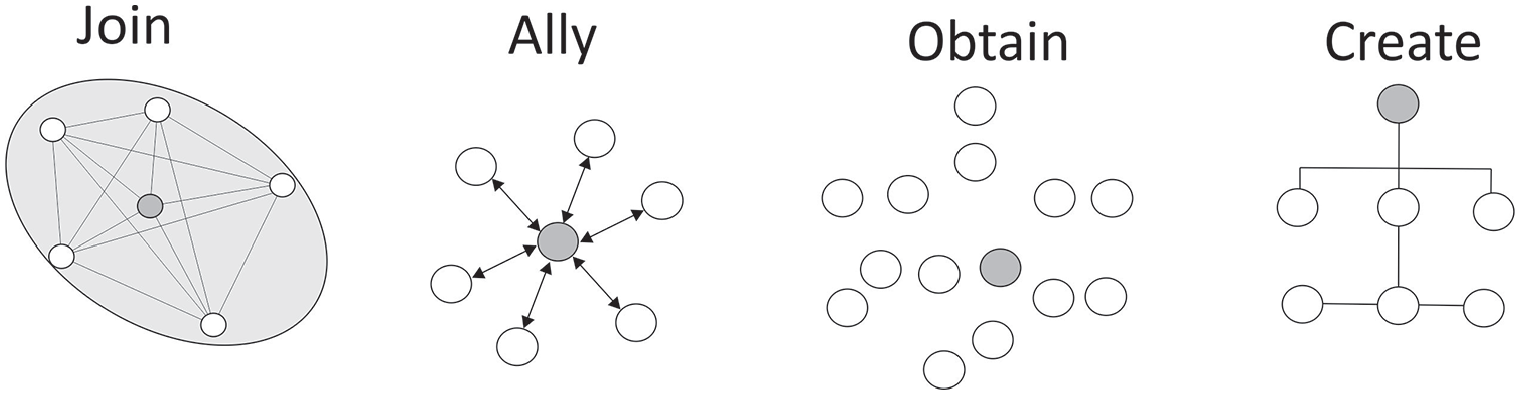
The forms of network governance.
Managing within networks requires some commitment to the realization of networks for organizations that have the potential for flexibility and adaptation. In relation to environmental issues, organizations have moved from “regulation” to providing network activity and a legal form of network governance (Knox & Janenova, 2019). Regulations dealing with ambitious or complex issues likely require strategies which show that types of social problems seem more egregious or that the problems are resolved only briefly and imperfectly. Further, regulations impose direct government interventions, rather than promoting a network-oriented solution. Incorporating overarching legislation and sanctions adds pressure to network governance (Agranoff & McGuire, 2003).
Political structures may be required to respond to specific problems (Nalbandian et al., 2013) when greater public preference for government intervention but less government involvement (Perez et al., 2019). As the public wants action on specific general information, different parties are called upon to respond to this demand through collaboration. Political imperatives establish networks beyond policy objectives, and actors must align their technical needs with the demands of a broader political presence in a detailed and focused program authorities.
Networking requires lines of communication and connections within the network. Trust is another necessary element of network governance (Provan & Kenis, 2007). The ability of organizational actors to work together within a single network depends on a common understanding; this involves building trusting relationships (Cristofoli et al., 2019). Trust is positively associated with better network-level outcomes and facilitates cooperation (Mayer, 2006). Trust is also strongly related to performance in intergovernmental networks as it reduces transaction costs, increases the predictability of strategic partners, and increases the chances of cooperation between actors. Using this framework, we can examine how network governance requires the participation of various stakeholders. In the context of this study, network governance can help bridge the gap between forest policy practitioners. Further, it can help in addressing environmental issues by providing participation and flexibility.
Methodology
Research Method and Setting
This qualitative research was conducted using descriptive techniques involving primary and secondary data collection (Curtis et al., 2000; Saunders et al., 2017) and examined whether network governance models reflect network management. It simultaneously examined the political structure, regulation, trust, and costs of network governance operations, as these are important indicators of network governance in local governments.
Our focus was on Riau Province on Sumatra Island, Indonesia. Riau has the most palm-oil plantations in the country. In 2015, palm oil plantations and industrial forest plantation (HTI) concessions covered three million hectare in the province (Margono et al., 2012). Indeed, most of Riau Province is a concession area. The area is primarily peatland. The forestland is essentially licensed for palm oil plantations and forest concessions, and suffers substantially from deforestation. Figure 3 shows the land types and distribution. The map of the Riau Province shows the landscape of forest resource management. Increasing forestland concessions and shrinking forests are challenges. Many forest land-use allocations are difficult to control; local governments need to work with different stakeholders and organizations based on forest management organizational networks and develop stakeholder networks.

Riau Province, Sumatra Island, Indonesia.
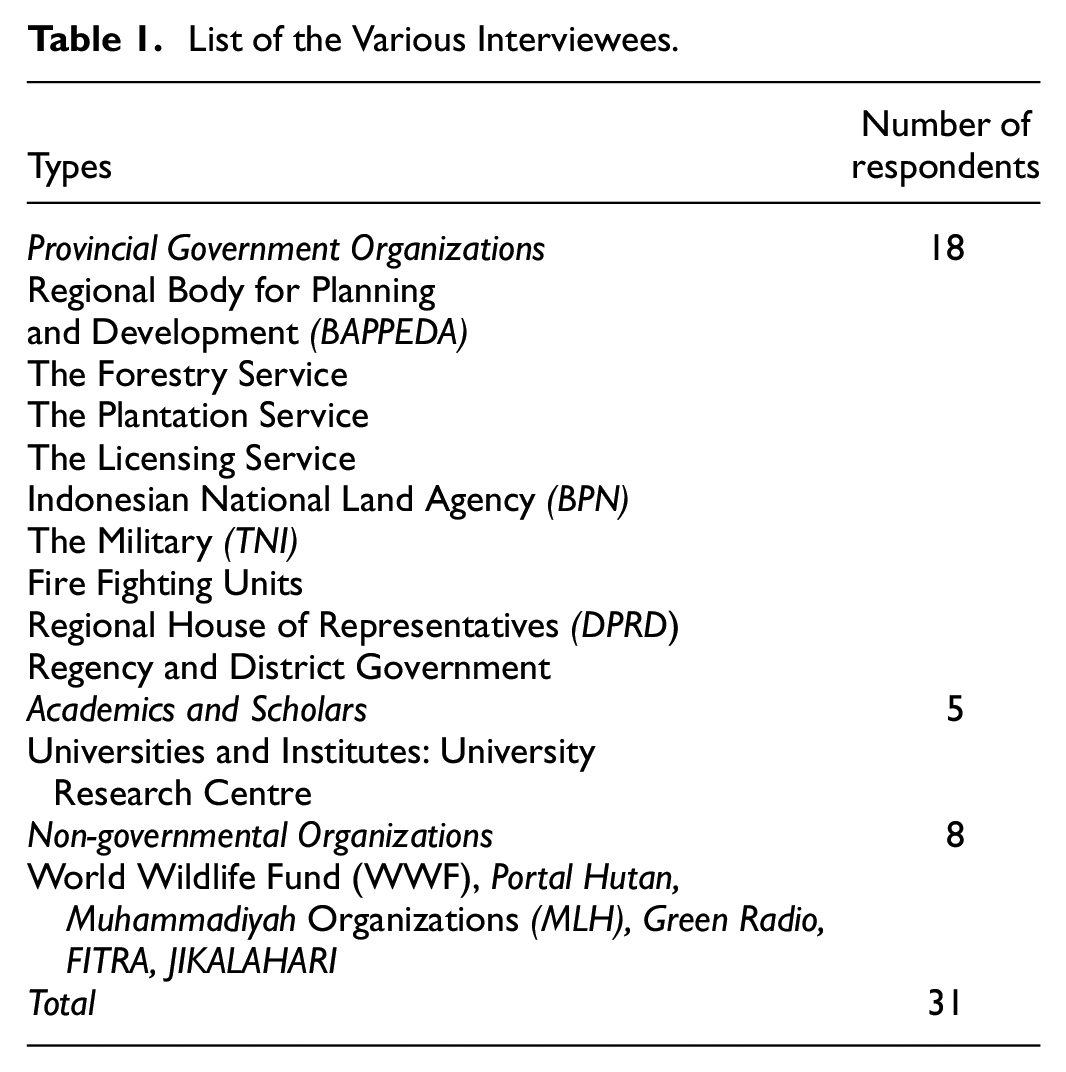
First, we interviewed 31 respondents from central, regional, and provincial governments, academia, community, and NGOs. The researchers conducted interviews and analyzed the data using coding spreadsheets and other software, such as Gephi. The interview findings are coded and summarized in graphs, shapes and keywords, which are transferred to CSV file format for SNA analysis. The average degree, network diameter and graph density are used to create network modeling techniques. The data included 31 usable copies of the coding spreadsheet obtained from the informants. There are four criteria and divided into four parts. The criteria are trust, political, regulation and resources.
The in-depth interviews sought to understand each interviewee’s roles, authority, and policies in forest management. Our interview questions were divided into four parts: Part (a) General condition of forest governance information; Part (b) Forest governance in local government; Part (c) (Non-governmental) perspective of forest governance network; and Part (d) (Governmental) Perspective of forest governance network. The main question was: How would you describe forest governance based on a network of cooperating partners? This question was divided into several specific sub-questions to help respondents formalize the representation of the governance network model: (1) Who are the main stakeholders that interact with forest governance and management? (2) How can forest land-use activities improve stakeholder collaboration? (3) What other activities or policies should be adopted to manage forest governance? (4) What are the main processes that can change multi-stakeholder forest governance? (5) How does each stakeholder participate and engage in forest governance?
We therefore worked out the details of the informed consent form and obtained approval from the Ethics Committee in Human Research, Khon Kaen University. A written informed interview consent form was given to the participants prior to the interviews. This ensured confidentiality and voluntary participation (Table 1).
List of the Various Interviewees.
Second, 40 hr of observation with small groups or marginalized groups related to forestry issues were conducted to explore intergovernmental linkages. We collected data from 12 stakeholders within the provincial government who have the responsibility and authority for governor-coordinated forest management. Furthermore, secondary data sources were used to obtain a series of analyses of documents obtained during interviews, data from official government websites, to be properly validated. Use of different data sources to capture the best features related to network governance.
These data were analyzed via SNA and visualized via network diagrams created using Gephi. SNA emphasizes multi-entity data analysis (McCurdie et al., 2018). The visualizations drawn using Gephi describe the network of actors. Individual and group networks are determined by metrics and modularity. Metrics and Modularity is a global metric index that identifies the strength of community structure within a network (Bu et al., 2013). In this context, linked government networks are represented by color as the modularity of government actors. Visualizations help in understanding the communication and interaction of actors linked in a collaborative network (Graham et al., 2015; Schweinsberg et al., 2017). The data collected can be a limitation when analyzing organizational networks; as such, interview data can be useful for checking the validity of network indicators (Copes & Miller, 2015). Finally, the modularity of Gephi features was used to quantify the characteristics of networks (Borg et al., 2015). Based on this modularity, we determined the stakeholders whose connected actors in the network partially overlapped and lacked involvement.
Figure 4 shows the network diagram showing various actors involved in forest governance in Riau Province.

Coordination network of various government institutions and organizations in Riau Province, 2022.
Results
Measuring Network Governance
The local governance network can influence the ability of stakeholders to cooperate in forest management. The Forestry Department of Riau Province has played a key role in facilitating collaboration by enforcing local government acts. They coordinate the network of organizations and influence other local government agencies. Forest land-use policy implementation and management is a challenging and dynamic mechanism when implementers disagree with the process to be followed (Klijn & Koppenjan, 2006; Waring & Crompton, 2020). Certain agencies are structured to include political pressure (Lockwood, 2010). Consequently, implementation relies solely on the government’s ability to involve relevant agencies.
Here, we use network governance indicators to interpret the main functions of forest land-use policy by the local government. Table 2 summarizes the analysis of the network governance indicators.
Analysis of Network Governance Indicators.

Source. Based on our findings and analysis.
Regulation
Network governance indicators of regulation aim to identify and analyze current policies to determine their impact on forest management. Since the presidency of Susilo Bambang Yudhoyono (SBY) from 2004 to 2016, government regulations, laws, presidential regulations, presidential instructions, ministry decrees, and local government regulations have significantly impacted forest management operations. For instance, the Regulation No. 25/2005 on the Decentralization System (Firman, 2010) describes central and local government powers; however, the distribution of power among government levels is unclear.
Contrary to the dynamics of power distribution, decision-making on forest management policies has become increasingly centralized. The large forest and land fires that occurred in 1997/1998 prompted the government to take action, leading to Presidential Decree No. 4/2001 on the management of environmental and pollution-related damage, and Presidential Instruction No. 16/2011 on land and forest fires. This also shows that the policy-making process has been rather “sporadic.” Multiple stakeholders are involved in managing forestry issues such as land and forest fires (Karhutla). More recently, the response to forest fires has been coordinated via Presidential Instruction No. 11/2015, which designated 20 ministries or agencies, the military, police, governors, and regents. Further, Regulation No. 10/2010 on Environmental Damage Caused by Forest Management and Land Fires was issued by the Forest Management Division of the Ministry of Forestry in cooperation with the Ministry of the Environment. This was accompanied by a decree issued by the Governor of Riau on the decentralization of forest and land fire management centers under the provincial government (Pusdalkarhutla). However, at the regency government level, there is no single regency regulation for forest management or land-fire control.
All districts are required to have 5-year plans to identify needs and targets. The transition to decentralization and increasing opportunities for local natural resource management may have created contradictory situations and a lack of transparent inter-community, private, local, and central government authority-sharing arrangements (Kathrin, 2019). An interview with an official of one of the government agencies in Riau Province, the Regional Planning Agency (BAPPEDA), shed light on current inter-organizational coordination.
In relation to the law that covers the planning of forest management and the use of forestland, the governor or the regency does not have the authority to issue permits for industrial forests (IUPHHK HT/HTI). Regulatorily, the Minister of Forestry is the one who issues permits for the use of forest land, and these permits are issued on the basis of recommendations made by the Governor or the Regency (Interview, 2018).
Furthermore, the regulation and management of protected forest areas also differed. However, the clear line of authority between local and central governments allows local authorities to increase local incomes by converting protected forests into development forests and nature reserves, and even converting forest areas. Thus, as the governor is issuing licenses for industrial plantations in forested areas, the violation of logging access is not subject to laws and regulations, even in protected areas, through a regency license. For example, new licenses and extensions of existing logging licenses have been a political issue. Several changes to existing regulations, such as IUPHHK’s timber-use permits, have led to increased production forests. The increased land needed for planting due to these permits can cause the replacement of natural forest with monoculture plantations. This indicates the illegal use of forest land for timber production.
Political Structures
In practice, the centralization of authority within the bureaucracy makes government unresponsive to forest management (Nurfatriani et al., 2015), it is therefore important to assess network governance using the political structures indicator. Simultaneously, problems exist at the district level. There is a lack of political will for long-term strategic actions. It seems that the political structure used to manage natural resources is the main problem. In fact, the top-down approach can often be seen in the way the policy system in the natural resources sector relies on a single organization, whereas networking should be the main objective. In addition, provincial government regulations emphasize substantive coordination in the technical field.
Network management essentially aims to outline the process of multi-organizational engagement, coordination, and work to solve the problem of forest policy implementation. In Riau Province, many stakeholders are interested in forest issues, such as one or more groups involved in a structured partnership agreement, monitoring government activities, and preserving forest areas. Governance may involve local governments, management of the cleared forest production area, forest protection, licensing of access to forest resources, and legality of tenure. Private-sector actors may need to be involved in licensing with national, provincial, and district government agencies. The forest management authority, called the Forest Management Unit (KPH), was formerly a provincial and district authority. However, currently, only one Forest Management exists at the provincial level. It covers the entire province and is involved in spatial planning, forest planning, forest land-use, forest conservation, forest protection, and forest management. Figure 5 provides the provincial government network governance model for the 24 organizations involved in forest land-use management.

The provincial government network governance model for forest land use management, 2018.
The network governance in Riau provinces is not “obtain,”“create,” or “ally,” but rather the “joint” forms that are connected. This represents shared/participatory governance, as these actors need to develop the network by collaborating on the common interests among the actors within the network. Thus, the resulting network is not a structured entity; rather, it emphasizes the use of political power and joint action. Analyzing their coordination and communication shows that government and non-government organizations are placed further apart in the graph. Interesting, roles that often influence other actors seem to have a more central connection. Furthermore, the colors in Figure 5 show that the actors are connected based on their roles (McCurdie et al., 2018).
The government network highlights the interdependencies between actors, which can affect coordination capacity, especially in forest management issues. The dependencies of the actors were between, for instance, a governmental organization and NGO for crucial areas, such as “build a communication bridge,” thereby strengthening the potential network for cooperation. Problems with forest management are mostly due to the lack of a comprehensive approach to forest land-use policy. Similarly, incorporating local governments through political structures allows them to undertake formalized coordination. The role of bridge builders between actors is essential for managing networks, as some studies (Cristofoli et al., 2019) have argued that networks are shared-governed and that high network performance is ensured by formal coordination.
Regarding the policy of forest land use and network governance, three aspects are hinder forest management networks. First, the regulatory chain related to spatial planning provides legal certainty for accessing forest land. Thus, the forestland allocation process must be accountable. Boundaries, maps, and forest protection zones should be defined. This creates a “legal and legitimate” forest as the legal basis for state land use. However, there are specific obstacles to the implementation of forest land use policies. In 2014, the central government enacted the Law No. 23/2014 on local government and regional autonomy. In a general sense, the format of local regulations is mainly to increase local revenues. Some regulations are problematic or contradict laws and regulations. This is partly due to the regions’ inability to understand the limitation imposed by the “political structure” on joint policy-making, especially on forest management policy. The law allows governors to override regional land-use decisions. Second, several changes to the current regulations have affected the licensing chain, including ensuring integrated regulation to facilitate access to “IUPHHK” licenses for forest land use for forest production. The complexity of forested areas has led to ineffective forest-management practices.
Third, appropriate law enforcement is needed. Current forest management regulations provide access to natural resources to a few individuals or groups, especially those close to the authorities. Forest and land fires occur annually; yet, existing laws and regulations have not been able to mitigate these fires. Enforcement of the law against land fire perpetrators remains weak and has not been optimal. Moreover, although efforts to deal with the destruction of forests have long been made, they have not been effective. This may be because existing laws and regulations do not explicitly regulate criminal acts committed in an organized manner.
In addition, land administration must control forest production for individuals, cooperatives, and state-owned enterprises. Indonesia has two institutions which have authority over forest land use: the Ministry of Forestry and the BPN. They are responsible for land use administration and ownership, and allocate forest land authority between provincial and local governments. Both central and local government resources are needed in multiple network environments. This can help ensure high performance in different management activities in network settings.
Trust
Trust between government actors can increase stakeholder participation in forest management. The lack of collaborative forest management is due to the government’s inability to control the use of forest resources, resulting in conflicting policies. Examples of collaborative management include collective efforts to reach an agreement with the government on forestland use, environmental interests, and regulations. Trust significantly influences outcomes, and the development and sustainability of collaborative behaviors. Essentially, trust can influence cultural and social norms related to social standards for strengthening coordination and interaction with others.
Almost all networks are shaped horizontally and vertically by mutual trust. Putnam (2000) argues that social capital is shaped by trust and reciprocity. In this sense, trust building is the core element of collaborative networks. The activities between stakeholders within the network describe the key actors who can pursue an interest that applies to norms and social structures (Ernoul & Wardell-Johnson, 2013). When multiple actors are involved in a network with a certain level of government organization, power is pushed or reduced in response to interactions within the network. Putnam (2000) states that “the creation of social trust” refers to networks, and the associated norms and social trust. Generally, it is used as a solution to coordination problem or coordination failure. A lack of agreement trust (the government actors generally work based on the agreements made with each other) may mean that other actors tend to be absent and do not use the contributions of different actors to their advantage. Levesque et al. (2017) emphasize that the presence of trust is “a prerequisite for linkages.”
Most respondents from several organizations, such as BAPPEDA, when asked, related which institution had the most engagement. One of the government officials interviewed noted, “Rules made the interactions as open and inclusive as possible, but meetings and coordination might be infrequent.”
The type of network governance was fairly well linked. However, there was increasing self-networking of organizational functions within the networks. Instead, there needs to be mutual networking of organizational actors (J. Kim, 2006). Long-term exchanges based on trust and mutual interests are key characteristics of networks. One interviewee stated, “Different agencies should work together to address access to forest land use. It is accesses [which] are unclear [regarding] how they are coordinated [between central, provincial, and district governments].”
Network governance describes the governance process that is linked and networked through trust-building participatory forest governance. The network may share power arrangements and undertake problem solving in different ways. The governance model of the network tends to be a “joint” network based on the lack of authority structure for hierarchical distinction, information and accountability, legitimate interest, and control, and governance emphasizes the need to reach an agreement.
Figure 6 shows the relative connectedness among the government networks. Notably, not all the roles in the network are fully connected through the network’s connectivity patterns, suggesting a dependency between the roles of the actors. Modularity is a global metric index that identifies the strength of a community structure within a network (Austin et al., 2014). In this context, the linked government networks are shown in green as the modularity of government actors. Modularity is calculated by comparing the number of connections in each actor with the number of connections combined with high connectivity; this is exhibited by the “joint” form network represented in green for the intergovernmental actors. Meanwhile, the modularity presented in blue in Figure 7 for NGOs, communities, and related actors shows partial overlap and lack of involvement.

Network governance of local government connected nodes, identified using the modularity metric, 2018.

Additional non-governmental connected nodes, identified by means of the modularity metric, 2018.
Network governance is expected to create the conditions for the development of collaboration in forest governance. In addition to integrated regulations, the political structure allows them to build a communication bridge with multiple actors, improve relationships within the network, and develop trust between partners.
Cost (Resources)
Cost can affect network governance engagement through various paths (Agranoff & McGuire, 2003). For example, each program’s economic development and welfare policies have different objectives, budgets, and priorities for supporting network governance activities among networked stakeholders. In Indonesia, forest concessions are divided into three groups; first, more than 60% are for forest, limited, and conversion production (Margono et al., 2012). The second is natural forest reserves, with less than 10% being mangroves and protected forests. Thus, the majority of the land is cultivated as plantation land, the remaining forest is limited, and deforestation pressures are increasing. Furthermore, the growing number of smallholders and the expansion of companies have led to an increase in the area of oil palm plantations. The last decade has seen an increase in plantations dominated by large companies rather than smallholders (see Figure 8). However, this is not the case for fire prevention budgets, which are an important aspect of the mitigation process for natural resource activities.

Classification of forest production and combination of annual forest fire budget allocation in the local government, 2019.
Notably, forest area continues to decline significantly, with a loss of 2 million hectares of forest cover in the past 15 to 20 years, and intensive and uncontrolled land loss. Spatial and regional planning are not yet established, perhaps because of political actors, structures, and system uncertainty. Today, in most conservation and protected forest areas, modified areas should not be converted for agricultural use. Local people should have the right to engage in economic activities and natural resource management in selected protected areas through community enterprises or cooperatives (Kathrin, 2019). It is also necessary to evaluate the costs and resources of allocating forest areas under local government control, statutory forest management systems, and decentralizing authority from the central government to local governments. Today, all forest planning policies are the responsibility of the central and provincial governments, with regional governments limited to supporting forest planning. Regulation 38/2007, which makes the government responsible for protected forest management, includes forest inventories, rehabilitation, protection, and plantation licensing.
Discussion
This study provided empirical evidence for network governance in local governments, describing the dynamics of managing networks for forest land-use policy management, and how local governments can adopt and implement policies in network settings based on multi-stakeholder participation. Many studies have argued (Kramer & Gray, 1990; Mandarano et al., 2014; O’Toole, 1997; Provan & Kenis, 2007) and demonstrated using certain indicators (Agranoff, 2006; Agranoff & McGuire, 2003; McCurdie et al., 2018) that the network governance model represents a new mechanism for negotiating environmental issues between interdependent networks of organizations. Some argue that there is considerable pressure at the governmental level to engage in political negotiations and compromise (Kirlin & Kirlin, 2002; Waring & Crompton, 2020). On the one hand, the government seeks economic growth and increases its revenue. On the other hand, it focuses on forest production without considering its contribution to long-term development (Andersson & Mårell, 2017; Giest, 2015).
Making network governance work in local governments through regulations allows them to formalize coordination. Starting with the establishment of cross-functional cooperation on forest management planning, evaluation and monitoring activities based on government regulations emphasizes substantive coordination in technical areas. It can help ensure high performance on different management activities of network settings. In terms of governance, political structures may include the same network with different interests and dependencies among actors, which may influence coordination capacity. Meanwhile, trust and costs reflect the development of collaborative behavioral settings that can influence coordination capacity, including inter-government networks on forest land use policy.
Our findings show that in the case of forest governance, networks should be considered to understand the nature and capacity of local governments for forest governance. Several regulatory gaps encourage stakeholders to work together to adapt to substantive ambiguities, strategic complexities, and institutional deficiencies. In terms of outcomes, network governance through regulation should aim to compel different organizational to join collaborative network through the political structure of the network, involve several local actors, and facilitate coordination and communication for mutual benefit, particularly for forest land use management. This is consistent with recent developments in the literature (Cristofoli et al., 2019; Raab et al., 2015). Network governance is needed to restructure networks, create opportunities to reach agreements, and achieve common goals for future cooperation and collaboration.
Next, we find that natural resource management is implemented in a fragmented way in Riau Province. Natural resources are managed by the local government in each individual area without much coordination. The emphasis on natural resource management does not even reflect or prioritize conservation. The failure of network governance between intergovernmental forest management organizations is because government organizations involved in forest management rely entirely on procedures and policies without knowing the key role of each in management activities. Further, there is mistrust of local governments in forest management. Finally, weak government coordination makes intergovernmental cooperation problematic. We emphasize that network governance is the coordination and coherence of policies in terms of the complexity and number of actors in natural resource management. First, clear rules and responsibilities for the actors to coordinate. Second, the bringing together of the relevant actors (a collaborative network of provinces, districts and sub-districts).
Next, network governance activities and network structures can be divided into those that look beyond the network’s boundaries, and those that focus more on the network’s internal workings. The potential positive impacts of carrying out certain activities may be rendered redundant by not carrying out other actions (Song et al., 2017), or because of the absence of certain structural conditions (Kathrin, 2019). In addition, some stakeholders may not support forest management activities or may even undermine the government, which is why communication with all relevant actors is necessary. In Indonesia, the forest policy process involves central and local governments clarifying forest and protected forest boundaries. This policy aims to promote the functions of stakeholders, monitor their activities, and organize opportunities. However, the interviews show that a major challenge in forest management is the different perspectives of stakeholders regarding the extent of the forest area, boundaries, and management rights. As such, unifying perceptions can build trust in the government, community, and other responsibilities.
Research indicates that network governance is important for network managers’ activities (Agranoff & McGuire, 2003), network connectivity (Provan & Kenis, 2007), and network trust (Cristofoli et al., 2019). Another characteristic of network governance is coordination activity, Raab et al. (2015) deal with a perceptual measure and the implications for the public network literature. Nevertheless, our study represents one of the few attempts at examining network governance that allows for the role of local governments in the communication and interaction of linked actors in creating the form of the network in intergovernmental linkages.
Next, our findings show that to make network governance work, inter-organizational coordination needs to be interconnected; this finding is similar to other network studies like J. Kim (2006) and Levesque et al. (2017) which suggest a more profound management of the elements related to the network. First, network governance confirms the necessity of involving more organizational networks alongside the arrangement of regulation, political structure, cost, and trust among multiple actors. This is related to the recent network governance literature (Agranoff, 2006; Klijn & Koppenjan, 2006; McHenry, 2013), which demonstrates that trust enables the success of inter-organizational networks by facilitating multiple actors on the degree of desired coordination (Cristofoli et al., 2019; Giest, 2015; Provan & Kenis, 2007; Raab & Kenis, 2009). Our finding contribute to the literature on making network governance work in local governments by presenting evidence-based variables of network governance. We also show the need for local governments to arrange networks rather than distribute authority, especially flexibility, to maintain linkages among multiple actors. Second, we developed a network governance model to manage forest land use policy practices. This model empirically explores local government capabilities using specific indicators and networking characteristics.
Finally, our research addresses the approach to and context of network governance. There is a need to create mutual networks among intergovernmental networks. This issue can be discussed in the context of public administration. We develop four variables of network governance that consider “joint” networks among multiple actors. The local government network influences forest land use policy, as it explores the regulation, political structure, trust, and cost. However, the network still has intergovernmental linkages, the addition of communities and NGOs, and cooperation resulting in changes in the dynamics of network governance influence the government’s role as a regulator. Thus, the findings also have practical value for local governments in managing forest land use, which is more concerned with network governance than authority. Furthermore, of the four variables, joint network governance must link several actors to make network governance work in forest land-use policy for the local government.
Conclusion
We find the type of network governance raised by the local government and network management in terms of forest land use policy. The network was relatively well connected, but the emergence of self-networking was a significant threat to forest land-use policy governance. Therefore, mutual networking is essential in the approach to and context of network governance. Starting with regulations substantially impacts management activities. The local government needs to shift the regulations for network activities, control the network, and stimulate power distribution and responsibilities before collaborating in the development of forest management activities. In this case, the regulation function of the forest management policy sustains forest production, protection, and regulated land use.
Next, the political structures allow actors to build a communication bridge between multiple existing actors. Network governance in Riau Province tends to be actively involved in the vertical network and more systematically involved in the horizontal network among multiple actors. The local government networks often emerge from the interdependence of governmental and non-governmental roles.
Our analysis has limitations. There are limitations to the mapping of government agencies, NGOs, and underlying local government networks, including each aspect’s potential impact. Further, other approaches to data analysis can be used.
In summary, to make network governance work for forest land-use management by the local government for forest land-use policy, the network needs to be managed collectively rather than by the managing authority. Further, the management needs to be multifaceted, and the managing authority should not be confused when working with NGOs. Overall, the goal should be ensuring that the management of the network happens as expected and create the conditions for the development of a governance network for forest land use policy.
Footnotes
Acknowledgements
The authors would like to thank the peer reviewers, the editor, and proof-reader for their very constructive comments and suggestions. We would also like to thank Assoc. Prof. Dr. Balázs SZÉKELY, PhD of the Department of Geophysics and Space Sciences, Institute of Geography and Earth Sciences, ELTE Eötvös Loránd University, for his insights and expertise, which helped the research considerably.
Declaration of Conflicting Interests
The author(s) declared no potential conflicts of interest with respect to the research, authorship, and/or publication of this article.
Funding
The author(s) received no financial support for the research, authorship, and/or publication of this article.
