




Abstract
This paper presents the meta-theoretical Consolidated Framework for Implementation Research (CFIR) that was adapted to structure a narrative scoping review to inform the evaluation of an Ethical Education (EE) curriculum. The CFIR is a tried and tested implementation science model used effectively within health care settings. To date, it has not been used as a framework in an educational context. The five domains of the CFIR: characteristics of the individual; inner setting; outer setting; intervention characteristics; and implementation process were interrogated and mapped to educational constructs namely: teacher characteristics; school and class settings; wider school community; curriculum characteristics; and curricular implementation, respectively. This paper illustrates how an implementation science approach, using these educational constructs, can inform a scoping review to support the evaluation of a curriculum.
Keywords
Introduction
Evaluating curricula is an essential component of curriculum development, implementation, and maintenance (Ornstein & Hunkins, 2018). Schools are complex systems that can impact on how a particular program or intervention is implemented. Working across the various subsystems within a larger school system is necessary to achieve success in a field which now values increased evidence-based and evidence-informed practices (Nordstrum et al., 2017). Implementation science is a panacea to bridge the gap between research and practice by investigating and understanding the mechanisms under which implementation can flourish (Albers & Pattuwage, 2017). This paper discusses implementation science and its application to educational settings to date. The Consolidated Framework for Implementation Research (CFIR; Damschroder et al., 2009) is introduced as a meta-theoretical framework that was adopted and adapted to inform the development of a systemic evaluation of a piloted Ethical Education (EE) curriculum in secondary schools in Ireland.
Implementation Science
Approaches that are implemented with high quality can have a significant impact on outcomes (Vaughan & Albers, 2017). However, two in every three evidence-based programs are unsuccessful (Damschroder et al., 2009). The field of implementation science has emerged in recent decades to close the gap between research and practice by investigating and understanding the mechanisms under which implementation can thrive (Albers & Pattuwage, 2017). Although there is no consensus in the literature regarding a definition of implementation, it is broadly defined as a specified set of planned and intentional activities designed to integrate evidence-based practices into real-world settings (Mitchell, 2011). Implementation is concerned with the use of a systematic and scientific approach to identify the range of factors which are likely to facilitate, or hinder, the execution of an intervention. Understanding these factors through research can help transfer interventions successfully to new settings as well as ensure successful adoption and sustainability of programs (Moir, 2018).
Implementation Science Applied to Education
Implementation science has traditionally been applied in health care settings over the past 20 years or so by providing structure and informing the implementation of evidence- informed practices to provide optimum care for patients. Implementation science has maximized the value in healthcare funding through the use of evidence to inform decision making (Bauer et al., 2015). In recent times, it has been applied to a range of additional settings and disciplines (Kirk et al., 2016). Within the field of education, implementation science is currently in its infancy (Lyon et al., 2018). More recently, the field of education is increasingly focused on evidence-based and evidence-informed teaching and practices that are embedded in sound implementation strategies (Durbin & Nelson, 2014; Lendrum & Humphrey, 2012; Nordstrum et al., 2017). Additionally, the need for greater accountability in education suggests that there is value in carefully managing implementations in school contexts to ensure successful outcomes for learners, and to support a robust scientific evaluation process. However, an intervention with strong evidence does not guarantee strong effects when applied in a given school. Indeed, good interventions or programs can be poorly implemented, and conversely, poor interventions can be equally implemented successfully (Koutsouris & Norwich, 2018; Moir, 2018).
Interventions, when applied in schools, are often not applied in the same manner as designers initially intended (Albers & Pattuwage, 2017). As schools take on new curricular programs, only sections may be adapted and implemented. There may also be additional barriers in school systems that can prevent a program from being fully realized, such as poor leadership, a lack of resources to drive the implementation of an intervention or a new curriculum. Furthermore, parents and teachers, or perhaps the learners themselves, may reject an intervention (Albers & Pattuwage, 2017). It is for this reason that it is necessary for schools to actively embrace implementation science when designing and evaluating initiatives. Schools are complex systems and achieving evidence-informed practices at a systems level in education can be difficult (Nelson & Campbell, 2017). Implementation science recognizes that organizations and people need to be ready for change, and that creating optimal conditions for an intervention is crucial to its maintenance (Moir, 2018). We need to consider not only the “what works,” but the “how,” in order to implement, improve, sustain, and scale-up interventions (Blaise et al., 2012; Koutsouris & Norwich, 2018). This will result in more cost-effectiveness and efficient promotion of positive change (Moir, 2018). Ultimately, implementation science in schools can also help maximize efforts to improve classroom functioning and student outcomes by providing strategies to ensure that implemented programs have a greater likelihood of success.
Defining Ethical Education
Internationally Ethical Education is known interchangeably as Values Education, Character Education and Moral Education, though each variant has a slightly different meaning, pointing to one or other distinctive emphasis (Lovat & Toomey, 2009). According to Lickona (2004), ethical education or character education can help to address the challenges facing the youth of today, schools and society, through character development in young people. Character education is defined as the set of psychological characteristics that motivate and enable an individual to function as a competent moral agent performing optimally in society, to effectively pursue knowledge and intellectual development, and to be an effective member of society (Lickona & Davidson, 2005).
Ethical Education Curriculum in Ireland
Educate Together (ET) is a non-governmental charity that oversees a number of equality based primary and secondary schools in Ireland. The governance and philosophy of all ET schools have an ethos that embodies an ethical approach to all aspects of school life, and this is central to its policy and practice (Richardson, 2009). In 2018, a Senior Ethical Education (EE) curriculum was piloted in three secondary schools over a 2 year cycle. This curriculum provides learners with the opportunity to develop their critical thinking and self awareness skills through an exploration of personal and social values, as well as reflecting on the factors that influence their own beliefs and worldviews. Central to this curriculum is its cross curricular potential where topics integrate with key themes in other senior curricular areas that include Science, Economics, Politics and Society. It is recognized that EE programs require modification to best fit the needs of schools and their communities (Maxwell, 2009). Prior to wider roll-out in other ET schools, it was necessary to evaluate the impact of this pilot curriculum. Since character education must be addressed at multiple levels of the school system (Narvaez & Lapsley, 2008), an implementation science approach to evaluate the impact of this new curriculum was identified by the researchers as a good fit. There is a significant dearth of research that examines the implementation of ethical, character, or moral education curricula in schools worldwide. Two studies that examined the implementation of these types of curricula were identified. For example, recent research on this pilot investigated Irish teachers’ and principals’ perspectives, using an implementation science framework (Damschroder et al., 2009), and revealed that access to this curriculum nurtured a proactive school climate where students identified with a greater sense of school belonging (Bourke et al., 2020). In an Indonesian context, Zurqoni et al. (2018) conducted an evaluation on the impact of character education curriculum implementation. Research findings highlighted the need to further investigate the impact of implementation in local and global contexts with the aim of identifying best practice in character education design, monitoring, and implementation.
This paper is organized as follows: Firstly, the theoretical framework that informed this paper is presented and includes an overview of the Consolidated Framework for Implementation Research (CFIR). Secondly, the methods section outlines the stage frameworks that guided the narrative scoping review methodology (Arksey & O’Malley, 2005) used to identify and map the education literature using the CFIR. Thirdly, the results section interrogates the literature mapped to educational constructs in greater detail. Finally, this paper concludes by reviewing the research question and research objectives. The strengths and limitations of this paper are also outlined.
Theoretical Framework
To examine this topic in greater detail, it is necessary to review the theoretical framework that guided the implementation science approach applied here (Damschroder et al., 2009).
The Consolidated Framework for Implementation Research
The
The characteristics of the intervention—This relates to the fit of an intervention for a particular context. Often, an active process to engage individuals is required to accomplish implementation. Interventions have both core (essential and indispensable elements) as well as adaptable periphery components (adaptable elements, structures and systems related to the intervention and organization into which it is implemented).
The inner setting—The inner setting consists of tightly or loosely coupled entities—tangible and intangible structural characteristics, networks and communications, culture, climate and readiness.
The outer setting—The outer setting consists of the wider economic, political and social context within which an organization is nested. Changes in the outer setting are often mediated through changes in the inner setting and vice versa.
The characteristics of the individuals involved in an implementation—This reflects the actions and behaviors of individuals, within which setting and intervention constructs are rooted.
Implementation process—The implementation process is related to how organizations actively work to change in order to achieve individual and organizational level use of the intervention as designed. Successful implementation generally requires an active change process.
The CFIR has been applied in different ways to help researchers explain or describe research findings in order to identify matters of interest, or to evaluate the framework itself. A systematic review by Kirk et al. (2016) found that it was applied in various settings using a wide variety of innovative approaches across a range of topics and constructs. Kirk and colleagues (2016) concluded that the CFIR was an applicable framework for a wide range of interventions, settings and research designs. Since the CFIR is a helpful tool at any stage of the implementation process (Metz & Albers, 2014), it was considered an appropriate framework to review ethical and character education research to inform a survey that was subsequently devised to evaluate this curriculum.
Method
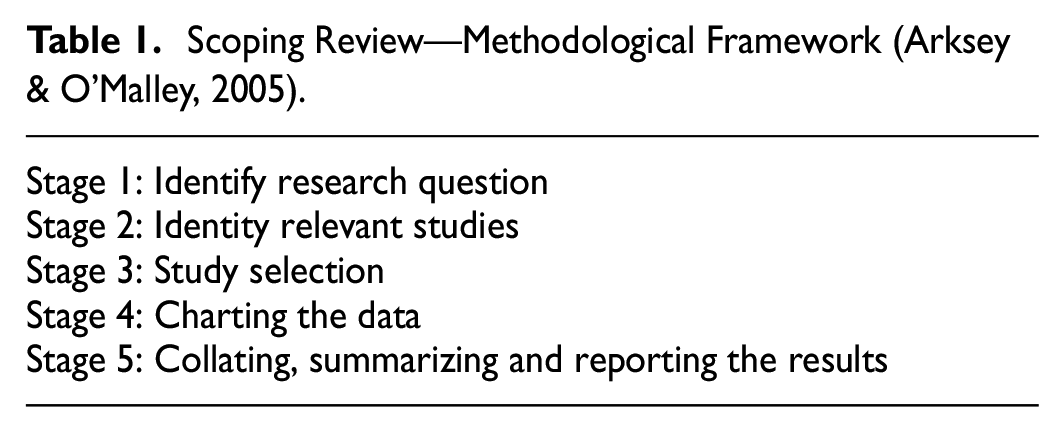
A narrative scoping review was identified as the most suitable review approach to examine the constructs used to assess the implementation of a new curriculum on ethical education. Arksey and O’Malley (2005, p. 20) outline the rationale for a scoping review as “a technique to ‘map’ relevant literature in the field of interest” regardless of the study’s design. This process is considered an iterative and reflexive approach where researchers can ensure that literature pertaining to a specific topic is comprehensively identified and examined. According to Arksey and O’Malley (2005, p. 21), there are four common reasons why a scoping review is undertaken that have applicability to this study. Firstly, this method allows researchers “to examine the extent, range and nature of the research activity,” as a way of mapping published material; secondly, this approach permits the completion of a preliminary map of the literature from a broad basis, for example, to see what literature exists in the area. This permitted the researchers in this review to examine and to synthesize material for an expansive topic where a wider range of literature and varieties in study design types could be identified, mapped, and collated; thirdly, this method allows researchers to “summarize and disseminate research findings”; and, finally, this method enables them to identify research gaps and to draw conclusions regarding the overall state of research activity in specific areas. This may include identifying gaps where no research was previously completed. Table 1 below outlines Arksey and O’Malley’s (2005) methodological framework stages for conducting a scoping review that was used to identify literature to provide a rationale for using the CFIR to inform an evaluation of an ethical education curriculum. Additionally, the researchers engaged in iterative consultation cycles when conducting this review to obtain consensus on the research that was selected for synthesis.
Scoping Review—Methodological Framework (Arksey & O’Malley, 2005).
Framework Stage 1: Identifying the Research Question
In this narrative scoping, our research question was: “Can an implementation science framework inform an evaluation of an Ethical Education (EE) curriculum?”
The research objectives are as follows:
To map the implementation science constructs of the CFIR to Education, Curriculum Design and Ethical Education (Framework Stage 1);
To identify literature from ethical and character education that is congruent with the implementation science constructs mapped to an educational context (Framework Stages 2–4);
To synthesize the literature on implementation of ethical and character education informed by educational constructs mapped from the implementation science constructs (Framework Stage 5).
To address the first objective, the CFIR was mapped to education, curriculum design and ethical education literature.
Firstly, each construct of the CFIR was interrogated and mapped to educational, curriculum design, and character and ethical education literature. This process was completed by two authors with consensus and agreement reached by the third author in a consultative role. The original constructs of the CFIR were re-ordered placing the student and teacher at the center of the implementation process. Secondly, the domains of the CFIR were renamed for an educational context and specific to EE, when applicable. For example, the “Characteristics of Individual” domain was renamed as “Teacher Characteristics.”Table 2 below illustrates the five key constructs of the CFIR, and the proposed constructs that were identified to inform an evaluation of the implementation of the EE curriculum.
Renaming the Consolidated Framework for Implementation Research (CFIR) Constructs to a Curriculum Evaluation Context.
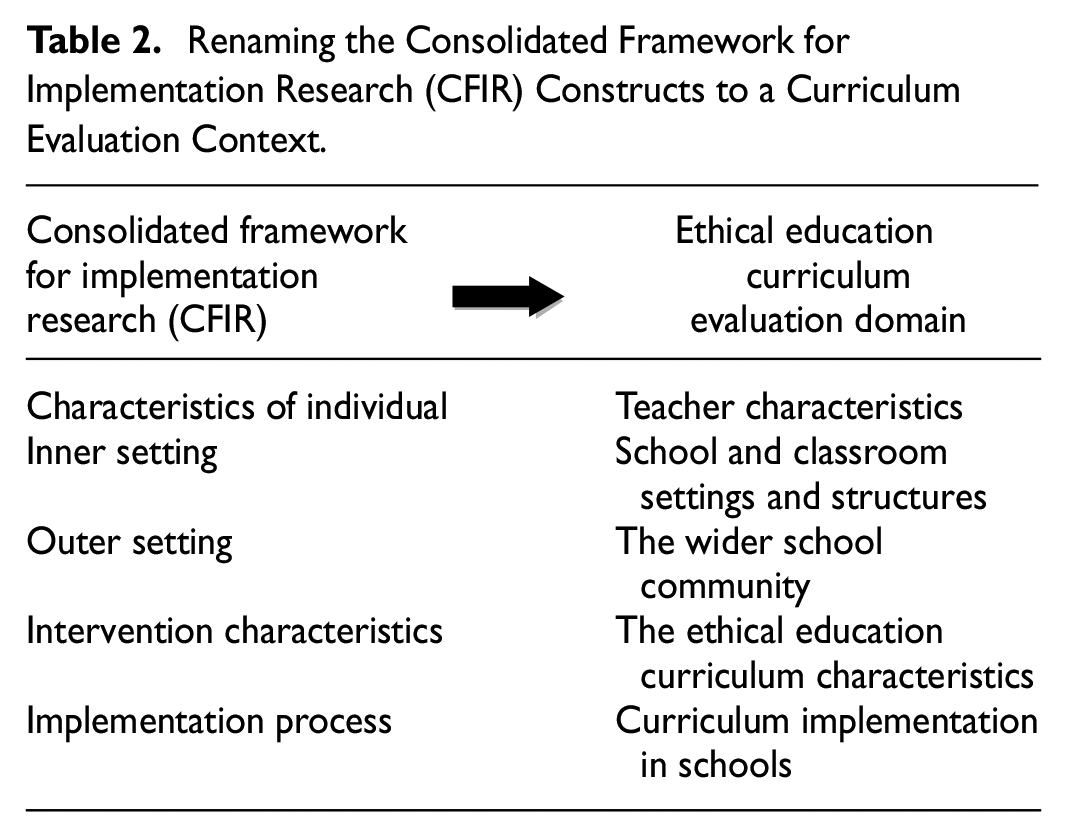

Thirdly, each sub-domain of the CFIR was then mapped to constructs identified in educational, EE and character education research, outlined in Table 3 below.
Mapping Consolidated Framework for Implementation Research (CFIR) Domains and Constructs to Educational Domains and Constructs.

Framework Stage 2: Identifying Relevant Studies
According to Arksey and O’Malley (2005), the essence of a scoping review is to capture as much of the literature as possible, from multiple data sources and types, to answer the research question. Following this mapping exercise, an extensive literature review of each CFIR domain and its relevance to education, curriculum design and EE contexts, was conducted. Educational databases were consulted including an extensive grey literature search. Peer reviewed articles and relevant literature were identified by two of the authors using ERIC, Google Search, Proquest, and Academic One Search. Searches were conducted using key terms “ethical education,”“moral education,”“character education,” in conjunction with “implementation” and the key educational constructs that were identified in each of the five domains in the CFIR following the mapping exercise from Framework Stage 1.
Framework Stage 3: Study Selection
These searches required a deep trawl of the literature and multiple iterative searches until the authors were satisfied that the literature identified adequately reflected the educational constructs in the CFIR framework mapped for the purposes of this paper. These iterative cycles were necessary due to the large volumes of information found that were irrelevant to curriculum implementation and evaluation in educational contexts. Once again, this process was completed by two authors, with consensus and agreement reached with the third author in a consultative role. The authors included books, book chapters, peer reviewed articles, and commentaries. To examine all the domains mapped to education, the final data set consisted of 46 items in total (25 empirical articles, 19 books, and two commentaries). In the “Teacher Characteristics” domain, 16 data items were deemed relevant consisting of 10 empirical studies and information from six book chapters. In “The School Setting” domain, 30 data items were relevant, consisting of 14 empirical articles, one peer reviewed commentary, and information from 15 book chapters. In “The Wider School Setting domain” nine data sources were identified consisting of five empirical articles, a peer reviewed commentary, and information from three book chapters. Relevant literature on constructs addressing “The Ethical Education Curriculum” domain identified seven items of relevance. These consisted of data from two empirical articles and five book chapters. Finally, the literature on the implementation process identified six items of relevant data, consisting of three empirical articles and three book chapters. By engaging in this process, a greater understanding of the appropriate practices and systemic influences that impact the effectiveness of EE curricula in schools were identified to inform this stage of this narrative review process.
Results
To address the second objective of this scoping review, to identify literature from ethical and character education congruent with an implementation science approach, the results section provides a systematic response to each CFIR domain pertaining to an educational context.
Framework Stage 4 and 5: Charting the Data and Collating, Summarizing and Reporting the Results
Arksey and O’Malley (2005) take a broader view of charting the data in their narrative scoping review process by including data that is contextualized and more accessible. They identify this approach as “descriptive-analytical” where a common analytical framework is applied to all data that is useful in addressing the research question. The literature that was identified within each domain and respective constructs, informed by the CFIR, are reviewed in this section according to the following domains: Teacher Characteristics, The School Setting, The Wider School Community Setting, the Ethical Education (EE) Curriculum, and the Implementation Process.
1. Teacher Characteristics
Knowledge and Beliefs About Intervention
The knowledge and beliefs about intervention construct combines the attitudes toward, and the value placed on, an intervention. It also relates to one’s familiarity with facts, truths, and principles related to a given intervention, as well as the skills in using the intervention (Damschroder et al., 2009). It is important to ascertain teachers’ beliefs and attitudes relating to pedagogical factors in order to understand and improve educational processes. For example, teachers’ beliefs impact on their strategies for coping with professional challenges and are also associated with their own general wellbeing. They also impact on the adoption, sustainability and overall impact of specific programs (Brackett et al., 2012).
The opinions of teachers regarding the importance of a given intervention or curriculum is also important to consider (Adalbjarnardottir & Selman, 1997). Clayback and colleagues (2023) identified that teachers with positive beliefs of a curriculum had high levels of success in implementing a new curriculum.
Specific to character education, teacher competencies ensure that curricular objectives are fully delivered (Ülger et al., 2014). Berkowitz and Bier (2014) noted that the acquisition of complex knowledge and pedagogical competencies was one of the main obstacles to successful moral and character education. The identification of teachers’ beliefs about competences in character education is important in order to develop policies regarding the efficiency of character education in schools (Ülger et al., 2014).
Research on teachers’ beliefs has demonstrated that they believe that teaching is an activity that relates to issues of “what is good, right and virtuous” (Sanger & Osguthorpe, 2011, p. 569). However, despite the potential for teachers to cultivate students’ ethical and moral skills, teachers often do not do so for a variety of reasons. The majority of educators lack moral language and an understanding of ethics, moral agency, and the moral nature of their work (Sanger & Osguthorpe, 2011). They often lack the ability to critically reflect on, or to understand, ethical issues (Bruster & Peterson, 2013). Furthermore, some teachers abdicate any attempts in acting as moral agents, since they do not believe it is their role to teach character education and that such instruction does not belong in the classroom (Lapsley & Narvaez, 2006; Lapsley & Power, 2005; Purpel, 2005).
Teacher Self Efficacy
According to Damschroder et al. (2009), self-efficacy relates to the beliefs one has about his or her capacity to execute action to ensure successful implementation. Teacher self-efficacy is a type of self-efficacy specifically applied to the context of teaching tasks. It relates to teachers’ confidence levels in their capability to organize and to execute actions required to successfully complete a specific teaching task in context (Tschannen-Moran et al., 1998). Teacher self-efficacy encompasses two components: personal teacher efficacy (a teacher’s belief about his or her abilities in teaching), and general teacher efficacy (a teacher’s belief about how much external factors, such as students’ family background, influence or can be changed by his or her teaching) (Milson & Mehlig, 2002; Narvaez et al., 2003). Milson (2003, p. 93) noted the importance of self-efficacy for character education, stating that “a teacher must believe in his or her own ability to build the character of students, as well as the ability of teachers in general to overcome negative influences from outside the classroom.”
Teacher Stage of Change
Knowledge of change powerfully impacts educational reform strategies and results (Fullan, 1999). According to Ornstein and Hunkins (2018), those implementing new curricula in school settings, who do not understand change models and the complexities of change, can often initiate actions that can cause dissonance among staff and across the entire school. It is only through identification and addressing of teachers’ fears, doubts, and concerns about strategies, curricula, programs, or materials in schools that a program can be fully implemented (Ornstein & Hunkins, 2018).
Individual Identification With Organization
According to Damschroder et al. (2009), organizational identification relates to how individuals perceive an organization where they work, and the degree of commitment that one has to that organization. To ensure effective functioning of schools, teachers are required to engage in extra roles which may include leadership and coordination responsibilities. Research has indicated that teachers’ organizational citizenship behavior (OCB) is positively related to their job efficacy (Jimmieson et al., 2010). Due to interpersonal and ongoing caring relationships that exist in teaching as a caring profession, OCB is more meaningful than studies that just demonstrate employee-client interactions. This study revealed that the effects of teachers’ OCB had a positive impact on students’ quality of life. Teachers’ increased job efficacy acts as an indirect variable, predicting positive outcomes for students, such as students’ general satisfaction, their relationships with teachers, their academic achievement, and their opportunities.
2. The School Setting
Structures Required for Ethical Education
According to Ornstein and Hunkins (2018), curricular teams, that include teachers who carefully plan, are essential for curricular development and implementation in schools. Berkowitz et al. (2017) outlines the additional structural components necessary in schools to support character education. Ethical education also requires appropriate classroom structures that support the development of student ethical and moral development. Teachers must directly teach students the skills in ethical and moral development using a naiveté to expertise approach. This involves teaching both moral virtue and moral reasoning skills (Narvaez, 2006) across different domains (Nucci, 2001). Well-structured classrooms also provide opportunities for interactive pedagogical approaches to develop students’ moral skills. These approaches focus on relational and co-operative learning and development via student to student interactions, such as peer tutoring and discussion, open discussions, cooperative and relational learning, class meetings, cross-age initiatives and moral discussion (Berkowitz & Bier, 2014; Berkowitz et al., 2017; Narvaez, 2005; Roseth, 2015).
The importance of positive, caring and safe classroom environments, and strong teacher role models have also been highlighted by many as important structures that indirectly develop students’ moral skills (Berkowitz & Bier, 2014; Narvaez & Bock, 2014; Narvaez & Lapsley, 2008). On a daily basis, through their actions, teachers can demonstrate what it means to care, which, in turn, teaches students how to care for others (Noddings, 2014). Teachers’ modes of discipline and behavioral management also demonstrate both implicit and explicit moral and value judgments (Sabbagh, 2009). Therefore, structures for appropriate developmental and intrinsically based behavior management that considers appropriate moral domains are also required (Berkowitz & Bier, 2014; Nucci, 2016). Teachers must also have high expectations for student growth and development, recognize student achievement, and encourage student reflection (Berkowitz & Bier, 2014). Schools will need to make relationships a strategic goal within school processes, policies and structures (Berkowitz et al., 2017).
Culture
School culture has been described as the inner reality of a school (Deal & Peterson, 2016) that reflects what organizational members care about, what they are willing to spend their time doing, what and how they celebrate, and what they talk about. Positive school culture has been associated with high achieving schools (e.g., Fullan & Hargreaves, 1996), and more prosocial behaviors among teachers and students (Macready, 2009), and it encourages commitment and increases motivation (Deal & Peterson, 2016). Berkowitz and Bier (2007) suggest that one must pay careful attention to the culture within the school when considering character education. Investigating the impact of school climate allows for a systematic approach to examine learners’ moral development in a context that optimizes learners’ school experience (Nucci, 2016). Character education is not just an isolated subject, it relies on, and encompasses, the culture and functions of schools and classrooms as well the whole school community (Berkowitz & Bier, 2014). A school culture that reflects strong character education is considered to satisfy students’ needs for positive relationships, self-determination and competence, and aids the development of good character (Berkowitz et al., 2017).
At the foundation of school culture lays the mission, vision, and ethos for the school (Berkowitz & Bier, 2014). These reflect the school values which determine what philosophies and standards individuals will assimilate and incorporate into their everyday actions. They may also reflect the overall vernacular that is echoed throughout the school. Therefore, a core set of ethical values as a framework and common language is required to build a comprehensive character education (Berkowitz & Bier, 2014). However, the language and words in schools must have an impact on the actual functioning of the school and, as such, must permeate other aspects such as discipline and academic curricula (Berkowitz et al., 2017). Students must, therefore, be provided with opportunities for moral action, and demonstrate their commitment to action on core ethical values. In particular, students will need opportunities to provide service to others in the form of community service, peer tutoring or through formal roles such as membership of student councils (Berkowitz & Bier, 2014; Berkowitz et al., 2017). Teachers and school staff must also attempt to adhere to the same core values that guide the education of its students. Further strategies identified that are conducive to an appropriate school climate include trust in teachers (Berkowitz et al., 2017) and a safe environment for all. Teachers and principals, involved in the initial pilot of this curriculum, reported that the positive school climate and ethos of ET schools nurtured learners’ ethical skills (Bourke et al., 2020).
Networks and Communications
According to Damschroder et al. (2009), networks and communications refer to the nature of social networks and communications, both formal and informal, within an organization. Strong relationships can influence positive implementation and help to create a sense of community among staff members (Damschroder et al., 2009). It is important to understand the communication channels within a school, which can either be vertical (between people at different levels) or horizontal (between people at the same level) (Ornstein & Hunkins, 2018). This is particularly important for curricular activities that span multiple subject areas and activities such as those relating to character and ethical education (Ornstein & Hunkins, 2018). A range of communication channels, both formal and informal, is encouraged that includes teachers, principals, students and community members (Ornstein & Hunkins, 2018). A learning community is a community with the capacity to promote and sustain the learning of all professionals in the school with the collective purpose of enhancing student learning (Bolam et al., 2005). The importance of learning communities has been identified as important within the character education literature (Lapsley & Narvaez, 2006; Lickona & Davidson, 2005), since they have been found to have a positive impact on student academic achievement, as well as improving the overall school climate (e.g., Bourke et al., 2020; Pankake & Moller, 2003). Schools must also have opportunities to collaborate with one another on matters relating to character education (Berkowitz et al., 2017; Bourke et al., 2020).
Implementation Climate
Implementation climate is the extent to which the use of an intervention is expected, supported, and rewarded by staff and management (Kratz et al., 2019). The extent to which implementation climate relates to successful implementation of programs in school settings is currently an under-researched area (Moir, 2018). Kratz et al. (2019) did not find any main effects for perceived implementation climate on student outcomes, however, there was an interaction between perceived implementation climate and fidelity, which was associated with student outcomes. Indeed, classrooms with a strong perceived implementation climate and high fidelity were associated with better student outcomes.
Readiness for Implementation
Readiness for implementation relates to an organization commitment to implement an intervention. The readiness for implementation domain consists of three sub domains; leadership engagement, available resources and access to knowledge and information (Damschroder et al., 2009). Leadership engagement relates to the involvement, commitment and accountability of managers and leaders. Available resources relate to the resources made available for implementation and the ongoing development of the implementation. It includes time, money, training, education and physical space.
Leadership
With regard to character and ethical education, leadership has been identified as an important component to its implementation in schools. Starratt (1991, p. 187) proposes that “educational leaders have a moral responsibility to be proactive about creating an ethical environment for the conduct of education.” Educational leaders are responsible for more than their own moral behavior. They are also accountable for the actions of those whom they are charged with leading, and so are required to establish an ethical environment in their schools (Cherkowski et al., 2015). A leader who upholds strong ethics understands the importance of positive relationships to drive all organizational efforts and success. Specifically, relationships must be characterized by respect and trust, not necessarily agreement.
For effective character education within a school, leaders must “buy in” to the approach, understand character education and education, be instructional leaders, model good character, and empower all stakeholders to take a role to ensure that character education permeates all aspects of school life (Berkowitz & Bier, 2014; Berkowitz et al., 2017). Berkowitz and colleagues (2017) noted that the empirical literature relating to school leadership in effective character education was limited.
Available Resources
According to Damschroder et al. (2009), available resources relate to the level of resources which are dedicated to an implementation. They include money, training, education, physical space, and time. In school settings, resources must be utilized well in order to support educational improvement objectives to the greatest possible extent (OECD, n.d.). However, one reason that teachers do not exercise their moral agency is due to a lack of emphasis on moral dimensions of teaching during initial teacher education (Lapsley & Woodbury, 2016; Lickona, 2003; Willemse et al., 2008). Few programs are intentionally preparing trainee teachers to be moral educators (Narvaez & Lapsley, 2008; Schwartz, 2008). The result is that teachers do not act on moral commitment (Milson, 2003; Revell & Arthur, 2007), and have expressed regret that values education was not addressed in their training (Bourke et al., 2020; Revell & Arthur, 2007) demonstrating the challenges that arise in the area of knowledge and information.
In the absence of adequate training in the form of formal teacher education in this area, the professional development of staff in the form of continuous formal and informal teacher education is an important resource allocation that is needed to support the development of staff competencies in character education (Berkowitz & Bier, 2014; Berkowitz et al., 2017). In the context of the pilot of the EE curriculum in Irish schools, teachers identified that a lack of professional learning at both Initial Teacher Education (ITE) and at Teacher Professional Learning (TPL) levels impacted on the implementation of this curriculum where insufficient training was a barrier to its success (Bourke et al., 2020). Notably, research has identified that experienced teachers exhibit lower levels of implementation fidelity to a new curriculum suggesting the need to consider different approaches to effectively engage teachers at various levels of experience (Clayback et al., 2023). Lack of time to implement and prepare for character education programs has also been identified as a significant barrier (Khoury, 2017). Time was also a barrier to the pilot of an EE curriculum in Ireland where teachers reported on the competing administrative demands of other teacher related and school related tasks. Additionally, the lack of incentives to engage in additional professional learning opportunities resulted in teachers completing professional learning on EE in their own time (Bourke et al., 2020).
Access to Knowledge and Information
In order for teachers to become sufficiently knowledgeable in a subject area, and the appropriate manner in which to deliver the program, school principals will need to ensure that teachers have access to appropriate knowledge and information. Specific to character education, Berkowitz and Bier (2014) identified the need for mandatory teacher education or TPL to grow teachers’ capacities to deliver character education and to develop teachers’ understanding of the concepts and language in this subject area.
Student-Centredness
According to the CFIR model, the “patient needs and resources” construct relates to the person-centeredness of an organization (Damschroder et al., 2009). This construct is generally considered in the “Outer Setting” domain in the CFIR where the system outside a patient determines the resources available and the services provided. However, applied to school settings, the authors suggest that it is more accurate to consider a student-centered approach in the school setting domain. This reflects Article 12 of the United Nations Rights of the Child where a student’s views must be considered in decisions on matters that effect him or her (United Nations, 1989). The importance of the student voice for the effective implementation of character education curricula has been identified in the literature (Berkowitz et al., 2017). The next phase of this pilot curriculum will identify the perspectives of learners and acknowledge their voice to inform its evaluation and subsequent revision and roll out nationally (Bourke et al., 2020). Given the increased importance on patient advocacy and voice, perhaps the “patient needs and resources” construct would be more accurately and suitably placed in the Inner Setting domain of the CFIR.
3. The Wider School Community Setting
This refers to the wider community within the school and the wider community in which the school is located.
Social Capital
Social capital within organizations relates to the quality of relationships. It also includes components such as shared vision, bonding of staff members, and information sharing (Damschroder et al., 2009). Social capital results in better group communication, greater feelings of safety and wellbeing, and enhanced use of intellectual capital and greater collective action toward shared goals, as well as better access to resources, help, opportunities and emotional support (Adler & Kwon, 2002). According to Onyx and Bullen (2000), social capital in schools consist of levels of participation in the community, pro-activity in a social context, a sense of personal efficacy, feelings of trust and safety, tolerance of diversity and feeling part of a team.
Positive and supportive relationships in schools among the wider community and families have been identified as critical components to developing students’ moral and ethical capacity (Berkowitz & Bier, 2014; Berkowitz et al., 2017; Narvaez, 2006). Since communities can help to build collaborative, democratic citizens (Narvaez, 2006), and participation in voluntary organizations positively influences prosocial behavior (Flanagan, 2004), schools must endeavor to expand relationship-building, and increase their communication to include families and community members (Berkowitz et al., 2017). However, developing relationships with families and communities is often neglected as part of school-wide approaches to character education (Lapsley & Narvaez, 2006). Teachers and principals identified that positive relationships developed between schools and communities arising from their engagement with the EE curriculum in Ireland (Bourke et al., 2020).
Peer Pressure
The peer pressure domain is described as competitive pressure among peers to implement an intervention (Damschroder et al., 2009). Within the school context, Jackson and Bruegmann (2009) note that teachers’ performances can be impacted by their peers. The influence of peers has an impact on teachers’ attitudes and beliefs through a process whereby teachers evaluate a program or curriculum from the subjective perceptions of the school within which they work. Therefore, for a curriculum to be truly successful, a champion that drives its implementation would be advantageous in a school setting. A champion devotes time toward this program/curriculum in the school’s schedule, acts as a role model, and encourages program usage. By working alongside other teachers, the champion can influence teachers’ attitudes and beliefs about a program and their responsibility regarding an intervention or concept (Jackson & Bruegmann, 2009). This domain reflects the wider community within the school and the wider community in which the school is located. Therefore, peer pressure can also be manifested between schools in regional districts or municipalities or within specific schools such as Educate Together schools.
External Policies
The external policies and incentives domain relate to external strategies that support the spreading of an intervention, including government or other central entity regulations, external mandates, recommendations and guidelines and public reporting (Damschroder et al., 2009).
4. Intervention Characteristics: The Ethical Education Curriculum
Intervention Source
Intervention source relates to the perception of stakeholders about whether an intervention is externally or internally developed. The perceived acceptability may also influence implementation (Damschroder et al. (2009). A scoping review identified an increase in stakeholders’ engagements in the co-development of programs or interventions in a health care context using Intervention Mapping (IM) (Majid et al., 2018). This study identified an increase in the use of IM to map how stakeholders were involved in designing health care innovations and found that stakeholders were committed to the process and gave feedback. This study suggests the potential merits of considering IM in the design and implementation of educational interventions.
Evidence Strength and Quality
Evidence strength and quality relates to stakeholders’ perceptions about the quality and the validity of the evidence of an intervention to have a positive outcome (Damschroder et al., 2009). In order for people to accept a new intervention or curriculum in school settings, they must believe it to be of good quality and to have worth (Ornstein & Hunkins, 2018).
Relative Advantage
Relative advantage relates to the perceptions of stakeholders of the relative advantage of implementing the intervention when compared to the alternative (Damschroder et al., 2009). Relating to school interventions and curricula, Ornstein and Hunkins (2018) suggest considering comparative value not only in terms of educational achievement but also in terms of ease of delivery, cost, demand on resources, role in the existing organization, and responsiveness to community expectations. Since the senior EE curriculum in Educate Together schools is an alternative to religious instruction, perceptions about its relative advantage may be important, particularly in the context of a society that has become increasingly secular.
Adaptability
Adaptability is described as the extent to which an intervention can be adapted, tailored or refined in order to meet the needs of the system and context in which it is delivered (Damschroder et al., 2009). Best practice among educational professionals indicates that it is equitable that all students with special educational needs should have access to a broad curriculum at post primary level (O’Mara et al., 2012). Furthermore, in order for character education to be most successful, it must be subsumed into the whole school community and across all school elements, rather than standing as an isolated curricular subject (Berkowitz & Bier, 2014; Narvaez & Bock, 2014). This will enable educators to embed a universal design for learning approach to ensure access to the curriculum for all students to acquire ethical skills.
Trialability
Trialability is the ability to test an intervention on a small scale and being able to undo the implementation, if this is warranted (Damschroder et al., 2009). Within education, small scale pilot studies can help to develop a theory of change for an intervention before the full project is rolled out in other schools. Rather than focusing on the impact of an intervention, collecting feedback about perceived impacts, and monitoring how the program was implemented by teachers, can help to develop and refine programs prior to more cost effective evaluations such as randomized control trials. This suggests that piloting an EE curriculum in schools nationally (Bourke et al., 2020), before wider dissemination, was a worthwhile endeavor.
Complexity
Complexity refers to the perceived challenges that can arise in implementation, which can be characterized by duration, scope, radicalness, disruptiveness, centrality, and intricacy, as well as the number of steps required to implement (Damschroder et al., 2009). Specific to curricula implementation, complexity can be dependent on teachers’ and school staff’s levels of experience (Ornstein & Hunkins, 2018). The ease of all teachers, not specifically those who directly teach the curriculum, to make cross curricular links to other subjects may be considered in this domain.
Intervention Quality and Presentation
According to Damschroder et al. (2009), design quality and packaging refers to the perceived strengths of how the intervention is bundled, presented and assembled. Literature has noted the importance of having well-organized and user-friendly lesson plans along with clear learning objectives, varied, and engaging learning activities and assessment measures (Payton et al., 2000).
Cost
Policy makers need to consider how money is spent in educational settings. Copious amounts of money are invested in new educational innovations, changes and policies, often without much evidence to back these investments (Hanushek et al., 2005). Information is thus required regarding the cost-benefit of an intervention, specifically, the expenditure of an intervention and the benefits accrued via identification and measurement of student outcomes (Hummel-Rossi & Ashdown, 2002). In particular, the financial cost or burden of an intervention will need to be considered when making decisions about what works best and in what contexts.
5. Curriculum Implementation Process in Schools
Planning
According to Damschroder et al. (2009), planning refers to the degree to which schemes, method of behaviors or tasks for implementing an intervention are developed in advance as well as the quality of those schemes. Planning leads to effective implementation by building on local capacity for the intervention at both systemic and individual levels. Plans should include stakeholders’ needs and perspectives, strategies that may need to be tailored for subgroups, consideration of appropriate style for delivery of information and education, appropriate communication channels and considerations given to how an intervention is monitored and evaluated (Damschroder et al., 2009).
Engaging
Engaging relates to having the most appropriate people involved in the implementation of an intervention, who can drive social marketing, education, role modeling and training (Damschroder et al., 2009). Specific to curriculum development, a range of people are required from both school and community to support the process. Key players in the development of the curriculum should be scholar-experts and professional educators (consultants, principals, etc.), as well as teachers and students. Members from the community and parents should play a lesser role. These individuals are tasked with the role of planning across multiple levels; classroom, school, community and national (Ornstein & Hunkins, 2018). For evaluation of a curriculum, it is an inclusive approach to obtain the perspectives of not only teaching staff, but also of students, to seek their perspectives on a curriculum or intervention (Bourke et al., 2020).
Executing-Curriculum Fidelity
In the CFIR, “executing” is referenced as a construct in the implementation process. The authors reached a consensus that “executing” in an educational context referred to implementation fidelity. Fidelity or program integrity means that a curriculum is being implemented as intended by the designers (Bickman & Athay, 2009; Elliott & Mihalic, 2004). It allows for measurement of adherence so that curricula can consistently be researched and replicated. Recent implementation science research has identified the importance of enhancing implementation fidelity to improve student outcomes and sustainability of educational interventions (Clayback et al., 2023). Fidelity is significant when making claims about the effectiveness in “executing” educational interventions that include new curricula. Specifically, a curriculum implemented with high fidelity can conclude that results can be attributed to the program itself (Vartuli & Rohs, 2009). However, it can be difficult to ascertain if the curriculum or intervention itself is resulting in the success or failure of a program, if fidelity is not considered (Bickman & Athay, 2009; Hohmann & Shear, 2002). Additionally, Koutsouris and Norwich (2018) noted that an instrument which determines good and less good teacher decisions, rather than focusing on an over reliance on adherence to an intervention, may be more relevant to students and more applicable to specific learning contexts. For example, teachers who use an intervention mechanically and score highly on a fidelity index may not engage at an indepth level with the strategies in the intervention. In educational settings, classroom complexities along with children’s characteristics, school characteristics, and family characteristics also need to be taken into consideration when reviewing fidelity (Vartuli & Rohs, 2009). These domains reflect those in the CFIR and demonstrate its utility in using this approach to guide an implementation process. For example, in the context of character education and social emotional programs, fidelity has been found to vary for differing reasons such as whether the curriculum is applied at whole school level and with more intensity, teacher turnover, teacher characteristics, and how well tacit knowledge is communicated to staff (Lapsley & Narvaez, 2006).
Reflecting and Evaluation
Reflecting and evaluation relates to reflecting on the progress, experience, and quality of the implementation, using personal and team debriefing. Evaluation also considers feedback relating to the implementation and its success (Damschroder et al., 2009). It is important to ensure that teachers have the opportunity to reflect on the implementation of a new curriculum as teachers’ personal and collective responses can result in the success of a pilot curriculum prior to its wider dissemination in a school system.
Discussion
This narrative scoping review demonstrates that an implementation science framework can be used to inform constructs to evaluate an EE curriculum. In reviewing the research objectives, framework stages from a narrative scoping review methodology (Arksey & O’Malley, 2005) facilitated the mapping of implementation science constructs to an educational setting. Data was gathered from literature in education, curriculum design, and EE contexts, as context is recognized as a significant factor in the outcome of how an intervention is implemented (Koutsouris & Norwich, 2018; Nilsen & Bernhardsson, 2019). This literature was then synthesized and identified that the CFIR Was a particularly helpful meta-theoretical framework to apply to an educational context to inform the implementation of the EE curriculum. The CFIR was selected as the most robust meta-theoretical framework as it was developed following a synthesis of 19 overlapping implementation science theories and frameworks into a single, consolidated framework. The application of a robust implementation science framework is particularly salient as previous research (Lalor, 2013; McNamara et al., 2012) identified that Educate Together’s primary school curriculum was not successfully implemented systemically at whole school level. This suggests that implementation science will provide a more comprehensive and ecological approach to this curriculum evaluation at secondary level in these schools.
Strengths and Limitations
There are a number of strengths and limitations to this paper that warrant discussion. The CFIR has a strong meta-theoretical basis that has informed a large body of recent research in healthcare using an implementation science approach. This scoping review suggests that it has potential also within educational contexts to provide a roadmap to inform implementation and ecological systemic evaluations of interventions including new curricula. This framework was flexible to allow the researchers autonomy regarding the literature they agreed was the most salient for inclusion in this review. However, that is not withstanding the impact of bias on the researchers’ part with regard to literature that was selected, and also the literature that was not included. To diminish the impact of this, the researchers used iterative and reflexive practices along with the support of the third author to guide the selection of the most relevant material for inclusion. This paper suggests that there is potential for this approach to be used when evaluating scaled up interventions following pilots of these interventions. Additionally, Narvaez and Lapsley (2008) recommend that character education is addressed at all levels of the school system and the CFIR provides a framework when developing, revising, or evaluating these curricula at a systemic level.
It is also important to acknowledge the limitations of this scoping review. The use of a narrative review as a descriptive analytical approach allowed the authors to complete a broad analysis of the literature though this diminished the robustness afforded by a more systematic review process. However, given that implementation science approaches are very recent in educational research (Lyon et al., 2018), the likelihood is that few items would have been identified using a gold standard systematic review process. An interesting limitation that was inadvertently discovered was the dearth of research within the school systems domain with regard to ethical education. For example, there was a substantial body of literature relating to teacher characteristics and school setting domains with few examples in the wider school context and the implementation of ethical, moral and character curricula in general. This also highlighted gaps in research that are ripe for investigation.
Recommendations for Future Research
An outcome of this narrative scoping review was the development of a questionnaire using the constructs from the CFIR. This questionnaire will be disseminated to schools to measure the impact of the implementation of the EE curriculum in piloted schools in Ireland from the perspectives of school leadership, teaching staff, and students. Research that analyses the content validity, internal consistency, and factor structure of this questionnaire is required. This has the potential to systematically evaluate the impact of ethical and character education in other schools and jurisdictions. Future evaluations should consider the use of the CFIR to structure interventions or curricular evaluations completed in other educational contexts. This could support comparative analysis and support measurement of longitudinal effects of interventions or curricula from a strong theoretical basis. This paper demonstrates that an implementation science, as an evidence based approach using the meta-theoretical CFIR domains can be used to inform the development of an evaluation tool to measure the impact of an ethical education curriculum in an educational context.
Footnotes
Acknowledgements
The authors would like to acknowledge the support of Sandra Irwin-Gowran, Education and Support Manager, and Laura Dooley, Second Level Education Officer, in Educate Together who provided assistance with this research and gave valuable suggestions that enhanced this paper during its development.
Declaration of Conflicting Interests
The author(s) declared no potential conflicts of interest with respect to the research, authorship, and/or publication of this article.
Funding
The author(s) disclosed receipt of the following financial support for the research, authorship, and/or publication of this article: This research was funded by Educate Together, Ireland.
Ethics Statement
This is not applicable to this paper as it is a literature review.
