




Abstract
Because healthcare systems in developing nations are underfunded and unequal, practitioners must understand how telemedicine may be widely introduced and sustained. Unfortunately, telemedicine adoption receives less attention and there is limited knowledge regarding the interfering influence of patient engagement, satisfaction, and individual innovativeness. Consequentially, the current study seeks to investigate the factors that influence patients’ behavioral intentions toward telemedicine, while acknowledging engagement and satisfaction as mediators and personal innovativeness as a moderator. A questionnaire instrument was used to reach telemedicine users in Bangladesh, and finally, 305 samples were curated and explored applying structural equation modeling in AMOS software. The empirical results show that information quality, performance expectancy, engagement, and satisfaction are strong stimulators of behavioral intention toward telemedicine, whereas functionality, information quality, and performance expectancy drive satisfaction and engagement. One of the worthy findings of this study is that engagement and satisfaction play a significant mediating function, while personal innovativeness plays a moderating role, in influencing behavioral intention toward telemedicine. Confirming engagement and satisfaction as mediators and innovativeness as a moderator adds originality to this research, and overall will help to reduce healthcare bias prejudice among marginalized people in developing countries like Bangladesh.
Keywords
Introduction
Within healthcare organizations, information and communication technologies (ICTs) are revolutionizing the patient experience by introducing telemedicine, electronic health (eHealth), mobile health (mHealth), or telehealth (Serrano et al., 2021; Stanley et al., 2021). Telemedicine has been emerged as an electronic healthcare delivery system that treats remote patients using wireless sensors, laptops, and smartphones (Amin et al., 2022). Currently, there are three different forms of telemedicine: asynchronous versus synchronous, data transfer and storage, and automated telemedicine services (Baudier et al., 2021; Preaux et al., 2023). The World Health Organization’s (WHO) Global Observatory for health evaluated 96 countries to determine their needs for digital health tools and discovered that over 70% of non-OECD countries found them to be very beneficial and that exposing telemedicine is becoming more popular around the world (Preaux et al., 2023). Global real-time telemedicine is anticipated to reach USD 33,575.48 million by 2026 (Statista, 2022c). The Asian market is anticipated to reach USD 17,254.54 million by 2026 (Statista Statista, 2022a), with Bangladesh predicted to generate USD 26.49 million in 2022 (Statista, 2022b).
With 171.670 million people, Bangladesh is an overpopulated country with a flawed healthcare system (Gazi, Al Masud, et al., 2022; World Population Review, 2022). This nation has 74,415 hospital beds and 663 district hospitals (private and public), and one hospital bed for every 1860 citizens (Gazi, Al Masud, et al., 2022; World Population Review, 2022). Despite being one of the 57 nations with an uneven healthcare system that lacks physicians, nurses, midwives, and hospital beds, this nation is one of the few in the world to offer free public health care. Furthermore, the COVID-19 disease has emerged as a serious worldwide health concern, and Bangladesh is no exception. Telemedicine may be one of the most exemplary treatment methods since patients increasingly feel at ease working from home (Amin et al., 2022; Han et al., 2021). During and after the coronavirus outbreak, many people use phones, mobile devices, Facebook, internet apps, and other social media to get healthcare (Gazi, Nahiduzzaman, et al., 2022; Preauxet al., 2023). Several studies also noted that despite Bangladesh having fewer doctors than other countries, telemedicine could be widely adopted because it can save patients’ time and money who live far away and give them more access to high-quality healthcare (Baudieret al., 2022).
Consequently, it is abundantly clear that Bangladesh’s healthcare system is underfunded and unparalleled. Therefore, telemedicine may be one of the best solutions, given the lack of accessible healthcare facilities and the societal stigma associated with COVID-19. Moreover, we believe that a thorough understanding of telemedicine in Bangladesh is crucial to provide marginalized communities with access to top-notch medical treatment. Thus, the goal of this study is to look into how importantly telemedicine components affect patients’ engagement and satisfaction and that they potentially have an impact on patients’ behavioral intentions. Considering the state of technology, this paper concentrates on video-audio-based telemedicine services. Extending the stated research objectives, we address three primary research questions (RQs). RQ1. How do potential antecedents influence telemedicine patients’ engagement, satisfaction, and behavioral intentions? RQ2. Do patient satisfaction and engagement mediate the impacts of antecedents and behavioral intentions? RQ3. How well-suited is personal innovativeness as a moderator in shaping patients’ behavioral intentions?
In order to respond to these RQs, we have listed some significant theories and variables that have effectively promoted technological adoption. First, we have chosen the Unified Theory of Acceptance and Use of Technology (UTAUT) model as our core pillar since it has excelled at explaining why people accept technology more readily than healthcare professionals do (Serrano et al., 2021). The major UTAUT components were considered: effort expectancy, performance expectancy, satisfaction, and behavioral intention. In this regard, De Bruyn et al. (2020) and Z. Wang et al. (2022) reported that telemedicine performance expectancy and effort expectancy measure users’ perceptions of online health insurance benefits, and patients’ perceptions of improved health benefits significantly impact their use of telemedicine services. Furthermore, in response to the recommendations made by Kamal et al. (2020), who noted that patients’ use of telemedicine services depends on a variety of social and behavioral factors, we have added some critical variables to our foundation theory of UTAUT, including information quality, functionality, contamination avoidance, engagement, and personal innovativeness. According to previous studies, patients who have personal innovation (Octavius & Antonio, 2021), higher engagement with telemedicine (H. Wang et al., 2021), and contamination avoidance tendencies (Bezançon et al., 2019) are more likely to use telemedicine services. Patients are also more likely to use telemedicine if the information quality is higher and reliable (Ganapathy, 2020; Krishnan, 2021) and the technology’s functionality environment is adequate (Anand et al., 2020). After that, we investigate the mediating influences of engagement and satisfaction on behavioral intentions. Because even though some researchers (e.g., Baudier et al., 2021; Iacolucci et al., 2023) have demonstrated that higher performance and effort expectancies, information quality, or functionality can increase users’ engagement and satisfaction with technology, there is scare research proving that behavioral intentions are mediated in this context by engagement or satisfaction. Finally, we have considered personal innovativeness as a moderator in our model, acknowledging it as a particular variable, which may strengthen or dampen the use of technology, despite its complicacy and ease of use (Capozzo et al., 2020; Iacolucci et al., 2023).
Therefore, our research will promote telemedicine as a reliable, ideally beneficial option for underserved areas, time and money-saving for patients with various chronic illnesses, such as those caused by common ailments, hypertension, diabetes, asthma, and cancer survivors (Azadi et al., 2021). We also believe that by adding engagement and patient satisfaction as mediators and personal innovativeness as a moderator, our proposed model will better explain the complex interactions among the variables in our study in the context of telemedicine, thereby can serve as a baseline model for future researchers studying this area. Further, our study would offer a unique understanding of the patient’s perspective on the adoption of telemedicine. It would be helpful to health professionals, such as doctors, nurses, and practitioners, to create patient-centered services that would increase patient trust and compel them to use telemedicine.
The remainder of the research first analyses the theoretical underpinnings and variables influencing patient telemedicine services. The formulation of hypotheses, research methodology, empirical findings, and discussions are all covered in the posterior sections. Significant implications are shown in final part, along with concluding remarks.
Literature Review
Theoretical Background
During the last few decades, a number of theories and conceptual frameworks have been developed to investigate how innovation and technology are received. To demonstrate the value of taking into account the theoretical framework most suited to the consumer’s perspective of telemedicine, a thorough investigation of the theories and models is therefore required. Literature shows that Technology Acceptance Model (TAM) is one of the most traditional models for describing the acceptance of innovation and technology, which proposes that perceived usefulness and perceived ease of use fundamentally affect user’s attitude toward acceptance (Davis et al., 1989). TAM2 has surfaced, looking to capitalize perceived utility and usage intentions in terms of social influence process and cognitive instrumental processes (Venkatesh & Davis, 2000). Similarly, Theory of Planned Behavior (TPT) is a prominent theory that examines how people’s willingness to engage in a particular behavior is determined by their behavioral intention to engage in the behavior (Ramírez-Correa et al., 2020). In addition, UTAUT model was later established by Venkatesh et al. (2003) in an effort to integrate preceding theories, including the TAM, Theory of Planned Behavior (TPB) and others. This model included four main factors (i.e., effort expectancy, performance expectancy, enabling circumstances, and social impact) and four moderating variables (i.e., age, gender, experience, and voluntariness of use), referring to the fact that it highlights not only individual-level elements that influence technology adoption but also identifies specific circumstances that may enhance or limit the impact of these factors. Furthermore, the UTAUT2 model is a modified and extended version of the UTAUT that was constructed using four behavioral intention influencing factors, namely performance expectancy, effort expectancy, social influence, and facilitating conditions. Subsequently, hedonic motivation, price value, and habit were added to the original UTAUT model, which was termed UTAUT2. Although several studies have successfully used the UTAUT2 model (e.g., Baudier et al., 2021; Napitupulu et al., 2021), this model is ideal for young generation’s adoption aim of mHealth apps (Alam et al., 2020), and Venkatesh et al. (2003) advised that further adjustments and revisions be made to utilize UTAUT2 in certain particular IT applications.
Besides, the original UTAUT model has emerged as one of the most popular fundamental theories of technology adoption and usage in many fields due to its solid explanatory capacity, and the telemedicine setting is no exception (Bamufleh et al., 2021; Bol et al., 2018; Rahi et al., 2021; Serrano et al., 2021; Shiferaw et al., 2021; Sreejesh et al., 2021; H. Wang et al., 2021), and behavioral intention to use is considered a proxy for the acceptance of technology (Serrano et al., 2021; H. Wang et al., 2021). Furthermore, Harst et al. (2019) suggested that when compared to the TAM, UTAUT performs better in explaining telemedicine acceptability to patients and takes into account additional antecedents of acceptance. Therefore, our conceptual model is primarily based on the UTAUT model and is utilized to explain telemedicine acceptance by the patients, as well as address many acceptance antecedents. We adopted the UTAUT model in particular for three reasons. First, the UTAUT model performed better than any individual model previously examined in terms of R-squared value (Venkatesh et al., 2003). Second, the UTAUT model is better than earlier models since it considers other antecedents when seeking to explain why patients choose telemedicine (Serrano et al., 2021). Third, we used the UTAUT model to assess the acceptability of telemedicine services, which are remote consultations with a physician conducted through computer, tablet, or mobile phone (Gajanayake et al., 2016).
In addition, we agree with Kamal et al. (2020), revealing that the proliferation of telemedicine makes it difficult to adequately describe patient usage intentions using a limited number of variables. Patients’ use of telemedicine services depends on various social and behavioral factors (Kamal et al., 2020). As a result, we have added several important variables to our foundation theory of UTAUT, including information quality, functionality, contamination avoidance, engagement, and personal innovativeness. According to the information systems success model developed by DeLone and McLean backed in 2003, the quality of the information refers to whether it is accurate, complete, and gives a good overview of telemedicine services, which may have a notable impact on the uptake of the services. Increased internet usage has already changed how individuals look for information, and mobile phones offer a secured and private means to do so, leading to the adoption of telemedicine (Octavius & Antonio, 2021). According to Baudier et al. (2021), telemedicine services require a minimum of infrastructural support, suitable bandwidth, technical performance of communication medium, audio-video quality, updated software, and skilled staff for successfully deploying the same. User experience and behavioral intention are significantly influenced by the technology’s functionality and performance (Anand et al., 2020); hence we have added the “functionality” variable to our model.
Additionally, Baudier et al. (2021) recognized patients’ innovativeness as a characteristic and contamination avoidance as an advantage of telemedicine in emergencies like pandemics. Individuals with greater levels of personal innovativeness are more likely to utilize technology despite its complexity, which may impact their intentions to use telemedicine (Octavius & Antonio, 2021). We have thus included personal innovativeness as a moderator in our model since we believe that patients’ innovativeness may either increase or limit the adoption of telemedicine. Contamination avoidance has the opposite impact on the nauseous feeling that people experience when they come into touch with various items, healthcare facilities, or public transportation (Bezançon et al., 2019). As a result, we have added contamination avoidance as an independent variable to our model with the hypothesis that telemedicine services would be more widely accepted if there was a stronger inclination for contamination avoidance. Finally, we have included a linking variable called “engagement” following the recommendations of H. Wang et al. (2021), who claimed that people and healthcare professionals highly engaged with technological settings intend to explain responsible technology as a positive signal and embrace it more widely. As a result, we anticipated that engagement, together with a universal mediator “satisfaction,” would play a mediating function in the model.
Based on a variety of social, behavioral, and process-related factors, the current study combines the constructs of the original UTAUT model with information quality, functionality, contamination avoidance, engagement, and personal innovativeness drawn from different theories, and thereby, we have conceptualized the following research model (see Figure 1).
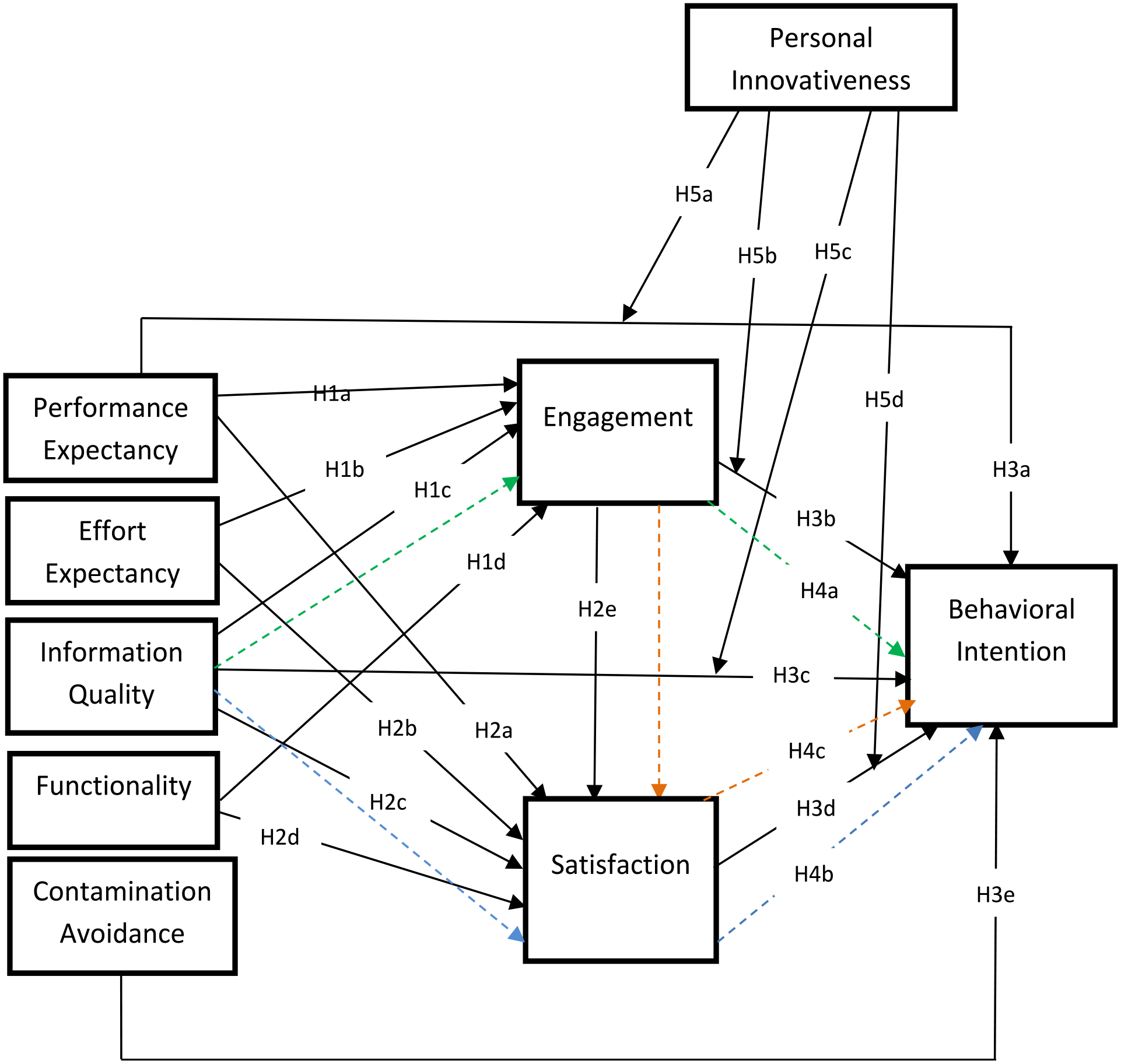
Research framework.
Hypotheses Development
Engagement and its antecedents
An electronic service (e-service) is said to be engaging if it is interesting, encouraging, enjoyable, interactive, and prompt (Roberts et al., 2021). Literature indicates that if an e-service is highly engaging, the users are more likely to embrace it (Asagbra et al., 2018; Brock et al., 2019; Roberts et al., 2021). Scholars suggest that engagement is the key to innovation adoption, and thus, explaining users’ behavioral intention toward technology depends on the attractive features of the same (Asagbra et al., 2018; Brock et al., 2019). Engagement could be emanated from different factors. For example, performance expectancy, defined as the perceived benefits of telemedicine services (Amin et al., 2022), is a well-documented driver of telemedicine engagement. Telemedicine benefits are easy and faster access to healthcare services, improving self-healthcare efficiency, building health management capacity, and satisfying healthcare needs on demand (Amin et al., 2022; Baudier et al., 2021; H. Wang et al., 2021). The extant literature reveals that performance expectancy stimulates users’ perceived engagement with information systems (Ouimet et al., 2020). For example, prior research (e.g., Amin et al., 2022; Yan et al., 2021) have demonstrated that patients’ perceived enhanced health benefits stemming from telemedicine strongly affect their engagement. Thus, following the empirical results and the proposition of the theory, our study hypothesizes that:
Effort expectancy is the perceived ease and comfort of using an information system-based service (Venkatesh et al., 2003). For this study, we have explained effort expectancy as perceived comfort, convenience, and simplicity in using telemedicine services (Amin et al., 2022; Venkatesh et al., 2012). More clearly, a straightforward and flexible technology can rapidly attract users to adopt and use the same. Literature also suggests that more convenient and easy-to-use services make telemedicine services more engaging (Amin et al., 2022). Being convinced by the empirical evidence, our study hypothesizes that:
Relevant, precise, valid, and adequate information is the stimulating factor towards an e-service adoption (DeLone & McLean, 2003; Nicolaou et al., 2013). Scholars (e.g., Ali et al., 2021) opine a deep causal relationship between information quality and user engagement with mobile apps. More clearly, information quality highly enhances user engagement which helps develop a good relationship between the users and the mobile travel apps (Ali et al., 2021; Fang et al., 2017). Therefore, following the notion of the earlier studies, we also expect that:
Information system functionality refers to the availability of sound IT infrastructure, organizational and individual technological compatibility, technical service quality, and efficient service tools, which facilitate user engagement with the system (Baudier et al., 2021). Roberts et al. (2021) explain the functional attributes of a digital health tool through the lens of ease in using, speed in providing support, and accuracy and promptness in providing desired services. Empirical evidence suggests that e-service functionality uplifts user engagement towards the service (Fang et al., 2017; Ludwick & Duocette, 2009). For example, Fang et al. (2017) suggest that e-services like mobile travel apps are more engaging while it posits more functional attributes. Thus, following the notion of similar previous research, we develop the following statement:
Satisfaction and its antecedents
Generally, satisfaction is defined as the gap between consumers’ expectations and a product’s actual performance (Oliver, 1980). Satisfaction with telemedicine is the degree to which end-users are pleased with their choices to use the services (Isaac et al., 2019). Researchers (e.g., Amin et al., 2022; W.-I. Lee et al., 2021) revealed that satisfaction is a significant catalyst of behavioral intentions toward telemedicine. Following the consequences of satisfaction, researchers dissect how patient satisfaction could be enhanced toward telemedicine services. For instance, W.-I. Lee et al. (2021) asserted that patients’ satisfaction with telemedicine services is likely to be influenced by their levels of belief that the services are effective in enhancing their healthcare experience. Recent studies have shown that users are more likely to feel extremely satisfied and inspired to continue using an information system if they believe it is useful (Amin et al., 2022; An et al., 2021; Yan et al., 2021). Therefore we ratiocinate the following statement:
Effort expectancy is a well-recorded enabler of consumer satisfaction with telemedicine. For example, W.-I. Lee et al. (2021) disclosed that initial interactions with mobile health applications might lead to higher satisfaction if consumers perceive these as simple to operate. Though Amin et al. (2022) could not report effort expectance as a critical predictor of satisfaction, other researchers (e.g., An et al., 2021; Yan et al., 2021) revealed that the more effortless telemedicine will be, the more satisfied consumers will be with it. Correspondingly, we have offered the following statement:
Information quality represents multiple dimensions, including precision, pertinence, effectiveness, scope, and promptness of system information (DeLone & McLean, 2003; Roberts et al., 2021). When using a digital health system, users must be satisfied with the information’s correctness, appropriateness, interpretability, and completeness because poor information quality raises concerns about healthcare services and leads to patient dissatisfaction (Nicolaou et al., 2013). Recent telemedicine research has recognized that the quality of information influences patients’ satisfaction with telemedicine services (Amin et al., 2022; Rahi et al., 2021). Henceforth, we hypothesize the following statement:
Functionality, as it pertains to healthcare technology, is defined as how an e-health tool is quick, simple to operate and explore, and has accurate, intuitive content (Roberts et al., 2021). Functionality is a criterion for measuring the quality of a system (Delone & McLean, 2003), leading to higher satisfaction among users (Amin et al., 2022). Users are more likely to be satisfied with telemedicine’s effectiveness, efficiency, and utility when they perceive it to be simpler to pick up and use, more stable, and better organized (Kaium et al., 2020; Rahi et al., 2021). Thus, this study posits the following hypothesis:
E-services are deemed to be “engaging” if they are intriguing, encouraging, interactive, prompt, and entertaining to use (Roberts et al., 2021). Patients actively engaged in healthcare are more inclined to participate in proactive behaviors, seek health information, and encourage peer support (Amin et al., 2022). A high level of engagement is critical for the effective adoption of innovative technology (Asagbra et al., 2018; Brock et al., 2019) and overall satisfaction with the same (H. Wang et al., 2021). According to H. Wang et al. (2021), healthcare staff that actively interact with artificial intelligence (AI) technology report higher satisfaction levels. Additionally, a recent study on telemedicine has shown that patient engagement substantially affects their satisfaction with telemedicine (Amin et al., 2022). Therefore, this study formulates the following statement:
Behavioral intention and its antecedents
The plan behind a person’s decision to engage in a particular behavior is known as behavioral intention (Hill et al., 1977). Behavioral intention toward telemedicine refers to how consumers are inclined to use the services (W.-I. Lee et al., 2021). Prior research has shown that behavioral intention toward technology substantially impacts actual use habits and enhances sustainable organizational performances (Abbas et al., 2019, 2020; Jiakui et al., 2023; Li et al., 2022; Mubeen et al., 2020); thus, behavioral intention is a crucial predictor of health information technology adoption (Hoque et al., 2016; Venkatesh et al., 2003).
Researchers argued that technological and individual attributes could instigate consumers’ intentions to use an information system-based service like telemedicine. For instance, Alam et al. (2020) and Venkatesh et al. (2003) evinced that clients appear to be more driven to accept and continue using new technology if they view it as more favorable and beneficial for their daily lives. Although Palas et al. (2022) revealed no significant impact of performance expectancy on older consumers’ intention to use mobile health services, Serrano et al. (2021) found that performance expectancy affected Brazilian’s behavioral intention toward telemedicine. Similarly, Kaium et al. (2020) have demonstrated a strong association between performance expectancy and the usage intention of electronic health apps. Several researchers (e.g., Alam et al., 2020; Minghao & Wei, 2021) also found a similar result in telemedicine apps. So, we hypothesize the following statement:
Patient engagement, characterized as the activities that encourage and facilitate patients’ active participation in healthcare services, has been viewed as a significant healthcare provision that has led to a new paradigm of treating patients (Asagbra et al., 2018). People generally support technological and innovative changes, but whether they accept or reject them depends on their engagement levels, and successful technology adoption requires high engagement (Brock & Von Wangenheim, 2019). Recent research by Amin et al. (2022) and H. Wang et al. (2021) found that individuals engaged with telemedicine services intend to continue using the same. Therefore, we have hypothesized the following statement:
Information quality refers to how accurate, pertinent, and comprehensive the information is (DeLone & McLean, 2003). According to a study by Sesilia (2020), users of telehealth services are concerned about the accuracy of the medical information they get. Information quality is a significant determinant of the attractiveness of a telemedicine system and influences patients’ intention to utilize the same (Zhou et al., 2019). Prior studies have also revealed that information quality can affect system use, intention to use, and user satisfaction (Alexandra et al., 2021; Rahi et al., 2021).
Examining mobile banking (m-banking) services, Sharma and Sharma (2019) discovered that clients’ satisfaction substantially influenced their intentions to use m-banking. Recent research has also proved that patients’ satisfaction has a significant influence on telehealth usage intentions (W.-I. Lee et al., 2021), continuous usage intentions (Luo et al., 2021), and online and in-person consultation intentions (Xing et al., 2020). Henceforth, we have offered the following hypothesis:
Contamination avoidance is an individual’s tendency to avoid certain connections or locations to protect themselves from infectious diseases (Baudier et al., 2021). Hospitals and other healthcare institutions remain highly contaminated during contagious ailments like COVID-19. During a pandemic, patients who require contact with physicians may feel threatened (Moroni et al., 2020) and seek alternate methods to acquire health treatment. The telemedicine platform ensures that treating patients goes unhindered (Amin et al., 2022). Alexandra et al. (2021) and Baudier et al. (2021) found that contamination avoidance significantly affects behavioral intention toward telemedicine. Henceforth, we have offered the following hypothesis:
Mediating effects of engagement and satisfaction
Work psychologists use engagement to understand an employee’s work experience (De Bruyn et al., 2020; Suh & Li, 2022; Triberti et al., 2020), which concerns a person’s level of mental, emotional, and behavioral involvement in their work (Serrano et al., 2021; Stanley et al., 2021; Zhou et al., 2019), and has been identified as a critical factor in the literature around technology because of its impact on widespread adoption (De Bruyn et al., 2020). At hospital management, engagement is typically used to create policy to be implemented to create a novel care model with the ultimate goal of improving patient service and health outcomes (Triberti et al., 2020). Omuudu et al. (2022) viewed engagement as an intervening variable in hotel information management system adoption by its users. They highlighted that engagement plays a critical mediating role in the association between perceived ease of use, usefulness, and innovative work behavior. In the telemedicine context, Amin et al. (2022) also discovered that engagement perfectly mediates the relationships between performance expectancy, effort expectancy, and continuous usage intention.
In addition, satisfaction has a strong association with consumer behavioral intentions, including continuing use, repeat purchase, word-of-mouth, and loyalty (Ganapathy, 2020; Krishnan, 2021; Preaux et al., 2023). Several researchers hypothesized that telemedicine adoption antecedents (e.g., performance expectancy, information quality, and functionality) improve user satisfaction with it and that satisfaction plays a critical mediating role in the adoption of telemedicine (Amin et al., 2022; Zhou et al., 2019). In a similar context, Qu et al. (2022) also found a strong mediation influence of satisfaction in between effort expectancy and information quality, as well as the motivations for using telehealth. Therefore, we offer the following hypotheses:
Moderating effect of personal innovativeness
Personal innovativeness is the degree to which a person is willing to test and adopt an innovation (Agarwal & Prasad, 1998a). In the technology domain, this personal trait has attracted researchers’ significant attention because it exerts functional effects on technology adoption. For example, innovativeness influences the users’ perceptions of quality, usefulness, and easiness of technology-based services, including cloud classroom apps, digital libraries, mHealth, and mobile devices (Cao et al., 2019; Khan et al., 2019; M. S. Lee, 2019; Wu et al., 2011). Extant literature debunked that innovative characteristics of technology users swell their positive attitudes and behavioral intention toward the same (Cao et al., 2019; A. Hossain et al., 2019; Khan et al., 2019; M. S. Lee, 2019; Patil et al., 2020). In the online gaming domain, Matute-Vallejo & Melero-Polo (2019) disclosed that innovativeness moderates the effect of perceived ease of use on users’ attitudes. Agarwal and Prasad (1998b) also reported a critical interaction impact of innovativeness on the linkage between perceived compatibility and innovation usage intention. Similarly, patients’ innovativeness has been identified as a trait, and individuals with stronger innovativeness are more willing to adopt technology despite its complexity and simplicity, which may influence their intentions to use telemedicine (Octavius & Antonio, 2021). Focusing on the above discussion, our study has proposed the following hypotheses:
Methodology
Data Collection and Sample
Using a convenience sampling technique, telemedicine service receivers of Bangladesh were invited online to participate in a survey. We used convenience sampling because it is cost-effective and makes data available (Li et al., 2022; Zafar et al., 2022). Participation was voluntary, and participants were assured that their information would be kept private. An online self-administered questionnaire was hosted in Google Docs; a unique link was distributed via email and social media, with a letter addressing the purpose of the study. Participation was restricted to those who only had experience with telemedicine services. After completing the piloting, the final survey was conducted on October 5, 2021, and ended on November 10, 2021. After initial data screening (i.e., removing missing values and outliers), 305 valid samples were used in the data analysis. Any sample size, which is equal to or greater than 300, was suggested as good enough for doing analyses (Comrey & Lee, 1992).
The demographic features of the participants are demonstrated in Table 1. Gender distribution is slightly skewed (male 76% vs. female approximately 24%). The majority of participants are aged between 20 and 29 years (69%), followed by those aged between 30 and 39 years (21%) and aged 40 years or above (5%). The occupational status of the participants is as follows: more than 56% are students, 19% are teachers, and 12% are private and government employees. 51% of the respondents live in urban areas, approximately 26% in rural and 23% reside in suburban areas. The frequencies of telemedicine services received in the past six months are once (36%), twice (21%), three times (7%), and many times (35%).
Demographic Features (n = 305).
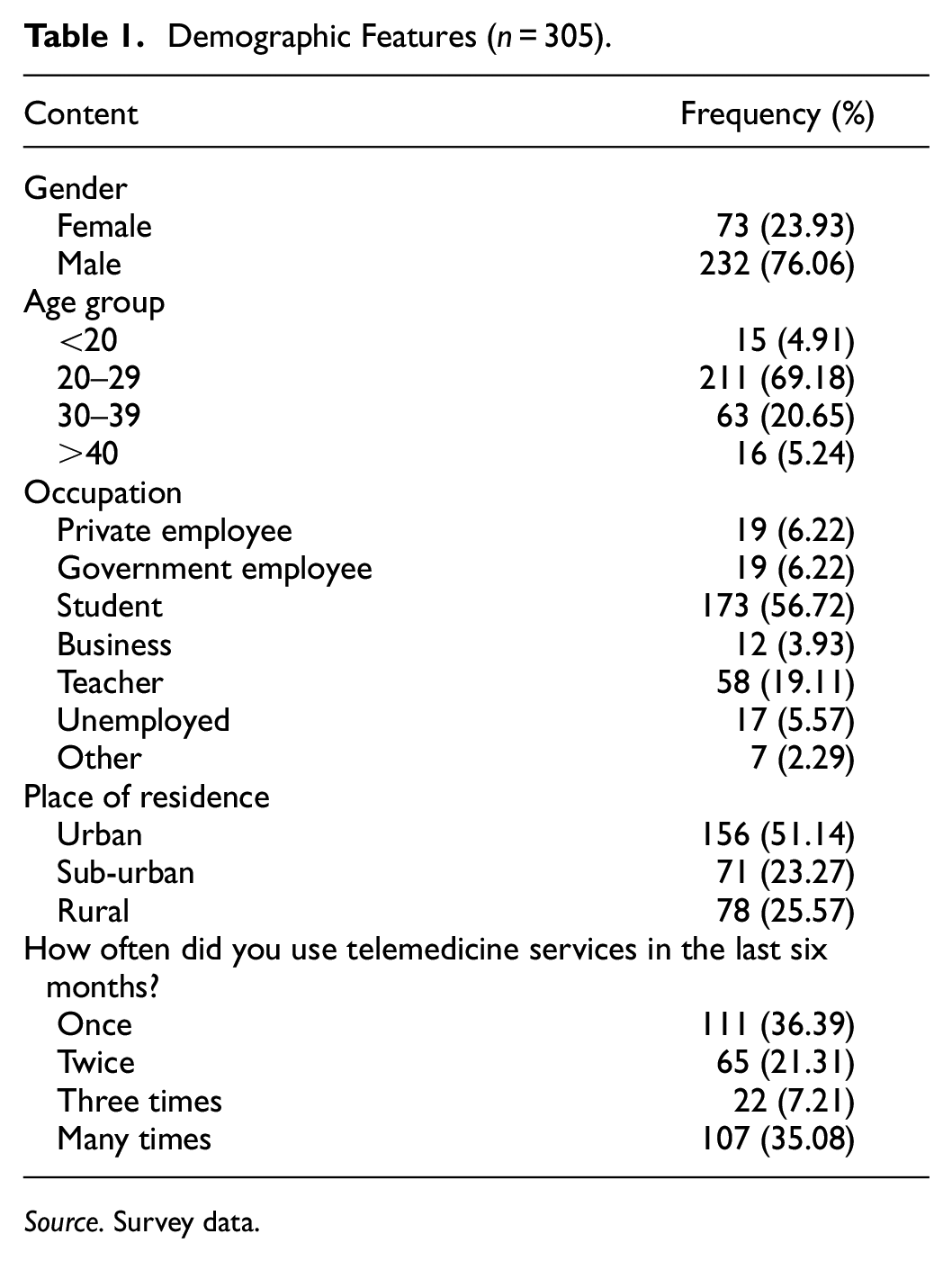
Source. Survey data.
Instrument Development
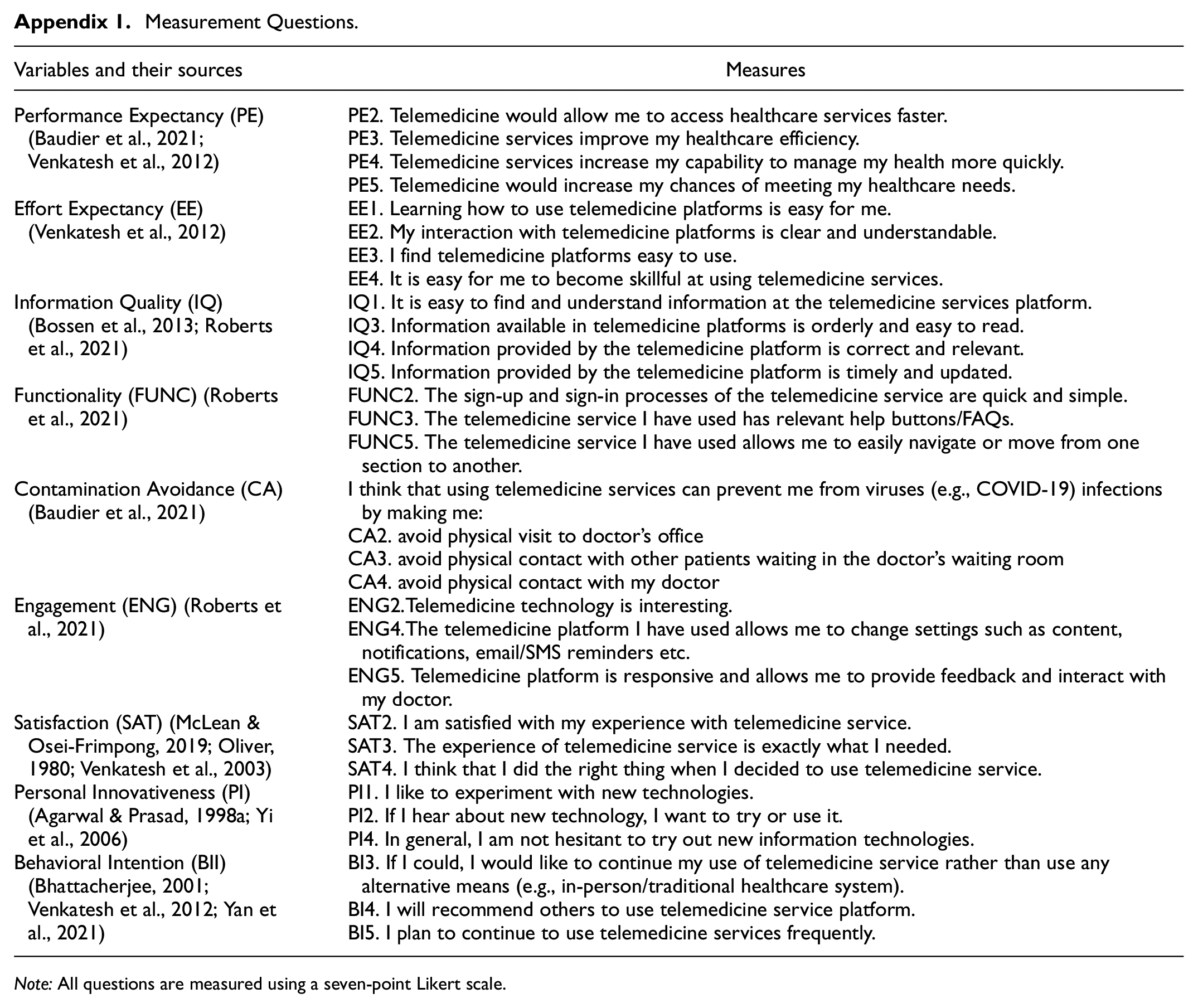
Obtaining information regarding source and unit is necessary to ensure reliability in the data (Zhuang et al., 2022). Therefore, the instrument for this study was developed based on current literature and adapted to the context. A focus-group discussion was also conducted with two healthcare practitioners and two researchers to finalize the questionnaire. It was initially written in English and then translated into Bangla, and after modification and verification, both languages were used in the final survey. Nine variables were identified, and 30 questions were presented to examine what drives people’s behavioral intention toward telemedicine under the UTAUT framework (see Appendix 1). The questionnaire items for performance expectancy were adapted from the studies of Baudier et al. (2021) and Venkatesh et al. (2012), effort expectancy from Venkatesh et al. (2012), contamination avoidance from Baudier et al. (2021), engagement and functionality from Roberts et al. (2021), information quality from Roberts et al. (2021) and Bossen et al. (2013), personal innovativeness from Octavius and Antonio (2021), satisfaction from McLean and Osei-Frimpong (2019) and Venkatesh et al. (2003), and finally, the behavioral intention was extracted from Yan et al. (2021) and Venkatesh et al. (2012). Items in the questionnaire were scored on a seven-point Likert scale, with one signifying strongly disagree and seven meaning strongly agree.
Results
Scale Reliability and Validity
To examine scale reliability, we have used standardized factor loadings, which are primarily above 0.70 for all items (see Table 2 and Figure 2), and Cronbach’s alphas, which are 0.826 for PE, 0.850 for EE, 0.842 for PI, 0.775 for CA, 0.774 for ENG, 0.778 for FUNC, 0.864 for IQ, 0.862 for SAT and 0.808 for BI (see Table 2). Convergent validity has been measured through composite reliability (CR) values ranging from 0.777 to 0.867, which are above the threshold value of 0.70 and average variance extracted (AVE) values ranging from 0.539 to 0.677, which are above the threshold value of 0.50, suggesting convergent validity of the data set.
Reliability and Validity Test.

Source. Calculated results.

Measurement model.
The square root of AVE scores and the squared correlation between the constructs have been compared to determine the discriminant validity. The squared correlations between construct pairings, as shown in Table 3, are less than the square root of the AVE values, demonstrating the discriminant validity of the data set. Multicollinearity has been assessed using the variance inflation factor (VIF), which ranges from 1.24 to 2.02, indicating no problems with multicollinearity. In addition, the goodness-of-fit has been considered to assess the overall model fit, including X2/df of 1.86, RMSEA of 0.05, CFI of 0.93, GFI of 0.87, and adjusted GFI of 0.84. These all represent that our measurement model has passed the scale reliability and validity and is ready to perform the hypothesis test.
Discriminant Validity.
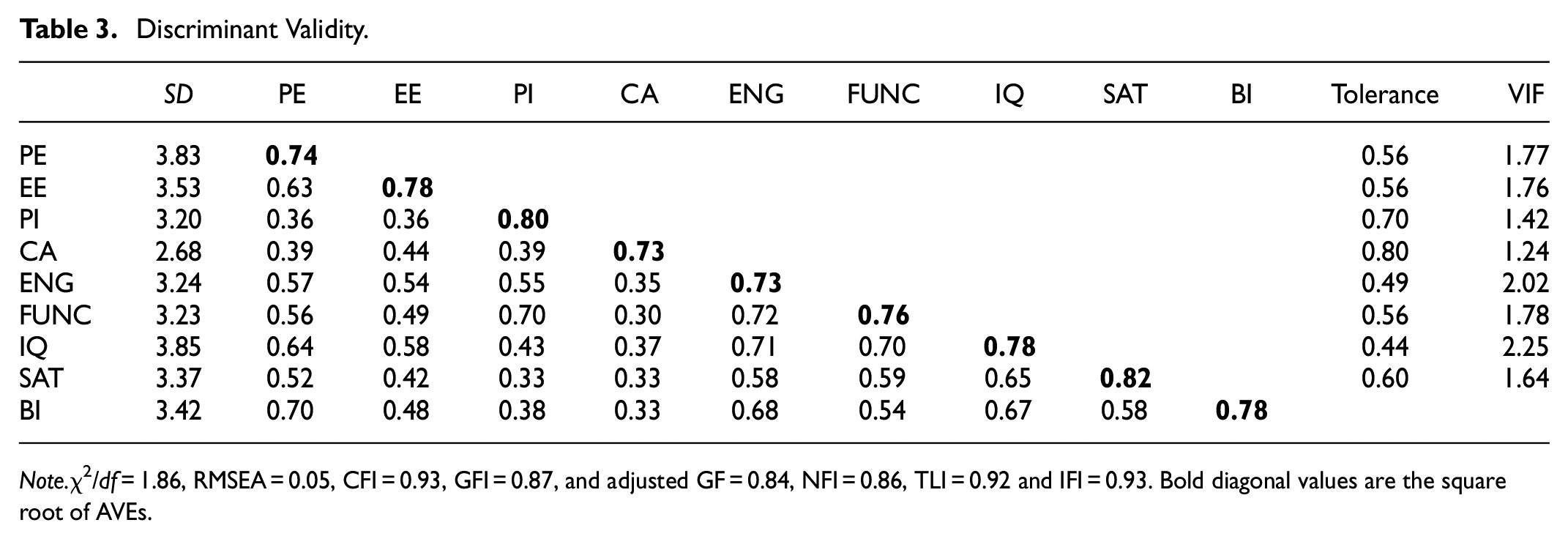
Note.χ2/df = 1.86, RMSEA = 0.05, CFI = 0.93, GFI = 0.87, and adjusted GF = 0.84, NFI = 0.86, TLI = 0.92 and IFI = 0.93. Bold diagonal values are the square root of AVEs.
Hypotheses Testing
Structural equation modeling (SEM), which provides a quantitative test for a theoretical model and may explain both latent and observable correlations across variables (Zafar et al., 2022), is being used by the researchers around the globe (Zafar et al., 2022); therefore, we have used this technique to assess the suggested framework and hypotheses. SEM also explains a group of connected hypotheses by calculating the relationships between numerous independent and dependent variables in a structural model (Gefen et al., 2000; Zafar et al., 2022). Sufficient goodness-of-fit has been found in the SEM’s overall model fit: X2/df = 3.26, RMSEA = 0.058, CFI = 0.84, GFI = 0.79, and adjusted GFI = 0.75, NFI = 0.78. The model explains 47%, 34%, and 51% of the variance in engagement, satisfaction, and behavioral intention, respectively. The absolute standardized coefficient value, t-value, and p-value of less than 0.05 have been counted to examine the hypothesized paths. Table 4 shows that all but three are accepted out of fourteen direct paths. In particular, H1a-d, H2a, H2c-d, and H3a-d are accepted, and H2b, H2e, and H3e are rejected.
Hypothesis Results.

Note. χ2/df = 3.26, RMSEA = 0.058, CFI = 0.84, GFI = 0.79, adjusted GFI = 0.75, NFI = 0.78, TLI = 0.81, and IFI = 0.84.
p = 5%. **p = 1%. ***p = .1%.
Mediation Test
This study ran bootstrapping to test mediating paths by following Baron and Kenny’s (1986) principles. Table 5 shows that engagement significantly mediates between the path of information quality and behavioral intention supporting H4a. Satisfaction is also found to have a statistically significant mediating influence on the relationship between information quality and behavioral intention and engagement to the behavioral intention that supports H4b, c.
Mediating Results.

Note. Bias corrected model with 5,000 times and 95% confidence interval.
p = 1%. ***p = .1%.
Moderation Test
In the final step, we conducted a moderation test by following Bollen’s (1989) principles, aimed at controlling for different types of random and nonrandom errors. As Table 6 demonstrates, personal innovativeness is found to have a significant moderating influence on the paths among performance expectancy, engagement, and satisfaction to behavioral intention, thus supporting H5a, b, d. Furthermore, the moderating integration effects of personal innovativeness are plotted in Figure 3. In Figure 3, plots a, b, and d reveal that when personal innovativeness is high, behavioral intention is highly generated by performance expectancy, engagement, and satisfaction, respectively.
Moderating Results.

p = 5%. ***p = .1%.

Moderation results.
Discussion
The current COVID-19 pandemic has caused major problems for businesses and labor markets (Ge et al., 2022). It has also hurt public health, especially the physical and mental health of students (Aqeel et al., 2022) and older people (Su et al., 2022), who often have more serious health problems than other segments of society. Consequently, the performance of the existing health care system needs to be evaluated so that the success or failure of past policies can be figured out, needs can be assessed, priorities can be set, and evidence-based policies for the future can be planned (Farzadfar et al., 2022). The use of technology in healthcare has the potential to greatly improve medical treatment (Su et al., 2022). Following the disruptive nature of telemedicine technology, researchers are striving to make it feasible and sustained around the globe, and developing countries, like Bangladesh, are not beyond it. Correspondingly, the current study explores the drivers of consumers’ behavioral intentions toward telemedicine services in Bangladesh. A comprehensive model that has included the UTAUT framework, leashed with DeLone & McLean’s information system success model, has been propounded to test the telemedicine domain. The analyses have supported 17 hypothesized paths out of 21. Our first hypothesis, subdivided into H1a, H1b, H1c, and H1d, has assumed that performance expectancy, effort expectancy, information quality, and functionality would be the significant predictors of consumers’ engagement with telemedicine services. The present study has supported these results, and so have the past researchers (e.g., Ali et al., 2021; Amin et al., 2022; Fang et al., 2017; Ludwich & Duocette, 2009; Yamin & Alyoubi, 2020). They have suggested that the concerned stakeholders could make telemedicine more engaging and responsive by improving its efficiency, effectiveness, easiness, information quality, and functional features.
In addition, our study has hypothesized and proved that performance expectancy, information quality, and functionality positively impact consumers’ satisfaction with telemedicine (H2a, H2c, and H2d). These results imply that telemedicine’s improved usefulness, functionality, and information quality would generate more satisfied consumers. These findings are aligned with those of past studies (e.g., Yan et al., 2021; Rahi et al., 2021; Kaium et al., 2020). Surprisingly, engagement and effort expectancy are not significantly related to satisfaction, which contradicts the past research (e.g., Amin et al., 2022; An et al., 2021; H. Wang et al., 2021). Why it has happened may be the consumers’ concern about whether its challenges could outweigh the seemingly catchy attributes and benefits of telemedicine in the future. Another reason is that consumers might expect telemedicine providers to incorporate more easy-to-use and integrative features into the system to satisfy them. Our structural analyses have also acknowledged that performance expectancy, engagement, information quality, and satisfaction are the critical catalysts of intention to use telemedicine services (H3a, H3b, H3c, and H3d), which are identical to the findings of prior studies (e.g., Luo et al., 2021; Serrano et al., 2021; H. Wang et al., 2021; Zhou et al., 2019). These results signify that the higher users perceive telemedicine as helpful, relevant, fascinating, responsive, and satisfying, the higher they will be committed to using it in the future. However, H3e, proposing a significant favorable influence of contamination avoidance on behavioral intention, could not be recognized as substantial, thus contrasting the earlier research (e.g., Alexandra et al., 2021). The possible reason is that the consumers might demand more attributes to be added to the system to make it a contamination avoidance device.
One of the splendid outcomes of our research is the effect of information quality on the usage intention of telemedicine mediated by both engagement and satisfaction; the connection between engagement and behavioral intention is also significantly facilitated by satisfaction. Past researchers backed these results (e.g., Amin et al., 2022; Omuudu et al., 2022; Qu et al., 2022; Zhou et al., 2019). Finally, another variable that has given novelty to our study is consumers’ innovativeness, moderating the effects of performance expectancy, engagement, and satisfaction on behavioral intention (H5a, H5b, and H5d). These results, also accorded by past studies (e.g., Agarwal & Prasad, 1998b; Matute-Vallejo & Melero-Polo, 2019), mean that behavioral intentions toward any e-services like telemedicine, information technology, and online gaming are more vital for the users who have a high level of innovativeness and vice-versa. H5c, which has presumed that information quality, interacting with personal innovativeness, would influence behavioral intention, is not supported. This expounds that the relationship status between information quality and behavioral intention does not vary with the change in consumers’ innovativeness.
Research Implications
A more comprehensive range of telemedicine acceptance and continuing the same can largely uplift the healthcare standards in developing countries like Bangladesh. Bangladesh has a mammoth population with an abysmal citizen-hospital bed ratio (1860:1), which depicts limited access to the healthcare services of its population. Therefore, the success of telemedicine services can significantly waive this limitation and give the citizen wider access to healthcare services. However, to facilitate telemedicine adoption and continuation by individuals, careful planning and staged approaches are needed in designing telemedicine service tools. More clearly, it is important to understand what factors act as the determinants of telemedicine usage intentions. Thus, this current study contributes to the telemedicine literature by providing comprehensive insight into the factors determining the behavioral intention of telemedicine in Bangladesh.
Theoretical Implications
To develop the conceptual framework of the study, we have merged a well-known and extensively used innovation adoption theory, i.e., the UTAUT (Venkatesh et al., 2003), with specific psychometric components from other related theories (for example, Information System Success Theory of DeLone & McLean introduced and extended in 1992 and 2003, respectively). More clearly, besides the basic constructs detailed in the UTAUT model, we have incorporated other relevant social, behavioral, and process-related factors, for instance, information quality, functionality, contamination avoidance, engagement, and personal innovativeness to develop a comprehensive research model, which is new in the telemedicine literature. The current study’s empirical findings demonstrate that this comprehensive research framework can well explain the telemedicine service adoption phenomena in a developing country like Bangladesh. Particularly, this study demonstrates a strong direct effect of information quality and functionality on engagement, which is a new addition to the telemedicine research domain. Other predominant and unique contribution of this study is to provide evidence on the mediating role of engagement between the information quality and behavioral intention nexus, and the same of satisfaction between information quality and behavioral intention of individual.
It is essential to mention that several of the past innovation adoption studies have examined the effects of personal innovativeness on the users’ technology acceptance behavior (M. I. Hossain & Azam, 2023; M. I. Hossain et al., 2021). However, examining the moderating role of personal innovativeness in explaining individuals’ telemedicine usage behavior is new. Therefore, it is also a novel contribution of this study to the telemedicine literature, showing that consumers’ innovativeness moderates the impact of performance expectancy, engagement, and satisfaction on behavioral intentions toward telemedicine services.
Thus, by providing a robust and comprehensive research framework, the empirical evidence of this study will provide an avenue to the future telemedicine researchers in further investigating and understanding individual’s telemedicine adoption intention phenomena from different socio-economic settings through the consideration of direct, mediating, and moderating effects of multilevel determinants.
Practical Implications
The empirical findings of our study will help telemedicine stakeholders to make telemedicine services attractive, acceptable, and usable in many ways. For example, the study’s outcomes show that consumers are more likely to use telemedicine if they perceive that the service is beneficiary, valuable, engaging, satisfactory, and can provide quality information. Therefore, the respective stakeholders need to give sincere attention to making a telemedicine service more useful, valuable, satisfactory, and engaging. Telemedicine service providers also need to focus on providing quality information, which would enhance the likelihood of the consumers’ usage intentions of the service.
The study also exhibits that performance expectancy, effort expectancy, information quality, and system functionality highly affect the consumers’ engagement toward the telemedicine service. Therefore, this outcome would guide the service providers and medical practitioners to concentrate on providing more useful service and precise and timely information. Additionally, the developers need to concentrate on developing an easy-to-understand, and easy-to-use service platform to make the service more engaging. Furthermore, the study outcomes will also guide the telemedicine service providers, medical institutions, academic institutions, telemedicine service developers, government, and IT service providers to ensure all the facilities that will make the service functional, which in turn, would make the service more engaging to the users.
Considering the significant mediating role of engagement and satisfaction on the relationship between key determinants and users’ behavioral intention, managers, developers, and service providers should emphasize making the service more engaging and satisfactory. Besides, all the concerned stakeholders have to give importance to developing the personal innovativeness of the target consumers. Promotional activities, workshops and training, and proper education can remove the knowledge barrier and, in turn, develop people’s innovativeness. Since, Bangladesh has a poor citizen-doctor ratio, more access to telemedicine services would bring a revolution in the healthcare sector. The World Bank reports that 61 percent of total Bangladeshi citizen live in the rural areas, where healthcare service is a far reaching reality. In most cases, like many other underdeveloped countries, the rural people in Bangladesh go to the local untrained, uneducated, and fraud practitioners (called Ojha, Baidhya, Kabiraj, etc.) to get the healthcare service which results in massive health losses and endangers people’s lives. It would be a ground-breaking initiative for the healthcare sector of an emerging economy like Bangladesh if the people are brought under the telemedicine service platforms. Therefore, through the development of innovativeness of the masses, the telemedicine service providers, medical practitioners, and policy makers can make people more likely towards the embracement of telemedicine services, which would be a life-saving revolution.
Finally, the empirical findings of this study provide detailed and comprehensive guidelines to the service developers, medical practitioners, policymakers, and other stakeholders to plan proper actions and cooperation to ensure a sustainable telemedicine ecosystem, which would help ensure quality healthcare services to the doorsteps of the mass people who stay far behind it in countries like Bangladesh.
Conclusions
Telemedicine is a technology-based platform that could increase healthcare access for the public, particularly those who reside in marginal areas with multifaceted constraints. Therefore, understanding the drivers of telemedicine is meaningful, especially for developing economies like Bangladesh. We have proposed a new model based on the UTAUT framework to examine these factors. The analyses signify that telemedicine attributes, including functionality, information quality, performance, and effort expectancies, arouse engagement among users; additionally, the same factors, except for effort expectancy, make telemedicine more satisfying. Engagement, satisfaction, performance expectancy, and information quality significantly explain behavioral intention toward telemedicine. We have also reported the indirect effects of engagement and satisfaction and the interaction effect of consumers’ innovativeness in the model. Stating functionality and information quality as the antecedents of engagement is scant in telemedicine reviews. Besides, the indirect effect of information quality on behavioral intention through engagement and the same influence of engagement facilitated by satisfaction extends the theoretical groundings. Furthermore, mingling innovativeness with our model and presenting it as a moderating factor gives originality to the current research. Overall, the stakeholders concerned will get critical inputs from this research to design and develop a sustainable telemedicine ecosystem in constrained contexts like Bangladesh.
Limitations and Guidelines for Future Research
Because of being cross-sectional, this study is studded with some limitations, which could narrow the generalizability of the outcomes. However, these limitations could gesture future research scopes. First, the samples of this study consist of patients, most of whom are students and teachers aged between 20 to 39 years. Therefore, this study warns the concerned parties not to generalize its outcomes to all populace. So, this research could be extended by including healthcare professionals and middle-aged and older people. Second, all the current study variables are user and technology related. However, it is essential to assess the support of telemedicine facilitators, policymakers, and governments in creating a sustainable ecosystem for telemedicine services, particularly in developing countries. Henceforth, organizational readiness, collaboration, and funding-related variables could be incorporated into future models. Third, the present model has not considered user trust and security concern and their relations with behavioral intentions toward telemedicine. However, future researchers should examine the relationship because telemedicine is a technology-enabled platform, which might be vulnerable to cyber-attack. Fourth, the data have been analyzed and validated using the SEM approach. However, further verification of the results derived from the SEM may be needed. Therefore, future researchers could use some latest tools like artificial neural network (ANN) analysis to determine more accurate results and the relative weight of each significant predictor. Finally, a similar study could be conducted in other developing cultures, like Pakistan, Nepal, and India.
Footnotes
Appendix
Measurement Questions.
| Variables and their sources | Measures |
|---|---|
| Performance Expectancy (PE) (Baudier et al., 2021; Venkatesh et al., 2012) | PE2. Telemedicine would allow me to access healthcare services faster. |
| PE3. Telemedicine services improve my healthcare efficiency. | |
| PE4. Telemedicine services increase my capability to manage my health more quickly. | |
| PE5. Telemedicine would increase my chances of meeting my healthcare needs. | |
| Effort Expectancy (EE) (Venkatesh et al., 2012) | EE1. Learning how to use telemedicine platforms is easy for me. |
| EE2. My interaction with telemedicine platforms is clear and understandable. | |
| EE3. I find telemedicine platforms easy to use. | |
| EE4. It is easy for me to become skillful at using telemedicine services. | |
| Information Quality (IQ) (Bossen et al., 2013; Roberts et al., 2021) | IQ1. It is easy to find and understand information at the telemedicine services platform. |
| IQ3. Information available in telemedicine platforms is orderly and easy to read. | |
| IQ4. Information provided by the telemedicine platform is correct and relevant. | |
| IQ5. Information provided by the telemedicine platform is timely and updated. | |
| Functionality (FUNC) (Roberts et al., 2021) | FUNC2. The sign-up and sign-in processes of the telemedicine service are quick and simple. |
| FUNC3. The telemedicine service I have used has relevant help buttons/FAQs. | |
| FUNC5. The telemedicine service I have used allows me to easily navigate or move from one section to another. | |
| Contamination Avoidance (CA) (Baudier et al., 2021) | I think that using telemedicine services can prevent me from viruses (e.g., COVID-19) infections by making me: |
| CA2. avoid physical visit to doctor’s office | |
| CA3. avoid physical contact with other patients waiting in the doctor’s waiting room | |
| CA4. avoid physical contact with my doctor | |
| Engagement (ENG) (Roberts et al., 2021) | ENG2.Telemedicine technology is interesting. |
| ENG4.The telemedicine platform I have used allows me to change settings such as content, notifications, email/SMS reminders etc. | |
| ENG5. Telemedicine platform is responsive and allows me to provide feedback and interact with my doctor. | |
| Satisfaction (SAT) (McLean & Osei-Frimpong, 2019; Oliver, 1980; Venkatesh et al., 2003) | SAT2. I am satisfied with my experience with telemedicine service. |
| SAT3. The experience of telemedicine service is exactly what I needed. | |
| SAT4. I think that I did the right thing when I decided to use telemedicine service. | |
| Personal Innovativeness (PI) (Agarwal & Prasad, 1998a; Yi et al., 2006) | PI1. I like to experiment with new technologies. |
| PI2. If I hear about new technology, I want to try or use it. | |
| PI4. In general, I am not hesitant to try out new information technologies. | |
| Behavioral Intention (BII) (Bhattacherjee, 2001; Venkatesh et al., 2012; Yan et al., 2021) | BI3. If I could, I would like to continue my use of telemedicine service rather than use any alternative means (e.g., in-person/traditional healthcare system). |
| BI4. I will recommend others to use telemedicine service platform. | |
| BI5. I plan to continue to use telemedicine services frequently. |
Note: All questions are measured using a seven-point Likert scale.
Declaration of Conflicting Interests
The author(s) declared no potential conflicts of interest with respect to the research, authorship, and/or publication of this article.
Funding
The author(s) disclosed receipt of the following financial support for the research, authorship, and/or publication of this article: This research was partially funded and supported by Jashore University of Science and Technology, Jashore 7408, Bangladesh (Grant no. 22-FoBS 1).
Ethics Statement
This is not applicable because the survey was conducted online. Therefore, no human involvement was needed.
