




Abstract
Sport has never been a more appreciated tool than at present, particularly when dealing with development at various levels of society, be it communities, gender issues, or factors affecting youth. The objective of this systematic review was to determine the level of empirical evidence on the impact of sport based interventions on human development. A Preferred Reporting Items for Systematic Reviews and Meta-Analysis (PRISMA) approach was utilized to conduct a systematic literature search of selected databases with a search range of 2010 to 2021. Findings indicate an increase in the number of studies on the subject, continent, research design, and journal publication. Content analysis revealed the sample characteristics; objectives and content used in the programs; methodology and intervention strategies; and program limitations. Future research should extend the search to other databases, languages, and subjects related sustainability of community interventions.
Background
There is ample scientific evidence on the advantages of regular sports practice in different groups and age groups. The benefits of physical exercise have been widely shown to have benefits both in the short and long term. Although these benefits can vary depending on the amount and intensity in which they are performed (Janssen & Leblanc, 2010). In general, physical activity and exercise can reduce stress and anxiety, increase happy chemicals, improve self-confidence, increase brain power, sharpen memory, and strengthen muscles and bones. It also helps prevent and reduce heart disease, obesity, blood sugar fluctuations, cardiovascular disease, and cancer (Abou Elmagd, 2016). Short-term benefits include improvements in muscle strength (O’Shea et al., 2009), and functional capacity (Lotan et al., 2004).
In one 6-week study, regular physical activity was negatively correlated with self-reported depression, anxiety, and perceived psychosomatic stress, and positively correlated with quality of life and positive affect (Herbert et al., 2020). Among the long-term benefits, scientific literature supports the view that long-term physical activity decreases the possibility of suffering from weight gain, obesity, coronary heart disease, type 2 diabetes mellitus, Alzheimer’s disease, or dementia (Reiner et al., 2013). In addition, it should be noted that exercise can be used as an active intervention for the rehabilitation of various diseases (Stout et al., 2021), exert positive effects in the relief of symptoms and promote rehabilitation and physical function (Luan et al., 2019). Community sports practice can also provide a scenario that fosters social benefits for young people and alleviates their social problems (Anderson-Butcher, 2019). The benefits of programs that use sport for youth development tend to focus on physical (reduction in heart disease and diabetes), socio-emotional (coping skills to recover from problems) and cognitive benefits (Le Menestrel & Perkins, 2007); or strengthen well-being through mastery, autonomy, personal growth, interpersonal relationships, and self-acceptance (Misener, 2020).
Therefore, although there are some studies on the advantages of community sports practice on human development, their number is still limited, and they focus more on competitive than recreational sports (Vierimaa et al., 2017); and intentionally structured programs seem to have better results on positive youth development (Anderson-Butcher, 2019; Bean & Forneris, 2016). However, very little is known about specific content or implementation strategies that favor positive outcomes (Petitpas et al., 2005).
Therefore, the objective of this systematic review was to determine the existence of empirical evidence for the impact of sport-based interventions on human development thereby allowing researchers and practitioners to set a baseline for the determination of progress on findings related to this subject.
Sport is a valuable tool to foster positive developmental experiences and provides several positive effects (Turnnidge et al., 2014). Its popularity among youth has been highlighted because of accrued health and social benefits (Bruner et al., 2021; Jones et al., 2017) that enables development in communities (Lyras & Welty Peachey, 2011). It is used as a catalyst to promote broader social outcomes such as economic progress, healthy habits, and education (Sherry et al., 2015). However, most community interventions are initiated by sport evangelists who are generally elite athletes—role models, distant from the reality of the youth participating in a Sport for Development (SFD) intervention (Coalter, 2010). Despite obtaining local and international financial resources to implement SFD programs, there is limited quantifiable evidence available from research on the efficacy of SFD programs, and such an outcome is considered a failure (Coakley, 2011).
The power of sports has been questioned by the academic community (Coalter, 2007, 2013b; Lyras & Welty Peachey, 2011; Spaaij et al., 2016; Sugden & Tomlinson, 2017). The absence of evidence from sport-based interventions (Coalter, 2013a; Spaaij & Schulenkorf, 2014), and the dearth of theory has inhibited the establishment of conditions for achieving positive outcomes (Lyras, 2021). The formulation of theory, will therefore allow a response to the concept of the black box (Coalter, 2015; Spaaij & Schaillée, 2021) which suggests that program participants change due to their participation in a sport activity without explaining the reasons why this happens (Haudenhuyse et al., 2012). The promotion of critical thinking within community programs facilitates understanding of the conditions required to increase program capacity and clarify their limitations (Coalter, 2015). Not considering the conditions under which sport produces change can result in an increase in violence tendencies (Whitley et al., 2019),community division (Saunders & Sugden, 1997) and limited spaces for intercultural promotion in communities (Sugden & Harvie, 1995).
For example, in apartheid South Africa post-colonial sports such as cricket and rugby represented the supremacy of power by whites and racial separation (Sugden, 2010). The positive or negative results of sport participation is the result of a complex interaction of contextual, organizational, and social community factors (Lyras & Welty Peachey, 2011; Peachey & Cohen, 2016). The impacts of sport community interventions have been highly appreciated despite the lack of evaluative evidence of programs, and the inability to determine that participants changes are result of their participation (Kay, 2009). For these benefits to occur, it is necessary to take into account other variables such as the participation of parents, since their own health and well-being may be involved due to the demands required to support the sports development of their children (Misener, 2020); the organizational climate given its influence on the acquisition of social and athletic competence of young people (Lower-Hoppe et al., 2020); Based on these premises, three specific objectives of the study have been designed:
O1: Describe the bibliometric indicators that allow the identification of the main characteristics of scientific work on the topic addressed (authors who work on this topic; collaboration index of the authors, journals that publish on the subject, all available indicators)
O2: Determine the methodological characteristics of the studies carried out (participants and type of research)
O3: Analyze the characteristics of the intervention programs carried out using sport as a resource (place of intervention; methodological strategies used; content, variables measured during the intervention, program objectives, program limitations).
Methodology
The methodology used was the Preferred Reporting Items for Systematic Reviews and Meta-Analysis (PRISMA) (Moher et al., 2009) as it provides the minimum evidence-based quality criteria for reporting systematic reviews and meta-analyses via a four step process to establish the quality of the selected publications chosen and used in the process of systematic review of the literature and data analysis (Figure 1).

Flow diagram of studies through the review process.
Prisma
PRISMA was used for conducting the systematic review as it provides inclusion and exclusion criteria, limits the duration of searches in databases and refinement of the quality of research questions (Sierra-Correa & Cantera Kintz, 2015). Additionality, manual sampling was performed to identify relevant material for review using an Excel template (Ver. 16.16.19).
Systematic Review Process
Identification
In phase one a systematic literature review was undertaken in March 2022 which consisted of identifying keywords (Table 1) for the information search and minimizing the possibility of using obsolete data. The SCOPUS database was selected because it is the largest existing multidisciplinary database and includes all journals registered in portals such as Medline or ERIC. SCOPUS collects all the journals that index the topic addressed and allows adequate coverage of the area under study on a specific topic (Manterola et al., 2014) and the validity this documentary work depends on the adequate selection of the database (Granda-Orive et al., 2013).
Keywords and Information Search Strategy.

In this phase, 162 items (Scopus) were collected from the keyword combinations and the associated titles and abstracts were screened via an Excel file by the first author. After manual deletion of irrelevant documents and removal of duplicates, 71 valid documents remained (Table 2).
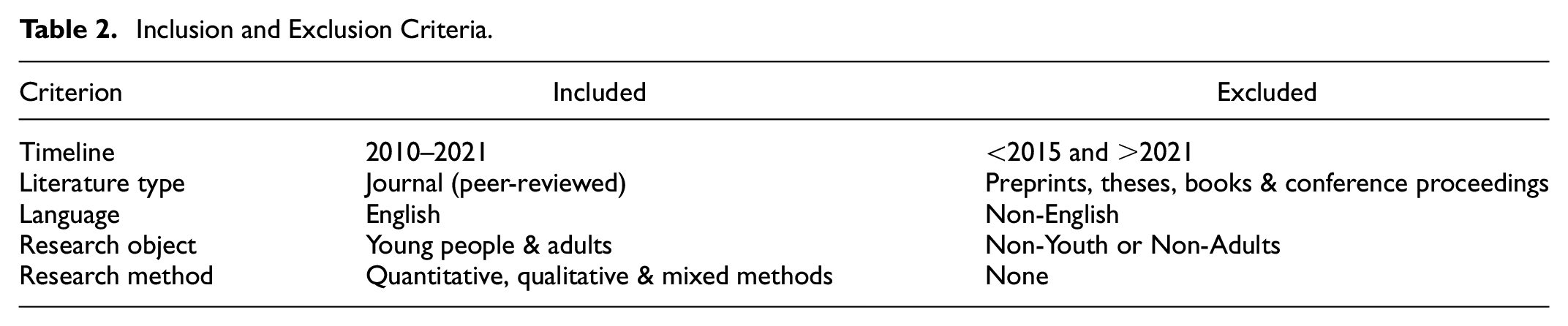
Inclusion and Exclusion Criteria.
Screening (Inclusion and Exclusion Criteria)
Phase two of the systematic review process consisted of screening in accordance with the inclusion and exclusion criteria (see Figure 2). First, the timeline was set from 2010 to 2021, providing a total period of 12 years. Second, only scholarly journals (peer-reviewed) were selected for inclusion; other resources such as preprints, theses, books, and conference proceedings were excluded. Third, the researchers examined studies according to the criteria provided through keywords combinations and items were excluded for reasons of ineligible context, interventions, or outcomes. Third, to reduce the distortion of meaning only English language publications and empirical research were included. Fourth, articles using quantitative, qualitative, and mixed methods were included. Finally, the review aim was to find interventions related to the use of sports for development or community sports with young people and adults.

Graphic visualization of the qualitative approach to determine the characteristics of sport-based programs for social integration.
Eligibility
In phase three, the literature items where manually included or excluded pursuing a particular characteristic in accordance with the research question and purpose of the study. First, a total of 162 articles were identified, 91articles unrelated to the research question were deleted, and the remaining 71 related articles entered the eligibility process through a manual screening of titles, abstracts, and full text (Table 3).
Manual Screening of Titles, Abstracts, and Full Text.

Quality Evaluation
To carry out the content analysis evaluation, the process is framed within the techniques of content analysis and its associated phases: reading and understanding of the texts, definition of the categories, analysis of the same—selection and interpretation—and synthesis (Neuendorf, 2017). , The full text of the articles were recovered from the remaining records and the following characteristics of each study were defined: (i) place of intervention, (ii) methodological strategies used, (iii) content, (iv) variable measured during the intervention, (v) program objectives, and (vi) program limitations. The objective was to classify the different parts of the documents analyzed according to previously established categories systematically and objectively within each of the articles. Figure 2 outlines the qualitative problem exploration plan (Creswell, 2009) used to better understand the meaning of human experiences and values in the field of study.
Results
Bibliometric Analysis
Bibliometric analysis of published journal articles and its related metadata employs statistics to show the connections among published works (Ninkov et al., 2022) . The first screening of the Scopus database resulted in 162 studies related to the use of sports for development or community sports with young people and adults. During the screening process no other sources or duplicates were identified. After the title and summary analysis, the full texts of 71 studies in the databases were documented and included in the final procedure. Ninety-one studies that did not meet the criteria were excluded following the full-text review. The procedure is summarized and presented in the PRISMA flow diagram (Figure 1).
Initially, a small number of studies on this subject were registered in the data bases. However, the last 6 years highlight a significant increase in studies published by researchers related to the subject of interest. Two studies (3%) were from 2010, one study (1%) was from 2011, one study (1%) was from 2012, nine studies (13%) were from 2013, six studies (8%) were from 2014, two studies (3%) were from 2015, nine studies (9%) were from 2016, six studies (8%) were from 2017, seven studies (10%) were from 2018, five studies (7%) were from 2019, fourteen studies (20%) were from 2020 and, nine studies (13%) were from 2021. The research design is mostly exploratory, followed by descriptive and evaluative studies conducted by researchers. The research designs identified were 21 (30%) examples of evaluative research, 38 (54%) were exploratory research and, 12 (17%) were descriptive research.
Many studies are qualitative and focus on the perceptions and beliefs of program users. Fewer quantitative impact measurement studies are used because of the difficulty of maintaining long-term control groups, and studies with both methodologies have been limited. The research undertaken comprised 10 (14%) mixed methods studies, 44 (63%) qualitative studies and 17 (24%) quantitative studies. A literature review provided evidence that the studies have been published in medical and educational journals. The items were classified to identify the progress and interest in conducting research on the subject. Of the 71 articles, seven (10%) were published in BMC Public Health; 12 (17%) were published in Social Inclusion (4), Sport Education and Society (4) and Qualitative Research in Sport, Exercise and Health (4); 10 (14%) were published in Managing Sport and Leisure (5) and Sport in Society (5); 42 (59%) were with journals having between 1 and 3 articles published. The results showed a constant collaboration between several authors in the publication of articles. Thirteen (18%) were published by single authors; 12 (17%) were published by two authors; 16 (23%) were published by three authors and 30 (42%) were published by four or more authors.
Characteristics of the Implemented Programs
Characteristics of the Analysed Sample
Four studies (6%) comprised more than one thousand participants (Beaman et al., 2021; Burns et al., 2021; Richards et al., 2014; six studies (8%) included between 61 and 99 participants (Jeanes, 2013; L. Kelly, 2013; Legg, 2021; Marlier et al., 2015; Morgan et al., 2019; Vella et al., 2018; 16 studies (22%) included 21 and 60 participants; 19 studies (27%) included between 100 and 600 participants; 22 studies (31%) included between 8 and 20 participants and four studies (6%) did not report the number of participants (Czupich, 2020; Olushola et al., 2013; Spaaij, 2013; Verkooijen et al., 2020). Five studies (7%) were sport-based interventions on school students’ participation in activities inside and outside the classroom. Sixty-six studies (93%) were community sport-based interventions. The participants in the studies were children, youth, and adults from sport organizations and intervention projects.
Results showed that 23 studies (32%) were conducted in Europe; 21 (30%) in North America; 11 (15%) in Africa; nine (13%) in Oceania; four (6%) in South America; two (3%) in Asia and, one (1%) in the Caribbean. Also, the numbers of projects per country were identified and classified by continent; in America 11 (15%) were in the United States; ten (14%) in Canada; three (4%) in Brazil; in Europe eight (11%) were in Belgium, eight in United Kingdom (11%) and three (4%) in Ireland; in Oceania eight (11%) were in Australia; in Africa four (7%) were in South Africa and three (4%) in Uganda. Thirteen (18%) were in different countries around the world with one or two studies each.
Objectives and Content Used in the Programs
The following section describes the objectives and content used in the implementation of the programs. The objectives were related to (i) programmatic strategies in 23 studies (32%); (ii) behavior improvement in 18 studies (25%); (iii) health literacy in 12 studies (17%); (iv) development and transfer of social skills in 10 studies (14%) and, physical literacy in eight studies (11%). The content of the programs was related to (i) program design in 24 studies (34%); (ii) psychosocial benefits in 18 studies (25%); health promotion in 12 studies (17%); life skills in nine studies (13%); increased physical activity in seven studies (10%) and extracurricular activities in one study (1%).
Programmatic Strategies
The first category is the largest and is related to programmatic strategies. The strategies are described as an element that clearly has an influence on the success of the programs in achieving broader social outcomes for the participants. The strategies were implemented with children, youth, and adults, specifically in two contexts: (i) school and (ii) community. The programmatic strategies include different variables such as staff perception on the design characteristics necessary for positive youth development and teaching life skills programs based on the community (Arellano et al., 2018; Newman & Anderson-Butcher, 2021). Others specifically analyze and focus on the mechanisms or conditions necessary for a catalyst in a sport intervention program to achieve a broader impact (Draper & Coalter, 2016; Moreau et al., 2018; Parent & Harvey, 2017; Van der Veken et al., 2020).
Another important variable identified within the programmatic strategies refers to the evaluation of the impact of the interventions on the participants. For example, the impact of contact between participants on relationships (Brake & Misener, 2020); the promotion of social inclusion and peacebuilding in countries with long history of conflict (Sobotová et al., 2016); the components of effective sport programing at schools for promoting long-term benefits (Olushola et al., 2013); the influence of the use of sports for teaching life skills on youth (Açıkgöz et al., 2022); considering the context similarities and differences for achieving positive results with youth (Wegner et al., 2022); the importance of using sports facilities suitably for promoting positive development by understanding their motivations to voluntarily join a community program (Plante et al., 2016) and decreasing the potential barriers for participating on them (Koloba & Surujlal, 2014; Warner et al., 2019).
Adults acting as coaches, community authorities, and administrators are an important variable to establish comprehensible mechanisms and results for the interventions based on sports (Gartner-Manzon & Giles, 2016; Verkooijen et al., 2020) and to identify the effective organizational component to promote broader social outcomes on youth (Whitley et al., 2013). Their experiences in the programs emphasize that good administrative practices in the organizations are needed to create an impact on the participants even under conditions of austerity (Crisp, 2020b). It is necessary to cooperate with different organizations to foster positive community transformation (Hall & Reis, 2019), and to establish alliances aimed at training coaches and parents (Barcelona & Young, 2010) toward increasing sports participation rates and physical activity levels (Constandt et al., 2020; Marlier et al., 2015).
Behavior Improvement
The second category is related to improvement in the participants behavior. Sports programs contribute positively to the community by providing young people with spaces for learning social and sports skills (Anderson-Butcher et al., 2014). Behavioral improvement is a result of the main content of the program for the development of psychosocial benefits (Crisp, 2021) and using sport as a tool for serving social inclusion of youth at risk (Morgan et al., 2019). For example, sports have been used for teaching life skills to vulnerable youth that result in their improvement of work skills (Beaman et al., 2021) or produce a positive effect in physical and psychological well-being by increasing the levels of physical activity in girls (Farmer et al., 2020). Behavioral changes occur because of the use and adequate coordination of facilitators such as good relationships, knowledge, and organizational strategies (Hermens et al., 2017), which allows evaluation of the deficiencies or limitations of the participants in the program (Holt et al., 2013; Nols et al., 2017) and the conditions necessary to develop human capital in vulnerable youth from disadvantaged communities (Buelens et al., 2017) through these community sports interventions.
The improvement of human capital through community sports interventions is demonstrated in participants acquiring more self-discipline, self-concept, and group skills (Whitley, Hayden, & Gould, 2016) and participation in community sports programs having a significant decrease in group problems and increase in prosocial behaviors (Nathan et al., 2013). The design of strategic spaces permits participants to improve their mental health, family relationships (Scivoletto et al., 2014) and encourage empowerment and behavior change through health education in at-risk youth (Jeanes, 2013). Other behavior improvements are the result of providing participants with life skills to promote their personal development and personal empowerment (Wheaton et al., 2017), this empowerment is evident in programs that aim to challenge gender stereotypes by increasing girls’ participation through sport (Zipp, 2017). The results of the behavioral changes in the participants facilitated the development of public policies in countries aimed at reducing antisocial behavior (L. Kelly, 2013), establishing employment environments for participants (Spaaij, 2013) and using sport as a response to humanitarian crises such as war allowing young people to rejoin their communities (Dyck, 2011).
Health Literacy
The third category is the use of sport for fostering health literacy in the participants. Community sports has been used as a tool for vulnerable youth and coaches to promote changes in health behavior (Richards et al., 2014; Van der Veken et al., 2021). The coaches that participate in workshops become more aware of health and their responsibility as a role model for the participants in the intervention (Lauwerier et al., 2020). This shows that organized sports represent an opportunity to promote mental health and prevent mental health problems among male adolescents (Vella et al., 2018). Sports interventions influence health behaviors to reduce alcohol abuse (O’Farrell et al., 2018), implement policies to promote the decrease of tobacco consumption and foster good practices to improve health in youth (Milner et al., 2018). For example, alternative sports have generated efficient spaces in consideration of traditional sports to promote health benefits in vulnerable youth through physical activity (Rosso & McGrath, 2016).
Community sports clubs are spaces to foster mental health for the parents of the participants in the program (Hurley et al., 2021). In fact, the experiences of health literacy programs for parents in community sports clubs have been measured, showing that they acquire knowledge about the importance of mental health, ways to ask for help and the ability to communicate about this with their children (Hurley et al., 2020). Healthy development is driven by the development of fit and productive citizens (Kwauk, 2014), this being the result of a greater belonging of the participants within the program that allows them to increase their levels of physical activity, leadership skills and knowledge of the benefits of health care (E. B. Kelly et al., 2010; Woodcock et al., 2012).
Development and Transfer of Social Skills
The fourth category is related to the development of social skills thorough sport community programs interventions. Sport-based programs have provided mechanisms for the development of social skills in at-risk youth (Newman & Anderson-Butcher, 2021). Key mechanisms include parents and program staff that facilitate the transfer and learning of social skills (Newman et al., 2020), establish educational opportunities that foster positive relationships, responsibility for a long-term impact on intervention participants (Crisp, 2020a). Also, it has been highlighted that sport promotes the development of character in participants that includes the management of social skills (Legg, 2021), the members become role models for other participants and facilitate sustainability of the organization within the community (Hoekman et al., 2019). The voices of the participants suggest that being part of a pedagogy allows them to learn to think critically, and reflectively, responding to the problems of their context (Nols et al., 2019; Whitley, Coble, & Jewell, 2016). For example, Olympic education as a pedagogy significantly improved the conflict resolution and intergroup contact skills of program participants (Nanayakkara, 2016). A social skills development program must respond to the needs (M. M. Casey et al., 2014) and voices of community members to achieve the greatest impact on youth (Whitley & Johnson, 2015).
Physical Literacy
The fifth category is related to holistic lifelong learning of physical activity through movement. Changes in the levels of practice of physical activity in young people is a priority since participation in physical activity means a significant increase in movement skills and self-perceived physical literacy (M. Casey et al., 2013; Warner et al., 2021). This has been evidenced in inactive people where community sports interventions increase levels of physical activity (Anokye et al., 2018); increase the inclusion of girls in sports opportunities and empower them as sports leaders (Taylor, 2016) within their communities and motivate cities to establish different interventions based on the benefits of physical activity such as reducing health care costs, improving the quality of life and reduce crime (Czupich, 2020). However, studies in schools showed that a lack of adequate strategies does not influence the increase in participation in physical activity in youth (Burns et al., 2021), which can be a cause of low levels of motor competence according to another study on physical activity and health behavior change (Philpott et al., 2021) and the absence of impact in the most deprived communities where more participants need interventions to promote physical and mental health (Richards & Foster, 2013).
Methodology and Intervention Strategies
The methodology used for the development of intervention projects suggests, 20 studies (28%) were projects for children and youth in association with a sports organization (Draper & Coalter, 2016; Dyck, 2011; Gartner-Manzon & Giles, 2016; L. Kelly, 2013; E. B. Kelly et al., 2010; Nathan et al., 2013; Newman & Anderson-Butcher, 2021; Nols et al., 2017; Olushola et al., 2013; Richards et al., 2014; Rosso & McGrath, 2016; Taylor, 2016; Van der Veken et al., 2021; Warner et al., 2019; Whitley, Hayden, & Gould, 2016; Whitley et al., 2013; Woodcock et al., 2012; Zipp, 2017) fifteen studies (21%) were youth projects in association with a community organization (Anderson-Butcher et al., 2014; Brake & Misener, 2020; Buelens et al., 2017; Crisp, 2021; Czupich, 2020; Jeanes, 2013; Koloba & Surujlal, 2014; Legg, 2021; Nanayakkara, 2016; Nols et al., 2019; Plante et al., 2016; Scivoletto et al., 2014; Vella et al., 2018)
Eleven studies (15%) were projects for adults in association with a community organization (Arellano et al., 2018; Barcelona & Young, 2010; Constandt et al., 2020; Hall & Reis, 2019; Hermens et al., 2017; Hurley et al., 2021; Marlier et al., 2015; Parent & Harvey, 2017; Verkooijen et al., 2020; Wegner et al., 2022; Whitley & Johnson, 2015; 11 studies (15%) were projects that combined youth and adults in association with a sports organization (Açıkgöz et al., 2022; Crisp, 2020b; Holt et al., 2013; Morgan et al., 2019; Sobotová et al., 2016; Spaaij, 2013; Whitley, Coble, & Jewell, 2016; four studies (6%) were secondary schools projects with youth (Burns et al., 2021; M. Casey et al., 2013; M. M. Casey et al., 2014; Philpott et al., 2021; four studies (6%) were projects for adults in association with a sport organization (Crisp, 2020a; Hurley et al., 2020; Lauwerier et al., 2020; Van der Veken et al., 2020; three studies (4%) were projects for young people in association with a sports organizations (Beaman et al., 2021; Milner et al., 2018; two studies (3%) were projects for children in association with a community organization (Farmer et al., 2020; Warner et al., 2021); and one study was a project that combined children and youth in association with a community organization (Hoekman et al., 2019).
Program Limitations
The programs reported limitations regarding their development and highlighted that in schools the programs were not enough to increase their levels of participation in physical activity between men and women (Burns et al., 2021) and the levels of motor competence developed by the participants were limited but the perception of these was an improvement (Philpott et al., 2021). Limited psychosocial results were reported (Beaman et al., 2021), the participation of vulnerable youth of a single ethnicity was recorded, which does not allow the results to be generalized (Newman & Anderson-Butcher, 2021) since small scopes do not reflect the points of view and memories of the participants (Crisp, 2020b). The impact levels of health literacy decreased when the characteristics of the context were not considered (Lauwerier et al., 2020) since the implementation of the program in different communities may be different and depend on the characteristics of the participants (Constandt et al., 2020). Health promotion and prevention is a complex process at the community level, its success depends on the will of the stakeholders together with the interest of the leaders and community appropriation of the program (Vella et al., 2018). The impact of peers and participants’ feelings of belonging within the intervention was not assessed (Newman et al., 2020).
Slight female participation was reported to challenge gender stereotypes (Zipp, 2017) that relied on third-party influence within the program (Açıkgöz et al., 2022; Brake & Misener, 2020). The resistance of the participants together with the economic and reduced sustainability of the program is another limitation of this type of sport-based intervention (Crisp, 2020a). The limited time of intervention does not allow the measurement of real impacts on changes in interactions, attitudes, and behaviors (Wegner et al., 2022). Community resistance and sabotage due to negative attitudes of other community members toward the families of the participants (Hoekman et al., 2019) can result in low parental participation and failed recruitment due to absence of training or interest in the program (Hurley et al., 2020; Legg, 2021). The implementation of interventions is also negatively affected by the absence of preparation of the organization’s staff (M. M. Casey et al., 2014) and limited knowledge represents a challenge for the design of programs structured in pedagogical components of teaching and coaching (M. Casey et al., 2013). Other limitations include problems of balance of power between community leaders, sports organizations, educational organizations, and local governments (Rosso & McGrath, 2016).
Conclusions
A gradual increase of research on this subject is significant in countries of the global north but it is still limited in the global south. These findings match results of previous studies that highlight the necessity for an increase in research in low-income countries in South America (Schulenkorf et al., 2016). The evaluation of the impact interventions on the participants has become a priority for going beyond mere description of the characteristics of programs (Beaman et al., 2021; Newman & Anderson-Butcher, 2021). Research interest in listening to the voices and perceptions of the participants about the impact of the program using qualitative methods of inquiry is increasing (Hurley et al., 2020). However, quantitative methods have being used for generalization of results by evaluating a bigger number of participants and the use of mixed methods to conduct the studies has been limited. The greatest number of articles were published in a public health journal (Warner et al., 2019), others are distributed in other journals related to sports.
This indicates that the health sector sports-based interventions are interesting because the benefits received by the participants of these programs at the community and school level (Burns et al., 2021; Lauwerier et al., 2020). The age group is scattered, and it is not possible to give an exact assessment of how sport is used as an intervention tool and measure the impact on the target audience of the studies. The methods used in the interventions were strategic, usually in collaboration with a sport organization considering a proper content for the program based on the context of the community for achieving a broader impact with the participants (Draper & Coalter, 2016; Lyras & Welty Peachey, 2011). The impact of the program depends on a methodology including the conditions and provision of safe spaces (Brake & Misener, 2020) allowing children, youth, and adults to freely participate in the intervention where they can progressively change their behaviors and learn life skills (Newman & Anderson-Butcher, 2021).
Sport provides an opportunity to establish programs based on the community to improve the levels of physical activity (Anokye et al., 2018), its benefits on health behavior (Vella et al., 2018) such as reducing the consumption harmful substances (O’Farrell et al., 2018), use of participants as role models for healthy habits within their communities (Legg, 2021) and the reduction of criminal behavior (Czupich, 2020). Parents also benefit by increasing their health literacy through being part of the program (Hurley et al., 2021). However, the programs reported some limitations, which are important in improving future intervention such as: i) low presence of women practicing physical activity (Açıkgöz et al., 2022), limited psychosocial benefits (Beaman et al., 2021), and not considering how context decreases the impact of health literacy (Lauwerier et al., 2020). These are some of the reasons that limit the impact of sport to contribute toward achieving broader social outcomes.
Based on the results of this systematic review, it is suggested that future research can be extended to other languages where significant contributions can be found to enrich impact data regarding the use of sports in community and school programs to achieve broader social goals. Second, to extend the search of results to other mainstream science journal databases and others that actively contribute to research on sports studies for development. Third, although this review delves into the effects of sport-based interventions, other studies should address in depth other issues that were not developed in this study, such as the sources of funding for the programs and the effects of the strategic alliances that have provided sustainability to interventions within the community.
Supplemental Material
sj-xlsx-1-sgo-10.1177_21582440231179206 – Supplemental material for Understanding the Characteristics of Community Youth Sports Programs Interventions: A Systematic Review and Recommendations
Supplemental material, sj-xlsx-1-sgo-10.1177_21582440231179206 for Understanding the Characteristics of Community Youth Sports Programs Interventions: A Systematic Review and Recommendations by Pedro Danilo Ponciano Núñez, Iago Portela-Pino and María José Martínez-Patiño in SAGE Open
Footnotes
Acknowledgements
The authors thank their colleagues in GIES-10 for their support and critical comments contributed to this study.
Declaration of Conflicting Interests
The author(s) declared no potential conflicts of interest with respect to the research, authorship, and/or publication of this article.
Funding
The author(s) received no financial support for the research, authorship, and/or publication of this article.

Supplemental Material
Supplemental material for this article is available online.
References
Supplementary Material
Please find the following supplemental material available below.
For Open Access articles published under a Creative Commons License, all supplemental material carries the same license as the article it is associated with.
For non-Open Access articles published, all supplemental material carries a non-exclusive license, and permission requests for re-use of supplemental material or any part of supplemental material shall be sent directly to the copyright owner as specified in the copyright notice associated with the article.
