




Abstract
This study determined the efficacies of cognitive conflict and 5E instructional models on students’ conceptual change achievement and self-efficacy in particulate nature of matter concepts in physics. In this study, non-equivalent groups quasi-experimental design was used. A sample of 195 senior secondary school year 1 students (SSI) with an average age of (M = 14.64, SD = 3.34) was used. Particulate Nature of Matter Conceptual Change Test (PNMCCT), and Particulate Nature of Matter Self-Efficacy Scale (PNMSES) were used to collect data. The SES was adapted and consists of 30 items of four-point Likert-type. A trial test was done on 20 SS1 physics students using the validated instrument. The estimate of internal consistency of .86 and a temporal stability of .99 were obtained for PNMCCT while an estimate of internal consistency of .71 was obtained for PNMSES. Before treatment, the initial conceptual change achievement and self-efficacy of the subjects were established using PNMCCT and PNMSES. After the treatment, the PNMCCT and PNMSES instruments were administered to the subjects as a posttest. Mean was used to answer the research questions while analysis of covariance was used to test the hypotheses at a 5% level of significance. The result showed that students’ conceptual change achievement and self-efficacy were significantly enhanced after exposure to 5E instructional treatment than that of cognitive conflict. Thus, it was recommended that the 5E instructional model should be adopted by physics teachers for the effective improvement of physics students’ self-efficacy in schools.
Introduction
Research Background and Problem
Science has become an indispensable tool in the development of every nation across the globe. No nation that wants to remain relevant in the socio-economic domain will not do without learning in schools. The importance of science is evident, especially in the face of modern technological innovations. To achieve this, one has to rely on the knowledge and understanding of physics, its theories and principles, and their applications to everyday life. Reports have shown that academic achievement in science, especially physics among students has been below average (Akanbi et al., 2018; Gana et al., 2019; Ugwuanyi et al., 2019). Achievement in physics examinations by students is on a low trend compared to other science subjects like biology and chemistry (Ugwuanyi et al., 2020).
In the face of this challenge, Ugwuanyi et al. (2020) opined that the major cause of the poor academic achievement of students in physics can be linked to teachers’ inability to use innovative instructional models in the 21st-century classroom. Examples of such innovative instructional models include 5E and cognitive conflict instructional models. These two innovative models are both constructivist models which are students-centered instructional models. This opinion was validated by Aktaş (2012) who stated that the choices of instructional models that are students-centered are effective and useful in transforming aims into behaviors. In this circumstance, the instructor acts as a co-explorer, encouraging learners to question, confront, develop their own ideas and viewpoints, and reach conclusions. It is, therefore, justifiable to compare the effects cognitive conflict and 5E instructional models as they are both constructivist models and are similar in steps and implementation procedure.
The 5E model consists of five cognitive stages of learning cycles that comprised engagement, exploration, explanation, elaboration, and evaluation (Bybee et al., 2006). On the other hand, Cognitive conflict is initiated when a student experiences contradictions with his or her prior knowledge. Cognitive conflict is said to occur when a student’s mental structure is distressed by experiences known as anomalous data that do not conform to their current knowledge (Foster, 2011). In these models, the students are actively engaged. To engage students actively, learning has to be related to the real environment of students and provide an opportunity for the students to interact in the learning process (Saputro et al., 2020). The environment of the learner includes either his or her cognitive and affective variables. Hence, for an individual to construct knowledge, cognitive intelligence is needed by such an individual which self-efficacy can impact how and what knowledge is constructed (Fitriani et al., 2020).
Self-efficacy, as an affective variable, influences students’ activity choices, goal orientations, learning effort, and achievement in a variety of ways. The term “general self-efficacy” refers to a person’s entire confidence in his or her ability to succeed (Riopel, 2019). According to Arı and Sadi (2019), self-efficacy refers to an individual’s belief in his or her ability to overcome obstacles when confronted with a circumstance. It has been stated that self-efficacy beliefs are subject and content specific (Bandura, 1997). Self-efficacy is individuals’ judgments of their capabilities as a result of the reciprocal interplay of cognition, behavior, and environment. According to a study, pupils’ academic self-efficacy is on par with the national average (Thompson & Verdino, 2018). As a result, it’s critical to figure out how to boost pupils’ academic self-efficacy. This is due to the fact that self-efficacy is a critical psychological element that determines academic motivation, task persistence, learning success, and job choice (Thompson & Verdino, 2018; Webb-Williams, 2018).
Students differ in self-efficacy measures. Alhadabi and Karpinski (2019) reported that low self-efficacy among students is linked to dishonest academic behavior. Therefore, one could suggest that self-efficacy among physics students may be associated with their physics concepts learning and generally affects their academic achievement in physics. Self-efficacious students will set higher goals and have a high degree of commitment to more challenging goals. Through the use of an appropriate instructional model students’ self-efficacy can be improved. Hence, Wahyudiati et al. (2020) stated that teachers should strive to promote students’ self-efficacy using instructional models. This confirms the importance of the instructional model used by teachers in promoting students’ self-efficacy believes.
Theoretical Framework
This study is anchored on the work of the social cognitive theory of Bandura (1986). According to this idea, human conduct is influenced by a combination of three variables: personal characteristics such as beliefs, behavior, and environmental effects (Bandura, 1986). This theory combines behaviorist and cognitive perspectives on learning. Learning is a product of the learner’s interplay of cognitive, behavioral, and environmental elements, according to the notion. For instance, an individual’s self-efficacy is linked to his or her personal and behavioral factors. Again, the thought process of individuals influences their behavior. Therefore, when this theory is applied to concept learning in physics, it suggests that personal belief may influence conceptual change and consequently affects their general learning outcomes (Bandura, 1989).
Secondly, the interplay between personal and environmental factors maintains that the belief system and cognitive competencies of the individual could be affected by social influences. Therefore, during physics instructions, social persuasion in form of positive feedback will produce desired changes in students’ beliefs about their ability. The last relationship is the interplay between behavior and environmental factors. This relationship suggests that behavior is formed and influenced by the environmental factors of the learner. In the case of physics students, active learning and interactions with peers help improve students’ efficacies to the carryout learning task. Also, positive feedback by teachers motivates students during learning and helps them achieve the stated goals.
Given this theory, self-efficacy belief plays a vital role in determining physics students’ choice of instructional activities, goal orientation, preparation to continue and complete challenging tasks (Bandura, 1997). Therefore, students behave in certain ways that they believe to themselves will produce results that they value. Additionally, it means, therefore, that the self-efficacy belief of physics students may affect their physics concepts learning and generally their academic achievement in physics. Self-efficacious students will set higher goals and have a high degree of commitment to more challenging goals. Therefore, this study is focused on investigating the efficacies of instructional models on students’ self-efficacy within the content of particulate nature of matter.
Research Focus
Self-efficacy is a fundamental ideal in Bandura, social cognitive theory. The belief in one’s ability to succeed is referred to as general self-efficacy (Riopel, 2019). According to Arı and Sadi (2019), self-efficacy refers to one’s belief in one’s ability to complete a task in a specific situation. Similarly, Oner Armagan et al. (2016) defined self-efficacy as a person’s assessment of his or her own competence to carry out events and complete a task successfully. Operationally, self-efficacy is individuals’ judgments of their capabilities as a result of the reciprocal interplay of cognition, behavior, and environment. Students’ self-efficacy involves students’ abilities to organize and execute learning tasks required to achieve stated learning goals.
Self-efficacy as an affective variable is a vital construct that can impact how and what students learn. This is because it concentrates their attention on their perception of their ability to learn. Self-efficacy comes from four different places. Mastery learning, vicarious learning, social persuasion, and emotional response interpretation are among them (Bandura, 1977). According to many reports, self-efficacy measurement is task and domain specific (Bandura, 1977, 2006; Sawtelle et al., 2012). The purpose of measuring self-efficacy is to improve students’ ability to accurately forecast their own learning. Carrying out a task successfully can increase self-efficacy while failure to perform a task successfully lowers it (Bailey et al., 2017). Physics Self-Efficacy and Identity Survey by Kost-Smith (2011), Sources of Self-Efficacy in Science-Physics by Fencl and Scheel (2005), and Physics Learning Self-Efficacy by Suprapto et al. (2017) have been used to measure self-efficacy among students in physics.
Research reports have shown a different link between students’ self-efficacy and their achievement in physics. These reports showed a positive relationship between self-efficacy and academic achievement (Çapri, 2013; El-Adl & Alkharusi, 2020; Marsh et al., 2015; Njega et al., 2019; Oyelekan et al., 2019; Yerdelen-Damar & Peşman, 2013). Similar research found a substantial positive association between learners’ academic achievement and their self-efficacy, regardless of content (Hüseyin et al., 2018; Nwaukwa et al., 2019; Osenweugwor, 2018; Oyuga et al., 2019). Therefore, self-efficacy is a strong predictor of academic achievement with different content. There is a need to focus research on instructional models that may promote students’ self-efficacy and academic achievement in different content in physics. There are many such instructional models, but cognitive conflict and 5E instructional models were used.
5E instructional model is anchored on the constructivist theory of learning. This is a theory where individuals construct knowledge from personal experiences. The 5E model consists of five cognitive stages of learning cycles. These learning cycles comprised engagement, exploration, explanation, elaboration, and evaluation (Bybee et al., 2006).
These stages of learning cycles and their activities include: (1) Engagement—during the engagement stage, the teacher assesses the learners’ prior knowledge and assists them in becoming engaged in a new concept through the use of short activities that promote curiosity and elicit prior knowledge by making connections between past and present learning experiences. (2) Exploration—exploration of experiences provides students with a common basis of activities in which they can identify their existing notions (i.e., naive conceptions), processes, and skills, as well as encourage conceptual transformation. Learners can perform laboratory activities to help them generate new ideas, examine questions, and explore possibilities based on past knowledge; (3) Explanation—the explanation phase directs students’ attention to a specific component of their engagement and exploration experiences and allows them to exhibit their conceptual understanding, process abilities, or behaviors. This phase also allows teachers to directly present a concept, technique, or skill that will help pupils gain a better knowledge of it. (4) Elaboration—the teacher pushes students’ conceptual knowledge and talents to new heights. Students gain a deeper and broader understanding, more information, and adequate abilities as a result of new experiences. Students put their knowledge of the idea into practice by participating in additional activities; and (5) Assessment—the assessment phase allows students to analyze their understanding and abilities while also allowing teachers to review students’ progress toward achieving the educational goals.
Moreover, 5E Model of Instruction is focused on inquiry unlike cognitive conflict instructional model. The focus is on the students, with the teacher largely acting as a facilitator. Through open-ended inquiries, real-life experiences, guided investigations, hands-on projects, and research, students get a thorough understanding of the scientific principles given in the course. Each level of the model builds on the one before it, creating a coherent framework for lessons, activities, and units.
Studies elaborated that the implementation of the 5E instructional model positively influences students’ learning. It enhances students’ behavior and attitude toward science instruction (Lin et al., 2014) and develops students’ creative thinking (Polgampala et al., 2016). A recent study reported that the implementation of the 5E instructional model fosters students’ ability in establishing a link between scientific concepts and real events (Siwawetkul & Koraneekij, 2018). Another instructional model that may promote students’ self-efficacy is cognitive conflict.
Cognitive conflict is initiated if a learner experiences contradiction with his or her prior knowledge. The cognitive conflict instructional model has been reported to be the starting point for conceptual change. In the cognitive conflict model of instructional, students’ confidence in their existing conceptions is destabilized through discrepant events. This allows students to replace their inaccurate initial conceptions with scientific conceptions (Kang et al., 2010). The cognitive conflict model is used to initial conceptual change when one’s beliefs, values, or behaviors do not agree with the incoming ones. The implementation of this strategy in the learning process aims to generate contradiction with the initial ideas of the students so that they are compelled to reconstruct their understanding and have the correct concept (Labobar et al., 2017).
Learners may hold conflicting ideas. However, these co-existence ideas may not create a dissonance. The cognitive dissonance model holds that contradicting cognitions act to push the learner to gain new thoughts, beliefs or modify existing beliefs (Harmon-Jones, 2017). The cognitive dissonance model maintains that when learners hold conflicting ideas a state of discomfort known as dissonance is created (Harmon-Jones, 2019). The implementation strategy of cognitive conflict in learning follow-through six steps (Orji, 2013). Orji (2013) explained that in this model, students are presented with experiments to generate students’ alternative conceptions through anomalous experiments. Thereafter, students perform activities and come up with contradictions with previous conceptions. This eventually sets the students in cognitive conflict. Then the students will be allowed to discuss among themselves the result of their findings and comparing these results with their previous ideas. This enables them to exchange ideas based on their findings from the activities. At this stage, the teacher summarizes the different ideas and presents the correct ideas. Several studies have been reported on different topics where the cognitive conflict instructional model has been implemented. Such topics include temperature and heat (Madu & Orji, 2015; Orji, 2013; Orji & Madu, 2016) and courses in computational physics (Akmam et al., 2018).
Research Aims and Research Questions
This study investigated the effect of instructional models on students’ conceptual change achievement and self-efficacy in particulate nature of matter concepts. Specifically, this study investigated the effects of cognitive conflict and 5E instructional models on students’ conceptual change achievement and self-efficacy in particulate nature of matter. The following questions were answered (i) What are the mean conceptual change achievement scores of students taught particulate nature of matter using cognitive conflict instructional model and those taught using 5E instructional models? (ii) What are the mean self-efficacy ratings of students taught particulate nature of matter using cognitive conflict instructional model and those taught using 5E instructional models?
Method
Ethical Approval Statement
The researchers were granted ethical approval to conduct this research by the researchers’ university committee on research ethics. Besides, the participants were served with informed consent forms to fill and sign before the commencement of the experiment.
Research Design
The study employed a non-equivalent groups quasi-experimental design. According to Nworgu (2015) the design does not involve the random assignment of subjects to experimental groups. In this study, experimental conditions were assigned randomly to intact classes. This design has been utilized by Ezema et al. (2022), Adene et al. (2021), Ejimonye, Onuoha, et al. (2020); Ejimonye, Ugwuanyi, et al. (2020), Offordile et al. (2021), Njoku et al. (2020), Eze et al. (2021), and Ezema et al. (2022).
Study Participants
The sample for the study comprised 195 senior secondary school year 1 students (SSI) with an average age of (M = 14.6, SD = 3.34). These are students who have completed the 9 years compulsory basic education and are now in the first year of senior secondary education in Nigeria. This sample was drawn out of 5,312 senior secondary school year 1 physics students in 13 public senior secondary schools in Bwari Area Council of FCT for the 2019/2020 session. Purposively, the sample was drawn from two senior secondary schools in the Bwari Area Council of FCT. Each of the schools has two intact classes. The students in each of these schools were assigned to either the cognitive conflict instructional model or the 5E instructional model through simple random sampling by balloting. This implied that treatment with the cognitive conflict model has a total of 98 students from two intact classes of 50 and 48 while treatment with the 5E instructional model has a total of 97 students from two intact classes of 48 and 49 students. The following were the inclusion criteria for participants’ selection: (i) must be a first-year senior secondary school student, (ii) must be in a public school within Bwari Area Council, (iii) must have passed physics in the last term before the treatment.
Instruments Validation and Reliability
The study employed two instruments: the Particulate Nature of Matter Conceptual Change Test (PNMCCT) and the Particulate Nature of Matter Self-Efficacy Scale (PNMSES). PNMCCT was adapted from Ozalp and Kahveci (2015), who created a 25-item particulate nature of matter question (15 two-tier and 10 one-tier). The PNMCCT was created to test students’ knowledge on the issue of particulate matter. Some of the elements (3, 5, 6, 8, and 14) are true or false in the original text. Because true or false cannot be used to measure conceptual change, the researcher deleted these questions as part of the adaption measures. Other questions contained three, four, or five multiple-choice answers. In addition, for the present edition, the researcher adapted uniformity of the number of possibilities as well as an equal number of justifications in each of the items. To maintain uniformity, the researcher reduced the number of possibilities to four (i.e., a–d) and four justifications (i.e., 1–4). Some questions were removed from the original instrument since they did not pertain to the themes presented, while new questions were derived from other fields in which pupils have naive ideas. As a result, a total of 20 items were created based on concepts and topics about which students had no prior knowledge. The instrument is graded by matching any of the four options to the correct justification for the choice. The instrument was properly validated by test development experts and physics educators after which it was trial tested. The reliability of PNMCCT was established using Cronbach’s Alpha formula after trial testing. The instrument’s internal consistency index was found to be .86. Similarly, the estimation of PNMCCT’s temporal stability was assessed using the test-retest method and the Pearson product moment correlation coefficient, which was found to be .99.
Self-Efficacy Scale (SES) was the instrument for the study. SES was adapted from Suprapto et al. (2017) which was designed to measure Indonesian University Students’ physics learning self-efficacy. The instrument originally was presented with bipolar strongly agree to strongly disagree statements in a five-point Likert scale. The instrument was grouped into six dimensions of science content (SC), Higher-Order Cognitive Skills (HCS), Laboratory Usage (LU), Everyday Application (EA), Science Communication (SCM), and Scientific Literacy (SL). As part of adaption processes, these dimensions were removed. Also, double barreled items were removed and unclear words restructured to maintain 30 items four-point Likert scale of Strongly Agree = 4, Agree = 3, Disagree = 2, and Strongly Disagree = 1. The higher scores indicated greater physics self-efficacy. The SES comprised two sections. Section A included responses about the school and class codes of the students, while section B included 30-item responses on the self-efficacy of the student in particulate nature of matter content areas. In these 30 items, students are to tick one response option of either strongly agree, agree, disagree, or strongly disagree. The internal consistency reliability indices of the six dimensions of SES were estimates to be α = .78 for HCS, α = .81 for LU, α = .73 for EA, α = .67 for SCM, and α = .86 for SL with an overall reliability index of α = .71.
Lesson plans with cognitive conflict and with 5E instruction models were developed by the researchers. Lesson plans (see Appendices A and B) that lasted for five periods on each of the models were developed. The instrument and the lesson plans were subjected to face validation using five experts; two experts from the Measurement and Evaluation unit and two from Physics Education unit of the Department of Science Education and one in Educational Psychology unit of the Department of Educational Foundation. Specifically, in face validation, the experts were requested to check the extent to which each of the items of the instrument measures what it is expected to measure as well as the ambiguity or otherwise of the language used in writing the items in the instruments, the suitability of the items relative to the class of the students in focus and clarity of instruction to the research subjects. Copies of the lesson plans were equally face validated by the experts. The suggestions and comments of the validators were used to arrive at the final copy of the instrument as well as the lesson plans.
The researcher subjected the validated instrument to trial testing on 20 SSI students, drawn randomly from Government Secondary School Karu in Abuja Municipal Area Council (AMAC) of FCT. The data obtained were analyzed using the Cronbach Alpha formula in which a reliability coefficient of .71 was obtained.
Experimental Procedure
Prior to the start of the treatment, the researcher trained the research assistants on how to implement cognitive conflict and 5E instructional models using the prepared lesson plans. The training involved practical demonstrations of the steps involved in the two instructional models by the research assistants with a class of SS1 students in another school within the vicinity. The training also included how to administer and collect the instruments used for data collection. The training lasted for 3 days. The first day of the training was used to teach the research assistants the steps of the cognitive conflict and 5E instructional models for teaching both groups with particular attention on how to identify students’ naive conceptions through the use of questions during instructions and how to use the various steps to contradict, students’ naïve conceptions, create cognitive conflict with the anomalous situation and how to change students’ naïve conceptions to scientific sound conceptions. The researcher demonstrated these steps to the research assistants and the research assistants were given the opportunity to demonstrate it by themselves. The lesson plans were used as a guide with emphasis on the steps and skills involved. The second day was used for a practical demonstration of the steps involved in the implementation of the models using a class of SS1 in another school within the locality. Feedback was provided to strengthen the research assistants’ capacity to use these models and adhere strictly to the lesson plans prepared by the researcher.
The third day was spent on how to assign code to students and schools and how to administer and collect the instruments that were used for data collection. The research assistants were told that the code of each student should be written down (in the space provided in the instruments) by the students so as to remember it during the pretest and posttest exercises. The code numbers of each of the two schools that were used for the study were equally given to them. The aim of using code number for students and schools in place of students and school names was to identify scores of each student so as to trace the conceptual change of the candidate and as well ensure confidentiality. Sample of the instruments were shown to the research assistants, and ways of ticking them were equally demonstrated to them. Base on the aforementioned, the researcher was convinced that the research assistants had mastered all the procedures, raised doubts and wholly understood every step of the experiments and were ready to assist and adhere to all lesson plans prepared. SES was given to the students before the start of the treatment as a pretest to establish their initial self-efficacy before the treatment.
Thereafter, treatment was given to the students in their separate groups for 4 weeks. Group 1 was taught using the cognitive conflict instructional model while the second group was taught using the 5E instructional model. Then students in each group were given the same SES to answer as the posttest. The SES were retrieved for analysis.
Data Analysis Procedure
Mean was used to analyze the data to answer the research question while analysis of covariance was used to test the hypothesis at .05 level of significance.
Results
These results are presented according to the research question posed and the hypothesis stated.
Research Question 1: What are the mean conceptual change achievement scores of students taught particulate nature of matter using cognitive conflict instructional model and those taught using 5E instructional models?
Table 1 shows that at the pretest, students who were taught particulate nature of matter using the cognitive conflict instructional model had a mean conceptual change achievement score of (M = 37.00, SD = 2.37), while those who were taught using the 5E instructional model had a mean conceptual change achievement score of (M = 36.28, SD = 2.16) This suggests that at the start, the two groups had roughly comparable self-efficacy. After the instruction, the cognitive conflict model group had a mean conceptual change achievement score of (M = 67.24, SD = 2.56) with an adjusted mean of (M = 76.20), whereas the 5E instructional model group had a higher mean conceptual change achievement score of (M = 78.02, SD = 1.62) with an adjusted mean of (M = 78.07). The difference in their adjusted mean conceptual change achievement scores shows that the group taught with the 5E instructional model had higher adjusted mean than the group taught with the cognitive conflict model.
Hypothesis 1: There is a significant difference in the mean conceptual change achievement scores of students taught particulate nature of matter using cognitive conflict instructional model and those taught using 5E instructional models.
Mean Analysis of Conceptual Change Achievement Scores of Students Taught Particulate Nature of Matter Using Cognitive Conflict Instructional Model and 5E Instructional Model.

Table 2 shows the test of the homogeneity of variances of the two groups with respect to their conceptual change achievement scores. The analysis indicates that the variances are equal across the two groups, F(1, 193) = 0.561, p = .602. This is for the fact that the p-value of .602 is larger than the .05 level of significance.
Levene’s Test of Equality of Error Variances and Analysis of Covariance of the Effect of Cognitive Conflict Instructional Model and 5E Instructional Model on Students’ Conceptual Change Achievement.

Note. R2 = .166 (Adjusted R2 = .157).
Table 2 also indicates that there is a significant effect of the instructional model on students’ conceptual change achievement scores in particulate nature of matter, F(1, 192) = 36.941, p = .000. This means that there is a significant difference in the mean conceptual change achievement scores of students taught particulate nature of matter using the cognitive conflict instructional model and those taught using the 5E instructional model in favor of those taught using 5E instructional model. Besides, the effect size of 0.161 means that a 16.1% variation in the conceptual change achievement scores of the students is as a result of their exposure to the 5E instructional model. This confirms that the 5E instructional model enhances students’ conceptual change achievement score more than the cognitive conflict instructional model.
Research Question 2: What are the mean self-efficacy ratings of students taught particulate nature of matter using cognitive conflict instructional model and those taught using 5E instructional models?
Table 3 shows the pretest and posttest mean self-efficacy ratings of the two groups in the six dimensions of self-efficacy scale as well as the overall mean. At the pretest, students who were taught particulate nature of matter using the cognitive conflict teaching model had a mean self-efficacy score of (M = 40.64, SD = 3.79), while those who were taught using the 5E instructional approach had a score of (M = 40.71, SD = 3.60). This suggests that at the start, the two groups had roughly comparable self-efficacy. After the instruction, the cognitive conflict model group had a mean self-efficacy rating of (M = 114.04, SD = 4.25) with an adjusted mean of (M = 114.05), whereas the 5E instructional model group had a higher mean self-efficacy rating of (M = 116.03, SD = 5.42) with an adjusted mean of (M = 116.02). The difference in their adjusted mean self-efficacy ratings shows that the group taught with the 5E instructional model had higher adjusted mean than the group taught with the cognitive conflict model. However, the posttest standard deviations of 4.25 and 5.42 for the students exposed to cognitive conflict instructional and 5E instructional models respectively, imply that the individual self-efficacy ratings of the cognitive conflict instructional model group were closer to the mean than those of the students exposed to 5E instructional model.
Hypothesis 2: There is a significant difference in the mean self-efficacy ratings of students taught particulate nature of matter using cognitive conflict instructional model and those taught using the 5E instructional model.
Mean Analysis of Self-Efficacy Ratings of Students Taught Particulate Nature of Matter Using Cognitive Conflict Instructional Model and 5E Instructional Model.
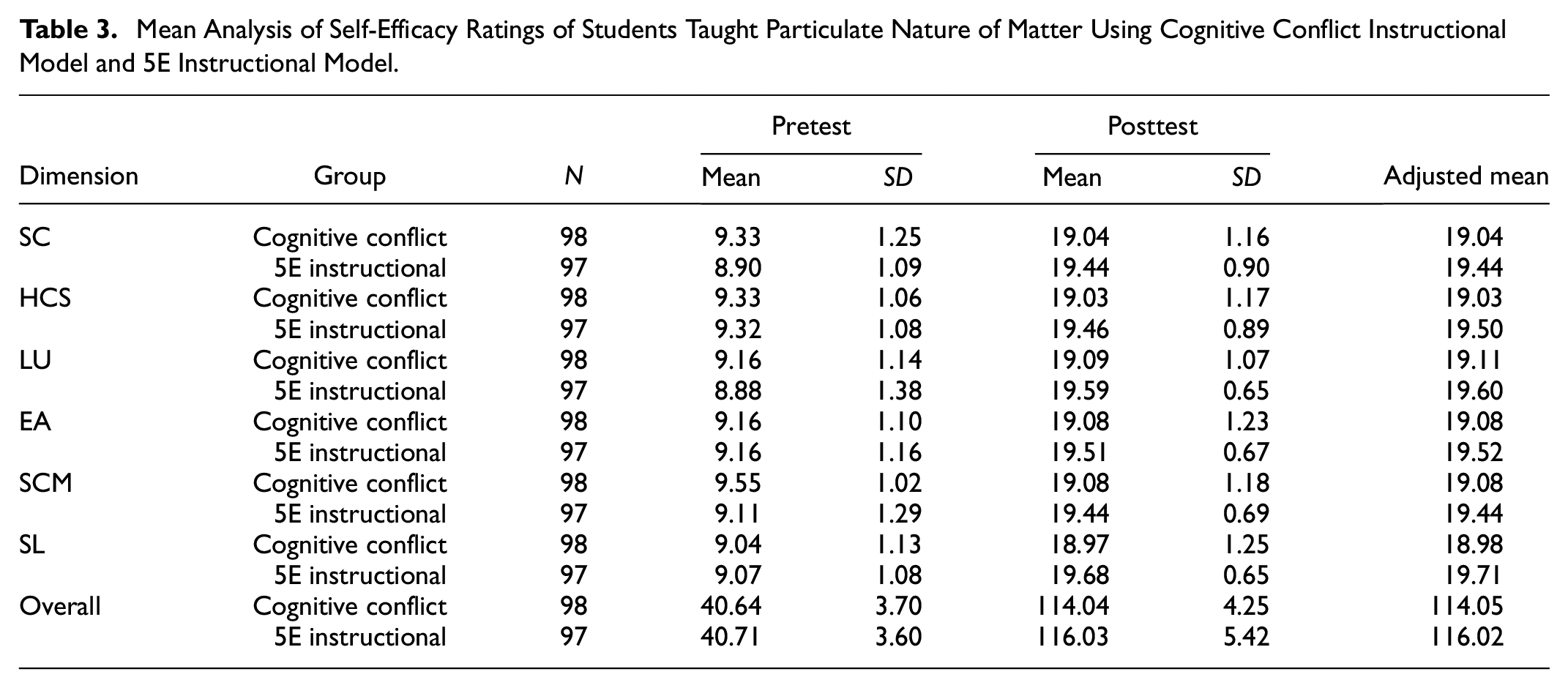
Table 4 shows the test of the homogeneity of variances of the two groups. The analysis indicates that the variances are equal across the two groups, F(1, 193) = 0.323, p = .571. This is for the fact that the p-value of .571 is larger than the .05 level of significance.
Levene’s Test of Equality of Error Variances and Analysis of Covariance of the Effect of Cognitive Conflict Instructional Model and 5E Instructional Model on Students’ Self-Efficacy.

Note. R2 = .075 (Adjusted R2 = .065).
Table 4 indicates that there is a significant effect of the instructional model on students’ self-efficacy in particulate nature of matter, F(1, 192) = 8.259, p = .005. This means that there is a significant difference in the mean self-efficacy ratings of students taught particulate nature of matter using the cognitive conflict instructional model and those taught using the 5E instructional model in favor of those taught using 5E instructional model. Besides, the effect size of 0.041 means that a 4.1% variation in the self-efficacy ratings of the students is as a result of their exposure to the 5E instructional model. This confirms that the 5E instructional model enhances students’ self-efficacy more than the cognitive conflict instructional model.
Discussion of the Findings
This study sought the instructional efficacies of cognitive conflict and 5E instructional models on students’ conceptual change achievement and self-efficacy in particulate nature of matter concepts in physics. Students taught particulate nature of matter using the cognitive conflict instructional model and those taught using the 5E instructional model had significant differences in mean conceptual change achievement scores and mean self-efficacy ratings, with those taught using the 5E instructional model outperforming those taught using the cognitive conflict instructional model. This suggests that the 5E teaching approach enhances students’ conceptual change achievement scores and self-efficacy more than the cognitive conflict instructional model, as evaluated by the difference in their mean self-efficacy rating. This shows that the 5E teaching paradigm has a greater impact on students’ conceptual change achievement and self-efficacy than the cognitive conflict model. The superiority of the 5E instructional model over the cognitive conflict instructional model in enhancing students’ conceptual change achievement and self-efficacy in particulate nature of matter could be attributed to the fact that the evaluation stage in the instructional model is placed at the center stage as the lesson progresses. Students can alter their efficacy beliefs by responding to open-ended questions using observations and previously accepted explanations from the teacher and peers. In addition, unlike other instructional methods that emphasize cognitive conflict, an 5E Model of Instruction emphasizes inquiry. The teacher’s role is essentially that of a facilitator, with an emphasis on the students. Students get a complete knowledge of the scientific ideas presented in the course through open-ended inquiries, real-life experiences, guided investigations, hands-on projects, and research. Each level of the model builds on the previous one, resulting in a unified framework for lessons, activities, and units.
The results are backed with Okafor’s (2016) findings that the 5E learning cycle model improved students’ geometry achievement and retention. According to Umahaba (2018), the 5E teaching paradigm improved students’ ability to tackle increasingly difficult problems in chemistry performance evaluations. Orji (2013) supports this conclusion, finding cognitive conflict to be beneficial in developing students’ conceptual change. The study found a link between the cognitive conflict approach and conceptual change pedagogy, but not with the 5E teaching paradigm. According to Labobar et al. (2017), students’ misinterpretation of concepts was significant before therapy utilizing the cognitive conflict technique, but it was reduced after treatment. Cognitive conflict tactics influenced students’ conceptual transformations, according to the findings. According to Wartono et al. (2018), cognitive conflict strategies may be utilized to eliminate misconceptions and improve students’ learning accomplishment, confirming Labobar et al. (2017) findings. According to Saputro et al. (2020), Vishnumolakala et al. (2018), Kandil and Işıksal-Bostan (2019), cognitive conflict and 5E instructional approaches greatly increased students’ self-efficacy. The constructivist model problem-based learning-predict observe explain (PBLPOE), which is related to the 5Es teaching technique, greatly boosted students’ self-efficacy, according to Fitriani et al. (2020). This finding is consistent with earlier studies that show that using either the cognitive conflict teaching model or the 5E instructional model enhanced students’ performance (Opara & Waswa, 2013; Tuna & Kacar, 2013; Utari et al., 2013).
Limitations of the Findings
Obviously, this study faces obstacles that restrict the generalizability of its conclusions. One of these issues is the use of different teachers to teach the topics, despite the fact that they had been trained prior to the study’s implementation. It is not safe to presume that their cognitive and affective factors are same. As a result, the study’s findings may be influenced. The learners in this study’s age and social background differences may potentially represent a difficulty in terms of concept creation and information processing when it comes to learning including conceptual transformation. The generality of the result may be harmed by the inherent limitation of the quasi-experimental study, which does not allow for subject randomization. Although ANCOVA assisted in the homogenization of the groups, it was unable to eradicate the discrepancies. Again, using cognitive conflict and 5E instructional approaches to teach for conceptual change takes time. The 1-hr provided for each session had such an impact on the school schedule that many teachers complained that the lesson had encroached on their own time. As a result, in the majority of cases, the time issue corrupted the lessons.
Conclusion and Recommendations
The impact of cognitive conflict and 5E teaching styles on students’ conceptual change achievement and self-efficacy in physics was investigated in this study. In particulate nature of matter, students who were exposed to the 5E and cognitive conflict instructional models outperformed their pretest in terms of post-conceptual change achievement and post-self-efficacy ratings. The models have been shown to help people improve their self-efficacy in general. In particulate nature of matter in physics, the 5E teaching style appeared to be more effective than cognitive conflict in developing students’ conceptual change achievement and self-efficacy. This could be because students in the 5E instructional group engage and interact with one another and with the environment in a more exploratory manner than students in the cognitive conflict group.
These encounters with the environment have a tendency to alter their self-efficacy belief and conceptual change achievement. This may influence students’ instructional activities, goal setting, and preparation to continue and accomplish difficult assignments. As a result, using the 5E instructional model improves students’ conceptual change achievement and self-efficacy more than using the cognitive conflict instructional model. To put it another way, implementing the 5E instructional model will improve students’ conceptual change achievement and physics self-efficacy. As a result, we advocate that:
School officials demand that the 5E teaching model be fully implemented as a physics instructional model.
In-service training on how to use and implement the 5E educational paradigm should be provided to physics teachers.
Footnotes
Appendix A
Appendix B
Acknowledgements
All the study participants were appreciated by the researchers.
Declaration of Conflicting Interests
The author(s) declared no potential conflicts of interest with respect to the research, authorship, and/or publication of this article.
Funding
The author(s) received no financial support for the research, authorship, and/or publication of this article.
