




Abstract
This study revisits the concept of multitude analyzed by Michael Hardt and Antonio Negri, based on a case study of candlelight vigils and national flag rallies in South Korea (Republic of Korea), and questions whether mass mobilization similar to multitude always contributes to democracy. Since the 2000s, candlelight vigils have been regarded as an excellent example of multitude in Korean politics. The social media-based demonstrations were impactful, particularly in 2017 when these vigils led to the impeachment of the former President. However, the positive outlook was seriously undermined when the pro-authoritarian national flag rallies against the impeachment were also based on Internet-based mobilization. This paper adopts social network analysis that will show the forms of the candlelight vigils and the national flag rallies. In particular, it will explore the structural similarities and differences between the two sorts of mobilization by measuring the YouTube networks of both rallies. Finally, this study concludes that Internet social networks on their own do not guarantee the development of democracy and multitude-like rallies on social media do not necessarily promote democracy. This analysis will contribute to the further discussion of emotional mobilization and the possibilities of network politics, while broadening the theoretical approaches of Hardt and Negri.
Keywords
Introduction
The concept of the affective turn reflects that a paradigm shift of political mobilization is underway. There is a growing consensus that emotions have great influence on political judgment, and related discussions continue to develop this idea (Durnová, 2018; Hoggett & Thompson, 2012). If emotion does not form at the individual level, but rather promotes ideological behavior and collective interpretation, it becomes a political concept. It has been demonstrated that collective emotion, not calculated interests, affect election campaigns and social movements. However, emotion is unpredictable because it reflects physical and even autonomic responses beyond the basic meaning structure (Clough & Halley, 2007).
The Internet has contributed to the formation of emotional mobilization. The politics of affect by Massumi circulates and expands through advanced communication technologies such as social media. While television used to have “affective media power,” the Internet now exercises considerable influence around the world (Massumi, 2015, p. 33). Collective emotions are transmitted through the Internet, and the effects of new media are becoming more pronounced in daily life. In particular, social media has become a useful tool for social mobilization. The significant impact of new media has been evident in events such as the Tunisia’s Jasmine Revolution of 2011, the US Wall Street Occupation Demonstration of 2011, and the Hong Kong Umbrella Revolution of 2014.
In this context, we witness the birth of a new mass. Michael Hardt and Antonio Negri have proposed the concept of multitude to analyze recent changes. According to Hardt and Negri, the multitude is the new subjectivity, or the new resistance model and it allows heterogeneous dynamic elements to interact with each other in a decentralized structure (Hardt & Negri, 2004). This new mass has no clear center and creatively forms a self-organizing network through horizontal communication. The authors acknowledge that the Internet is also vulnerable to information monopoly and manipulation, but they optimistically contend that the multitude will inevitably lead to expanding connections and therefore has the capacity to enable democracy within a social organization and at the international level as well (Hardt & Negri, 2004).
This study investigates whether multitude in a new Internet platform—Social Network Services—will always contribute to democracy. It subsequently focuses on the current and hotly debated political social movements in Korea—“candlelight vigils” and “national flag rallies.” Candlelight vigils were held in South Korea, even before there were widespread social media-based mass demonstrations in other countries. These vigils were impactful, particularly in 2017 when candlelight vigils successfully led to the impeachment of Park (2017). Candlelight vigils are regarded as an excellent example of the multitude in Korean politics. It is predicted that the Internet and social media will enhance political participation in Korea’s younger generations, and that it will strengthen democracy in Korea. However, this assumption was seriously undermined when the national flag rallies against the impeachment were also based on Internet-based mobilization. During the national flag rallies, anti-communist and pro-authoritarian crowds were also actively using social media. YouTube’s influence in their political mobilization, especially for the elderly generation, was powerful. This phenomenon revealed that the Internet-based mass movement does not inevitably lead to the development of democracy.
In the following section, we will compare the Korean candlelight vigils with the national flag rallies, using the concept of the multitude, and examine whether the national flag rallies, as a kind of multitude movement, are also a voluntary form of conservative mobilization with no organizing center. We will observe the organization and protest culture of the national flag rallies, which are similar to the candlelight vigils. Furthermore, by measuring the YouTube networks of the candlelight vigils and the national flag rallies, this paper will explore the structural similarities and differences between the two sorts of mobilization. The analysis of social media allows the focus to be on the Networked Power mentioned by Manuel Castells, which means “the power of social actors over other social actors in the network.” (Castells, 2011, p. 773). YouTube networks analysis will show the forms of networked power specific to both rallies. Finally, this analysis contributes to the discussion of emotional mobilization and the possibilities of network politics, while at the same time broadening the theoretical approaches of Hardt and Negri (2001, 2004, 2009, 2017).
Multitude: Networked Power on the Road to Democracy
Hardt and Negri have developed the theory of new mass in their writings (Hardt & Negri, 2001, 2004, 2009, 2012, 2017). The authors have captured new features of recent social movements under the concept of a multitude and argue the promise of these movements to renew today’s democracy (Kioupkiolis & Katsambekis, 2014). The multitude possesses constituent power, enabling the transition to a very different rationality that will create new collective subjects. This innovative rationality abolishes the doctrine of rights, which is the basis of the existing rationality and highlights equality and diversity against privilege and uniformity. Finally, it enables co-operation instead of capitalist domination (Negri, 1999; Surin, 2005).
The Arab Spring, The Wall Street Occupation, Spanish Indignados and Greek Aganaktismenoi (the Indignant) movements are the events that Hardt and Negri have cited as examples of multitude. These movements have typically used strategies of occupation and shared multitude-like organization. They have envisioned new forms of independence in the fields of economy, society and communication, and they have asserted their democratic power outside the ambit of the existing political system (Hardt & Negri, 2012). In other words, these actions have created autonomous protests that dismissed centralized leadership, fixed ideologies and state-centered programs and enabled collective experiments of grass-roots democracy. They sought co-operation to create a process of egalitarian deliberation, allowing freedom of diversity, decentralized networks and collaboration with singularities (Kioupkiolis, 2014). Other examples of occupy movements organized mainly by social media without effective leadership include the French Yellow Vests (Gilets Jaunes) in 2018 and the Gezi protests of Turkey in 2013 (Haciyakupoglu & Zhang, 2015; Shultziner & Kornblit, 2020).
The discussion of the multitude appeared 20 years ago but continues to be a focus of academic interest, particularly from those who hold an anti-neoliberal perspective. Firstly, the multitude reflects the issue of the subject and subjectivity (Harrison, 2014; Mutman, 2007). Hardt and Negri describe the multitude as the “unformed life force” and “elemental power” (Hardt & Negri, 2004, pp. 189, 192). They argue that their mission is to find productive possibilities for the multitude to organize itself in different ways and to seek alternatives to capitalist global politics. On the one hand, the multitude is machinic subjectivities, “without identity, subjectivities of knowledge and action, and demonstrating how their production emerges in material connections.” Furthermore, the multiple is “is a dynamic composition of heterogeneous elements that eschew identity but function together, subjectively, socially, in co-operation.” As a result, the multitude is “political subjectivities as composed of heterogeneous singularities” (Hardt & Negri, 2017, pp. 120–121).
The force of the multitude arises from the composition of its unique singularity. Hardt and Negri reject Lenin’s revolutionary model based on the vanguard party and suggest a flexible organizational strategy beyond rigid class struggle. The singularities that make up the multitude do not exist separately and are internally divided but interconnected. Therefore, the organization of singularities is in a state of flux and it is not possible to define such complexity and multiple powers in one identity (Harrison, 2014).
In this context, multitude capacities are exercised in guerrilla organizations (Hardt & Negri, 2004). Guerrilla movement follows different principles from traditional military organizations. Traditionally troops are organized in hierarchical communication in the form of a pyramid, and a small group controls the majority of soldiers. Guerrilla organizations, on the other hand, communicate horizontally in a polycentric fashion, with many small groups interacting independently. Network struggle does not follow the disciplined norms and regard self-organized co-operation as primary values while conventional subjectivity is bound by discipline, just as military organizations produce soldiers on command. The multitude does not seek sovereign state power, and the network organization evolves not as a means but as its own end.
Secondly, the practice of the multitude promotes future democracy. Unpredictable encounters in a given space guarantee its progressiveness. The multitude as a revolutionary subjectivity is consolidated through the interaction that Hardt and Negri call “logic of the encounter.” In the metropolis, the multitude not only “live together and share resources,” but also mix “different cultures, languages, knowledge and mentalities.” They can produce new social bodies with greater power through new encounters (Harrison, 2014, p. 84; Hardt & Negri, 2009, pp. 252–255).
This multitude discovers “institutional forms of possible global democracy” and invents the “art of self-rule” and “democratic forms of social organization.” It demonstrates the ability to interact with others in an unregulated network and strongly resists legal and economic attempts to privatize the common. The multitude constitutes an open network in which all differences express themselves freely and equally. A network is a space where we can enjoy something in common. To this end, the multitude cannot be reduced to one single identity but consists of different ways of working, different ways of life, different world views, different desires. Therefore, the multitude is composed of various colors, and means social multiplicity that acts and communicates in common while remaining different internally (Hardt & Negri, 2004, p. X iV).
Hardt and Negri claimed that new communication technologies would lead to new democracy. The authors clearly warned that privatized monopoly and centralized control of information were underway, and that inequality and exclusion of knowledge could be expanded worldwide. Nevertheless, despite these apparent limitations, the authors anticipated the potentiality of multitude and illustrated this with an image of the network on the cyberspace: the various nodes (actors) are connected to each other on the internet, and the outer boundaries of the network can establish new relationships by adding new nodes to the existing network. Internal differences make communication and joint action possible, and this nature of multitude certainly contributes to the possibility of democracy by inviting more people into the political decision making process (Hardt & Negri, 2004, p. X V).
According to the authors, multitude is a multiplicity and an open set of relationships, so it encompasses openness to external relationships. People, on the other hand, tend to have an internally homogeneous identity and tend to maintain exclusive discrimination to external beings (Hardt & Negri, 2001). Multitude is also different from “the working class,” which is increasingly used as an exclusive concept and does not play a hegemonic role in the global economy. Multitude, in contrast, is an open and inclusive concept, and attempts to capture recent changes in the global economy (Hardt & Negri, 2004, p. X V).
These contrasts challenge the concept of multitude, where there is no conflict or negativity. It is not clear how to ensure that the different needs created by the various specificities are always well organized in the direction of progress. Hardt and Negri describe an abstract “empire” as an enemy and believe that the multitude would naturally resist it, despite the fact that in real social movement actors set specific goals against specific enemies. Furthermore, multitude does not capture the inevitable conflicts and hostility within groups of people. According to Rancière, the concept of multitude rejects ill-defined subjects and establishes politics as a power of affirmation, like Marx’s concept of productive force. Thus, the multitude is part of a long effort to impute a “productive force” to all modes of action that transform a state of affairs. However, the theory of multitude as positive affirmation clashes with various empirical cases. For example, the echo chamber theory asserts that social media such as Facebook, Twitter, Reddit, and YouTube tend to mobilize like-minded users, foster confirmation bias, and reinforce existing group opinions. Accordingly, homogeneous identities in social networks risk shifting the group’s ideology to an extreme (Cinelli et al., 2021).
How can we understand the crowds that turn away from the Rwandan massacre or the crowds who cheered for the September 11 terrorist attacks in the name of Allah? Can we easily distinguish the multitude from the crowds who desire fascism or authoritarianism? We need to ask whether all multitudes are genuine subjects (Kioupkiolis & Katsambekis, 2014; Rancière, 2015).
Social Network Analysis of Two Conflicting Multitude-like Rallies in South Korea
In order to understand the phenomenon of multitudes, it is worth regarding them as real networks of resistance. Hardt and Negri (2004) confidently characterized the multitude as a distributed network. Extending their explanation, Mudu (2009) asked a question of “How can we analyze and link a real network to a de-territorialized space?” Subsequently, Mudu criticized Hardt and Negri’s proposal on the multitudes in terms of its under-theorization and its application to the real practices of movements. Against this backdrop, the candlelight vigil in Korea may have been a valid example of multitude. The multitude concept of Hardt and Negri has served as a catalyst for the hope that candlelight vigils will expand democracy throughout the Korean Society.
Many Korean researchers have described the emergence of the candlelight crowds of the 2000s as a new political entity, different from the democratization movement which has existed in South Korea since the 1970s. On the one hand, previous studies have argued that the Korean candlelight multitude emerged in the context of the apparent limitations of parliamentary democracy and the failure of the conservative governments (e.g., Choi, 2017; Huh & Chang, 2009; Jang, 2018; Jeon & Yoon, 2004; Leem, 2011; Scott, 2013). On the other hand, related articles have explored the new multitude’s strong criticism of and desire to combat the neo-liberalism in Korean society (e.g., Chung, 2009; Hong, 2009; Kim, 2018), while reflecting post-materialist values (Kang, 2011; Kim, 2010). Overall, there has been widespread debate on the possibility of revolutionary change in Korean society, and the expansion of direct democracy to go beyond representative democracy.
However, extending Rancière’s comments, this study attempts to analyze the fact that the pro-authoritarian crowd’s negativity can also be embedded in “multitude.” Korean society has experienced negative as well as positive manifestations of multitude. The latter case, the candlelight protests, is regarded as a critical moment of maturation of Korean democracy. The former case, the national flag rallies—a counter-movement of the candlelight protests, is regarded as disruptive to Korean democracy.
To compare two conflicting multitude-like rallies in South Korea, this study attempts to employ a computer-assisted social network analysis by NodeXL. A number of network analyzes of the candlelight rallies have already been published (Chang & Cho, 2018; Kim & Jung, 2018). A social network is defined as a set of social entities, such as people, groups, and organizations, with some relationships or interaction between them (Tabassum et al., 2018). According to Wasserman and Faust (1994), a social network is a finite set of vertices (points) and edges (lines or relations). The structure of a social network can be presented as a graph or its equivalent. A social network analysis aims “to understand a community by mapping the relationships that connect them as a network, and then trying to draw out who are key individuals, groups within the network, and/or associations between the individuals” (UK Home Office, 2016, p. 3). Social network analysis can provide information about the reach, the impact and activity of the network. In this study, this methodology can explain more about these aspects of candlelight protests and national flag rallies.
Social Network Analysis (SNA) involves measurement of relational properties to investigate a complicated set of network-based structures among social actors. Originated from Moreno’s study (1934) of American elementary students’ social relations, SNA drew academic attention after an automatic software-based tool was invented. The process of the SNA consists of the following three tasks: Data Collection, Data Analysis and Data Visualization (UK Home Office, 2016).
For the data collection, software can import the data according to their keywords entered into the system. For the data import of this study, Chotbuljiphoe ( in Korean) was the keyword selected for the candlelight vigils, and Taegeukgijiphoe (
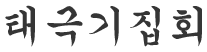 in Korean) was the keyword selected for the national flag rallies. These keywords are the representations of mobilized protests caused by two opposing political multitudes. The former is candlelight multitude, which are the followers of a square-democracy paradigm. The latter refers to the multitude related to national flag (Pro-Park Geun-hye) rallies, which are the followers of former authoritarian leader Park Chung-hee—the father of Park Geun-hye. More detailed explanations will be provided in the subsequent sections (Sections 4 and 5).
In our archive, 631 videos (from 13/06/2008 to 31/12/2019) were collected into the candlelight vigils and 619 videos (from 24/12/2016 to 31/12/2019) were collected into the national flag rallies. For the data analysis, the software can perform a statistical analysis and the results were drawn in table format. This means the researchers can analyze the size, cohesiveness and centrality of the network. For the size, the number of nodes (dots in the network map) refers to the size of the network. The number of links or ties indicates how active the relationships are between individuals in the network. The number of unique links shows how a certain group of individuals in the network connect without any duplicated activities. To ensure cohesiveness, density refers to “the extent to which nodes are interconnected—lower density networks have fewer links between nodes” (UK Home Office, 2016, p. 5). Diameter indicates the size of the network. The mean average distance between the nodes can illustrate how close the nodes are to each other. Centrality of the mean degree enables us to understand how central nodes in the network are by indicating an average number of links that pass through the nodes. Mean betweenness shows how central nodes in the network are but focuses on the average number of unique paths that pass through the nodes.
Candlelight Multitude in South Korea (2002–2017)
The candlelight vigils, which first appeared in 2002, created a so-called square democracy paradigm in South Korea. The Korean military dictatorship retreated, and democratic presidential elections were held in 1987, but it was not until 1998 that the anti-dictatorship forces came to power. However, the Conservative Party, a former authoritarian force, continued their influence with the strategy of taking an offensive position against North Korea. There has been criticism that Korea’s democratization is incomplete because the military authoritarian legacy has not been fully liquidated. In fact, in 2008 and 2013, the Conservative candidates were elected President with nostalgia for authoritarianism. In particular, Park Geun-hye, the daughter of Park Chung-hee, a head of military dictator from 1963 to 1979, succeeded in gaining power by consolidating the support of the Conservatives who believe that the Korean economy has grown due to Park Chung-hee’s economic development strategy and movement (Saemaeul).
On the other hand, the candlelight vigils which have taken place since 2002, and which were evaluated as multitude in South Korea, took place outside institutional politics. The mass gathering of people in the center of Seoul was influenced by the 2002 World Cup street cheering. Since then, sanctions for street occupations have weakened, and with this the social consensus that huge gatherings of the public can enjoy street festivals peacefully in the heart of the city. Over the last two decades, candlelight vigils were held in connection with various social and political issues. The first candlelight rallies of 2002 were demonstrations calling for the truth about the Yangju Highway incident—the death of a middle school girl caused by a US military vehicle—raised an expression of Anti-American sentiment. The next candlelight rallies condemned the conservative party’s impeachment attempt against President Roh Moo-hyun in 2004. In 2008, the third series of rallies were held in anger over the Korean government’s abandonment of regulations on beef at risk of mad cow disease during the South Korea-US FTA negotiations. Finally, in 2016, the people’s disappointment over President Park’s abuse of power and the surrounding political scandals led to the fourth set of candlelight demonstrations in support of the impeachment of the President. Each round of rallies lasted more than 2 months, and the last one was a long struggle which lasted nearly 6 months.
According to the view that candlelight vigils are considered a clear case of multitude, actors with heterogeneous identity participated in candlelight protests, whereas citizens with a homogeneous identity led the democratic movements in the 1980s. The candlelight participants were individuals who had nothing in common in terms of income, occupation and class, and their organization was based on loose Internet networks. There was no specific group that led the rallies. The first candlelight vigils began at the suggestion of a netizen named “Ang-ma (devil in Korean),” and the second rallies were triggered by an Internet cafe titled “Don’t Threaten the People.” The third round of vigils began with the participation of Internet communities at the suggestion of a high-school student called “Andante,” while the fourth were led by social media slogans such as “presidential impeachment movement” or “100 reform agenda” (Jang, 2018, p. 125).
It turns out that the participants pursued autonomous solidarity, and that the demonstration methods and motivations varied. The organizers of the movement ranged from groups to individuals, and the participants themselves staged a performance that defied the authority of existing social activist groups. There was a “flag and anti-flag debate” that raised the issue of an established activist group attending the protest with a “huge representative flag.” In protest, groups of meaningless or satirical titles, such as “General Association of Democratic Cats’, ‘National Luxury Clock’, and ‘National Uncle Association,” appeared at the demonstration, and various communities joined the demonstration with unknown collective identity (Choi, 2017; Kim, 2018). Participants shared their personal ideas through social media and gave free street performances. This behavior was a departure from the stereotypes of past protests. Demonstrators gradually raised a variety of demands that were difficult to reduce to one issue. Moreover, the 2016 candlelight vigils stressed the importance of nonviolence, reminding participants of the violent clash between police and protesters in 2008, and consequently were able to block the possibility of critical news coverage and any resulting suppression of the protests.
These massive rallies in central Seoul, of course, have put great pressure on the ruling party and politicians. The issues raised were generally disadvantageous to the Conservatives. The protests in 2004 were aimed at defending the impeachment of the Democratic President, and in 2016 the protests were rallies to impeach the Conservative President. The 2002 and 2008 demonstrations called for a more independent stance on the United States, contrary to the Conservative party’s orientation, and in 2008 the rallies led the government to renegotiate with the United States. Finally, the candlelight rallies brought a dramatic shift in parliamentary and presidential votes. Shortly after the 2004 impeachment decision, the Conservative Party lost huge seats, and in 2018, following the impeachment of the President, Democratic president Moon Jae-in was elected with a landslide victory.
In this context, a group of scholars expected that the candlelight vigils would allow the expansion of the limits of representative democracy and would enable enduring resistance and expansion of deliberative democracy (Hong, 2008; Oh, 2010). However, as candlelight vigils reached certain goals and then stopped, there are conflicting views on whether the candlelight protesters can be identified within the depiction of multitude as articulated by Hardt and Negri. Those who grasp the nature of the candlelight vigils from the standpoint of the multitude argue that candlelight vigils are the realization of the theoretical multitude. On the other hand, some argue that, after the change of government, the crowds that took part in the candlelight vigils eventually returned to being part of the population that existed before. The candlelight crowds, according to them, are also ultimately subsumed into the existing institutions, and the mass mobilization of the candlelight vigils does not bring about a fundamental change in Korean society. Furthermore, some scholars have argued that cyberspace does not automatically produce democracy or foster collective intelligence and have cautioned against overly optimistic expectations of candlelight vigils (Baek, 2009; Park, 2009).
National Flag Rallies as Anti-movement Multitude?
In November 2016, when the most powerful candlelight vigils were held in the wake of the impeachment of the President, Korean society witnessed a new form of collective resistance against the candlelight rallies. A group of protesters insisting on protecting President Park Geun-hye from her impeachment held a rally waving the Korean national flag (Taegeukgi). This came to be called the national flag rallies. These were still taking place in March 2017, when the presidential impeachment was decided, and were followed by ongoing national flag rallies demanding the overturning of the President’s impeachment. Since then, endless rallies calling for the impeachment to be nullified have continued. Protests are held every Saturday afternoon at Seoul Plaza near Gwanghwamun, where the candlelight vigils were held. In other words, before the debate over the identity of the candlelight vigils ended, mass rallies took place in the same location, but with an opposite political direction.
Surprisingly, the mechanism for expanding participation in the national flag rallies has been similar to the candlelight vigils. Although most of the participants in the rallies are senior citizens, they receive information through social media, and form their own online networks. YouTube, in particular, has emerged as a major medium for promoting their participation (Kim & Hur, 2018). According to an interview with a person who led the national flag rallies, the impact of YouTube on the organization of the rallies is profound. The anonymous informant commented that the number of YouTubers opposing the current Democratic Party regime and supporting the conservative party has increased, and older people distrust the established media, believing only YouTube broadcasts deliver the truth (this interview was conducted in confidentiality, and name has been withheld). Proponents of the national flag rallies tend to deliver their favorite conservative YouTube videos to their acquaintances via a separate messenger function. This process has further accelerated the confirmation bias of national flag participants, and YouTube has grown to be the most influential media platform for conservative older people.
The main participants in the flag rallies were of the older generation—the followers of the former authoritarian government. However, for the first time, they voluntarily participated in protests and joined the anti-government movements, taking over Gwanghwamun Square. The protestors waved the Korean national flags with their slogans and songs, and this experience led to a sense of a new level of unified emotions and liberation. It promoted an identity that resists the injustices of the current regime and strengthens solidarity and friendship with the other participants. While aiming for pro-authoritarian goals, they share the feelings of solidarity and joy that typically emerge from social movements seeking democracy and liberation (Kim, 2017).
The national flag rallies were organized under the leadership of existing conservative groups, including the Korea Freedom Federation, the President Park’s supporters (calling themselves parksamo or “people who love Park”) and protestant Christian communities in South Korea. With the aim of protecting South Korea from those who are trying to overthrow the nation, they formed the National Rally Headquarters for the dismissal of the President’s impeachment. The size of the initial rallies was not as large as 10,000, in contrast to the candlelight vigils that drew 1 million people. Since most of the participants were elderly, there were suspicions that conservatives were buying up the rallies with money. They gathered with the simple slogan: invalidation of President’s impeachment and even release of Park Geun-hye. Since 2018, they have held rallies calling for the resignation or impeachment of President Jae-in Moon.
Due to the relatively small scale of the rallies and the unrealistic demands, many commentators expected that the rallies would not last long. However, the rallies did not dwindle but rather spread across the country, and scholars have not been able to easily explain the dynamics of this mobilization. Contrary to initial evaluation, the national flag rallies are now considered the first mass demonstration by the Korean conservative force since the democratization of 1987. Although some cases of buying participation with money were reported, the national flag rallies are also spreading to events where conservative citizens voluntarily attend, just like candlelight vigils. In this context, the rallies are seen as anti-movements that defend established values and systems while resisting social change (Chae, 2018).
The motivations to participate in the national flag rallies were largely analyzed from a pathological point of view. According to existing studies, the elderly who attend rallies basically share the nostalgia for the military authoritarianism in the 1960s and 1970s. They tend to believe that economic growth was inevitable under former President Park Chung-hee, who took power in a military coup, and maintained dictatorship for about 20 years. Participants in the rallies maintain an almost religious confidence in the Park Chung-hee family. As Park Chung-hee’s daughter Park Geun-hye, who was elected President due to the legacy of military dictator leadership, was impeached, the elderly felt a sense of crisis and fear in the changes that the younger generation is seeking. This analysis suggests that the pathological obsession with military dictatorship is a kind of defensive mechanism that reflects the generation gap, and that the emotional backlash against impeachment and regime change has led the elderly to take to the streets. In the same vein, rally participants have shared and reproduced strong anti-communist sentiments. They suspected that the candlelight vigils were mobilized under orders from North Korea and defined the Democratic Party regime as a “red group” only trying to improve relations with North Korea (Kim, 2017; Yang, Hwang et al., 2018).
Interestingly, however, unlike the candlelight vigils, the national flag rallies are experiencing complicated internal strife in the course of large-scale protests. The national flag rallies initially gathered in various conservative groups and protested against the candlelight vigils, but they soon splintered into several groups (Cho, 2017). After the impeachment, the national flag rallies were divided because candidates who were pushed out of the race to select a new conservative presidential candidate created separate political groups and each mobilized the mass for the rallies. Since then, the movement has undergone 3 years of internal disputes due to conflicts among leaders and members related to the operation of the organization and has now broken into more than 10 groups. As a result, the national flag rallies are currently staging sporadic rallies at different venues in central Seoul. On the surface, it appears that one wave of national flags occupies downtown Seoul every Saturday, but in fact, a series of small and medium sized protests are holding discrete rallies, but are bound together by the symbol of the national flag. Paradoxically, this unique structure of protest is more like the guerrilla organization described by Hardt and Negri than the structure of the candlelight vigils. One giant network, and the smaller ones that are a part of it, are forming and creating links.
Results
Statistical Values
In the size category, candlelight vigils had more individual views than national flag rallies on YouTube. However, in terms of relations (the number of edges), national flag rallies outnumbered candlelight vigils (more than 2.5 times). This means the individuals in the national flag rallies are more inclined to show commitment than those in Candlelight vigils. Probably, the individuals in the national flag rallies after the impeachment of Former President Park Geun-hye would have thought that national identity and their vested interests were threatened. In the cohesiveness category, national flag rallies had a smaller network in terms of size but presented a higher density than candlelight vigils. Individuals in the national flag rallies network are actually present and more actively disseminate the information among the individuals.
For the centrality, degree tells us more about the connectivity among the individuals of the members. Betweenness captures the extent to which a certain vertex lies on the shortest paths between other vertices (Hansen et al., 2019). Table 1 tells us that national flag rallies had higher values of degree and betweenness than the candlelight vigils. The results indicate the individuals in the national flag rallies can quickly connect with the wider network and disseminate the information to other networks. When both betweenness and degree had the higher values, the network is highly visible and plays a central role in terms of mobilization. Also, the key figures of the network may be focus on fragment networks and to gather information (UK Home Office, 2016).
Values of Candlelight Vigils and National Flag Rallies Social Networks on YouTube.

Social Networks
The figures below provide the network mappings of candlelight vigils and national flag rallies. Figure 1 below indicates the YouTube video network mapping of candlelight vigils. The network on the upper left corner with navy blue nodes (dots) is the central network, from which the democratic debates and mobilization begin. The lower left network with sky blue nodes is the intermediary network, which spreads the information about the debates to other subsequent networks. The components of these two networks are mainly YouTube channels of mainstream and cable news media outlets in South Korea. On the right hand side is a group of dark green nodes that are weakly connected to two previous networks. At the bottom of the right edge of the mapping, the networks with light green and red nodes are minor networks derived from two major networks. Figure 2 below presents the YouTube video network mapping of national flag rally. On the left-hand side, there is a central network consisting navy blue nodes, which are mainly individual far-right Korean YouTube creators. At the top of the right-hand side, there is an intermediary network filled with the sky blue nodes representing individual far-right Korean YouTube creators. At the central bottom, there is a group of multiple black nodes which are derived from the central network. However, these nodes are not connected to each other. On the bottom-right, there are minor networks of dark green, light green, orange, red and yellow nodes, which are derived from the central and intermediary networks.

YouTube video network of candlelight vigils.

YouTube video network of national flag rallies.
The fact that the two rallies of completely conflicting political orientations have similar structures implies that not only pro-democracy protests, but also pro-authoritarian mobilization can access and utilize Internet social networks. More detailed analysis reveals that the national flag rallies are even more polycentric than the candlelight protests. Analysis has shown that the YouTube networks of the candlelight vigils contain more public material and more cable broadcasters are involved than national flag rallies. Notably, these broadcasters are in the central position of the candlelight vigils’ YouTube network. However, national flag rallies had more individual YouTube influencers which gave them great reach. In terms of hierarchy of information diffusion, the candlelight vigils had more objective coverage on these issues, whereas the national flag rallies were more inclined to share messages based on their subjective protocols.
In terms of sustainability, the national flag rallies’ networks are more vulnerable than candlelight vigils’ social networks. The individuals in the candlelight vigils might draw more individual support but the influence of each individual was not as great. Also, the public or official media pays little attention to the messages of the national flag rallies. Our research has shown that State broadcasters play a central role in candlelight vigils while influential individual YouTubers are the key stakeholders in the national flag rallies.
Conclusion
Several Korean researchers regarded the candlelight vigils as practices of multitude and expected them to open up a new democracy and overcome the limits of parliamentary democracy. As Hardt and Negri claimed, the self-organized network vigils seemed likely to clear up the authoritarian remnants in Korean society and lead to a more horizontal and polycentric society. However, the older generation with conservative perspectives led the anti-government movements which opposed these candlelight vigils. YouTube has emerged as the most influential media which plays a vital role in forming a forum for both camps (candlelight vigils vis-à-vis national flag rallies). Gradually, the national flag rallies have evolved into a decentralized network structure. Through participation in the rallies, the older generation were comforted by the pleasure of protests, as were the younger candlelight vigil participants.
If voluntary mobilization can be used as an indicator of the increase of democracy and freedom, it can be said that both candlelight vigils and national flag rallies have contributed to the development of democracy in South Korea. Although participants in national flag rallies support more nationalist and conservative political groups, they organized anti-government protests themselves and expressed their diverse voices voluntarily. This situation is somewhat at odds with the expectation that leaderless social networks will enhance the dynamics of democracy. Even if the form of mobilization is free and open, the goal of the movement may not be democracy itself.
There has been a long debate about Multitude’s capabilities and direction. The cases of two Korean rallies show that the multitude as a democratizing concept is uncertain. The YouTube network analysis revealed that the two groups had very similar online communication structures. This reflects the double-edged sword of the Internet space. Internet social networks may be friendly to open democracy, but on their own they do not guarantee the strengthening of democracy. Multitude-like rallies based on social media do not necessarily promote democracy. In other words, YouTube is merely an online platform, so its possible impact upon democracy is not clear. Thus, more research is needed to understand the particular challenges of promoting democracy on the Internet.
It is worth noting that the network of national flag rallies presented more individual characters. The candlelight vigil network includes many of the existing media YouTube channels. It means the ideology behind this vigil is hugely supported by the general public in Korea. In contrast, national flag rallies are a multitude supported by specific individual influencers. Nevertheless, the YouTube network of the national flag rallies had the same rate of connectivity as the candlelight vigils and served as a major means of encouraging offline rallies until this was banned to the COVID-19 Pandemic. The stark differences contrast might create irreversible conflicts between the two camps and could create an irreconcilable social divide. This deep-seated conflict has been present in the anti-government rallies on 15 August 2020, reported to have caused the Covid-19 resurgence in South Korea. To overcome a big challenge to the Korean democracy, more research is needed on the national flag rallies and their impacts. There should also be an in-depth discussion of how an ideal mass democracy can be formed through permanent mass mobilization in the form of multitude.
Footnotes
Author’s Note
This research was conducted while Changrhyong Oh was at Korea University. He is now at National Assembly Research Service and may be contacted at
Declaration of Conflicting Interests
The author(s) declared no potential conflicts of interest with respect to the research, authorship, and/or publication of this article.
Funding
The author(s) received no financial support for the research, authorship, and/or publication of this article.
Ethical Approval
An ethics statement (including the committee approval number) for animal and human studies. If this is not applicable, please state this instead.
