




Abstract
Pakistan is facing massive issues such as political instability, weak law enforcement, and corruption, leading to poor implementation of environmental policies. This research investigates the nexus among CO2 emissions, energy consumption, financial development, governance index, and economic growth under the framework of the Environmental Kuznets Curve (EKC) hypothesis. Moreover, the investigation also explores the impact of government effectiveness, voice and accountability, and regulatory quality from 1996Q4 to 2018Q4. The empirical statistics indicate that financial development and energy consumption incline environmental degradation, while the governance index negatively affects CO2 emission. The results validate the presence of the EKC hypothesis in Pakistan. Besides, political stability, control of corruption, and Government effectiveness assist in curbing environmental degradation. Our findings suggest that there is a need to strengthen the institutions, and the Government of Pakistan should control the corrupt practices related to environmental policy implementation and strictly monitor the Pakistan Environmental Protection Agency (PAK-EPA).
Keywords
Introduction
Climate change has become a hot issue for debate around the world. It has attained the enormous attention of researchers, academicians, and policymakers due to its association with human health and economic development (Destek & Sarkodie, 2019; Koçak et al., 2021). Among the most affected Asian nations, Pakistan is one of the top-ten severely affected countries due to climate change (Glibert et al., 2014). In the last few years, Pakistan is experiencing severe climate changes, for example, melting of glaciers in the Himalayas, landslides, freaky heatwaves, smog in winter, and flash floods (Abas et al., 2017). It has been documented a projected increase in temperature, extreme weather conditions, seasonal smog, and a decline in water resources, which has hugely influenced agriculture productivity (Ali et al., 2019). In addition, the water cycle in Pakistan is primarily based on climate conditions. For more than a decade, climate change is disrupting food availability and food quality in Pakistan.
In 2010 to 2011, 10% of Pakistan’s population was displaced in southern and northern areas due to climate change. The cost of freaky weather was $384 million and $2 billion for the national economy due to climate change (Azeem, 2019). In the mid of 1990, the UN Framework Convention on Climate Change (UNFCCC) signatories realized that strong provisions were required to improve environmental quality. In this respect, almost all developed nations were agreed to the Kyoto Protocol in 1997, where emissions reduction targets were defined (UNFCCC, 2008).
Moreover, the Paris Agreement was taken place in November 2015 for a new global agreement on climate change. Indeed, natural calamities, variation in the ecosystem, and biodiversity loss are the persistent intimidations for Pakistan, which needs vigorous strategies and operative application. However, Pakistan is one of those nations that have relatively fragile organizations and governments. Moreover, Pakistan is facing several challenges such as political instability, weak law enforcement, and corruption, which leads to poor implementation of environmental policies (Wang & Dong, 2019). Further, law enforcement agencies of Pakistan are also unable to implement good governance; even these agencies are engaged in corrupt practices (Adams et al., 2017; Shaikh, 2018). A recent survey regarding the rule of law in Pakistan by Agrast et al. (2019) revealed that two out of eight organizations are involved in evil practices directly or indirectly. Additionally, Pakistan is not a stable country concerning its political environment, and prospects for political disruption perpetually remain higher. Pakistan’s general public is compressed due to political instability, which shows a higher level of motivation to involve themselves in radical and anarchist activities rather than productive and creative activities. Furthermore, Pakistan has faced a global war on terrorism for more than two decades. More than 70,000 lives and approximately $250 billion has been lost while combating terrorism roots (Khan, 2019).
Moreover, there is no practicable umbrella institution to see the said measures at implementation levels in Pakistan. According to a comprehensive literature survey, it has been revealed that Pakistan has a platitude of governance anomalies, causing increased greenhouse gas emissions. Among them, significant is the poor accountability of industrial tycoons, weak law enforcement, and lack of corruption control (Badshah & Timoshenko, 2018). Now, Pakistan is going for betterment in governance issues because of the new political regime. The new Government of Pakistan has empowered the National Accountability Bureau (NAB) to reveal the organizations’ corrupt practices. Consequently, in such circumstances of mismanagement, it becomes indispensable to evaluate the influence of governance issues on Pakistan’s environmental quality.
The above highlights raise some serious questions; first, does the political instability in Pakistan increase the CO2 emission? Second, does the accountability and control of corruption improves the environmental quality in Pakistan? Third, does an increase in institutional quality and Government effectiveness decrease CO2 emission in Pakistan? Fourth, does the EKC hypothesis exist in Pakistan? Fifth, does financial development has a direct relation with environmental quality in Pakistan? Sixth, does the use of energy upsurge the level of CO2 emission in Pakistan? Seventh, does the overall governance level has a positive impact on climate excellence in Pakistan?
Subsequent to the aforesaid grounds, the existing literature is indeed available on the role of governance and environmental degradation; however, it is inadequate and covers only a few particular contexts. This study provides a much better understanding of the nexus between governance index, financial development, and environmental degradation that would provide important insights to the policymakers in devising short-term and long-term policies for addressing climate mitigation. Therefore, this research’s key objective is to analyze the influence of governance indicators, that is, political stability, voice and accountability, government effectiveness, regulatory quality, control on corruption, and the rule of law, on Pakistan’s environmental quality. Further, the examination generated the governance index with the help of six key indicators of governance described above by following the approach revealed by Yasmeen et al. (2018). Apart from it, the study analysis investigates the impact of financial development on environmental degradation under the EKC hypothesis. Notably, the study evaluates the following mentioned hypothesis,
H1: Rising the level of governance reduces carbon dioxide emission
H2: Financial development and carbon dioxide emission have a direct link with each other
H3: Environmental Kuznets Curve (EKC) persists in Pakistan’s economy
H4: Environmental quality is positively influenced by political stability, government effectiveness, and control over corruption
This analysis makes a multi-sided contribution in many respects to literature. To the best of our knowledge, it is the first attempt that considered the individual nominators of governance in reducing environmental degradation in Pakistan. Second, under the context of the EKC hypothesis for Pakistan’s economy, we investigate the linkage between financial development and environmental degradation. Third, the study analysis advises a new solution and novel findings that can help meet goals for sustainable development (SDG-8: sustainable economic growth and SDG-13: Climate Actions). Finally, the analysis used novel econometric techniques such as Augmented Dickey-Fuller (ADF) and Phillip Perron (PP) test for unit root analysis. Furthermore, to measure the short-run and long-run nexus, an ARDL bounds testing approach is employed in this study.
The rest of the paper is organized as follows; the second chapter presents a brief literature review. The third chapter shows the data and methodological direction, the fourth chapter exhibited results and discussions, and the fifth chapter is based on concluding remarks and recommendations, and policy implications.
Literature Review
This chapter presents a more comprehensive overview of governance, energy use, financial development, and economic growth on environmental quality. The World Bank has defined “Governance” as “rules, enforcement mechanisms, and organization.” In 1992 the concept of governance was “the manner wherein power is exercised in the administration of the country’s social resources and economic development.” It is a state interaction with citizens of the political economy. According to Weber (1999), challenging problems in underdeveloped nations are the lack of law and accountability. Eskander and Fankhauser (2020) argue that environmental laws can be an effective tool to curtail carbon emissions.
Additionally, there is a lack of regulatory quality. Bhattarai and Hammig (2001) stated that good governance and politically stable institutes could reduce deforestation in Latin America. Although the countries listed in the OECD have already adopted various measures for environmental protection, but developing countries are susceptible and still far away from environmental protection measures to confront this problem Jaunky (2011). Moreover, environmental quality decreases due to the unavailability of unaffordable friendly technologies (M. Ahmad & Raza, 2020; Oláh et al., 2020; Shahbaz et al., 2020; Shehzad et al., 2021).
Likewise, Gozgor (2017) elaborates that environmental quality is the second preference in the development phase. There exist pervasive literature on EKC, that is, Dogan and Seker (2016), Gozgor (2017), Zerbo (2017), F. Ahmad et al. (2019), Zeraibi et al. (2021, 2022), Hussain and Dogan (2021), Chenghu et al. (2021), and Shehzad et al. (2021). However, Halkos and Tzeremes (2013) investigated the linkage between carbon emission and governance dynamics by employing a non-parametric estimator technique for the era of 1996 to 2010 in G-20 big economies. The study stated that governance index indicators, such as accountability and voice, absence of violence and political stability, state potential, controlling quality, control on corruption, and law and order have nonlinear liaison with CO2 emission.
The investigative outcomes unveiled a unidimensional liaison between CO2 emission and the evaluated State-owned instruments. The study also discussed an indirect association of freedom of expression, freedom of association, and free media with carbon dioxide emission. In addition, this investigation disclosed that carbon emission has U-shaped nexus with the quality of civil services, quality of public, and public information. Fujii and Managi (2015) argued that climate variation largely depends upon political stability and described that the worldwide CO2 emission would diminish greenhouse gas emissions. The study noticed a 2.54% decline in CO2 emission for construction and chemical sectors of communist nations through 2009. Danish et al. (2017) pointed out the linkage of corruption, GDP per capita, and CO2 emission using APEX economies data for the era of 1992 to 2012. The study exposed a U-shaped link between economic growth and CO2 emission with rising corruption among Asia pacific nations. Lu (2018) disclosed the relationship between financial development, energy use, income, and CO2 emission in Asian economies. The empirical findings suggested that financial development, energy use, income trigger an incline in carbon emission in Asian economies.
Gani (2012) stated that carbon emission has a strong association with political stability, the rule of law, and control on corruption. Additionally Jiang et al. (2019) reported that carbon emission escalates because of China’s rise in economic growth. Abid (2016) discovered the causes of carbon emission due to losing control of corruption, political instability, lack of regulatory quality, government effectiveness, and the rule of law in Sub-Saharan African countries. The study also explored that government effectiveness, political stability, and control on corruption trigger the level of CO2 emission. Moreover, regulatory quality and the rule of law have a positive influence on carbon emission.
In the other direction, Cole (2007) investigated an association between corruption and environmental destruction from 1987 to 2000. The research directly and implicitly discovered the influence of corruption on environmental pollution. The study stated that in higher-income countries, corruption harms environmental quality. The relation between political stability and corruption was explored in another study using a cross-country approach in the agricultural region. The study reasoned that there are detrimental impacts on environmental regulation’s strictness due to global uncertainty and corruption. Corruption and political uncertainty are mutually dependent (Fredriksson & Svensson, 2003; Harsányi et al., 2021). Additionally, Saud et al. (2019) also reported similar consequences of corruption-environmental quality, corruption-environmental regulations for 1998 to 2012 in China. The study said that the shadow economy and environmental regulations positively and significantly impacted ecological sustainability. Beyond this fact, the corrupt official was causing to rise in environmental pollution. Moreover, the significance of financial development under economic sustainability tends to higher industrial pollution and poor environmental quality (M. Ahmad et al., 2021; Rauf et al., 2021; Shehzad et al., 2021; Tamazian & Bhaskara Rao, 2010).
Korkut Pata et al. (2022) stated that economic growth and financial development increase the environmental degradation, whilst political stability assist to prevent environmental degradation in South Asian countries for the period 2002 to 2016.
Simionescu et al. (2022) investigated data of Central and Eastern EU countries from the period 1990 to 2019. The study reported that economic advancement has a detrimental impact on the environment. This study demonstrates that economic progress does not assist environmental conservation, and the Central and Eastern EU nations are far from meeting the aim of sustainable development goals. The essential rules for these Central and Eastern EU nations in accomplishing the long-term goal of lowering pollution are a strong rule of law that supports environmental protection, high quality regulatory in the environmental spheres, and effective corruption control.
Bildirici (2022) stated that a good governance system promotes environmental protection laws and reduces CO2 emissions. Economic growth and energy consumption have a significant positive impact on CO2 emissions that means Increased economic growth can help to reduce CO2 emissions in high-emissions countries. Mismanagement contributes to the high environmental pollution, but strong political and economic governance can reduce pollution.
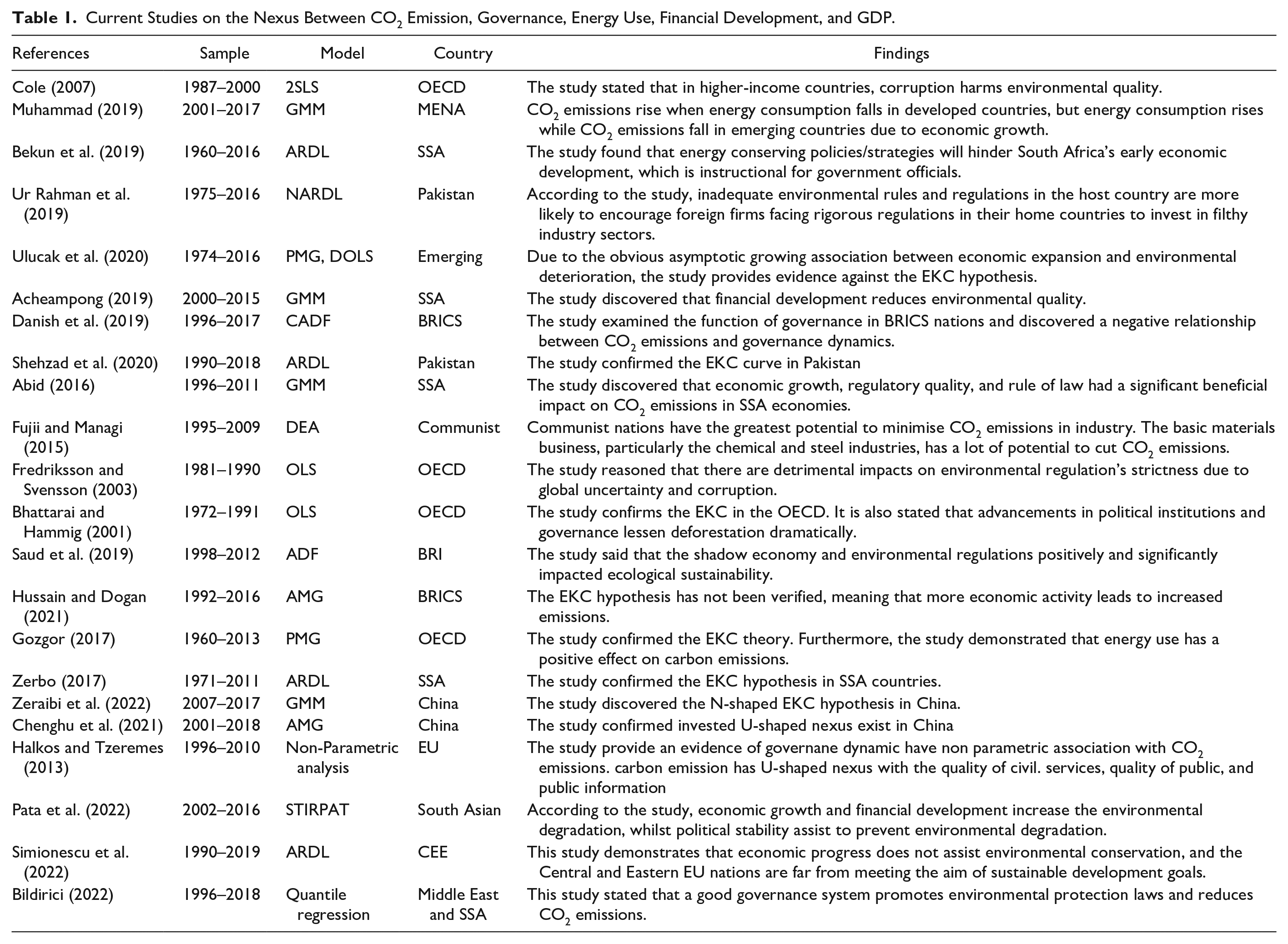
Carbon dioxide emissions are the well-known greenhouse gases, the culprit for almost three-quarters of air pollution. It can stay for thousands of years in the atmosphere (Miller & Chin, 1978). CO2 emissions are considered the primary pollutant of the earth, severely affecting the environment, human health, and wildlife. Almost every sector of the global economy, such as agriculture, manufacturing, transportation, and energy generation, contributes to environmental degradation. The above-given literature has demonstrated that political stability, control on corruption, energy use, financial development, and economic growth essentially impact environmental quality. This is the first paper in our knowledge, which explores overall governance’s effect on Pakistan’s environmental quality. Additionally, this examination estimates the individual effect of six governance elements defined above on the level of CO2 emission in Pakistan. This project utilized secondary data to analyze the starring role of governance features on environmental quality, as the secondary data exhibits the many positive consequences for decision making. Hence, policymakers, the ministry of climate change, and the Government of Pakistan might get assistance from the study’s findings to incorporate regulations and climate change policies. Table 1 presents more details on the nexus among environmental degradation, governance, financial development, economic growth, and energy consumption.
Current Studies on the Nexus Between CO2 Emission, Governance, Energy Use, Financial Development, and GDP.
Theoretical Framework
This section elaborates the theoretical mechanism through which economic growth, financial development, governance index, and energy use impact carbon emission. As can be seen in the literature, the EKC hypothesis is extensively used to gauge the nexus between economic growth and environmental deterioration. Under the EKC hypothesis framework, economic growth reduces pollution after approaching a threshold level (Grossman & Krueger, 1991, 1995). However, these are key channels whereby economic growth affects environmental quality, that is, scale, composition, and technique effect. In the first stage of growth, the scale effect suggests that the manufacturing of products needs more energy that improves economic output but creates more waste and emissions. The composition effect demonstrates that the amount of emissions depends on a country’s production structure. If more material for processing is not needed in the manufacturing process, fewer emissions may occur. The composition effect will also minimize emissions and raw material level if the structural changes are sufficiently significant. The third channel is the technique effect; the more advanced and clean technologies use less material and deliver minimal emission levels—these advancements in technologies help to curb the deterioration of the environment (Santra, 2017). The environment is influenced in two different ways by financial development. Firstly, financial development gives loans to both institutions and citizens. It encourages the use of electrical equipment, buildings, and vehicles. In addition, the performance of the stock markets improves consumer trust while increasing the supply of consumer practices that cause environmental degradation. However, financial development offers funds for green and sustainable projects that help alleviate the deterioration of the environment (M. Ahmad et al., 2020). Strong organizations are seen as effective in many ways in lowering greenhouse emissions. Institutions confront waste and pave the way for clean policies on the environment. Governance provides the rule of law, protest property rights, contract execution assurance, and, most importantly, preserve the freedom and political power of institutions (Danish & Ulucak, 2020).
However, poor governance and inefficient bureaucracy contribute to waste and environmental policy initiatives being neglected. Thus, governance plays an imperative role in the economic development of a region and growing and decreasing environmental degradation. Another main factor in rising environmental pollution is energy consumption. The last element in environmental emissions is the use of energy (Hanif et al., 2019).
Data and Methodology
The current study consumed quarterly data from the year of 1996Q4 to 2018Q4 investigate the relationship between CO2 emission, voice and accountability, government effectiveness, control over corruption, political stability, regulatory quality, and the rule of law, energy use, financial development, GDP per capita, the quadratic term of GDP (GDP2) in context of Pakistan. Data was obtained from World Bank database in the study. The on-hand investigation converted the annual data into quarters form by following the method of (Shehzad, Liu, Rauf, Arif, Mazhar, et al., 2019). Table 2 presents the variables and their descriptions. The above-mentioned variables were split into two separate panels, that is, panel A and B. In Panel A, the investigation followed Yasmeen et al. (2018) methodology to generate a Governance index. The study analysis the overall effects of governance indicators, that is, voice and accountability, government effectiveness, political stability, control on corruption, regulatory quality, and the rule of law are as follow:


Variable Description.

Note. WDI = world development indicators.
Here

Here CO2, EC, FD, GOV, GDP, and GDP2 indicate the carbon emission, energy consumption, financial development, governance index, GDP, and the quadratic term of GDP. On the other side, in panel B, the examination evaluated each governance indicator’s impact on the level of CO2 emission in Pakistan. The functional form of panel B can be written as follow,

Here GE, CC, LAW, PS, RQ, and VA assigns the Government effectiveness, control on corruption, the rule of law, political stability, regulatory quality, and voice and accountability, respectively. In order to investigate both panel A and B, analysis entails Autoregressive distributed lag (ARDL) method was proposed by Pesaran et al. (2001). The ARDL approach is much better than other traditional approaches, that is, Engle and Granger (1987) and Johansen (1988), because this approach has better small sample properties. It can be applied regardless of the underlying variable are stationary at a level I(0) or first difference I(1).
However, the ARDL approach can investigate exact parameters if the determinants are stationary at the level I(1) or the first difference I(1) or mixed form Shehzad, Liu, Rauf, Arif, Mazhar, et al. (2019).


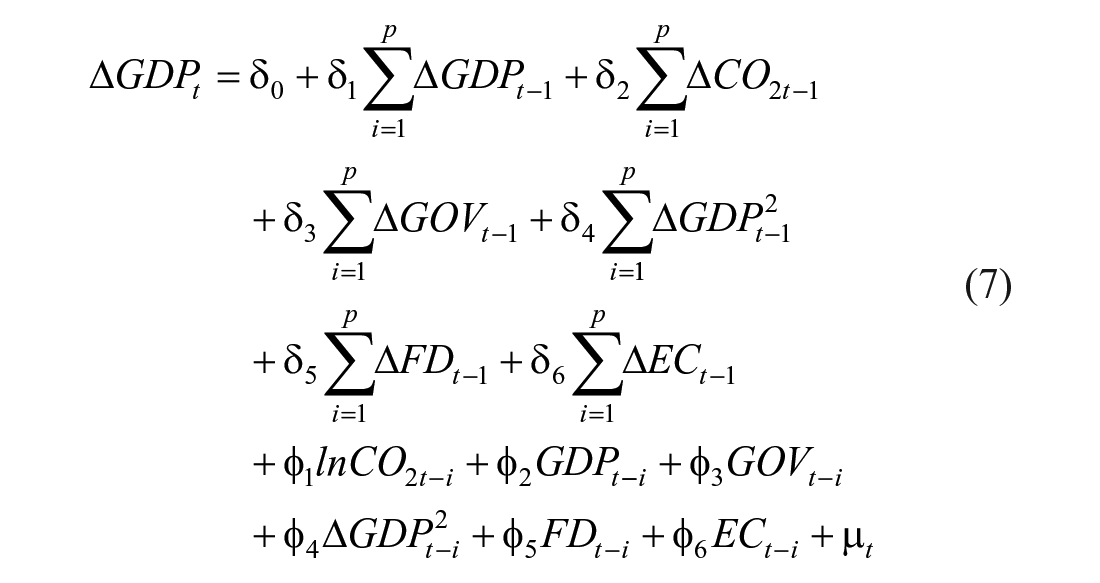


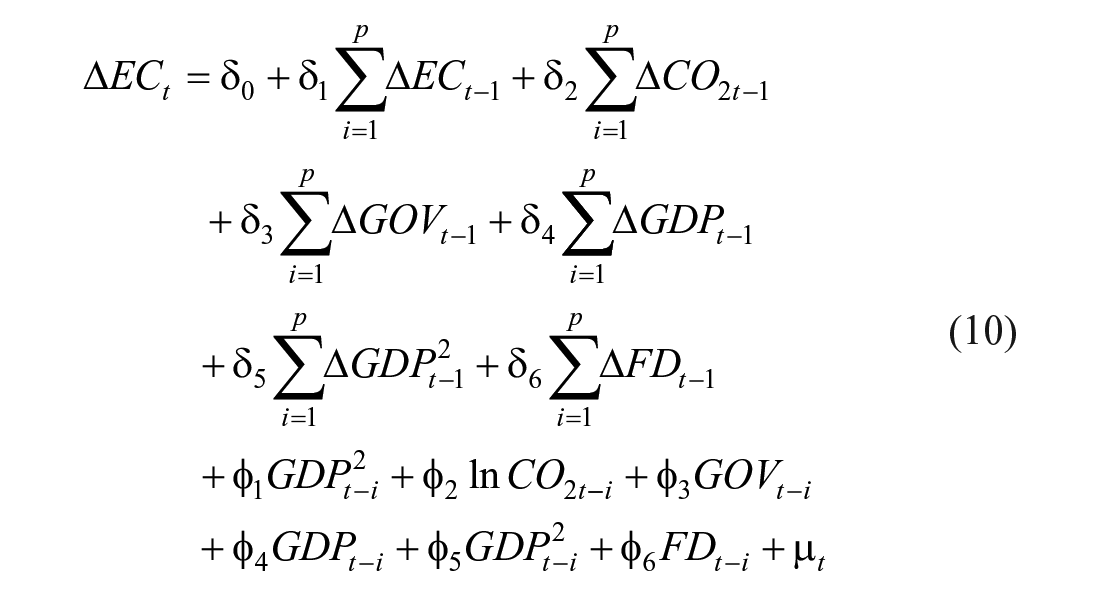
The ARDL cointegration equations for Panel B are as follow,

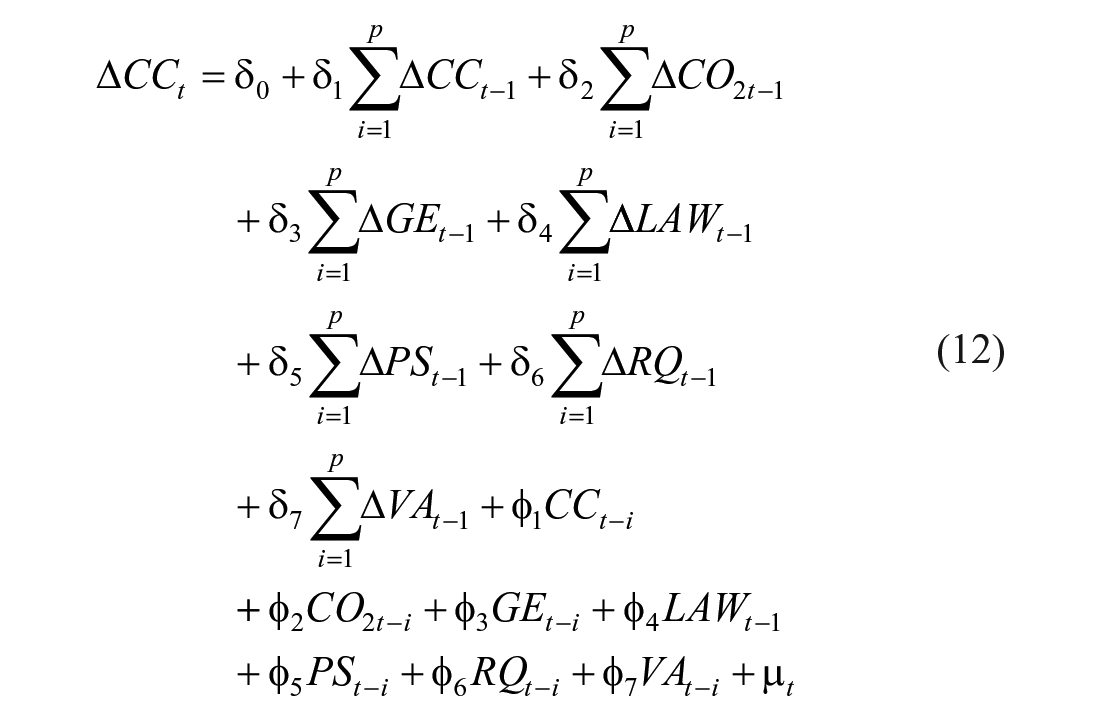


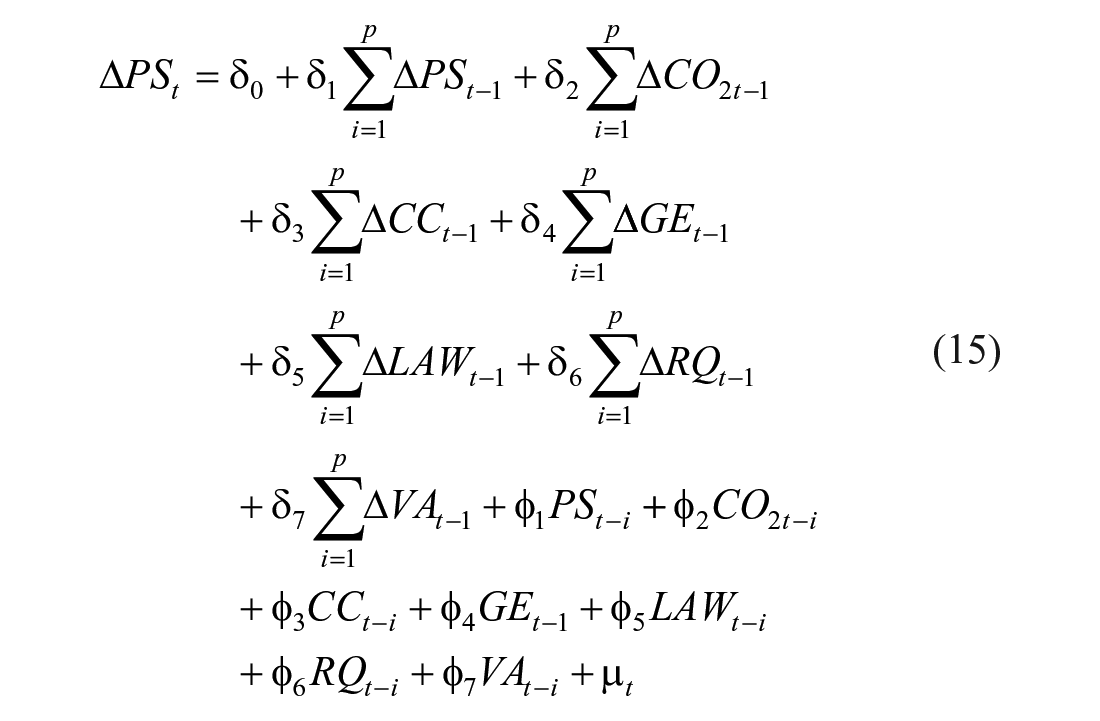


Here
Panel A,
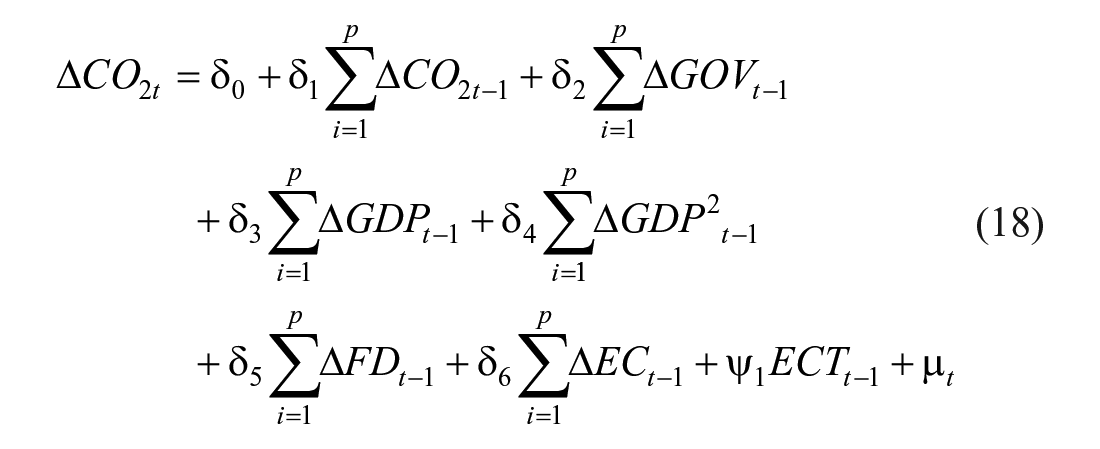


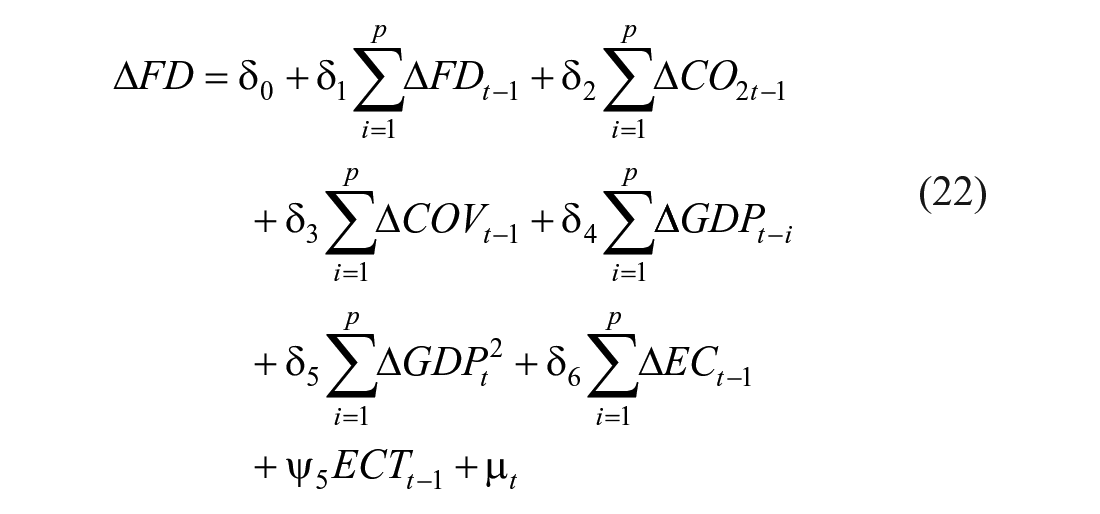
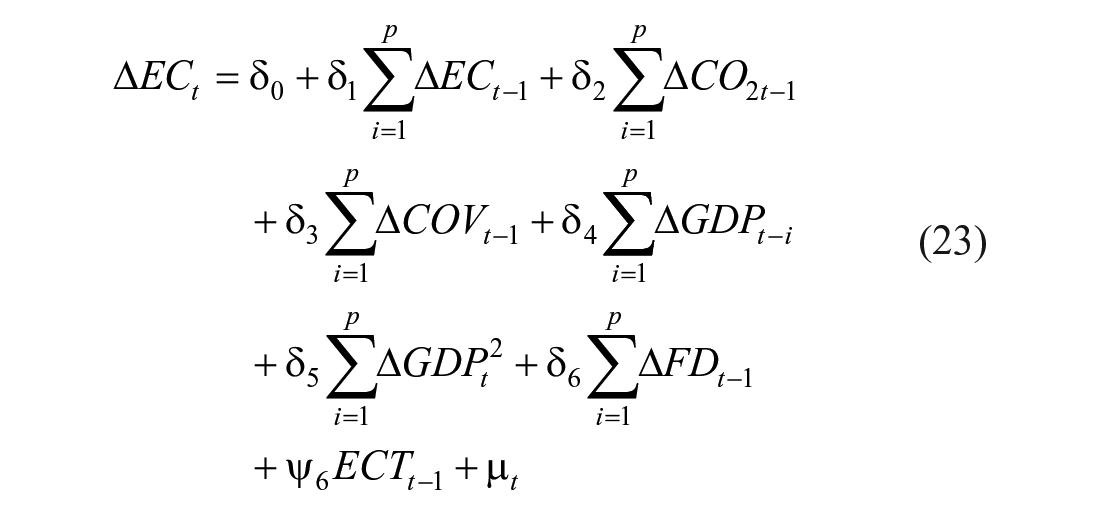


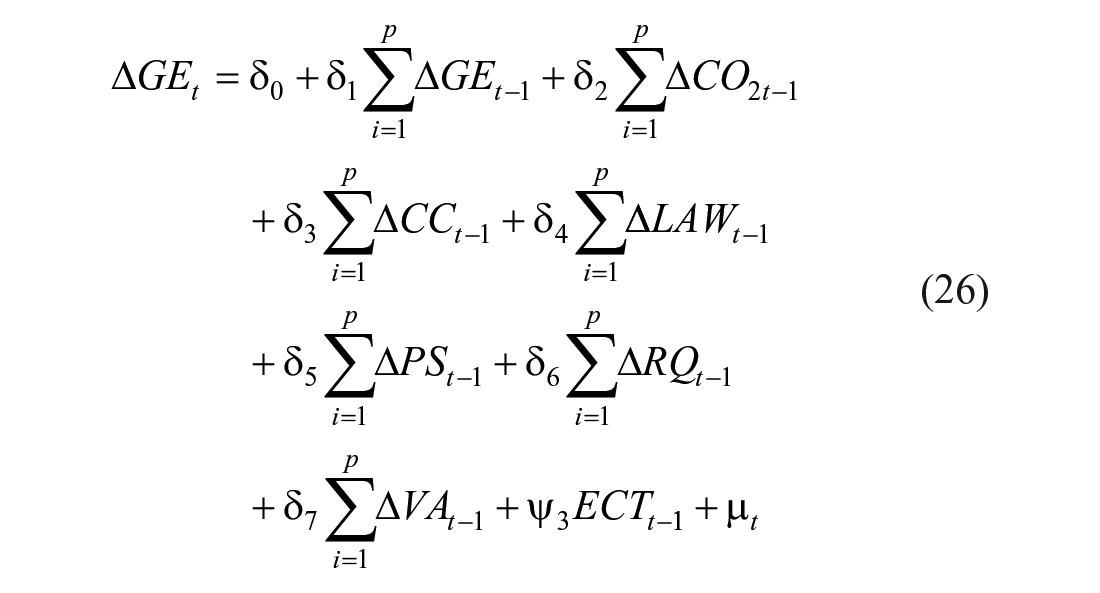


Here the CO2 emission adjustment speed is defined by the error correction term (
Empirical Results and Discussion
Summary Parameters and Correlation Estimation
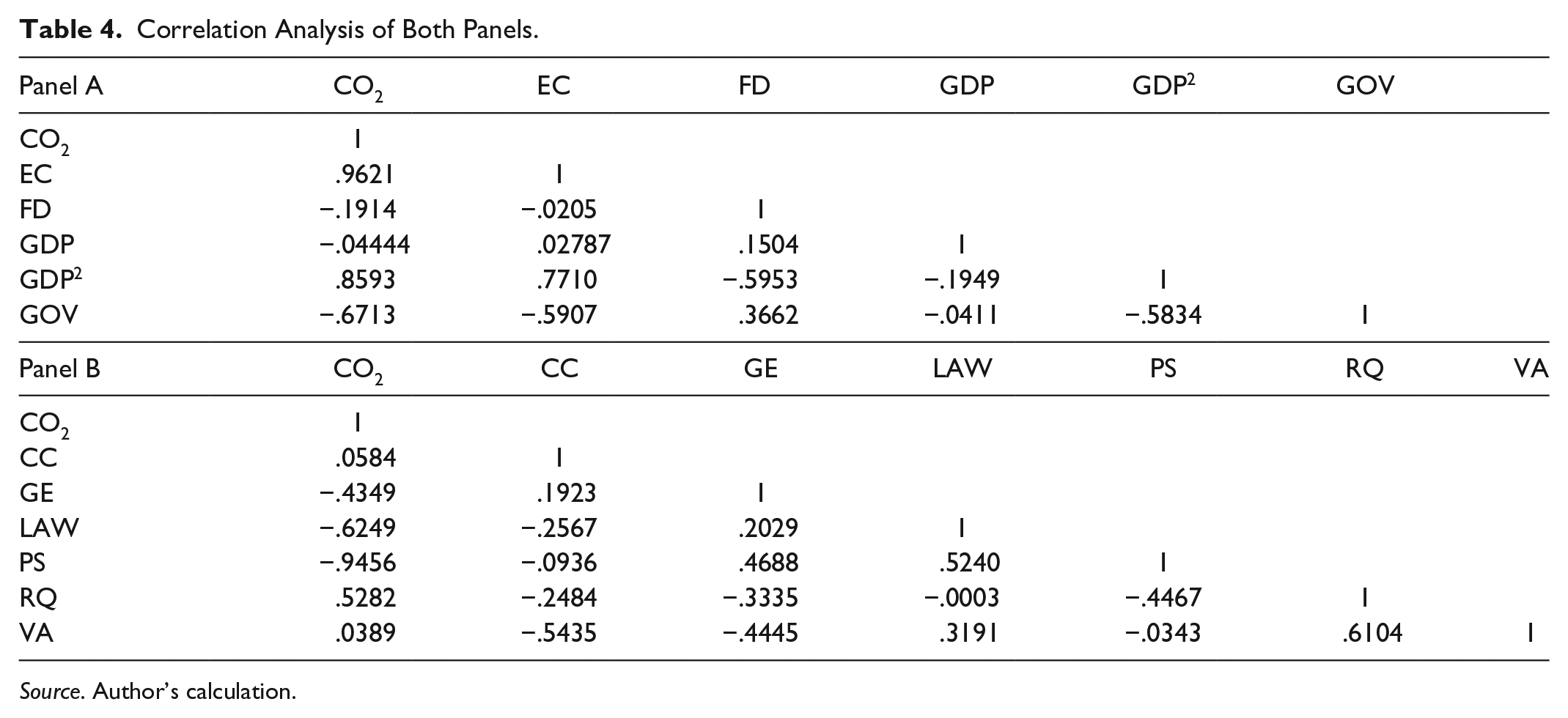
The descriptive statistics of both panels are summarized in Table 3. The results indicate that economic growth (GDP) has a very high mean value of 6.732. It increased from 2.835 to 7.082 over the period from 1996 to 2018. The energy consumption has an average value of 6.172, signifying massive environmental degradation caused by energy consumption. The value of carbon emission (CO2) is increased from −0.309 to −0.008. The value of financial development has increased from 2.733 to 3.358, with a mean value of 3.0858. The governance indices have an average value of 0.483, and it ranges from 0.306 to 0.718. In panel B, political stability has a lower mean value of 5.720, indicating that Pakistan is still facing political instability. The government effectiveness has a very high mean value of 31.886, followed by regulatory quality with 26.846. The Jarque Bera test findings reported that panel A’s variable follows normal distribution except the Governance index. Moreover, panel B reported that CC and VA are normally distributed. However, this normality issue can be resolved through the ARDL model (Shehzad, Liu, Rauf, Arif, Sohail, et al., 2019). Table 4 exhibited the findings of correlation among the study variables of both panels. The results stated that EC and square of GDP have a positive affiliation with CO2 emission in Pakistan. Whereas FD, GDP, and GOV revealed a negative association with CO2 emission in Pakistan. Besides, CC, RQ, and VA directly correlate with CO2 emission; while, GE, LAW, and PS documented indirect correlation with CO2 emission.
Descriptive Statistics.

Source. Author’s calculations.
Note. Here, Min and Max denote the minimum and maximum values.
Correlation Analysis of Both Panels.
Source. Author’s calculation.
Unit Root Evaluation Upshots
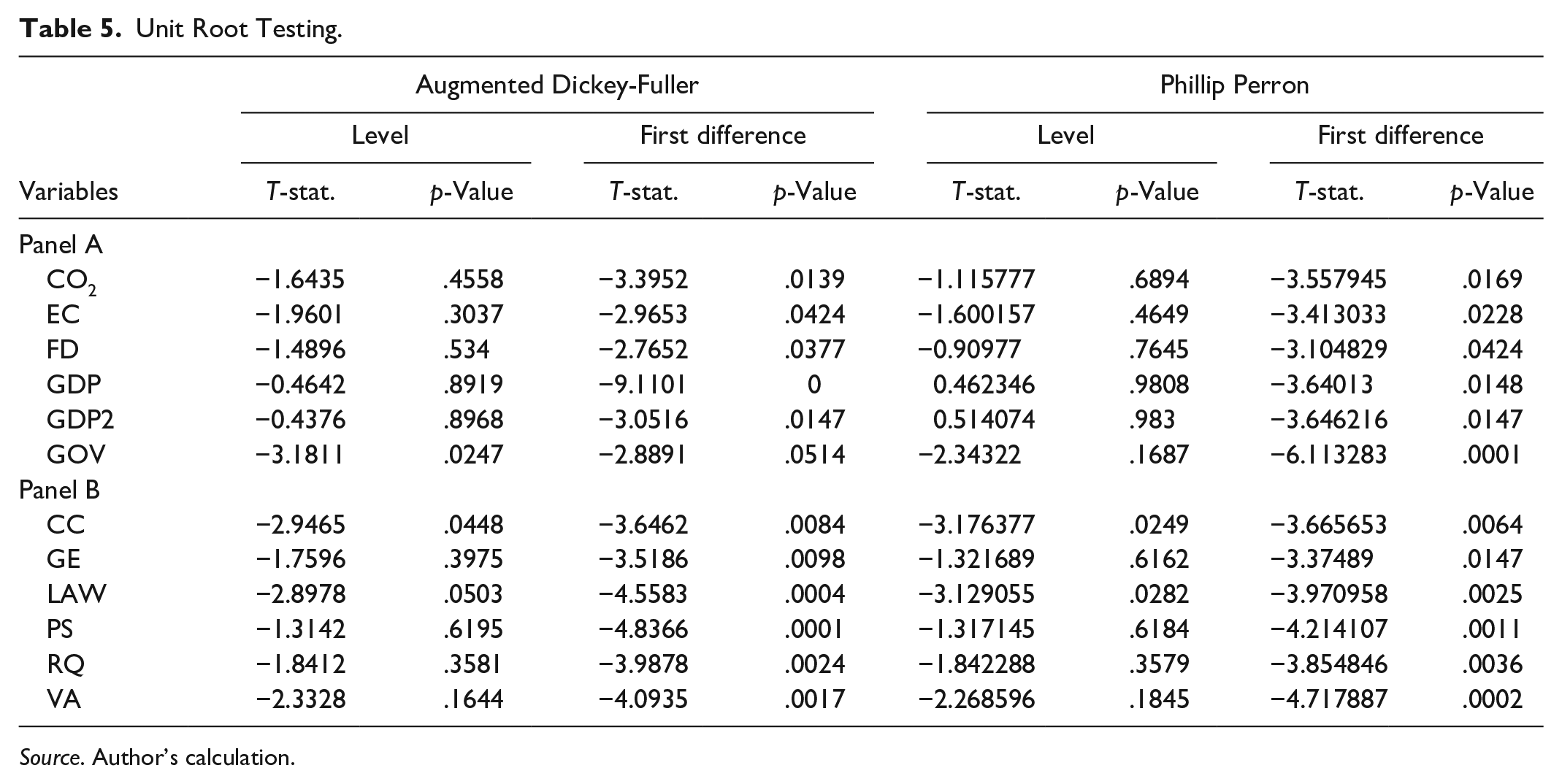
The research extended to the unit root level of the study variable using Augmented Dickey-Fuller (1979) and Phillips and Perron (1988). From both panels, Table 5 revealed the outcomes of these tests. The test parameters confirmed that variables have a mixed level of integration, that is, I(0) and 1. But at the second difference, no variable was stationary, that is, I(2). Consequently, the Autoregressive Distributed Lag (ARDL) model is a bound testing approach to assess the long-run and short-run relationship with these variables (Pesaran et al., 2001).
Unit Root Testing.
Source. Author’s calculation.
Long Run Cointegration Assessment
The next step in the research is to determine the long-term cointegration of variables used in this analysis. This analysis actually positioned each variable as a dependent variable and used a bound test (Pesaran et al., 2001). The results for panels A and B have demonstrated in Table 6, respectively, for the equations (5) to (10) and (11) to (17). These consequences are based on the Akaike Information Criterion. The findings showed that both panels’ F-statistics are greater than the upper critical bound values for stable long-term attachments.
Long-Run Cointegration Upshots.

Source. Author’s calculations.
Autoregressive Distributed Lag (ARDL) Implication
Table 7 provides the long- and short-run effects of Panel A. The coefficient of EC has a positive and significant long-term effect on CO2 emission, and thus an incline energy consumption is immense harm to environmental quality in Pakistan. These findings are consistent with the Muhammad (2019) and Bekun et al. (2019). In comparison, the analysis showed that a one-percent rise in Pakistan’s financial development boosted CO2 emissions by 11.3%. In addition, Ur Rahman et al. (2019), Ulucak et al. (2020), and Acheampong (2019) noted a significant decline in environmental excellence substantially due to a rise in financial development. However, across six performance elements designated as negative ties with carbon emissions in Pakistan, the governance index (GOV) indicates that strengthening government and institutional governance has eloquently improved Pakistan’s climate efficiency. The same relationship has been documented in Brazil reported by López and Galinato (2005). Danish et al. (2019) recorded the role of governance in BRICS countries and found a negative liaison of CO2 emissions with Governance dynamics. The study suggested that GDP’s impact is optimistic, but the square of GDP with CO2 emissions remained negative and significant. Shehzad et al. (2020) reported that the EKC occurs in Pakistan evocatively.
Long- and Short-Run Parameters of the ARDL (Panel A).

Source. Author’s calculations.
Note. ***, **, * represent 1%, 5%, and 10% significance level, respectively.
The short-run coefficient revealed that CO2 emission expressively intensifies its own level in Pakistan. Nevertheless, energy consumption recorded an insignificant impact on CO2 emission for the short-term period. Tough, first, and second lag of financial development (FD) specified a negative liaison with carbon emission. The governance index disclosed a negative and momentous impact on CO2 emission. Nevertheless, the first lag of GOV unveiled a direct impact on CO2 emission. The first and second lag of GDP documented a negative and indispensable impact on CO2 emissions in the short term. The (
Table 8 exhibited the long- and short-run findings of Panel B. These outcomes define that control on corruption (CC) has a significant and negative association with CO2 emission, deducing that a decline in institutional corruption in Pakistan considerably enhances the environmental quality in the long-run. Besides, Government effectiveness (GE) pointed out a remarkable negative liaison with CO2 emission, which identifies that improvement in the efficiency of government suggestively affects the climate quality in Pakistan. These outcomes are in line with Abid (2016).
Long- and Short-Run Parameters of the ARDL (Panel B).

Source. Author’s calculations.
Note. ***, **, * represent 1%, 5%, and 10% significance level, respectively.
However, the LAW, RQ, and VA coefficients indicate that the long-run CO2 emission is a positive and insignificant link. Besides that, the level of emissions of CO2 from Pakistan was negatively and significantly affected by political stability. The short-run results showed that the first lag of CO2 emissions is imperatively to increase its current level. The second and third lag CO2 emission values indicated that their current values were negative but insignificant. CC also reported a significant and negative impact on CO2 emissions, while GE reported a positive and significant short-run impact on CO2 emissions. However, GE has demonstrated a significant and positive short-term effect on CO2 emissions. Besides that, a negative but insignificant CO2 emissions impact was seen by the rule of law (LAW) and regulatory quality (RQ) for a short period of time.
Though, the first lag value of RQ showed a positive linkage with CO2 emission. The investigation stated that political stability positively and significantly bonds with CO2 emission in the short term period. On the other hand, Voice and Accountability (VA) quantified a negative but inconsequential impact on CO2 emission. These findings verified that institutional and government excellence have an indispensable influence on the environmental quality of Pakistan. The outcomes specified that decrease in the evil practices and control of corruption in the organizations noticeably enhance Pakistan’s environmental conditions. R2 parameterized that 83% changes in CO2 emission result from the factors among them. The Durbin-Watson test specified that there was no serial correlation in the overall model.
Long- and Short-Run Causality Testing
The results of long- and short-run Granger causality for both panels are given in Table 9. Panel A’s statistics disclosed the energy consumption has significant unidirectional causality on CO2 emission, FD, and GOV. However, the causality effect of FD remains insignificant on CO2 emission. On the other side, GDP and quadratic term of GDP recognized a significant causal effect between CO2 emission and FD. In addition, a significant causality is flowing from GOV to CO2 emission and then to FD. Panel B’s findings declared that CO2 emission has bidirectional causality affiliation with CC, LAW, and RQ. Additionally, control on corruption (CC) showed a bidirectional causality on LAW, PS, and RQ. In contrast, Government Effectiveness (GE) documented a two-way causality effect with PS and VA. Further, LAW reported a bidirectional causality association with PS and VA. Also, PS and RQ have bidirectional causality on each other. However, voice and accountability indicated a unidirectional causality on CO2 emission, CC, and RQ. These findings are in line with previous research of Fujii and Managi (2015).
Long and Short-Run Causality Test.

Source. Author’s calculations.
Note. ***, **, * represent 1%, 5%, and 10% significance level, respectively.
ARDL Diagnostic Parameters
The investigation employed Bruesch-Godfrey (Breusch & Pagan, 1979) to evaluate the heteroskedasticity and serial correlation in the residuals of the ARDL model. Furthermore, the Ramsey RESET test is applied to diagnose the functional misspecification in the ARDL model. In contrast, CUSUM and CUSUM test reckons the constancy of the ARDL model utilized in this examination (Brown et al., 1975). The consequences of these analyses are given in Table 10. The measurements verified that the model has not included the serial correlation and Heteroskedasticity in the residuals. Further, the CUSUM and CUSUMSQ plots given in Figures 1 and 2, for both panels, are within the boundaries of 5% limits, inferring that the ARDL model’s coefficients are accurate. Hence, the ARDL model perfectly fits the study.
Diagnostic Test Results.

Source. Author’s calculation.

(a) CUSUM test of Panel A and (b) CUSUMSQ test of Panel A.

(a) CUSUM test of Panel B and (b) CUSUMSQ test of Panel B.
Conclusion and Policy Implications
Pakistan is one of those nations that have relatively fragile organizations and governments. Pakistan is facing several challenges such as political instability, weak law enforcement, and corruption, leading to poor implementation of environmental policies. This research work presents a greater understanding of the connections between CO2 emissions, energy use, financial development, overall governance, and economic growth in the sense of the EKC hypothesis. The study also analyzed the major impact of government effectiveness, voice, accountability, regulatory quality, control on corruption, political stability, and the rule of law in Pakistan on environmental quality. The study used data from 1996Q4 to 2018Q4 on a quarterly basis. The analysis confirmed that energy consumption and financial development have a direct association with CO2 emission in Pakistan. Thus, the study suggested utilizing green energy to meet its energy requirements to improve environmental quality. So, the investigation exposed the overall governance in Pakistan intensely amplifies the environmental excellence for the long term period; in the short-run, the first lag of governance index indicated a positive association with CO2 emission. This project evaluated the Environmental Kuznets Curve hypothesis for Pakistan and found that EKC substantively exists for the long term period in Pakistan, inferring that economic growth has a U-shaped connotation with CO2 emissions in Pakistan. The inquiry reported that political stability exhibited the highest negative association with CO2 emission in the long-run, concluding that strict control on corrupt practices in organizations and an increase in Government efficiency help provide a clean environment. Indeed, the rule of law, regulatory quality, and voice, and accountability remain insignificant in the case of the long-run. Nonetheless, Government effectiveness, political stability, and regulatory quality specified a positive connection with CO2 emission in Pakistan in the short-run. The study mentioned that energy consumption, governance index, GDP, and GDP square have unidirectional causality on CO2 emission. Notably, control on corruption, the rule of law, and regulatory quality identified bidirectional causality with CO2 emission. Besides that, the rule of law, political stability, and the regulatory quality confirmed two-way causality flow on each other. These verdicts implied that implementing environmental policies, proper management in organizations improved government performance, applying the law, and controlling corruption emphatically upsurge the environmental quality in Pakistan.
Based on the results, the following policy recommendation can be put forth for the policymakers of Pakistan. The magnitude of economic growth is reducing over time, indicating the beneficial role of income to mitigate the pollution level. We suggest that the government coordinate and design their economic policies to increase their income level to benefit sustainable development. Policymakers should focus on upgrading the structure of institutions. They should take serious steps to bring about institutional reforms whereby they may get assistance to enhance environmental quality. Governance performance can be improved by increasing government efficiencies, strengthen the rule of law, and minimizing corruption. More importantly, the government should create public awareness about a clean environment. Financial development increase carbon emission; therefore, the government should tighten regulations to control financial sector activities. The government should encourage green investment and ensure that financial institutions provide loans at a lower interest rate for green and environmentally friendly projects. The government should urge multinational and local industries to adopt modern technologies for production that emit less pollution. Finally, the government should minimize fossil fuel energy consumption, provide subsidies, and encourage renewable energy investment.
Footnotes
Declaration of Conflicting Interests
The author(s) declared the following potential conflicts of interest with respect to the research, authorship, and/or publication of this article:
Funding
The author(s) received no financial support for the research, authorship, and/or publication of this article.
