




Abstract
Tree-like architectures and branching structures are one of the analogical designs that are among the nature inspired structures arousing attention of the designers, inspiring them and that are frequently confronted throughout the history of architecture. Likewise, trees are structural models for designers beyond the plant and branching patterns that are used as architectural ornamentation. Trees have the characteristics of being mentors for architects and engineers concerning how the vertical and the horizontal loads are transmitted through the trunks, branches, and leaves and how the balance is provided. Within this context, it is possible to claim that a quite wide and intuitively developed structural knowledge is acquired with the tree analogies throughout the history of architecture. By the development of computational design technologies, there have been significant developments in the design and the building of tree-like structures. Especially the number of branching, angles of dendroids, lengths, and the other parameters can be defined by using algorithms and can be optimized also by the help of computational tools. In this paper, the historical development and classification of the tree-like structures have been carried out and Frei Otto who is the pioneer to pave the way for innovative structures related to this field has been selected to revisit the efficiency of lightweight columns inspired by nature. One of the experimental studies of Otto in which he called as “minimum path system” has been determined as the case study; the parametric design behind the structure has been analyzed and reproduced by using a parametric software. The structural effectiveness has been determined and discussed by testing the obtained models using a FEM program under horizontal and vertical loads. Consequently, the structural effectiveness of today’s computational technologies and the branching structures that Otto built intuitively and by natural analogies have been able to be tested and the possible potentials that can be leading for today’s architects have been demonstrated.
Introduction
Nature, which has been a guide for designers throughout the history of architecture, is frequently used as a source of inspiration in architectural designs (Arslan Selçuk & Sorguç, 2007). In the discipline of architecture, as with many design fields, the physical and visual features of formations and structures in nature, such as proportion, color, texture, and pattern, are transferred to design processes through metaphors (Hersey, 1999, Portoghesi, 2000). Metaphors have made contributions to the development of new discourses in architecture by creating formal similarities in the context of object–structure, establishing relationships and generating new knowledge. Due to the abundant resources of metaphors generally found in nature, it is not surprising that these shapes and configurations are imitated and used as inspiration in architecture. Scientific and technological developments in recent years indicate that nature’s millions of years of experience contains solutions for humanity’s problems beyond metaphors.
In the architectural design process, one of the methods of inspiration/learning/adaptation and/or application from nature can be explained as “taking the form of the natural object and transferring it to the building with formal concerns and an analogy.” Architects and engineers who saw this expansion have done many morphological designs and/or structural experiments/research in the last century. When we look at the historical process, it is the 20th century. In some works that were received until the middle, by taking the examples in nature and imitating them with formal concerns; It has been observed that the facade and building design are limited to ‘form finding’ only. In this context, applications that are performed by interpreting only the colors, textures, and patterns of the elements are frequently encountered. Similarly, many architects make their designs by being influenced by some objects existing in nature. It is known that metaphors and analogies provide designers with a starting point in architecture, with concerns such as reaching creativity, creating meaning, and conveying messages.
When nature’s structures are examined, it is seen that “form, material and structure come together simultaneously and reveal their functions” (Arslan Selçuk & Sorguç, 2013). Nature also has potential solutions for architects and engineers, such as only consuming as much energy as it needs, producing the most effective solution with the least material and exactly fitting form to function (Beukers & Van Hinte, 2005). Trees, which draw the attention of the designer and inspire him/her, are among the metaphors frequently used throughout the history of architecture. Beyond the tree/branching motifs used as ornaments, trees are a structural model especially for the designer who is faced with the problem of load transmission. Designers “learn the concept of growth and branching on a tree; Considering the relationships between roots, trunk, branches, and leaves, and the distribution of loads, they became aware that this knowledge could be an answer to the problem of load distribution that needs to be solved in architecture as well, and they began to “learn” from trees.
Frei Otto, one of the pioneering architects with this awareness, made experimental studies especially on tree-like and branched structures. The Institute for Lightweight Structures, which he founded in Stuttgart in 1964, can be considered as the beginning of the “conscious learning from nature” approach, as well as his inquiries to understand the “process” of structuring and formations in nature, and his search for new forms and structures. By adopting the “learning from nature” approach in his search for new forms and structures in design processes, Otto took his place in architectural literature. Otto’s experimental studies, especially on tree/branched structures, are still guiding prototypes for designers working in this field today.
In the last years of the 20th century, both the development of numerical design and production techniques, and the spread of light but high-strength steel, together with the development of concrete technology and high-quality timber/plywood, offered designers the opportunity to explore much more complex forms. “Complexity” has become a design trend for those who deal with a wide range of designs from art to industrial design, from interior design to architecture lately. At this stage, complex and fractal-like geometries and parametric approaches began to enter the design as an input for architects inspired by the shape and structure of the tree. From this respect, this study questions the relationship between nature and architecture in terms of “tree-like structures” within the related literature and examines the architectural solutions.
One of the most important concepts shaping the architecture of the 21st century can be mentioned as “sustainability,” and the second is “the impact and transformation of digital design and production technologies in the discipline of architecture.” The effectiveness of forms and formations in nature and their performance have only begun to be understood with the help of these developing technologies. In the 1970s, when these technologies were not available, Otto’s studies and his perspective on nature still inspire researchers today. In this context, the main motivation of this article is to understand tree-like structures in architecture and to revise Otto’s point of view with today’s technological opportunities.
Natural constructions, especially trees with their plant structures, leaves, branches, trunks, and roots, have captured the attention of designers (López et al., 2016; Pawlyn, 2019; Rian & Sassone, 2014; Ripley & Bhushan, 2016) for centuries as the best natural examples of load distribution, which is an important problem to solve in design processes.
Within this conceptual framework, in the first part of the paper, a literature review was made and the historical development and classification of tree-like structures among nature-inspired structures were made, and the subject was discussed in the context of architectural examples. In the case study, we examined the tree-like structures used by Frei Otto who conducted experimental studies and the “minimum path system” concept included in his book “Finding Form: Towards an Architecture of the Minimal” (Otto & Rasch, 1995). By focusing on tree-like structure trials, which have an important place among the light structure studies carried out by Otto experiments, the prototypes that can inspire today’s architects were modeled by using Grasshopper® software. The efficiency of the tree-like structures designed by using “minimum path system” offered by Otto is discussed through structural analysis of the obtained models.
Literature Review and Background
Trees are among the many natural structures that attract the attention of architects and engineers and can be a source of inspiration in design processes. The concept of “learning” from trees emerged when designers observed the growth and branching in a tree and examined the connections of roots, stems, branches, and leaves and their load distribution hierarchy, they realized that this could be a solution to the problem of load distribution, which is an important engineering problem (Özdemir & Arslan Selçuk, 2016). Within this framework, in the literature review part of this paper, the historical development of dendritic structures has been reviewed through architectural examples.
Design Approaches in Architecture Inspired From Nature
When the historical process until the first half of the 1900s is reviewed, it can be seen that natural structures have been imitated through formal and structural perspectives. It is possible to say these practices, which can be expressed as “formal analogies” integrated with design, were very common in those years. What must be underlined is that “nature inspired” practices remained limited with formal concerns in façades or form/structure of the building. While these approaches sometimes provide structural improvements, they are generally performed for esthetical purposes.
In the history of architecture, several levels of relationship exist with “natural configurations, formations, form and structures” (Figure 1). Sometimes these relations can be seen as an “analogy” and other times reach the level of “metaphor.” Since the 19th century, parallel to developments in science and technology, with the increase of “knowledge in the field of biology,” the biology effect in the discipline of architecture began to change and evolved toward “learning from nature” and “interdisciplinary interaction” (Özdemir & Arslan Selçuk, 2016).

Some images of nature used in architecture.
Today, even though manmade structures are different from the scale, function and formation processes of formations in nature, subject areas such as material, energy conservation, lightness and durability, despite this lightness, increasingly continue to be an inspiration for designers. The biomimicry approach, which has entered the literature as a new discipline and means consciously “imitating the best ideas of nature” (Benyus, 2002), includes the methods that designers frequently use. This approach, which provides new and different solutions for energy efficiency and sustainability as well as looking at nature for optimization of structural and mechanical systems, requires interdisciplinary collaborations.
Tree Metaphors in Architecture
Dendritic configurations used in architecture generally consist of the use of the structure and shape of trees or plants as a metaphor. In the pre-20th century period, trees and plants were generally used for ornamenting purposes in architecture. However, in the modern era until the mid-1900s, designers isolated the tree’s complex structural formation as simple Euclid and/or complex geometries, and with the usage of new reinforced concrete technology architects started to design mushroom or umbrella formed dendritic structures. Nowadays non-Euclidian irregular geometrical forms—mountains, clouds, trees, and the like in nature—can be explained by abstracting, non-linear, and fractal geometries concepts (Casti, 1989). Tree-like and vegetal forms have been seen as “complex forms” for centuries, and for this reason, they are often used by abstracting in architecture. Today, inspiring/learning from tree-like structures continues increasingly because these forms can be explained with fractal theory and can be produced in a short time and with many alternatives by using advanced computational methods and algorithms. At the same time, rapid prototyping tools and other digital fabrication techniques have made it possible to convert complex form designs into physical forms easily and quickly.
The historical development of branching metaphors and tree-like structures in architecture
Although the first emergence of tree and plant-like forms in architecture is not known, one example in which tree–plant form symbols and metaphors are used in Egyptian architecture is Luxor Temple (1400 BCE). Pillars and pillar heads were inspired by the papyrus plant. Also seen in this period are Egyptian columns with carved stone pillars resembling tree trunks or bunches of reeds and plant stems, and column capitals decorated with lily, lotus, palm, or papyrus plant motifs (Portoghesi, 2000). Ancient Greek architecture, on the other hand, is one of the oldest examples where these forms and constructions are clearly visible. In these antique eras, however, tree and plant shapes drew people’s attention and these natural objects, being part of their daily lives, took their place in their structures. It has been observed that the prominent decorative features of trees and plants were used in the Classical and Roman periods (500 BC–400 BC). The Corinthian order, which was the most elaborate of the three Greek architectural orders in the classical period, was mainly used in the interior columns. At the end of the Hellenistic period, temples with external columns began to be built in Ancient Greek architecture. The classical column header has acanthus leaves (Figure 2). In the post-Roman period, complex and intensely embroidered flower-like ornaments were used in decorations with wood and plant motifs in stone, masonry, and plaster (Rian & Sassone, 2014).

Pillar tops inspired by a bundle of the papyrus plant and flower-like ornamentation on a wall (Rian & Sassone, 2014).
The Renaissance period in Europe and the Baroque movement, which formed between 1580 and 1750, greatly influenced the understanding of art. In the post-Roman periods and especially in the Baroque and Rococo periods, there are many examples where trees and plant motifs are used in decorations. During these periods, intricate and richly embroidered flower-like decorations were designed by using stone, masonry, and plaster (Aydoğmuş, 2007).
In Central Asian and Eastern geography, plantar shapes, which are especially obvious in the Turkish arts and rich stone masonry, can be seen in Seljukian architecture on external façades and throne gates. While in internal architecture, shrines, pulpits, iwan dome passages, consoles, arcs, pillars, and pillar spikes have been the center of interest with different and original plantar ornaments (Figure 3) (Karadaş, 2011).
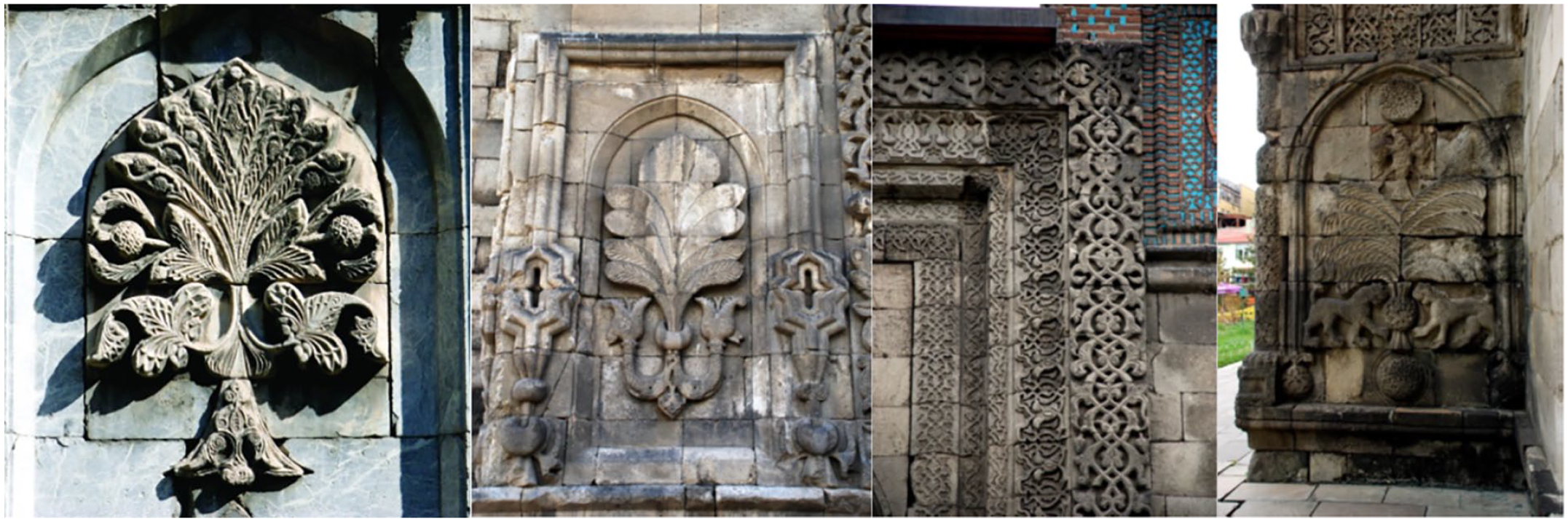
Plantar ornamenting elements in Anatolian Seljukian era architecture (Karadaş, 2011).
In Gothic architecture, similar metaphorical approaches can be seen, the effects of which could be observed in Europe from the 12th to 15th centuries. In this period, fan vaults, an important tree-like structure in architecture that is considered an abstract form of the tree shape, started to be seen in cathedral constructions. Although there were tree-inspired examples in architecture as basic structural elements in the Middle Ages, in the late medieval periods, especially in the Baroque and Rococo times, vegetal and flower-like shapes without any structural task are found as heavy decorations in architecture.
The Crystal Palace designed by Joseph Paxton in 1851, one of the most impressive examples of buildings in the 17th century, was inspired by nature in the structure of the façade (Figure 4). In this context, the Crystal Palace, seen as the first structure of modern architecture, is defined as the first exemplary building with applied architecture and designed with a biomimetic approach. Joseph Paxton was inspired by the leaf structure of the Giant Amazon Waterlily in his design of this large-span structure with glass plates (Knippers et al., 2017, p. 26).

Lily plants and the Crystal Palace (URL-1).
In the 19th century, during a new art tendency, architects developed molded iron usage skills in construction, which provoked designers to ornament details using plantar forms (Rian & Sassone, 2014). Trees and plant forms were used as primary objects for decoration in architecture and lived a Golden Age. Design elements in metal construction have ornaments with fine details (Figure 5).

Examples of nature components in Art Nouveau architecture (Escritt, 2000).
The metaphors of the pioneer designer Gaudi, who turned to nature with the effort of blending architectural form with structural rationality and “learning from it,” mostly manifested in the designs he created by combining organic naturalism and structural logic then adding nature admiration to his neo-Gothic style. The limb of a tree, which grows by branching, has a structural form capable of carrying the largest part of the tree—the canopy. This property was used by Gaudi in many of his works, foremost in the Sagrada Familia basilica (Figure 6) (Gómez, 2002). Gaudi’s structures appear to be the first examples of structures that branch out in the form of a tree created from concrete, inspired by nature.

Plant motifs and tree columns, the first part of which was started to be built on the Sagrada Familia basilica, on the nativity façade (URL-2).
Gaudi’s method of design by integrating the forms and structures of trees and plants, and similarly interpreting the skeletal systems of living things with an architectural approach, is undoubtedly unique. In his journey to find his architectural language, he was heavily inspired by the structural qualities of natural shapes. His lifelong studies of living structural systems led to the use of regular geometric shapes such as cones, spirals, and hyperbolic parabolas for the construction of the entire structural system of churches and cathedrals, which resemble the branched trunk of trees (Figure 7). The geometry of the many pillars of the Sagrada Familia basilica are hyperboloids inspired by tree trunks. Gaudi has designed stable structures that stand upright like trees without the need for internal or external support, using sloping and spiraling piers as well as curved, hyperbolic, and parabolic arches and vaults (Figure 8) (Zbašnik-Senegaènik & Kitek Kuzman, 2014).
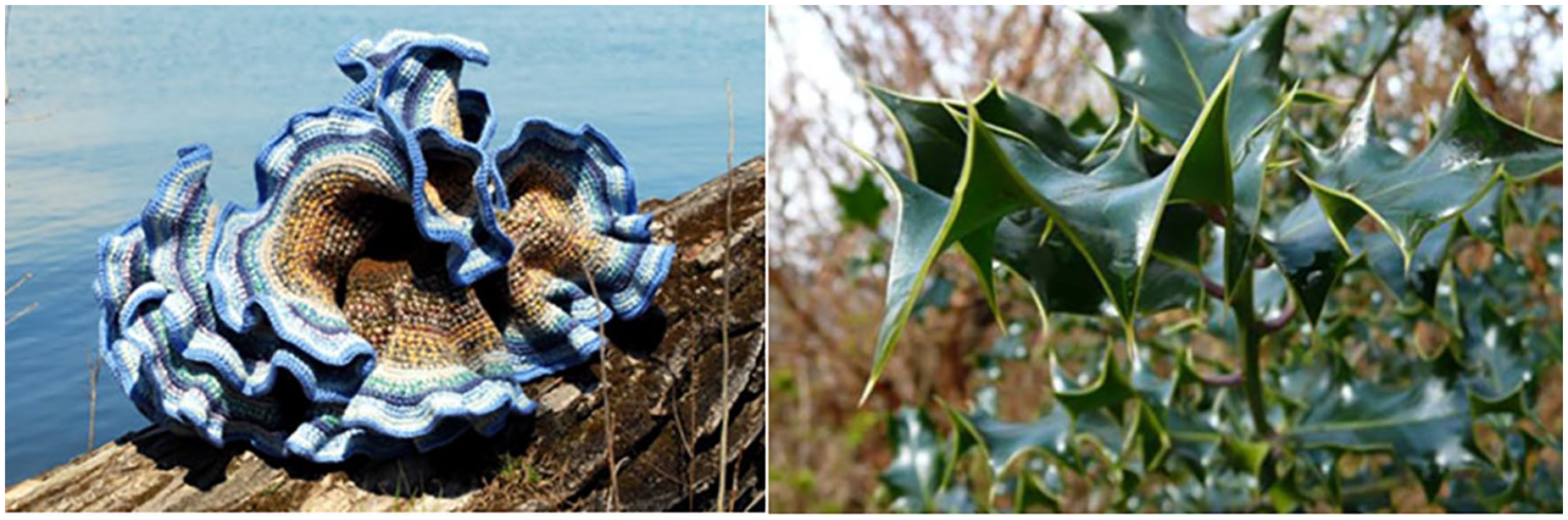
Hyperbolic geometries present in nature (URL-3).
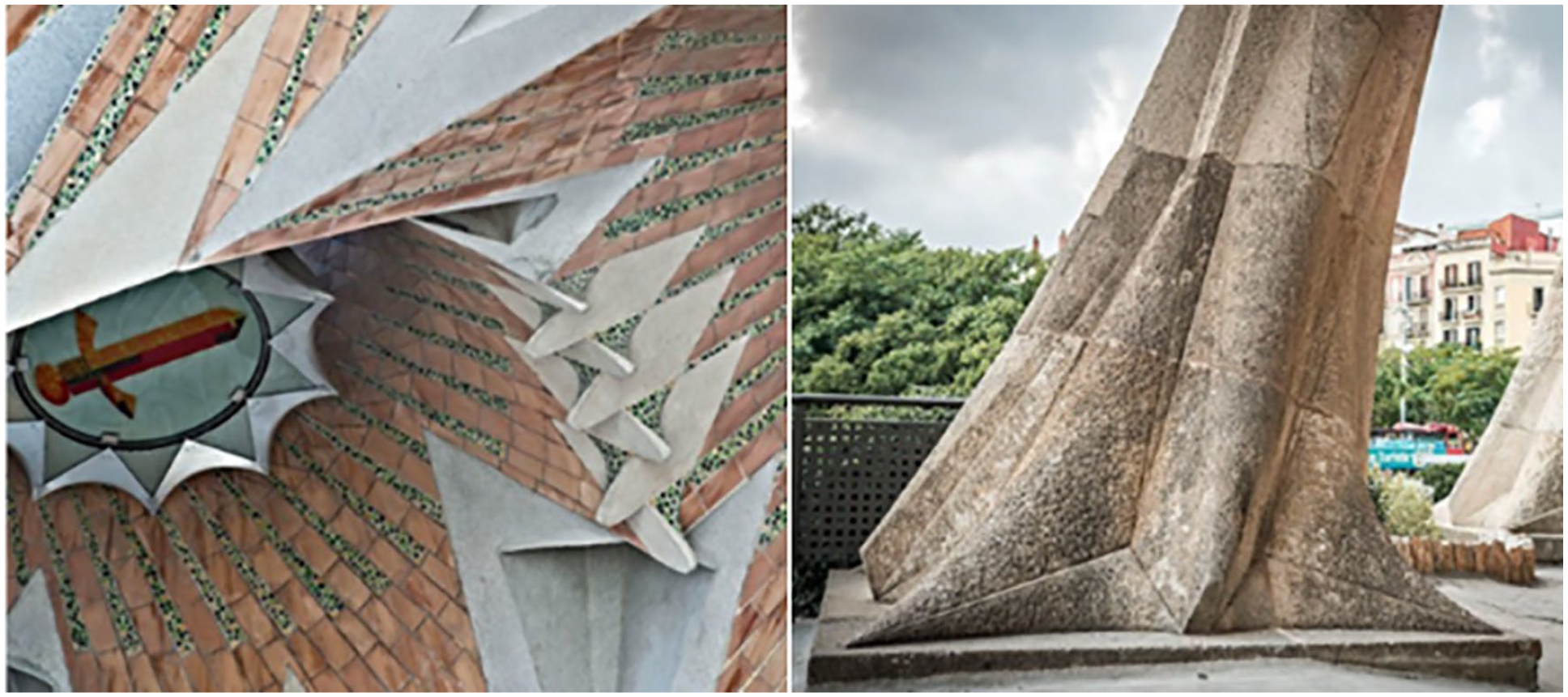
Hyperbolical surfaces and parabolic pillars of The Sagrada Familia (URL-4).
When the structural simplicity trend began to become widespread in the early 20th century, Gaudi’s structural columns shaped like trees had already taken their place in architectural literature. The development and spread of technologies related to reinforced concrete has offered many structural solutions for architects and engineers to have structural designs with free forms.
Frank Lloyd Wright, one of the pioneering actors of modern architecture, speaks of an architecture “in harmony with nature” in his writings and designs, and frequently used “columns” in his buildings as protrusions or mushroom abstractions inspired by tree branching (Figure 9). These columns have started to take place in architectural literature as a result of Wright’s statement “form does not mean function, on the contrary, form and function are a whole” (Levine, 1996; Lipman & Wright, 2003).

Mushrooms and the Johnson Wax Headquarters’ mushroom columns (URL-5).
Frei Otto and branching structures
By directly testing materials that included hair, bones, spider webs and seashells, Otto looked for structures that corresponded to what can be described as an architecture before humans. At an historical moment in which modernist narratives of progress and the domination of nature came increasingly under question, Otto sought alternative means to construct the development and history of form (Fabricius, 2016).
In the second half of the 20th century, it is seen that the designers changed their approaches toward learning from nature and sought architectural form with experimental approaches in their designs. Especially, Buckminster Fuller and then Frei Otto’s inquiries to understand the “process” and their search for new forms and structures can be considered as the beginning of the “conscious learning from nature” in architectural design. An innovative architect Fuller described the direction in which designers should go as “. . .we aim not to imitate nature, but to find the principles she uses” (URL-6). Fuller, who frequently used the forms in nature in his works, also said that the “patterns of designs in nature are inspiring.” According to him, there is a technology in nature that is dynamic, functional, and the result products are extremely light (Portoghesi, 2000). Similarly, Otto spent his entire professional life finding for new forms and structures inspired by nature. As an architect he used this approach to design and construct many of his buildings (Nerdinger, 2005, p. 11).
Frei Otto and his team have produced many systems and techniques using nature-inspired architecture in their interdisciplinary studies on forms and processes. Their experimental studies conducted at the Lightweight Structures Research Center in Stuttgart are collected in the book Finding Forms. In the book, systems designed with inspiration from trees and plants are expressed as “branching structures.” Light weight umbrellas from metal constructed membranes were produced as an example of branching structures (Figure 10). The first umbrella structure designed by Otto was constructed in 1955 for a garden exhibition in Kassel (Otto & Rasch, 1995).

Umbrellas designed by Otto for a garden exhibition in Cologne, Germany (Otto & Rasch, 1995).
Otto and his team, during searches beyond analogies, started to provide architectural products through the first systematic research of “learning from nature.” Although the scale, function, and formation processes are different from manmade structures, they have learned from them by imitating nature due to characteristics such as lightness, rigidity, energy conservation, the least material, and maximum opening. With these studies, “biomimesis” in architecture systematically began to be discussed and applied for the first time.
In his years long-lasting works, Otto realized systematic research on economical, adaptable, lightweight, and large span structures. According to him, buildings should be “natural” structures (Nerdinger, 2005). He focused his research on the optimization of structural forms and building light structures. He conducted experiments on subjects such as tents, soap bubbles, pneumatic structures, cable structures, lattice shells, and branching structures (Arslan Selçuk & Sorguç, 2007). Otto developed a theory called Finding Form and defined it as “On the Way to an Architecture of the Minimal”; he examined the relationship between “nature and form” accordingly. He also developed a form/structure finding method for ceiling and roof systems, which he called the “minimum path system” (Roland, 1970). Furthermore, in the design of tree structures, which can be used in the structural system of pedestrian bridges, conference halls, and great hexagon grid domes, he used “hanging chain” methods.
In the following years, more architects were inspired by trees and designed and produced several lightweight and wide-spanned effective structures. These examples are given in the next section.
Recent examples
In the last decades, the designs of branching structures and tree-like columns have been created with more logical, realistic, and advanced methods using computer-made algorithmic calculations and simulation techniques. The ability to express the tree-like forms parametrically and the emergence of new information about the growth and branching structure of trees with the developments in biology science has inspired designers and pioneered new approaches. With advances in technology, computer aided design and production have increased, so structural solutions have become easier and more complex structures have become possible.
For example, in the 1990s, Calatrava was inspired by natural forms and the expression of his structural systems clearly exemplifies the effects of natural metaphors on his designs. Calatrava’s style can be defined as visual and sculptural and is accepted as a bridge between engineering, architecture, and sculpture. His parametric logic can easily be seen in the canopy and roofing structures given in Figure 11.

Calatrava’s tree-like structure examples (URL-7, URL-8).
Similarly, Stuttgart airport by von Gerkan, Marg + Partner, is structurally efficient thanks to the integration of tree-like columns with a roof covering the entire volume (Figure 12). It is possible to claim that designs created with Frei Otto’s branching principles were applied to the roof of Stuttgart airport with the help of computational technologies.
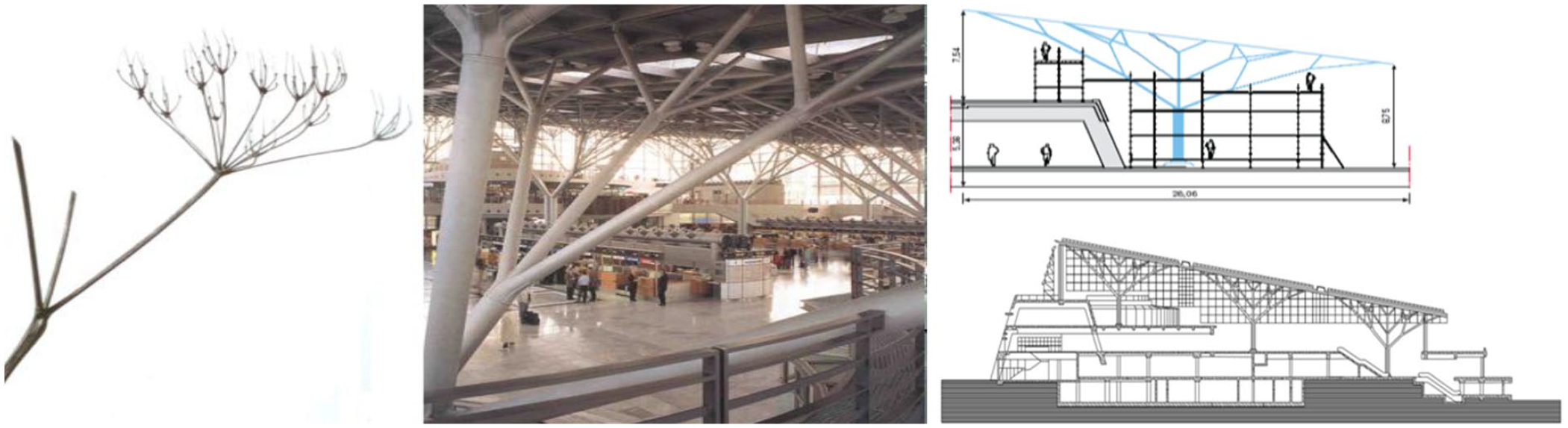
Stuttgart airport passenger terminal (Ahmeti, 2007).
The mushroom or umbrella-shaped columns of the 20th century, with a “structural simplicity” tendency, were also used in the 21st century by integrating a tree-like structure approach. The structure designed by Thomas Herzog, who was a student of Frei Otto, for World Expo 2000 Hannover is an example from this period (Figure 13). The organic wooden roof structure was designed in accordance with the concepts of “Human–Nature–Technology,” which was the Expo’s theme, and has been evaluated as a resultant product obtained from sustainable resources. The shell formed by the tree-like structural system covers private and public spaces. Throughout the design process, the design was obtained by using real models and computer simulations; wind tunnel and loading tests were carried out in cooperation between architects and engineers. The building, which consists of 10 units with a height of 20 m, forms an “umbrella” shaped roof.

Tree-like structures designed for Expo 2000 (URL-9).
Designed by Arata Isozaki, the construction of the columns at the entrance of the Qatar National Convention Center in Doha were inspired by the sidra tree, a symbolic plant adapted to the desert climate (URL-9) (Figure 14). This structural steel column carries a 250 m wide entrance canopy and was designed as a “sculpture” using evolutionary algorithms.

Qatar National Congress Centre, 2011 (URL-10).
It is possible to list many tree-like recently built examples. For example, Gardens by the Bay: Supertrees in Singapore; Agri Chapel Yu Momoeda architecture office in Nagasaki; Nine Bridges Country Club by Shigeru Ban Architects in South Korea; and Cambridge Mosque by Marks Barfield Architects, UK. Plant and tree branches, which attract the attention of designers with their effective structural behavior, are structures observed in architectural designs and exemplified by the form–function–structure–material connection that needs to be combined effectively.
Material and Method
Nowadays, it has become possible to use computer technologies at every stage of the design process. As a result, complex problems can be effectively solved. Technology is preparing an environment for the strengthening of productive and multidimensional design ideas, rather than using it for solely “visual representation.” This study questions how the tree’s branching structure, which has been an inspiration for architectural structures for hundreds of years, can be adapted to architecture with a more systematic way by using the developing computational technologies. To answer this question tree-like columns based on “minimum path system” designed by Frei Otto has been revisited through digital technologies.
Today, it is possible to use computer technologies throughout the entire process, from the first stage of design to the product, and thus to solve complex problems step by step. Thus, technology is used not only as a tool to increase the visual quality of the design product, but also as an environment that strengthens the development of creative and multi-layered design ideas. In the field of software, companies develop special graphical interface programs for architects in line with demands. They are working on computer software programs that will allow designers to look for nature-inspired solutions to problems. There are many commercial products that use algorithms to create trees and plants by combining mathematical understanding with botanical knowledge.
From this respect, it is thought that reviewing the minimum path principle developed by Frei Otto in the 1970s with today’s technological opportunities would be appropriate to test the accuracy of “intuitive information” perceived from nature. For this purpose, the parametric design lying behind dendritic structures, which Otto provided as a method in his experimental works, was resolved and re-modeled by means of a script. The effectiveness of tree-like structures was discussed by making structural analyses of the models obtained. The mentioned “branching theory” was subjected to structural tests over the models that were prepared algorithmically by means of Grasshopper software and this study discusses its effectiveness. In the first part of the study, qualitative research techniques were used, the data obtained were digitized and quantitative analyses were made, and the results were interpreted as represented in Figure 15.

Methodology of the study.
Case Study: Understanding Frei Otto’s Branching Columns Through Parametric Modeling
Scientists who have been doing research on lightweight, innovative, and sustainable designs in recent years are frequently inspired by the forms and structures of nature. The interaction of nature and architectural information defines many new research areas to obtain lighter structures, use less materials and produce environmentally friendly and sustainable structures.
In principle, less material must be used for light structures; therefore, the designer must be creative about the “rationalistic use of materials.” Forming the most efficient load transfers system resistance and, with the correct usage of resources, economy is ensured. Lightweight structures can be classified as frame supported, air supported, pneumatic, cable net, geodesic dome, and grid shells structures (Ahmeti, 2007).
The idea of reducing the material and especially making a lightweight structure that can pass through large spans has been discussed by architects and engineers for a long time. Otto has focused his years of work on making it lighter and has carried out systematic research on lightweight, economical, adaptable structures. According to him, buildings should be “natural” structures (Nerdinger, 2005, p. 40). He transformed his experimental studies into academic publications and has written articles on topics such as dome shells, cage shells, and hanging chains.
The first discussions about lightweight structures started in the 19th century, but in the literature, it is seen there had been no systematic discussion platform on the design and production of lightweight structures until the Light Structures Institute was established in Stuttgart in 1964. In Frei Otto’s studies at this institute, a special close relationship between branching structures, the direction of forces and shapes was revealed in terms of general appearance and the nature of the structure. As far as we have learned from the literature, the structural importance of the branching structure of the tree was not fully discovered until Otto’s experimental studies were published and began to generate products (Nerdinger, 2005). After Otto’s works, many lightweight columns, and buildings with tree-like structural systems are seen. Thanks to the branching structure of the wooden columns, it is possible to form joints between the truss elements without a beam system, which makes the system resistant to bending even when exposed to various loads. As the wooden structures require less material, more efficient material use is ensured, while the use of the most appropriate load-bearing geometry reduces the waste of resources by providing the necessary strength (Ahmeti, 2007). From this point of view, it is possible to say the first systematic study that entered the literature was the minimum path principle included in Otto’s Finding Form. This principle has been developed step by step and has guided many architectural designs, as shown in Table 1.
Development Stages of Frei Otto’s Minimum Path System (Otto & Rasch, 1995).

The analyses used in this part of the article were carried out within the scope of the thesis produced by Gülle (2017). Frei Otto’s “branching theory” was modeled with an iterative process using Grasshopper software. Repetition describes the results of one iteration being the starting point for the next. The system is drawn in two dimensions in Grasshopper (Figure 16).

Two-branching model written in Grasshopper.
In the model, the columns are positioned on a 15 m × 15 m square. The branching angle value and other ratios of dimensions in the models were given values equal to the ones Otto had offered as a final product. Column height was modeled as 7 m, while the branch number was calculated at most 3. In the last, Otto’s model shown in Figure 17 was obtained.

Final product of the minimum path principle (Otto & Rasch, 1995).
Performing iterations or recursions in Grasshopper requires the use of script. First, in the models developed by iteration, the function groups shown in Figure 18 were taken and these were repeatedly copied and pasted. Thus, the results obtained from the first group serve as the starting point for the second. Using this method, a certain command group was developed for the “branching theory.”

Command group determined for the “branching theory.”
By deciding on the number of branches, the branching theory shown in Table 1 has been simulated step by step. Figures 19 to 22 show the process respectively as 0, 1, 2, and 3. The final product of Otto’s minimum path system shown in the last figure (16) of Table 1 was obtained.

Model-1. Branch number was determined as 0.

Model-2. Branch number was determined as 1.
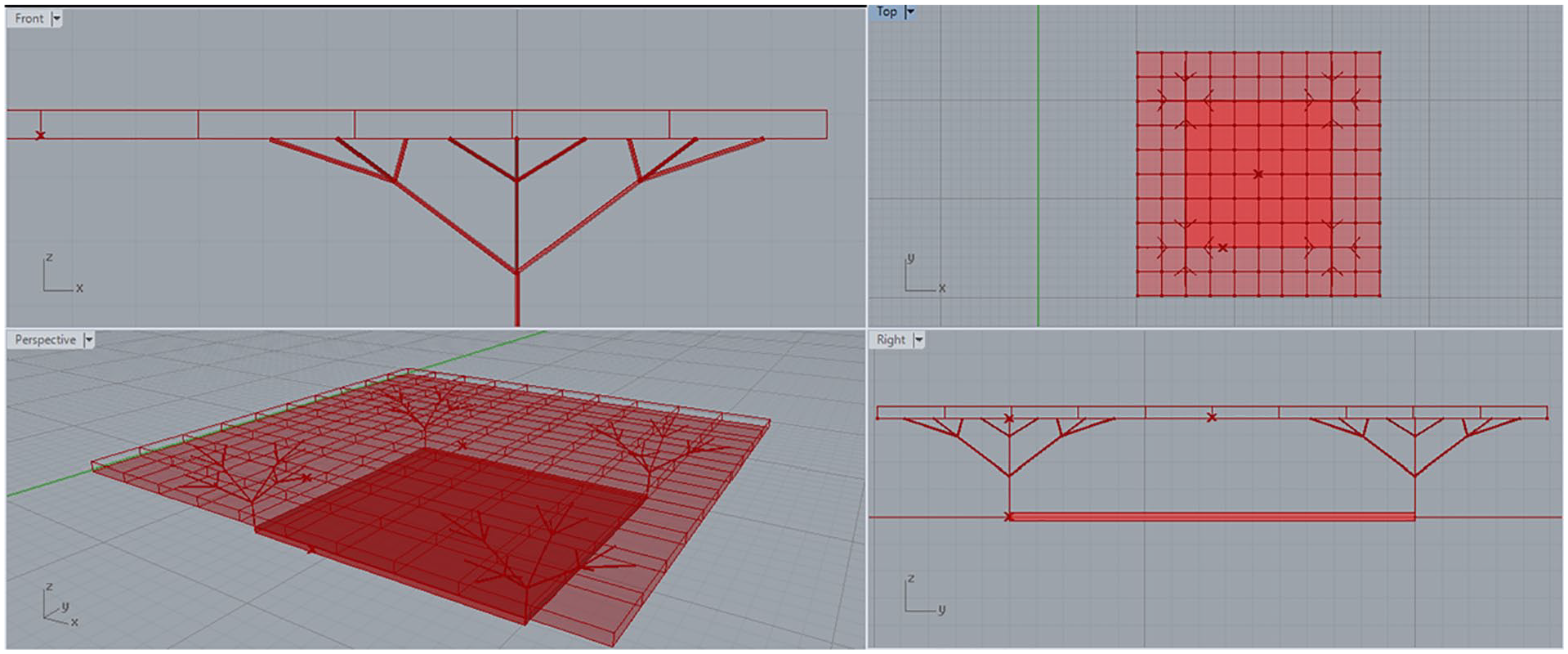
Model-3. Branch number was determined as 2.
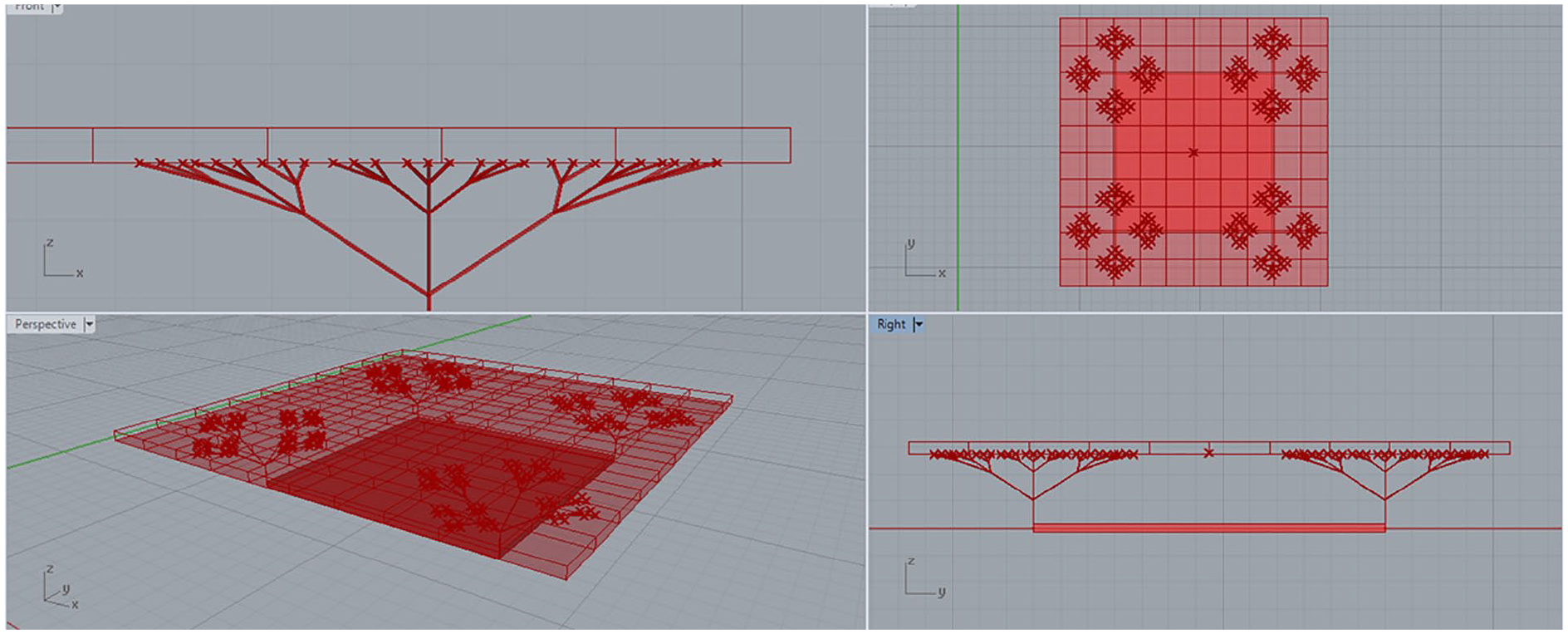
Model-4. Branch number is determined as 3.
In this part of the study, structures modeled with the Grasshopper script were calculated through SAP2000 to answer the question: “Will the ‘minimum path’ system, which emerged as a result of Frei Otto’s experiments on tree-like structures in the 1970s, reveal the same results in terms of efficiency compared with the same structures simulated through the decades?” Moreover, the question “How do tree-like structures behave under equivalent loads and when different tree-like structural topologies are applied with the same materials?” has been answered through the models with different branch numbers created using SAP2000. Then the structural performance analysis of the tree-like structure was evaluated. Four models in which tree-like columns used as the main structural support to carry roof loads have been identified and modeled (Figures 23 and 24).

Model-1 and Model-2 construction models, consisting of 4 units.

Model-3 and Model-4 construction models, consisting of 4 units.
There are differences between the structural tree typologies of the determined models. Models’ structural analyses were made with the purpose of studying the effect of geometrical differences, such as multiple branching systems, symmetry, branching angles, dimensionality rates, derivation of geometrical shapes in various morphological types and complexity. In the study, four different steel construction systems were compared with each other under the same vertical and horizontal loads in their equivalent cross-section properties (Figures 25 and 26).

3D views of structural models, Model-1 and Model-2.

3D views of structural models, Model-3 and Model-4.
For the analysis and design, the SI (metric) measure system was used. With respect to the steel structure material’s property, Earthquake Regulation Article 4.2.3.1 is valid. According to Turkish Standards TS 648 Steel Structures across structure steel class is used. Structural calculations of the models were carried out with the SAP2000 finite element program according to the load combinations mentioned above. The easiest way to interpret the calculation results and understand the behavior of the structure is the deformations that the finite element model prepared for structural analysis shows under applied loads (Figures 27 and 28).
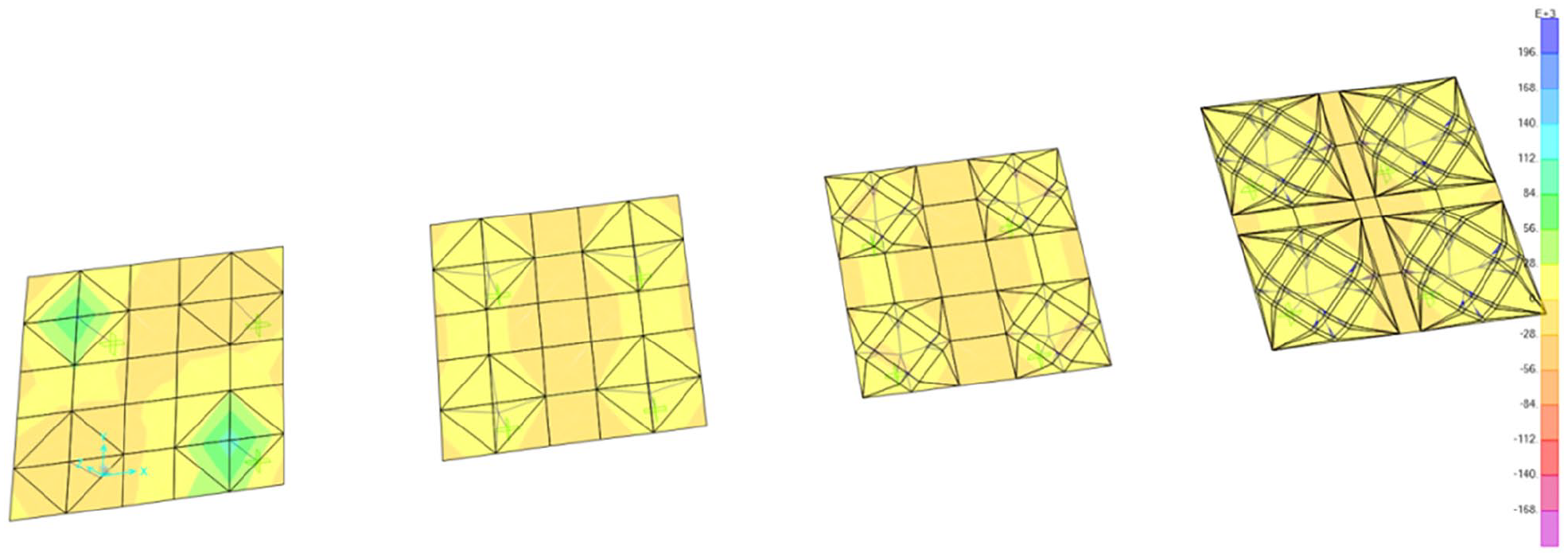
Stress charts of floors under the same conditions (x-axis).

Stress charts of floors under the same conditions (y-axis).
The results of the modeling show that Model-1’s cross-section is approximately 500%, Model-2 and Model-3’s cross-sections are 100%, while Model-4 is working at approximately 60% capacity when looking at the cross-sectional strain graph. This situation has revealed that, since the model does not reach the maximum load carrying capacity, there is no strain or deterioration in the material; therefore, Model-4 does not have a carrying problem (Figures 29 and 30).
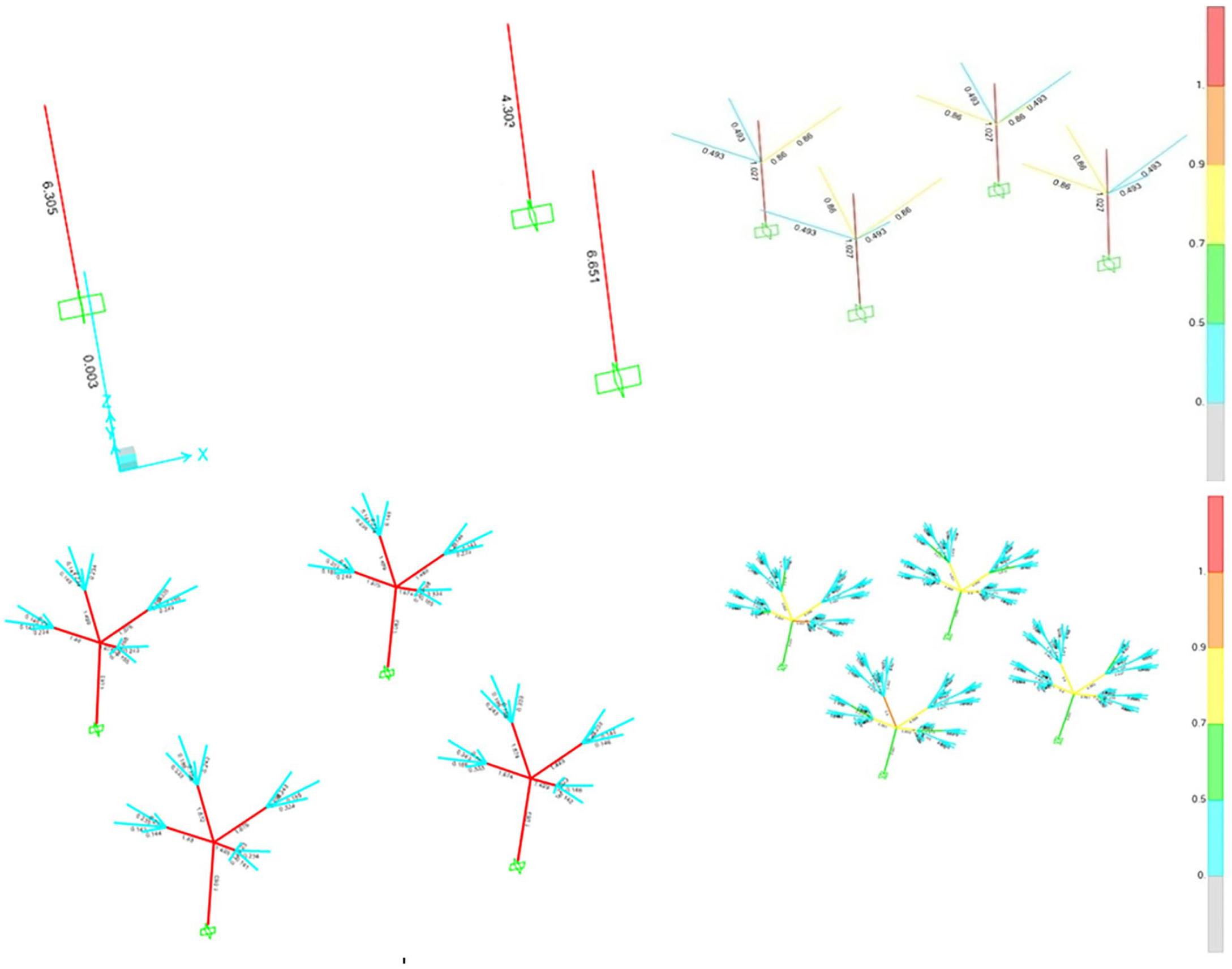
Load bearing capacity.

Comparative analysis of the sections’ strain graphic.
The results of the analysis show that Model-4 has the most structural stability (Figure 31). Further, Model-4 is exposed to less displacement with increasing load conditions (Figures 32 and 33). While replacements in Model-1 reach 15 cm, this difference is near 2 cm at Model-4.
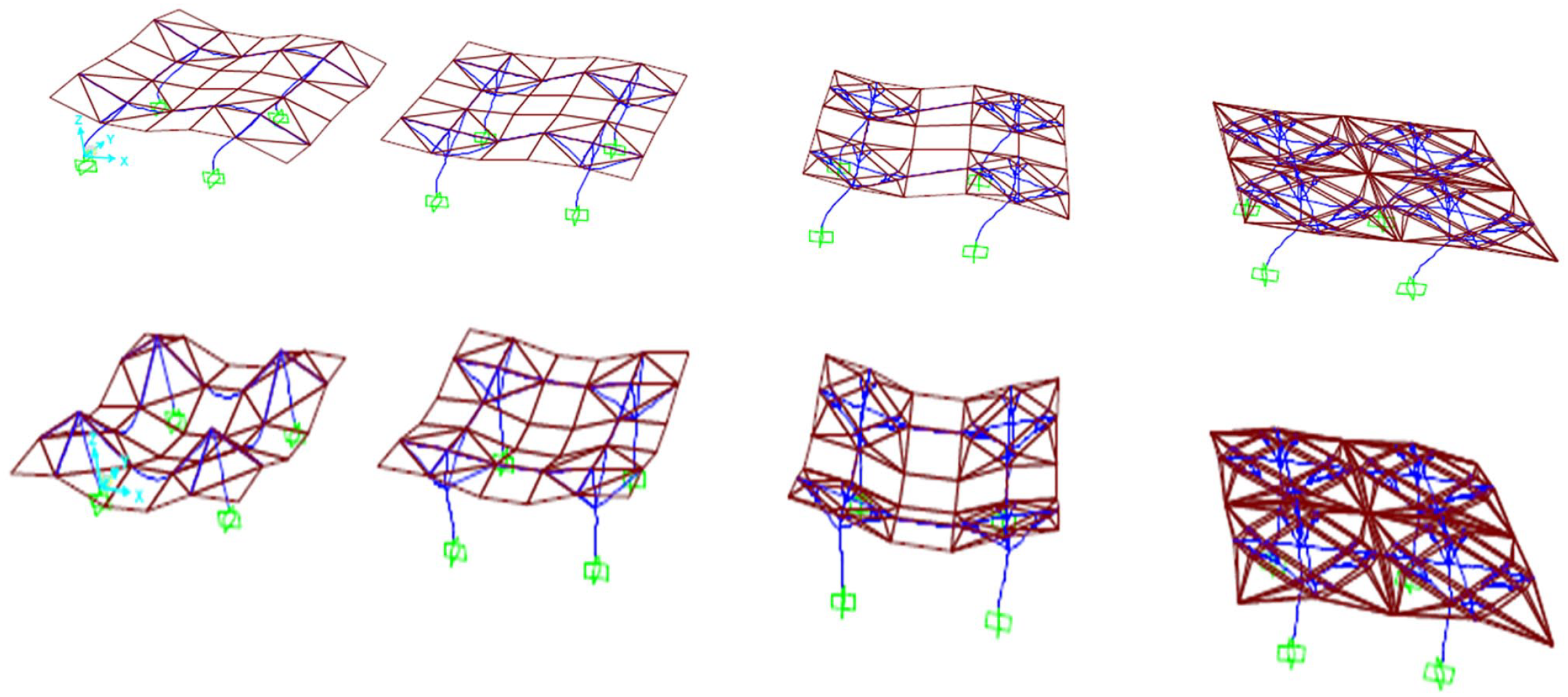
Shape deformation in x- and y-axis.

Place changes formed in the z-axis.

Comparative analysis of deformation in the z-axis.
As a result of the study, four different steel construction systems with equivalent cross-section properties were modeled in the Grasshopper software and compared with each other under the same loads using SAP2000. As a result of the modeling and structural load analysis, it was seen that the cross-sectional stress graph of Model-1 was operating at approximately 500%, Model-2 and Model-3 at 100%, and Model-4 at approximately 60% capacity. Since Model-4 does not reach the maximum load carrying capacity, it is the only model without a carrying problem, since there is no strain or deterioration in the material. It has the smallest value in terms of displacement and stress values and the largest value in terms of load carrying capacity.
Conclusions
In the past, concepts of “tree-like” or “branching structure” have been used mainly by creating formal similarities between architecture and natural structures in designs. However, today, there is a design process that is not only concerned of form but also searches for functional innovation while gaining inspiration from nature. Developing technological possibilities, new calculation methods, computer-aided design, and the emergence of new materials provide structural freedom in architectural design and open new horizons for the architecture of the future. With the rapid development of computer-aided design, digital technology can be included in design processes more easily and effectively. In the 21st century, research on trees with the developments in biology science, as well as in fractals, other basic geometric and mechanical properties, and advances in science and technology, have enabled many innovations to be made in the forms and structures in architecture.
Examples showed that the most inspiring quality of a tree in nature is “the capacity of a narrow element to bear a large surface, thanks to its fractal-like branching structure.” This knowledge has inspired designers throughout history and has guided them to understand the complex structures of nature and increase the efficiency of their own designs. Today, research into the properties of trees, such as fractals and other basic geometric and mechanical properties, has provided innovative openings in architectural forms and structures, thanks to the rapid progress in science and technology. Studying on tree-like structures, some researchers have tried to explore the effectiveness of fractal-like branching structures of the tree. One of the leading architects of the 20th century, Frei Otto’s efforts to understand the “process” and his search for new structures can be considered as the beginning of the learning from nature for architectural design. Otto conducted systematic researches on lightweight and adaptable structures, taking into account the fundamental principles of the relationship between architecture and nature.
Considering the relationship between architecture and nature, Frei Otto conducted methodical studies in the context of lightweight construction, and systematically conducted research and experiments on the models of tree-like branching structures. In the case study part of this article, the tree-like column designs, which have an important place among the light structure studies by Otto, were reproduced parametrically and their structural performances were evaluated by analyzing them with the finite element method. First, we created digital models based on Otto’s branching structure studies, which were made in the 1970s, and investigated their efficiency through 21st century’s computational analysis technologies. The computational models prepared in the study were obtained from the physical models created by Otto, and a digital model was developed to obtain a final digital form. In the modeling study, it was observed that increasing the number of branches caused the structural system to reach the highest load carrying capacity. Therefore, with an increase in the number of branches, steel becomes a lightweight structure with higher performance. The analysis results have been concluded in a way that confirms the hypothesis of our study.
Otto studied the forms and processes of nature in order to develop and build many structures. He has worked on not only branching structures but also on tents, soap layers, air and water structures, suspended forms, and lattice shells. In this process, he carried out experiments on determining the most suitable form by using lightweight materials. He tried to produce the most suitable solutions to reduce the mass of the material and at the same time provide structural efficiency. Today, thanks to algorithmic tools, the process of creating forms in architecture, original architectural patterns, and the architectural languages that make up these patterns can also be expressed in computer-based digital forms by examining the genetic codes of natural complex structures. For the tree like structures, the opportunities provided by the technologies of the 21st century to design methods carry the design and construction of tree-like structures to a more advanced level by optimizing the number of branches, angles, lengths, and other relevant parameters, thus achieving optimized forms and structures.
To sum up, after the 1960s, designers like Otto, searched for architectural forms with experimental studies in inspiring/learning approaches from nature. At the end of the 20th century, the development of digital design and manufacturing techniques, the use of high-quality timber/plywood with concrete technology, the widespread use of light but high-strength steel enabled designers to produce much more complex forms inspired by nature. Today, developing computational tools and technologies provide the opportunity to obtain the most performative solutions among the rapidly produced alternatives for architects inspired by nature.
Footnotes
Declaration of Conflicting Interests
The author(s) declared no potential conflicts of interest with respect to the research, authorship, and/or publication of this article.
Funding
The author(s) received no financial support for the research, authorship, and/or publication of this article.
